In human rights discourse, freedom of thought is commonly held to be an absolute right, but there is less agreement on whether those thoughts should be expressed at all costs. Conventional reasons for this include the risk of infringing other rights, and the threat to public morality and social order. Just as pertinent is the influence of the means and terms of the debate on its outcome. This is acute when censorship is at issue, since the relevant factors tend to be unevenly distributed across a field composed as much of blind spots, silences and affective intensities as of rational discourse and interpretive consensus.
This unevenness is reflected in critical attitudes towards censorship more generally. The 1990s saw a number of nuanced theoretical interpretations of censorship which pointed to its constitutive function in public discourse.Footnote 1 Recently, some film and performance scholars have argued for a more discerning and contextual approach to discussions of cultural regulation in the arts than has hitherto been the norm.Footnote 2 At the same time, many (mainly Western) governments and human rights NGOs use freedom of expression as a standardized metric for assessing the political status and global rights rankings of states worldwide. It is an important principle, but a blunt instrument.
These positions are not necessarily at odds. But their conjunction does underscore the importance of careful attention both to what is at stake in any given act of censorship, and to its interpretation as such. Agencies representing diverse economic and political systems have articulated considered and sincere arguments in favour of censorship, and can point to the approval of substantial numbers of citizens in support of their positions. This needs to be taken seriously, if only to assess the validity of such arguments, and the reasons for their support. Meanwhile, too programmatic or absolute an opposition to censorship risks validating or indeed reifying a concept and a practice that possess a high degree of contingency, if not arbitrariness. The secrecy that much censorship entails means it can appear at once monolithic and ill-defined. This can lead critics to adopt a reactive position, or to attribute reactive agency to their objects of enquiry or advocacy (such as artworks). The putative addressees of their analyses are in turn presumed to share an opposition to censorship; an attitude that itself risks coercion.
In this article, I will explore some of these complexities with reference to the South East Asian city state of Singapore. Small, densely populated and relatively wealthy, the multi-ethnic republic has a highly centralized political culture, and presents itself as a unique polity that emerged under distinctive social, historical and cultural conditions.Footnote 3 Such is the tireless response of its government when accused, as it routinely is, of suppressing civil liberties.Footnote 4 However, as a former British colony and a highly globalized nation state with an open economy, Singapore cannot be understood independently of its international relations; nor, I propose, of a modernity whose effects it often manifests in concentrated form, but whose spread is worldwide.
My theoretical starting point provides an example of these associations and intensifications. In ‘We “Other Victorians”’, the still-bracing opening to Part One of his History of Sexuality (1979), Michel Foucault takes issue with what he calls the repressive hypothesis. This is the assumption that sexual frankness in Enlightenment Europe gave way to moral inhibition and a productivist attitude during the nineteenth century, and that recognition of this in the twentieth century underwrote both transgressive self-styling and revolutionary politics. Not so fast, cautions Foucault. To fashion ourselves ‘other Victorians’, along with the marginalized and the pathologized of the nineteenth century, is to misrecognize the relationship between the situation and its description: ‘Was there really a historical rupture’, he asks, ‘between the age of repression and the critical analysis of repression?’Footnote 5 Responding, Foucault acknowledges the role of restrictions and silencing in shaping historical attitudes towards sex and regulating sexual behaviour. However, he suggests that their functions and effects will always be local, tactical, and dynamically related to other elements normally viewed in a more positive light. Over the course of the book, he announces, his concern will be with ‘instances of discursive production (which also administer silences, to be sure), of the production of power (which sometimes have the function of prohibiting), of the propagation of knowledge (which often cause mistaken beliefs or systematic misconceptions to circulate)’.Footnote 6
Reference to Michel Foucault's critique of the ‘repressive hypothesis’ is practically de rigueur in academic discussions of censorship. In Singapore, however, the complicated legacy of the Victorian period that so exercises Foucault looms particularly large on the censorship landscape, and lends his ideas an enduring explanatory significance. More specifically, and with all due recognition to the cultural, historical and thematic particularities of Foucault's own concerns, I would like to propose three ways in which his critique can contribute to an understanding of Singapore's highly sophisticated but sometimes rather baffling censorship environment: by drawing attention to censorship processes, underscoring the role of discursive production, and directing our attention to its historical underpinnings. In elaborating on this, I draw upon a range of sources and examples, from an all-male performance of Oscar Wilde's The Importance of Being Earnest (1895) and several other theatrical events, to colonial legislation and the work of successive Singaporean censorship review committees.
Censorship in process and review
While certain people or cultures may be said to live in a climate of censorship, censoring never happens in the abstract. It takes particular forms, and entails specific processes. A variety of actors interact who hold different kinds of power and authority – be it moral or political – who speak in diverse voices with a range of vocabularies, and, except in the most extreme cases, have numerous courses of action open to them.
There is, in short, a dramaturgy to many censorship situations. And if performance scholars are well equipped to recognize the scope for ambiguity in what can result, so too are the censors. In 1982, the Singapore government published its first censorship review. The report stated with disconcerting candour that since censorship is subjective, ‘no person entrusted with censorship responsibility can empirically establish that his decisions have resulted in more good or bad influence on the public at large’. As a result, ‘great care must be given to the selection of persons who will enforce censorship’. Indeed, ‘This may be even more important than any guidelines or codes for . . . censorship policy ultimately depends on the persons implementing them and the way in which they approach their work.’Footnote 7
Accordingly, in their dealings with the authorities, Singapore's artists have tended to respond in kind: pragmatically, through a combination of negotiation and, where possible, strategic positioning. The first challenge of finding oneself in a censorship situation is to keep things in play. Crying ‘censorship’ is usually a last resort, since an unduly precipitate, public or pointed accusation can polarize an otherwise dynamic situation, and lead to a hardening of positions on all sides. This is not to say that the process is without its difficulties. To be censored by a state agency is to find one's views, beliefs and way of life under suspicion by representatives of a society one may otherwise have assumed one not only belonged to, but worked in good faith to better. It is psychologically stressful, and can lead to self-doubt, anger and frustration. It can offend one's moral sense of what is right, while enacting a kind of phenomenological foreclosure: constraining some aspect of one's experience or interpretation of the world, and thereby of one's affective, embodied, sense of self. This emotional dimension is exacerbated in the case of theatre-making by practical difficulties, since interventions often come in the final stages of production, when tickets have already been sold, and changes, should one make them, are hard to implement. Being censored is also quite isolating, because when decisions that can directly affect one personally and materially are in the hands of a bureaucratic agency, the network of friends and colleagues one might ordinarily look to for support is essentially powerless. Meanwhile, one is obliged to stand by an artwork that may not yet be fully realized and that one is unlikely properly to comprehend, while it is judged in circumstances and by criteria far removed from those of its intended presentation.
Whatever the outcome of such situations, censorship is by no means solely a process of prohibition and silencing. This underscores the second point we can draw from Foucault's critique of the repressive hypothesis: censorship is as much productive of discourse as it is constraining. Not only is there scope for engagement (if not negotiation) within any given censorship process, but more general discussions and debates around censorship circulate in private and in public, and feed into and out of other conversations on other topics.
In part because Singapore's ruling party, the People's Action Party (PAP), has been in power uninterruptedly for over fifty years, internal renewal and review of government policy is commonplace. As such, the privileging of personnel over policy in the 1982 censorship review did not stop the government from commissioning further reviews in 1992, 2003 and 2010. In so doing, it set the scene for a censorship regime where a high degree of state control (exercised, for example, through the vetting of scripts and the granting of public entertainment licenses) is matched by a notable frankness about the rationale for censorship, and the processes implemented as a result.
Convened by the ministry concerned with culture, information and the arts, the Censorship Review Committees are made up of fifteen to twenty individuals who represent a cross-section of social interests and relevant industries and professions. Their stated objective is to identify how censorship guidelines and regulatory mechanisms can keep pace with changing technologies, trends and social attitudes. The minister is not obliged to accept all recommendations; nor does he. However, in addition to proposing specific amendments in everything from film classification and arts licensing to representations of homosexuality and ‘cyberwellness’, the reviews have also provided an opportunity for artists, the media industry and members of the public to air their views (through feedback channels, focus groups, surveys and position papers), and for the state to articulate the principles that underlie its approach to censorship.
While the material effects on formal procedures are seldom more than cautiously incremental, therefore, the discursive effects are equally, if not more, pervasive and durable. Most explicitly, this concerns the role of the review in setting the agenda. It legitimates the act of censorship, while at the same time establishing what counts as censorship and why. Increasingly, however, it is becoming difficult to separate out the production of discourse about censorship, and the process of censoring. In 1982, the primary concern of the review was ‘the sexual morality of Singaporeans’.Footnote 8 By 2003, safeguarding morality had been relegated to the sixth and final objective on a list that began with (a) developing creativity and social capital, (b) building shared responsibility, and (c) providing choice.Footnote 9 The report concluded, ‘censorship is not about confrontation between regulators and the regulated. It is about collaboration to debate social issues constructively and to help educate members of a society to be more knowledgeable and sophisticated . . . Censorship is also an art’.Footnote 10
In 2010, this exemplary manifestation of a Foucauldian ‘technology of truth’ went so far as to adopt a Foucauldian analysis: ‘For the majority of CRC members, the process is seen not as a linear progression but a situational negotiation: the correct policy choice in our multi-racial and multi-religious society may involve a complex set of tradeoffs applicable to each set of circumstances.’Footnote 11 It is little wonder, perhaps, that the 2010 review adopted what could be called a post-censorship position. For the first time, it drew a distinction between classification and censorship, with the first three (out of seven) principles of the latter being:
1 Censorship is a necessary tool, but a blunt one. Its application, while with determination, should be with regret.
2 Censorship is a restriction on personal freedoms, imposed by the government but reflecting the will of a substantial majority of the people. To be accepted as valid, it must be seen to fairly reflect widely-held sentiments.
3 The boundaries of censorship, being subjective, should be set through an ongoing engagement with the public.Footnote 12
As principle 3 indicates, the scope and consistency of this activity is set to increase. The 2010 review was inaugurated in 2009, only six years after what had, up until 2003, been a once-per-decade activity. Over the course of the review, censorship was debated comprehensively in the press, from a range of perspectives, and the final report is replete with calls for greater participation in both the act and the assessment of what it calls ‘co-regulation’. Framed in the tone and rhetoric of the knowledge economy, this is a censorship that functions not by suppressing what is forbidden, but through a productive and emancipatory discourse about itself. In talking about censorship, stakeholders of all stripes are prevailed upon to collaborate in the censoring process.
While the state therefore plays a prominent role in shaping the discourse on censorship, the extent of public participation means that to claim that it exercises complete control would be inaccurate. Indeed, some artist–activists have sought to use the state's own censorship mechanisms for alternative ends. In June 2009, filmmaker and visual artist Seelan Palay was called in for questioning by the Police on the grounds that he had shown a political film without a licence. The transcript of the interview was subsequently posted online, and I excerpt it here:
Q3: Can you explain why you were at the Excelsior Hotel on 17 May 2008?
A3: I remember that I was at the Excelsior Hotel on that date to attend a private event.
Q4: Are you aware of a film that was screened on this date at Tulip Room at Excelsior Hotel?
A4: Yes.
Q5: Were you in the Tulip Room when this film was screened?
A5: Yes.
Q6: What was this film all about?
A6: That is a private matter.
Q7: Who is the one who is in charge of this event?
A7: It was a private event so that is none of anyone's concern.
Q8: Do you know who brought the film to the Tulip Room on 17 May 2008?
A8: That is a private matter.
Q9: Do you know who prepared this film?
A9: That is a private matter.
Q10: How long was this film screened?
A10: I cannot recall.
Q11: Can you remember what happened after the film was screened?
A11: Some uninvited guests entered the room.Footnote 13
The transcript continues in this vein. Palay repeatedly describes the screening as ‘a private matter’ and the Police and other authorities as ‘uninvited guests’, because private screenings and performances are not subject to the same licensing regulations as public events. At the same time, as the interview later makes clear, Palay had already been cautioned about going ahead with the screening, so will have been expecting the intervention. Footage was subsequently uploaded to YouTube, along with the film itself, One Nation under Lee.
The result is the public performance of a claim to privacy, which makes a spectacle of the process by which censorship is exercised. As such, Palay sidesteps the usual anxieties of artists over whether or not their content will be permitted, by acting in such a way that the authorities become inadvertent collaborators in creating the content that he will subsequently circulate.
We other other Victorians
Whether such activism achieves its goals is another matter, and it should be recognized that Palay's approach is not only rare in Singapore, but viewed with scepticism in some quarters.Footnote 14 Usually, censorship is both enacted and contested by more subtle means, and here we can identify the value of the third and perhaps most intriguing aspect of Foucault's critique of the repressive hypothesis for Singapore. It lies not in the scenario that Palay's transcript paints, but in the quality of its ‘dialogue’. Playwrights have long explored the linguistic dynamics of authoritarianism, treating them as absurd (as in Vaclav Havel's The Memorandum (1965)), sinister (Harold Pinter's One for the Road (1984) and Mountain Language (1988)) or blackly comic (Martin McDonagh's The Pillowman (2003)). The seriousness of Palay's situation notwithstanding, one cannot help but be struck by a farcical aspect to the transcript. The exaggerated formality of the exchange (exaggerated, that is, by Palay's tight-lipped responses) means that the narrative of events outlined by the investigator bears a highly stylized relation to what actually took place. Indeed, with a cast including ‘Madam —’ and other ‘uninvited guests’, and its references to the Tulip Room of the Excelsior Hotel and, later, Jalan Gelenggang (Malay for ‘Candle Bush Road’), there is something not only evocative but also faintly suggestive about the whole scenario.
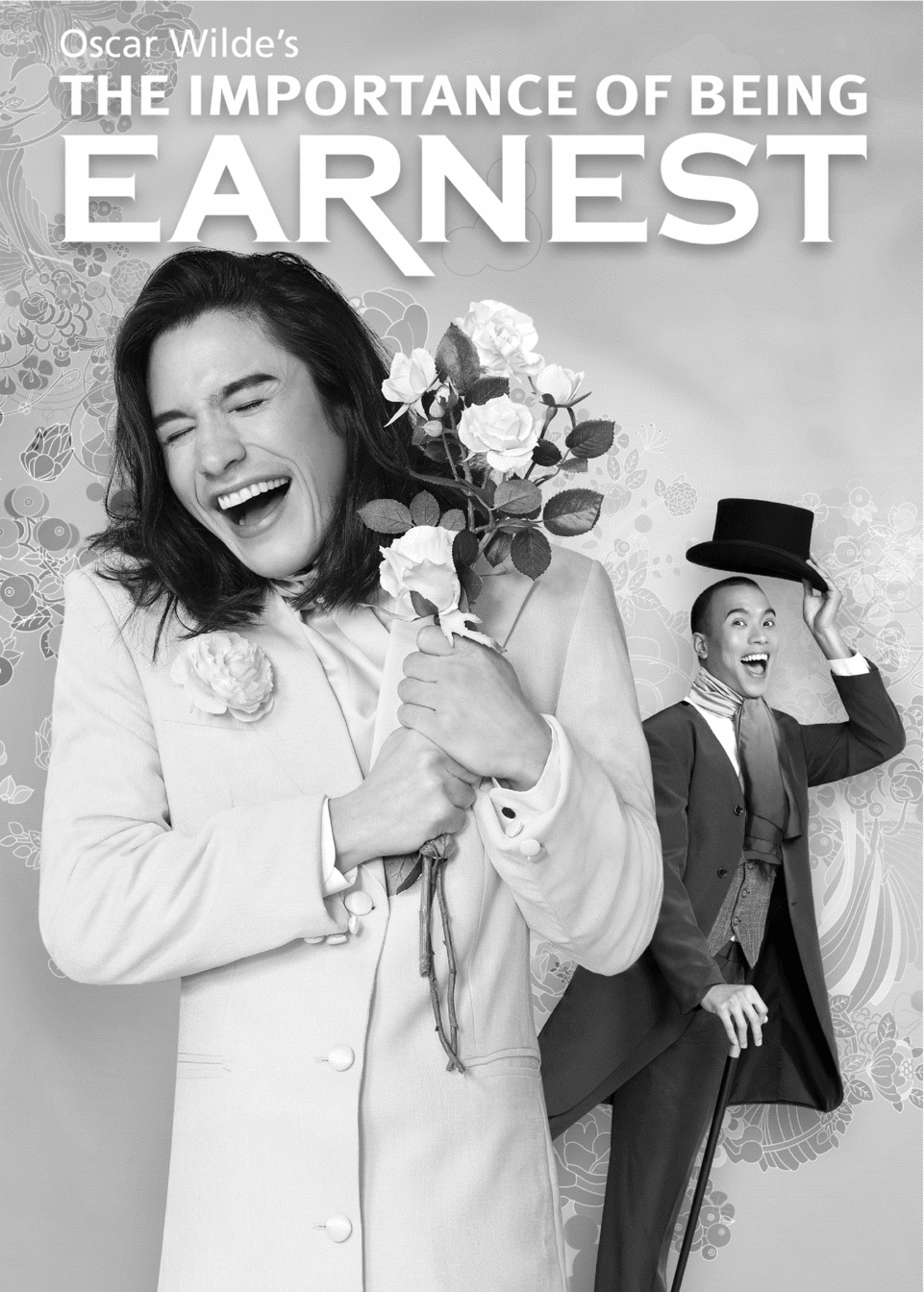
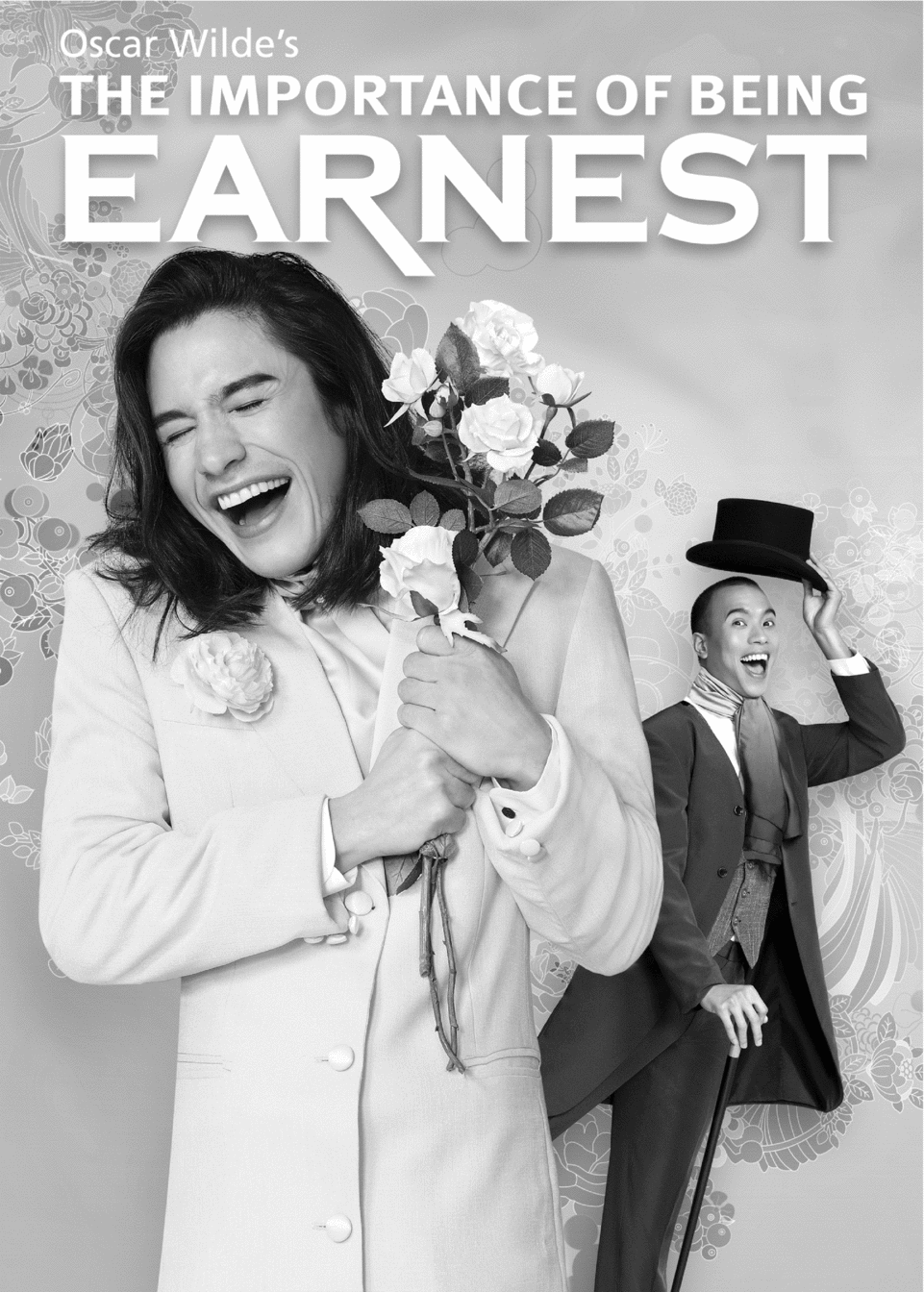
It should therefore come as little surprise that a good example of the more routine ways censorship functions in Singapore concerns the work of Oscar Wilde. In April 2009, Singapore's government censor, the Media Development Authority (MDA), stipulated that an all-male version of The Importance of Being Earnest by Wild Rice theatre company (Fig. 1) carry an age-sixteen advisory, with the rationale ‘Reinterpretation, all-male cast’ prominently displayed.Footnote 15 Now, as instances of censorship go, this may seem a trivial one, though no more or less so, one might suggest, than Wilde's play, which he subtitled ‘a trivial comedy for serious people’. Certainly, as censor, regulator and promoter of the creative industries, the MDA was within its remit to convene its Arts Consultative Committee, and impose a non-binding age advisory on a play. And, while in many other developed economies this may seem a little draconian, in principle it is non-contentious.
Poster image for The Importance of Being Earnest by Wild Rice, March–April 2009. Image courtesy of W!LD RICE.
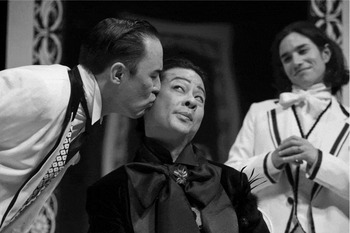
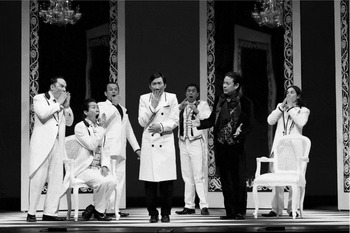
However, in its justification and effects, this attempt at regulation began to edge into censorship. The MDA's action followed a small number of complaints by evangelical Christians, some of whom regard homosexuality as a sin. Successive reviews of censorship policy have struggled to adjudicate on homosexual content. The 1992 report went so far as to note (quite possibly alluding to Wilde) that ‘in the particular context of the arts, much work of considerable merit has been created by homosexuals, sometimes with explicit homosexual themes’.Footnote 16 However, in 2007, the Singapore government elected to retain (though not to enforce) the colonial-era Section 377A of the penal code, which characterizes sexual acts between men as ‘gross indecency’. MDA guidelines at the time of Wild Rice's production cautioned against representations that appeared to ‘promote’ homosexuality.Footnote 17 Accordingly, the MDA issued the Earnest advisory on grounds that Wild Rice's production had ‘gay undertones’,Footnote 18 a conclusion arrived at in light of ambiguities over costuming. As Wild Rice director Ivan Heng, who played Lady Bracknell, explained it, ‘You know, if we had worn frocks, there wouldn't have been such a hoopla. The problem was men in suits’ (see Figs. 2 and 3).Footnote 19
(l to r) Daniel York as Algernon Moncrieff, Ivan Heng as Lady Bracknell, and Gavin Yap as Cecily Cardew in Wild Rice's production of The Importance of Being Earnest, March–April 2009. Image courtesy of W!LD RICE. Photographer Albert Lim K. S.

‘Men in suits’ (l to r) – Daniel York as Algernon Moncrieff, Chua En Lai as Gwendolen Fairfax, Zahim Albakri as Rev. Chasuble, Hossan Leong as Miss Prism, Brendon Fernandez as John Worthing, Ivan Heng as Lady Bracknell and Gavin Yap as Cecily Cardew in Wild Rice's production of The Importance of Being Earnest, March–April 2009. Image courtesy of W!LD RICE. Photographer Albert Lim K. S.

The arbitrariness of a pro-cross-dressing, anti-homosexual regulatory policy is what may qualify the decision as censorship, while also drawing attention to its material effects. Wild Rice's decision to stage Earnest for a three-week run in the six-hundred-seat Drama Centre theatre was in part taken on account of it being a set text in Singapore schools. However, the age advisory, imposed shortly before the production opened, led to cancellations by schools, as well as the automatic withdrawal of ticket subsidies for young people by a major funding body. In capitalist Singapore, the detrimental effects of censorship on a theatre company's bottom line can be part and parcel of restrictions on opportunities for people to see its work.
However, such energies are less likely to dissipate than to be redirected. This was demonstrated by two articles in the international press written in response to Wild Rice's production. The Wall Street Journal used Earnest as a starting point for its story ‘Singapore Lightens Up’. Written in advance of the advisory decision, it noted, ‘Theaters here increasingly are allowed to take on risqué social and political themes, a sign this tightly controlled Southeast Asian city-state is starting to loosen up.’Footnote 20 Meanwhile, the New York Times took the advisory as the main angle in its article about ‘conservative Singapore’, entitled ‘A Daring Take on a Wilde Play’.Footnote 21
Ostensibly contrasting, both articles reiterate the common Euro-American perception that Singapore is repressive, and repressed. Whether or not this is accurate is perhaps less significant than why this particular event should trigger the journalists’ interest. In the context of Singapore's censorship landscape, there was nothing exceptional about the advisory for Earnest – if anything, it is quite routine – while if any eyebrows were raised amongst the theatre community in advance of the production, it was not so much because Wild Rice was planning anything risqué, as that their all-male production seemed like a bold marketing ploy, not least since another professional production had enjoyed a successful run only two months earlier.
One can speculate that the story had ‘legs’ for the foreign press because it concerned the staging of a much-loved play by a well-known playwright; specifically, a play and playwright that are together emblematic in the liberal imagination of tragedy-tinged aesthetic disdain for – if not resistance to – restrictive social and sexual mores. It is a recognizable index against which the cultural dimension of a society's progress towards liberal democracy can be measured.
This is perhaps understandable, given the resilience of colonial-era identifications and appropriations within Singapore. Section 377A reproduces almost verbatim the so-called Labouchère Amendment to the British Criminal Law Amendments Act of 1885 that Wilde fell so notoriously foul of when convicted of gross indecency three months after the opening of The Importance of Being Earnest. Singapore's ‘founding father’, Lee Kuan Yew, has described himself as ‘the last Victorian’,Footnote 22 and arguably the so-called ‘Asian Values’ that were promoted by Lee and other East Asian leaders in the early 1990s as a culturalist explanation for rapid economic growth were as much informed by an elite colonial education as by a somewhat selective appeal to Confucianism.
Both in spite of and because of this, one sometimes has the sense that Singapore represents a kind of Anglo-American repressed, particularly in matters of sexual morality and corporal discipline. If Wilde was an exemplary ‘other Victorian,’ of the sort Foucault refers to in The History of Sexuality, then Singaporeans are viewed (and sometimes self-identify) as today's ‘other other Victorians’: proudly prudish, and all the more transgressive for it. Typically summarized in Eton-educated Pico Iyer's arch description of ‘a British boarding school with Chinese prefects’,Footnote 23 the prurient and sometimes appalled fascination of the Western media with Singapore's rather perplexing version of modernity is as much symptom as story.
The most recent mainstream manifestation of this dynamic passes through a further iteration. In Freedom for Sale (2009), the British political journalist John Kampfner asks, ‘Why is it that so many people around the world appear willing to give up freedoms in return for either security or prosperity?’Footnote 24 Over the course of the book, he identifies the same conundrum at work in countries with a variety of political systems, from China and Russia to Britain and the United States. But:
The model is Singapore, the state in which I was born, and which has long intrigued me. I am constantly struck by the number of people there I know – very well travelled with long stints at Western universities – who are keen to defend a system that requires an almost total abrogation of freedom of expression in return for a very good material life. This is the pact. In each country it varies; citizens hand over different freedoms in accordance with their own customs and priorities.Footnote 25
The fact that Kampfner proposes a repressive hypothesis – namely that personal greed and authoritarian capitalism mean there is not as much freedom as there used to be, and that this can be overcome by a change in values and economic policy – does not diminish the pertinence of his criticisms. However, it may explain why, over the course of the book, Kampfner is unable to answer the question he poses on the first page. Phrased as it is (why are so many people willing to give up freedom for security or prosperity?), not only does it privilege one discursive framework at the expense of others, but it establishes a dichotomy between terms that may in fact be mutually informing. Kampfner's inference that a Western university education should be protection enough against authoritarianism is indicative of a wider assumption that ‘freedom’ can be conceived independently of repression. But what if restrictions on such freedoms are intrinsic to the desire and capacity for self-expression? After all, as Kampfner's own biography underscores – he was born in Singapore in 1962, the final year of British rule – only a matter of decades ago, those same universities contributed to the production and maintenance of an episteme that saw no contradiction between Enlightenment values and colonial domination. And while representatives of today's Singapore government tend to defend the ‘Singapore model’ against Western criticisms by highlighting the distinctiveness of its sociocultural make-up and political culture, the legacy of colonial rule continues to bear upon attitudes towards social control.Footnote 26
The exception and the rule
This is well illustrated by the history of theatre regulation. The roots of the 2001 Public Entertainments and Meetings Act, which covers theatre performances today, can be traced to the Theatres Ordinance of 1895 (the year The Importance of Being Earnest premiered and Wilde was convicted). That statute established both the parameters and ambiguities that have characterized theatre regulation in Singapore ever since. In requiring all venues where theatrical performances were taking place to secure a licence, the ordinance empowered the colonial authorities to determine where and when such performances were permissible, as well as their nature and scope. ‘Theatre’ was defined as ‘any room booth tent or other place open to the public’ where a variety of named genres ‘or theatrical performance of any sort whatever’ was staged. A licence could be withdrawn if, among other things, ‘any performance therein is of an indecent immoral or improper nature’.Footnote 27 Appeal and additional licensing details were left to the discretion of the Governor in Council.
Subsequent laws would reflect changes in technology, leisure patterns and political climate. The Theatres Ordinance 1908 added ‘cinematic exhibition’ to its list of events that might take place within a theatre, along with stipulating additional safety regulations, and provision for actors and audiences at theatres ‘outside Municipal limits’.Footnote 28 This was in turn subsumed into the Public Entertainments Ordinance 1958, which encompassed a wider range of events, and for the first time clarified the need for both venue and event to be approved. While allowing for a number of exemptions (such as government events and religious ceremonies), and granting the minister greater latitude in its application, the ordinance also added ‘offensive’ and ‘subversive’ to the list of grounds for refusing or withdrawing a licence.Footnote 29 This reflected the political situation at the time. Since 1948, the authorities in Singapore and Malaya had been fighting a war against the communist guerillas of the Malayan National Liberation Army. A state of emergency was declared in June 1948, with censorship appearing first on a twenty-one-point list of powers conferred on the governor.
The end of the Malayan Emergency was declared in 1960, a year after the PAP, led by Lee Kuan Yew, came to power in the first comprehensive general election for a legislative assembly. However, the complex political and ideological wrangling that had taken place over the preceding decade against the backdrop of the Emergency, as well as a number of social disturbances with a communalist dimension and continuing concerns over regional stability, had a lasting influence on the government's attitudes and operations. The most explicit legacy of the Emergency would be the retention to the present day of the Internal Security Act, which allows for detention without trial. Less easy to quantify, but for that reason more pervasive, is an anxiety on the part of the government about the fragility of Singapore's social fabric, and the threat from external influences. This is only exacerbated by the resource-poor city state's reliance on the global economy for its prosperity, and manifests itself in many aspects of public and private life, including a widely disseminated national narrative, the ‘Singapore Story’, and ‘Total Defence’, a society-wide programme that aims to ‘protect the Singaporean way of life’ through support for and contributions to military, civic, economic, social and psychological resilience.Footnote 30
This combination of colonial influence on the rule of law and the legacy of the Emergency has an impact on the censorship landscape in Singapore more fully than is often recognized. It does so through the flexibility that it allows the authorities in responding to different regulatory scenarios. Decisions are often taken against a historical backdrop that is seldom recognized explicitly by any of the parties involved. One example is the compromise solution arrived at by the MDA and theatre company Drama Box over the staging of a forum theatre performance about terrorism and race relations, Trick or Threat?, in July 2007. The MDA refused to grant a licence for Drama Box to stage the performance in its proposed outdoor city-centre location, on the grounds that the play dealt with sensitive topics, and that responses could provoke social unrest. Eventually, the performance took place in a marquee in a distant suburb of the city. Logically, one might have thought that, if the MDA's concerns about the inflammatory potential of the play were well founded, then a shift in location would not, in itself, mitigate them. Rather, this concession on the part of the MDA seems to recall the otherwise long-forgotten distinctions of the early theatre ordinances between the municipality and more remote parts of the island, as well as the long-standing inclusion of ‘tent’ amongst the list of permitted theatrical venues.
On the other hand, in January 2008, a ‘Complaints Choir’, formed temporarily to sing about everyday gripes and irritations in Singapore in a variety of outdoor and indoor locations, announced that its projected public performances would be cancelled. They were replaced with private performances in the former Parliament chamber, which is now an arts venue. This was in protest at the MDA's stipulation that only Singaporean members of the choir could participate. Six of the choir's fifty participants – including its Malaysian conductor – were foreigners, and the project was initiated as part of a local theatre festival by two Finnish artists who have formed similar choirs in cities around the world.Footnote 31 Even members of the PAP were taken aback by the decision, and worried that it would adversely have an impact on Singapore's international reputation. In response to questions in Parliament, the minister for information, communications and the arts stated that the objection was to ‘the idea of foreigners coming to organize and to lead Singaporeans to complain about our domestic issues’, and that it would not be ‘desirable or good precedent for foreigners to take such a lead’.Footnote 32
As the minister recognized at the time, prohibiting foreigners from performing is at odds with the norm in Singapore, which hosts hundreds of international events annually. However, his language indicates that, trivial as the Complaints Choir affair may appear to the casual observer, the government had chosen to interpret its proposed actions in historical terms. Concerns over the threat of political subversion by external agents goes back at least to the First World War. A Special Branch section of the Police was formed in 1916, and its work in countering subversion was instrumental in bringing the Malayan Emergency to an end. Communist influence on domestic politics continued to be a concern of the government long after independence, and in 1966 Special Branch was re-established as the Internal Security Department. The 2001 Public Entertainments and Meetings Act retained the 1958 prohibition against ‘subversive’ works. Somewhat unwittingly, the Complaints Choir had touched a historical nerve.
Wilde Rice
But if this apparently disproportionate response was, as the minister stated, the exception, then what is the rule? In the same debate, another minister felt that the opportunity to reiterate that ‘everybody has to comply with the law’ contributed to Singapore's ‘brand value’.Footnote 33 Taken together, these potentially contrasting positions underscore the distinctiveness of Singapore's legal and regulatory environment, which combines the rule of law with a lingering sense of exception. Occasionally, as with the Complaints Choir, the latter manifests itself in an outright prohibition. More often, however, the somewhat paradoxical legacy of the draconian measures of the Emergency is a state that maintains the control it does more through participation, flexibility and reflexive assessments of its own performance, than through prohibition.
Coercion in such a scenario is inextricable from consensus. As Kampfner recognizes, it is not only the government, but many Singaporeans and permanent residents who will counter international criticisms by pointing to the high levels of health, wealth, education, property ownership and personal safety enjoyed by the majority who live there.
One must be cautious here. It is no longer sufficient, pace Kampfner, to presume that a critique of censorship will serve to diminish rather than entrench it. Within the field of theatre and performance studies, as elsewhere, it may be that an increase in censorship-themed artworks, publications and conferences is as indicative of the ever-expanding instrumentalization of censorship as it is of ongoing concerns over freedom of expression. And yet, even as I stand by the logic of the preceding sentence, there is an elision that experience compels me to contest. It is, perhaps, a Foucauldian truism that apparently diverse positions and divergent practices are constantly coagulating into a shared discourse in the service of power (whatever its source or ends). All the more reason, then, to continue excavating the differences between them, which in this case concerns the way The Importance of Being Earnest reframes some of the mechanisms of repression. From the opening exchange onwards, we are aware that the play is a satire on the pleasures and costs of keeping up appearances:
Morning-room in Algernon's flat in Half-Moon Street. The room is luxuriously and artistically furnished. The sound of a piano is heard in the adjoining room. laneis arranging afternoon tea on the table, and after the music has ceased, algernonenters.
ALGERNON Did you hear what I was playing, Lane?
LANE I didn't think it polite to listen, sir.Footnote 34
More specifically, as Lane indicates, it concerns the relationship between what we perceive experientially, register cognitively and express socially. In the play, the tensions in this relationship are exploited to comic effect, but we do neither it nor ourselves justice if we laugh it off as ‘satirical nonsense’, or, conversely, take it too much to heart as a play about being ‘true to yourself’ – both common interpretations.Footnote 35 Wilde condensed four original acts into three, and as the play unfolds one becomes aware just how rigorous is its inconsequentiality. Reviewing the original production, George Bernard Shaw described Wilde as ‘our only thorough playwright’,Footnote 36 and in my own experience this makes the pleasure of watching the play double-edged. The joke is as much on us as with us, laughter consistently drawn out in involuntary reaction to expectations not only confounded, but foreclosed. The Wildean epigram does not just replace an expected meaning with an unexpected one, but a plurality with a singularity. Hermetic, abrupt, seemingly inevitable, an epigram is the enactment of a repression. Insofar as we recognize it in ourselves, we are held in its thrall.
By this token, our laughter is itself the expression of our silencing. But epigrams are only one form, and laughter only one result, of a characteristic of any number of art works: they are unanswerable. They stump us; take away our language. Indeed, by some accounts, autocracy is the very definition of art, since it is what defines it as an event, incommensurable with the world as it existed previously, forcing an accommodation.
It takes a while, but we get our language back – refreshed and retooled, if we are lucky, and better equipped for a critical engagement with the world around us. But, as I have sought to demonstrate over the course of this article, that is not the only language that such work produces. Other kinds of discourse compete to resolve the gap in meaning and the muddling of affect that the artwork leaves behind. In May 2010, Wild Rice, the company that staged the all-male version of The Importance of Being Earnest, received a funding cut of S$20,000 from its annual S$190,000 National Arts Council grant. According to Artistic Director Ivan Heng, the council said this was because his productions promoted ‘alternative lifestyles’, were critical of government policies, and satirized political leaders.Footnote 37 In a newspaper interview later that year, the chief executive of the council stated that the cut was ‘a gentle message to be sent that the conditions have to be complied with’. He went on, ‘The difference, of course, was that we didn't fudge it, which was probably the first time such a clear statement was made, explaining the reasons for the cut, rather than hiding behind the economy or what-have-you.’Footnote 38
Conclusion
In her 2007 article ‘The Limits of Censorship’, Janelle Reinelt proposed an analytical distinction between military censorship in times of war; political censorship in times of peace; and moral, religious and corporate censorship. This range of typologies informed her argument that ‘issues of censorship always arise in particular specific conditions that make for important differences of judgement that must be understood and articulated’.Footnote 39 In this article, I have explored some of the ‘specific conditions’ of a censorship environment where all five of Reinelt's categories of censorship can be identified, sometimes in the same instance. To this should be added the invisible or inarticulate presence of some of the silences and affective intensities I alluded to at the beginning of this enquiry.
In some regards, it is this very complexity that renders Singapore so distinctive, limiting the wider applicability of my analysis. Yet, dovetailed as it increasingly is with the rhetoric of the creative industries and the knowledge-based economy, censorship in Singapore is as much the product of the city state's globalized connectivity as it is of any local circumstances. The nation state may remain the central arbiter and administrator of laws and rules governing expression, but it is clearly insufficient as a framework for explaining how and why such laws have the effects they do. While the objects of censorship and the relative dominance of particular elements within the discursive environment may vary widely across political systems, the fact of their multiplicity and of their interrelatedness does not. Moreover, in a time of dynamic changes in the global balance of economic, political and cultural power, such regimes are increasingly interrelated. This, in turn, has the effect of raising whichever stakes may be at issue in any specific instance of censorship, as well as increasing the scope and diversity of scenarios where censoriousness of one form or another may be at work, including ostensibly critical discussions of censorship.
Even at its mildest, political censorship constrains human flourishing. And yet I am in no way certain that my own interests have not been well served as a result, and that I may, through my words and actions, have returned the favour. The theatre is a place where the right to free expression is routinely articulated and reaffirmed, but unless we can account honestly and realistically for what regulates those expressions – in states, in institutions, in subjects and in artworks themselves – we cannot properly apprehend the expansive scope of that freedom.