


%20--%3e%3c!DOCTYPE%20svg%20PUBLIC%20'-//W3C//DTD%20SVG%201.0//EN'%20'http://www.w3.org/TR/2001/REC-SVG-20010904/DTD/svg10.dtd'%3e%3csvg%20version='1.0'%20id='Layer_1'%20xmlns='http://www.w3.org/2000/svg'%20xmlns:xlink='http://www.w3.org/1999/xlink'%20x='0px'%20y='0px'%20width='64px'%20height='64px'%20viewBox='5.5%20-3.5%2064%2064'%20enable-background='new%205.5%20-3.5%2064%2064'%20xml:space='preserve'%3e%3cg%3e%3ccircle%20fill='%23FFFFFF'%20fill-opacity='0'%20cx='37.785'%20cy='28.501'%20r='28.836'/%3e%3cpath%20fill='%23595959'%20d='M37.441-3.5c8.951,0,16.572,3.125,22.857,9.372c3.008,3.009,5.295,6.448,6.857,10.314%20c1.561,3.867,2.344,7.971,2.344,12.314c0,4.381-0.773,8.486-2.314,12.313c-1.543,3.828-3.82,7.21-6.828,10.143%20c-3.123,3.085-6.666,5.448-10.629,7.086c-3.961,1.638-8.057,2.457-12.285,2.457s-8.276-0.808-12.143-2.429%20c-3.866-1.618-7.333-3.961-10.4-7.027c-3.067-3.066-5.4-6.524-7-10.372S5.5,32.767,5.5,28.5c0-4.229,0.809-8.295,2.428-12.2%20c1.619-3.905,3.972-7.4,7.057-10.486C21.08-0.394,28.565-3.5,37.441-3.5z%20M37.557,2.272c-7.314,0-13.467,2.553-18.458,7.657%20c-2.515,2.553-4.448,5.419-5.8,8.6c-1.354,3.181-2.029,6.505-2.029,9.972c0,3.429,0.675,6.734,2.029,9.913%20c1.353,3.183,3.285,6.021,5.8,8.516c2.514,2.496,5.351,4.399,8.515,5.715c3.161,1.314,6.476,1.971,9.943,1.971%20c3.428,0,6.75-0.665,9.973-1.999c3.219-1.335,6.121-3.257,8.713-5.771c4.99-4.876,7.484-10.99,7.484-18.344%20c0-3.543-0.648-6.895-1.943-10.057c-1.293-3.162-3.18-5.98-5.654-8.458C50.984,4.844,44.795,2.272,37.557,2.272z%20M37.156,23.187%20l-4.287,2.229c-0.458-0.951-1.019-1.619-1.685-2c-0.667-0.38-1.286-0.571-1.858-0.571c-2.856,0-4.286,1.885-4.286,5.657%20c0,1.714,0.362,3.084,1.085,4.113c0.724,1.029,1.791,1.544,3.201,1.544c1.867,0,3.181-0.915,3.944-2.743l3.942,2%20c-0.838,1.563-2,2.791-3.486,3.686c-1.484,0.896-3.123,1.343-4.914,1.343c-2.857,0-5.163-0.875-6.915-2.629%20c-1.752-1.752-2.628-4.19-2.628-7.313c0-3.048,0.886-5.466,2.657-7.257c1.771-1.79,4.009-2.686,6.715-2.686%20C32.604,18.558,35.441,20.101,37.156,23.187z%20M55.613,23.187l-4.229,2.229c-0.457-0.951-1.02-1.619-1.686-2%20c-0.668-0.38-1.307-0.571-1.914-0.571c-2.857,0-4.287,1.885-4.287,5.657c0,1.714,0.363,3.084,1.086,4.113%20c0.723,1.029,1.789,1.544,3.201,1.544c1.865,0,3.18-0.915,3.941-2.743l4,2c-0.875,1.563-2.057,2.791-3.541,3.686%20c-1.486,0.896-3.105,1.343-4.857,1.343c-2.896,0-5.209-0.875-6.941-2.629c-1.736-1.752-2.602-4.19-2.602-7.313%20c0-3.048,0.885-5.466,2.658-7.257c1.77-1.79,4.008-2.686,6.713-2.686C51.117,18.558,53.938,20.101,55.613,23.187z'/%3e%3c/g%3e%3c/svg%3e)
%20--%3e%3c!DOCTYPE%20svg%20PUBLIC%20'-//W3C//DTD%20SVG%201.0//EN'%20'http://www.w3.org/TR/2001/REC-SVG-20010904/DTD/svg10.dtd'%3e%3csvg%20version='1.0'%20id='Layer_1'%20xmlns='http://www.w3.org/2000/svg'%20xmlns:xlink='http://www.w3.org/1999/xlink'%20x='0px'%20y='0px'%20width='64px'%20height='64px'%20viewBox='5.5%20-3.5%2064%2064'%20enable-background='new%205.5%20-3.5%2064%2064'%20xml:space='preserve'%3e%3cg%3e%3ccircle%20fill='%23FFFFFF'%20fill-opacity='0'%20cx='37.637'%20cy='28.806'%20r='28.276'/%3e%3cg%3e%3cpath%20fill='%23595959'%20d='M37.443-3.5c8.988,0,16.57,3.085,22.742,9.257C66.393,11.967,69.5,19.548,69.5,28.5c0,8.991-3.049,16.476-9.145,22.456%20C53.879,57.319,46.242,60.5,37.443,60.5c-8.649,0-16.153-3.144-22.514-9.43C8.644,44.784,5.5,37.262,5.5,28.5%20c0-8.761,3.144-16.342,9.429-22.742C21.101-0.415,28.604-3.5,37.443-3.5z%20M37.557,2.272c-7.276,0-13.428,2.553-18.457,7.657%20c-5.22,5.334-7.829,11.525-7.829,18.572c0,7.086,2.59,13.22,7.77,18.398c5.181,5.182,11.352,7.771,18.514,7.771%20c7.123,0,13.334-2.607,18.629-7.828c5.029-4.838,7.543-10.952,7.543-18.343c0-7.276-2.553-13.465-7.656-18.571%20C50.967,4.824,44.795,2.272,37.557,2.272z%20M46.129,20.557v13.085h-3.656v15.542h-9.944V33.643h-3.656V20.557%20c0-0.572,0.2-1.057,0.599-1.457c0.401-0.399,0.887-0.6,1.457-0.6h13.144c0.533,0,1.01,0.2,1.428,0.6%20C45.918,19.5,46.129,19.986,46.129,20.557z%20M33.042,12.329c0-3.008,1.485-4.514,4.458-4.514s4.457,1.504,4.457,4.514%20c0,2.971-1.486,4.457-4.457,4.457S33.042,15.3,33.042,12.329z'/%3e%3c/g%3e%3c/g%3e%3c/svg%3e)
Introduction
Chimeric antigen receptor T-cell (CAR-T) therapy is an advanced form of immunotherapy where T lymphocytes are genetically engineered to recognize and eliminate tumor cells. This modification enables T cells to express a synthetic receptor capable of identifying specific antigens on malignant cells, promoting a targeted immune response. Since its introduction, CAR-T cell therapy has been used in treating hematologic malignancies, including refractory or relapsed B-cell leukemias and lymphomas, demonstrating significant remission rates. Reference Brudno, Maus and Hinrichs1,Reference Kayser2
Multiple myeloma, characterized by clonal plasma cell proliferation in the bone marrow, remains challenging. Despite advances with immunomodulatory drugs, proteasome inhibitors, and anti-CD38 monoclonal antibodies, prognosis for relapsed or refractory disease is poor. In this context, B cell maturation antigen (BCMA)-directed CAR-T cell therapies have emerged as an innovative and highly effective option, with overall response rates of 70% to 95% in clinical trials. Idecabtagene vicleucel and ciltacabtagene autoleucel, are notable examples. Reference Xu, Guan and Xu3
CAR T-cell therapy involves ex vivo genetic modification and expansion of autologous T lymphocytes, followed by reinfusion after lymphodepleting chemotherapy. While transformative for multiple myeloma, this approach is associated with serious adverse events, including cytokine release syndrome (CRS), neurotoxicity, and infectious complications. Reference Zhang, Qin, Shou, Liu, Wang and Zhou4 Prolonged immunosuppression, cytopenias, and B-cell aplasia render patients vulnerable to various pathogens. Despite the clinical severity of posttreatment infections, recent systematic reviews comprehensively addressing their incidence and risk factors in multiple myeloma patients are lacking. Reference Brudno, Maus and Hinrichs1,Reference Wang and Wang5–Reference Telli Dizman, Aguado and Fernández-Ruiz7
This study aims to systematically review the literature to determine the overall incidence of infections in multiple myeloma patients undergoing CAR T-cell therapy, identify common infection types and examine their timing relative to the CAR-T therapeutic course. It also seeks to evaluate both patient- and treatment-related factors, providing a comprehensive assessment of infectious complications associated with this approach.
Methods
Systematic literature review
This review followed the PRISMA (Preferred Reporting Items for Systematic Reviews and Meta-Analyses) methodology. Reference Moher, Liberati, Tetzlaff and Altman8 It was registered on PROSPERO on January 20th, 2025 (CRD42025640975). Institutional approval was not required.
Search strategy
A comprehensive literature search was performed in PubMed, Embase, Scopus, CINAHL, Cochrane, and Google Scholar, for studies published up to February 2025 reporting infectious outcomes in patients with multiple myeloma treated with CAR-T therapy. The search strategy used controlled vocabulary and free-text terms related to hematological malignancies, CAR-T therapy, and infections. No language restrictions were applied; only full-text articles were eligible. Reference lists were manually screened. Detailed search strategies are in Supplementary Material.
Inclusion criteria
Studies were eligible if they included adult or pediatric multiple myeloma patients receiving CAR-T therapy (BCMA-directed or other strategies) and reported infectious outcomes, including incidence, pathogen identification, timing, severity, or risk factors. Eligible designs were phase 2 and phase 3 clinical trials, cohort studies, and case-control studies.
Exclusion criteria
Studies with <20 participants; case reports; phase 1 clinical trials; non-human studies; review articles; conference abstracts; and studies without infection outcomes; studies focused exclusively on non-infectious complications; and studies of anti-CD19 CAR-T therapy without a BCMA-directed component were excluded.
Outcomes
Primary outcomes included: (1) overall infection incidence; (2) infection types (bacterial, viral, fungal, and parasitic); (3) timing relative to CAR-T infusion; (4) risk factors.
Secondary outcomes included: infection severity, assessed using Common Terminology Criteria for Adverse Events (CTCAE), version 5.0 criteria, 9 or other criteria; pathogen profiles (including multidrug-resistant organisms); antimicrobial use; infection-related complications.
Study selection and data extraction
Titles and abstracts were screened using Rayyan Reference Ouzzani, Hammady, Fedorowicz and Elmagarmid10 followed by full-text evaluation, conducted independently by two trained investigators (A.L.F.C. and A.F.C.). Data extraction from included studies was performed by two of nine independent investigators (B.B.Z., C.H.S.T., E.V.C., I.P., M.K.H., N.F.C., P.D.C., P.S.C., V.S.M.), using a standardized data abstraction form (Supplementary Appendix 2). Discrepancies were resolved by discussion or a third reviewer.
Extracted variables included study characteristics, patient characteristics, infectious outcomes, timing, risk factors, antimicrobial therapies, and outcomes.
Study selection followed PRISMA guidelines (Figure 1).
Literature search for articles evaluating infectious complications after CAR T-cell therapy in patients with multiple myeloma.

Quality assessment and risk of bias
Methodological quality was assessed using the Downs and Black scale, Reference Downs and Black11 a validated tool for assessing the methodological quality and risk of bias in randomized and non-randomized studies, by two independent reviewers, with discrepancies resolved by third reviewer. Question 27 was modified to a yes/no format (maximum score 28). Scores were categorized as good (≥18), fair (14–17), or poor (<14).
Statistical analysis and evidence synthesis
Due to heterogeneity, a formal meta-analysis was not performed. Data were synthesized descriptively.
Infection incidence was calculated as the proportion of patients experiencing at least one infectious case, with 95% confidence intervals estimated using exact binomial (Clopper–Pearson) methods. Infection-related mortality rates were summarized with 95% confidence intervals using the Wilson method. Forest plots illustrated variability without statistical pooling.
Infection etiology was analyzed at the event level. Proportions of bacterial, viral, and fungal involvement were extracted; categories were not mutually exclusive and therefore did not sum to 100%.
Temporal patterns used study-specific definitions (commonly a 30-day threshold). Severe infection rates and effect estimates (ORs, HRs, and RRs) were summarized.
Patient consent statement
As a systematic review of published deidentified data, no patient consent was required.
Results
The search identified 7,810 records. After screening, 19 studies were included in the qualitative synthesis (Figure 1).
These studies, published between 2021 and 2025 comprised 1,495 patients with relapsed or refractory multiple myeloma treated with CAR T-cell therapy. Most studies were retrospective cohort analyses Reference Banerjee, Marsal and Huang12–Reference Trando, Ghamsari, Yeung, Costello, Saunders and Jeong27 (16 of 19 studies), frequently based on real-world or early-access program data. The remaining studies included two phase II trials Reference Mi, Zhao and Jing28,Reference Wang, Cao and Gu29 and one quasi-experimental study. Reference Oliver-Caldés, González-Calle and Cabañas30 Most cohorts originated from the United States Reference Banerjee, Marsal and Huang12,Reference Logue, Peres and Hashmi14–Reference Reyes, Huang and Lo16,Reference Little, Tandon and Hong18,Reference Hammons, Haider and Portuguese21,Reference Dima, Rashid and Davis22,Reference Wesson, Dima and Suleman24,Reference Sidana, Patel and Peres26,Reference Trando, Ghamsari, Yeung, Costello, Saunders and Jeong27 (n = 10) and China Reference Wang, Li and Xia13,Reference Zhou, Wang and Cheng17,Reference Cheng, Ji and Wang19,Reference Mi, Zhao and Jing28,Reference Wang, Cao and Gu29 (n = 5), with additional contributions from Spain, Reference Oliver-Caldés, González-Calle and Cabañas30 France, Reference Caillot, Sleiman and Lafon23 Germany, Reference Frenking, Zhou and Wagner25 and one international multicenter consortium. Reference Rejeski, Hansen and Bansal20
Patients were consistently heavily pretreated, with a median of 4 to 6 prior lines of therapy, frequently including immunomodulatory agents, proteasome inhibitors, and anti-CD38 monoclonal antibodies. Triple-class refractory disease was common, approximately 89% of patients met this criterion. Prior autologous stem cell transplantation was reported in approximately 80% to 100% of patients, whereas prior allogeneic transplantation was rare. Reference Hammons, Haider and Portuguese21 Median age ranged from the mid-50s to mid-60s, and the follow-up duration varied from approximately 3 months to 36 months. Reference Banerjee, Marsal and Huang12–Reference Oliver-Caldés, González-Calle and Cabañas30
Most studies evaluated commercially available BCMA-directed CAR T-cell products, predominantly idecabtagene vicleucel (12 studies) and ciltacabtagene autoleucel (9 studies). A small number of cohorts included investigational BCMA constructs, dual-targeting approaches, or institutionally developed CAR-T products. Reference Zhou, Wang and Cheng17,Reference Cheng, Ji and Wang19,Reference Oliver-Caldés, González-Calle and Cabañas30 One study compared infectious outcomes across BCMA-directed and non–BCMA-directed CAR-T therapies and bispecific antibodies in patients with prior allogeneic transplantation. Reference Hammons, Haider and Portuguese21 Infection outcomes were evaluated in most studies, although definitions, diagnostic criteria, and follow-up windows varied. Four studies explicitly defined microbiologically confirmed infections while also accepting clinically diagnosed infections. Reference Logue, Peres and Hashmi14,Reference Kambhampati, Sheng and Huang15,Reference Zhou, Wang and Cheng17,Reference Cheng, Ji and Wang19 Infection severity was graded using the Common Terminology Criteria for Adverse Events (CTCAE), version 5.0 9 in most cohorts (14 studies), Reference Wang, Li and Xia13–Reference Reyes, Huang and Lo16,Reference Little, Tandon and Hong18,Reference Cheng, Ji and Wang19,Reference Hammons, Haider and Portuguese21–Reference Caillot, Sleiman and Lafon23,Reference Frenking, Zhou and Wagner25–Reference Oliver-Caldés, González-Calle and Cabañas30 while four studies Reference Banerjee, Marsal and Huang12,Reference Zhou, Wang and Cheng17,Reference Rejeski, Hansen and Bansal20,Reference Wesson, Dima and Suleman24 applied institutional or alternative grading criteria. One study Reference Reyes, Huang and Lo16 did not report a formal severity grading. Across the included studies, some cohorts reported specific infectious etiologies or syndrome-level diagnoses, Reference Logue, Peres and Hashmi14,Reference Zhou, Wang and Cheng17,Reference Little, Tandon and Hong18,Reference Caillot, Sleiman and Lafon23,Reference Wesson, Dima and Suleman24,Reference Oliver-Caldés, González-Calle and Cabañas30 whereas others provided broader categorizations by pathogen class, including bacterial, viral, fungal, and, more rarely, parasitic infections. Reference Wang, Li and Xia13,Reference Reyes, Huang and Lo16,Reference Cheng, Ji and Wang19–Reference Hammons, Haider and Portuguese21,Reference Sidana, Patel and Peres26,Reference Mi, Zhao and Jing28 Several cohorts further classified infections by anatomic site, including lower and upper respiratory tract infections, bloodstream infections, gastrointestinal infections, genitourinary infections, and skin or soft tissue involvement. Reference Wang, Li and Xia13–Reference Kambhampati, Sheng and Huang15,Reference Little, Tandon and Hong18,Reference Cheng, Ji and Wang19,Reference Wesson, Dima and Suleman24,Reference Trando, Ghamsari, Yeung, Costello, Saunders and Jeong27–Reference Wang, Cao and Gu29
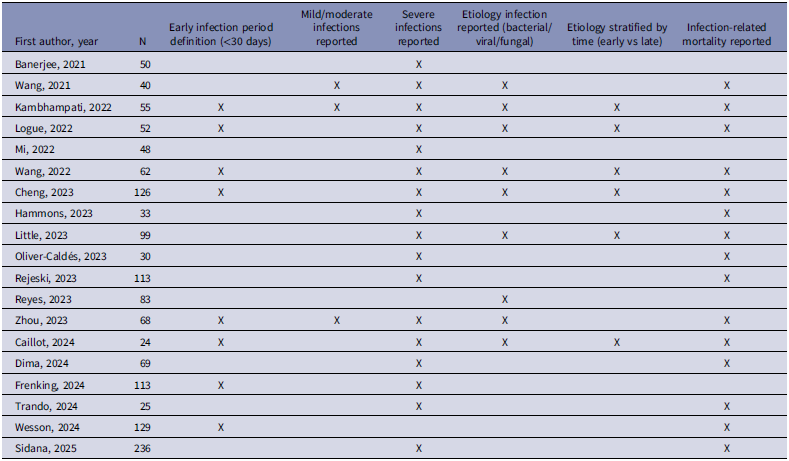
Immune effector cell–related toxicities and their management were also explored as potential predictors, including CRS, Immune Effector Cell-Associated Neurotoxicity Syndrome (ICANS), and the use of immunosuppressive therapies such as corticosteroids or tocilizumab; however, these variables were not consistently associated with infection risk. Reference Little, Tandon and Hong18 Across studies, impaired immune recovery and hematologic toxicity were consistently associated with higher infection rates and infection-related mortality. Reference Wang, Li and Xia13,Reference Zhou, Wang and Cheng17–Reference Rejeski, Hansen and Bansal20,Reference Wesson, Dima and Suleman24–Reference Sidana, Patel and Peres26 Patients with high CAR-HEMATOTOX scores had an eightfold higher rate of severe infections (40% vs 5%) and higher 1-year non-relapse mortality (13% vs 2%), Reference Rejeski, Hansen and Bansal20 while hypogammaglobulinemia independently predicted late respiratory infections (HR 6.06). Reference Little, Tandon and Hong18 Similarly, elevated baseline EASIX scores were associated with severe late-onset infections and impaired hematopoietic recovery. Reference Frenking, Zhou and Wagner25 Supportive care and prophylactic strategies varied widely across studies. Reference Wang, Li and Xia13–Reference Kambhampati, Sheng and Huang15,Reference Zhou, Wang and Cheng17–Reference Rejeski, Hansen and Bansal20,Reference Dima, Rashid and Davis22,Reference Wesson, Dima and Suleman24,Reference Mi, Zhao and Jing28 Although antiviral prophylaxis was commonly reported across studies, several cohorts explicitly described the use of acyclovir or valacyclovir–based antiviral prophylaxis consistent with herpes simplex virus and varicella–zoster virus (HSV/VZV) prevention strategies. Reference Logue, Peres and Hashmi14,Reference Kambhampati, Sheng and Huang15,Reference Zhou, Wang and Cheng17–Reference Rejeski, Hansen and Bansal20,Reference Frenking, Zhou and Wagner25 In contrast, cytomegalovirus (CMV)-specific prophylaxis was not routinely reported, and CMV monitoring strategies were rarely detailed. While CMV reactivation or CMV DNAemia was documented in several cohorts, Reference Caillot, Sleiman and Lafon23,Reference Wesson, Dima and Suleman24,Reference Trando, Ghamsari, Yeung, Costello, Saunders and Jeong27 reporting of CMV prevention approaches remained heterogeneous, precluding conclusions regarding routine CMV prophylaxis practices. Pneumocystis jirovecii pneumonia prophylaxis was routinely administered, with no confirmed cases of Pneumocystis infection reported. Antibacterial and antifungal prophylaxis were generally restricted to periods of neutropenia or corticosteroid exposure. Many cohorts reported intravenous immunoglobulin (IVIG) replacement for hypogammaglobulinemia Reference Wang, Li and Xia13–Reference Kambhampati, Sheng and Huang15,Reference Zhou, Wang and Cheng17–Reference Rejeski, Hansen and Bansal20,Reference Sidana, Patel and Peres26–Reference Mi, Zhao and Jing28,Reference Oliver-Caldés, González-Calle and Cabañas30 and granulocyte colony-stimulating factor (G-CSF) support, Reference Wang, Li and Xia13–Reference Kambhampati, Sheng and Huang15,Reference Little, Tandon and Hong18–Reference Rejeski, Hansen and Bansal20,Reference Wesson, Dima and Suleman24–Reference Trando, Ghamsari, Yeung, Costello, Saunders and Jeong27 with variability in initiation timing, and duration. These differences likely contributed to heterogeneity in infection incidence across studies (Table 1). Considerable heterogeneity was observed in how infectious outcomes were reported across studies, including differences in the definition of early and late infection periods, reporting of infection severity, etiologic classification, and infection-related mortality (Table 2).
Characteristics of included studies evaluating infectious complications after CAR T-cell therapy in multiple myeloma

Table 1. Long description
A table with 30 rows and 10 columns summarizing studies on infectious complications after CAR T-cell therapy in multiple myeloma. The columns are Author, Year, Study Design, Number of Patients, CAR T-cell Product, Primary Endpoint, Infectious Complications, Predictors of Infections, Supportive Care, and Prophylactic Strategies. Row 1: Author, Kite; Year, 2017; Study Design, Single-arm; Number of Patients, 79; CAR T-cell Product, axi-cel; Primary Endpoint, Overall Response Rate; Infectious Complications, 33 percent; Predictors of Infections, CRS, ICANS; Supportive Care, IVIG, G-CSF; Prophylactic Strategies, Acyclovir, Pneumocystis jirovecii pneumonia prophylaxis. Row 2: Author, JNJ; Year, 2018; Study Design, Single-arm; Number of Patients, 33; CAR T-cell Product, JNJ-4528; Primary Endpoint, Overall Response Rate; Infectious Complications, 42 percent; Predictors of Infections, CRS, ICANS; Supportive Care, IVIG, G-CSF; Prophylactic Strategies, Acyclovir, Pneumocystis jirovecii pneumonia prophylaxis. Row 3: Author, Bluebird Bio; Year, 2018; Study Design, Single-arm; Number of Patients, 43; CAR T-cell Product, bb2121; Primary Endpoint, Overall Response Rate; Infectious Complications, 28 percent; Predictors of Infections, CRS, ICANS; Supportive Care, IVIG, G-CSF; Prophylactic Strategies, Acyclovir, Pneumocystis jirovecii pneumonia prophylaxis. Row 4: Author, Legend; Year, 2019; Study Design, Single-arm; Number of Patients, 74; CAR T-cell Product, liso-cel; Primary Endpoint, Overall Response Rate; Infectious Complications, 35 percent; Predictors of Infections, CRS, ICANS; Supportive Care, IVIG, G-CSF; Prophylactic Strategies, Acyclovir, Pneumocystis jirovecii pneumonia prophylaxis. Row 5: Author, Bristol Myers Squibb; Year, 2019; Study Design, Single-arm; Number of Patients, 41; CAR T-cell Product, ide-cel; Primary Endpoint, Overall Response Rate; Infectious Complications, 39 percent; Predictors of Infections, CRS, ICANS; Supportive Care, IVIG, G-CSF; Prophylactic Strategies, Acyclovir, Pneumocystis jirovecii pneumonia prophylaxis. Row 6: Author, Pinnacle; Year, 2020; Study Design, Single-arm; Number of Patients, 62; CAR T-cell Product, P-BCMA-101; Primary Endpoint, Overall Response Rate; Infectious Complications, 30 percent; Predictors of Infections, CRS, ICANS; Supportive Care, IVIG, G-CSF; Prophylactic Strategies, Acyclovir, Pneumocystis jirovecii pneumonia prophylaxis. Row 7: Author, Celgene; Year, 2020; Study Design, Single-arm; Number of Patients, 29; CAR T-cell Product, LCAR-B38M; Primary Endpoint, Overall Response Rate; Infectious Complications, 31 percent; Predictors of Infections, CRS, ICANS; Supportive Care, IVIG, G-CSF; Prophylactic Strategies, Acyclovir, Pneumocystis jirovecii pneumonia prophylaxis. Row 8: Author, Fujian; Year, 2020; Study Design, Single-arm; Number of Patients, 17; CAR T-cell Product, FT819; Primary Endpoint, Overall Response Rate; Infectious Complications, 29 percent; Predictors of Infections, CRS, ICANS; Supportive Care, IVIG, G-CSF; Prophylactic Strategies, Acyclovir, Pneumocystis jirovecii pneumonia prophylaxis. Row 9: Author, Shanghai; Year, 2020; Study Design, Single-arm; Number of Patients, 19; CAR T-cell Product, RECAR20; Primary Endpoint, Overall Response Rate; Infectious Complications, 33 percent; Predictors of Infections, CRS, ICANS; Supportive Care, IVIG, G-CSF; Prophylactic Strategies, Acyclovir, Pneumocystis jirovecii pneumonia prophylaxis. Row 10: Author, Jiangsu; Year, 2020; Study Design, Single-arm; Number of Patients, 20; CAR T-cell Product, CT053; Primary Endpoint, Overall Response Rate; Infectious Complications, 35 percent; Predictors of Infections, CRS, ICANS; Supportive Care, IVIG, G-CSF; Prophylactic Strategies, Acyclovir, Pneumocystis jirovecii pneumonia prophylaxis.
ANC, absolute neutrophil count; ASCT, autologous stem cell transplantation; AUROC, area under the receiver operating characteristic curve; BCMA, B-cell maturation antigen; BID, twice daily; CAR-T, chimeric antigen receptor T cell; CD4, cluster of differentiation 4; CRS, cytokine release syndrome; CTCAE, Common Terminology Criteria for Adverse Events; ESBL, extended-spectrum beta-lactamase; GI, gastrointestinal; HSCT, hematopoietic stem cell transplantation; ICANS, immune effector cell–associated neurotoxicity syndrome; IgG, immunoglobulin G; IMiD, immunomodulatory drug; IQR, interquartile range; IVIG, intravenous immunoglobulin; NRM, non-relapse mortality; NR, not reported; OR, odds ratio; OS, overall survival; PFS, progression-free survival; PI, proteasome inhibitor; PJP, Pneumocystis jirovecii pneumonia; TMP-SMX, trimethoprim–sulfamethoxazole; TID, three times daily; URTI, upper respiratory tract infection.
Definitions of infection periods and reporting of infectious outcomes across included studies

Table 2. Long description
A table comparing the reporting of infectious outcomes across various studies, detailing infection periods, severity, etiology, and mortality. The table has 17 rows and 6 columns. The columns are labeled as follows: First author, year; N; Early infection period definition (< 30 days); Mild/moderate infections reported; Severe infections reported; Etiology infection reported (bacterial/viral/fungal); Etiology stratified by time (early vs late); Infection-related mortality reported. The rows are labeled with the first author’s name, year of publication, and various study details. Row 1: Banerjee, 2021; 50; X; X; X; X; X. Row 2: Wang, 2021; 40; X; X; X; X; X. Row 3: Kambhampati, 2022; 55; X; X; X; X; X. Row 4: Logue, 2022; 52; X; X; X; X; X. Row 5: Mi, 2022; 48; X; X; X; X; X. Row 6: Wang, 2022; 62; X; X; X; X; X. Row 7: Cheng, 2023; 126; X; X; X; X; X. Row 8: Hammons, 2023; 33; X; X; X; X; X. Row 9: Little, 2023; 99; X; X; X; X; X. Row 10: Oliver-Caldés, 2023; 30; X; X; X; X; X. Row 11: Rejeski, 2023; 113; X; X; X; X; X. Row 12: Reyes, 2023; 83; X; X; X; X; X. Row 13: Zhou, 2023; 68; X; X; X; X; X. Row 14: Caillot, 2024; 24; X; X; X; X; X. Row 15: Dima, 2024; 69; X; X; X; X; X. Row 16: Frenking, 2024; 113; X; X; X; X; X. Row 17: Trando, 2024; 25; X; X; X; X; X. Row 18: Wesson, 2024; 129; X; X; X; X; X. Row 19: Sidana, 2025; 236; X; X; X; X; X.
X = outcome reported in the study; Blank cells indicate outcomes that were not reported in the study.
Overall, infectious complications were common following CAR T-cell therapy, with reported incidence ranging from approximately 33% to over 70%. Three cohorts reported infection rates exceeding 70%. Reference Reyes, Huang and Lo16,Reference Caillot, Sleiman and Lafon23,Reference Oliver-Caldés, González-Calle and Cabañas30 Five studies were excluded from pooled incidence analysis because patient-level infection data were not reported (Figure 2). Reference Banerjee, Marsal and Huang12,Reference Cheng, Ji and Wang19,Reference Hammons, Haider and Portuguese21,Reference Wesson, Dima and Suleman24,Reference Frenking, Zhou and Wagner25 Infection incidence varied across idecabtagene vicleucel and ciltacabtagene autoleucel cohorts, Reference Banerjee, Marsal and Huang12,Reference Logue, Peres and Hashmi14,Reference Dima, Rashid and Davis22,Reference Sidana, Patel and Peres26,Reference Mi, Zhao and Jing28,Reference Wang, Cao and Gu29 although rates of severe infection and infection-related mortality overlapped substantially between products.
Forest plot of infection incidence across included studies.
Note: Infection severity definitions were not fully standardized across studies. Although most cohorts used CTCAE criteria, some studies (eg, Zhou 2023 and Rejeski 2023) applied institutional or alternative 5-level clinical grading systems based on treatment intensity and clinical outcomes.

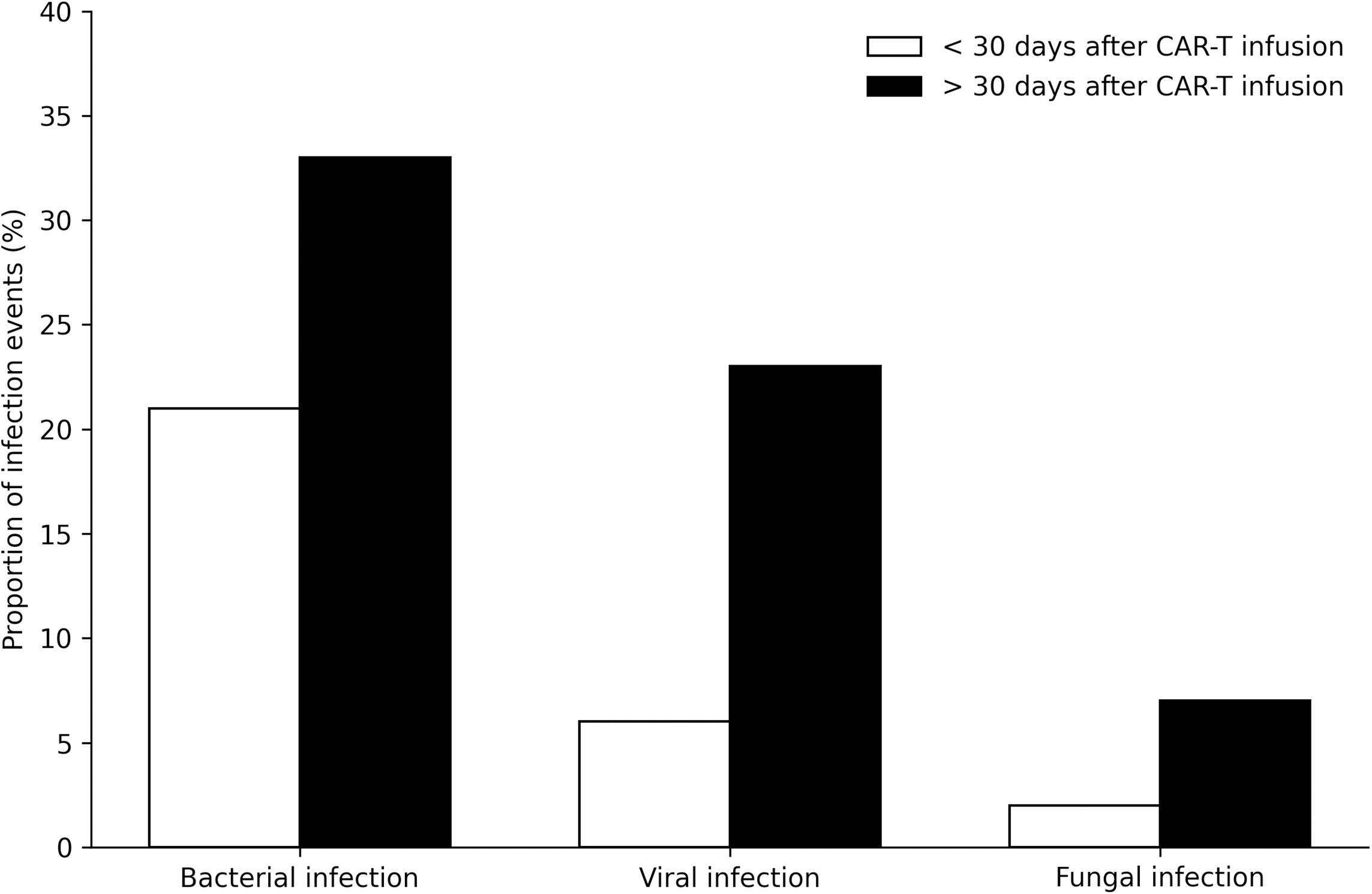
When reported, bacterial infections accounted for the largest proportion of infectious events, ranging from 19% to 81% across studies, whereas viral infections accounted for 5%–70% and fungal infections generally represented less than 15% of events (5%–12%) (Supplementary Figure S1). Bacterial infections primarily involved the respiratory tract and bloodstream. Viral infections included respiratory viruses, HSV/VZV, and CMV reactivation. Across studies, CMV reactivation was infrequently reported and was generally described as viremia without detailed clinical characterization. Reference Logue, Peres and Hashmi14,Reference Caillot, Sleiman and Lafon23,Reference Wesson, Dima and Suleman24,Reference Oliver-Caldés, González-Calle and Cabañas30 In the cohort reported by Trando et al., Reference Trando, Ghamsari, Yeung, Costello, Saunders and Jeong27 CMV viremia occurred in 47% of CMV IgG–positive patients within 6 months after ide-cel infusion, with five patients receiving preemptive antiviral therapy initiated at PCR levels ranging from <35 to 1510 IU/mL. Notably, no cases of CMV end-organ disease were observed. Reference Trando, Ghamsari, Yeung, Costello, Saunders and Jeong27 Fungal infections were uncommon and were mainly due to Candida species, with occasional invasive mold infections. Across five studies Reference Logue, Peres and Hashmi14,Reference Kambhampati, Sheng and Huang15,Reference Cheng, Ji and Wang19,Reference Caillot, Sleiman and Lafon23,Reference Wang, Cao and Gu29 reporting early (<30 d) and late (≥30 d) infections, bacterial infections accounted for a mean of 21% of infectious events during the early period and 33% during the late period, whereas viral infections increased from 6% to 23% of events. Fungal infections remained infrequent, representing only 2% of early and 7% of late infectious events (Figure 3). Study-level analyses demonstrated consistent shifts toward viral predominance during late follow-up, although the magnitude of this increase varied across cohorts (Supplementary Figure S2). For example, viral infections represented 45% of infectious events after day 30 in the study by Kambhampati et al., Reference Kambhampati, Sheng and Huang15 compared with 22% in Logue et al. Reference Logue, Peres and Hashmi14 and only 4% in Cheng et al. Reference Cheng, Ji and Wang19 This analysis was limited to three studies that reported mutually comparable early and late bacterial and viral infection counts. Reference Logue, Peres and Hashmi14,Reference Kambhampati, Sheng and Huang15,Reference Cheng, Ji and Wang19 Reported rates of severe infection ranged from approximately 5% to nearly 60% across 10 studies Reference Banerjee, Marsal and Huang12,Reference Logue, Peres and Hashmi14,Reference Kambhampati, Sheng and Huang15,Reference Rejeski, Hansen and Bansal20–Reference Dima, Rashid and Davis22,Reference Sidana, Patel and Peres26–Reference Wang, Cao and Gu29 (Supplementary Figure S3). Higher rates of severe infection were consistently observed in cohorts characterized by prolonged cytopenia, elevated CAR-HEMATOTOX scores, impaired immune reconstitution, or prior allogeneic transplantation. Infection-related mortality was reported in 15 studies and varied substantially across cohorts. Reference Wang, Li and Xia13–Reference Kambhampati, Sheng and Huang15,Reference Zhou, Wang and Cheng17–Reference Wesson, Dima and Suleman24,Reference Sidana, Patel and Peres26,Reference Trando, Ghamsari, Yeung, Costello, Saunders and Jeong27,Reference Wang, Cao and Gu29,Reference Oliver-Caldés, González-Calle and Cabañas30 Observed infection-related mortality rates generally ranged from approximately 0% to over 5%, with wide confidence intervals in smaller cohorts (Figure 4).
Average proportions of bacterial, viral, and fungal infection events during early and late periods after CAR-T cell infusion.
Note: The analysis included five studies reporting event-level bacterial, viral, and fungal infections stratified by early (<30 d) and late (≥30 d) periods after CAR T-cell infusion (Caillot, 2024; Cheng, 2023; Logue, 2022; Kambhampati, 2022; Wang, 2022). Proportions were calculated within each study using the total number of reported infectious events as the denominator and summarized as unweighted mean percentages across studies. Studies that did not report data for a given infection category were excluded from the corresponding calculation. Because not all infectious events had a specified etiology, categories do not sum to 100%. Event counts and study-level proportions are shown in Supplementary Tables S1 and S2.

Forest plot of infection-related mortality rates by study.

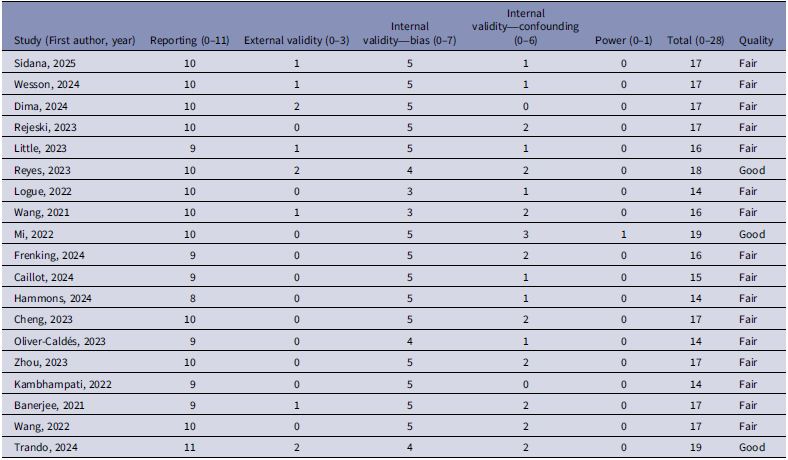
Methodological quality assessment using the Downs and Black scale demonstrated predominantly fair (moderate) methodological quality across studies (Table 3). Total scores ranged from 14 to 19 points. Three studies (15.8%) were classified as good quality (score ≥18), whereas the majority, 16 studies (84.2%), were classified as fair quality (scores 14–17).
Methodological quality assessment of included studies using the Downs and Black scale

Table 3. Long description
A table comparing the methodological quality of studies using the Downs and Black scale. The table has 19 rows and 6 columns. The columns are labeled Study (First author, year), Reporting (0-11), External validity (0-3), Internal validity—bias (0-7), Internal validity—confounding (0-6), Power (0-1), and Total Quality (0-28). Each row lists a study with corresponding scores in each category. Notable studies include Sidana, 2025; Wesson, 2024; Dima, 2024; Rejeski, 2023; Little, 2023; Reyes, 2023; Logue, 2022; Wang, 2021; Mi, 2022; Frenking, 2024; Caillot, 2024; Hammons, 2024; Cheng, 2023; Oliver-Caldés, 2023; Zhou, 2023; Kambhampati, 2022; Banerjee, 2021; Wang, 2022; Trando, 2024. The total quality scores range from 14 to 19 points, with most studies classified as fair quality.
Note: Downs and Black total score interpretation: good (≥18), fair (14–17), poor (<14). Question 27 was adapted to a binary format (yes/no), resulting in a maximum total score of 28. Quality distribution: Good = 3 studies (15.8%), Fair = 16 studies (84.2%).
Discussion
In this systematic review, we synthesized data from 19 studies encompassing 1,495 patients with relapsed or refractory multiple myeloma treated with CAR T-cell therapy, the majority of whom were heavily pretreated and had undergone prior autologous stem cell transplantation. Across cohorts, infectious complications were frequent, with 33%–70% of patients experiencing at least one infectious case. Recurrent risk factors included prolonged neutropenia and other persistent cytopenia, low CD4+ T-cell counts, hypogammaglobulinemia, CRS, and suboptimal disease response. Severe infections ranged from approximately 5% to nearly 60% across cohorts, Reference Banerjee, Marsal and Huang12,Reference Logue, Peres and Hashmi14,Reference Kambhampati, Sheng and Huang15,Reference Rejeski, Hansen and Bansal20–Reference Dima, Rashid and Davis22,Reference Sidana, Patel and Peres26–Reference Wang, Cao and Gu29 and infection-related mortality ranged from approximately 0% to 5%.
Our findings expand upon prior reviews addressing infections after CAR T-cell therapy. Lombardi et al. Reference Lombardi, Saydere and Ungaro6 reported infection rates ranging from 26% to 39% based largely on registration studies of platforms, including CAR T cells, but with limited follow-up, and heterogeneous underlying diseases. Similarly, the systematic review and meta-analysis by Telli Dizman et al. Reference Telli Dizman, Aguado and Fernández-Ruiz7 provided pooled infection estimates across hematologic malignancies; however, the estimate for multiple myeloma (approximately 35%) was derived from only six studies comprising 308 patients and was characterized by wide confidence intervals and heterogeneity. By contrast, our review deliberately focused on multiple myeloma and included a larger and more contemporary patient population, allowing a more granular assessment of infection in real-world and postapproval settings.
In our review, infections predominantly occurred within the first 30 days after infusion. During this early phase, bacterial infections predominated, whereas viral infections accounted for approximately 6% of events. Reference Kampouri, Little, Rejeski, Manuel, Hammond and Hill31 Beyond 30 days, we observed a marked shift in the infectious profile, with viral infections increasing to approximately 23% of reported events, while bacterial infections remained the most prevalent. This temporal pattern is similar to that observed after hematopoietic cell transplantation (HCT) and solid organ transplantation, where early bacterial infections are followed by an increasing burden of viral infections, supporting a time-dependent approach to infection surveillance and prophylaxis after anti-BCMA CAR-T cell therapy. Reference Baden, Swaminathan and Almyroudis32,Reference Taplitz, Kennedy and Bow33
Bacterial infections most commonly involved the respiratory tract and bloodstream. Reference Logue, Peres and Hashmi14,Reference Zhou, Wang and Cheng17,Reference Wesson, Dima and Suleman24,Reference Oliver-Caldés, González-Calle and Cabañas30 Prior reviews similarly identified bacterial infections as the most frequent etiology after CAR T-cell therapy but did not provide pathogen-level detail. Reference Lombardi, Saydere and Ungaro6,Reference Telli Dizman, Aguado and Fernández-Ruiz7 Most cohorts reported infections at the level of clinical syndrome or pathogen class rather than providing systematic microbiological characterization. Only a few studies described specific pathogens associated with infectious events, including bacterial bloodstream infections, respiratory viral pathogens, or invasive fungal infections. Reference Little, Tandon and Hong18,Reference Cheng, Ji and Wang19,Reference Wesson, Dima and Suleman24,Reference Sidana, Patel and Peres26,Reference Oliver-Caldés, González-Calle and Cabañas30 Furthermore, only 4 of the 19 included studies required microbiological confirmation of infectious events, highlighting the heterogeneity in infection definitions across the available literature. Reference Wang, Li and Xia13,Reference Zhou, Wang and Cheng17,Reference Cheng, Ji and Wang19,Reference Mi, Zhao and Jing28 Viral infections included respiratory viruses, HSV/VZV, and CMV. Reference Logue, Peres and Hashmi14,Reference Little, Tandon and Hong18,Reference Cheng, Ji and Wang19,Reference Wesson, Dima and Suleman24,Reference Sidana, Patel and Peres26,Reference Oliver-Caldés, González-Calle and Cabañas30 Respiratory viral infections were generally reported as aggregated categories such as “upper respiratory tract infection” or “respiratory viral infection,” although a few studies specified pathogens including rhinovirus, parainfluenza virus, seasonal coronaviruses, and SARS-CoV-2. Reference Logue, Peres and Hashmi14,Reference Wesson, Dima and Suleman24,Reference Oliver-Caldés, González-Calle and Cabañas30 Fungal infections accounted for a smaller fraction of events, generally below 10%–15%, and were predominantly caused by Candida species, with occasional invasive mold infections, particularly Aspergillus species. Although fungal infections represented a higher relative proportion after 30 days (7% of events) compared with the early period (2% of events) (Figure 3), the absolute number of fungal infections remained low overall, with only 4 early (<30 d) and 14 late (≥30 d). This finding should therefore be interpreted cautiously given the limited number of studies contributing comparable early and late infection data. Reference Kambhampati, Sheng and Huang15,Reference Cheng, Ji and Wang19,Reference Caillot, Sleiman and Lafon23,Reference Wang, Cao and Gu29 The observed pattern may reflect persistent cytopenia, corticosteroid exposure, or delayed immune reconstitution following CAR-T therapy. Reference Brudno, Maus and Hinrichs1,Reference Hill and Seo34,Reference Santomasso, Nastoupil and Adkins35
Supportive care and anti-infective prophylaxis strategies were reported in most studies but varied considerably. Antiviral prophylaxis with acyclovir or valacyclovir and prophylaxis against Pneumocystis jirovecii pneumonia were routinely implemented in most cohorts, consistent with expert recommendations extrapolated from hematopoietic stem cell transplantation practices. Reference Kampouri, Little, Rejeski, Manuel, Hammond and Hill31,Reference Hill and Seo34 Notably, no confirmed cases of pneumocystosis were reported in our review, suggesting a potential protective effect. In contrast, antibacterial and antifungal prophylaxis were more heterogeneous and generally restricted to periods of prolonged neutropenia or high-dose corticosteroid exposure. Reference Kayser2,Reference Santomasso, Nastoupil and Adkins35
In our review, severe infection rates ranged from approximately 5% to nearly 60% across cohorts (Supplementary Figure S3). Severe infections were associated with hospitalization, intensive care unit admission, and intravenous antimicrobial therapy, particularly during the early period following CAR T-cell therapy. Infection-related mortality ranged from approximately 0% to over 5% (Figure 4), consistent with broader evidence that infections remain an important contributor to non-relapse morbidity and mortality following CAR T-cell therapy. Reference Brudno, Maus and Hinrichs1,Reference Wang and Wang5,Reference Telli Dizman, Aguado and Fernández-Ruiz7 However, assessment of the true clinical impact remains limited, as key end points such as infection-free survival and infection-related non-relapse mortality were evaluated in only three studies. These findings reinforce the importance of structured clinical monitoring and longitudinal infectious surveillance, particularly for patients at higher risk complications. Future studies should aim to characterize infection patterns according to the type and degree of immune dysfunction following CAR-T therapy, such as prolonged CD4+ T-cell lymphopenia versus isolated B-cell aplasia. Such stratification could help clarify pathogen-specific risks (eg, CMV reactivation or opportunistic infections) and support more individualized surveillance and prophylaxis strategies.
This study has several limitations. Most included studies were retrospective and heterogeneous in design, follow-up duration, and infection definitions, limiting direct comparability across cohorts. Reporting of infection severity, etiologic classification, antimicrobial resistance patterns, and immune reconstitution parameters was inconsistent, precluding more granular pooled analyses. Temporal stratification beyond the <30 and ≥30-day framework was not feasible due to variability in reporting. In addition, attribution of mortality to infectious causes varied between studies, and underdiagnosis of certain infections, particularly viral reactivations and opportunistic pathogens, cannot be excluded. Another limitation of the available literature is the lack of information regarding vaccination status and immunization strategies. None of the included studies systematically reported baseline vaccination history or revaccination schedules following CAR-T cell therapy, limiting the ability to assess the potential impact of immunization on infection risk. Finally, as CAR T-cell therapy remains a relatively recent intervention, data on long-term immune recovery and late infectious complications remain limited.
In conclusion, despite its efficacy, CAR T-cell therapy in multiple myeloma is associated with a substantial burden of infectious complications, characterized by high overall incidence, predominance of bacterial infections in the early period. Standardized infection definitions, harmonized follow-up, and integrated immune monitoring are critical to improve risk stratification, optimize prevention strategies, and reduce infectious morbidity and mortality, while preserving the transformative benefits of CAR T-cell therapy in multiple myeloma.
Supplementary material
The supplementary material for this article can be found at https://doi.org/10.1017/ash.2026.10830.
Data availability statement
This study generated no new data sets. All data analyzed were obtained from published articles and are available within the manuscript and supplementary files.
Acknowledgments
We thank Kioko Kusuki de Oliveira, librarian from Instituto Israelita de Ensino e Pesquisa of Hospital Israelita Albert Einstein, for her crucial assistance in defining our research strategy.
Financial support
This research did not receive any specific grant from funding agencies in the public, commercial, or not-for-profit sectors.
Competing interests
Authors have no commercial or financial involvement with this manuscript.





 Open access

