Implications
The pig industry suffers from high perinatal mortality of piglets, resulting in high economic losses. Low birth weight is a major factor contributing to piglet mortality. This study has demonstrated that the lightest piglets in a litter have less n-3 polyunsaturated fatty acids in their brain than their heaviest littermates, which may contribute to a better understanding of the higher incidence of pre-weaning mortality in low birth weight piglets. These findings can be of importance to pig farmers and feed industry, in order to more accurately formulate sow diets.
Introduction
Pre-weaning mortality of piglets is a serious loss for the pig industry, as 10% to 20% of the piglets die before weaning (Rooke et al., Reference Rooke, Sinclair, Edwards, Cordoba, Pkiyach, Penny, Penny, Finch and Horgan2001b; Herpin et al., Reference Herpin, Damon and Le Dividich2002). The main causes of death for live born piglets are crushing by the sow, followed by starvation, although in many death cases, starvation can be seen as the underlying cause of crushing. Furthermore, starvation is often secondary to or interactive with perinatal hypothermia (Edwards, Reference Edwards2002). Birth weight is the most important factor in successful recovery from postnatal hypothermia (Kammersgaard et al., Reference Kammersgaard, Pedersen and Jørgensen2011), as piglets with a low birth weight have a greater surface to body mass ratio, which results in greater heat loss (Herpin et al., Reference Herpin, Damon and Le Dividich2002). Lighter piglets also have a smaller maximal heat production capacity than heavier littermates (Herpin et al., Reference Herpin, Vincent and Damon2004). Furthermore, larger piglets are more competitive at the udder and therefore smaller piglets may consume less colostrum, which not only increases hypothermia and the risk of starvation, but also leads to a poor acquisition of passive immunity (Le Dividich et al., Reference Le Dividich, Rooke and Herpin2005). It has been stated that birth weight is the best predictor for the chance of pre-weaning mortality (van Rens et al., Reference van Rens, de Koning, Bergsma and van der Lende2005) and piglets surviving the first 10 days of life were found significantly heavier at birth (Tuchscherer et al., Reference Tuchscherer, Puppe, Tuchscherer and Tiemann2000).
Methods for reducing pre-weaning mortality may be improvements in the sows’ environment (e.g. farrowing crates; Edwards, Reference Edwards2002), genetic selection or nutrition of the sow (Rooke et al., Reference Rooke, Sinclair, Edwards, Cordoba, Pkiyach, Penny, Penny, Finch and Horgan2001b). Recently, attention is given to the supplementation of the gestation feed with n-3 polyunsaturated fatty acids (PUFA) (Rooke et al., Reference Rooke, Sinclair, Edwards, Cordoba, Pkiyach, Penny, Penny, Finch and Horgan2001b). It has been shown that salmon oil in the diet of gestating sows reduces pre-weaning mortality by a decrease in the incidence of deaths from crushing by the sow (Rooke et al., Reference Rooke, Sinclair, Edwards, Cordoba, Pkiyach, Penny, Penny, Finch and Horgan2001b). In addition, a reduction in the time needed to reach the udder and begin to suckle was observed for piglets born from sows fed tuna oil (Rooke et al., Reference Rooke, Sinclair and Edwards2001a). Both observations suggest improved neonatal vigour following n-3 PUFA supplementation. Indeed, PUFA are essential for the growth and development of the foetus (Innis, Reference Innis1991). Particularly the n-3 long chain (LC) PUFA DHA (22:6n-3) is important as structural component of the membrane phospholipids and present in high concentrations in the brain and retina (Stillwell and Wassall, Reference Stillwell and Wassall2003). As the effects of salmon oil supplementation on mortality were not mediated through increases in the energy stores available to the newborn piglet (Rooke et al., Reference Rooke, Sinclair, Edwards, Cordoba, Pkiyach, Penny, Penny, Finch and Horgan2001b), it was suggested that changes in mortality were probably because of changes in the fatty acid (FA) composition of the biomembranes of the brain and retina.
Taken together, the importance of birth weight and possible n-3 PUFA supplementation for pre-weaning mortality, the research questions of the current study were: (i) do lighter piglets have a weaker n-3 PUFA status than heavier littermates, and are there differences between various organs and (ii) if the n-3 PUFA status of lighter piglets is indeed compromized, can supplementation with n-3 PUFA reduce the difference?
To answer these two research questions, a study was designed in which gestating sows were fed diets containing either palm oil (mainly 16:0 and 18:1n-9) or a diet supplemented with n-3 PUFA. Since fish oil, as a direct source of EPA (20:5n-3) and DHA, is becoming a scarce resource (Delgado et al., Reference Delgado, Wada, Rosegrant, Meijer and Ahmed2003), this study also investigated the use of two more sustainable alternatives: linseed oil, as a source of α-linolenic acid (ALA, 18:3n-3) and echium oil (from the plant Echium plantagineum L.), as a source of ALA and stearidonic acid (SDA, 18:4n-3). Both ALA and SDA are precursor FA for EPA and DHA, but SDA is one step further in the n-3 pathway, thereby bypassing the enzyme Δ6-desaturase at this stage in the pathway. In contrast to most other studies, linoleic acid (LA, 18:2n-6) levels in the diet were kept constant to ensure an equal and sufficient supply of n-6 FA, since an increased n-3 FA supply is known to inhibit the formation of n-6 LC PUFA such as arachidonic acid (ARA, 20:4n-6), owing to the competition for Δ6-desaturase and preference of this enzyme for n-3 over n-6 FA (Kurlak and Stephenson, Reference Kurlak and Stephenson1999).
Material and methods
Animals and diets
The trial was conducted from April until September 2010 at the Institute for Agricultural and Fisheries Research in Melle, Belgium, and approved by the Ethical Committee of the Institute for Agricultural and Fisheries Research (approval number EC 2010/129).
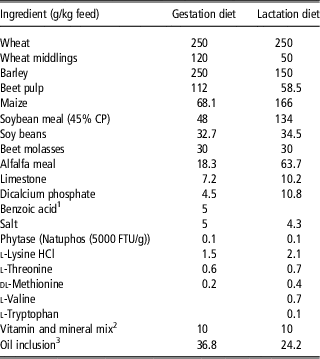
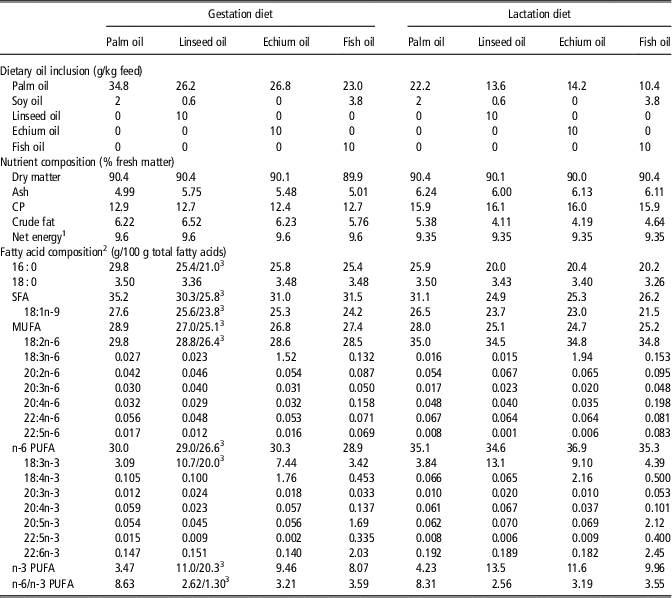
In all, 64 sows (Rattlerow-Seghers hybrids; parity 1 to 12) were inseminated with Piétrain pig semen and were fed a standard commercial gestation diet until day 73 of gestation. The trial consisted of four consecutive groups of sows, corresponding to the 3-week batch insemination system of the farm (with 12, 16, 17 and 19 sows in groups 1 to 4, respectively). Within each group, the sows were allocated to one of the experimental diets, balancing them for parity and BW. There were four experimental diets in the trial (Tables 1 and 2): a palm oil diet and a diet including 1% linseed oil, echium oil (Incromega V3; Croda Europe Ltd, Leek, Staffordshire, UK) or fish oil (INVE België NV, Baasrode, Belgium). Linseed oil, echium oil and fish oil were included in the diet by replacement of palm oil. By including equal levels of linseed oil and echium oil in the sow diet, comparable concentrations of total n-3 precursor FA (ALA+SDA) were present in both diets, but with the linseed oil diet only containing ALA and the echium oil diet containing both ALA and SDA. All diets were formulated to contain similar amounts of LA (14 g/kg feed), by adjusting the level of soy oil in the diet. Total oil concentrations were similar between dietary treatments. The total number of sows per dietary treatment was 16.
Ingredients of the sow gestation diet (fed from day 73 of gestation until 7 days before expected farrowing) and lactation diet (fed from 7 days before farrowing and during lactation)

BHT=Butylated hydroxytoluene.
1 VevoVitall (DSM Nutritional Products NV, Deinze, Belgium).
2 The vitamin and mineral premix provided the following quantities of vitamins and minerals per kg of diet: vitamin A, 12 000 IU; vitamin D3, 2000 IU; vitamin E, 75 mg; vitamin K, 1.01 mg; vitamin B1, 1.50 mg; vitamin B2, 5 mg; vitamin B5, 18 mg; vitamin B6, 4 mg; vitamin B12, 0.03 mg; vitamin PP, 25 mg; choline, 433 mg; folic acid, 3 mg; biotine, 0.3 mg; ethoxyquin, 0.55 mg; BHT, 0.50 mg; Ca, 888.5 mg; Mg, 164.4 mg; Fe, 150 mg; Cu, 15 mg; Mn, 50 mg; Zn, 100 mg; I, 2.0 g; Se, 0.4 mg.
3 Details on oil inclusion are presented in Table 2.
Composition of the sow gestation diet (fed from day 73 of gestation until 7 days before expected farrowing) and lactation diet (fed from 7 days before farrowing and during lactation)
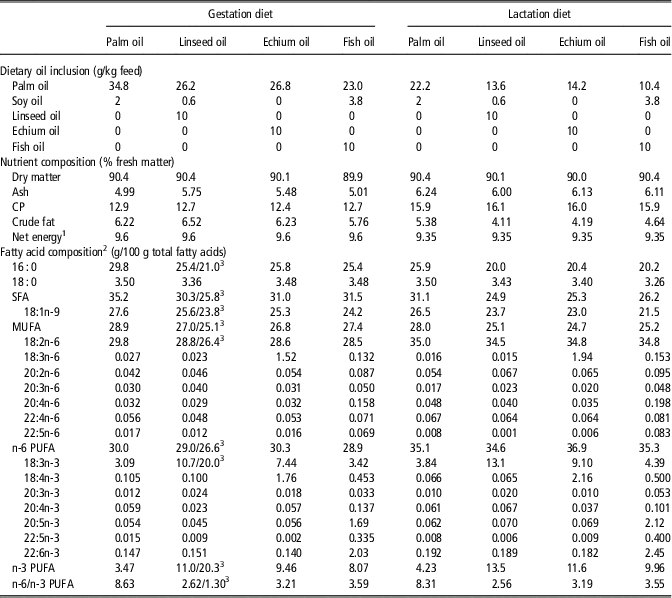
SFA=saturated fatty acid; MUFA=monounsaturated fatty acid; PUFA=polyunsaturated fatty acid.
1 Net energy value of the feed (MJ/kg feed), calculated according to Centraal Veevoederbureau (2007).
2 Data are given as means of two replicate batches.
3 First/second batch: the second batch of the linseed oil gestation diet contained 2% linseed oil instead of 1%. Only sows of group 4 were fed the diet of the second batch.
The experimental diets were fed from day 73 of gestation and during lactation. During gestation, sows were penned individually (1.80×0.60 m; partly slatted concrete floor) in a naturally ventilated house, and were fed 2.6 kg/day of the gestation diet, until 1 week before the expected farrowing date. Then sows were transferred to the farrowing pens (1.90×1.70 m; PVC slatted floor; farrowing crates: 1.75×0.60 m; metal slatted floor) and were fed 3 kg/day of the lactation diet until farrowing. After farrowing, they received 0.25 kg feed extra per piglet born. Lactation diets were fed until weaning at 4 weeks. All sow diets were fed in two equal daily portions. Gestation and lactation diets were prepared in two batches. Owing to a manufacturing fault, the second batch of the gestation diet of the linseed oil treatment contained 2% linseed oil instead of 1%. Only the sows of the linseed oil dietary treatment of group 4 were fed this gestation diet. The data of these sows was not omitted from the data set, as no differences were found on the FA composition of the blood of these sows and their piglets (Tanghe et al., Reference Tanghe, Millet and De Smet2013).
Experimental procedures
Within 24 h after birth, the weight and gender of each piglet was recorded and two male piglets per litter were selected, that is, the lightest and heaviest male piglet. It seemed of interest to compare the extremes in birth weight, as mortality rate is much higher in light piglets than in heavy piglets. These selected piglets were killed by inhalation of Isoflurane (Isoba; Schering-Plough Animal Health, Middlesex, UK), immediately followed by bleeding. Piglets were not separated from the sows before being sacrificed. The brain, liver and longissimus dorsi (LD; muscle) were removed, the organ weights were recorded and the samples were stored at −20°C until analysis.
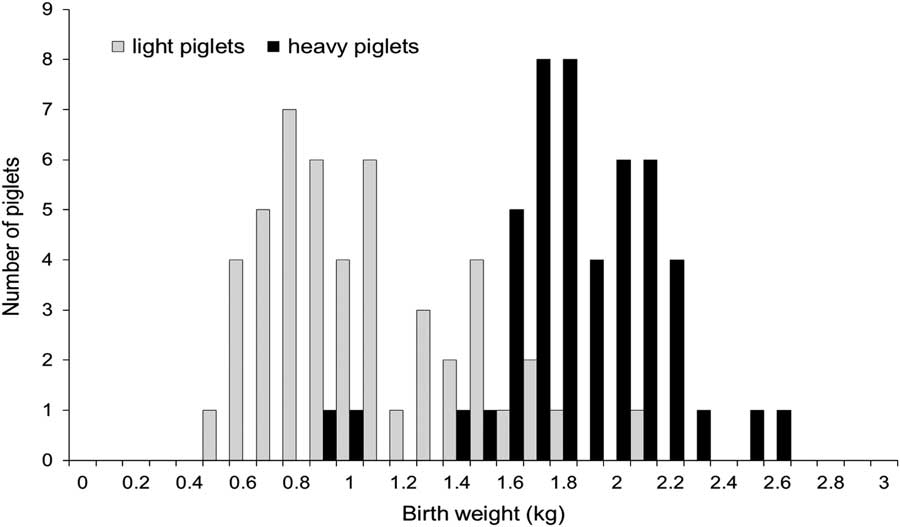
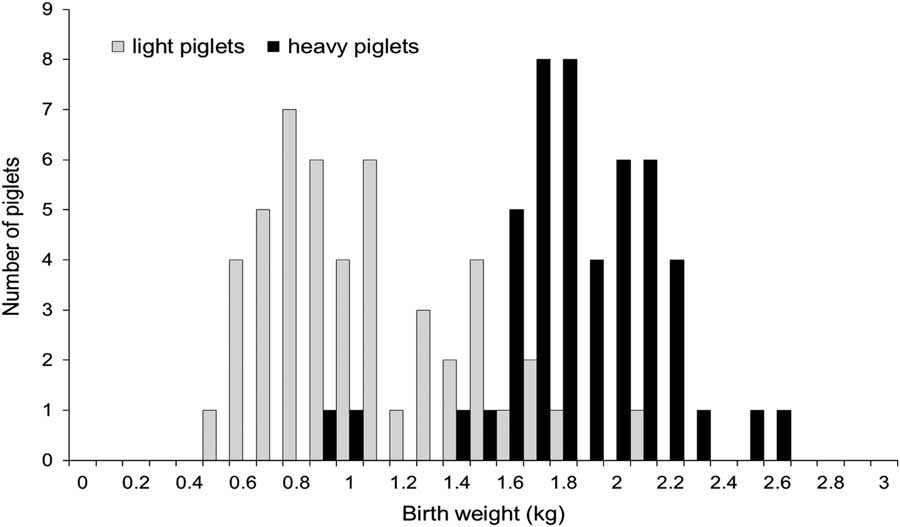
Across all diets and within each diet, the two piglet weight groups (i.e. light and heavy piglets) differed significantly for liveweight at birth. The birth weight (expressed as mean±s.e.m.) was 1.06±0.05 and 1.86±0.05 kg for the light and heavy piglets, respectively. Of the light weight group, 48% of the piglets had a birth weight of <1 kg v. 2% of the piglets of the heavy weight group (Figure 1). A birth weight of 1 kg may be considered as a critical weight, as piglets weighing <1 kg have very high chances of pre-weaning mortality (Quiniou et al., Reference Quiniou, Dagorn and Gaudré2002). Within each weight group, no difference in average birth weight was found between the different diets.
Birth weight (kg) distribution of the piglets, with piglets divided into two weight groups (light v. heavy weight group) by selecting the lightest and heaviest male piglet per litter.
As not all farrowings could be attended and piglets needed to be sampled within 24 h after birth, it was not possible to obtain samples from the piglets of each sow. In total, 96 piglets were sampled (18, 28, 24 and 26 piglets in groups 1 to 4, respectively or 22, 22, 26 and 26 piglets from sows fed palm oil, linseed oil, echium oil and fish oil, respectively). One LD sample (heavy piglet of group 2, fish oil treatment) and two brain samples (light piglets of group 4, echium oil and fish oil treatment) were lost during analysis and hence not included in the data set.
Analytical procedures
Feed samples were analyzed for dry matter, ash (ISO 5984), CP (ISO 5983-2) and crude fat (ISO 6492). Brain samples were put in aluminium dishes, covered with aluminium foil (with a hole in the foil to release water vapour) and freeze-dried (Edwards Super Modulyo Freeze Dryer with Edwards vacuum pump type RV12, Thermo Scientific, Erembodegem, Belgium). FA composition of feed, liver and brain was analyzed by direct transesterification (Tanghe et al., Reference Tanghe, Millet and De Smet2013), using 250 mg of feed, 300 mg of liver and 200 mg of freeze-dried brain. For muscle, this methylation procedure was preceded by lipid extraction with chloroform/methanol (Folch et al., Reference Folch, Lees and Stanley1957), using 3 g of muscle tissue. The FA composition of the tissues is expressed as relative concentrations (g/100 g total FA) and absolute amounts (mg/100 g tissue).
Calculations
Total n-6 and n-3 PUFA were calculated as the sum of 18:2n-6+18:3n-6+20:3n-6+20:4n-6+22:4n-6+22:5n-6 and as the sum of 18:3n-3+18:4n-3+20:4n-3+20:5n-3+22:5n-3+22:6n-3, respectively; 20:2n-6 and 20:3n-3 are presented in the results, but were left out of these sums, as they do not belong to the n-6 and n-3 pathways. Two ratios were calculated to evaluate the DHA status of the newborn piglets: 22:6n-3/22:5n-6 and 22:5n-6/22:4n-6 (DHA sufficiency index and DHA deficiency index, respectively; Al et al., Reference Al, van Houwelingen and Hornstra1997). As low tissue levels of DHA were found to be accompanied by a compensatory increase in n-6 LC PUFA, particularly 22:5n-6 (Neuringer et al., Reference Neuringer, Connor, Lin, Barstad and Luck1986), also the sum of 22:5n-6 and 22:6n-3 was calculated in the piglet brain to estimate the reciprocal replacement of both FA.
Statistical analysis
The data were analyzed by ANOVA using the Mixed Model procedure of SAS (SAS Enterprise Guide 4, version 4.3, SAS Institute Inc., Cary, NC, USA). The production parameters and piglet weights were analyzed with a model including the fixed effects of diet, group (of sows) and diet×group. The FA composition and the weights of the piglet liver, LD and brain were analyzed with a model including the fixed effects of diet, group (of sows), weight group (i.e. light or heavy piglets) and all two-way interaction terms. Post hoc comparison of least squares means was done using the Tukey method. Differences were considered significant at P<0.05. Values in the text are presented as least squares means±s.e.m. Pearson correlation coefficients were calculated between birth weight and PUFA concentrations in the piglet tissues within dietary treatments.
Results
Production parameters and piglet weights
No effect of the group of sows was observed on the sow production parameters and piglet weights. No effect of n-3 PUFA in the sow diet was observed on the number of live born piglets (12.3±0.4; P=0.49) and the number of live born piglets that died pre-weaning (1.5±0.2; P=0.99). Offspring from sows fed fish oil had a lower birth weight (1.41±0.03 kg) than the piglets from the linseed oil fed sows (1.54±0.03 kg; P=0.006). Average birth weight of these piglets did not differ from the piglets of the palm oil and echium oil fed sows (1.45±0.03 and 1.49±0.03 kg, respectively). Piglets that died pre-weaning had lower average birth weights (1.27±0.04 kg) than piglets surviving lactation (1.55±0.02 kg; P<0.001). When taking 1 kg as the critical birth weight (Quiniou et al., Reference Quiniou, Dagorn and Gaudré2002), 21.4% of the piglets that died pre-weaning had a birth weight <1 kg v. 2.6% of the piglets surviving lactation.
Including n-3 PUFA in the sow diet had no effect on the weight of the brain, liver and LD of the newborn piglet. However, the organ weights did differ between the two piglet weight groups. The average weight of both the liver and LD were two fold higher for the piglets of the heavy weight group compared with the light weight group (47.7±1.69 v. 24.0±1.69 g for liver; 27.8±0.91 v. 14.1±0.91 g for LD, heavy v. light piglets, respectively; P<0.001). In addition, the brain weight was significantly different between piglet weight groups, although the difference was much smaller (29.0±0.38 v. 32.5±0.38 g, light v. heavy piglets, respectively; P<0.001). When expressing the organ weights relatively to the piglet BW, this resulted in a higher relative brain weight for the piglets of the light weight group compared with the heavy weight group (3.02±0.10 v. 1.80±0.10 g brain/100 g BW, respectively; P<0.001). For the liver and LD, the relative organ weights for the piglets of the light weight group were lower than for the piglets of the heavy weight group (2.23±0.05 v. 2.56±0.05 g liver/100 g BW, 1.30±0.03 v. 1.49±0.03 g LD/100 g BW, light v. heavy piglets, respectively; P<0.001).
FA composition of piglet tissues
Group effects
Group effects were observed for some FA in the tissues of the piglets, mostly in the minor saturated fatty acids and monounsaturated fatty acids. These effects were inconsistent and as they were not the main interest of this experiment, the results are not presented in the tables. The most interesting group effects, however, were those regarding the ALA concentration in the tissues of the piglets of the linseed oil fed sows of group 4, compared with the other groups, as unintentionally the sows of group 4 on the linseed oil treatment were fed twice as much linseed oil as the other groups. Only the piglet muscle showed a clear group×diet effect: ALA and 20:3n-3 concentrations were higher in the LD of the piglets from the linseed oil fed sows of group 4 compared with the other groups (P<0.001). The ALA and 20:3n-3 concentrations in the piglet liver differed only between the piglets from the linseed oil fed sows of groups 2 and 4, with group 4 being the highest. The ALA concentration of the piglet brain did not differ between groups.
Diet×piglet weight effects
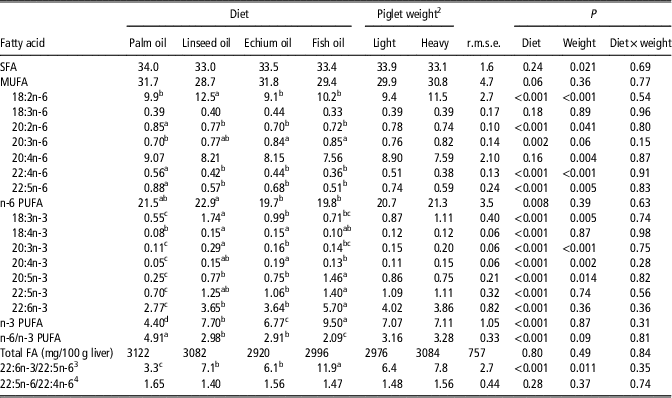
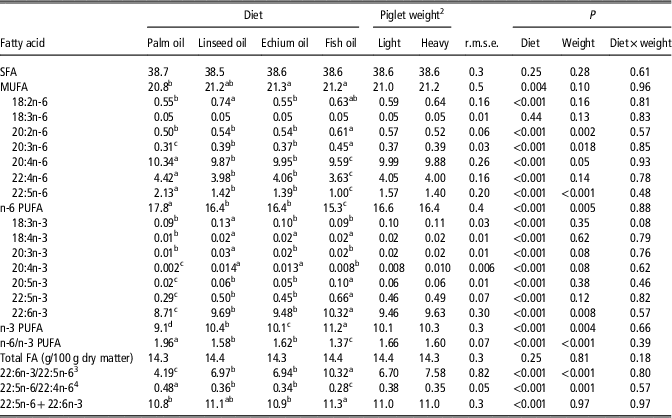
No diet×weight effects were observed on the FA composition of any of the piglet tissues (Tables 3 to 5). Therefore, the main effects of diet and weight were considered separately.
Fatty acid (FA) composition (g/100 g total FAs) of longissimus dorsi muscle (LD) from newborn piglets born to sows fed diets containing palm oil, linseed oil, echium oil or fish oil from day 73 of gestationFootnote 1

SFA=saturated fatty acid; MUFA=monounsaturated fatty acid; PUFA=polyunsaturated fatty acid; DHA=docosahexaenoic acid.
a,b,c,dWithin diet, means without a common superscript letter differ, P<0.05.
1 Values are given as least squares means with root mean square error (r.m.s.e.), n=22 to 26 for diet and n=47 to 48 for weight.
2 Muscle was sampled from the lightest and heaviest male piglet per litter at birth.
3 DHA sufficiency index (Al et al., Reference Al, van Houwelingen and Hornstra1997).
4 DHA deficiency index (Al et al., Reference Al, van Houwelingen and Hornstra1997).
Fatty acid (FA) composition (g/100 g total FAs) of liver from newborn piglets born to sows fed diets containing palm oil, linseed oil, echium oil or fish oil from day 73 of gestationFootnote 1

SFA=saturated fatty acid; MUFA=monounsaturated fatty acid; PUFA=polyunsaturated fatty acid; DHA=docosahexaenoic acid.
a,b,c,dWithin diet, means without a common superscript letter differ, P<0.05.
1 Values are given as least squares means with root mean square error (r.m.s.e.), n=22 to 26 for diet and n=48 for weight.
2 Liver was sampled from the lightest and heaviest male piglet per litter at birth.
3 DHA sufficiency index (Al et al., Reference Al, van Houwelingen and Hornstra1997).
4 DHA deficiency index (Al et al., Reference Al, van Houwelingen and Hornstra1997).
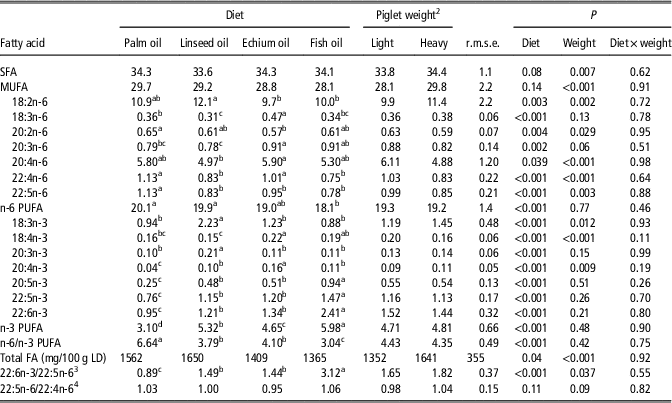
Fatty acid (FA) composition (g/100 g total FAs) of brain from newborn piglets born to sows fed diets containing palm oil, linseed oil, echium oil or fish oil from day 73 of gestationFootnote 1

SFA=saturated fatty acid; MUFA=monounsaturated fatty acid; PUFA=polyunsaturated fatty acid; DHA=docosahexaenoic acid.
a,b,c,dWithin diet, means without a common superscript letter differ, P<0.05.
1 Values are given as least squares means with root mean square error (r.m.s.e.), n=22 to 25 for diet and n=46 to 48 for weight.
2 Brain was sampled from the lightest and heaviest male piglet per litter at birth.
3 DHA sufficiency index (Al et al., Reference Al, van Houwelingen and Hornstra1997).
4 DHA deficiency index (Al et al., Reference Al, van Houwelingen and Hornstra1997).
Diet effects
Including n-3 PUFA in the gestation diet altered the FA composition of all piglet tissues (Tables 3 to 5). Adding linseed oil to the diet of the gestating sows resulted in higher concentrations of ALA and 20:3n-3 in all tissues of the piglets, compared with the other diets. In addition, the LA concentration was higher when linseed oil was fed to the sows. In comparison with the palm oil diet, feeding linseed oil resulted in higher concentrations of 20:4n-3, EPA, 22:5n-3, DHA and total n-3 PUFA in all tissues of the piglets. In addition, the 22:6n-3/22:5n-6 ratio was higher when linseed oil was fed, in comparison with palm oil. Including echium oil in the sow diet resulted in a higher concentration of SDA in the liver, brain and LD of the piglets compared with the palm oil diet (and also the linseed oil diet for LD). The concentration of 18:3n-6 showed a tissue-specific response following the echium oil dietary treatment: 18:3n-6 was higher in the LD when echium oil was fed to the sows, compared with the other diets, but in liver and brain no response was observed. Echium oil in the sow diet resulted in higher concentrations of EPA, 22:5n-3, DHA and total n-3 PUFA in all piglet tissues, compared with palm oil. In addition, the 22:6n-3/22:5n-6 ratio was higher in the LD, liver and brain of the piglets from the sows fed echium oil, compared with palm oil. Feeding fish oil to the gestating sows resulted in higher EPA and DHA concentrations in all piglet tissues, compared with the other diets. In addition, the 22:6n-3/22:5n-6 ratio was significantly higher for the piglets of the fish oil dietary treatment compared with the other diets. The concentration of 22:5n-6 was higher in all tissues of the piglets born from sows fed the palm oil diet, compared with the other diets. This was also observed for 22:4n-6, except in LD, where 22:4n-6 concentrations were only higher when palm oil was fed compared with fish oil and linseed oil. In piglet brain, concentrations of ARA, 22:4n-6, 22:5n-6, total n-6 PUFA and the 22:5n-6/22:4n-6 ratio were the highest for the piglets of the palm oil diet compared with all other diets. In addition, the brain of the piglets of the linseed oil and echium oil diet showed higher concentrations of these FA in comparison with the piglets of the fish oil diet.
Piglet weight effects
The amount of total FA present in the LD was higher for the heavy piglets compared with the light piglets (Table 3), which was also observed when the amount of total FA in the LD was expressed per kg BW (0.179±0.009 v. 0.245±0.009 g total FA in LD/kg BW; light v. heavy piglets; P<0.001). Almost no differences were observed between weight classes on n-3 PUFA in the LD, except for lower ALA and 20:4n-3 concentrations and higher SDA concentrations in the LD of the light piglets compared with the heavy piglets. The total concentration of n-6 PUFA in the LD was not altered, but concentrations of ARA, 22:4n-6 and 22:5n-6 were higher and the concentration of LA was lower for the light piglets compared with the heavy piglets. In addition, the 22:6n-3/22:5n-6 ratio of the LD was lower for the light piglets. In the liver, the LA and ALA concentrations were lower for the light piglets, whereas ARA, 22:4n-6 and 22:5n-6 in the liver were higher compared with the heavy piglets (Table 4). The 22:6n-3/22:5n-6 ratio in the liver was lower for the light piglets. No effect of piglet weight on the amount of total FA was observed in the liver or brain. However, the amount of total FA in the liver/kg BW was lower for the light piglets compared with the heavy piglets (0.667±0.033 v. 0.791±0.033 g total FA in liver/kg BW, respectively; P=0.009). For the brain, the amount of total FA/kg BW was higher for the light piglets compared with the heavy piglets (0.779±0.027 v. 0.466±0.026 g total FA in brain/kg BW, respectively; P<0.001). The concentrations of total n-6 PUFA and 22:5n-6 in the brain were higher for the light piglets, whereas the n-3 PUFA and DHA concentrations were lower, resulting in a higher n-6/n-3 ratio for the light piglets compared with the heavy piglets (Table 5). The brain of the light piglets had a lower 22:6n-3/22:5n-6 ratio and a higher 22:5n-6/22:4n-6 ratio than the brain of the heavy piglets. However, the sum of DHA and 22:5n-6 did not differ between piglet weight groups. Positive correlations between birth weight and brain DHA status were found for the piglets of the sows fed the palm oil, linseed oil or echium oil diet (r=0.51, P=0.015; r=0.47, P=0.026; r=0.50, P=0.011, respectively). No correlation was observed between birth weight and brain DHA status for the piglets of the fish oil fed sows (r=−0.05, P=0.80).
Discussion
This study examined the effects and possible interactions of birth weight and n-3 PUFA supplementation of the gestation diet on the n-3 PUFA status of different organs of the newborn piglet. These effects are of interest as both parameters have been associated with pre-weaning mortality. The first goal of this study was to examine if lighter piglets have a weaker n-3 PUFA status than heavier littermates, in order to explain the effects on pre-weaning mortality. Indeed, lower n-3 PUFA concentrations were observed in the brain of the lighter piglets, mainly because of lower DHA concentrations. In addition, the lower 22:6n-3/22:5n-6 and higher 22:5n-6/22:4n-6 ratio (DHA sufficiency and DHA deficiency index, respectively; Al et al., Reference Al, van Houwelingen and Hornstra1997) observed in the brain of the lighter piglets, indicate a weaker brain DHA status for these lighter piglets. These results suggest that the higher incidence of pre-weaning mortality in low birth weight piglets may be related to their lower brain DHA status, as supplementing the maternal diet with fish oil has already been shown to positively influence vitality (Rooke et al., Reference Rooke, Sinclair and Edwards2001a and Reference Rooke, Sinclair, Edwards, Cordoba, Pkiyach, Penny, Penny, Finch and Horgan2001b; Capper et al., Reference Capper, Wilkinson, Mackenzie and Sinclair2006). However, our results are in contrast to other studies, where piglet birth weight had no effect upon tissue FA composition (Rooke et al., Reference Rooke, Bland and Edwards1999; McNeil et al., Reference McNeil, Finch, Page, Clarke, Ashworth and McArdle2005; Sampels et al., Reference Sampels, Pickova, Högberg and Neil2011). It should be noted that the former two studies compared the lightest piglets per litter with piglets of average birth weight, and not with the heaviest piglets as in the current study.
In the brain of the lighter piglets, the lower DHA concentration seemed to be completely replaced by a higher concentration of 22:5n-6, as indicated by the constant sum of these FA in the brain, in accordance with Childs et al. (Reference Childs, Romijn, Enke, Hoile and Calder2010). High levels of 22:5n-6 are only present in the brain when there is a deficiency of DHA, presumably to maintain an optimal amount of these 22-carbon PUFA in the brain (Abbott et al., Reference Abbott, Else and Hulbert2010); 22:5n-6 has an identical structure to DHA, except for the absence of a double bond in the n-3 position. However, 22:5n-6 cannot replace DHA in terms of its function in the nervous system (Greiner et al., Reference Greiner, Catalan, Moriguchi and Salem2003). In contrast to our findings, this replacement of DHA by 22:5n-6 in the brain and retina was found to be incomplete and not only 22:5n-6 but also other n-6 FA, such as 22:4n-6 and ARA, seem to replace DHA in n-3-deficient rats during early developmental periods (Greiner et al., Reference Greiner, Catalan, Moriguchi and Salem2003; Salem et al., Reference Salem, Loewke, Catalan, Majchrzak and Moriguchi2005). In the current study, concentrations of ARA and 22:4n-6 were not higher in the brain of the lighter piglets, but these FA plus 22:5n-6 did increase in the LD and liver of these piglets. This may indicate a possible deficiency of DHA in these tissues also, which is confirmed by the lower 22:6n-3/22:5n-6 ratio in the LD and liver of the lighter piglets.
A possible explanation for the DHA deficiency in the tissues of the lighter piglets may be a deficient placental transfer of DHA. However, whether the compromized DHA status in low birth weight piglets is the result of a reduced placental efficiency, or whether the lower birth weight results from a reduced DHA supply, is not clear. Another explanation may be a reduced activity of enzymes involved in the FA metabolism. However, in a study by McNeil et al. (Reference McNeil, Finch, Page, Clarke, Ashworth and McArdle2005) no reduced tissue Δ5- or Δ6-desaturase expression was observed in the smallest foetal pigs compared with average-sized foetal pigs. As these enzyme expressions were not measured in the current study, it is not known whether the same is true when the lightest piglet is compared with the heaviest piglet of the litter.
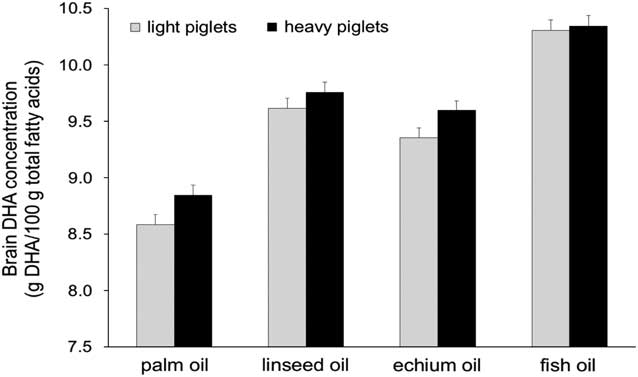
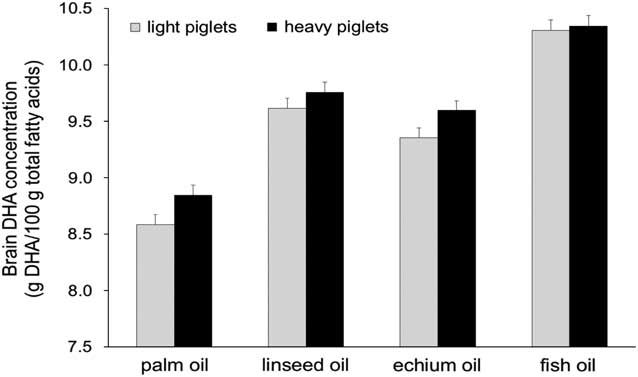
The second goal of this study was to examine if including n-3 PUFA in the maternal diet could reduce the difference in n-3 PUFA status between the light and heavy piglets. However, no interaction between birth weight and diet was found on the FA composition of any piglet tissue, indicating that the n-3 PUFA oils added to the maternal diet at a concentration of 10 g/kg were not sufficient to counteract this difference. However, there were some indications that adding fish oil to the maternal diet reduced the difference in DHA concentration between light and heavy piglets. First, although the interaction was not significant, the difference in brain DHA status between the light and heavy piglets was much smaller for the piglets of the sows fed fish oil (Δ=0.04 g DHA/100 g FA) compared with the piglets of the palm oil fed sows (Δ=0.26 g DHA/100 g FA) (Figure 2). These effects were, nevertheless, much smaller than the diet effects, where the DHA concentration in the brain of the piglets from the fish oil fed sows was 1.61 g/100 g FA higher than for the piglets of the palm oil fed sows. Second, positive correlations between birth weight and brain DHA status were observed in the piglets from the sows fed the palm oil, linseed oil or echium oil diet, while no correlation was noticed when fish oil was fed.
DHA concentration (g DHA/100 g total fatty acids) of the brain of the lightest and heaviest newborn male piglets born from sows fed a palm oil diet, or a diet including 1% linseed oil, echium oil or fish oil, from day 73 of gestation. Values are least squares means with standard errors, n=11 to 13. P weight=0.008; P diet<0.001, with fish oil>linseed oil=echium oil>palm oil.
Including fish oil in the sow diet resulted in a lower piglet birth weight, which was also found in the study by Rooke et al. (Reference Rooke, Sinclair, Edwards, Cordoba, Pkiyach, Penny, Penny, Finch and Horgan2001b). This lower birth weight is probably related to the low piglet tissue concentrations of ARA following fish oil supplementation. It is suggested that DHA does not interfere with growth, but that ARA in some way enhances growth, most likely through effects on eicosanoid metabolism (Lapillonne et al., Reference Lapillonne, Clarke and Heird2003). The negative effect of fish oil on growth would therefore rather be an indirect effect of lower ARA concentrations, than a direct effect of increasing DHA. The current study tried to prevent this fall in ARA concentrations following fish oil supplementation by keeping the level of its precursor FA LA constant in the different diets. However, this was not sufficient enough to maintain ARA levels, even though the ARA concentration in the fish oil diet was five fold higher than in the other diets.
Although piglets born from sows fed the fish oil diet had lower birth weights, no effect of maternal diet was observed on the pre-weaning mortality. However, independent of the diet, piglets that died pre-weaning had lower birth weights than piglets surviving lactation, in compliance with previous studies (Tuchscherer et al., Reference Tuchscherer, Puppe, Tuchscherer and Tiemann2000; van Rens et al., Reference van Rens, de Koning, Bergsma and van der Lende2005). Possibly, the number of sows in this experiment was not sufficient to observe diet effects on production parameters. Alternatively, the higher DHA concentration in the brain of the piglets from the sows fed the fish oil diet, may have increased their postnatal vigour and hence counteracted the negative effect of lower birth weight. This hypothesis is strengthened by the results of the study by Rooke et al. (Reference Rooke, Sinclair, Edwards, Cordoba, Pkiyach, Penny, Penny, Finch and Horgan2001b), who even observed reduced pre-weaning mortality despite decreased piglet birth weight, when 1.65% salmon oil was included in the maternal diet.
The transfer of the dietary n-3 PUFA from sow to piglet differed according to the source and tissue. As expected from the diet, linseed oil in the sow diet resulted in higher ALA concentrations in all piglet tissues. Conversely, the piglets from the sows fed echium oil, the highest dietary source of SDA and 18:3n-6, only showed clear increases in these FA in LD, but not in liver and brain. However, both linseed oil and echium oil dietary treatments resulted in higher concentrations of their LC derivatives EPA, 22:5n-3 and DHA in all piglet tissues (in accordance with Panella-Riera et al., Reference Panella-Riera, Neil and Pickova2007; De Quelen et al., Reference De Quelen, Boudry and Mourot2010; Sampels et al., Reference Sampels, Pickova, Högberg and Neil2011 for linseed oil). This might indicate that most of the dietary SDA is rapidly converted to its LC derivatives or β-oxidized, and not accumulated in the tissues, which is also suggested by Voss and Sprecher (Reference Voss and Sprecher1988).
Although SDA is one step further in the n-3 pathway than ALA, thereby bypassing the enzyme Δ6-desaturase, no differences in EPA or DHA concentrations were found between the linseed oil and echium oil dietary treatment in any of the piglet tissues. Other studies comparing the conversion of ALA and SDA found higher concentrations of EPA, but not DHA, when SDA was fed compared with when ALA was fed (Yamazaki et al., Reference Yamazaki, Fujikawa, Hamazaki, Yano and Shone1992; James et al., Reference James, Ursin and Cleland2003). However, it should be noted that in these studies, the levels of dietary SDA and ALA were equal, while in our study the level of SDA in echium oil was lower than the amount of ALA in linseed oil.
Linseed oil in the sow diet increased the concentration of LA in the tissues of the piglets, although LA was kept constant in all diets. This increase may be caused by the competition of ALA and LA for Δ6-desaturase and the preference of this enzyme for ALA (Kurlak and Stephenson, Reference Kurlak and Stephenson1999) or by a decreased oxidation of LA after high dietary levels of ALA (Smink et al., Reference Smink, Gerrits, Gloaguen, Ruiter and van Baal2012).
Unintentionally, the sows of group 4 following the linseed oil treatment were fed twice as much linseed oil as groups 1 to 3. However, this seemed to have little effect on the FA composition of sow plasma (Tanghe et al., Reference Tanghe, Millet and De Smet2013) and piglet tissues. Only the LD of the piglets showed a clear response to this additional ALA, with higher ALA and 20:3n-3 concentrations. No differences were observed on EPA and DHA levels in any of the piglet tissues between 2% and 1% maternal linseed oil feeding, indicating that the additional ALA was not further converted to its LC derivatives, but partially metabolized to 20:3n-3 and partially stored as ALA in the muscle tissue. Oxidation was not measured in this study, but it has already been suggested that diets high in ALA also increase the oxidation of ALA, thereby reducing its conversion to EPA (Vermunt et al., Reference Vermunt, Mensink, Simonis and Hornstra2000).
In conclusion, the lightest piglets in a litter have less n-3 PUFA in their brain than their heaviest littermates, especially the lower brain DHA status is important, as this could be related to the higher incidence of pre-weaning mortality in low birth weight piglets. Adding n-3 PUFA to the maternal diet could not significantly reduce this difference in n-3 PUFA status between the piglet weight groups, although numerically the difference in the brain DHA concentration between the lightest and heaviest piglets was smaller when fish oil was included in the diet of the sows. Supplementing the gestation diet with echium oil or linseed oil, as alternatives for fish oil, increased the concentrations of EPA and DHA in all piglet tissues, although these concentrations were not as high as when fish oil was fed. Furthermore, echium oil did not result in a higher conversion to these LC derivatives than linseed oil, probably because of the lower amount of SDA in echium oil, compared with the amount of ALA in linseed oil. Feeding richer sources of SDA needs to be further investigated.
Acknowledgements
The PhD grant of S. Tanghe was funded by the Agency for Innovation by Science and Technology (IWT), Brussels, Belgium. The study was financially supported by the Institute for Agricultural and Fisheries Research (ILVO) and the Agency for Innovation by Science and Technology in Flanders (IWT). The technical staff of the institutes are gratefully acknowledged for their assistance.