Introduction
Exertional heat illness is common among athletes and occupational workers and ranges in severity from minor to fatal. Exertional heat illness often occurs during uncompensable heat stress when the body cannot thermoregulate (eg, the patient is wearing protective garments, excessive clothing, or environmental conditions are hot and/or humid) or it is not provided sufficient hydration and rest to mitigate rising internal body temperature.Reference Armstrong, Casa, Millard-Stafford, Moran, Pyne and Roberts 1 At its most fundamental, exertional heat illness differs from classic heat exposure due to skeletal muscle contractions contributing to the rise in internal body temperature resulting in a much faster onset of symptoms.Reference Binkley, Beckett, Casa, Kleiner and Plummer 2
Reports from the Centers for Disease Control (Atlanta, Georgia USA) estimated 7,000 deaths in the United States from all forms of heat illness between 1979 and 1997. 3 Among US soldiers, 5,246 were hospitalized and 37 died due to heat-related illness from 1980-2002.Reference Carter, Cheuvront and Williams 4 In college and high school football alone, 66 athletes died from heat stroke from 1975-2009.Reference Mueller and Cantu 5 The true morbidity and mortality from heat-related illness is unknown due to common misdiagnoses for a variety of reasons. Individuals can suffer exertional heat illness when exercising for prolonged periods in both temperate and hot conditions, especially if humidity is too high to allow sweat to evaporate and cool the body, or if clothing and equipment prevents sweat evaporation.Reference Binkley, Beckett, Casa, Kleiner and Plummer 2 Additionally, since exertional heat illness is almost always accompanied by profuse sweating, the patient may not feel hot-to-touch leading to misdiagnosis and delays in treatment. Other signs and symptoms of heat illnesses (eg, nausea, loss of consciousness, fatigue, vomiting, and muscle cramping) are similar to many medical conditions (eg, internal trauma, head injury, and exertional sickling) and can lead to difficult differential diagnosis.Reference Casa, Pagnotta, Pinkus and Mazerolle 6
Individuals at risk for exertional heat stress are often misinformed on the risks and how to prevent heat illness.Reference Shendell, Alexander, Lorentzson and McCarty 7 While recent heat waves in the United States and Europe have raised awareness of the risk for non-exertional heat-related illness and death, a survey of 1,138 recreational endurance athletes revealed as many as 20% of individuals at risk for exertional heat illness were unaware of the risk or how to prevent the occurrence.Reference Shendell, Alexander, Lorentzson and McCarty 7 Recreational and professional athletes, military personnel, occupational personnel working outdoors, and emergency responders should always have heat illness as part of the differential diagnosis when a medical condition arises. Venues in which exertional heat illnesses are common include preseason football practice, military personnel, firefighter training academies, and road races.Reference Suyama, Rittenberger, Patterson and Hostler 8 - Reference DeMartini, Casa and Stearns 11 Public safety workers, in particular, have prolonged exposure to heat and wear protective garments during the course of their job, making them particularly susceptible to exertional heat illness. Similarly, athletes compete in hot and humid environments, and motivation to win a competition increases the risk of developing exertional heat injuries.Reference Binkley, Beckett, Casa, Kleiner and Plummer 2
Report
Prevention
Prevention of heat-related illness should be a focus for athletes and occupational workers exposed to heat stress. At-risk groups should be screened medically prior to physical activity in order to ensure safe participation, as suggested by numerous sports medicine governing bodies.Reference Bernhardt and Roberts 12 Individuals should undergo a 10-14 day progressive heat acclimation protocol to allow time for the body to adapt slowly to the heat and exercise and mitigate the risk of exertional heat illnesses.Reference Armstrong and Maresh 13 Additionally, individuals can help prevent heat illnesses by maintaining adequate hydration using techniques such as monitoring urine color and body-mass loss due to sweating during exercise to estimate the adequacy of fluid intake.Reference Casa, Guskiewicz and Anderson 14 Individuals responsible for supervising team practice or groups of workers exposed to the heat should increase rest and hydration break durations as temperature and humidity rise, as suggested by the American College of Sports Medicine (ACSM; Indianapolis, Indiana USA) and National Athletic Trainers’ Association (NATA; Carrollton, Texas USA).Reference Armstrong, Casa, Millard-Stafford, Moran, Pyne and Roberts 1 , Reference Binkley, Beckett, Casa, Kleiner and Plummer 2
An important aspect of preventing heat illness is anticipation. Various recommendations have been created to caution athletes and workers when environmental conditions increase the risk for developing heat-related illness. Assessment of Wet Globe Bulb Temperature (WGBT) is used commonly to estimate risk.Reference Binkley, Beckett, Casa, Kleiner and Plummer 2 Emergency Medical Services (EMS) providers who participate in the planning or coverage of sporting or outdoor recreational events should have a familiarity with this device and the interpretation of the output. The device may be purchased at a relatively cheap cost and classically consists of a thermometer with a wet bulb exposed to the sun and prevailing wind and a copper globe painted black containing a thermometer within. The combination of ambient temperature (dry bulb effect), humidity (wet bulb effect), and solar load (black globe effect) create a working temperature. Wet Globe Bulb Temperature between 78.1°F-82.0°F (25.7°C-27.8°C) warns of a risk of heat-related illness for unfit and non-acclimatized individuals, while WGBT exceeding 86.0°F (30.0°C) may warrant cancellation of practice and competition.Reference Armstrong, Casa, Millard-Stafford, Moran, Pyne and Roberts 1 As WGBT increases, so should rest and rehydration opportunities, and cancellation of activity should be considered with extreme temperatures. Although more useful than plain thermometry, providers should appreciate that the WGBT method may not represent the burden of high humidity on thermoregulation entirely, depending on clothing worn by the participant and continuous change in WGBT over the course of a race.
Etiology and Pathophysiology
Exertional heat illness is a classification of diseases that may be minor (eg, heat cramps, heat rash, heat syncope, and heat exhaustion) or the more serious manifestation of exertional heat stroke. It is worth noting that heat illnesses are not a continuous spectrum in which one condition leads to another. It is a common misconception, for example, that heat exhaustion is a “pass through” condition leading to exertional heat stroke. While this is not true, suffering heat exhaustion on one day, indicating heat intolerance, can predispose that individual to suffer a future exertional heat stroke.Reference Epstein 15
Homeostasis of the human body regulates resting internal body temperature between 97.7°F and 99.5°F (36.5°C and 37.5°C) in a robust manner.Reference Webb 16 This “set point” is regulated by the preoptic anterior hypothalamus and changes based on circadian rhythm and menstrual cycle.Reference Monk, Buysse, Reynolds, Kupfer and Houck 17 Exertional heat illnesses arise when body heat gain exceeds heat loss. Outside influences, including medications, illness, and infection, can alter the set point creating a mild febrile state that may suppress the immune system and increase an individual’s risk for heat illness.Reference Lim and Mackinnon 18 Diuretics can cause hypohydration, and when combined with exercise, can predispose an individual to increased internal body temperature.Reference Claremont, Costill, Fink and Van Handel 19 For every one percent a body is below euhydration, an individual experiences an internal body temperature increase of approximately 32.4°F (0.22°C).Reference Pryor, Casa and Adams 20 Sleep also affects thermoregulation; researchers determined that extended wakefulness decreases cutaneous vasodilation and increases circulating interleukin-6 (IL-6), possibly leading to dysregulation of the thermoregulatory system.Reference Kolka and Stephenson 21 , Reference Abedelmalek, Chtourou, Aloui, Aouichaoui, Souissi and Tabka 22
Key to successful thermoregulation is maintaining a temperature gradient from the core to the skin surface to enhance heat loss to the environment. Thermoreceptors in both the hypothalamus and the periphery manipulate skin blood flow and sweating responses to maintain this gradient, shedding excess heat and preserving body temperature.Reference Boulant 23 When this balance is disrupted, heat gain exceeds heat loss and hyperthermia ensues. Elevated body temperature increases the chance of suffering an exertional heat illness, although it does not guarantee such an event.
Heat Balance
Heat is transferred to and from the body by conduction, convection, and radiation. An additional mechanism for shedding excess body heat is evaporation. The relative importance of each of these pathways varies with the environmental conditions. For example, body heat is lost by radiation more readily in cold conditions due to the large thermal gradient between the patient and the environment. Evaporation is much more effective in dry, ambient conditions when compared to a high humidity environment. The maintenance of heat balance between the body and the environment can be expressed with the following equation:
 $${\rm S}\,=\,{\rm M}-(\pm{\rm W})\,\pm\,({\rm R}{\plus}{\rm C})\,\pm\,{\rm K}-{\rm E}$$
where S is the rate of body heat storage, M is metabolic heat production, W is mechanical work, R+C is the rate of radiant and convective heat exchange, K is the rate of conduction, and E is the rate of evaporative heat loss.Reference Santee and Gonzalez 24 The savvy practitioner can manipulate these variables to prevent and treat exertional heat illnesses. For example, decreasing clothing and equipment can increase evaporation, increasing body heat loss, and therefore, mitigating heat illness risk. Water is an excellent conductor compared to solids and provides the rationale for using buckets of water to treat hyperthermic individuals rather than ice packs placed on the body.
Conduction
Heat is transferred between two unmoving objects by conduction. The rate of heat transfer varies depending upon the temperature gradient between the two objects. Although not an important pathway for heat exchange under normal conditions, due to little skin contact with the environment, this physical property can be manipulated to cool individuals during rest breaks and to deliver cooling therapies. Ice vests are an excellent example of a cooling modality that utilizes direct skin contact to distribute body heat to the vest and that can be implemented easily in a variety of settings.
Convection
Convection is transfer of heat from an object to moving air or water. Moving water in a stream or river is perhaps the most rapid way to remove heat from the body and can be used by prehospital providers operating in the wilderness to cool hyperthermic individuals.Reference Lipman, Eifling, Ellis, Gaudio, Otten and Grissom 25 Small amounts of water (3.5 L-20 L) will absorb large amounts of heat with minimal change in water temperature; this has been used successfully to cool firefighters by immersing the forearms and hands in water,Reference Colburn, Suyama and Reis 26 , Reference Hostler, Reis, Bednez, Kerin and Suyama 27 and also has been used to treat heat stroke with ice water immersion at marathon races.Reference McDermott, Casa and Ganio 28 Moving air with electric fans can be used for cooling, but they are most effective when operated in an ambient temperature that is considerably lower than skin temperature.Reference Hostler, Reis, Bednez, Kerin and Suyama 27 , Reference Selkirk, McLellan and Wong 29 From a biophysical standpoint, it is possible to prevent cooling, or even add heat to an individual, by using a fan in very hot, ambient conditions to blow air that is hotter than skin temperature, so using such a modality in hot conditions should be considered carefully.
Radiation
Radiation is the transfer of energy between objects independent of air movement. While it is difficult to manipulate this property for therapy, it is important to consider when identifying individuals who have suffered heat illness or may be at risk. The most obvious source of radiant heat gain is from direct sunlight. However, other objects heated by the sun (eg, asphalt) or reflecting sunlight (eg, snow) may result in significant heat gain, even if ambient conditions normally would not lead a practitioner to suspect heat illness. It is not uncommon to suffer significant heat strain or heat illness on sunny days due to radiative heat, even though the ambient temperature is relatively low.Reference Rav-Acha, Hadad, Epstein, Heled and Moran 30 Using WGBT guidelines, which take radiant energy into account, is warranted during road races and for occupational personnel working outdoors.Reference Binkley, Beckett, Casa, Kleiner and Plummer 2
Evaporation
Heat is lost through evaporation when liquid undergoes a phase change to vapor. In the human body, this occurs on the skin surface and in the lungs and is the most important pathway to limit the rise in body temperature in a hot, dry environment. During heat stress, the sympathetic nervous system increases cutaneous blood flow and activates sweat glands to dissipate heat to the environment.Reference Shibasaki, Wilson and Crandall 31 Protective garments, like those worn by public safety personnel and the military, and certain athletic ensembles (eg, American football helmets and pads) all prevent efficient evaporation of sweat creating a microenvironment between the skin and garments, inducing uncompensable heat stress conditions.Reference Montain, Sawka, Cadarette, Quigley and McKay 32 As suggested by Ekblom et al, evaporation is coupled to hydration and is enhanced when the individual enters the heat stress condition well hydrated and consumes fluids during exertion to prevent extreme dehydration.Reference Ekblom, Greenleaf, Greenleaf and Hermansen 33 Profuse sweating will result in dehydration if fluids are not consumed during exertion to match sweat rate.
Predisposing Factors
Heat acclimation is a series of biological adaptations that improves tolerance to exertional heat stress.Reference Roberts, Wenger, Stolwijk and Nadel 34 While regular aerobic exercise in temperate conditions improves heat tolerance, the magnitude of protection is less than true heat acclimation which requires a structured increase in thermal stress. Complete heat acclimation is acquired over the course of approximately two weeks by regular physical exertion in the heat with sufficient intensity to elevate heart rate and internal temperature for an extended period of time. Cardiovascular improvements, including lower heart rate during exercise, larger stroke volume, and increased plasma volume, happen in the first five to seven days of the heat acclimation process, while thermoregulatory benefits are nearly complete after 10-14 days. The thermoregulatory benefits of heat acclimation are substantial and include early onset of sweating, high sweat rates, increased sodium reabsorption, and earlier increases in skin blood flow.
Heat acclimation, however, can only be maintained with regular exposure to exertional heat stress. The physiological benefits will be maintained for approximately one week after ending the exercise stimulus and may be 75% lost after three weeks if a maintenance protocol is not followed.Reference Sawka and Young 35 Current research suggests one heat exposure every five days may be a great enough stimulus to maintain cardiovascular and thermoregulatory benefits, although this statement has not been verified.Reference Taylor 36
Another factor that may impair thermoregulation is poor physical fitness. Less-fit individuals must work at a higher absolute intensity to keep up with their more-fit counterparts, which strains the thermoregulatory system and can lead to dysfunction. A study of military recruits reported that heat illness during basic training was more likely to occur in soldiers with excess body fat.Reference Bedno, Li and Han 37 There are clear advantages for public safety providers working in hot environments (eg, bicycle EMS) to maintain a high level of fitness and heat acclimation during the summer months.
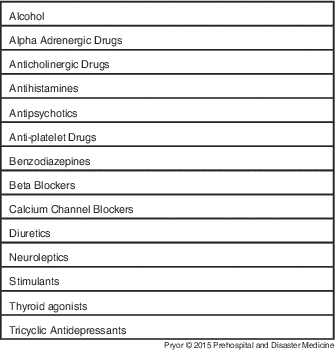
Certain classes of medications affect thermoregulation and can predispose individuals to exertional heat illnesses (Table 1). Anticholinergics and antihistamines may impair sweating rates, limiting evaporative capability.Reference Hart, Anderson, Crumpler, Shulkin, Reed and Knochel 38 Diuretics can result in salt depletion and hypohydration, increasing the risk of exertional heat illnesses due to decreased plasma volume, although these putative effects have not been tested rigorously and may be more theoretical.Reference Hart, Anderson, Crumpler, Shulkin, Reed and Knochel 38 Daily aspirin therapy (81 mg) in healthy middle-aged adults exercising in the heat had measurable delays in skin blood flow activation but a negligible effect on cardiovascular response and perceptual indices.Reference Bruning, Dahmus, Kenney and Holowatz 39 In spite of these alterations in skin blood flow, a laboratory study of 50 minutes of exertional heat stress in thermal protective clothing following two weeks of daily aspirin therapy failed to identify any differences in the rise in heart rate, internal body temperature, or thermal perception after exertion when compared to a placebo treatment.Reference Hostler, Suyama and Guyette 40
Drugs that May Interfere with Thermoregulation

Heat Cramps
Heat cramps are sustained skeletal muscle spasms that occur during exercise in the heat. The painful spasms are restricted typically to the exercising muscle groups and do not predispose the individual to more severe forms of heat-related illness. Heat cramps are seen most commonly in less-fit individuals who are unacclimatized or have not trained sufficiently for the event.Reference Coris, Ramirez and Van Durme 10 Rest and rehydration with an electrolyte solution are the principle treatments for heat cramps, and stretching and massage may be useful. The literature currently is unclear as to the causes of heat cramps; however, dehydration or electrolyte imbalance have been proposed.Reference Coris, Ramirez and Van Durme 10 Many athletes can return to competition on the same day after rehydration and the cramps have subsided.
Heat Rash
Also known as prickly heat, heat rash is a pruritic, maculopapular, erythematous rash over clothed areas of the body.Reference Howe and Boden 41 Sweat glands become blocked and swell beneath the skin surface until rupturing. Itching is the common symptom and can be treated with antihistamines. Wearing light, loose-fitting clothing during exercise in the heat largely can prevent heat rash. This heat illness does not preclude an individual from physical activity in the heat, although the athlete may be uncomfortable during activity.
Heat Syncope
Heat syncope is an orthostatic event resulting in a brief loss of consciousness. This occurs when blood pools in the lower extremities as the individual stands for an extended period of time, such as with athletes on the sidelines of a game or a spectator standing in the bleachers.Reference Coris, Ramirez and Van Durme 10 Heat syncope is most likely to occur if the individual has not replaced sweat losses adequately, resulting in blood volume depletion and cardiac insufficiency.Reference Knochel 42
Another common venue for heat syncope that is not related to exercise is amusement parks, water parks, and similar outdoor events.Reference Olympia, Brady, Rupp and Lansenderfer 43 In these situations, individuals spend periods of time in direct sunlight while waiting in a queue. Blood volume diminishes as the person sweats, resulting in progressive dehydration. The scenario becomes even more likely if the individual is consuming alcohol during the event due to dehydration.Reference Coris, Ramirez and Van Durme 10
Regardless of the trigger, the syncopal event is short and often resolves as soon as the patient is placed in a horizontal position. The most serious outcome from heat syncope is the potential trauma resulting from a fall from standing height. The patient typically presents pale and diaphoretic with a slightly elevated body temperature. Patients may be nauseous which slows oral rehydration. These subjects will often report limited food and fluid intake that day. If symptoms resolve and the patient is rehydrated appropriately and cautioned to avoid heat stress for the next 24-48 hours, there is rarely a need to evaluate these patients in the emergency department or admit them to the hospital.Reference Armstrong, Casa, Millard-Stafford, Moran, Pyne and Roberts 1 However, other potential causes of syncope (eg, hypoglycemia and cardiac history) should be considered and ruled out before making this decision.
Heat Exhaustion
Heat exhaustion is treated commonly in medical tents, first aid stations, and emergency departments.Reference Nelson, Collins, Comstock and McKenzie 44 Patients typically present lethargic and sweat profusely as they suffer brief loss or altered level of consciousness. Active sweating results in cool, clammy skin that may lead inexperienced providers to an incorrect diagnosis.Reference Casa, Pagnotta, Pinkus and Mazerolle 6 Patients suffering heat exhaustion are likely to be tachycardic, nauseous, and have an elevated body temperature that is typically less than 104°F (40°C). Patients may be hypotensive if the fluid losses from intense sweating have not been matched by oral intake during exertion. The altered consciousness may persist until the patient is removed from the hot environment and cooling has begun.
Under drinking can predispose individuals to exertional heat exhaustion. Under drinking and progressive dehydration is the most common form and often occurs in both athletes and workers.Reference Armstrong, Casa, Millard-Stafford, Moran, Pyne and Roberts 1 Individuals who are inexperienced at working or exercising in the heat may rely on thirst sensation to drink. However, significant dehydration can occur before a strong drinking response occurs, and individuals tend to voluntarily consume less fluid than lost through sweating.Reference Engell, Maller, Sawka, Francesconi, Drolet and Young 45 , Reference Maresh, Gabaree-Boulant and Armstrong 46 Even properly instructed individuals with free access to water, however, typically consume too little water to match the sweat losses during athletics.Reference Broad, Burke, Cox, Heeley and Riley 47
Heat exhaustion that is recognized and treated rapidly will often resolve quickly and rarely is there a need to admit these patients to the hospital. The most serious consequence results from failing to emphasize the danger of additional heat stress or exertion in the 24-48 hours following the initial illness. There have been cases of fatal heat stroke occurring the day after an athlete or firefighter was treated for heat exhaustion. It is likely that inherent or environmental predisposing factors to exertional heat illnesses are present (eg, low fitness and high WGBT), and if not remedied, the individual can suffer a similar illness the following day.Reference O’Connor, Casa and Bergeron 48
Exertional Heat Stroke
Exertional heat stroke is the most severe form of exertional heat illness accompanied by inflammatory, coagulation, and tissue abnormalities.Reference Leon and Helwig 49 Many sources define this disease by a threshold temperature of 104°F (40°C) coupled with central nervous system dysfunction with no other identifiable cause for that dysfunction (eg, head trauma, infection, sepsis, and encephalopathy). However, the internal body temperature that can be tolerated varies by individual, and there are anecdotal reports of well-trained runners tolerating temperatures in excess of 104°F (40°C). Patients suffering exertional heat stroke universally will present hyperthermic and with central nervous system dysfunction, such as unconsciousness, aggression, confusion, or dizziness that resolves slowly after cooling.Reference Knochel 42 A short, lucid interval should not be overlooked in individuals suspected of suffering exertional heat stroke. This commonly occurs prior to a rapid deterioration of the central nervous system, so patients should be monitored closely and rechecked every few minutes.
A major difference between exertional heat stroke and non-exertional (classic) heat stroke presentation are the skin findings during the physical exam. Non-exertional heat stroke is the endpoint of thermoregulatory collapse and develops slowly, sometimes over a period of days. The skin of these patients is typically hot and dry due to extended periods of thermal dysfunction.Reference Bouchama and Knochel 50 Diaphoretic skin is common in exertional heat stroke victims, especially if the individual was exercising right before collapse or was wearing protective garments that impaired sweat evaporation.Reference Shibolet, Coll, Gilat and Sohar 51 The skin may be hot, but the presence of sweat may distract the provider from a correct diagnosis and result in improper triage and delayed cooling.Reference Casa, Pagnotta, Pinkus and Mazerolle 6
Heat stroke patients who receive delayed cooling, and those who do not respond well to therapy, are at increased risk for mortality.Reference Bouchama and Knochel 50 , Reference Epstein and Roberts 52 Seizures may develop during the initial presentation. These patients may develop multi organ dysfunction syndrome, acute respiratory distress syndrome, shock, and rhabdomyolysis.Reference Bouchama and Knochel 50 It is believed that many of these complications result from loss of gastrointestinal tract integrity that results in translocation of lipopolysaccharide, gut bacteria, into the blood.Reference Leon and Helwig 49 , Reference Selkirk, McLellan, Wright and Rhind 53 During the early phase of thermoregulation during exercise in heat, increased skin blood flow is coupled with decreased visceral blood flow. With progressive dehydration, there is a further drop in central venous pressure, increasing in intestinal permeability and release of bacteria.Reference Epstein and Roberts 52
Discussion
Prehospital Care
Heat rash and heat cramps do not require immediate medical attention and will resolve with time. Effective treatment of heat syncope and heat exhaustion is limited typically to removing the patient from the hot environment, propping the feet, oral rehydration, and rest.Reference Armstrong, Casa, Millard-Stafford, Moran, Pyne and Roberts 1 It is important to remove excess equipment and garments to allow efficient evaporation of sweat; however, more aggressive cooling is not indicated. In severe cases accompanied by nausea and vomiting, intravenous rehydration and antiemetics may be required. Patients who are otherwise healthy and respond well to therapy rarely need to be seen in the emergency department or admitted to the hospital, but they should be cautioned to avoid additional heat stress and exercise in the following 24-48 hours and to continue to consume liquids and food.Reference O’Connor, Casa and Bergeron 48
Measuring body temperature should be the first step performed by prehospital providers when exertional heat stroke is suspected.Reference Hostler, Rittenberger, Schillo and Lawery 54 Documenting temperature at the scene may lead the provider to a correct diagnosis of exertional heat stroke when distractions are present in the patient’s presentation of symptoms. Emergency personnel should keep in mind the time between collapse and treatment. Individuals suffering from exertional heat stroke may present with temperatures <104˚F (40°C) due to a long period of time between collapse and medical care. If central nervous system dysfunction is present and other conditions have been ruled out, exertional heat stroke should be assumed.
It is important, however, to realize the limitations of common external thermometers when used in the context of exertional heat stress.Reference Pryor, Seitz and Morley 55 Commercially available thermometers that do not measure internal body temperature directly (ie, oral, tympanic, aural, skin, forehead, and temporal) have poor agreement and may measure temperature inaccurately as too high or too low in exercising, hyperthermic individuals.Reference Pryor, Seitz and Morley 55 - Reference Ganio, Brown and Casa 57 Rectal thermometers, ideally a flexible in-dwelling rectal thermocouple, should be the standard for assessing exertional heat illness whenever possible. When a rectal thermometer is not available, other external thermometers should not be utilized due to low validity. Instead, exertional heat stroke should be assumed and cooling should be started immediately.
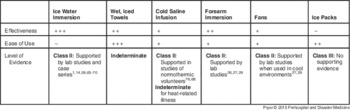
Cold water immersion is the gold standard in treating exertional heat stroke victims and is 100% survivable when cooling begins within 30 minutes of collapse (as seen in 274 patients over the course of 18 years of the Falmouth Road Race, Massachusetts USA).Reference DeMartini, Casa and Stearns 11 For exertional heat stroke patients, effective cooling should be completed before transporting the patient to the emergency department.Reference Armstrong, Casa, Millard-Stafford, Moran, Pyne and Roberts 1 Structured water immersion cooling may not be possible if not preplanned around an event; however, alternative effective cooling modalities, such as immersion in a cold stream, lake, or a cold shower, should be considered. It has been reported that United States Marines suffering with heat stroke symptoms in the field are treated initially by being exposed and then wrapped in sheets that have been dipped in ice water. Regularly rotating fresh, cold, wet sheets reduces body temperature and dramatically reduced heat stroke deaths during the summer training months (Table 2).Reference Smith 58 There are few data regarding cooling techniques and outcomes when delivered by prehospital providers. Other cooling therapies are only marginally effective but continue to be deployed because of simplicity and availability, such as placing ice packs over the groin and axillae.Reference McDermott, Casa and Ganio 28 , Reference Casa, McDermott, Lee, Yeargin, Armstrong and Maresh 59
Summary of Potential Cooling Techniques for Exertional Heat Stroke

At a minimum, when cold water immersion is not available, patients should be exposed and placed in an air-conditioned vehicle for rapid transport to the emergency department. Point-of-care tests can be used to identify possible hypoglycemia and hyponatremia.Reference Hsieh, Roth, Davis, Larrabee and Callaway 60 If normal serum sodium levels have been confirmed, then intravenous rehydration can begin in the prehospital setting. Without this assurance, intravenous rehydration should proceed with caution to avoid exacerbating hyponatremia with large boluses of normal saline.
Invasive airway devices, such as endotracheal intubation, rarely are needed in exertional heat illness. Patients who remained obtunded or hypotensive after cooling, and those who seize, are the subset most likely to require hospital admission and critical care.
Treatment of Exertional Heat Illness at Large Events
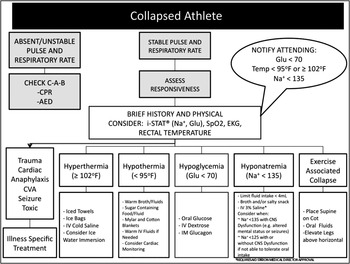
A clinical pathway for exertional heat illness and the common distracting diagnoses are presented in Figure 1. The common serious illnesses encountered in the context of exertional heat stress and the collapsed athlete includes hyperthermia, hypothermia, and hypoglycemia. Other common disorders associated with outdoor activity and exertion should also be considered (eg, trauma, stroke, asthma, cardiac conditions, and anaphylaxis).Reference Casa, Pagnotta, Pinkus and Mazerolle 6 Each of these conditions are treated readily by EMS providers or within a well-equipped aid station. Exertional heat illness is often only differentiated from other presentations by measuring rectal temperature. Other methods of temperature measurement are unreliable in the context of exertional heat illness and may lead to misdiagnosis.Reference Pryor, Seitz and Morley 55 , Reference Roth, Verdile, Grollman and Stone 61 Exertional heat illness may be complicated by hyponatremia or impaired glucose regulation, but only direct measurement of internal temperature is pathognomonic for diagnosis exertional heat illness.
Clinical Pathway for Treating the Collapsed Athlete. Abbreviations: AED, automated external defibrillator; CNS, central nervous system; CPR, cardiopulmonary resuscitation; CVA, cerebrovascular accident (stroke); EKG, electrocardiogram; IM, intramuscular; IV, intravenous therapy.

Large events, including concert venues and marathon races, may benefit from the establishment of an on-site medical care station. Other cooling strategies, such as misting fans and sprays, have been deployed at concert venues and mass gatherings, but their effectiveness has not been tested. A lab study of 15 firefighters reported that a misting fan used in a hot, humid environment was ineffective at reducing internal temperature during breaks from exertion.Reference Selkirk, McLellan and Wong 29 It is reasonable to assume that larger versions of these devices would also be ineffective on humid days, especially if dispersed widely over a large number of people.
When venues and competitions are staffed appropriately by medical personnel, it is possible to treat and release many minor heat illness cases after oral rehydration and rest. Rehydration solutions of water or an electrolyte and carbohydrate beverage should be provided to all cognitively intact individuals presenting with signs of heat stress, as recommended by an Institute of Medicine (Washington, DC USA) report on fluid replacement and heat stress.Reference Nesheim and Marriott 62 Most commercial sport drinks meet the recommendations of 20 meq/L-30 meq/L sodium, 2 meq/L-5 meq/L potassium, and 5%-10% carbohydrate. Gastric emptying is enhanced if the carbohydrate content of the solution is between six and eight percent.Reference Jentjens, Shaw, Birtles, Waring, Harding and Jeukendrup 63 The rehydration goal for these patients should be 1 L-2 L of oral fluids over an hour. Additional diagnostics and therapies include removing restrictive clothing, providing shade, and determining the blood glucose and sodium levels.
Patients in these settings with altered mental status and no other obvious cause should be assumed to have exertional heat stroke. Treatment of exertional heat stroke requires immediate and aggressive cooling. Cold water immersion is the gold standard treatment that is endorsed by both the ACSM and NATA.Reference Armstrong, Casa, Millard-Stafford, Moran, Pyne and Roberts 1 , Reference Binkley, Beckett, Casa, Kleiner and Plummer 2 Concerns that immersion in ice water will trigger a strong cutaneous vasoconstriction and warm the patient are anecdotal and ignore the physics of creating a large thermal gradient between the hyperthermic patient and the cold water heat sink.Reference Casa, McDermott, Lee, Yeargin, Armstrong and Maresh 59 While body temperature may continue to slightly rise during the first few minutes of immersion, temperature will decrease dramatically a few minutes into cooling.
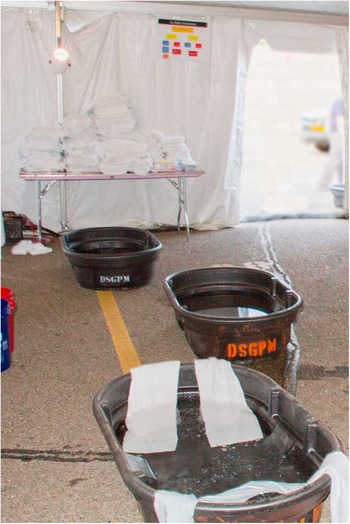
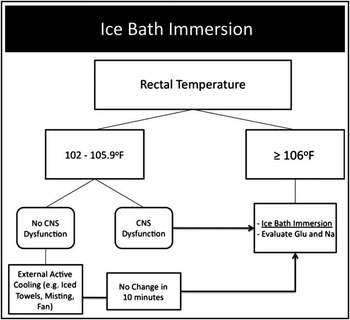
Cold water immersion therapy can be deployed in places where exertional heat stroke is anticipated, such as a marathon race. Prepositioning water-filled plastic tubs or troughs with stores of ice effectively prepares providers to deliver this therapy (Figure 2; available online only). Providers should be prepared to place a flexible rectal thermometer before immersing the patient in water in order to prevent overcooling. Removing the patient when the rectal temperature falls below 102.2°F (39°C) largely eliminates the risk of hypothermia; however, continued temperature monitoring is required (Figure 3).Reference Ash, Cook, McMurry and Auner 64 Only after rectal temperature falls below 102.2°F (39°C) should the patient be transported to the hospital, unless other medical emergencies arise. If rectal temperature is not available, the patient should be immersed for approximately 10 minutes before transport.Reference Gagnon, Lemire, Casa and Kenny 65
(available online only). Prepositioned Plastic Tubs Filled with Ice Water to Treat Heat Stroke at a Marathon Finish Line Medical Tent (Photo courtesy of author Ronald Roth, MD).

Clinical Pathway for Cold Water Immersion Cooling. Abbreviation: CNS, central nervous system.

Although there is strong consensus for immersion cooling of heat stroke victims, the temperature of the water used for immersion cooling remains controversial.Reference Casa, Kenny and Taylor 66 , Reference Clements, Casa and Knight 67 Much of this controversy is related to the temperature measurement site (rectal vs esophageal) used in the various studies and case reports. Extremely cold water temperatures (35.6°F; 2°C) result in the fastest rates of cooling (32.6°F-32.9°F/min; 0.33°C-0.50°C/min) when rectal thermometry was employed.Reference Proulx, Ducharme and Kenny 68 More moderate water temperatures (78.8°F; 26°C) cooled individuals from 103.1°F (39.5°C) to 98.6°F (37°C) when measured with an esophageal thermometer.Reference Caldwell, van den Heuvel, Kerry, Clark, Peoples and Taylor 69 It is not clear, however, if residual heat in other tissues have adequately been cleared with this duration and intensity of cooling.Reference Proulx, Ducharme and Kenny 70 Despite the controversy, cold water immersion has been implemented successfully and resulted in a 100% survival rate of exertional heat stroke patients.Reference DeMartini, Casa and Stearns 11
It is important to remember that it is unlikely that a medical tent will treat a single case of heat stroke during a large event. Environmental conditions sufficient to create one case of heat illness are likely to create multiple cases. Preparing multiple cooling tubs increases capacity to deliver rapid cooling and allows for a tub to be emptied and cleaned in the event the patient is incontinent or vomits during cooling. The majority of heat stroke patients succumb to the condition within a mile of the finish line; therefore, medical providers should be positioned near the finish line of a race to assess central nervous system dysfunction, including altered gait, confusion, and loss of consciousness.
When cold water immersion is not available, other potential cooling methods can be implemented, including cold intravenous saline, conductive cooling methods (eg, cooling blankets), and enhanced evaporative methods. These methods largely can be performed in parallel, and when combined, may provide a greater reduction of internal temperature in a short time period. The use of intravenous cold saline has become more prevalent due to its application to induce hypothermia after cardiac arrest. The increased availability of cold, normal saline makes it the most likely intervention to occur both in the prehospital and the emergency department settings. It should be emphasized that these cooling methods should not replace cold water immersion, but can be used in conjunction with immersion.Reference Casa, McDermott, Lee, Yeargin, Armstrong and Maresh 59
New therapies for targeted temperature management have emerged with the recent focus on treating post cardiac arrest victims with therapeutic hypothermia.Reference Pittl, Schratter and Desch 71 - Reference Testori, Holzer and Sterz 73 Intravascular cooling devices and simple infusion of cold saline are both reported to induce mild hypothermia following resuscitation.Reference Bernard, Gray and Buist 74 , Reference Hong, Lai, Chang, Chang and Tang 75 However, application of these modalities to heat stroke have been limited to case reports. One case study described the application of a commercial intravascular cooling device to a heat stroke victim which resulted in a reduction in internal body temperature of 33.2°F (0.66°C) per hour. The authors then reduced body temperature to 91.4°F (33°C) for eight hours, similar to the current practice for post cardiac arrest victims.Reference Hong, Lai, Chang, Chang and Tang 75 Another small case series cooled heat stroke patients with cold, normal saline and induced and maintained 24 hours of therapeutic hypothermia with a surface cooling device.Reference Lee, Lee, Park, Kim and Hong 76 Although the patients in both these reports were discharged from the hospital without neurological deficits, there are no clinical trials or preclinical data to support this practice. A separate case report described the use of cold hemofiltration to treat heat stroke.Reference Yue, Zhou and Liu 77
Cold saline infusions have been shown to be safe in normothermic volunteers with and without sedations.Reference Hostler, Reis, Bednez, Kerin and Suyama 27 , Reference Moore, Callaway and Hostler 78 , Reference Hostler, Northington and Callaway 79 In a laboratory study of healthy volunteers heated to 104°F (40°C), a 2 L infusion of chilled (68°F; 20°C) saline reduced internal temperature 35.6°F (2°C) in 30 minutes, but that cooling rate was not different than using five, 5 kg bags of ice placed over the groin, axillae, and the back of the neck.Reference Sinclair, Rudzki, Leicht, Fogarty, Winter and Patterson 80 Cold saline infusion to treat heat stroke is in the literature as a case report, and it has been implemented in the prehospital setting to induce therapeutic hypothermia following cardiac arrest demonstrating feasibility as a prehospital therapy for heat illness.Reference Hostler, Rittenberger, Schillo and Lawery 54 , Reference Kim, Olsufka and Longstreth 81 Most exertional heat stroke patients will be dehydrated making it unlikely that an infusion of 1 L-2 L of cold saline will result in harm if it can be verified that the patient is not hyponatremic.
Although not common at marathon races, pediatric and geriatric patients are both at higher risk for exertional heat stress and may require additional resources. Pre-pubescent children have decreased sweat production and higher body surface area to mass ratio compared to adults.Reference Falk 82 Although this ratio is beneficial in temperate environments, this can lead to increased heat gain in extreme environmental heat. Although master class athletes may be very fit, geriatric patients have multiple risk factors to become victims of heat stroke and should be evaluated for heat stroke aggressively when environmental conditions make this diagnosis more likely. Older individuals have decreased sweat sensitivity and smaller plasma volume, predisposing them to exertional heat illnesses.Reference Takamata, Ito and Yaegashi 83 Polypharmacy related to antipsychotic and anticholinergic medications also increase the risk of heat illness, and poor baseline hydration provides little reserve when insensible losses increase with heat exposure.Reference Hart, Anderson, Crumpler, Shulkin, Reed and Knochel 38
Conclusion
It is not likely that all exertional heat illness can be eliminated from athletics, but rapid recognition and treatment largely will eliminate fatalities. Athletes and certain occupational groups are more likely to suffer exertional heat illness. Key to rapid recognition of exertional heat illness is the understanding that it may occur in cool, ambient temperatures if an individual is performing heavy exertion, wearing excessive clothing or equipment, or exposed to radiant heat. When tolerated by the patient, oral rehydration is preferred to intravenous therapy. Although exertional heat illness may be complicated by other conditions, such as hypoglycemia or hyponatremia, rapid, effective cooling is the definitive therapy and should be completed prior to transport to emergency facilities.
Supplementary Material
To view supplementary material for this article, please visit http://dx.doi.org/10.1017/S1049023X15004628.