Congenital Heart Defects (CHDs) are major congenital defects with a strong impact on the healthcare system.Reference Mackie, Pilote, Ionescu-Ittu, Rahme and Marelli1,Reference Mackie, Ionescu-Ittu, Pilote, Rahme and Marelli2 They are the most common birth defects, comprising about one-third of all major birth defects with reported birth prevalence of 5–15 per 1000 live births in developed countries.Reference Dolk, Loane and Garne3,Reference van der Bom and Zomer4 Several studies in Europe demonstrate an increase in the birth prevalence of CHD from the early 1990s until the mid-2000s, with a steady decrease thereafter.Reference Leirgul, Fomina, Brodwall and Greve5–Reference Dolk, Loane, Garne, Abramsky and de Walle7
The etiology of CHD is largely unknown; a specific cause can be found in only < 20% of cases.Reference Gelb and Chung8 Well-established risk factors include maternal preconception diabetes mellitus, maternal rubella, phenylketonuria, and exposure to thalidomide and retinoids.Reference van der Bom and Zomer4,Reference Jenkins, Correa and Feinstein9 Other conditions previously associated with CHD include maternal age ≥ 40, hypertension, CHD in the mother, thyroid dysfunction, systemic connective tissue disorders,Reference Liu, Joseph and Lisonkova10 maternal obesityReference Marengo, Farag and Canfield11,Reference Fung, Manlhiot and Naik12 and in vitro fertilisation.Reference Kurinczuk and Bower13,Reference Hansen, Kurinczuk, Bower and Webb14 The recurrence rate of CHD is 1–6% in siblings when the parents are healthyReference Calcagni, Digilio, Sarkozy, Dallapiccola and Marino15–Reference Gill, Splitt, Sharland and Simpson17 and 4% in children of one parent with CHD.Reference Burn, Brennan and Little18
Southern Israel is populated by 730,000 residents belonging to two main ethnic groups: a Jewish population that resides primarily in urban areas (75%), and an Arab Bedouin population that is mainly rural (25%).19 In addition, the Arab Bedouin population has an exceptionally high rate of consanguinity (70%),20 an abortion rate 2.5 times lower than that of the Jewish population, and a higher birth median: Arab-Bedouin ([median, range] 4, 1–20), Jews (2, 1–18).19 This led us to suspect that the birth prevalence of CHD in the Arab Bedouin population might be higher than that reported worldwide. Both populations are entitled to the same free medical services, including perinatal care and advanced obstetric facilities, although compliance may vary.
Our aims were to study the prevalence of CHD in southern Israel and to identify and compare maternal risk factors that are associated with CHD in the Jewish versus Bedouin populations in southern Israel.
Materials and methods
Population and setting
This is a population-based study conducted in Soroka University Medical Center, a tertiary hospital exclusively providing medical care to the population of southern Israel. All deliveries in the area are referred to Soroka University Medical Center, with an average of 13,000 births annually. Approximately half of the deliveries are of Arab-Bedouin origin. Since 1991, Soroka University Medical Center has maintained a comprehensive birth registry recording broad maternal and foetal data on all births in the region.
All the neonates with a prenatal diagnosis of CHD by foetal echocardiography were included in this study and every neonate who was determined to have CHD after birth was also included. Every neonate is examined at least twice before discharge from the hospital. All neonates with a heart murmur or any other suspicious finding for CHD are assessed during their hospitalisation. In addition, any patient who was born at Soroka University Medical Center throughout the whole study period and recorded as having CHD in the electronic medical records system was also included. Data about the presence of CHD were extracted from the electronic medical records for the entire population.
Out of all the live births between 1991 and 2011, we compared healthy singleton newborns with infants diagnosed with CHD stratified by ethnicity. Infants with isolated patent ductus arteriosus or isolated patent foramen ovale were excluded since these are normal findings in a neonatal ultrasound.
We obtained the following maternal and newborn data: maternal age; ethnic group; gravidity and parity; recurrent pregnancy loss; conception using in vitro fertilisation or fertility medications; lack of prenatal care; newborn sex; CHD in the sibling of the newborn; and maternal chronic conditions: CHD, preconception diabetes mellitus (DM), gestational diabetes mellitus, anaemia, chronic hypertension, thalassemia, and thyroid dysfunction.
The research was approved by the Institutional Review Board of the SUMC (IRB number 0037-12-SOR).
Definitions
The presence of any CHD (recorded in the electronic medical records system) was the main outcome in our study. The various CHDs were coded according to ICD9: any CHD – codes 745–747; atrioventricular (AV) canal – 745.6; congenital mitral valve insufficiency – 746.6; coarctation of the aorta – 747.1; congenital aortic regurgitation (AR) – 746.4; pulmonic stenosis (PS) – 746.83; transposition of great arteries (TGA) – 745.1; ventricular septal defect (VSD) – 745.4; atrial septal defect (ASD) – 745.4; tetralogy of Fallot (TOF) – 745.2; and hypoplastic left ventricle (LV) – 746.7. Lack of prenatal care was defined as lack of prenatal visits or first prenatal visit in the third trimester.
Recurrent pregnancy loss was defined as a woman with three or more miscarriages. Grand multipara was defined as five or more live births.
Data analysis
Continuous variables were analysed using parametric t-test. Mann–Whitney test was used if parametric assumptions could not be satisfied. Pearson’s χ2 test or Fisher Exact test was used to test categorical variables.
Annual birth prevalence was calculated as the number of CHD cases per 1000 live births per year.
We conducted a multivariate logistic regression to assess the associations between any CHD and maternal risk factors, stratified by ethnicity. Generalised Estimating Equations models were used to account for the possibility of several births for each mother. The final analysis included the following parameters that were identified as risk factors or confounders: maternal age ≥ 35; recurrent pregnancy loss; conception using in vitro fertilisation; conception using fertility medications; maternal chronic diseases including CHD, diabetes mellitus (gestational and preconception), anaemia, and chronic hypertension; heart defect in a sibling of the newborn; and lack of prenatal care. The analysis was adjusted for newborn sex and birth number.
IBM SPSS Statistics software version 20.0 was used for data analysis. All statistical tests and/or confidence intervals were assessed at α = 0.05 (two-sided), as appropriate.
Results
The Soroka University Medical Center Birth Registry contained 247,289 live births between 1991 and 2011. Among 242,861 singleton deliveries, 6078 cases of newborns diagnosed with CHD were identified, yielding a CHD birth prevalence of 24.6 per 1000 live births.
Newborn and maternal characteristics and chronic conditions
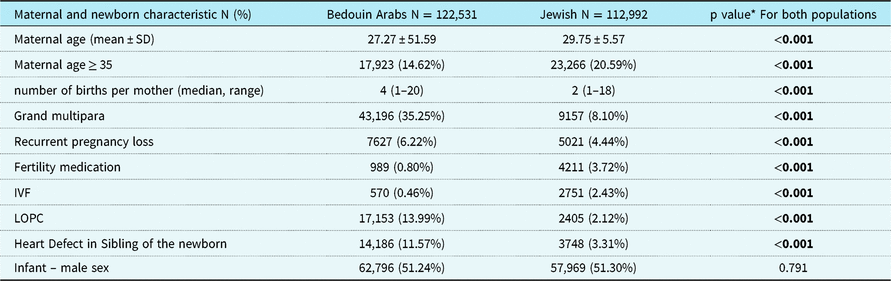
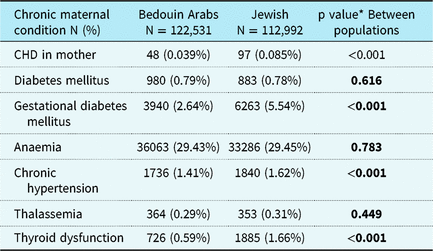
Table 1 presents the maternal and newborn characteristics and chronic conditions by population. All the general maternal and newborn characteristics studied were indeed significantly different between Jewish and Bedouin populations except for male sex of the newborn. Among the maternal chronic conditions, maternal CHD was more prevalent in the Bedouin population whereas gestational diabetes mellitus, chronic hypertension and thyroid dysfunction were more prevalent in the Jewish populations. There was no statistical difference between the two groups in the rest of the chronic maternal conditions.
Maternal and newborn characteristics

* p values were obtained from t-test, Mann–Whitney, Pearson’s χ2 test, and Fisher Exact test.
Maternal chronic conditions
Table 2 presents the maternal chronic conditions by population. Maternal CHD was significantly associated with CHD in the Bedouin population while gestational diabetes mellitus, hypertension and thyroid dysfunction were significantly more common risk factors for CHD in the Jewish population.
The association between chronic maternal conditions and CHD

* p values were obtained from Pearson’s χ2 test and Fisher Exact test
Ethnicity and chronological trends of CHD incidence
The overall birth CHD prevalence during the years 1991–2011 in the Jewish and Bedouin populations was 21.4 and 30 per 1000 live births, respectively (p = 0.001). When examining the CHD birth prevalence by ethnicity over time, the Bedouin birth prevalence is consistently higher than that of the Jewish community.
Multivariate analysis
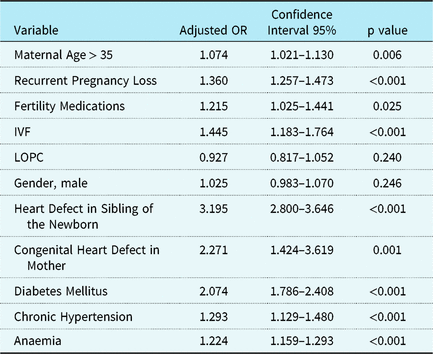
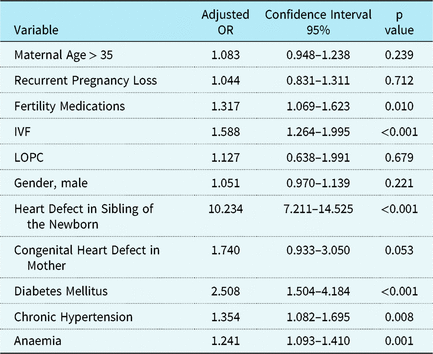
We used generalised estimation equations logistic regression models for multivariate analysis of the predictors associated with CHD in the Bedouin and Jewish populations (Tables 3 and 4, respectively). In the Bedouin population: maternal age > 35 years, recurrent pregnancy loss, conception with fertility medications, in vitro fertilisation, CHD in sibling, maternal CHD, diabetes mellitus, hypertension and anaemia were found to be independent risk factors for CHD (Table 3). Whereas, in the Jewish population conception with fertility medications, CHD in sibling, diabetes mellitus, hypertension and anaemia were independent risk factors for CHD (Table 4). Heart defects in a sibling were recorded more commonly as CHD risk factor in the Jewish population compared with Bedouin population (Adjusted odds ratio 10.23 versus 3.19, respectively). The comparison of adjusted odds ratio for CHD by risk factor for each population is presented in Tables 3 and 4.
Bedouin Arabs Maternal conditions and characteristics association with CHD in the newborn. Multi-variant analysis - general estimating equation model

Jewish Maternal conditions and characteristics association with CHD in the newborn. Multi-variant analysis - general estimating equation model

Discussion
In this population-based study, we have demonstrated a higher birth prevalence of CHD in the southern Israel than previous reports. The total calculated CHD birth prevalence was 24.6 per 1000 live births. In Hoffman and Kaplan’s review of CHD incidence, the estimated birth prevalence was ~13 per 1000 live births in the United States.Reference Hoffman and Kaplan21 In a study by Dolk that included population-based registries from 16 European countries, the estimated birth prevalence of CHD was 8 per 1000 live births. A nationwide study in Norway yielded a birth prevalence of 13.7 per 1000 live births.Reference Leirgul, Fomina, Brodwall and Greve5 In a study done in the region, the birth prevalence of CHD in the Gaza strip in 2010 was only 10 per 1000 live births.Reference Zaqout, Aslem, Oweida and De Wolf22 As mentioned in van der Bom’s extensive review on the changing epidemiology of congenital heart disease, there is a wide range in estimates of birth prevalence, partly due to different classifications, study methods, and selection bias stemming from the variety in quality of care and treatment availability.Reference van der Bom and Zomer4 In this study, we found a much higher prevalence of CHD than previously reported. We estimate that this finding is probably due to two main reasons: The nature of the populations residing in southern Israel which includes a Bedouin population with an extremely high rate of consanguinity and low abortion rates.19 These factors alone can explain the higher birth prevalence of CHD in the Arab-Bedouin population, as suggested by other studies conducted in Israel that demonstrated a higher rate of birth defects such as in the Arab population compared with the Jewish population.Reference Shapira, Haklai, Blum, Shpack and Amitai23,Reference Yeshayahu, Sagi and Silberstein24 However, even in the Jewish population, the prevalence of CHD is higher than previous reports, and this may be due to a strict protocol for early diagnosis of CHD that has been implemented consistently throughout the study years at Soroka University Medical Center and broader inclusion criteria for a diagnostic cardiological evaluation used in this study. We therefore raise the possibility that previous reports underestimated the prevalence of CHD.
Our data show that risk factors for CHD may be specific for certain populations even when residing in the same geographic area. Although there are differences in the living conditions and lifestyle of the two populations, since environmental exposure should be relatively similar in the Bedouin and Jewish populations of southern Israel, we presume that the most important difference between these populations is the genetic background and consanguinity. In the Bedouin population, recurrent pregnancy loss and maternal CHD were found to be independent risk factors for CHD, while not so in the Jewish population. Since maternal CHD is most likely due to genetic predisposition and in this population consanguinity is more common, it is reasonable that the paternal side also has genetic predisposition towards having a child with CHD. Conversely, CHD in a sibling was found to be an independent risk factor in both populations, yet the adjusted OR was much higher in the Jewish population (10.23) compared with the Bedouin population (3.19), suggesting the possibility of genetic clustering of genes associated with CHD in the Jewish population.
Several genes including NKX2-5 and GATA4,Reference Schott, Benson and Basson25,Reference Garg, Kathiriya and Barnes26 encoding essential transcription factors for cardiac formation, and environmental causes such as air pollution,Reference Agay-Shay, Friger, Linn, Peled, Amitai and Peretz27 herbicides, and rodenticides,Reference Loffredo, Silbergeld, Ferencz and Zhang28 were implicated in the development of CHD thus far. Further studies of the afflicted children and their families could contribute to understanding the etiology of these disorders. Understanding the risk factors by population may reveal specific risk factors for each population. Such data may be used in genetic counselling in the future and hopefully help ameliorate the burden of CHD. From the environmental aspect, a study performed on pregnant Arab-Bedouin women in southern Israel investigated the relationship between air pollution and congenital malformations, and found that patients with high levels of aluminum had more infants with minor malformations, with cardiovascular defects being the most prevalent.Reference Karakis, Landau and Yitshak-Sade29 Additional environmental studies focussing specifically on CHDs could help clarify this relationship.
There was an increase in the CHD birth prevalence until 2005, followed by a decline, similar to reported trends in other studies in Europe and North America.Reference Leirgul, Fomina, Brodwall and Greve5,Reference Ionescu-Ittu, Marelli, Mackie and Pilote6,Reference Øyen, Poulsen, Boyd, Wohlfahrt, Jensen and Melbye30 The increase can be explained partly by the improvement in diagnostic measures, as suggested by previous studies.Reference Leirgul, Fomina, Brodwall and Greve5 A cause for the observed decline was not found in other publications. It was suggested that the decline was related to folic acid fortification in studies held in the United States and Canada.Reference van der Bom and Zomer4 However, in European countries as well as in our study, folic acid fortification is not mandatory and compliance varies, so it appears answers are still lacking. Nuchal translucency testing that can identify major cardiovascular defects was validated for screening in the mid-2000s, which led to a significant rise in referrals for foetal echocardiograms from 2004 to 2005 until 2009 as demonstrated in a study held in the Netherlands.Reference Sheppard and Platt31 If earlier detection led to a rise in pregnancy termination due to CHD, it could have some contribution to the decline in CHD prevalence, yet abortions are not common in the Bedouin population and this may partly explain the higher CHD prevalence in the Bedouin population.
The limitations of our study include the following: aborted and miscarried fetuses are not routinely tested in SUMC and thus were not included; additionally, we were unable to assess the heart defect severity.
The strengths of our study include its size, and the fact that it is a population-based, long-term study utilising the uniqueness of the local health system: universal health insurance, and a single hospital with comprehensive birth data and highly developed electronic medical records system.
We conclude that several maternal factors were associated with CHD primarily in the Bedouin population. The risk factors for CHD which may seem universal are somewhat specific for different populations residing in the same geographic area. We found a much higher birth prevalence of CHD than reported in other countries in both the Bedouin and Jewish populations possibly due to broader inclusion criteria implemented in this study.
Acknowledgements
This study was conducted as part of the requirements for graduation from the medical school of the faculty of health sciences, Ben-Gurion University of the Negev.
Financial Support
This research received no specific grants from any funding agency, commercial or not-for-profit sectors.
Conflicts of Interest
Victor Novack, consultant to CardioMed LLC, Keystone Heart, V-wave, CeloNova, BIo2, Pryor, Optomeditech. The other authors have no conflicts of interest relevant to this article to disclose.
Ethical Standards
The research was approved by the Institutional Review Board of the SUMC (IRB number 0037-12-SOR). For this type of study, formal consent is not required.