Introduction
Multiple sclerosis (MS) is a demyelinating disorder of the central nervous system which is typically diagnosed during young adulthood, a critical period for career development (Julian et al., Reference Julian, Vella, Vollmer, Hadjimichael and Mohr2008; Matute-Blanch et al., Reference Matute-Blanch, Montalban and Comabella2018; Milo & Kahana, Reference Milo and Kahana2010; Murray, Reference Murray2004). Unemployment is common in multiple sclerosis (MS), with rates ranging from 24 to 80% (Jackson et al., Reference Jackson, Quaal and Reeves1991; Kornblith et al., Reference Kornblith, La Rocca and Baum1986; Schiavolin et al., Reference Schiavolin, Leonardi, Giovannetti, Antozzi, Brambilla, Confalonieri, Mantegazza and Raggi2013; Simmons et al., Reference Simmons, Tribe and McDonald2010; Uccelli et al., Reference Uccelli, Specchia, Battaglia and Miller2009). Although employment is more dynamic in people with MS, twice as many people with MS have been found to leave the workforce than re-enter it (Julian et al., Reference Julian, Vella, Vollmer, Hadjimichael and Mohr2008). Loss of employment precipitates a variety of negative consequences in financial, psychosocial (e.g., self-efficacy, social engagement, quality of life), and health-related domains (Johnson et al., Reference Johnson, Yorkston, Klasner, Kuehn, Johnson and Amtmann2004; McCabe & De Judicibus, Reference McCabe and De Judicibus2003; Miller & Dishon, Reference Miller and Dishon2006; Schiavolin et al., Reference Schiavolin, Leonardi, Giovannetti, Antozzi, Brambilla, Confalonieri, Mantegazza and Raggi2013).
Literature has shown that unemployment and loss of employment have been associated with a variety of demographic and disease characteristics, including female sex, older age, fewer years of education, increased overall disability, physical impairments (e.g., ambulation, balance, upper limb functioning), temperature sensitivity, pain, and bladder/bowel incontinence in MS (Bøe Lunde et al., Reference Bøe Lunde, Telstad, Grytten, Kyte, Aarseth, Myhr and Bø2014; Grytten et al., Reference Grytten, Skår, Aarseth, Assmus, Farbu, Lode, Nyland, Smedal and Myhr2017; Povolo et al., Reference Povolo, Blair, Mehta, Rosehart and Morrow2019; Salter et al., Reference Salter, Thomas, Tyry, Cutter and Marrie2017; Simmons et al., Reference Simmons, Tribe and McDonald2010). It is likely that there is a synergistic interaction between these factors that impact a person’s ability to effectively manage the responsibilities inherent to their employment. Common sequelae of MS such as neurocognitive dysfunction, fatigue, and depression have also been frequently implicated in unemployment and decreased employment in the MS population, suggesting that individuals with these particular symptoms may be considered to be “at risk” of job instability (Grytten et al., Reference Grytten, Skår, Aarseth, Assmus, Farbu, Lode, Nyland, Smedal and Myhr2017; Povolo et al., Reference Povolo, Blair, Mehta, Rosehart and Morrow2019; Salter et al., Reference Salter, Thomas, Tyry, Cutter and Marrie2017; Schiavolin et al., Reference Schiavolin, Leonardi, Giovannetti, Antozzi, Brambilla, Confalonieri, Mantegazza and Raggi2013). Given the pervasive effects of these symptoms and their modifiable nature, they are of particular interest when developing interventions (Charvet et al., Reference Charvet, Serafin and Krupp2014; Patten et al., Reference Patten, Marrie and Carta2017).
Despite the frequency and well-researched negative employment outcomes in MS, few studies have evaluated vocational interventions to prevent unemployment. Importantly, of these few studies, most have shown few differences in employment outcomes between intervention and control groups (Khan et al., Reference Khan, Ng and Turner-Stokes2009; LaRocca et al., Reference LaRocca, Kalb and Gregg1996), although one study found that participants in the intervention group had greater ability to manage work demands after 6 months (Sweetland, Reference Sweetland2012). Nevertheless, it is important to note that most of these studies consisted of individuals who had already lost their jobs prior to study participation or who had reported significant concerns regarding their employment status at baseline (Khan et al., Reference Khan, Ng and Turner-Stokes2009; LaRocca et al., Reference LaRocca, Kalb and Gregg1996). Additionally, poor adherence to the study intervention recommendations may have limited the utility of such interventions (LaRocca et al., Reference LaRocca, Kalb and Gregg1996) and thus is an important factor to address. Given the utility of vocational rehabilitation in other populations, it is thought that identifying employed individuals with MS with relevant risk factors may allow for more effective intervention (Hubbard et al., Reference Hubbard, Gray, Ayansina, Evans and Kyle2013; O’Connor & Daley, Reference O’Connor and Daley2016).
Neuropsychological testing may be of particular use as an interventional tool for individuals with MS who are at risk for job loss. While neuropsychological assessment is often considered evaluative in nature (i.e., diagnosing cognitive impairment), it is also used to provide treatment in the form of feedback, psychoeducation, and recommendations to address specific cognitive concerns (Amato et al., Reference Amato, Portaccio, Goretti, Zipoli, Iudice, Pina, Malentacchi, Sabatini, Annuziata and Falcini2010; Moghadasi et al., Reference Moghadasi, Pourmand, Sharifian, Minagar and Sahraian2016; Ruet et al., Reference Ruet, Deloire, Hamel, Ouallet, Petry and Brochet2013). Such assessments also serve to evaluate and provide recommendations about other symptoms that may contribute to cognitive dysfunction and work instability, such as mood symptoms and fatigue (Charvet et al., Reference Charvet, Serafin and Krupp2014; Simioni et al., Reference Simioni, Ruffieux, Bruggimann, Annoni and Schluep2007). Neuropsychologists frequently make recommendations for useful and relevant services, such as fatigue consultation, cognitive rehabilitation, occupational therapy, psychopharmacological management, or psychotherapy (Khan & Amatya, Reference Khan and Amatya2017). These services address the very problems that people with MS have reported as reasons for leaving the workforce and as such, providing recommendations for these services as part of the neuropsychological assessment may improve job outcomes by addressing symptomatology. Given that women are at a higher risk for job loss, they may particularly benefit from a timely intervention aimed at preventing loss of employment (Grytten et al., Reference Grytten, Skår, Aarseth, Assmus, Farbu, Lode, Nyland, Smedal and Myhr2017).
The present quasi-experimental study compared two levels of a neuropsychologically-based vocational intervention in women with MS deemed “at-risk” for loss of employment, and subsequently compared employment outcome differences between the combined “at-risk” groups to a “low-risk” no intervention group of employed women with MS. We hypothesized that women in the experimental group would have better adherence to recommendations made following testing and better employment outcomes than those in the standard-care group. In our exploratory analysis we compared employment retention rates of the combined treatment group participants to their “low-risk,” no intervention counterparts to see whether participation in either level of this intervention reduced their risk for poor employment outcomes.
Method
Study design
This quasi-randomized controlled trial aimed to investigate the effects of a neuropsychologically-based intervention to help women with MS maintain employment; women were the target of this intervention, in part because of funding agency (Women United in Philanthropy) criteria, though this was also justifiable as women are more likely to both be diagnosed with MS and leave the workforce (Grytten et al., Reference Grytten, Skår, Aarseth, Assmus, Farbu, Lode, Nyland, Smedal and Myhr2017). Description of the study design and protocol have been previously outlined in our pilot study article (Stimmel et al., Reference Stimmel, Cohen, Schneider, Portnoy, Seng and Foley2020). This study was approved by the Albert Einstein College of Medicine institutional review board (IRB) (2015-5926) and registered with Clinicaltrials.gov (NCT04100525). Financial support for the clinical aspects of this study was provided by the Women United in Philanthropy organization.
Participants
Women with MS were recruited from a tertiary-care MS center in Teaneck, NJ between April 2016 and January 2019. Prescreenings were completed to determine potentially eligible patients presenting for their appointments: those who were: (a) between ages 18–64; (b) female sex; (c) employed for 20 or more hours per week; and (d) diagnosed with MS (confirmed by medical chart documentation). Individuals experiencing a current MS exacerbation, suicidality, pregnancy, severe psychopathology, a neurological condition other than MS (e.g., a dementia or traumatic brain injury) were excluded from the study. All participants provided informed consent and confidentiality was maintained per IRB guidelines. This research was completed in accordance with the Helsinki Declaration.
Procedures
Measures of fatigue, depression, and cognition were administered to all eligible participants to determine risk for unemployment, as these factors have all been associated in the literature as increasing one’s risk of job instability. The Hospital Anxiety and Depression Scale, Depression subscale (HADS-D) or the Patient Health Questionnaire (PHQ-9) was used to screen for current depressive symptoms. A cut-off score of 8 or higher was used on the HADS-D for the first 8 participants in this study (Patten et al., Reference Patten, Burton, Fiest, Wiebe, Bulloch, Koch, Dobson, Metz, Maxwell and Jetté2015; Zigmond & Snaith, Reference Zigmond and Snaith1983). The PHQ-9 was subsequently used for all other participants as it was considered a more sensitive measure for detecting depression (Hansson et al., Reference Hansson, Chotai, Nordstöm and Bodlund2009; Kroenke et al., Reference Kroenke, Spitzer and Williams2001). A cut-off score of 10 or higher was used for the PHQ-9 (Patten et al., Reference Patten, Burton, Fiest, Wiebe, Bulloch, Koch, Dobson, Metz, Maxwell and Jetté2015). The Fatigue Severity Scale (FSS) was used to assess fatigue severity with a cut-off score of 4.6 or higher (total score divided by 9) (Flachenecker et al., Reference Flachenecker, Kümpfel, Kallmann, Gottschalk, Grauer, Rieckmann, Trenkwalder and Toyka2002; Krupp et al., Reference Krupp, LaRocca, Muir-Nash and Steinberg1989). The Symbol Digit Modalities Test (SDMT) was used as a screener for cognitive dysfunction, with a cut-off score of 40 or less (Smith, Reference Smith1982; Van Schependom et al., Reference Van Schependom, D’hooghe, Cleynhens, D’hooge, Haelewyck, De Keyser and Nagels2014). Additionally, all participants were asked certain baseline demographic questions including age, years since MS diagnosis, race, marital status, employment status, and whether they had any concerns regarding their current employment status. Of note, there was a high number of missing data in the “employment concerns” variable and as a result this factor was only compared between the “low-risk,” follow-only group versus the combined “at-risk,” any treatment groups.
Participants meeting cut-off criteria on one or more of the aforementioned measures were considered “at-risk” for job loss and were randomized into either a standard-care or experimental treatment group; those with subthreshold fatigue, depression and cognitive dysfunction were considered “low-risk” and placed in a follow-only group for the duration of this study.
Participants in both treatment groups completed a comprehensive neuropsychological assessment, which included a clinical interview and a well-validated neuropsychological battery (the Minimal Assessment of Cognitive Function in Multiple Sclerosis [MACFIMS]) (Benedict et al., Reference Benedict, Cookfair, Gavett, Gunther, Munschauer, Garg and Weinstock-Guttman2006). The MACFIMS is composed of measures of processing speed, attention, verbal and visual learning and memory, visuospatial processing, expressive language, and executive functioning (composite z-scores were generated as a measure of global cognitive functioning). Within approximately 1 month of this assessment, participants in both groups were provided with a comprehensive neuropsychological report detailing their cognitive strengths and weaknesses and highlighting individualized recommendations to target symptoms interfering with their employment and overall functioning (e.g., fatigue management, psychotherapy, cognitive rehabilitation, occupational or physical therapy referrals, etc.).
Standard-care and experimental treatment groups differed in the method and level of follow-up care provided. Participants in the standard-care group received feedback from their evaluation (e.g., cognitive strengths and weaknesses, relevant diagnoses, etc.) and treatment recommendations via a phone call with the psychologist. A copy of the neuropsychological testing report was provided to their neurologist and mailed to participants. They were encouraged to call the psychologist or their neurologist if they had further questions. Experimental group participants were provided with an in-person appointment where they received feedback and recommendations as well as a copy of their report. A care-coordinator nurse then contacted these participants at approximately 1 and 6 months following feedback to offer assistance in completing the given recommendations (e.g., managing complications, answering questions, and reminding participants about incomplete recommendations).
Study coordinators contacted treatment group participants by phone at approximately 12 months following their evaluation to assess various factors including employment outcomes, adherence to treatment recommendations, and to re-administer depression and fatigue measures. “Low-risk,” follow-only group participants were contacted about 12 months following their screening date to evaluate employment outcomes and to re-administer depression and fatigue measures.
Outcomes
The primary outcomes of this study were maintenance of employment status, treatment recommendation adherence, and symptom improvement, as compared between treatment groups. Employment status was assessed based on the following scale: (1) working full time with no restrictions; (2) working full time with reduced responsibility; (3) working part time; (4) homemaker/ student/ volunteer; (5) unemployed/not disabled; (6) unemployed/ subjectively disabled; (7) unemployed/ objectively disabled; and (8) retired due to age; participant employment status was categorized using only one of the descriptors detailed above. Decreased employment status was characterized as any reduction on this scale from baseline to 12 month follow-up. We also compared groups based on having any employment status (e.g., part or full time) versus being unemployed. Participants were also asked whether they had experienced any negative evaluations from superiors over the past year, which was analyzed between groups. Recall of and adherence to treatment recommendations were evaluated at 12 months by closed-ended questions (yes/no) about each specific recommendation given. Changes in depression and fatigue were also measured from baseline to follow-up.
Our secondary outcome was an exploratory analysis comparing employment outcomes between the “low-risk” follow-only group as compared to the combined treatment “at-risk” groups (i.e., on measures of decreased employment status, employed versus not employed, and negative evaluations).
Randomization
Initially, simple randomization was performed using a computerized random number generator to assign “at-risk” participants to a treatment group; however, randomization procedures were updated to block randomization to manage unequal participant allocation. Participants were blinded to their group allocation. Though initially women were randomized immediately upon positive screening, this was updated to randomization upon attending neuropsychological testing appointment as a high number of women were found to drop out prior to their appointments.
Sample size
Sample size was influenced by the length of time that was allotted for this study. Given limitations in personnel, funding, and clinic space, recruitment for this study was unable to extend beyond January 2019. As a result, our sample was smaller than originally intended.
Data analysis
Data were analyzed using IBM SPSS Statistics for Macintosh v 27.0. All continuous variables were found to be normally distributed. One-way ANOVA with Bonferroni correction or Fisher’s exact test were used for comparisons between three group levels. Independent sample t-test or Fisher’s exact test were used for comparisons between the two treatment groups. Binary logistic regression was used to compare employment outcomes between the treatment groups and also when comparing the combined treatment groups to the follow-only group. A mixed-design ANOVA was used to analyze symptom change across and between groups (PHQ-9, FSS) from baseline to 1 year. All inferential testing was two-tailed with alpha set at 0.05. Effect sizes were calculated for outcome variables where appropriate (Cohen’s d for independent sample t-test, Cramer’s V for Fisher’s exact test, and eta squared for one-way ANOVA).
Results
Sample
A total of 1081 women were prescreened for this study (Figure 1), of which 155 women with MS were ultimately screened and found eligible to participate. Of those women, 66 did not meet cut-off criteria on the depression, fatigue, and cognitive measures and were thus considered “low-risk” for job instability and placed in the follow-only group. Three of these women were lost to follow-up at 1 year and thus 63 women were analyzed. Of 89 women who met cut-off criteria on screening measures and were considered “at-risk” for job instability, 72 were randomized to the treatment arms of this study (standard-care intervention = 31; experimental intervention = 41). In the standard-care group, 23 women completed the intervention and 21 of those women were reached for follow-up at 1 year. We were also able to obtain employment information for an additional participant in this group by clinical nursing staff, and we obtained employment and recommendation adherence information from a second participant at her 2-year follow-up call, which was extrapolated to 1-year outcomes. As such, 23 women in the standard-care treatment group were analyzed in at least some capacity. In the experimental group, 33 women completed the intervention and all were reached for follow-up at 1 year.
Study flow diagram.

Baseline comparisons
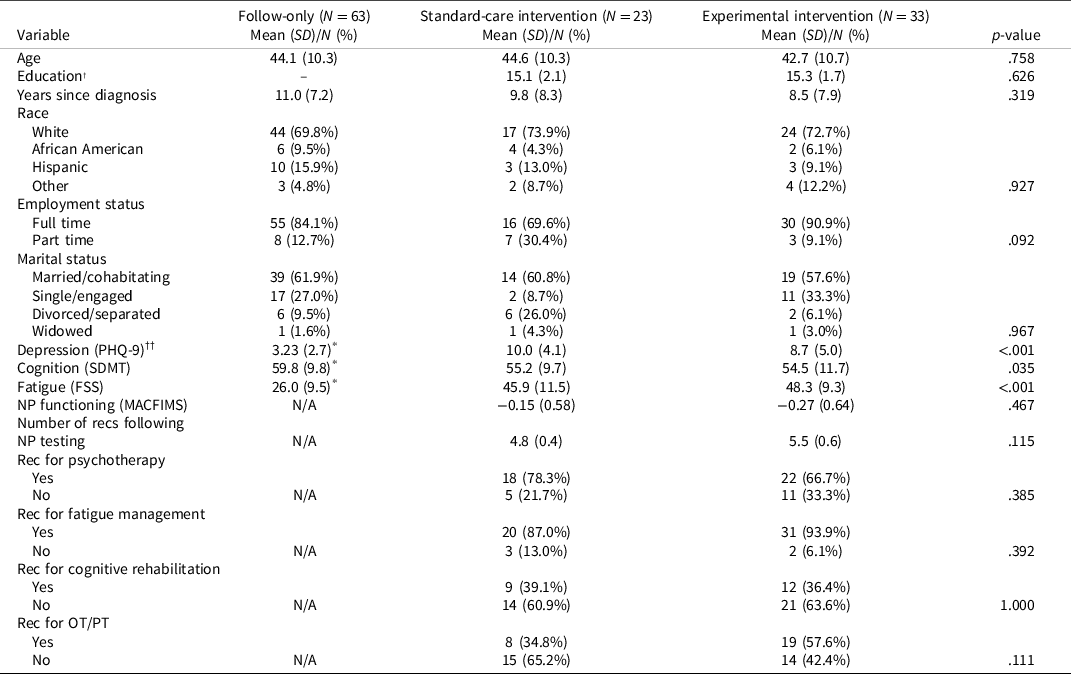
Baseline demographics were similar among all three groups including age, years since MS diagnosis, racial/ethnic background, marital status, etc. As expected, the scores on the PHQ, SDMT, and FSS were all significantly lower in the follow-only group as compared to either treatment group (in line with our cut-off criteria for randomization to the treatment arms). Also of note, at baseline, 16/51 individuals (31%) in the follow-only group reported current employment concerns, whereas 38/49 individuals (78%) in the combined treatment groups reported current employment concerns (p < .001). The treatment groups were not statistically different on any baseline variables including education and level of cognitive functioning (MACFIMS composite score). Importantly, individuals in both treatment groups had similar numbers and types of recommendations provided to them following neuropsychological testing (see Table 1).
Baseline demographics for participants who completed the intervention

MACFIMS = minimal assessment of cognitive function in multiple sclerosis composite Z-score; NP = neuropsychological. Rec = recommendation.
* There were only significant differences in pairwise comparisons between the follow-only group as compared to the standard-care group and as compared to the experimental group.
† Follow-only group missing too many data points for years of education; comparisons made only between treatment groups.
†† Follow-only group, N = 60; Standard-care group, N = 22; Experimental group N = 30.
Race dichotomized by white and nonwhite for statistical comparisons.
Marital status dichotomized by married/cohabitating and other.
Significant p-values bolded.
Primary outcomes
Employment status
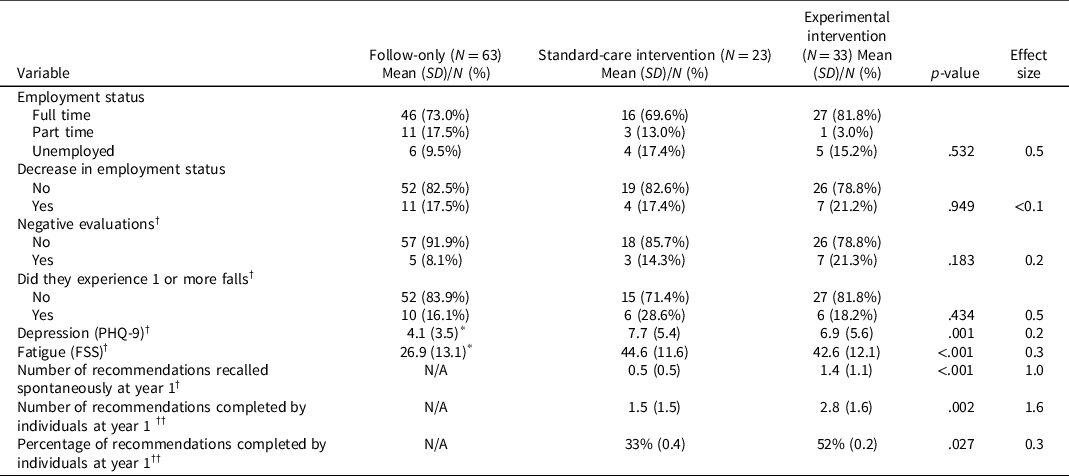
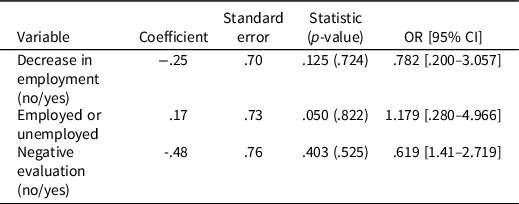
As it related to our primary outcomes, there was no significant difference in the rates of decreased employment status at 1 year between the standard-care group (17.4%) and the experimental group (21.2%), OR = .782, 95% CI .200–3.057. Unemployment rates at 1 year were also similar between the standard-care group (17.4%) and experimental group (15.2%), OR = 1.179, 95% CI .280–4.966. Additionally, the number of individuals who received negative evaluations was not statistically different between the standard-care group (14.3%) and the experimental group (21.3%), OR = .619, 95% CI 1.41–2.719. See Tables 2 and 3.
Year one variables

* There were only significant differences in pairwise comparisons between the follow-only group as compared to the standard-care group and as compared to the experimental group.
† Follow-only group, N = 62; standard-care group, N = 21.
†† Standard-care group, N = 22.
Employment Status comparison dichotomized to unemployed versus employed (part or full time).
Significant p-values bolded.
Comparison of employment outcomes between standard care treatment group and experimental treatment group

OR = odds ratio, [95% CI] = Lower and upper bound of 95% confidence interval.
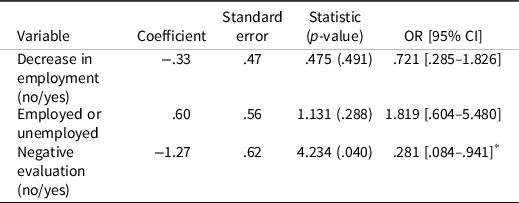
Comparison of employment outcomes between low-risk/no treatment group versus combined treatment groups

OR = odds ratio, [95% CI] = Lower and upper bound of 95% confidence interval, asterisk to indicate significant value.
* Significant finding.
Treatment adherence
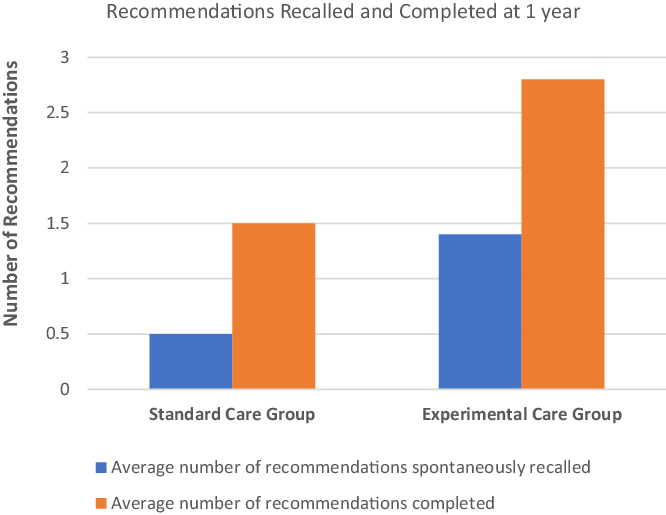
There were however significant differences between the treatment groups regarding their spontaneous recall and completion rates of the neuropsychological testing recommendations at 1 year (see Table 2). Individuals in the experimental group recalled significantly more recommendations at 1 year (mean = 1.4) as compared to the standard-care group (mean = 0.5), t(52)= −3.756, p < .001. With regard to adherence, there was a significant difference between the percentage of recommendations completed by individual participants in the standard-care group (32%), as compared to the experimental treatment group (52%), t(54)= −2.310, p = .027. Individuals in the experimental group completed significantly more recommendations (mean = 2.8 recommendations) as compared to the standard-care group (mean = 1.5 recommendations), t(53)= −3.237, p = .002 (see Figure 2).
Symptom improvement
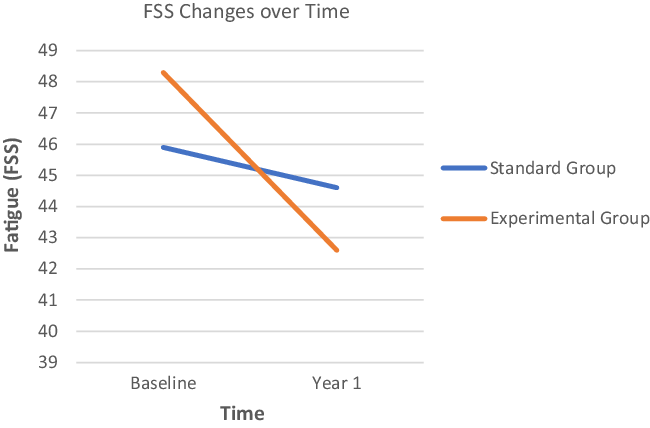
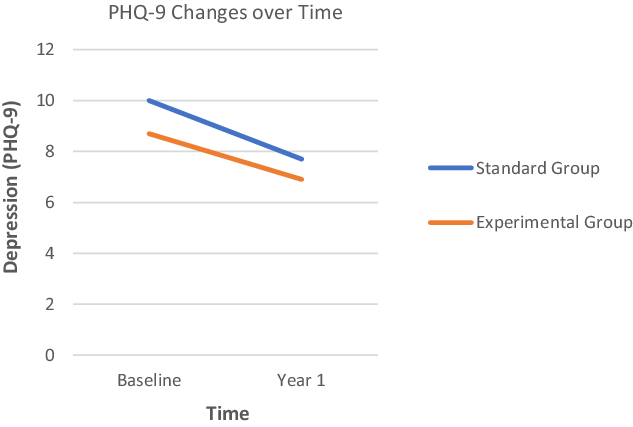
Women in both treatment groups had significantly improved fatigue and depression symptoms at 1 year as compared to baseline (see Table 2). There were however no statistically significant differences between the treatment groups (Figures 3 and 4). As expected, the “low-risk” follow-only group continued to have significantly lower rates of fatigue and depression symptoms at 1 year as compared with either treatment groups.
Recommendations recalled and completed between groups.

Changes in FSS from baseline to 1 year between treatment groups.

Changes in PHQ-9 from baseline to 1 year between treatment groups.

Exploratory analysis
Regarding our exploratory analysis, we found no significant differences between decreased employment status at 1 year, when comparing the “low-risk” follow-only group (17.5%), as compared to the combined treatment “at-risk” groups (19.6%), (OR = .721, 95% CI .285–1.826) (see Table 4). There was also no statistical difference between unemployment rates at 1 year when comparing the follow-only group (9.5%) as compared to the treatment groups (16.1%) (OR = .1.819, 95% CI .604–5.480). There was however a significant difference in the occurrence of negative work evaluations at 1 year, with individuals in the follow-only group being less likely to have negative evaluations (8.1%) than the combined treatment groups (20%), (OR = .619, 95% CI 1.41–2.719).
Discussion
In this vocational quasi-RCT, there were no significant differences in employment outcomes at 1 year between two levels of a neuropsychological testing intervention targeting women with MS “at-risk” for job instability. This study did however find increased adherence to recommendations made following testing among the experimental treatment group, who received additive interventions (in-person feedback and two case management phone calls) as compared to the standard-care group (who received phone feedback and no case management calls). The experimental group not only spontaneously recalled more of their given recommendations at 1 year, they also completed nearly double the number of recommendations (2.8 average recommendations completed) as compared with the standard-care group (1.5 recommendations). Given that previous literature has indicated that follow-through of recommendations has been a barrier to vocational interventions, this is a promising finding (LaRocca et al., Reference LaRocca, Kalb and Gregg1996). As it related to symptom outcome, although women in both treatment arms experienced significant improvements in fatigue and depressive symptoms following engagement in these interventions, there were no significant group differences. This may be related to the fact that both groups received neuropsychological assessments, which like other vocational rehabilitation interventions, highlight “invisible” symptoms (mood, fatigue, and cognition) of MS, allowing for psychoeducation to reduce stigmatization in addition to suggestions for workplace accommodations and symptom-focused interventions (Schiavolin et al., Reference Schiavolin, Leonardi, Giovannetti, Antozzi, Brambilla, Confalonieri, Mantegazza and Raggi2013). Importantly, although neuropsychological testing is sometimes considered as purely evaluative, studies such as these emphasize the utility of neuropsychological assessment as an interventional tool.
Our exploratory analysis compared the combined treatment groups to a separate “low-risk” group of employed women with MS who did not meet criteria for common factors associated with unemployment (depression, fatigue, and cognitive dysfunction) and received no intervention. These analyses yielded some interesting findings. Although the combined treatment groups were significantly more likely to experience formal/informal negative evaluations (20%) than the follow-only group (8.1%), the combined treatment groups had similar rates of decreased employment (e.g., full time/part time to part time/unemployed) at 1 year (19.6%) as compared to the “low-risk” follow-only group (17.5%). Notably, as we did not expect the “low-risk” group to have this high level of decreased employment status, these findings may suggest that there are other important factors that drive loss of employment in this “low-risk” group that we did not previously consider. People with MS have rated difficulties with lower and upper limb function, balance, heat sensitivity, pain, and bladder/bowel incontinence as being amongst the most prominent symptoms contributing to risk for unemployment (Simmons et al., Reference Simmons, Tribe and McDonald2010); as such, it is possible that these and/or other factors contributed to decreased employment in our “low-risk” sample. On the other hand, our findings may also suggest that the higher risk, intervention groups were able to maintain a similar level of employment as compared to their “low-risk” peers, perhaps because they took part in this neuropsychologically-based vocational intervention. Given that these “at-risk” women did not experiemce decreased employment statuses significantly greater than their “low-risk” counterparts remains somewhat encouraging.
This study has several limitations. First, as our sample size was influenced by external factors (time and space allotted for this study), we did not recruit as many individuals as we had initially hoped for and thus, we were underpowered in our analyses of employment outcomes between treatment groups. Additionally, it is important to note that since both treatment groups received some level of intervention (due to ethical considerations), this made it particularly challenging to expect to find employment outcome differences in this sample size. Future studies may also consider including a non-MS comparison group to better understand the utility of such an intervention in MS. Second, employment outcomes were only evaluated at 1 year and arguably employment changes may take longer to become observable (Grytten et al., Reference Grytten, Skår, Aarseth, Assmus, Farbu, Lode, Nyland, Smedal and Myhr2017). It is possible that the impact of this intervention will become more evident over time. As this study is presently collecting 2- and 3-year follow-up data, we hope to reevaluate these findings. Third, we only evaluated women, in part because the funding agency (Women United in Philanthropy) requested proposals specifically targeting women, but we also found this justifiable as women are much more likely to both be diagnosed with MS and lose employment (Grytten et al., Reference Grytten, Skår, Aarseth, Assmus, Farbu, Lode, Nyland, Smedal and Myhr2017). Importantly though, this selection choice impacts the generalizability of our results. Fourth, although we measured depression and fatigue symptoms at 1 year, this study was unable to evaluate objective cognitive outcomes (e.g., the SDMT) due to the nature of our follow-up design (by phone). However, this would have been a good addition to our paradigm and should be considered as an outcome in future studies. Finally, it is important to note that baseline characteristics including MS disease type, participants’ type of job (i.e., manual labor vs. computer-based work), cognitive/physical demands of one’s work, level of support, and resiliency factors may all impact changes in work status, and these factors were not thoroughly evaluated in this study. Future studies should consider these important factors.
Findings from this neuropsychologically-based vocational intervention for women with MS with varying levels of follow-up, showed similar employment outcomes at 1 year between treatment groups but significantly improved treatment adherence in the experimental group, who received more in-depth and frequent follow-up. Importantly, women in both treatment groups had similar employment outcomes to a “low-risk” group who did not receive any intervention. This might suggest that this vocational intervention, at either level, helped “at-risk” women with MS stay employed at a similar rate as their “low-risk” counterparts. Additionally, although there were not differences between groups, women in both treatment groups experienced improved depression and fatigue symptoms, highlighting the particular utility of a neuropsychologically-based intervention in MS. Ultimately, this study adds to the literature highlighting the benefit of identifying women with MS at risk of unemployment and offering them appropriate assessment and vocational interventions. In our pilot study, neuropsychological testing with individualized recommendations to address difficulties impacting work was found to be well received and the present findings indicate the addition of in-person feedback and follow-up case management services further improved treatment adherence and should be considered when neuropsychologically evaluating employed persons with MS (Stimmel et al., Reference Stimmel, Cohen, Schneider, Portnoy, Seng and Foley2020).
Acknowledgements
This research is dedicated to the memory of Stacy Melvin, beloved MS nurse, whose guidance and clinical insight was unparalleled, and who was integral to the completion of this study. You are deeply missed.
Author contribution
MBS: study coordinator, involved in study design, provided clinical treatment to participants, monitored study progress, completed analyses, wrote paper.
JNC: involved in monitoring study, contributed to writing paper.
EKS: involved in designing study and analytic strategy, contributed to writing paper.
SS: involved in monitoring study, contributed to writing paper.
FWF: involved in all activities related to setting up and running of this study (PI of this study), contributed to writing and finalizing paper.
Funding statement
A grant was obtained for this study from Women United in Philanthropy (WUIP). This grant was only intended for the clinical treatment provided to participants. This was not a research grant, and as such there are no related conflicts of interest. Dr. Seng has consulted for GlaxoSmithKline and Click Therapeutics and received research funding from the NINDS (NS096107 PI: Seng), NCCIH (U01AT011005-01A1 MPIs: Seng and Shallcross), and the Veteran’s Health Administration (the Headache Center of Excellence Research and Evaluation Center and VA HSR&D, IRP 20-002 PI: Damush).
Conflicts of interest
None.