Significant outcomes
-
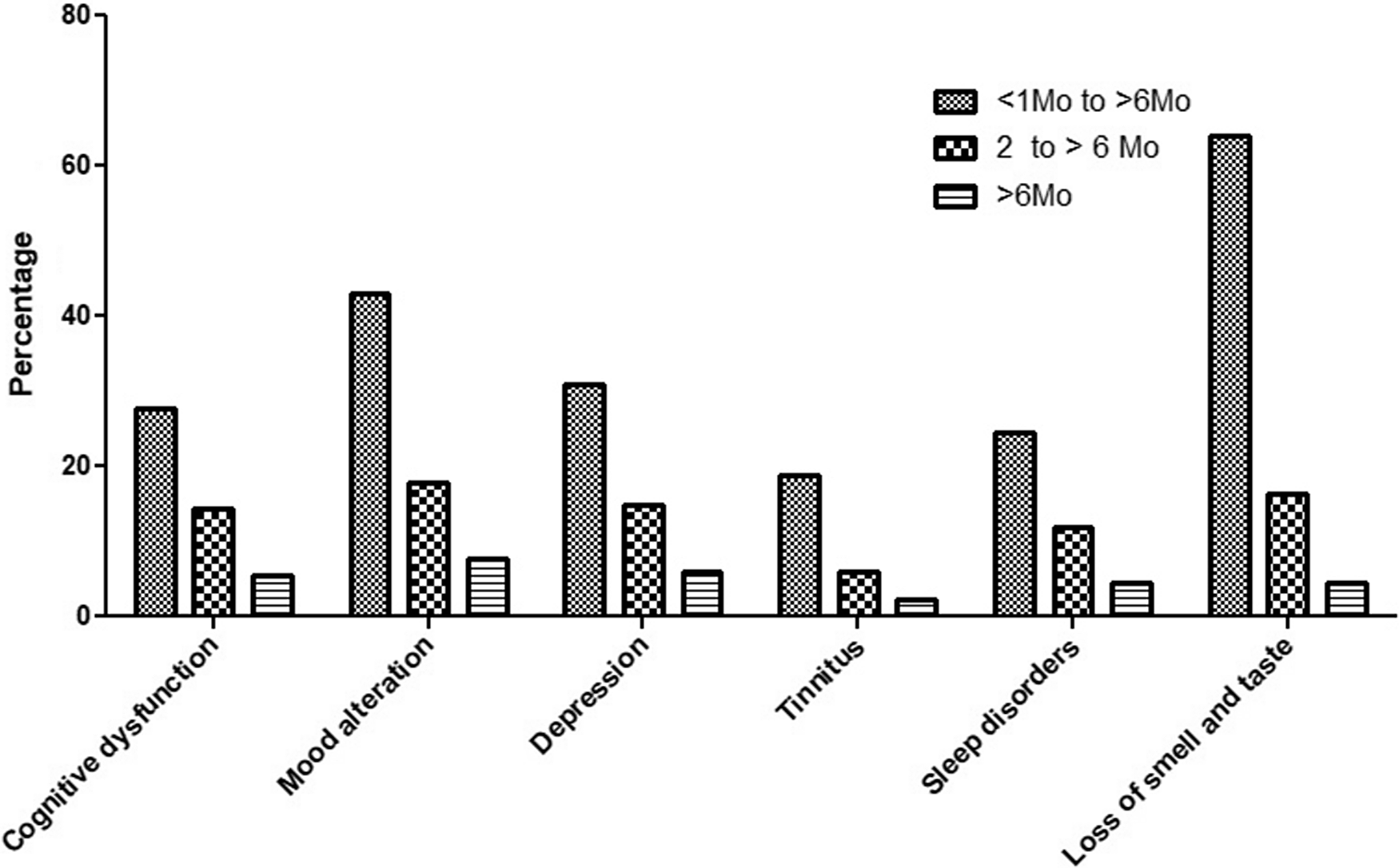
Post-COVID neuropsychiatric symptoms, including altered cognitive skills, anosmia and dysgeusia, tinnitus, depression, and sleep disorders, were recorded in 18.9–63.9% of the participants with COVID-19.
-
The signs persisted from 2 to >6 months in 5.9–17.9% of the participants, of whom 2.2–7.6% experienced such signs for >6 months.
-
Disease severity, female sex, and receiving two doses of the vaccine correlated with the development of the neuropsychiatric signs.
Limitations
-
Participants were recruited using social media rather than through primary care, so self-reporting might have influenced the results.
-
Differences in interpretation depending on the patient or inaccurate information, including misclassification, were possible.
Introduction
Severe acute respiratory syndrome coronavirus 2 (SARS-CoV-2) is the causative agent of the coronavirus disease that emerged in 2019 (COVID-19). Unlike other viral respiratory pathogens, SARS-CoV-2 was not expected to have chronic manifestations (Hu et al., Reference Hu, Guo, Zhou and Shi2021). In the beginning, physicians related post-COVID-19 syndromes to anxiety or stress, which is known as medical gaslighting (Rubin, Reference Rubin2020). Afterwards, post-COVID-19 syndrome or long-term COVID-19, also known as long-haul COVID-19, was used to describe post-COVID signs (Schmidt, Reference Schmidt2021). Between 10% and 30% of patients with SARS-CoV-2 infection experienced prolonged health problems, many of whom were never hospitalised or severely ill (Schmidt, Reference Schmidt2021). The disease condition can be mild or severe depending on the organ involved. Some patients complained of extreme fatigue, cognitive impairment (brain fog) or loss of taste and/or smell, chest pain, palpitations, sleep disturbance, and depression (Carfì et al., Reference Carfì, Bernabei and Landi2020; Schmidt, Reference Schmidt2021). Similar long-term symptoms were reported after the 2002 SASR-CoV infection (Moldofsky & Patcai, Reference Moldofsky and Patcai2011). Prolonged mixed complaints of respiratory, cardiac, and/or neurological signs were reported in many patients (Carfì et al., Reference Carfì, Bernabei and Landi2020; Ellul et al., Reference Ellul, Benjamin, Singh, Lant, Michael, Easton, Kneen, Defres, Sejvar and Solomon2020; Fraser, Reference Fraser2020).
Growing evidence indicates the neuroinvasive potentiality of SARS-CoV-2. It is currently well established that both SARS-CoV and SARS-CoV-2 use angiotensin-converting enzyme 2 as a cell entry receptor (Hoffmann et al., Reference Hoffmann, Kleine-Weber, Schroeder, Krüger, Herrler, Erichsen, Schiergens, Herrler, Wu, Nitsche, Müller, Drosten and Pöhlmann2020), which is also expressed in olfactory mucosal cells, the epithelia of the tongue papillae and taste buds (Brann et al., Reference Brann, Tsukahara, Weinreb, Lipovsek, Van den Berge, Gong, Chance, Macaulay, Chou, Fletcher, Das, Street, de Bezieux, Choi, Risso, Dudoit, Purdom, Mill, Hachem, Matsunami, Logan, Goldstein, Grubb, Ngai and Datta2020; Park et al., Reference Park, Bang and Lee2022), and human neuronal cells(Khan & Gomes, Reference Khan and Gomes2020). These findings could explain the neurological signs detected in patients with COVID-19, including headache, fatigue, sleep disorders, dizziness, ageusia, anosmia, and altered mood (Delavari et al., Reference Delavari, Varzaneh and Rezaei2021). On the other hand, psychopathology is among the neglected aspects of COVID-19, especially in patients with pre-existing psychiatric disorders (Goldstein Ferber et al., Reference Goldstein Ferber, Shoval, Zalsman, Mikulincer and Weller2021). Many reports have confirmed that psychopathological syndrome leads healthcare professionals to directions regarding the detection and management of people with long-term COVID (Mair and May, Reference Mair and May2014; Colizzi et al., Reference Colizzi, Bortoletto, Silvestri, Mondini, Puttini, Cainelli, Gaudino, Ruggeri and Zoccante2020; Greenhalgh et al., Reference Greenhalgh, Knight, A’court, Buxton and Husain2020; Troyer et al., Reference Troyer, Kohn and Hong2020; Delavari et al., Reference Delavari, Varzaneh and Rezaei2021). A study of different populations in China, Denmark, Iran, Italy, Nepal, Spain, Turkey, and the USA revealed a considerably wide range of variation in the prevalence of neuropsychiatric disorders in the general population during the COVID-19 pandemic (Xiong et al., Reference Xiong, Lipsitz, Nasri, Lui, Gill, Phan, Chen-Li, Iacobucci, Ho, Majeed and McIntyre2020); however, information regarding the Saudi population is inadequate. The aim of the present study was to screen for persistent neuropsychiatric disorders and conditions affecting the peripheral nerves from <1 to >6 months after COVID-19 infection. Possible correlations between initial disease severity and vaccination status were also investigated.
Methods
Study group
Laboratory-confirmed SARS-CoV-2 infection, as evidenced by a positive real-time reverse transcriptase-polymerase chain reaction test result, was the inclusion criterion for answering the questionnaire. The participants (Saudi nationals and residents) were asked to provide their demographic data and COVID-19 status in terms of severity, graded into asymptomatic (laboratory-confirmed cases without clinical signs), mild (mild disease manifestations, 1–3 days), moderate (tolerable signs for up to 1 week), severe (severe signs but did not require hospitalisation), and critical (hospitalised). The questions included items on SARS-CoV-2 vaccination status, the number of vaccine doses, the type of vaccine, and whether they experienced any chronic diseases or immunosuppressive disorders. The participants were then asked about the presence or absence of different neuropsychiatric signs. Those who answered yes were then asked about the signs, including cognitive dysfunction, mood alteration, depression, tinnitus, sleep disorders (insomnia and hypersomnia), and loss of taste (dysgeusia), and smell (anosmia). They were also asked about the duration (<1 to >6 months) of each complaint. Different social media platforms (Twitter, Snapchat, and WhatsApp) were used to distribute the questionnaire among Saudi nationals and residents.
Statistical analysis
Descriptive analysis using Crosstabs procedures was used to display the frequencies and measure the difference between the observed and expected frequencies. Each value was presented as a number with its percentage. Chi-square and Spearman’s rho correlation analyses using the SPSS software programme were performed to screen the difference and correlation between the variables.
Results
Cognitive dysfunction
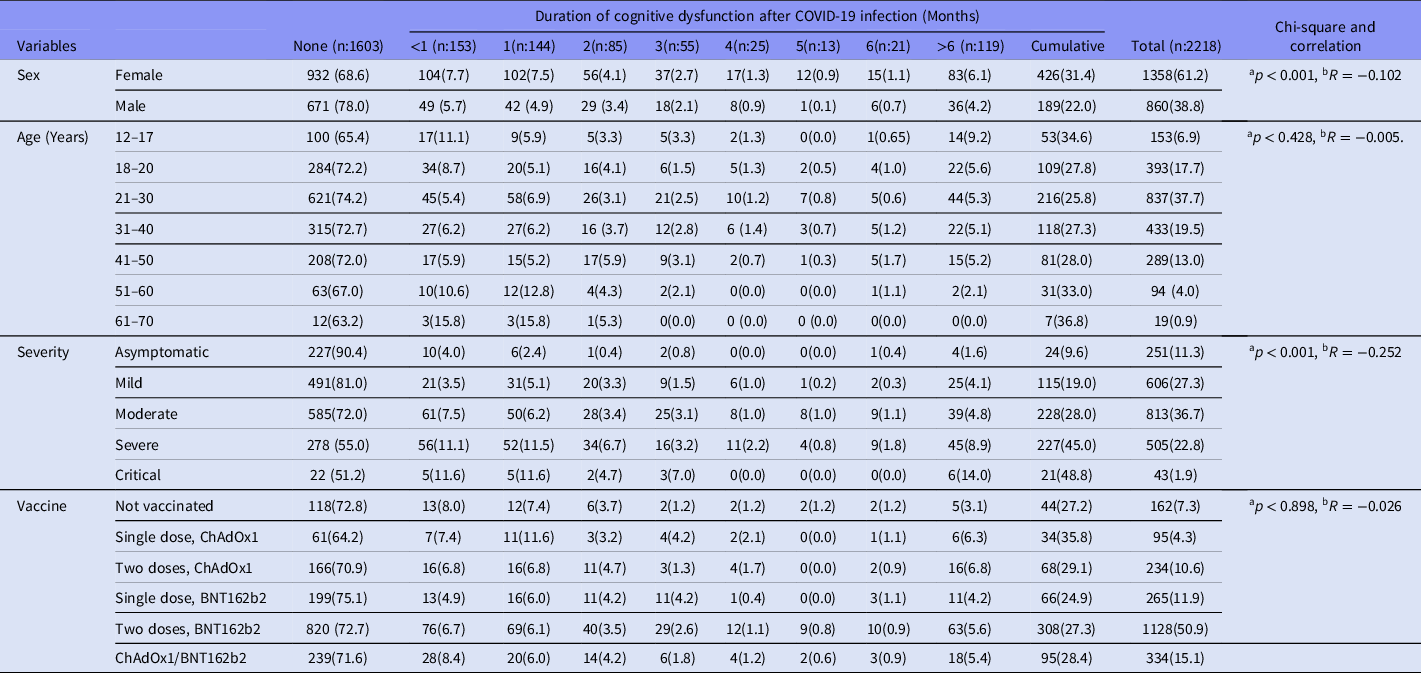
In total, 615 (27.7%) of the 2218 study participants, including 426 females (31.4% of 1358) and 189 males (22.0% of 860), showed cognitive dysfunction after SARS-CoV-2 infection (Table 1, Fig. 1). Most males (671/860, 78.02%) and females (932/1358, 68.63%) did not experience any cognitive dysfunction after SARS-CoV-2 infection, and only 615 (27.7%) of the 2218 participants had cognitive dysfunction (Table 1). A significant difference (p < 0.001) was found between the males and females, and a significant correlation (R = −0.102) was found between the development of cognitive dysfunction and female sex. Of all the participants, 318 (14.3%), including 220 females (16.2% of 1358) and 98 males (11.4% of 860), experienced cognitive dysfunction from 2 to >6 months. Of the 1358 females and 860 males, 83 (6.1%) and 36 (4.19%) experienced such complaints for >6 months, respectively (Table 1, Fig. 1).
The effect of the sex, age, disease severity, and vaccine type on the development of cognitive dysfunction following SARS-CoV-2 infection

aChi-square, bSpearman’s correlation (R). The values are listed as numbers, while the percentage was estimated based on the total number of the same row except for the last column that was calculated as the total number of the same column.
Neuropsychiatric signs after COVID-19 infections. The percentages of the patients who developed different signs and those who experienced such signs for 2 to >6 months and >6 months are presented.

A significant difference (p < 0.001) was found between the degree of disease severity and the development of cognitive dysfunction after SARS-CoV-2 infection. Among those who had asymptomatic, mild, moderate, severe, and critical disease, 9.6% (24/251), 19.0% (115/606), 28.0% (228/813), 45.0% (227/505), and 48.8% (21/43) developed cognitive dysfunction after SARS-CoV-2 infection, respectively. The cognitive dysfunction persisted for 2 to >6 months in 3.2% (8/251), 10.4% (63/606), 14.5% (118/813), 23.6% (119/505), and 25.6% (11/43) of the participants in the severity groups, respectively (Table 1). The higher the disease severity, the higher the percentage of participants with cognitive dysfunction (R = 0.252). No significant differences were observed with regard to age, vaccination status, and type of administered vaccine. However, the proportion of participants who developed cognitive dysfunction was higher among those whose ages were within the range of 21–30 years and those who were vaccinated with two doses of the BNT162b2 vaccine (Table 1).
Mood alteration
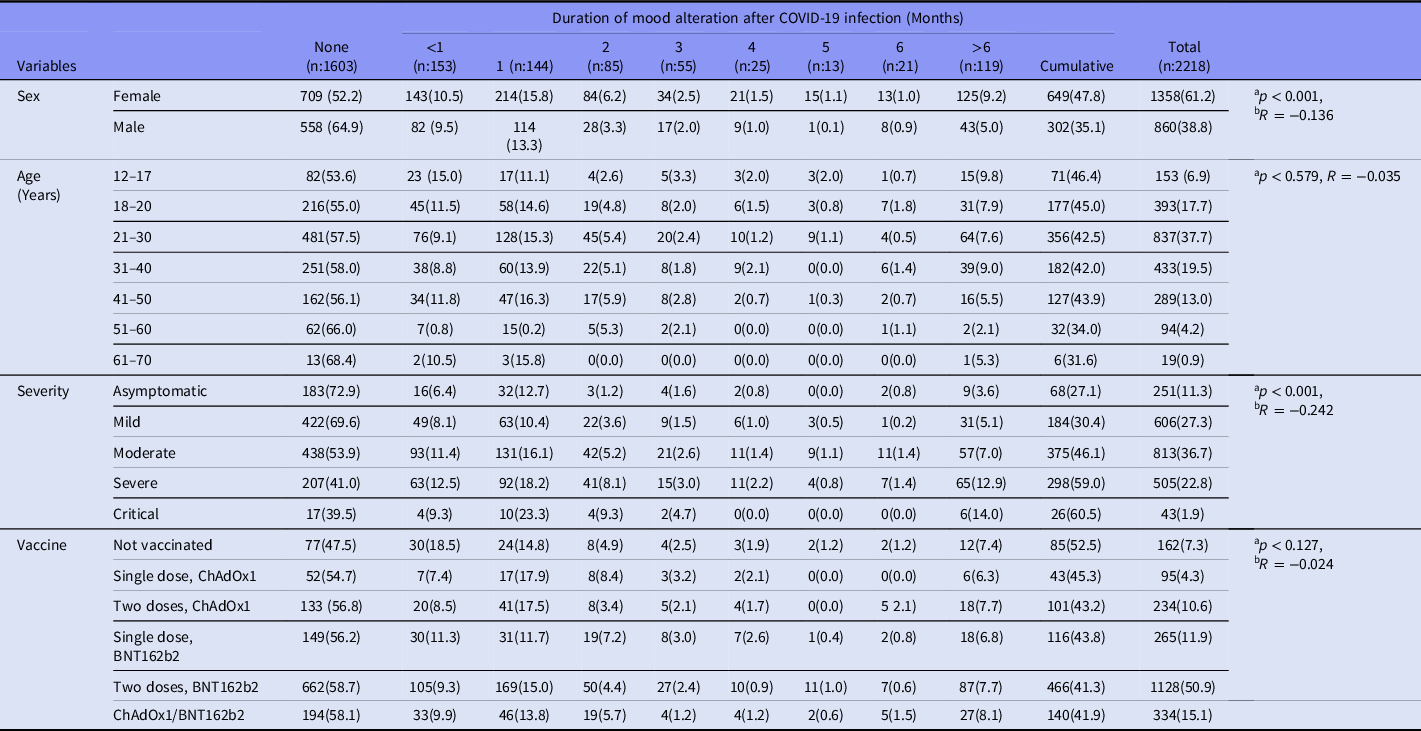
A total of 951 (42.8%) of the 2218 study participants, including 649 females (47.8% of 1358) and 302 males (35.1% of 860), had mood alteration after SARS-CoV-2 infection (Table 2, Fig. 1). The females were more significantly affected than the males (p < 0.001), with a considerably significant correlation (R = −0.136) between the development of mood alteration and the female sex. Of all the participants, 398 (17.9%) had mood alteration from 2 to >6 months, including 292 females (21.5% of 1358) and 106 males (12.3% of 860). Meanwhile, 168 (7.6%; 125 [9.2%] of the 1358 females and 43 [5%] of the 860 males) of the 2218 participants had such complaints for >6 months (Fig. 1, Table 2).
The effect of the sex, age, disease severity, and vaccine type on the development of mood alteration following SARS-CoV-2 infection

aChi-square, bSpearman’s correlation (R). The values are listed as numbers, while the percentage was estimated based on the total number of the same row except for the last column that was calculated as the total number of the same column.
A significant difference (p < 0.001) was found between the degree of disease severity and the development of mood alteration after SARS-CoV-2 infection. Of the participants who had asymptomatic, mild, moderate, severe, and critical disease, 27.1% (68/251), 30.4% (184/606), 46.1% (375/813), 59.0% (298/505), and 60.5% (26/43) developed mood alteration after SARS-CoV-2 infection, respectively. The mood alteration persisted for 2 to >6 months in 8.0% (20/251), 11.9% (72/606), 18.6% (151/813), 28.3% (143/505), and 27.9% (12/43) of the participants in the severity groups, respectively. The percentage of patients who experienced mood alteration was found to be high in those with mild, moderate, and severe disease (R = −0.242; Table 2). No significant differences were observed with regard to age, vaccination status, and type of vaccine. However, the proportion of participants who experienced mood alteration was higher among those whose ages were within the range of 21–30 years and those vaccinated with two doses of the BNT162b2 vaccine (Table 2).
Depression
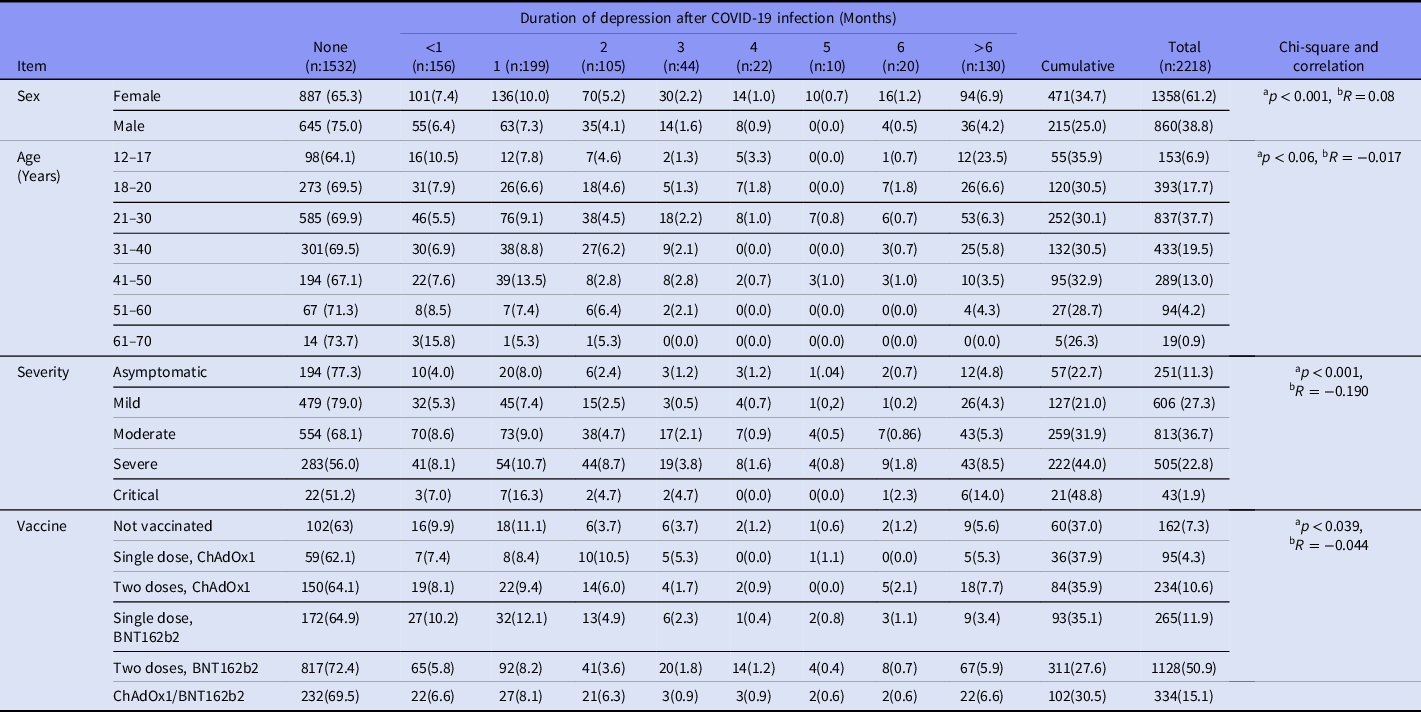
A total of 686 (30.9%) of the 2218 participants developed depression (Fig. 1, Table 3). A significant difference according to sex was observed, as 34.7% (471/1358) of the females and 25.0% (215/860) of the males developed depression (p < 0.001). Meanwhile, of all the participants, 331 (14.9%), including 194 females (14.3% of 1358) and 67 males (7.8% of 860), had depression for 2 to >6 months, of whom 130 (5.9%) had depression for >6 months.
Effect of sex, age, disease severity, and vaccine type on the development of depression post-SARS-CoV-2 infection

aChi-square, bSpearman’s correlation (R). The values are listed as numbers, while the percentage was estimated based on the total number of the same row except for the last column that was calculated as the total number of the same column.
Although the incidence of depression was not significantly different (p < 0.06) among the age groups, the participants in the 21- to 30-year-old age group showed the highest incidence of depression, followed by those in the 18- to 20-year-old and 31- to 40-year-old age groups (Table 3).
Disease severity significantly affected the development of depression in the respondents (p < 0.001). Of those who had asymptomatic, mild, moderate, severe, and critical disease, 22.7% (57/251), 21.0% (127/606), 31.9% (259/813), 44.0% (222/505), and 48.8% (21/43) developed depression after SARS-CoV-2 infection, respectively. The depression persisted for 2 to >6 months in 10.8% (27/251), 8.3% (50/606), 14.3% (116/813), 25.1% (127/505), and 23.3% (10/43) of the participants in the severity groups, respectively. Only 130 (5.9%) of all the participants developed sleeping disorders for >6 months. A significant correlation was found between disease severity and the development of sleeping disorders (R = −0.19; Table 3). A significant increase in the incidence of depression was observed in the group of participants who received two doses of the BNT162b2 vaccine compared with the other groups (p < 0.044).
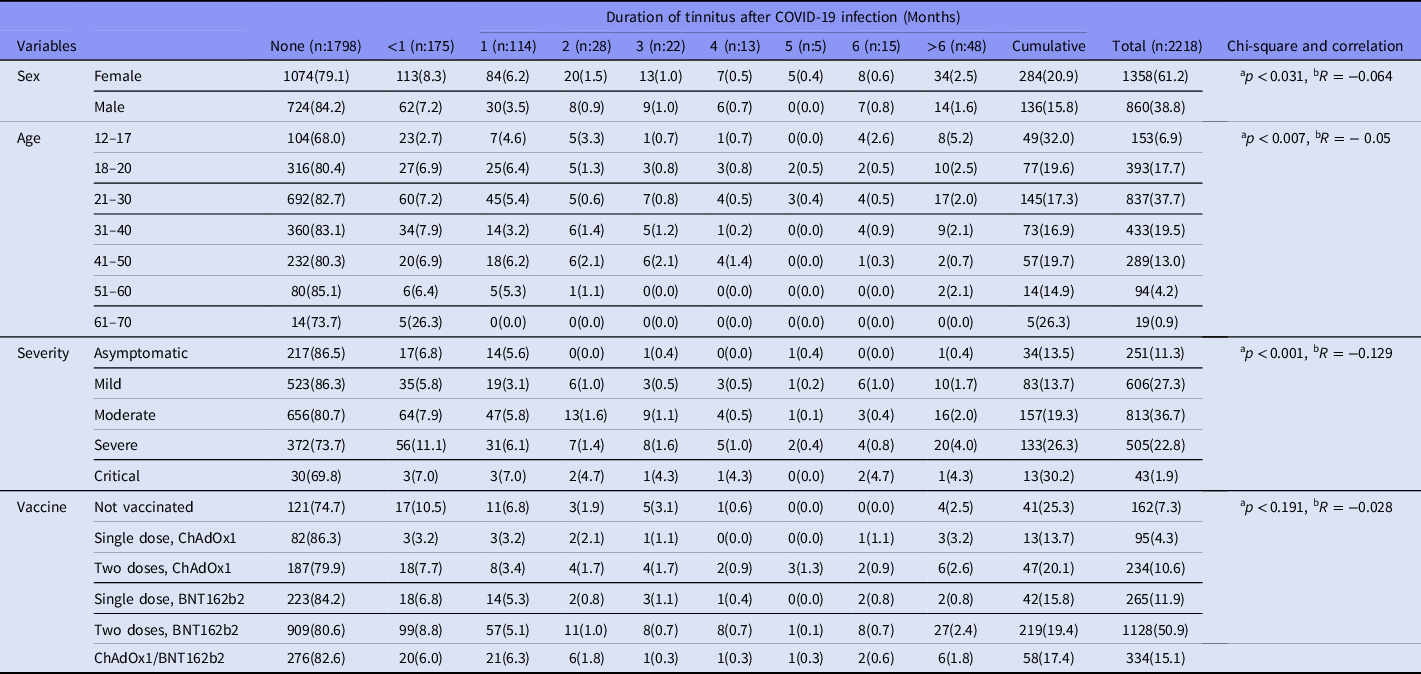
Tinnitus
A total of 420 (18.9%) of the 2218 participants developed tinnitus (Table 4, Fig. 1). A considerable number of respondents developed tinnitus (284/1358 females, 20.9% and 136/860 males, 15.8%; p < 0.031), of whom 131 (5.9% of 2218), including 87 females (6.4% of 1358) and 44 males (5.1% of 860), had tinnitus for 2 to >6 months (Table 4, Fig. 1), and most had tinnitus for up to 1 month. A few cases were detected 1 month after COVD-19 infection (Table 4). Only 48 (2.2%) of the 2218 participants had tinnitus for >6 months (Table 4, Fig. 1). Tinnitus occurred among those whose ages were within the range of 18–50 years (p < 0.007).
The effect of the sex, age, disease severity, and vaccine type on the development of tinnitus following SARS-CoV-2 infection

a Chi-square, bSpearman’s correlation (R). The values are listed as numbers, while the percentage was estimated based on the total number of the same row except for the last column that was calculated as the total number of the same column.
Disease severity significantly influenced the development of tinnitus in the respondents (p < 0.001). Tinnitus developed after SARS-CoV-2 infection in 13.5% (34/251), 13.7% (83/606), 19.3% (157/813), 26.3% (133/505), and 30.2% (13/43) and persisted for 2 to >6 months in 1.2% (3/251), 4.8% (29/606), 5.7% (46/813), 9.1% (46/505), and 16.3% (7/43) of the participants who had asymptomatic, mild, moderate, severe, and critical disease, respectively.
No significant differences were observed with regard to vaccination status and type of vaccine. However, more than half of the study participants who reported tinnitus (219/420) received two doses of the BNT162b2 vaccine (Table 4).
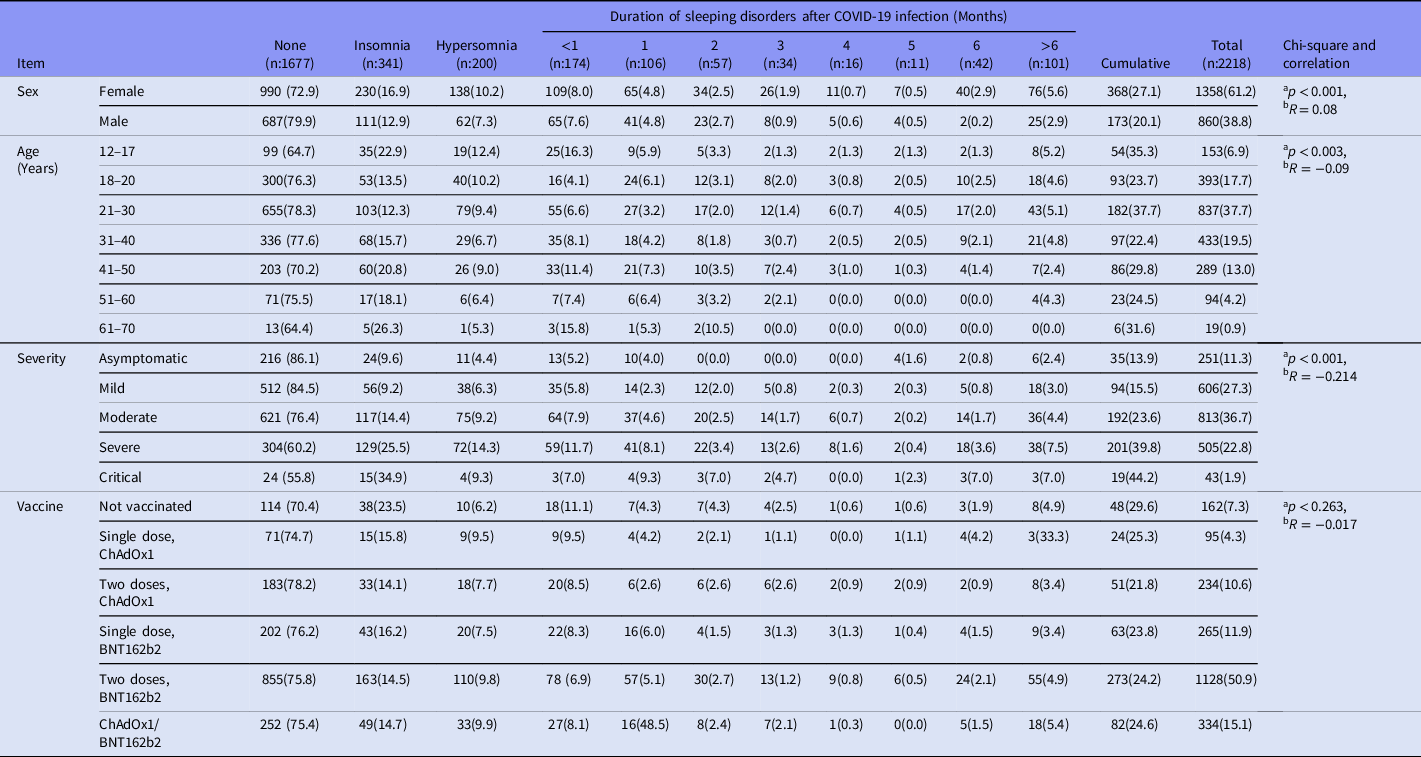
Sleep disorders
Of the 2218 participants, 541 (24.4%) developed sleep disorders, including insomnia (341/2218, 15.4%) and hypersomnia (200/2218, 9.0%). Most females (n = 230) and males (n = 111) experienced insomnia, and 138 females and 62 males had hypersomnia. A significant difference according to sex was observed, as 368 (27.1%) of the 1358 females and 173 (20.1%) of the 860 males developed sleeping disorders (p < 0.001). Meanwhile, 261 (11.8%) of all the participants, including 194 females (14.3% of 1358) and 67 males (7.8% of 860), had sleeping disorders for 2 to >6 months (Table 5, Fig. 1).
The effect of sex, age, disease severity, and vaccine type on the development of sleeping disorders following SARS-CoV-2 infection

a Chi-square, bSpearman’s correlation (R). The values are listed as numbers, while the percentage was estimated based on the total number of the same row except for the last column that was calculated as the total number of the same column.
The incidence of sleeping disorders significantly differed (p < 0.001) among the age groups. It was highest in the 21- to 30-year-old age group, in which 837 participants had sleeping disorders, of whom 103 had insomnia and 79 had hypersomnia, followed by the 18- to 20-year-old and 31- to 40-year-old age groups.
Disease severity significantly affected the development of sleeping disorders in the respondents (p < 0.001). Of those who had asymptomatic, mild, moderate, severe, and critical disease, 13.9% (35/251), 15.5% (94/606), 23.6% (192/813), 39.8% (201/505), and 44.2% (19/43) developed sleeping disorders after SARS-CoV-2 infection, respectively. The sleeping disorders persisted for 2 to >6 months in 4.8% (12/251), 7.5% (45/606), 11.2% (91/813), 20.0% (101/505), and 27.9% (12/43) of the participants in the severity groups, respectively. Only 101 (4.6%) of all the participants had sleeping disorders for >6 months (Fig. 1). A significant correlation was observed between disease severity and the developing of sleeping disorders (R = −0.214; Table 5). No significant differences were observed with regard to the vaccination status and type of vaccine. However, 273 (50.5%) of the 541 participants who reported sleeping disorders received two doses of the BNT162b2 vaccine (Table 5).
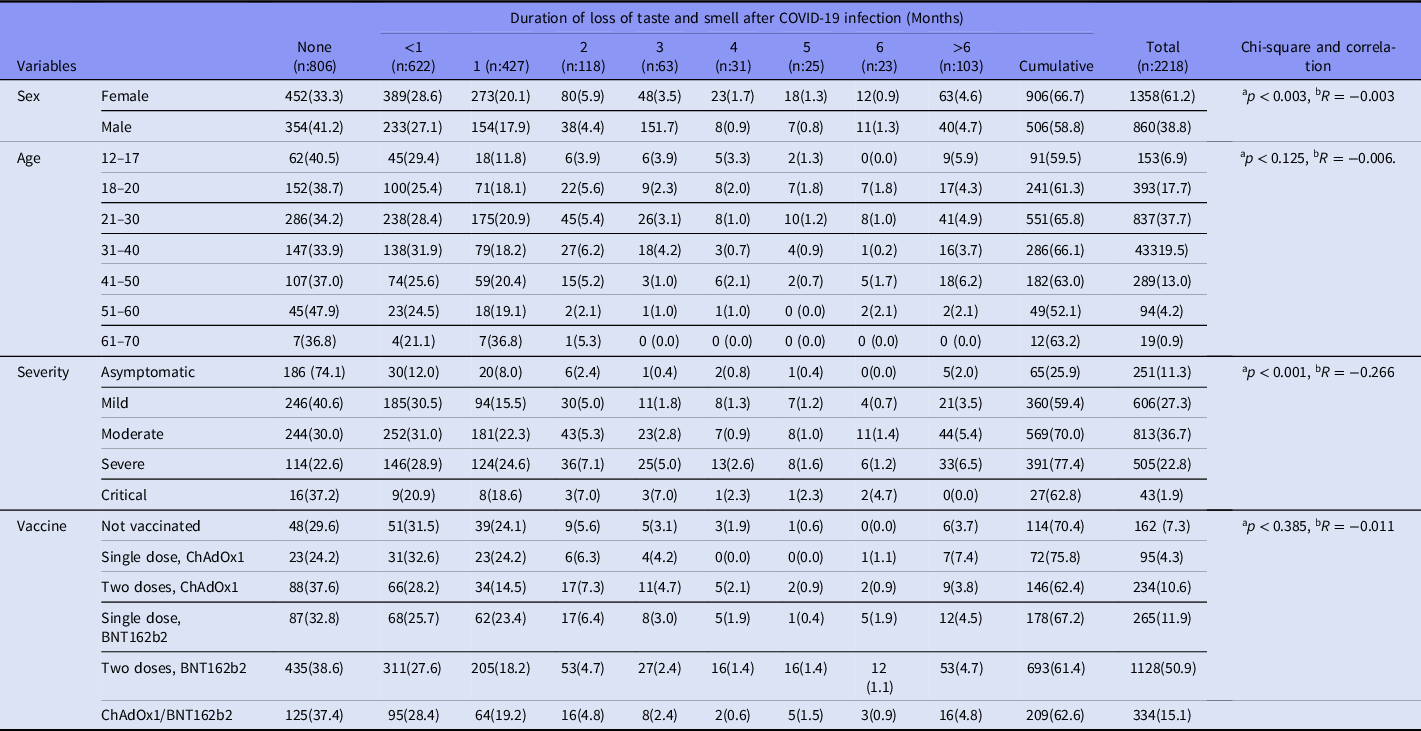
Loss of taste and smell
Of all the participants, 1412 (63.9%) lost their senses of taste and smell (Fig. 1). Most respondents lost both their senses of taste and smell (906/1358 females, 66.7% and 506/860 males, 62.8%; p < 0.001; Table 6). A considerable number (363/2218, 16.4%) of participants, including 244 females and 119 males lost their senses of taste and smell for 2 to >6 months. Meanwhile, 103 participants (4.6%), including 63 females (4.1% of 1358) and 43 males (5.0% of 860), lost their senses of taste and smell for >6 months (Table 6, Fig. 1).
The effect of sex, age, disease severity, and vaccine type on development of loss of taste and smell following SARS-CoV-2 infection

aChi-square, bSpearman’s correlation (R). The values are listed as numbers, while the percentage was estimated based on the total number of the same row except for the last column that was calculated as the total number of the same column.
Disease severity highly correlated with and significantly affected the development of loss of the senses of taste and smell in the respondents (p < 0.001, R = −0.266). Of those who had asymptomatic, mild, moderate, severe, and critical disease, 25.9% (65/251), 59.4% (360/606), 70.0% (569/813), 77.4% (391/505), and 62.8% (27/43) lost their senses of taste and smell after SARS-CoV-2 infection, respectively. In these severity groups, 6.0% (15/251), 13.4% (81/606), 16.7% (136/813), 24.0% (121/505), and 23.3% (10/43) of the participants lost their senses of taste and smell for 2 to >six months, respectively (Table 6).
Although no significant differences were detected among the age groups, significant numbers of participants who belonged to the 21- to 30-year-old and 31- to 40-year-old age groups showed loss of taste compared with the other age groups (Table 6). Although no significant differences were observed with regard to vaccination status and type of vaccine, the participants who received two doses of the BNT162b2 vaccine showed the highest incidence of loss of taste and smell after SARS-CoV-2 infection (Table 6).
Discussion
The results from the present study, which included 2218 individuals who were diagnosed with laboratory-confirmed COVID-19 illness, suggest that long-term COVID-19 infection can lead to many neuropsychiatric sequelae, concurring with previous studies (Xiong et al., Reference Xiong, Lipsitz, Nasri, Lui, Gill, Phan, Chen-Li, Iacobucci, Ho, Majeed and McIntyre2020; Rank et al., Reference Rank, Tzortzini, Kling, Schmid, Claus, Löll, Burger, Römmele, Dhillon, Müller, Girl, Hoffmann, Grützner and Dennehy2021; Seeßle et al., Reference Seeßle, Waterboer, Hippchen, Simon, Kirchner, Lim, Müller and Merle2021). Such neurological disorders have possible direct and indirect causes such as hypoxia, which directly affects the cerebral blood vessels, and hypoxemia or psychological aspects, respectively (Lopez-Leon et al., Reference Lopez-Leon, Wegman-Ostrosky, Perelman, Sepulveda, Rebolledo, Cuapio and Villapol2021). The latter could be related to the panic caused by the continuous follow-up of toll death numbers from COVID-19 and the daily huge numbers of cases worldwide in various news portals. Accordingly, the present study focused on the common neuropsychiatric signs experienced by patients with COVID-19 that extended for >6 months in the Saudi population. Previous studies have identified evidence of cognitive dysfunction induced by COVID-19 illness, with few studies conducted in the non-hospitalised population (Ding et al., Reference Ding, Yin, Cheng, Cai, Huang and Deng2020).
In the present study, the incidence of decreased cognitive skills (slow thinking and difficulty concentrating), which is termed as brain fog, was found to be lower than detected in an international study that included participants from the USA, Canada, and Europe (the UK, Spain, the Netherlands, Ireland, Sweden, and others) (Davis et al., Reference Davis, Assaf, Mccorkell, Wei, Low, Re’em, Redfield, Austin and Akrami2021). In the international study, decreased cognitive skills (>3 months post-infection) were reported in 66.7% of their participants, which decreased to 55.5% (seventh month post-infection). In another study, 21.2% of respondents complained of persistently decreased cognitive activities for up to 12 months post-infection (Kim et al., Reference Kim, Bitna, Kim, Chang, Kwon, Bae and Hwang2022). By contrast, decreased cognitive skills were detected in only 7.2% of the patients admitted to healthcare facilities in Iran (Asadi-Pooya et al., Reference Asadi-Pooya, Akbari, Emami, Lotfi, Rostamihosseinkhani, Nemati, Barzegar, Kabiri, Zeraatpisheh, Farjoud-Kouhanjani, Jafari, Sasannia, Ashrafi, Nazeri, Nasiri and Shahisavandi2021). In our study, we observed a rapid improvement in brain fog, from 27.7% (during the first month post-infection) to 17.9 (at 2 to >6 months post-infection), including 4.7% of the participants showing persistent brain fog for >6 months post-infection.
The development of brain fog correlated with disease severity in non-hospitalised and some hospitalised participants, as detected in the present study. Other studies found this correlation in non-hospitalised COVID-19 long haulers (Graham et al., Reference Graham, Clark, Orban, Lim, Szymanski, Taylor, DiBiase, Jia, Balabanov, Ho, Batra, Liotta and Koralnik2021; Hampshire et al., Reference Hampshire, Trender, Chamberlain, Jolly, Grant, Patrick, Mazibuko, Williams, Barnby, Hellyer and Mehta2021). We also found small percentages of respondents who experienced asymptomatic and mild disease and had brain fog.
In the present study, the incidence rates of depression and mood alteration were 30.9% and 42.9%, respectively. The percentages of affected participants decreased over time, and only 5.9% and 7.6% still had these complaints for >6 months. These percentages were lower than that recorded for Korean patients who had depression for >12 months (17.8% of patients) (Kim et al., Reference Kim, Bitna, Kim, Chang, Kwon, Bae and Hwang2022). This confirms the finding of Ekn, who reported a significant variation among individuals of different races (Eken et al., Reference Eken, Dee, Powers and Jordan2021). Other studies confirmed the link of depression to female sex (Sønderskov et al., Reference Sønderskov, Dinesen, Santini and Østergaard2020) and age <40 years (Ahmed et al., Reference Ahmed, Ahmed, Aibao, Hanbin, Siyu and Ahmad2020; Gao et al., Reference Gao, Zheng, Jia, Chen, Mao, Chen, Wang, Fu and Dai2020).
Tinnitus is a common chronic disorder that affects 12–30% of the adult population (McCormack et al., Reference Mccormack, Edmondson-Jones, Somerset and Hall2016). Stress is a potential triggering factor of tinnitus (Mazurek et al., Reference Mazurek, Haupt, Olze and Szczepek2012). The panic caused by the COVID-19 pandemic increased the stressful conditions in the general population, which led to a subsequent increase in the risk of developing tinnitus (Mazurek et al., Reference Mazurek, Boecking and Brueggemann2019). Few studies discussed the duration and persistence of tinnitus (Lamounier et al., Reference Lamounier, Franco Gonçalves, Ramos, Gobbo, Teixeira, Dos Reis, Bahmad and Cândido Costa2020; Chirakkal et al., Reference Chirakkal, Al Hail, Zada and Vijayakumar2021; Jafari et al., Reference Jafari, Kolb and Mohajerani2021). The mean incidence of post-COVID-19 tinnitus was estimated to be 8%, ranging from 4.5% to 14.8% (Almufarrij & Munro, Reference Almufarrij and Munro2021; Beukes et al., Reference Beukes, Ulep, Eubank and Manchaiah2021; Jafari et al., Reference Jafari, Kolb and Mohajerani2021), showing a low improvement rate (Beukes et al., Reference Beukes, Baguley, Jacquemin, Lourenco, Allen, Onozuka, Stockdale, Kaldo, Andersson and Manchaiah2020). However, our study revealed a higher percentage of participants who developed tinnitus (18.9%), of whom 5.9% had tinnitus for 2 to >6 months and only 2.2% had tinnitus for >6 months. In most of these participants, tinnitus persisted for up to 1 month only.
Patients with COVID-19 experience depression and sleep disturbance during hospitalisation (Franceschini et al., Reference Franceschini, Musetti, Zenesini, Palagini, Scarpelli, Quattropani, Lenzo, Freda, Lemmo, Vegni, Borghi, Saita, Cattivelli, De Gennaro, Plazzi, Riemann and Castelnuovo2020) and after infection, as indicated by a 2-month follow-up study (Islam et al., Reference Islam, Molla, Hasan, Sharif, Hossain, Amin and Rahman2021). In accordance with previous studies, we found that a significant proportion of patients had poor sleep quality post-COVID-19. Accordingly, in the present study, 24.4% of the participants developed sleep disorders, including insomnia (15.4%) and hypersomnia (9.0%). Sleep disorders are known to occur most commonly in young age groups (McArdle et al., Reference Mcardle, Ward, Bucks, Maddison, Smith, Huang, Pennell, Hillman and Eastwood2020), which matches with our finding that the highest incidence of sleep disorders was in the 21- to 30-year-old age group.
In the present study, anosmia and dysgeusia were found to be the most dominant complaints associated with SARS-CoV-2 infection. As the study was conducted after complete recovery from COVID-19, it denotes long-term COVID signs. We found wide discrepancies among previous reports of the prevalence of anosmia (5.14–98.33%) and dysgeusia (5.61–92.65%). These differences could be related to the race of the study population and disease severity (Tong et al., Reference Tong, Wong, Zhu, Fastenberg and Tham2020). In the present study, 63% of the respondents reported loss of taste and smell, which decreased over time. Of these respondents, 16.4% developed both anosmia and dysgeusia for 2 to >6 months, while 4.6% showed persistent complaints for >6 months. Our findings agree with other reports that confirmed recovery from both gustatory and olfactory dysfunctions (Vaira et al., Reference Vaira, Lechien, Salzano, Salzano, Maglitto, Saussez and De Riu2020a). Virus replication was assumed to occur in the sensory receptors of the taste bud and olfactory epithelia taste and smell receptors rather than in the central nervous system (Vaira et al., Reference Vaira, Salzano, Fois, Piombino and De Riu2020b). Yong assumed that the involvement of the brain stem could be responsible for such neurological signs (Yong, Reference Yong2021); however, brain stem involvement leads to long-lasting changes that have not been reported to date.
The present study agrees with previous findings that female sex and disease severity correlated with the development of persistent long-term adverse effects of COVID-19, which matched the results of previous studies (Sudre et al., Reference Sudre, Murray, Varsavsky, Graham, Penfold, Bowyer, Pujol, Klaser, Antonelli, Canas, Molteni, Modat, Cardoso, May, Ganesh, Davies, Nguyen, Drew, Astley, Joshi, Merino, Tsereteli, Fall, Gomez, Duncan, Menni, Williams, Franks, Chan, Wolf, Ourselin, Spector and Steves2020; Asadi-Pooya et al., Reference Asadi-Pooya, Akbari, Emami, Lotfi, Rostamihosseinkhani, Nemati, Barzegar, Kabiri, Zeraatpisheh, Farjoud-Kouhanjani, Jafari, Sasannia, Ashrafi, Nazeri, Nasiri and Shahisavandi2021). We found that receiving two vaccine doses could inhibit the appearance of post-COVID-19 long-term side effects. This finding is in accordance with previous findings that confirmed the appearance of post-vaccination side effects, including neurological signs (Alghamdi et al., Reference Alghamdi, Alotaibi, Alqahtani, Al Aboud and Abdel-Moneim2021; Patone et al., Reference Patone, Handunnetthi, Saatci, Choi, Kim, Shin, Cheon, Sung, Lee, Lee, Kim and Lee2021).
Long-COVID constitutes a challenge to healthcare settings. Although clinicians in some countries managed persistent symptoms in patients affected by MERS-CoV (in Saudi Arabia and other Middle East countries) and SARS-CoV (mainly in China), however, the number of cases in such two outbreaks were exceptionally low and such cases were clustered in certain countries. By contrast, millions more people have had COVID-19 in comparison to the diseases caused by MERS-CoV and SARS-CoV. Accordingly, the potential of having prolonged health problems could be ridiculously huge and long-term COVID-19 care may constitute a complicated issue. Multidisciplinary research about long-term COVID-19 that investigates the full spectrum of long-COVID term effects is highly recommended.
Conclusion
Post-COVID neurological symptoms were reported in 18.9–63.9% of the participants with COVID-19, including decreased cognitive skills, anosmia and dysgeusia, tinnitus, depression, and sleep disorders. Such signs persisted in 2.2–7.6% of the patients for >6 months. Disease severity and female sex were identified as potential determinants of the development and persistency of such symptoms.
Author contributions
HYA, AMA and AMJ analysed and interpreted the data. HYA, AMA and AMJ processed the results and drafted the manuscript. ASA conceived the study critically and revised the manuscript. All authors read and worked on the manuscript.
Financial support
This research is supported by Taif University Researchers Supporting Project Number (TURSP-2020/11), Taif University, Taif 21 944, Saudi Arabia. The sponsors did not have any role in study design; in the collection, analysis and interpretation of data; in the writing of the report; or in the decision to submit the article for publication.
Conflict of interest
None.
Ethical standard
The study was reviewed and approved by Taif University Ethical Committee with approval No. 43-002/2021.