

In traditional Chinese culture characterized by filial piety, the fundamental responsibility of children has two facets: children are expected to provide care to aging parents, and when their parents are nearing the end of life, children are expected to remain by their side and handle funeral arrangements after their death. In classical Confucianist culture, caring for aging parents at the end of life is considered as being of greater importance than ensuring parental well-being when parents are healthy (Yang, Reference Yang2008). In Western countries, hospices serve as formal institutions for end-of-life (EOL) care (George, Reference George2002), whereas in China, the most common and preferred place for older adults to die is at home (Gu, Liu, Vlosky, & Zeng, Reference Gu, Liu, Vlosky and Zeng2007). Caregiving in terms of personal daily assistance provided to individuals at the end of life in China is primarily provided by the family (Gu, Gu, & Zhou, Reference Gu, Gu, Zhou and Hofmann2009; Li, Doring, Fang, Li, & Baoqi, Reference Li, Doring, Fang, Li, Baoqi, Black and Merrick2005; Zhan, Reference Zhan2004a). Both hospital- and home- or community-based formal EOL care services are not widely available in China (Gu & Vlosky, Reference Gu, Vlosky, Garner and Christiansen2008; Wang et al., Reference Wang, Di, Reyes-Gibby, Guo, Liu and Cleeland2004). Although the length of time spent bedridden varies, the average length of total dependence of oldest-old adults prior to death has been shown to be approximately 80–90 days in China (Gu et al., Reference Gu, Gu, Zhou and Hofmann2009).
Lack of family caregiving at the end of life is a major concern for older adults in rural China. Prior to death, the majority of older adults experience severe pain, immobility, and psychological distress (Shi & Wang, Reference Shi and Wang2010). Older parents fear lack of companionship and care from children when they are terminally ill and dying. However, because many young adults in the labor force migrate out of rural areas to pursue better job opportunities, the geographic distance between adult children and aging parents has dramatically increased in recent years. In addition to this increased distance, desire for career development and the need to support their own families also impede some adult children from providing caregiving at the end of life to aging parents. In some extreme cases, elder abuse and neglect occur when adult children decline to shoulder caregiving responsibilities for their terminally ill parents.
Although end of life is an important stage in the life course, EOL care in general and family caregiving in particular are neglected areas of research and warrant further exploration. Most prior studies on EOL care have been conducted in medical settings. Research on informal home-based EOL care is scarce and often subsumed within broader studies of EOL caregiving or use of health care services. Studies have provided insight into care needs and the effect of family caregiving at end of life (Caress, Chalmers, & Luker, Reference Caress, Chalmers and Luker2009; McNamara & Rosenwax, Reference McNamara and Rosenwax2010). Some studies have investigated predictors of caregiver outcomes. Others have focused on service evaluations and interventions (Stajduhar et al., Reference Stajduhar, Funk, Toye, Grande, Aoun and Todd2010). In China, there has been very limited research on EOL experiences among older adults, and few studies have focused on health conditions, duration of EOL, time and needs of end-stage caregiving among older Chinese adults (Chan et al., Reference Chan, Ho, Leung, Chochinov, Neimeyer, Pang and Tse2012; Gu, Reference Gu, Zeng and Liu2004; Gu, Liu, Zhang, Ren, & Zeng, Reference Gu, Liu, Vlosky and Zeng2007; Zhan, Reference Zhan2004a). To date, no studies have used quantitative data to explicitly examine factors associated with family caregiving provided by adult children to older parents at the end of life.
This study examined correlates of family caregiving at the end of life provided by adult children to their older parents and further investigated the role of gender in the context of mass migration of adult children in rural China. Using more than a decade of longitudinal data on mortality, this study explored well-documented intergenerational interactions between older parents and each of their adult children from a life-course perspective in addition to children’s caregiving at the end of life, and sought to contribute to the knowledge-building process in the area of family caregiving at the end of life of older adults in rural China.
Literature Review
EOL care normally refers to care provided during the last few months of life. However, there is no exact definition of EOL care or the interval referred to as end of life. George (Reference George2002) viewed the absence of conceptual and operational congruity regarding definitions of dying and terminally ill as the most important issue facing EOL research. Meanings and definitions of these terms vary by organizational and geographical settings (Izumi, Nagae, Sakurai, & Imamura, Reference Izumi, Nagae, Sakurai and Imamura2012; Stajduhar et al., Reference Stajduhar, Funk, Toye, Grande, Aoun and Todd2010). Based on the definitions proposed by Stajduhar et al., EOL care in this study refers to home-based family caregiving provided to bedridden older parents, namely instrumental support in the form of assistance with household chores and personal affairs provided by adult children. These children may or may not be co-residing with the parent. The phrase End-of life family caregiving is used instead of EOL care to refer to this concept. Because the literature on factors related to family caregiving at the end of life is very limited, our review is mainly based on the broader literature on family care and intergenerational support.
Gender and Caregiving among Adult Children
Gender theories posit that societies develop different expectations for social roles and behaviors between men and women as an extension of physical differences between genders. Through a process of individual socialization, a gender-based division of labor developed in the family (Ross, Reference Ross1987). Based on this labor division, women tend to shoulder more caregiving responsibilities compared to men (Brody, Reference Brody1985). Studies in Western countries have demonstrated that daughters traditionally serve as major family care providers to their birth parents (Coward & Dwyer, Reference Coward and Dwyer1990; Spitze & Logan, Reference Spitze and Logan1990; Stoller & Earl, Reference Stoller and Earl1983).
However, in China, especially in rural areas, the patrilineal family system shaped the gender-based pattern of intergenerational support in a very different way. Son and his wife (daughter-in-law) are regarded as permanent members of the son’s family,while daughter is regarded as member of her husband’s family when she get married. Sons and daughters-in-law play an important role in providing financial and instrumental care to the son’s parents (Chappell & Kusch, Reference Chappell and Kusch2007; Cong & Silverstein, Reference Cong and Silverstein2012; Lin et al., Reference Lin, Goldman, Weinstein, Lin, Gorrindo and Seeman2003). Daughters play a less important role in caring for their older birth parents compared to daughters-in-law (Zhan, Reference Zhan2004b; Zhan & Montgomery, Reference Zhan and Montgomery2003; Zhang & Li, Reference Zhang and Li2005). Daughters and their husbands (sons-in-law) play a peripheral role in providing old-age support to the daughter’s aging parents.
Birth Order of Children
The birth order of children may be an important factor related to family caregiving at the end of life to older parents. Findings of existing research on how the birth order of children influences intergenerational support have been inconsistent. Eldest sons exhibit more responsibility than do other siblings in terms of taking care of parents (Hansson, Chernovetz, Jones, & Stortz, Reference Hansson, Chernovetz, Jones and Stortz1978). Middle children are less likely to provide parental support than are eldest or youngest siblings (Salmon, Reference Salmon2003). In contrast, Lopata (Reference Lopata1973) found that, among daughters, the youngest child tended to be emotionally closer to parents, whereas among sons, the eldest child tended to have a lesser emotional relationship with parents. However, children who were emotionally closest with parents did not necessarily provide the most tangible support to parents (Lopata, Reference Lopata1973). Some studies have found birth order of children was not associated with filial behaviors or intergenerational relations (Houser, Berkman, & Bardsley, Reference Houser, Berkman and Bardsley1985; Spitze & Logan, Reference Spitze and Logan1991).
In Confucianism, xiao ti is an important concept. Xiao refers to parental love, and ti refers to sibling fraternity. According to Confucian norms of filial piety, fathers should love their children, and the latter should obey the former correspondingly. In similar fashion, the eldest child should show care and concern for younger siblings, and the latter should respect their elder brothers or sisters. Some studies in China have found that the eldest child assumed more responsibility to care for older parents in a material, emotional, and spiritual manner than did other children (Chow, Reference Chow, Chi, Chappell and Lubben2001; Hwang, Reference Hwang1999). Zhou (Reference Zhou2010) found that the eldest child provided the most instrumental help to older parents, and 60 per cent of older adults reported receiving a certain degree of instrumental support from their eldest child. Eldest children are also more likely to cohabitate with their parents (Cong & Silverstein, Reference Cong and Silverstein2010). Yet it remains unclear whether birth order influences children’s caregiving for older parents at the end of life.
Prior Geographic Distance between Children and Parents
Modernization has been considered to weaken family as a social security institution and represents a disadvantage for older family members (Cowgill, Reference Cowgill and Gubrium1974). Since 1978 in China, cities have undergone rapid growth due to economic reform policies. As a result, a large number of young adults began to migrate from rural to urban areas to pursue jobs, resulting in increased geographic separation between adult children and their older parents. Due to limited research on geographic distance prior to parental death or before providing caregiving at the end of life, we reviewed the literature on geographic distance during the caregiving period. Findings revealed that daughters who live far away appear less likely to provide care to their older parents and less likely to be expected by other siblings to share caregiving responsibilities (Karasik & Conway-Turner, Reference Karasik and Conway-Turner1995). Studies in China have indicated that co-residence with older parents increases the likelihood that children will provide care. Older Chinese parents appear more likely to receive care from cohabitating children, followed by children living nearby and then children living farther away (Song & Li, Reference Song and Li2008). Living arrangements reflect the need for caregiving among older Chinese adults to a certain extent, as evidenced by the fact that children who provided care tended to live with their parents (Logan, Bian, & Bian, Reference Logan, Bian and Bian1998).
Family caregiving at the end of life may have special meaning in China because it is not only the last opportunity to practice filial piety but also provides children with a sense of fulfillment and preparedness for loss. Zimmer and Korinek (Reference Zimmer and Korinek2010) found that living arrangements near the end of life of older parents in China are fluid and highly adaptable, and that it is more common among children to return to co-reside with elder parents who are nearing the end of life than those in relatively good health. Whether children who live far away from their parents manage to return to their rural homes to provide care to their frail parents at the end of life remains unclear. The effect of geographic distance on family caregiving at the end of life needs to be examined.
From Prior Intergenerational Support to EOL Care: Life-Course Perspective
The concept of “linked lives” is central to the life-course paradigm, which posits that major life events and changes affect interpersonal relationships across the lifespan (Elder, Reference Elder1994). A life-course perspective is essential for conceptualizing how family support influences the well-being of older parents because Chinese family members rely on one another in times of need due to the lack of social services for old-age support in rural areas (Agree, Biddlecom, & Valente, Reference Agree, Biddlecom and Valente2005; Hermalin, Reference Hermalin2002). Many previous studies have affirmed that intergenerational support exchange is a long-lasting reciprocal process that occurs during the life course of both parents and children, in which current support might reciprocate past support (Horwitz, Reinhard, & Howell-White, Reference Horwitz, Reinhard and Howell-White1996; Zuo, Wu, & Li, Reference Zuo, Wu and Li2011).
The amount of support given to parents and siblings is very strongly associated with how much support individuals receive from family members (Horwitz et al., Reference Horwitz, Reinhard and Howell-White1996). Silverstein, Conroy, Wang, Giarrusso, and Bengtson (Reference Silverstein, Conroy, Wang, Giarrusso and Bengtson2002) considered support from children as restitution for their parents’ investment stemming from a desire to provide parents with security in older age, and that the motivation of adult children to provide social support to their older parents is partially rooted in earlier family experiences. How this long-term exchange is sustained over the life course has been explained by the notion of a support bank (Antonucci, Reference Antonucci, Binstock and George1990). According to this notion, parents accumulate interpersonal assets by providing financial and other kinds of help to their children at a young age to redeem for support from children when they need help in their later years. Regarding the division of labour in caregiving among adult children, one child usually emerges as the main caregiver, although caregiving for older parents is generally regarded as the moral responsibility of all children (Chudacoff & Hareven, Reference Chudacoff and Hareven1979; Smith, Reference Smith1979). There is some evidence that children may “buy” themselves out of caregiving responsibilities by providing financial support to parents (Cong & Silverstein, Reference Cong and Silverstein2010; Lee, Parish, & Willis, Reference Lee, Parish and Willis1994). Rural older Chinese parents who are more emotionally close to their children and who provide more care to their grandchildren receive more instrumental help from children (Silverstein, Cong, & Li, Reference Silverstein, Cong, Li, Cook and Powell2007). Prior support from parents and investment in their children may result in reciprocal caregiving at the end of life.
Applying a life-course approach, which is explicitly dynamic, we examined the trajectory of older adults through to the end of life rather than confining our research to parents in relatively good health. Family caregiving at the end of life may reflect a lifelong intergenerational exchange process; exploring this subject may improve our understanding of family mechanisms. However, existing studies have mostly dealt with the broader theme of family old-age support, rather than family caregiving at the end of life (although there has been overlap to some extent). Impending death may draw together older parents and adult children to address a heightened need for direct care (Zimmer & Korinek, Reference Zimmer and Korinek2010). Thus, results from existing studies might not be applicable to family caregiving during the EOL stage. This study sought to determine predictors of which adult children would be available to care for older parents at the end of life. In other words, what factors influence adult children to provide caregiving to their parents at the end of life?
This study addressed the lack of attention to mechanisms of family caregiving at the end of life during the life course of older people. Assuming a life-course perspective to explore this issue is necessary because older individuals in the EOL stage have lost the ability to reciprocate support in the future. This study also addressed the scarcity of research on this topic in the Chinese cultural and informal care contexts. At present, no study has confirmed the effects of birth order, prior geographic distance, and prior intergenerational support exchange on family caregiving at the end of life.
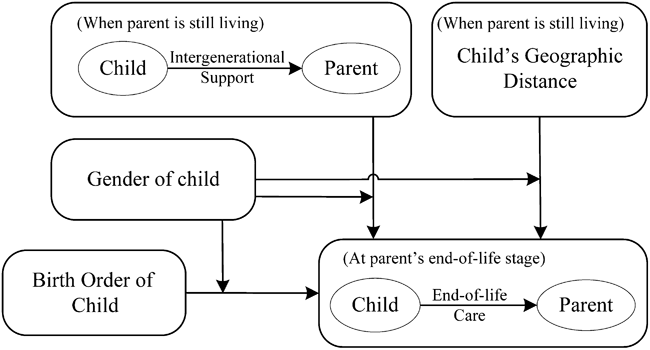
Figure 1 features our proposed conceptual model based on gender theory, the life-course perspective, Chinese culture, and a review of the literature. Traditional filial expectations in rural China are gender biased; sons and their families are expected to be the major providers of care for parents during old age. Therefore, we expected factors to be more significant for sons than daughters.
Conceptual model on how child’s birth order, geographic distance, prior intergenerational support and gender affect his/her EOL family caregiving to parent.

To address research questions regarding how children’s birth order, prior geographic distance, and prior intergenerational support affect caregiving for older parents at the end of life, we advanced the following hypotheses. We expected that gender differences might exist among adult children in terms of family caregiving at the end of life.
Hypothesis 1: Sons and daughters-in-law would provide more family caregiving at the end of life than daughters and sons-in-law.
Based on Chinese Confucian norms of filial piety culture, we expected older children to provide more caregiving to their aging parents.
Hypothesis 2: The eldest child would provide more caregiving at the end of life than would other siblings.
Against the societal backdrop of labor migration of young adults from rural to urban areas, we expected that geographical distance between children and parents would hinder family caregiving at the end of life.
Hypothesis 3: Children living farther from older parents would provide less care at the end of life.
Applying a life-course perspective, we expected that prior intergenerational support might affect family caregiving at the end of life based on the principle of long-term reciprocity. Reflecting the “buy-in” principle, we advanced the following hypothesis:
Hypothesis 4a: Children who provided more financial support to their parents earlier in life would provide less care at the end of life.
Based on the “support bank” concept, we advanced the following two hypotheses:
Hypothesis 4b: Children who received more financial support from parents in earlier life would provide more EOL caregiving.
Hypothesis 4c: Children who received more instrumental support from parents in earlier life would provide more EOL caregiving.
Based on the “main caregiver” notion, we advanced the following hypothesis:
Hypothesis 4d: Children who provided more instrumental support to their parents in earlier life would provide more family caregiving at the end of life.
High-quality intergenerational emotional cohesion tends to be predictive of more-practical care from children. Thus, we advanced the following hypothesis:
Hypothesis 4e: Children who developed greater emotional cohesion with their parents earlier in life would provide more caregiving at the end of life.
We also examined characteristics of parents and children found to influence family caregiving (e.g., Koh, Reference Koh2002; Wachwithan, Reference Wachwithan2000). Specifically, we controlled for parental age, gender, marital status, education, children’s age, marital status, education, and number of siblings.
Methods
Using a life-course perspective, this study emphasized reciprocal intergenerational support transfers and geographic distance using long-term data from the same adult children over time, taking into account birth order and gender of adult children. We relied on two datasets. One was a five-wave survey entitled the Longitudinal Study of Rural Elder’s Well-Being in Anhui Province, China, conducted in 2001, 2003, 2006, 2009, and 2012. We collected detailed information from each wave about exchanges between adult children and their family members. The other dataset was a post-mortality follow-up survey examining deaths during the inter-survey periods.
Longitudinal Survey
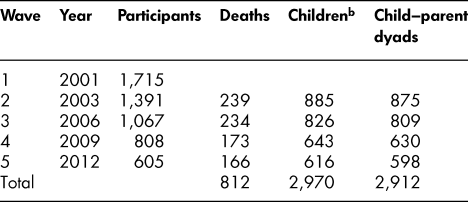
These surveys were conducted jointly by Xi’an Jiaotong University and the University of Southern California. At baseline, adults aged 60 or older and residing in the rural region of Chaohu in China’s Anhui Province were randomly selected using a stratified multistage sampling method. This survey examined older adults’ socio-demographic characteristics, physical and mental health, their children’s socio-demographic characteristics, and intergenerational exchanges between older adults and each of their children (if applicable). Of 1,800 respondents in the baseline sample (2001), 1,715 completed the survey, yielding a response rate of 95.3 per cent. As Table 1 shows, the number of valid questionnaires in subsequent waves was 1,391 (2003), 1,067 (2006), 808 (2009), and 605 (2012). Reasons for attrition included death (73.6%, n = 817), relocation (19.0%), and respondents declining to participate or other reasons (7.4%).
Sample size in each survey wavea
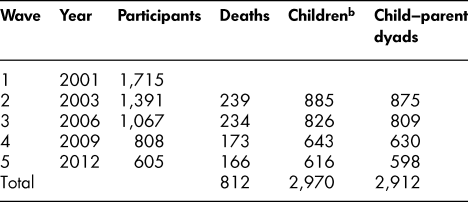
a Working sample size was 2,912 adult child–parent dyads; 1,557 son–parent dyads and 1,355 daughter–parent dyads.
b In post-mortality survey dataset.
Post-mortality Follow-Up Survey
The post-mortality survey assessed age, marital status, death site, time spent bedridden, living arrangements, and family caregiving during the deceased older adult’s EOL stage, as well as medical and funeral costs and who handled those expenses. Informants were sought based on the following order: (1) children; (2) daughters-in-law; (3) spouse; (4) sons-in-law; (5) grandchildren or their spouses; (6) other relatives; and (7) other people (neighbors, friends, etc.). If more than one informant was available in the same category, the individual in closest contact with the older adult during the EOL stage was selected. Among the 817 participants who died during the study period, 812 mortality interviews with other informants were successfully conducted (refer to Table 1 for details), yielding a response rate of 99.4 per cent.
Sample
Data for the final sample came from both the longitudinal survey and the post-mortality follow-up survey. The analysis unit was each child–parent (deceased) dyad. We matched children’s records in the post-mortality survey with information in the parents’ self-reported longitudinal survey data. The 812 deceased older adults had 1,595 sons and 1,375 daughters (2,970 children in final sample; see Table 1 for figures in each wave). After excluding participants with missing data on geographic distance, child education, child occupation, and child marital status, there were 1,557 son–parent dyads and 1,355 daughter–parent dyads in the working sample (n = 2,912), corresponding to 773 deceased older adults. Table 2 contains information on the sources of variables in the two surveys. Family caregiving at the end of life, child age, and parent age and marital status were obtained from the post-mortality survey. Because geographic distance between children and parents changed over time, we extracted this information from the nearest wave of data before the older parents died, as Table 2 shows.
Sources of variables in the survey data

a Including instrumental support, financial support, and emotional cohesion.
Child marital status, occupation, and education were not collected during the post-mortality survey; we used information collected from the longitudinal survey wave prior to death and assumed that these three items remained unchanged. We assessed prior intergenerational exchange using the earliest available information – that is, the baseline survey in 2001. We extracted information about birth order, parent education, and number of siblings from the baseline survey because these three variables were most likely to remain constant. We also assumed that the older parent–adult children dyads behaved similarly in terms of family intergenerational support and caregiving for older parents at the end of life across the four time points in this study. Although there is no quantitative evidence supporting this assumption, we based our decision on the consideration that social change is minimal in rural China due to its underdeveloped nature.
Measures
Dependent Variable
The familial orientation of Chinese culture emphasizes collective responsibility rather than the responsibility of one individual. The family of adult children – that is, sons and daughters-in-law and daughters and sons-in-law – were treated as the traditional Chinese caregiving unit in this study. The frequency with which each adult child and spouse provided assistance with household chores and personal care during the end of the life of older parents was used to indicate family caregiving at the end of life. Response options regarding the frequency of care were as follows: 4 = every day; 3 = at least once a week; 2 = a couple of times every month; and 1 = rarely. Higher scores suggested more-frequent care. Frequencies of these two types of care provided by adult children and their spouses were combined. A summative score was created for each adult child’s family. Thus, the theoretical range of the dependent variable was 0–16. A score of 0 indicated that particular children and their spouses did not provide any caregiving at the end of life, whereas a score of 16 indicated that they provided help with both chores and personal care every day during the parents’ EOL stage.
Independent Variables
Birth order of children featured four categories: only, eldest, youngest, and middle child, with yes or no as the response set. Prior geographic distance from children to parents was assessed as living with, in the same village, in the same county, in the same city, or in or beyond the same province as aging parents, with yes or no as the response set.
Prior intergenerational support was composed of financial support exchange, instrumental support exchange, and emotional cohesion. Financial support provided by children and their spouses to older parents was measured as the total value of cash, gifts, food, and so on during the previous year, as was financial support provided by older parents to children and their spouses. Respondents were asked to estimate the total monetary value of these exchanges. If they could not estimate an exact value, they were asked to choose from the following categories (RMB currency): 0 = none; 1 = less than 50; 2 = 50–99; 3 = 100–199; 4 = 200–499; 5 = 500–999; 6 = 1,000–2,999; 7 = 3,000–4,999; 8 = 5,000–9,999; and 9 = 10,000 or above. The median amount of the category selected was used if the respondent did not give a specific estimate. We used log transformation to adjust the distribution of this variable. Prior instrumental support provided by children (and their spouses) and by older parents included help with household chores and personal care.
The principle for assigning numeric values to those variables was the same as that used for the dependent variable. Emotional cohesion referred to the closeness between each child and older parent and was measured as the summation of scores for three items: (1) “Taking everything into consideration, how close do you feel to (this child)?”; (2) “How much do you feel that (this child) would be willing to listen when you need to talk about your worries and problems?”; and (3) “Overall, how well do you and (this child) get along together?” The items were coded as follows: 1 = not at all; 2 = somewhat; or 3 = very well. Overall scores ranged from 3 to9 for each child.
Control Variables
Children’s age was measured as their age when their parent died. Marital status of children was assessed as married or unmarried (reference group). Occupation of children was measured as agricultural or nonagricultural (reference group). Their education status was assessed as illiterate (reference group), elementary school, or junior high or above. Number of siblings was measured as total number of living siblings. Age at death of older adult participants was measured as younger than 75 or 75 or older (reference group). Marital status at death was categorized as either married or unmarried (reference group). Gender of older parents was measured as male or female (reference group). Educational level of older parents was categorized as literate or illiterate (reference group).
Analyses
Based on the theoretical framework, descriptive analyses, t-tests, F-tests, and 2-level hierarchical linear modeling (with children as level 1 and family as level 2) were conducted for sons and daughters separately using StataCorp’s Stata version 11 software. Random effects were introduced to eliminate cluster effects caused by the nesting of children within families (Goldstein, Reference Goldstein1987). Independent variables for level 1 were socio-demographics of children, birth order, geographic distance, and prior intergenerational support exchange. Independent variables for level 2 were socio-demographics of older parents and number of siblings among adult children.
Results
Descriptive Analyses
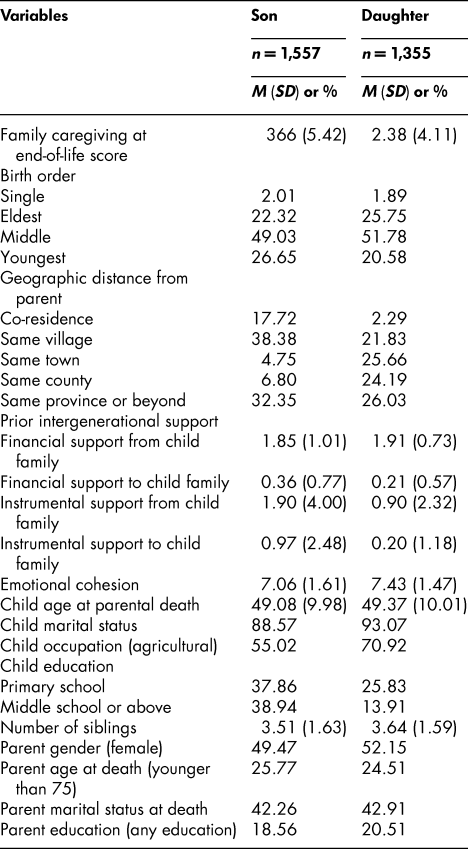
Table 3 presents frequencies and means of all variables used in the analysis. Scores of caregiving at the end of life of older parents were higher among sons (3.36) compared to daughters (2.38). Middle children accounted for half of the sample (49.03% of sons, 51.78% of daughters), whereas single sons or daughters accounted for the smallest portion of the sample (2.01% of sons, 1.89% of daughters). The percentage of sons co-residing with or living in the same village as their older parents (17.72% and 38.38% respectively) was much higher compared to daughters (2.29% and 21.83% respectively). A substantial proportion of sons lived in or beyond the same province as their parents (32.35%). The percentages of daughters living in the same village, in the same city, or in or beyond the same province were similar (21.83%, 25.66%, and 24.19% respectively).
Means, percentages, and standard deviations of dependent and independent variables
M = mean
SD = standard deviation
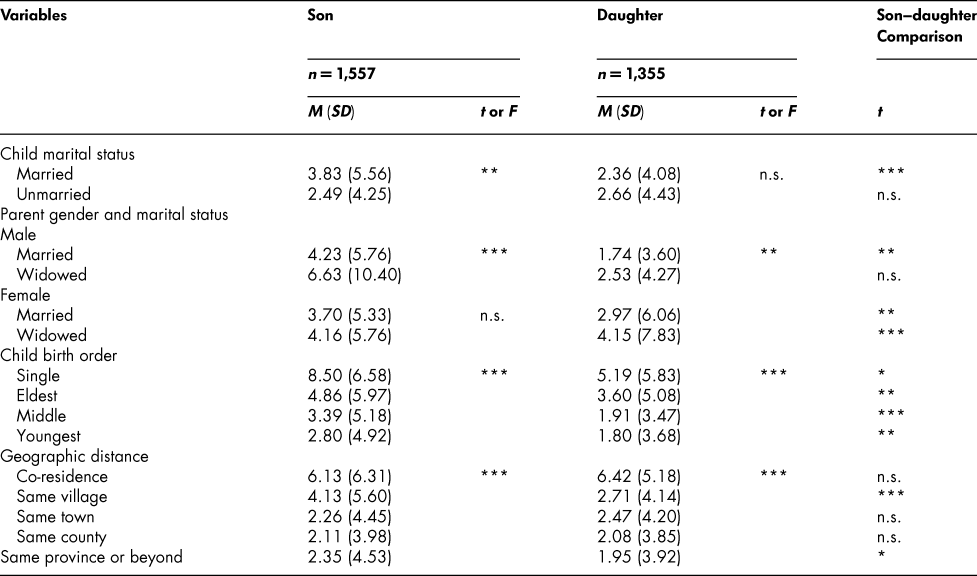
Table 4 presents the results of t-tests and F-tests for all variables. There were significant differences in family caregiving at the end of life based on marital status of children, birth order of children, prior geographic distance from children to parents, and gender of older parents. Married sons provided more family caregiving at the end of life compared to unmarried sons. Sons were shown to provide significantly more family caregiving at the end of life to older adults without a spouse compared to those with a spouse. However, marital status of older parents was not significantly correlated with family caregiving at the end of life. Regarding birth order of children, single or only children provided the most caregiving at the end of life, followed by eldest children. In terms of prior geographic distance, children who lived with older parents provided the most EOL caregiving, followed by children living in the same village. Differences became more obvious when comparing the gender of children. Sons tended to provide a higher level of family caregiving at the end of life compared to daughters. The result of t-test comparisons showed that eldest daughters provided significantly more care to their older parent compared to eldest sons.
Family caregiving at the end of life by gendera
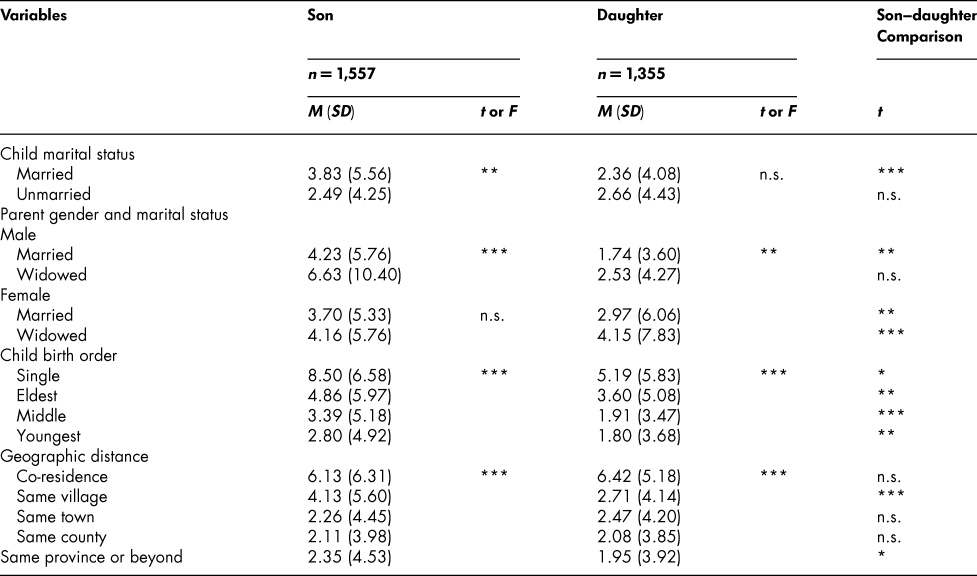
* p < .10, **p < .05, ***p < .01.
a Indicators of significance in son and daughter columns apply to all values for each variable.
M = mean
SD = standard deviation
t = T test value
F = F value of one-way ANOVA
Hierarchical Linear Modeling
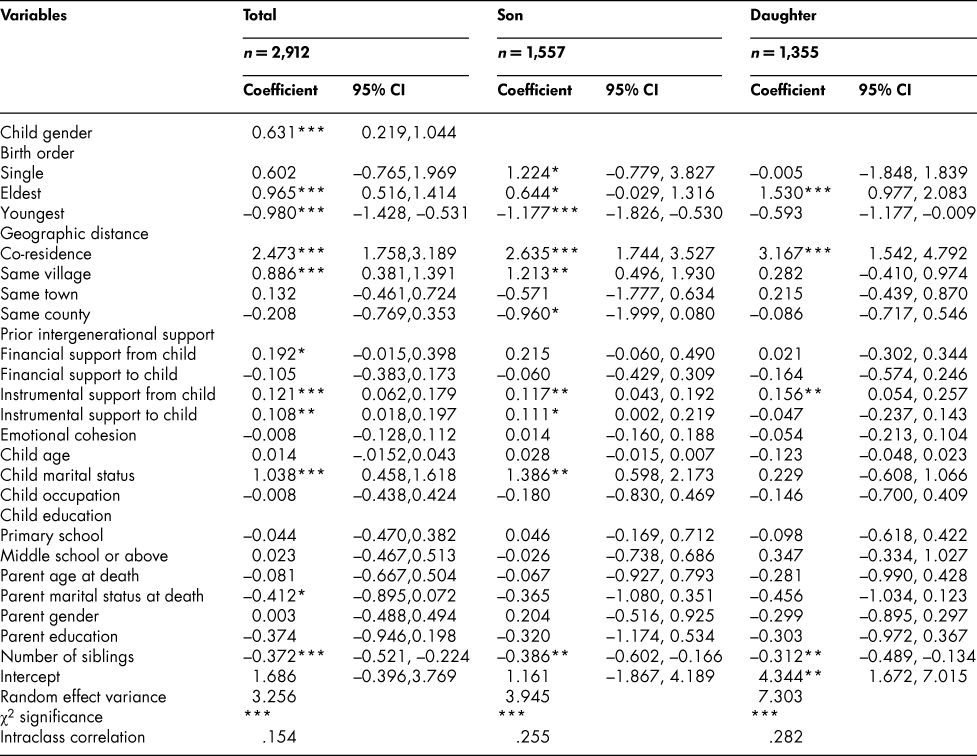
Table 5 features findings from hierarchical linear modeling. In the overall model, sons and daughters-in-law provided more family caregiving at the end of life than daughters and sons-in-law (0.631). In the sons-only model, single sons tended to provide the most frequent caregiving at the end of life (1.224), but they represented the smallest group of sons. Thus, in most situations in this sample, the eldest child provided the most frequent caregiving at the end of life (0.644 for eldest son and 1.530 for eldest daughter); youngest sons tended to provide the least caregiving at the end of life among sons. Sons living with older parents provided the most frequent care at the end of life, followed by sons living in the same village and those in the same town. Similarly, daughters living with older parents provided the most frequent care at the end of life. In terms of prior intergenerational support, sons and daughters who provided a higher level of instrumental support tended to provide more frequent caregiving at the end of life. Sons who received a higher level of instrumental support from older parents prior to their death were more likely to provide frequent caregiving at the end of life. Regardless of child gender, having more living siblings was associated with a lower level of caregiving for older parents at the end of life. Random-effect variance components, χ2 tests of random effects, and intraclass correlation coefficients (ICCs) are presented in Table 5. About 28.2 per cent of the variance in the sons model and 25.5 per cent of the variance in the daughters model was explained at the family level, and multi-level models exhibited significantly better goodness-of-fit compared to their single-level counterparts.
Hierarchical linear model estimates of family caregiving at the end of life by gendera
* p < .10, **p < .05, ***p < .0.
a Reference categories were daughter for child gender, middle child for birth order, same province or beyond for geographic distance, not married for child marital status, not agricultural for child occupation, no formal education for child education, 75 years or older for parent age at death, widowed for parental marital status at death, female for parent gender, and no formal education for parent education. Random effects correspond to the family level. Intraclass correlation is the ratio of variance between neighborhood and the sum of between-family and within-family variances.
CI = confidence interval
Discussion
At the end of life, older adults with deteriorating functioning and debilitating diseases are in need of personal care and assistance with household chores and tend to rely on family members for the care they need. Given strong filial expectations regarding old-age care among older parents in rural areas and the lack of formal care services, family caregiving provided by children at the end of life is crucial (Chan & Chow, Reference Chan and Chow2006). This study investigated correlates of family caregiving at the end of life provided by adult children to their older parents, taking into consideration the gender role of adult children in family caregiving provision at the end of life. Our findings supported our hypotheses regarding gender differences (Hypothesis 1), birth order of children (Hypothesis 2), and prior geographical distance between children and older parents (Hypothesis 3), and partially supported hypotheses regarding prior intergenerational support exchange (Hypotheses 4c and 4d which concerned instrumental support).
Our findings demonstrated gender differences in caregiving by adult children at the end of life of older parents. Sons and their spouses provided more EOL care than daughters did and their spouses (Hypothesis 1), consistent with gendered filial responsibility in providing old-age support to parents in the context of practicing filial piety (Lin et al., Reference Lin, Goldman, Weinstein, Lin, Gorrindo and Seeman2003). Strong expectations for children to fulfill traditional roles among parents in Chinese society, including devotion to filial piety, could explain why eldest sons and their spouses provided the most family caregiving at the end of life compared to other sons. It is the normative expectation that single sons will shoulder the responsibility of family caregiving at the end of life.
The fact that eldest daughters provided the most family caregiving at the end of life compared to other daughters also provides some support for the notion that the rigid gendered filial responsibilities typically shouldered by sons and their family are changing and that daughters are becoming increasingly involved in parental care due to the changing economy and culture (e.g., Wang, Reference Wang and Ikels2004; Zhan, Reference Zhan2004b; Zhan & Montgomery, Reference Zhan and Montgomery2003; Zhang, Reference Zhang2007). Specifically, the gendered perspective of caregiving may be weakening in the context of mass out-migration of young adults in rural areas. Prior geographic distance between sons and parents was significantly correlated with family caregiving provision at the end of life. This finding reflects the tradition of gendered caregiving responsibilities for aging parents, typically fulfilled by sons, based on the principles of Confucianism. For daughters, only co-residence status was significantly correlated with family caregiving at the end of life, which is also consistent with previous findings in general caregiving studies in Western contexts (e.g., Karasik & Conway-Tuner, Reference Karasik and Conway-Turner1995).
Our findings showed that the eldest child tended to provide the most family caregiving to parents at the end of life compared to other siblings (Hypothesis 2). This finding is consistent with previous studies in Western (e.g., Hansson et al., Reference Hansson, Chernovetz, Jones and Stortz1978) and Chinese (e.g., Cong & Silverstein, Reference Cong and Silverstein2010; Lin et al., Reference Lin, Goldman, Weinstein, Lin, Gorrindo and Seeman2003) contexts. This is also congruent with a traditional Chinese saying: “Eldest brother is like father, eldest daughter is like mother.” Our findings show that this traditional stereotype of old-age support being provided by eldest children still exists in family caregiving at the end of life for older parents. Birth order of children, as a basic property of a family, usually does not change during the family life course. Thus, it may influence the expectations, attitudes, and behaviors of filial piety among both older parents and adult children (Houser et al., Reference Houser, Berkman and Bardsley1985; Kulik, Reference Kulik2004; Zhou, Reference Zhou2010). Role modeling for younger siblings was one of the motivations for eldest sons or daughters to take on the responsibility of caring for dying parents. In addition, eldest children tend to have more resources and capabilities, and have spent more time with parents compared to other siblings.
Our findings also showed that children who cohabitated with parents prior to the EOL stage provided significantly more family caregiving at the end of life compared to others (Hypothesis 3). This finding is consistent with previous studies (e.g., Logan et al., Reference Logan, Bian and Bian1998) on the relationship between caregiving and co-residence. Geographic distance remains a barrier for children to practice filial piety near the end of life of their parents, although communication and transportation have improved. The division of labour among children still follows resource and cost-effectiveness principles. Although similar to many studies that found rural-to-urban migration of adult children in China improved the welfare of their older parents due to greater financial support exchange (Li, Reference Li2001), our study confirmed that significant distance between potential child caregivers and their older parents has dramatically reduced provision of daily care of older adults, even at their EOL stage. This is especially salient when considering that assistance in personal daily life provided to dying individuals in rural China is still primarily provided by the family due to wide unavailability of commercial home- and community-based long-term or EOL care services.
Our findings also showed that children who had prior instrumental support exchange with their parents tended to provide more family caregiving at the end of life (Hypotheses 4c and 4d). This finding suggests that family caregiving at the end of life is contingent on a robust support exchange across generations prior to the EOL stage. This is consistent with tenets of the life-course perspective; for example, interaction remains crucial throughout adulthood and skills, routines, knowledge, and values obtained throughout the years tend to be sustained and reproduced in daily life (Dannefer & Kelley-Moore, Reference Dannefer, Kelley-Moore, Bengtson, Silverstein, Putney and Gans2009). This also indicates that family caregiving at the end of life could be viewed as repayment for the early investment of parents based on the lagged-reciprocity perspective (Horwitz et al., Reference Horwitz, Reinhard and Howell-White1996; Silverstein et al., Reference Silverstein, Conroy, Wang, Giarrusso and Bengtson2002; Zuo et al., Reference Zuo, Wu and Li2011). Providing instrumental support to aging parents is considered to be one of the major behavioral manifestations of filial piety (Mao & Chi, Reference Mao and Chi2011).
Contrary to expectations, prior financial support exchange with parents (Hypothesis 4a and 4b) and child–parent emotional cohesion (Hypothesis 4e) were not significantly correlated with family caregiving at the end of life in our study. These non-significant findings differ from previous studies on care provided by adult children to older parents, which suggest a positive association between financial transfers with older parents and caregiving (Koh, Reference Koh2002) and a positive association between emotional closeness with children and instrumental help received from children among older Chinese adults (Silverstein et al., Reference Silverstein, Cong, Li, Cook and Powell2007). These non-significant findings may be caused by altruism in the collective cultural context and strong reinforcement of normative expectations of filial obligations at the end of life in Chinese society. It is also possible that fewer financial exchanges occur across generations in rural villages given strained financial situations in general. Regardless of their level of emotional cohesion with their parents at the end stage of life, adult children had to provide caregiving to their parents to fulfill these obligations.
Our findings also reflected cultural differences and similarities in caregiving and EOL issues. Western studies have found that daughters are more likely to provide instrumental support than are sons (Brody, Reference Brody1985; Dwyer & Coward, Reference Dwyer and Coward1991). Research in Western contexts has mainly focused on characteristics or relationship dynamics among adult daughters who provide caregiving to older parents (Abel, Reference Abel1986; Donorfio & Sheehan, Reference Donorfio and Sheehan2001; Lang & Brody, Reference Lang and Brody1983) and to chronically ill or dying parents (Rawlins & Spencer, Reference Rawlins and Spencer2002; Read & Wuest, Reference Read and Wuest2007). The role of sons in family caregiving has been less frequently examined, and caregiving roles for married sons are more limited compared to unmarried sons (e.g., Campbell, Reference Campbell2010). In Asian countries characterized by filial piety, gendered family caregiving patterns differ compared to those in Western countries. Sons and their families shoulder the primary responsibility of caring for aging parents, including during the end stage of life (e.g., Chan et al., Reference Chan, Ho, Leung, Chochinov, Neimeyer, Pang and Tse2012; Zhan & Montgomery, Reference Zhan and Montgomery2003).
Conclusion
This study helped fill gaps in the research on home-based informal family caregiving at the end of life and contributed to the knowledge-building process. We examined correlates of family caregiving at the end of life provided by adult children from a family perspective. We investigated the influences of cultural factors, gender perspective, and life-course perspective on family caregiving provision at the end of life. We used high-quality longitudinal quantitative data and advanced analytic approaches for longitudinal data. We also studied family caregiving at the end of life by adult children in the specific cultural context of rural China.
Despite these contributions, this study had some limitations. There was no information on cause of death or the duration, intensity, or other types of EOL care. The functional health conditions that respondents faced before they died were also not reported. There was a lack of health and economic information for adult children caregivers. Prior intergenerational support exchange was derived from baseline data and might not reflect total support exchange across the life span. Causal relationships between independent and dependent variables could not be established. As well, there is limited external validity due to regional sampling in one rural area in China. We also acknowledge the possibility of bias towards adult children caregivers during the data collection process which could not be addressed in these data.
Regardless of these limitations, this study has significant implications for future research and policy on EOL caregiving. Due to the implementation of the one-child policy in China, family caregiving networks are expected to shrink. In our study, older adults were not affected by the policy and had four children on average. Based on the findings of our study, the effect of the decreasing number of children in China on family caregiving at end of life for older parents might not be as dramatic as initially thought; that is, sons or daughters could both be primary caretakers for older parents at the end stage of life. In Western contexts, having more siblings has been shown to negatively influence intergenerational relations, and single children have more contact and help parents more than multiple siblings (Smith, Reference Smith1984; Spitze & Logan, Reference Spitze and Logan1991). Future research should focus on family caregiving at the end of life in single-child families in the Chinese context. Due to the industrialization and urbanization process, mass migration of adult children in rural areas and the vast geographic distance between children and older parents may influence the function of family as a primary source of caregiving at the end of life, an issue that needs to be further studied. Because our study only examined frequencies of family caregiving at the end of life in terms of personal care and assistance with household chores, the duration and intensity of family caregiving at the end of life, and other EOL caregiving tasks, such as medication management, merit further exploration.