Introduction
Breastfeeding may benefit neurodevelopment by mechanisms related to nutritional content of breastmilk, namely long-chained polyunsaturated fatty acids that promote brain development, and to maternal sensitivity and mother-infant bonding (Horta & Victora, Reference Horta and Victora2013). Indeed, a cluster-randomized Probit trial showed that breastfeeding intervention was associated with cognitive advantage in childhood (Kramer et al. Reference Kramer, Aboud, Mironova, Vanilovich, Platt, Matush, Igumnov, Fombonne, Bogdanovich, Ducruet, Collet, Chalmers, Hodnett, Davidovsky, Skugarevsky, Trofimovich, Kozlova and Shapiro2008), and a recent meta-analysis of 13 studies published up till 2011 suggested that being ever breastfed in infancy was associated with a 3.5 points higher intelligence quotient (IQ) in childhood and adolescence (Horta & Victora, Reference Horta and Victora2013). Not all studies have, however, confirmed these associations (e.g. Wigg et al. Reference Wigg, Tong, McMichael, Baghurst, Vimpani and Roberts1998), or have suggested that the associations are entirely accounted for by parental or socioeconomic factors (see review by Walfisch et al. Reference Walfisch, Sermer, Cressman and Koren2013; Gibbs & Forste, Reference Gibbs and Forste2014). Yet, observational studies suggest that the cognitive benefits of breastfeeding may persist into adulthood. In these studies, where alternatives to and practices of breastfeeding have varied over time and place, longer duration of breastfeeding was associated with higher scores on intelligence tests in a Danish sample born between 1979 and 1981 and tested between 18.7 and 27.2 years (Mortensen et al. Reference Mortensen, Michaelsen, Sanders and Reinisch2002), in a Brazilian sample born in 1982 and tested at 30 years of age (Victora et al. Reference Victora, Horta, de Mola, Quevedo, Pinheiro, Gigante, Gonçalves and Barros2015), and in a British sample born in 1946 and tested at 53 years of age (Richards et al. Reference Richards, Hardy and Wadsworth2002). One study in British adults born between 1920 and 1930 and tested at 70 years of age and above reported that being ever breastfed in infancy was not associated with intelligence in old age (Gale & Martyn, Reference Gale and Martyn1996). Even though the discrepancy between the latter and the former studies may reflect the above-mentioned time- and place-related differences in breastfeeding alternatives and practices, the latter study did not account for the duration of breastfeeding. Hence, it is not known if longer duration of breastfeeding is associated with benefits persisting to old age. It also remains unknown whether any benefits of breastfeeding predict aging-related cognitive change.
We report here findings from a study that tested if ever being breastfed and longer duration of breastfeeding predicted better cognitive ability in old age and smaller aging-related cognitive change from young adulthood to old age in a sample of men. These data come from the Helsinki Birth Cohort Study (HBCS), which provides life-course epidemiological data on several important perinatal, maternal, sociodemographic and health-related covariates.
Methods
Participants
The cohort, a subcohort of HBCS, comprises 4630 men born between 1934 and 1944 in Helsinki, Finland who attended child welfare clinics and lived in Finland in 1971, when a personal identification number was allocated to all residents of the country. The cohort has been described in detail elsewhere (Barker et al. Reference Barker, Osmond, Forsén, Kajantie and Eriksson2005; Eriksson et al. Reference Eriksson, Osmond, Kajantie, Forsén and Barker2006). Breastfeeding data were available for everyone, and of them, cognitive ability data at military conscription at mean age 20.2 years (s.d. = 1.4, range = 17.0–28.1) were available for 2770 men; and at an invitation-based retest (those living within 200 km radius from Helsinki were invited) (Raikkonen et al. Reference Raikkonen, Kajantie, Pesonen, Heinonen, Alastalo, Leskinen, Nyman, Henriksson, Lahti, Lahti, Pyhälä, Tuovinen, Osmond, Barker and Eriksson2013) in the year 2009 at age 67.9 years (s.d. = 2.5, range = 64.5–75.7) for 931 men. These 931 men formed the analytic sample of this study. The mean time interval between the two cognitive tests was 47.7 years (s.d. = 2.9, range = 38.9–54.7). Of the 2770 men with cognitive ability data available at 20.2 years but who did not participate in the cognitive ability retest, 640 had died, 204 had in a previous follow-up declined participation in any further follow-up, and 182 lived abroad.
The analytic sample differed from the rest of the cohort as follows: At birth, those in the analytic sample were more likely to have fathers in upper clerical occupations, and mothers in lower clerical occupations, they were taller at 6 months, and at 2 years they weighed more and were taller (all p values < 0.04). Also, their lifespan maximum attained level of education was more often upper or lower tertiary, they were less likely to have been hospitalized for stroke (international classification of disease (ICD) codes 430–434 and 436–437 from ICD-8 and 9, 438 from ICD-9, and I60-I69 from ICD-10) or coronary heart disease (codes 410–414 from ICD-8 and ICD-9 and I21-I25 from ICD-10) (p values < 0.010), and at 20.2 years they scored higher on total cognitive ability and on verbal, arithmetic and visuospatial reasoning (p < 0.001). There were no differences in breastfeeding status (never v. ever) or duration of breastfeeding between the analytic sample and the rest of the cohort (p values > 0.170). Characteristics of the rest of the cohort according to the history of breastfeeding are presented in online Supplementary Table S1.
Ethics statement
The HBCS has been approved by the Ethics Committee of the National Public Health Institute and the Coordinating Ethics Committee of the Hospital District of Helsinki and Uusimaa. The Finnish Defence Command has given permission for data linkage (Permit number AL18521). All procedures contributing to this work comply with the Declaration of Helsinki. All participants have signed a written informed consent.
Breastfeeding
Data on being ever breastfed (no v. yes) and breastfeeding duration (up to 3, 3–6, or 6 or more months) were extracted from birth and child welfare clinic records (Kajantie et al. Reference Kajantie, Barker, Osmond, Forsén and Eriksson2008).
Cognitive ability
The Finnish Defence Forces Basic Intellectual Ability Test consists of time-limited verbal, arithmetic, and visuospatial [analogous to Raven's progressive matrices (Raven, Reference Raven2000)] subtests and a total score. Each series consists of 40 multiple choice items with progressive difficulty. The test battery, with some modifications, has been in use since 1955. Its psychometric properties have been described in detail elsewhere (Tiihonen et al. Reference Tiihonen, Haukka, Henriksson, Cannon, Kieseppä, Laaksonen, Sinivuo and Lönnqvist2005; Raikkonen et al. Reference Raikkonen, Forsén, Henriksson, Kajantie, Heinonen, Pesonen, Leskinen, Laaksonen, Osmond, Barker and Eriksson2009), and differences in test scores have in previous studies been found to be associated with, for example, exposure to early-life stress (Pesonen et al. Reference Pesonen, Eriksson, Heinonen, Kajantie, Tuovinen, Alastalo, Henriksson, Leskinen, Osmond, Barker and Raikkonen2013), cardiovascular disease and stroke risk (Kajantie et al. Reference Kajantie, Raikkonen, Henriksson, Leskinen, Forsén, Heinonen, Pesonen, Osmond, Barker and Eriksson2012) and APOE gene polymorphisms (Rantalainen et al. Reference Rantalainen, Lahti, Henriksson, Kajantie, Tienari, Eriksson and Raikkonen2016). At age 20.2 years the men were tested within the first 2 weeks of their compulsory military service. At age 67.9 years the men were re-tested using the same test battery as previously described (Raikkonen et al. Reference Raikkonen, Kajantie, Pesonen, Heinonen, Alastalo, Leskinen, Nyman, Henriksson, Lahti, Lahti, Pyhälä, Tuovinen, Osmond, Barker and Eriksson2013). For all analyses the cognitive ability test scores were square transformed to attain normality, and converted to usual intelligence-type scores with mean 100 and standard deviation 15.
Covariates
These included the following: weight (g), length (cm), ponderal index (kg/m3) and gestational age (from the date of the mother's last menstrual period) at birth, mother's age (years) at delivery and parity (primiparous v. multiparous) extracted from hospital records; estimates of growth in weight, height and BMI between birth and 6, and between 6 and 24 months based on child welfare clinic records; mother's and father's occupational status in childhood (manual workers including farmers, junior clerical, senior clerical) extracted from hospital, child welfare or school health care records; highest own attained level of education in adulthood (basic/primary or less, upper secondary, lower tertiary, upper tertiary) and marital status (never married, married/widowed, divorced), recorded at 5-year intervals between 1970 and 2000 derived from Statistics Finland; diagnoses of stroke (codes 430–434 and 436–437 from ICD-8 and 9, 438 from ICD-9, and I60–I69 from ICD-10) (Osmond et al. Reference Osmond, Kajantie, Forsén, Eriksson and Barker2007), coronary heart disease (CHD) (codes 410–414 from ICD-8 and ICD-9 and I21–I25 from ICD-10) (Barker et al. Reference Barker, Osmond, Forsén, Kajantie and Eriksson2005) and any mental disorder (codes 291, 295, 296–305, 306.4–306.5, 306.8, 306.98 and 307 from ICD-8, 291–292, 295–298, 300–304, 305, 3071A, 3074, 3075A-3075B, 3078A, 3079X, 3090A, 3092C-3099X and 312 from ICD-9 and F1-F6 from ICD-10) (Raikkonen et al. Reference Raikkonen, Lahti, Heinonen, Pesonen, Wahlbeck, Kajantie, Osmond, Barker and Eriksson2011) until the cognitive ability retest at age 67.9 years derived from the Finnish Hospital Discharge Register; and the participant's age at the cognitive ability testings.
Statistical methods
Linear regression analyses tested the associations of ever being breastfed (no v. yes) and breastfeeding duration (dummy coded for the analyses with ‘never breastfed’ as referent; the duration variable was also treated as continuous in tests for linear trend) and cognitive ability at age 20.2 and at 67.9 years. Mixed model regression analyses tested associations of breastfeeding with aging-related cognitive change. For these analyses cognitive ability at age 20.2 and 67.9 years represented the dependent outcome variable and ever being breastfed and breastfeeding duration (tested in separate models), time between the two cognitive testings and their interaction were the independent fixed effects.
We show the associations as unadjusted and adjusted for the covariates. Each analysis includes all participants with complete data for each statistical model. We first adjusted for age at testing and father's and mother's occupational status in childhood; and then made further adjustments for mother's age at delivery, parity, gestational age, birth weight and gain in weight to 6 and to 24 months of age. We also performed analyses using models replacing birth weight and gain in weight with birth length and gain in height and with birth ponderal index and gain in BMI but do not report these as the results did not substantially differ. In an additional model, we made adjustments for age at testing and own highest attained education in adulthood and marital status (67.9 years analyses only). Further, we re-ran the analyses at 67.9 years excluding those participants who had been diagnosed with stroke, coronary heart disease or any mental disorder (n = 166) prior to the cognitive ability retest. Because mother's and father's occupational status were highly related (online Supplementary Table S2; note that of the 116 participants with missing data in mother's occupational status, which includes any mothers who were housewives, 115 had data on father's occupational status available), we tested the fit of the models and found good model fits. The variance in the cognitive ability total and subtest scores at age 20.2 and 67.9 years explained by a model, which adjusted for father's occupational status only and a model which adjusted for both father's and mother's occupational status differed between 0.0% and 7.5%. The correlations between observed cognitive ability scores and scores predicted by the model, which adjusted for age at testing and mother's and father's occupational status ranged between 0.27 and 0.43 at 20.2 and 67.9 years (all p values < 0.001).
Results
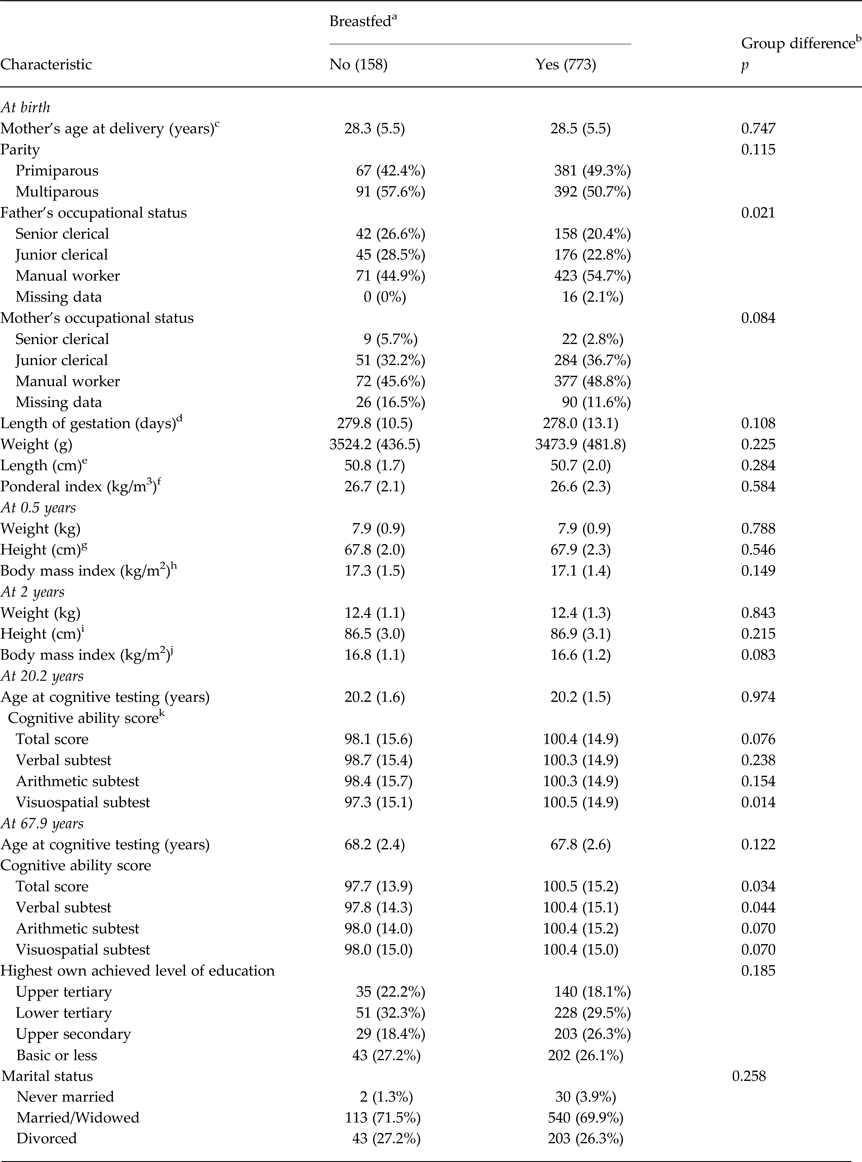
Participant characteristics according to ever being breastfed are presented in Table 1. Of the covariates, only father's lower occupational status was associated with longer duration of breastfeeding (χ2(9) = 18.8, p = 0.027) (other p values p > 0.095).
Sample characteristics according to history of breastfeeding

Figures are mean (standard deviation) or number of participants (percentage).
a Of the analytic sample of 931 men, 773 (83.0%) were breastfed, and of those 249 (26.7%), 211 (22.7%), and 312 (33.5%) were breastfed for up to 3, 3–6, or 6 or more months, respectively.
b p Values correspond to group comparisons with chi-square test for parity, father's occupational status, mother's occupational status. highest own achieved level of education and marital status, ANOVA for others.
c One man had missing data in mother's age at delivery.
d 62 men had missing data in length of gestation.
e 11 men had missing data in birth length.
f 11 men had missing data in ponderal index at birth.
g One man had missing data in height at 0.5 years.
h One man had missing data in body mass index at 0.5 years.
i One man had missing data in height at 2 years.
j One man had missing data in body mass index at 2 years.
k Two men had missing data in the total and arithmetic subtest scores at 20.2 years.
In this sample the intraclass correlations between the cognitive ability scores at the two testings were 0.77, 0.65, 0.74, and 0.62, (p values < 0.001) and average mean-level changes were 0.23 (s.d. = 4.57, range = −22.67–18.00), −2.60 (s.d. = 6.40, range = −30.00–33.00), 2.19 (s.d. = 4.90, range = −21.00–20.00) and 1.10 (s.d. = 7.10, range = −28.00–38.00) raw score points in the total score and in verbal, arithmetic, and visuospatial subtest scores, respectively.
Breastfeeding and cognitive ability at 20.2 years
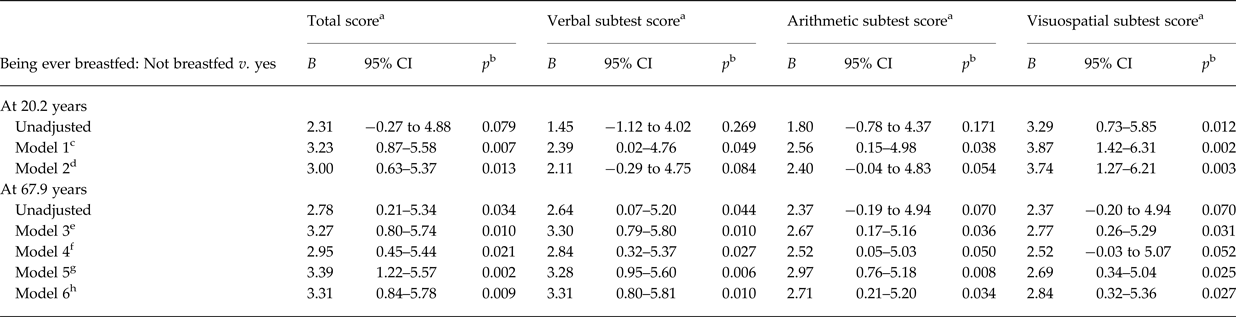
Table 2 shows that in unadjusted models being ever breastfed was associated with a higher visuospatial subtest score compared with those who were never breastfed [mean difference (MD) = 3.29 intelligence quotient (IQ) points, 95% confidence interval (CI) 0.73–5.85). In models adjusting for the covariates, this association did not substantially change (MD's > 3.74 IQ points, 95% CI 1.42–6.31), and being ever breastfed was also associated with a higher cognitive ability total score compared with those never breastfed (MD's > 3.00 IQ points, 95% CI 0.63–5.37). Being ever breastfed was not consistently associated with the arithmetic and verbal subtest scores in the unadjusted and adjusted models.
Associations between breastfeeding status and cognitive ability at 20.2 and 67.9 years

B, mean difference in cognitive ability scores between those breastfed and those never breastfed; 95% CI, 95% confidence interval.
a All cognitive ability scores are standardized to a normal distribution with mean 100 and standard deviation 15.
b p Values correspond to tests of differences between those never breastfed and those breastfed.
c Model 1 adjusted for age at cognitive ability testing and mother's and father's occupational status during childhood.
d Model 2 adjusted for age at cognitive ability testing, mother's and father's occupational status during childhood, mother's age at delivery, parity, gestational length, birth weight and gain in weight between birth and 6 months, and 6 months and 24 months.
e Model 3 adjusted for age at cognitive ability retest and mother's and father's occupational status during childhood.
f Model 4 adjusted for age at cognitive ability retest, mother's and father's occupational status during childhood, mother's age at delivery, parity, gestational length, birth weight and gain in weight between birth and 6 months, and 6 months and 24 months.
g Model 5 adjusted for age at cognitive ability retest, own highest attained lifetime education and marital status.
h Model 6 excluded men with diagnoses of stroke, coronary heart disease and any mental disorder, and used Model 3 covariates.
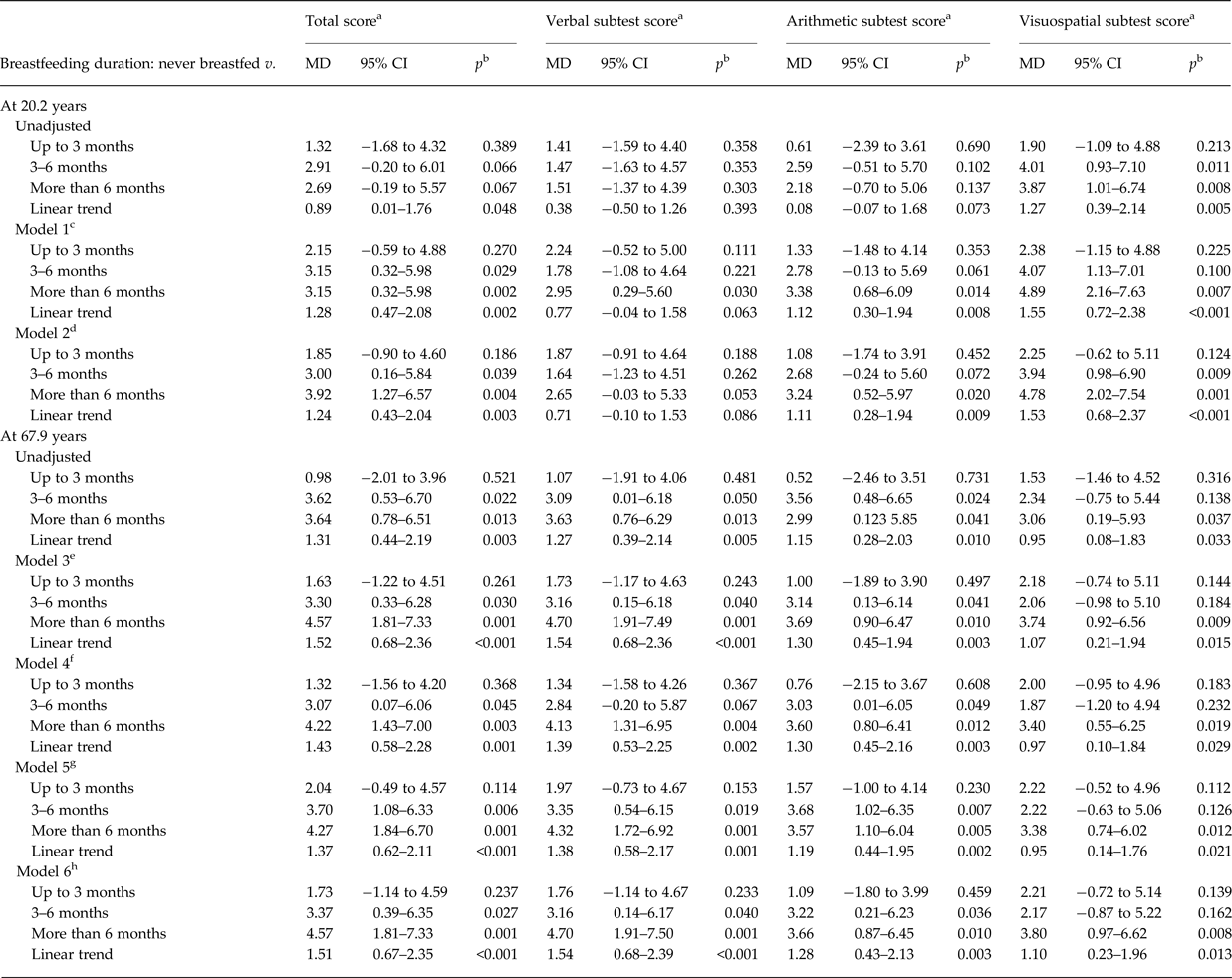
Table 3 shows that total cognitive ability and visuospatial subtest scores were higher the longer the duration of breastfeeding. In models adjusting for covariates these associations did not substantially change, however the arithmetic subtest score was also higher the longer the duration of breastfeeding (Table 3). Longer duration of breastfeeding was not associated with the verbal subtest score in the unadjusted or adjusted models.
Associations between breastfeeding duration and cognitive ability at 20.2 and 67.9 years

a All cognitive ability scores are standardized to a normal distribution with mean 100 and standard deviation 15.
b p Values correspond to tests of differences between those never breastfed and those breastfed.
c Model 1 adjusted for age at cognitive ability testing and mother's and father's occupational status during childhood.
d Model 2 adjusted for age at cognitive ability testing, mother's and father's occupational status during childhood, mother's age at delivery, parity, gestational length, birth weight and gain in weight between birth and 6 months, and 6 months and 24 months.
e Model 3 adjusted for age at cognitive ability retest and mother's and father's occupational status during childhood.
f Model 4 adjusted for age at cognitive ability retest, father's and mother's occupational status during childhood, mother's age at delivery, parity, gestational length, birth weight and gain in weight between birth and 6 months, and 6 months and 24 months.
g Model 5 adjusted for age at cognitive ability retest, own highest attained lifetime education and marital status.
h Model 6 excluded men with diagnoses of stroke, coronary heart disease or any mental disorder, and used Model 3 covariates.
Breastfeeding and cognitive ability at 67.9 years
Table 2 shows that in unadjusted models being ever breastfed was associated with higher cognitive ability total and verbal subtest scores compared with those who were never breastfed (MD's > 2.64 IQ points, 95% CI 0.07–5.20). In models adjusting for covariates and when men with diagnoses of stroke, coronary heart disease or any mental disorder were excluded, these associations did not substantially change (MD's > 2.84 IQ points, 95% CI 0.32–5.37). Arithmetic and visuospatial subtest showed a weak trend to be higher in breastfed men, but they were not consistently associated in unadjusted and adjusted models and when men with diagnoses of stroke or coronary heart disease or any mental disorder were excluded (Table 2).
Table 3 shows that in unadjusted models cognitive ability total and verbal, arithmetic and visuospatial subtest scores were higher the longer the duration of breastfeeding. In models adjusting for covariates and when men with diagnoses of stroke or coronary heart disease or any mental disorder were excluded, the associations did not substantially change (Table 3). Figure 1 depicts the cognitive ability total and subtest scores according to duration of breastfeeding, and Cohen's d effect sizes for the difference between those never breastfed and those breastfed for up to 3, 3–6, and 6 or more months.
Cognitive ability total (a), and verbal (b), arithmetic (c) and visuospatial (d) subtest scores at 67.9 years according to duration of breastfeeding (never, up to 3, 3–6, or 6 or more months). d, Cohen's d (effect size) calculated as the difference between means divided by the pooled standard deviation weighted by sample size. p Values correspond to linear trends adjusted for age at cognitive ability testing and father's and mother's occupational status in childhood. Error bars represent standard errors. Numbers refer to Cohen's d (effect size) for each duration of breastfeeding compared with those never breastfed.

Breastfeeding and cognitive change between 20.2 and 67.9 years
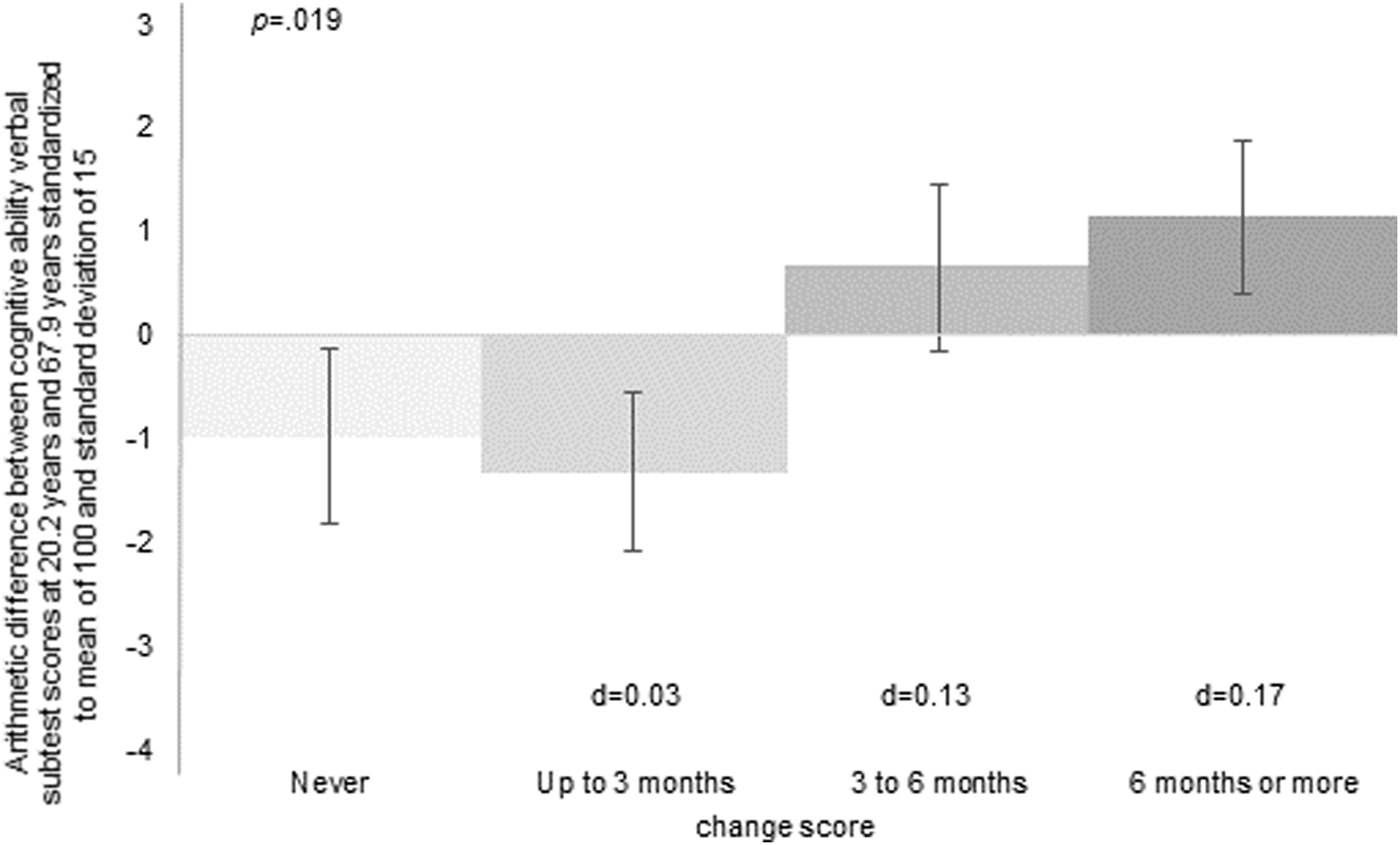
Being ever breastfed was not associated with change in cognitive ability total or subtest scores in unadjusted models or in models adjusting for covariates and when men with diagnoses of stroke, coronary heart disease or any mental disorder were excluded (data not shown). Duration of breastfeeding was not associated with change in cognitive ability total, arithmetic or visuospatial subtest scores (data not shown). Yet, as shown in Fig. 2, verbal subtest scores decreased over five decades in those never breastfed and in those breastfed for 0–3 months, while the scores increased in those breasted for 3–6 months or 6 months or more (MD = 0.02 IQ points, 95% CI 0.00–0.03). In models adjusting for covariates and when men with diagnoses of stroke or coronary heart disease or any mental disorder were excluded, this association did not substantially change (MD's > 0.02 IQ points, 95% CI >0.00 to 0.03). Cohen's d effect sizes for the difference between those never breastfed and those breastfed for up to 3, 3–6, and 6 or more months are shown in Fig. 2.
Change in cognitive ability verbal subtest score between 20.2 and 67.9 years in those never breastfed and those breastfed for up to 3, 3–6 and 6 or more months. d, Cohen's d (effect size) calculated as the difference between means divided by the pooled standard deviation weighted by sample size. p Value corresponds to breastfeeding × time interaction adjusted for father's and mother's occupational status in childhood. Error bars represent standard errors. Numbers refer to Cohen's d (effect size) for each duration of breastfeeding compared with those never breastfed.

Discussion
We report here that men who were breastfed had better cognitive ability in young adulthood than those who were never breastfed. This advantage was present in old age, especially in men who were breastfed for a longer duration. Our study also shows that longer duration of breastfeeding exerted an advantage for aging-related cognitive change: while verbal reasoning scores declined between 20.2 and 67.9 years in men who were never breastfed or breastfed for 3 months or less, they increased in men breastfed for 3 months or longer. The results were not explained by confounding related to maternal age or parity, maternal or paternal occupational status, prenatal conditions as indicated by birth weight and length of gestation, and early childhood conditions as indicated by physical growth up to 24 months. The associations also held when adjusted for the participant's highest lifetime attained education and marital status and when men with stroke, coronary heart disease or any mental disorder diagnoses were excluded from the analyses.
The associations between breastfeeding and its duration and cognitive ability at 20.2 and 67.9 years seemed to be domain-general. At 20.2 years the associations were strongest for visuospatial reasoning and weakest for verbal reasoning, whereas at 67.9 years there was little difference between the associations. At 20.2 years breastfed men scored between 1.5 and 3.7 and at 67.9 years between 2.4 and 3.4 IQ points higher, and those breastfed for longer between 0.6 and 4.8 IQ points higher at 20.2 years and between 0.8 and 4.7 IQ points higher at 67.9 years across the total score and all subtest scores. In effect size these differences are, however, small. We are aware of only one previous study of individuals born in the UK between 1920 and 1930 and whose IQ was tested in older age that reported against the study hypothesis that breastfeeding did not exert long-term neurodevelopmental benefits (Gale & Martyn, Reference Gale and Martyn1996); while the study lacked data on duration of breastfeeding, the discrepant finding may reflect that the alternatives to breastfeeding and consequent differences in quality of water supply and availability and affordability of means of sterilization may have differed as our study cohort was born up to 20 years later in Finland and the other cohorts were born more recently in the UK, Denmark and Brazil (Mortensen et al. Reference Mortensen, Michaelsen, Sanders and Reinisch2002; Richards et al. Reference Richards, Hardy and Wadsworth2002; Victora et al. Reference Victora, Horta, de Mola, Quevedo, Pinheiro, Gigante, Gonçalves and Barros2015). Hence, our study shows that the neurodevelopmental advantages of breastfeeding and its longer duration seem to persist into old age in a cohort born between 1930 and 1940. The advantages compared with those not breastfed were present in those breastfed for 3 months or longer. This suggests that the causal mechanism or mechanisms involved seem to function in an incremental manner and require longer exposure for significant advantages.
The other novel finding related to breastfeeding duration and aging-related change in verbal ability, that verbal ability decreased between early adulthood and old age, across nearly five decades, in those never breastfed or breastfed for shorter and increased in those breastfed for a longer duration, deserves further attention. It has been shown that different cognitive domains follow different aging trajectories. Effort-intensive abilities, sometimes called fluid intelligence, peak in young adulthood but decline with increasing age, whereas semantic memory processes, sometimes called crystallized intelligence, increase across the entire lifespan (Park et al. Reference Park, Lautenchlager, Hedden, Davidson, Smith and Smith2002). Breastfed infants also attain higher education (Victora et al. Reference Victora, Horta, de Mola, Quevedo, Pinheiro, Gigante, Gonçalves and Barros2015), which can in part derive from their higher cognitive ability and has also been found in some (Habib et al. Reference Habib, Nyberg and Nilsson2007), but not all (Van Dijk et al. Reference Van Dijk, Van Gerven, Van Boxtel, Van der Elst and Jones2008), studies to protect against aging-related cognitive change. Thus, it appears that breastfeeding may have the potential to benefit life-span cognitive functioning by contributing to the cognitive reserve, a process proposed to reflect accumulated experience, cognitive skills and neural networks that enhance an individual's ability to cope with brain changes and protect against aging-related decline in cognitive performance (Stern, Reference Stern2009).
The benefits of breastfeeding on cognitive ability have been attributed to at least two factors. First, breastfeeding may benefit the infant's cognitive development through the maternal relationship, by supporting sensitive interactions with the parents and improving the infant's self-regulation capacities. Breastfeeding mothers have been found to display enhanced sensitivity during early infancy, which may promote secure attachment (Britton et al. Reference Britton, Britton and Gronwaldt2006), and skin-to-skin contact with the mother has been found to benefit self-regulation in preterm (Feldman et al. Reference Feldman, Weller, Sirota and Eidelman2002) and term (Goldstein Ferber & Makhoul, Reference Goldstein Ferber and Makhoul2004) infants. Therefore, it has been suggested that association between breastfeeding and cognitive ability is susceptible to confounding by parental intelligence, home stimulation, and socioeconomic status (see review by Walfisch et al. Reference Walfisch, Sermer, Cressman and Koren2013), and it has even been suggested that the advantage from breastfeeding is entirely due to parenting behaviors supportive of cognitive development (Gibbs & Forste, Reference Gibbs and Forste2014).
Second, breastfeeding can be beneficial due to nutritional causes. Breast milk contains long-chained polyunsaturated fatty acids that are essential for neural development (Crawford, Reference Crawford1993), which have been found to be more highly concentrated in the cerebral cortex of breastfed infants (Farquharson et al. Reference Farquharson, Cockburn, Patrick, Jamieson and Logan1992). Furthermore, genetic variants related to fatty acid metabolism have been found to moderate the association between breastfeeding and cognitive ability (Caspi et al. Reference Caspi, Williams, Kim-Cohen, Craig, Milne, Poulton, Schalkwyk, Taylor, Werts and Moffitt2007), however this association was not replicated in another study (Martin et al. Reference Martin, Benyamin, Hansell, Montgomery, Martin, Wright and Bates2011).
Breastfeeding could also potentially exert benefits via the gut microbiome. There is evidence from animal studies that the gut microbiome can influence behavior and cognition [see review (Cryan & Dinan, Reference Cryan and Dinan2012)]. In humans breastfeeding alters the infant's microbiome, as human milk oligosaccharides (HMOs) function as prebiotics for beneficial bacteria (Ewaschuck et al. Reference Ewaschuck, Diaz, Meddings, Diederichs, Dmytrash, Backer, Looijer-van Langen and Madsen2008; Fukuda et al. Reference Fukuda, Toh, Hase, Oshima, Nakanishi, Yoshimura, Tobe, Clarke, Topping, Suzuki, Taylor, Itoh, Kikuchi, Morita, Hattori and Ohno2011; Huda et al. Reference Huda, Lewis, Kalanetra, Rashid, Ahmad, Raqib, Qadri, Underwood, Mills and Stephensen2014). Also, in animal models milk oligosaccharides containing sialic acid have been found to have a microbiome-dependent role in promoting physical growth and to impact liver, muscle and brain metabolism (Charbonneau et al. Reference Charbonneau, O'Donnell, Blanton, Totten, Davis, Barratt, Cheng, Guruge, Talcott, Bain, Muehlbauer, Ilkayeva, Wu, Struckmeyer, Barlie, Mangani, Jorgensen, Fan, Maieta, Dewey, Ashom, Newgard, Lebrilla, Mills and Gordon2016), and HMOs have a higher sialic acid content than those in bovine milk-based infant formulas (Wang et al. Reference Wang, Brand-Miller, McVeagh and Petosz2001). To our knowledge, however, thus far no studies exist that would have investigated whether these mechanisms impact human cognitive development.
While our study is not able to address these mechanisms and potential confounding directly, it is notable that unlike in most populations (e.g. Mortensen et al. Reference Mortensen, Michaelsen, Sanders and Reinisch2002; Richards et al. Reference Richards, Hardy and Wadsworth2002), in our cohort breastfeeding was more prevalent in manual working families. This suggests that at least in our cohort the association of breastfeeding and cognitive ability is less likely to be only due to mothers from higher socioeconomic status families being more likely to have higher IQ's and being able to provide a higher quality home environment for their children.
Strengths of this study include measurement of cognitive ability at age 20.2 years and in a re-test at age 67.9 years with the same test battery in a well-characterized lifespan longitudinal cohort of men. Further, unlike in many of the previous cohort studies, our data allowed adjusting for maternal and paternal occupational status, as proxies of parental intelligence. Limitations include sample attrition over five decades and subsequent selection bias affecting our results, and studying Finnish men only. While it is known that the predominant alternative to breastfeeding in this cohort was cow's milk, this study is not able to account for any differences in those not breastfed in our study population and those in the other previous studies (Gale & Martyn, Reference Gale and Martyn1996; Mortensen et al. Reference Mortensen, Michaelsen, Sanders and Reinisch2002; Richards et al. Reference Richards, Hardy and Wadsworth2002; Victora et al. Reference Victora, Horta, de Mola, Quevedo, Pinheiro, Gigante, Gonçalves and Barros2015) due to time and place –related differences in breastfeeding alternatives and practices. We also were not able to account for potential health differences between mothers of the men who were breastfed and those who were not, and do not have data on reasons for not breastfeeding or potential confounding of breastfeeding duration due to factors such as maternal employment. Yet, 1 month payless obligatory maternity leave was introduced in Finland already in 1917. The pediatric and health center practice of the time was to encourage breastfeeding of mothers of all social classes, with very few exceptions, the most common of these being maternal lung disease. Even though our study was able to account for many important covariates, we were not able to account for a number of other potential factors that are associated with lifespan cognitive ability, such as lifestyle factors including smoking, alcohol, diet and physical activity, personality traits, stressful life events or sociobiological factors, such as food security; though in our sample breastfeeding was not related to physical growth up to 24 months indicating that breastfeeding was not related to early living conditions. Our sample, however, does not vary in place of residence in either childhood or in old age since we know that the participants were born in Helsinki, have data on early childhood physical growth measured at child welfare clinics located in the Helsinki area, and we invited men to the cognitive ability re-test if they lived within 200 km radius from Helsinki. While we are not aware of studies showing that these are related to breastfeeding, a possibility remains that some other factor explains our findings and hence residual confounding cannot be entirely ruled out. As the cohort was born in 1930s and 1940s, generalizations to cohorts born more recently cannot be made; this is, however, an unavoidable limitation that relates to studying the long-term effects of breastfeeding on cognitive aging in today's elderly. Generalizations cannot either be made to cohorts that differ from ours in sample characteristics.
In sum, we found that being ever breastfed and being breastfed for a longer duration were associated with better cognitive ability at 20.2 and 67.9 years, and that a longer duration of breastfeeding was associated with an increase in verbal reasoning over five decades in Finnish men. Consistent with earlier studies in British, Danish and Brazilian men and women (Mortensen et al. Reference Mortensen, Michaelsen, Sanders and Reinisch2002; Richards et al. Reference Richards, Hardy and Wadsworth2002; Victora et al. Reference Victora, Horta, de Mola, Quevedo, Pinheiro, Gigante, Gonçalves and Barros2015), which have demonstrated that breastfeeding carries neurodevelopmental advantages up till middle adulthood, our study suggests that these benefits persist into old age and may lay grounds for lifelong improvement in verbal ability.
Supplementary material
The supplementary material for this article can be found at https://doi.org/10.1017/S0033291717002331
Acknowledgements
This work was supported by The Academy of Finland (grant numbers 1284859, 269925, 12848591); the Finnish Diabetes Research society; Folkhälsan Research Foundation; Liv och Hälsa Foundation; Novo Nordisk Foundation; Finska Läkaresällskapet; Signe and Ane Gyllenberg Foundation; University of Helsinki (grant number 60629); Ministry of Education; Ahokas Foundation; Emil Aaltonen Foundation; Juho Vainio Foundation; and Wellcome Trust. The funding sources were not involved in study design, data collection, analysis, or interpretation, in writing the report, or decision to submit it for publication.
Declaration of Interest
None of the authors have conflicts of interest to report.