

Functionality of MOS
In the yeast cell wall, mannan oligosaccharides (MOS) are present in complex molecules that are linked to a protein moiety. There are two main locations of MOS in the cell wall of Saccharomyces cerevisiae (Stewart et al., Reference Stewart and Russell1998); either attached to cell wall proteins (Lesage et al., Reference Lesage and Bussey2006) as part of –O and –N glycosyl groups or as elements of larger α-D-mannanose polysaccharides (Kath et al., Reference Kath and Kulicke1999), which consist of α-(1,2)- and α-(1,3)- D-mannose branches (from 1 to 5 ring structures in length), which are attached to extended α-(1,6)-D-mannose chains (Vinogradov et al., Reference Vinogradov, Petersen and Bock1998). This specific combination of various functionalities involves MOS-protein conjugates and highly hydrophilic, but variable, ‘brush like’ structures that have attachment ability for various receptors within the digestive tract (Mansour et al., Reference Mansour and Levitz2003), and on the surface of bacterial membranes (Wellens et al., Reference Wellens, Garofalo, Nguyen, Van Gerven, Slattegard, Hernalsteens, Wyns, Oscarson, De Greve, Hultgren and Bouckaert2008). This allows MOS to effectively bind the thread-like fimbriae on pathogenic bacteria (Firon et al., Reference Firon, Ofek and Sharon1983; Oyofo et al., Reference Oyofo, DeLoach, Corrier, Norman, Ziprin and Mollenhauer1989a), rendering them unable to attach to the gut wall, preventing their stabilisation and subsequent colonisation and multiplication to disease-causing levels (Figure 1). MOS-protein conjugates are involved in interactions with the animal's immune system and can enhance immune system activity (Wismar et al., Reference Wismar, Brix, Frokiaer and Nygaard Laaerke2010; Che et al., Reference Che, Johnson, Kelley, Dawson, Moran and Pettigrew2011) and it is thought that they play a role in antioxidant and antimutagenic defences (Krizkova et al., Reference Krizkova, Zitnanowa, Mislovicova, Sasinkova, Durackova and Krajcovic2006).
Blocking bacterial attachment and thus inhibiting host colonisation by MOS

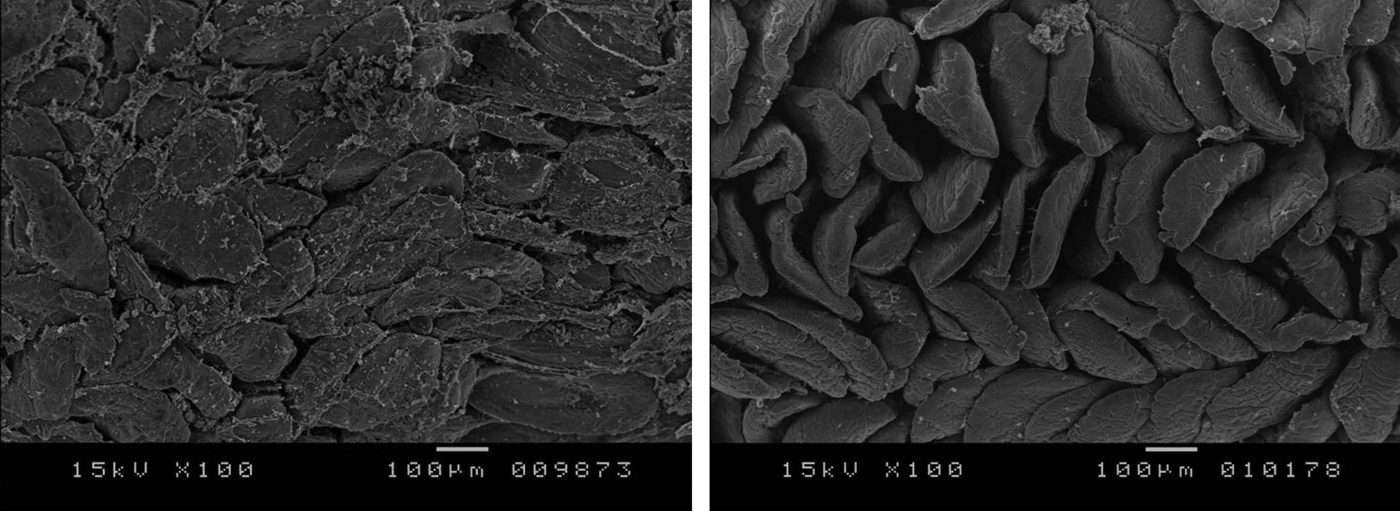
In addition, research comparing commercial MOS to AGP's has shown that it can effectively improve the integrity of the intestinal mucosa in broilers (Spring et al., Reference Spring, Wenk, Dawson and Newman2000; Iji et al., Reference Iji, Saki and Tivey2001; Baurhoo et al., Reference Baurhoo, Phillip and Ruiz-Feria2007). Cheled-Shoval et al. (Reference Cheled-Shoval, Amit-Romach, Barbakov and Uni2011) studied the effect of in ovo administration of MOS on small intestine development during the pre- and post-hatch periods in chickens, finding increases in villi area and organisation, crypt depth and number of goblet cells per villus on day of hatch in MOS treated birds (Figure 2).
Villi without MOS supplementation (left) and villi with MOS supplementation (right). Pictures courtesy of S. Collett, University of Georgia, USA
Effect of MOS on animal performance
In animals, a healthy gut environment is a major driver of efficient feed utilisation, which is important for sustainable production and for the efficient use of feed materials. Prior to the ban in 1999 due to concerns about the build-up of antibiotic resistance in humans who consumed the meat of these food-producing animals, AGPs were routinely added to animal diets to ensure intestinal health. This change promoted the use of feed ingredients as natural replacements of AGPs. Based on a large body of research, MOS established itself as a one of the more important natural additives for this role in farm animal production. The effect of MOS on animal performance has been analysed in several meta-analyses (statistical analyses of final reports from trials that essentially contain the same experimental treatments) for poultry (Hooge, Reference Hooge2004a, Reference Hooge2004b; Sims et al., Reference Sims, Dawson, Newman, Spring and Hooge2004; Baurhoo et al., Reference Baurhoo, Phillip and Ruiz-Feria2007; Yang et al., Reference Yang, Iji, Kocher, Mikkelsen and Choct2008a; Horgan et al., Reference Horgan2010), pigs (Iji et al., Reference Iji, Saki and Tivey2001) and calves (Milk Products, 2007). These analyses reported consistent improvements of gut health and the consequential improvement in performance with MOS.
MOS and bacterial colonisation
The initial interest in using MOS to protect gastrointestinal health originated from work done in the late 1980s. At this time researchers looked at the ability of mannose, the pure single unit of the complex sugar in MOS, to inhibit salmonella infections. Various studies showed that salmonella can bind via type-1-fimbriae (finger-like projections) to mannose. The binding to mannose reduced the risk of pathogen colonisation in the intestinal tract (Oyofo et al., Reference Oyofo, DeLoach, Corrier, Norman, Ziprin and Mollenhauer1989a,Reference Oyofo, DeLoach, Corrier, Norman, Ziprin and Mollenhauerb,Reference Oyofo, Droleskey, Norman, Mollenhauer, Ziprin, Corrier and Deloachc). Different forms of mannose-type sugars interact differently with type-1-fimbriae. The α-1,3 and α-1,6 branched mannans present in the cell wall of Saccharomyces cerevisiae are particularly effective at binding pathogens (Firon et al., Reference Firon, Ashkenazi, Mirelman, AOfek and Sharon1987). Based on the in vitro findings, Newman et al. (Reference Newman, Jacques and Buede1993) conducted trials to determine any beneficial effects of MOS in calves affected by salmonella infections, and reported improved performance.
In controlled studies with chickens, a reduction in the prevalence and concentration of different strains of Salmonella spp. as well as E. coli was reported (Spring et al., Reference Spring, Wenk, Dawson and Newman2000). Reductions in E. coli were also reported by other researchers (Dimitroglou et al., Reference Dimitroglou, Merrifield, Moate, Davies, Spring, Sweetman and Bradley2009). Salmonellosis is a disease that requires an efficient control system, which includes dietary measures, which is critical in order to produce safe food for human consumers. Further research has shown a reduction in Clostridia spp., another common intestinal pathogen (Sims et al., Reference Sims, Dawson, Newman, Spring and Hooge2004; Biggs et al., Reference Biggs, Parsons and Fahey2007) which has a major impact on food animals. The effects of MOS on controlling E. coli and Salmonella spp. are quite consistent. By blocking the attachment and colonisation of the intestine by gram negative pathogenic bacteria with MOS, the autogenous population is able to flourish, making the gut more efficient, and liberating more nutrients for lean tissue growth and immunity in the host animal. However, reported effects on promoting beneficial bacteria, such as Lactobacilli and Bifidobacteria are more variable (Spring et al., Reference Spring, Wenk, Dawson and Newman2000; Sims et al., Reference Sims, Dawson, Newman, Spring and Hooge2004; Baurhoo et al., Reference Baurhoo, Phillip and Ruiz-Feria2007). The application of molecular techniques has allowed detailed study of the composition of the intestinal microflora, giving us a more detailed picture of the complex changes following MOS supplementation (Corrigan et al., Reference Corrigan and Horgan2010; Horgan et al., Reference Horgan2010).
Effects of MOS on intestinal structure and function
A large surface area is the key for optimal digestive function and nutrient absorption, therefore the surface of the small intestine should be covered with long healthy villi (see Figure 3). Three studies have reported better energy digestion when MOS was included in broiler diets, and several studies with MOS in poultry have shown longer villi with shallower crypts (Iji et al., Reference Iji, Saki and Tivey2001; Yang et al., Reference Yang, Iji, Kocher, Mikkelsen and Choct2008a; Baurhoo et al., Reference Baurhoo, Ferket and Zhao2009). Comparable changes in intestinal structure have also been reported in fish. In rainbow trout, supplementing the diet with 0.2% level of MOS resulted in an increase in gut surface area, microvilli length and density, and favourably altered microbial populations (Dimitroglou et al., Reference Dimitroglou, Merrifield, Moate, Davies, Spring, Sweetman and Bradley2009).
Structure of small intestine
A shallow crypt is a good indicator of a healthy and efficient small intestine, as it then requires fewer nutrients for renewal. With a lower renewal rate, the intestinal cells become more mature, allowing for more efficient digestive enzyme production and nutrient absorption. Research has shown increased production of enzymes such as; maltase, leucine aminopeptidase, and alkaline phosphatase in the brush border lining the intestines of animals supplemented with MOS (Ferket, Reference Ferket2002; Yang et al., Reference Yang, Iji, Kocher, Thomson, Mikkelsen and Choct2008b).
To protect the villi and intestinal surface, the gut produces more mucus from specific cells called goblet cells. In general, the number of goblet cells is an indicator of mucus production, and researchers have found that goblet cell numbers were increased with MOS. The importance of such changes for animal health is still being debated by scientists.
MOS as a nutritional supplement for companion animals and horses
MOS is included in diets for horses, dogs, cats, rabbits and pet birds by feed manufacturers mainly due to its benefits for their health. As a nutritional supplement, MOS offers a natural approach to support the microflora and thus improve overall health, well-being and longevity.
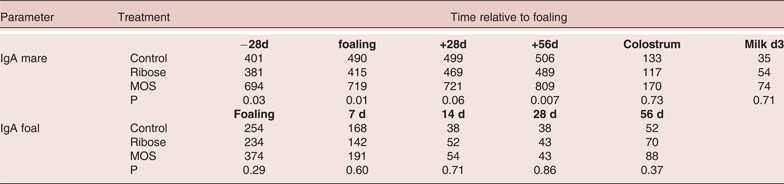
Two studies from the University of Florida (Spearman et al., Reference Spearman and Ott2004; Ott, Reference Ott, Lyons and Jacques2005), involving horses supplemented with MOS, showed that pregnant mares responded with increased levels of immunoglobulin in their blood, and produced colostrum with higher levels of IgG, IgM and IgA. Consequently, higher Ig transfer to the foal via colostrum from the mare can ensure better resistance to pathogens prevalent in the environment. Ott, (Reference Ott, Lyons and Jacques2005) demonstrated this benefit when he showed that foals issued from mare fed MOS tended to have less incidence of diarrhoea. This study (Table 1) showed that mares had significantly higher IgA in blood, and, as a consequence, numerically higher IgA in colostrum, milk and in circulating levels from foals post partum compared to negative and ribose supplemented control diets. MOS may be useful in equine rations by helping young foals receive high levels of antibodies through passive transfer from colostrum and can also assist in promoting colonisation of the intestinal tract with beneficial, symbiotic organisms. Horses in training may benefit from improved immune response associated with supplementation of MOS, however this needs to be verified.
Influence of feeding MOS in diets on mare IgA immunity (Ott 2006).
A number of trials have been carried out to explore the efficacy of MOS in improving gut health in dogs. To reduce the risk of digestive upsets, it is critical to keep the concentrations of potential pathogens low. MOS has been shown to reduce faecal E. coli and C. perfringens and tended to promote greater concentrations of beneficial Lactobacilli and Bifidobacteria spp. (Strickling et al., Reference Strickling, Harmon, Dawson and Gross2000; Swanson et al., Reference Swanson, Grieshop, Flickinger, Bauer, Healy, Dawson, Merchen and Fahe2002a; Grieshop et al., Reference Grieshop, Flickinger, Bruce, Patil, Czarnecki-Maulden and Fahey2004; Gouveia et al., Reference Gouveia, Silva, Van Onselem, Corrêa and Silva2006). Older dogs tend to have reduced concentrations of Bifidobacteria spp.(Grieshop et al., Reference Grieshop, Flickinger, Bruce, Patil, Czarnecki-Maulden and Fahey2004), although a significant increase in Bifidobacteria spp. concentration was noted with MOS supplementation of diets for senior dogs, thus counteracting the negative effects of age on colonic health (Grieshop et al., Reference Grieshop, Flickinger, Bruce, Patil, Czarnecki-Maulden and Fahey2004).
The mechanism of action for reducing the numbers of C. perfringens may differ from that previously explained for bacteria with type-1-fimbriae. Research in other species has demonstrated that MOS has an effect on intestinal morphology as well as both innate and acquired immune system components, which may help to explain the observed reductions in C. perfringens. Research shows an increase in serum lymphocytes and lower plasma neutrophils when adult dogs were supplemented with MOS and fructooligosacchides (FOS). FOS are chain polymers of the sugar fructose that are found in a variety of foods. These findings indicate an improvement in immunity that, in turn, gives rise to increased protection against intestinal pathogens (Swanson et al., Reference Swanson, Grieshop, Flickinger, Healy, Dawson, Merchen and Fahey2002b). Other areas of interest to dog owners are the effect of MOS on nutrient digestibility and stool quality; both for health and practical (poop-a-scoop) reasons (Zentek et al., Reference Zentek, Marquart and Pietrzak2002; Kappel et al., Reference Kappel, Zhang, Marcum, Taylor, Henk, Jowett, Hedlund, Newman, Healy and Kocher2004).
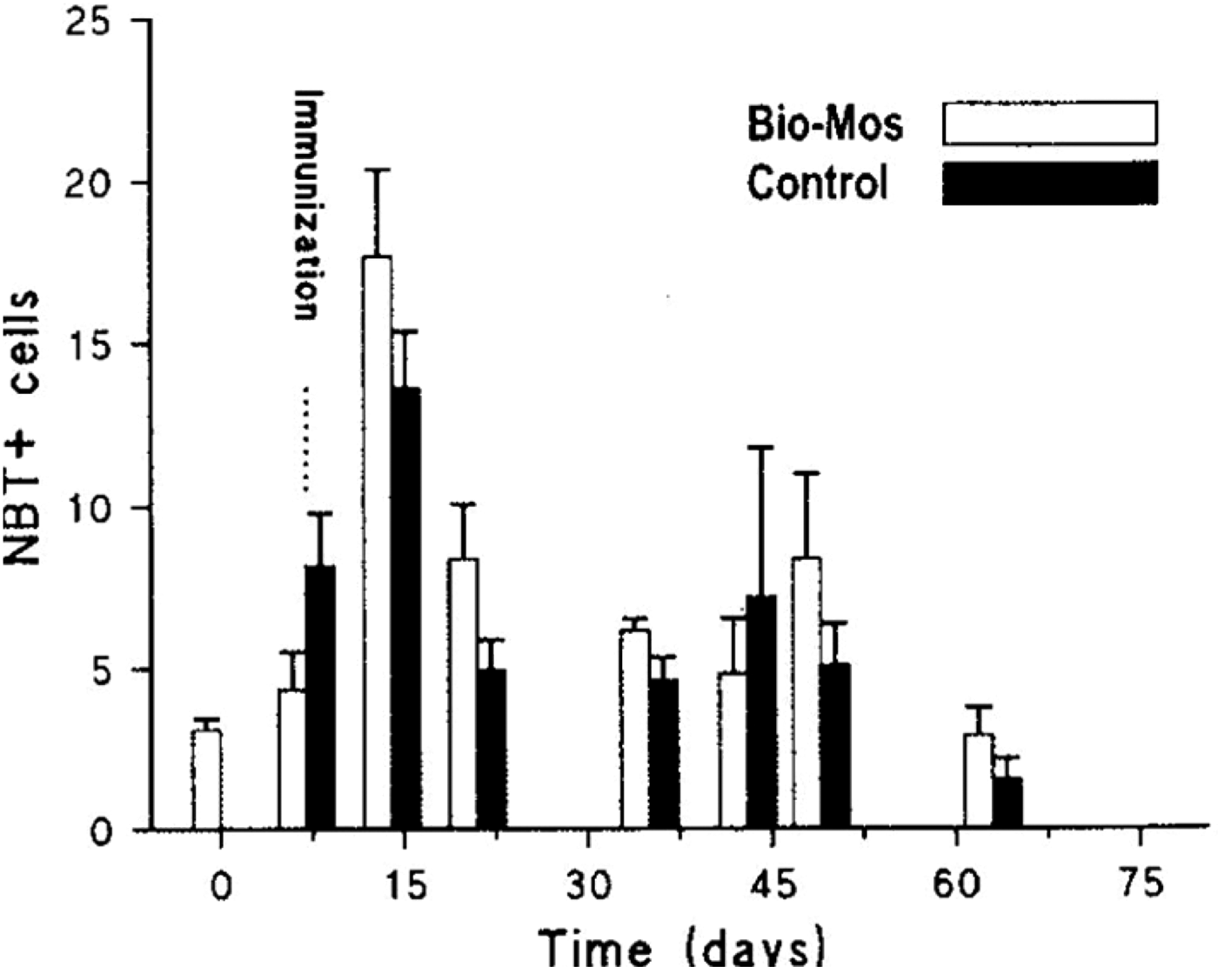
In terms of immunity, a study by O'Carra (2007) used six collie puppies which were fed a control diet or supplemented with 2 g MOS per kg of feed, and the effects on humoral (plasma IgG level) and innate immunity (neutrophil activity and blood lysozyme concentration) examined. The puppies were vaccinated on day seven and given booster shots on days 21 and 35. The main effect determined in this study was on innate immunity, where circulating neutrophil numbers were higher in dogs fed MOS, indicating a heightened defence against bacterial infection (Figure 4).
Number of circulating active neutrophils (O'Carra 2007) measured as the number of active neutrophils per microscope field (x40)
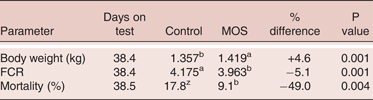
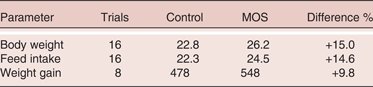
Rabbits may be considered both a farm and a companion animal. Research trials in rabbits have shown that, out of 20 trials conducted, improvements in weight gain, FCR and reductions in mortality are typically observed, leading to better performance and lower costs of production.
Body weight gain, feed conversion ratio, and mortality of rabbits fed a control diet or one supplemented with MOS.
MOS as a nutritional supplement for farm animals
Mannan oligosaccharides have been widely evaluated in feeding trials. As animal health and performance are influenced by many factors other than nutrition, the responses to a feed supplement will vary between production systems. Diet composition (mainly fibre content) may interact with supplemental MOS. Therefore, a concept such as MOS should not be evaluated based on single trials. Meta-analyses, which summarise a large number of published research trials, allows for a more comprehensive overview.
MOS for poultry
The first study testing MOS in poultry (Iji et al., Reference Iji, Saki and Tivey2001) that showed an improvement in performance was published in 2001. The data showed better feed conversion, indicating that birds were converting feed more efficiently into body tissue. An efficient feed conversion ratio (FCR) is important for overall performance and economics of production and thus is a key contributing factor to sustainable poultry rearing. Over the years, a series of papers have documented performance effects under different production conditions were published. Hooge (Reference Hooge2004a) summarised 44 trials in a meta-analysis where MOS was fed between 0.5 and 2 kg/tonne of feed. He concluded that, on average, MOS led to a 1.95% improvement in body weight, 2.25% improvement in FCR and nearly 22% lower bird mortality. Rosen (Reference Rosen2007a) reported similar effects in his holo-analysis reviewing 82 trials, where the various feed and trial site factors were also taken into account. Table 3 shows the results of various metanalyses of broiler performance responses to MOS.
Metanalysis of broiler trials showing average responses to MOS supplementation (Hooge, Reference Hooge2004a).
Means in rows not sharing a letter differ significantly (P < 0.05)
After chicken, turkey is the second most important source of poultry meat globally. In turkeys, 76 comparisons have shown similar responses to MOS as in broilers (Hooge, Reference Hooge2004b; Rosen, Reference Rosen2007b). Hooge (Reference Hooge2004b) reported that MOS addition in turkey feed resulted in an average 2% increase in body weight (P = 0.01), a reduction of FCR by 1.5% (P = 0.172) and 25% less mortality (P = 0.016) when analysing data from all trials run from 1993-2003 (Table 4). Table 5 below (Rosen, Reference Rosen2007b) shows the equations relating to main factors influencing the response of turkeys to MOS addition in feeds – these equate to 57 g increase in body weight, 1.6 points better FCR and 1.3% improved liveability in birds fed MOS. Several studies have suggested that MOS, when added to poultry diets, allowed the birds to perform at a similar level as when fed a diet supplemented with AGPs (Parks et al., Reference Parks, Grimes, Ferket and Fairchild2001; Sims et al., Reference Sims, Dawson, Newman, Spring and Hooge2004; Parks et al., Reference Parks, Grimes and Ferket2005).
Average responses to MOS supplementation in turkey diets (Hooge, 2004)
Means in rows not sharing a letter differ significantly (P < 0.05)
Equations for 33 (24 for mortality) trial results investigating the influence of MOS in feed on performance parameters of growing turkeys (P < 0.05) (Rosen, Reference Rosen2007b).
aP < 0.05, b P < 0.01, c P < 0.001
MOS for pigs
An important factor in the successful start of a piglet's life is the consumption of sufficient, high quality colostrum, and the Ig it contains. Igs in colostrum protect the piglet from harmful diseases in the first weeks of its life, before it attains its own ‘acquired’ immunity. Several studies have looked at supplementing sow diets with MOS with the aim of improving the health of the sows. A healthy sow produces good quality colostrum and spreads less harmful bacteria in the environment where she gives birth and raises piglets. Several researchers (Newman et al., Reference Newman and Newman2001; Quinn et al., Reference Quinn, Funderburke and Tibbetts2001; Le Dividich et al., Reference Le Dividich, Martel-Kennes and Coupel2009) reported a significant increase in colostrum production and quality in sows fed MOS. These changes most likely explain a reduced pre-weaning mortality and a higher litter size and piglet weight at weaning (Le Dividich et al., Reference Le Dividich, Martel-Kennes and Coupel2009). A review of published literature showed that the mortality of young piglets was reduced when MOS was supplemented in the diets of the sow (Le Dividich et al., Reference Le Dividich, Martel-Kennes and Coupel2009). Keeping the mortality of young piglets to a minimum is important from an animal welfare stance as well as from an economic point of view.
The other critical phase in a piglet's life is at weaning, when it is separated from the sow. Moving from a predominantly milk diet to compound feed leads to potential disruption in the intestinal microflora and presents a higher risk of intestinal disorders. Two meta-analyses, involving a total of 123 comparisons (Miguel et al., Reference Miguel, Rodriguez-Zas and Pettigrew2004; Rosen, Reference Rosen2006) concluded that performance was better in piglets fed MOS-supplemented feed (Table 6). The data indicated that piglets which were particularly challenged during this transition phase (with a slower growth rate due to the challenge), responded particularly well to MOS supplements. Positive performance effects with MOS have been reported in later production phases, but appear to be smaller in magnitude compared to responses seen in very young animals (Miguel et al., Reference Miguel, Rodriguez-Zas and Pettigrew2004).
Metanalysis of impact of feeding MOS to growing pigs (Miguel, Reference Miguel, Rodriguez-Zas and Pettigrew2004).
From overall metanalysis of ten years of pig trial data, Rosen (Reference Rosen2006) showed that 73% of trials showed better weight gain and 68% improved FCR. This equated to 15 g per day extra growth (3.6%), 7.5 g/d better feed intake (1%) and 5.3 point reduction in FCR (3%).
MOS for calves
The health status of young calves is one of the most important factors contributing to growth and performance, hence the first trial to study the effects of MOS in feed was conducted on young bull calves (Newman et al., Reference Newman, Jacques and Buede1993), which showed improved intake and, subsequently, better growth rates. Diarrhoea in young calves is a major issue in the dairy sector, and can be caused by viral or bacterial infections, however, E.coli is often involved. As MOS can bind E. coli, it can modify and help to improve the composition of the intestinal microflora. This premise was demonstrated as a reduction in faecal E. coli counts (Jacques et al., Reference Jacques and Newman1994) and improvements in faecal score (Lazarevic et al., Reference Lazarevic, Spring, Shabanovic, Tokic and Tucker2010; Morrison et al., Reference Morrison, Dawson and Carson2010) in calves fed diets containing MOS. These improvements were coupled with an increase in concentrate (commercial compound feed) intake (Heinrichs et al., Reference Heinrichs, Jones and Heinrichs2003) and better growth performance (Newman et al., Reference Newman, Jacques and Buede1993; Quigley, Reference Quigley1996; Dvorak et al., Reference Dvorak, Newman, Jacques and Waterman1997; Sellars et al., Reference Sellars, Burrill, Trei, Newman and Jacques1997). In addition to the changes in the gut, several authors noticed improvements in respiratory health, which can also contribute to better performance (Newman et al., Reference Newman, Jacques and Buede1993; Sellars et al., Reference Sellars, Burrill, Trei, Newman and Jacques1997).Conversely, one trial reported no effects on liveweight gain despite increased feed intake (Terre et al., Reference Terre, Calvo, Adelantado, Kocher and Bach2007).
The transfer of immunity from cow to calf is critical in order to convey protection from many different diseases (Morrisson et al., Reference Morrison, Dawson and Carson2010). Dairy cows fed MOS had better immune protection against rotavirus and were able to pass some of this protection on to their calves. Results have indicated that supplementation with MOS to cows during their dry period enhanced immune response to rotavirus and tended to enhance the subsequent transfer of rotavirus antibodies to calves (Franklin et al., Reference Franklin, Newman, Newman and Meek2005).
A study at Penn State University compared calves fed MOS (4 g/day) to those receiving antibiotics (neomycin and oxytetracycline) or a negative control in milk replacer for up to six weeks of age (Heinrichs et al., Reference Heinrichs, Jones and Heinrichs2003). They concluded that MOS was equally as effective in improving faecal scores (faecal fluidity, scour severity and faecal consistency) as the antibiotics, leading them to conclude that the MOS could replace antibiotics in milk replacer formulation.
Terre et al. (Reference Terre, Calvo, Adelantado, Kocher and Bach2007) examined the effect of MOS in milk replacer on calf health in an enhanced-growth feeding program. Inclusion of MOS stimulated starter feed intake post-weaning and resulted in a significant reduction in Cryptosporidium spp in the first week of supplementation. Further research in Australia (Quezada et al., Reference Quezada, Babatunde and Frankel2007) demonstrated positive effects on intestinal morphology with the inclusion of MOS in the milk replacer from two to 21 days of age. Serum IgG losses were reduced with supplementation and villi height increased in the ileum. The defence functions of the Peyer's patches, gut regions which ‘sample’ ingesta for pathogenic presence, were enhanced through greater numbers of T cells. MOS also facilitates changes in the mucous production from the intestinal lining, improving direct physical barrier to infection. This could be due to the upregulation of gene expression in crypt cells and brush border transporter proteins (Uni, Reference Uni, Lyons, Jacques and Hower2007). Greater mucous production allows for better protection against pathogen attachment and enhanced nutrient uptake.
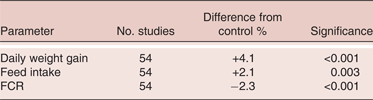
These benefits of MOS in the diet of pre-weaned calves are not only restricted to health. Hooge (Reference Hooge2006) carried out a meta-analysis of 17 studies where MOS was incorporated into milk replacer, and reported an average improvement in weight gain of 15%, equating to a daily weight gain increase of 70 g per day (Table 7).
Metanalysis of benefits in calf performance from feeding MOS (Hooge, Reference Hooge2006).
MOS in Aquaculture
Farmed fish larvae are often fed with live feed cultures, which, due to their intensive nature, provide ideal conditions for the growth of opportunistic pathogens. MOS incorporation into live feeds has been studied to assess the impact on microbial load and showed a reduction in Vibrio spp. levels in live feed cultures (Daniels et al., Reference Daniels, Boothroyd, Davies, Pryor, Taylor and Wells2006; Daniels et al., Reference Daniels, Merrifield, Boothroyd, Davies, Factor and Arnold2010; Dimitroglou et al., Reference Dimitroglou, Merrifield, Carnevali, Picchietti, Avella, Daniels, Güroy and Davies2011). These reductions were likely due to the agglutination or binding of Vibrio cells to MOS, mediated by the presence of mannose receptors. In addition, MOS supplementation has been shown to reduce the overall cultivable intestinal microbial load and to enhance bacterial species variety (Dimitroglou et al., Reference Dimitroglou, Merrifield, Moate, Davies, Spring, Sweetman and Bradley2009).
Several researchers have reported improved performance and feed efficiency with MOS in aqua culture (Spearman et al., Reference Spearman and Ott2004; Staykov et al., Reference Staykov, Spring, Denev and Sweetman2007). As in terrestrial animals, changes have been associated with effects on the gut and the immune system. Dimitroglou et al (Reference Dimitroglou, Merrifield, Spring, Sweetman, Moate and Davies2010) observed alterations of circulating leukocytes proportions as well as increased total leucocyte levels when feeding gilthead sea bream. Torrecillas et al. (Reference Torrecillas, Makol, Caballero, Montero, Robaina, Real, Sweetman, Tort and Izquierdo2007; Reference Torrecillas, Makol, Caballero, Montero, Ginés, Sweetman and Izquierdo2010) assessed the dietary inclusion of various levels of MOS on the immune status and disease resistance of sea bass; Rodriguez-Estrada et al. (Reference Rodriguez-Estrada, Satoh, Haka, Fushimi and Sweetman2009) performed similar studies in rainbow trout using MOS, a probiotic and an acid organic. MOS reduced Vibrio alginolyticus, V. anguillarum and Listonella anguillarum, two important pathogens in aqua fish.
The next generation: Mannan Rich Fraction (MRF)
Research in recent years led to the identification and concentration of unique sugars present in the cell wall of a specific strain of Saccharomyces cerevisiae, which has resulted in the development of the next generation of MOS technology, Mannan Rich Fraction (Actigen®, Alltech Inc., USA). This fraction is quantifiable in both premix and feed using a unique in-feed ELISA test. Another technique, ELISA Linked Mucin Adherence Assay (known as ELMAA) detects and evaluates the efficacy of the product in premix and complete feed. These tests allow for improved quality assurance, traceability and consistency of response. This second-generation bioactive mannan-rich fraction (MRF) has been shown to block unfavourable organisms from the gut. This carbohydrate supports nutrient utilisation, maintains digestive function and enzyme activity, controls inflammation and reduces the gap between ideal and actual performance (Xiao et al., Reference Xiao, Power, Mallonee, Crowdus, Ao, Pierce and Dawson2010; Che et al., Reference Che, Song, Liu, Johnson, Kelley, Van Alstine, Dawson and Pettigrew2012; Samuel et al., Reference Samuel and Brennan2012). These mechanisms have been confirmed by nutrigenomic data. More purified than MOS, MRF provides a great source of attachment for specific pathogens and, because it is not digestible, it potentially ‘shuttles’ attached bacteria through the digestive tract, preventing colonisation. MRF can be included in diets at lower inclusion rates than MOS whilst still improving zootechnical performance under challenging field conditions.
MRF results published by Che et al. (Reference Che, Song, Liu, Johnson, Kelley, Van Alstine, Dawson and Pettigrew2012) at the University of Illinois, showed that MRF is effective in strengthening immune responses and improving nutrient utilisation in challenged (infected with Porcine Reproductive and Respiratory Virus) pigs. Importantly, feeding MRF improved nutrient utilisation in infected pigs during the critical time from 28 to 42 d post-inoculation (P < 0.01).
Munyaka et al. (Reference Munyaka, Echeverry, Yitbarek, Camelo-Jaimes, Sharif, Guenter, House and Rodriguez-Lecompte2012) showed that supplementing broiler chickens' diet with MRF downregulated the gene expression of toll-like receptors TLR4, cytokines IL-12p35, interferon (IFN)-ϒ in the ileum and caecal tonsils and cytokine IL-10 in the ileum and caecal tonsil of broiler chickens. These immunity mediators are part of two immune pathways, Th1-helpers and Th2 helpers, and these results suggest anti-inflammatory responses in broiler chickens. MRF may have beneficial effects on performance as well as immune modulation, through mobilisation of heterophils, and improved gut morphology.
A recent study performed by Johnson et al. (Reference Johnson2013), from the University of New England in Australia, investigated the efficacy of MRF as a replacement for zinc bacitracin and salinomycin, using a necrotic enteritis challenge feeding study model. Supplementation did not completely protect birds from necrotic enteritis or coccidiosis lesions, although MRF was as effective as the antibiotics in preventing performance decline from coccidiosis. The patterns of lesion scores were in line with the mode of action; zinc bacitracin was effective against the gram+ Clostridia, salinomycin was specific against Eimeria and MRF promoted immune stimulation in the gut lumen. This study indicated that yeast based MRF has promise as a tool for controlling necrotic enteritis.
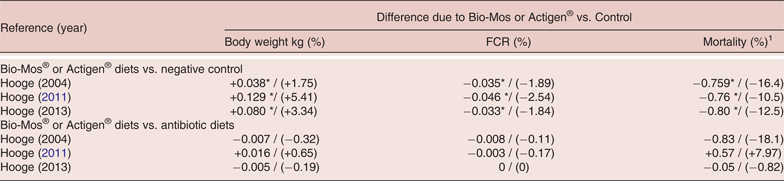
Meta-analyses involving MRF on broiler performance have been published (Hooge, Reference Hooge2011; Hooge et al., Reference Hooge, Kiers and Connolly2013) which showed the superiority of MRF compared to MOS of their effects on broiler growth performance (Table 8).
Comparison of some meta-analyses involving MOS (Bio-Mos®) and MRF (ActigenTM) on broiler growth performance.
* significantly different compared to the control
1Mortality % difference relative to the respective negative control or antibiotic control.
Conclusions
In comparison to other oligosaccharide fractions such as fructo-oligosaccharides (FOS), the dataset on mannan-oligosaccharides (MOS) is larger, more varied, and offers a greater understanding of the application for this technology. With 733 publications (95% published with a specific commercial fraction, Bio-Mos®), knowledge in this area dwarfs that of other similar concepts and provides researchers with a myriad of possible applications. With increasing restrictions on the use of antibiotic gut microflora modifiers in animals and concerns with antibiotic resistance in humans, mannans provide a technology platform which will be a critical part of the arsenal for veterinarians and animal producers in the future. MOS, due to cost of production, extraction technology and potential infinite supply, has been used widely in animal diets over the last 20 years, but are now being superseded by the next generation, MRF.
Further advances in the fields of nutrigenomics, proteomics and metabolomics will enable researchers to ask key questions about dietary ingredients and their effects on an organism. By focusing on gene expression and functional genomics, it will soon be possible to gain a more definitive understanding of the importance of dietary intervention in nutritional strategies for disease resistance and production efficiency.
Acknowledgments
None
Declaration of Interest
One of the authors, Aidan Connolly, is the Chief Innovations Officer at Alltech Inc, USA. Actigen® and Bio-Mos® are trademarks of Alltech Inc, USA.