


Introduction
Otoscopy is a clinical procedure that is used to examine ear structure, specifically the external auditory canal, eardrum and middle ear.Reference Falkson, Sutton and Tadi1 Otoscopic examination is a first-line test both in general physical examination and in diagnosing many otologic conditions. Despite its critical role in performing a complete physical examination, otoscopy is a difficult skill to master because of the technique of performing the examination and the wide array of possible pathologies encountered.Reference Weiss, Yates and Quinn2, Reference Fisher and Pfleiderer3
While otoscopy is often considered the realm of an otolaryngologist (ENT) or audiology specialist, good otoscopic skills are critical for a range of healthcare providers.Reference Hu, Sardesai and Meyer4 Despite this, there is limited exposure in medical training in both otolaryngology and specifically in otoscopy.Reference Ishman, Stewart, Senser, Stewart, Stanley and Stierer5, Reference Niermeyer, Philips, Essig and Moberly6 Even among audiology training programmes where otoscopy is a critical skill in practice, there is often limited exposure to high-quality otoscopy training.Reference Kaf, Masterson, Dion, Berg and Abdelhakiem7
The need for high-quality otoscopy training is felt even more critically in resource-constrained environments, especially those with limited numbers of audiologist or ENT specialists. As otoscopy is a critical but difficult skill to teach, various methods have been developed to improve skills transfer.Reference Davies, Djelic, Campisi, Forte and Chiodo8–Reference Lee, Kim and Kron11 Otoscopy is typically taught in person through direct demonstration, but this is difficult to scale up and is limited by the availability of clinicians skilled in the technique. Given the challenges posed with teaching with traditional otoscopy techniques, the use of simulation, web-based training, and video-otoscopy training and diagnostic methods have been proposed and used in a range of settings.Reference Cavuoto Petrizzo, Olvet, Samuels, Paul, John and Pawelczak10, Reference Albrecht, Fehre, Ramackers, Nikendei and Offergeld12–Reference Okuda, Bryson, DeMaria, l, Quinones and Shen17 However, these resources have largely been limited to high-income nations with no investigation of the use of an otoscopy simulation training system in a low-income environment.
This study includes a review of the literature regarding various modalities of training for otoscopy, with a special focus on low-resource settings, and specifically reviews a programme focused on the effectiveness of one such modality. The Otosim® is a portable otoscopy simulation system that combines a realistic silicone ear model with an otoscope and digital educational platform containing high-resolution images of normal ear anatomy and a wide range of otologic pathologies. Learners use a standard otoscope to examine the simulated ear while progressing through educational modules designed to develop both otoscopic examination technique and pathology recognition in a safe, reproducible environment.
Material and methods
Participants and setting
The data for this study were retrospectively collected following a quality improvement initiative using the Otosim training tool at several clinical sites in Malawi. Ethics exemption for the use of this data was obtained from the University of South Florida (USF) Institutional Review Board. This study was deemed exempt from Institutional Review Board review at the University of South Florida (STUDY007654, 09/20/2024). Patient consent was waived because of the data collection being Quality Assurance and Quality Improvement (QA/QI) by nature. The Institutional Review Board determined that because of the number of records to review and the retrospective nature of this review, it would be unreasonable to prospectively obtain consent for each record, thus a waiver of informed consent was approved.
The training sessions were held at Queen Elizabeth Central Hospital, Kamuzu Central Hospital and the African Bible College Community Clinic. The participants in the quality improvement initiative included ENT clinicians and technicians, audiologists, audiology students and clinical officers. All participants completed the training using the Otosim simulator with a silicone ear and an otoscope. Our study received no compensation or support from Otosim and there are no conflicts of interest to report. This device was used because it was the only such device that was available to the study team at the time.
The quality improvement initiative programme was developed after reviewing all the Otosim material and selecting different topics felt to be of highest yield by the study staff. The topics covered normal ear anatomy, cholesteatoma, foreign bodies, otitis externa, chronic suppurative otitis media, acquired post-traumatic cholesteatoma, otomycosis, malignant otitis externa, bullous myringitis, granular myringitis, keratosis obturans, cholesteatoma of the external auditory canal, exostoses of the ear canal, osteoma, epidermal inclusion cyst, pyogenic granuloma, polyps, tumours, temporal bone fractures, keratin and bony horns, herpes zoster oticus or Ramsay-hunt syndrome, congenital epidermal inclusion cyst of the tympanic membrane, congenital cholesteatoma, mastoiditis, mucoid otitis media, serous otitis media, tympanocentesis myringotomy and ventilating tube, haemotympanum, tympanosclerosis and tympanic membrane retraction.
A literature review was also completed to understand the current otoscopy training as it relates to competency and limitations. The search engines used were PubMed, National Institutes of Health (NIH), Sage Journals and Google Scholar. The keywords used were otoscopy training, otoscopy education, teaching otoscopy, otoscopy simulation and otoscope education.
Training sessions
Pre- and post-surveys were conducted during the training session to optimise both time and resources. The survey instruments employed a mixed-methods approach using both qualitative and quantitative questions, designed to gauge the participant’s preparedness and understanding of the topic covered. The pre-survey form included seven questions with the first five being quantitative and the remaining two being qualitative. The five quantitative questions in the pre-survey addressed the participants’ training level in the medical field (audiologist, audiology students, clinician (clinical medicine), ENT surgeons and doctors (paediatricians)), the number of years they had been performing otoscopy, their preparedness for conducting otoscopy, their preparedness for diagnosing ear conditions and their interest in using an otoscopy tool, which they rated on a four-point Likert scale: not at all prepared, a little prepared, prepared and very prepared. The two qualitative questions focused on the difficulties participants encountered when performing otoscopy and the type of training they believed would be helpful in improving their skills, with an additional prompt for specific suggestions on what would be most helpful.
Following the training session, a post-survey was administered to evaluate improvement in participants’ knowledge and confidence. It included both qualitative and quantitative questions. The post-survey form had eight quantitative questions and two qualitative questions.
The quantitative questions in the post-survey assessed the participant’s preparedness after the simulation, the usefulness of the Otosim for training, its usefulness in diagnosing ear conditions, the quality of the training, the realism of the Otosim for otoscopy, the rating of the Otosim as an educational tool, the improvement in confidence for otoscopy and the comparison of the Otosim’s effectiveness with classroom training, which they rated on a four-point Likert scale: not at all useful, neither helped nor hurt, useful and extremely useful. The qualitative questions were focused on the effectiveness of the training and suggestions for further improvements.
Results
A total of 46 individuals participated in the Otosim training session quality improvement initiative in Malawi, including audiology students, audiologists, clinicians (clinical medicine officer), doctors (paediatricians) and ENT specialist (surgeons) from Queen Elizabeth Central Hospital, Kamuzu Central Hospital and the African Bible College Community Clinic (Figure 1a).
Background of the participants. Participants self-identified their area of specialisation (a) and their length of experience in otoscopy (b).

There was a wide range of experience with otoscopy, but no statistically significant differences were identified between participants with an audiology background and those with a medical background (Figure 1b).
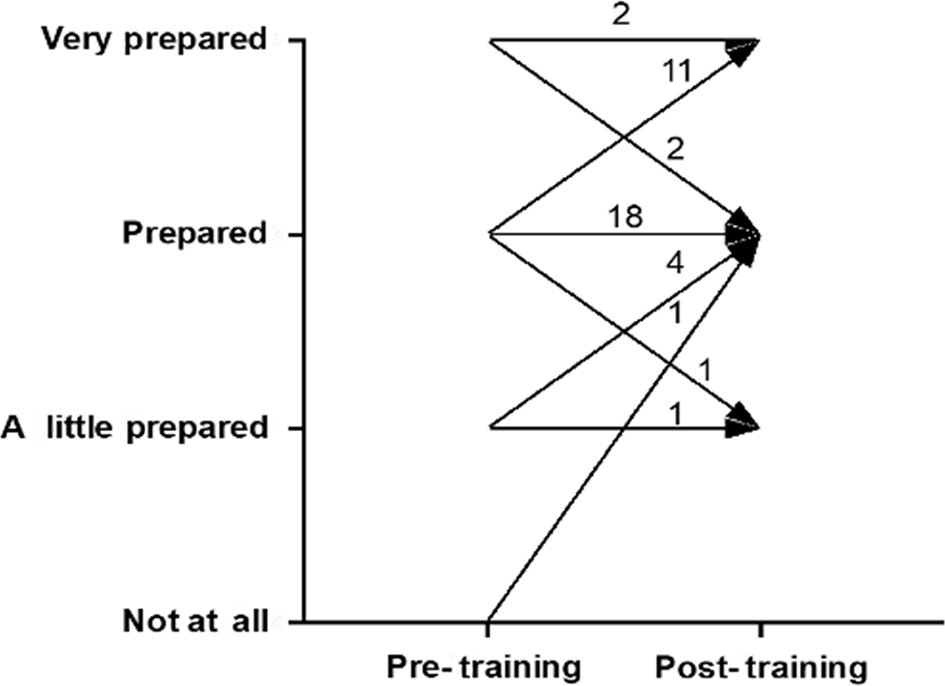
The majority of participants reported an improvement in preparedness for otoscopy, with a majority feeling prepared or very prepared following the training (Figure 2).
Participants rated their preparedness for performing otoscopy both before and after the training session. The change in individual responses is indicated by arrows and the number of participants who experienced each transition is listed as a number on top of the individual arrows.

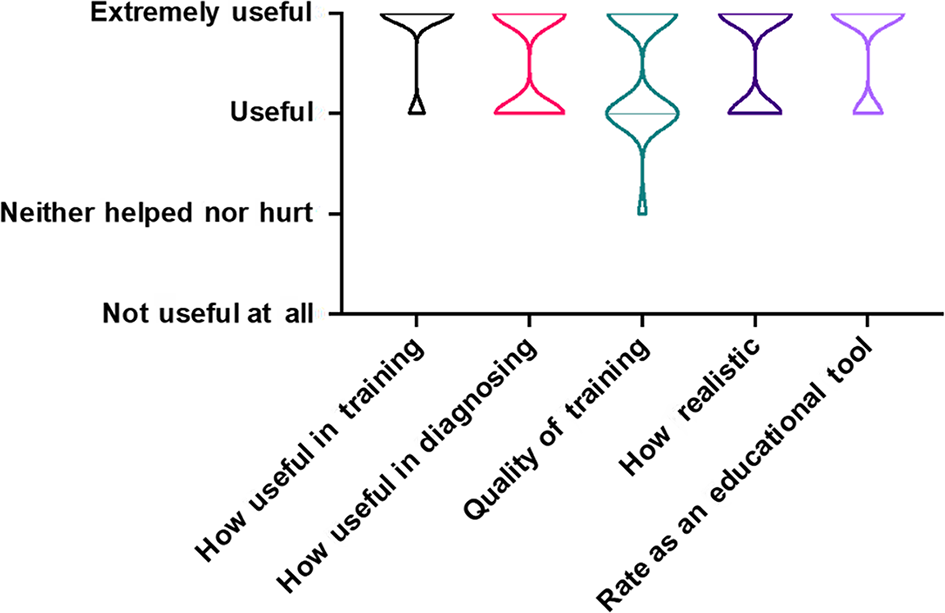
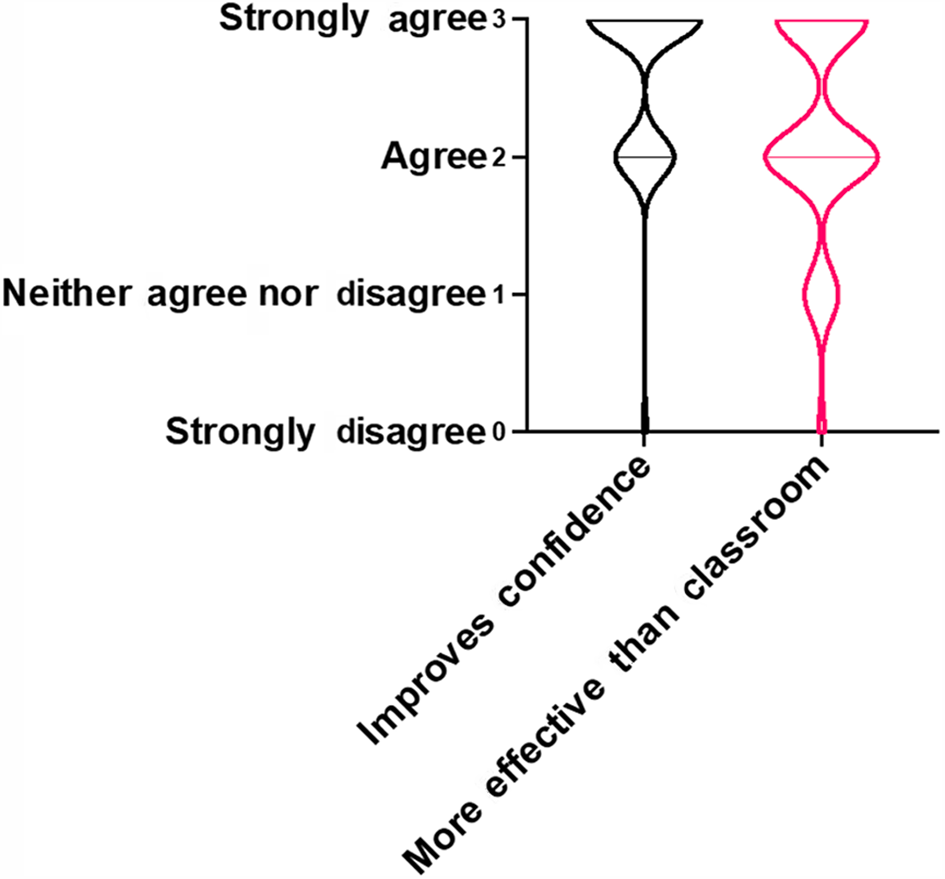
Participants felt that the Otosim was useful for training and improving diagnostic ability. The training was noted to be of high quality, realistic and useful as an educational tool (Figure 3). In addition, the Otosim improved confidence in otoscopy skills amongst participants and was felt to be more effective than traditional classroom teaching (Figure 4).
Participants rated the perceived usefulness of the Otosim training device.

Participants rated the Otosim in its ability to improve confidence and how it compared in effectiveness with classroom teaching.

Participants’ reflections
Participants were also invited to provide reflections on their experience with the training session. These reflections were generally positive, with only a few recommendations for improvement.
‘It’s what you would see on a real patient. Pathologies seen on Otosim are what I have been seeing since I started this career.’
‘The overall experience was really good, and the ear model felt very realistic.’
‘The descriptions of conditions were straight to the point.’
‘This training can be improved by having a wide range of ears, for example having more ears from Africa or Malawi.’
‘It is helpful for both students and qualified audiologists to perfect otoscopy skills.’
Review of otoscopy education literature
Otoscopy is a fundamental skill in clinical diagnosis, especially in paediatrics and primary care. However, effective training remains a global challenge, particularly in resource-limited environments. Otoscopy is performed regularly by various medical specialties, including general practice, emergency medicine, paediatrics, ENT and audiology. Despite this, many providers from a range of specialties have been found to have difficulties in performing otoscopy and diagnosing ear conditions.Reference Kaf, Masterson, Dion, Berg and Abdelhakiem7, Reference Wauchope, Garry, Guinness, Fitzsimons and Heffernan18
In addition to limitations in manual and diagnostic otoscopy skills, the confidence in those skills in taking the next step into clinical competency is also critical.Reference Barnsley, Lyon, Ralston, Hibbert, Cunningham and Gordon19, Reference Klassen and Klassen20 A study by Steinbach et al. indicated that that trainees and practitioners often lack confidence with otoscopic examination.Reference Steinbach, Sectish, Benjamin, Chang and Messner21
Traditional otoscopy training
Traditional otoscopy training relies on direct patient encounters and bedside teaching to develop diagnostic proficiency. However, this method is often hindered by a lack of standardised curricula, limited patient availability and the challenge of assessing student competency in a consistent manner.
While there is an agreement on the need for a comprehensive and standardised curriculum to include clinical competence in otoscopy, numerous barriers exist, including limited time to teach in direct patient care environments, inadequate training of the educator, patient discomfort and non-compliance as well as poor visualisation and cerumen occlusion preventing examination.Reference Falkson, Sutton and Tadi1, Reference Cavuoto Petrizzo, Olvet, Samuels, Paul, John and Pawelczak10, Reference Paul, Higgins Joyce, Beck Dallaghan, Keeley, Lehmann and Schmidt22, Reference Chen, Huang, Cheng, Haley Lin, Chu and Chang23
Simulation-based otoscopy training
Simulation-based otoscopy training involves the use of physical or virtual models that replicate the ear’s anatomy and pathology. This method allows trainees to practice diagnostic techniques repeatedly in a risk-free environment, improving skill acquisition and retention.
The use of simulation-based training also allows for broad exposure to a range of normal and pathologic presentations of ear disease without awaiting a specific patient presentation. A study conducted by Davies et al. among medical students at the University of Toronto found that the use of an otoscopy simulation teaching session allowed students become familiar with a wide variety of ear pathologies, improving their diagnostic accuracy as well as their confidence in making otologic diagnoses after taking a simulation session.Reference Davies, Djelic, Campisi, Forte and Chiodo8 Similarly, a study conducted at the University of Toronto using Otosim found that in post-survey analysis, the vast majority of participants noted increased confidence in otoscopy skills.Reference Lee, Fu, Carrillo, Campisi, Forte and Chiodo24
Finally, a study investigating the utility of simulation-based training carried out among post-graduate trainees in primary care (family and community medicine, paediatric medicine) and otolaryngology head and neck surgery found that all trainees, regardless of specialisation, both performed poorly on pre-test evaluation and showed improved diagnostic accuracy following a classroom-based teaching session using the Otosim.Reference Oyewumi, Brandt, Carrillo, Atkinson, Iglar and Forte25
The ability to perform pneumatic otoscopy is an additional critical otoscopy skill. A study found that medical students who were trained with the novel ear simulator using pneumatic otoscopy showed 100 per cent more consistency in diagnosing the presence of middle-ear effusion than students who were not exposed to the simulator.Reference Morris, Kesser, Peirce-Cottler and Keeley26
Video- and smartphone-enabled otoscopy training
Video- and smartphone-enabled otoscopy uses digital imaging to enhance the visualisation of the ear canal and middle-ear structures. This approach enables learners to review and analyse otoscopic findings in greater detail, fostering improved diagnostic accuracy and learning retention.
Video-otoscopic education is an effective educational tool, particularly for paediatric patients, as it allows for enhanced visualisation of the ear canal.Reference Jones27, Reference Hakimi, Lalehzarian, Lalehzarian, Azhdam, Nedjat-Haiem and Boodaie28 This method has been shown to improve diagnostic skills and quality of care, and reduce unnecessary antibiotic overuse. The use of video-otoscopy has been demonstrated to be a feasible and valuable addition in primary care settings and general medical education.Reference Jones27
Hakimi et al. found that participants trained with a smartphone-enabled otoscope showed a significant increase in confidence in performing otoscopy and in identifying the landmarks of the middle ear compared with those who used a conventional otoscope. Participants recommend the smartphone-enabled otoscope as an excellent teaching aid for otoscopy training.Reference Hakimi, Lalehzarian, Lalehzarian, Azhdam, Nedjat-Haiem and Boodaie28 Similarly, among general practitioners the use of video-otoscopy was superior in assessing ear drum pathology.Reference Damery, Lescanne, Reffet, Aussedat and Bakhos14 Indeed, a meta-analysis conducted by Chen et al. further showed that smartphone-based otoscopy was associated with a higher rate of diagnostic correctness in detecting middle-ear disease when compared with traditional otoscopy.Reference Chen, Huang, Cheng, Haley Lin, Chu and Chang23
These technologies are useful not only for training, but also for assessing skill competency. In a study conducted by Jones et al., paediatric residents at different training levels were assessed on their diagnostic accuracy of a middle-ear effusion. There was a significant difference in accuracy among the training levels, with improved accuracy as the training level increased. The study noted that a videotaped oto-endoscopic examination is a feasible and reliable instrument in distinguishing and evaluating the level of skills in determining middle-ear effusion.Reference Jones, Kaleida and Lopreiato29
Web-based otoscopy training
Web-based otoscopy training leverages online learning platforms and interactive modules to teach otoscopic skills. These programmes allow for flexible learning, self-paced study and remote access to training resources, making them an attractive alternative for medical students and practitioners.
Wickens et al. assessed the validity and applicability of OtoTrain®, a web-based simulator in medical education. The survey indicated that the content was both valid and valuable for medical education. It had the added benefit of being easily usable for students from a wide variety of backgrounds.Reference Wickens, Lewis, Morris, Husein, Ladak and Agrawal30 However, the web-based learning platform is limited in the ability to provide for haptic feedback in the manual performance of otoscopy.Reference Wickens, Lewis, Morris, Husein, Ladak and Agrawal30
In an initial study, Wu and Beyea assessed which teaching method (otoscopy simulation, web-based module or standard classroom instruction) best improved diagnosis of ear pathology and otoscopy skills among pre-clerkship medical students at Queens University, Canada. While all participants had improved accuracy, otoscopy simulation and a web-based module showed the greatest improvement compared with standard classroom instruction.Reference Wu and Beyea31 It was only in the otoscopy simulation that otoscopy skills were increased and subsequently retained.Reference Wu and Beyea31 In a follow-up study, the group conducted a randomised controlled trial comparing otoscopy simulation, web-based modules and the conventional classroom instruction effect on pre-clerkship medical students’ attainment and retention of otolaryngology diagnostic skills. While all students showed improvement in diagnostic accuracy and improved confidence in otoscopy, actual otoscopy skills showed improvement in only otoscopy simulation and conventional classroom instruction groups, with a larger gain in the otoscopy simulation group.Reference Wu, Sattar, Cheon and Beyea32
Otoscopy training challenges
Otoscopy, while a critical diagnostic tool, can be a difficult skill to learn coupled with the breadth of normal and abnormal presentations of ear pathology. Despite this, there is limited exposure to and investment in these diagnostic skills among curricula.Reference Ishman, Stewart, Senser, Stewart, Stanley and Stierer5–Reference Kaf, Masterson, Dion, Berg and Abdelhakiem7, Reference Oyewumi, Brandt, Carrillo, Atkinson, Iglar and Forte25 Simulation devices allow for self-guided trainee education but even with these opportunities, educators are often faced with challenges. Xu et al. examined the utility of self-regulated learning among Canadian pre-clerkship medical students who were divided into ‘discovery then instruction’ and ‘instruction then discovery’ groups, with each group ultimately provided with a portable otoscopy simulator (prototype Otosim). The study found that overall, the device usage was limited by the trainees. Indeed, when given the opportunity to independently learn, with limited guidance, students engaged with discovery learning minimally.Reference Xu, Campisi, Forte, Carrillo, Vescan and Brydges9 Thus, while simulator tools allow for development of skills, additional efforts are clearly needed in working to engage current trainees in their use independently.
In addition, single educational interventions are likely insufficient for skill proficiency. In the study conducted by Oyewumi et al., despite the initial improvements, there was a decline in diagnostic accuracy at a three-month follow-up assessment, underscoring the importance of ongoing practice to maintain skills.Reference Oyewumi, Brandt, Carrillo, Atkinson, Iglar and Forte25
Otoscopy teaching tools in developing and developed countries
Teaching otoscopy skills in developing and developed countries can vary as a result of the availability of teaching resources. Within developed countries, there is increased access to both diagnostic tools as well as training simulators to improve otoscopy training, although adoption into curriculum development has been limited.Reference Albrecht, Fehre, Ramackers, Nikendei and Offergeld12, Reference Albrecht, Nikendei and Praetorius33, Reference Schout, Hendrikx, Scheele, Bemelmans and Scherpbier34 However, in developing countries such as Malawi, healthcare providers face shortages of qualified educators and otoscopes, and lack access to simulators that allow for improved training and skills development.Reference Morris, Kesser, Peirce-Cottler and Keeley26
The use of otoscopy simulators such as Otosim simulators in Malawi represents an area of growth for improved diagnostic skills. Simulation will provide the best standards for patient care and safety as well as preparing providers through practice and remediation as needed, bridging the gap between theory and practice while reducing the burden on clinical educators and offering clear advantages in teaching otoscopy.Reference Norman16, Reference Okuda, Bryson, DeMaria, l, Quinones and Shen17, Reference Harder35
Assessing otoscopy skills training
The Standardized Checklist for Otoscopy Performance Evaluation has been developed as a validated tool for assessing otoscopy.Reference Paul, Keeley, Rebella and Frohna36 The American Academy of Pediatrics recommends that instruction in evaluation of the middle ear should begin in medical school and continue throughout post-graduate training to improve diagnostic proficiency.Reference Lieberthal, Carroll, Chonmaitree, Ganiats, Hoberman and Jackson37–Reference Varrasso39
In addition, while use of simulation has been shown to improve diagnostic accuracy and perceived competence,Reference Wauchope, Garry, Guinness, Fitzsimons and Heffernan18 research cautions against over-reliance on self-reported confidence because self-perceived comfort was found to not be a reliable predicator of skill.Reference Kaf, Masterson, Dion, Berg and Abdelhakiem7, Reference Oyewumi, Brandt, Carrillo, Atkinson, Iglar and Forte25 Objective assessments by trained faculty remain critical for ensuring competency.Reference Kaf, Masterson, Dion, Berg and Abdelhakiem7, Reference Barnsley, Lyon, Ralston, Hibbert, Cunningham and Gordon19
Discussion
The aim of this study was to determine the validity of the Otosim, coupled with a silicone ear and smart electronic device, for otoscopic training in Malawi, Africa. This was the first study conducted in Malawi using an otoscopy simulator, marking a significant step in assessing ways to advance medical education in the region. Of the 46 participants, there was a similar distribution of clinical training background, including audiologists, audiology students, clinicians and/or clinical officers, doctors and ENT specialists (Figure 1a). There was a wide range of experience with otoscopy, but no statistically significant difference was observed between participants with an audiology background and those with a medical background (Figure 1b).
Regarding the efficacy of the training in otoscopy competency, the majority of participants felt prepared or very prepared following the training (Figure 2) and the training was described as high quality, realistic and useful as an educational tool (Figure 3). These results are in keeping with other evaluations of the use of the Otosim device in improving otoscopy skills and the diagnosis of outer- and middle-ear pathologies.Reference Davies, Djelic, Campisi, Forte and Chiodo8, Reference Xu, Campisi, Forte, Carrillo, Vescan and Brydges9, Reference Lee, Fu, Carrillo, Campisi, Forte and Chiodo24, Reference Oyewumi, Brandt, Carrillo, Atkinson, Iglar and Forte25
Finally, although participants came from a diverse range of background and experience levels, they consistently reported an improvement in preparedness for otoscopy following the Otosim training (Figure 4). This finding again is in keeping with previous studies in which simulation-based training in otoscopy was found to improve confidence in performing otoscopy.Reference Kaf, Masterson, Dion, Berg and Abdelhakiem7, Reference Wauchope, Garry, Guinness, Fitzsimons and Heffernan18
Study limitations
These data represent a pilot use of the simulation device with a small number of participants. The metrics measured included perceived competency rather than an objective measure of diagnostic ability, which has been shown to be imperfect in assessing skill level in otoscopy. This poses a challenge in assessing the otoscopy skill among even among experienced providers, as well as the extent of educational impact.
Educational impact and broader implications of otoscopy training
The use of simulation, especially in otoscopy, has been shown to be an effective and safe teaching tool for a difficult but critical diagnostic skill. Simulation provides an engaged learning experience, allowing improvement in clinical skills, patient safety and clinical outcomes by familiarising students with various ear pathologies, exposing them to uncommon pathologies and improving both their diagnostic accuracy and confidence in their skills.Reference Davies, Djelic, Campisi, Forte and Chiodo8, Reference Albrecht, Fehre, Ramackers, Nikendei and Offergeld12, Reference Cooke, Irby, Sullivan and Ludmerer13, Reference Wauchope, Garry, Guinness, Fitzsimons and Heffernan18, Reference Chen, Huang, Cheng, Haley Lin, Chu and Chang23, Reference Oyewumi, Brandt, Carrillo, Atkinson, Iglar and Forte25, Reference Morris, Kesser, Peirce-Cottler and Keeley26 However, medical education continues to lag behind other fields in adoption of the use of simulation technology.Reference Ziv, Wolpe, Small and Glick40 The use of videoscopes enables improved visualisation and group teaching allows for improved pathology education and assessment, and can improve diagnostic understanding of ear pathology even when transitioned to traditional otoscopy use in practice.Reference Falkson, Sutton and Tadi1, Reference Cavuoto Petrizzo, Olvet, Samuels, Paul, John and Pawelczak10, Reference Chen, Huang, Cheng, Haley Lin, Chu and Chang23
Although simulation-based learning offers important educational advantages, implementation in low-resource settings also depends on practical considerations. These include the initial acquisition cost of simulation equipment, access to reliable electrical power and compatible devices, maintenance requirements, software updates and any ongoing licensing or subscription costs. The reusability of simulation platforms may improve their long-term educational value by allowing repeated training of multiple learners, but these logistical and financial factors should be considered when selecting simulation tools for resource-constrained environments.
Otoscopy is not just a skill for an otolaryngologist or audiologist. It is estimated that 20–50 per cent of patients in a primary care setting will have an otolaryngology complaint and one-fifth of these are ear related.Reference Hu, Sardesai and Meyer4 Inadequate training in otoscopy, especially among primary care providers, is thought to contribute to overdiagnosis of otologic disease, such as acute otitis media,Reference Varrasso39 giving rise to inappropriate use of antimicrobials and unnecessary referrals and increased medical costs.Reference Garbutt, Jeffe and Shackelford15, Reference Jones27, Reference Butler, Brown, Durkin, Sahrmann, Nickel and O’Neil41, Reference Spiro and Arnold42 Enhanced otoscopy training can reduce inappropriate antibiotic use and unnecessary referrals, addressing public health concerns such as antimicrobial resistance.Reference Butler, Brown, Durkin, Sahrmann, Nickel and O’Neil41, Reference Spiro and Arnold42
Ear disease, especially among children, is a specific health concern in low- and middle-income countries.Reference Hu, Sardesai and Meyer4, Reference Monasta, Ronfani, Marchetti, Montico, Vacchi Brumatti and Bavcar43, Reference Mulwafu, Kuper and Ensink44 Undiagnosed ear disease is one of the largest drivers of the 50 per cent of preventable hearing loss worldwide. In Malawi specifically, outer- and middle-ear pathologies represent a significant health burden, with prevalences of 83 per cent and 68 per cent because of challenges in accessing health services, including ear and hearing health services.Reference Mtamo, Vallario, Kumar, Casanova and Toman45 There is a clear need for the development of strategic and consistent medical education, coupled with continued training for front-line practitioners and educators to improve advanced otoscopy skills and accurate diagnosis of ear diseases for improved care and healthcare use in these communities.Reference Higgins Joyce, Raman, Beaumont, Heiman, Adler and Schmidt46
Implications for future otoscopy training
Otoscopy skills training remains a challenge because of limited otolaryngology curriculum exposure in medical training and ad hoc adoption of ear and otoscopy training curriculums. To enhance skill acquisition in performing otoscopy, there is a growing need to incorporate medical simulation in medical education curricula. Simulation-based learning emphasises practical skill development over theoretical instruction.Reference Sanchez and Kumar47 In low-resource environments in particular, otoscopy education among a broad range of providers is critical because of clinical access constraints, especially to subspecialists. The dearth of resources includes access to simulation materials, ability to refurbish such materials and funds for maintaining a subscription.
• Otoscopy is a fundamental but under-taught clinical skill, with many clinicians across specialties lacking confidence and diagnostic accuracy, especially in low-resource settings where ear disease burden is high
• Literature supports simulation-, video-, smartphone- and web-based otoscopy training as superior to traditional bedside teaching for improving diagnostic accuracy and skill retention
• Low-resource settings face unique barriers, including lack of trained faculty, limited equipment and minimal curriculum integration, making scalable simulation tools especially valuable
• A pilot simulation-based otoscopy training using the Otosim device was conducted in Malawi, involving 46 participants from diverse clinical backgrounds
• Participants reported significant improvement in preparedness and confidence in performing otoscopy after training, with most rating the tool as realistic, high quality and more effective than traditional classroom teaching
• Simulation-based otoscopy education offers a scalable and potentially cost-effective approach to improving diagnostic skills and global ear care, although further objective and long-term outcome data are needed
Conclusion
There are limited data on the effectiveness of otoscopy training in resource environments and no studies are available addressing training in low-resource environments. Despite this gap, the reviewed studies demonstrate that learners from diverse backgrounds and experience levels report improved preparedness for performing otoscopy following simulation-based training.
Simulation-based otoscopy education offers a powerful alternative to traditional training, particularly in under-resourced settings like Malawi. It enhances learner engagement, improves diagnostic accuracy and supports sustainable medical education. The Otosim represents a cost-effective and impactful teaching tool, and it can be used in resource-limited settings to overcome barriers in training and care. Its realistic simulation modality effectively enhances otoscopic skills for audiology students and medical trainees across various specialties, making it a valuable addition to medical education.
While more research is needed to validate long-term outcomes, integrating simulation into global health education represents a promising step toward equitable, high-quality ear care. As technology evolves, future research should explore integrating artificial intelligence and haptic feedback into otoscopy training. These innovations may further enhance realism, facilitate skill retention and support remote learning in developing regions.
Acknowledgements
We would like to acknowledge and thank the African Bible College Hearing Clinic and Training Centre and Kismet: Empowering Health Access for their invaluable collaboration on this project.
Data availability statement
The data presented in this study are available on request from the corresponding author because of subject privacy reasons.
Competing interests
None declared


 Open access

