Introduction
Plant biodiversity is getting lost at an accelerating rate as a result of climate change, habitat degradation, and multiple other factors (Giam et al., Reference Giam, Bradshaw, Tan and Sodhi2010; RBG Kew, 2016). To conserve native plant species, many institutions are turning towards ex situ methods when in situ conservation may not be feasible or may be insufficient in the long term. Worldwide, seed banks have become a primary method of ex situ conservation due to high resource efficiency and low loss of genetic diversity (Havens et al., Reference Havens, Kramer and Guerrant2014). Seed banks store seeds at low moisture (relative humidity of 15 ± 3%) and temperature (−18 ± 3°C) conditions (FAO, 2014), which slow the rate of deterioration and the loss of viability, compared to elevated relative humidity (RH) and temperature. Importantly, seed collections are not established as a replacement for conserving wild populations, but rather serve as a precautionary measure in the case of species extinction or population destruction (van Slageren, Reference van Slageren2003; Maunder et al., Reference Maunder, Havens, Guerrant, Falk, Guerrant, Havens and Maunde2004). If a species or population were to become extinct in the wild, the stored seeds would allow for its reintroduction or restoration (Merritt and Dixon, Reference Merritt and Dixon2011).
In addition to the long-term storage of seeds from threatened species, seed bank collections can be used to support threatened landscapes through the development of native plant material to restore degraded or destroyed habitats in the short term. As seeds of many native species are available in limited quantities, or not at all, from the native plant industry (White et al., Reference White, Fant, Havens, Skinner and Kramer2018), seed banks can fill an important gap in species availability by providing a critical reserve of provenance-verified material. Although seed banking of common, non-crop species is still relatively new, there are already several examples of banked material that is being used in restoration efforts, including vital dune restorations on the east coast of the United States following Hurricane Sandy in 2012 (Haidet and Olwell, Reference Haidet and Olwell2015). Given the increase in environmental stressors, such as the frequency and severity of extreme weather events, it has become clear that seed banks can play an invaluable role in ecological restoration, as well as species conservation (Havens et al., Reference Havens, Kramer and Guerrant2014).
Research has shown that physiological processes do not stop entirely during seed bank storage, leading to changes in viability and germination requirements. Seed dormancy and storage longevity can vary with species, life history traits, and/or source location (e.g. Walters et al., Reference Walters, Wheeler and Grotenhuis2005; Wesche et al., Reference Wesche, Pietsch, Ronnenberg, Undrakh and Hensen2006). Additionally, storage conditions may alter seed dormancy and germination behaviour. Of the limited studies published to date, the effects of freezer storage on germination are inconsistent across species and ecosystems. In some cases, viability and/or germination speed of stored seed appears to decrease under seed bank conditions (e.g. Hilli et al., Reference Hilli, Tillman-Sutela and Kauppi2003), and in other instances, germination speed may increase following freezer storage (e.g. Pérez-García et al., Reference Pérez-García, González-Benito and Gómez-Campo2007; Tuckett et al., Reference Tuckett, Merritt, Hay, Hopper and Dixon2010; Godefroid et al., Reference Godefroid, Van de Vyver, Massengo Kalenga, Handjila Minengo, Rose, Ngongo Luhembwe, Vanderborght and Mahy2013). One study that has specifically examined the effect of cold storage on seed dormancy found that germination had increased following storage for most Brassicaceae species, with several key exceptions in which dormancy increased or remained constant (Pérez-García et al., Reference Pérez-García, González-Benito and Gómez-Campo2007). In general, it can be difficult to predict storage behaviour based on taxonomy, as even closely related species may exhibit variable seed longevity (Mira et al., Reference Mira, Estrelles and González-Benito2015).
The impacts of seed storage may influence how seeds retrieved from storage are treated to maximize successful restoration establishment and overall success (Larson et al., Reference Larson, Sheley, Hardegree, Doescher and James2015; Jiménez-Alfaro et al., Reference Jiménez-Alfaro, Silveira, Fidelis, Poschlod and Commander2016). For example, if fresh seed from a population of a spring-germinating species requires 12 weeks of cold stratification to break dormancy, seeds must be sown in the fall to ensure germination at the appropriate time in the spring. However, if storage alters the conditions required to break dormancy in this population, where only four weeks of cold stratification is required to break dormancy, these seeds should not be sown until late winter to ensure they do not germinate too early.
The southwestern United States is an area of increasing restoration need, resulting from wildfires, invasive species, and cattle grazing, among other factors (Winkler et al., Reference Winkler, Backer, Belnap, Bradford, Butterfield, Copeland, Duniway, Faist, Fick, Jensen, Kramer, Mann, Massatti, McCormick, Munson, Olwell, Parr, Pfennigwerth, Pilmanis, Richardson, Samuel, See, Young and Reed2018). To ensure access to locally adapted material for use in future restorations, an increase in seed collection and banking efforts are planned for this region in the coming decades (Wood et al., Reference Wood, Doherty and Padgett2015). Restoration in the Southwest is complicated by extremes in topography, ranging from low desert to high mountains, and with seasonal conditions varying between hot summers with monsoonal rains to cold winters with substantial snowfall (Hereford et al., Reference Hereford, Webb and Graham2002). With such extreme and heterogeneous conditions, understanding the germination requirements of seeds used in a restoration project is helpful in ensuring establishment and survival.
To improve our understanding of how seed dormancy and germination respond to seed banking, we evaluated six restoration-priority species producing orthodox seeds (Royal Botanic Gardens Kew, 2018) that are native to the southwestern United States. By gaining a better understanding of how freezer storage impacts dormancy and germination speed of these species, we can inform management actions for the best seed treatments. Germination of seeds that were not placed at −20°C for a 4–6 month period was evaluated under multiple treatments to assess comprehensively differences in dormancy or germination speed. Specifically, we tested the following hypotheses: (i) dormancy breaking treatments and total germination proportion are similar for seeds placed at 15 or −20°C; (ii) germination at low temperatures (provided as a stratification treatment to relieve dormancy) is similar for seeds placed at 15 or −20°C; and (iii) germination speed is similar for seeds placed at 15 or −20°C. We evaluated seeds collected from two populations for two of the study species to allow within-species comparisons.
Methods
Species and population sampling
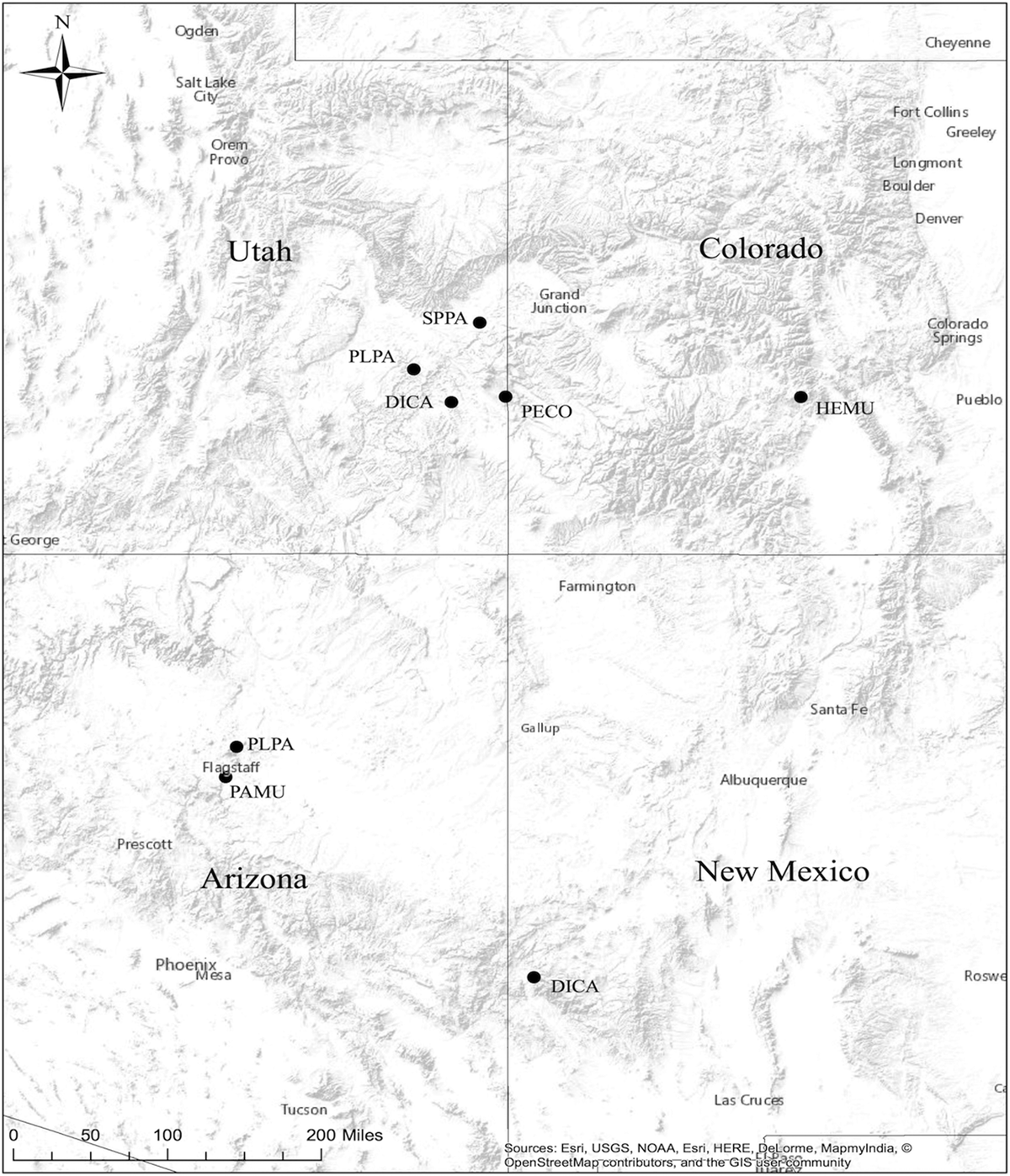
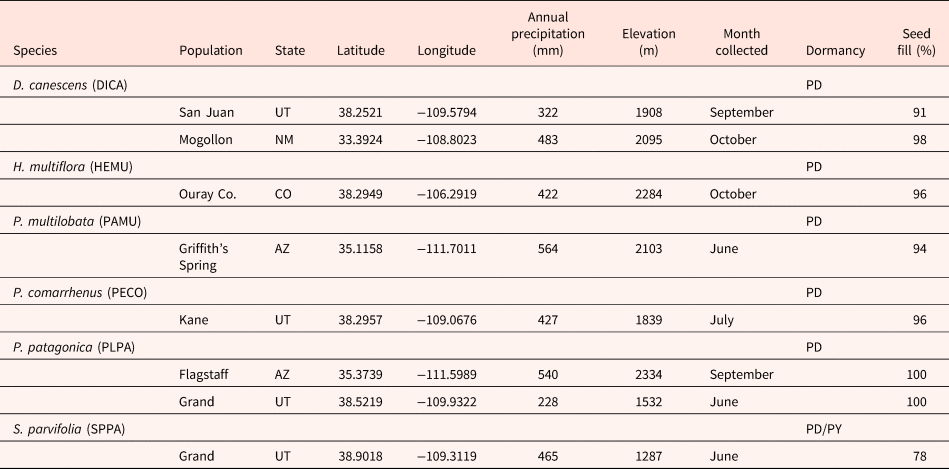
The six native forb species used for this study represent Asteraceae (Dieteria canescens (two populations), Heliomeris multiflora, and Packera multilobata), Plantaginaceae (Penstemon comarrhenus and Plantago patagonica (two populations)), and Malvaceae (Sphaeralcea parvifolia). All species are widespread in southwestern United States and were identified as priority restoration species for use in large-scale restorations in the region (Wood et al., Reference Wood, Doherty and Padgett2015). Collections were made from wild populations in Colorado, Utah, Arizona, and New Mexico (Fig. 1; Table 1). Seeds from five of six species exhibit orthodox storage behaviour (i.e. increased longevity with a decrease in storage moisture and temperature) (Royal Botanic Gardens Kew, 2018), and data for a congener of H. multiflora (H. longifolia) suggest it also produces orthodox seeds, though there are no known reports to confirm this. Seeds from all species exhibit physiological dormancy, (PD) sensu Baskin and Baskin (Reference Baskin and Baskin2014) (Seglias et al., Reference Seglias, Williams, Bilge and Kramer2018). Seeds in the genus Sphaeralcea exhibit both physiological as well as physical dormancy, meaning that it may need a period of cold stratification as well as mechanical scarification to break dormancy (Baskin and Baskin, Reference Baskin and Baskin2014), which was recently confirmed for S. parvifolia (Kramer and Foxx, Reference Kramer and Foxx2016).
Map of seed collection locations. Abbreviations are as follows, DICA: D. canescens; HEMU: H. multiflora; PAMU: P. multilobata; PECO: P. comarrhenus; PLPA: P. patagonica; and SPPA: S. parvifolia.

Collection information for the study species

All seeds were collected in the summer and fall of 2015.
Abbreviations: PD, physiological dormancy; PY, physical dormancy.
Populations were located using herbarium records from Arizona State University Vascular Plant Herbarium, Deaver Herbarium (Northern Arizona University), and San Juan College Herbarium (SEINet - Arizona Chapter, 2017), and guidance from local experts. Seeds were collected throughout the summer and fall of 2015. Collections adhered to Seeds of Success protocols (US Bureau of Land Management (BLM), 2015), targeting a larger population and limiting seed collection to 20% of the total mature seeds. Seeds were collected from mature fruits from at least 30 maternal lines and bulked to produce a single seed lot per population. Vouchers were collected from the populations and deposited in the Brigham Young University, S.L. Welsh Herbarium, or the Chicago Botanic Garden Herbarium. Seeds were cleaned to remove debris and a subset was X-rayed (Faxitron X-Ray Corporation, Tucson, AZ) to determine the proportion of seeds filled with embryos (Table 1) (Riebkes et al., Reference Riebkes, Barak and Kramer2015). Seeds evaluated by X-ray were excluded from the experiment. Seeds were stored at room temperature for two weeks following collection. Seeds were then placed in dryers at 15°C and 15% RH to achieve 5% moisture content until experiments began in the spring of 2016 (van Slageren, Reference van Slageren2003; FAO, 2014). This period of after ripening of six months or more simulates the time between dispersal and germination in the field (Donohue et al., Reference Donohue, Dorn, Griffith, Kim, Aguilera, Polisetty and Schmitt2005; Finch-Savage and Leubner-Metzger, Reference Finch-Savage and Leubner-Metzger2006; de Casas et al., Reference de Casas, Kovach, Dittmar, Barua, Barco and Donohue2012). After drying, half of the seed lot was sealed in air-tight, laminated aluminium foil bags and stored in the Dixon National Tallgrass Prairie Seed Bank at Chicago Botanic Garden for 12–22 weeks (depending on the stratification start date) at −20°C. The remainder was kept at 15°C and 15% RH until stratification treatments began. Cold-moist stratification and incubation treatments were initiated for seed stored at 15 and −20°C simultaneously.
Germination experiment
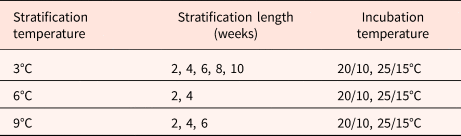
Before initiating stratification and incubation treatments, seeds were sterilized in 0.4% sodium hypochlorite (bleach) solution for 30 s and then rinsed two times in sterile deionized water. Seeds of S. parvifolia were scarified by lightly rubbing them between sandpaper for 15–30 s, or until the seed coat appeared broken, prior to stratification treatments. Seeds were placed in 15 × 30 mm sterile plastic Petri dishes containing 1.5% agar, eight seeds per plate, and three replicate plates were prepared per treatment. Petri plates containing seeds were placed in the dark at one of the three stratification temperatures (3, 6, and 9°C) for 0, 2, 4, 6, 8, and 10 weeks, and then plates were moved to incubators giving 20/10°C or 25/15°C, alternating 12 h dark/12 h light (Percival Scientific Inc., Perry, IA) for two weeks. The combination of stratification and incubation treatments resulted in a total of 22 unique treatments applied to seeds placed at 15 or −20°C for 4–6 months (Table 2). Seeds were examined every 5 days or 48 h for radicle emergence during stratification and incubation, respectively. Seeds with a radicle extending ≥1 mm were considered germinated and removed from the Petri dish. At the end of 2 weeks, seeds that did not germinate were cut open to confirm the presence of an intact embryo.
Treatment conditions for germination experiments

Each treatment evaluated seeds stored at −20°C and 15°C.
Statistical analyses
All analyses were performed on viability-adjusted germination (# germinated seeds/# filled seeds). Analyses were executed using the R environment for statistical computing (v.3.3.1, R Core Team, 2016, Austria). The final germination proportion was derived from the sum of seeds that germinated during stratification and incubation. To examine the effect of exposure to short-term seed bank conditions (called ‘storage’ below) on germination response, generalized linear models (GLMs) with binomial error and logit link function were fitted to final germination results for each species using all treatment factors (stratification temperature, stratification length, incubation temperature, and storage) as possible explanatory variables. For species with more than one population included in this study (D. canescens and P. patagonica), population was used as an additional explanatory variable. Maximal models for all species included all two-way interactions among explanatory variables and all three-way interactions that included storage. The best-fit model was determined by the Akaike information criterion using stepwise reduction of model variables with backwards and forwards elimination performed on the maximal model (Crawley, Reference Crawley2013). As necessary, models were further simplified using stepwise backward elimination and analysis of variance. Germination during stratification was examined separately using GLMs following the procedure outlined above, with stratification temperature, stratification length, and storage as explanatory variables, and population included as a fourth variable for D. canescens and P. patagonica.
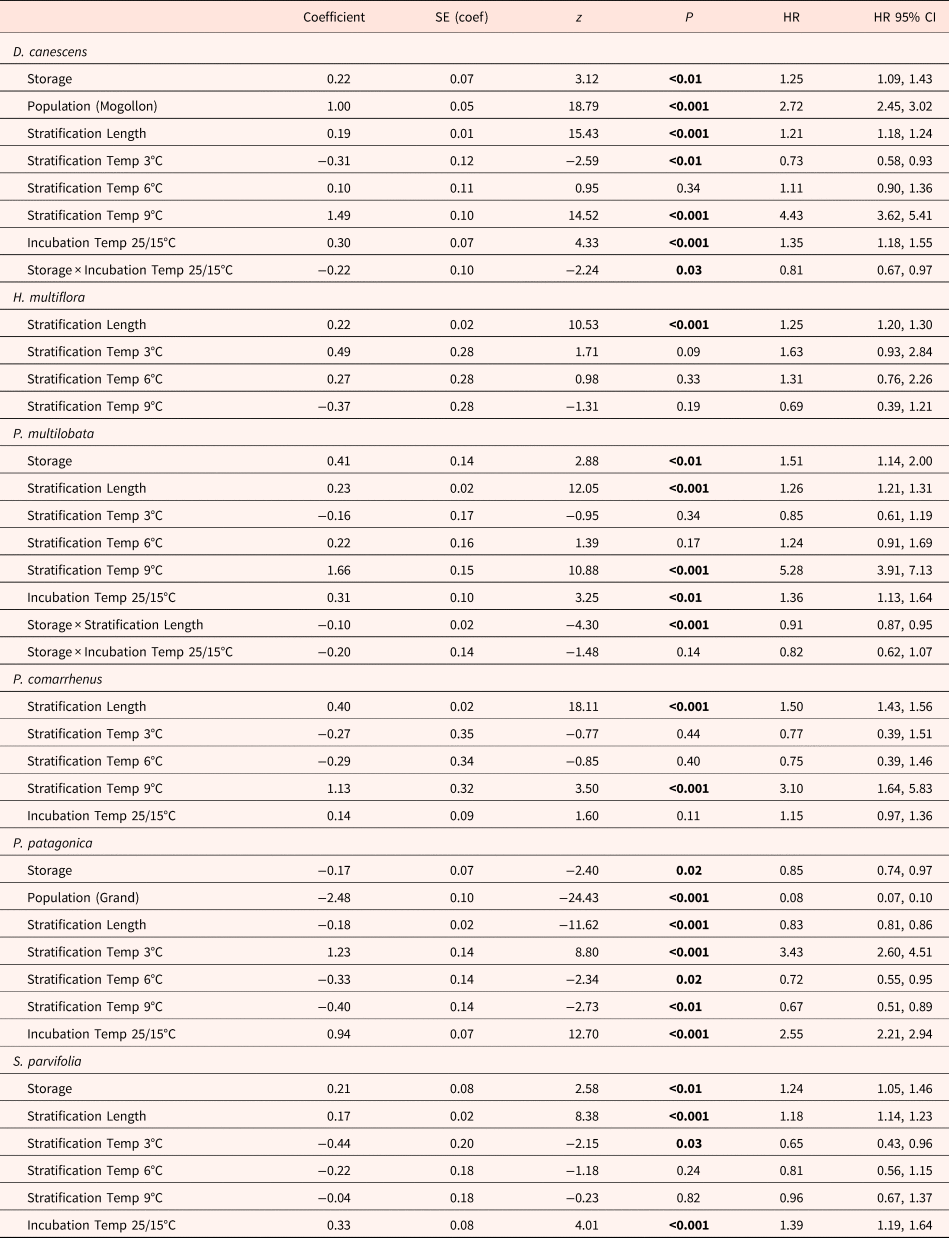
To investigate time to germination, Kaplan–Meier survival curves (function = ‘event’) were fitted to germination proportion and time for each species, as described in McNair et al. (Reference McNair, Sunkara and Frobish2012). Survival curves were fitted using the ‘survfit’ function in the survival package (Therneau, Reference Therneau2015), with germination day and germination status as the response variables and storage, stratification length, and incubation temperature as the explanatory variables. Population was included as a variable for the species with two populations. To determine if survival was significant between storage treatments, Cox proportional hazards regression models were fitted to the survival curves using the ‘coxph’ function. Maximal models for each species included all two-way interactions between explanatory variables. Hazards ratios (HRs) were obtained from the Cox proportional hazard models to determine the significance of freezer storage on germination response and germination speed. A hazard ratio of 1 indicates that there is no difference in germination between treatments, a hazard ratio less than 1 indicates that germination occurs at a slower speed than in the reference group, and a hazard ratio of greater than 1 indicates that seeds germinated faster in relation to the reference group (Tyler et al., Reference Tyler, Adams, MacDonald and Pérez2017).
Results
Influence of exposure to seed bank conditions (−20°C) on germination proportion
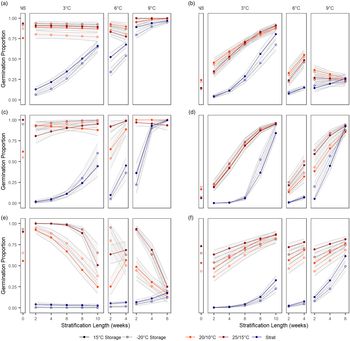
Maximum germination proportion for each species was greater than 0.75 for seeds stored at both −20°C and 15°C (Fig. 2). Storage at −20°C significantly explained final germination proportion for only one of the six study species, S. parvifolia (Fig. 2; Supplementary Table S1, P < 0.01), and the difference was about 10%. For all but two species (H. multiflora and P. comarrhenus), storage temperature significantly interacted with at least one treatment factor (stratification temperature, stratification length, or incubation temperature) to predict final germination proportion (Supplementary Table S1). However, results were not consistent across species or treatments, and the difference in germination proportion of seeds stored at −20°C and 15°C was generally low (<15%), except for P. patagonica in the 2-week 6°C stratification treatment (40–50%; Fig. 2e). Germination tended to increase with time in cold stratification for H. multiflora, P. comarrhenus, and S. parvifolia, while time in cold stratification did not have much of an effect for D. canescens and P. multilobata and had an inhibitory effect for P. patagonica. Interestingly, the results for P. patagonica are the opposite of those in a previous study using the same seed lot, for which a long period of cold stratification led to close to 100% germination (Seglias et al., Reference Seglias, Williams, Bilge and Kramer2018). There were no consistent effects of storage at −20°C compared to storage at 15°C for species exposed to the different stratification treatments (Fig. 2). The relationship between incubation temperature and storage temperature was also not consistent, but overall there was little difference in germination proportion among the different incubation treatments. For D. canescens and P. patagonica, for which two populations were included, effects of storage temperature did not significantly differ by populations.
Final germination proportion and germination proportion during stratification for seeds exposed to −20°C and 15°C. (a) D. canescens (both populations), (b) H. multiflora, (c) P. multilobata, (d) P. comarrhenus, (e) P. patagonica (Flagstaff population only due to low overall germination of Grand population), and (f) S. parvifolia. Results are in response to cold stratification temperature (3, 6, 9°C), incubation temperature (20/10 and 25/15°C), and stratification length. Results from the control treatments are shown in the facet labelled ‘NS’ (no stratification), meaning the seeds were not exposed to any stratification treatment. Means and standard errors (SEs) are derived from the minimal adequate GLM for each species. Grey ribbons represent 1 SE.

All species exhibited some germination during stratification. For germination during stratification, storage significantly explained germination response for four of the six species (Supplementary Table S2), however differences in germination proportion were generally quite low (less than 10%) and there were no consistent effects of storage (Fig. 2). H. multiflora (Fig. 2b) and P. multilobata (Fig. 2c) were the two species for which storage did not affect germination during stratification. Furthermore, storage interacted with at least one treatment factor (stratification length and/or stratification temperature) to predict germination response in three of the six species (Supplementary Table S2). H. multiflora, P. multilobata, and S. parvifolia did not show any significant interaction between storage and treatment factors. Seeds stored at 15°C germinated to a slightly higher proportion than seeds stored at −20°C across most treatments and species (2–8% increase in germination), except for P. comarrhenus (5% increase in germination for seeds stored at −20°C; Fig. 2d) and P. multilobata. D. canescens showed a significant intraspecific interaction with storage temperature (Supplementary Table S2; P < 0.001). Storage did not have a significant impact on variation in germination among populations for P. patagonica.
Germination speed
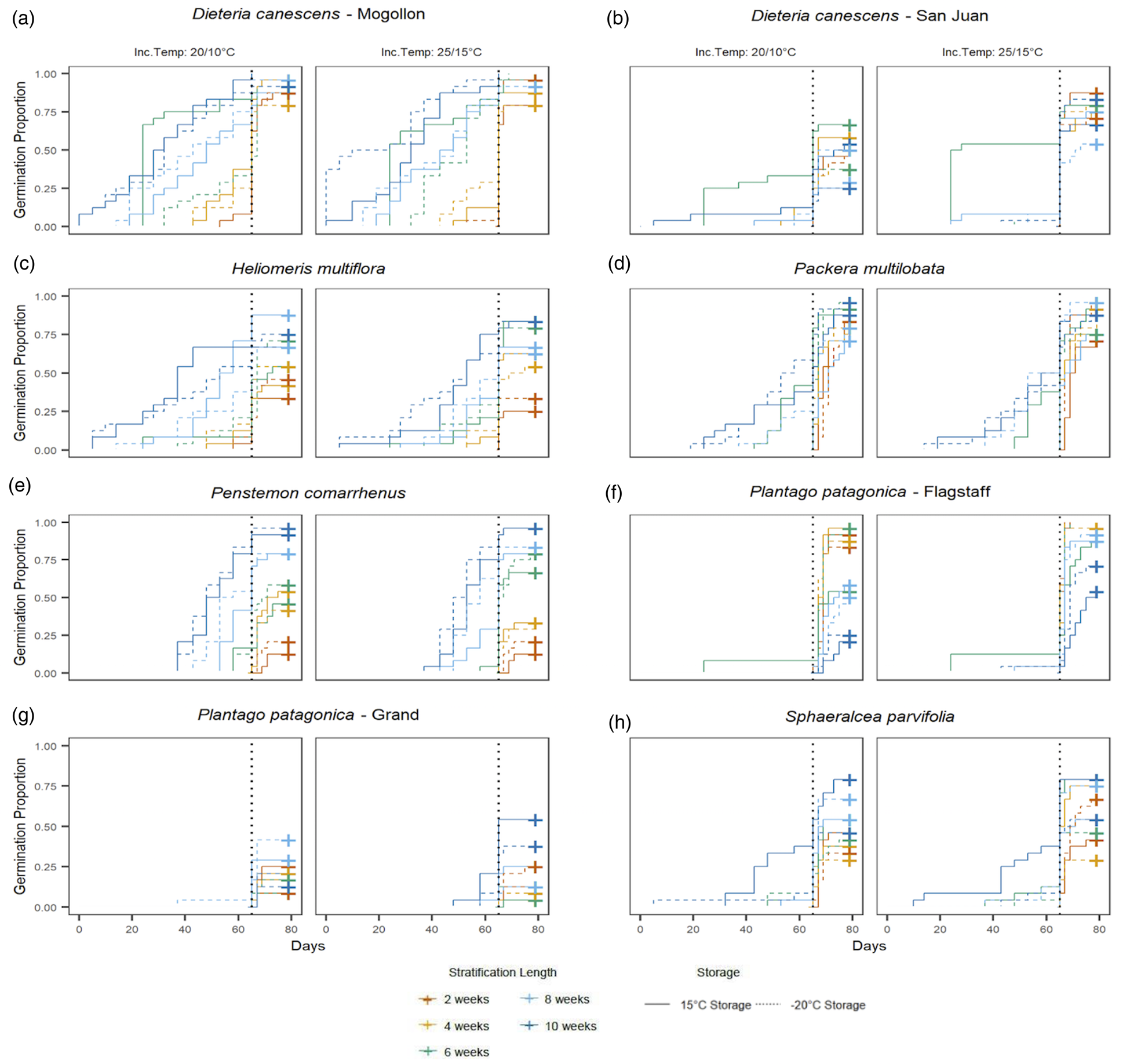
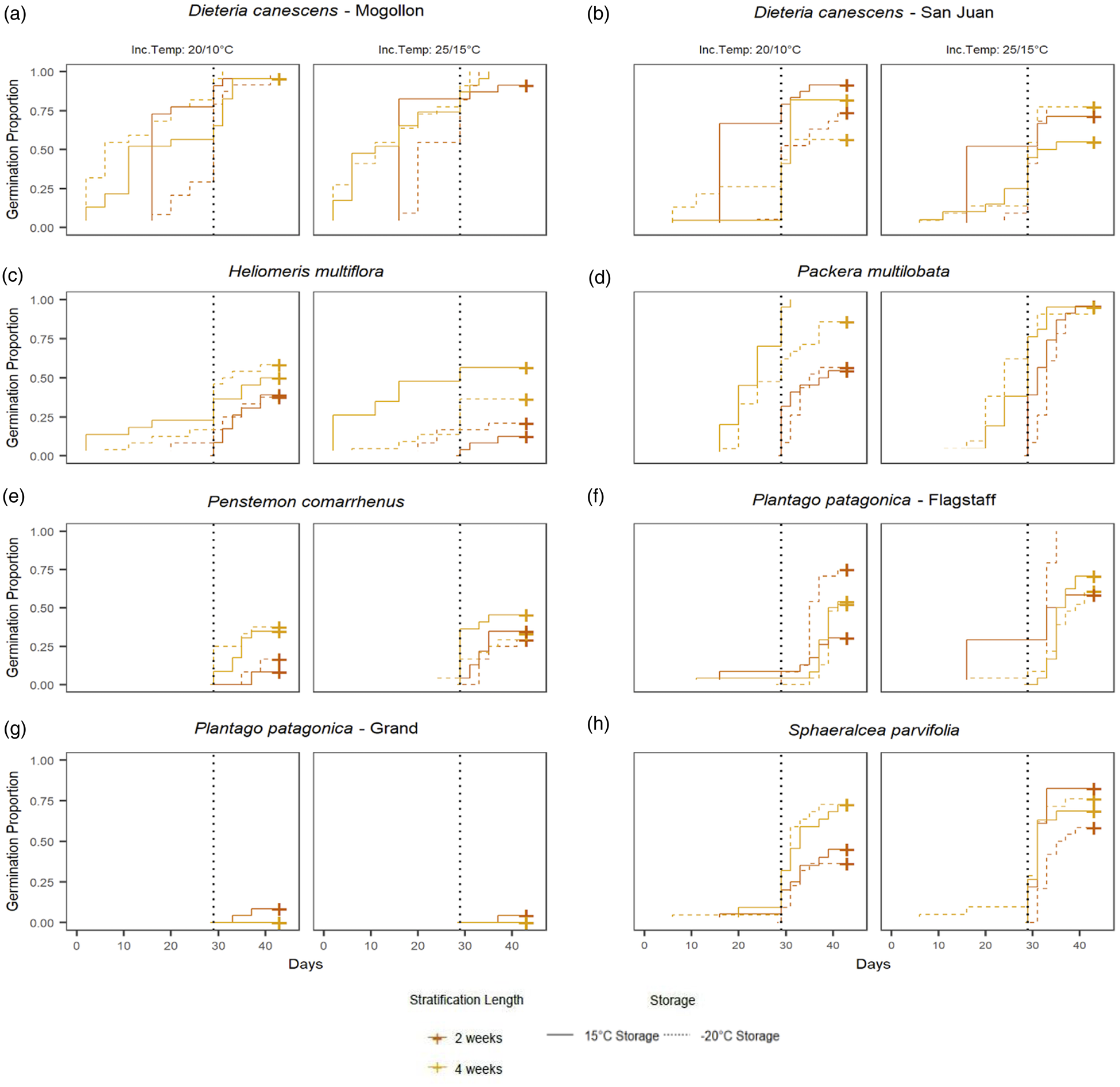
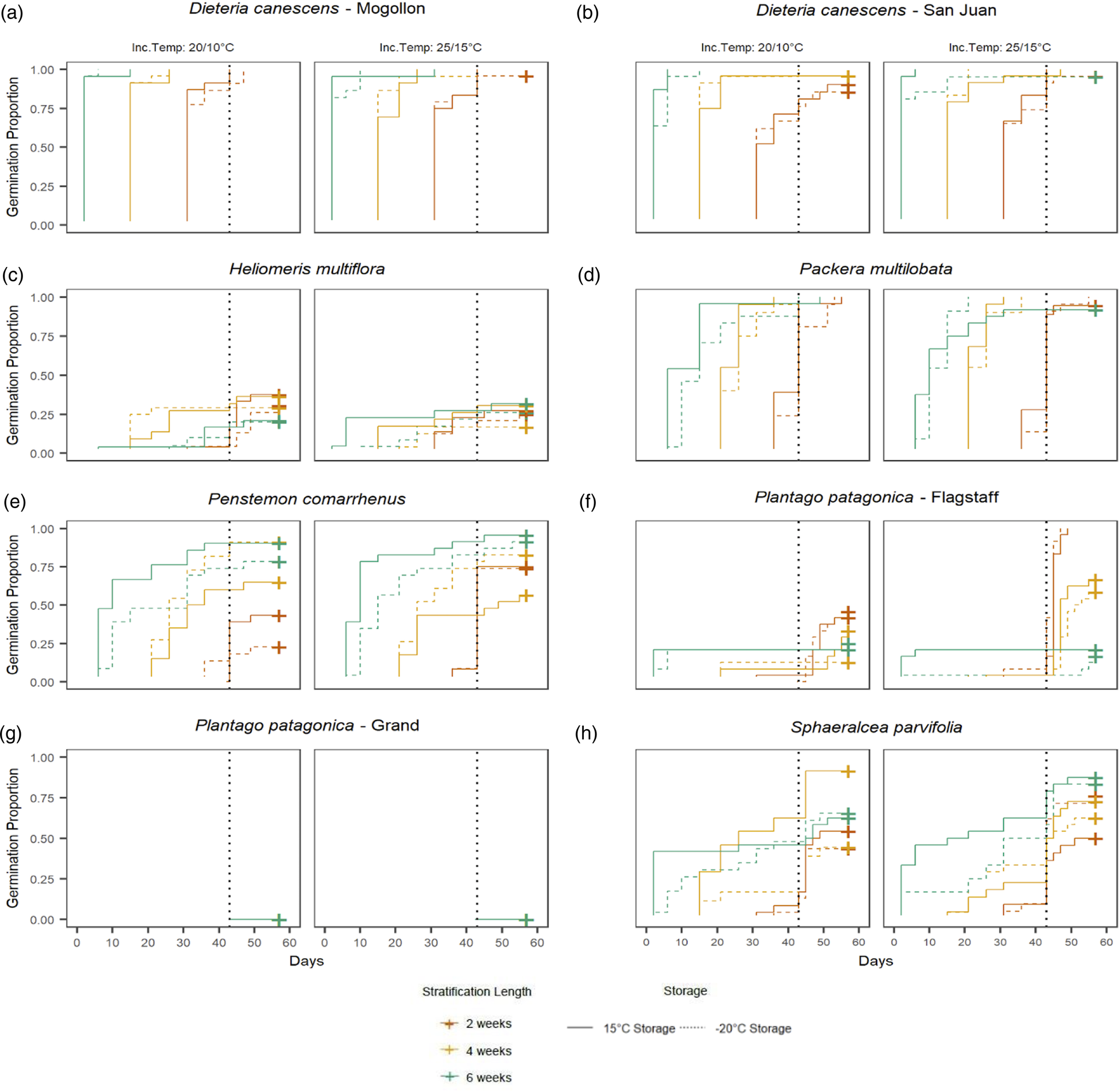
Results from the Cox proportional hazards regression models show that storage significantly predicted germination speed and survival for four of the six species (Fig. 3; Table 3). H. multiflora and P. comarrhenus were the two species for which storage temperature did not significantly impact survival. For three of the four species for which storage temperature was significant, seeds stored at 15°C were more likely to germinate faster than seeds stored at −20°C (HR > 1; Table 3). Seeds of P. patagonica stored at 15°C were more likely to germinate slower than seeds stored at −20°C (HR = 0.85; Table 3). Additionally, storage temperature significantly interacted with incubation temperature for D. canescens (P = 0.03) and with stratification length for P. multilobata (P < 0.001). Storage temperature did not significantly interact with stratification temperature for any of the species. Although the interaction between storage and stratification temperature was not significant for any of the species, there are some trends that are visible among the different stratification temperature treatments. For example, there is considerable variation in germination speed and survival for D. canescens in the 3 and 6°C stratification treatments (Table S3), particularly when looking at germination during stratification (Figs 3 and 4). However, when looking at the 9°C stratification treatments, there is very little difference in germination speed and survival between seeds stored at −20°C and 15°C, and germination proportion was high across all treatments (0.86–1; Fig. 5). Effects of storage on germination speed did not significantly differ among populations for D. canescens or P. patagonica. Although the effect of storage was not significant among populations for D. canescens, germination behaviour differed among populations particularly when looking at germination during stratification at 3°C (Fig. 3).
Kaplan–Meier estimates of germination proportion of seeds exposed to −20°C and 15°C. Results are shown by species for 3°C stratification treatments. Seed storage treatment is indicated by line type. Stratification length is represented by colour, with warmer colours (orange, red) representing shorter stratification lengths (2–4 weeks), and cooler colours (blues) representing longer stratification lengths (6–10 weeks). Day ‘0’ represents the first day of the stratification treatment for the 10-week treatments; 8-week stratification treatments begin at day 8; 6-week stratification treatments begin at day 22; 4-week treatments begin at day 36; 2-week treatments begin at day 50; and no stratification treatments and incubation begins at day 64. The vertical dashed line indicates when the seeds went into incubation.

Kaplan–Meier estimates of germination proportion of seeds exposed to −20°C and 15°C. Results are shown by species for 6°C stratification treatments. Seed storage treatment is indicated by line type. Stratification length is represented by colour, with warmer colours (orange, red) representing shorter stratification lengths (2–4 weeks). Day ‘0’ represents the first day of the stratification treatment for the 4-week treatments and 2-week stratification treatments begin at day 14. The vertical dashed line indicates when the seeds went into incubation.

Kaplan–Meier estimates of germination proportion of seeds exposed to −20°C and 15°C. Results are shown by species for 9°C stratification treatments. Seed storage treatment is indicated by line type. Stratification length is represented by colour, with warmer colours (orange, red) representing shorter stratification lengths (2–4 weeks), and the cooler colour (green) representing longer stratification lengths (6 weeks). Day ‘0’ represents the first day of the stratification treatment for the 6-week treatments, 4-week treatments begin at day 14, and 2-week treatments begin at day 28. The vertical dashed line indicates when the seeds went into incubation.

Summary of Cox proportional hazards regression models by species

The maximal model for the four species with one population included the following explanatory variables: Storage + Stratification Length + Stratification Temp + Incubation Temp + Storage:Stratification Temp + Storage:Stratification Length + Storage:Incubation Temp. The maximal model for D. canescens and P. patagonica included all factors and interactions considered in the previous model as well as the following terms: Population + Storage:Population.
Bold values indicate significance <0.05.
Abbreviation: HR, hazards ratio.
Discussion
We found significant, but not necessarily biologically meaningful, effects of short-term exposure to seed bank conditions (−20°C) in the southwestern forb species examined in this study. Differences in the final germination proportion between seeds exposed to different storage conditions were identifiable in some species and treatments, but there were no consistent trends and differences were not large enough to suggest that storage at −20°C would impact germination in a restoration context. Overall, most species in our study showed little difference in final germination proportion between seeds exposed to different storage treatments, with D. canescens and H. multiflora showing the smallest amount of difference and S. parvifolia showing the greatest amount of difference across treatments. Seeds of H. multiflora and S. parvifolia that were exposed to 15°C germinated to slightly higher proportions across treatments than seeds exposed to −20°C, while the opposite was found for P. comarrhenus. Results for the other three species varied across treatment conditions.
The largest difference in germination between storage treatments was in the 2-week 6°C treatment for P. patagonica, where seeds that were exposed to −20°C germinated to a higher proportion than those stored at 15°C. However, results for this seed lot do not coincide with germination results of the same seed lot from a previous study, which found that longer periods of stratification led to increased germination (Seglias et al., Reference Seglias, Williams, Bilge and Kramer2018), suggesting that another factor may be contributing to the results. Prolonged chilling followed by a period of after ripening has been shown to induce secondary dormancy in Arabidopsis thaliana (de Casas et al., Reference de Casas, Kovach, Dittmar, Barua, Barco and Donohue2012). Since seeds were allowed to after ripen for 6 months or more, stratification for 8 and 10 weeks may have induced secondary dormancy in this species leading to a decrease in germination proportion following longer periods of stratification. Longer periods of stratification led to an increase in germination proportion for H. multiflora, P. comarrhenus, and S. parvifolia, with seeds germinating to the highest proportions in the 10-week 3°C treatment for all the three species. Stratification length and temperature had little effect on germination proportion for D. cancescens and P. multilobata. These two species showed high germination across most treatments, which is consistent with results from a previous study using the same seed lots (Seglias et al., Reference Seglias, Williams, Bilge and Kramer2018), suggesting that these species may be nondormant.
Understanding mechanisms driving dormancy break and germination is the key to translating lab results to restoration practice. Short-term freezer storage (4–6 months at −20°C) had a significant effect on germination proportion during stratification for four of the six species. These results highlight the importance of examining germination during both stratification and incubation to have a more complete understanding of the dormancy and germination patterns of a species (Seglias et al., Reference Seglias, Williams, Bilge and Kramer2018). By only looking at final germination, many ecologically meaningful results may be overlooked, such as the relative impact of temperature and water availability on dormancy break.
Differences in germination between storage treatments were more pronounced when examining germination speed, particularly when looking at germination during stratification, however results were not consistent across species or treatments. The biggest differences in germination proportion between storage treatments are apparent for D. canescens. Seeds stored at 15°C germinated to higher proportions faster than seeds stored at −20°C in the 6-week 3°C treatments and the 2-week 6°C treatments. However, as this species is nondormant, it may not need a period of stratification in a restoration context, but rather should be sown when conditions are suitable for immediate germination and survival. If seeds are sown at the correct time, discrepancy in germination speed between seeds stored at −20°C and 15°C should not be a major factor determining final germination and emergence.
There are many factors that can influence seed storage behaviour, such as seed structure and composition, maturity and size of the seed, dormancy type, moisture content of the seed, and vigour of the seed (Justice and Bass, Reference Justice and Bass1978; Walters, Reference Walters2004). These factors could contribute to differences in germination proportion between seeds stored at different moisture and temperature conditions both among and within species. While our study was not specifically designed to investigate the relationships between these factors and storage behaviour, future research capable of addressing these interactions may allow for generalization among seed lots that would be beneficial for restoration efforts. Additionally, studies that specifically address the effects of after ripening would be valuable to the seed storage behaviour and restoration literature.
Another area of research that would also benefit the storage behaviour literature would be the effects of storage among populations within a species. Seed dormancy and germination are known to exhibit significant inter- and intraspecific variation, influenced by genetic as well as environmental factors (Meyer et al., Reference Meyer, Kitchen and Carlson1995; Wagmann et al., Reference Wagmann, Hautekèete, Piquot, Meunier, Schmitt and Van Dijk2012; Seglias et al., Reference Seglias, Williams, Bilge and Kramer2018). These differences are often incorporated into seed sourcing recommendations (St. Clair et al., Reference St. Clair, Kilkenny, Johnson, Shaw and Weaver2013), with the goal of ensuring that seeds are able to germinate at appropriate times when used for restoration (Barak et al., Reference Barak, Fant, Kramer and Skogen2015; Kramer et al., Reference Kramer, Larkin and Fant2015; Seglias et al., Reference Seglias, Williams, Bilge and Kramer2018). Intraspecific variation in germination behaviour following storage needs to be considered when planning a restoration to ensure that the seeds will have the greatest chance of germination and establishment.
To draw robust conclusions regarding population effect, future studies would need to include a greater number of populations (e.g. more than two). D. canescens and P. patagonica were the two species with two populations represented and previous research on the species and populations used in this study found significant intraspecific variation in germination response for five of the six species used in this study (Seglias et al., Reference Seglias, Williams, Bilge and Kramer2018). In this study, results showed that seed germination behaviour from two D. canescens populations differed in response to storage, but P. patagonica showed no intraspecific variation resulting from storage. Future research should include a higher number of populations within species to determine the extent of intraspecific variation in response to storage at subzero temperature conditions, which could prove very valuable for seed sourcing and restoration implications.
Seed banking has become the most common method of ex situ plant conservation for orthodox seeds worldwide (Havens et al., Reference Havens, Kramer and Guerrant2014), and its importance is only growing. Seed banking of species useful for landscape restoration provides a critical reserve of locally adapted native plant material. However, there have been relatively few studies assessing the effect of seed bank storage on seed dormancy and germination of restoration-priority species in particular. Results from this study suggest that storing seeds of restoration species at subzero temperature conditions and low humidity does not lead to large or consistent changes in dormancy or germination requirements. As such, seeds that have been stored in a seed bank can be used in a restoration or reintroduction context with only slight predicted changes to germination behaviour and low likelihood of negative establishment outcomes.
Supplementary material
To view supplementary material for this article, please visit: https://doi.org/10.1017/S096025852000001X
Acknowledgements
We thank Kay Havens and Evelyn Williams for assistance with experimental design. Nora Talkington, Rachel Hosna, Alicia Foxx, and Maggie Eshleman helped with seed collection; Kathy See and Dustin Rooks shared seeds; Jacob Zeldin provided lab and statistical analysis assistance. We would also like to thank the Kramer-Havens Lab Group and the Research and Conservation Department at Denver Botanic Gardens for feedback on earlier versions of this manuscript.
Financial Support
This research was supported by Northwestern University Graduate Program in Plant Biology and Conservation and the Native Plant Society of New Mexico through grants awarded to A.E.S. Funding was also provided by the Bureau of Land Management's Plant Conservation Program (Grant No. DBI-0521245) and NSF MRI (Grant No. DBI-1125997) through grants awarded to the Chicago Botanic Garden.
Conflicts of interest
The authors declare no conflicts of interest.