Background
Active management of quality of life
The management of dementia through disease modification has been frustrated by a lack of progress and absence of any ‘breakthrough’ in drug development (Alzheimer's Association 2015). Policy initiatives have, therefore, continued to maintain a twin track of cure and care, the latter addressing the promotion of wellbeing and independence. This policy viewpoint was reinforced by the launch of the UK Prime Minister's Challenge (Department of Health 2012), which outlined the delivery of major improvements in dementia care and research by 2015. The transformation of care set out in this ‘challenge’ envisioned two broad areas for action to drive improvements in health and care, create dementia-friendly communities and improve dementia research, with the overall intention of:
-
1. Focusing care to promote people's wellbeing and independence instead of waiting for people to reach a crisis point.
-
2. Transforming people's experience of care and support, putting them in control and ensuring that services respond to what they want.
There are some core theoretical perspectives that inform these policy developments. The social model of disability argues that disability is socially conferred and not inherent in living with impairment. It has been central to the movement towards self-management and choice and control in services and support for people living with disabilities (French and Swain Reference French and Swain2012; Keyes, Webber and Beveridge Reference Keyes, Webber and Beveridge2015). This includes service user involvement/engagement, through which services are developed in partnership with, and based on the needs and views of, people who are accessing those services. Also of major influence is critical gerontology, a perspective that represents a shift away from seeing older people as a burden on society towards seeking to value the contributions that they can make to society (Bernard and Scharf Reference Bernard and Scharf2007). This has led to the emergence of models of citizenship (Bartlett and O'Connor Reference Bartlett and O'Connor2010) in which people with dementia have asserted an influence on policy development (e.g. The Scottish Government 2011) as well as widespread developments to create ‘dementia friendly communities’ (Department of Health 2015).
Running throughout these debates of policy and theory are the competing constructions of dementia. Whilst modification of the course of dementia is sought through processes such as diagnosis, assessment and treatment, there is also an interpersonal approach to supporting people with dementia, which emerges from understanding that the experience of living with a dementia is shaped by personal meanings and compensatory coping adjustments ascribed by the individual (and family) to make sense of a changing reality (e.g. Harris Reference Harris2012; Sabat and Lee Reference Sabat and Lee2012). These interpersonal perspectives challenge notions around deficiency and invite us to consider people with dementia as engaging in meaningful interaction with others. This perspective offers the opportunity for the active management of quality of life through a diverse range of interventions in dementia care. These include: psycho-social interventions (Spector and Orrell Reference Spector and Orrell2010), focusing on psychological approaches (Livingston et al. Reference Livingston, Johnston, Katona, Paton and Lyketsos2005) such as cognitive training (Clare and Woods Reference Clare and Woods2003) and cognitive stimulation therapy (Woods et al. Reference Woods, Aguirre, Spector and Orrell2012); interventions to mitigate social isolation (Cantley and Bowes Reference Cantley, Bowes, Innes, Archibald and Murphy2004) such as dementia-friendly communities (Joseph Rowntree Foundation 2012); and arts and movement-based interventions (e.g. Guzman-Garcia et al. Reference Guzman-Garcia, Hughes, James and Rochester2012). The active management of quality of life also incorporates peer support (Greenwood et al. Reference Greenwood, Habibi, Mackenzie, Drennan and Easton2013), active friendship, guiding through health and care systems, and information provision (Corbett et al. Reference Corbett, Stevens, Aarsland, Day, Moniz-Cook, Woods, Brooker and Ballard2012).
These approaches are all key features of the services established as Dementia Advisers (DA) and Peer Support Networks (PSN) (Keyes et al. Reference Keyes, Clarke, Wilkinson, Alexjuk, Wilcockson, Robinson, Reynolds, McClelland, Corner and Cattan2014) as part of the National Dementia Strategy in England (Department of Health 2009). The DA role was to ensure that, following diagnosis, people with dementia had access to someone who could act as a point of contact for information and signposting to other services (to help navigate the health and social care system). PSNs (such as support groups and dementia cafés for people with dementia and their care partners) were to provide practical and emotional support, reduce social isolation and promote self-help. The Department of Health established 40 demonstration services of DAs and PSNs across England in 2009. These operated within a range of new or pre-existing services (offered by single organisations or in partnerships), which included NHS [National Health Service] Foundation Trusts, Older Adult Mental Health Teams, city councils, borough councils, Alzheimer's Society, and other voluntary sector organisations including Age UK and Mind.
The research reported in this paper was a two-year study of the 40 DA and PSN demonstration services. This paper focuses on understanding these services as models of the active management of quality of life in living with dementia – the research aim reported on here was to identify ways in which DAs and PSNs contribute to the wellbeing and resilience of people with dementia and care partners.
Other research aims are reported elsewhere: to describe the range of PSN and DA services, their evolution, establishment, and delivery and governance characteristics; and to assess the service models of PSN and DA in relation to influence on the wellbeing of people with dementia and care partners, integration, sustainability and transferability within the wider health and social care economy, and contribution to achieving the objectives of the National Dementia Strategy (Clarke et al. Reference Clarke, Keyes, Wilkinson, Alexjuk, Wilcockson, Robinson, Reynolds, McClelland, Hodgson, Corner and Cattan2013, Reference Clarke, Keyes, Wilkinson, Alexjuk, Wilcockson, Robinson, Corner and Cattan2014; Department of Health 2009; Keyes et al. Reference Keyes, Clarke, Wilkinson, Alexjuk, Wilcockson, Robinson, Reynolds, McClelland, Corner and Cattan2014).
Methods
Research design
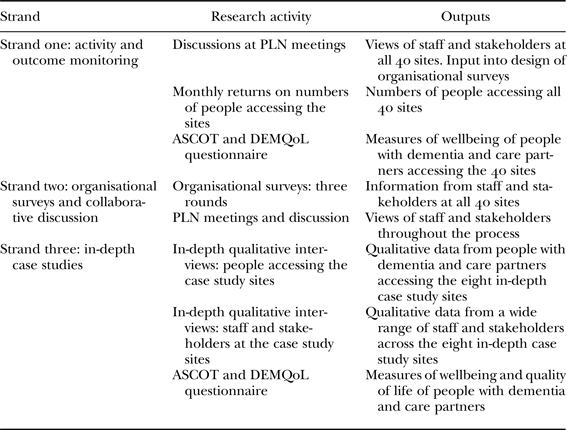
A mixed-methods research design captured the wide range of activities taking place within all of the 40 DA and PSN demonstration sites (as outlined in Table 1). A mixed-methods paradigm can strengthen the quality of the research by combining the strengths of each approach and mitigating the internal limitations of each (Johnson and Onwuegbuzie Reference Johnson and Onwuegbuzie2004). By privileging qualitative methods within this mixed-methods study, the underpinning epistemology of social constructivism was fore-fronted, which claims no objective reality and knowledge but understands these to be derivative of society and social dynamics in which knowledge is reflexively constructed and internalised through social interaction (Fosnot Reference Fosnot1996).
Design of the mixed-methods study
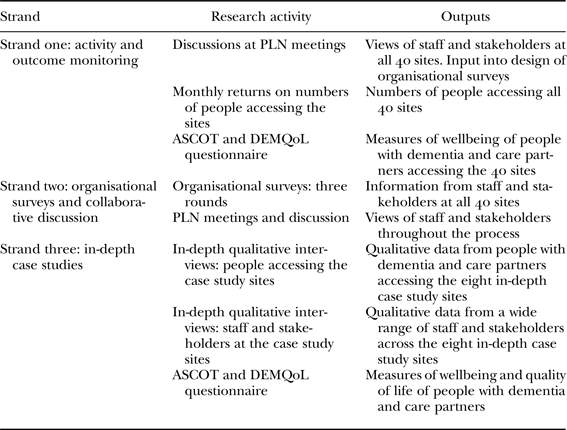
Notes: ASCOT: Adult Social Care Outcomes Toolkit. PLN: Project Lead Network.
Key decisions when using mixed methods concern how best to build the jigsaw of data to provide the strongest confidence in the findings and the conclusions that can be drawn from these (Creswell Reference Creswell2003). There are two aspects to this. Firstly, deciding on the balance between the paradigms and whether one should be more dominant than the other. In this study, the dominant paradigm was qualitative, with narrative data collected from multiple sources, and augmented by some quantitative or more numerical data, again from multiple sources and in multiple forms, e.g. quality-of-life measures. Secondly, deciding on whether different methods should be used concurrently or sequentially – in this study, both concurrent and sequential approaches were used to both broaden the scope, e.g. collecting quality-of-life data alongside interview data, and to deepen the scope so that one emerging issue could be ratified through alternative data. Sequential mixed-methods research creates the opportunity for emerging ideas to be ‘tested’ and as a result discounted, refined or confirmed.
Ethical approval was obtained from the Social Care Research Ethics Committee for England (reference 10/IEC08/13). NHS Research Governance approval was secured where necessary and also approval from the Association of Directors of Social Services (reference Rg 10-009). Full details of the research methodology and methods are available in the full report (Clarke et al. Reference Clarke, Keyes, Wilkinson, Alexjuk, Wilcockson, Robinson, Reynolds, McClelland, Hodgson, Corner and Cattan2013).
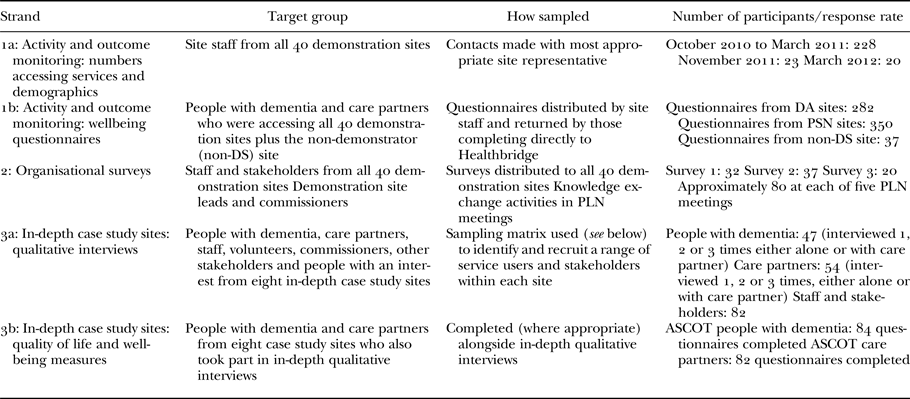
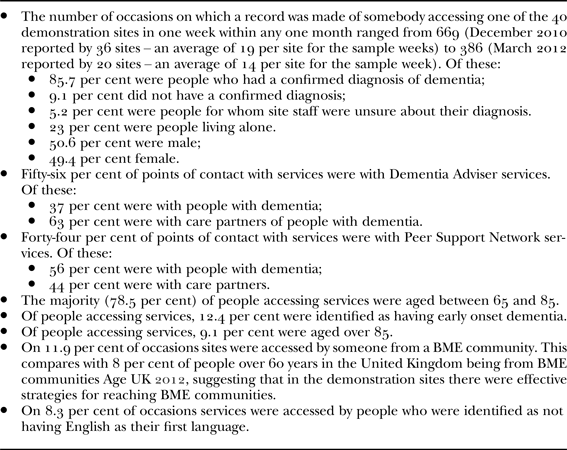
Data were collected through three strands of research, which interwove to address each of the study aims and collected data from a wide range of participants. Table 2 presents information on the number of participants and response rates. Table 3 presents a profile of the number and characteristics of those who were accessing the services.
Participants in each research strand
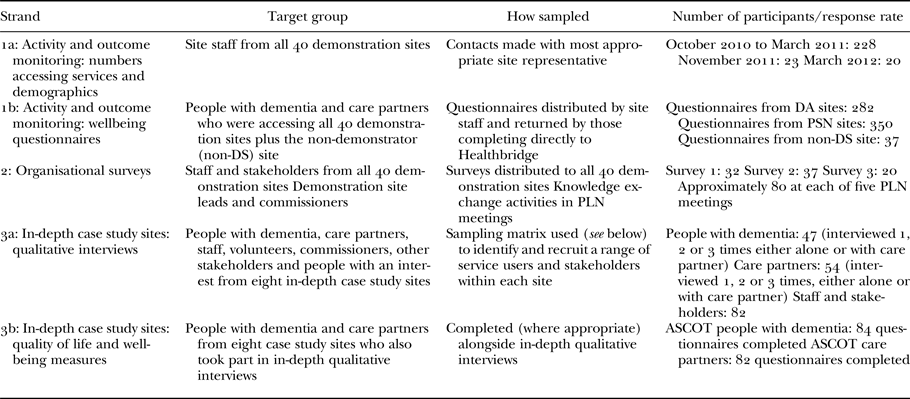
Notes: ASCOT: Adult Social Care Outcomes Toolkit. DA: Dementia Advisers. PLN: Project Lead Network. PSN: Peer Support Networks.
Number and characteristics of those accessing the services
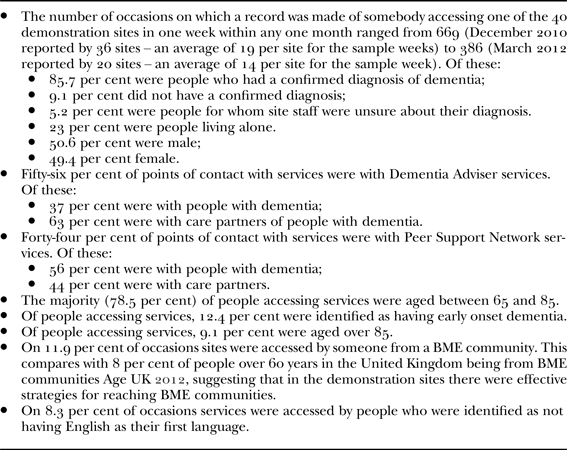
Note: BME: Black and Minority Ethnic.
Strand 1 addressed activity and outcomes of people with dementia and care partners using the services over a period of 18 months in all 40 demonstration sites, including:
-
• Numbers of people accessing the sites and demographic information.
-
• Wellbeing and Quality of Life Measures using established tools: Adult Social Care Outcomes Toolkit (ASCOT – designed to capture information about an individual's social care-related quality of life; Office for National Statistics 2010) and DEMQoL (a patient-reported outcome measure designed to enable the assessment of health-related quality of life of people with dementia; Banerjee et al. Reference Banerjee, Smith, Lamping, Harwood, Foley, Smith and Knapp2006), completed by people with dementia and their care partners who had accessed the demonstration sites and a group supported by the Alzheimer's Society from an area with no access to demonstrator site services. These measures were administered by the service staff.
Strand 2 captured data from all 40 demonstration sites in relation to organisational information. It included:
-
• Postal survey data at three time-points about organisational structure and development.
-
• Structured discussions with demonstrator site leads and commissioners during five national workshops.
Strand 3 captured in-depth data, based on the views and experiences of a range of stakeholders, including people with dementia, their care partners, staff, commissioners and volunteers from a sample of eight case study demonstration sites. The eight sites were selected because they represented the diversity of all of the sites, reflecting type of host organisation (health/social care/voluntary sector) and nature of beneficiaries of the service (focusing, for example, on minority ethnic groups or those with intellectual disability). Audio-recorded interviews took place in a variety of settings, as preferred by participants, including people's homes, venues already used by the demonstration site services or another public place. Staff and commissioners were interviewed once (N = 82). Interviews with people with dementia (N = 47) and care partners (N = 54) were held on up to three occasions to allow time for the relationship with the interviewers to develop and to allow for breaks (e.g. due to tiredness) and were augmented by the collection of data using the ASCOT and the DEMQoL questionnaire (administered by the interviewer). The focus of the qualitative interviews were guided by a semi-structured topic guide and lasted between 45 minutes to two hours.
The consent process with staff and stakeholders ensured that they had received information on the purpose and scope of the research, had an opportunity for any queries to be addressed and were willing to take part in an interview. Consenting for people with dementia followed a method of process consent (Dewing Reference Dewing2007) for sequential interviews and was designed to accommodate those who did not have the capacity to consent in line with the Mental Capacity Act (England and Wales) 2005. Participants were assured that taking part in the research would not affect their services, work or volunteering in any way, and that they were free to withdraw at any stage.
Data analysis
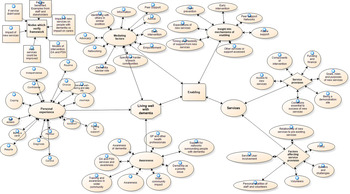
The computer-assisted qualitative data analysis software NVivo 9 was used to assist data management. The audio recordings of the in-depth case study site interviews were transcribed verbatim. The initial coding framework was created through a descriptive content analysis (Elo et al. Reference Elo, Kääriäinen, Kanste, Pölkki, Utriainen and Kyngäs2014) of 25 transcripts, randomly selected to represent people with dementia, care partners, staff and stakeholders across all eight case study sites. This initial content analysis was reviewed and refined by a wider group of the project team and then a further 70 transcripts were coded. Only minor changes and additions to the coding framework were made after this stage, as the process was nearing saturation, meaning that the majority of the data could be coded within the framework. Eighteen transcripts were then reviewed by four people (who had not previously been involved in detailed analysis) and their comments and coding were incorporated into the developing analysis. At this stage, a picture of the data as a whole was emerging, and codes were grouped into wider overarching themes. An outline of this overall model, and ways in which the aspects of the data outlined above relate to one another within that model, is shown in Figure 1.
Theme framework for interview data.

Data at each of the codes was then mapped out using the modelling tools of NVivo, providing a visual representation of themes and how they relate to each other at the same time as linking the researcher back to the data represented within the models. Once the data had been modelled in this way, a process of verification took place, using a selection of NVivo tools based on the key themes which had been identified within the analysis and modelling process, and involving all of the qualitative data collected. Based on word search, a word tree was produced by NVivo and a range of the data across the sites was reviewed, checking that the data retrieved in this way referred to the theme being sought, while also being alert to potentially disputing data.
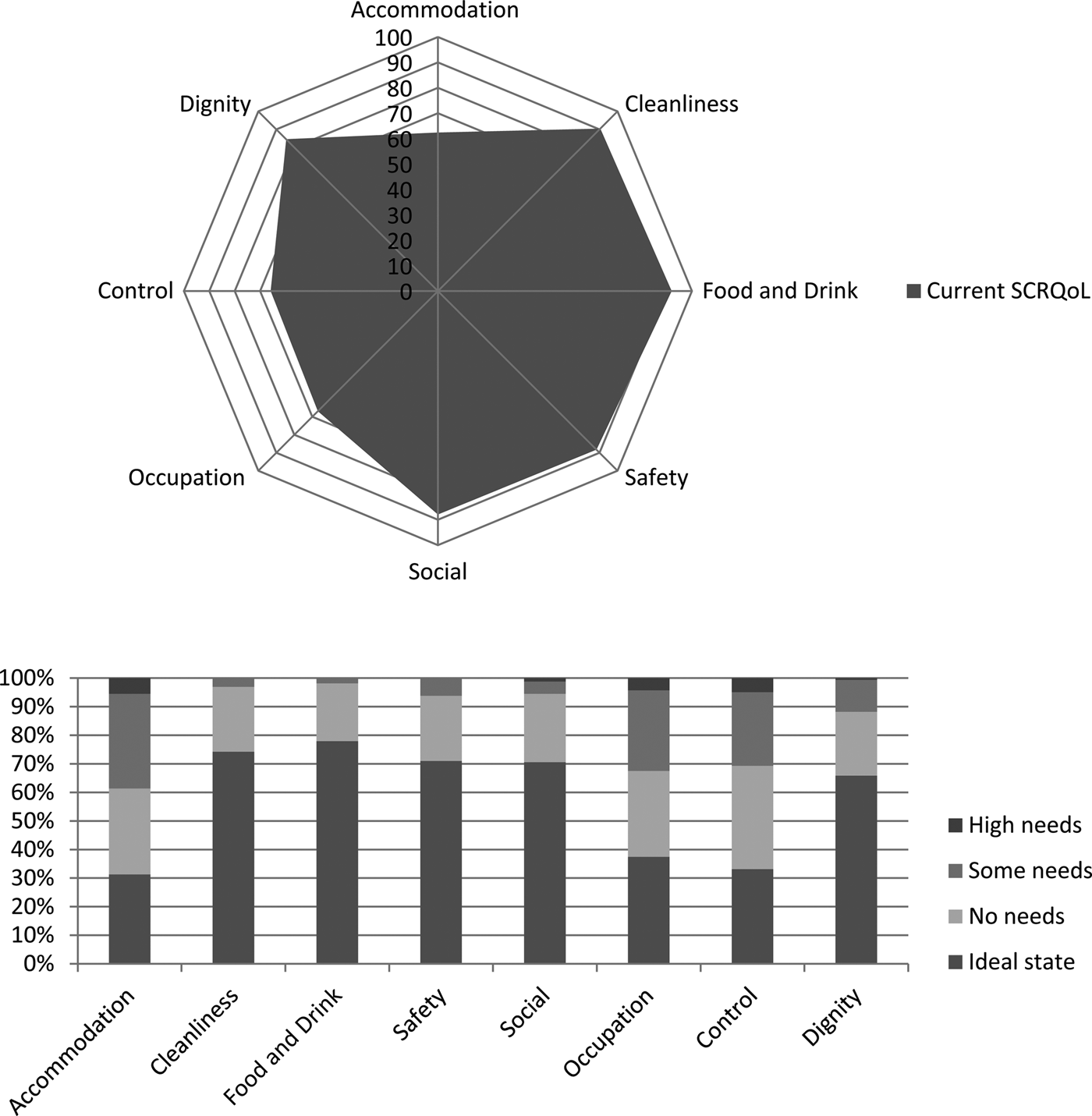
In brief, the survey data were inputted into IBM SPSS Statistics. This allowed for a statistical representation of the frequency of responses to each question, including the modal response. DEMQOL data analysis is reported elsewhere (Clarke et al. Reference Clarke, Keyes, Wilkinson, Alexjuk, Wilcockson, Robinson, Reynolds, McClelland, Hodgson, Corner and Cattan2013). The ASCOT was entered into the ASCOT data entry tool and an overall Social Care Related Quality of Life (SCRQoL) score for each respondent as well as the group as a whole was generated. The percentage of people identifying themselves as having no needs or being in an ideal state in any one area was also produced as part of this analysis.
Findings
The findings of this study address the research aim of identifying ways in which DAs and PSNs, as models of active management of quality of life, contributed to the wellbeing and resilience of people living with dementia. Three themes are explored here, largely drawing on interview data but with some reference to other data:
-
• Addressing individual and community needs.
-
• Promoting independence, control and choice.
-
• Getting a life back.
Addressing individual and community needs
The findings of this research indicated a wide range of needs of people living with dementia, which align with seeking to live positively with dementia, such as the need for a sense of control, dignity and purposeful activity – as indicated by the ASCOT data (see Figure 2).
Social Care Related Quality of Life (SCRQoL) scores for people with dementia and care partners in case studies.
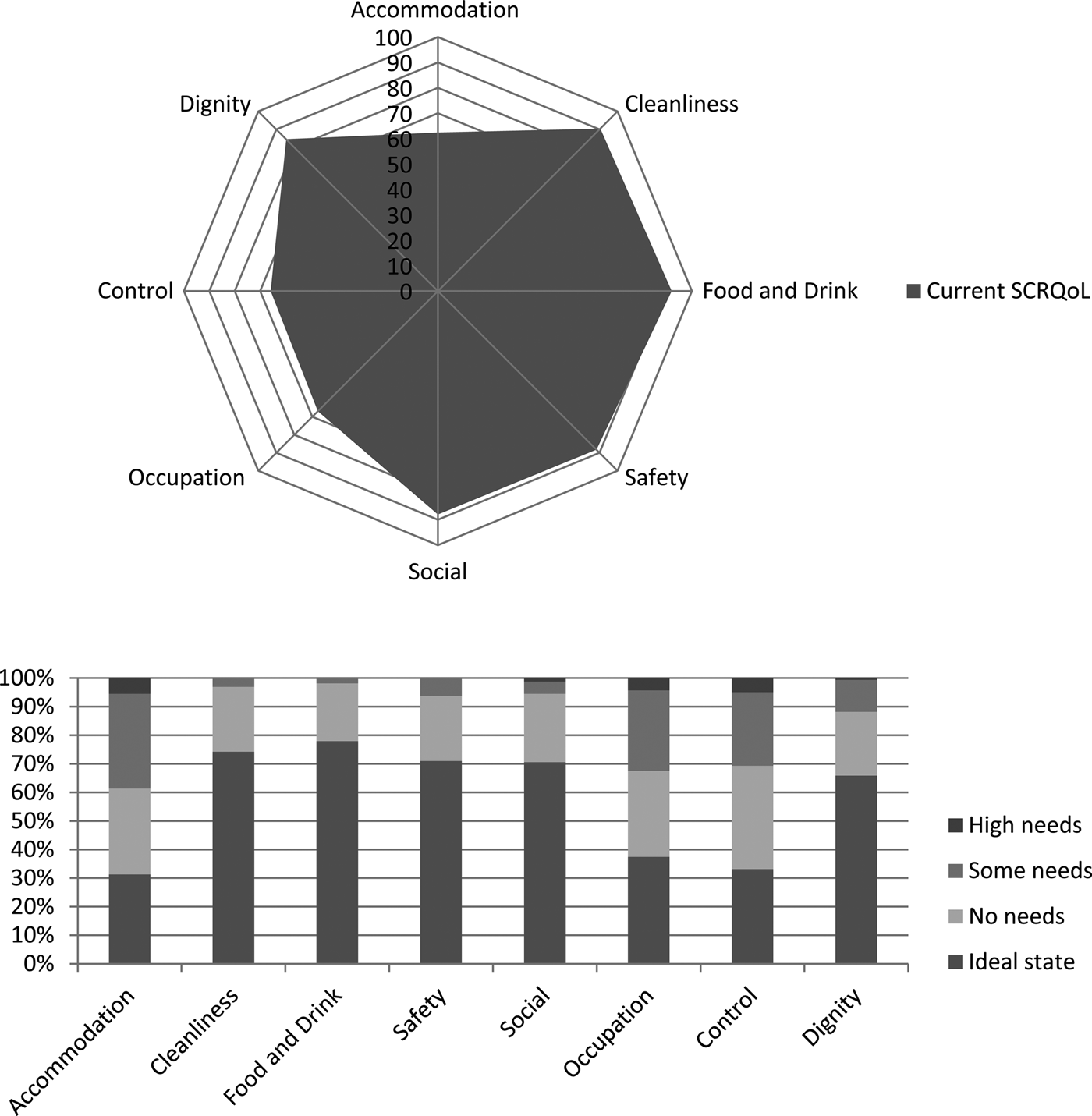
The DA and PSN services played a role in identifying these needs and raising their importance in the local community, as highlighted in the following quote with Maureen, a senior stakeholder:
What we've flagged up with our Dementia Advice service is actually people's needs are informing services a lot more, because people aren't wanting just the traditional service delivery. They are thinking of all sorts of different things to keep themselves well. So it may be looking for a music group, looking for a gardening group. Which is very different from, perhaps, the delivery that adult services have always thought of, delivering care to people. Because if people are coming to us with the diagnosis of dementia, but actually want certain things but the community focus is very different, then we've got to inform that. And I think the Dementia Adviser will do that. I think the service will do that. It has done it already. It's made us think much more of a personalised service for people.
Participants also highlighted community needs such as addressing the stigma that surrounds dementia, often relating this to people's fear, with a lack of informed knowledge leading to it remaining, for many, a taboo subject.
We didn't know anything about it. I was saying to [DA], it's not like a fluffy thing, is it? You know, people are more into it now. They don't talk about dementia. It's something that's whispered. I think people need a lot more training on it, because it's something that is not to be frightened of. (Beth, daughter of couple who had accessed DA service)
The work in raising awareness of dementia extended to providing training and seeking to reach people who had no access to services or support: ‘We will do like a workshop, information, drop-in. Just drop-in in the sense that we offer drop-ins if given community venues’ (Stephanie, DA). The DA and PSN services were identified as having a positive impact on training and awareness raising: ‘So there's certainly something around broadening people's awareness and raising people's awareness and understanding of what's out there’ (Naureen, local professional who had interacted with PSN site services).
Participants also referred to a role for DA and PSN services in framing dementia as a community issue, enabling positive attitudes towards people with dementia in the community, providing training for the whole community and making use of community resources:
It's about education of people around the edges, to make sure that they understand that people can still take active, and valuable control of their lives. The more knowledgeable a community is, or a family is, the better the outcomes for the individual. Because people know how to deal with it. They're not afraid of it. (Heidi, professional who had accessed DA site)
At times, the awareness raising occurred in indirect ways, as discussed in the following quote, illustrating the ‘spread’ of awareness raising and education stimulated within communities.
One of our volunteers of the Dementia Advice service was also a member of staff at the leisure centre. So that was quite good because she went back and she was often there on reception. But she also talked to her colleagues. And I think that has actually developed, in a roundabout way, that developed an awareness. (Anita, staff from DA site)
This approach to raising awareness of the needs of people living with dementia also extended into the mainstream health and social care services: ‘We're trying to influence, like GPs [general practitioners], other organisations to take a … To help and support the client to receive follow-on support’ (Stephanie, staff from DA site).
Promoting independence, control and choice
In both the organisational surveys and the interviews, a range of goals, roles and purposes for DA and PSN services were identified. These included providing information, advice and signposting, enabling access to support and services, and averting problems. These were broadly intended to maintain independence, wellbeing and quality of life, and enable participation and engagement. Acknowledging the impact of dementia on people's independence, staff and stakeholders spoke about DA and PSN services as being grounded in the principle of enabling independence for people with dementia and care partners, in particular enabling people to remain living well in their own homes for longer:
I guess the biggest strength is actually working with people to empower people and offering the informed choices, really. And rather than focus on the negativity of diagnosis – which perhaps a lot of supporting care may do – is actually working with people to normalise their lives and create a whole wellbeing model, really. (Anita, staff from DA site)
In the following quote, Nancy, a care partner from a PSN site, speaks about the importance to herself and her husband of their own independence within an interdependent caring relationship.
It's something that we can do, we can both participate in, but independently as well as together. It removes some of the responsibility while you're there because, yes, you're obviously with your partner, but he's able to function independently. And, as am [I]. So that you become as an individual again, if you like. And it allows him to feel independent, and it allows me to be myself, or more myself. (Nancy, care partner from PSN site)
In relation to empowerment and choice through advice, information and signposting, there was specific reference to the role of DA and PSN services in channelling appropriate information:
It's like a menu. So you need to know what's available and [DA] has all that information. And she knows the situation you're in. And that's the sort of thing where she'll, sort of, point you in the right direction. Which is crucial because you don't always know what's happening. (Rob, care partner who had accessed DA services)
Support from peers also enabled people to make decisions and choices, in part through comparing their situation to that of other people: ‘I think possibly it helps them feel stronger and more able to make decisions’ (Marianne, peer supporter from PSN site who had previously cared for her own husband).
Enabling people to retain control was something that the DA and PSN services focused on, specifically in helping to make decisions and choices.
The wife eventually went off into … could not be cared for at home safely any more. But the husband was left with a whole need to feel that he'd done something and his memory, then, was starting to fail. So [DA] has supported him through that. Not only through the initial stages of caring for his wife and the acceptance of her need for the care elsewhere, and the maintaining of the relationship between husband and wife while they're separate, because he still feels the need to actually make sure that he's in control of the care of his wife. (Heidi, professional who had referred people to DA services)
Glen, a DA, spoke about empowering families to cope at the same time as improving care for people with dementia:
We are providing them information. We are empowering the family how to deal with the situation. The majority of clients, they are at the later stages of dementia – they have got care needs. Personal care needs. And in that way I will network with the organisations so it could improve and give the respite services for carers – alongside improving the care of the person with dementia. (Glen, DA)
The importance of interacting in a way that respected the person with dementia was highlighted by John in the following quote:
I hate when decisions are made for me that I don't know about or agree to. And I'm not always sure about. I understand the implications of that, but I know it's done for reasons that are to help me. But I do get a wee bit annoyed about that. (John, person with dementia who had accessed DA site)
This focus on recognising and attending to the involvement of people experiencing dementia in decisions about their lives played a major role in influencing their experiences of feeling in control and their quality of life.
Getting a life back
People living with dementia identified how their lives were changing and that a loss of social opportunities and skills impacted on aspects of their lives. However, they also spoke about the positive impact of DA and PSN services on their general wellbeing and daily life:
Well this last month, or just over a month, it's been the best thing that's happened to me for a few years now. I've been going to an art class for Alzheimer's and meeting people. It's fantastic because we can all talk to each other. And I know in my old friends’ circle, or what I thought was my friends’ circle, it just gradually went. (Lillian, person with dementia who had accessed PSN site)
There was a sense in which establishing a ‘new normal’ enabled a different sense of wellbeing and quality of life. For example, one couple talked of the impact on their lives of working with a DA to reshape their lives:
Suzanne: We've sort of got back some normality now. He's got quite a week of things happening most days … we have had a whole complete reshuffle of our lives really over the last 18 months…
Suzanne: Not long after you retired you had your diagnosis didn't you? And that was quite a blow as well. And we've sort of been trying to get back some sense of normality since really.
Jim: Yeah, I just want to get on with my life as such, I don't want to be sitting down and they're ‘oh yeah, you're not going to be able to do this, that and the other’. I don't want that you know. I just want to get on with my life.
When asked about their wellbeing and daily life, participants described the impact of dementia on everyday tasks, and a loss of daily living skills, such as sequencing in order to complete basic tasks. In particular, participants highlighted the impact of dementia on their self-esteem, often reinforced by stigma and isolation (as discussed above). DA and PSN services impacted positively on people's self-esteem through providing opportunities for new experiences, and an increased sense of self-worth through socialising with others with dementia that then impacted on their social interactions in other areas of their lives. This included a positive effect of no longer feeling the need to hide dementia, and an ability to be more open with people as a result of interacting with others who have dementia: ‘It gave us the confidence to move in the directions we wanted to move in’ (Jilly, care partner who had accessed DA service).
Staff and stakeholders also referred to the impact of DA and PSN services on general wellbeing and daily life:
Actually some comments that were made was that these projects have actually changed their lives. They went, maybe, out once a week. And now they probably attend the singing group and one of the cafés as well, so now they've got two things else that they can go out on a weekly basis for. So it's changed their outlook on life – they're more positive about life. A reason to go out, if you like, mix with other people, socialise with other people. So they've got that back, which they didn't have. Which they lost for a time. (Norman, PSN facilitator)
Some participants referred to a role for DA and PSN services in supporting people to get a diagnosis, especially through challenging stigma and raising awareness of dementia, and recognising that dementia is experienced throughout the process before and after the point of medical diagnosis. The following quote highlights the role of volunteers within this:
Alongside supporting people who had already had a diagnosis, that the service would look to support people to achieve a diagnosis as well. That wouldn't necessarily be the Dementia Adviser, but alongside having a Dementia Adviser there's a service where there are volunteers who would support someone to seek a diagnosis. We know that sometimes that can be quite an onerous journey for people and that some people want some support in doing that. We set up both to do that and to provide advice on diagnosis. (Leigh, commissioner from a DA site)
DA and PSN services played a role in filling a gap that so often occurs between being diagnosed and the point at which the need for more intensive health and social care support is needed. This was done through advice and information, through supporting people with dementia and care partners to engage with new interests and social groups, and through empowerment through peer support.
We absolutely needed to capture people in the earlier stages. Ideally from as close to the point of diagnosis as we could. What we wanted was people to go through memory services and then immediately, where appropriate, be referred to the peer support service. (Katrina, PSN staff)
Professionals from other local services supporting people with dementia and their care partners commented on the impact of DA and PSN services in relation to filling a previous gap in support available to people with dementia and care partners:
So we are looking at people who are newly diagnosed, who are going through the [health-care service] who are then organising memory groups for people. So that will run for a short space of time. Following the memory group that newly diagnosed people will be attending, we are then looking at cognitive stimulation therapy. This group – I would co-facilitate with a member of staff from [local health-care service]. I will then do the maintenance sessions for that. And then people will be referred into peer support. So I think we fit in in the bigger picture – as in people are unsure where they would go from diagnosis. (Bev, PSN facilitator)
In summary, the findings demonstrate multiple ways in which services such as DAs and PSNs interact with individuals and with communities to manage their quality of life actively.
Discussion
In exploring the ways in which the active management of dementia impacts, this section addresses issues of what is achieved by the three themes of findings (addressing individual and community needs; promoting independence, control and choice; getting a life back). These will be explored in relation to the key processes of re-narrating everyday life, enablement and independence, and attending to context and information.
Re-narrating everyday life
The care partners and people with dementia interviewed in this research spoke about their personal experiences, often echoing things that have been found in other studies: isolation, mixed emotions on diagnosis, challenges of getting service support, and ways of coping (Collins and Smyer Reference Collins and Smyer2005; Janssen, Van Regenmortel and Abma Reference Janssen, Van Regenmortel and Abma2011; Windle Reference Windle2011). Some of these experiences were spoken of with warmth and humour; some experiences had left (sometimes deep) traces of distress and anxiety. What people living with dementia also spoke of concerned a time of change in their lives; a transition from one (familiar) way of living into another that was unfamiliar and had an uncertain future. In seeking some adjustment to the changes that result from living with the presence of dementia on a day-to-day basis, care partners and people with dementia found themselves seeking to redefine what ‘normal’ is to them now. Mitchell and Glendinning (Reference Mitchell and Glendinning2007) highlight the importance for older people of seeking a ‘normal’ life even if this normality was redefined as people's circumstances changed. Von Kutzleben et al. (Reference Von Kutzleben, Schmid, Halek, Holle and Bartholomeyczik2012), in a systematic review, also identified ‘maintaining normality’ as a core need for people living with dementia. What was once experienced as ‘normal’ transitions through to a new normal and it is in this re-narration of everyday life that there is the opportunity for peer support and DAs to influence and support this most challenging of life's transitions. Not only is the fabric of a familiar life undergoing enormous internal change (the ‘social disenfranchisement’ described by Beard and Fox Reference Beard and Fox2008), including a redefining of close personal relationships (Botsford, Clarke and Gibb Reference Botsford, Clarke and Gibb2012), but this re-narration of everyday life must also contemplate and engage with an array of services and practitioners (Clarke et al. Reference Clarke, Keady, Wilkinson, Gibb, Luce, Cook and Williams2010; Morgan Reference Morgan, Silva and Smart1999). Brooks et al. (Reference Brooks, Farquharson, Burnell and Charlesworth2014), in a study of care partners of people with dementia who volunteer in a care partner support programme, also found that such lay roles enabled the volunteers to facilitate new identities and roles.
This research found that PSNs and DAs, as examples of the active management of quality of life, support these largely unseen processes of the re-narration of everyday life in three ways: providing new focus and structure in people's routines of their lives; regaining a sense of normality; and the opportunity to make social comparisons (e.g. self-reassurance that others may be ‘worse off’). The PSNs and DAs play a part in providing an infrastructure in which people could find a space in which they could re-narrate their lives, establish social networks that were often different when living with dementia and find a newly defined purpose to their lives; critical aspects of maintaining wellbeing for older people (Reed et al. Reference Reed, Richardson, Marais and Moyle2008; Ward et al. Reference Ward, Howorth, Wilkinson, Campbell and Keady2011).
Enablement and independence
The services in the demonstration sites also influenced people's experiences through averting problems, identifying at an early stage that perhaps a situation was deteriorating and taking steps to establish early interventions, or support the family themselves to do so. It is important to emphasise that these are not crisis intervention services – what they appear to be doing is equipping the families to deal with situations when they arise, or they recognise a deteriorating situation and take steps to avert a crisis. They achieve this through raising awareness, enabling peer support and increasing the level of signposting to local support services. In addition to practical support such as information provision, there was an emotional aspect to the ways in which DA and PSN services enabled a different outlook on the future. Trust, reciprocity and mutuality are features of lay-led interventions that have been argued as enhancing effectiveness in other studies too (Springett, Owens and Callaghan Reference Springett, Owens and Callaghan2007; Whittemore et al. Reference Whittemore, Rankin, Callahan, Leder and Carroll2000).
Increasing independence and strengthening interdependence (and being enabled to achieve these) are key aspects of re-narrating life and avoiding problems that can otherwise escalate levels of care intervention. In essence, a virtual cycle is established that has the potential to enhance quality of life. Participants spoke of feeling better able to do things themselves through their social networks, the information that they received, the signposting to other services and the plans they were able to make to manage the challenging aspects of living with dementia. This research found that the promotion of independence, control and choice were central to the way in which DA and PSN services worked.
The findings indicate a number of different ways in which ‘living well’ was achieved (as aspired to in the National Dementia Strategy; Department of Health 2009): facilitating social and community engagement which in turn increased confidence and social connectedness; identifying ways of dealing with the more challenging aspects of having dementia; providing information to allow future planning; providing information and support at the time of diagnosis; signposting to other services; and re-narration of relationships drawing benefit from specific peer relationships with other people with dementia. The importance of working to improve confidence (and in turn, self-esteem), and the need to do so, cannot be underestimated, with Snyder (Reference Snyder and Harris2002) and Sorensen, Waldorf and Waldemar (Reference Sorensen, Waldorf and Waldemar2008) referring to people living with dementia feeling belittled and socially excluded. The positive benefits of being in a supportive and inclusive environment are shown in research by Phinney, Chaudhury and O'Connor (Reference Phinney, Chaudhury and O'Connor2007) and Genoe et al. (Reference Genoe, Dupuis, Keller, Martin, Cassolato and Edward2010). Intervention studies to enhance self-esteem have demonstrated improved care partner mood and health (Gottlieb and Rooney Reference Gottlieb and Rooney2004) and improvements in ability to cope and an overall sense of wellbeing (Gignac and Gottlieb Reference Gignac and Gottlieb1996). Clare, Rowlands and Quin (Reference Clare, Rowlands and Quin2008) go further, suggesting that benefits extend to achieving mutual support and collaborative advocacy through which societal attitudes can be influenced. This process of empowerment and social re-enablement also contributes to the wider social repositioning of people with dementia, e.g. people with dementia taking up advocacy roles, enabling further development of dementia-friendly communities, and potentially influencing future policy and practice.
Attending to context and information
The active management of quality of life, as implemented by DAs and PSN co-ordinators, included bringing to their work the application of context-free dementia-specific information to a context-bound person-specific situation. At a time when people with dementia (and their family members) are trying to sustain a biographical narrative that has some stability, albeit one that is being re-narrated, it can be jarring to them if they are provided with information in a way that potentially disrupts that biographical narrative through imposition of an illness (dementia) narrative. Heyman (Reference Heyman, Heyman, Shaw, Alaszewski and Titterton2010: 120) refers to this as ‘the informational disjunction between prospective and retrospective perspectives’.
The sharing of knowledge and information, together with the promotion of individual emotion, in contrast to concentrating solely on cognition decline, has been long advocated in dementia care. For example, the person-centred approach, highlighted as a national standard in the National Service Framework for Older People (Department of Health 2001), encourages the building of caring relationships. Failing to recognise the differential knowledge bases in managing health and ill-health means that we may neglect to acknowledge and support the work engaged in by people with long-term illness to contextualise the received knowledge in creating and recreating their sense of self (Clarke et al. Reference Clarke, Keady, Wilkinson, Gibb, Luce, Cook and Williams2010; Robinson et al. Reference Robinson, Ekman, Meleis, Winblad and Wahlund1997). This is mirrored by the growth in initiatives associated with personal accounts (e.g. Bryden Reference Bryden2005; DeBaggio Reference DeBaggio2003), life story work and reminiscence (Woods et al. Reference Woods, Bruce, Edwards, Hounsome, Keady, Moniz-Cook, Orrell and Russell2009).
In the field of public health too, the White Paper for England, Choosing Health: Making Healthy Choices Easier, recognised lay knowledge as a form of expertise in its own right and advocated a broad shift from ‘advice from on high to support from next door’ (Department of Health 2004: 103). This research found that DAs and PSNs in dementia reflect the roles of lay health advisers in public health, which have three broad aims: access to individuals who are marginalised, access from marginalised communities into health and social care systems, and alternative delivery mechanisms to a professional provider (Visram, Clarke and White Reference Visram, Clarke and White2014). Lay health adviser roles have been promoted increasingly in UK public health policy and can be seen as change agents who have an assumed demographic and behavioural similarity to the service user – someone who can ‘talk their language’ (Durantini et al. Reference Durantini, Albarracin, Mitchell, Earl and Gillette2006). The DAs and PSN facilitators are more akin to lay health workers than they are professionally qualified social workers or nurses. Many working in the services are volunteers and have had direct experience of living with someone with dementia themselves or of living in the same communities. Some of the people with dementia and care partners we interviewed commented on the impact that this experience had on people's ability to understand and empathise with others in similar situations. They are, therefore, well placed to privilege person and local community knowledge (as highlighted by Maureen above) and in many instances the recurrent contact that they have with an individual person living with dementia means that they can develop a detailed, continuous knowledge of the dynamic interplay between care, an individual's response to care and knowledge of changing need (as in the example given above by Heidi in relation to continuity of support).
However, unlike many lay health workers who work with the ‘hard to reach’ who engage in health-harming behaviours such as smoking, DAs and PSN co-ordinators are working with people who find themselves managing the unwelcomed entrance of dementia into their lives and consequently are re-narrating and reconstructing their day-to-day relationships and activities. Nonetheless, either directly themselves or through their actions to connect people with information and peer support, the DAs and PSN co-ordinators foster a sharing of experiences in order to achieve what Springett, Owens and Callaghan (Reference Springett, Owens and Callaghan2007) describe as a negotiation of notions of self, identity, health and wellbeing. The significance of cultural understandings of dementia have been identified elsewhere (e.g. Botsford, Clarke and Gibb Reference Botsford, Clarke and Gibb2011; Moriarty, Sharif and Robinson Reference Moriarty, Sharif and Robinson2011; St. John Reference St. John2004) and the challenge is in developing ways of working with people that are supportive of this cultural diversity. One aspect of ‘culture’ though is the variation between professional and professionalised understandings of a situation and those understandings and responses held by people living with dementia themselves. These lay understandings of a situation may actually privilege information and dynamics that are beyond the technical knowledge of professionals yet are nonetheless deliberative and purposeful (Clarke Reference Clarke2008).
There is, though, a further dynamic for DAs and PSN co-ordinators in balancing roles of public advocacy and instrumental care for individuals. As well as providing instrumental care to individuals and communities, there is evidence in this research of some services working to enlighten public perceptions of dementia and to challenge stigma, and working to develop services. What DAs and PSN co-ordinators have been able to do is bring areas of unmet need to the attention of other services. They do this, of course, for individuals in working to secure services for people, but they also do this at a more collective level. Similarly, May and Contreras (Reference May and Contreras2006) write about how lay health workers translate information about local health needs into messages of relevance for health professionals, thus raising awareness of gaps in provision. Lehmann and Sanders (Reference Lehmann and Sanders2007), however, report a move for lay health workers away from advocating for social change.
This study demonstrates that PSNs and DAs can make a very genuine difference to the experiences of people living with dementia. Through the active management of quality of life, they can enhance the quality of life of people living with dementia and they can help to shape the attitudes and understandings of other services and of communities about dementia. This is entirely consistent with managing dementia as a public health issue (World Health Organization 2012) and Knapp et al. (Reference Knapp, Bauer, Perkins and Snell2013) highlight the potential for similar interventions to be economically advantageous as well as enhancing individual and community quality of life.
Conclusion
This research has illustrated the positive influence that the active management of quality of life can have, both in living with dementia and on communities. In this research, the active management took the form of DA and PSN services and the findings demonstrated that through addressing individual and community needs, the services promoted independence, control and choice, and in turn enabled people to re-narrate their lives as purposeful within their communities. The ways in which this is achieved resemble the public health model of lay health advisor and, as such, the research adds to the imperative to approach dementia as a key public health concern.
Acknowledgements
We are very grateful to all who engaged with this research, whether through data collection, acting as translators, facilitating our work, advising the team or engaging in discussions. We especially thank people with dementia and carer partners who shared their experiences with us through in-depth interviews and/or completing wellbeing questionnaires, as well as staff, volunteers and stakeholders from the case study sites who were interviewed. We also thank all demonstration site staff who liaised with the research team and enabled data collection, and those who enabled data collection in the non-demonstration site. All were critical to this work. The support of the Implementation Team of the National Dementia Strategy has been very much appreciated. C. Hutton, Dr E. Gobriel, Dr K. Laidlaw and the Personal Social Services Research Unit in Kent, UK also made very valued contributions through administrative support, data collection, supporting analysis or methodological discussions. This paper reports on independent research commissioned and funded by the Department of Health Policy Research Programme (‘Healthbridge: The National Evaluation of Peer Support Networks and Dementia Advisers’, reference 025/0058). The views expressed in this publication are those of the authors and not necessarily those of the Department of Health. Ethical approval was obtained from the Social Care Research Ethics Committee (reference 10/IEC08/13). NHS Research Governance approval was secured where necessary and also approval from the Association of Directors of Social Services (reference Rg 10-009).