Introduction
For it is industrialization, represented by images of machine technology, that provides the counterforce in the American archetype of the pastoral design. . . The tension between the two systems of value had the greatest literary impact in the period between 1840 and 1860 when the nation reached that decisive stage in its economic development which W. W. Rostow calls the ‘take-off’. In his study of the more or less universal stages of industrial growth, Rostow defines the take-off as the ‘great watershed in the life of modern societies’ when the old blocks and resistances to steady development are overcome and the forces of economic progress ‘expand and come to dominate the society’. . . The locomotive, associated with fire, smoke, speed, iron, and noise, is the leading symbol of the new industrial power. It appears in the woods, suddenly shattering the harmony of the green hollow. . .Footnote 1
In the time fighting the Americans there wasn't a house that didn't have the engines. When the youth ran from the enemy, they ran off in the motorized boats, lifting the propeller up, dropping it down again when they were through the duckweed [water hyacinth], then moving from one open patch of clear water to the next, never getting stalled out in the duckweed or else the enemy jets would swoop down and shoot them dead.Footnote 2
A long distance in time and decibel levels separate these two, dissonant soundscapes. The former recalls the whistle of a steam train chugging through the New England woods in 1848 and the latter the whine of an outboard motor fleeing the impending sonic boom from a jet fighter diving down to lay a path of strafing bullets on a fleeing motorboat in 1968. According to Marx, the literary function of the steam train in nineteenth-century New England was to render the bucolic idyll of the countryside into a kind of middle space, articulated by the rapid industrial growth and social transformations that were occurring along the roads and rails where these two worlds met. If Marx's metaphor is transposed from New England in 1848 to the Mekong Delta in 1968, what kind of middle spaces might machines have produced there? This post-colonial watery landscape, a hot spot of the Cold War, was one violently rent apart by modern warfare. The sounds of jets and helicopters, motorboats, heavy construction equipment, and small engines filled the air.
However, if a longer historical view is taken of the Mekong Delta as a garden-like middle space in Marx's sense, beginning in the nineteenth century and continuing to the present, the pattern of industrialization takes on a more unusual shape. There is the fleeting appearance of locomotives and towering, steam-powered dredges at the height of colonial power from the 1880s, followed by the poverty of the Great Depression in 1930, and then prolonged neglect during more than 35 years of war to 1975. During the war in the 1960s, big war machines dominated the landscape. However, in their ear-splitting midst was another almost-silent intrusion far more profound: tens of thousands of small engines—motorbikes, outboard motors, pumps, and generators—moving water, people, and electricity to the most remote places. While the railroad is now an archaeological relic and fragments of fighter jets lie in war museums, the spread of these small engines continues unabated to the present day. As the Vietnam War raged, these small engines powered a silent revolution in everyday technology that has in over 30 years since thoroughly altered the Delta environment and Delta society. Since their introduction in the early 1960s, every household strove to own their own engine. When mounted to a water pump, they permitted farmers to irrigate their crops and double or even triple their yields. Higher yields permitted the purchase of other motorized equipment—Honda motorbikes, electric generators, and other motorized farming equipment. Especially as the war escalated in the early 1970s, a kind of Rostovian take-off—the modernization of an agricultural economy—was underway.
Fifty years since these small engines first appeared in local shops, the Mekong Delta today has more in common with the woods of New England than ever before. Its rural landscapes are increasingly feeling the impact of intensive farming, factory pollution, high population densities, urban encroachment, and the daily tides of noise and pollution that accompany morning and afternoon rush hours on the highways. In Vietnam, as in Massachusetts, a kind of sentimental pastoralism or nostalgia for the countryside can be found, especially in modern literature such as the short stories of Nguyen Huy Thiep.Footnote 3
However, industrialization, at least in the Mekong Delta, appears to be taking a very different form. While there are instances of monumental technology such as towering span bridges and new highways that might elicit some nostalgia for the old countryside, for almost all people living in the Delta today, modern industrial life is characterized by a growing array of small engines that power scooters, three-wheeled trucks, boats, generators, and pumps. Almost everyone is familiar with their sounds, if not their operation. There is rarely a moment on the rivers or in the fields when the percussive rattling of a motor cannot be heard. Small, powerful motors first became widely available in Vietnam in the 1960s and since Vietnam's market reforms of 1986, their use has grown exponentially. The adoption of cheap, internal combustion engines to power irrigation allowed farmers to experiment with high-yield rice and chemical fertilizers that have become the norm today. The adoption of motorized water pumps thus represented an important enabling technology that opened up possibilities for mechanizing other aspects of farm work and increasing involvement in more global, cash economies.Footnote 4 Surplus farm income from the new labour-saving irrigation, coupled with higher-yielding rice strains, allowed the purchase of other machines such as sewing-machines, motorbikes, radios, outboard motors, and the power tillers that now replace the water buffalos so commonly associated with life in a rice paddy.
Beginning with their introduction through various aid programmes in the 1960s, motorized pumps played a pivotal role in starting what Molle and others have called a ‘silent revolution’ in monsoon Asia. Their rapid adoption, especially since the 1980s, has had dramatic effects not only on agricultural outputs but also at multiple scales on various hydrological regimes.Footnote 5 In his comprehensive study of the social effects of mechanization in Southeast Asian agriculture, Rigg notes that in spite of myriad efforts from central governments and foreign aid organizations to popularize the use of big-ticket, iconic machines such as tractors, reapers, and combines, small-ticket, everyday technology such as four-horsepower motors powered the industrial transformation of rural life.Footnote 6 The spread of these engines has led to radical changes in rural economies and ecologies.
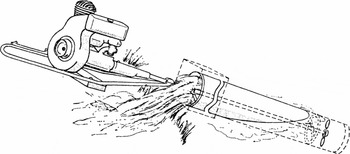
What might a small engine such as the motor pump in Figure 1 tell us about the nature of technological diffusion in post-colonial, post-war, and even post-socialist states? The almost magical, transformative power of a motorized water pump working despite failures in levees or fighting nearby must have mesmerized farmers in 1966. It recalls another pump well known to students of science and technology studies: Robert Boyle's pneumatic air pump. Latour uses Boyle's celebrated demonstrations of the air pump as a metaphor for modern science, drawing attention to the ways in which Western laboratory science, operating in carefully controlled conditions, launched public spectacles that confirmed for audiences both the mystical power of science and the modern idea that the pursuit of science was something to be wholly separated from the world of politics.Footnote 7 If any place in the twentieth century could be simultaneously as far and as close to an Enlightenment-era laboratory of the seventeenth century, it might be a motor-pump demonstration in a rice paddy in mid-twentieth century Vietnam. Here the political legacies of colonialism and a bitter civil war interfered on an almost daily basis with any sustained inquiry into the science of agriculture. Yet, these same rice fields, according to American newspapers and government information services, were precisely the field laboratories where American aid workers and social scientists needed to ‘win hearts and minds’ through demonstrations of American know-how.
Motor pump.
Source: Diagram from Sansom, 1969.

If we push the pump experiment analogy a little further, questions arise concerning who conducted the experiments in the paddy field. Who were the scientists in this case? Unlike Robert Boyle, most evidence suggests that the modernists—American technical advisers, for example—were spectators. Robert Sansom, a Rhodes scholar who studied the rural economy of the Mekong Delta in 1966–67, suggests that an enterprising Vietnamese dredging mechanic adapted an impeller to build a ‘shrimp-tailed pump’ (may bom duoi tom) out of the engines available in 1963.Footnote 8 By 1967, he had sold some 80,000 pumps and made a sizable fortune. It was only after Sansom related his observations to the United States Agency for International Development office in Saigon that President Lyndon B. Johnson's head of nation-building operations, Robert Komer, considered the revolutionary implications of the widespread adoption of small, individually owned engines for ‘winning hearts and minds’ in Vietnam.Footnote 9 Thus the modernity-confirming power of this unlikely contraption of engine and impeller, mounted in the muddy water of a canal, turned the laboratory inside out. Farmers, working in paddy fields far from agricultural extension offices or American-sponsored demonstration farms, experimented with the engines for several years before Americans and officials in the Republic of Vietnam paid any attention to their dramatic effects on labour savings and productivity.
As with Boyle's controversial demonstrations in the 1960s, the role of the state in promoting or opposing this kind of everyday experimentation is telling. The Republic of Vietnam was challenged internally and externally, and for the most part its officials adopted older, colonial biases against distributing modern technology to the average farmer. Policies such as restrictive licensing, or limiting payments for mechanized work such as dredging canals or rice-milling to wealthy monopolies, discouraged small entrepreneurs from opening businesses. The weakness of the state, especially in rural war zones, thus produced the opening necessary for such experimentation to take place. The ironic role reversal here—mechanics and farmers teaching Americans about the revolutionary effects of a motor pump—was not simply a case of the tail wagging the dog, however. Historically, Americans played a powerful role post-1945 in fomenting this ‘take-off’ through the creation of a Commercial Import Program that promoted widespread importation of American technology to southern Vietnam at cut-rate prices beginning in 1955. Other Asian advisers, notably Taiwanese, also played a supporting role in the experiment. They introduced new strains of high-yield rice first developed at the International Rice Research Institute in Los Baños in the Philippines. In the same town where the dredging mechanic sold his pump, Taiwanese advisers sold tons of seed for this new variety that in turn required more copious supplies of water and chemical fertilizer than traditional strains.
This paper focuses then on the role of a state, with a rapidly evolving government— from colonial rule to the present—fomenting, directly or indirectly, a proliferation of small engines and a distinctly decentralized approach to water management. Uneasy relationships developed between farmers and their supporters on the one side and state officials, foreign technical advisers, and their allies on the other over two very different approaches to managing the Delta's resources. On the one side there was the big-machine view and on the other the small-machine view adopted by millions of individuals living in a state of crisis.
The proliferation of small engines troubled the Vietnamese state and some Americans accustomed to a more centralized approach that used large-capital technology such as pumping stations, dredgers, and other heavy equipment operated in large part by corporate monopolies. The spread of small engines, now reaching epidemic proportions, has brought a revolution in the sense that control over one of the most valuable resources for human life—water—has shifted for the most part from state agencies and their monopolies to individual households and many small enterprises operating motorized equipment with little oversight. However, in this democratizing, everyday technology are the seeds of its own demise. Private water pumping operations on a global scale are now causing new environmental problems such as salt intrusion, fires resulting from lowered water tables, and the erosion of dikes necessary to prevent catastrophic floods.Footnote 10 The result is a political and ecological impasse where the state pushes to better rationalize waterworks and citizens threaten to undo it by endeavouring to expand their own economic potential.
To understand this small-engine revolution in the garden, it is necessary to consider how earlier failures of states and a big-machine philosophy of water management enabled it. After briefly exploring the colonial history, when big machines were introduced to the Mekong Delta, this paper examines in greater detail the laboratory moment when small engines were adapted for use as water pumps. Finally, it concludes by considering wartime and post-war responses of the Vietnamese state to this revolution of sorts. Before beginning, however, there is one more caveat. The difference in relying on small versus big machines did not emanate from any fundamental differing view on modern, internal combustion technology. Rather, it was more a difference over scale and political control. Whether large or small, the technology inside the motor pump is essentially the same. In keeping with the transformative effects of locomotives in the New England countryside, the small motors powering pumps, boats, and scooters in the Mekong Delta have likewise made rural people more—not less—dependent on cities, global commodity flows, bank loans, and especially cheap petrol. Thus a word of caution should be issued in framing this small-machine revolution as a shift away from industrialization. If anything, it has propelled people even faster in that direction.
The big-engine approach
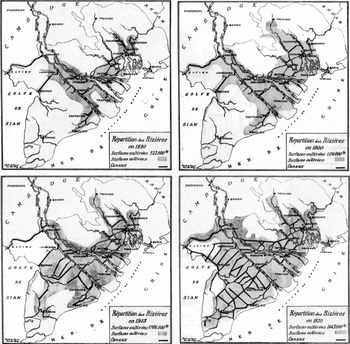
Farmers were quick to adopt motorized pumps largely because they lived in a built water environment of canals and dikes that could no longer be sustained by the state. This was due not only to the violence of the war when canals were mined and dikes bombed, but also to the simple fact that dredging the vast canal network built up in the colonial period had become too expensive for the post-colonial state to maintain. It should also be noted that the colonial state turned to the use of towering steam-powered dredges in the 1890s as a means to reclaim land to avoid relying on thousands of manual labourers to dig canals. Reclamation and water management was a highly politicized endeavour for any state, especially in Asia where rice cultivation was a central feature of the economy. Even before the French colonial conquest of the Delta commenced in 1859, the Nguyen Dynasty in Hue had put down a series of worker revolts in order to complete a five-year canal project that now forms Vietnam's western border with Cambodia in the Mekong Delta.Footnote 11 The French colonial government's importation of powerful steam dredgers in the late 1890s temporarily solved the problem of controlling and paying for thousands of Vietnamese labourers. By quickly opening canals into the swampy interiors of sparsely inhabited river deltas, the dredgers were the catalyst that permitted millions of Vietnamese migrants to head southwards and build rice fields out of marshes and mangrove forests. The time-series Figure 2 below gives a striking visual account of the rapid expansion of canals and rice plantations from 1880 to 1930 when reclamation campaigns generally stalled.
Canal projects 1880–1930. The above images (left to right) detail major canals constructed by the Colonial Department of Public Works and its fleet of steam-powered dredges.

This pattern of big machines supporting rapid expansion of reclaimed areas in the Mekong Delta was common to many tropical and subtropical wetlands in the same period, and it parallels the ‘machine in the garden’ metaphor. Adas and Scott describe similar dredging programmes in the British colonial reclamation of the Irrawaddy Delta; and in Southeast Asia, historian Mrázek's work on roads and railroads in the Dutch East Indies is perhaps closest in style to Marx's work. Canal dredging, like railroad construction, presented much the same challenge to rural frontiers, only in a very different ecosystem. Dredges opened up water roads to steam-powered traffic everywhere, from the Mekong to the Irrawaddy to the Orissa and Niger deltas, through the Sinai Peninsula, across Panama, and into the Florida Everglades.Footnote 12 Thus the 1880s kicked off a global era in wetlands engineering where millions of hectares of sparsely populated, swampy wilderness succumbed to the rationalizing water grids of state engineering agencies, followed by waves of settlers. However, the work, for the most part, was not carried out by states but by private monopoly contractors. In colonial settings such as Cochinchina, the work was limited to French companies as a means of circulating profits back to the mother country rather than into the hands of natives.
After 1930, with the onset of a global economic depression and rising waves of communist-led, anti-colonial violence, a complex crisis of mixed environmental, economic, and political dimensions emerged. The rapidly expanded network of canals, with many projects failing to adequately handle complex regimes of siltation and tidal flux, exacerbated floods and degraded many formerly productive areas. The price of rice in global markets crashed in 1931, and farmers were left in such severe debt that their small gains as ‘petit colons’ in the years of rapid expansion had been largely wiped out, returning them into a state of debt slavery. Then in 1932, the Indochinese Communist Party established its first underground cells in one of the most environmentally devastated regions of the Delta. These same areas later became important base areas for resistance movements led by the Viet Minh (1941–54) and the National Liberation Front (1960–75).Footnote 13 The Great Depression was followed in 1940 with a southern uprising and in 1941 by the arrival of the Japanese Imperial Army and Vichy French administrators. In August 1945, an anti-colonial war erupted in the Mekong Delta and continued unabated until 1954. Throughout these two-and-a-half decades of economic turmoil and anti-colonial war, engineers, social scientists, and aspiring Vietnamese nationalists debated the future of water management but carried out few projects. Without easy access to large machines, spare parts or capital, the colonial state in this era instead experimented with cooperatives, manual labour, and other methods. Within the colonial administration, accusations flew that the once-powerful Department of Public Works had built a canal system too quickly with little regard for the Delta's hydrology and in service to powerful French speculators.Footnote 14 In the 1950s, it was by all accounts falling apart.
After the Geneva Accords were concluded in July 1954, the United States Operations Mission in Saigon almost immediately embarked on an ambitious scheme to bring in its own machines, including a new fleet of multi-million dollar cutter-suction dredges. They started their journey in a shipyard in Baltimore, Maryland and then travelled to Yokosuka, Japan for armour-plating before arriving in Saigon. President Ngo Dinh Diem presented Americans with ambitious plans to resettle hundreds of thousands of northern Vietnamese refugees in abandoned, rebel-held lands of the Delta, and American advisers responded by sending several of the new dredges to clear the canals for these grid-like settlements which covered thousands of hectares. Another iconic machine import for Americans, not the Vietnamese, was the tractor. For American agricultural advisers, mostly trained in the Great Plains of North America, the tractor was emblematic of an agricultural ‘take-off’. However, in the boggy mud of the Mekong Delta or the corruption-filled loading docks at the Saigon port, tractors and dredge parts became entangled in paperwork and delivery delays. As guerrilla fighting escalated in the late 1950s, the dredges became easy targets for attacks. With a surge in violence in 1959, communist groups initiated a concerted effort to attack American machinery. At the new refugee settlements, platoons of the National Liberation Front scattered settlers with gunfire and then opened up on the tractors and dredges.Footnote 15
The big-machine approach to nation-building in the Mekong Delta met with other barriers in this period, too. An American contractor's report on dredging operations in 1966 noted that the former colonial contractor that operated French dredges up to 1954 not only continued work after 1954 but also took some of the more lucrative American contracts from a fledgling Republic of Vietnam state dredging agency. Thus it was competing directly with the post-colonial Vietnamese state for staff and contracts.Footnote 16 This problem continued into the 1960s as American military contractors entered the scene and likewise recruited skilled Vietnamese operators. Another serious liability during the war was the problem of bottlenecks in spare parts supply lines. Nevertheless, big machines were politically popular with the United States Congress, which approved these aid packages, since these orders cycled funds back to American manufacturers, their employees, and people in certain districts. Thus a big-machine approach to water management was closely connected to what Americans call ‘pork barrel’ legislation or earmarks.
Except for Americans in a few districts, such as Wisconsin's 6th Congressional District, home to one of the country's largest manufacturers of small, gas-powered engines, few paid any attention to the delivery of small household motors to Vietnam. In part this was due to a very different funding scheme—the Commercial Import Program—that funded their purchase, delivery, and resale. The essential feature of the programme was that the United States furnished dollars to an underdeveloped nation such as Vietnam at below-market exchange rates; the state in turn loaned this cash to licensed importers who imported US-made commodities. The importers then sold them in the local currency at official exchange rates to repay their loans. This scheme was not only employed in Vietnam but throughout much of the world, beginning with Marshall Plan countries in 1948. Roughly 80 per cent of American non-military aid to Vietnam was funnelled through the Commercial Import Program.Footnote 17 However, before 1960, even this scheme was subject to lingering colonial obligations. The Commercial Import Program was initially required to support the import of French manufactures until approximately 1958. After that, roughly 90 per cent of manufactures came from the United States and 10 per cent from third-country manufactures, mostly Cold War allies in Asia, especially Japan.Footnote 18 The Honda Cub motorbike, for example, travelled to Vietnam in large part thanks to this programme.
Another lingering problem with the big-engine approach to development, especially from the Vietnamese state's perspective, were colonial- and Japanese-era policies of placing strict controls on individuals operating motorized equipment. Besides paying heavy import tariffs to acquire diesel pumps, motorboats, and automobiles, private individuals were required to pay stiff fees to register such equipment. During the Japanese occupation and the First Indochina War, those fortunate enough to own a motorcycle, boat or car were subject to government requisition for the war effort. Motorized boats were especially liable to be requisitioned as the Japanese military and the Vichy regime struggled to patrol distant waterways between 1943 and 1945.Footnote 19 By 1958, with hundreds of American outboard motors and boats arriving on the Saigon docks each month, the Diem government faced an additional concern: limiting the diffusion of this technology to its enemies, generally denounced as ‘Viet Cong’ (Vietnamese communists). The state's security forces became increasingly concerned that ‘Viet Cong’ forces were saving their funds to acquire motorboats for transporting cadres into and out of base areas.Footnote 20
Before moving on to the conditions that spurred the adoption of the motor pump in the 1960s, one other issue relevant to the post-1975 era is worth noting: the corresponding attitude of the northern post-colonial state, the Democratic Republic of Vietnam, to small engines. While this new ally of the People's Republic of China and the Soviet Union favoured full-scale industrialization in irrigation, its modernizing vision was also built upon big engines. Although insurgents in the south may have appropriated outboard motors to move with greater ease through the marshes and water pumps to grow rice in liberated zones, the general attitude of northern Vietnamese officials was that irrigation decisions resided with the state. Most dike reconstruction programmes in the Red River Delta from 1953 to the 1980s involved the mobilization of huge numbers of labourers; and what motorized equipment was available was maintained through government-managed cooperatives.Footnote 21 Whereas irrigation in the south in the 1960s was increasingly managed by individuals operating portable engines, irrigation in northern Vietnam either involved large, electric-powered pumping stations or ancient, manual methods of water-lifting.Footnote 22
The silent revolution and the paddy as labscape
Unlike the historical records of big-machine projects, which often document in lavish detail the exact moment when a railway or canal opened, there are few, if any, records documenting the adoption of small machines. Such everyday technologies provided no discrete moments of ‘take-off’ in Rostov's sense of the term. The history of the motorized pump in the Mekong Delta is a nebulous one, with many questions remaining unanswered about original inventors and patterns of diffusion. What is relatively clear from available documents is that the motors first became widely available through reforms introduced in the Commercial Import Program only after President Diem's assassination in November 1963. The turmoil in the Republic of Vietnam's leadership allowed many more importers to participate in the programme. Government documents, ethnographies, and oral histories agree in describing the years 1963 to 1968 as being a time of rapid growth in the use of motorized pumps and other equipment, and it was in 1967 when American officials first began to recognize the implications of this and promote motorized equipment as part of their development strategy. However, even in supporting the use of the engines, there were many differences between the kinds of technology that the Vietnamese state and its American backers pushed, and the kinds that Vietnamese farmers preferred.
Among English-language sources, the best-known account of the shrimp-tailed pump's development comes from Sansom who shared his research on their proliferation with American officials in Saigon in 1967 and then published it in Oxford Economic Papers in 1969.Footnote 23 He spent much of 1966 and 1967 conducting research on the rural economy of the Mekong Delta, working mostly in two villages near the town of My Tho. In his account of the motor pump's invention by two men in the area, he readily acknowledges that a similar pump may already have been invented in other countries or even other parts of the Delta.
To briefly summarize Sansom's account, a severe drought in 1962 prompted farmers around My Tho to initiate major canal projects to save the harvest. One prosperous farmer in the village purchased a diesel-powered centrifugal pump for 32,000 piasters (roughly 600 US dollars). Another farmer, Van Nam, witnessed how effectively the pump lifted water into that landowner's fields and quickly grasped the value of motorized irrigation in an environment where the state could no longer maintain the canal network and the war placed extra burdens on surplus manual labour. Nam had received training as a mechanic and worked on French dredges in the 1940s, so he set to work devising an impeller similar to the suction dredges in use after 1954. After several unsuccessful trials with a French bicycle motor and a Japanese four-horsepower engine, he purchased an American-made Clinton engine and within months had turned a profit renting out his pump.
According to Sansom, the ‘take-off’ occurred within months in 1963 as motor dealers across the region improvised their own impellers and tin sleeves in much the same fashion (see Figure 1). The second inventor in Sansom's story was Thanh, a 23-year-old merchant who sold Clinton and Kohler gasoline engines in the ubiquitous shrimp-tailed engine design that were used to power sampans. No doubt aware of the adaptation of the motors with the impeller blade and the tin sleeve for use as pumps, the merchant claimed that he too had witnessed a suction dredger in action and then developed his own design. Thanh made a relatively simple substitution for the impeller, a German-made Sachs propeller, and attached it to a Kohler gasoline-powered engine, and within three years the young merchant had become one of the wealthiest men in town.Footnote 24
While Nam and Thanh may have been, respectively, the primary inventor and distributor of the shrimp-tailed pump around My Tho and possibly the entire Mekong Delta in 1963, what is perhaps more significant in the broader historical and geographical context of monsoon Asia is that the widespread adoption of small, multi-purpose engines used in part for lifting water was a common phenomenon. Small-engine sales, whether centrifugal water pumps or outboard sampan motors, had been steadily increasing across much of Asia—especially in Thailand, Laos, and Taiwan—through American and United Nations aid programmes. David Lilienthal, the architect of the Tennessee Valley Authority programme in the United States, travelled to the region in 1966 and reported a similar invention story regarding a Thai version of the shrimp-tailed boat engine. Travelling on the waterways around Bangkok, he remarked on the unusual engines. Upon asking an American guide about these unusual ‘long-tail’ motors, he was told that the design had not been introduced by Americans but by a Thai engineer who had reputedly studied at the Massachusetts Institute of Technology and then returned and solved the problem of navigating floating vegetation.Footnote 25 In both the Vietnamese and Thai invention stories, there is a common thread, that of a local technician trained by foreign specialists coming home and modifying designs to fit local needs.
These similar invention stories in Vietnam and Thailand also highlight a particularly strong difference in patterns of small-engine diffusion between these Southeast Asian countries and Japan, another major rice producer. In Japan the adoption of mechanized pumps occurred much earlier, in the 1920s. The first small engines fitted to water lifting were also adapted for multiple uses, such as on other farm implements like threshers and hand tillers. Beginning in the 1920s, a two- or three-horsepower engine became available and was more than sufficient to power these activities over the very small areas of individual farms. The number of small, multi-purpose kerosene- and electric-powered motors used in Japan increased from 2,500 in 1920 to nearly 300,000 in 1939.Footnote 26 Thus, the use of small motors as water pumps and on rice farms had begun in Japan some 40 years before they were used in Vietnam. What caused this long time lapse? Historical records point to state policies, notably colonial French restrictions on the manufacturing and importation of equipment followed (ironically) by Japanese restrictions on motor equipment during the Second World War.
The rapid diffusion of small engines in the Mekong Delta in the 1960s also differed from the Japanese experience in the 1930s in one other key way. The first commercially viable high-yield rice was introduced to the world in 1962. Researchers at the International Rice Research Institute in Los Baños, Philippines had produced a fast-growing, high-yield rice called IR-8 that was a cross between a Taiwanese semi-dwarf strain (dee-geo-woo-gen) and an Indonesian strain (peta). This variety required 30 fewer days to mature than most traditional rice varieties, and it was extremely responsive to nitrogen fertilizer.Footnote 27 The sales of small engines in Vietnam and Southeast Asia thus supported the adoption of IR-8 as one of the first Green Revolution staples in 1966.
Still, the initial distribution of high-yield rice seed, like early sales of motorized equipment, was controlled by state agencies and their international advisers. One American account of ‘how IR-8 rice came to Vietnam in a big way’ reveals the complex ways in which war and American networks of military power in the region guided IR-8 seeds to Vietnam. Vo Dat, an upland river valley north of present-day Ho Chi Minh City, experienced severe floods in September 1967 that destroyed the seedlings of about 1,000 households. The district chief put in an emergency request to the government for short-season rice seed, and the United States Agency for International Development stepped in to arrange for 50 tons of IR-8 to be shipped from Manila on 3 October, arriving in Saigon on 6 October. The United States Army loaned two Chinook helicopters to transport the seed to the valley by 10 October and the seedbeds were planted in time to reap a harvest in mid-January. An American memo, written in November 1967, estimated that 200,000 farmers would be provided with IR-8 seed from the surplus produced in a projected fourfold increase in Vo Dat's winter crop.Footnote 28 However, the outbreak of the Tet Offensive on 31 January 1968 commenced just weeks after the harvest, so there is no information about its outcome.
The same memo, however, pointed to another interesting feature of technology transfer, and that was the involvement of Asian agricultural advisers, particularly Taiwanese advisers, in the China Agricultural Technical Group. This advisory programme commenced in 1959 with 11 advisers, and by 1967, the programme included over 100 advisers working at several research stations across southern Vietnam. Some of their colleagues had been active in developing IR-8 in the Philippines, and they played a role in bringing it to experimental plots in the Mekong Delta. In one relatively stable province, An Giang, they introduced motor pumps and chemical fertilizers useful for maximizing the harvest. For centuries An Giang had been a centre for a flood-tolerant, long-stem rice; thus water pumps here demonstrated their dual utility in both supplying water and keeping the floods out. Taiwanese technicians also led study tours for Vietnamese agricultural scientists to the Philippines and Taiwan.Footnote 29 By 1967, an American estimate of the number of shrimp-tailed pumps in use, citing import statistics for the engines, was 80,000 units.Footnote 30 With Sansom's revelations to American officials in Saigon and the high-profile IR-8 rescue operations at Vo Dat, American aid officials and President Johnson's advisers in Washington were finally aware that an agro-economic revolution was underway.
Before moving on to the ways in which American advisers and the Republic of Vietnam responded to this ‘revolution’, this section on the ‘take-off’ of the pumps can be concluded by pointing to one other factor important in their adoption: the destruction of the canal infrastructure. Studies of canal dredging operations in the 1970s suggest that many of the principal waterways necessary for irrigation and flood control had continued to degrade as little maintenance had been undertaken since 1945. In some cases, Vietnamese guerrillas purposefully blockaded waterways to prevent deep-draft vessels from entering liberated zones (dat giai phong). This intentional destruction of the state-managed infrastructure resulted in a severe flood in 1966 that would certainly have forced many households to purchase a shrimp-tailed pump simply to save themselves and their crops. This extreme decentralization of water management caused in part by warfare was noted by a group of Dutch advisers on delta development who estimated that by 1974 over 1,000,000 pumps were being used across the Delta for irrigation and flood control.Footnote 31
State responses
Almost as interesting as the rapid proliferation of the shrimp-tailed pumps and boats in the 1960s were the myriad Vietnamese responses to it in the years following. One of the most noteworthy features of the 1967 memorandum mentioned in footnote 9 was its generally dismissive tone towards farmers using shrimp-tailed pumps. Over and again, the memorandum recommended more single-purpose centrifugal pumps, capable of higher efficiencies. It completely ignored the importance of a shrimp-tail's dual use as a boat motor or a pump.Footnote 32 In his 1970 book, Sansom confirmed that American officials generally rejected the shrimp-tail on the grounds that it was inefficient. In a meeting with a member of the Irrigation and Rural Engineering Branch in 1965, he recalls the Vietnamese official refusing to support efforts to publicize the invention because shrimp-tailed pumps were only five to 40 per cent efficient compared with the relatively higher efficiencies of the centrifugal pumps.Footnote 33 In keeping with this line on efficiency, the first Vietnamese publications covering motorized water pumps notably excluded the shrimp-tailed pump from the line-up. Likely to have been a direct translation of an American booklet, ‘Water Pumps for Farmers’ featured an array of American-made centrifugal pumps followed by long passages featuring complex mathematical equations that would theoretically allow a (highly numerate) farmer to estimate exactly the required horsepower needed, given lift requirements and area.Footnote 34
The Vietnamese state's response ranged over the years from non-enthusiastic to obstructionist for many reasons. One of the biggest bottlenecks to the rapid sale of engines even after President Diem's death in 1963 was the arcane permitting process, a colonial-era legacy, where only farmers lucky enough to acquire a state-issued licence were permitted to purchase an engine. A similar problem plagued retailers. Government reforms after Diem's ouster in 1963 greatly streamlined the process; however, American reports reveal constant complaints on the part of businesses and farmers about government corruption in the licensing process. There was also the problem of government- and insurgent-controlled checkpoints thrown up along the main delivery routes into the Delta. The added bribes or taxes imposed at checkpoints raised the end price for machines and further limited their adoption.Footnote 35
Despite these wartime constraints, however, many farmers took the initiative to cross through government checkpoints, find the necessary funds, and improvise their own technical fixes to specific problems with the pumps. Farmers interviewed near Can Tho, Vietnam repeatedly emphasized that while government restrictions effectively limited the transport of rice and fertilizer from secure areas to liberated zones, small motors rapidly moved into all regions of the Delta, generally attached to the back of a boat.Footnote 36 Now-declassified American military studies on insurgent movement on waterways also note that insurgent military units rapidly adopted shrimp-tailed motors on sampans to provide faster, waterborne movement of political personnel as well as heavier weapons into and out of base areas.Footnote 37
State concerns about the spread of the shrimp-tailed engines to insurgent-controlled zones ranged from tactical to economic, especially over the abilities of farmers in liberated zones to produce rice for sale in government markets. Besides American motors, by 1968 Japanese-made portable rice-mills were also selling quickly in response to higher rice yields. An American report in 1970 noted with consternation that the Republic of Vietnam was attempting to ban the sale of portable mills because they cut directly into the decades-old, lucrative practice of state-issued licences for rice-milling. Government bans on the sale of portable mills, however, simply resulted in their movement into the liberated zones. In the bitterly contested Ca Mau Peninsula, one report estimated that some 60 of the portable mills were being used inside liberated zones. With rice prices high in 1970, much of the rice was then being sold in government-controlled markets to generate cash.Footnote 38
In all of these debates about the appropriate technology for the Vietnamese state to push, the other actors who benefited immensely from both the silent revolution and the Commercial Import Program were the multinational equipment manufacturers and their distributors. The Kohler Corporation in Wisconsin, for example, sold several hundred thousand units of its most popular k-91 gas-powered engine. Among the shrimp-tailed motors, Kohler engines were the most readily available. American aid contracts arranged huge shipments to distributors such as the Danish East Asiatic Company Ltd. with regional offices in Bangkok and Saigon. A pamphlet entitled ‘Kohler Engines: Preferred Power the World Around’ highlights an around-the-world journey of two Wisconsin salesmen, Jack Hoffman and Tom Orest, who in 1970 ‘learned firsthand how completely people in the most remote villages in Taiwan or Cambodia or Italy rely on Kohler engines’.Footnote 39 The pictures and story in the newsletter highlight both the many ways in which small engines had moved into agriculture and transportation as well as the widespread familiarity of the name Kohler in countries receiving American aid. In the Mekong Delta, farmers interviewed in 2002 repeatedly referred to any small engine powering a pump or a boat a ‘may ko-le’ since the company name was prominently stamped on the gas tank.
Post-war, post-socialist gardens
While academics have thoroughly examined mechanization and the growth of rural cash economies due to the Green Revolution in Southeast Asia, the story of small engines in Vietnam followed several unusual turns as a result of the war. First, the Republic of Vietnam fell in 1975, giving way to the Socialist Republic of Vietnam in 1976. Under the new state, most privately held capital assets in the Delta, including small engines, were sold to provincial governments and then distributed to cooperatives or state-owned equipment pools. With embargoes on American goods to Vietnam, spare parts quickly dried up, forcing the abandonment of much of the American equipment. Shortages in electric power (dedicated to run larger, Soviet-made pumping stations), the confiscation of small engines, and an estimated loss of 200,000 head of water buffalo during the war brought severe flooding, farm labour shortages, and eventually shortages in rice.Footnote 40 The tendency of the socialist state to support centralized control over irrigation via large pumping stations and mass-labour public works campaigns marked a radical break in modes of technology adopted during the tumultuous years of the war.
Then in 1986 came the state's ‘doi moi’ (renovation) market-oriented reform policy. Shortly thereafter, a new generation of boat motors, pumps, and other equipment began to flood into Saigon's ports. A Vietnamese joke in 1994 was that ‘doi moi’ (renovation) was really ‘doi lai’ (turning back). Among contemporary scholars, development economist Molle's work stands out for repeatedly noting the environmental and economic implications of this rapid return to small-engine technology. He places this newer ‘groundswell of pumps’ and the relatively ‘silent [ecological] revolution’ they have spurned in a more global context. He notes that the rapid adoption of pumps in all manner of arid, deltaic, and upland water environments has produced region-wide strains on groundwater supplies, raised salinity levels, and in some cases even caused arsenic poisoning from natural deposits in depleted aquifers. In India, for example, fewer than 100,000 water pumps were in use in 1960; in 2000 over 19 million were in use, and by 2007 that number had jumped to over 25 million.Footnote 41
This small-engine revolution, with its roots in the aid programmes of the 1960s, has thus produced a new kind of eco-political impasse that has left states and their constituencies at odds over measures to divide up increasingly scarce water resources. In recent years this has resulted in some notable disasters in the Mekong Delta that have attracted national and international attention. For example, in 2002, a forest fire consumed much of the U Minh Forest, a national park composed of a freshwater cajuput mangrove that sheltered one of the large insurgent bases during the war. Post-fire studies determined that pumping of groundwater in farms surrounding the forest effectively lowered the water table and dried out the layer of peat which fuelled the inferno.Footnote 42 There is also the economic constraint placed on the state to fund centrally planned water projects when many are liable to be undermined by local water users acting independently. Decentralization is almost a mantra in Hanoi today.
This present-day predicament, fuelled by states pushing certain approaches to the water environment and water users relying upon their own means, recalls the original metaphor that initiated this paper: what of small machines in a post-colonial, post-war, and now post-socialist garden? The widespread adoption of small engines in the Mekong Delta occurred largely in response to the repeated failures caused by bigger machines coupled to corrupt colonial and equally corrupt post-colonial states. The Vietnam War produced what Marx might call a post-machine-in-the-garden phenomena whereby individuals used small, portable motors on their boats and in their fields, while the hulks of old dredges and bombed out bridges rusted on the periphery. The failures of big machines and a colonial-era pastoral ideal, marked by extreme inequity and mass famines in the 1940s, ultimately led millions of people to seek their own personal fixes to floods and droughts. What sorts of middle space have these smaller machines produced in the Mekong Delta and elsewhere?
The second question raised in this paper's introduction—that of the motor pump as a modernity-confirming device—raises questions, too, about the role of science and the state in such environments. In the case of centrifugal pumps and American-made tractors, there were repeated attempts by the Republic of Vietnam, American advisers, and American industrial manufacturers to convince farmers of the potency of certain forms of American technology. The shrimp-tailed pump and the long-tailed boat motor, on the other hand, signified a very different kind of experiment. In the muddy fields of the Mekong Delta, far from the comfort zones of most American advisers, Vietnamese mechanics, merchants, and farmers repeatedly witnessed and performed demonstrations and improvements of an everyday technology. It was not a scientific breakthrough nor was it much of a technological feat. Nevertheless, by local accounts it was a breakthrough in solving interconnected ecological and political problems of water management. Since the ‘doi moi’ reforms, people in the Mekong Delta have jumped headlong into global networks of fertilizer vendors, spare parts suppliers, high-yield seed suppliers, and petroleum companies.
The rapid proliferation of small engines in such post-colonial ‘gardens’ points to deeper concerns on the horizon about the role of states in promoting effective technologies that respond immediately to economic needs, especially in developing rural areas. The small engine in the post-colonial garden signifies a new middle space, one where national and international development experts play catch up to local entrepreneurs racing past, engines roaring. Elite engineers and once-powerful state agencies cannot keep up with millions of individual modifications across a river delta. Nevertheless, it will remain the state's responsibility to respond to any emergent ecological crises as the ‘silent revolution’ grows noisier. Ultimately, the small machine in the garden may elicit two kinds of nostalgia, one for the old countryside animated with water buffalo, manual labour, and sail, and the other for the old state with a single agency and its experts responsible for keeping the water flowing.