INTRODUCTION
The main problem associated with the apicomplexan parasite Neospora caninum and the corresponding disease, neosporosis, is abortion in cattle (Dubey, Reference Dubey2003), which represents a serious veterinary health and economic problem within livestock production (Hemphill and Gottstein, Reference Hemphill and Gottstein2000; Dubey et al. Reference Dubey, Schares and Ortega-Mora2007).
So far, efficacy of experimental treatment and vaccination in vitro or in vivo has been determined upon use of morphological criteria of affected parasites (microscopy or TEM), differential demonstration of the absence or presence of parasite-induced lesions upon (immuno-) histology, and PCR-based detection of parasite DNA in such lesions and affected organs (Kritzner et al. Reference Kritzner, Sager, Blum, Krebber, Greif and Gottstein2002; Darius et al. Reference Darius, Mehlhorn and Heydorn2004b; Esposito et al. Reference Esposito, Stettler, Moores, Pidathala, Müller, Stachulski, Berry, Rossignol and Hemphill2005). However, the presence of parasite DNA or antigens in infected tissue does not necessarily provide information on parasite viability, and conventional in vivo/in vitro tests are being used by inoculating appropriate samples into mice or cell cultures (Dubey et al. Reference Dubey, Schares and Ortega-Mora2007). Since these methods can often be time-consuming and inconclusive, we tackled the problem by addressing parasite mRNA as a target to demonstrate viability or non-viability of organisms. Although the genome of N. caninum is not yet fully described, several genes could be identified by comparison with the related parasite Toxoplasma gondii. Immunoscreening of a cDNA library derived from mRNA of N. caninum tachyzoites resulted in the identification of a clone with a deduced protein sequence exhibiting a significant homology of the gene product to the 28 kDa (GRA2) antigen of T. gondii (Ellis et al. Reference Ellis, Ryce, Atkinson, Balu, Jones and Harper2000). In T. gondii the TgGra2 gene product is an excreted-secreted antigen, which is stored in the dense granules and secreted in the parasitophorous vacuole after host cell invasion (Mercier et al. Reference Mercier, Lecordier, Darcy, Deslee, Murray, Tourvieille, Maes, Capron and Cesbron-Delauw1993). Since the corresponding mRNA was abundantly present in N. caninum tachyzoites, it was assumed that the gene is highly expressed in this stage (Ellis et al. Reference Ellis, Ryce, Atkinson, Balu, Jones and Harper2000). The TgGra2 gene of T. gondii was found to be constitutively expressed in both, tachyzoites and bradyzoites (Manger et al. Reference Manger, Hehl, Parmley, Sibley, Marra, Hillier, Waterston and Boothroyd1998). In N. caninum the NcGRA2 protein was found to be associated with the parasitophorous tubular network in tachyzoites and incorporated into the cyst wall of in vitro derived bradyzoites (Vonlaufen et al. Reference Vonlaufen, Guetg, Naguleswaran, Müller, Bjorkman, Schares, Von Blumroeder, Ellis and Hemphill2004).
The need for the development of effective pro- or metaphylactic measures against bovine neosporosis has been widely addressed and discussed (Kritzner et al. Reference Kritzner, Sager, Blum, Krebber, Greif and Gottstein2002; Gottstein et al. Reference Gottstein, Eperon, Dai, Cannas, Hemphill and Greif2001; Innes et al. Reference Innes, Andrianarivo, Bjorkman, Williams and Conrad2002; Häsler et al. Reference Häsler, Regula, Stark, Sager, Gottstein and Reist2006a, Reference Häsler, Stark, Sager, Gottstein and Reistb). Chemotherapy is being discussed as an interesting alternative to the vaccination strategy (Häsler et al. Reference Häsler, Regula, Stark, Sager, Gottstein and Reist2006a, Reference Häsler, Stark, Sager, Gottstein and Reistb). Toltrazuril, a symmetric triazinone derivative, was shown to exhibit anti-coccidial activity against cyst-forming and non-cyst-forming coccidians (Haberkorn, Reference Haberkorn1996). The effects of toltrazuril on the fine structure and multiplication of N. caninum were studied in cell culture employing light and electron microscopy (Darius et al. Reference Darius, Mehlhorn and Heydorn2004b). The authors demonstrated considerable damage, induced in N. caninum tachyzoites that were incubated in 30 μg/ml toltrazuril for periods of up to 12 h, and they concluded that the drug was exhibiting parasiticidal activity. In the murine model of experimental N. caninum infection, toltrazuril treatment prevented severe clinical signs and the formation of cerebral lesions (Gottstein et al. Reference Gottstein, Eperon, Dai, Cannas, Hemphill and Greif2001; Darius et al. Reference Darius, Mehlhorn and Heydorn2004a). However, Ammann et al. (Reference Ammann, Waldvogel, Breyer, Esposito, Müller and Gottstein2004) clearly demonstrated that an efficient metaphylaxis requires at least a T-cell-mediated immunological support in mice. We now used NcGra2 as a target gene to demonstrate viability or non-viability of N. caninum in affected host cells following treatment with the anti-parasitic compound toltrazuril.
MATERIALS AND METHODS
Tissue-culture media, biochemicals and drugs
If not otherwise stated, all tissue-culture media were purchased from Gibco-BRL (Basel, Switzerland) and biochemical reagents were from Sigma (St Louis, MO). Toltrazuril formulated for tissue culture was provided by Dr Gisela Greif (Bayer HealthCare AG, Germany), stock solutions at 30 mg/ml were prepared in dimethyl sulfoxide (DMSO) and stored at 4°C for not longer than 1 month.
Tissue culture and parasite purification
Cultures of Vero cells were maintained in RPMI 1640 medium (Gibco-BRL) supplemented with 5% fetal calf serum (FCS), 4 mm L-glutamine and 100 U/ml penicillin G, 100 μg/ml streptomycin and 0.25 μg/ml amphotericin B at 37°C with 5% CO2. Cultures were trypsinized at least once a week. Human foreskin fibroblasts (HFF) were maintained in Dulbecco's modified Eagle's medium (DMEM) containing the same additives and were identically treated. N. caninum (Nc-1 and Nc-Liverpool isolates) and T. gondii (RH isolate) tachyzoites were maintained in Vero cell monolayer cultures, during which time FCS was replaced with immunoglobulin G-free horse serum. Tachyzoites were harvested when they were still intracellular by trypsinization of infected Vero cells followed by repeated passage through a 25-gauge needle. Host cell debris was removed from the parasites by separation on Sephadex-G25 columns as previously described (Hemphill et al. Reference Hemphill, Gottstein and Kaufmann1996). The tachyzoites were counted using a Neubauer chamber and cell pellets were frozen at −80°C prior to DNA and RNA extraction to develop and examine the sensitivity and specificity of the PCR. Furthermore, freshly isolated and counted parasites were diluted for in vitro drug treatment assays.
Host cell infection and in vitro drug treatment assays
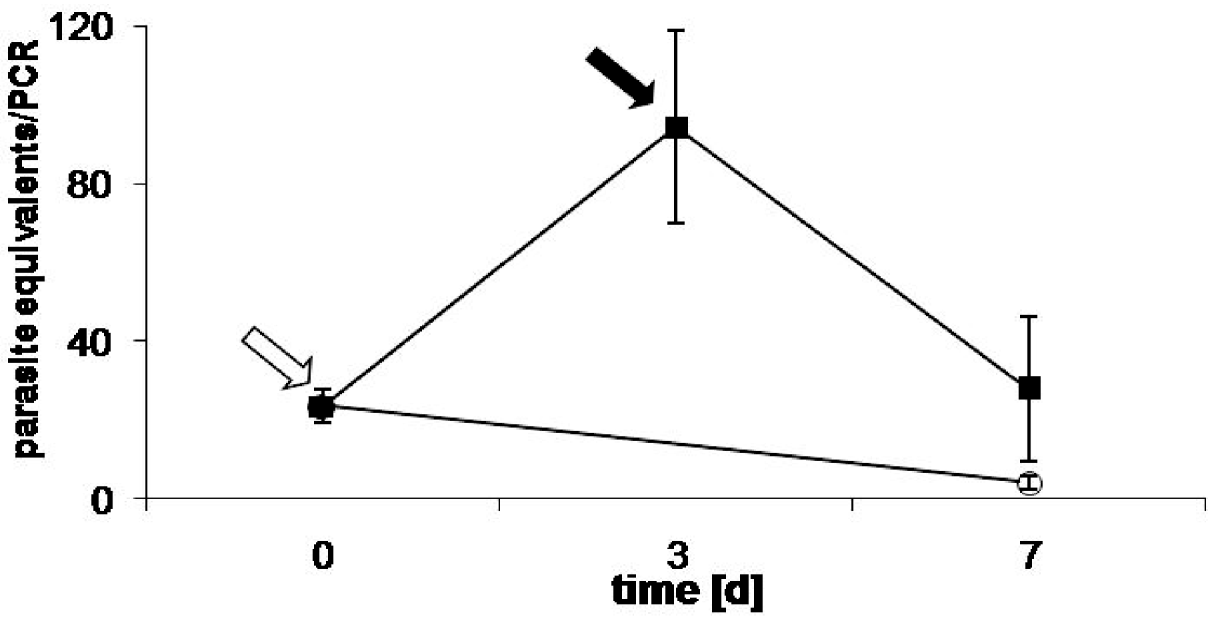
HFF were grown to confluent monolayer in 24-well tissue-culture plates and infected with 5×10⁴ purified Nc-1 tachyzoites per well for 2 h at 37°C with 5% CO2, as previously described (Esposito et al. Reference Esposito, Stettler, Moores, Pidathala, Müller, Stachulski, Berry, Rossignol and Hemphill2005). Unbound parasites were removed by washing in DMEM, and infected monolayers were maintained in supplemented DMEM containing the indicated drug concentration (see below). Controls contained the appropriate amounts of the solvent DMSO alone. The cultures were maintained under treatment at 37°C with 5% CO2 for various periods of time and checked daily by light microscopy. DMSO- or drug-containing medium was changed every day. A control experiment was done to specifically assess the effect of the solvent DMSO alone on the parasite proliferation and survival in infected HFF monolayers. Infected monolayers were maintained under DMSO treatment or in the absence of DMSO for 20 days. DMSO was used in a 1:1000 dilution, corresponding to the DMSO concentration in drug-containing medium. Samples for monitoring parasites were collected (as indicated below) on days 0, 3, 5, 7, 11 and 20, following initiation of the treatment. In experimental part 1, different concentrations of toltrazuril were tested. Infected monolayers were maintained in medium containing 30, 60 or 90 μg/ml toltrazuril for 2 days. Samples were collected as indicated below. In experimental part 2, the short-term effect of toltrazuril on infected monolayers was assessed. Therefore, infected monolayers were treated with 30 μg/ml toltrazuril or a corresponding amount of DMSO solvent for 2 days. Samples for monitoring parasite survival by RT-PCR were taken at day 0, 1 and 2, following initiation of the treatment. Experimental part 3 investigated the long-term effect of toltrazuril and the putative recurrence of the proliferative activity of the treated parasites. For this, infected monolayers were treated with 30 μg/ml toltrazuril for 3–20 days. The follow-up analyses of DMSO-treated control cultures were stopped after 6 days, as the control experiment did not show a negative effect of DMSO (Fig. 2). Samples for monitoring parasite survival by RT-PCR were taken at days 3, 10, 14 and 20, following initiation of drug treatment. Furthermore, infected monolayers were trypsinized at day 3, 10 and 14 and washed in DMEM. After centrifugation, the pellet was resuspended in 4 volumes of supplemented DMEM, added to 4 wells with fresh HFF monolayers and maintained for up to 32 days in the absence of the drug.
Experimental part 4 was designed to assess the effect of toltrazuril on an established in vitro infection. For this, HFF monolayers were infected and parasites were subsequently allowed to proliferate in the absence of the drug. After 3 days, 30 μg/ml toltrazuril was added and the cultures were maintained for another 4 days under treatment.
For sample collection, the medium was removed and wells were washed with PBS. The cellular material was taken up in 400 μl of RTL+ buffer (AllPrep DNA/RNA kit; QIAGEN, Basel, Switzerland) containing 1% β-mercaptoethanol, then transferred to Eppendorf tubes and frozen at −80°C prior to DNA and RNA extraction. Each assay in a given experiment was carried out in triplicate.
DNA/RNA extraction and cDNA synthesis
DNA and RNA purification were performed using the AllPrep DNA/RNA kit (QIAGEN) according to the standard protocol suitable for cell cultures. Frozen cell pellets were lysed in 750 μl of RTL+ buffer containing 1% β-mercaptoethanol. Frozen lysates were allowed to thaw at 37°C. All purification steps were performed at room temperature. DNA was eluted in 60 μl of AE buffer and RNA in 60 μl of RNAse-free water. DNA was boiled at 95°C for 3 min and frozen at −80°C prior to PCR. RNA was boiled at 95°C for 3 min and immediately used for cDNA synthesis.
Reverse Transcription
cDNA synthesis was performed using the Omniscript® Reverse Transcription kit (QIAGEN) according to the standard protocol for first-strand cDNA synthesis. Briefly, 0.5 μg random Primer (Promega, Wallisellen, Switzerland) and 2 μl of RNA were used in a final volume of 20 μl reaction mix and incubated for 1 h at 37°C. cDNA was boiled at 95°C for 3 min and frozen at −80°C prior to PCR.
Conventional PCR
Detection of parasite-specific DNA by Nc5-PCR was done as previously described (Müller et al. Reference Müller, Zimmermann, Hentrich and Gottstein1996) with N. caninum-specific primers Np21plus and Np6plus in a thermal cycler (Gene Amp PCR System model 9700; Applied Biosystems, Basel Switzerland). For the mix, 20 pmol of each primer and 1 μl of DNA in a final volume of 25 μl were used.
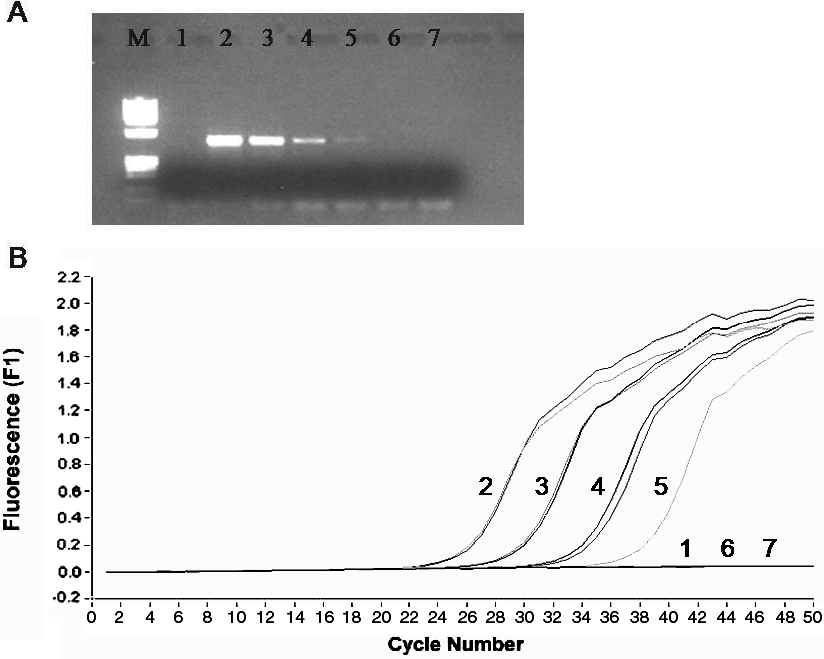
For detection of parasite-specific cDNA, the forward primer NcGRA2-F1 (5′GATGATGTTAGAGAATCAATGGC 3′) and the reverse primer NcGRA2-R2 (5′CCGTCCTTCTCCATCGTCC 3′) were designed using nucleotide sequence data available from the GenBank databases (http://www.ncbi.nlm.nih.gov/GenBank/index.html) under the Accession number AF196293. PCR was performed using 25 pmol of each primer and 1 μl of cDNA in a final volume of 25 μl in a thermal cycler for 40 cycles (94°C, 30 sec; 60°C, 30 sec; 72°C, 2 min), followed by a final primer extension at 72°C for 15 min. The PCR amplified a product of 486 bp of the NcGra2 gene (Fig. 1A).
NcGRA2-RT-PCR sensitivity. cDNA was diluted and conventional PCR (A) and real-time RT-PCR (B) was performed using the NcGRA2-specific primers. Dilutions included 100 (2), 10 (3), 1 (4), 0.1 (5), 0.01 (6) or 0.001 (7) parasite equivalents. For the real-time RT-PCR every dilution was performed in duplicate. Using cDNA, the PCR amplified a product of 468 bp. M: DNA-marker ΦX174; 1: negative control.

Both PCR-mixes were performed using the AmpliTaq® DNA polymerase kit (Applied Biosystems). To prevent carry-over contamination from previous reactions, the samples were incubated with uracyl DNA glycosylase (UDG; Roche Diagnostics, Basel, Switzerland) for 10 min at 20°C. The UDG was inactivated by incubation at 95°C for 2 min. Each run included a negative (water) and a positive (purified parasites) sample.
Quantitative real-time PCR
Quantitative real-time Nc5-PCR based on DNA was performed on the LightCycler instrument (Roche Diagnostics) as previously described (Müller et al. Reference Müller, Vonlaufen, Gianinazzi, Leib and Hemphill2002) using N. caninum-specific primers Np21plus and Np6plus, Nc5-specific hybridization probes 3FL and 5CL and 1:410 diluted DNA.
Quantitative real-time RT-PCR based on cDNA was performed using the QuantiTec™SYBR®Green PCR kit (QIAGEN), gene-specific primers NcGRA2-F1 and -R2 and 1:41 diluted cDNA. After activation of the DNA polymerase for 15 min at 95°C, PCR was performed for 50 cycles (94°C, 15 sec; 58°C, 15 sec; 72°C, 30 sec) with a single acquisition mode at 85°C, followed by a melting curve. Both PCRs were performed with 4.1 μl of sample in a final volume of 10 μl. To avoid carry-over contamination, UDG was added to the mix. As external standards, samples containing DNA or cDNA equivalents from 100, 10 and 1 N. caninum tachyzoite(s) were included. Parasite number was calculated by assessing mean values (plus standard deviations) from triplicate determinations.
Quantitative real-time RT-PCR for the amplification of host cell α-actin was performed using the QuantiTec™SYBR®Green PCR kit (QIAGEN) as described previously (Müller et al. Reference Müller, Zimmermann, Forster, Bienz, Gottstein and Welle2003). The PCR included forward primer α-ac1, reverse primer α-ac2 and 4 μl of 1:10 diluted cDNA in a 10 μl standard reaction.
Statistical analysis
For time-course experiments, the significance of the differences between end-point values of the control and experimental assays was determined by Student's t test, using the Microsoft Excel program. P values of <0.05 were considered statistically significant.
RESULTS
Sensitivity and specificity of PCR
The nucleotide sequence of the NcGRA2 gene was derived from the GenBank database under Accession number AF196293. A primer pair was designed that included the exon/exon fusion side of the gene. The product amplified by conventional PCR using cDNA had a size of 468 bp (Fig. 1A). To assess the sensitivity of the RT-PCR, cDNA samples from purified Nc-1 tachyzoites were run at different dilutions (Fig. 1A). Visualization of the PCR products showed an end-point sensitivity of 0.1 parasite equivalents per PCR reaction. The PCR was specific for cDNA as there was no detectable product after the amplification of the same amount of parasite DNA (data not shown). For quantification of the number of parasites in a given sample, the conventional RT-PCR was transformed into a real-time RT-PCR. The sensitivity of the real-time RT-PCR was determined with cDNA samples from purified Nc-1 tachyzoites at different dilutions (Fig. 1B). The real-time RT-PCR showed an end-point sensitivity of 0.1 parasite equivalents per PCR reaction. To test the species specificity, conventional RT-PCR was carried out with NcLiv tachyzoites and Toxoplasma RH tachyzoites. The PCR was positive for Neospora tachyzoites but negative for Toxoplasma tachyzoites (data not shown).
In vitro treatment with toltrazuril
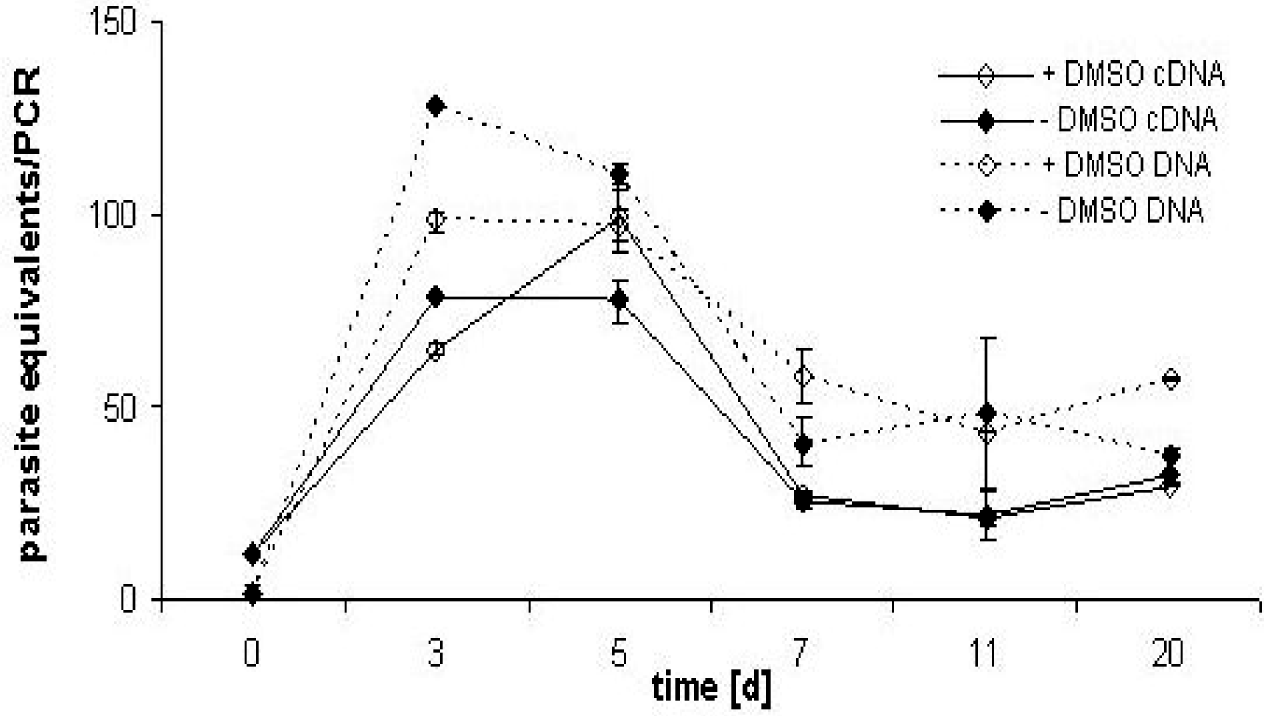
The NcGRA2-RT-PCR-assay was used to assess the efficacy of toltrazuril in vitro. As toltrazuril was dissolved in DMSO, a control experiment was carried out to determine the effect of the solvent DMSO on parasite proliferation and survival. DMSO had no negative effect on parasite survival, as quantitative real-time RT-PCR detected similar amounts of parasites in the DMSO-treated and -untreated cultures after 20 days (Fig. 2). Due to the fact, that the tachyzoites egressed and destroyed most of the host cell monolayer, a decrease of parasites was observed from day 5 onwards in both, DMSO-treated and -untreated cultures.
Effect of the solvent DMSO on parasite proliferation and survival. HFF monolayers were infected with Neosporum caninum tachyzoites, and at 2 h p.i. DMSO (1:1000) was added. The control cultures contained medium without DMSO. Treatment was stopped at 3, 5, 7, 11 and 20 days p.i. The y-axis shows the number of parasite equivalents per quantitative real-time NcGRA2-RT-PCR (detection of Neospora cDNA; filled line) and quantitative real-time Nc5-PCR (detection of Neospora genomic DNA; dotted line). The amount of parasites decreased from day 5 on, due to the lysis of the host cells.

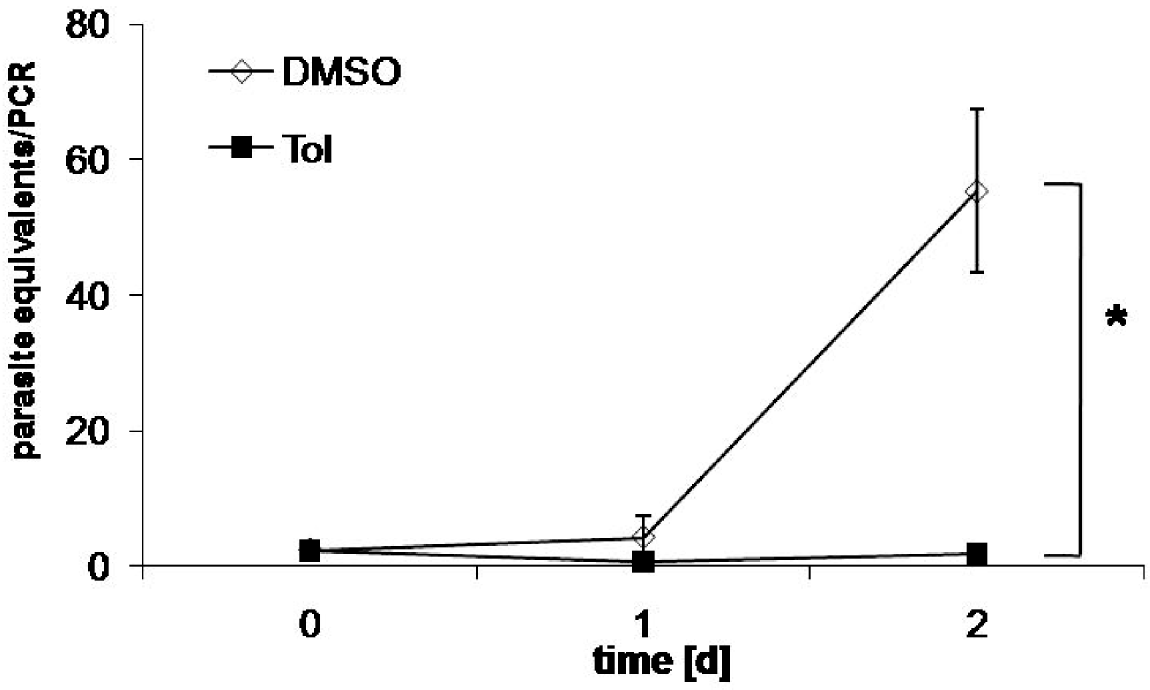
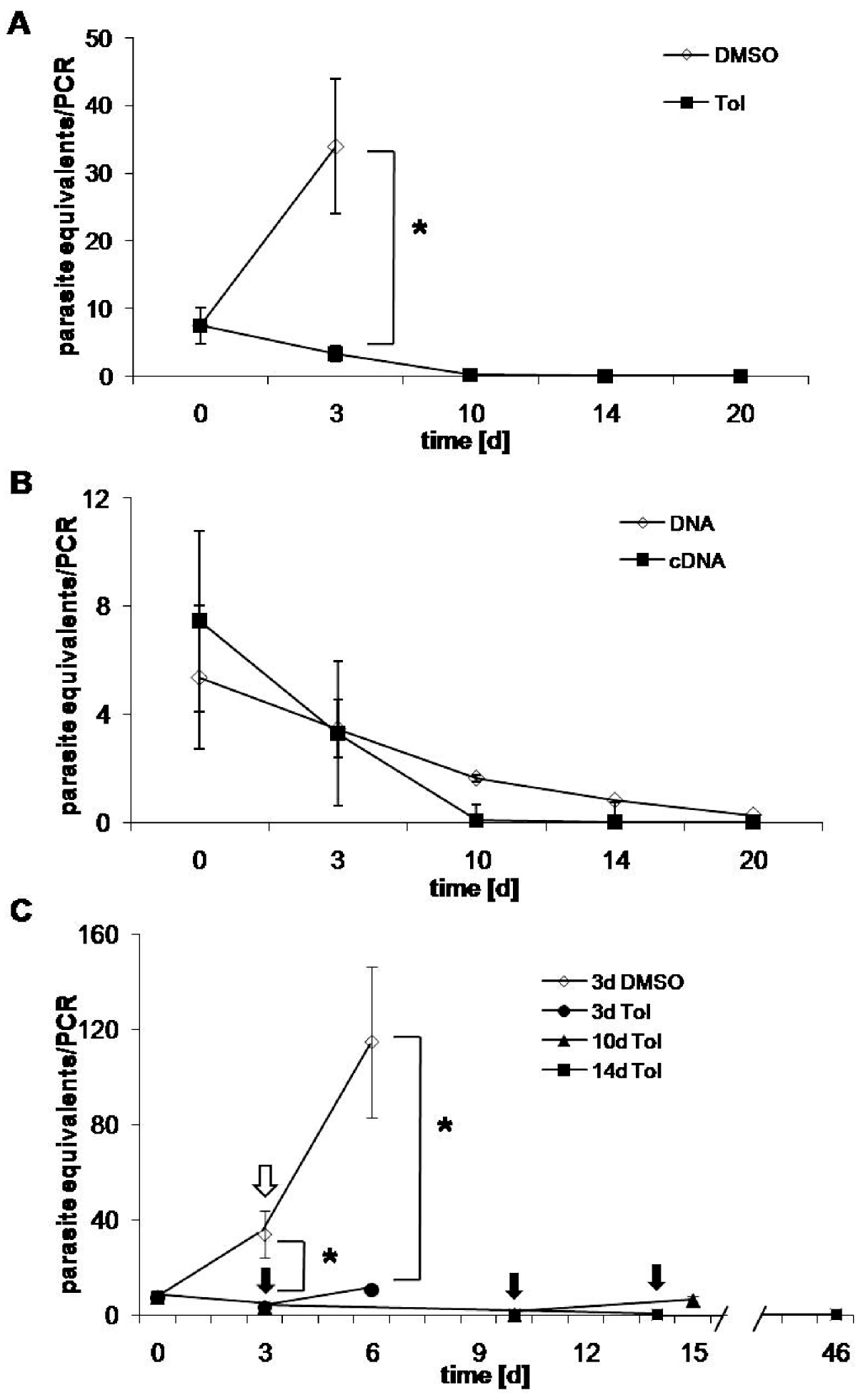
Different concentrations of toltrazuril were tested on infected HFF host cells in vitro. Cultures were grown in medium containing 30, 60 or 90 μg/ml toltrazuril for 2 days. Quantitative real-time RT-PCR revealed no difference in the parasite amount between the 3 used concentrations (data not shown). Therefore, all further experiments were done with a toltrazuril concentration of 30 μg/ml. To assess the short-term effect of toltrazuril, infected cell cultures were grown in drug-containing medium for 2 days. A significant difference in the parasite number was first observed after 2 days of treatment when compared with the untreated culture (Fig. 3). Longer-term treatment assays were carried out to determine the treatment duration necessary for parasiticidal activity (Fig. 4). Quantitative real-time NcGRA2-RT-PCR was unable to detect any parasites after a 14-day-treatment period (Fig. 4A). A comparison of the parasite numbers, calculated by means of DNA and cDNA, revealed that DNA is still detectable after 14 days of drug treatment, while no NcGRA2-RNA is being produced anymore at this time-point, indicating that the tachyzoites detected by real-time PCR were non-viable (Fig. 4B). In order to verify this, the infected and drug-treated cultures were maintained after the treatment in drug-free medium for up to 4 weeks (Fig. 4C). Neospora was able to restart proliferation even after 10 days of exposure to toltrazuril. However, no recurrence of the parasite in cell culture was observed after the treatment period of 14 days. Furthermore, quantitative real-time PCR, based on DNA and cDNA, did not detect any parasites in the culture samples. Host cells were not negatively affected by the treatment, as microscopical observation showed no morphological alterations to indicate destruction. Further, the host cell α-actin transcription level, detected by quantitative real-time RT-PCR, remained constant over the treatment period (data not shown).
Short-term effect of toltrazuril. HFF monolayers were infected with Neospora caninum tachyzoites, and at 2 h p.i. 30 μg/ml toltrazuril (Tol) was added. Samples were collected at day 0 and days 1 and 2 p.i. The y-axis shows the number of parasite equivalents per quantitative real-time NcGRA2-RT-PCR. There is a significantly lower amount of parasites at 2 days p.i. in the toltrazuril-treated sample compared to the DMSO control (* P<0.05).

Long-term effect of toltrazuril and re-start of parasite proliferation. HFF monolayers were infected with Neospora caninum tachyzoites, and at 2 h p.i. 30 μg/ml toltrazuril (Tol) was added. (A) Treatment was stopped at 3, 10, 14 and 20 days p.i. The y-axis shows the number of parasite equivalents per quantitative real-time NcGRA2-RT-PCR. As assessed by NcGRA2-RT-PCR, there was no detectable parasite in the sample after 14 and 20 days of treatment. (B) Comparison of parasite numbers, as detected by quantitative real-time Nc5-PCR (detection of Neospora genomic DNA) and quantitative real-time NcGRA2-RT-PCR (detection of Neospora cDNA). Note that there is still genomic DNA but no detectable cDNA in the 14-day treated sample. (C) After the indicated treatment duration, cultures were maintained without DMSO (after 3 days, open arrow) or toltrazuril (after 3, 10 and 14 days, closed arrows) for up to 4 weeks. Note that no restart of proliferation was observed after 14 days of treatment. There is a significantly lower amount of parasites in the toltrazuril-treated samples compared to the DMSO control at days 3 and 6 p.i. (* P<0.05).

Toltrazuril also acts against an established in vitro infection of host cells with Neospora. Cultures were infected and grown for 3 days in the absence of the drug. Addition of toltrazuril, after establishment of the infection in vitro, reduced the parasite number (Fig. 5).
Effect of toltrazuril on an established Neospora caninum infection. Infected fibroblasts were grown for 3 days without toltrazuril to establish an infection. Treatment started 0 (open arrow) or 3 (closed arrow) days p.i. Note that toltrazuril treatment reduced the number of parasites after an established infection, as assessed by quantitative real-time NcGRA2-RT-PCR.

DISCUSSION
The apicomplexan parasite Neospora caninum is an obligate intracellular parasite, infection of which is associated with abortion in cattle. To date, there is no effective treatment for cattle available (Andrianarivo et al. Reference Andrianarivo, Rowe, Barr, Anderson, Packham, Sverlow, Choromanski, Loui, Grace and Conrad2000; Innes and Vermeulen, Reference Innes and Vermeulen2006) but a considerable number of potentially useful compounds were tested in cell-culture-based assays (Lindsay and Dubey, Reference Lindsay and Dubey1989; Lindsay et al. Reference Lindsay, Rippey, Cole, Parsons, Dubey, Tidwell and Blagburn1994). In most cases, the effects of a given compound were microscopically examined (Darius et al. Reference Darius, Mehlhorn and Heydorn2004b), or parasite numbers were determined either by microscopical counting of the parasites or by extraction of DNA and quantitative real-time PCR (Esposito et al. Reference Esposito, Stettler, Moores, Pidathala, Müller, Stachulski, Berry, Rossignol and Hemphill2005). However, while these techniques provided information on the proliferation inhibitory effects of a given compound, they did not allow distinction between live and dead parasites following a given treatment. The aim of the present study was to develop a method that could be used to distinguish between live and dead N. caninum parasites. To validate the method, Neospora tachyzoites were treated in vitro with toltrazuril, a drug that was shown earlier to exhibit considerable anti-parasitic activity against N. caninum (Gottstein et al. Reference Gottstein, Eperon, Dai, Cannas, Hemphill and Greif2001; Darius et al. Reference Darius, Mehlhorn and Heydorn2004a, Reference Darius, Mehlhorn and Heydornb).
To detect only the live parasites, we developed a PCR using cDNA based on mRNA of the NcGRA2 gene, making use of the specific mRNA of an antigen that is expressed in both tachyzoite and bradyzoite stages. The NcGRA2 gene sequence contains 2 exons and 1 intron and is highly expressed in tachyzoites (Ellis et al. Reference Ellis, Ryce, Atkinson, Balu, Jones and Harper2000). The dense granule protein NcGRA2 was also detected in in vitro-derived bradyzoites (Vonlaufen et al. Reference Vonlaufen, Guetg, Naguleswaran, Müller, Bjorkman, Schares, Von Blumroeder, Ellis and Hemphill2004). The NcGRA2-RT-PCR developed herein was specific for cDNA derived from N. caninum Nc-1 and Nc-Liverpool strain tachyzoites. As the NcGRA2-specific primers included the exon/exon fusion site, the NcGRA2 DNA sequence was not amplified in this reaction. Despite a 56% similarity between the Neospora and the Toxoplasma GRA2 sequences (Ellis et al. Reference Ellis, Ryce, Atkinson, Balu, Jones and Harper2000), the NcGRA2-RT-PCR was highly specific for the NcGRA2 sequence. These observations indicated that the new NcGRA2-RT-PCR should be considered as a useful tool to detect live Neospora parasites, especially due to its high sensitivity of 0·1 parasite equivalents per reaction.
To validate the NcGRA2-RT-PCR, in vitro treatment of N. caninum with toltrazuril was performed. The solvent DMSO itself has no negative effect on parasite survival. Similar amounts of parasites were found in DMSO-treated and -untreated cultures after a time-period of 20 days. Previous studies had already indicated that toltrazuril exhibits profound anti-parasitic activity, inducing considerable damage in N. caninum tachyzoites upon in vitro treatment and limiting parasite proliferation and dissemination in experimentally infected mice and cattle (Gottstein et al. Reference Gottstein, Eperon, Dai, Cannas, Hemphill and Greif2001, Reference Gottstein, Razmi, Ammann, Sager and Müller2005; Kritzner et al. Reference Kritzner, Sager, Blum, Krebber, Greif and Gottstein2002; Darius et al. Reference Darius, Mehlhorn and Heydorn2004a, Reference Darius, Mehlhorn and Heydornb; Haerdi et al. Reference Haerdi, Haessig, Sager, Greif, Staubli and Gottstein2006). After microscopical examination of in vitro toltrazuril (30 μg/ml)-treated parasites, Darius et al. (Reference Darius, Mehlhorn and Heydorn2004b) observed severe destruction that was proposed to be lethal. In the cell-culture assay presented in this work, the treatment with 30 μg/ml toltrazuril revealed a significant reduction in the number of parasites after 2 days in treated cultures when compared to untreated cultures. Nevertheless, the 2-day-treated cultures contained viable parasites, as shown by the detection of NcGRA2 mRNA. This is confirmed by the fact that parasites treated for a few days were able to infect new host cells and started proliferation again in the absence of toltrazuril. Thus, when applied for a few days under these experimental conditions, toltrazuril exhibits only parasitostatic activity. In experimentally infected mice a 6-day toltrazuril treatment also had a more parasitostatic rather than a parasiticidal effect (Ammann et al. Reference Ammann, Waldvogel, Breyer, Esposito, Müller and Gottstein2004). A clear parasiticidal effect of toltrazuril, defined in our assay by the failure to detect NcGRA2 mRNA, was first observed after a continuous long-term treatment of 14 days. However, N. caninum DNA was still detectable in the 14-day-treated samples, but the parasites were not viable anymore since they were not able to restart proliferation following drug treatment. Toltrazuril acts specifically against the parasites, as the number of host cells was not affected after the long-term treatment.
In naturally infected animals, usually an established infection has to be treated. In our culture-based assay presented here, toltrazuril could markedly reduce the number of parasites after a 3-day established infection.
In conclusion, we present a novel assay that allows distinction between live and dead N. caninum in cell culture. This assay is applicable, for example, in efficacy testing of chemotherapeutically interesting compounds, and was validated with respect to the in vitro efficacy of toltrazuril, a drug that is currently being experimentally assessed for the potential treatment of neosporosis in cattle. The fact, that at least 14 days of in vitro treatment is necessary to obtain parasiticidal activity of toltrazuril, has important implications for the development of novel treatment strategies for neosporosis in cattle. Further investigations will focus on optimizing this RT-PCR for the detection of live parasites in the tissues of infected animals. Furthermore, we would also like to address the question of whether other stages of the parasite, such as bradyzoites, can be affected by medication, and if the NcGRA2 mRNA approach can also be used to determine the viability status of fully mature N. caninum tissue cysts.
The study was supported by Bayer HealthCare AG (Leverkusen), the Swiss Federal Office of Science and Education (BBW C01.0122 in the frame of COST 854), and the Swiss National Science Foundation (Grant No. 3100A0-112532).