Alcohol use among adolescents is a major public health concern, and it is important to understand how it develops. One avenue for alcohol research involves genetic predispositions for levels of key neurotransmitters. Of particular interest is evidence that individuals with lower levels of serotonin (5-HT) functioning are at higher risk for alcohol use and problems (e.g., LeMarquand, Pihl, & Benkelfat, Reference LeMarquand, Pihl and Benkelfat1994a). However, the mechanisms through which 5-HT functioning increases the risk for alcohol use are less clear (e.g., Canli & Lesch, Reference Canli and Lesch2007; Carver, Johnson, & Joormann, Reference Carver, Johnson and Joormann2008; Heinz, Mann, Weinberger, & Goldman, Reference Heinz, Mann, Weinberger and Goldman2001; Lesch, Reference Lesch2005). The present study tests longitudinal mechanisms underlying the relation between 5-HT functioning and alcohol use in adolescence.
5-HT Functioning and Alcohol Use
An extensive literature suggests that 5-HT functioning is cross-sectionally linked with alcohol phenotypes, although most of this work has been with adults (LeMarquand et al., Reference LeMarquand, Pihl and Benkelfat1994a, Reference LeMarquand, Pihl and Benkelfat1994b). For instance, 5-hydroxyindoleacetic acid (5-HIAA, a major metabolite of 5-HT) showed lower concentration in cerebrospinal fluid (CSF) among alcoholics with a period of abstinence compared to controls (Ballenger, Goodwin, Major, & Brown, Reference Ballenger, Goodwin, Major and Brown1979; Banki, Reference Banki1981; Borg, Kvande, Liljeberg, Mossberg, & Valverius, Reference Borg, Kvande, Liljeberg, Mossberg and Valverius1985) and among early- rather than late-onset alcoholics (Füs-Aime et al., Reference Füs-Aime, Eckardt, George, Brown, Mefford and Linnoila1996). Moreover, male alcoholics with no other Axis I diagnoses and 2 weeks of abstinence, adult alcoholics with 2 weeks of abstinence, and nonabstinent heavy drinkers showed blunted hormonal responses to 5-HT agonists (Balldin et al., Reference Balldin, Berggren, Engel, Eriksson, Hård and Söderpalm1994; Farren, Ziedonis, Clare, Hammeedi, & Dinan, Reference Farren, Ziedonis, Clare, Hammeedi and Dinan1995; Lee & Meltzer, Reference Lee and Meltzer1991). Ernouf et al. (Reference Ernouf, Compagnon, Lothion, Narcisse, Benard and Daoust1993) found that abstinent alcoholics showed greater 5-HT reuptake as compared to control participants, which might be indicative of lower levels of 5-HT in the synaptic cleft.
Studies have also shown that 5-HT functioning might be a heritable, premorbid risk factor for alcohol consumption and dependence. Rodent strains bred with an alcohol preference had lower 5-HT levels than rodents without an alcohol preference, even prior to alcohol exposure (Gongwer, Murphy, McBride, Lumeng, & Li, Reference Gongwer, Murphy, McBride, Lumeng and Li1989). Both children of alcoholics who had never had alcohol and nonabstaining adult male offspring of alcoholics without DSM-III Axis I disorders had higher platelet 5-HT uptake compared to controls (Ernouf et al., Reference Ernouf, Compagnon, Lothion, Narcisse, Benard and Daoust1993; Rausch, Monteiro, & Schuckit, Reference Rausch, Monteiro and Schuckit1991). One study found that abstinent alcoholics with both an alcoholic mother and father had lower CSF 5-HIAA concentrations than alcoholics with only one alcoholic parent (Füs-Aime et al., Reference Füs-Aime, Eckardt, George, Brown, Mefford and Linnoila1996). Thus, the level of 5-HT functioning appears to be heritable because alcoholics with denser family histories of alcoholism showed greater genetic vulnerabilities for alcoholism compared to alcoholics with less dense family histories.
Results from molecular genetic studies also suggest that 5-HT functioning might be a heritable risk factor. In a meta-analysis, Feinn, Nellisery, and Kranzler (Reference Feinn, Nellissery and Kranzler2005) found that the short allele of the serotonin transporter linked polymorphic region (5-HTTLPR) polymorphism was associated with alcohol dependence. Numerous studies also found links between other 5-HT single nucleotide polymorphisms (SNPs) and alcohol phenotypes (e.g., Cao, LaRocque, & Li, Reference Cao, LaRocque and Li2013; Enoch, Gorodetsky, Hodgkinson, Roy, & Goldman, Reference Enoch, Gorodetsky, Hodgkinson, Roy and Goldman2011; Zlojutro et al., Reference Zlojutro, Manz, Rangaswamy, Xuei, Flury-Wetherill, Koller and Almasy2011).
Despite the volume of research, few longitudinal studies have tested mechanisms through which 5-HT functioning influences risk for adolescents' alcohol use. If 5-HT functioning is a premorbid risk factor for alcohol use, it is likely to affect behavioral phenotypes that developmentally precede alcohol use. Identifying such mechanisms in adolescence could inform prevention and intervention efforts because alcohol use during adolescence is a robust predictor of later alcohol use disorder and other negative physical and psychosocial outcomes (e.g., Odgers et al., Reference Odgers, Caspi, Nagin, Piquero, Slutske, Milne and Moffitt2008).
Potential Mediating Role of Aggression/Antisociality and Depressive Symptoms
Some of the most consistently replicated associations in the literature on 5-HT function are those between lower levels of 5-HT function and impulsive aggression and between lower levels of 5-HT function and depression (see Carver et al., Reference Carver, Johnson and Joormann2008). A recent meta-analysis of 175 child, adolescent, and adult studies found a small correlation between greater levels of human aggression and lower levels of 5-HT as indexed by CSF 5-HIAA, acute tryptophan depletion, drug, and endocrine challenge (Duke, Begue, Bell, & Eisenlohr-Moul, Reference Duke, Bègue, Bell and Eisenlohr-Moul2013). Depressive symptoms are also associated with lower 5-HT functioning as measured by CSF 5-HIAA, drug challenge, tryptophan depletion, and platelet 5-HT uptake (Asberg, Thoren, Traskman, Bertilsson, & Ringberger, Reference Asberg, Thoren, Traskman, Bertilsson and Ringberger1976; Benkelfat, Ellenbogen, Dean, & Palmour, Reference Benkelfat, Ellenbogen, Dean and Palmour1994; Birmaher et al., Reference Birmaher, Kaufman, Brent, Dahl, Al-Shabbout, Nelson and Ryan1997; Booij, Van der Does, & Willem, Reference Booij, Van der Does and Willem2007; Clarke, Flint, Attwood, & Munafo, Reference Clarke, Flint, Attwood and Munafo2010; Cowen, Reference Cowen2002; Delgado et al., 1999; Dencker, Malm, Roos, & Werdinius, Reference Dencker, Malm, Roos and Werdinius2006; Flory, Mann, Manuck, & Muldoon, Reference Flory, Mann, Manuck and Muldoon1998; Levinson, Reference Levinson2006; Munafò, Hayward, & Harmer, Reference Munafò, Hayward and Harmer2006; Neumeister et al., Reference Neumeister, Konstantinidis, Stastny, Schwarz, Vitouch, Willeit and Kasper2002, Reference Neumeister, Nugent, Waldeck, Geraci, Schwarz, Bonne and Dreveta2004). In addition, 5-HT was lowered among individuals with only depression, or only aggression/antisociality, without co-occurring disorders (Birmaher et al., Reference Birmaher, Stanley, Greenhill, Twomey, Gavrilescu and Rabinovich1990; Cleare, Murray, & O'Keane, Reference Cleare, Murray and O'Keane1996; Coccaro, Reference Coccaro1992). Thus, the relation between 5-HT functioning and aggression/antisociality is likely not spuriously caused by co-occurring depression, or vice versa. Because it appears that aggressive/antisocial and depressive symptoms share a biological vulnerability with alcohol use (i.e., lower 5-HT functioning), and have also been identified as early risk factors for later substance use outcomes, perhaps aggression and depression represent mechanisms in the relation between 5-HT functioning and adolescents' alcohol use (Hussong & Chassin, Reference Hussong and Chassin1994; Pardini, White, & Stouthamer-Loeber, Reference Pardini, White and Stouthamer-Loeber2007).
Potential Mediating Role of Self-Regulation
The fact that 5-HT functioning predicts both aggressive/antisocial and depressive symptoms might be surprising given that these two types of problem behavior lie on distinct spectra (i.e., internalizing vs. externalizing). To reconcile this discrepancy, Carver et al. (Reference Carver, Johnson and Joormann2008) posited that individuals with lower levels of 5-HT functioning show reduced top-down, reflective self-regulation, which in turn increases the relative dominance of bottom-up, reflexive control. Reflective regulation describes one's ability to voluntarily and flexibly regulate and plan behaviors, emotions, and thoughts. An analogous way of characterizing this temperament quality is in terms of effortful control, a voluntary form of regulation allowing adaptive responses (Eisenberg, Spinrad, & Morris, Reference Eisenberg, Spinrad and Morris2002). A contrasting kind of regulation is reflexive control, which describes an automatic, relatively involuntary predisposition toward approach or avoidance. Reflexive control tendencies can be regulated, at least to some degree, by voluntarily mobilizing self-regulation (Eisenberg, Smith, & Spinrad, Reference Eisenberg, Smith, Spinrad, Vohs and Baumeister2004). For example, individuals predisposed to approaching rewarding stimuli (i.e., low reflexive control) or to avoiding novelty in spite of potential rewards (i.e., high reflexive control) might regulate their desires by utilizing top-down self-regulation.
Thus, Carver et al. (Reference Carver, Johnson and Joormann2008) hypothesized that deficits in 5-HT and subsequent declines in reflective, voluntary regulation would predict depression, but only if the individual was also predisposed to reflexive avoidance or inhibition (i.e., high reflexive control). Conversely, deficits in 5-HT and subsequent declines in, or slow development of, voluntary regulation would predict aggression/antisociality, but only if the individual was predisposed to reflexive approach and reward sensitivity. In sum, this model suggests that 5-HT functioning predicts the divergent outcomes of depression and aggression/antisociality because it produces a common vulnerability to low voluntary self-regulation. Although reflexive control is also important in Carver's larger theory, the current study only tested self-regulation/reflective control because the goal was to elucidate the common vulnerability in reflective control produced by 5-HT functioning.
In support of Carver et al.’s theory are findings that tryptophan depletion decreased activation in brain regions associated with reflective/effortful control, such as the dorsolateral/medial prefrontal cortex and the anterior cingulate cortex (Allen et al., Reference Allen, Cleare, Lee, Fusar-Poli, Tunstall, Fu and McGuire2006; Smith, Morris, Friston, Cowen, & Dolan, Reference Smith, Morris, Friston, Cowen and Dolan1999). The short allele of the 5-HTTLPR polymorphism also predicted lower resting activity in the ventromedial prefrontal cortex, which is an area that constrains amygdala activity (i.e., an area associated with reflexive control; Rao et al., Reference Rao, Gillihan, Wang, Korczykowski, Sankoorikal, Kaercher and Farah2007), and predicted poorer effortful control among insecurely attached children (Kochanska, Philibert, & Barry, Reference Kochanska, Philibert and Barry2009). It is of interest that reducing 5-HT levels via tryptophan depletion has produced divergent effects, such as increases in depressive symptoms or aggression, but only or more strongly for those predisposed to such traits. That is, those with a family or personal history of depression experienced increased depressive symptoms, and those with preexisting aggressive tendencies experienced increased aggression (Benkelfat et al., Reference Benkelfat, Ellenbogen, Dean and Palmour1994; Cleare & Bond, Reference Cleare and Bond1995; Finn, Young, Pihl, & Ervin, Reference Finn, Young, Pihl and Ervin1998; Klaassen et al., Reference Klaassen, Riedel, Honig, Van Someren, Deutz and Van Praag1999; Neumeister et al., Reference Neumeister, Konstantinidis, Stastny, Schwarz, Vitouch, Willeit and Kasper2002). Thus, the depletion of 5-HT might impede the regulation of underlying reflexive tendencies. In sum, lowered 5-HT functioning might relate to depression and aggression by exerting an influence over brain regions involved in regulation, such as the anterior cingulate cortex and prefrontal cortex, which subsequently increases the expression of reflexive control tendencies.
There are also studies in line with Carver et al. (Reference Carver, Johnson and Joormann2008)’s theory that demonstrate that children and adolescents with lower effortful control/self-regulation show greater aggression/antisociality and depression. Effortful control predicted adolescents' conduct problems and aggression both cross-sectionally and prospectively (Dennis & Brotman, Reference Dennis and Brotman2003; Loukas & Roalson, Reference Loukas and Roalson2006; Muris, Van Der Pennen, Sigmond, & Mayer, Reference Muris, Van der Pennen, Sigmond and Mayer2008; Wang, Chassin, Eisenberg, & Spinrad, Reference Wang, Chassin, Eisenberg and Spinrad2015). Similarly, studies showed that lower levels of effortful control were cross-sectionally and prospectively linked to adolescents' greater depressive symptoms (Loukas & Robinson, Reference Loukas and Robinson2004; Moriya & Tanno, Reference Moriya and Tanno2008; Muris et al., Reference Muris, Van der Pennen, Sigmond and Mayer2008; Wang, Chassin, et al., Reference Wang, Chassin, Eisenberg and Spinrad2015).Footnote 1 In sum, adolescents with lower levels of 5-HT functioning might have lower levels of effortful control, which might in turn lead to greater depression and aggression/antisociality. Moreover, given that deficient self-regulation has been shown to be a risk factor for alcohol use (Willem et al., Reference Willem, Bijttebier, Claes, Sools, Vandenbussche and Nigg2011; Wong & Rowland, Reference Wong and Rowland2013), perhaps effortful control also predicts adolescents' alcohol use through these problem behaviors.
A Developmental Model of Adolescents' Alcohol Use
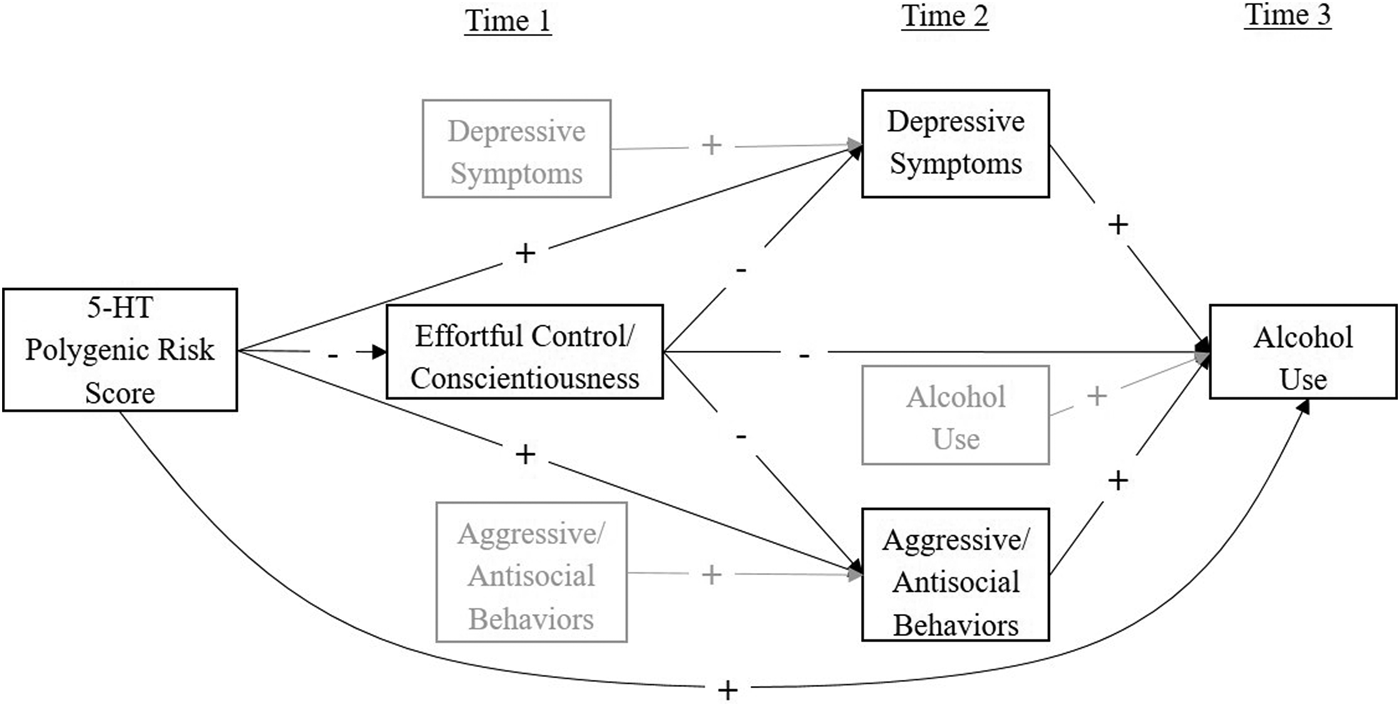
Figure 1 illustrates our model of the role of 5-HT in adolescents' alcohol use. In this model, adolescents with preexisting vulnerabilities for lower levels of 5-HT function show lower self-regulation, which should lead to either aggression/antisociality or depressive symptoms. Adolescents with aggressive/antisocial symptoms should subsequently use alcohol, possibly because they affiliate with deviant alcohol use-promoting peers, whereas adolescents with depressive symptoms might use alcohol to alleviate negative emotions (Sher, Reference Sher1991). It is also possible that 5-HT function and/or self-regulation might simply manifest as depressive symptoms and/or aggression/antisociality earlier in adolescence and then as alcohol use in later adolescence (i.e., that there is heterotypic continuity; Cicchetti & Rogosch, Reference Cicchetti and Rogosch2002).
Hypothesized model. For the Adult and Family Development Project, Time 1 = 10–17.99 years old, Time 2 = 11–18.99 years old, and Time 3 = 13–20.99 years old. For the Child Development Project, Time 1 = 12–13 years old, Time 2 = 14–15 years old, and Time 3 = 15–16 years old. For the Child Development Project, a measure of conscientiousness was used to reflect effortful control. Pluses and minuses indicate the hypothesized direction of effect. Gray boxes and lines indicate control variables. 5-HT, serotonin. The other covariates are not shown for ease of presentation. Correlations were estimated among all exogenous variables; among Time 1 depressive symptoms, aggressive/antisocial behaviors, and effortful control/conscientiousness; and among Time 2 depressive symptoms, aggressive/antisocial behaviors and alcohol use (not shown here). Refer to the Methods section for more details about the structural equation modeling.

Potential Moderating Role of Gender
Males generally show lower levels of effortful control and depressive symptoms and higher levels of aggressive/antisocial symptoms and alcohol use and disorders than do females (Bongers, Koot, van der Ende, & Verhulst, Reference Bongers, Koot, van der Ende and Verhulst2003; Else-Quest, Hyde, Goldsmith, & Van Hulle, Reference Else-Quest, Hyde, Goldsmith and Van Hulle2006; Nolen-Hoeksema & Girgus, Reference Nolen-Hoeksema and Girgus1994). Thus, we were also interested in the question of whether males and females show differences in the hypothesized paths of our initial working model of adolescent alcohol use.
There is some evidence that aggression/antisociality is a stronger predictor of alcohol problems for males compared to females (Caspi, Moffit, Newman, & Silva, Reference Caspi, Moffitt, Newman and Silva1996; Hussong, Curran, & Chassin, Reference Hussong, Curran and Chassin1998) and that early onset alcoholism (which is more prevalent in males) is more strongly associated with lower levels of 5-HT functioning than is late onset alcoholism (Virkkunen & Linnoila, Reference Virkkunen and Linnoila1990). In contrast, depressive symptoms might be a stronger predictor of alcohol use for females than for males (Chassin, Pitts, & Prost, Reference Chassin, Pitts and Prost2002; Fillmore et al., Reference Fillmore, Golding, Leino, Motoyoshi, Shoemaker, Terry, Ferrer, Wilsnack and Wilsnack1997). Finally, deficient self-regulation might contribute equally to depressive symptoms and aggression/antisociality across genders (e.g., Eisenberg et al., Reference Eisenberg, Zhou, Spinrad, Valiente, Fabes and Liew2005, Reference Eisenberg, Valiente, Spinrad, Cumberland, Liew, Reiser and Losoya2009).
Other Potential Moderators
It is also possible that some paths in the model might be moderated by other covariates, such as parental education, age, genetic ancestry, and parental alcohol problems. For example, several previous twin studies showed that genetic influences on various traits, including externalizing behaviors and depressive symptoms, became stronger at lower levels of socioeconomic status (SES) and older ages (e.g., Bergen, Gardner, & Kendler, Reference Bergen, Gardner and Kendler2007; Tuvblad, Grann, & Lichtenstein, Reference Tuvblad, Grann and Lichtenstein2006). Moreover, an important assumption of regression is that there is homogeneity in the regression slopes across different groups (i.e., that no significant interactions exist). Therefore, we tested whether any paths in the model were moderated by study covariates. Because we had less specific hypotheses about how the paths in the model would be affected by the covariates (e.g., the aforementioned twin studies did not specifically study genetic influences on 5-HT functioning), and because of the number of covariates included, we also accounted for multiple testing by applying a false-discovery rate (FDR) correction.
Current Study
The current study tested this longitudinal model of adolescents' alcohol use (see Figure 1). To measure 5-HT functioning, polygenic scores were created using results from an independent genome-wide association study (GWAS) of CSF 5-HIAA (Luykx et al., Reference Luykx, Bakker, Lentjes, Neeleman, Strengman, Mentink and Ophoff2014). Thus, the polygenic score indexed genetic influence on levels of 5-HIAA in the CSF, which has been posited to reflect levels of brain 5-HT (Huggins et al., Reference Huggins, Mathews, Locke, Szeliga, Friedman, Bennett and Jones2012; Stanley, Traskman-Bendz, & Dorovini-Zis, Reference Stanley, Traskman-Bendz and Dorovini-Zis1985). Because most prior studies found that lower levels of 5-HT functioning predicted greater levels of aggression/antisociality, depression, and alcohol use, the polygenic score will hereafter be referred to as 5-HT polygenic risk, with greater levels of risk reflecting lower levels of 5-HT functioning. Hypotheses were tested in both a high-risk and a community longitudinal sample (Chassin, Barrera, Bech, & Kossak-Fuller, Reference Chassin, Barrera, Bech and Kossak-Fuller1992; Dodge, Bates, & Pettit, 1990). We hypothesized that 5-HT polygenic risk would predict lower effortful control, and would indirectly predict aggression/antisociality and depressive symptoms through effortful control. We hypothesized that one pathway to alcohol use starts with 5-HT polygenic risk, which predicts alcohol use through effortful control and aggression/antisociality. We tested whether this pathway would be stronger, or only present, in males when compared to females. A second pathway starts with 5-HT polygenic risk, which predicts alcohol use through effortful control and depressive symptoms. We tested whether this pathway would be stronger, or only present, in females when compared to males. Finally, we tested all Predictor × Covariate interactions but applied FDR corrections to account for the number of tests.
Method
The Adult and Family Development Project (AFDP)
The first sample was drawn from a three-generational longitudinal study of familial alcoholism (Chassin et al., Reference Chassin, Barrera, Bech and Kossak-Fuller1992). The larger study collected data at three annual waves (Waves 1–3) and three follow-ups occurring at 5-year intervals (Waves 4–6) from parents (Generation 1 [G1s]) and their children (Generation 2 [G2s]; note, siblings were included). At Waves 5 and 6, the children of all G2s (Generation 3 [G3s]; siblings were included), G3s “other” biological parents, and teachers also participated. Finally, three follow-up assessments were conducted 18 months, 3 years, and 4 years after Wave 6 for the G3s only. G3 participants were nested within families.
AFDP recruitment and procedures
Children of alcoholic (COA) families were recruited using court records, community telephone surveys, and health maintenance organization wellness questionnaires. Non-COA families living in the same neighborhoods as COA families were recruited using reverse directories and matched on children's age, family composition, ethnicity, and SES. For more details see (Chassin et al., Reference Chassin, Barrera, Bech and Kossak-Fuller1992). At Wave 6 (Time 1 [T1]), in-state G3 children and their parents were interviewed in their homes or a university setting. At the Wave 6 18-month follow-up (Time 2 [T2]) and the 4-year follow-up (Time 3 [T3]), children were interviewed via telephone. Out-of-state children and parents were interviewed through mailed surveys or telephone. Informed consent was obtained from parents, and informed assent was obtained from adolescents.
AFDP genotyping
Genomic data were collected by cheek brushing or saliva samples (via Oragene collection kits). The extraction of DNA, standardization, and plating were completed in the Department of Psychiatry at the Washington University School of Medicine. Genotyping was performed by the Washington University Genome Sequencing Center. A total of 1,536 SNPs were designed for genotyping using the Illumina Golden Gate technology that draws on a previous collaboration illustrated in Hodgkinson et al. (Reference Hodgkinson, Yuan, Xu, Shen, Heinz, Lobos and Goldman2008) with substitutions reflecting advances in the literature. See Chassin et al. (Reference Chassin, Lee, Cho, Wang, Agrawal, Sher and Lynskey2012) for more details. Cluster plots were examined to rule out ambiguous genotype calls. Participants with Mendelian inconsistencies, incorrect gender assignments, cryptic relatedness, and/or sample swaps were excluded (N = 5). SNPs were deleted if they had low call rates (<95%), minor allele frequencies <2%, and deviations from Hardy–Weinberg equilibrium (p < 10–6; n = 66). Seventy-one percent of the G3 participants were genotyped.
Child Development Project (CDP)
The second sample was drawn from a longitudinal community sample (Dodge et al., 1990). Data were collected annually for 20 years from three different sites, which were demographically diverse and included families living in or near a small, medium, or large city.
CDP recruitment and procedure
Families were randomly approached and asked to participate during their child's kindergarten preregistration, or for late-registering families, at the beginning of the school year. There were 585 (75%) parents who were approached and agreed to participate. Mothers, fathers, and children, and children's teachers were interviewed annually. Written informed consent was obtained from parents, and written informed assent was obtained from children. No siblings were included in this data collection.
CDP genotyping
Saliva samples using Oragene collection kits were used to collect genomic data. DNA extraction and genotyping occurred at Washington University in St. Louis, Missouri. The CDP sample was genotyped using the Axiom Biobank array, which contains rare exome/loss of function variants (~75,000), eQTLs markers (16,000), imputation GWAS grid (246,000 SNPs), and cSNPs and InDels Variants (264,000). Samples were excluded if they had high missingness (>2%; n = 34). Markers with duplicate positions, variants that were likely off-target variants as identified by SNPolisher, and variants with high missingness (>5% presample filtering, >2% postsample filtering) were removed (n = 68,541). Seventy-four percent of the participants were genotyped.
The present study
AFDP participants
G3 participants were included if they were ages 10–17.99 at T1, 11–18.99 at T2, and 13–20.99 at T3; self-reported their ethnicity as non-Hispanic Caucasian (to reduce concerns of population stratification); had no genotyping errors; and were genotyped (N = 254). Age criteria limited age heterogeneity within wave with similar average ages to CDP while maximizing the sample size.Footnote 2 See online-only supplemental methods for comparisons of included and excluded participants.
CDP participants
Data were drawn from the 7th- (T1; 12–13 years old), 9th- (T2; 14–15 years), and 10th-grade assessments (T3; 15–16 years). These ages are similar to AFDP mean ages at T1–T3. In addition to maximizing comparability with AFDP, these ages were chosen because the self-regulation measure was only available in 7th grade, and the latest alcohol use assessment that was also assessed more than once was in 10th grade. Further inclusion criteria were that participants self-reported their ethnicity as non-Hispanic Caucasian and were genotyped (N = 348; see online-only supplemental material methods for comparisons of included and excluded participants).
Measures
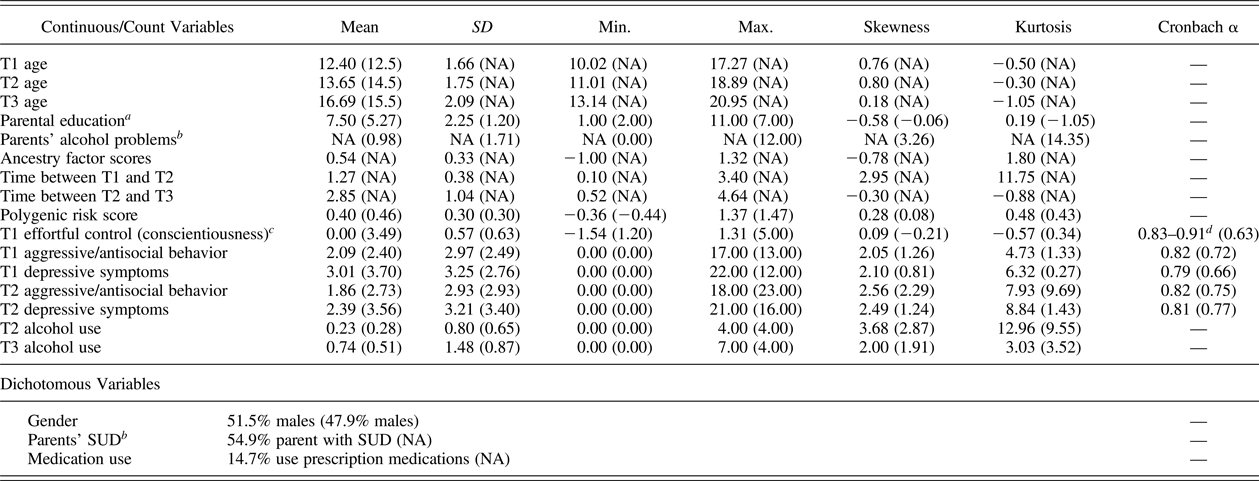
Descriptive statistics for all variables are shown in Table 1.
Descriptive statistics for study variables for AFDP and CDP samples

Note: AFDP, Adult and Family Development Project (N = 254); CDP, Child Development Project (N = 348); T1, Time 1; T2, Time 2; T3, Time 3; NA, variable was not assessed in that particular sample or that they are not relevant; —, not calculated; SUD, substance use disorder. Descriptive statistics for AFDP are presented (descriptive statistics for CDP).
a The socioeconomic status variable used for AFDP and CDP is the highest level of parental education across both parents.
b A continuous measure of parents' lifetime alcohol problems was used for CDP analyses whereas a dichotomous measure of parents' lifetime diagnosis of alcohol or drug dependence was used for AFDP analyses.
c AFDP assessed effortful control at T1 and CDP assessed conscientiousness at T1.
d This is the range of alphas for mother-, father-, and adolescent-reported effortful control.
Demographics
In both studies, adolescents self-reported gender, age, and ethnicity. Gender was dummy coded (0 = females, 1 = males). Age was not a covariate in CDP analyses because all participants were age matched at each wave.
Parental education
Parents' highest level of education at T1 was used as an indicator of SES in both studies and was used as a continuous covariate. Note that education variables were slightly different across samples and not directly comparable. Educational attainment was chosen as one indicator of SES because it has been shown to be a more robust predictor of certain substance use outcomes when compared with occupation and income (e.g., Hanson & Chen, Reference Hanson and Chen2007; Winkleby, Jatulis, Frank, & Fortmann, Reference Winkleby, Jatulis, Frank and Fortmann1992). Parental education also tends to be the most stable indicator of SES, given that parental occupation and income fluctuate (Krieger, Williams, & Moss, Reference Krieger, Williams and Moss1997). Stability of the SES indicator was particularly important in the current study because of the longitudinal nature of analyses and because parental SES indicators were only measured at one of the time points used in AFDP.
Parent substance use disorder (SUD)
At T1 in AFDP, adolescents' biological parents reported their lifetime alcohol/drug abuse or dependence by DSM-IV criteria using the Computerized Diagnostic Interview Schedule (Robins et al., Reference Robins, Cottler, Bucholz, Compton, North and Rourke2000). Spousal reports of the Family History Research Diagnostic Criteria (Endicott, Andreasen, & Spitzer, Reference Endicott, Anderson and Spitzer1975) were used for noninterviewed parents. Parental SUD was classified as having at least one biological parent with a lifetime alcohol or drug disorder.
At the 11th-grade wave in CDP, parents reported their lifetime alcohol problems (0 = no, 1 = yes) using 12 items from the Short Michigan Alcohol Screening Test (Selzer, Vinokur, & van Rooigen, Reference Selzer, Vinokur and van Rooigen1975). Spouses' (or ex-spouses') reports were used for noninterviewed parents. Items were summed for each parent. The highest alcohol problem score across mother and father represented parents' alcohol problems. Note that this measure was administered at a later wave than any other study variable, but unfortunately this was the earliest measure of parental alcohol problems. In this sample, 54.5% of parents reported no lifetime alcohol problems and parents, on average, endorsed 0.98 lifetime alcohol problems, similar to a previous community sample (Slutske, Ellingson, Richmond-Rakerd, Zhu, & Martin, Reference Slutske, Ellingson, Richmond-Rakerd, Zhu and Martin2013).
Adolescents' ancestry
Ancestry, measured via DNA markers, was a covariate despite the inclusion of only self-identified non-Hispanic Caucasians because in every racial or cultural grouping, it is likely that some cases will have mixed markers or membership. Details about the creation of ancestry informative markers in AFDP and 10 ancestry principal components (PCs) in CDP are provided in the online-only supplemental material. For AFDP ancestry markers, higher scores indicate higher levels of Caucasian (as opposed to Mexican/Mexican American) ancestry. To choose PCs for CDP analyses, we used stepwise linear regression to prevent collinearity and find significant ancestry PCs for each study outcome from the 10 PCs. The PCs surviving this procedure for each outcome were used in analyses. Only two PCs survived this procedure in predicting T2 aggression/antisociality and one PC in predicting T1 conscientiousness.
T1 prescription medication
In AFDP, parents reported adolescents' prescription medication use, excluding antibiotics or allergy medication (1 = Yes, 0 = No). This was included as a covariate because many common psychotropic medications influence neurotransmitter levels in the brain, including 5-HT. This was not measured in CDP.
Time between assessments
Because there was heterogeneity in the time between assessments in AFDP, but not CDP, this was a covariate in only AFDP analyses.
Polygenic score
Polygenic scores for 5-HIAA concentrations in the CSF were created to index genetic influence on 5-HT functioning using a GWAS of CSF 5-HIAA that examined 414, 18- to 60-year-old European participants (see Luykx et al., Reference Luykx, Bakker, Lentjes, Neeleman, Strengman, Mentink and Ophoff2014, for details).Footnote 3 The current study included SNPs in the polygenic risk score if they passed a threshold of p < .05 in the GWAS discovery set (Arpana Agrawal, personal communication). Although this is more liberal than typical genome-wide significance thresholds, it may better capture the polygenicity of 5-HT functioning because the GWAS was underpowered to detect genome-wide significance (N = 414). Note, however, that p < .05 is not liberal in the computation of polygenic risk scores (Purcell et al., Reference Purcell, Wray, Stone, Visscher, O'Donovan, Sullivan and Fraser2009). Although some researchers use even more liberal thresholds to create polygenic scores, like p < .50 (Hamshere et al., Reference Hamshere, Langley, Martin, Agha, Stergiakouli, Anney and Thapar2013), this liberal threshold may increase the likelihood of spurious associations and Type I error (Evans et al., Reference Evans, Brion, Paternoster, Kemp, McMahon and Munafò2013). Although some researchers recommend employing the strictest p-value threshold from the GWAS discovery set that maximizes the amount of variance explained in the construct it was created to index, neither AFDP nor CDP measured 5-HT functioning, so this approach was not possible.
We drew from the 1,119 common SNPs genotyped in CDP, AFDP, and the GWAS. We analyzed a smaller number of SNPs in CDP despite availability of GWAS data to achieve the greatest concordance between AFDP and CDP and to facilitate replication. Palindromic SNPs were excluded due to strand ambiguity. To ensure that SNPs were independent, a pairwise r 2 threshold of .25 within a 200-SNP sliding window was employed (Purcell et al., Reference Purcell, Wray, Stone, Visscher, O'Donovan, Sullivan and Fraser2009). Twenty-two SNPs survived these criteria and the p < .05 threshold. Polygenic scores were computed by weighting the number of risk alleles for each SNP by its GWAS test statistic and averaging the SNPs.Footnote 4 The score was coded such that higher levels indicated lower levels of 5-HT functioning, and can be referred to as 5-HT polygenic risk. See online-only supplementary Table S.1 for a list of the 22 included SNPs. The polygenic risk score explained 13.5% of the variance in alcohol use in AFDP (1.9% in CDP), 4.9% of the variance in depression in AFDP (0.2% in CDP), 3.5% of the variance in aggression/antisociality in AFDP (>0.001% in CDP), and ≥0.001% of the variance in effortful control and conscientiousness in AFDP and CDP, respectively.
Item overlap
Item overlap between temperament and psychopathology was examined (see supplemental methods). No items were deleted.
T1 effortful control
In AFDP at T1, mothers, fathers, and adolescents reported on adolescents' effortful control using the attentional, activational, and inhibitory control subscales of the Early Adolescent Temperament Questionnaire (Capaldi & Rothbart, Reference Capaldi and Rothbart1992). Subscales were averaged to form mother-, father-, and adolescent-reported effortful control composites. The composites were used as indicators of a one-factor model in Mplus v.7.2 (Muthén & Muthén, Reference Muthén and Muthén1998–2012; using maximum likelihood with robust standard errors). Model fit was not available because the model was just identified. However, standardized factor loadings supported this model because they were significant (p < .001) and high, ranging from .64 to .86. Effortful control factor scores were used in analyses.
In CDP at T1, adolescents self-reported their conscientiousness using a shortened version of the Big Five Personality Questionnaire (Lanthier, Reference Lanthier1995). Items were averaged. Conscientiousness involves emotional and behavioral control (Shiner & Caspi, Reference Shiner and Caspi2003), has been theorized to be the personality dimension corresponding to effortful control (Ahadi & Rothbart, Reference Ahadi, Rothbart, Kohnstamm and Halverson1994), and is likely fostered by childhood effortful control (Eisenberg, Duckworth, Spinrad, & Valiente, Reference Eisenberg, Duckworth, Spinrad and Valiente2012). Thus, this measure may reflect effortful control, which CDP did not measure.
T1 and T2 symptomatology
At T1 and T2 in AFDP (2001 version) and CDP (1991 version), adolescents self-reported their aggression/antisociality and depressive symptoms using the DSM-oriented Conduct Problems and Affective Problems Scales from the Child Behavior Checklist (Achenbach, Reference Achenbach1991; Achenbach & Rescorla, Reference Achenbach and Rescorla2001). The aggression/antisociality and depression items reported at T1 and T2 were summed to form four composites. One item (“There is very little that I enjoy”) was only assessed in AFDP because it is in the 2001 version only. Adolescents' self-reports for AFDP and CDP were chosen. This is because only adolescents reported on the same symptom items at two waves in AFDP, and we wished to both conduct prospective analyses as well as to achieve the greatest concordance between the two studies. In addition, adolescents might be more informative reporters of behaviors intentionally hidden from parents, such as rule breaking, and more valid reporters of their depressive symptoms than parents (Grills & Ollendick, Reference Grills and Ollendick2002).
Alcohol use
In AFDP and CDP at T2 and T3, adolescents self-reported how often they drank alcohol in the past year (AFDP: 0 = never [74.4% at T3], 1 = 1–2 times, 2 = 3–5 times, 3 = more than 5 times but less than once a month, 4 = 1–3 times per month, 5 = 1–2 times per week, 6 = 3–5 times per week, 7 = every day; CDP: 0 = never [66.4% at T3], 1 = once in a while, 2 = sometimes, 3 = fairly often, 4 = very often). Adolescents' self-reported alcohol use was chosen because parents tend to be less accurate reporters of this behavior (Fisher et al., Reference Fisher, Bucholz, Reich, Fox, Kuperman, Kramer and Bierut2006). This variable also provided the best concordance in content and ages of assessment across studies.
Data analytic plan
Analyses were conducted in Mplus v.7.2 (Muthén & Muthén, Reference Muthén and Muthén1998–2012) using maximum likelihood with robust standard errors and full information maximum likelihood to estimate missing data. The TYPE=COMPLEX function in Mplus accounted for nonindependence of the data for AFDP, since the data were nested within original G1 families. Nonessential multicollinearity was reduced by centering all predictors and covariates. No outliers were identified (all cases had Cook D and DFBETAS < |1|), and multicollinearity was not an issue (variance inflation factor range = 1.01–2.76).
Main effects model
Paths were estimated from all covariates and 5-HT polygenic risk to all mediators (T1 effortful control/conscientiousness and T2 symptomatology) and the outcome variable (T3 alcohol use). Next, paths were estimated from T1 effortful control/conscientiousness to T2 symptomatology and T3 alcohol use. Paths were also estimated from adolescents' T2 symptomatology to T3 alcohol use. Autoregressive paths from T1 to T2 symptomatology and from T2 to T3 alcohol use were estimated. Correlations among all exogenous variables were modeled. Within-wave correlations among T1 symptoms and T1 effortful control/conscientiousness and among T2 symptoms and T2 alcohol use were modeled.
Zero inflation
Because T3 alcohol outcomes were largely zero in AFDP (74.4%) and CDP (66.4%), covariate-only models were tested, with alcohol use alternatively specified as a zero-inflated poisson, zero-inflated negative binomial, continuous, or categorical variable. The categorical model produced the lowest Akaike and Bayesian information criteria and the highest –2 log likelihood for both samples and was chosen (online-only supplementary Table S.2). Due to this specification, Monte Carlo integration was used, for which absolute fit indices are not available. Note that differences in alcohol use rates between the samples could be due to demographic and geographic differences or to cohort effects given declines in adolescent drinking over the years of these studies (NIDA, 2016).
Determining interactions to be included
We tested Predictor × Covariate interactions because genetic effects might not be constant across covariates such as age or parental education. However, because they were not hypothesized, Predictor × Covariate interactions were only retained at a FDR corrected p < .05 in SAS. Gender × Covariate interactions were not tested. Hypothesized Predictor × Gender interactions were retained at p < .05. Because there were 18 total hypothesized tests (9 main effects and 9 Predictor × Gender interactions), FDR corrections were not employed for these a priori tests.
If polygenic risk interaction terms survived, all Polygenic Risk × Covariate and Moderator × Covariate terms were included to ensure that the interaction was not confounded by covariates (Keller, Reference Keller2014). Retained polygenic risk interactions were retested after monotone transformations of interacting variables to rule out scaling-related spuriousness (Young-Wolff, Enoch, & Prescott, Reference Young-Wolff, Enoch and Prescott2011).
Interactions and mediation
Interactions were probed using simple slope analyses (Aiken & West, Reference Aiken and West1991). The joint significance test, which requires each path in the mediated effect to be significant, was used to test two- and three-path mediated effects. This test is a good approach for balancing Type 1 error and statistical power (MacKinnon, Lockwood, Hoffman, West, & Sheets, Reference MacKinnon, Lockwood, Hoffman, West and Sheets2002). If any paths in the mediational chain were moderated by other variables, moderated mediation was tested. To do so, simple slope analyses were conducted to probe each link in the mediational chain by relevant moderators. See supplemental results for details on probing moderated mediation interactions.
Results
Zero-order correlations
AFDP
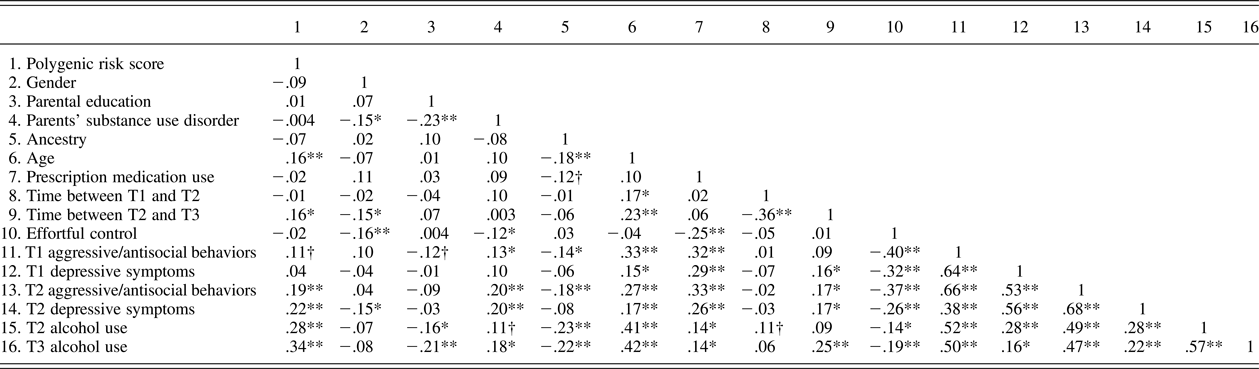
See Table 2. Adolescents with higher 5-HT polygenic risk (indexing lower 5-HT functioning) showed higher T2 aggression/antisociality, T2 depressive symptoms, and T2 and T3 alcohol use. 5-HT polygenic risk was not significantly correlated with effortful control. Adolescents with lower T1 effortful control showed higher symptomatology and alcohol use. All symptomatology and alcohol variables were significantly correlated in the expected direction. Females were more likely to have a parent with an SUD and showed higher effortful control and T2 depressive symptoms than males. Older adolescents and adolescents with higher Mexican/Mexican American ancestry showed higher symptomatology and alcohol use at most waves. Older adolescents also had higher Mexican/Mexican American ancestry and higher 5-HT polygenic risk, but 5-HT polygenic risk and ancestry were not significantly correlated. Adolescents whose parents had SUDs had lower parental education and effortful control and higher symptomatology and alcohol use at most waves compared with adolescents whose parents did not have SUDs. Lower parental education was associated with higher T2 and T3 alcohol use.
Zero-order correlations among Adult and Family Development Project study variables
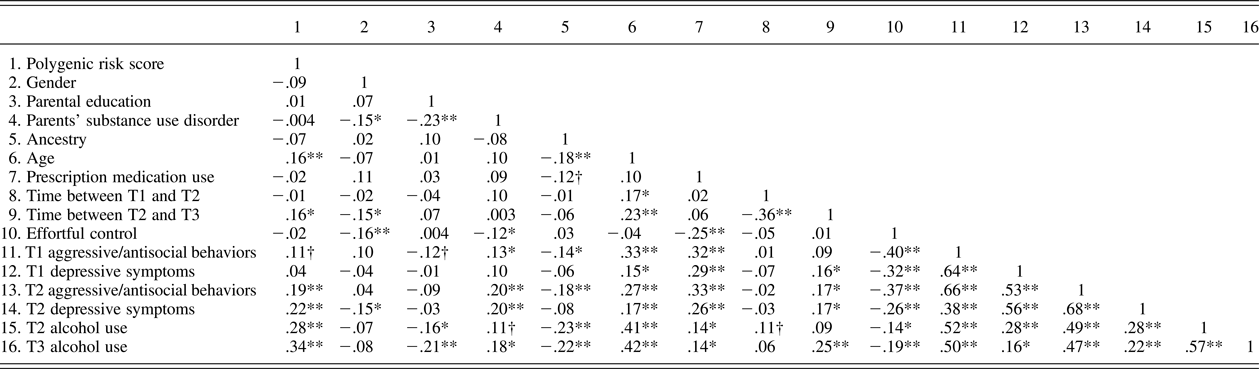
Note: N = 254. Greater polygenic scores represent lower cerebrospinal fluid 5-hydroxyindoleacetic acid concentrations. Gender is coded 0 for females and 1 for males. Parents' substance use disorder (SUD) is coded 0 for parents without SUD and 1 for parents with SUD. Higher levels of ancestry indicate greater levels of Caucasian ancestry. Higher levels of all other variables indicate higher levels of the construct.
†p ≤ .10. *p ≤ .05. **p ≤ .01.
CDP
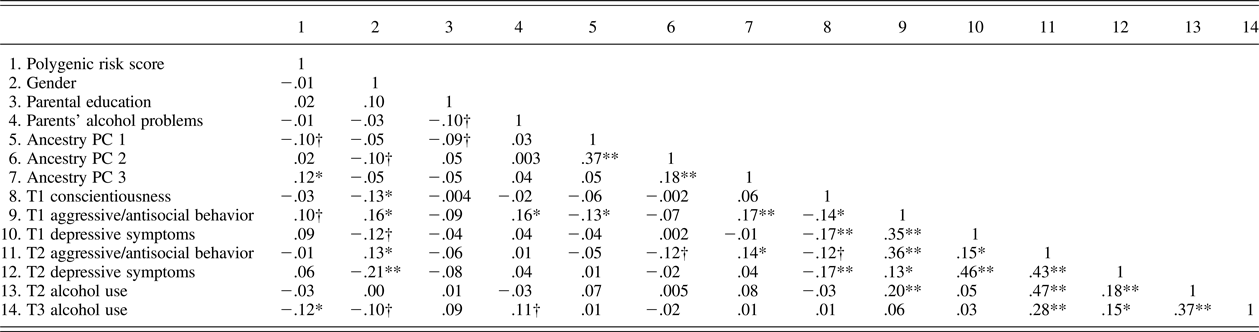
See Table 3. Adolescents with higher 5-HT polygenic risk showed lower T3 alcohol use. However, adolescents with higher 5-HT polygenic risk also showed marginally significantly higher T1 aggression/antisociality. No other significant correlations with 5-HT polygenic risk were found. Adolescents with higher T1 conscientiousness showed lower T1 and T2 symptomatology, but this trait was uncorrelated with alcohol use. All symptomatology and alcohol use variables were correlated in the expected direction, except T1 depressive symptoms did not correlate with T2 or T3 alcohol use and T1 aggressive symptoms did not correlate with T3 alcohol use. Females showed higher conscientiousness and T1 and T2 depressive symptoms, and lower T1 and T2 aggression/antisociality compared with males. Lower parental education was associated with higher parental alcohol problems (marginal). Adolescents whose parents had more alcohol problems showed higher T1 aggression/antisociality and T3 alcohol use.
Zero-order correlations among Child Development Project study variables
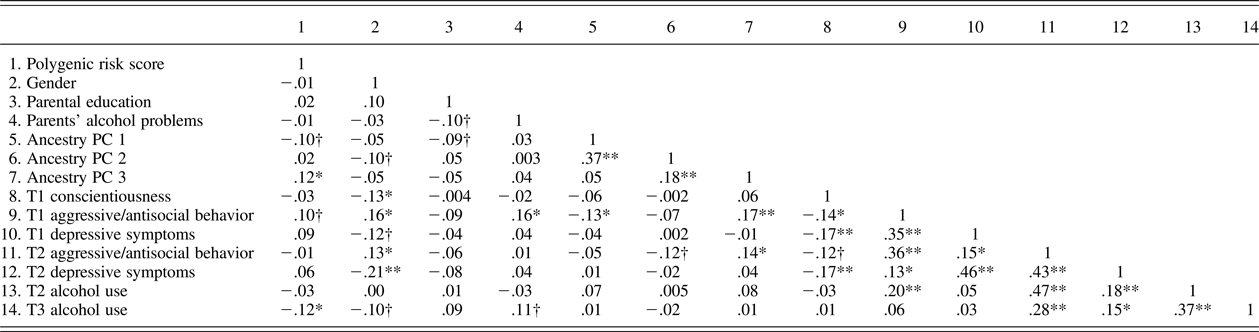
Note: N = 348. Greater polygenic scores represent lower cerebrospinal fluid 5-hydroxyindoleacetic acid concentrations. Gender is coded 0 for females and 1 for males. Higher levels of all other variables indicate higher levels of the construct. Ancestry principal component (PC) 1 was used in predicting conscientiousness and Ancestry PC 2 and 3 were used in predicting T3 aggressive/antisocial behaviors. T1, Time 1; T2, Time 2; T3, Time 3.
†p ≤ .10. *p ≤ .05. **p ≤ .01.
Main results: AFDP
Determining interactions to be included
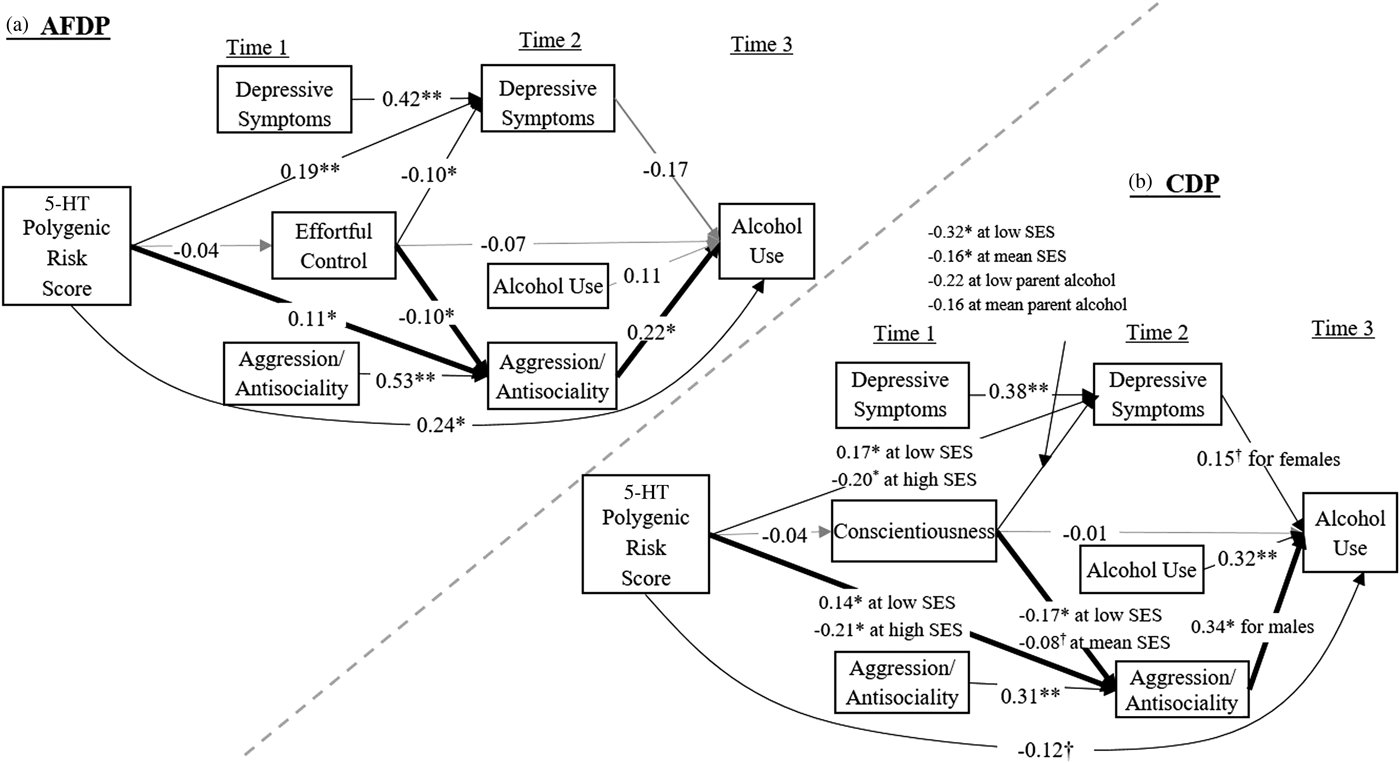
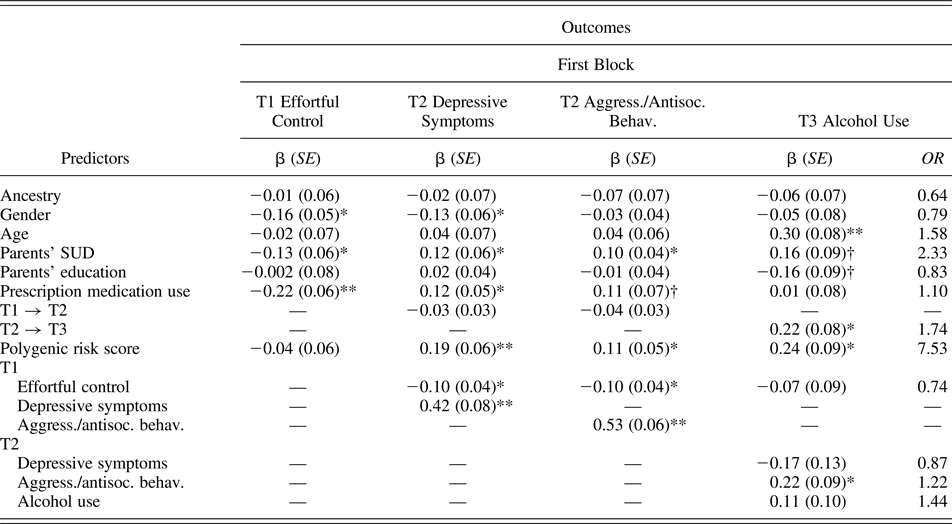
None of the hypothesized Predictor × Gender interactions were significant (p < .05) and none of the Predictor × Covariate interactions were significant at an FDR corrected p < .05. These terms were trimmed. See Table 4 and Figure 2a for the effects of covariates on outcomes and standardized coefficients.
Final path models for both samples: (a) AFDP model and (b) CDP model. Grayed lines indicate nonsignificant paths, black lines indicate significant or marginally significant paths, and heavy black lines indicate paths involved in significant mediated effects. AFDP, Adult and Family Development Project; 5-HT, serotonin; CDP, Child Development Project; SES, socioeconomic status. The other covariates are not shown for ease of presentation. Correlations were estimated among all exogenous variables, among Time 1 depressive symptoms, aggressive/antisocial behaviors, and effortful control and among Time 2 depressive symptoms, aggressive/antisocial behaviors, and alcohol use (not shown here). 5-HT polygenic risk score is coded such that higher scores represent lower levels of cerebrospinal fluid 5-hydroxyindoleacetic acid (i.e., lower levels of 5-HT functioning). †p < .10, *p < .05, **p < .001.

Adult and Family Development Project final model
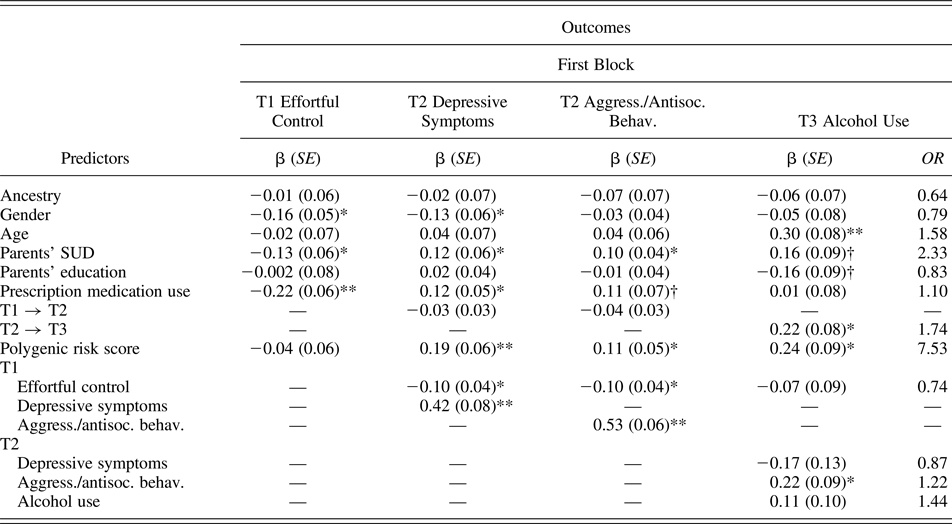
Note: N = 254. Greater polygenic scores represent lower cerebrospinal fluid 5-hydroxyindoleacetic acid concentrations. Gender is coded 0 for females and 1 for males. Parents' substance use disorder (SUD) is coded 0 for parents without SUD and 1 for parents with SUD. Higher levels of ancestry indicate greater levels of Caucasian ancestry. Higher levels of all other variables indicate higher levels of the construct. T1–T3, Times 1–3.
†p ≤ .10. *p ≤ .05. **p ≤ .001.
Direct and indirect effects involving 5-HT polygenic risk
5-HT polygenic risk did not predict T1 effortful control.Footnote 5 However, higher levels of 5-HT polygenic risk predicted greater levels of T2 aggression/antisociality, depressive symptoms, and alcohol problems.
T2 aggression/antisociality, but not T2 depressive symptoms, prospectively predicted greater levels of T3 alcohol use. Therefore, 5-HT polygenic risk indirectly predicted T3 alcohol use through T2 aggression/antisociality (both a and b paths were significant).
Direct and indirect effects involving effortful control
Lower levels of T1 effortful control prospectively predicted greater levels of T2 aggression/antisociality and depressive symptoms, but did not directly predict T3 alcohol use. However, T1 effortful control indirectly predicted T3 alcohol use through T2 aggression/antisociality (both a and b paths were significant). For scatterplots with 95% confidence intervals of the main effects involving significant predictors see online-only supplemental Figures S.8–S.13.
Main results: CDP
Determining interactions to be included
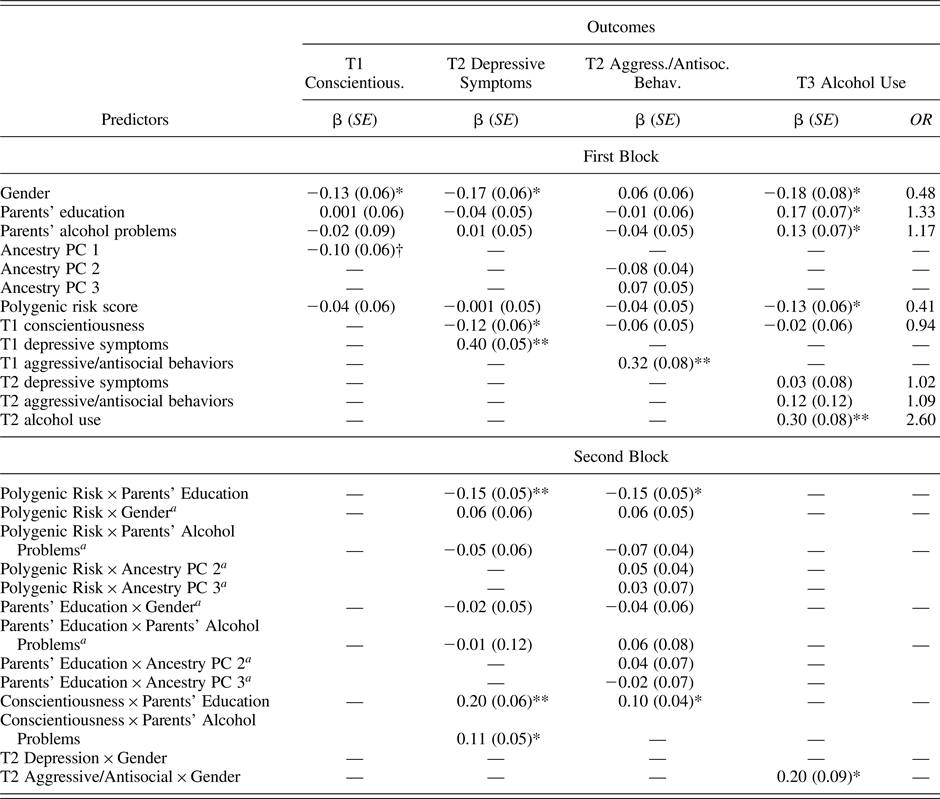
Significant, hypothesized Predictor × Gender interactions included T2 Aggression/Antisociality × Gender and T2 Depressive Symptoms × Gender in predicting T3 alcohol use (p < .05). Several Predictor × Covariate interactions also survived the FDR-corrected p < .05 threshold and were retained. These included the 5-HT Polygenic Risk × Parental Education and the Conscientiousness × Parental Education interactions, which both predicted T2 depressive symptoms and aggression/antisociality, and the Conscientiousness × Parent Alcohol Problems interaction, which predicted T2 depression (all FDR ps < .05). 5-HT polygenic risk interactions remained significant after adding interaction terms recommended by Keller (Reference Keller2014) and applying logarithmic transformations to both interacting variables. Interaction terms were included in the final model in a separate block so main effects could be examined prior to adding interactions. Simple slopes were probed at 1 SD below the mean, at the mean, and at 1 SD above the mean for continuous variables (referred to as low, mean, and high levels, respectively). Standardized regression coefficients are reported to describe the simple slopes of interaction effects. See Table 5 and Figure 2b for the effects of covariates on outcomes and standardized coefficients.
Child Development Project final model
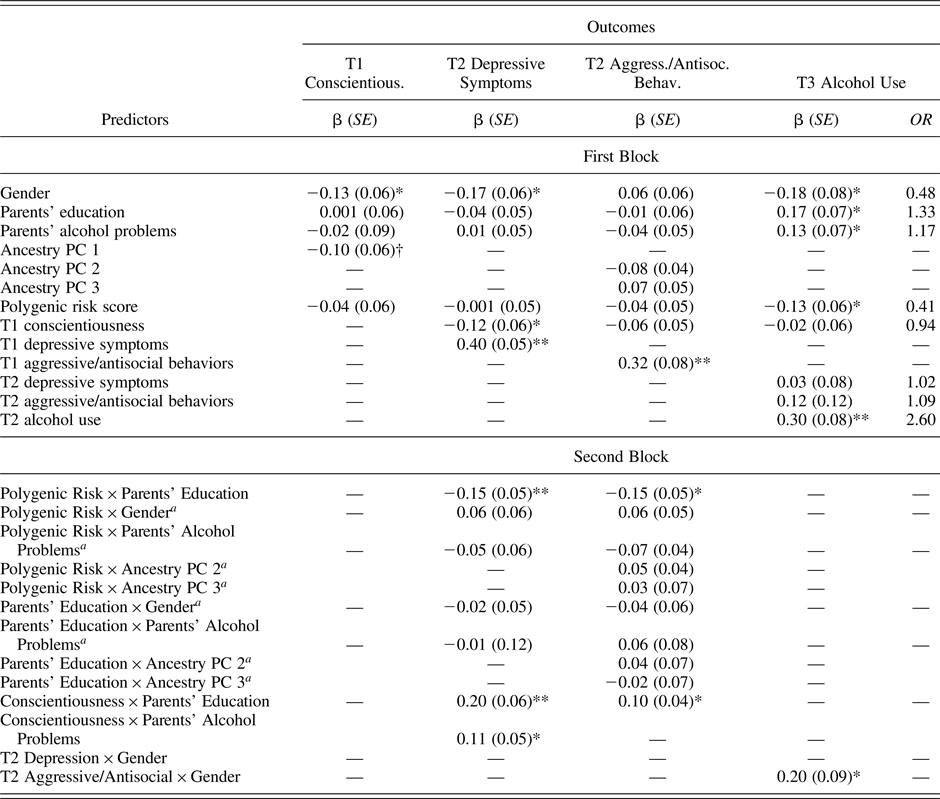
Note: N = 348. Greater polygenic scores represent lower cerebrospinal fluid 5-hydroxyindoleacetic acid concentrations. Gender is coded 0 for females and 1 for males. Higher levels of all variables indicate higher levels of the construct. PC, principal component; T1, Time 1; T2, Time 2; T3, Time 3.
a Interactions included based on recommendations by Keller (Reference Keller2014).
†p ≤ .10. *p ≤ .05. **p ≤ .001.
Direct and indirect effects involving 5-HT polygenic risk
5-HT polygenic risk did not predict T1 conscientiousness. 5-HT polygenic risk did not have a main effect on T2 aggression/antisociality or depression. However, 5-HT polygenic risk interacted with parental education to predict both of these outcomes. Higher levels of 5-HT polygenic risk predicted higher levels of aggression/antisociality and depression at low levels of parental education (βaggression = 0.14, p = .047; βdepression = 0.17, p = .02), did not predict T2 aggression/antisociality or depression at mean levels of parental education (βaggression = – 0.04, p = .53; βdepression = –0.01, p = .93), and predicted lower levels of T2 aggression/antisociality and depression at high levels of parental education (βaggression = –0.21, p = .01; βdepression = –0.20, p = .01). See online-only supplementary Figures S.1 and S.3.
T2 aggression/antisociality and depression did not have main effects on T3 alcohol use. However, aggression/antisociality and depression both interacted with gender to predict T3 alcohol use. Higher levels of aggression/antisociality predicted higher levels of T3 alcohol use for males (β = 0.34, p = .01, odds ratio [OR] = 1.30), but not for females (β = –0.04, p = .68, OR = 0.97). Higher levels of depressive symptoms only predicted higher levels of T3 alcohol use (marginally) for females (β = 0.15, p = .08, OR = 1.10), but not for males (β = –0.17, p = .28, OR = 0.90). See online-only supplementary Figures S.6 and S.7.
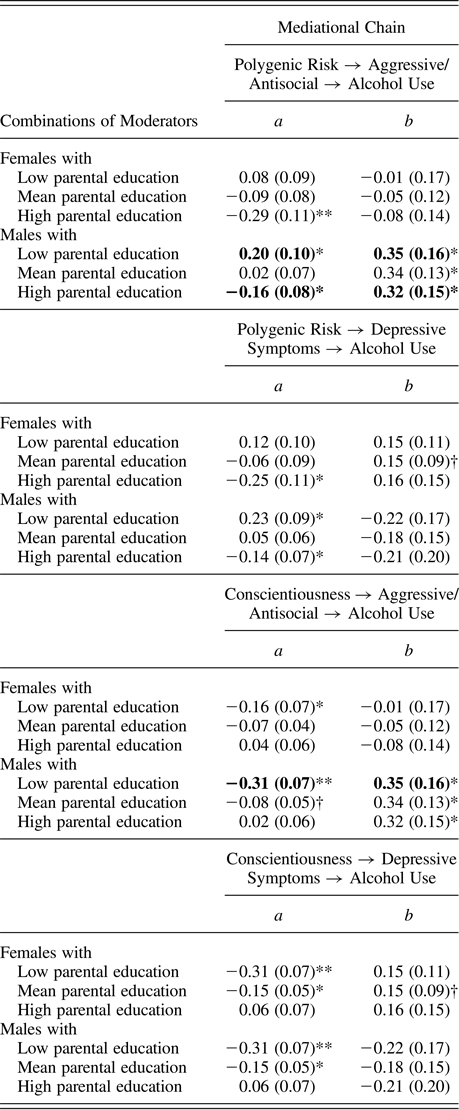
Moderated mediation analyses showed that that higher levels of 5-HT polygenic risk indirectly predicted higher levels of T3 alcohol use through greater T2 aggression/antisociality, but only for males with low levels of parental education (this is similar to the direction of the AFDP mediated effect, except it is only relevant for a subgroup of the CDP participants). However, these analyses also showed that lower levels of 5-HT polygenic risk indirectly predicted higher levels of T3 alcohol use through greater T2 aggression/antisociality for males with high levels of parental education. See Table 6.
Moderated mediation coefficients for Child Development Project model
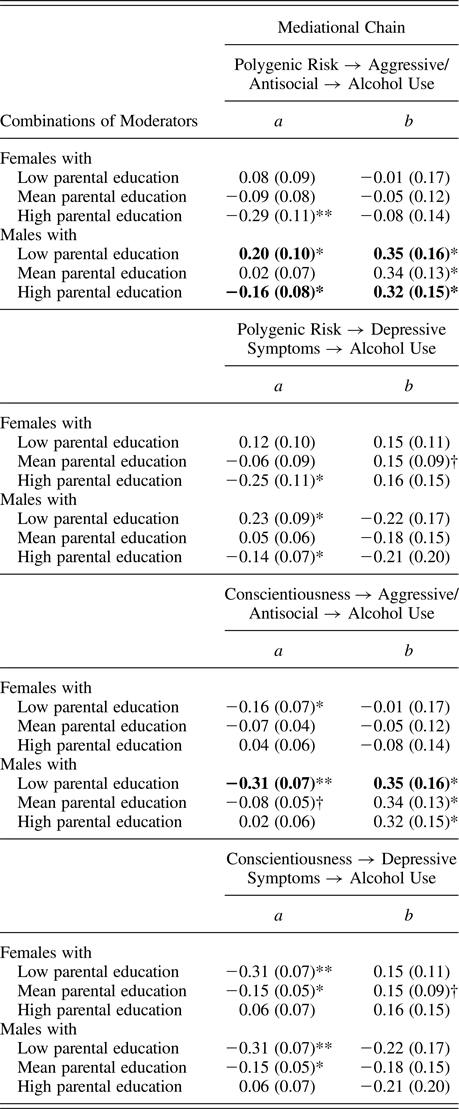
Note: N = 348. Standardized regression coefficients (standard errors) are shown. Low, mean, and high parental education refer to 1 SD below the mean, at the mean, and 1 SD above the mean of parental education, respectively; a and b each refer to one path within a two-path mediated effect. Bold terms refer to a significant mediated effect.
†p < .10. *p < .05.
Direct and indirect effects involving conscientiousness
T1 conscientiousness interacted with parental education to predict T2 aggression/antisociality. Lower levels of conscientiousness predicted higher levels of T2 aggression/antisociality at low levels of parental education (β = –0.17, p = .01), marginally significantly predicted aggression/antisocialtiy at mean levels of parental education (β = –0.08, p = .095), but did not predict aggression/antisociality at high levels of parental education (β = 0.03, p = .59). See online-only supplementary Figure S.2. Conscientiousness interacted with both parental education and parental alcohol problems to predict T2 depression. Lower levels of conscientiousness predicted higher levels of T2 depressive symptoms at low levels of parental education or parental alcohol problems (βSES = –0.32, p < .001; βparent = –0.22, p < .001), at mean levels of parental education or parental alcohol problems (βSES = –0.16, p = .004; βparent = –0.16, p = .004), but did not predict depression at high levels of parental education or parental alcohol problems (βSES = 0.05, p = .52; βparent = –0.07, p = .22). See online-only supplementary Figures S.4 and S.5.
Moderated mediation analyses showed that lower levels of conscientiousness indirectly predicted higher levels of T3 alcohol use through greater T2 aggression/antisociality, but only for males with low levels of parental education. See Table 6.
Comparing results from AFDP and CDP
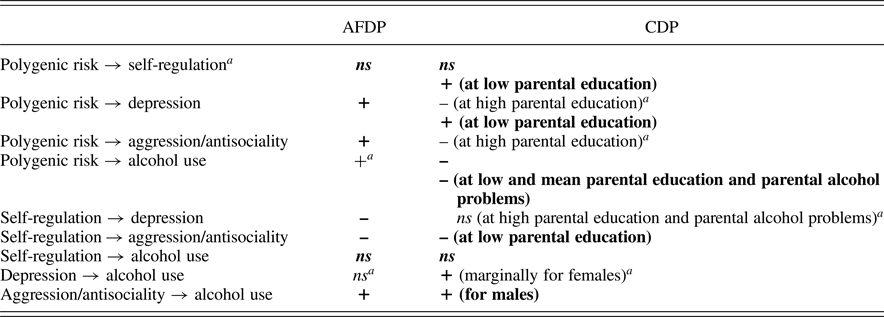
Because of the complex nature of the findings, the main results of interest were organized in a side-by-side comparison format. See Table 7.
Side-by-side comparison of AFDP and CDP main paths of interest
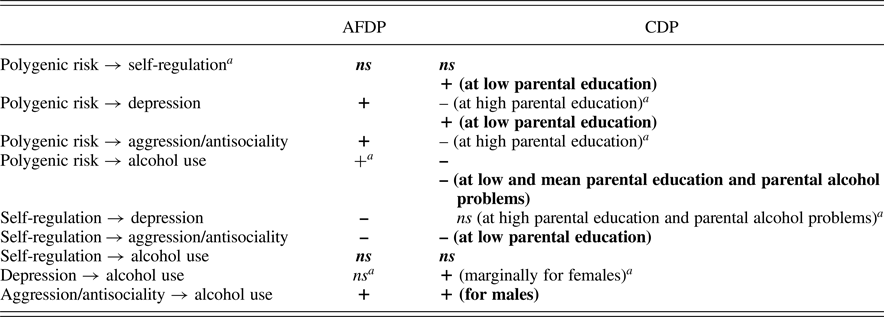
Note: AFDP, Adult and Family Development Project; CDP, Child Development Project; T1, Time 1; T2, Time 2; T3, Time 3;
a Self-regulation refers to effortful control in AFDP and to conscientiousness in CDP. Bold text refers to effects that were replicated (for at least one subgroup) in both studies; +, effect is positive. –, effect is negative.
a Effects that were not replicated across studies.
Discussion
The purpose of this study was to test whether self-regulation, depressive symptoms, and aggression/antisociality mediated the relation between genetically based variation in 5-HT functioning and adolescents' alcohol use in two longitudinal samples. We first focus on findings that were most clearly replicated across the samples, including the lack of prediction from 5-HT polygenic risk to self-regulation, the indirect effect of 5-HT polygenic risk on alcohol use through aggression/antisociality (for certain subgroups in CDP), and the indirect effect of self-regulation on alcohol use through aggression/antisociality (for certain subgroups in CDP; see Table 7).
5-HT polygenic risk and effortful control/conscientiousness
The polygenic risk score created to index 5-HT functioning (i.e., 5-HIAA in the CSF) did not predict effortful control in AFDP or conscientiousness in CDP. Therefore, the current data do not support the hypothesis that adolescents with lower levels of 5-HT functioning are at risk for deficits in effortful and traitlike components of self-regulation, nor that self-regulation is the mechanism through which 5-HT functioning creates risk for multiple types of psychopathology.
One reason for this finding might be the small number of SNPs in the 5-HT polygenic risk scores. However, this concern might be mitigated by the predictive validity of the 5-HT polygenic risk scores. As hypothesized, the polygenic scores predicted greater depressive symptoms, aggression/antisociality, and alcohol use in both samples (albeit for certain subgroups in CDP). Thus, the 5-HT polygenic risk scores appear to capture the intended construct, and limitations of the scores likely do not account for the null findings. Another reason for this lack of association could be due to inadequate measurement of self-regulation. There are many different operational definitions of self-regulation. Our measures of self-regulation did, however, demonstrate predictive validity. Effortful control and conscientiousness predicted depressive symptoms and aggression/antisociality in both samples (albeit for certain subgroups in CDP). Moreover, analyses showed no polygenic risk effects on effortful control subscales or more traitlike measures of effortful control (see Footnote 5). In sum, the pattern of results with the current polygenic risk score showed no evidence that genetically based variation in 5-HT functioning is related to ratings of adolescents' self-regulation.
5-HT polygenic risk and adolescents' problem behaviors
Adolescents with higher 5-HT polygenic risk (indexing lower 5-HT functioning) had greater levels of aggression/antisociality and depressive symptoms in both samples. However, 5-HT polygenic risk only predicted depression and aggressive/antisocial behaviors in this manner at low levels of parental education in the CDP (according to significant FDR-corrected interactions). Findings are consistent with previous work, which found that lower 5-HT functioning as indexed by 5-HIAA in the CSF, tryptophan manipulation, and drug challenge (among others) was related to children's and adults' aggression, delinquency, antisociality, and depressive symptoms and disorder (e.g., Booij et al., Reference Booij, Van der Does and Willem2007; Dencker et al., Reference Dencker, Malm, Roos and Werdinius2006; Duke et al., Reference Duke, Bègue, Bell and Eisenlohr-Moul2013; Flory et al., Reference Flory, Mann, Manuck and Muldoon1998; Halperin et al., Reference Halperin, Kalmar, Schulz, Marks, Sharma and Newcorn2006; Kruesi et al., Reference Kruesi, Rapoport, Hamburger, Hibbs, Potter, Lenane and Brown1990). It appears, therefore, that individuals genetically predisposed toward lower 5-HT functioning are prone to developing aggression/antisociality and depressive symptoms, perhaps particularly when parental education is low.
In contrast, higher levels of 5-HT polygenic risk predicted less symptomatology for adolescents with high parental education in the CDP.Footnote 6 Thus, the nature of this CDP interaction is similar to findings from a meta-analysis that demonstrated that a serotonergic genetic variant (5-HTTLPR) was a marker for differential susceptibility (van IJzendoorn, Belsky & Bakermans-Kranenburg, Reference van IJzendoorn, Belsky and Bakermans-Kranenburg2012), in which Caucasians with the ss/sl genotype of the 5-HTTLPR polymorphism were more sensitive to both negative and positive environments, whereas those with the ll genotype were more resilient across environments. However, a lack of corresponding effects in AFDP suggests that this explanation should be taken with caution. Thus, the most reliable finding from both samples is that higher scores on 5-HT polygenic risk (indexing lower 5-HT functioning) create risk for depression and aggression/antisociality, and this might be amplified at low parental education. Given that 5-HT polygenic risk was related to aggression/antisociality and depression symptoms, but not to self-regulatory constructs, one interesting avenue for future research would be to examine whether there is a common trait or other phenotype that is intermediate between 5-HT functioning and these divergent forms of problem behavior.Footnote 7 Further research is also needed on what actual, developmental processes associated with parental education influence the role of 5-HT risk, such as on stress or verbal regulatory skills.
Aggression/antisociality and alcohol use
In both samples, greater levels of aggression/antisociality prospectively predicted greater levels of alcohol use. However, a significant, a priori, gender interaction suggested that this only held for males in CDP. Taken together, results are consistent with a large body of work suggesting that aggression/antisociality is a robust risk factor for alcohol use (Pardini et al., Reference Pardini, White and Stouthamer-Loeber2007). The CDP finding mirrors other studies, which showed that externalizing-related problems predicted alcohol phenotypes more strongly for males than for females (e.g., Caspi et al., Reference Caspi, Moffitt, Newman and Silva1996; Hussong et al., Reference Hussong, Curran and Chassin1998).
Indirect effect of 5-HT polygenic risk on alcohol use through aggression/antisociality
In both samples, greater 5-HT polygenic risk (indexing lower 5-HT functioning) prospectively and indirectly predicted greater alcohol use through greater levels of earlier aggression/antisociality. However, this path only held for males with low parental education in CDP.Footnote 8 This is a novel finding. Although studies have found associations between indices of 5-HT functioning and aggression, antisociality, and alcohol use and disorder (e.g., Duke et al., Reference Duke, Bègue, Bell and Eisenlohr-Moul2013; LeMarquand et al., Reference LeMarquand, Pihl and Benkelfat1994a, Reference LeMarquand, Pihl and Benkelfat1994b), this is the first study to our knowledge to show that aggression/antisociality is one plausible mechanism underlying the relation between genetically based variation in 5-HT functioning and alcohol use. Perhaps individuals with lower levels of genetically based 5-HT functioning have predispositions toward aggressive and delinquent behaviors, which prompts affiliation with deviant peer groups and, subsequently, increases alcohol use (e.g., Sher, Reference Sher1991). This might be especially true for those at high risk for these behaviors, such as males with low parental education (e.g., Bradley & Corwyn, Reference Bradley and Corwyn2002; Else-Quest et al., Reference Else-Quest, Hyde, Goldsmith and Van Hulle2006). This finding could also reflect heterotypic continuity, whereby 5-HT polygenic risk manifests as different behavioral problems across development (i.e., aggression/antisociality and alcohol use). In an alternate scenario, perhaps alcohol is especially attractive to young people with low 5-HT functioning.
Effortful control/conscientiousness and adolescents' problem behaviors
In both samples, lower levels of effortful control/conscientiousness prospectively predicted greater levels of aggression/antisociality and depressive symptoms. However, in the CDP, the effect on aggression/antisociality only held at low levels of parental education and the effect on depression only held at low and average levels of parental education. In the CDP, we also found that conscientiousness predicted depressive symptoms significantly only at average and low levels of parental alcohol problems. Taken together, findings suggest that impairments in self-regulation prospectively predict adolescents' aggression/antisociality and depression, consistent with previous studies (e.g., Loukas & Roalson, Reference Loukas and Roalson2006; Muris et al., Reference Muris, Van der Pennen, Sigmond and Mayer2008; Wang, Chassin, et al., Reference Wang, Chassin, Eisenberg and Spinrad2015). Although not replicated in AFDP, the conscientiousness interaction effects provide preliminary evidence that deficient self-regulation is especially detrimental for economically disadvantaged adolescents. Higher SES affords greater access to resources, such as parents who are less stressed and better able to use effective parenting strategies, medical and psychological care when needed, and more positive relationships with teachers (Bradley & Corwyn, Reference Bradley and Corwyn2002), which might help adolescents with poor regulation to develop coping strategies that curb problem behaviors. Without these resources, adolescents with low SES might not learn effective ways to deal with self-regulatory deficits.
The indirect effect of effortful control/conscientiousness on alcohol use
Deficits in self-regulation also indirectly predicted greater levels of alcohol use through greater aggression/antisociality in both studies. However, this mediated effect only held for males with low parental education in CDP. Previous studies linked effortful control/self-regulation with aggression/antisociality and substance use separately (Loukas & Roalson, Reference Loukas and Roalson2006; Wang, Chassin, et al., Reference Wang, Chassin, Eisenberg and Spinrad2015; Willem et al., Reference Willem, Bijttebier, Claes, Sools, Vandenbussche and Nigg2011; Wong & Rowland, Reference Wong and Rowland2013). This study adds to a growing literature showing that deficient self-regulation predicts changes in alcohol use over time because this trait predisposes to an earlier risk factor for alcohol use, namely, aggression/antisociality (e.g., Trucco et al., Reference Trucco, Hicks, Villafuerte, Nigg, Burmeister and Zucker2016). Aggressive/antisocial adolescents might then drink more because they affiliate with deviant peers, to dampen negative affectivity associated with aggression (e.g., anger), or to pursue intense stimulation in ways that are sometimes dysregulated. Alternatively, effortful control might manifest as different phenotypes across development (i.e., heterotypic continuity).
Understanding and further dissecting moderation effects
It is noteworthy that several important paths were moderated by parental education or gender in the CDP, but not in AFDP. The lack of significant moderation effects in AFDP could be due to its smaller sample size, resulting in lowered power to detect moderation. A post hoc Monte Carlo simulation for power suggested that AFDP was underpowered (≤.80) to detect interactions of comparable effect sizes found in CDP, except for the Effortful Control × Parental Education interaction in predicting depressive symptoms.
Several other reasons might explain why 5-HT polygenic risk and conscientiousness were moderated by parental education, but only in the CDP. Comparing the parental education variables across samples suggested that CDP participants' parents obtained higher levels of education than did AFDP parents.Footnote 9 Perhaps the effect of 5-HT polygenic risk and conscientiousness on depressive and aggressive/antisocial symptoms is truly stronger or only present at low parental education (as found in CDP), and this was captured as a main effect in AFDP because there were more participants whose parents had low education in AFDP.Footnote 10 In addition, perhaps high-risk AFDP participants' genetic risk was strong enough for 5-HT polygenic risk to appear as a main effect. Of note, that parental education moderated the effects of two virtually unrelated risk factors in CDP (i.e., 5-HT polygenic risk and conscientiousness; see Table 3) further suggests that the parental education moderation found in CDP was not spurious.
There are also several reasons that might help explain why gender interaction effects in predicting alcohol use were only found in CDP. CDP participants self-reported alcohol use during a time when there were greater negative social sanctions against drinking for females than males (1997–1998; Keyes, Li, & Hasin, Reference Keyes, Li and Hasin2011) compared to AFDP participants (2012–2013). Thus, alcohol use might have been a less likely consequence of females' externalizing problems in the CDP, but not AFDP. Moreover, the greater percentage of high-risk females (55.4%) than males (44.6%) in AFDP might have resulted in aggression/antisociality being equally predictive of alcohol use across gender (see Table 2).
Study-specific findings
In CDP, greater depressive symptoms marginally predicted greater alcohol use for females, but not for males. In contrast, in AFDP, there was no effect of depression on alcohol use. However, in the zero-order correlations for both studies, higher levels of depression were related to higher levels of alcohol use, suggesting that the addition of predictors or covariates might have introduced suppression or confounding effects. Our findings mirror the similarly equivocal existing research. Even after controlling for externalizing problems, some studies showed that adolescents' depression predicted later substance phenotypes (e.g., Conway, Swendsen, Husky, He, & Merikangas, Reference Conway, Swendsen, Husky, He and Merikangas2016; Hussong & Chassin, Reference Hussong and Chassin1994; Sung, Erkanli, Angold, & Costello, Reference Sung, Erkanli, Angold and Costello2004), whereas others did not find such effects (Hussong et al., Reference Hussong, Curran and Chassin1998; Pardini et al., Reference Pardini, White and Stouthamer-Loeber2007). Perhaps the effect of adolescents' internalizing on alcohol use is moderated by other variables not tested in this study (e.g., anger or coping styles; Hussong et al., Reference Hussong, Curran and Chassin1998). This is a topic that deserves further study.
Finally, in AFDP, greater 5-HT polygenic risk had a direct effect on greater alcohol use after accounting for earlier symptoms and effortful control. In contrast, in CDP, 5-HT polygenic risk did not significantly predict greater alcohol use after controlling for similar variables. AFDP's findings are more consistent with the previous literature (e.g., Borg et al., Reference Borg, Kvande, Liljeberg, Mossberg and Valverius1985; Ernouf et al., Reference Ernouf, Compagnon, Lothion, Narcisse, Benard and Daoust1993; Farren et al., Reference Farren, Ziedonis, Clare, Hammeedi and Dinan1995; Füs-Aime et al., Reference Füs-Aime, Eckardt, George, Brown, Mefford and Linnoila1996). These conflicting effects are difficult to understand. If 5-HT polygenic risk does operate through a traitlike mechanism, AFDP participants might have been more likely to behaviorally express that trait as alcohol use due to high-risk environments, genetic loadings, and/or personality traits, thus resulting in a more robust direct effect in AFDP. However, more work is needed to understand the direct effect of 5-HT functioning on alcohol use in adolescence.
Implications for theory and practice
Depression, aggression/antisociality, and alcohol use co-occur at a moderate to high rate (Bukstein, Brent, & Kaminer, Reference Bukstein, Brent and Kaminer1989; Tables 2 and 3). The current results can suggest likely explanations for causes of co-occurrence between these problem behaviors. Several causes of co-occurrence include that disorders share an underlying continuum of liability, have correlated and/or shared risk factors, and one disorder causes the other (Neale & Kendler, Reference Neale and Kendler1995).
The finding that 5-HT polygenic risk and deficits in self-regulation each separately predicted depression and aggression/antisociality in two samples suggests that these are shared or correlated risk factors accounting for their co-occurrence. For example, perhaps poor self-regulation makes it difficult to inhibit negative affect, such as sadness and anger, and this manifests as both depressive symptoms and aggression/antisociality. Findings also support the idea that mechanisms of co-occurrence vary depending on context, because the effects of 5-HT polygenic risk and self-regulation on depression and aggression/antisociality seemed to be more robust at low levels of parental education and the processes associated with that circumstance. Finally, results are in line with previous work suggesting that the co-occurrence between depression and conduct problems is due, in part, to a common genetic liability, and that 5-HT polygenic risk contributes to this shared liability (Rowe, Rijsdijkm, Maughan, Eley, & Hosang, Reference Rowe, Rijsdijk, Maughan, Eley and Hosang2008; Subbarao et al., Reference Subbarao, Rhee, Young, Ehringer, Corley and Hewitt2008).
The results also have practical implications. Given the transdiagnostic nature of self-regulation, interventions targeting self-regulation might reduce risk for depressive symptoms, aggression/antisociality, and possibly their co-occurrence. These programs might also exert downstream effects on alcohol use by curbing earlier aggression/antisociality. Consistent with this, prevention programs (e.g., Riggs, Greenberg, Kusché, & Pentz, Reference Riggs, Greenberg, Kusché and Pentz2006; Wyman et al., Reference Wyman, Cross, Brown, Yu, Tu and Eberly2010) designed to enhance self-control and emotion regulation increased children's inhibitory control and reduced internalizing and externalizing behaviors. Although very preliminary, the methods we used to create the polygenic risk scores could have clinical utility. Perhaps more well-refined and comprehensive 5-HT polygenic risk scores could identify those who would benefit most from treatments that influence 5-HT (e.g., selective serotonin reuptake inhibitors).
Strengths and limitations
This study had several limitations. Our polygenic risk scores only contained 22 SNPs. Future scores should include more SNPs and other genetic variants and processes, such as insertions/deletions, variable number tandem repeats, epigenetics, and rare variants. We were also unable to verify whether the polygenic risk scores captured the intended construct because neither study directly measured 5-HT functioning. Both studies were underpowered to detect small polygenic risk effects that differed by moderators, and so studies with larger samples should replicate these effects. Studying only non-Hispanic Caucasian participants limited our understanding of risk processes operating in other ethnicities, the generalizability of findings, and the advancement of knowledge of minority groups. Given that depression and aggression/antisociality often co-occur, future studies on this topic should include a measure of co-occurring problem behaviors. In addition, the large age range in the AFDP sample was not ideal because many of the constructs studied fluctuate across developmental periods (see Footnote 2).
The two samples were also different in several ways, potentially rendering replication more difficult. However, Rosenbaum (Reference Rosenbaum2001) suggested that achieving replication in samples that differ might provide even stronger evidence that the phenomena observed are real. Such differences reduce the chances that the same third variable causes spurious relations. Thus, replicated findings might be even more trustworthy. Sullivan (Reference Sullivan2007) showed that precise replications (i.e., same genotype, phenotype/statistical test, and direction of association as initial study) reduced the chance of propagating an initial false positive finding when compared to less precise replications. Although we were unable to achieve perfectly precise replication, we did use identical polygenic scores, identical measures of aggression/antisociality, and nearly identical measures of depression and alcohol use across studies. We also found the same direction of association in most cases, although the statistical tests used were sometimes different across studies (i.e., main vs. interaction effect). Finally, we also reduced the likelihood that associations were spurious by correcting for multiple testing for nonhypothesized Predictor × Covariate interactions, and by limiting the number of uncorrected, hypothesized tests to 18 (9 main and 9 interaction effects).
The current study also had several strengths. The 5-HT polygenic risk scores were created using GWAS results from an independent sample (Luykx et al., Reference Luykx, Bakker, Lentjes, Neeleman, Strengman, Mentink and Ophoff2014). We tested and replicated the results from this work in two longitudinal samples. The consistent polygenic risk effects across studies are noteworthy in light of the replication difficulties that have challenged the genetic literature (Plomin, DeFries, Knopik, & Neiderhiser, Reference Plomin, DeFries, Knopik and Neiderhiser2016). Similarly, it was a strength to have two well-characterized longitudinal samples that utilized well-validated and reliable measures and allowed us to control for baseline psychopathology so that analyses were prospective. Another strength was the focus on capturing genetic risk for an endophenotype of alcohol use because it provided insights into the mechanisms underlying risk for alcohol use. It is also more in line with current efforts to advance personalized treatment of alcohol use disorders by understanding their unique biological and behavioral mechanisms (e.g., Litten et al., Reference Litten, Ryan, Falk, Reilly, Fertig and Koob2015). By including only non-Hispanic Caucasian adolescents, it was less likely that population stratification accounted for results. Moreover, it was important to choose this subgroup because the independent GWAS was performed with European participants, and therefore, at least some of the genetic risk variants might be most salient for Caucasian populations.
Conclusion
The current study provided insights into developmental pathways to alcohol use. This study found robust evidence that aggression/antisociality is one mechanism that underlies the relation between genetically based variation in 5-HT functioning and alcohol consumption. This pathway might be especially salient for males from families with low parental education. This study also found no evidence that self-regulation is the mechanism through which genetically based variation in 5-HT functioning exerts risk for multiple types of psychopathology. 5-HT polygenic risk scores and effortful control/conscientiousness were both risk factors for later aggression/antisociality, depression, and alcohol use (either for certain subgroups or indirectly). Thus, these two constructs are good candidates for future work on transdiagnostic risk factors. Clarifying the common and unique roles that these more basic risk factors play in psychopathology could aid in the creation of better diagnostic tools, advance our understanding of the etiology of psychopathology, and greatly enhance prevention and intervention.
Supplementary Material
To view the supplementary material for this article, please visit https://doi.org/10.1017/S095457941700058X.