





Feeding and eating disorders encompass a wide range of individual diagnoses and specific characteristics; however, despite variation in presentations, they are debilitating conditions associated with high mortality and impairments to health and quality of life. Reference Ágh, Kovács, Supina, Pawaskar, Herman and Vokó1–Reference Keel and Brown3 Eating disorders have some of the highest mortality rates of mental illness, Reference Arcelus, Mitchell, Wales and Nielsen2 and are defined as severe and persistent disturbances in eating behaviour that affect physical, psychological and social functioning. Reference Micali and Herle4–6 There are different types of eating disorder, including anorexia nervosa, bulimia nervosa, binge eating disorder and other feeding and eating disorders, all with unique diagnostic characteristics, as well as unique presentation and symptoms based on the individual. 6 In 2023, there were 1.1 million Australians living with an eating disorder – equivalent to 4.45% of the total population – and an estimated 10.5% lifetime prevalence, with eating disorders having a substantial contribution to disability. 7,8 Since the onset of the COVID-19 pandemic, there has been an increase in the prevalence of eating disorders and the rate of accessing healthcare for treatment. 7,Reference Linardon, Messer, Rodgers and Fuller-Tyszkiewicz9 The increased prevalence and treatment of eating disorders has led to a greater focus on treatment pathways and complementary therapies, with exercise therapy now posing as a potential adjunct therapy.
Exercise and physical activity as terms are distinct from each other, with physical activity referring to bodily movement resulting in energy expenditure, whereas exercise is a planned, structured and purposeful physical activity. Reference Caspersen, Powell and Christenson10 This distinction is particularly relevant in eating disorder contexts, as problematic relationships and patterns with movement can arise in both structured exercise and general physical activity contexts. Dysfunctional exercise is a prevalent symptom within eating disorders, which can exacerbate eating disorder symptoms, and is often one of the first symptoms to appear and a final symptom to be resolved. Reference Quesnel, Cooper, Fernandez‐Del‐Valle, Reilly and Calogero11,Reference Meyer, Taranis, Goodwin and Haycraft12 Dysfunctional exercise is a broad term encompassing compulsive exercise, exercise addiction and exercise dependence. It involves both qualitative components (e.g. thoughts and beliefs) and quantitative components (e.g. excessive or uncontrolled activity), with a defining feature being a pathological relationship with exercise leading to negative physical or psychological health. Reference Quesnel, Cooper, Fernandez‐Del‐Valle, Reilly and Calogero11,Reference Dittmer, Jacobi and Voderholzer13,Reference Quesnel, Cooper, Cook and Calogero14 Not all individuals with an eating disorder diagnosis experience dysfunctional exercise; however, there is strong evidence detailing high levels of co-occurring dysfunctional exercise behaviours within eating disorders when compared with the general population. Reference Dalle Grave, Calugi and Marchesini15,Reference Schlegl, Dittmer, Hoffmann and Voderholzer16
Exercise participation has long been a point of contention within eating disorder treatment, with a traditionally held view of restricting engagement in exercise during treatment because of the caloric requirements of exercise, concerns for medical stability and risk of exacerbating eating disorder psychopathology. Reference Hausenblas, Cook and Chittester17,Reference Vancampfort, Vanderlinden, De Hert, Soundy, Adámkova and Skjaerven18 This view has been changing as more evidence becomes available on the safety and effectiveness of individualised exercise therapy led by exercise professionals as part of broader therapies, particularly psychotherapy, to support improvement in one’s relationship with movement. Reference Quesnel, Cooper, Fernandez‐Del‐Valle, Reilly and Calogero11,Reference Toutain, Gauthier and Leconte19 The benefits of exercise therapy in eating disorder management can be extensive and potentially range from benefits to psychological well-being and cognitive function, supporting the management of dysfunctional exercise behaviours and improving physical health.
When considering the psychological benefits of exercise therapy in eating disorders, there is evidence that engaging in structured exercise therapy can lead to improvements in mood, quality of life, self-esteem and body satisfaction, and reductions in anxiety, compulsive exercise and exercise dependence. Reference Hausenblas, Cook and Chittester17–Reference Mathisen, Hay and Bratland-Sanda20 In addition, there is increasing suggestion that exercise may play a role in improving cognitive function in eating disorders, beyond the psychological benefits of exercise, although this potential remains relatively unexplored. Reference Mathisen, Sundgot-Borgen, Bulik and Bratland-Sanda21 The physical health benefits are similarly extensive for exercise therapy and eating disorders. There is evidence suggesting that exercise therapy alongside eating disorder treatment does not reduce weight, a common perception acting as a barrier to exercise therapy in eating disorders, but rather can improve patient weight status in underweight eating disorder populations, including increasing body mass index, muscle strength, muscle mass, fat mass and bone mineral density. Reference Hausenblas, Cook and Chittester17–Reference Toutain, Gauthier and Leconte19 Although the potential benefits of exercise therapy in eating disorder treatment can be extensive, the evidence supporting the benefits of exercise come alongside the caveat that the exercise therapy is delivered by qualified exercise professionals, with careful thought on the considerations of exercise in this unique and at-risk population. Reference Hausenblas, Cook and Chittester17–Reference Mathisen, Hay and Bratland-Sanda20
The efficacy of exercise therapy in eating disorders is being increasingly examined in both in-patient and community contexts, and across a variety of exercise types and structures. Despite the burgeoning evidence related to the positive outcomes of exercise in eating disorder treatment, including a recent scoping review highlighting the benefits for supported physical activity in reducing dysfunctional exercise, no review to-date has explored the use of outcome measures in exercise and eating disorder research. Reference Mathisen, Hay and Bratland-Sanda20 As a result, there is currently limited guidance for exercise professionals and mental health services on the implementation of both exercise-specific assessment, and general outcome assessment in exercise therapy and eating disorders. There is a current need to develop evidence-based and consistent approaches to outcome assessment within exercise therapy and eating disorders, to increase consistency within the emerging literature, inform clinical decision-making and monitor the efficacy and safety of exercise therapy.
The purpose of this scoping review is to synthesise evidence on the outcome assessments that have been implemented in adult exercise and eating disorder research, alongside reporting the trend of outcome change within exercise intervention trials. Given the heterogeneity in exercise intervention designs, study populations and outcomes in eating disorder research, a scoping review methodology was selected. The primary goal was to map existing assessment approaches and identify gaps, which is critical for informing safe and effective clinical practice, rather than to conduct a systematic review or meta-analysis aimed at quantifying intervention effects. The specific aims of the study are to (a) synthesise and report on outcome measures used in structured exercise intervention or cross-sectional physical activity research in adult eating disorder populations; (b) report on the use of these outcome measures and assessment across diagnostic subcategories, and (c) to synthesise reported changes in outcomes following exercise therapy interventions across psychological well-being, physical health and dysfunctional exercise behaviours.
Method
This scoping review extended a prior review in exercise interventions in severe mental illness. Reference McMahen, Wright, Stanton, Lederman, Rosenbaum and McKeon22 The current review aimed to identify, screen and synthesise quantitative studies examining exercise or physical activity in adults with feeding and eating disorders. This study applied a systematic, multi-stage screening process to capture relevant studies. Methodology was informed by established scoping review frameworks, Reference Arksey and O’Malley23,Reference Levac, Colquhoun and O’Brien24 and reporting was conducted in line with the Preferred Reporting Items for Systematic Reviews and Meta-Analyses extension for Scoping Reviews (PRISMA-ScR): Checklist and Explanation. Reference Tricco, Lillie, Zarin, O’Brien, Colquhoun and Levac25 To be included in this review, studies had to be published in English in peer-reviewed journals, have a quantitative design and meet the PICO criteria (population, intervention, comparison and outcome). The study population comprised adults aged 18–65 years who were diagnosed with a feeding or eating disorder as per the DSM-IV or DSM-5. 6,26 The intervention comprised structured exercise or physical activity interventions for at least 4 weeks, or cross-sectional studies assessing physical activity or exercise level. Studies were required to have a non-active control or at least one normative based measure (e.g. body mass index) for comparison, and at least one reported physical and/or mental health outcome measure. Studies were excluded if they were not consistent with the PICO criteria, of qualitative research design, case studies, reviews, written in a language other than English or were published before 1994. The minimum 4-week threshold applied only to intervention studies and was used to ensure inclusion of structured and sustained exercise programmes, consistent with durations commonly reported in exercise intervention studies in eating disorders. Reference Hausenblas, Cook and Chittester17,Reference Vancampfort, Vanderlinden, De Hert, Soundy, Adámkova and Skjaerven18 Cross-sectional studies were not subject to this criterion, as they were included to comprehensively capture the range of exercise-related outcome measures used within observational research contexts.
The initial search was conducted on databases PsycINFO, Medline and EMBASE (9 June 2023), with searches being re-run on 9 October 2024 and 24 February 2026. Search terms were modified for each database, but consisted of terms related to the PICO, including general (e.g. feeding and eating disorders, exercise, physical health) and specific (e.g. anorexia nervosa, resistance exercise, body mass index) diagnostic, exercise or outcome terms. See Supplementary File 1 (available at https://doi.org/10.1192/bjo.2026.12135) for an example search strategy.
The results of the initial searches, along with an eating disorder seed article obtained from the prior review in severe mental illness, were uploaded into the machine learning web application Research Screener (https://researchscreener.com) to optimise screening processes through ranking search results based on relevance. Reference Chai, Lines, Gucciardi and Ng27,Reference Chantler, Szabo and Green28 The machine-learning software ranked all original articles (N = 4997) by predicted relevance based on the seed article, and displayed articles in 100 blocks of 50 articles. The software presented the 50 most relevant articles (round 1), with 2 researchers manually screening these 50 articles independently. Following the first round, the software presented the next 50 most relevant articles (round 2) updated based on the results of the first round. Authors then screened these articles, and this process continued iteratively. Dual independent screening was conducted for all manually screened articles, and disagreements were resolved by a third author if required. No disagreements were identified between authors at title and abstract, or the full-text screening, and therefore third author adjudication was not required. Title and abstract screening in the software were conducted by authors K.S. and B.F. (third author C.M.), with screening manually conducted within the software for 36 rounds, or 36% (n = 1800) of the articles returned from searches. There were no included articles from rounds 26 to 35 (n = 500) of manual screening, and as such, dual independent manual screening was ceased following previous validation studies of the software, which outlines that 3 continuous rounds of no included articles signifies saturation, with an average of 9 rounds to identify all eligible articles. Reference Chai, Lines, Gucciardi and Ng27,Reference Davies, Cordier, Graham, Littlefair, Speyer and Melo29 Authors C.M. and B.F. (third author B.K.) conducted independent full-text screening and extracted data independently into a premade, customised table with predetermined outcomes (see Table 1). Extracted data were presented in the data extraction table and descriptively synthesised according to the pre-determined outcome categories. The re-run search strategies were title, abstract and full text screened manually by authors C.M. and B.F. (third author B.K.), the first search re-run in October 2024 yielded 1112 articles, with the second search re-run in February 2026 yielding 1002 new articles for screening. No new articles were included at full-text screening. This review was not preregistered.
Study characteristics

Table 1 Long description
The table presents study characteristics related to eating disorders and physical activity. It includes columns for author, diagnosis, population details (age, gender, arms), patient-reported/subjective measures, and outcome measures. The table has 25 rows and 6 columns. Each row provides specific details for different studies. For example, the first row lists Bezana et al, 2019 with a diagnosis of anorexia nervosa, a population of 34 females aged 26.3, examining the relationship between self-reported and objective physical activity, and outcome measures including accelerometry and BMI. The table continues with similar detailed entries for each study.
EDE, Eating Disorder Examination; K-10, Kessler-10; CET, Compulsive Exercise Test; BMI, Body Mass Index; CRF, cardiorespiratory fitness; BMD, bone mineral density; VO2 max, maximum volume of oxygen consumption; 1RM, one repetition maximum; DEXA, dual-energy X-ray absorptiometry; EDI, Eating Disorder Inventory; NGT, nasogastric tube; 6MWT, 6-Min Walk Test; GLTE-Q, Godin Leisure Time Exercise Questionnaire; CES, Commitment to Exercise Scale; BSI, Brief Symptom Inventory; BDI, Beck Depression Inventory; CBT, cognitive–behavioural therapy; BED, binge eating disorder; BES, Binge Eating Scale; PED-T, physical exercise and dietary therapy; LDL-C, low-density lipoprotein cholesterol; HDL-C, high-density lipoprotein cholesterol; SF-12, Short-Form 12; EMI, Exercise Motivation Inventory; SF-36, Short-Form 36; O-WO-BED, obese without binge eating disorder; O-W-BED, obese with binge eating disorder; EDS, Exercise Dependence Scale, IPAQ, International Physical Activity Questionnaire.
Results
Twenty-six studies were included following the full-text review, with Fig. 1 displaying the study inclusion flowchart.
Preferred Reporting Items for Systematic Reviews and Meta-Analyses Extension for Scoping Reviews flowchart.

Fig. 1 Long description
The flowchart details the steps and decisions involved in a systematic review process. It starts with records identified through initial searches totaling 6121. After removing duplicates, 4997 records are screened, with 1800 manually and 3197 software-assisted. Following this, 61 records undergo full-text review, where 35 are excluded for various reasons such as adolescence, no physical activity assessment, no full text, no DSM-IV/5 diagnosis, and irrelevant population. This results in 26 studies being included. Additionally, citation searching adds 1 more study. The right side of the flowchart shows updated searches: the first with 1112 records, excluding 1041 at title and 62 at abstract, leading to a full-text review of 9 records with none included. The second updated search with 1002 records excludes 980 at title and 16 at abstract, also resulting in no records included after full-text review.
Study characteristics
Characteristics of the 26 studies including authorship, year, country, study population (i.e. population diagnosis, age, number and gender), study aims and outcome measures are displayed in Table 1. For information on the study design (e.g. comparator, intervention style, instructor, time point of assessment and setting), see Supplementary File 2. Seventeen studies (65%) were conducted in community or out-patient eating disorder treatment settings, and nine (35%) were conducted within in-patient contexts. Diagnostic populations varied, but were separated into discrete categories: 7 studies exclusively covered anorexia nervosa (27%), 5 studies exclusively covered binge eating disorder (19%), 1 study exclusively covered bulimia nervosa (4%) and 13 studies (50%) covered a mixed diagnostic population (e.g. including bulimia nervosa and anorexia nervosa). The 26 studies consisted of 15 interventional studies and 11 observational or cross-sectional studies.
Health domains
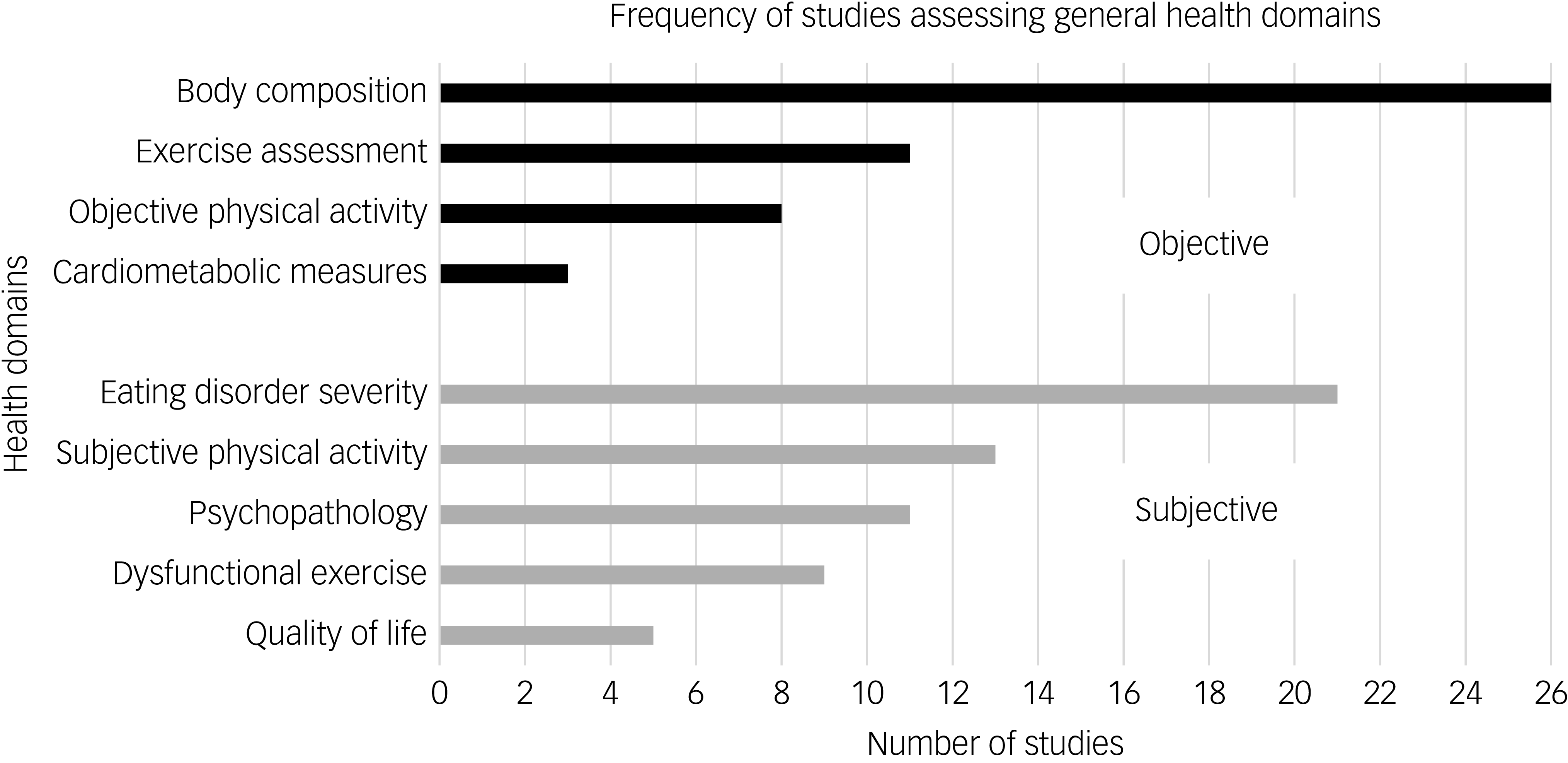
The specific assessment tools used in each study were categorised into health domains (Fig. 2). All 26 included studies had some form of objective physical assessment, and all but one study conducted assessment of subjective outcomes.
Frequency of health domain assessment within the included studies.

Body composition was the most frequently assessed objective health domain, with all 26 studies including assessment of body composition, followed by exercise assessment (n = 11), objective physical activity (n = 8), and cardiometabolic measures (n = 3). For subjective patient-reported outcomes, eating disorder severity was the most frequently assessed outcome in 21 studies, followed by subjective physical activity (n = 13), co-occurring psychopathology (n = 11), dysfunctional exercise (n = 9) and quality of life (n = 5).
In addition to the general health domain assessments in all studies (n = 26), a further reporting of health domain assessments across three population subgroups (i.e. anorexia nervosa, binge eating disorder, mixed) is displayed in Fig. 3. The frequency of health domain assessment in the population subgroups is overlaid with the expected rate of assessment for each subgroup based on the total health domain assessment. There was general consistency in health domain assessment in the subgroups compared with the overall result.
Frequency of health domain assessment across diagnostic populations. BED, binge eating disorder.

Body composition
The specific tools and outcomes within body composition and their frequency of use are displayed in Fig. 4. All studies (n = 26; 100%) reported the use of body mass index, with body weight reported less frequently (n = 17; 65%); Reference Bratland-Sanda, Martinsen and Sundgot-Borgen30–Reference Mathisen, Rosenvinge, Friborg, Vrabel, Bratland-Sanda and Pettersen46 although it is implied that to calculate and report BMI, all studies had to assess body weight. Fat mass (n = 9; 35%), Reference Bratland-Sanda, Martinsen and Sundgot-Borgen30–Reference Dauty, Menu, Jolly, Lambert, Rocher and Le Bras32,Reference Mathisen, Sundgot-Borgen, Rosenvinge and Bratland-Sanda36–Reference Thien, Thomas, Markin and Birmingham41 muscle mass (n = 6; 23%) Reference Bratland-Sanda, Martinsen and Sundgot-Borgen30–Reference Dauty, Menu, Jolly, Lambert, Rocher and Le Bras32,Reference Mathisen, Sundgot-Borgen, Rosenvinge and Bratland-Sanda36,Reference Mathisen, Rosenvinge, Friborg, Pettersen, Stensrud and Hansen37,Reference Szabo and Green40 and bone mineral density (n = 5; 19%) Reference Bratland-Sanda, Martinsen and Sundgot-Borgen30–Reference Dauty, Menu, Jolly, Lambert, Rocher and Le Bras32,Reference Mathisen, Sundgot-Borgen, Rosenvinge and Bratland-Sanda36,Reference Mathisen, Rosenvinge, Friborg, Pettersen, Stensrud and Hansen37 were the next most frequently assessed body composition measures within the included studies. When examining the method of body composition assessment, seven studies (27%) reported the use of dual-energy X-ray absorptiometry, Reference Bratland-Sanda, Martinsen and Sundgot-Borgen30–Reference Dauty, Menu, Jolly, Lambert, Rocher and Le Bras32,Reference Mathisen, Sundgot-Borgen, Rosenvinge and Bratland-Sanda36,Reference Mathisen, Rosenvinge, Friborg, Pettersen, Stensrud and Hansen37,Reference Sundgot-Borgen, Rosenvinge, Bahr and Schneider39,Reference Mathisen, Sundgot-Borgen, Rosenvinge, Bratland-Sanda, Svendsen and Pettersen47 and one (4%) study reported the use of bioelectrical impendence. Reference Rizk, Kern, Lalanne, Hanachi, Melchior and Pichard38
Frequency of use of objective health assessment tools. Black bars represent the overall frequency of each health domain assessed across all included studies; Grey bars represent the frequency of studies assessing the broader exercise component; White bars represent the frequency of studies using the specific outcome measures listed within each exercise component or health domain. DEXA, dual-energy X-ray absorptiometry.

Exercise assessment
The frequency of exercise assessment domains (e.g. strength) and the specific tools used (e.g. isometric handheld dynamometer) are displayed in Fig. 4. Strength assessment (n = 6; 23%) Reference Bratland-Sanda, Martinsen and Sundgot-Borgen30–Reference Dauty, Menu, Jolly, Lambert, Rocher and Le Bras32,Reference Galasso, Montaruli, Jankowski, Bruno, Castelli and Mulè35–Reference Mathisen, Rosenvinge, Friborg, Pettersen, Stensrud and Hansen37 and cardiorespiratory assessment (n = 6; 23%) were the most frequently implemented exercise tests, Reference Bratland-Sanda, Martinsen and Sundgot-Borgen30,Reference Bratland-Sanda, Sundgot-Borgen, Rosenvinge, Rø, Hoffart and Martinsen31,Reference Mathisen, Sundgot-Borgen, Rosenvinge and Bratland-Sanda36,Reference Mathisen, Rosenvinge, Friborg, Pettersen, Stensrud and Hansen37,Reference Sundgot-Borgen, Rosenvinge, Bahr and Schneider39,Reference Di Lodovico, Hanachi, Duriez and Gorwood48 followed by physical function (n = 5; 19%). Reference Dauty, Menu, Jolly, Lambert, Rocher and Le Bras32,Reference Galasso, Montaruli, Jankowski, Bruno, Castelli and Mulè35,Reference Vancampfort, De Herdt, Vanderlinden, Lannoo, Adriaens and De Hert43,Reference Vancampfort, De Herdt, Vanderlinden, Lannoo, Soundy and Pieters44,Reference Vancampfort, Probst, Adriaens, Pieters, De Hert and Stubbs49 The use of one repetition maximum (1RM) of major movements (n = 4; 15%) were the most frequently employed strength measures, Reference Bratland-Sanda, Martinsen and Sundgot-Borgen30,Reference Bratland-Sanda, Sundgot-Borgen, Rosenvinge, Rø, Hoffart and Martinsen31,Reference Mathisen, Sundgot-Borgen, Rosenvinge and Bratland-Sanda36,Reference Mathisen, Rosenvinge, Friborg, Pettersen, Stensrud and Hansen37 followed by single studies assessing grip strength, Reference Dauty, Menu, Jolly, Lambert, Rocher and Le Bras32 30 s sit to stand Reference Galasso, Montaruli, Jankowski, Bruno, Castelli and Mulè35 and isokinetic dynamometry. Reference Dauty, Menu, Jolly, Lambert, Rocher and Le Bras32
Five studies implemented a maximal (n = 3), Reference Mathisen, Sundgot-Borgen, Rosenvinge and Bratland-Sanda36,Reference Mathisen, Rosenvinge, Friborg, Pettersen, Stensrud and Hansen37,Reference Sundgot-Borgen, Rosenvinge, Bahr and Schneider39 or submaximal (n = 2), Reference Bratland-Sanda, Martinsen and Sundgot-Borgen30,Reference Bratland-Sanda, Sundgot-Borgen, Rosenvinge, Rø, Hoffart and Martinsen31 cardiorespiratory fitness test on a treadmill – three used a modified Balke protocol Reference Balke and Ware50 and two used the Bruce protocol. Reference Bruce51 The two studies that utilised the Bruce protocol (i.e. submaximal) were conducted in mixed populations, whereas the Balke protocols (i.e. maximal) were implemented in mixed (n = 2) and bulimia nervosa (n = 1) populations. Finally, a single anorexia nervosa study implemented a maximum effort bicycle-based exercise test; however, this was part of a pre–post observational design and not used for the assessment of cardiorespiratory fitness as an outcome. Reference Di Lodovico, Hanachi, Duriez and Gorwood48 Five studies utilised exercise assessments that examined physical function (e.g. balance and walking capacity), five of which used the 6-min walk test 52 for assessing walking distance, Reference Dauty, Menu, Jolly, Lambert, Rocher and Le Bras32,Reference Galasso, Montaruli, Jankowski, Bruno, Castelli and Mulè35,Reference Vancampfort, De Herdt, Vanderlinden, Lannoo, Adriaens and De Hert43,Reference Vancampfort, De Herdt, Vanderlinden, Lannoo, Soundy and Pieters44,Reference Vancampfort, Probst, Adriaens, Pieters, De Hert and Stubbs49 and one study implemented a balance assessment using a stabilimeter platform. Reference Dauty, Menu, Jolly, Lambert, Rocher and Le Bras32
Objective physical activity
Objective physical activity level (n = 8; 31%) was defined as assessment in which a wearable device was used to measure the physical activity of participants, with the frequency of assessment displayed in Fig. 4. Actigraphy was used in 7 studies, Reference Bratland-Sanda, Martinsen and Sundgot-Borgen30,Reference Bratland-Sanda, Sundgot-Borgen, Rosenvinge, Rø, Hoffart and Martinsen31,Reference Mathisen, Sundgot-Borgen, Rosenvinge and Bratland-Sanda36,Reference Mathisen, Rosenvinge, Friborg, Pettersen, Stensrud and Hansen37,Reference Zeeck, Schlegel, Jagau, Lahmann and Hartmann45,Reference Bezzina, Touyz, Young, Foroughi, Clemes and Meyer53,Reference Bratland-Sanda, Sundgot-Borgen, Rø, Rosenvinge, Hoffart and Martinsen54 and varied from 7-day actigraphy (n = 4), 4-day actigraphy (n = 1) or no description of time frame (n = 2). Pedometry was used in a single study for the measurement of physical activity (e.g. step counts). Reference Vancampfort, Probst, Adriaens, Pieters, De Hert and Stubbs49
Cardiometabolic health
Cardiometabolic health (n = 3) included all blood sample analysis and cardiac measures. Blood markers were reported in two studies, Reference Dauty, Menu, Jolly, Lambert, Rocher and Le Bras32,Reference Mathisen, Sundgot-Borgen, Rosenvinge, Bratland-Sanda, Svendsen and Pettersen47 whereas blood pressure assessment was employed within a single study study. Reference Mathisen, Rosenvinge, Friborg, Pettersen, Stensrud and Hansen37 The two studies conducting blood marker analysis examined a variety of specific markers; for additional information on the specific blood marker analysis in each study, refer to Table 1. Although not directly included in cardiometabolic health, a single study utilised spirometry to assess lung function. Reference Dauty, Menu, Jolly, Lambert, Rocher and Le Bras32
Eating disorder severity
Assessment of eating disorder severity (n = 21) included a variety of different constructs and tools commonly utilised for the assessment of ED psychopathology. The most frequently used measure was the Eating Disorder Examination (n = 13; 50%), both interview and/or questionnaire, Reference Bratland-Sanda, Martinsen and Sundgot-Borgen30,Reference Bratland-Sanda, Sundgot-Borgen, Rosenvinge, Rø, Hoffart and Martinsen31,Reference Dittmer, Voderholzer, Mönch, Cuntz, Jacobi and Schlegl33,Reference Mathisen, Sundgot-Borgen, Rosenvinge and Bratland-Sanda36–Reference Rizk, Kern, Lalanne, Hanachi, Melchior and Pichard38,Reference Zeeck, Schlegel, Jagau, Lahmann and Hartmann45–Reference Mathisen, Sundgot-Borgen, Rosenvinge, Bratland-Sanda, Svendsen and Pettersen47,Reference Bezzina, Touyz, Young, Foroughi, Clemes and Meyer53,Reference Brennan, Whelton and Sharpe55–Reference Schlegel, Hartmann, Fuchs and Zeeck57 followed closely by the Eating Disorders Inventory (n = 10; 38%). Reference Schlegl, Dittmer, Hoffmann and Voderholzer16,Reference Bratland-Sanda, Martinsen and Sundgot-Borgen30,Reference Dittmer, Voderholzer, von der Mühlen, Marwitz, Fumi and Mönch34,Reference Sundgot-Borgen, Rosenvinge, Bahr and Schneider39,Reference Szabo and Green40,Reference Vancampfort, De Herdt, Vanderlinden, Lannoo, Adriaens and De Hert43–Reference Zeeck, Schlegel, Jagau, Lahmann and Hartmann45,Reference Di Lodovico, Hanachi, Duriez and Gorwood48,Reference Schlegel, Hartmann, Fuchs and Zeeck57 All other eating disorder severity assessment tools are reported in Table 1.
Subjective physical activity
Subjective physical activity (n = 13) – defined as patient self-reported physical activity engagement – was assessed through a variety of formal and informal tools. The most frequent method was via self-reporting in informal questioning formats (n = 4), Reference Bratland-Sanda, Sundgot-Borgen, Rosenvinge, Rø, Hoffart and Martinsen31,Reference Rizk, Kern, Lalanne, Hanachi, Melchior and Pichard38,Reference Sundgot-Borgen, Rosenvinge, Bahr and Schneider39,Reference Udo and Grilo42 followed by the Baecke Physical Activity Questionnaire (n = 3), Reference Vancampfort, De Herdt, Vanderlinden, Lannoo, Adriaens and De Hert43,Reference Vancampfort, De Herdt, Vanderlinden, Lannoo, Soundy and Pieters44,Reference Vancampfort, Probst, Adriaens, Pieters, De Hert and Stubbs49 a physical activity diary (n = 2), Reference Bratland-Sanda, Martinsen and Sundgot-Borgen30,Reference Bratland-Sanda, Sundgot-Borgen, Rø, Rosenvinge, Hoffart and Martinsen54 the International Physical Activity Questionnaire (n = 1), Reference Zeeck, Schlegel, Jagau, Lahmann and Hartmann45 Godin Leisure Time Exercise Questionnaire (n = 1), Reference Di Lodovico, Hanachi, Duriez and Gorwood48 the Exercise Participation Screening Questionnaire (n = 1), Reference Bezzina, Touyz, Young, Foroughi, Clemes and Meyer53 Questionnaire of Sports Behaviour (n = 1) Reference Schlegel, Hartmann, Fuchs and Zeeck57 and, finally, an exercise behaviour questionnaire developed within the study (n = 1). Reference Schlegl, Dittmer, Hoffmann and Voderholzer16
Co-occurring psychopathology
Psychopathology (n = 11), similar to eating disorder severity, had multiple constructs and tools assessed. The Beck Depression Inventory was the most frequently used co-occurring psychopathology assessment tool (n = 6; 23%), Reference Schlegl, Dittmer, Hoffmann and Voderholzer16,Reference Dittmer, Voderholzer, Mönch, Cuntz, Jacobi and Schlegl33,Reference Dittmer, Voderholzer, von der Mühlen, Marwitz, Fumi and Mönch34,Reference Szabo and Green40,Reference Zeeck, Schlegel, Jagau, Lahmann and Hartmann45,Reference Mathisen, Rosenvinge, Friborg, Vrabel, Bratland-Sanda and Pettersen46 followed by Brief Symptom Inventory (n = 3), Reference Schlegl, Dittmer, Hoffmann and Voderholzer16,Reference Dittmer, Voderholzer, Mönch, Cuntz, Jacobi and Schlegl33,Reference Dittmer, Voderholzer, von der Mühlen, Marwitz, Fumi and Mönch34 Difficulties in Emotion Regulation Scale (n = 2), Reference Dittmer, Voderholzer, Mönch, Cuntz, Jacobi and Schlegl33,Reference Brennan, Whelton and Sharpe55 Physical Self Perception Profile (n = 2) Reference Vancampfort, De Herdt, Vanderlinden, Lannoo, Adriaens and De Hert43,Reference Vancampfort, Probst, Adriaens, Pieters, De Hert and Stubbs49 and the Symptom Checklist 90 (n = 2). Reference Vancampfort, De Herdt, Vanderlinden, Lannoo, Adriaens and De Hert43,Reference Vancampfort, De Herdt, Vanderlinden, Lannoo, Soundy and Pieters44 For the further list of 17 mental health assessment tools used in individual studies, refer to Table 1.
Dysfunctional exercise
Dysfunctional exercise (n = 9) had a variety of tools implemented to determine the level and the nature of dysfunctional exercise. The Compulsive Exercise Test questionnaire (CET) – a key tool in examining dysfunctional exercise level – was the most frequently used individual assessment tool (n = 6; 23%), Reference Schlegl, Dittmer, Hoffmann and Voderholzer16,Reference Dittmer, Voderholzer, Mönch, Cuntz, Jacobi and Schlegl33,Reference Dittmer, Voderholzer, von der Mühlen, Marwitz, Fumi and Mönch34,Reference Zeeck, Schlegel, Jagau, Lahmann and Hartmann45,Reference Bezzina, Touyz, Young, Foroughi, Clemes and Meyer53,Reference Mathisen, Bratland-Sanda, Rosenvinge, Friborg, Pettersen and Vrabel56 followed by the Commitment to Exercise Scale (n = 4). Reference Dittmer, Voderholzer, Mönch, Cuntz, Jacobi and Schlegl33,Reference Dittmer, Voderholzer, von der Mühlen, Marwitz, Fumi and Mönch34,Reference Zeeck, Schlegel, Jagau, Lahmann and Hartmann45,Reference Schlegel, Hartmann, Fuchs and Zeeck57 Following these tools, other measures were used in individual studies, including the Exercise Dependence Scale, Reference Zeeck, Schlegel, Jagau, Lahmann and Hartmann45 the Reasons for Exercise Inventory, Reference Bratland-Sanda, Sundgot-Borgen, Rø, Rosenvinge, Hoffart and Martinsen54 Exercise Addiction Inventory, Reference Di Lodovico, Hanachi, Duriez and Gorwood48 CET – Interview Reference Dittmer, Voderholzer, Mönch, Cuntz, Jacobi and Schlegl33 and the Exercise Motivations Inventory. Reference Schlegl, Dittmer, Hoffmann and Voderholzer16
Quality of life
Quality of life (n = 5) is an important construct in any mental health cohort and, within the studies that assessed quality of life, variations of similar tools were employed. The most frequently used tool was the Quality-of-Life Short Form-36 questionnaire (n = 3), Reference Vancampfort, De Herdt, Vanderlinden, Lannoo, Soundy and Pieters44,Reference Vancampfort, Probst, Adriaens, Pieters, De Hert and Stubbs49 followed by the Short Form – 12 version (n = 1) Reference Udo and Grilo42 and the German equivalent ‘Fragebogen Zum Gesundheitszustand’ Short Form – 12 survey (n = 1). Reference Schlegel, Hartmann, Fuchs and Zeeck57 One study additionally assessed life satisfaction using the Satisfaction with Life Scale; however, this was not included in the quality-of-life count as it reflects a subjective component of well-being rather than a multidimensional quality-of-life measure. Reference Zeeck, Schlegel, Jagau, Lahmann and Hartmann45
Outcome change
Sixteen studies reported on pre- and post-outcome change following an exercise intervention. Although a comprehensive meta-analysis of outcomes is outside of the scope of this scoping review, the direction of exercise-induced change in outcome measures (i.e. positive, neutral, negative) is summarised. In this review, positive change refers to a beneficial change in line with clinical goals, which may reflect either an increase or decrease depending on the outcome and study population. Outcomes assessed in at least two pre- and post-intervention studies are illustrated in Fig. 5. This figure provides a graphic summary of the general change in physical and psychological health outcomes by intervention type. Interventions are characterised and grouped into resistance exercise interventions, mixed interventions (i.e. combined aerobic and resistance) and mind–body interventions, referring to programmes in which mindfulness, reflective practices, educational components or psychological techniques were integrated into exercise sessions.
Outcome change in pre–post intervention studies.

Studies assessing change in physical health outcomes pre- and post-intervention (n = 11) were predominantly of mixed exercise intervention designs (n = 8), with mind–body (n = 2) and resistance exercise (n = 1) being less frequent. Physical health outcome change was generally positive, with improvements in line with clinical outcomes such as body mass, body mass index, fat mass, muscle mass, muscular strength, cardiorespiratory fitness, balance and lung function. Overall, there were largely no changes, positive or negative, noted in bone mineral density, metabolic health or physical activity levels.
Nine intervention studies assessed weight and body mass index as clinical outcomes, of which six were mixed exercise interventions, two were mind–body and one was resistance exercise, with positive changes in all studies; however, no statistical significance was found when compared to their respective control arms. Four studies examining body fat percentage and total fat mass reported positive change; for three studies (two for anorexia nervosa, one for mixed), there was an increase in line with clinical goals, whereas for one study (bulimia nervosa), a decrease in fat mass in the exercise intervention was reported as a positive outcome within the study.
Four studies examining the effects on muscle mass likewise reported positive changes (i.e. increases) in three mixed exercise interventions and one resistance exercise intervention. Muscular strength showed statistically significant increases in all three studies, of which all were mixed exercise interventions. Cardiorespiratory fitness – an outcome in five mixed exercise intervention studies – showed positive increases within the interventions, and four of these studies reporting statistically significant changes compared with their control arms.
Within the trials assessing psychological outcomes pre- and post-intervention (n = 12), six of the interventions were mixed exercise designs, five were mind–body and a single study was resistance exercise. All of the psychological outcomes within the intervention trials – quality of life, psychopathology (i.e. co-occurring and eating disorder-specific), emotional regulation, self-compassion and dysfunctional exercise – showed positive change within the exercise intervention trials. Ten studies reported the effects of the exercise interventions on psychopathology and found that there were generally significant improvements in psychopathology: five were mixed exercise, four were mind–body and one was resistance exercise. However, only two studies showed a difference between exercise and non-exercise interventions. Five studies examined the effects of the exercise interventions on dysfunctional exercise (three mind–body and two mixed exercise interventions), with all trials showing positive, significant reductions in dysfunctional exercise following the intervention. Finally, the two intervention studies examining quality of life (one mixed exercise and one mind–body intervention) reported statistically significant improvements in their interventions when compared with controls.
Discussion
This review is the first of its kind to examine the frequency and range of outcome measures used in exercise research involving adults with an eating disorder. The results of this review outline the varied use of health outcomes and assessment tools within the literature, and may provide guidance for mental health services conducting future research or implementing exercise therapy in eating disorder treatment settings. This review found that within the exercise and eating disorder research, there was extensive use of assessments of body composition and eating disorder severity, with subjective physical activity, exercise assessment, objective physical activity, co-occurring psychopathology and exercise behaviour reported frequently, but to a lesser extent; while there was infrequent assessment of quality of life and cardiometabolic health. Furthermore, when considering the impact of exercise on clinical outcomes, there were no deleterious effects of exercise, with most health domains having a reported positive change in line with clinical outcomes. The included studies reported no adverse events; however, previous research suggests the likelihood of underreporting of adverse events in exercise trials, Reference Saleh Moussa, Power, Yenson, Fazekas, Marston and Hosie58 and although results are suggestive of the safety of exercise and exercise assessment, caution is advised because of the vulnerability of eating disorder populations.
Assessment
A high proportion of studies implemented body composition assessments, likely reflecting their frequent use as indicators of weight-related outcomes in eating disorder research and clinical settings. 6,Reference El Ghoch, Milanese, Calugi, Pellegrini, Battistini and Dalle Grave59,Reference Grave, Pasqualoni and Marchesini60 The assessment of body composition in exercise and eating disorders requires sensitivity because of the potential for reinforcing negative fixations on body image. Reference Mathisen, Ackland, Burke, Constantini, Haudum and Macnaughton61 Despite this, body composition assessment can be important in clinical practice for observing exercise’s impact on improving body composition, a key goal of treatment, Reference Crone, Fochtmann, Attia, Boland, Escobar and Fornari62 and to monitor any deleterious effects that may affect the suitability of individuals to continue exercise therapy. The majority of body composition assessment consisted of weight and calculation of body mass index. Despite the frequency of use and body weight changes being an imperative assessment item in eating disorders, Reference Bryant, Broomfield, Burrows, McLean, Marks and Maloney63 there is extensive debate around the use of the body mass index and its suitability to reflect overall health status in eating disorders, Reference Bryant, Broomfield, Burrows, McLean, Marks and Maloney63,Reference Nagata, Garber, Tabler, Murray and Bibbins-Domingo64 and therefore it may not be the most suitable tool for examining health in exercise therapy and eating disorders. Notwithstanding the accessibility and cost challenges, multi-component measures of body composition, such as dual-energy X-ray absorptiometry, may warrant consideration for use in future research and clinical practice. This is because of the comprehensive and clinically relevant body composition outcomes attainable from implementing dual-energy X-ray absorptiometry, such as bone mineral density, lean mass and fat mass, which overall reflect a greater examination of an individual’s health status.
Importantly, no study included in this review reported a negative change in body composition alongside exercise therapy, with most studies reporting positive increases in underweight populations. This is of importance, considering some traditional perceptions of exercise therapy – albeit changing – are of the deleterious effects of exercise on body composition in eating disorders. Reference Hausenblas, Cook and Chittester17,Reference Vancampfort, Vanderlinden, De Hert, Soundy, Adámkova and Skjaerven18 The results of the included studies and other research in exercise and eating disorders show that when conducted in safe and controlled environments, supported by professionals, exercise therapy can improve weight and body composition status. Reference Hausenblas, Cook and Chittester17–Reference Toutain, Gauthier and Leconte19
The high rate and varied nature of exercise assessment across all diagnostic categories, alongside a lack of reported adverse events, outlines that conducting exercise assessment within eating disorder treatment can be safe and potentially relevant for treatment and care pathways. This is of significance as there is increasing acceptability of exercise therapy in eating disorders, Reference Vancampfort, Vanderlinden, De Hert, Soundy, Adámkova and Skjaerven18,Reference Toutain, Gauthier and Leconte19 and the availability of broad frameworks for managing exercise-related risk in eating disorders (e.g. Safe Exercise at Every Stage, Safe Exercise at Every Stage – 2). Reference Quesnel and Cooper65 However, there are currently no clear guidelines regarding the extent or nature of exercise assessment that can and should be conducted for people with eating disorders, or how such assessment may inform and complement existing models of care. The use of exercise assessment within eating disorder contexts has a potential scope for examining health and well-being that has previously not been implemented in eating disorder treatment. Poor cardiorespiratory fitness, for example, has consistently been shown to be a valid and reliable predictor of all-cause mortality in general and chronic disease populations, Reference Lang, Prince, Merucci, Cadenas-Sanchez, Chaput and Fraser66 and may be of use in eating disorder contexts to examine health status beyond the limitations of body composition measures. Similarly, assessment of strength from the included studies (e.g. 1RM or the low caloric expenditure grip strength assessment) may be of use to provide a greater level of examination of health status and morbidity. Reference Celis-Morales, Welsh, Lyall, Steell, Petermann and Anderson67,Reference Soysal, Hurst, Demurtas, Firth, Howden and Yang68
The results of this review outline that both maximal and submaximal strength and cardiorespiratory exercise testing may be suitable for clinical and research use, with appropriate caution and ensuring safety of patients. When implementing cardiorespiratory exercise assessments, mental health services may consider treadmill-based protocols, such as the Balke and Bruce, which were the most commonly used in the literature, while taking available resources into account. For determining strength, the results of this review indicate that maximal 1RM of major movements is potentially the most advisable assessment, particularly considering the simplicity and low cost of implementation; however, with the extensive literature supporting grip strength’s association with health status, this method of examining strength may also be appropriate. Reference Celis-Morales, Welsh, Lyall, Steell, Petermann and Anderson67,Reference Soysal, Hurst, Demurtas, Firth, Howden and Yang68
Managing and combating dysfunctional exercise cognitions is a significant goal of exercise therapy for people with eating disorders, because of the aforementioned overlap between eating disorder pathology and dysfunctional exercise behaviours. Reference Quesnel, Cooper, Fernandez‐Del‐Valle, Reilly and Calogero11–Reference Dittmer, Jacobi and Voderholzer13 Considering the CET’s high frequency of use within the included studies, validation, variety of settings of use and sensitivity to change, Reference Taranis, Touyz and Meyer69–Reference Goodwin, Haycraft, Taranis and Meyer71 the CET may be the most relevant tool to implement in assessing (and assessing change of) exercise beliefs and dysfunction in eating disorder contexts. In the included studies, there was no reported worsening or exacerbation of dysfunctional exercise cognitions and/or behaviours associated with the exercise interventions. In addition, prior research has outlined that engagement in exercise therapy in eating disorders can improve (decrease) compulsive and dysfunctional exercise, thus suggesting that exercise therapy may be an appropriate strategy for addressing these debilitating beliefs and behaviours. Reference Mathisen, Hay and Bratland-Sanda20,Reference Hallward, Di Marino and Duncan72
In the examination of physical activity in eating disorders, the results of this review outline that objective and subjective methods have been commonly used across the research. The use of these measures across multiple eating disorder studies suggests their potential suitability for clinical assessment, when applied with appropriate safeguards. The greater frequency of use of subjective methods is likely because of the ease and low cost of use of subjective tools, Reference Sallis and Saelens73 despite the evidence in general population and eating disorder research indicating greater accuracy of objective measures, particularly in relation to physical activity intensity. Reference Bratland-Sanda, Sundgot-Borgen, Rø, Rosenvinge, Hoffart and Martinsen54,Reference Hagstromer, Ainsworth, Oja and Sjostrom74 If the resources are available, objective measures may provide greater accuracy than self-report; however, this is balanced by the potential reinforcement of negative exercise beliefs through external targets if individuals are able to self-monitor and have access to a device’s real-time feedback. Conversely, practitioner-supported real-time monitoring of physical activity has potential to support assessments of treatment adherence and identify ongoing suitability to engage in structured exercise therapy. Despite the method, examining physical activity level is of paramount importance in eating disorders in both exercise and non-exercise therapy contexts, to accurately monitor physical activity level because of the significant presence of dysfunctional exercise in eating disorders.
Considering the specific nature of the populations within this review, it is unsurprising that eating disorder severity was the second most frequently reported domain. Many of the individual eating disorder severity tools were used as both outcome measures and diagnostic tools, and specific to the diagnostic population of relevance for the study (e.g. Binge Eating Scale). Despite their frequency of use and value for examining the effects of exercise on eating disorder severity, many of these tools are diagnostic in nature, and as such, assessment of eating disorder pathology severity is typically best undertaken by clinicians with specialist training in eating disorder psychopathology (e.g. clinical psychologists or psychiatrist). As outlined in other exercise and mental illness research, careful consideration is warranted as to the scope of practice of other multidisciplinary team members when evaluating the effects of exercise on mental health outcomes, including eating disorder pathology, particularly in the absence of a comprehensive multidisciplinary team. Reference McMahen, Wright, Jackson, Stanton, Lederman and McKeon75
Finally, within the included studies, cardiometabolic measures were minimally reported. This finding is important to contextualise within the scope of reported outcomes, as these measures were likely routinely assessed for clinical screening and medical safety, but not consistently reported within studies. The lack of reporting of these outcomes in the individual studies and in this review should not be considered as support for not conducting or reporting on these outcomes in research or clinical practice. Medical instability in eating disorders can be characterised by severe physical complications that include dizziness, fainting, electrolyte imbalances and cardiac complications, and as a result of malnutrition, electrolyte imbalance and dehydration, impaired cognitive function can be a further consequence. Reference Quesnel, Cooper, Fernandez‐Del‐Valle, Reilly and Calogero11 Exercising in the context of medical instability in eating disorders can exacerbate symptoms and pose risks to patients, Reference Quesnel, Cooper, Fernandez‐Del‐Valle, Reilly and Calogero11 therefore the decision to incorporate exercise into multidisciplinary management of eating disorders for the positive benefits it can elicit should involve an assessment of the risks and benefits.
Safety and utility of assessment
The included studies within this review implemented a range of assessment measures to determine the outcomes of exercise therapy and observe physical activity level in eating disorders. There were no adverse events reported in the included trials across the variety of assessments implemented. In addition, the assessments implemented within the intervention trials were able to detect positive change from the associated interventions. For example, the interventions examining change in psychological outcomes showed improvements with the exercise intervention in the psychological domain they assessed (e.g. psychopathology, dysfunctional exercise, emotional regulation, self-compassion and quality of life), indicating that the exercise therapy was effective in improving these outcomes. Similarly, the studies examining change in objective outcomes showed improvements in body composition (e.g. body mass index, fat mass), muscular strength, cardiorespiratory fitness, balance and respiratory function, whereas there was minimal change in metabolic health, physical activity level or bone mineral density.
There are limitations to consider for this study. First, although this review can be used as guidance for implementing assessments in exercise therapy and eating disorder clinical practice, the assessments implemented in the included studies were selected to best assess the aims of the individual studies, and may not universally be applicable to all exercise therapy in eating disorders. Second, although this study provides a general summation of the change in outcomes of assessments used in the exercise and eating disorder literature, this is a scoping review without effect size calculation or assessment of study quality, and therefore the results do not provide comprehensive evidence of the change in outcome from exercise in eating disorders. Third, although the screening software has evidence for accuracy and validity, there are limitations in its use; however, the authors applied consistent screening methods, and there were extensive non-relevant articles screened justifying the cessation of manual screening. Additionally, some included publications arose from the same underlying research projects (i.e. multiple reports from single cohorts). These were retained as separate records where they contributed distinct outcome data, consistent with the aim of mapping outcome measures across the literature. Finally, although a broad overview of assessment domains by diagnostic subgroups is provided, specific health and exercise assessment will vary between diagnoses, and although a detailed analysis is beyond the purposes of this review, further consideration and research is warranted in determining specific assessment in diagnostic subgroups.
Translation to clinical practice
The results of this review demonstrate that a variety of exercise assessments conducted within eating disorder treatment contexts are commonly applied, safe and clinically relevant in their ability to detect changes in health outcomes, and are therefore potentially suitable for use in clinical settings. Of note, this review outlines the relevance and safety of maximal and submaximal strength and cardiorespiratory fitness assessments that are not currently considered part of standard care for exercise therapy in eating disorders. The inclusion of comprehensive measures of fitness assessment within clinical care presents both a novel and effective adjunct to more common, but limited, methods of determining and tracking health in individuals with eating disorders (e.g. body mass index, body weight). Finally, the results of this review reinforce the importance of assessing exercise motivations and behaviours (e.g. the CET) as part of clinical practice in exercise and eating disorder settings, both to screen for dysfunctional exercise beliefs and behaviours, as well as to monitor changes over time.
Supplementary material
The supplementary material is available online at https://doi.org/10.1192/bjo.2026.12135
Data availability
Data availability is not applicable to this article as no new data were created or analysed in this study.
Acknowledgements
The authors acknowledge the use of the machine-learning tool Research Screener in assisting with the screening of records for eligibility.
Author contributions
C.M.: conceptualisation, data curation, formal analysis, investigation, methodology, project administration, validation, writing – original draft; B.K.: investigation, data curation, writing – review and editing; K.S.: investigation, writing – review and editing; K.W.: writing – review and editing; B.F.: investigation, formal analysis, conceptualisation, resources, writing – review and editing.
Funding
This research received no specific grant from any funding agency, commercial or not-for profit sectors.
Declaration of interest
None.




 Open access


eLetters
No eLetters have been published for this article.