

INTRODUCTION
Mysids crustaceans are one of the major components of coastal and estuarine zooplankton communities and play an important role as a resource for many organisms that use these areas as nurseries. Mysids are an important link in the food web of a coastal ecosystem (Yamada et al., Reference Yamada, Takahashi, Vallet, Taguchi and Toda2007) and are prey for various fish (Takahashi et al., Reference Takahashi, Hirose and Kawaguchi1999; Baldo & Drake, Reference Baldo and Drake2002; Jumars, Reference Jumars2007) as well as for invertebrates, birds and seals (Mauchline, Reference Mauchline1980) thereby linking primary and secondary production to a higher trophic level. As an energy converter at different trophic levels, the significance of mysids in an ecosystem has been greatly underestimated. Mesopodopsis orientalis is one of the most important components of the shallow-water crustacean community (Hanamura et al., Reference Hanamura, Siow and Chee2008a) and dense shoals of this species are exploited for human consumption in coastal areas of India and Thailand (Mauchline, Reference Mauchline1980; Chaitiamwonges & Yoodee, Reference Chaitiamwonges and Yoodee1982; Patil & Sankolli, Reference Patil and Sankolli1991). Mesopodopsis orientalis are also a food source of dolphin (Tattersall, Reference Tattersall1915) and sea horses (Pinkaew et al., Reference Pinkaew, Ohtsuka, Putchakara, Chalermwat, Hanamura and Fukuoka2001). Due to their high nutritive quality, this species is suitable for aquaculture as a live feed (Biju et al., Reference Biju, Gireesh, Jayalakshmi, Haridevi and Panampunnayil2009). Although considerable literature on the occurrence and abundance of this species from different areas exists (see Biju et al., 2009), no published information is available on its population composition and reproductive biology in a mangrove habitat. Hanamura et al. (Reference Hanamura, Siow and Chee2008a) reported the reproductive biology of M. orientalis from a tropical mangrove estuary, but subsequent studies found that these populations belong to a different species (Mesopodopsis tenuipes). Mauchline (Reference Mauchline1980) pointed out that life history characteristics of mysid species can vary considerably from one habitat to another, hence knowledge on the biology of local populations is essential for subsequent studies on a related scientific field (Hanamura et al., Reference Hanamura, Siow, Chee and Kassim2009). Considering the ecological and economic importance, the present study aims to elucidate the population structure, size variation within the population, breeding season and fecundity of M. orientalis in a mangrove habitat.
MATERIALS AND METHODS
Description of study area
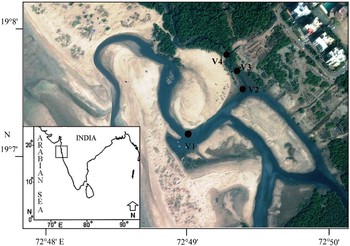
Mangroves are a salt tolerant forest ecosystem of tropical and subtropical intertidal regions. Where conditions are sheltered and suitable, the mangroves may form extensive and productive forests, which are reservoirs of a large number of species. The study site was located in the Versova mangrove (19°7′30″N and 72°49′30″E), it is a shallow salt marsh along the tidal creek of Mumbai (Figure 1) with a depth of about 1 to 1.5 m and has a width ranging from 30 to 40 m. During flood tide, flow of seawater towards the upstream progressively inundates the creek and during extensive high tides, even the swamp vegetation is submerged. The dominant vegetation of this swamp is the mangrove species Avicennia alba which has a height of 1 m (Stephen et al., Reference Stephen, Jayalaksmi and Nair2003). Vijay et al. (Reference Vijay, Biradar, Inamdar, Deshmukhe, Baji and Pikle2005) reported that mangrove habitat around Mumbai is disappearing due to human interference.
Map showing the study area and sampling locations in the Versova mangrove system, India.

Sampling procedure and data analysis
A total of four stations (V1–V4) were selected in the Versova mangrove, Mumbai, India for the present study (Figure 1). Station 1 (V1) is situated at the mouth of the shallow tidal creek with sandy substratum and the other three stations are located towards the northern end of the creek and are at equidistance. Monthly sampling was conducted regularly at all stations for 15 months from May 1991 to July 1992. Water samples from surface waters were collected using a polyethylene bucket for the estimation of temperature and salinity.
A circular hand net of 1 m length, having a mouth area of 0.08 m2 and a mesh size of 0.1 mm, fitted with a calibrated TSK (The Tsurumi-Seiki Co, LTD) flow meter was used for the collection of zooplankton samples. Samples were preserved in 5% buffered formalin. In the laboratory, mysids were sorted and classified into different groups based on the degree of development of secondary sexual characteristics. Sexes can be distinguished by observing an extended fourth pleopod in males and the growing marsupium in females. Immature individuals were distinguished from juveniles by the presence of rudimentary oostegites (female) and a longer fourth pleopod (male). The total body length of each individual was measured, from the tip of the rostrum to the posterior end of the telson, excluding the setae. Carapace length (CL) was measured from the tip of the rostrum to the posterior lateral margin of the carapace with an accuracy of 0.01 mm. After being sexed, they were categorized into six population categories based on the following criteria: juveniles (J, secondary sexual characteristics are absent); immature males (IM, secondary sexual characteristics developing); mature males (MM, secondary sexual characteristics completely developed); immature females (IF, rudimentary marsupium present); brooding females (BF, carrying egg/embryo); and empty females (EF, secondary sexual characters fully developed, but no eggs or larvae are carried). Each of the breeding females were also classified in three categories corresponding with the stages of eggs/embryos carrying in their brood pouch, i.e. females with spherical egg like embryo (stage I) (as ‘egg’ in this paper), females with eyeless embryos (stage II) and females with eyed embryos (stage III).
The developmental stages of eggs/embryo were classified according to Hanamura et al. (Reference Hanamura, Siow and Chee2008a): spherical egg like embryo (D1); eyeless embryo (D2); and eyed embryos (D3). The egg diameter was measured along the longest axis. Stages D2 and D3 embryos were measured along the distance between the anterior end (ventral side) and the posterior end of the uropod without stretching the body.
Monthly histograms with total length of each population category were used to analyse the population structure of M. orientalis using 1 mm size-class intervals. All four sample stations were combined. The percentage of different catergories was determined in relation to the total individuals collected each month. To identify the existence of significant difference between the proportions of each sex, we employed a Chi-square (χ2) test, using the sex-ratio (female/males) of the complete data set. The relationship between body length (BL) and CL and between the size of the breeding females and the number of embryos or larvae were investigated using regression analysis. To identify the existence of significant difference in environmental parameters and abundance of mysids among staions, we employed the Kruskal–Wallis test.
RESULTS
Environmental variables
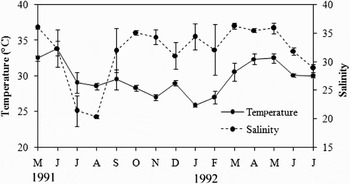
The surface water temperature varied from 25.2 to 35.0°C (average 29.8 ± 2.35°C) with minimum and maximum respectively during January 1992 and June 1991 (Figure 2). The variation in temperature did not significantly differ among stations (Kruskal–Wallis test: H = 0.34, P > 0.05).
Temporal variations in the water temperature and salinity observed at the sampling sites in the Versova mangrove system, India.

Salinity was generally low during the monsoon period (June–September) which progressively increased from the post-monsoon period (October–January) attaining maximum during the pre-monsoon period (February–May) (Figure 2). The salinity ranged from 28.8 − 36.7 with an average of 32.0 ± 5.4 at V1, 20.5 − 36.6 with an average of 32.7 ± 5.0 at V2, 20.1 − 36.1 with an average of 32.0 ± 5.2 at V3, 18.1 − 36.2 with an average of 30.7 ± 5.6 at V4. The variation in salinity between stations was not significant (H = 1.75, P > 0.05).
Biometrics
An allometric relationship between the CL (in mm) and the total BL (in mm) was calculated from measurements taken in some well-preserved individuals: BL= log2.158 logCL + 0.883, (r = 0.912, N = 108, P > 0.01).
ABUNDANCE AND POPULATION STUCTURE
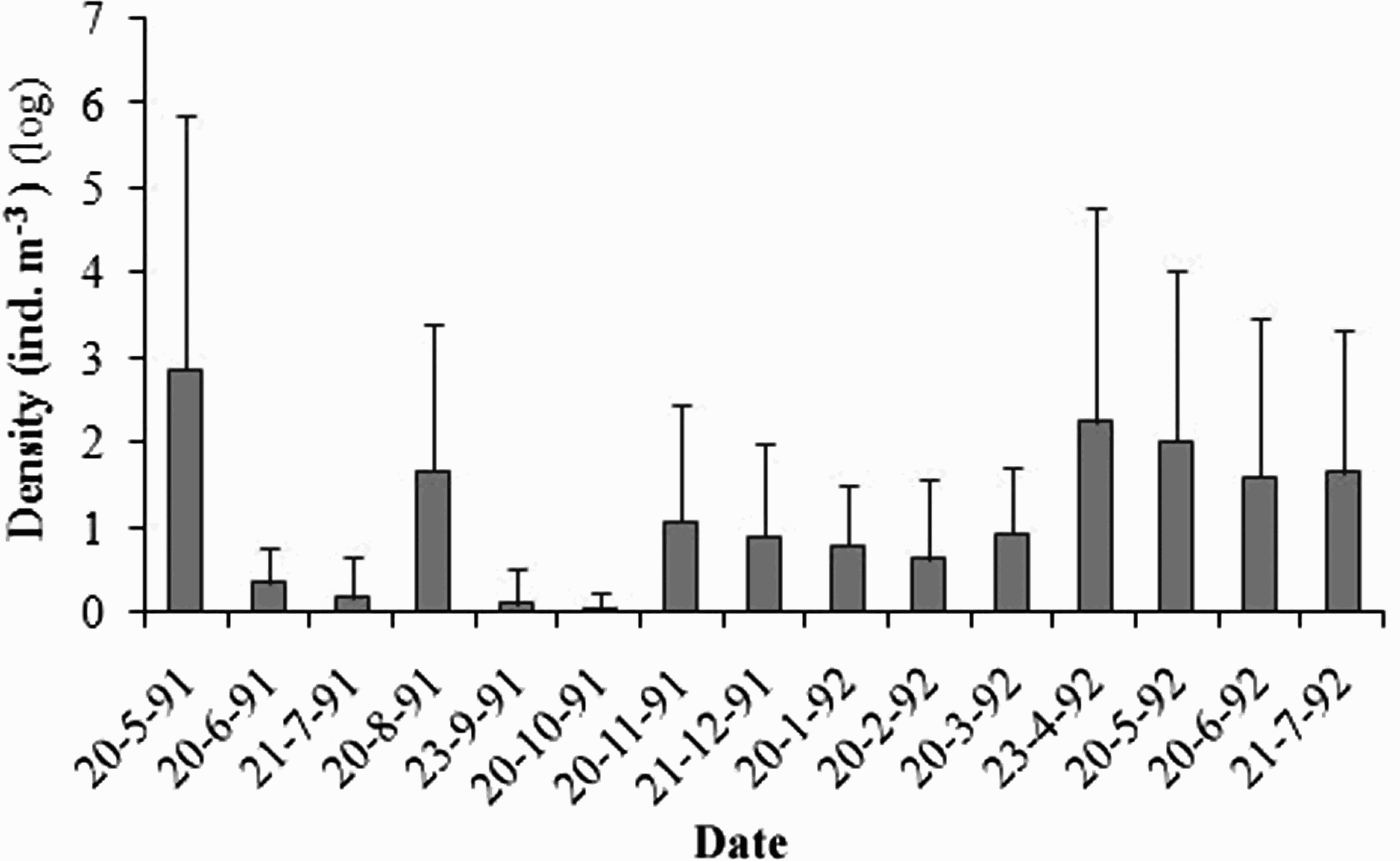
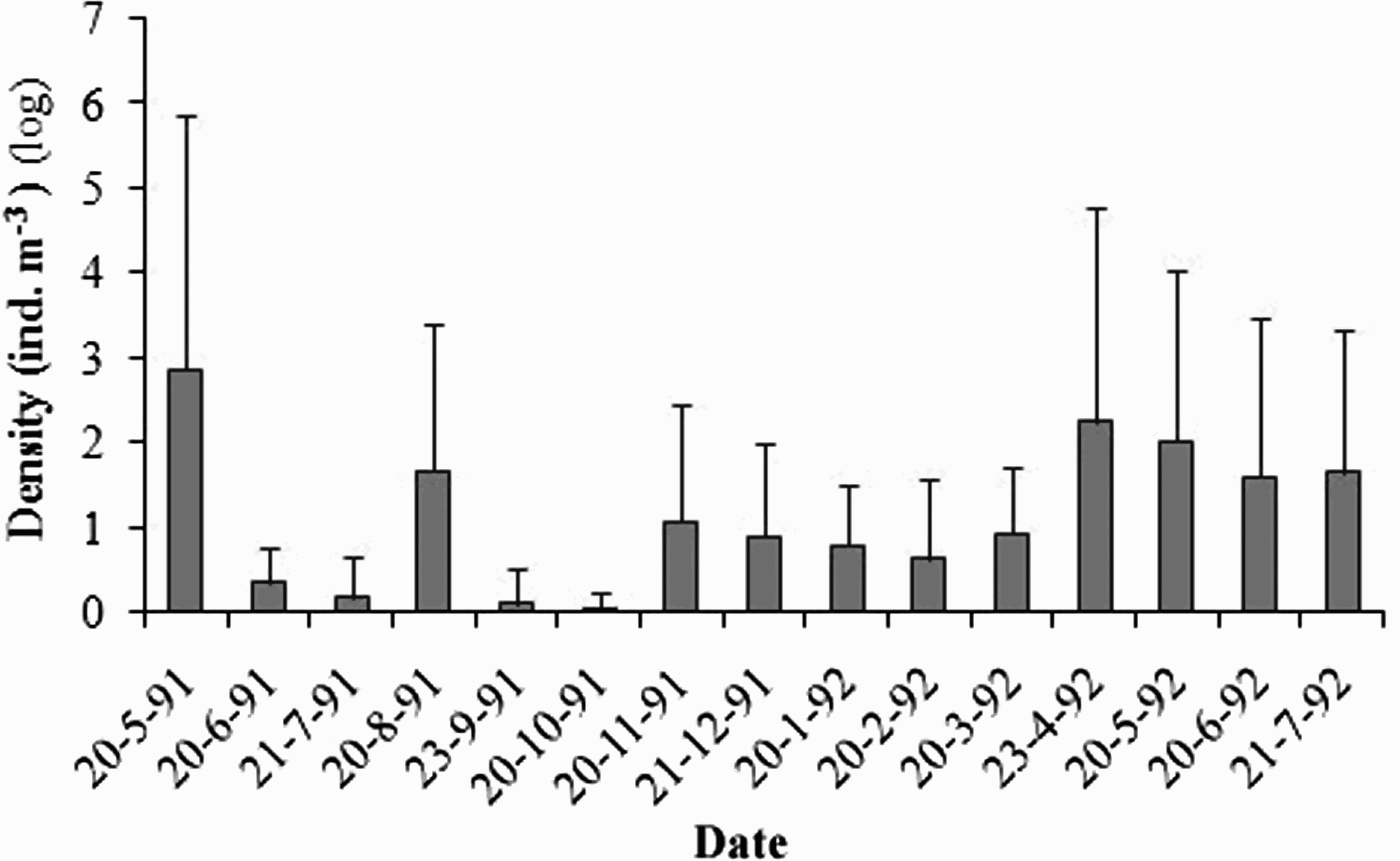
The population densities of Mesopodopsis orientalis in the study area were ranged from 0–2104 ind.m−3, with an average of 78.6 ind.m−3 (Figure 3). The variation in densities significantly differed among stations (Kruskal–Wallis test: H = 8.0, P < 0.05). The maximum population was recorded at Station V1 (65.3%) followed by V2 (22.9%), V4 (6.9%) and V3 (4.9%). There was a clear seasonal variation in the distribution of M. orientalis during the present study. Compared with other seasons, the high abundance of M. orientalis occurred in the pre-monsoon period (February–May) (83.6% of the total population with an average of 813.0 ± 1212 ind.m−3). During the monsoon (June–September) and post-monsoon (October–January) period M. orientalis occurred with an average of 130.4 ± 102.3 ind.m−3 and 32.2 ± 22.4 ind.m−3 respectively. Peak in mysid standing stock (average 729.5 ± 993.2 ind.m−3) was in May 1991 followed by a second peak (average 172.5 ± 345.0 ind.m−3) in April 1992 (Figure 3); in both the peaks, juveniles dominated constituting 93.7% and 89.6% of the respective population. In the present study, M. orientalis occurred in temperature and salinity range of 25.5°C to 34°C and 20.3 to 37.1 respectively.
Abundance of Mesopodopsis orientalis averaged over four stations from May 1991 to July 1992 in Versova mangrove system, India.
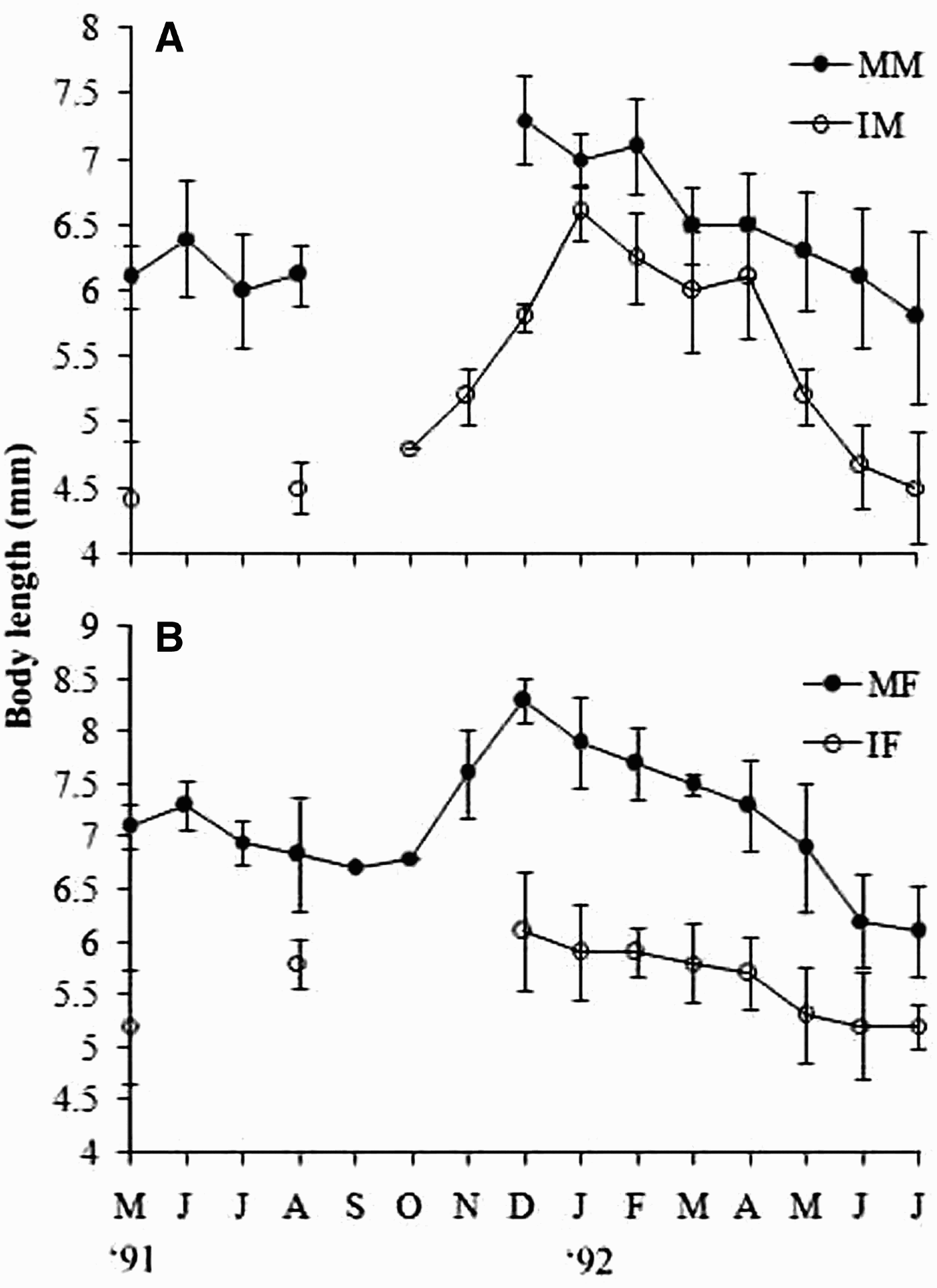
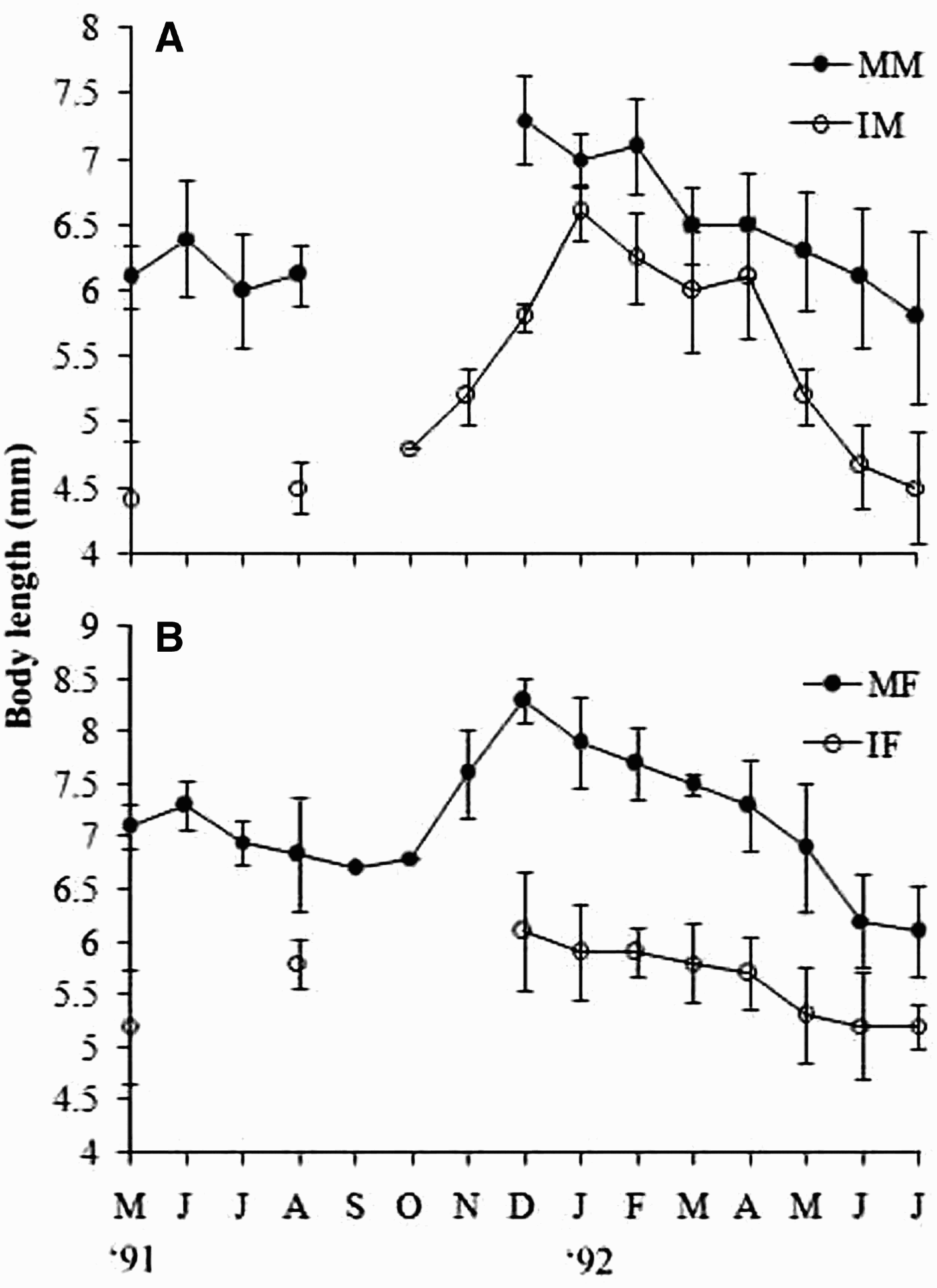
The percentage of different demographic categories showed considerable temporal variation during this sampling period (Figure 4). Juveniles were found in all months and dominant in most of the samples. Highest percentage of juveniles was obtained in May 1991 and April 1992 and lowest in July 1992 (9.7%). The size-range of juveniles was 1.3 mm to 4 mm. The minimum and maximum body length value of juveniles was obtained in May 1991 and December 1991 respectively (Figure 5). The maximum percentage of immature females was obtained from July 1992 (35.4%). The smallest BL was found in June 1992 (4.5 mm) and the highest in March and April 1992 (6.6 mm) (Figure 5). Breeding females reached maximum percentage in October 1991 (33.3%) and a minimum in May 1991 and April 1992 (1%) (Figure 4). The smallest individual was recorded in July 1992 (5.4 mm) the largest in January 1992 (8.4 mm) (Figure 5). Empty females were found in all samples except June, September, October and November 1991. The smallest BL (6.7 mm) value was found in July 1992 and the highest in December 1991 (8.7 mm) (Figure 5). Immature males reached maximum percentage in October 1991 (33.3%) and are found in all samples except in June, July and September 1991. The smallest BL was found in July 1992 (2.7 mm) and the highest in January 1992 (6.8 mm) (Figure 5). Mature males were found in all samples except September, October and November 1991 with a maximum of 33.3% recorded in July and minimum of 1% recorded in May 1991 (Figure 4). Body length varied from 5.3 mm in July 1991 to 8.5 mm in December 1991 (Figure 5). The maximum percentage of empty females (20%) was recorded in June 1991 and 1992 (Figure 4). The BL of male and female individuals was at maximum during post-monsoon months (Figure 6A, B).
Seasonal changes in population structure of Mesopodopsis orientalis collected in the Versova mangrove system, India. MM, mature male; IM, immature male; EF, empty female; BF, breeding female; IF, immature female; J, juveniles.

Mesopodopsis orientalis. Length–frequency histograms from May 1991 to July 1992 in Versova mangrove (histograms for October 1991 were not included due to low occurrence of mysids on this sampling). n, indicates number of individuals collected.

Mesopodopsis orientalis. Seasonal variation of the mean body length of (A) immature and mature males and (B) immature and mature females.
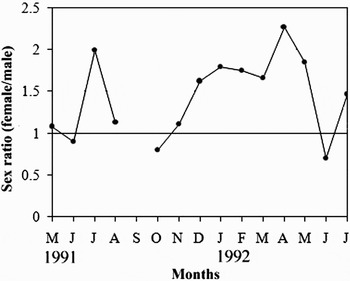
Presence of all categories during whole period and the overlap of different generations, suggests existence of more than one generation per year (Figure 5). The average sex-ratio (female/male) calculated for the complete data was 1.4, and ranged from 0.6 (June 1992) to 2.3 (April 1992) (Figure 7). However, the sex-ratio fluctuated along the sampling period; this was not significantly different from 1 (χ2 test, P > 0.05).
Monthly variation in sex-ratio (female:male) of Mesopodopsis orientalis in the Versova mangrove.

Breeding females and broods
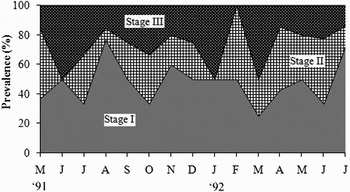
Breeding females present all year round and make up 0.7% to 33.3% of the total population with an average of 13.4%. The composition of females with egg/embryo (stage I) varied from 25.0% to 76.0% of the total gravid female population with an average of 46.5%; that of female with eye less embryo (stage II) from 0% to 47.4% with an average of 27.01%; that of females with eyed embryo (stage III) from 0% to 33.3% with an average of 26.4% (Figure 8). The body length of an ovigerous female had a general tendency to increase as the stage of the embryo progressed. The Kruskal–Wallis test showed significant size difference between groups (H = 22.33, df = 2, P < 0.05). The average values were, stage I females, 7.5 ± 0.77 mm (N = 22); stage II females, 7.6 ± 0.49 mm (N = 26); and stage III females 7.8 ± 0.87 mm (N = 30).
Seasonal changes in the percentage occurrence of brooding females of Mesopodopsis orientalis in the Versova mangrove.

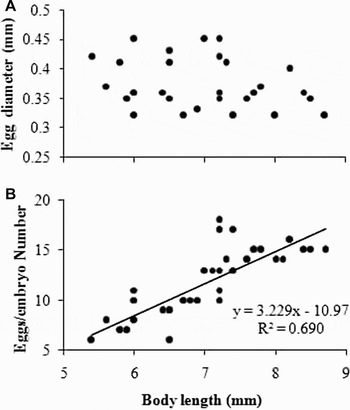
Size variation of eggs/embryos ranged from 0.32–0.45 mm with an average of 0.39 ± 0.06. Brood size (number of embryos present in a brood) ranged from 6 to 18. There was no correlation between the egg size and female body length (Figure 9A). The body length of D2 embryo was 0.5–1.0 mm with an average of 0.57 ± 0.073 and D3 was 0.9–1.3 mm with an average of 0.99 ± 0.081. The body size of the smallest free-living individual was 1.3 mm. The brood number (BN) was closely correlated with female BL (Figure 9B), and the following regression equation was obtained:

Mesopodopsis orientalis. Relationship between (A) egg diameters and body length (N = 35), and (B) between brood number per female and body length (N = 78).

DISCUSSION
The study area in the Versova mangrove ecosystem sustains a moderate potential for mysids. The density variation did not show a fully synchronous pattern between the sampling stations. This probably indicates a heterogeneous distribution of the mysid. Population density of mysids in this area (average 78.6 ind.m−3) is comparable with that of mysids collected by the same method of adjust salt pan (Bhayander salt pan) (average 71.0 ind.m−3) (Biju & Panampunnayil, Reference Biju and Panampunnayil2010). In the present study, Mesopodopsis orientalis occurred in wide fluctuating saline conditions (20.3–37.1). This species has also been recorded from highly fluctuating saline conditions (eg. Cochin backwater (0–34.25) and the Bhayander salt pan (1.2–63.6) (see Biju et al., Reference Biju, Gireesh, Jayalakshmi, Haridevi and Panampunnayil2009; Biju & Panampunnayil, Reference Biju and Panampunnayil2010). Bhattacharya (Reference Bhattacharya1982) studied salinity tolerance in the laboratory and revealed that M. orientalis of Indian coastal waters could survive under an extremely wide range of salinity conditions, even though it tends towards a low salinity preference, particularly in the early life stages; this ability ensures its wide distribution from seawater to near fresh water conditions. McLusky & Heard (Reference McLusky and Heard1971) reported that euryhaline species are well adapted to live in an environment with a wide fluctuation in salinity through their capacity to prevent excessive changes in their internal environment by maintaining their blood hyper/hypo-osmotic to the medium.
As in many other mysid species, M. orientalis presented considerable fluctuation in its abundance. The principal factor of seasonal abundance of mysid (Mesopodopsis slebberi) is reproduction, which is controlled primarily by environmental temperature (Moffat & Jones, Reference Moffat and Jones1993). In the present study, greatest abundance occurred in May 1991 and April and May 1992 (pre-monsoon period), when juveniles constituted 93.72%, 89.56% and 86.10% of the total population respectively. Intensity of breeding was at the lowest during August 1991 and July 1992 (monsoon period) when the contributions of juveniles to the total population were only 13.97% and 9.71% respectively. Mesopodopsis orientalis shows variation in their seasonality in abundance with respect to a different population. For example, in the Cochin backwater, abundance of this species associated with the monsoon period (Biju et al., Reference Biju, Gireesh, Jayalakshmi, Haridevi and Panampunnayil2009) while in the Hooghly estuary, the periodicity in abundance of M. orientalis weakly correlated with the monsoon season (Sarkar & Choudhury, Reference Sarkar and Chowdhury1986). Hanamura et al. (Reference Hanamura, Siow, Chee and Kassim2009) reported that there is no evidence of periodicity in the abundance of M. orientalis in the Malaysian sandy beach. These observations suggest that the intensity of breeding varies within different populations of the same species. The water temperature significantly affects the periodicity and reproductive biology of mysids (Mauchline, Reference Mauchline1980; Wittmann, Reference Wittmann1984; Johnston et al., Reference Johnston, Stevens and Watling2001). Hanamura et al. (Reference Hanamura, Siow, Chee and Kassim2009) state that stable water temperature reduces the seasonality of mysids in tropical shallow-waters.
The number of females exceeds the number of males in most of the sampled months, a pattern also reported for M. orientalis collected from sandy beach, Malaysia (Hanamura et al., Reference Hanamura, Siow, Chee and Kassim2009) and other species of mysids (e.g. Neomysis americana (Pezzack & Corey, Reference Pezzack and Corey1979); Metamysidopsis neritica (Calil & Borzone, Reference Calil and Borzone2008)). Variation in sex-ratio of M. orientalis during the sampling period was not significantly different from 1. The same was reported for Metamysidopsis neritica (Calil & Borzone, Reference Calil and Borzone2008) and M. elongata atlantica (Gama & Zamboni, Reference Gama and Zamboni1999).
The population structure of M. orientalis at Versova mangrove demonstrates the difference in length composition of population and reproductive conditions of the species. The fully-grown specimens reach a length of 8.7 mm though sexual maturity is attained at a smaller size of 5.4 mm. This suggests that growth is continuous even after sexual maturity has attained. Some immature females collected in July 1992 were larger than ovigerous females collected in the same month. This reveals that total length alone does not determine maturity.
The number of broods carried by females ranged from 6 to 18. Even though large females carried more young, the number of young carried by females of equal BL also varied. The average BL of breeding females increased with the progress of larval development. A similar size increase in breeding females has been reported in varies species of mysids and has been explained as inter-moult growth causing the stretching of the abdomen (Mauchline, Reference Mauchline1973; Fenton, Reference Fenton1994). Hanamura et al. (Reference Hanamura, Siow, Chee and Kassim2009) pointed out that somatic growth of the abdomen is not the factor leading to size increase in a breeding female population of M. orientalis in the Malaysian sandy beach. Unfortunately, in the present study, the somatic growth of abdomen is not measured.
Since in M. orientalis breeding goes on all the year round many broods must be produced by a single female as instanced by the presence of two to three size-classes of juveniles in most of the collections, but how long a single individual lives is not known. Calil & Borzone (Reference Calil and Borzone2008) point out that many species of mysids in shallow water environments have several generations within the year and individual females within a generation may produce several successive broods. An increase in the reproductive potential of a population is related to an accelerated ontogenic development that results in a fast maturation of the individuals, allowing the production of many generations per year. This can hardly be distinguished in field data. However, the study of length–frequency histograms of mature mysids often aid in the interpretation of population biology (Mauchline, Reference Mauchline1980). In the present study, the life history of M. orientalis interpreted as follows: the first generation started in April and May with a large cohort. These juveniles become immature males and females observed in June and July, which developed to mature males and ovigerous females in August and September. These ovigerous females originated a new generation in October/November. The generation of October/November becomes immature males and females in December and January and mature individuals in February and March that developed a new generation and closing the annual biological cycle of M. orientalis (Figure 5). Nair (Reference Nair1939) has described in detail the formation and extrusion of eggs in M. orientalis. The incubating period is not more than 96 hours at 25–29°C and the female then moults and immediately lays eggs again.
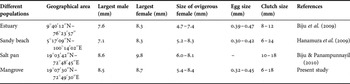
Field observations on the different populations of M. orientalis appear to be inconsistent in certain reproductive characters (Table 1). For instance, the maximum size of the ovigerous females of the estuarine population was 7.4 mm, while populations in sandy beach, salt pan and mangrove habitat, were 8.3 mm, 8.1 mm and 8.4 mm respectively. Clutch sizes of M. orientalis collected from different localities also have some variations. At present, the highest number (29) of broods of M. orientalis was recorded at Hazira, India (Biju & Panampunnyil, Reference Biju and Panampunnayil2009), while the lowest number (6) was recorded at sandy beach, Malaysia (Hanamura et al., Reference Hanamura, Siow, Chee and Kassim2009; Table 1) and Versova mangrove, India (present study) (Table 1). Biju & Panampunnayil (Reference Biju and Panampunnayil2009) reported that M. orientalis collected from different populations of Maharastra and South Gujarat, India showed wide variation in the clutch size. The average egg diameter of the sandy beach population was 0.37 mm (Hanamura et al., Reference Hanamura, Siow, Chee and Kassim2009) while those of the mangrove population were 0.39 mm. Some other species of mysids also show difference in reproductive characters with respect to habitat; Ishikawa & Oshima (Reference Ishikawa and Oshima1951) reported that the egg/embryo carried by Neomysis japonica Nakazawa, 1910 was smaller in the population collected in a low salinity environment than that collected in a high salinity area. However, Sawamoto (Reference Sawamoto1985) obtained an opposite result for the same species in neighbouring water of Japan. Delgado et al. (Reference Delgado, Guerao and Ribera1997) mentioned that the clutch size of Mesopodopsis slabberi (van Beneden) varies depending on the geographical populations or different generations. Even though many factors affect the mysid reproduction, different patterns of reproductive traits may be related to their genetic variability. Hanamura et al. (Reference Hanamura, Koizumi, Sawamoto, Siow and Chee2008b) reported that the difference in the life history trait of mysids linked with their genetic background and recent taxonomic analysis with molecular data has revealed high genetic diversification and/or cryptic speciation in several cosmopolitan species of mysids (Audzijonyte & Väinölä, Reference Audzijonyte and Väinölä2005; Remerie et al., Reference Remerie, Bourgois, Peelaers, Vierstraete, Vanfleteren and Vanreusel2006; Hanamura et al., Reference Hanamura, Koizumi, Sawamoto, Siow and Chee2008b). From this viewpoint, more morphometric and genetic analyses are needed to clarify the difference in life history features within different populations of the same species.
Comparison of reproductive character of Mesopodopsis orientalis with a different population.

ACKNOWLEDGEMENTS
The authors are grateful to the Director, National Institute of Oceanography, Goa and to the Scientist-in-Charge, Regional Centre, NIO, Kochi for the encouragement and facilities provided. Thanks are due to the Scientist-in-Charge, NIO, Mumbai for providing the study material. This paper is an NIO contribution.