


Recent scholarship points to an increase in the prevalence and durability of authoritarian regimes (Puddington Reference Puddington2010), especially single-party systems, throughout the world (Magaloni and Kricheli Reference Magaloni and Kricheli2010). Dovetailing with this finding, a burgeoning comparative politics literature has emphasized that the successful authoritarian regimes are those that make use of nominally democratic institutions. Contributors to this literature have demonstrated a strong association between having a national legislature and regime longevity (Gandhi Reference Gandhi2009; Gandhi and Przeworski Reference Gandhi and Przeworski2007; Geddes Reference Geddes2006).
The most prominent explanation linking nominally democratic institutions to regime survival is the “cooptation theory,” whose proponents argue that authoritarians relying too heavily on repression for survival become dependent on their security apparatus (e.g., police force or military), which carries out the state's heavy-handed enforcement. Maintaining authority in this manner places a large share of resources in the hands of security elites, who could turn against the regime leaders down the road (Gandhi Reference Gandhi2009; Haber Reference Haber, Weingast and Wittman2006). Cooptation theorists argue that a less dangerous, long-term strategy is to allow groups from outside the inner circle to have a formal say in the policy-making process through the use of quasidemocratic institutions such as elections and assemblies.
Elections allow leaders to identify the most popular local notables or potential opposition forces (Boix and Svolik Reference Boix and Svolik2007). Once identified, the dictator can placate these elites by giving them some say over policy making (Gandhi Reference Gandhi2009; Gandhi and Przeworski Reference Gandhi and Przeworski2006, Reference Gandhi and Przeworski2007) and/or access to rents (Lust-Okar Reference Lust-Okar2006) through membership in a national parliament. In addition to stability, cooptation also facilitates private investment and growth by creating a credible commitment to protecting the property rights of the capital owners in society, increasing overall productivity and regime revenue (Wright Reference Wright2008). The general logic underlying this argument has a long history in comparative political science, having been used to explain the expansion of democracy and the instauration of the rule of law (North and Weingast Reference North and Weingast1989; Weingast Reference Weingast1997).
Cross-national evidence that democratic institutions are associated with authoritarian longevity lends empirical support to the cooptation theory. Nevertheless, because of the need to generalize across countries, the micrologic of cooptation has been less well articulated, leaving several critical issues underdeveloped. First, the theory presumes that groups outside the ruling elite are capable of winning seats in the assembly and that—once elected—delegates are responsive to, and speak for, the underlying constituencies that were co-opted. As of this date, no systematic evidence has been presented that elections fulfill this function. Second, the regime hierarchy must be able to limit the confines of the debate to ensure that the parliament fills its intended role as a forum for discussion and trade-offs, while guarding against those discussions posing any threat to regime stability. Because most scholars simply use a dichotomous variable to determine whether a regime has a parliament, theorists have abstracted away from specific parliamentary rules governing the co-optive exchange. We need a better understanding of these rules in order to assess whether and how regimes are actually able to mediate potential conflict within a national parliament.
In this article, we fill in these gaps through an analysis of delegate behavior in the 2007–12 Vietnamese National Assembly (VNA). We track behavior through a systematic examination of participation in Vietnam's biannual query sessions. Like the famous British parliamentary question period, these sessions allow VNA delegates to quiz members of the executive branch (prime minister, line ministers, and state bank governors) on the issues of the day and even question their performance directly. Since the early 1990s, query sessions have been televised live during the day with highlights replayed during evening prime time. As Salmond (Reference Salmond2009) found in his comparative analysis of parliamentary question hours, these forums have encouraged political knowledge and participation among Vietnam citizens. In the midst of hot-button current affairs such as construction graft or cheating on university exams, the query sessions have become must-see television (Ninh Reference Ninh2007).
Query sessions, which have been used elsewhere to examine issues of representation (Chester and Bowring Reference Chester and Bowring1962; Chi-Hung Reference Chi-Hung1976; Johnson Reference Johnson1962), are a useful measure of responsiveness in an authoritarian setting for two reasons. First, they are the most well-known and highly visible connection of parliamentary activity to voters in many regimes. In a recent survey by the United Nations Development Programme (2009), 60% of Vietnamese citizens answered that they watched some of the query sessions, whereas an additional 24% claimed to watch the entire broadcast. Second, performance in query sessions can be traced directly to individual delegates. Voting or delegate contributions to amending or authoring legislation are important facets of a delegate's work, but they are of limited utility in assessing responsiveness to constituencies because final legislation does not carry the names of authors or contributors.
Our project is possible because the Office of the National Assembly (ONA), analogous to the U.S. Congressional Research Service, posted the transcripts from all query sessions of the 12th VNA (elected in May 2007) online.Footnote 1 With some investigation, we were able to assemble a data set of all related sessions. They comprise four query sessions, more than 800 pages of transcripts, the participation of 13 ministers (including the prime minister), and 776 questions put forward by 162 out of 493 delegates. We coded each question by whether the questioner criticized the minister, addressed a locally important issue, or referred to their provincial “constituency” (cử tri) in the question wording.
By combining these data with the Malesky and Schuler (Reference Malesky and Schuler2009) data set of delegate biographies, we are able to test whether delegates are responsive to their constituents by criticizing ministers and raising issues relevant to their localities. We also use these data to examine whether institutional roles and electoral backgrounds have a measurable impact on the level and type of activity engaged in by delegates, allowing us to address the question of how a regime might manage conflict within a parliament. In short, our combined data set allows us to conduct the first comprehensive analysis of delegate behavior in an authoritarian system.
Beyond the availability of systematic data on delegate behavior, the VNA offers a particularly appropriate setting for evaluating the cooptation theory because it reflects cross-national variance on key institutional variation that might be expected to have an impact on delegate responsiveness: nomination procedures, electoral competitiveness, and professionalism. Individual VNA delegates differ as to whether they (1) were nominated by central authorities OR provincial electoral commissions, (2) faced difficult competition in the election OR were guaranteed election through safe seats, and (3) served continuously as full-time delegates managing provincial VNA offices and permanent legislative committees OR only took part in the VNA's biannual legislative sessions.
Anticipating our findings, these institutional variations prove critical for understanding delegate behavior. First, nomination procedures greatly affect whether delegates are responsive upward toward national leaders or downward to their underlying provincial constituency. Delegates who are more dependent on the central party and state for nomination and future promotion appear less willing to participate, challenge the government, and represent the interests of their voters. Electoral competitiveness also matters. Delegates emerging from closely contested elections raise more critical queries of national authorities than those with safe seats. Finally, the professionalism of delegates dictates how well they respond to constituency interests. Full-time members who have more information and a greater stake in their roles as representatives tend to perform their representative functions more seriously. Specifically, full-time local delegates are three times more likely to ask questions and criticize ministers, and twice as likely to reference local issues in their speeches as their peers. Together, these findings not only provide evidence for cooptation in Vietnam, but also illustrate how Vietnamese leaders manage the dangers of bringing alternative voices into the policy-making process through carefully designed electoral and assembly rules.
Our results have important implications for the study of representation in democratic settings as well. Students of deliberative democracy (Bohman Reference Bohman1996; Elster Reference Elster1998) will be interested in the use of query sessions in an authoritarian country because it provides a unique case for studying how public discussion might alter leaders’ preferences and actions when the impact of electoral democracy is limited. Furthermore, scholars interested in modes of representation will note that even highly flawed elections are associated with some degree of responsiveness to underlying constituencies (Manin, Stokes, and Przeworski Reference Manin, Stokes, Przeworski, Przeworski, Stokes and Manin1999a).
As in democracies, however, the connection between authoritarian elections and representation is also obscured when legislatures are characterized by multiple-principal configurations. An exciting new comparative literature demonstrates that multiple principals can significantly influence individual versus collective accountability (Diermeier and Fedderson Reference Diermeier and Fedderson1998). For instance, legislators elected from single-member districts illustrate more individual responsiveness to their constituents than to their party leaders (Carey Reference Carey2009). More than is commonly recognized, authoritarian legislatures also present an array of multiple-principal configurations (e.g., party, state, citizens, nominating institution). In this article, we show that even in a single-party authoritarian state, the institutional responsibilities of delegates may lead them to respond to the concerns of constituents and local leaders over regime elites. In particular, we demonstrate how professionalism and embeddedness in local areas and functional groupings (Tsai Reference Tsai2007) strengthens this downward accountability to localities.
The article has five sections. The first section reviews the literature on authoritarian institutionalism and query sessions. The second then examines the historical and current role of the VNA in the political system and develops hypotheses of predicted behavior for different delegates. The third section describes the structure of our query and representative data set. The fourth develops the empirical tests of our hypotheses. Finally, we conclude by discussing the implications of our results on the literature on authoritarian institutions and representation.
AUTHORITARIAN INSTITUTIONALISM
The vast majority of authoritarian regimes have national assemblies. Hegemonic party and single-party regimes accounted for more than 60% of the nondemocracies in 2006 (Magaloni and Kricheli Reference Magaloni and Kricheli2010), and virtually all those countries had legislatures during the post–Cold War period. Monarchies and personalist regimes are also extremely likely to have assemblies. Military regimes are the least likely to have legislatures, but even these regimes convened assemblies for 48% of the post–Cold War country years (Wright Reference Wright2008).
Within these legislative and electoral institutions, authoritarian regimes display a wide range of variation in terms of nomination procedures, competitiveness, and professionalism. Regarding competition and vetting, on the highly restrictive extreme sits Cuba in 2008, where nearly all candidates received more than 90% of votes in their district and no delegate received less than 84% because each district had only one candidate per seat available (Diario Granma Reference Diario2008). Candidate nominations and vetting are also highly centralized, with all nominees requiring approval from the National Candidacy Commission before election (Roman Reference Roman2007). At the other end of the spectrum is Malaysia, where in the most recent 2008 election, the ruling Barisan National coalition only won 62% of the seats. Of those seats, it averaged about 65% vote share in primarily two-candidate, first past-the-post districts (Carr Reference Carr2009). Regarding the professionalism of the assembly, some assemblies—such as China's—are made up almost entirely of part-time delegates (O'Brien Reference O'Brien1994). The Chinese National People's Congress also meets only once per year, as did Turkmenistan's 2,500-member People's Council prior to their constitutional reform in 2008 (Durdiyeva Reference Durdiyeva2008). Other parliaments, such as the Malaysian Parliament, and even some weaker bodies, such as the Saudi Arabian Shura, meet on a more regular basis (Ash-Shura Reference Ash-Shura2009).
In attempting to explain these assemblies, the authoritarian institutions literature begins with the basic premise that they matter. If they were simply window dressing, then dictators would not lavish resources on them (Gandhi Reference Gandhi2008). On a general level, the notion not only that such institutions matter, but also that they bolster the longevity of such regimes, has become widely accepted.
In addition to the cooptation theory, three other mechanisms have been put forward to explain the usefulness of nominally democratic institutions in authoritarian settings (Gandhi and Lust-Okar Reference Gandhi and Lust-Okar2009). Accountability theories posit that elections provide regime leaders with a way to expose venal and corrupt local-level officials (Geddes Reference Geddes2006). Signaling theories suggest that elections can deliver supermajorities for regime-backed candidates, thus bolstering their own legitimacy and preventing the opposition from mounting a challenge (Geddes Reference Geddes2006; Magaloni Reference Magaloni2007; Simpser Reference Simpser2005).Footnote 2 Although important, both the accountability and signaling theories apply predominantly to the decision by authoritarians to hold and win parliamentary elections, but they do not offer clear predictions on delegate behavior once elected.
A third group of scholars proffer a rent distribution theory that elections and assemblies allow important groups in society to select leaders, who then have access to rents through their positions on the parliament. Blaydes (Reference Blaydes2006) and Lust-Okar (Reference Lust-Okar2006) show convincingly that this mechanism operates particularly well in the Middle East. Magaloni (Reference Magaloni2006) criticizes rent-based theories for not explaining why regime leaders would provide valuable resources to a potentially violent opposition, who could use the newfound wealth against them. Theoretical debates aside, the applicability of rent-based cooptation necessitates that delegates in an authoritarian assembly either (1) receive payouts directly or (2) have some power over the state budget and/or authority to appoint individuals to positions in the civil service. Unfortunately, Vietnam is not an appropriate test of rent-seeking hypotheses because neither of these conditions is met. Individual delegates are paid very little relative to other government officials (Salomon 2007) and exert little authority over the distribution of budgetary resources, which is decided by the Ministry of Finance under the supervision of high-ranking Vietnamese Communist Party (VCP) members (Gillespie Reference Gillespie2008, 681).
The Micrologic of Co-option
The theory with the clearest implications for the postelection behavior of parliamentary delegates is the cooptation theory, despite its being underdeveloped. Yet three important questions remain unanswered.
First, who exactly is being co-opted? In hegemonic party systems, such as Mexico (under the Institutional Revolutionary Party (PRI)) or Malaysia—where opposition parties are allowed to compete in elections and hold seats in parliament—this answer may seem obvious. In Suharto's Indonesia, where the formal opposition parties were themselves created by the ruling regime, the answer is less clear cut. In other settings, where parliaments exist but opposition parties are proscribed, such as China, Cuba, or Saddam Hussein's Iraq, the answer is extremely difficult to determine. For these regimes, is cooptation best performed at a geographic level, identifying local notables in important provinces or districts? Alternatively, should regimes concentrate on the participation of religious or ethnic leaders? Or is functional cooptation, such as the capture of prominent business leaders or military across geographic borders, more important?
Second, once identified, is there evidence that co-opted delegates are responsive to groups outside the ruling elite? If elections are meant to identify delegates who represent claims from outside the regime's inner circle and assemblies are used to grant policy concessions to these outsiders, then we should observe delegates responding to underlying constituencies. In essence, if cooptation theorists are right, the policy positions taken by delegates should reflect the needs of the co-opted outsiders they have been selected to represent. Currently, we have little systematic information on delegate behavior toward voters in these regimes with which to address this question. If delegate behavior in authoritarian settings is discussed at all, authors generally describe aggregate results such as public goods provision (Magaloni Reference Magaloni2006; Manion Reference Manion1996; Pepinsky Reference Pepinsky2007) or selective benefits (Blaydes Reference Blaydes2006; Lust-Okar Reference Lust-Okar2006). With only a few exceptions, there has been almost no focus on individual delegate behavior and in the few cases where it is considered—such as in China's National People's Congress (O'Brien Reference O'Brien1994) and the Supreme Soviet (White Reference White1980)—it is not linked to specific delegate characteristics, such as nomination background or their role in the Assembly, making it difficult to find evidence of cooptation.
Third, cooptation theorists have yet to explain how regimes manage the balancing act of providing a forum for potential opposition without threatening stability. For cooptation theorists, it is vital that formal legislatures are more effective than simply negotiating directly with outside groups. For them, legislatures are forums where “demands can be revealed without appearing as acts of resistance . . . and where the resulting agreements can be dressed in a legalistic form and publicized as such” (Gandhi and Przeworski Reference Gandhi and Przeworski2007, 1282). Critical to this argument is that disagreements are unveiled, but in a controlled and unthreatening manner that will not generate larger protests.
The specific institutional details of how delegates are nominated and elected, as well as their roles in policy making, would appear to be critical to both the success of negotiations and their acceptance by the public at large. At each stage, tremendous trade-offs are involved. Authoritarians want reasonable representation of opposition groups, but a process that allows a firebrand or intransigent opposition into the chamber could damage both negotiations and the credibility of revealed bargains to the public. Consequently, carefully calibrated candidate nomination procedures are vital for identifying suitably representative but amenable opposition members. Elections are also important in this regard. The more competition permitted by the regime, the better chance of identifying true representatives of the opposition that are accepted by the population, but the greater danger a regime faces of being overthrown at the ballot box (Cox Reference Cox2009; Huntington Reference Huntington1991, 174).
Finally, there is the question of the importance of the parliament in the policy-making process. A rubber stamp legislature that meets only once a year and has no real legislative responsibilities will not be accepted by the underlying opposition movement as the appropriate forum for policy concessions. The legislature must be binding in the sense that the co-optive agreements have policy bite (Wright Reference Wright2008).
In the cross-national empirics undergirding the findings of the cooptation theories, scholars have usually employed a dichotomous coding for whether a state has a legislature. Even Wright's (Reference Wright2008) coding “binding” depends on what type of authoritarian regime hosts the assembly, not on the specific parliamentary rules. Gandhi (Reference Gandhi2009, chap. 6) acknowledges differences in modes of delegate selection in her book, but her empirics merely extend the dichotomous coding by adding a score of two if more than one legislative party is represented. These coding decisions make sense for the goals of the authors, but overlook tremendous variation across constitutions in how their assemblies actually function. Because of this, we cannot address how cooptation might differ in a highly controlled assembly such as Cuba's, relative to a somewhat less constrained assembly such as Malaysia's.
A more useful theory of cooptation needs to take more seriously the international variance in three key aspects of parliamentary institutions: (1) delegate nomination procedures, (2) electoral district competitiveness, and (3) the professionalism and role of individual delegates in policy making. In what follows, we exploit variation on these three institutions in Vietnam to develop testable hypotheses for delegate behavior that may shed light on how authoritarian cooptation takes place in practice.
Interpreting Delegate Behavior
When dealing with authoritarian regimes, it is important to avoid conceptual stretching and to be clear about what we can and cannot say with our data. In common parlance, “representation,” “accountability,” and “responsiveness” are used interchangeably. In fact, these concepts are very different, and their misuse can obfuscate political analysis by appearing to narrow the divide between democratic and authoritarian systems. Manin, Stokes, and Przeworski (Reference Manin, Stokes, Przeworski, Przeworski, Stokes and Manin1999b, 2) define representation as acting in the interests of the represented (i.e., voters), whereas “accountability” and “responsiveness” are respective steps on the pathway between interests and outcomes. “Responsiveness” implies that government actors adhere to the signals of voters’ wishes, which can be transmitted through multiple mediums (e.g., vote shares, opinion polls, demonstrations, letters). “Accountability,” however, requires sanctioning ability, implying that constituents can remove delegates who do not respond to their signals (8).
By these definitions, the time frame of data availability rules out a discussion of accountability to voters in our analysis. Our data on elections and query sessions are both from 12th VNA, which was elected in 2007. There is no systematic data available on query sessions in the 11th VNA, elected in 2002, so we cannot test how the performance of incumbents affected their election results in 2007. Similarly, the impact of these query sessions on voter decisions in 2012 must be reserved for future research. Thus, any inferences about downward “accountability” to voters in this analysis would be speculative. Consequently, we focus on “responsiveness” by assessing whether delegates reflect the wishes of their constituency in their questions to ministers. Although this is a more limited concept, it is a necessary building block for accountability and representation. Further research cannot determine whether delegates are held accountable for their actions, if we do not first know whether they responded or failed to respond to voters’ signaled preferences.
VIETNAM'S ELECTORAL SYSTEM AND HYPOTHESES FOR DELEGATE BEHAVIOR
Background on the Vietnamese Legislature
Due to a series of economic crises—exacerbated by a sharp reduction in aid from the Soviet Union less than a decade after reunification of North and South Vietnam in 1975—Vietnam began a trajectory of economic liberalization under single-party rule quite similar to China's. In 1986, the central leadership officially embraced the policy known as doi moi (renovation), which initially allowed for the liberalization of agriculture and private sector activity, eventually expanding to trade liberalization and foreign investment. Since then, Vietnam has experienced a period of relatively consistent high growth, much of which has been driven by its formerly independent southern provinces (Dinh Cung et al. Reference Dinh Cung, Pham Anh Tuan and Dapice2004).
Like China, Vietnam has resisted liberalizing its political system, even as it has opened up its economy. Article 4 of its Constitution states that the VCP is the vanguard party tasked with leading the country. Any advocacy of multiparty democracy remains taboo.
Despite resistance to political liberalization, the VCP is not a unitary bloc. Internal dissent, although officially frowned on, is quite common and occasionally spills into the public sphere. Most recently, many well-known leaders, including 99-year-old war hero General Vo Nguyen Giap, have publicly protested the decision to allow a Chinese mining company to exploit a bauxite mine—a public display of intra-elite dissent that has challenged the VCP's “performance legitimacy” (Thayer Reference Thayer2009). Furthermore, provincial officials in Vietnam's 63 provinces have periodically broken away from the confines of centrally directed policy making to bolster their local economies. This phenomenon, known as “fence breaking” (Fforde and de Vylder Reference Fforde and de Vylder1996), has been shown to be strongly associated with provincial wealth and dependence on foreign direct investment (Malesky Reference Malesky2008).
Despite the VCP's continued insistence on single-party rule, one area where scholars have seen some steps toward political liberalization is within the VNA (Thayer Reference Thayer2009). Although according to Article 83 of the 1992 Constitution, the VNA “is the highest representative organ of the people and the highest organ of State power of the Socialist Republic of Vietnam,” most Vietnamese observers acknowledge that the VNA has played a peripheral role at best in Vietnam's policy making for much of its history since the first postunification election in 1976. Despite its authority to do so, the VNA has never vetoed a law and has defeated a VCP nominee for a ministerial or leadership position only twice in its history.
After the revision of the Constitution in 1992, however, Western scholars and Vietnamese commentators have noticed stirrings of meaningful activity within the institution (Harrington, McDorman, and Neilson Reference Harrington, McDorman, Neilson, Johnston and Ferguson1998). Laws undergo greater scrutiny than ever before as the VNA has strengthened its role as a lawmaking body (Dăng Dung Reference Đăng Dung2006). VNA committees have been particularly vigorous about amending and altering proposed legislation, without actually rejecting it. Cabinet nominees have been approved by the slimmest of margins, such as Ho Nghia Dung who received only 57% of delegate approval votes in 2006, leading many to speculate that the VNA was sending a signal of dissatisfaction to regime leaders (Ly and Toan Reference Ly and Toan2006).
As Table 1 shows, however, the changing role of the VNA has not been accompanied by a dramatic change in composition. In 1992, 44% of delegates served in the central government or provincial bureaucracies prior to the election and could be labeled as civil servants, whereas another 16% held positions in the central or provincial party apparatus (Thayer Reference Thayer, Thayer and Marr1993). In 2007, these numbers were 45% and 12%, respectively. Military representation has also stayed relatively constant between 7% and 9%, although there has been a slight shift in favor of regional military heads. Membership from mass organizations, such as the Peasant and Women's Union, remained steady as well, rising slightly between 1992 (10.4%) and 2002 (19.7%), but slipping back again in 2007.
Composition of Vietnamese National Assembly by Career Type

Despite relative consistency, a few notable changes have come about as part of a well-documented push by the VCP leadership, beginning in 2002, to increase the capacity of the VNA to draft and analyze legislation (Van An Reference Van An2007). First, many of the government delegates are no longer nominated by central ministries, but instead by the ONA—the research arm of the VNA—to serve as experts on assembly committees or to head provincial offices. In 2007, almost half of the civil servants had served previously in the ONA. Second, representatives from state-owned enterprises have declined dramatically from 13% of the delegates to slightly less than 2% in 2007. In their place, the current VNA contains more university professors, doctors, lawyers, private businessmen, and heads of business associations than in 1992. From the perspective of the cooptation theory, these delegates are noteworthy because they are less dependent on regime leaders for career success. Third, the education level of delegates has increased. In contrast with 1992, when only 48% of delegates had bachelor degrees, by 2007, 62% of delegates had bachelor degrees, and another 34% held master's degrees or doctorates. An additional outcome of the move for greater professionalism is the increase in full-time candidates, which is discussed in more detail later.
Given the low pay and relative lack of political influence of the body relative to party institutions, observers have marveled at why successful individuals outside the civil service would choose to run. Some scholars have emphasized the patriotic duty to serve the country (Salomon 2007), which is reinforced by anecdotal evidence that central and local party organizations put pressure on candidates with particular expertise to run.Footnote 3 Others have pointed to the large number of high-profile entrepreneurs who ran in 2007, arguing that running for the VNA puts them in close proximity to top central decision makers, allowing them to build relationships and influence decisions informally, even if their formal power as delegates is constrained (Malesky and Schuler Reference Malesky and Schuler2008).
Most important for us, there are clearly delegates who run because the query sessions provide them with a platform to advocate policy positions and increase their public profile. For instance, Nguyen Minh Thuyet, a former deputy head of the National University of Social Sciences, has gained a national reputation because of his willingness to ask hard questions in the televised forum. As he said in a recent interview, “As a delegate, I can speak with a louder voice than in my previous job, but there is no staff, no power, and no money . . .” (Nhung Reference Nhung2010).
Although some of the speeches may be seen as mere cheap talk, there is increasing evidence that the query sessions are actually serving the role of holding central ministers accountable. Some analysts have tied the dismissals of former education and environment ministers to poor performances at query sessions (Salomon 2007). After sharp questions over cheating on university entrance exams (Ninh Reference Ninh2007), education officials consolidated high school graduation exams with entrance exams to streamline oversight. More recently, in the June 2009 query session, the deputy prime minister was forced to fend off a series of difficult questions about why the highly controversial decision to allow Chinese investment in the bauxite mine was not discussed openly. After the session, the VCP committed to delivering periodic written reports to the VNA on the status of the bauxite project (Anh Reference Anh2009; Vietnam News Service 2009). Although anecdotal, these instances provide some evidence that VNA query sessions have some policy bite.Footnote 4
Vietnamese Electoral and Parliamentary Rules
Perhaps the most unique feature of the Vietnamese nomination system for candidates is the division between locally and centrally nominated candidates. Of the total 876 candidates nominated for 493 seats, 165 were nominated and vetted by the central state and VCP apparatus in Hanoi, whereas the remaining 711 were nominated and vetted by provincial electoral commissions organized by the Vietnamese Fatherland Front (VFF).Footnote 5 Centrally nominated candidates are subjected to a vetting process within their home agency before being sent to the provinces to compete against locally nominated candidates. Once a full list of candidates is nominated, the provincial electoral commissions coordinate with the Central Election Board to ensure that no electoral district has more than one centrally nominated candidate.Footnote 6 The distinction between central and local nominees gives us some analytical leverage into the wide cross-national variance in nomination procedures, where some parliaments are fully appointed by the leadership and others are driven by substantial decentralized input.
The number of electoral districts allocated to provinces varies according to population size, but the rules governing provincial electoral commissions are the same throughout the country. This gives provincial authorities license to propose their own candidates. Prior to the nominations, each province is given a structure by the Central Election Board about what types of delegates they want to see elected at the local level. Within the framework constructed by the board, the provinces have discretion over the individuals they want to fill those slots. Therefore, although the provinces are somewhat constrained as to the functional backgrounds of candidates, they have discretion in nominating more or less highly qualified individuals. Many provinces tend to select prominent local policy makers and other types of local notables (businessmen and doctors) for their nominees. This power has the potential to increase the competitiveness of electoral districts and, consequently, the electoral challenges faced by the centrally nominated candidates.
Although provinces may have discretion in nominating and electing local officials, the Central Election Board makes it clear that it expects the centrally nominated candidates to prevail in elections. Empirical evidence has demonstrated that they resort to some level of electoral engineering to achieve this result in two ways. First, they send the most favored central candidates to districts with weaker local candidates to ensure that the central leaders win with high percentages. Malesky and Schuler (Reference Malesky and Schuler2008) rank the career status and social recognition of electoral districts on an 11-point scale, showing that, on average, top regime candidates (i.e., prime minister and president) faced district competition of about 1.67, less important central nominees faced average competition of 3.5, and local nominees were forced to compete in districts ranked closer to 5.
Second, Vietnam uses block voting, where each district has between four and six candidates in competition for two to three seats, and each voter has as many votes as there are seats. This system means that even weaker centrally nominated candidates should win because they were significantly more likely to be placed by provincial electoral commissions in districts with lower candidate-to-seat ratios.
The regime is particularly concerned that centrally nominated candidates win because many of them are preselected for leadership roles in the VNA, even before the election takes place. This list of future leadership roles is not publicly announced, but it is far from secret and is available to many journalists (Thanh Reference Thanh2007). Some are intended to be the 55 chairs or deputy chairs of the 10 VNA committees, nearly all of whom are centrally nominated delegates. Others are meant to either provide expertise or represent the interests of certain government or party bodies. Finally, some central nominees, such as Vietnam's ruling troika (the prime minister, party general secretary, and president), all won with more than 89% support from their election districts but take no substantive role within the VNA, thus appearing to run purely to derive democratic legitimacy.
As this discussion suggests, Vietnam's electoral system features significant variation regarding the level of competition faced by candidates, which has increased with each subsequent election. In 2007, the National Assembly Standing Committee issued resolution 1078, which in Article 6 increased the candidate-to-seat ratio so that each election district had to have at least two more candidates than seats available.
In theory, this increased competition could raise the risk of embarrassing defeats for high-ranking leaders, such as occurred in the Polish Senate in 1989, when Solidarity won 99% of seats. However, through control of the vetting process, the VCP retains substantial power to alter the competitiveness of the districts in favor of preferred candidates, which leads to substantial variation in competitiveness across districts. For example, the 3 candidates winning in Ho Chi Minh City's fifth district had an average winning percentage of 52.8%, whereas the 2 elected from Ha Tinh's second district had an average percentage of 91.8%.Footnote 7 This variation in level of competition was partly responsible for the loss of an unprecedented 12 centrally nominated candidates, which led to some soul searching from central election officials (Thanh Reference Thanh2007). Furthermore, an additional 12 central nominees received vote totals of less than 59%, and were thus close to elimination.
Such variation in competitiveness also exists in democratic systems. As in other polities, some of this is due to socioeconomic factors. Previous research shows that the competitiveness in different provinces is correlated with the percentage of the provincial budget that is based on transfers from the central government (Malesky and Schuler Reference Malesky and Schuler2008). Voters in provinces that are less reliant on central transfers rejected centrally nominated candidates at a higher rate than more dependent provinces. All 12 central nominees lost in provinces that are net providers to the national budget, whereas central nominees in provinces where central transfers are greater than 100% of own-source, provincial revenue had a 0% probability of defeat in 2007. Furthermore, the voting percentages for the centrally nominated candidates and the locally nominated candidates were lower in less transfer-dependent provinces, indicating that the elections were more competitive in these areas (Malesky and Schuler Reference Malesky and Schuler2008).
Region also plays a role, with delegates in the provinces of the former South Vietnam more likely to face competitive races. The effect of region on elections remains even after controlling for the higher wealth and tax contributions of the South (Malesky and Schuler Reference Malesky and Schuler2008). Although transfers are correlated with whether a province is south of the 17th parallel, as Figure 1 shows, there is substantial variation within both regions of the country.
Map of Provincial Transfer Dependence
Source: Data from Ministry of Finance Annual Budgets available at (http://www.mof.gov.vn/DefaultE.aspx?tabid=5740). Calculations by Authors. Mapping completed using ESRI software.

There is little consensus in the literature for why southern provinces tend to behave differently and often more independently (Dinh Cung et al. Reference Dinh Cung, Pham Anh Tuan and Dapice2004). Legacy may play some role. Southern Vietnam only faced strict central planning for 11 years and, even then, key features of the communist agenda—such as land reform—were never fully implemented because of resistance by small holders (Fforde and de Vylder Reference Fforde and de Vylder1996). Scholars have also emphasized the greater experience of southern provinces with free markets and quasidemocratic institutions prior to unification, leading to more independent-minded, reform-oriented, and technocratic citizens and local leaders (Turley and Womack Reference Turley and Womack1998). Gainsborough (Reference Gainsborough2010) casts doubt on these speculations by showing that the war experiences and educational backgrounds of southern and northern leaders are very similar. He highlights the close personal connections between business interests and southern leaders at the onset of the reform era as the source of the unique economic policies. Simple geographic distance should not be discounted either. Southern provinces are further from the seat of power, so citizens may be less awed by central authority figures.
It is beyond the scope of our article to adjudicate between these different mechanisms for southern independence and electoral competitiveness. However, the implication for the cooptation thesis is clear—delegates from southern provinces should be more likely to express opposing viewpoints in the VNA, both because of their different views on economic policy and because they face more competitive elections.
A final feature of the VNA is the distinction in professionalism between full-time and part-time delegates. Before the 1992 Constitution, delegates would only attend the VNA for the twice annual, full plenary sessions that last between 7 and 10 weeks, depending on the legislative docket. Article 90 of the 1992 Constitution changed this slightly by allowing for a National Assembly Standing Committee (NASC), consisting of the chairmen and vice chairmen of the VNA and a small group of about 15 members. The NASC was tasked with approving prime ministerial appointments and addressing legislation in-between legislative sessions. In March 2002, just before the elections for the 11th VNA term, it was decided that the small number of full-time members did not allow for adequate research and drafting of legislation. The VNA adopted legislation requiring that at least 25% of delegates must serve on a full-time basis (Abuza 2004). After the 2002 legislative term, the number of full-time delegates was expanded to 30% (approximately 140 delegates; Huong Reference Huong2007). Of those, 67 are locally nominated and are expected to maintain representative offices in their constituencies, where they conduct constituency services and receive petitions from voters. The remaining 73 delegates are centrally nominated and are designated for service in Hanoi, largely serving either as members of the NASC or as heads and deputy heads of the VNA's 10 legislative drafting committees. The inclusion of more full-time delegates has important implications for cooptation because these delegates have greater policy influence.
Testable Hypotheses Generated by Vietnamese Institutions
We hypothesize that these important sources of institutional variation in the VNA have the potential to alter delegate behavior in the Assembly. First, different nomination procedures lead to candidates who are responsive to different authorities, and thus should lead to different levels of responsiveness to voter concerns. As Carey (Reference Carey2009) argues in democratic contexts, electoral procedures that limit the number of constituent actors to whom a delegate must be responsive have the effect of making delegates relatively more responsive to party leadership than voters. In the Vietnamese context, centrally nominated candidates spend very little time in the province in which they are elected. In fact, a large number never visited the province before being slated to run there (Gainsborough Reference Gainsborough2005). Most serve on committees in Hanoi and do not interact with voters on a regular basis to the same level as full-time local candidates. As a result, central nominees are much more likely to associate their career trajectories with central institutions and officials that nominated them rather than with the voters in their provincial constituencies. Nguyen Si Dung, the vice chairman of the ONA, illustrated this point when he provided a written commentary on how to improve the effectiveness of the body:
Executive and administrative officials must not have a place in the National Assembly as their monitoring role is entirely limited. Those delegates cannot in fact monitor or make an inquiry to the operation of their boss in the governmental offices. . .. They will, therefore, be unable to practice a real representative and monitoring role in this mechanism. (Huong Reference Huong2007)
We should expect therefore that central nominees should be more subservient to central leaders and less critical of ministerial performance in the biannual query sessions.
H1: Central nominees should exhibit less criticism of central officials and policy than locally nominated delegates.
Full-time locally and centrally nominated delegates are paid better than their part-time counterparts and are more likely to envision a career as VNA delegates rather than as government employees or party members. As a result, they will be more interested in maintaining their position. Because of the greater policy role and profile of a full-time position, if policy cooptation were to take place, full-time members of the Assembly would be the appropriate actors. John Hendra, the United Nations resident coordinator, hypothesized that increasing the proportion of full-time candidates would promote transparency and accountability, and therefore was a “precondition for the more professional performance of individual parliament members” (Huong Reference Huong2007).
H2: Full-time delegates should be more active and critical of central policy than part-time delegates.
The impact of full-time representation might be expected to have a differential impact between central and local delegates. Full-time central candidates are based in Hanoi, and although experts on policy, are much higher placed in the VCP and more socially connected to the Vietnamese leadership. Full-time, local-nominated delegates are tasked with maintaining the local representative offices and should feel a deeper connection to their local constituency as a result of having regular interactions, living in the province, and experiencing the same difficulties as potential voters. Tsai (Reference Tsai2007) argues that the embeddedness of local government officials in the social structure of the community will improve responsiveness.
H3: The impact of full-time status is conditional on whether a delegate is locally or centrally nominated.
Among all delegates we should expect additional variance. The shift to more provincial control of electoral districts and the increase in the number of candidates has increased competition, but the level of competition varies geographically and among the individual personalities themselves. More vulnerable representatives tend to exhibit greater activity in query sessions in both the United Kingdom and Canada (Soroka, Penner, and Blidook Reference Soroka, Penner and Blidook2009). Thus, we might imagine that for delegates who do not benefit from the electioneering of safe seats, performance in the previous election will affect their behavior in query sessions.
Competitiveness affects behavior through two potential channels. First, delegates may feel more pressure to perform because they face greater pressure from voters in the classic sense of delegate responsiveness. Alternatively, greater competition might reflect that the local election commission has taken the election more seriously and may have selected a more competent, responsive slate of candidates. Whichever mechanism is at play, the higher the vote total in the last election, the less likely the delegate will perform an active role.
H4: Candidates elected from more competitive districts should speak more often and challenge the government ministers more.
Because some delegates are clearly put in safer seats, one might suspect that there is an incentive to appease central decision makers in order to be placed in a less competitive race in the next election. In this sense, previous competition may make a delegate more pliant to regime authorities. If this was true, we would expect a negative sign on our measure of electoral competitiveness or a nonresult because the two incentives balance out. In fact, there is limited evidence that such a reward takes place. Only a handful of local nominees from 2002 were nominated by central institutions in the 2007 elections.
DESCRIPTION OF DATA
To test our hypotheses, we combine three data sets: (1) a content analysis of all questions asked during the 12th session of the VNA, (2) biographical data on each of the 493 delegates, and (3) information on the province a delegate represents in the VNA.
We use three dependent variables to measure delegate responsiveness. First, we study the frequency of participation of a delegate in VNA query sessions, which we operationalize by the number of speeches and the number of questions asked. Second, we assess whether the delegate asked a critical question. Although some delegates may raise questions, we want to distinguish “Dorothy Dixer” questions—which are designed to give ministers a platform to discuss their pet projects—from more critical questions, designed to hold ministers accountable.
To do this, all questions were translated by the authors and a team of Vietnamese research assistants. We coded a question as critical if a delegate used language that passed negative judgment on the performance of a particular minister, ministry, or the national government.Footnote 8 For this analysis, we did not disaggregate the three types, as, in practice, delegates tend to make statements that implicate all three levels simultaneously.Footnote 9 For a typical example of a direct criticism of government policy and a specific ministry, take this excerpt from delegate Le Nhu Tien's (Quang Tri Province) question to Vo Hong Phuc, Minister of Planning and Investment, in May 2008 (the criticism is in italics):
The second issue: diffuse investment causes loss, waste and debt. This issue not only has been discussed, but was also predicted and warned about in the Resolution on Supervision of Construction Investment from the State Budget. However, allocation of the budget has not been focused. According to the supervision report of the Finance Committee, the government budget funded 13,474 projects. Completed projects represent a very low rate of 20%. The rest remain in progress, causing loss, waste and debt. As the consulting and planning agency of government budget allocation, please let me know whether the causes are the indulgent psychology and lack of determination on those projects? Based on the minister's jurisdiction, do you have any solutions for the government budget allocation (VNA 2008, 11).
Because there is some subjectivity to the coding of this measure, we also asked journalists from four major media outlets that cover the VNA to rate all questions by the level of criticism on a 4-point scale. All analyses were rerun with the alternative measure to ensure data validity.Footnote 10
For our third and fourth dependent variables, we analyze the delegate's level of responsiveness by whether he or she mentioned issues of concern to the province he or she represents or used the words “voter” or “constituency” at any time during the question. Both variables are coded dichotomously. For instance, Le Van Diet (Vinh Long Province) quizzed the Minister of Industry and Commerce, Vu Huy Hoang, about how to reassure farmers in the Mekong Delta over falling rice prices.
In terms of the solutions for the declining rice exports in 2009, you are suggesting that we should negotiate a new contract; we agree with that. If the ministry cannot find a new contract, what is the alternative solution so when we meet voters again we can assure them not to worry and continue to produce rice? Voters in the Mekong Delta hope we can solve the problem of the rice surplus (VNA 2009, 1).
Table 2 displays basic descriptive statistics regarding our dependent variables. In total, delegates made 413 speeches totaling 776 direct queries for these ministers. These questions were asked by slightly less than one third of the delegates (162); the vast majority of delegates remained silent through all four query sessions. Of the questions asked, 31% criticized government policy or a particular ministry, 17% cited issues of local importance, and 20% mentioned voters or their constituencies in the text of the question.
Vietnamese Query Session Outcomes (12th Session of National Assembly)

The fact that a delegate asked a question that was not coded as critical or representative of their constituency does not mean it was irrelevant. Many delegates asked questions that implied functional expertise, regarding their background in business, law, medicine, or the military. Especially during the financial crisis, entrepreneurs and business association leaders were highly active. As opposed to cooptation at the geographic level, these questions may represent functional interest group cooptation. Many functional questions could have been coded as local issues if they were not raised by a delegate from another province than the one in the question. For instance, delegates interested in environmental policy raised questions about mountainous regions, despite their representation of coastal provinces. Because we had no data to connect the delegate biographies to the mountainous areas, we did not code them as local questions. As a result, there are a large number of queries that are substantively important but do not fall under the labels of criticism or local. Coding these thematic questions is highly subjective and difficult, given the wide range of issues covered. We use delegate career fixed effects to show that our institutional hypotheses hold up even within functional categories.
Even after accounting for the fact that 24 VNA delegates are top regime leaders or Politburo members—whose role in the VNA is more symbolic than substantive—the 66% rate of nonspeakers in Vietnam, often referred to as nghị gật (nodding delegates), is high when compared to query sessions in Western democracies. By way of comparison, Chester and Bowring (Reference Chester and Bowring1962) find that in the opening 38 days of the 1958–59 UK Parliamentary Session, 52% of the 630 MPs did not put forth a single oral question, compared to many who asked dozens. Borthwick (Reference Borthwick, Franklin and Norton1993) repeats the analysis for the 1988–89 session, finding that only 36% of the 655 MPs were nonspeakers. Soroka, Penner, and Blidook (Reference Soroka, Penner and Blidook2009) find that 70% of Canadian MPs list the questions they ask on their Web sites, but do not note how many never asked questions. These assessments probably underestimate the true level of MP participation in the question hour.Footnote 11 There are practical reasons why Vietnamese delegates speak less. Canadian MPs have daily opportunities to pose questions, whereas British question hour takes place weekly. In contrast, VNA query sessions are held only twice a year for about a week. There is simply much less time to access the floor. However, this has not stopped some delegates from heavily using their opportunity to speak. Twelve VNA delegates asked more than 10 questions and one, Danh Ut, put forth 20 queries, 60% of them critical.Footnote 12
Thus, the decision not to speak implies an individual choice by delegates. We return to this issue later, but the high number of nonspeakers provides important insights into how a regime such as Vietnam might use its Assembly for cooptation but still maintain control over the proceedings. Query sessions provide a forum for potential opposition to influence policy, but their strength is swamped by regime insiders or those dependent on the regime. As a result, potential opposition groups have a voice and some room to influence policy, but regime control is always assured. On important issues, regime leaders know they can always push important initiatives through the VNA, even though it may be unpopular with many active delegates. This was vividly the case in the debate over Hanoi's annexation of Ha Tay Province. In the VNA debate before voting on the resolution, large numbers of delegates strongly criticized the action as inefficient, but the regime considered the annexation important and ultimately won the day by calling on the “silent” delegates to vote for it (VNS 2008).
Certain Cabinet members received more scrutiny from VNA delegates than others. The Minister of Agricultural and Rural Development (119) and the Minister of Industry and Commerce (105) received the largest share of questions, compared to the Minister of Transportation (19) and the Minister of Home Affairs (32). Nevertheless, less than one fourth of these were critical in nature. The special legislative session during Vietnam's March 2008 macroeconomic crisis, in contrast, resulted in heated querying of the Minister of Finance (87 questions, 58% critical) and the Governor of the State Bank (15 questions, 60% critical), as delegates expressed dissatisfaction with government exchange rate and price stabilization policies.Footnote 13
Results of these query sessions were merged with the Malesky and Schuler (Reference Malesky and Schuler2008) database of biographical information on representatives in the 12th VNA. Key causal variables intended for hypothesis testing from this set included: (1) full-time: a dummy variable coded “1” if the delegate is a full-time delegate; (2) central nominated: a dummy variable coded “1” if the delegate is centrally nominated; (3) percentage: the percentage vote share the delegate received in the 2007 election.Footnote 14
To these causal variables, we add a battery of individual- and provincial-level controls. These include demographic factors, such as the sex, age, level of education, and career of the delegate, because these can be theoretically linked to the candidate's electoral performance, status in the VNA, and level of participation. We employ an analysis with and without career fixed effects to ensure that the institutional mechanisms we hypothesize hold among delegates within similar occupations.
Additional variables include party member, which helps trace whether independent candidates speak more freely or use the query sessions as an opportunity to express viewpoints of a latent opposition. Party member demonstrates little variation; 91% of total delegates are members of the VCP. Moreover, nonparty members are the survivors of a vigorous vetting process that helps weed out those vocally opposed to VCP leadership. As Nguyen Van An, former chairman of the VNA, admitted in a recent interview, “. . .‘red’ isn't the same thing as Party membership. Non-Party members can still be red” (Ha and Anh Reference Ha and Anh2009). The high prevalence of party members is yet another indication of how regime control is assured, as new innovations raise the openness and competitiveness of the VNA. Finally, we control for whether the delegate is an incumbent and therefore may have more experience and confidence in the institutional rules.
Provincial-level controls include the provincial population, to capture whether larger provinces are more vocal, and transfers (measured as central transfers as a percentage of provincial own source revenue in 2006), to capture dependence on central government beneficence. In addition, percentage of provinces with paved roads is used as a proxy for development and government public service delivery, and percentage of secondary school graduates captures education and human capital. We provide a dummy variable for whether a province is located south of the 17th parallel to capture the regional component of cooptation.Footnote 15
EMPIRICAL ANALYSIS
We use a negative binomial (NBREG) specification for analyzing variance in number of speeches and question count based on the specific features of the Vietnamese electoral and legislative system. In this case, the NBREG is preferable to a Poisson distribution for capturing the count nature of the data because the high number of delegates with zero speeches leads to overdispersion in the data. In both cases, the unconditional variance is higher than the mean, which violates the Poisson assumption that they are equal (Meron and Trivedi Reference Meron and Trivedi1998). For the percentage of critical and local-oriented questions that delegates ask, we use an ordinary least squares specification after transforming the dependent variable using a natural log.Footnote 16 Because delegates are nested within the provinces they represent, we use robust standard errors, clustered at the provincial level in all specifications.
Table 3 displays the results for number of speeches (column 1) and questions asked (column 2). Both panels display five models. Model 1 provides demographic data, model 2 adds the delegate's electoral performance, and model 3 controls for provincial characteristics. Model 4 adds dummy variables for each career in a fixed effects framework to ensure that our causal results are generalizable across delegate career types. Finally, model 5 interacts the dummy variable for central nomination with that of full-time delegates.
Participation in Vietnamese Query Sessions (Determinants of the Number of Speeches & Questions Asked)

Notes: Robust standard errors, clustered at provincial level, in parentheses.
Models 1–10 employ a negative binomial specification.
***p <.01, **p <.05, *p<.1.
Results for Frequency of Activity
The first thing to notice is that both centrally nominated and full-time variables are significant and in the hypothesized directions (H1 and H2). Centrally nominated delegates speak about 0.6 fewer times and ask 0.7 fewer questions than locally nominated delegates. Full-time delegates average about one more speech and one more question than their part-time counterparts.
Confirming H3, the interaction term is statistically significant and negative, indicating that the impact of full-time delegates is conditional on whether they are central nominees. Delegates who are based in provincial representative offices on a full-time basis are more active than their full-time colleagues staffing VNA committee offices. Table 4 displays the estimated effects from the interaction term across a range of dependent variables. Column 1 displays the number of delegates in each cell. Although part-time local delegates are the largest group (55%), there are sizable numbers of the other delegates (accounting for between 14% and 16% of total delegates), indicating that the interaction effects are not driven by the behavior of a few observations in a particular cell. Addressing only columns 2 and 3 for the time being, it is clear that full-time, local delegates are substantively different than others. They speak and question ministers at nearly three times the amount of any other delegate. The differences between the other three types of candidates, part-time local, part-time central, and full-time central are not statistically significant.
Frequency and Predicted Effects (by Nomination and Status of Delegates)

Notes: Column 1 displays the number of delegates in each cell. The other columns display predicted effects with 95% confidence intervals from the fully specified regression results for each dependent variable. Regressions control for delegate demographics (age, sex, education, career fixed effects), delegate status (incumbent, central nominee, full time), and provincial characteristics (net transfers, size of population, share of agricultural output). Results are derived from models 5 and 10 (Table 3), model 5 (Table 5), and models 5 and 10 (Table 6). Columns 4 (Critical Questions), 5 (Local Questions), and 6 (Cite Constituency) were log transformed in the regression. For the dispalyed predicted effects, the log transformations have been undone by taking the exponent (at base e) of the predicted value, subtracting one, and multiplying by 100. This was done to ease interpretation of results.
Note that the vote share in the 2007 election is not statistically significant in Table 3, indicating that a portion of H4—that delegates in more competitive districts are more active—does not stand up to multivariate analysis. The second portion of H4—that delegates in nonsafe seats challenge more often—is tested further, later in this article.
Most control variables are in the hypothesized direction, but their coefficients are not statistically different from zero. A few controls, however, are robustly significant across specifications. Members of the VCP are significantly less active than their counterparts, asking about 0.75 fewer questions. This provides additional evidence for the cooptation theory of delegate behavior, in that the parliament provides opportunities for nonregime delegates to find their voice. We should be a bit careful about leaping to this conclusion, however, because there are so few nonparty candidates and because the vetting process so heavily discriminates against those who can truly challenge VCP orthodoxy. Also notice that candidates from southern provinces ask about 0.4 more questions, even after controlling for other structural conditions of the provinces.
Looking closer at the coefficients on the career fixed effects, we also see that professions not connected to future employment with the regime tend to be the most active speakers. They include delegates from research institutes, private enterprise, and law firms. Their prevalence offers evidence that cooptation could take place along both functional and geographic lines.Footnote 17
Criticism of Regime Policy
Frequency of participation is a useful and objective gauge of delegate activity, but it lacks nuance as a measure of responsiveness. There are certainly delegates who come to praise Cabinet members, as well as those who come to bury them. In the second stage of the analysis, we seek to differentiate those who ask hard-hitting questions of Cabinet members from those who simply enjoy the limelight of televised performances. These results are presented in Table 5. Models 1 through 5 present results with a log-transformed dependent variable of the proportion of critical questions. Model 1 presents standard demographic measures, model 2 adds delegate vote share, model 3 brings in provincial controls, model 4 adds career fixed effects, and model 5 provides the interaction effect between centrally nominated and full-time delegates. Here, we once again find evidence for H3; full-time delegates speak more critically, asking 8% more critical questions than part-time members. After adding for career fixed effects, the difference is reduced, but it is still strongly significant. In contrast with the previous analysis, central nominees are no less critical than locally nominated members in the fixed effects specification. Although the sign on the coefficient is negative, the standard errors are quite large, indicating a high degree of variance in central nominee criticisms.
Criticism of Central Policy in Vietnamese Query Sessions (Determinants of the Proportion of Critical Questions Asked)

Notes: Robust standard errors, clustered at provincial level, in parentheses. Models 1–5 employ ordinary least squares (OLS) on a log-transformed dependent variable “Percentage of total questions that were critical.” Model 6 employes a negative binomial specification on the dependent variable “Total number of critical questions.” Model 7 uses OLS an an alternative measure of criticical questions derived from a survey of journalists. Dependent variable is average criticism derived from a 1- to 4-point Likert scale. Model 8 uses OLS on a log transformed “Percentage of total questions that were critical,” but drops all delegates who did not ask any questions. Models 9 and 10 are the first and second stages of a Heckman 2-Step Selection bias test. Model 9 shows the determinants of asking any question at all, whereas model 10 shows the second stage that predicts percentage of critical questions. Age, male, education, and south are used as instruments in the selection model.
***p<.01, **p<.05, *p<.1.
Exploring the conditional effect of full-time status in Table 4 (column 4), we find, once again, that full-time, local delegates exhibit the most critical behavior. Although statistically insignificant, the second most vocally critical category, however, is part-time, centrally nominated delegates. The least critical are the full-time, centrally nominated delegates—precisely those who have the most to lose from directly challenging central authority.
Another difference between frequency of activity and regime criticism in this analysis is the role of vote share. Across all candidate types, delegates from competitive districts put significantly more pressure on Cabinet officials. For each 1% increase in vote share, delegates ask 0.3% less critical questions of central officials. This confirms the second portion of H2—delegates in competitive seats are more likely to demonstrate responsiveness to voters through criticism of central officials.
A final distinction to note about criticism of the Vietnamese Cabinet is the role of provincial transfers. All else being equal, delegates from provinces dependent on central beneficence are less likely than other delegates to criticize Cabinet ministers. Every 10% increase in the ratio of central transfers to provincial own-source revenue leads to 0.3% less criticism of government performance. This finding mirrors results in more democratic settings regarding redistributive policies. Controlling for southern location, representatives of wealthier donor provinces tend to be more likely to oppose redistribution than poorer neighbors. This provides additional evidence for responsiveness to voters.
Career fixed effects are very similar to the frequency of activity. Members of research institutes and private entrepreneurs ask critical questions significantly more often than their peers.
Sensitivity Analysis
The particular specification we used to model criticism of ministers is vulnerable to a few objections. First, calculating the percentage of critical questions may conflate different types of speakers. Delegate A, who asks a large number of hard-hitting critical questions, but an equal number of expository questions, will receive the same score as delegate B, who asked only one critical and one innocuous question. Both delegates would rank below delegate C, who asked only a single critical question. This downplays the active role played by delegate A in the assembly. To make sure that our results were not an artifact of relying on the proportion of critical questions, we also used the total count of critical questions, which we analyzed using an NBREG specification in model 6. The general findings remain.
Although a count of critical questions is more objective and easier to code, it underplays salience. Query criticisms range from relatively minor policy objections to direct accusations of corruption. In an attempt for objectivity, our coding labeled a question with any criticism, no matter how minor, as a critical question. To determine whether adding strength of criticism affected results, we asked four well-known Vietnamese journalists, who cover the VNA, to read over each question and provide their own ranking of criticism, ranging from 1 (not critical at all) to 4 (very critical). We created a new dependent variable by averaging first across the journalists and second across every question asked by each delegate. The new variable, average level of criticism, varies between 0, for delegates who asked no questions at all, and 3. Although many delegates asked very critical questions, no delegate asked solely such questions, which is why we do not observe any scores of 4. Model 7 displays these results, where we find similar results for full-time members, central nominees, and provincial transfers. This new specification leads to an interesting deviation. Vote share is not significantly different from zero, indicating that delegates facing competitive pressure may be willing to demonstrate frequent critical activity, but limit the amount of highly critical questions they ask. This may indicate that delegate responsiveness is more a performance for voters than an attempt to truly alter ultimate regime policy and authority.
Third, our results may be biased by the high number of nonspeakers. Delegates who did not speak at all are treated the same as delegates who spoke but did not criticize. Dropping nonspeakers in model 8, we find very similar results. But it is important to note that the measures for full-time, central nomination, and their interaction, although possessing roughly the same size coefficients and signs, do not meet standard thresholds of statistical significance.
Dropping nonspeakers is a theoretically insufficient correction, however, because not making a speech may represent a self-selection out of the possibility of criticism. To address this issue, we use a Heckman two-stage selection model, where we first determine whether a delegate asked any question at all using the covariates from Table 5, and then correct the coefficients in the second stage according to the role they played in selection.Footnote 18 We find similar results after employing this procedure. Coefficients change slightly, but the hypothesized signs are upheld.
Local Responsiveness
Our third set of dependent variables gauges the level of local responsiveness directly. Which of the tested factors make delegates more likely to cite local interests or to refer to their constituency directly in their queries? Citing local constituency is perhaps the best measure of responsiveness because it indicates that the delegate is responding to some type of voter signal, such as direct contact or local polling. Our analysis of these variables is displayed in Table 6. As with criticism, our primary models (models 3 and 9) involve the interaction of central nomination and full time with career fixed effects. We also test to make sure our results are robust to dropping nonspeakers and a count of total mentions.Footnote 19
Testing Local Representativeness in Vietnamese Query Sessions (Determinants of the Proportion of Time Local Issues or the Term Constitutency Were Cited in Questions)

Note: Ordinary least squares regression with robust standard errors, clustered at provincial level, in parentheses.
***p<.01, **p<.05, *p<.1.
We find that full-time, local delegates are more than three times more likely to deal with local issues than full-time, central delegates. They are also more than twice as likely to cite their constituencies or voters in speeches. Part-time, local delegates are not significantly different from centrally nominated candidates (see Table 4, columns 5 and 6, for predicted effects from the interaction). Vote share and transfers play no role in the citation of local issues.
Most other determinants are insignificant, except for two control variables. All else equal, male delegates are 7% less likely than female representatives to use the term “constituency” in their speeches. This result holds even after taking into account career, party status, and competitiveness of the district. Why female delegates demonstrate a closer connection to voters is certainly a question for further research. Second, provinces with higher-quality infrastructure are less likely to cite local problems in their speeches, presumably because they have less need for central assistance.
Career fixed effects for local representation differ dramatically from the previous models. Not surprisingly, the most active proponents of local issues are local government officials and provincial representatives of the VFF. However, private entrepreneurs and lawyers—although willing to ask critical questions of the regime—do not do so in the name of local constituents. This suggests that these delegates may be representing functional constituencies rather than a specific geographic constituency.
CONCLUSION
The evidence from our analysis of query sessions gives us the first, delegate-level analysis of the cooptation theory for authoritarian parliaments. We show that voices from outside the central leadership do win seats to the parliament and that these delegates hail from different geographic areas and functional backgrounds, providing strong evidence for the theory's micrologic. Regarding geographic representation, a substantial majority of the delegates are local government and party officials, whose interests may not be aligned with the central leadership. Similarly, many delegates have careers in a range of functional areas that do not rely on central authorities for success, such as private business, education, medicine, and law.
Within these groupings, we find that particular types of delegates demonstrate greater responsiveness to underlying constituents. Most dramatically, full-time delegates nominated at the local level achieve the highest ratings for responsiveness, no matter what measure is used. These delegates are the most willing to challenge the government and ask questions of local concern. Delegates more closely associated with the central VCP leadership are far less likely to speak. These findings provide evidence that elections can be used to identify advocates for outside groups, whereas parliaments provide them with some policy influence. As additional evidence of cooptation, we find that nonparty members, southern delegates, and those from provinces not receiving central transfers, precisely the actors who would be expected to be most independent of the VCP, tend to be more active and critical. Our data also show that, similar to democratic systems, increased electoral competitiveness enhances the likelihood that a delegate will respond to constituent demands.
Our findings have further relevance for the claims of cooptation theorists that parliaments are a useful forum for the airing of social demands in a controlled manner. In this article, we show that the VCP leadership has control of the parliamentary rules that create needling (phê phán) or silent (nodding) delegates. By increasing the local control over nominations, electoral competitiveness, and number of full-time delegates, regime leaders can increase the amount of responsive parliamentary delegates. If the regime wants to reduce the level of assertiveness in query sessions, however, it can simply place more restrictions along these dimensions.
As a result, the high number of nonspeakers in the VNA illustrates how cooptation is constrained to take place without threatening regime control or stability. Active and critical delegates are always swamped numerically by those dependent on the regime. Nonspeakers can be relied on to block dangerous initiatives or push through votes that are critical to VCP elites. Because parliamentary and electoral rules are ultimately regime decisions, these findings provide tentative evidence that their use to constrain the power of potentially dangerous delegates is the intention of regime leaders. Although more archival research is necessary to prove this point satisfactorily, our analysis provides insight into how regimes may use institutional design to parameterize the effectiveness of policy cooptation. Depending on its needs, an authoritarian regime may choose parliamentary rules that augment or constrain the proportion of needling delegates.
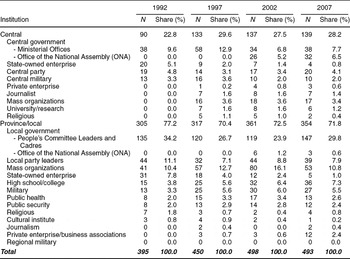
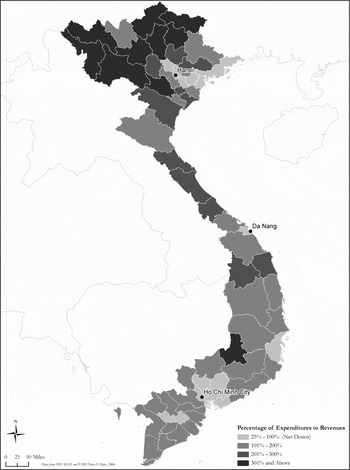
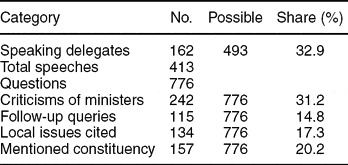
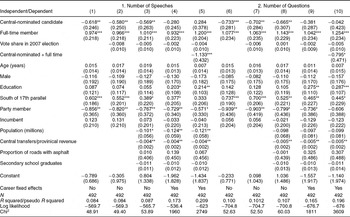
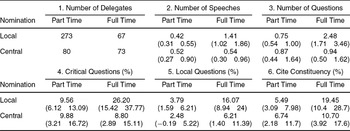
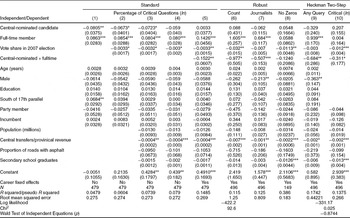
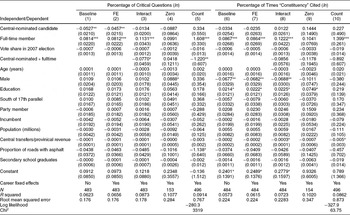




Comments
No Comments have been published for this article.