Introduction
Agricultural productivity is consistently hampered by deteriorating soil conditions and improper nutrient utilization, resulting in food insecurity (Jones et al., Reference Jones, Cross, Withers, DeLuca, Robinson, Quilliam, Harris, Chadwick and Edwards-Jones2013). Climate change, population growth, and urbanization put additional strain on agricultural systems, exacerbating the challenges (Lal, Reference Lal2009). As a result, the form and function of agroecosystems must be reviewed in order to address a myriad of challenges influencing food productivity, such as nutrient supply, demand, and recycling, as well as water management (Lal, Reference Lal2013). One possible approach is to recycle organic nutrients back into the soil to help maintain soil organic matter, which usually leads to improvements in the physical and chemical qualities of the soil. Poultry manure (PM) and biochar (B) are soil additives or amendments that can improve soil characteristics (Adekiya et al., Reference Adekiya, Agbede, Aboyeji, Dunsin and Simeon2019). Organic nutrient sources and soil amendments are a source of carbon (C), which helps to improve soil quality and mitigate climate change (Holatko et al., Reference Holatko, Hammerschmiedt, Mustafa, Kintl, Radziemska, Baltazar, Jaskulska, Malicek, Latal and Brtnicky2022). This is one of the reasons for the rising interest in their use. Organic soil amendments showed increasing demand as the public and consumers become more interested in organically grown foods and sustainable agriculture (Antonious, Reference Antonious, Larramendy and Soloneski2016; Ahmad et al., Reference Ahmad, Radovich, Nguyen, Uyeda, Arakaki, Cadby, Paull, Sugano, Teves, Larramendy and Soloneski2016).
The use of poultry manure in crop production and pastureland is on the rise as a sustainable option due to many benefits, such as reducing nutrient management costs and improving soil health and crop yield (Xia et al., Reference Xia, Lam, Yan and Chen2017; Hoover et al., Reference Hoover, Law, Long, Kanwar and Soupir2019). Despite the fact that poultry manure is bulky and difficult to handle, due to the high cost of synthetic fertilizers, it remains the most valued resource for small-scale farms. Because of its low cost, poultry manure is a popular fertilizer among small-scale farmers and farmers in developing countries like Nigeria and other African countries with low income. Poultry manure is readily available, inexpensive, and safe for the environment. Other advantages include lightening heavy clay soils to prevent clay particles from clumping together and increasing cation exchange capacity (CEC). Poultry nutrients are also released slowly to plants, making them more durable and less likely to be leached into the soil (Mpanga et al., Reference Mpanga, Adjei, Dapaah and Santo2021). It is an important organic soil amendment resource and a complete fertilizer for most commercial crop productions, such as sweet potato in Nigeria, due to the composition of both major nutrients, NPK (nitrogen, phosphorous, and potassium), and trace elements. When compared to other manures, such as cow manure, poultry manure has a relatively high nitrogen content.
Furthermore, application of poultry manure to soil increases concentration of water-soluble salts in soil (Dikinya and Mufwanzala, Reference Dikinya and Mufwanzala2010). According to these authors, plants absorb plant nutrients in the form of soluble salts, but excessive accumulation of soluble salts (or soil salinity) hinders plant growth. Therefore, poor management of this valuable resource could damage crops and also leads to pollution of surface and groundwater. Appropriate technologies, which are environmentally viable and economically feasible, are needed for efficient management of poultry waste. This can be achieved through proper composting of the manure and the appropriate feed management practices.
Biochar is a solid and stable carbon-rich material produced by heating bio-based or organic materials in the absence of oxygen (pyrolysis) (Lehmann and Joseph, Reference Lehmann and Joseph2015). Biochar is commonly referred to as ‘biomass derived black carbon’ or ‘charcoal’, and it has the ability to function as a long-term carbon sink (Lehmann et al., Reference Lehmann, Gaunt and Rondon2006). It was first used by pre-Columbian indigenous peoples of the Amazon region between 500 and 9000 years ago (Solomon et al., Reference Solomon, Lehmann, Thies, Schafer, Liang, Kinyangi, Neves, Petersen, Luizao and Skjemstad2007) as part of a series of soil amendments that produced ‘terra preta’, a more nutrient-rich and high pH agricultural soil than the region’s existing acidic and infertile soils (Lehmann et al., Reference Lehmann, Kaempf, Woods, Sombroek, Kern, Cunha, Lehmann, Kern, Glaser and Woods2007).
Biochar addition to soils has been shown to improve soil quality by increasing the pH, enhancing water-holding capacity, boosting CEC, and promoting the activity of more beneficial fungi and microorganisms (Gul et al., Reference Gul, Whalen, Thomas, Sachdeva and Deng2015; Mensah and Frimpong, Reference Mensah and Frimpong2018) and retaining nutrients (Minhas et al., Reference Minhas, Hussain, Mehboob, Nawaz, Ul-Allah, Rizwan and Hassan2020). Biochar can also sequester carbon from the atmosphere–biosphere pool and transfer it to soil when it is incorporated (Gaunt and Lehmann, Reference Gaunt and Lehmann2008). Biochar decomposes slowly in the soil due to its high recalcitrant carbon concentration unlike compost, which decomposes quickly in humid tropical soils. For example, the residence period of wood biochar is in the range of 100 to 1000 years, which is around 10–1000 times longer than that of most soil organic matter (Duku et al., Reference Duku, Gu and Hagan2011). Because of its increased nutrient retention and sorption capacity, biochar addition to soils could provide a potential carbon sink while also increasing soil nutrient availability for crop use. Biochar has also been identified as a low-cost sustainable technology that can stabilize organic carbon (OC), reduce greenhouse gas emissions (Agegnehu et al., Reference Agegnehu, Nelson and Bird2016; Oni et al., Reference Oni, Oziegbe and Olawole2019), improve soil physical and chemical qualities, and increase crop yield and productivity (Jeffery et al., Reference Jeffery, Verheijen, van der Velde and Bastos2011; Adekiya et al., Reference Adekiya, Agbede, Aboyeji, Dunsin and Simeon2019), as well as farm revenue. Because biochar research is still relatively new in Nigeria, there is a scarcity of data on its impacts on soil characteristics, crop growth, and crop yield in Nigerian soils.
Sweet potato (Ipomoea batatas L.) provides not just energy but also key nutrients such as vitamin A (beta carotene), vitamin B6, vitamin C, and vitamin E, as well as dietary fiber and are low in fat and cholesterol (Srivastava et al., Reference Srivastava, Genitha and Yadav2012; Senthilkumar et al., Reference Senthilkumar, Muragod and Muruli2020). It is a major source of protein for many people around the world, as well as a significant source of starch and other carbohydrates. The amount of carbohydrate stored in roots ranges from 25% to 30%, with the rest being made up of water (58–72%) (Srivastava et al., Reference Srivastava, Genitha and Yadav2012; Senthilkumar et al., Reference Senthilkumar, Muragod and Muruli2020). Iron, potassium, calcium, zinc, sodium, magnesium, and manganese are some of the vital minerals and trace elements found in sweet potatoes (Srivastava et al., Reference Srivastava, Genitha and Yadav2012).
There has not been much research carried out on the effect of organic amendments combined with biochar on soil properties and sweet potato growth and yield in the tropics. Over a 2-year period in China, Laghari et al. (Reference Laghari, Mirjat, Hu, Fazal, Xiao, Hu, Chen and Guo2015) discovered significant improvements in soil characteristics, plant performance, and maize yield due to the use of manure composts with biochar and pyroligneous solution on a saline soil, with favorable effects increasing over time. On a calcareous soil in Indonesia, Nur et al. (Reference Nur, Islami, Handayanto, Nugroho and Utomo2014) found that using compost and biochar in combination, maize biomass and yield were more than doubled over two crop cycles. In Laos, the use of compost–biochar combinations on low-fertility soils yielded similar positive results (Mekuria et al., Reference Mekuria, Noble, Sengtaheuanghoung, Hoanh, Bossio, Sipaseuth, McCartney and Langan2014). In contrast to the studies above on tropical soils, Lentz et al. (Reference Lentz, Ippolito and Spokas2014) reported that biochar–compost applications on maize in a temperate climate had only little effects. On the other hand, Jeffery et al. (Reference Jeffery, Abalos, Prodana, Catarina Bastos, van Groenigen, Hungate and Verheijen2017) reported that biochar application boosted tropical but not temperate crop yields.
Due to increased demand for sweet potato tubers, its cultivation was recently extended to degraded soils in southwest Nigeria due to a lack of fertile soils, but the optimal poultry manure and biochar application rate most suitable for its production did not exist. In addition, the use of poultry manure in combination with biochar at various rates on soil properties and sweet potato growth and yield has not been investigated. In addition, there is no research on synergistic effect of poultry manure and biochar in degraded or problematic soils (low organic matter, low fertility, eroded, compacted, and acidic soils) of Nigerian soils. Poultry manure and biochar application could help these soils’ physical qualities more than highly fertile or productive soils. This hypothesis will need to be validated in the field.
The weak structure and fragile Alfisols of southwest Nigeria’s humid tropical zone are characterized by low inherent organic matter, insufficient nutrients, limited water-holding capacity, and high soil erosion potential. Sweet potato, like any other tuber crop, is a heavy feeder and nutrient exhaustive crop, requiring a large amount of nutrients and water from the soil for good performance (Agbede, Reference Agbede2010). To our knowledge, no field study has been undertaken on the impact of sole poultry manure and biochar and their combination at different rates on sweet potato production in severely degraded soils in the tropics. Therefore in this study, we hypothesized that application of poultry manure and wood biochar alone and their combination at various rates would improve soil physical and chemical properties and sweet potato growth and yield more than the untreated control. Hence, the objective of this study was to assess the synergistic effects of poultry manure and wood biochar on soil properties and sweet potato growth and yield under humid tropical conditions and soil types.
Materials and Methods
Study area and treatments
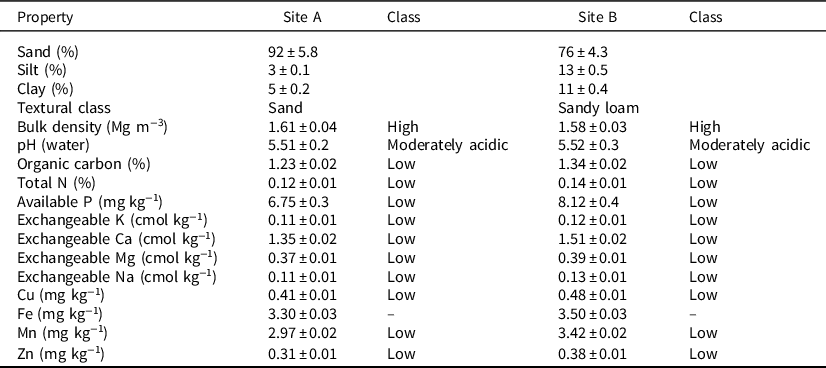
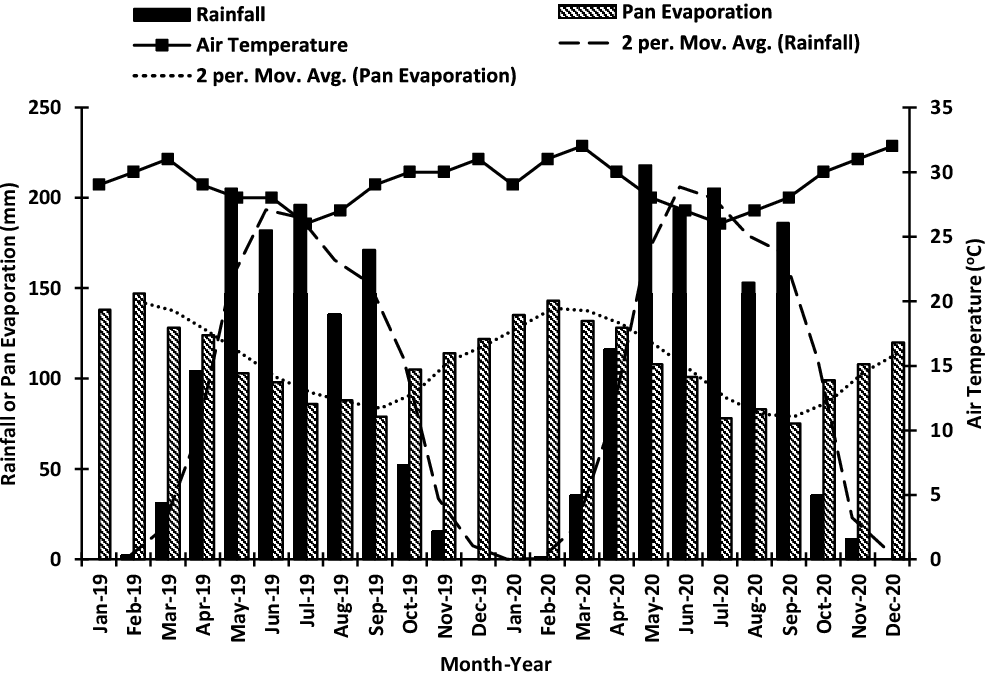
Field experiments were conducted at the Rufus Giwa Polytechnic’s Teaching and Research Farm (site A – latitude 7°13’N and longitude 5°32’E) and Obasooto village (site B – latitude 7°12’N and longitude 5°32’E), in Owo, Ondo State, Nigeria, during the 2019 and 2020 cropping seasons. Obasooto is about 10 km from Owo and is located in the western part of the Owo area. Both sites fall within the forest–savanna transition zone of southwest Nigeria. Both study locations (Owo and Obasooto) have a basement complex texture belonging to the Alfisols, classified as Oxic Tropuldalf (Soil Survey Staff, 2014) or Luvisol (IUSS Working Group WRB, 2015) and locally classified as Okemesi Series (Smyth and Montgomery, Reference Smyth and Montgomery1962). The soil physicochemical properties of the study locations (site A and site B) prior to the start of the experiment are shown in Table 1. The soil texture at site A was purely sand, whereas the soil texture at site B was sandy loam (Table 1). Both sites’ soils were high in bulk density and moderately acidic, with low levels of OC, total N, available P, exchangeable K, Ca, and Mg. This could be attributed to soil degradation at the experimentation sites due to continuous cropping. Figure 1 shows the monthly rainfall, water evaporation, and air temperature data for the Owo area for the 2 years of experiments. Evaporation was measured over a 24-h period from 09:00 a.m. on the first day to 09:00 a.m. on the second day, and the measurement was credited to the previous day. The annual rainfall totals for 2019 and 2020 were 1093 and 1154 mm, respectively. The rainy season begins in March and lasts until October, while the dry season runs from November to February, with temperatures ranging from 26 to 32oC. The sites had been fallowed for a year following rotational arable cropping, and none of the sites had received fertilizer application in the previous 6 years. Tillage practices such as conventional tillage, which involves ploughing, harrowing, and ridging, were used in the past to manage the soils.
Mean ± standard deviation of soil physical and chemical properties (0–15 cm depth) of the site A and site B prior to experimentation in 2019

Meteorological data for Owo area 2019–2020. Total rainfall: 1093 mm in 2019; 1154 mm in 2020. Total evaporation: 1332 mm in 2019 and 1310 mm in 2020. Average air temperature: 29.0 oC in 2019 and 29.3 oC in 2020. Note: 2 per. Mov. Avg. means two periods moving average trendline.

Poultry manure (PM) (0, 5.0, and 10.0 t ha−1) and biochar (B) (0, 10.0, 20.0, and 30.0 t ha−1) were combined in a 3 × 4 factorial layout. The twelve treatments were factorially arranged in a randomized complete block design with three replications. Each block consisted of 12 plots, each measuring 5 × 4 m. The blocks were 1 m apart and the plots were 0.5 m apart. Every year in April, crop establishments were carried out. Each site used the same location for the entire 2-year investigation.
Poultry manure and biochar preparation and analysis
The poultry manure (PM) was obtained from the poultry unit of Rufus Giwa Polytechnic’s Teaching and Research Farm in Owo, Ondo State. To allow for mineralization, the poultry manure was composted for 3 weeks. Biochars used in the experiments were prepared from hardwood such as Parkis biglosa, Khaya senegalensis, Prosopis africana, and Terminalia glaucescens. Biochar was obtained from a local commercial charcoal producer in Owo, Ondo State, Nigeria, who produces charcoal for domestic use using traditional kilns. A thermocouple thermometer was used to monitor the temperature within the kiln, which averaged 580oC after 24 h of carbonizing. Both soil amendments were selected on the basis of their widespread availability and sustainability in the region.
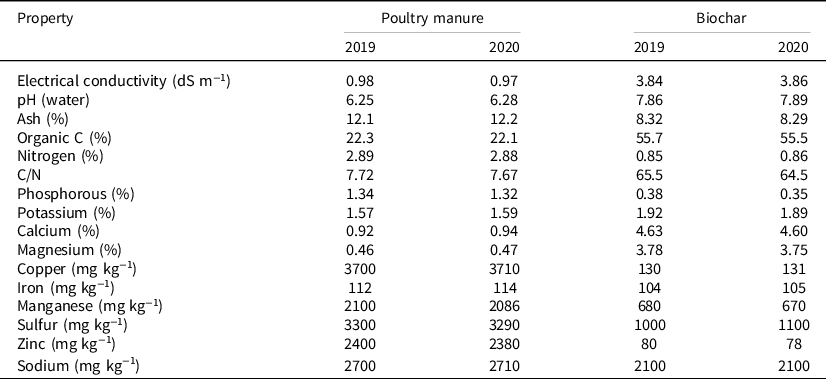
Small about 5 g subsamples of each of the processed forms of the poultry manure and biochar used in the experiments were analyzed to determine their nutrient composition. Before analysis, both poultry manure and biochar samples were separately processed, that is, air-dried, crushed, and sieved through a 2-mm sieve. Both poultry manure and biochar subsamples underwent the following analyses: electrical conductivity (EC), pH, ash content, OC, and total N, P, K, Ca, and Mg, and the concentration of trace elements (Cu, Fe, Mn, Zn, and Na). The EC and pH of the poultry manure and biochar were measured in a 1% (w/v) suspension in deionized water prepared by shaking at 100 rpm for 2 h (Cantrell et al., Reference Cantrell, Hunt, Uchimiya, Novak and Ro2012). For the determination of ash content (dry weight basis), poultry manure and biochar samples were combusted in a muffle furnace (Gilson Company Inc., Ohio, USA) at 750oC for 6 hours according to ASTM D1762-84 (2021). The OC and total N, P, K, Ca, and Mg were determined following standard procedures (Tel and Hagarty, Reference Tel and Hagarty1984). The percentage OC content was determined by the Walkely and Black procedure using the dichromate wet oxidation method (Nelson and Sommers, Reference Nelson, Sommers and Sparks1996). The total N content was determined by micro-Kjeldahl digestion, followed by distillation and titration method (Bremner, Reference Bremner and Sparks1996). Other nutrients including P, K, Ca, and Mg were determined using a wet digestion method based on 25–5–5 mL of HNO3-H2SO4-HClO4 acids (Horwitz, Reference Horwitz1997). P was extracted using Bray-1 solution and determined by molybdenum blue colorimetry (Frank et al., Reference Frank, Beegle, Denning and Brown1998). Exchangeable K, Ca, and Mg were extracted using a 1 M ammonium acetate, pH 7 solution. Thereafter, exchangeable K was measured with a flame photometer (Cole-Parmer Instrument Company, Illinois, USA), and Ca and Mg were determined using an atomic absorption spectrophotometer (PerkinElmer, Inc., Massachusetts, USA). For the determination of trace element concentrations such as Cu, Fe, Mn, Zn, and Na, poultry manure and biochar samples of known quantity were burned at 760oC in a muffle furnace (Gilson Company Inc., Ohio, USA) for 6 hours. The resultant ash was treated with HCl, then diluted with deionized water before being analyzed for trace elements. Cu, Fe, Mn, and Zn concentrations were measured in poultry manure and biochar samples using an atomic absorption spectrophotometer (PerkinElmer, Inc., Massachusetts, USA). A flame photometer (Cole-Parmer Instrument Company, Illinois, USA) was used to measure the Na concentration in the poultry manure and biochar samples (Cantrell et al., Reference Cantrell, Hunt, Uchimiya, Novak and Ro2012). The poultry manure was slightly acidic and had higher concentrations of N and P, as well as micronutrients than biochar, whereas biochar was slightly alkaline and had higher concentrations of OC, K, Ca, and Mg, and a high C:N ratio compared to poultry manure (Table 2).
Chemical composition of poultry manure and biochar used in the experiment

Land preparation, incorporation of poultry manure and biochar and planting of sweet potato vines
The experimental sites were prepared by slashing the vegetation with a cutlass followed by removing weeds. The trial sites were then laid out according to the 5 × 4 m plot size that had been stipulated. The soils were then tilled to a depth of 20 cm with a handheld hoe. Poultry manure (PM) and biochar (B) were weighed and evenly spread over the soil at the specified rates (PM: 0, 5.0 and 10.0 t ha−1; B: 0, 10.0, 20.0 and 30.0 t ha−1). The soil amendments were incorporated into the soil to a depth of about 10 cm using a handheld hoe, 2 weeks before planting sweet potato vines. The soil amendments were applied during both years of the experiment.
After tilling the soil, sweet potato (Ipomoea batatas L. local variety) vines about 40 cm long were planted in April each year of the experiment. One sweet potato vine was planted per hole at a spacing of 1 m × 1 m, giving sweet potato population of 20 plants plot−1 and 10 000 plants ha−1. The field plots were manually weeded twice at 3 and 8 weeks after planting (WAP) to prevent weeds from competing with the crops for nutrients, water, and sunlight. During the trial, no irrigation water was applied. Chemical fertilizers were also not applied during the field experiment.
Determination of soil physical and chemical properties
The determination of certain soil physical properties in all plots started 2 months after sweet potato planting and was repeated four times at 1-month intervals. Steel coring tubes were used to collect five samples (4 cm diameter and 15 cm high) at 0–15 cm depth from the center of each plot at random and about 15 cm away from each sweet potato stand; the samples were used to evaluate bulk density, total porosity, and gravimetric moisture content after oven-drying at 100oC for 24 h. The bulk density and particle density of 2.65 Mg m−3 were used to compute total porosity.
Soil samples were collected with a compact telescoping soil auger (AMS, Inc., Iowa, USA) (5 cm diameter) from 0 to 15 cm depth at 10 distinct spots chosen at random from the experimental sites prior to the start of the experiment in 2019. At harvest in 2019 and 2020, disturbed soil samples were taken at five different spots per plot at a depth of 0–15 cm from the center of each plot. The soil samples collected were bulked, air-dried, and sieved using a 2-mm sieve for routine chemical analysis, as described by Carter and Gregorich (Reference Carter and Gregorich2007). The hydrometer method was used to determine particle size (Gee and Or, Reference Gee, Or, Dane and Topp2002). A textural triangle was used to define the textural class. A digital electronic pH meter (Mettler Toledo Int. Inc., Ohio, USA) was used to determine the pH of the soil in a soil/water (1:2) solution. The Walkley and Black procedure was used to determine soil OC using dichromate wet oxidation method (Nelson and Sommers, Reference Nelson, Sommers and Sparks1996). Total N was determined using micro-Kjeldahl digestion and distillation procedures (Bremner, Reference Bremner and Sparks1996), while available P was determined using Bray-1 extraction and colorimetry with molybdenum blue (Frank et al., Reference Frank, Beegle, Denning and Brown1998). A 1 M ammonium acetate (NH4OAC), pH 7 solution was used to extract exchangeable K, Ca, Mg, and Na (Hendershot et al., Reference Hendershot, Lalande, Duquette, Carter and Gregorich2007). After that, a flame photometer was used to determine exchangeable K and Na, and an atomic absorption spectrophotometer was used to estimate exchangeable Ca and Mg.
Determination of crop growth and yield parameters
At 90 days after planting (DAP), when the sweet potato plant attained its maximal development, 10 plants from the center of each plot were randomly selected and tagged for vine length and leaf area measurements. The length of the vines was estimated using a meter rule. The leaf area was calculated using a graphical method (Agbede, Reference Agbede2010). The quantity of tubers, tuber weight (kg plant−1), and tuber yield were all quantified as yield parameters (t ha−1). At 5 months after planting (MAP), 10 sweet potato plants selected at random were harvested from each plot to determine these. The total number of tubers produced by each plant was physically counted and recorded as the number of tubers; the weights of the tubers were calculated and recorded as the tuber weight and thereafter converted to tuber yield in tons per hectare.
Statistical analysis
The experiments were carried out in a randomized complete block design, with factorial layouts to test the main effects of year (Y), site (S), poultry manure (PM), and biochar (B), as well as the interactions of Y × S, Y × PM, Y × B, PM × B, PM × S, B × S, and Y × S × PM × B on soil properties and sweet potato growth and yield. The data collected were analyzed using a two-way analysis of variance (ANOVA) using the SAS (Statistical Analysis System) statistical package version 9.4 (SAS Institute Inc., 2013, Cary, NC: USA). The treatment means were separated using the Fisher’s least significant difference (LSD) test at p < 0.05 probability level. Multiple regressions were used to determine the relationship between soil properties and sweet potato tuber yield.
Results
Effect of year, site, poultry manure and biochar and their combination on soil physical properties
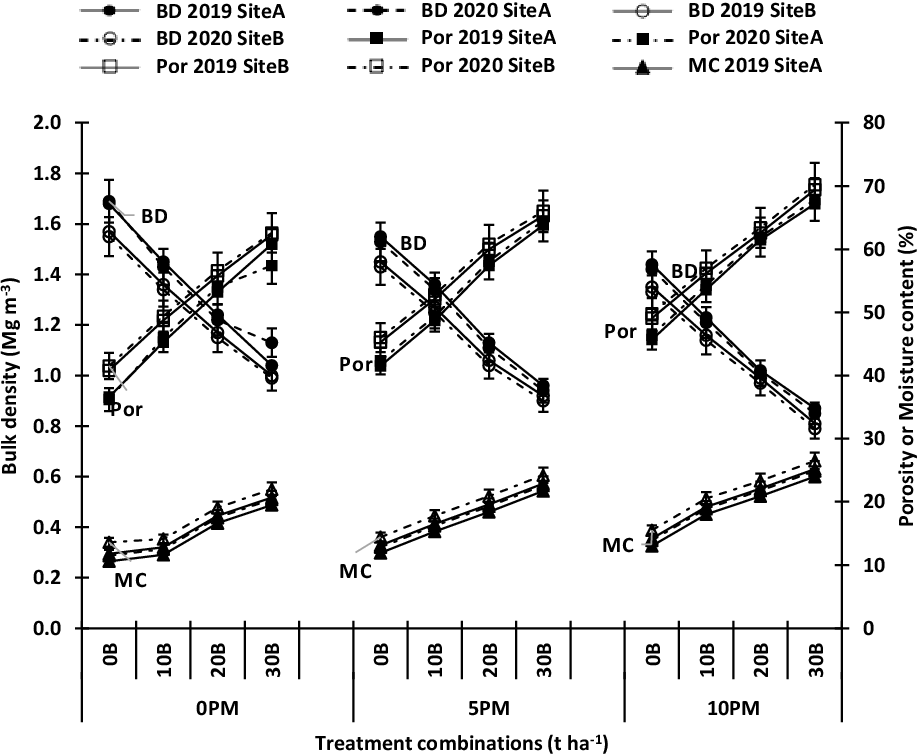
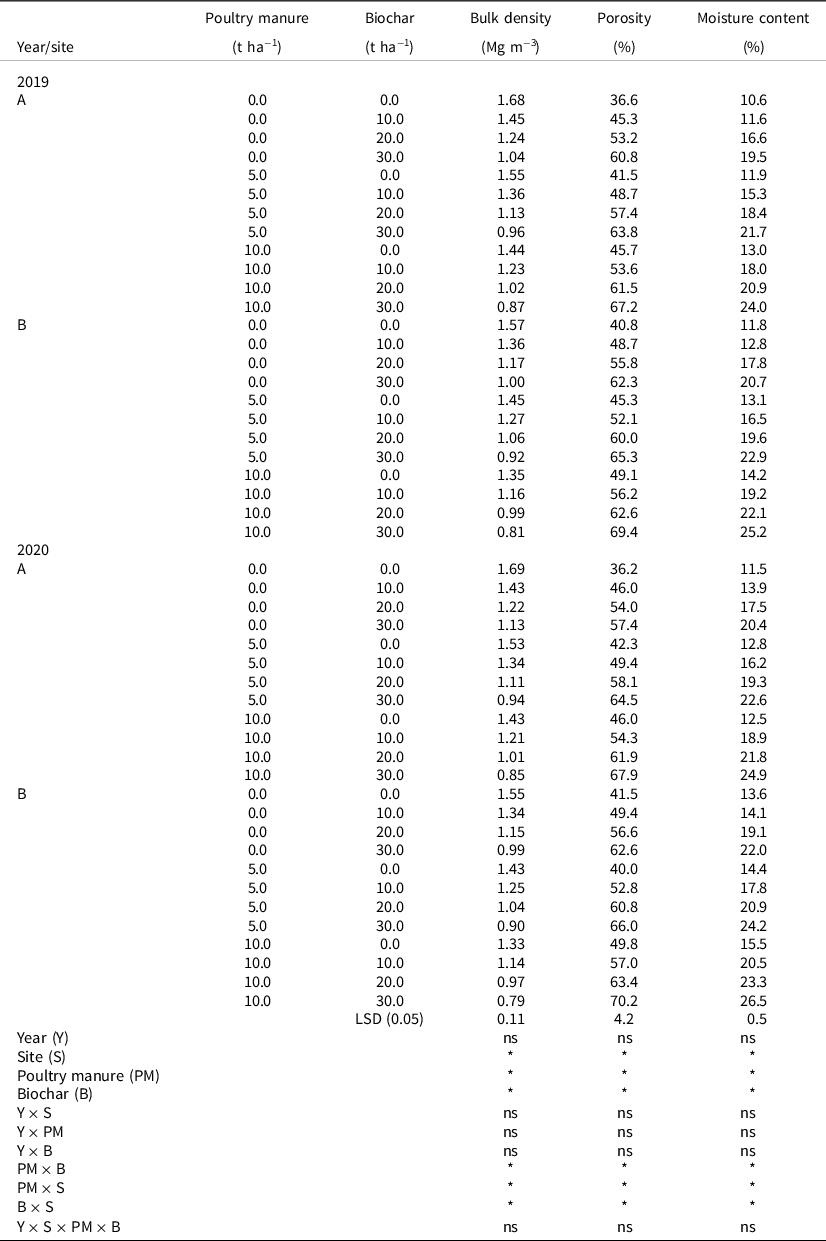
The impact of year, site, poultry manure and biochar applications, as well as their combined application, on soil physical properties are presented in Figure 2 and Table 3. When examined as individual factors, the site (S), biochar (B), and poultry manure (PM) all played a major role in determining the physical qualities of the soil. When compared to the control, poultry manure and biochar treatments significantly decreased bulk density and increased porosity and moisture content in both years (Figure 2, Table 3). Moreover, the bulk density reduced, while the porosity and moisture content increased with the rates of poultry manure and biochar treatments (Figure 2, Table 3). When compared to the control, poultry manure application significantly (p < 0.05) influenced soil physical properties – decreased bulk density and increased porosity and moisture content (Table 3). Similarly, as compared to the control, biochar application considerably improved soil physical characteristics. When examined as individual factors, the year (Y) has no effect on soil physical characteristics. The interactive effects of Y × S, PM × S, B × S, and PM × B for soil physical properties were significant. On the other hand, the interactive effects of Y × S, Y × PM, and Y × B were not significant. When all four factors (Y × S × PM × B) were considered together, interactions were not significant (Table 3).
Effect of site, poultry manure (PM) and biochar (B), and their combination on soil bulk density (BD), porosity (Por), and moisture content (MC). Vertical bars show standard errors at p < 0.05 probability level.

Effect of year, site, poultry manure, and biochar and their combined application on soil physical properties (0–15 cm depth) when averaged across four sampling periods (2, 3, 4, and 5 months after planting)

* Significant difference at p < 0.05; ns, not significant at p < 0.05.
Effect of year, site, poultry manure and biochar and their combination on soil chemical properties
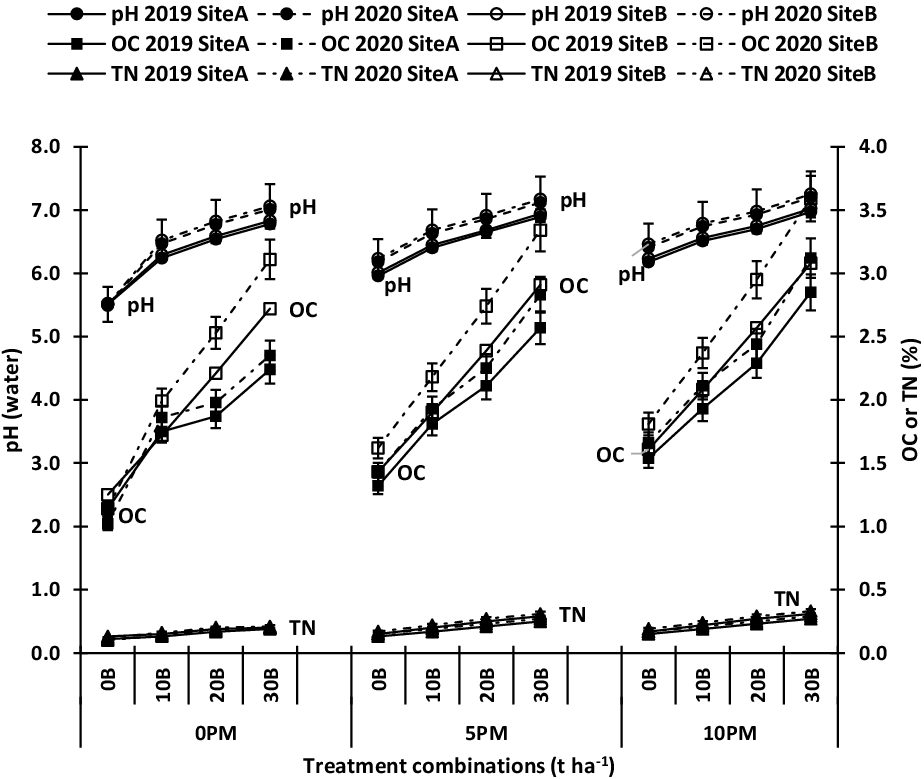
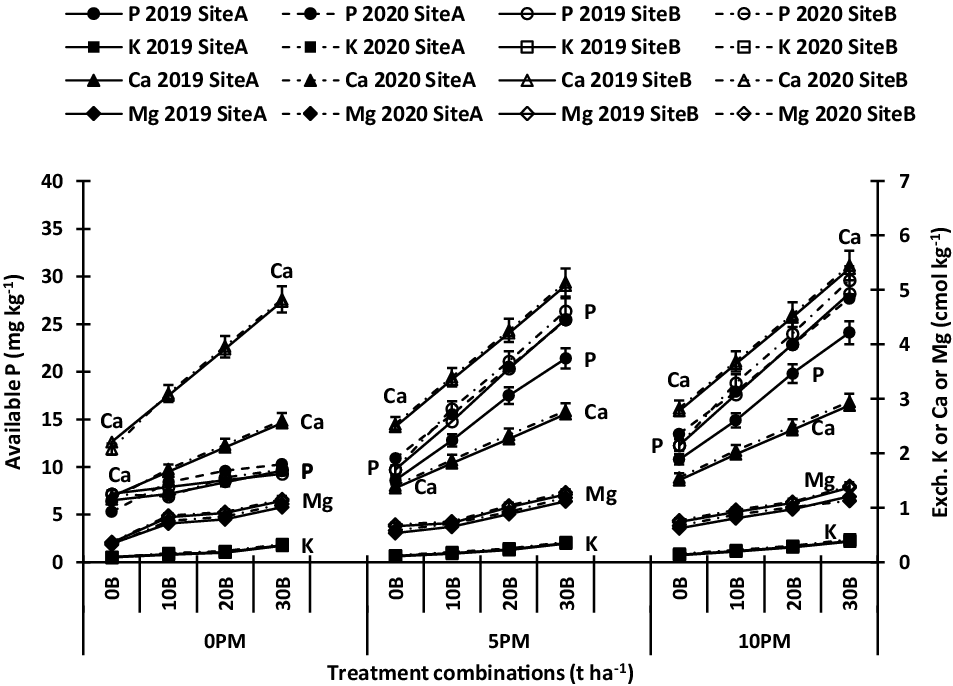
The influence of year, site, poultry manure and biochar, as well as their combined application, on soil chemical properties are shown in Figure 3 and Figure 4. When examined as individual factors, the year, site, poultry manure and biochar all played a key role in increasing the soil chemical properties. Significant changes in soil properties including increases in pH, OC, total nitrogen (TN), available P, and exchangeable K, Ca, and Mg were observed following poultry manure and biochar application. In both years (2019 and 2020), sole poultry manure and biochar application significantly increased soil pH, OC, and TN (Figure 3), as well as available P and exchangeable K, Ca, and Mg (Figure 4), with concentration increasing with increasing poultry manure and biochar application rates. Increasing the rate of poultry manure from 0 to 10.0 t ha−1, soil pH, OC, TN, P, K, Ca, and Mg increased. Similarly, increasing the rate of biochar from 0 to 30.0 t ha−1 improved soil pH, OC, TN, P, K, Ca, and Mg. Among all the treatments, the highest dosage of 10.0 t ha−1 poultry manure + 30.0 t ha−1 biochar (PM10 + B30) produced the best soil chemical properties. The control had the lowest soil chemical property values.
Effect of site, poultry manure (PM) and biochar (B), and their combination on soil pH (water), organic carbon (OC), and total nitrogen (TN). Vertical bars show standard errors at p < 0.05 probability level.

Effect of site, poultry manure (PM) and biochar (B), and their combination on soil available phosphorus (P), exchangeable potassium (K), exchangeable calcium (Ca), and exchangeable magnesium (Mg). Vertical bars show standard errors at p < 0.05 probability level.

Effect of year, site, poultry manure and biochar and their combined application on growth and tuber yield of sweet potato
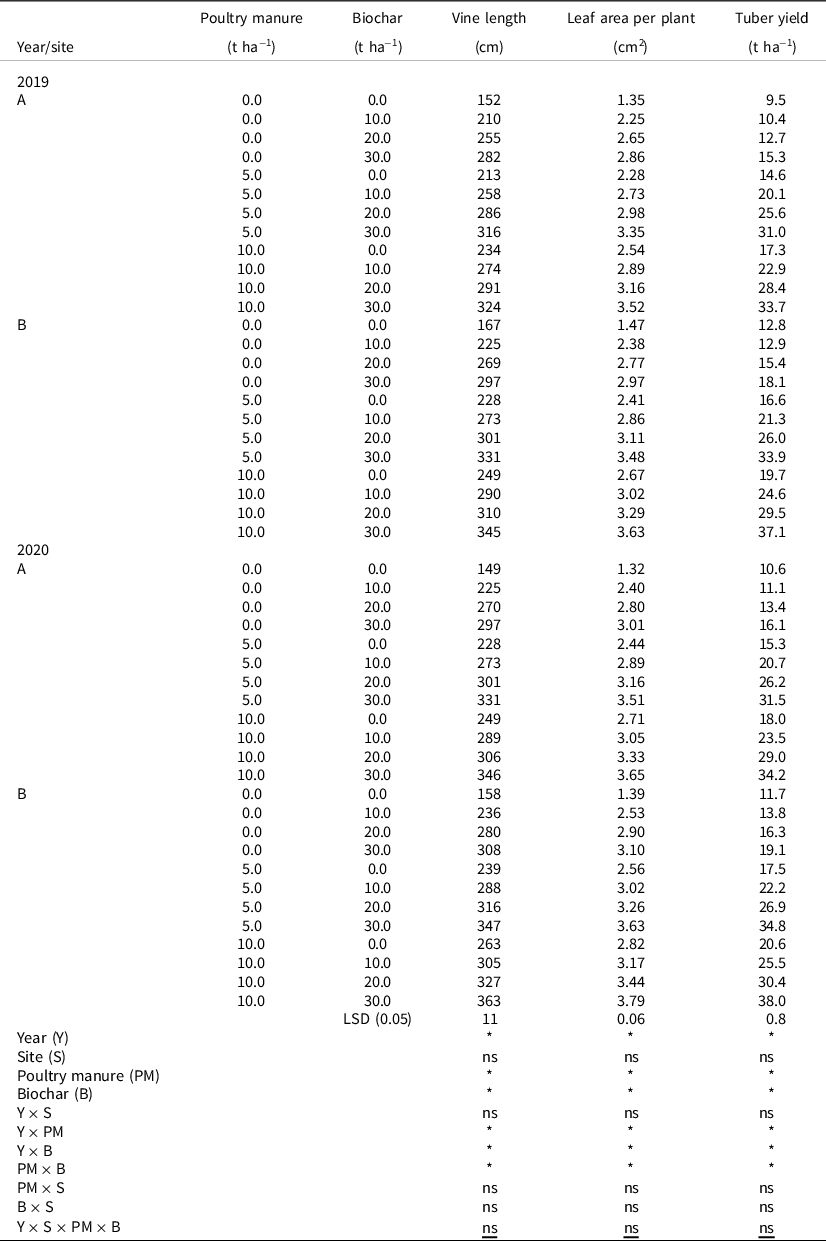
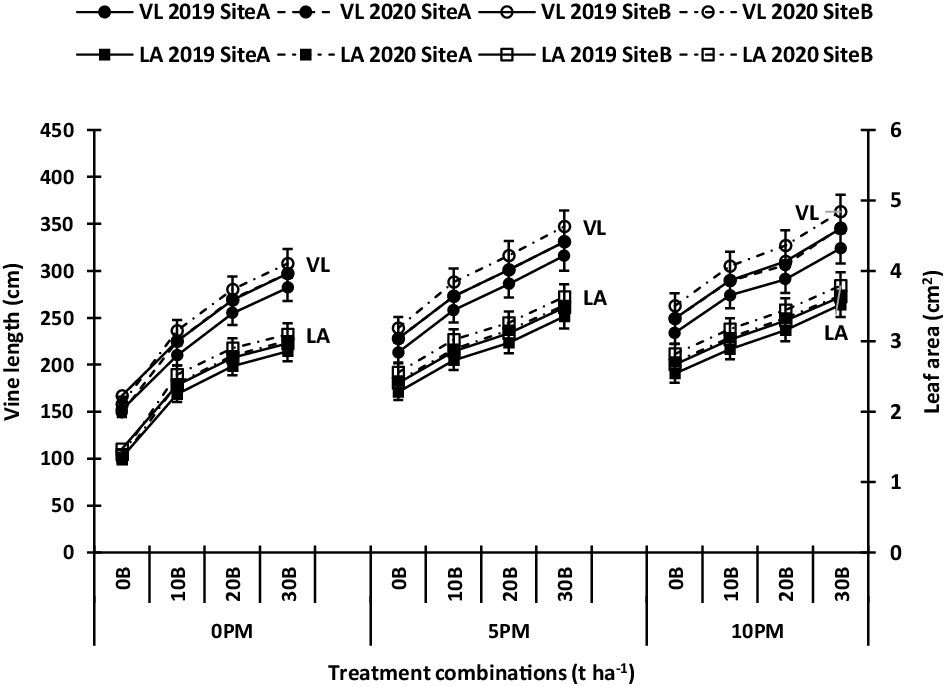
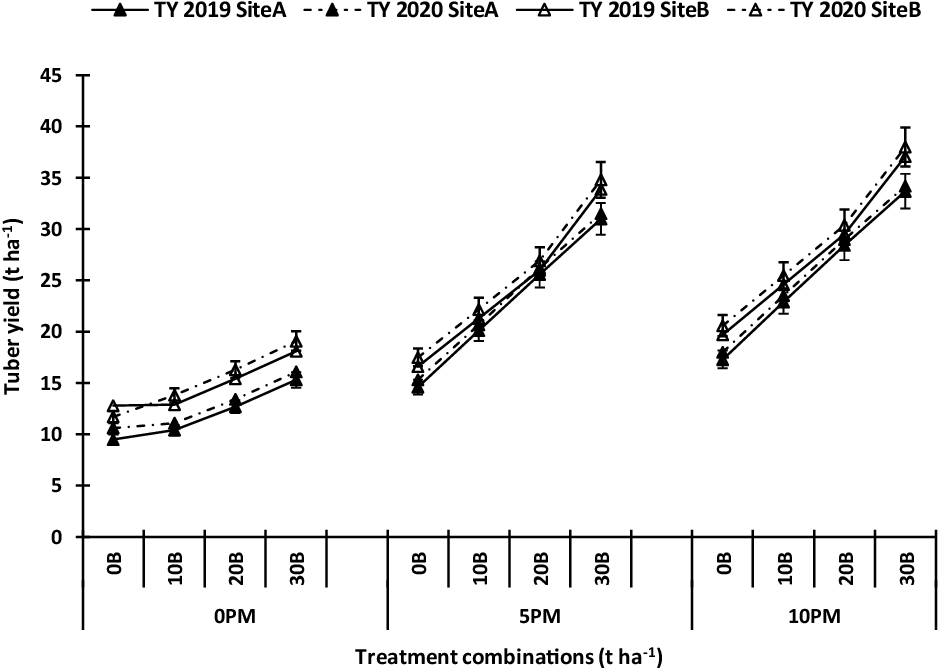
The effect of year, site, poultry manure and biochar, as well as their combined application on the sweet potato vine length and leaf area, and tuber yield are shown in Table 4. When investigated as independent components, the year, poultry manure and biochar (excluding site) all had a significant effect on sweet potato growth and yield (Table 4). With the rate of application from 0 to 10.0 t ha−1, poultry manure considerably (p < 0.05) increased sweet potato vine length and leaf area (Figure 5, Table 4) and tuber yield (Figure 6, Table 4) in the first and second years. Similarly, increasing the rate of application from 0 to 30.0 t ha−1, biochar considerably (p < 0.05) enhanced sweet potato vine length and leaf area (Figure 5, Table 4) and tuber yield (Figure 6, Table 4). In comparison with all other treatments, the maximum dosage of 10.0 t ha−1 poultry manure +30.0 t ha−1 biochar resulted in the longest sweet potato vine length, leaf area, and tuber yield in both years. The control had the shortest sweet potato vine length, leaf area, and tuber yield.
Effect of year, site, poultry manure, and biochar and their combined application on vine length and leaf area at 90 days after planting and tuber yield of sweet potato at 5 months after planting

* Significant difference at p < 0.05; ns, not significant at p < 0.05.
Effect of site, poultry manure (PM) and biochar (B), and their combination on vine length (VL) and leaf area (LA) of sweet potato. Vertical bars show standard errors at p < 0.05 probability level.

Effect of site, poultry manure (PM) and biochar (B), and their combination on tuber yield (TY) of sweet potato. Vertical bars show standard errors at p < 0.05 probability level.

Poultry manure had a significant impact on sweet potato vine length, leaf area, and tuber yield when investigated as a single factor (Table 4). Biochar had an effect on sweet potato vine length, leaf area, and tuber yield as an individual factor. The interaction between poultry manure and biochar (PM × B) was significant for sweet potato vine length, leaf area, and tuber yield. For sweet potato vine length, leaf area, and tuber yield, the interactive effects of Y × PM, Y × B, and PM × B were significant. The Y × S, PM × S, and B × S interactions, as well as the Y × S × PM × B interaction, had no effect on sweet potato vine length, leaf area, or tuber yield.
Averaged over 2-year cropping seasons, application of 10.0 t ha−1 poultry manure + 30.0 t ha−1 biochar (PM10 + B30) significantly increased sweet potato tuber yield by 9, 108, 22, 155, 147, 49, 70, 196, 89, 124, and 220%, respectively, compared with PM5 + B30, PM0 + B30, PM10 + B20, PM5 + B20, PM0 + B20, PM10 + B10, PM5 + B10, PM0 + B10, PM10 + B0, PM5 + B0, and PM0 + B0.
The coefficient of determination (R2) of sweet potato yield was 0.862 when soil physical properties (bulk density, porosity, and moisture content) were regressed as independent variables and sweet potato yield as dependent variable (Table 5). Bulk density, porosity, and moisture content with p-value of 0.003, 0.004, and 0.002, respectively, positively influenced sweet potato tuber yield, according to multiple regressions. The R2 of sweet potato yield was 0.972 when soil chemical properties (pH, OC, TN, P, K, Ca, and Mg) were regressed as independent variables and sweet potato yield as dependent variable (Table 5). The multiple regressions revealed that pH, OC, TN, P, K, Ca, and Mg with p-value of 0.004, 0.025, 0.005, 0.000, 0.018, 0.026, and 0.031, respectively, all had a significant effect on sweet potato tuber yield.
Sweet potato yield (dependent variable) regressed against physical and chemical soil properties (independent variables): bulk density (BD); porosity (PO); moisture content (MC); organic carbon (OC); total nitrogen (TN); available phosphorous (P); exchangeable potassium (K), calcium (Ca), and magnesium (Mg)

Discussion
Prior to the start of the trials, the initial soil fertility status showed that both experimental sites (A and B) had low OC, TN, P, K, Ca, and Mg content, were acidic, and had a high bulk density. The sandy nature of the soils and continuous cropping over the years without the use of soil amendments such as biochar, poultry manure, or fertilizer inputs could be partly responsible for the low organic matter and poor fertility condition of both sites. In the past years, land preparation with implements such as disk ploughs, disk harrows, and disk ridgers, as well as tractor wheel traffic, has resulted in soil compaction and degradation of quality, leading to high soil bulk density and low soil fertility.
The application of poultry manure and biochar at different levels significantly improved soil physical characteristics by reducing bulk density and improving moisture content and porosity compared to the control. The improvement in the soil bulk density, moisture content, and porosity was due to the enhancement of organic matter by the poultry manure and biochar. The findings of this investigation indicated that poultry manure and biochar are both beneficial in improving soil physical properties of nutrient-depleted or degraded soils. Organic matter binds soil particles and stabilizes soil aggregates, as well as reducing the kinetic energy of raindrops, preventing soil compaction and aggregate disintegration (Agbede, Reference Agbede2019). Organic matter is known to improve soil structure, aeration, moisture content, bulk density, temperature, and water infiltration and retention, among other things (Adekiya et al., Reference Adekiya, Agbede, Aboyeji, Dunsin and Simeon2019). Many research have found that applying organic amendments in laboratory incubation experiments reduces bulk density (Herath et al., Reference Herath, Arbestain and Hedley2013; Githinji, Reference Githinji2014; Gamage et al., Reference Gamage, Mapa, Dharmakeerthi and Biswas2016; Verheijen et al., Reference Verheijen, Zhuravel, Silva, Amaro, Ben-Hur and Keizer2019). Increases in porosity and moisture content, as well as lower bulk density, would have mediated the biophysical environment for root and microbial respiration in the soil (Basso et al., Reference Basso, Miguez, Laird, Horton and Westgate2013). Agbede et al. (Reference Agbede, Adekiya and Eifediyi2017) demonstrated that poultry manure application reduces the soil bulk density of infertile soil as the soil gets loosened physically. Agegnehu et al., Reference Agegnehu, Srivastava and Bird2017 and El-Naggar et al., Reference El-Naggar, Lee, Rinklebe, Farooq, Song, Sarmah, Zimmerman, Ahmad, Shaheen and Ok2019) also found that addition of biochar to degraded soils improved soil physical qualities in a similar way. The addition of poultry manure and biochar to the sand and sandy loam soils examined reduced bulk density significantly (Table 3), which is consistent with previous studies on both fine- and coarse-textured soils (Chaganti and Crohn, Reference Chaganti and Crohn2015; Lim et al., Reference Lim, Spokas, Feyereisen and Novak2016). The bulk density of most biochars (0.6 Mg m−3) is significantly lower than that of bulk density of common agricultural soils (1.2 Mg m−3), which could explain the decrease in bulk density (Blanco-Canqui, Reference Blanco-Canqui2017). The application of poultry manure and biochar is expected to lower the density of the bulk soil as a result of the dilution or mixing action (Alburquerque et al., Reference Alburquerque, Calero, Barrón, Torrent, del Campillo, Gallardo and Villar2014; Agbede et al., Reference Agbede, Adekiya and Eifediyi2017; Adekiya et al., Reference Adekiya, Agbede, Aboyeji, Dunsin and Simeon2019). Furthermore, poultry manure and biochar may have an indirect effect on bulk density by modifying the soil aggregates. Biochar has been shown to improve aggregate formation and stability in a variety of soils, including silt loam, silty clay, sandy loam, and clay (Liu et al., Reference Liu, Han and Zhang2012; Ouyang et al., Reference Ouyang, Wang, Tang, Yu and Zhang2013; Khademalrasoul et al., Reference Khademalrasoul, Naveed, Heckrath, Kumari, de Jonge, Elsgaard, Vogel and Iversen2014; Soinne et al., Reference Soinne, Hovi, Tammeorg and Turtola2014). Biochar application resulted in an increase in moisture content when compared to the control. This was attributed to more micropores in biochar being able to physically retain water and/or enhanced aggregation. Biochar’s larger surface area and porosity compared to other types of soil organic matter, as well as its ability to improve water retention through improved soil structure and aggregation, contributed to the higher moisture content in the biochar applied plots compared to the control (Sun and Lu, Reference Sun and Lu2014; Kameyama et al., Reference Kameyama, Miyamoto, Iwata and Shiono2016).
Poultry manure and biochar applications have shown potential benefits in ameliorating the soil’s chemical properties. The improvements in soil pH, OC, TN, P, K, Ca, and Mg concentrations in response to poultry manure and biochar additions were consistent with the analyses recorded for the poultry manure and biochar, as well as their nutrients availability (Table 2). Application of poultry manure and biochar reduced soil acidity owing to its high alkalinity, high buffering capacity, and presence of the functional groups (El-Naggar et al., Reference El-Naggar, Lee, Rinklebe, Farooq, Song, Sarmah, Zimmerman, Ahmad, Shaheen and Ok2019). They also improved organic matter availability and supply of nutrients to plants and the release of cations, such as K, Mg, Ca, and Na from poultry manure and biochar, leading to an increase in soil pH. This positive change in soil pH confirmed them as liming agents in acidic soils (Hass et al., Reference Hass, Gonzalez, Lima, Godwin, Halvorson and Boyer2012; Adekiya et al., Reference Adekiya, Agbede, Aboyeji, Dunsin and Simeon2019; El-Naggar et al., Reference El-Naggar, Lee, Rinklebe, Farooq, Song, Sarmah, Zimmerman, Ahmad, Shaheen and Ok2019). Increase in soil pH with the application of biochar is due to high pH of biochar and high EC, indicating its higher soluble salts and greater calcium carbonate equivalent (CCE) and Ca content compared to other biochars (Alburquerque et al., Reference Alburquerque, Calero, Barrón, Torrent, del Campillo, Gallardo and Villar2014; Berek et al., Reference Berek, Hue, Radovich and Ahmad2018; Shetty and Prakash, Reference Shetty and Prakash2020). Biochar application might have resulted in neutralization of soil acidity by series of proton consumption reactions (Shetty and Prakash, Reference Shetty and Prakash2020). Long-term application of chicken manure (10 t ha−1) by Lipiec et al. (Reference Lipiec, Usowicz, Klopotec, Turski and Frac2021) to two acidic sandy soils in Podlasie (Poland) led to an increase in the soil pH from 1.7 to 2.0. In another study, Major et al. (Reference Major, Rondon, Molina, Riha and Lehmann2010) observed an increase in soil pH from 3.89 to 4.05 with biochar application (20 t ha−1) over 4 years, indicating its long-term beneficial effects (Major et al., Reference Major, Rondon, Molina, Riha and Lehmann2010). Increases in nutrient concentrations due to the addition of poultry manure could be attributed to nutrient-rich water (nutrient dissolved from poultry manure) released as a result of the decomposition of poultry manure. Poultry manure has been demonstrated to increase OC, TN, P, K, Ca, and Mg levels in soil (Agbede and Ojeniyi, Reference Agbede and Ojeniyi2009; Adekiya et al., Reference Adekiya, Agbede, Aboyeji, Dunsin and Simeon2019), as well as improve soil health characteristics such as soil organic matter and soil fertility (Lin et al., Reference Lin, Watts, van Santen and Cao2018; Hoover et al., Reference Hoover, Law, Long, Kanwar and Soupir2019). When the organic matter components of poultry manure decomposed, nutrients were released into the soil, resulting in findings that N, P, K, Ca, and Mg increased as the rate of poultry manure application increased from 0 to 10.0 t ha−1.
The traits believed to be derived from adding biochar to the soil, which include increased carbon stability, enhanced soil structure, decreased soil acidity, addition of nutrients concentrations of the biochar, increased nutrient/water retention and aggregation, improved microbial properties, improved EC, and improved porosity, were attributed to the fact that the biochar increased soil OC and nutrients with their application rates compared to the control (Sun and Lu, Reference Sun and Lu2014; Pandian et al., Reference Pandian, Subramaniayan, Gnasekaran and Chitraputhirapillai2016). Biochar is noted for retaining nutrients by capturing nutrient-rich water in its micropores, which is held in place by capillary force (Major et al., Reference Major, Rondon, Molina, Riha and Lehmann2012). High OC content, high stability, increased soil pH (in acidic soils), nutrient retention (due to increased CEC and surface area), or direct release of nutrients from biochar surfaces are some of the mechanisms that increase the availability of plant nutrients in biochar-amended plots (Major et al., Reference Major, Rondon, Molina, Riha and Lehmann2012; Martinsen et al., Reference Martinsen, Alling, Nurida, Mulder, Hale, Ritz, Rutherford, Heikens, Breedveld and Cornelissen2015; Minhas et al., Reference Minhas, Hussain, Mehboob, Nawaz, Ul-Allah, Rizwan and Hassan2020).
Our findings indicate that application of poultry manure and biochar promoted growth and productivity of sweet potato. Growth and tuber yield were significantly increased by the organic amendments with their rate of application, with sweet potato yield increments of 9–220%, relative to the control. The experiment was conducted on sand and sandy soils on relatively dry environment where soil water content is usually limiting factor. Thus, improvement on soil moisture content (from 10–11% to 25–26%) influenced sweet potato growth and yield. These improvements in crop performance are consistent with other studies (Lentz et al., Reference Lentz, Ippolito and Spokas2014; Nur et al., Reference Nur, Islami, Handayanto, Nugroho and Utomo2014; Agegnehu et al., Reference Agegnehu, Nelson and Bird2016) and could be attributed to improved availability of nutrients and moisture. The favorable results of poultry manure on improved sweet potato yield reported in this study could be due to the mineral nutrient supply from the poultry manure (Table 2). Similar results on higher crop yields have been reported in previous studies (Adekiya and Agbede, Reference Adekiya and Agbede2017; Adeyemo et al., Reference Adeyemo, Akingbola and Ojeniyi2019; Hoover et al., Reference Hoover, Law, Long, Kanwar and Soupir2019; Mpanga et al., Reference Mpanga, Adjei, Dapaah and Santo2021). In a similar study with tomatoes, compost with poultry manure substantially enhanced both biomass and shoot nitrogen content when compared to a control that received no fertilizer (Mpanga et al., Reference Mpanga, Dapaah, Geistlinger, Ludewig and Neumann2018). Associated mechanisms for the crop improvements and yield as found in sweet potato and other crops after poultry manure additions are attributed to improved soil health, soil water relations (Hoover et al., Reference Hoover, Law, Long, Kanwar and Soupir2019; Adeyemo et al., Reference Adeyemo, Akingbola and Ojeniyi2019), soil CEC, and both macro- and micronutrients (Stephenson et al., Reference Stephenson, McCaskey and Ruffin1990; Adekiya and Agbede, Reference Adekiya and Agbede2017). Many factors impact these benefits, including increased soil pH due to high cations like calcium in poultry manure, increased organic matter content, and increased microbial activities that slowly release sparingly soluble minerals in poultry manure for plant uptake. The slow release of nutrients from poultry manure allows nutrients availability to the plant throughout the life cycle than the readily available chemical fertilizers, which is prone to leaching during heavy rains (Mpanga et al., Reference Mpanga, Adjei, Dapaah and Santo2021).
In this study, biochar significantly increased sweet potato growth and tuber yield with rate of application compared to no application of biochar. The increase in sweet potato growth and tuber yield suggests increased availability of nutrients and water over time due to the organic amendments. Among the biochar treatments, the 30 t ha−1 biochar improved the overall plant growth and tuber yield, confirming biochar’s long-term persistence in the soil, ensures nutrient availability, leading to improved soil fertility and crop yield. Furthermore, biochar’s liming action in acidic soils, nutrient utilization efficiency, and modification of physical soil characteristics may all contribute to increased sweet potato growth and yield, in agreement with the findings of other studies (Kim et al., Reference Kim, Kim, Yang, Ok, Owens, Nehls, Wessolek and Kim2016; Pandian et al., Reference Pandian, Subramaniayan, Gnasekaran and Chitraputhirapillai2016; Mensah and Frimpong, Reference Mensah and Frimpong2018).
Without amendment, the soil’s sites used in this study had low plant available contents of all nutrients (Table 1). The sole or combined application of poultry manure and biochar significantly increased soil nutrient status during the crop growth period indicating that their usage may prove beneficial for crop nutrition and yield. Sweet potato performance has increased as soil chemical properties have improved as a result of poultry manure and biochar applications. The fact that soil pH, OC, TN, P, K, Ca, and Mg, as well as sweet potato growth and yield parameters, increased without declining with increasing poultry manure and biochar rates at 10.0 t ha−1 and 30.0 t ha−1, respectively, suggests that the optimum rate of poultry manure and biochar application for these severely degraded soils has not yet been reached at these levels. As a result, rates beyond this level for both poultry manure and biochar may still contribute significantly to sweet potato growth and yield. The availability of soil OC, TN, P, K, Ca, and Mg has an effect on sweet potato yield, according to this study. K, N, Ca, Mg, and other trace elements are required in the greatest quantities by sweet potato. Root crops such as sweet potato have been observed to have limited growth and yield due to these nutritional deficiencies and aluminum toxicity (O’Sullivan et al., Reference O’Sullivan, Asher and Blamey1997). At various rates of poultry manure and biochar treatment, the value of soil pH, OC, TN, P, K, Ca, and Mg increased significantly (p < 0.05). Sweet potato production has been shown to be dependent on potassium (O’Sullivan et al., Reference O’Sullivan, Asher and Blamey1997; Njoku et al., Reference Njoku, Okpara and Asiegbu2001). One of the most important minerals for sweet potato growth is K. It affects the plant’s capacity to utilize nitrogen efficiently and aids water uptake. Potassium is also necessary for increasing nutrient value and tuber formation.
Soil bulk density, porosity, and moisture content, and chemical properties (pH, OC, TN, P, K, Ca, and Mg) all had a substantial impact on sweet potato tuber yield, according to the results of the multiple regression analysis. Sweet potato tuber yield increased when bulk density was reduced, porosity and moisture content were improved, and soil chemical properties were increased. As a result, in this study, sweet potato tuber yield is influenced by bulk density, porosity, and moisture content, as well as soil chemical properties. Reduced soil bulk density is known to increase aeration and root penetration, reduce soil compaction, and, as a result, improve water, nutrient uptake and root formation (Lampurlanes and Cantero-Martinez, Reference Lampurlanes and Cantero-Martinez2003), resulting in increased growth and yield. Reduced bulk density and high porosity of poultry manure and biochar-amended soils, resulting in reduced mechanical impedance for sweet potato root growth, leading to increased sweet potato tuber length and size. The findings applying 10.0 t ha−1 poultry manure + 30.0 t ha−1 biochar increased sweet potato yield were consistent with the treatment’s better improvement in soil physical and chemical properties.
Conclusions
The experimental results revealed that poultry manure and biochar as soil amendments have the ability to improve quality of degraded soils. Application of sole poultry manure and biochar or their combination at various rates to sand and sandy loam soils favored good soil physical and chemical properties, and these positive changes influenced sweet potato growth and tuber yield. The capacity of biochar to improve poultry manure use efficiency and enhance better use of nutrients in the poultry manure was underlined by the improvement in sweet potato growth and tuber yields, which was attributable to enhanced soil physical and chemical properties. The highest dosage of 10.0 t ha−1 poultry manure + 30.0 t ha−1 biochar improved soil properties and sweet potato performance the most; hence, this treatment is recommended for soil fertility management and sweet potato production in the research regions (Rainforest Agroecology of Southwest Nigeria). The finding in this study is essential to organic producers and small producers who cannot use synthetic fertilizers due to regulations or cost. These findings, however, should be confirmed using different soil types, crops, and agroecosystems, as well as different rates and combinations of poultry manure and biochar. Long-term field trials of at least 3 years are advised for further research into the mechanisms underlying the longevity impacts of poultry manure and biochar.
Data Availability Statement
Data included in article/supplementary material/references in article.
Declarations
Author Contribution Statement
Taiwo Michael Agbede conceived and designed the experiments. Taiwo Michael Agbede, Adefemi Oyewumi, Aruna Olasekan Adekiya, Justin Orimisan Ijigbade, Thomas Adebayo Abisuwa, and Catherine Temitope Ogundipe performed the experiments. Taiwo Michael Agbede, Adefemi Oyewumi, Segun O. Oladele, Opeyemi Olaogun, and Ehiokhilen Kevin Eifediyi contributed reagents, materials, analysis tools, or data. Taiwo Michael Agbede, Aruna Olasekan Adekiya, and Ojo Timothy Vincent Adebiyi analyzed and interpreted the data. All the authors wrote the paper.
Funding Statement
This research did not receive any specific grant from funding agencies in the public, commercial, or not-for-profit sectors.
Declaration of Competing Interests
The authors declare no conflict of interests.