INTRODUCTION
Many studies with rodents, non-human primates and humans have shown that an ‘adverse’ environment experienced by females during gestation can ‘programme’ physiological systems and behaviour of their offspring later in life. These programming effects were observed particularly after maternal malnutrition, infections or stressful experiences. Notably, stress experienced by the pregnant mother, generally referred to as pre-natal stress, can affect the foetal development in utero and has long-term consequences on, e.g., insulin sensitivity, cardiovascular function, activity of the hypothalamic–pituitary–adrenal (HPA) axis and brain neurotransmitter systems, immune functions and behaviour in the offspring of many species (see reviews by Viltart & Vanbesien-Mailliot Reference Viltart and Vanbesien-Mailliot2007; Merlot et al. Reference Merlot, Couret and Otten2008). Predominantly during the last decade, pre-natal stress research in farm animals has focused on domestic pigs, as pregnant sows may be frequently exposed to various stressors in intensive pig husbandry. The disregard of behavioural needs, e.g., by confined housing, social stress in group housing, competition during feeding or inadequate management practices causing fear of humans, is a potential stressor during the gestation period of sows. The detrimental effects of pre-natal stress may not only concern the mother directly but also the offspring and may thus impair their growth, adaptability, health and welfare later in life, which can have considerable economic consequences and are of ethical concern. It is the aim of the current review to summarize the major results derived from different studies on pre-natal stress in pigs on reproductive performance, litter characteristics, behaviour and neuroendocrine and immune functions in the offspring. The present review focuses on studies with results published in peer-reviewed journals investigating the consequences of stressors acting on the mother that induce an increased maternal stress hormone release and on studies using artificially increased maternal glucocorticoid concentrations (both hereinafter referred to as PS). Studies using nutritional or pathogenic challenges and studies using different housing conditions with uncertain stress responses are not considered. The paradigms and concordant or inconsistent results are presented and discussed to better assess the impact of PS on pig offspring.
FOETAL PROGRAMMING BY MATERNAL STRESS
Foetal development may be affected either directly by the transfer of maternal hormones and endocrine action or indirectly by the alteration of placental function and nutrient supply (Fowden et al. Reference Fowden, Giussani and Forhead2006). Programming effects in the offspring after maternal stress can be mimicked by artificially increased maternal glucocorticoid concentrations or the administration of synthetic glucocorticoids during gestation; thus, glucocorticoids became major candidates for the mediation of maternal stress to the foetus. They are able to cross the placental barrier and exert many organizational effects on foetal tissue maturation and differentiation (see reviews by Fowden & Forhead Reference Fowden and Forhead2004; Harris & Seckl Reference Harris and Seckl2011). Their role as mediators for foetal programming was demonstrated in rats where maternal adrenalectomy prevented the effects of pre-natal restraint stress in the offspring, which could be re-established after maternal corticosterone substitution (Barbazanges et al. Reference Barbazanges, Piazza, Le Moal and Maccari1996). The placental enzyme 11β-hydroxysteroid dehydrogenase 2 (11β-HSD2) regulates the inactivation of maternal cortisol to cortisone, thus protecting the foetus from high glucocorticoid concentrations of maternal origin. However, excess maternal cortisol release during stress and reduced enzyme activity may cause an increased cortisol transfer to the foetus. It has been shown that PS can reduce the expression and activity of placental 11β-HSD2, leading to an increased transplacental passage of active maternal glucocorticoids (Mairesse et al. Reference Mairesse, Lesage, Breton, Bréant, Hahn, Darnaudéry, Dickson, Seckl, Blondeau, Vieau, Maccari and Viltart2007; Harris & Seckl Reference Harris and Seckl2011). Additional endocrine signals from the mother during stress may also affect placental functions. Catecholamines, e.g., can reduce uterine blood flow (Gu & Jones Reference Gu and Jones1986; Stevens & Lumbers Reference Stevens and Lumbers1995) and suppress placental 11β-HSD2 mRNA expression (Sarkar et al. Reference Sarkar, Tsai, Nguyen, Plevyak, Padbury and Rubin2001). Thus, an altered endocrine environment of the foetus or an impaired nutrient and oxygen supply can lead to modifications of the phenotype, probably based on epigenetic mechanisms affecting, e.g., placental 11β-HSD2 (Pena et al. Reference Pena, Monk and Champagne2012) and foetal glucocorticoid receptor (GR) gene expression (Xiong & Zhang Reference Xiong and Zhang2013).
EXPERIMENTAL MODELS OF PS IN PIGS
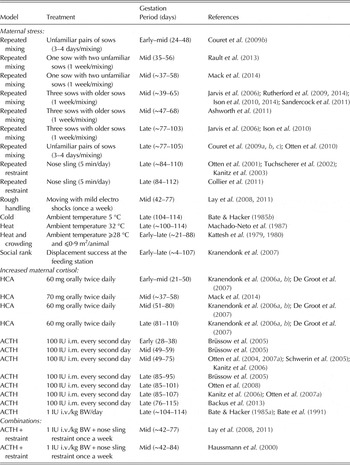
Studies on PS in pigs were conducted to investigate either the effect of a specific stressor or the impact of increased maternal or exogenous cortisol during specific periods of gestation on sow and litter characteristics and offspring traits. The most commonly investigated maternal stress models simulate housing or management situations during gestation, which may be stressful for the animals. Since 2013, the European Union regulation stipulates that pregnant sows must be housed in social groups. Although undoubtedly providing welfare benefits, sow group housing may also cause stress for the animals. Social stress can emerge in dynamic groups by frequent mixing with unfamiliar sows, by insufficient space for the avoidance of other sows or by displacement during competition at the feeding station. Therefore, the repeated mixing of unfamiliar sows and the introduction of a sow to an established group were used as models for social stress. In addition, other housing and management factors such as temporary restraint, rough handling and heat or cold stress were investigated as potential stressors. The outcome of these models is of practical relevance; however, a disadvantage may be that the stress reaction of the mother can show high individual variation. This variation can be determined by different perceptions of the stressor by the animals, which may be caused by previous experiences, the behaviour of pen mates, social rank and other factors; the variation may also change over time when applied repeatedly. Therefore, to examine the specific role of maternal cortisol in the effects of PS and to better standardize the maternal stress reaction, other approaches used artificially increased maternal cortisol. An increased endogenous cortisol release of the mother was achieved either by intravenous infusions or by repeated injections of adrenocorticotropic hormone (ACTH) (Bate et al. Reference Bate, Ireland, Connell and Grimmelt1991; Otten et al. Reference Otten, Kanitz, Tuchscherer, Schneider and Brüssow2004; Backus et al. Reference Backus, Bryer and Sutherland2013). In another model, the plasma and salivary cortisol concentrations of pregnant sows were increased by repeated oral administration of hydrocortisone acetate (HCA) (Kranendonk et al. Reference Kranendonk, Hopster, Van Eerdenburg, Van Reenen, Fillerup, De Groot, Korte and Taverne2005; Mack et al. Reference Mack, Lay, Eicher, Johnson, Richert and Pajor2014). In addition, combinations of different treatments were also studied. Table 1 shows a summary of the major maternal treatments and the different gestational periods investigated in PS studies in pigs. Several models such as mixing, HCA and ACTH were studied in different gestational periods to compare effects that are dependent on the gestation stage. The terms early, mid- and late gestation period used in the present review correspond approximately to the first third of gestation until day 38, the second third until day 76 and the last third until birth, respectively.
Models and gestational periods used in studies on pre-natal stress in pigs

ACTH, adrenocorticotropic hormone; BW, body weight; HCA, hydrocortisone acetate
The stressful effects of the different treatments were verified by the measurement of sow cortisol concentrations in blood or saliva, either in the studies themselves or in pre-experimental trials. Moderate heat stress with an ambient temperature of approximately 32 °C during late gestation increased sow serum cortisol concentrations by approximately threefold (Machado-Neto et al. Reference Machado-Neto, Graves and Curtis1987). Mixing of sows was also shown to increase salivary cortisol concentrations (Jarvis et al. Reference Jarvis, Moinard, Robson, Baxter, Ormandy, Douglas, Seckl, Russell and Lawrence2006; Rutherford et al. Reference Rutherford, Robson, Donald, Jarvis, Sandercock, Scott, Nolan and Lawrence2009; Ison et al. Reference Ison, D'Eath, Robson, Baxter, Ormandy, Douglas, Russell, Lawrence and Jarvis2010, Reference Ison, Donald, Jarvis, Robson, Lawrence and Rutherford2014), although the magnitude of the response showed habituation over a period of repeated mixing (Couret et al. Reference Couret, Otten, Puppe, Prunier and Merlot2009a; Ison et al. Reference Ison, Donald, Jarvis, Robson, Lawrence and Rutherford2014). Habituation has also been shown by a decrease in the number and duration of agonistic behaviours (Couret et al. Reference Couret, Otten, Puppe, Prunier and Merlot2009a) and by fewer body lesions during later mixing compared with earlier mixing (Ison et al. Reference Ison, Donald, Jarvis, Robson, Lawrence and Rutherford2014). This process is most likely attributed to the increased experience of sows and a more ‘efficient’ strategy to establish a social hierarchy. In contrast, repeated oral HCA administration (twice a day) or repeated intramuscular injections of ACTH (every other day) were shown to temporarily increase maternal cortisol concentrations for up to 8 h (Otten et al. Reference Otten, Kanitz, Tuchscherer, Schneider and Brüssow2004, Reference Otten, Kanitz, Tuchscherer, Brüssow and Nürnberg2008; Kranendonk et al. Reference Kranendonk, Hopster, Van Eerdenburg, Van Reenen, Fillerup, De Groot, Korte and Taverne2005), and no habituation of this response was found over a period of up to 6 weeks (Otten et al. Reference Otten, Kanitz, Tuchscherer, Schneider and Brüssow2004, Reference Otten, Kanitz, Tuchscherer, Brüssow and Nürnberg2008; Backus et al. Reference Backus, Bryer and Sutherland2013).
Foetal plasma cortisol in pigs is of both maternal and foetal origin and the relative proportion of maternal cortisol declines from mid- to late gestation (Klemcke Reference Klemcke1995), indicating an enhanced foetal secretion and/or increased activity of placental 11β-HSD2 (Klemcke & Christenson Reference Klemcke and Christenson1996). Two studies investigated the effects of maternal ACTH or HCA treatment on foetal cortisol regulation. In a previous study from Otten et al. (Reference Otten, Kanitz, Tuchscherer, Schneider and Brüssow2004), foetuses were recovered under general anaesthesia by Caesarean section on gestational day 65, 3 h after ACTH application to the mother. The ACTH application increased the maternal plasma cortisol as well as the cortisol concentrations in the umbilical vein and umbilical artery, and tended to increase cortisol levels in the peripheral blood of foetuses. Kranendonk et al. (Reference Kranendonk, Mulder, Parvizi and Taverne2008) measured plasma cortisol after catheterization of a single foetus. They found indications that oral HCA administration to the mother increased maternal cortisol as well as the cortisol concentration in the foetal jugular vein on gestational day 102. Collectively, these findings indicate that maternal stress may be mediated by increased foetal cortisol either by the transfer of maternal cortisol or by the increase in foetal cortisol release, among other factors.
EFFECTS OF PS ON THE OFFSPRING
Litter characteristics and growth
In general, gestation length was not affected by PS in pigs. Although only observed in a single experiment, heat stress and space restriction over a 50-day period from early to late gestation significantly reduced the gestation length in stressed sows (Kattesh et al. Reference Kattesh, Kornegay, Knight, Gwazdauskas, Thomas and Notter1980). Furthermore, PS in pigs had no consequences on litter size and the proportion of male and female offspring. The percentage of live-born piglets was increased in litters of sows receiving oral HCA during gestation, when the authors combined data of all HCA treatments examined, irrespective of the period of administration (Kranendonk et al. Reference Kranendonk, Hopster, Fillerup, Ekkel, Mulder, Wiegant and Taverne2006a). No significant effects on the proportion of live-born piglets were found in the other studies.
Porcine PS models using increased maternal cortisol affected the intrauterine growth of the offspring. Decreased birth weights were found after HCA administration during early and late gestation and these piglets remained lighter until weaning. However, at 6 months of age, the body weight, lean meat percentage and back fat thickness did not differ (Kranendonk et al. Reference Kranendonk, Hopster, Fillerup, Ekkel, Mulder, Wiegant and Taverne2006a), which indicates a compensatory post-weaning growth in HCA offspring. This effect may be sex-specific because in a study comparing the long-term effects in male and female offspring, a higher body weight was found only in male HCA offspring at 160 days old (Mack et al. Reference Mack, Lay, Eicher, Johnson, Richert and Pajor2014). Birth weight was also reduced in piglets born to sows treated with ACTH during the last week of gestation (Bate et al. Reference Bate, Ireland, Connell and Grimmelt1991). By contrast, ACTH application during late gestation increased the birth weight of piglets accompanied by a decreased weight gain of their mothers (Otten et al. Reference Otten, Kanitz, Tuchscherer, Puppe and Nürnberg2007a). These findings may be attributed to a disrupted maternal glucose metabolism of ACTH-treated sows, which showed hyperglycaemia and hyperinsulinaemia at the end of gestation (Otten et al. Reference Otten, Kanitz, Tuchscherer, Brüssow and Nürnberg2008). In contrast to the glucocorticoid models, stressful conditions during gestation had no effect on the birth weight of piglets. Only Jarvis et al. (Reference Jarvis, Moinard, Robson, Baxter, Ormandy, Douglas, Seckl, Russell and Lawrence2006) found a temporarily reduced growth after weaning piglets from mothers that were repeatedly mixed during gestation. This may indicate a higher stress level from the experience of weaning itself. Collectively, the results indicate that foetal growth and maturation and differentiation of foetal tissues can be affected by increased maternal cortisol during gestation. In contrast, the experience of stressful situations by the mother had little or no effect on the gestation outcome and growth performance of the offspring. This may be related to the possible habituation of the stress response and hence lower cortisol concentrations over time compared with the glucocorticoid models.
Immune functions and health
Stressful situations for pregnant sows can have consequences on the immune system of the offspring. In a study by Tuchscherer et al. (Reference Tuchscherer, Kanitz, Otten and Tuchscherer2002), a daily 5-min restraint stress of pregnant sows during the last 5 weeks of gestation decreased the immunoglobulin G (IgG) concentrations in the serum of neonatal pigs. In addition, this maternal stress had an immunosuppressive effect on mitogen-induced lymphocyte proliferation during the first week after birth, reduced the relative thymus weights in piglets on days 1 and 35 of life and increased the pre-weaning morbidity and mortality of offspring. In another study, the repeated ACTH stimulation of sows during late gestation decreased the lymphocyte proliferative response in newborn piglets but not when applied during mid-gestation (Otten et al. Reference Otten, Kanitz, Tuchscherer, Puppe and Nürnberg2007a). Furthermore, the treatment of the mother with HCA during mid-gestation led to a higher percentage of pre-weaning mortality in male pigs (Mack et al. Reference Mack, Lay, Eicher, Johnson, Richert and Pajor2014), and heat stress in late pregnancy resulted in piglets with decreased IgG concentrations and increased pre-weaning mortality (Machado-Neto et al. Reference Machado-Neto, Graves and Curtis1987). An increase in maternal glucocorticoids during the last week of gestation may accelerate foetal gut maturation and thereby limit the acquisition of colostral immunoglobulins in neonates (Bate et al. Reference Bate, Ireland, Connell and Grimmelt1991). These findings emphasize that maternal stress during late pregnancy can particularly impair the immune function of neonatal piglets and can negatively affect the health and vitality of the offspring during the suckling period.
However, there are only few studies that have investigated immune function at later ages in the offspring, and they provide inconsistent results. For example, repeated regrouping of gilts with unfamiliar conspecifics during late gestation decreased the inducibility of tumour necrosis factor-alpha (TNF-α) production in a whole blood culture system and blood cell counts (numbers of total leukocytes, lymphocytes and granulocytes) and increased the in vitro lymphocyte proliferation of piglets until 2 months of age (Couret et al. Reference Couret, Prunier, Mounier, Thomas, Oswald and Merlot2009b, Reference Couret, Jamin, Kuntz-Simon, Prunier and Merlotc). The same mixing stress during early gestation had no effect on the immune system of the piglets (Couret et al. Reference Couret, Prunier, Mounier, Thomas, Oswald and Merlot2009b). Repeated nose sling restraint during the last third of gestation resulted in lower basal serum TNF-α and interleukin 6 (IL-6) concentrations in 5-week-old pigs, but the levels of the acute phase proteins serum amyloid A (SAA), C-reactive protein and haptoglobin were not affected (Collier et al. Reference Collier, Williams, Carroll, Welsh and Laurenz2011).
To date, there is also little evidence in pigs describing the effects of pre-natal maternal stress on the immune responses of offspring to stressful stimuli. Maternal treatment with a combination of restraint and ACTH injection during mid-gestation reduced the healing rate of punch biopsy wounds in the offspring after mixing stress (Haussmann et al. Reference Haussmann, Carroll, Weesner, Daniels, Matteri and Lay2000; Lay et al. Reference Lay, Kattesh, Cunnick, Daniels, Kranendonk, McMunn, Toscano and Roberts2011), whereas rough handling of sows had no effect on wound healing (Lay et al. Reference Lay, Kattesh, Cunnick, Daniels, Kranendonk, McMunn, Toscano and Roberts2011). Piglets born from mothers that received oral HCA during the first or third period of gestation showed a higher fever response to a lipopolysaccharide (LPS) challenge (De Groot et al. Reference De Groot, Kranendonk, Fillerup, Hopster, Boersma, Hodgson, Van Reenen and Taverne2007). In contrast, the latency time in a human approach test after LPS, which was used to measure the relative sickness, was reduced in offspring exposed to oral HCA or rough handling during mid-gestation (De Groot et al. Reference De Groot, Kranendonk, Fillerup, Hopster, Boersma, Hodgson, Van Reenen and Taverne2007; Lay et al. Reference Lay, Kattesh, Cunnick, Daniels, Kranendonk, McMunn, Toscano and Roberts2011). Maternal restraint stress during late gestation increased the magnitude of IL-6 and SAA responses to LPS in the offspring (Collier et al. Reference Collier, Williams, Carroll, Welsh and Laurenz2011). However, early or late social gestational stress did not influence plasma TNF-α concentrations and IL-6 mRNA expression in the liver of male piglets after LPS application (Couret et al. Reference Couret, Prunier, Mounier, Thomas, Oswald and Merlot2009b). In addition, haematological traits, antibody titres against a foreign antigen and nitric oxide production of macrophages of offspring in response to mixing stress were not affected by maternal ACTH or rough treatments in mid-gestation (Lay et al. Reference Lay, Kattesh, Cunnick, Daniels, Kranendonk, McMunn, Toscano and Roberts2011). Thus, it appears that PS may cause alterations in the sensitivity to an immune challenge in pigs depending on the type of stressor and challenge.
Neuroendocrine function
It was shown in laboratory animals that PS may cause structural and functional effects on the limbic system and the HPA and sympatho-adrenomedullary (SAM) axis in the offspring. Many of these effects are mediated by glucocorticoids, and the plasticity of the systems may be achieved by the action of glucocorticoids at central and peripheral levels.
In pigs, the central sites of the HPA axis and the limbic system appear to be specifically vulnerable to PS effects. It was shown that PS during mid- or late gestation leads to neuronal activation in the brain of the offspring as measured by an increased expression of the immediate early gene c-fos mRNA (Schwerin et al. Reference Schwerin, Kanitz, Tuchscherer, Brüssow, Nürnberg and Otten2005; Otten et al. Reference Otten, Kanitz, Couret, Veissier, Prunier and Merlot2010). Furthermore, maternal stress caused an increase of hippocampal 11β-HSD1 mRNA and GR binding sites indicating an enhanced intracellular availability of glucocorticoids, which sensitizes the brain to glucocorticoid action and alters the feedback regulation of the HPA axis (Kanitz et al. Reference Kanitz, Otten, Tuchscherer and Manteuffel2003; Otten et al. Reference Otten, Kanitz, Couret, Veissier, Prunier and Merlot2010). In addition, hippocampal serotonergic activity was increased in foetuses from ACTH-treated mothers as shown by increased 5-hydroxytryptamine concentrations, which may have consequences for emotional reactivity and coping behaviour later in life (Otten et al. Reference Otten, Kanitz, Tuchscherer, Brüssow and Nürnberg2008). In the amygdala, a key brain region involved in mediating behavioural responses to stress including anxiety and fear responses, social stress experienced by pregnant sows resulted in increased corticotropin releasing hormone (CRH) mRNA expression and in a substantial increase in the ratio of CRH receptor 1 to CRH receptor 2 mRNA expression in female offspring (Jarvis et al. Reference Jarvis, Moinard, Robson, Baxter, Ormandy, Douglas, Seckl, Russell and Lawrence2006; Rutherford et al. Reference Rutherford, Piastowska-Ciesielska, Donald, Robson, Ison, Jarvis, Brunton, Russell and Lawrence2014). In the same experiment, Ison et al. (Reference Ison, D'Eath, Robson, Baxter, Ormandy, Douglas, Russell, Lawrence and Jarvis2010) found a greater CRH mRNA expression in both the amygdala and paraventricular nucleus (PVN) of the hypothalamus after acute restraint stress in offspring of sows pre-natally stressed by mixing. The observed increases in CRH mRNA and CRH receptors mRNA expression in the amygdala as a consequence of pre-natal social stress indicate a more anxiety-prone neurobiological phenotype. At the level of the hypothalamus and pituitary, PS in pigs also altered the gene and protein expression of HPA-related hormones and receptors. Social stress during mid-gestation increased CRH mRNA expression in the PVN in offspring at 60 days of age (Jarvis et al. Reference Jarvis, Moinard, Robson, Baxter, Ormandy, Douglas, Seckl, Russell and Lawrence2006). When applying the model of weekly ACTH applications in combination with restraint to pregnant sows during mid-gestation, an increased CRH concentration in the hypothalamus and a higher expression of pituitary pro-opiomelanocortin mRNA in newborn piglets was observed (Haussmann et al. Reference Haussmann, Carroll, Weesner, Daniels, Matteri and Lay2000). Furthermore, the offspring of mothers subjected to restraint stress or ACTH displayed reduced GR binding sites after birth, indicating that PS in pigs may alter the set point towards a decreased negative feedback at the hypothalamic PVN and enhanced facilitation of the HPA response (Kanitz et al. Reference Kanitz, Otten, Tuchscherer and Manteuffel2003, Reference Kanitz, Otten and Tuchscherer2006).
Within the HPA axis, PS in pigs also affects adrenal growth and morphology. Both ACTH stimulation and the mixing of pregnant sows during mid-gestation increased the relative adrenal weight, cortex area, cortex/medulla ratio and cell density in offspring (Haussmann et al. Reference Haussmann, Carroll, Weesner, Daniels, Matteri and Lay2000; Kanitz et al. Reference Kanitz, Otten and Tuchscherer2006; Otten et al. Reference Otten, Kanitz, Couret, Veissier, Prunier and Merlot2010). Together with a higher adrenocortical expression of ACTH receptor mRNA in pre-natally stressed piglets (Haussmann et al. Reference Haussmann, Carroll, Weesner, Daniels, Matteri and Lay2000), these alterations may indicate a greater sensitivity of the adrenal and a higher capacity for cortisol synthesis and release. However, two studies revealed divergent results that may be caused by a different gestational treatment period and foetal developmental stage. Couret et al. (Reference Couret, Prunier, Mounier, Thomas, Oswald and Merlot2009b) found a reduction in the relative adrenal weight in pre-natally stressed piglets when social stress was applied during early gestation, and foetuses of ACTH-treated sows displayed a decrease in the adrenocortical ACTH receptor mRNA expression at day 77 of gestation (Schwerin et al. Reference Schwerin, Kanitz, Tuchscherer, Brüssow, Nürnberg and Otten2005), which may indicate a dysfunction of the glucocorticoid feedback regulation with possible consequences for stress adaptation. Finally, diverging effects of PS were also found on basal plasma cortisol and cortisol binding globulin (CBG) concentrations and cortisol release after stressful challenges depending on the type of stressor and timing of exposure. The offspring of mothers subjected to daily restraint stress during late gestation showed lower basal plasma cortisol and increased CBG concentrations at 3 days old (Otten et al. Reference Otten, Kanitz, Tuchscherer and Nürnberg2001; Kanitz et al. Reference Kanitz, Otten, Tuchscherer and Manteuffel2003), whereas ACTH stimulation and social stress during mid- and/or late gestation did not change the basal cortisol concentrations but reduced the CBG concentration in newborn piglets (Kanitz et al. Reference Kanitz, Otten and Tuchscherer2006; Otten et al. Reference Otten, Kanitz, Couret, Veissier, Prunier and Merlot2010). Further, offspring whose mothers were treated with HCA during mid-gestation exhibited increased basal salivary cortisol concentrations, while those exposed during early and late gestation exhibited normal basal cortisol but attenuated responses to an ACTH challenge at 6 weeks of age (Kranendonk et al. Reference Kranendonk, Hopster, Fillerup, Ekkel, Mulder, Wiegant and Taverne2006a). However, in a psychological stress situation such as mixing with unfamiliar conspecifics, offspring from sows stressed during mid- and late gestation reacted with an increased HPA reactivity as shown by enhanced cortisol concentrations after mixing (Haussmann et al. Reference Haussmann, Carroll, Weesner, Daniels, Matteri and Lay2000; Jarvis et al. Reference Jarvis, Moinard, Robson, Baxter, Ormandy, Douglas, Seckl, Russell and Lawrence2006).
A few reports indicate that PS in pigs may induce an activation of the sympathetic nervous system in the offspring and may affect the concentrations and turnover of brain catecholamines. Administration of ACTH during mid-gestation increased the noradrenergic activity in the locus coeruleus region at 28 days of age, as shown by increased concentrations of noradrenaline and the specific noradrenaline metabolite 3-methoxy-4-hydroxyphenylglycol. The offspring of sows treated with ACTH during late gestation displayed increased plasma noradrenaline concentrations at day 1 of age and reacted with a higher noradrenaline response to restraint (Kanitz et al. Reference Kanitz, Otten and Tuchscherer2006; Otten et al. Reference Otten, Kanitz, Tuchscherer, Puppe and Gimsa2007b). Furthermore, Collier et al. (Reference Collier, Williams, Carroll, Welsh and Laurenz2011) found an increased adrenaline and noradrenaline release to an LPS challenge in castrated male piglets whose mothers were stressed during late gestation by restraint.
Collectively, the results indicate that both maternal stress and increased maternal cortisol have profound influences on neuroendocrine regulation within the HPA and SAM systems of porcine offspring and appear to modify the reactivity of both systems in stressful situations. In general, pre-natally stressed offspring are characterized by a higher activity and altered feedback regulation of the HPA axes, an enhanced activation of the sympathetic nervous system and alterations in the limbic system indicating a more anxious and emotional phenotype.
Behaviour
As neuroendocrine set points were modulated in the limbic and HPA system of pre-natally stressed offspring, this may also affect their social and anxiety-related behaviour. Thus, behavioural consequences of PS in the offspring were investigated in their social environment and in relation to challenging situations such as weaning and mixing or during a novel environment or novel object test. While observing the piglets in their home pen, Kranendonk et al. (Reference Kranendonk, Hopster, Fillerup, Ekkel, Mulder and Taverne2006b) found that piglets from HCA-treated sows spent less time in social interactions at 14 days of age and performed less individual play behaviour after removal of their mother. During mixing, HCA offspring showed more aggressive and less non-aggressive behaviour (Kranendonk et al. Reference Kranendonk, Hopster, Fillerup, Ekkel, Mulder and Taverne2006b), whereas no differences in the behavioural response to mixing were found after maternal ACTH treatment during mid-gestation (Lay et al. Reference Lay, Kattesh, Cunnick, Daniels, Kranendonk, McMunn, Toscano and Roberts2011). However, ACTH treatment during late gestation resulted in offspring spending more time performing mounting behaviour in a social confrontation test (Backus et al. Reference Backus, Bryer and Sutherland2013). During a novel environment test, offspring from HCA sows had more locomotion and vocalizations (Kranendonk et al. Reference Kranendonk, Hopster, Fillerup, Ekkel, Mulder and Taverne2006b) and offspring from ACTH sows had more escape attempts than control piglets (Otten et al. Reference Otten, Kanitz, Tuchscherer, Puppe and Nürnberg2007a). Interestingly, these results suggest that increased maternal cortisol may result in offspring that show more active or aggressive behaviour during social confrontation and more active behaviour in a novel environment situation, indicating an increased emotional reactivity.
Mixing stress or sub-dominance during gestation resulted in divergent behavioural effects compared to the glucocorticoid models. After weaning, reduced activity, less vocalizations and less aggression were observed in offspring from mixed sows (Ison et al. Reference Ison, D'Eath, Robson, Baxter, Ormandy, Douglas, Russell, Lawrence and Jarvis2010). This was shown by fewer long attacks but more retaliatory attacks towards their littermates, as well as by more retreats when attacked. Several alterations were still observed 7 days after weaning, indicating that there was a delayed return to a stable social group (Jarvis et al. Reference Jarvis, Moinard, Robson, Baxter, Ormandy, Douglas, Seckl, Russell and Lawrence2006). Rough handling during mid-gestation, however, had no effect on the behavioural response to mixing at 4 months of age (Lay et al. Reference Lay, Kattesh, Cunnick, Daniels, Kranendonk, McMunn, Toscano and Roberts2011). Sub-dominance of sows during gestation decreased the locomotion and vocalization of offspring in a new environment and increased the latency time to touch a novel object (Kranendonk et al. Reference Kranendonk, Van der Mheen, Fillerup and Hopster2007). Although there is still a need for more studies on the behavioural consequences of PS in pig offspring, the available results indicate that offspring from psychologically stressed sows showed less aggression and more signs of anxiety and depressive-like behaviour in novel situations. This differs from the more active and aggressive behaviour of offspring found in experiments using the maternal glucocorticoid treatment. Thus, it can be assumed that the programming of these behavioural differences may be determined by the diverging physiological stress responses of the mother, e.g., differences in SAM activation during gestation, in the glucocorticoid and stress models.
There are also indications that PS effects continue through sexual maturation with significant effects on the maternal behaviour of daughters. Gilts born to mothers stressed by mixing during mid-gestation made more posture changes and had a higher frequency of substrate directed behaviour pre-parturition than controls (Jarvis et al. Reference Jarvis, Moinard, Robson, Baxter, Ormandy, Douglas, Seckl, Russell and Lawrence2006). After birth, sows derived from the same PS model showed more ventral lying and more posture changes, indicating increased restlessness (Rutherford et al. Reference Rutherford, Piastowska-Ciesielska, Donald, Robson, Ison, Jarvis, Brunton, Russell and Lawrence2014). Daughters were also more responsive to their piglets (Jarvis et al. Reference Jarvis, Moinard, Robson, Baxter, Ormandy, Douglas, Seckl, Russell and Lawrence2006; Rutherford et al. Reference Rutherford, Piastowska-Ciesielska, Donald, Robson, Ison, Jarvis, Brunton, Russell and Lawrence2014) and tended to bite and snap at their piglets more often with a greater incidence for attacking and killing piglets in one study (Jarvis et al. Reference Jarvis, Moinard, Robson, Baxter, Ormandy, Douglas, Seckl, Russell and Lawrence2006) but not in another (Rutherford et al. Reference Rutherford, Piastowska-Ciesielska, Donald, Robson, Ison, Jarvis, Brunton, Russell and Lawrence2014). These findings support the interpretation that PS can increase fear levels in offspring sows, and their aggressive piglet-directed behaviour may be a result of a fear reaction towards the neonates (English et al. Reference English, Smith and MacLean1977).
Studies in humans and rodents provide evidence that PS can also alter pain sensitivity in the offspring (Ranger et al. Reference Ranger, Johnston and Anand2007). In modern production systems piglets can experience painful events such as tail docking and castration; therefore, two studies investigated the impact of PS on nociception and behavioural responses to pain. It was shown that offspring from mothers stressed by repeated mixing during mid-gestation had a higher pain score to tail docking than controls, indicating that they perceived the pain to be greater, and the average pain score was correlated with maternal cortisol (Rutherford et al. Reference Rutherford, Robson, Donald, Jarvis, Sandercock, Scott, Nolan and Lawrence2009). Thus, the experience of PS can result in a heightened acute response to injury. In addition, another study using the same PS paradigm found that offspring were less responsive to noxious mechanical and cold stimulation at the age of 5–8 weeks, with higher basal response thresholds and reduced responses to inflammatory challenges (Sandercock et al. Reference Sandercock, Gibson, Rutherford, Donald, Lawrence, Brash, Scott and Nolan2011).
Sex-specific effects
A small number of studies in pigs investigated PS effects on the same phenotypic traits in the offspring of both sexes and, in general, significant interactions of PS effects with sex were found for only a few examined traits. This may either indicate a lesser extent of sex-specific programming in this species or it may be due to the fact that in most studies males were castrated after birth, which may mask sex-specific differences later on. Castrated male offspring from sows treated with ACTH during gestation showed higher plasma CBG concentrations and an altered noradrenergic and serotonergic activity in the locus coeruleus, indicating a higher sympathetic activation and anxiety compared with control males (Kanitz et al. Reference Kanitz, Otten and Tuchscherer2006). These findings are consistent with other studies where it was shown that pre-natally stressed castrated males had higher peak concentrations of adrenaline and noradrenaline following LPS application (Collier et al. Reference Collier, Williams, Carroll, Welsh and Laurenz2011) and that intact male offspring of low-ranking sows exhibited more fearfulness during a novel object test (Kranendonk et al. Reference Kranendonk, Van der Mheen, Fillerup and Hopster2007). In addition, pre-natally stressed castrated males exhibited lower cortisol and TNF-α responses after LPS challenge, whereas concentrations in female pigs were not influenced by maternal stress (Collier et al. Reference Collier, Williams, Carroll, Welsh and Laurenz2011). This altered inflammatory response in male piglets could also be linked to the prevalence of male-biased post-natal mortality in pigs (Baxter et al. Reference Baxter, Jarvis, Palarea-Albaladejo and Edwards2012). Indeed, it was found that an HCA administration during mid-gestation only increased pre-weaning mortality in males compared with the offspring from mixed and control sows (Mack et al. Reference Mack, Lay, Eicher, Johnson, Richert and Pajor2014).
Sex-specific effects were also found in female offspring. Relative adrenal weight was either decreased or increased in pre-natally stressed female piglets depending on the stage of gestation when sows were mixed (Couret et al. Reference Couret, Prunier, Mounier, Thomas, Oswald and Merlot2009b; Otten et al. Reference Otten, Kanitz, Couret, Veissier, Prunier and Merlot2010). Exposure to social stress during late gestation increased the mitogen-induced proliferation of blood lymphocytes in young female offspring compared to controls and male offspring (Couret et al. Reference Couret, Prunier, Mounier, Thomas, Oswald and Merlot2009b). The ratio of CRH receptor 1 to CRH receptor 2 mRNA expression in the amygdala was increased in female but not male offspring from sows pre-natally stressed by mixing (Rutherford et al. Reference Rutherford, Piastowska-Ciesielska, Donald, Robson, Ison, Jarvis, Brunton, Russell and Lawrence2014). Studies in rodents have shown that sex-specific programming during pregnancy can be caused by changes in maternal steroid concentrations and subsequent suppression of foetal testosterone concentrations (Ward & Weisz Reference Ward and Weisz1984; Kapoor & Matthews Reference Kapoor and Matthews2011) and/or by the variable expression of growth factors and nutrient transporter genes in the placenta of males and females (Mueller & Bale Reference Mueller and Bale2008).
The consequences of PS on pig reproductive development have only been insufficiently elucidated, and many conclusions remain unclear. The anogenital distance is a non-invasive readout of pre-natal androgen action, which is an indicator of reproductive tract masculinization and a potential predictor for adult reproductive disorders (Welsh et al. Reference Welsh, Saunders, Fisken, Scott, Hutchison, Smith and Sharpe2008). Thus, a shorter anogenital distance indicates incomplete masculinization, and this measurement was applied to appraise PS effects on masculinization in neonatal males. Male piglets of sows treated with ACTH during mid-gestation had a reduced anogenital distance (Lay et al. Reference Lay, Kattesh, Cunnick, Daniels, McMunn, Toscano and Roberts2008). Furthermore, in a study comparing different PS treatments during mid-gestation, mixing was also found to result in male offspring with the shortest anogenital distance (Mack et al. Reference Mack, Lay, Eicher, Johnson, Richert and Pajor2014). However, in another study using ACTH treatment no differences were found in the anogenital distance in the offspring (Haussmann et al. Reference Haussmann, Carroll, Weesner, Daniels, Matteri and Lay2000). Investigations by Ashworth et al. (Reference Ashworth, Hogg, Hoeks, Donald, Duncan, Lawrence and Rutherford2011) demonstrated that mixing stress during mid-gestation can reduce plasma testosterone and oestradiol concentrations in 6-week-old male pigs, whereas mid-gestational stress by heat and crowding did not affect plasma testosterone concentrations or sexual behaviour of boar offspring (Kattesh et al. Reference Kattesh, Kornegay, Gwazdauskas, Knight and Thomas1979).
In female piglets whose mothers were submitted to ACTH during mid-gestation, basal luteinizing hormone concentrations were lower on post-natal day 1 but not on post-natal day 28 compared with controls (Brüssow et al. Reference Brüssow, Schneider, Kanitz, Otten and Tuchscherer2005). Female pigs born to sows that were stressed by mixing during gestation had fewer primordial follicles than those born to control sows (Ashworth et al. Reference Ashworth, Hogg, Hoeks, Donald, Duncan, Lawrence and Rutherford2011). The average age at first oestrus was delayed in gilts farrowed by stressed sows compared with gilts farrowed by unstressed controls (O'Gorman et al. Reference O'Gorman, Gonzales, Eaton, Collard, Reyna, Laurenz, Stanko, Keisler, Carroll and Garcia2007), and pre-natally stressed offspring sows had fewer piglets born alive. However, there was no difference in number of piglets that were dead upon birth (Jarvis et al. Reference Jarvis, Moinard, Robson, Baxter, Ormandy, Douglas, Seckl, Russell and Lawrence2006).
The lifetime reproductive performance of breeding animals and the influence of testosterone on the growth potential of uncastrated males are important traits for pig production and warrant further research on the relationships between PS and the relevant reproductive traits.
CONCLUSIONS
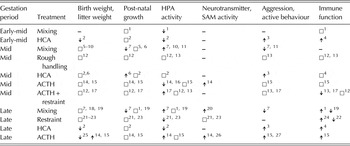
The studies on pigs in the current review reveal that PS may alter important traits related to the growth, physiology and behaviour of offspring, as summarized in Table 2. There is evidence from several studies that an increase in maternal cortisol during gestation is associated with foetal cortisol overexposure in this species. The effects on birth weight were found in these models and thus confirm the role of cortisol in foetal development and maturation. The HPA axis and limbic system, including the hippocampus and amygdala, appear to be particularly sensitive to altered cortisol concentrations during development. The neuroendocrine results suggest an increased activation within the limbic system and a hyper-reactivity of the HPA and SAM axes in the offspring. In addition, disturbed social behaviour, an increased emotional reactivity and more anxiety and depressive-like behaviour in a novel environment were reported. The behavioural consequences of PS are of particular importance for female offspring used for breeding because it was shown that they can have a negative impact on maternal behaviour. Differences were found in the behavioural and physiological phenotype of offspring between the glucocorticoid and maternal stress models. These may be caused by divergent experimental protocols that affect the magnitude of the cortisol response but might also suggest that there are glucocorticoid-independent mechanisms involved in the mediation of maternal stress to the foetus. In the maternal stress models, various endocrine changes accompany the stress response, including catecholamine release and the action of additional steroid hormones and growth factors. These may directly affect foetal gene expression or indirectly act on foetal development by an altered placental metabolism and regulation, blood flow and redistribution of nutrients (Harris & Seckl Reference Harris and Seckl2011).
Effects of different gestational periods and pre-natal treatments on offspring characteristics in pigs

‘↑’, significant increase; ‘↓’, significant decrease; ‘☐’, no effect; ‘–’, not studied.
HPA, hypothalamic-pituitary-adrenal; SAM, sympatho-adrenomedullary; ACTH, adrenocorticotropic hormone; HCA, hydrocortisone acetate.
References: 1. (Couret et al. Reference Couret, Prunier, Mounier, Thomas, Oswald and Merlot2009b), 2. (Kranendonk et al. Reference Kranendonk, Hopster, Fillerup, Ekkel, Mulder, Wiegant and Taverne2006a), 3. (Kranendonk et al. Reference Kranendonk, Hopster, Fillerup, Ekkel, Mulder and Taverne2006b), 4. (De Groot et al. Reference De Groot, Kranendonk, Fillerup, Hopster, Boersma, Hodgson, Van Reenen and Taverne2007), 5. (Rault et al. Reference Rault, Mack, Carter, Garner, Marchant-Forde, Richert and Lay2013), 6. (Mack et al. Reference Mack, Lay, Eicher, Johnson, Richert and Pajor2014), 7. (Jarvis et al. Reference Jarvis, Moinard, Robson, Baxter, Ormandy, Douglas, Seckl, Russell and Lawrence2006), 8. (Rutherford et al. Reference Rutherford, Robson, Donald, Jarvis, Sandercock, Scott, Nolan and Lawrence2009), 9. (Ashworth et al. Reference Ashworth, Hogg, Hoeks, Donald, Duncan, Lawrence and Rutherford2011), 10. (Rutherford et al. Reference Rutherford, Piastowska-Ciesielska, Donald, Robson, Ison, Jarvis, Brunton, Russell and Lawrence2014), 11. (Ison et al. Reference Ison, D'Eath, Robson, Baxter, Ormandy, Douglas, Russell, Lawrence and Jarvis2010), 12. (Lay et al. Reference Lay, Kattesh, Cunnick, Daniels, McMunn, Toscano and Roberts2008), 13. (Lay et al. Reference Lay, Kattesh, Cunnick, Daniels, Kranendonk, McMunn, Toscano and Roberts2011), 14. (Kanitz et al. Reference Kanitz, Otten and Tuchscherer2006), 15. (Otten et al. Reference Otten, Kanitz, Tuchscherer, Puppe and Nürnberg2007a), 16. (Schwerin et al. Reference Schwerin, Kanitz, Tuchscherer, Brüssow, Nürnberg and Otten2005), 17. (Haussmann et al. Reference Haussmann, Carroll, Weesner, Daniels, Matteri and Lay2000), 18. (Couret et al. Reference Couret, Otten, Puppe, Prunier and Merlot2009a), 19. (Couret et al. Reference Couret, Jamin, Kuntz-Simon, Prunier and Merlot2009c), 20. (Otten et al. Reference Otten, Kanitz, Couret, Veissier, Prunier and Merlot2010), 21. (Otten et al. Reference Otten, Kanitz, Tuchscherer and Nürnberg2001), 22. (Tuchscherer et al. Reference Tuchscherer, Kanitz, Otten and Tuchscherer2002), 23. (Kanitz et al. Reference Kanitz, Otten, Tuchscherer and Manteuffel2003), 24. (Collier et al. Reference Collier, Williams, Carroll, Welsh and Laurenz2011), 25. (Bate et al. Reference Bate, Ireland, Connell and Grimmelt1991), 26. (Otten et al. Reference Otten, Kanitz, Tuchscherer, Brüssow and Nürnberg2008), 27. (Backus et al. Reference Backus, Bryer and Sutherland2013).
There are also indications for different effects depending on the gestational period when PS was applied. Mid- and even more pronounced late gestation appear to be sensitive periods for the programming effects of PS, ultimately affecting HPA axis regulation, behaviour and immune function in offspring. These periods coincide with the maturation of the foetal HPA axis (Klemcke & Christenson Reference Klemcke and Christenson1997), formation of immunocompetent cells (Šinkora & Butler Reference Šinkora and Butler2009) and growth spurts in pigs (McPherson et al. Reference McPherson, Ji, Wu, Blanton and Kim2004). Although the results are not consistent and appear to depend on the age of the animals and the type of challenges, it appears that immune functions in the offspring may be impaired by late gestational stress. This may contribute to the increased pre-weaning mortality of piglets as indicated by several studies.
Collectively, the findings indicate that PS in pigs can impair growth, physiological adaptability, health and behaviour later in life and thus has animal welfare and economic implications related to livestock husbandry practices. Future research should focus on the potential consequences of maternal stressors with practical relevance, e.g., social stress by mixing or dominance, in offspring that are used for breeding. In particular, the impact on reproductive traits, maternal behaviour and human-animal relationship, and the possible reversal of pre-natal effects by the post-natal environment require further investigation.
The authors express their gratitude to Ulrike Gimsa for critically reviewing the manuscript.