Introduction
Palliative care (PC) is a multidisciplinary therapy, offered to patients suffering from incurable or prolonged illness. The main goal of PC is to support the patient and preserve his quality of life (Billings, Reference Billings2000). It has been shown that implementing PC early in the course of disease is beneficiary for maintaining the quality of life and reducing symptom burden (Kelley and Morrison, Reference Kelley and Morrison2015; Haun et al., Reference Haun, Estel and Rücker2017).
The guidelines of The American Society of Clinical Oncology (ASCO) recommend that PC will be offered routinely to patients with advanced cancer, alongside standard oncology treatment. According to the guidelines, one essential component of PC is assisting patients with medical decision-making on end-of-life treatment, especially as disease progresses (Ferrell et al., Reference Ferrell, Temel and Temin2017).
Advanced care planning (ACP) is the process in which patients and their caregivers discuss treatment goals, values, and preferences regarding the treatment of progressive disease. ACP may result in the documentation of patient preferences by patients or physicians, allowing patients to ensure their wishes are fulfilled if they lose cognitive ability. Documentations may be in the form of advance directives (ADs), do-not-resuscitate (DNR) orders, and power of attorney, granting a specific person the right to direct therapy when the patient himself is unable to do so. Documenting ACP is thus central to maintaining patients' autonomy throughout the disease course (Silveira et al., Reference Silveira, Kim and Langa2010; Raskin et al., Reference Raskin, Harle and Hopman2016).
There is limited information regarding the rate of documented ACP among terminally ill patients in different countries and communities, and it seems that rates vary widely. A meta-analysis by Yadav et al. estimated that one of three adults in the USA writes some form of ADs (Yadav et al., Reference Yadav, Gabler and Cooney2017). This estimate was based on 150 trials with about 800,000 participants. It was estimated that in the UK, ACP documentation rates are substantially lower; however, definitive data are lacking (Stein and Fineberg, Reference Stein and Fineberg2013). In Japanese nursing homes, ACP documentation rates are close to 60% (Takezako et al., Reference Takezako, Ishikawa and Kajii2013), and in Australia, 14% of the population has documented ACP (White et al., Reference White, Tilse and Wilson2014). Low uptake of ACP has been explained by physicians' lack of time, difficulty in transferring information between different disciplines that provide care to the patient and the emotional difficulty that arises from the doctor–patient interaction around ACP (Lund et al., Reference Lund, Richardson and May2015).
PC has been shown to lower the potential of dying in the intensive care unit (ICU), which may be a reflection of improved ACP rates among patients receiving PC. When PC is initiated before the patient is imminently dying at an earlier stage of the disease trajectory, the patient is more likely to be capable of addressing end-of-life issues (Kavalieratos et al., Reference Kavalieratos, Corbelli and Zhang2016; McDonald et al., Reference McDonald, du Manoir and Kevork2017).
The association between PC and the rate of documented ACP was a secondary end point in major studies looking at the influence of PC on quality of life, resource utilization, and prognosis of patients with advanced cancer, and these trials suggested that early PC is associated with improved rates of ACP (Temel et al., Reference Temel, Greer and Muzikansky2010, Reference Temel, Greer and El-Jawahri2017). Nevertheless, there are no well-designed studies that address this specific issue as a primary end point.
To better understand the association between PC and rates of ACP, we conducted a systematic review of studies that tested the effect of adding PC to standard care and included this association as a secondary end point.
Methods
Identification and selection of studies
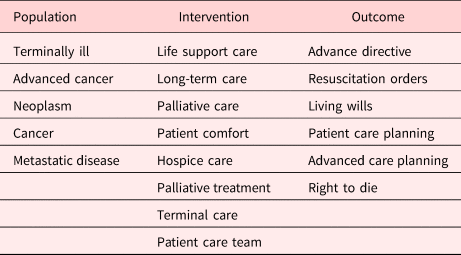
We reviewed articles published until October 2017 and extracted key words relevant to PC and ACP. To achieve the highest sensitivity, we ran a number of searches in different databases using various key words. Using the PubMed Advanced Search Builder, we created several search codes with the goal of reaching as many relevant studies as possible. These codes were then tested against a list of prespecified relevant articles, and search strategies were changed until they identified all these articles. We then chose our final search code, and MESH words are presented in Table 1. We ran an additional search in the Cochrane database of controlled trials and in addition, we contacted authors of central studies and guidelines and asked for their advice on relevant publications.
MESH words

Papers that were clearly irrelevant were excluded based on title. Two reviewers evaluated the remaining abstracts for eligibility and excluded those clearly irrelevant independently. Disagreements were resolved by reaching a consensus with a third author. Studies included in this review are clinical trials which tested the effect of adding palliative therapy to standard treatment and tested the rate of ACP as a primary or a secondary end point. We excluded noncomparative studies, studies in pediatric populations, and articles in non-English languages. We also excluded studies that excluded cancer patients.
Definition of intervention and outcomes
We used the ASCO guidelines for palliative therapy (Ferrell et al., Reference Ferrell, Temel and Temin2017) to define interventions as “palliative care.” Outcomes included documented ACP that relate to medical treatment. We did not include financial and social forms of ACP such as funeral plans.
Data extraction
A structured form was used to extract information from each trial including population studied, the number of subjects, the type of study, the description of intervention, setting, inclusion criteria, recruitment method, main outcomes, and ACP definition. An additional form was used to summarize results regarding difference in rates of ACP between standard care and the PC group and their significance.
Risk of bias assessment
Trials were independently assessed by three authors for validity using established tools; randomized controlled trials (RCTs) were assessed using the Cochrane Collaboration's tool for assessing the risk of bias in randomized trials (Higgins et al., Reference Higgins, Altman and Gøtzsche2011); and cohort studies were assessed according to ROBINS-I (Sterne et al., Reference Sterne, Hernán and Reeves2016). Cross-sectional studies were not analyzed for validity.
Results
Study selection
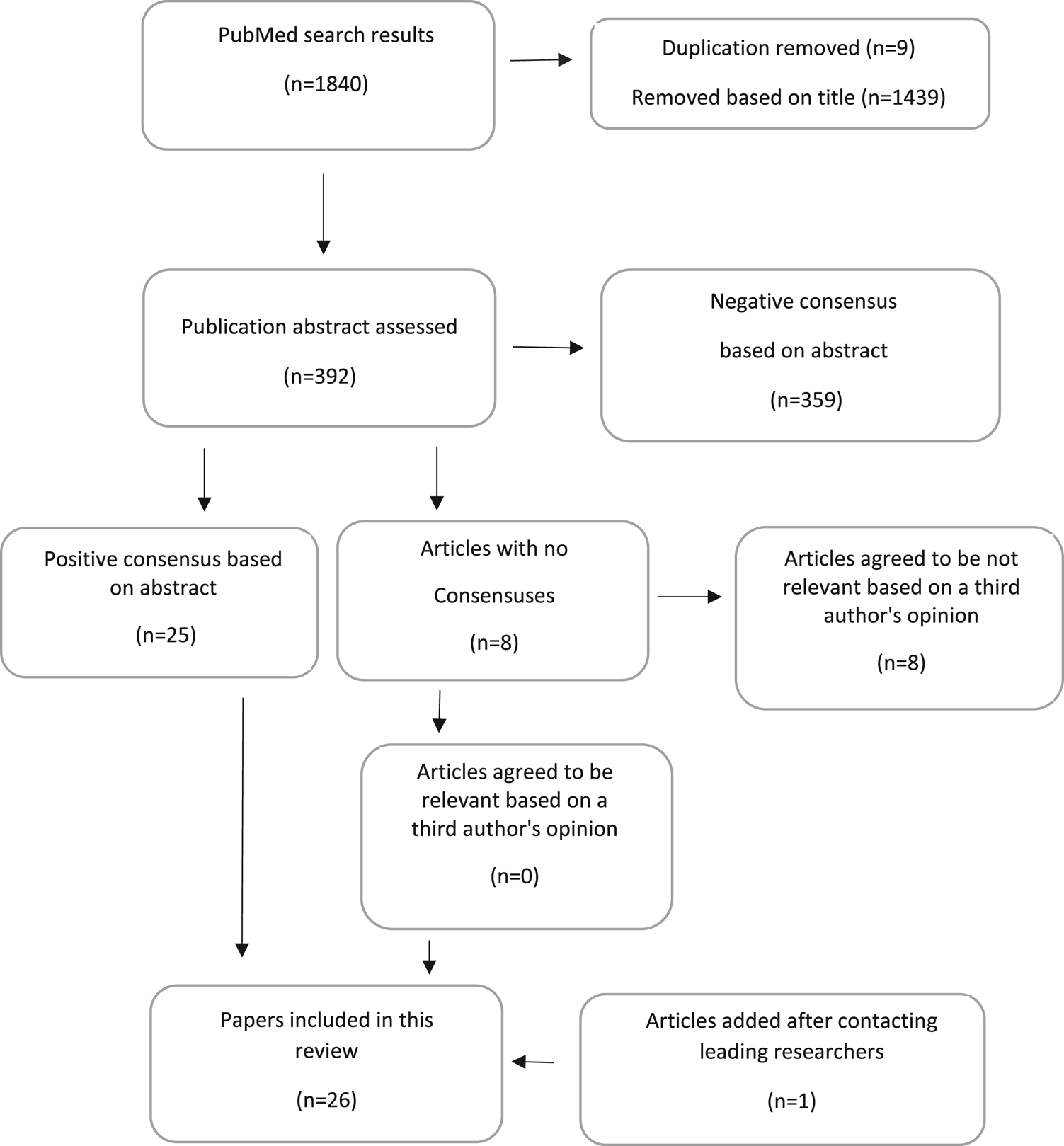
1,831 records were identified by the search codes, of which 392 were relevant based on the title. Of these, 25 were selected and included in the analysis, and an additional study was included following email correspondence as described above (Figure 1).
Flow chart of the searching process.

The correlation between the two investigators assessing abstracts for eligibility was very high (kappa value 0.868). A third author was consulted in cases of disagreement.
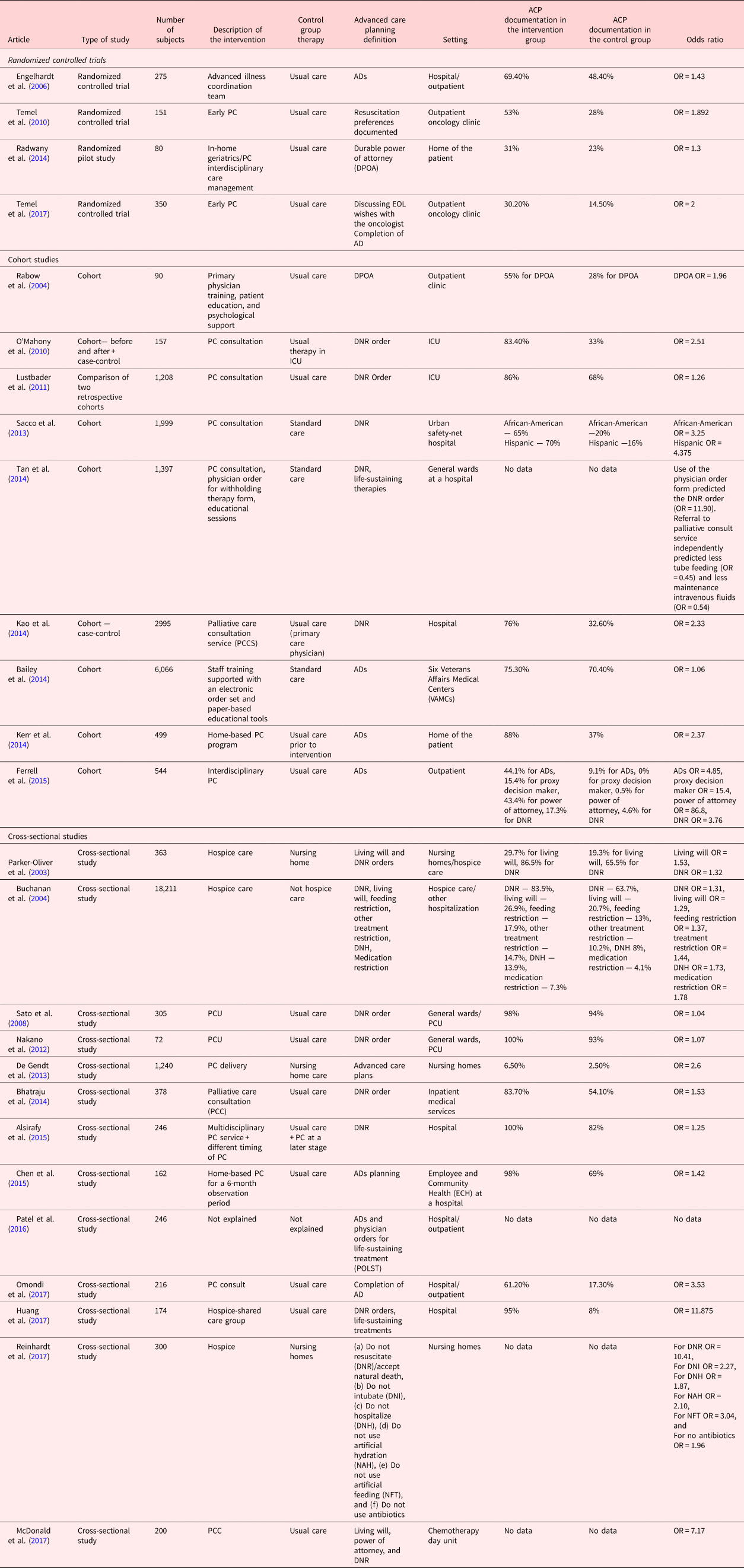
37,924 patients participated in the 26 studies included in this analysis. The characteristics of the trials and their outcomes regarding rates of ACP are detailed in Table 2. Of note, 10 trials recruited mainly cancer patients. Four of the trials were RCTs (Engelhardt et al., Reference Engelhardt, McClive-Reed and Toseland2006; Temel et al., Reference Temel, Greer and Muzikansky2010, Reference Temel, Greer and El-Jawahri2017; Radwany et al., Reference Radwany, Hazelett and Allen2014), nine were cohort studies (Rabow et al., Reference Rabow, Dibble and Pantilat2004; O'Mahony et al., Reference O'Mahony, McHenry and Blank2010; Lustbader et al., Reference Lustbader, Pekmezaris and Frankenthaler2011; Sacco et al., Reference Sacco, Deravin Carr and Viola2013; Bailey et al., Reference Bailey, Williams and Woodby2014; Kao et al., Reference Kao, Wang and Tang2014; Kerr et al., Reference Kerr, Tangeman and Rudra2014; Tan et al., Reference Tan, Seah and Chua2014; Ferrell et al., Reference Ferrell, Sun and Hurria2015), and 13 were cross-sectional studies (Parker-Oliver et al., Reference Parker-Oliver, Porock and Zweig2003; Buchanan et al., Reference Buchanan, Choi and Wang2004; Sato et al., Reference Sato, Miyashita and Morita2008; Nakano et al., Reference Nakano, Yoshida and Furutama2012; De Gendt et al., Reference De Gendt, Bilsen and Stichele2013; Bhatraju et al., Reference Bhatraju, Friedenberg and Uppal2014; Alsirafy et al., Reference Alsirafy, Mohammed and Al-Zahrani2015; Chen et al., Reference Chen, Thorsteinsdottir and Cha2015; Patel et al., Reference Patel, Bhattacharya and Asch2016; Huang et al., Reference Huang, Wang and Chuah2017; McDonald et al., Reference McDonald, du Manoir and Kevork2017; Omondi et al., Reference Omondi, Weru and Shaikh2017; Reinhardt et al., Reference Reinhardt, Downes and Cimarolli2017).
Characteristics of studies
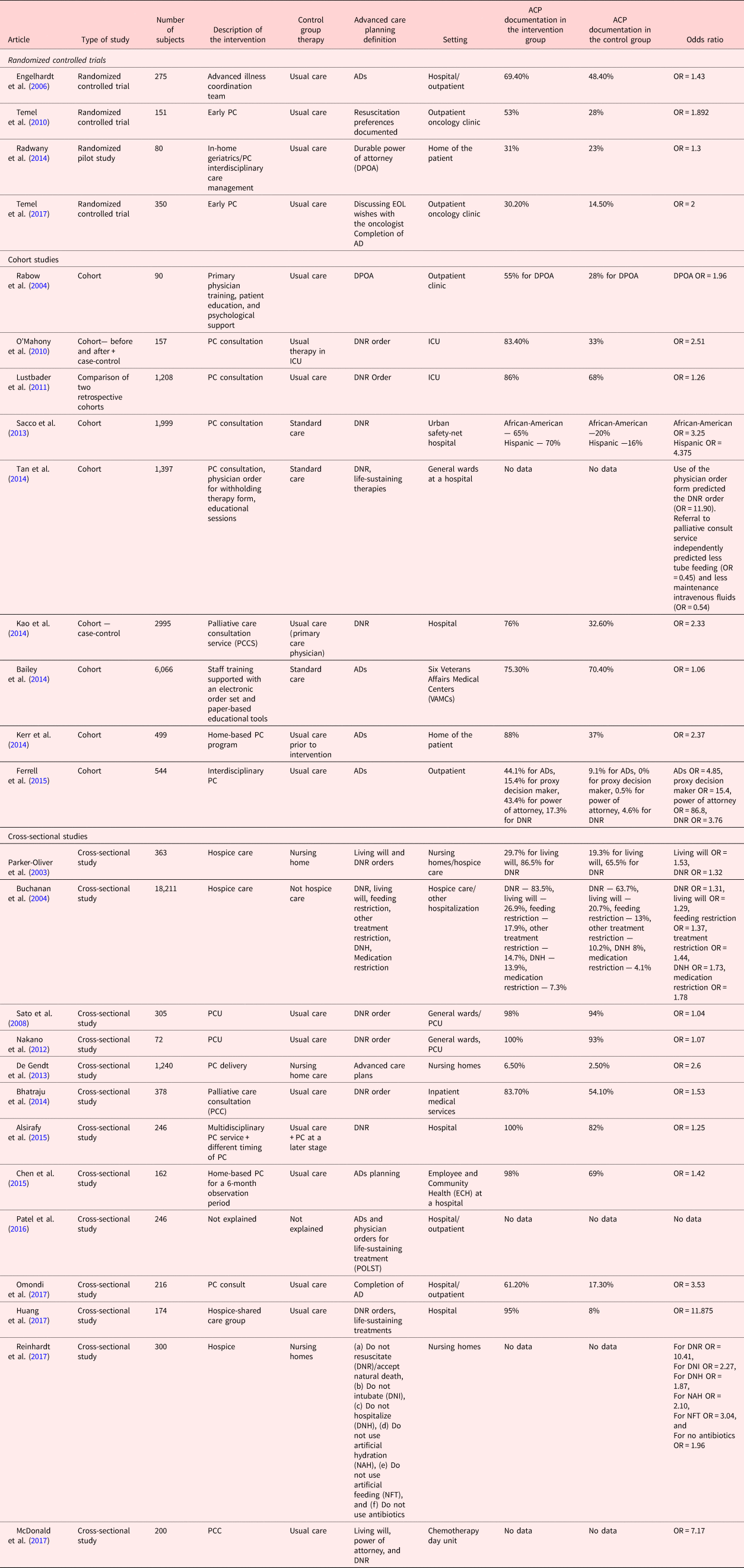
OR, odds ratio; EOL, end of life; PC, palliative care; ICU, intensive care unit; DNR, do not resuscitate; DNH, do not hospitalize; PCU, palliative care unit; AD, advance directives.
Twenty studies used a two-group design in which the experimental group received PC or hospice therapy in addition to standard care, and the control group received standard care only. Two trials compared groups of patients hospitalized in the same facility before and after the implementation of PC. Five trials compared outcomes in the same patient population before and after receiving PC.
Nine trials were conducted in the outpatient setting. We also included 10 trials conducted in general wards and two that were conducted in ICUs.
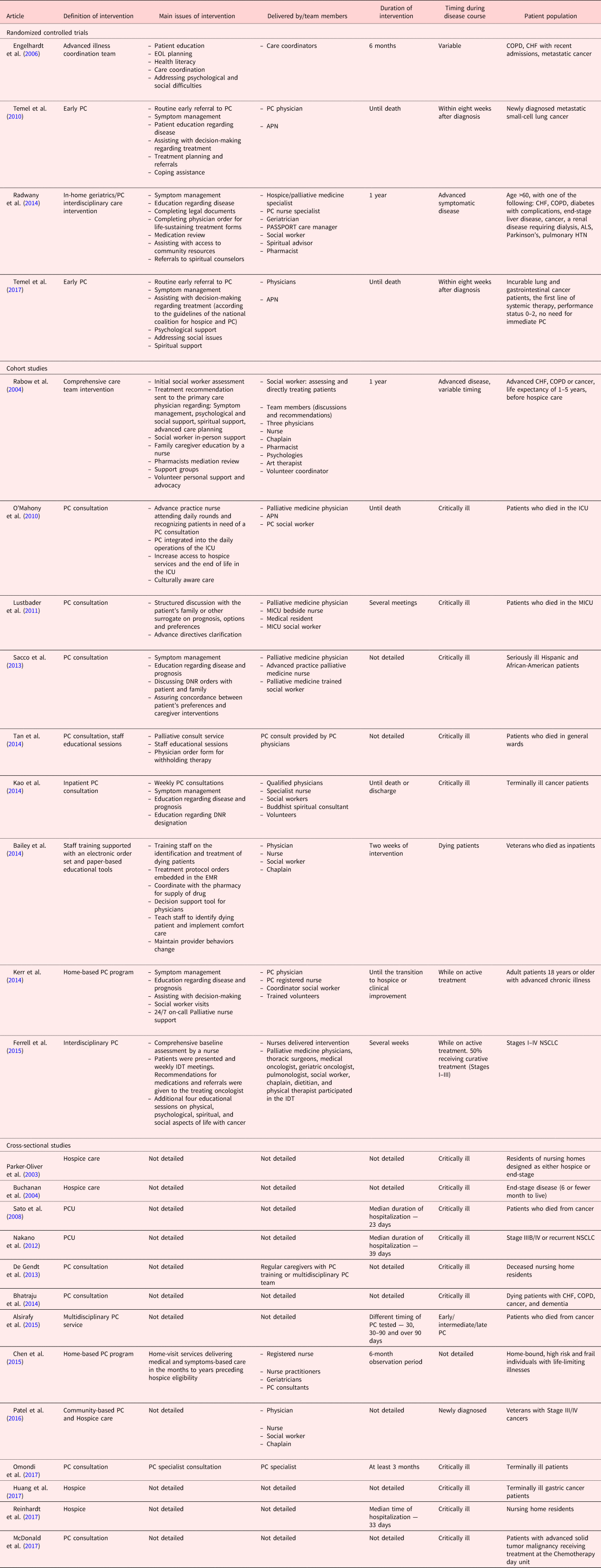
Details of the interventions used in the trials are summarized in Table 3. Interventions included early routine PC consultation (2 trials), PC consultation (13 trials), hospice treatment (4 trials), and a home-based PC program (2 trials). Other trials employed other interventions that did not fit into these categories.
Description of the different interventions

EOL, end of life; COPD, chronic obstructive pulmonary disease; CHF, congestive heart failure; PC, palliative care; APN, advance practice nurse; ALS, amyotrophic lateral sclerosis; HTN, hypertension; ICU, intensive care unit; MICU, medical intensive care unit; DNR, do not resuscitate; EMR, electronic medical records; IDT, interdisciplinary team; NSCLC, non-small-cell lung cancer.
Outcomes evaluated
The outcomes studied were the rate of ADs in seven trials, DNR order in seven trials, and appointing a healthcare proxy/power of attorney in two trials. Other forms of ACP, including a living will, physician orders for life-sustaining treatment (POLST) form, and treatment restriction, were used in other trials.
Study validity and risk of bias
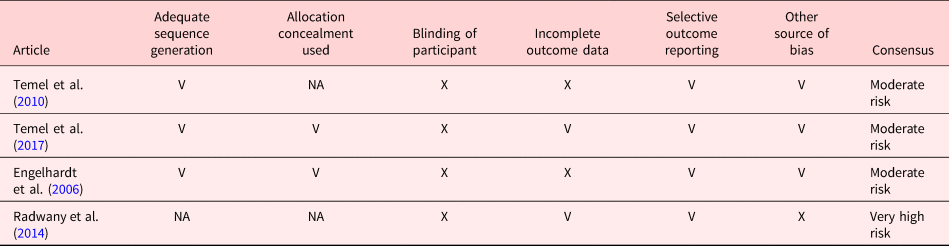
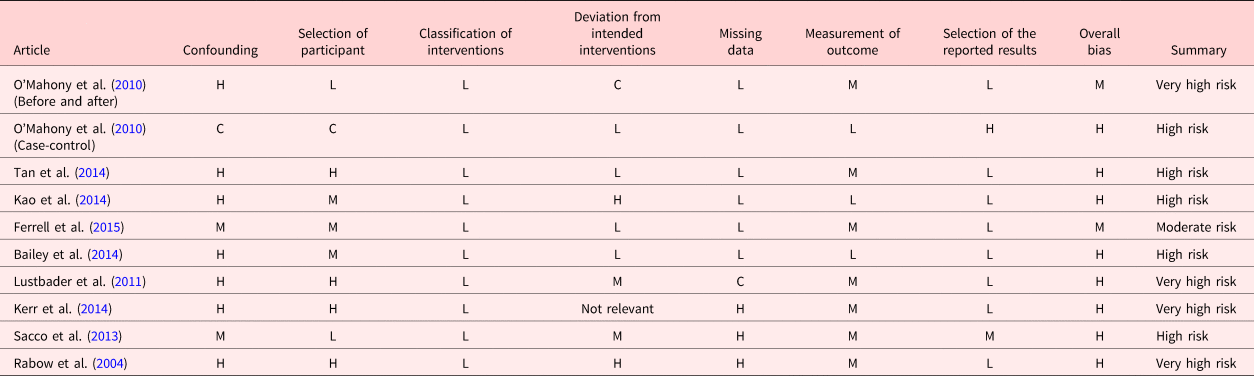
Validity was assessed by all three investigators, and results are presented in Tables 4 and 5. Confounders considered important were the severity of disease, age, and the type of disease. We considered hospice admission, ICU admission, and nursing home residency as important cointerventions.
Assessment of randomized trials studies for validity

X, likely risk; V, unlikely risk.
Assessment of cohort studies for validity

H, high; M, moderate; L, low; C, critical.
Risk of bias was assessed as low–moderate in three randomized trials and very high in one (Table 4). This risk was attributed mainly to lack of blinding and to incomplete data regarding ACP rates. Risk of bias was judged to be high or very high in eight cohort studies, and one cohort study was judged to be at a moderate risk. Bias was attributed mainly to the inability to control for confounders and cointerventions and to the use of a historical cohort as a control group in some trials. Details of validity assessments are presented in Supplementary Appendix.
Cross-sectional studies comparing patients that received PC and patients that did not within the same care facility were considered to be at a high risk of bias due to their design since the interaction between PC and ACP in such trials might result from confounding factors, such as patients' disease status and attitudes, and since the temporal relations between the intervention and the outcome were not clear.
Correlation between PC and ACP documentation
Twenty-five of the 26 trials found a correlation between PC and ACP documentation. One trial by Patel et al. did not find an association between PC and the rate of AD or POLST documentation. This was a cross-sectional study conducted in veterans with advanced cancer in the outpatient setting (Patel et al., Reference Patel, Bhattacharya and Asch2016).
In the RCTs, integrating PC with usual oncology care in the outpatient setting resulted in an odds ratio (OR) of 1.46–2 for documented ACP (Rabow et al., Reference Rabow, Dibble and Pantilat2004; Engelhardt et al., Reference Engelhardt, McClive-Reed and Toseland2006; Temel et al., Reference Temel, Greer and Muzikansky2010, Reference Temel, Greer and El-Jawahri2017) and rates of documented ACP were 30–50% in the intervention group. Higher ORs and rates of documented ACP of 83–98% in the intervention group were recorded in some of the trials conducted in the inpatient setting (Tan et al., Reference Tan, Seah and Chua2014). The year of publication appeared to correlate with OR, and higher ORs were recorded in trials published in recent years. The studies published in 2017 had the highest OR (Huang et al., Reference Huang, Wang and Chuah2017).
Discussion
This study systematically reviewed trials examining the association between PC and documented ACP. In 25 of 26 trials, PC was associated with higher rates of documented ACP. This positive correlation was found in randomized and cohort trials with a robust design (Ferrell et al., Reference Ferrell, Sun and Hurria2015) as well as in trials with a higher risk of bias due to confounding factors such as cross-sectional studies. Of note, studies that employed PC early in the disease course demonstrated a similar association (Temel et al., Reference Temel, Greer and Muzikansky2010, Reference Temel, Greer and El-Jawahri2017), suggesting that the nature of PC intervention and not disease factors explain these findings. The association between PC and ACP rates was seen in the outpatient and the inpatient setting. Higher rates of ACP were seen in some of the trials conducted in the inpatient setting and ICU, probably due to patient and disease characteristics. The association between intervention and the ACP rate tended to more robust in more recent trials, suggesting that ACP consultation is being integrated into the practice of PC teams over time. These findings are in accordance with the goals of PC in oncology as outlined in the recently published ASCO guidelines (Ferrell et al., Reference Ferrell, Temel and Temin2017).
The effect of PC on ACP rates may be attributed to several patient and care provider factors. The PC team may be more inclined to discuss ACP if they perceive ACP as one of their goals and if team members are adequately trained to initiate such discussions. Indeed, ACP was one of the predefined components of the intervention in several trials (Table 3). There may be more time for ACP discussions during PC consultations. Additionally, the relationship and the “therapeutic contract” between patients and their caregivers may be different between the PC and other disciplines. When the focus of care is palliation rather than disease modification, both patients and physicians may emphasize different goals of care more amenable to open discussion regarding the end of care and ACP. In contrast, when the focus of care in is on disease modification in the setting of severe illness, treating physicians may tend to emphasize prolonging life and enhancing optimism regarding prognosis, leaving less room for ACP. Finally, when PC is engaged in reducing the burden and distress associated with physical and psychological symptoms and enhancing supports this may allow patients and their families to be more at ease and more open to discuss ACP (Rand et al., Reference Rand, Banno and Shea2016; Soylu et al., Reference Soylu, Babacan and Sever2016; Thomas et al., Reference Thomas, Jackson and Carlson2019).
This review has several limitations. Studies are heterogeneous in design, treatment setting, patient population, and the exact nature of the intervention. In several studies, the intervention was a PC consultation and the core team consisted of a physician, nurse, and a social worker. The key elements of PC were similar in these trials and included symptom management, patient education, assistance with decision-making, and spiritual and/or psychological support (Engelhardt et al., Reference Engelhardt, McClive-Reed and Toseland2006; Temel et al., Reference Temel, Greer and Muzikansky2010, Reference Temel, Greer and El-Jawahri2017; Sacco et al., Reference Sacco, Deravin Carr and Viola2013; Kao et al., Reference Kao, Wang and Tang2014; Kerr et al., Reference Kerr, Tangeman and Rudra2014; Radwany et al., Reference Radwany, Hazelett and Allen2014). Other trials employed other forms of PC interventions. We could not perform a meta-analysis due to this heterogeneity in trial design. However, in spite of the differences between trials in treatment settings and interventions, results were consistent across trials.
Quality of studies varied. Thirteen of the studies included in this review were cross-sectional studies, and in these studies, it was unclear if PC preceded ACP and whether confounders such as disease severity and patient general condition contributed to the association between PC and ACP. Therefore, these studies were considered to be at a very high risk of bias. Other studies had parallel interventions that could have influenced outcomes, such as a form delivered in order to ease the process of ACP (Tan et al., Reference Tan, Seah and Chua2014). We did not include studies published in non-English literature; however, since results were consistent across 25 of 26 trials, we assume that inclusion of additional trials would not have changed the association found.
Conclusions
In this systematic review, PC interventions were associated with increased rates of ACP. Further studies focusing on the factors associated with ACP rates among patients treated by PC care teams and usual care teams could assist in patient–physician communication on ACP and further enhance ACP rates and patients' autonomy and dignity.
Supplementary material
The supplementary material for this article can be found at https://doi.org/10.1017/S1478951519001068.
Acknowledgments
We thank Professor Nathan Cherny for his enlightening remarks and language editing and for his support.