Introduction
Ethnogerontology focuses on the ageing experiences of older adults of distinct ethnic and racial backgrounds in industrialised nations. This field of study is growing, but its literature is widely distributed across disciplines that use inconsistent terminologies, and some of the more comprehensive studies are still found in the grey literature. In Canada, there is currently no academic programme or advocacy group that focuses on and has consolidated research on this topic. As a result, many such studies are hard to find and health-care decision makers seeking guidance with respect to the health-care needs of this population repeatedly resort to a few more readily accessible sources that are often ill-suited to their knowledge needs. A scoping review of the literature on the health and health-care access of ethnocultural minority older adults aimed to fill this gap. We were especially interested in visible minorities (i.e. non-white and non-Aboriginal) to reflect the predominance of Asian immigrants to Canada since the 1970s (Statistics Canada 2010a, 2010b).
This paper uses an intersectionality theoretical lens to interrogate selected findings of this review in a manner that respects the ontological and epistemological complexity that our interdisciplinary and intersectoral team of academics and knowledge users brought to the table. Specifically, we aim to summarise the state of this literature in Canada, highlighting the forms it takes, what is covered and what is missing. Based on this case study, we then interrogate the consequences of using ethnicity as a descriptive/explanatory category by looking more closely at what the literature is saying about Canada's two largest groups of ethnocultural minority older adults: the Chinese and South Asians. From this examination, we argue that understanding the diverse experiences of ageing both across and within ethnocultural groups requires complex theoretical and methodological approaches that move beyond a focus on differences that seem to be associated with ethnicity and/or culture. In parallel with a growing number of scholars focused on the interrogation of health inequities (e.g. Guruge and Khanlou Reference Guruge and Khanlou2004; Hankivsky Reference Hankivsky2011; Iyer, Sen and Östlin Reference Iyer, Sen and Östlin2008), we suggest that although disparities arising from biological sex differences, gendered experience,Footnote 1 ethnicity and class independently affect wellbeing, the relationship is a dynamic one; it is how these dimensions intersect and compound that affects the health and quality of people's lives as individuals and group members as they age.
Background
The ageing literature reflects its time and place
In Canada, as in other western societies, age is an axis along which inequities travel. There is a large and diverse gerontology literature, but it cannot escape the fact that it is rooted in a society that devalues old age. This inevitably gets reflected in the assumptions and frameworks that permeate this literature. Gerontology blossomed in the 1970s and 1980s as the ageing of European and North American populations, and their implications, became more visible. The substantive content of the early literature was heavily influenced by a bio-medical orientation and thus was much about the illness and costs of the ageing body (Estes and Binney Reference Estes and Binney1989; Neysmith Reference Neysmith1999). Other foci came considerably later. Non-medical social, economic and political issues emerged over time (e.g. Walker Reference Walker1981). Gender was part of this expansion, as were intergenerational concerns around social support and caring (e.g. Ungerson Reference Ungerson1987). Gender–class intersections began to emerge as costs were documented; statistics showing that women lived longer and thus used more health services were juxtaposed to data showing that they also did more of the caring labour (e.g. Dressel, Minkler and Yen Reference Dressel, Minkler and Yen1997).
Theoretical perspectives that incorporate race/ethnicity/culture are not well developed in the ageing literature even today. The three concepts are often used interchangeably and in different ways that vary by country and by discipline (Bhopal Reference Bhopal2004; Mateos, Singleton and Longley Reference Mateos, Singleton and Longley2009). At this moment there appears to be little consensus on how to use the terms even though there seems to be agreement that when this dimension is factored in, it accounts for health disparities (Ford and Harawa Reference Ford and Harawa2010). In this paper, we view race as a social construct. Racialisation or ‘the process through which groups and their practices are identified by reference to visible physical characteristics’ (Johnson et al. Reference Johnson, Bottorff, Browne, Grewal, Hilton and Clarke2004: 255), is of interest as a form of oppression experienced by our target population. Ethnicity and culture are scrutinised in our consideration of intersectional analysis, below.
The country of immigration is more important than that of emigration
A nation's immigration and refugee regulations shape the world of those seeking permanent status there. These forces change over time (usually reflecting policy priorities of receiver countries) and thus cohorts of immigrants differ. For example, in Canada, changing labour force priorities underpin a point system that determines who is accepted, and who is not (e.g. Sharma Reference Sharma2006). Established communities and service availability affect where newcomers settle. Large urban centres have first-, second- and third (plus)-generation families who have been there for varying lengths of time. For instance, in Toronto, Canada's largest city, nearly one-half of the population in 2006 reported belonging to a visible minority group. Of these, 12 per cent were South Asian, 11.4 per cent were Chinese, 8.4 per cent were Black, 4.1 per cent were Filipino, and 2.6 per cent were Latin American. One-half of all immigrants to that city had lived in Canada for less than 15 years. By 2031 visible minorities will make up a projected 63 per cent of the city's population (City of Toronto 2010; Statistics Canada 2010b).
With the exception of Aboriginal peoples,Footnote 2 who are legally defined otherwise, Canada can be defined as a land of immigrants, and in 1971 adopted an official policy of multiculturalism. The focus of Canadian history and its policy on cultural plurality is distinct from and often compared favourably to that of the United States of America (USA), where the ‘melting pot’ philosophy that privileges acculturation prevails. Multiculturalism is not without its critics, however, and some (e.g. Henry and Tator Reference Henry and Tator2006; Kirmayer and Minas Reference Kirmayer and Minas2000) charge that the failure of the Canadian policy to address racism at the institutional level impedes access to health and social care for visible minority groups. For example, Brotman (Reference Brotman2000) interrogated the notion of ‘access’ in the context of a publicly funded organisation providing elder care services in Ontario, Canada. She found a considerable disjuncture between older women's expressed desires regarding access and the way access to services is operationalised in agencies providing services for older people. She argues that multicultural programmes and policies have placed undue emphasis on the individualised attainment of cultural competency and language skills, but have not addressed the ‘institutional structures and power relations marked by racism’ that undermine these efforts and marginalise the women in her sample (Brotman Reference Brotman2003: 209).
In sum, all of these concepts and their debates formed a backdrop to our undertaking a scoping review of what we finally termed ethnocultural minority older adults. As the findings illustrate, research was limited to a select number of the many groups that now make up nearly one-half of the population in the country's major metropolitan areas. It also revealed that the literature remains heavily unidimensional when the focus is on the health needs and service access of this burgeoning sub-population of Canada's older adults, although some authors introduced complexity through a sensitivity to gender.
Methodology
Data collection: a scoping review of the literature
The Canadian Institutes of Health Research, Canada's major health research funding agency, defines scoping reviews as ‘exploratory projects that systematically map the literature available on a topic, identifying key concepts, theories, sources of evidence and gaps in the research’ (Grimshaw Reference Grimshaw2010). Arksey et al. (Reference Arksey, O'Malley, Heslington and York2005) suggest that scoping reviews that aim to identify gaps in the literature and publish on those findings can be viewed as a method in their own right rather than a preliminary step in an ongoing process aimed at producing a systematic review. The intention of our scoping exercise was to generate a topography of the literature and research on health and health care for ethnocultural minority older adults that would invite critical reflection and thereby inform future research directions. The five-stage framework of Arksey et al. (Reference Arksey, O'Malley, Heslington and York2005) provided a useful template. Their approach entails identifying the research question; identifying relevant studies; study selection; charting the data; and collating, summarising and reporting the results. We also conducted a ‘consultation exercise’ that they recommended as an additional parallel element to inform and verify our findings.
Based on our familiarity with this field of literature, we knew that we would have to cast our net wide in order to capture the diverse contributions to this field, and to reflect our interests in the intersecting influences of social determinants on both health and access to services for this population. In brief, our five-part research question sought to understand the population health patterns, health risks and associated health outcomes, unmet health needs, utilisation of health-care services, and engagement in health promotion and disease prevention activities specific to older visible ethnocultural minorities, i.e. those most likely to be subjected to the ‘processes of differentiation’ or ‘othering’ (racialisation, gendering, sexualisation, ethnicisation, etc.) that our intersectionality framework seeks to interrogate (Dhamoon and Hankivsky Reference Hankivsky2011; Johnson et al. Reference Johnson, Bottorff, Browne, Grewal, Hilton and Clarke2004). To this end, we also identified the need to explore within each of these questions: (a) the influence of beliefs, attitudes and values with respect to ‘normal’ ageing, health, food, exercise, disease, family relations and social networks, help-seeking, etc. held by the target population; (b) how their experience and status as immigrants (trauma, role changes, legal entitlements, discrimination, etc.) influence this; (c) the effect of health status on utilisation; and (d) how each factor is influenced by social determinants (gender, socio-economic status, country of origin, location of residence in Canada, etc.). The research questions thus ensured that health was broadly defined in our study.
The identification and selection of relevant studies was an iterative process that entailed considerable cross-checking of abstracts between our research assistant and two or more team members. Using abstracts as the unit of analysis for this study is consistent with scoping review methodology (Arksey et al. Reference Arksey, O'Malley, Heslington and York2005) and necessary in light of the considerable breadth of the search. While we recognise that this limits what can be confidently inferred about the content of these articles, our multi-sectoral team agreed that abstracts were an important unit of analysis to consider because their content often determines whether the reader goes on to retrieve the full article. Decision makers with limited time and money access only those reports that are obviously relevant to their needs (Black and Weiler Reference Black and Weiler2008), hence abstracts are pivotal to effective knowledge translation and research uptake. This said, full articles were accessed where no abstract existed, and team members often referred to the full article in order to ascertain the eligibility of a study.
Different perspectives on the relevance of the articles were introduced and debated by members of our interdisciplinary and intersectoral team, which included academics from the disciplines of anthropology, sociology, social work and health services research, as well as knowledge users from provincial and municipal governments (health, seniors services and social planning), the multicultural settlement sector, ethnospecific long-term and community care, and psychiatry. This process also clarified the scope and definition of our search terms.Footnote 3
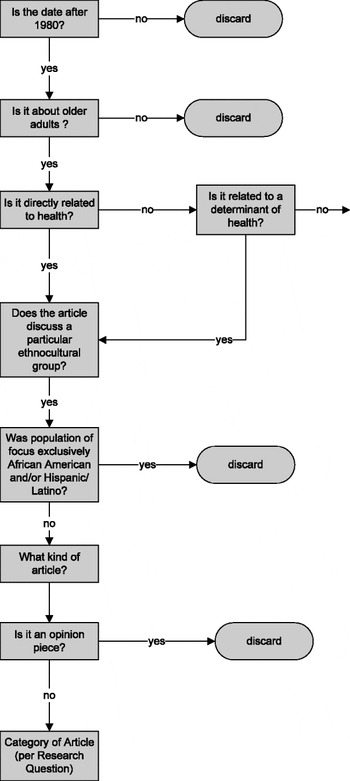
Our search strategy reflected the three dimensions of our field of interest: ethnicity, health, and chronological age. We were specifically interested in visible ethnocultural minority groups that had settled in Canada and countries similar in their composition of immigrants and health-care delivery systems, particularly the United Kingdom (UK), Australia, and New Zealand, and to a lesser extent, the USA. We limited our search to post-1980 published and grey research literature written in either English or French, but most were in English (see Figure 1).
Flow chart of exclusion process to identify eligible articles.

Our inclusion/exclusion criteria were initially applied to the lead author's personal database of 634 references on ethnocultural minority older adults, which helped us to identify the most salient keywords to use for the external search. This included an Ebsco combined search of multiple databases (Ageline, CINAHL, Medline, Pubmed),Footnote 4 the New York Library of Medicine – Grey Literature Report, SIGLE, UMI Dissertation services, and hand-searching references and key journals. Given our focus on Canada, we employed additional strategies such as focused searches of grey literature (e.g. Amicus Collections CanadaFootnote 5 for Canadian theses, and publications from the Canadian Ethnocultural Council, MetropolisFootnote 6 and other agency websites) that were not employed with the other countries. The Canadian data are therefore relatively more complete.
It was necessary to simultaneously expand some criteria while imposing constraints on others to ensure that we captured relevant articles while remaining within the limitations imposed by the resources and time available for the project. For example, relatively few articles focused on individuals 65 or older exclusively. In the discussion of these preliminary results, we agreed that conventional demarcations of ‘old age’ (i.e. the chronological marker of 65) may not be sacrosanct as a determinant of health status or health-care utilisation or access, relative to multiple intersecting determinants for this population. Ultimately, we agreed to include articles falling into one of three categories with respect to age: (a) the study population was aged 65 and older exclusively (13.1%); (b) the study population was ‘mixed’, i.e. it included a range of ‘older adults’ other than those aged over 65 (e.g. 55+) or a sub-group of older adults was clearly identified as part of a larger sample (36.3%); (c) the age of the population was not specified, but the group being referred to was an older adult group (e.g. using terms such as ‘senior’, ‘older adult’, ‘frail elderly’, etc.) (50.5%). Had we not made this decision to liberalise the inclusion criteria for age, the majority of relevant articles would have been excluded from our scope.
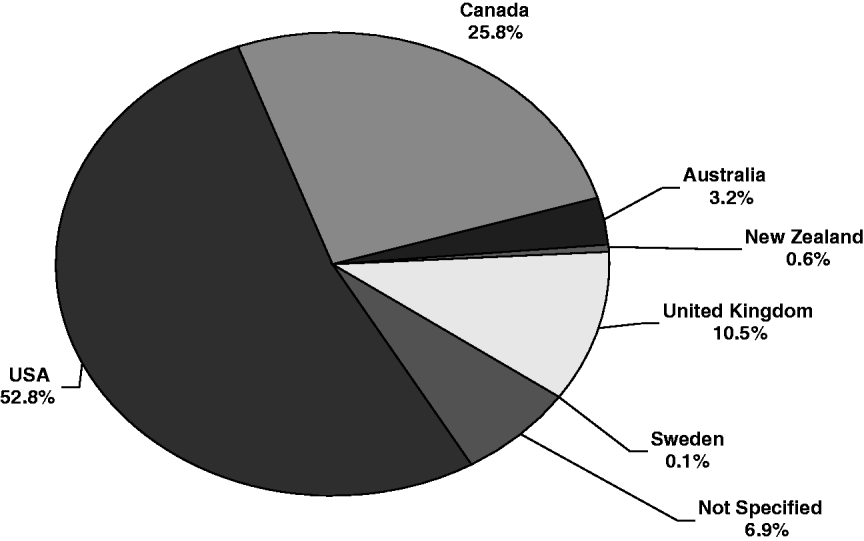
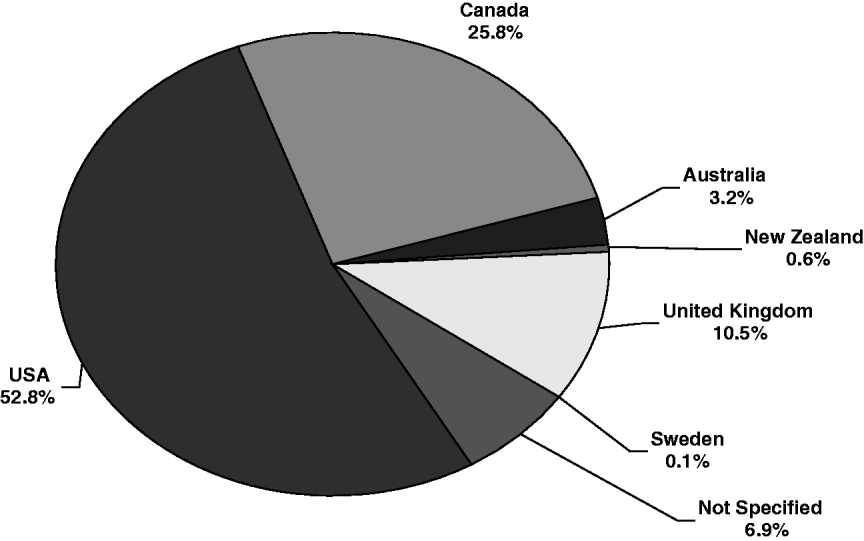
We intended to use and derive the meaning of ‘ethnocultural’ (and its components, ‘ethnicity’ and ‘culture’) as presented within the literature because as Bhopal (Reference Bhopal2004: 445) and our own search experiences have shown, ‘ethnicity is replacing the scientifically limited and somewhat discredited term race in the scientific literature’. The exception is the US literature on the impact of race on African Americans and Latinos (Kirmayer and Minas Reference Kirmayer and Minas2000). These groups differ from African Canadians and Latin Americans who arrived in Canada for very different historical reasons (e.g. Attewell, Kasinitz and Dunn Reference Attewell, Kasinitz and Dunn2010; Durand and Massey Reference Durand and Massey2010). For this reason, and because of the overwhelming volume of such references, we also decided to filter out studies that referred exclusively to African American and Hispanic populations in the USA. Our sample nonetheless contains 120 studies that refer to these populations because they appear alongside the groups of interest to our review, e.g. Asian Americans. Similarly, a large number of US articles focusing on barriers to health-care access resulting from a lack of universal health insurance in that country were also excluded.Footnote 7 Despite this, the majority of articles retrieved for the review were from the USA (see Figure 2). This is consistent with its large population base which, at over 313 million, is more than five times that of the UK and nine times that of Canada (Central Intelligence Agency 2011).
Distribution of articles by country in which research was conducted.
Overall, 3,300 abstracts were reviewed, of which 816 met our eligibility criteria. While more than 70 per cent of the references were articles in peer-reviewed journals, we also included books and book chapters, theses and dissertations, and unpublished research reports, but not opinion pieces. Articles were located in a total of 192 journals; however 56 per cent of those articles were published in journals that appeared only once on our list. The Journal of Cross Cultural Gerontology alone had published more than 20 articles that met our criteria, and only six more, spanning diverse disciplines, had published more than ten articles on the topic.Footnote 8
In order to accurately chart and summarise the data, we made use of Atlas.ti 5.2.0, commonly used to code and organise qualitative data into inductive categories. The titles and abstracts of eligible articles were imported and each was coded along multiple dimensions so as to capture who and what was studied, where and in what journals. The coding structure was initiated by the research assistant, but was shaped to a great degree by team members who engaged in several in-depth discussions and provided ongoing feedback as to the relevance and composition of the various dimensions. Ultimately, each source document was coded along each of the following dimensions: research (sub)question; immigration (immigrant category and length of time in the country); gender; ethnicity; faith; country of study; health condition/situation; intervention/service; and other social determinants of health. We have used these categories and their co-occurrences to explore the data set in numerous ways, and considerable potential remains to explore it further.
In addition to a detailed report submitted to the funder on the methodology and findings of the review (Kozak, Koehn and Khamisa Reference Kozak, Koehn and Khamisa2011), we have also generated annotated, indexed bibliographies on the Canadian sources, as well as one each on South Asian and Chinese older immigrants internationally. Within the Canadian subset, we identified groups of abstracts relating to topical areas that matched the foci or expertise of our team members. Each member was asked to review their group of abstracts and report on the key messages that they communicated. This exercise provided some insight into how well the current literature meets the knowledge needs of diverse knowledge users, including policy makers and/or how clearly key messages from this literature were communicated through the abstracts.
Finally, we conducted a consultation exercise, taking our summaries of key messages emerging from the Canadian literature to groups of ethnocultural minority older adults and those who work closely with them or advocate for their needs in multicultural settlement and social service agencies in Toronto and Vancouver. These groups were asked to provide feedback on: (a) if and how the literature reflected their lived experiences or contradicted them; and (b) topics they viewed as important that were missing in the literature. Each of these strategies informed our impression of the shape and content of the literature on the health and health-care access of ethnocultural minority older adults in Canada relative to multiple dimensions of difference. Many of the 183 Canadian sources were already familiar to this article's authors, and others were reviewed in preparation for writing this paper.
Analysing the literature: seeing older adults through an intersectionality lens
Our analysis of the sources identified by our scoping review is informed by an intersectionality approach which argues that people experience the effects of a country's social inequities as simultaneous interactions between multiple dimensions of social identity (e.g. gender, age, sexual orientation, visible minority and immigration status) that are contextualised within broader systems of power, domination and oppression (Hankivsky Reference Hankivsky2011; Schulz and Mullings Reference Mullings2006: 308). Responding to ‘how inequities are experienced’ by individuals and communities in different social locations characterises the history of intersectionality theory development (Denis Reference Denis2008), but age is rarely included in such analyses (Hulko Reference Hulko and Hankivsky2011). Unlike multiple/triple jeopardy, intersectionality is not an ‘additive linear model’. Rather, its analysis ‘usually requires the use of “interaction effects” – or “multilevel,” “hierarchical,” “ecological,” or “contextual” modeling – all of which introduce more complexity in estimation and interpretation’ (McCall Reference McCall2005: 1787–8; Winker and Degele 2011). From this perspective, power imbalances and discrimination, as well as positive health-care experiences, are understood as unique to each individual's constellation of intersecting identities, social roles, and the broader social and political contexts in which they exist (Dhamoon and Hankivsky Reference Hankivsky2011; Guruge and Khanlou Reference Guruge and Khanlou2004). These intersections are at play at each of the micro, meso and macro levels; that is, relative to our identities, to our interactions with others in different socio-cultural contexts, and at the broader societal level wherein norms and values are entrenched as policies and laws.
Models of intersectionality are diverse and often case-specific. The more general metaphor of a matrix captures ‘the idea that systems of domination are mutually dependent but analytically distinct’ and facilitates the necessary examination of the interactions of categories of difference as well as the interlocking and mutually constructed systems of domination that constitute the broader context within which they must be considered (Dhamoon and Hankivsky Reference Hankivsky2011: 28). Intersectionality is nonetheless practised in at least three ways, according to McCall (Reference McCall2005). The first of these – anticategorical complexity – questions the ‘givenness’ of categories of difference such as race and gender, or health-related conditions such as ‘addict’ or ‘homeless person’ (e.g. Browne, Varcoe and Fridkin Reference Browne, Varcoe, Fridkin and Hankivsky2011). Such categories should be understood as complex social constructions within which specific manifestations may be infinite or at least range along broad continua. Importantly, it entails a shift away from reducing people to single static identities rooted in Cartesian dualisms or dichotomies such as male/female, black/white, or ethnic/non-ethnic that underlie ‘othering’.
Thus we must begin by interrogating the categories central to our search. Iliffe and Manthorpe (Reference Iliffe and Manthorpe2004) suggest that ethnicity – when defined as particular shared cultural characteristics – may not have great explanatory power as an analytical category or determinant of health, and may represent a category fallacy. They suggest instead that immigration, charter language ability, health beliefs and socio-economic status are more salient determinants of health, but tend to be subsumed under the concept of ethnicity. Similarly, the notion of culture is often viewed uncritically, particularly in the health services literature on ethnocultural minorities. Differences in health outcomes between ethnic groups often seem to be attributed to cultural differences (e.g. Jones, Chow and Gatz Reference Jones, Chow and Gatz2006). While this is probably not the authors’ intention, it speaks to a common trend critiqued by Kleinman and Benson (Reference Kleinman and Benson2006) of simplistically equating culture with ethnicity, nationality and language, and treating it as static and homogeneous. While the definition of culture is hotly debated, we agree with these authors and Wedeen (Reference Wedeen2002) that it does not refer to essential identifiers of a group; rather, it is a process of meaning-construction wherein people's practices – which are embedded in political, economic and social realities – operate in a dialectical relationship with systems of signification. Culture is defined in reference to these practices and vice versa. This view of culture is consistent with the underlying premise of intersectionality that our realities are both constructed yet constrained by broader systems of oppression. These examples demonstrate that no category can be reduced to a single axis of difference.
A second type of intersectional analysis – intracategorical complexity (McCall Reference McCall2005) – zeroes in on a social location at the intersection of single dimensions of multiple categories. This typically entails analysis of a single social group at a neglected point of intersection of multiple master categories or a particular social setting or ideological construction, or both, and is characteristic of much ethnographic work on ageing (e.g. Sokolovsky Reference Sokolovsky2009). Thus while these studies question ‘the homogenizing generalizations that go with the territory of classification and categorization’, they do not reject them altogether; most important is the ‘process by which [categories] are produced, experienced, reproduced, and resisted in everyday life’ (McCall Reference McCall2005: 1783). For example, Hulko's (2011) study of experiences of dementia found that the label of dementia was resisted in different ways relative to social location. More privileged participants were more likely to view dementia negatively whereas those who were more socially marginalised tended to dismiss its significance.
The third type of intersectional enquiry that McCall describes speaks to efforts to employ this approach in quantitative studies. Intercategorical complexity is thus concerned with ‘the complexity of relationships among multiple social groups within and across analytical categories’ (McCall Reference McCall2005: 1786). Enquiries of this nature begin with the supposition that relationships of inequality exist between groups. Social determinants of health, such as age and ethnicity, are viewed as anchors in understanding inequities, but they are not fixed in their relationship to outcomes because they interact with other determinants as well as biological factors in different contexts (Kobayashi and Prus Reference Kobayashi, Prus and Hankivsky2011; McCall Reference McCall2005). Categories are understood to be imperfect and ever-changing, but the necessity of adopting them provisionally is accepted in order to proceed with cross-sectional analyses that seek to explicate the relationships among them. Here, relationships of inequality are the focus of rather than the background to the analysis. Analyses of this nature were not identified in our review but new contributions are beginning to be published, and will be discussed below.
Findings
Who's researched and who's not?
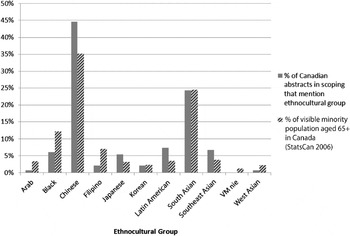
Taken together, the Chinese and South Asian populations – the two largest groups of immigrants to Canada since 1991 (Statistics Canada 2010a) – account for two-thirds of post-1980 publications. Research on older adults of Chinese origin accounted for the majority (almost 45%) of the Canadian studies that we identified, which exceeds their share of the visible minority older adult population (see Figure 3). This is due, in part, to the productivity of researchers of Chinese Canadian origin interested in this population. South Asian sources accounted for almost one-quarter of the Canadian studies, which is comparable to their share of the visible minority older adult population. Upon more detailed examination, however, coverage of these two groups is more partial than these figures imply.
Percentage of abstracts that mention an ethnocultural minority group compared to Canadian visible minority population aged 65 + .Note: Articles may refer to more than one ethnic group. VM nie is used by Statistics Canada (2006) to denote ‘Visible Minorities not included elsewhere’.

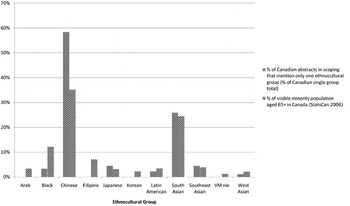
Figure 3 requires careful interpretation. It can visually suggest a more substantive presence of an ethnocultural minority group in the literature than in fact exists because any mention of an ethnocultural group is reflected here, even if their presence in the study is minimal. When we limit our consideration to abstracts focusing on a single ethnocultural population, wherein there is ostensibly space to attend to internal heterogeneity and the effects of intersections between multiple axes of difference, some groups disappear entirely (see Figure 4). Thus we identified no Canadian articles that focused exclusively on Arab, Korean or Filipino older adults, despite the fact that Filipinos are now the fourth most populous immigrant group in Canada after ‘blacks’ in third place (Statistics Canada 2010a). The paucity of articles referring to ‘black’ older adults is also notable both relative to their 2006 share of the older adult population, depicted in Figures 3 and 4, and in light of their increasing numbers since that time. The relative proportions of articles on Latin American and Southeast Asian older adults are also considerably smaller in Figure 4 than in Figure 3.
Percentage of abstracts that mention only one ethnocultural minority group compared to Canadian visible minority population aged 65 + .Note: VM nie is used by Statistics Canada (2006) to denote ‘Visible Minorities not included elsewhere’.

Gaps in the literature
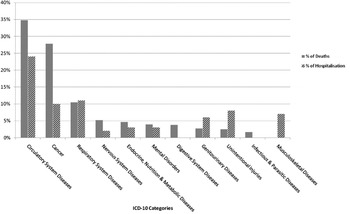
Our search also examined the focus of the published literature, exploring what areas are represented in the articles: which were popular and where were the silences? Viewing the abstracts relative to our coding framework we identified several gaps and opportunities for future research relative to the disease categories covered in the literature. The disease codes, as with all others, emerged inductively from the abstracts. Subsequent to coding, however, we decided to compare the extent to which various disease categories have been researched and reported (number of abstracts) relative to the ten categories used in the International Classification of Diseases (ICD) and clustered our codes accordingly. The ICD-10 is a well-established framework with which to explore health conditions relevant to older Canadians in the general population vis-à-vis the Canadian literature on ethnocultural minority older adults. Figure 5 provides a comparative baseline of the leading causes of death and hospitalisation of Canadians aged 65 and above.
Leading causes of death and hospitalisation of Canadians aged 65 + .Note: ICD-10: International Classification of Diseases.Source: http://www.phac-aspc.gc.ca/publicat/lcd-pcd97/index-eng.php.

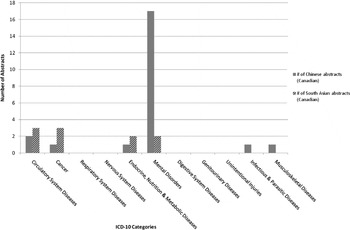
By comparison, Figure 6 starkly illustrates the gaps in research on Chinese and South Asian older adults in Canada. Maintaining the order of the leading causes of death and hospitalisation along the x-axis, we plotted the number of abstracts referring to each disease category for each of the two ethnocultural groups.
Number of Canadian abstracts for Chinese and South Asian older adults classified according to International Classification of Diseases (ICD-10) categories.

Predispositions to certain diseases exist among particular groups. For example, foreign-born populations from South Asia experience higher rates of diabetes mellitus and heart disease (Gupta, Singh and Verma Reference Gupta, Singh and Verma2006; Raymond et al. Reference Raymond, Varadhan, Reynold, Bush, Sankaranarayanan, Bellary, Barnett, Kumar and O'Hare2009). And these patterns are often gender-specific with different patterns than those commonly seen in the West – for example, South Asian women are at a higher risk than men for developing heart disease (Fikree and Pasha Reference Fikree and Pasha2004) – yet we see very little research on either Chinese or South Asian older adults that reports on any of the leading causes of death or hospitalisation in the Canadian literature. One apparent exception is the literature on mental disorders for the Chinese population, particularly that on rates of depression, which were found to be higher than those for Canadian older adults overall (Lai Reference Lai2000a, Reference Lai2000b, Reference Lai2004a). On closer examination of the full articles, however, mental disorders were not the main focus of many of these studies, but were referenced only in general terms. The mental disorders category included inductive codes that captured alcohol consumption, dementia, depression, post-traumatic stress disorder and general mental health. Articles are thus spread thinly across these diverse topics. Having reviewed the abstracts and some of the articles included in this category, cross-cultural psychiatrist Dr Soma Ganesan concluded that there is no clear understanding as to whether cultural factors are mediating or moderating variables in global mental and physical health. With no clear mechanism identified, it is difficult to develop or implement policy for culturally responsible mental health care for immigrant older adults, their families and/or their care providers. Thus, even in an area in which relatively more research has been done, we do not know enough about the intersections among various axes of inequality and the ways in which these factors influence the health and health-care access of ethnocultural minority older adults.
Missing: intersectional analyses of the literature
In seeking to understand if and how an intersectional analysis was actually present, we reviewed abstracts and often the full-text articles. We probed, for instance, whether ethnocultural attributes were used to explain variations in phenomena such as diabetes, or if the disparities experienced by certain ethnocultural groups were the starting point, with structural and environmental factors examined to try to account for differences.
Overall, two dominant patterns emerged along methodological lines. The first was seen in the quantitative literature in which variables such as gender, socio-economic status and other social determinants of health are routinely explored. The problem here lay with the integration of the dimensions of age and/or ethnocultural status in ways that meaningfully contributed to the focus of our study. For example, considerations of the impact of ethnicity on health-care utilisation rarely factored in the differential effects of age; although the sample may have included some older adults, there was little or no analysis of age-based differences. Similarly, studies focusing on age differences rarely incorporated the dimension of ethnocultural identity. The possibility of considering the intersection of these two axes of difference with other social determinants of health is thus limited to a relatively small number of articles where this overlapping consideration is explicit.
In the qualitative literature on barriers to health-care access, some studies problematically use culture as both an explanation of the issue and as the route for addressing it (e.g. Acharya Reference Acharya2004; Filinson Reference Filinson1992; Masi and Disman Reference Masi and Disman1994). Culture in these studies is often treated as static, failing to account for the changing dynamics in such populations. This approach is especially apparent in the cultural competence and health promotion literature that tends to focus on change in the beliefs and behaviours of individual care providers or care recipients (e.g. Choudhry Reference Choudhry1998; Dhaliwal Reference Dhaliwal2002; Johnson and Garcia Reference Johnson and Garcia2003). While the development of community capacity that many of these initiatives seek to engender is important, they do not address the underlying organisational or policy issues that support the inequities that shape the experiences and capacities of ethnocultural minority older adults.
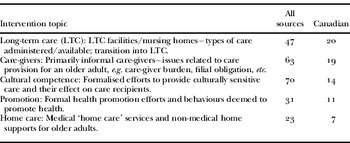
Closer examination of the Canadian abstracts coded as ‘interventions’ provides insights into the implications of these limitations. This group of codes includes both services as well as preventive or care approaches (e.g. cultural competency, health promotion) and services offered both formally (e.g. palliative care, home care) and informally (e.g. care-giving by family or friends). The same five ‘intervention’ topics emerged as most commonly researched both internationally and in Canada, although not in the same order (see Table 1). These codes are not mutually exclusive; abstracts were tagged with multiple codes where appropriate. Here we focus on the Canadian references coded under any of the following five topics: long-term care, care-givers, cultural competence, promotion and home care.
Top five ‘intervention’ topics in the international and Canadian literature

Five quantitative studies and one qualitative study established that ethnocultural minority older adults in general or specific groups, e.g. Chinese Canadians, are not adequately represented among users of services such as long-term care facilities (Wasylenka Reference Wasylenka2004) or home care (Lai Reference Lai2004b; Majumdar, Browne and Roberts Reference Majumdar, Browne and Roberts1995). When variables other than ethnicity were considered as explanations for this low utilisation, they were simply reported as predictors for service use. Ignoring the underlying power dynamics associated with social determinants of health such as gender, time since immigration, country of origin or education, and the compounding effects of these intersections among them, leaves us wondering why and how the variables identified (if any) influence utilisation.
Abstracts included within the top five intervention code groups also attest to the paucity within the Canadian health-care system of linguistically and culturally appropriate services that meet the needs of an ethnoculturally diverse ageing population (e.g. Hossem Reference Hossem2009; Lai and Chau Reference Lai and Chau2007; Mullings Reference Mullings2006). Some research has placed specific emphasis on culturally charged components of the care experience such as food (Forster-Coull and Koehn Reference Forster-Coull and Koehn2001) and language and communication styles (e.g. Saldov and Chow Reference Saldov and Chow1994), or explored the cultural appropriateness of models of care (e.g. the Eden Alternative: Fung Reference Fung2006). Relatively few researchers (Brotman Reference Brotman2000; Koehn Reference Koehn2009; Mullings Reference Mullings2006) have spoken to the intersecting oppressions experienced by visible minority older adults, especially women, which influence their admission to and shape their quality of life in long-term care facilities. Culturally targeted long-term care facilities are positively evaluated as meeting the needs of ethnocultural minority older adults (Fung Reference Fung2006; Kromer Reference Kromer2004; Pereira, Lazarowich and Wister Reference Pereira, Lazarowich and Wister1996). This solution nonetheless requires sufficient community capacity, which may not be available to smaller communities or even sub-populations within communities, as differentiated by religion, for example (van Dijk Reference van Dijk2004). Also noted are the health-care system's (inadequate) efforts to address through appropriate outreach and health promotion programmes a lack of knowledge among some immigrants and their family care-givers of the availability of relevant services (e.g. Koehn Reference Koehn2009; Sadavoy, Meier and Ong Reference Sadavoy, Meier and Ong2004; Sanghera Reference Sanghera1991) or of specific illnesses, such as dementia (Fornazzari et al. Reference Fornazzari, Fischer, Hansen and Ringer2009). Thus while multiple variables are often recognised, they are poorly understood in terms of their contribution to inequities in health or health-care access, are often considered independently of one another rather than interactively, and are rarely situated in the context of systems characterised by power imbalances and discrimination.
Discussion
Categorical complexity
Categories, although useful and necessary for organising complex phenomena, hide important differences even as they highlight others. For instance, the categories used in Figure 3 to classify ethnocultural minority older adults tend to reflect the immigration histories and policies of the countries in which people settle. They hide the fact that each group of immigrant older adults, as defined by Statistics Canada, is extremely heterogeneous. For example, Chinese Canadians hail from many countries, including China, Hong Kong, Taiwan or Macau. Others emigrate from Chinese Diasporas in Malaysia, Vietnam, Singapore, etc. Similarly, South Asians may arrive directly from India, Pakistan, Bangladesh or Nepal, while others emigrate from South Asian Diasporas in countries such as Uganda, Tanzania, Malaysia and the UK. In both cases these immigrants also differ in many of the determinants of health, such as socio-economic status and gender, as well as the length of time they have been in the country of settlement (some are Canadian-born whereas others have migrated late in life). In addition, they arrive as different types of immigrants: a relatively small number are refugees, whereas the majority arrive as economic or family-class immigrants. The importance of recognising this heterogeneity was underscored when we shared the preliminary results of the scoping study with community groups. In the ‘Chinese’ community, sessions were held in Cantonese and Mandarin. Strongly apparent in these discussions were the different ‘cultures’ of both groups and how these resulted in very different health practices and service use patterns.
Further, similar groups of immigrants are categorised differently in different receiver countries (Bhopal Reference Bhopal2004). Thus, in Canada, we refer to Chinese Canadians and Indo-Canadians; in the USA, both groups fall under the rubric of ‘Asian and Pacific Islanders’. In the UK, they are denoted as ‘Chinese’ and Asian, respectively, with the latter term reserved almost exclusively for South Asians. Recognition of the diversity within these populations, both in terms of religion and country of origin, is most meticulously and consistently recognised by British researchers. In Australia, Chinese and South Asians are typically subsumed under the broad umbrella of people of Non-English Speaking Background (NESB).
Such ‘lumping and splitting’ conventions, borne of the socio-political realities of colonisation and migration, complicate systematic literature searches and strongly influence the shape and content of each nation's research interests and agendas (Bhopal Reference Bhopal2006; Kirmayer and Minas Reference Kirmayer and Minas2000). While the theoretical and methodological orientations of researchers and the research questions themselves influence decisions to combine or isolate groups, so too do national differences in the naming and categorisation of one ‘group’ relative to another. The nature of the data collected is also salient here. Especially influential is Statistics Canada's tendency to under-sample ethnocultural visible minority Canadians in national survey research, yielding under-representations of these populations in the large datasets. As a result, different ethnocultural groups are commonly clustered into generic categories (e.g. ‘Asians’) to facilitate ‘meaningful’ secondary data analyses.
Methodological conundrums: where's the data?
The application of an intersectionality perspective in this domain poses a number of significant challenges for quantitative researchers. The challenge is largely one of operationalisation. Specifically, data extracted from secondary data sources like the Canadian Community Health Survey or the National Population Health Survey are limited because the variables that these datasets yield have been constructed from close-ended survey questions asked at one point in time. The selection and analysis of this data is thus quite narrow and static. For example, questions that are used regularly as ‘cultural markers’ in ethnicity and health studies in Canada probe place of birth (an indicator of immigration status), ethnic group belonging (indicator of ethnic identity), and charter language ability (an indicator of acculturation status) cross-sectionally (Kobayashi, Prus and Lin Reference Kobayashi, Prus and Lin2008).
Efforts to address the inherent complexity of the inter-relationships between markers of difference like ethnicity, socio-economic status, gender and immigration status are therefore limited when one-dimensional proxies are the only options available. To truly understand the compounding influence of the intersections of these markers on health and health-care access requires the use of meaningful interaction terms in multiple regression models. Accounts of this approach have only been published since the completion of our scoping review. For example, Kobayashi and Prus (Reference Kobayashi, Prus and Hankivsky2011) examined the healthy immigrant effect using logistic regression to model health for adults (45+ years) across immigrant/visible minority groups, and Warner and Brown (Reference Warner and Brown2011) scrutinised intersections of race/ethnicity and gender on the age trajectories of disability among older adults.
Until recently, primary data collection has often been the only real option to researchers interested in applying intersectionality theory to critical examinations of health in vulnerable populations. This requires considerable input of time and money to ensure the collection of ample and appropriate data over time. We therefore suggest that an intersectionality approach will often require research that uses a mix of methodologies and research designs.
Silenced by the research record: invisible immigrants and stories lost
What is missing in the literature is as telling as what is included. For instance, we need to push obvious interpretations such as the long time presence or relative size of groups when accounting for their presence or absence in the research literature. Chinese immigrants, whether from the mainland, territories or Taiwan, have consistently scored high on the Canadian point system in terms of financial and educational criteria. Thus, the larger community has the security and the capacity to develop businesses and services to meet the needs of its ageing population. We juxtapose this situation to those categorised as Black. In this category reside Afro-Canadians who have lived here since the American Civil War, immigrants from the Caribbean who may have come directly (many women as domestics) or indirectly through England, and others who are refugees from a number of African countries. They have little in common, although many live on very low incomes. They also face individual and institutional discrimination and have few intra-community resources to advocate for their priorities. One can posit many reasons for the dearth of studies here, but systemic racism needs to be factored into any explanation (Henry and Tator Reference Henry and Tator2006; Mullings Reference Mullings2006).
Conclusions and recommendations
In summary, the application of an intersectionality perspective to the study of health among ethnocultural minority older adults underscores the importance of understanding the multi-dimensional nature of health inequities in vulnerable populations. This approach compels us to move beyond an analysis of one or two possible ‘predictors’ to an exploration of the influence of a number of markers of difference such as age, gender, socio-economic status, ethnicity/race, marital status and sexual orientation, to name a few. Ultimately, this is necessary if we are to acknowledge the complexity inherent in the ‘production’ of health among ethnocultural minority older adults. There is recognition in the literature of the need to apply an intersectionality lens when examining the health and health care of immigrant communities. However, this seems to be honoured more in principle than in how research is undertaken, or at least how the results are written up. One could interpret this as reflecting a conscious choice made by researchers to emphasise in their work those dimensions of difference that they deem most critical to understanding the needs of and/or barriers encountered by various sectors of the population. However, it is equally plausible that the state of the literature reflects a focus on those problems that press the health-care system and institutional priorities shaped by their own desire to find ways to alleviate some of the pressure. Health-care issues do take different forms in different ‘ethnocultural communities’, such as the Chinese and South Asian groups have detailed above, but other social determinants of health such as employment history, length of time in the country, sponsorship status, income and housing options, many of which impact on all Canadians, are also relevant and influence the options available to individuals.
To move the debate forward we suggest that it is important to consider the meaning attached to and the significance of categorising a group or an individual as belonging to an ethnocultural group. Immigrants are constantly adapting cultural practices to their environments. For instance, what would be the effect on research if the concept of ‘hybridity’ were the starting point for understanding the immigration experience? This concept centres on the process of change, anticipating the creation of something new or different, and opening up fresh ground for individuals and groups to renegotiate meaning and representation. Intersectionality is reflected in concepts like ‘hybridity’ that are dynamic rather than fixed; where the immigration experience is viewed as a process involving constant movement between here and there, we and they, self and other, past and present, and homeland and host land (Bhatia and Ram Reference Bhatia and Ram2009; Lowe Reference Lowe, Braziel and Mannur2003). At the same time the concept encourages analysts to recognise the fact that such negotiations are linked to processes that are shaped by political, economic, historical and cultural practices (Bhabha Reference Bhabha2004; Lowe Reference Lowe, Braziel and Mannur2003). Such a concept prevents the absorption of all differences into existing categories, including dominant definitions of what constitutes universal services (Nederveen Pieterse Reference Nederveen Pieterse2001). Rather than people having one single identity embedded in ethnicity, which emphasises separateness, there is ‘togetherness-in-difference’ (Ang Reference Ang2003: 141).
Ongoing research in this area thus requires a conscientious effort by researchers to consider multiple dimensions of difference and the influence of their intersections for which appropriate raw data are needed. Regardless of the limitations in the extant literature, we have sufficient evidence to show that the health-care needs of the sizeable ethnocultural minority older adult population in Canada cannot be met without some assumption of responsibility for the inequities in access to health care experienced by these older adults. This awareness therefore needs to reach those responsible for the data collected and the categories conceptualised for large datasets such as the Census of Canada or the Canadian Community Health Survey, among others. Health and social care organisations, as well as decision makers responsible for immigration, and social and health-care policies exert a profound influence on the capacity of this sub-population of older adults to achieve optimal health, and need to act accordingly.
Acknowledgements
The scoping review was funded by a knowledge synthesis grant (FRN 91772) from the Canadian Institutes of Health Research. This paper benefited from the active involvement of all scoping review team members: Dr Jean Kozak (Centre for Healthy Aging at Providence Health Care/UBC); Kelly Acker and Eve Millar (Seniors Secretariat, BC Ministry of Health Services); Dora Replanski (Affiliation of Multicultural Societies and Service Agencies – AMSSA); Anne Kloppenborg (Social Planning; City of Vancouver – retired); Kelly McQuillen (Patients as Partners, BC Ministry of Health Services); Dr Soma Ganesan (Vancouver Cross-Cultural Psychiatry Clinic, Vancouver Coastal Health/UBC); Helen Leung (Carefirst Seniors & Community Services, Toronto). A special thanks to our community partners – Carefirst and AMSSA – and the Vancouver Cross-Cultural Seniors Network for enabling our community feedback sessions.