Despite recent concerted efforts to combat the opioid crisis, the rate of opioid-related deaths has continued to climb. Perhaps most alarming has been the rise in overdose deaths involving fentanyl and fentanyl analogues. In the twelve months that ended January 31, 2017, there were 20,145 overdose deaths from fentanyl and other synthetic opioids nationwide, more than double the number during the previous twelve months.Reference Whalen1 Among the dead was music legend Prince, whose April 2016 overdose launched fentanyl into the public consciousness.2
In this Article, we seek to document the latest danger in the opioid crisis: fentanyl, and related synthetic opioids. These drugs are much more powerful than morphine and heroin, and yet much cheaper to produce and easier to obtain. In the first section, we provide a brief background of fentanyl — licit and illicit — and its role in the current epidemic. In the second section, we discuss its growing black market presence in the United States, using Connecticut as a case study. Finally, we describe a number of federal efforts to interdict the fentanyl market and conclude with a reflection on the feasibility of achieving “success” in this way.
What is Fentanyl?
Fentanyl, a synthetic opioid and a Schedule II substance under the Controlled Substance Act,3 is fifty times more potent than heroin and one hundred times more so than morphine.4 It is so dangerous that law enforcement, public health workers, and first responders who unknowingly come into contact with it — absorbed through the skin or through accidental inhalation of airborne powder — can be put at serious risk (Figure 1). Because fentanyl can “kill you to the touch,”Reference Rosenberg5 on June 6, 2017 the Drug Enforcement Administration (DEA) had to send out a nationwide alert to all first responders and agents to stop field-testing.6 Simply opening a bag of fentanyl (and potentially stirring up the powder) can have dangerous consequences,7 and even nurses treating responding officers for exposure to fentanyl at hospitals have gotten sick from it secondhand.8 In light of such powerful effects, many countries actually have viewed fentanyl as a potential chemical weapon.Reference Dodds and Kinetz9 Now, Level “A” Personal Protection Equipment — comprised of a special suit and self-contained breathing apparatus to be worn by trained personnel — is “routinely used by DEA in situations involving fentanyl or suspected fentanyl-related substances.”10
“One Lethal Dose of Fentanyl”

Nevertheless, fentanyl has legitimate medical uses, and since it was first synthesized more than fifty years ago, it has become the opioid most commonly used intravenously for intraoperative analgesia throughout the world.Reference Stanley11 The development of noninvasive drug delivery systems, such as transdermal patches and lollipops, has enabled it to be extremely useful to physicians as a potent, rapid-acting pain reliever. There are only a few fentanyl-related compounds that are licit controlled substances, though these substances can enter the black market through pharmaceutical diversion. Still, most diverted pharmaceutical fentanyl is either in solution, transdermal patch or buccal/transmucosal formulations, whereas illicit fentanyl is typically in powder form. After ingestion, it is virtually impossible to distinguish between the two forms of fentanyl. Because “[i]n practice there are no reported seizures of significant diverted amounts of scheduled sufentanil, alfentanil, remifentanil, or thiafentanyl,”12 this Article focuses on the illicit fentanyl (and fentanyl-analogue) market.
Although fentanyl can be—and is—used safely in a variety of controlled medical settings, the same qualities that make it so effective also increase its risk of abuse.Reference Esposito13 For opioid users, fentanyl's potency can lead to paradoxical consequences. Those who are chasing their next high — and simultaneously facing an increased tolerance — will put themselves at extreme risk to find it. Thus, one large metropolitan police department has been urged not to broadcast warnings when heroin batches have been found to be laced with fentanyl. When the department posted the dealer's unique stamp on social media, users flocked to the officially recognized “good stuff.”14 Fentanyl's analogues and other novel synthetic opioids (such as acetyl fentanyl, furanyl fentanyl, carfentanil, fluorobutyryl fentanyl, butyryl fentanyl, and U4770015) are equally dangerous, and law enforcement has struggled to keep up with their proliferation.Reference Siemaszko16 According to the DEA National Forensic Laboratory Information System, in 2013 there were 1,042 fentanyl reports identified by federal, state and local forensic laboratories. During 2016, the number had increased exponentially to 36,061 reports.17
The advent of fentanyl and its related substances has undoubtedly contributed to the sharp increases in opioid deaths since 2013, but the precise impact is difficult to quantify. Specialized toxicology testing is required to identify these compounds, and many hospitals do not routinely test overdose patients for fentanyl versus fentanyl analogues in their blood. Medical Examiner offices are also loath to spend the money on another test, when it is easy to simply classify the death as fentanyl-related.Reference O’Donnell18 (In this Article, we likewise use the term “fentanyl” to refer, except where noted, both to the substance with the chemical structure of fentanyl and to similar substances known as “fentanyl analogues.”)
The Fentanyl Market: A Connecticut Case Study
The pricing structure makes fentanyl dealing a much more lucrative endeavor than heroin dealing. While fentanyl can be — and is — intentionally sought out, it is often ingested without the end-user's knowledge. This commonly occurs when fentanyl is mixed with or disguised as white powder heroin, the form of heroin most prevalent in the eastern United States.19 Fentanyl is also disguised when it is a core ingredient in counterfeit prescription pills. Nevertheless, the fentanyl market is sufficiently profitable to warrant the risk of losing one or more users who are part of a supplier's consumer base as a result of lethal, though individually unintended, overdoses.
Fentanyl is much easier to produce than heroin. Whereas heroin must be processed time-intensively from morphine, a naturally occurring substance extracted from the seed pod of certain varieties of poppy plants, fentanyl is a synthetic chemical that can be produced in laboratories anywhere.20 Given the difference in production costs, it makes sense, then, that the wholesale price of heroin in Connecticut ($60/gram) is ten times that of fentanyl ($6/gram). The final product is sold on the street in bags (0.02 gram quantity) or bundles (0.2 gram quantity). In Connecticut, one bundle (ten bags of heroin) typically sells for $50, and a typical user goes through five bundles (or one gram) of heroin per week, for a total cost of $250 per week. If the seller was buying heroin wholesale at $60 per gram, he made $190 per week off that one customer. But if the seller was buying fentanyl wholesale at $6 per gram, the profit would be $244 per gram.21 When the end product is sold as counterfeit oxyco-done pills, the profit margins are even higher, at about $1,000 per gram.22 DEA has found that “[b]ecause of its low dosage range and potency, one kilogram of fentanyl purchased in China for $3,000 – $5,000 can generate upwards of $1.5 million in revenue on the illicit market.”23 In fact, because criminal organizations can use one kilogram of fentanyl to produce approximately one million (1-milligram) counterfeit pills, each kilogram can result in potentially $10 – 20 million dollars in revenue.24 Thus, there are strong financial incentives to sell fentanyl, with market conditions reflecting massive and highly inelastic demand across the nation.
Although the Northeast has long been a big heroin market, fentanyl did not hit the scene in Connecticut until three or four years ago. Last year, the number of fentanyl-related deaths in Connecticut was 677, up from just fourteen in 2012.25 Illicit fentanyl is not manufactured in U.S. laboratories (and has never been produced domestically, except by the “Wizard of Wichita” decades ago26), so the opioid enters the market via two main vectors: through the southwest border and through the mail, primarily from China.
Although the Northeast has long been a big heroin market, fentanyl did not hit the scene in Connecticut until three or four years ago. Last year, the number of fentanyl-related deaths in Connecticut was 677, up from just fourteen in 2012.
The first vector piggy-backs on the traditional heroin trafficking routes of Mexican cartels. Heroin is predominantly produced by powerful and sophisticated transnational criminal organizations like the Sinaloa Cartel and New Generation Jalisco Cartel and transported to the United States across the southwest border. Now that these traffickers are seeing the profit margin north of the border for prescription pills, they are responding to the huge demand.27 Cartel members are thus producing fentanyl in Mexico and then distributing it through Dominican and Puerto Rican organizations using the same trafficking routes as for more “established” drugs. Interestingly, however, fentanyl trafficked in this way is not being sold or distributed under that name, but rather as “synthetic heroin.”28
The fentanyl market has led to some changes in even these “traditional” cartel-run routes. The profit margin is so high that everyone involved wants to cut out the middle-man, and the Mexican cartels have adapted to be able to do so. From Mexico, smugglers take the drugs to major cities (“hubs”) of Phoenix, Houston, Los Angeles, Chicago, or Atlanta, for instance, where the drugs are exchanged for money. In the past, the drugs would continue on to cities like New York or Detroit, but they now go directly from the hubs into smaller markets such as Connecticut, something that would never have occurred even three years ago.29 For instance, distribution centers — where the dealers process and package the product—are now found all over Connecticut, obviating the need for Connecticut dealers to travel to New York City to purchase their supply.30 A July 12, 2017 seizure in Branford, CT — eight kilograms of opiates, a mixture of tramadol and fentanyl — came in from Ohio, and the narcotics had originated in Mexico.31 In December 2016, the second largest fentanyl seizure in the U.S. — twenty-five kilograms — was traced back to a Mexican drug trafficking organization.Reference Fry32 After the drugs came in through a port of entry in Southern California, they were picked up by a truck driver and driven directly from Los Angeles to Connecticut, where they were intercepted outside of New Haven.
Fentanyl also enters the United States through a second method: the mail (or courier services such as FedEx). And, whereas the Mexican cartel supply method remains marked by violent encounters between suppliers and buyers, this second market — production of fentanyl in China and delivery through the dark web by mail or courier — has little associated violence. Guns are not being seized from local distributors alongside the drugs, as these local merchants do not have to fear being ripped off by their supplier or their buyers. Suppliers compete for customers in the dark corners of the Internet, but delivery-by-mail has prevented that competition from spilling out into violent turf wars for control of territory. Moreover, end-buyers themselves are at less risk, for they do not have to go to a street corner to purchase their drugs. Instead, there are no fights over money, and USPS will deliver the product to their doorstep. Then-DEA Assistant Administrator Louis J. Millione described for the House Subcommittee on Oversight and Investigations fentanyl's “next wave of the opioid crisis”:
The tools needed to manufacture counterfeit pills containing fentanyl or fentanyl analogues are available online and are relatively inexpensive compared to other forms of drug production. Such access paves the way for non-cartel-affiliated individuals to undertake fentanyl trafficking. Fentanyl and fentanyl analogues are available for purchase online from anonymous darknet markets and even overtly-operated websites. Industrial pill press machines are also widely available on the open Internet.33
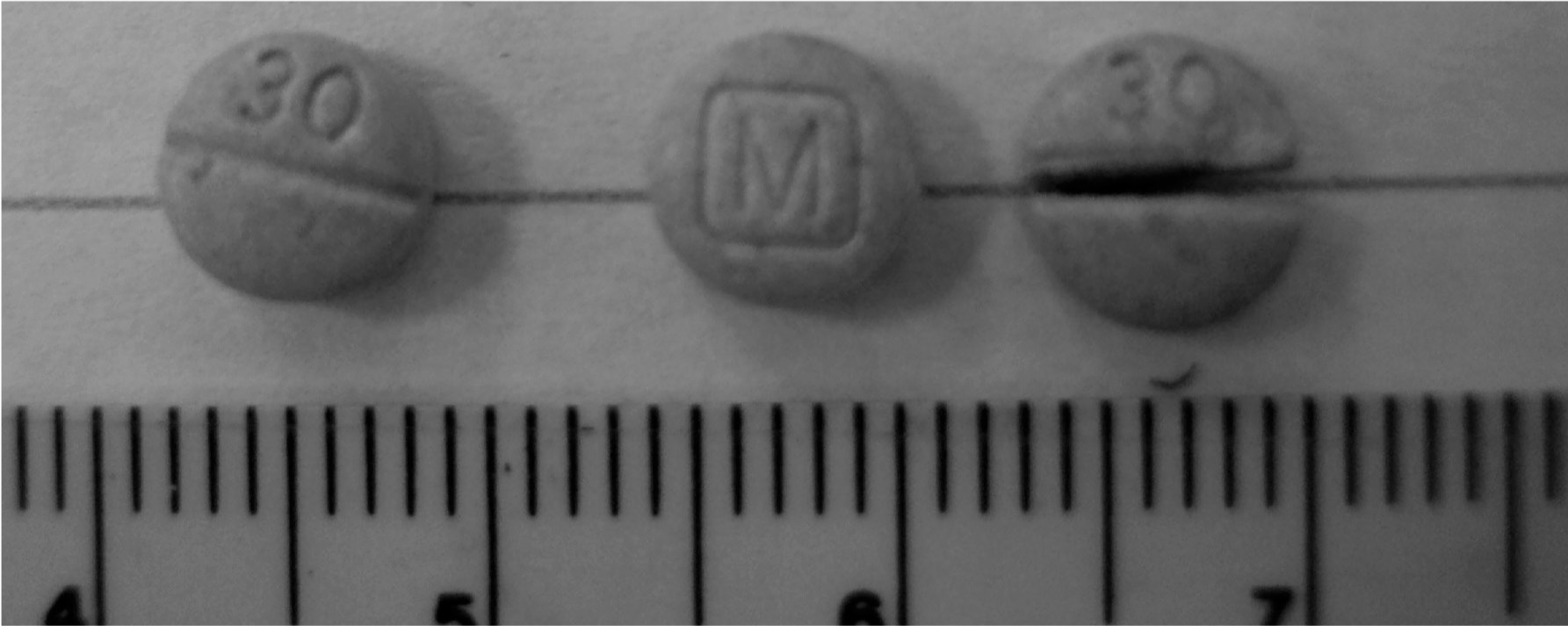
While there is little street violence relating to gang affiliations or turf wars, this market is arguably more dangerous in other ways. The ultimate consumers do not know what they are getting, or ingesting, and the dealers or middle-men may be fooled as well.34 Those ordering from the dark web may believe they are ordering fentanyl, but they could receive an even more dangerous analogue. According to Customs and Border Protection (CBP), the composition and size of smuggled opioid packages seized at the Southwest Border have an average purity of around 7%, but the narcotics seized at international mail facilities and express courier consignment facilities usually have a purity of greater than 90%.35 On the street, counterfeit oxycodone pills, the active ingredient of which is really fentanyl, are sold as the popular “perc 30s,” and it can be impossible for even highly trained DEA agents to detect the difference (Figure 2). The results can be tragic. In United States v. Cirino, the defendant pleaded guilty to providing four counterfeit oxycodone tablets to a victim who died after ingesting just one of them, as all four tablets turned out to be almost pure fentanyl.36 While China dark web drug trafficking may be new, the problem, as law enforcement sees it, remains the same: users should simply not trust product purchased on the underground market.
“Which is Fake?”

Although these international enterprises, along with local vendors, have touted themselves as efficient and dependable organizations, overseas organized crime groups represent “one of the most significant drug threats facing the country.”37 Such groups are able to produce “nearly any synthetic drug imaginable, including fentanyl,” and they “attempt to hide their tracks with web-based sales, international shipments and cryptocurrency transactions.”38 Additionally,
Traffickers often use freight forwarders to mail fentanyl and fentanyl analogues from China. Several DEA investigations have revealed that the original supplier will provide the package to a freight forwarding company or individual, who transfers it to another freight forwarder, who then takes custody and presents the package to customs for export. The combination of a chain of freight forwarders and multiple transfers of custody makes it difficult for law enforcement to track these packages. Often, the package will intentionally have missing, incomplete, and/or inaccurate information.39
On October 17, 2017, Deputy Attorney General (DAG) Rod Rosenstein announced the first two indictments of “major Chinese fentanyl traffickers who have been using the Internet to sell fentanyl and fentanyl analogues to drug traffickers and individual customers in the United States.”Reference Rosenstein40 The two defendants, Chinese nationals Xiaobing Yan and Jian Zhang, were also the first fentanyl manufacturers and distributors designated as Consolidated Priority Organization Targets— “those who have ‘command and control’ elements of the most prolific international drug trafficking and money laundering organizations.”41 Operating under a variety of names and company identities, Yan and Zhang sold fentanyl and other lethal analogues, as well as pill presses, stamps, or dies used to shape fentanyl into pills, directly to customers in cities across the United States. Zhang's conduct was alleged to have resulted in the deaths of four individuals (in North Carolina, New Jersey, North Dakota, and Oregon) and serious bodily injuries of five other individuals.
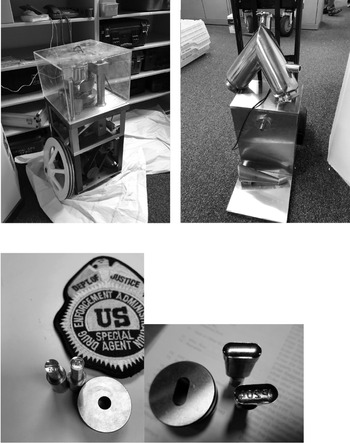
As demonstrated by the Yan and Zhang indictments, more than just the lethal substances themselves are entering the United States: Pill presses and dies shipped from China are being used to imprint the stamp of an oxycodone pill. Pablo Texidor, for example, ordered to his West Hartford, CT residence both a tableting machine and tableting dies to manufacture fake oxycodone pills. He pleaded guilty to one count of importation of any product used to manufacture a controlled substance, which carries a maximum term of imprisonment of four years. The DEA and CBP investigation revealed he had received five parcels from China, four of which were described as containing “machine spare parts,” and one of which was described as containing a “hole puncher machine for sample.”42 (Figure 3) These orders — and their intentionally misleading descriptions to avoid detection by law enforcement — are typical.
Pill Press / Tableting Machines Oxycodone 30mg Die/Oxycodone 325mg Die

Unsurprisingly, as demand for opioids has increased, internet vendors have emerged to fill the need.Reference Popper43 The dark web operates, in a way, like Amazon does: Once you establish yourself as a vendor, people will comment on your product, and an online customer base can arise through traditional advertising and commercial methods. Certain dealers may specialize in particular products, such as “Xanax,” while others have more elaborate operations spanning multiple states. For example, Kyle Peterson, who ran a narcotics distribution ring out of New Britain, CT, sold a little of everything, including 2.5 kilograms of fentanyl, 3.2 kilograms of MDMA, 12.5 grams of oxycodone (constituting 2500 30-mg pills), and 50,000 fake Xanax pills.44 Through wiretaps, DEA determined that Petersen's co-defendant John Casadei was the one purchasing the narcotics from China; the Agency seized one kilogram of the fentanyl in transit,45 in addition to $740,000 in cash, 3.2 kilograms of MDMA, and over 40,000 pills of fake Xanax stashed at Petersen's parents' home. Petersen was ultimately sentenced to ten years—the mandatory minimum — and five years supervised release.46
Federal Interdiction Efforts Abroad and at Home: Will They Work?
Federal agencies have sought to attack the fentanyl supply chain and counteract the larger crisis on both the international and domestic fronts. DEA has notably increased the use of its temporary scheduling authority under 21 U.S.C. § 811(h). Although DEA utilized this authority only thirteen times between 1985 and 2011, since January 2011, it has done so on fifteen occasions to place temporarily into Schedule I forty-five synthetic drugs, several of which are fentanyl analogues.47 For instance, in November 2016, after forty-six fatalities were linked to U-47700, a synthetic opioid encountered both as a single substance and in combination with other drugs such as heroin and fentanyl, DEA placed it into Schedule I of the Controlled Substances Act. The Agency explained that “[e]mergency scheduling of dangerous drugs such as U-47700 on a temporary basis is one of the most significant tools DEA can utilize to address the problems associated with deadly new street drugs.”48 Just one year later, on November 9, 2017, DEA announced its intent to emergency schedule all illicit fentanyl analogues so that traffickers in any fentanyl-related substance would be more easily subjected to criminal prosecution.49
The DEA's emergency listing of all fentanyl analogues into Schedule I took effect on February 6, 2018.50 Prior to that blanket action, as DAG Rosen-stein explained, Chinese fentanyl distributors would “take advantage of the fact that the fentanyl molecule can be altered in numerous ways to create a fentanyl analogue that is not listed as illegal under U.S. and Chinese law; when regulators are able to identify the new fentanyl and make it illegal, the distributors quickly switch to a new, unlisted fentanyl analogue.”51 Although the unlisted fentanyl analogues were arguably already banned under the Analogue Act,52 prosecution under that statute is difficult.53 The DEA's emergency scheduling will allow prosecutors to convict fentanyl-analogue traffickers without having to prove the new analogue is “intended for human consumption” and “substantially similar” to an already listed substance.54
As convictions become easier to secure, the United States Sentencing Commission has sought to increase its guidelines penalties for fentanyl trafficking. The Proposed 2018 Synthetic Drugs Amendment would change § 2D1.1 (drug trafficking) in three ways to account for fentanyl and its analogues. First, it raises the base offense levels for fentanyl in the Drug Quantity Table to those established for fentanyl analogues; it also amends the Drug Equivalency Tables to change the marijuana equivalency ratio for fentanyl to the same ratio provided for fentanyl analogues (1:10,000). Second, the Amendment defines the term “fentanyl analogue” and amends the Drug Equivalency Tables to provide a single marijuana equivalency of 10 kilograms applicable to 1 gram of any “fentanyl analogue.” Finally, in light of the harms associated with the unknowing consumption of fentanyl, the Amendment provides a penalty enhancement in cases in which fentanyl or an analogue is misrepresented or marketed as another substance.55
United States politicians are lobbying international leaders to crackdown on fentanyl and its analogues as well. As noted by DAG Rosenstein, Chinese labs have played a huge role in meeting, perhaps even stoking, the demand side of America's opioid crisis. Although Beijing would resist this description,Reference Jiang56 the Chinese government has responded to U.S. pressure by adding a variety of fentanyl analogues and precursor chemicals to its list of controlled substances.Reference Spegele57 Local DEA agents have expressed to us optimism that this move will cause a downtick in the market given the massive impact of Chinese shipments in the fentanyl market.58 We are skeptical. Merely scheduling substances may be meaningless given the scale and diversity of Chinese fentanyl exports.Reference Spegele and Whalen59 They are shipped directly to the U.S. and to individuals and organizations in Mexico and Canada for repackaging and smuggling into the United States.Reference O’Connor60
Meanwhile, CBP seeks to intercept drugs at and in between Ports of Entry through targeting and intelligence-driven strategies, and recognizes that it cannot combat domestic and transnational drug trafficking organizations alone. CBP reports partnering with other agencies on a “multi-layered, risk-based approach,”61 which focuses on “substantive and timely information sharing” that will efficiently target and interdict opioid shipments and enhanced coordination between operational teams.62 The goal, however, is modest. In the face of the realities of opioid trafficking, CBP's layered approach “reduces our reliance on any single point or program, and extends our zone of security outward, ensuring our physical border is not the first or last line of defense, but one of many.”63
In order to ease the burden on CBP, some members of the U.S. Senate are now attempting to stem the drug supply by requiring the United States Postal Service (USPS), mail carrier of choice for many distributors, to supply electronic security data on all packages shipped to the United States.Reference Rath64 On February 14, 2017, Senator Rob Portman and a bipartisan coalition introduced the Synthetics Trafficking & Overdose Prevention (STOP) Act, which would require USPS to provide electronic security data on all packages shipped to the United States.Reference Portman65 Just one month later, bipartisan Senators Markey, Rubio, Brown, and Capito introduced the INTERDICT Act, which would provide customs officials with tools such as hi-tech chemical screening devices to help detect and interdict fentanyl and other illicit synthetic opioids.Reference Rubio66 Despite broad co-sponsorship on both bills, there has been no further congressional action on either. There has, however, been a Memorandum of Understanding between CPB and USPS, formalized on September 1, 2017. This memorandum “solidifie[d] the interagency partnership between CBP, the Postal Service and the Inspection Service,” defined the participants' “roles and responsibilities,”67 and specified their collaborative efforts on day-to-day operations and strategic “initiatives related to the inspection of goods imported and exported through the mail.”68
Regardless of whether the fentanyl enters the United States from Ports of Entry along the Southern land border or through mail originating in China, “interdicting illicit drugs, particularly synthetic opioids, is both challenging and complex.”69 In 2016 CBP seized 440 pounds of fentanyl across the country, up shockingly from approximately two pounds in 2013.70 Though CBP operates within nine major International Mail Facilities (inspecting international mail arriving from more than 180 countries), lagging electronic capabilities makes processing of inbound mail primarily manual — a daunting task further challenged by the enormous volume and hazardous nature of the drugs. At the border, CBP uses “the same drug-interdiction methodology to seize fentanyl arriving from Mexico as it uses to detect other illicit drugs,”71 which can again be insufficient due to limited field-testing capabilities for constantly changing analogues. Despite efforts to continually refine and enhance detection and interdiction capabilities, law enforcement may always be one or more steps behind international suppliers — “[j]ust as the illicit drug manufacturers seek to outpace the law with new drug analogues, new drug analogues can [appear and be replaced] faster than the canine training needed to detect these emerging drugs.”72 In addition, the potency of synthetic drugs presents unique challenges to the “health and safety of the canines and their handlers.”73
The fentanyl market epitomizes the multi-faceted, rapidly evolving challenges in combatting the larger opioid epidemic. As Chinese officials become upset with the United States for pinning the opioid crisis on their manufacturers, cooperation in regulation of Chinese-made synthetics may break down.Reference Areddy and Dou74 But even when China does outlaw certain chemicals, enforcement can be impossible, as Chinese labs producing synthetic opiate “play hide-and-seek with authorities” by tinkering with molecules enough “to create whole new entities that are no longer on the list of sanctioned compounds.”Reference McLaughlin75 These suppliers list fake addresses, market their product as “research chemicals,” and use third-party agents to conduct transactions that are difficult to trace. As the DOJ shutters dark-web sites that facilitate these illicit dealings, others emerge in their place — there is “always a new player waiting in the wings.”Reference Popper and Ruiz76
In the end, the effort to reduce fentanyl use and associated mortality through supply-side interdiction is likely to be no more effective than have been decades-long efforts to interdict the heroin supply into the U.S. Indeed, fentanyl's far greater potency makes it ideal to distribute through small-sized packages or even letter-size envelopes. The likelihood that USPS and CBP will be able to identify any significant portion of such shipments appears, at this point, to be small.
The fear — indeed, panic — induced by fentanyl's growing presence and the apparent inability of the federal government to control its importation may explain why some individual states have adopted an increasingly punitive stance toward the drug in their criminal codes. Recent “drug-induced homicide” legislation and prosecutions “appear to be driven by the increasing rates of fentanyl-related overdose deaths.”77 Last year the Florida legislature unanimously passed House Bill 477, which added fentanyl-caused deaths to its felony murder statute and allows prosecutors to charge drug dealers (even minor dealers) with capital murder if their clients fatally overdose on fentanyl or an opioid analogue.Reference Torralva78 Even if this law is constitutional (and it may not beReference Binder, Fissell and Weisberg79), we believe it is poor policy. While “charging the death” under 21 U.S.C. § 841(b)(1)(C) specifies a mandatory minimum of twenty years for a drug distribution charge, the Florida statute specifies life imprisonment without parole or the death penalty.80 As discussed in our companion Article, The Opioid Crisis and Federal Criminal Prosecution, it is our view that draconian, deterrence-based strategies will not be the solution to the public health problem of drug abuse — be it Vicodin, heroin, fentanyl, or whatever analogue comes next.
Acknowledgements
Thank you to those who have made this project possible: AUSA (now Magistrate Judge) Robert Spector, former U.S. Attorney Deirdre Daly, DEA ASAC Brian Boyle, and DEA Group Supervisor Paul Spera for informing our understanding of the fentanyl market and its dangers. Thank you to Connecticut Chief Medical Examiner Dr. James Gill for aiding our research — providing us with the necessary data and the insight behind it. We also thank Ben Levander, Matt Butler and Nate Guevremont, all YLS ’18, for their astute comments and editorial assistance. Finally, we appreciate all those involved in the Opioid Crisis in Connecticut Conference and the participants in Yale Law School's “Law and the Opioid Crisis” Seminar, from whom we have learned a great deal.