How have anticolonial writers and thinkers responded to the cultural exceptionalism of imperialist nations, especially that of the United States and Western Europe? In my contribution to this cluster's effort to rethink exceptionalism, I offer a brief account of anticolonial resistance to cultural imperialism.
Ngũgĩ wa Thiong'o's Decolonising the Mind (1986) remains one of the most spirited challenges to cultural imperialism. Ngũgĩ famously argues that African writers have a responsibility to develop indigenous languages, emulating what the world's great writers do for their own languages and literary traditions. “We African writers,” Ngũgĩ declares, “are bound by our calling to do for our languages what [Spenser], Milton, and Shakespeare did for English; what Pushkin and Tolstoy did for Russian; indeed what all writers in world history have done for their languages by meeting the challenge of creating a literature in them” (29). As Simon Gikandi explains, this manifesto represents something of a pivot in Ngũgĩ's thinking, in which Ngũgĩ ranks cultural imperialism above military conquest and economic domination “as the most important instrument of imperialism” (273). If the English language is a tool of domination in Africa, anticolonial writers can best secure cultural autonomy by developing indigenous languages: “Values are the basis of a people's identity, their sense of particularity as members of the human race. All this is carried by language. Language as culture is the collective memory bank of a people's experience in history” (Ngũgĩ 15). Challenging imperialist strains of cultural exceptionalism means emphasizing the particularity of a people's language as a way of distinguishing a people's culture from the cultures of other nations and groups.
Ngũgĩ's position on language and cultural difference is well known but by no means unanimously held by anticolonial intellectuals. In Éloge de la créolité (1989; In Praise of Creoleness), for instance, Jean Bernabé, Patrick Chamoiseau, and Raphaël Confiant argue that imperial monoculturalism cannot be defeated with anticolonial monoculturalism. Instead, they assert that the “full and entire sovereignty of our peoples” can be expressed only as the “nontotalitarian consciousness of a preserved diversity” (Bernabé et al. 115, 89). Some version of multiculturalism or “preserved diversity”—and, more important, some version of multilingualism—are the only viable “nontotalitarian” answers to cultural imperialism. More playfully, they say, “Creoleness is not monolingual. . . . Its field is language. Its appetite: all the languages of the world” (108). Being or becoming creole includes devouring all languages. Reacting against metropolitan cultural domination, they take a stand against the sort of anticolonial nativism that Ngũgĩ endorses in Decolonising the Mind.
The conceptual distance between Decolonising the Mind and Éloge de la créolité offers an invitation to track backward to earlier anticolonial responses to cultural exceptionalism. Between the 1920s and the 1980s, intellectuals from the decolonizing world staged discussions about how language, indigeneity, and anticolonial movements might be related. Éloge de la créolité, for example, alludes to the Brazilian Oswald de Andrade's “Manifesto Antropófago” (1928; “Cannibalist Manifesto”). The gloss of créolité as a “field” taking in “all the languages of the world” follows Andrade's lead by describing the particularity of the region as a result of linguistic heterogeneity. Andrade's manifesto proclaims “Carib” autonomy, proposing a theory of cultural cannibalism that works by metabolizing foreign materials, or what Andrade calls “Absorption of the sacred enemy” (39, 43). There is nothing culturally pure here, except the appetite. Ngũgĩ's inverted monoculturalism looks dangerously close to another form of exceptionalism, at least from this perspective. Bernabé, Chamoiseau, and Confiant echo Andrade's call for the digestion of all extrinsic materials, taking what is nutritious and expelling the rest. A fuller account of the anticolonial intellectual tradition can help us see why the créolité trio would find “Manifesto Antropófago” such a compelling antecedent when they wanted to contest Ngũgĩ's theory of cultural integrity.
Throughout much of the century, scattered but interconnected groups of intellectuals from the Global South and revolutionary Europe thought deeply about the problem of indigeneity and cultural autonomy through comparative, international networks. Lu Xun and his peers in the May Fourth New Culture Movement (roughly 1919–30) and the Chinese League of Left-Wing Writers (1930–36) were among the earliest figures to theorize the relation of imperialism, language, and cultural autonomy. These efforts overlap with those of the All-India Progressive Writers Association (PWA), whose founders first gathered in 1934. Likewise, at the Union of Soviet Writers meeting earlier that year, some of the most important presentations took up the status of translation and cultural hierarchies in the new federation. Finally, the most sustained effort to address the question of language and culture in a comparative, anticolonial context was the Afro-Asian Writers’ Association (AAWA, founded in 1958) in its flagship magazine, Lotus: Afro-Asian Writings (1968–ca. 1991). Published for much of its life in parallel Arabic, English, and French editions, Lotus came alive through comparison and heterogeneity. Working in different languages was an explicit part of the Afro-Asian movement. Yet Lotus also foregrounds the cultural particularity of national traditions. I argue that by assimilating and responding to the ideas of its forerunners, the Afro-Asian movement developed a hybrid, seemingly paradoxical platform: promoting cultural particularity through translation and horizontal comparison. With its striking linguistic and cultural diversity, Lotus became a space for rethinking exceptionalism through a comparative framework.
Partly because the Union of Soviet Writers was a sponsoring partner of the AAWA, the 1934 Moscow conference figured prominently in the history of the Afro-Asian movement. Major conferences in Tashkent (1958) and Almaty (1973) were supplemented by smaller events in Soviet cities. Soviet Asian writers figured prominently at these gatherings. Showcasing writers like the Kyrgyz novelist Chinghiz Aitmatov, the Uzbek poet Zulfiya, and the Tajik poet Mirzo Tursonzoda alongside writers from the Global South was a notable feature of Soviet cultural diplomacy. The AAWA was the centerpiece of Soviet efforts to woo writers from Africa and Asia. As with all Cold War institutions, the AAWA thrived on rivalries and antinomies. The AAWA gloated openly when one of its rivals, the Congress for Cultural Freedom, was revealed publicly to be a CIA-funded effort to develop cultural outreach programs in the decolonizing world.Footnote 1 China, an early collaborator in the Afro-Asian project, became another bitter rival, splitting off to form a competing network, the Afro-Asian Writers’ Bureau.Footnote 2 By encouraging its Asian writers to participate in the AAWA, the Soviet Union attempted to position itself as the most dependable ally of anticolonial writers.
Surprisingly, for a movement naming the 1934 Soviet writers conference as a source of inspiration, the AAWA did not install socialist realism as a house style. Writers as stylistically diverse as Ngũgĩ, Chinua Achebe, Faiz Ahmed Faiz, Nuruddin Farah, Nâzım Hikmet, Sembène Ousmane, Pramoedya Ananta Toer, and Kateb Yacine all had significant AAWA ties. This was hardly an institution with one guiding aesthetic principle. Instead, when AAWA participants drew on the legacy of the 1934 conference, they recalled the commitments to linguistic diversity and translation made from the podium. In Maxim Gorky's address, for instance, Gorky emphasized that “Soviet literature is not merely a literature of the Russian language. It is an All-Union literature . . . [including] the literary creation of the national minorities” (59). In another keynote speech, Nikolai Bukharin said that “[a]n All-Soviet literature is growing up in our country, in which the literature of national minorities possesses enormous significance” (211). The attendance of Suleiman Stal'skii, the Dagestani bard whom Gorky reportedly called the Homer of the twentieth century, added heft to these inclusive claims. When Lotus got up and running, it reminded its readers again and again that the Soviet Union hosted the world's most robust multilingual publishing industry.
The formation of the PWA in the 1930s is an equally significant part of the AAWA's backstory. Mulk Raj Anand and Sajjad Zaheer, two founding members of the PWA, and Faiz, a longtime member of the organization, all became fixtures of the Afro-Asian movement. Faiz edited Lotus for a time, Anand served on its editorial board, and Zaheer died in Kazakhstan while attending the 1973 conference. The PWA manifesto, first drafted in London in 1934 and 1935, provides a rhetorical model for the AAWA's anticolonialism. The document promises to “rescue literature and other arts from the priestly, academic and decadent classes in whose hands they have degenerated so long” (Anand et al.). Colonialism, in the authors’ estimation, led to the stagnation of Indian literature, classical forms retarding the development of a modern, anticolonial outlook.
Lu and his counterparts from the May Fourth Movement and the League of Left-Wing Writers provide other responses to imperialist exceptionalism. As in the PWA manifesto, Lu argues in “Silent China” (1927) that vernacular forms could be valuable weapons in the fight against feudalism and colonialism: “All we want is this: instead of overtaxing our brains to learn the speech of men long since dead, we should speak that of living men. Instead of treating language as a curio, we should write in the easily understood vernacular” (165). Mao Zedong echoed these sentiments at the Yan'an talks in 1943, saying that “the rich, lively language of the popular masses” should provide the basis of new cultural production (88). Although Chinese contributions to the AAWA would be minimized in later years, it is apparent that these ideas played an important part in developing theories of cultural autonomy as a response to cultural imperialism.
In their extensive theoretical exchange with their Chinese counterparts, the authors of the PWA manifesto argue that the colonial period witnessed the retreat of Indian literature into escapism and fantasy. The manifesto resolves to create “the new literature of India” by representing “the problems of hunger and poverty, social backwardness and political subjection” (Anand et al.). Anticipating the insights of Siraj Ahmed and Aamir R. Mufti, they regard nativist writing from colonial cultures as a variant of Orientalism and auto-exoticism. The persistence of classical literary forms makes it difficult for modern writers to depict the problems of colonial subjugation. Instead, the PWA proposes a model of linguistic pluralism and the development of indigenous vernacular literatures. Promising to coordinate between “various linguistic zones of India,” the manifesto also pledges the organization to assist in the translation of progressive literatures from other languages.Footnote 3 Against linguistic hierarchies and centralization, the PWA comes to stand for horizontal exchanges between languages, including English.
I want to underscore that these interwar discussions about translation, vernacular speech and writing, and cultural particularity were happening simultaneously in different languages, in diverse political contexts, and across vast distances. Global South writers were not simply taking inspiration from Soviet ideas about language and cultural exchange. Although the Soviet bureaucracy sometimes depicted itself as primus inter pares in dealings with writers from the decolonizing world because of its patronage of the AAWA, we should be wary of thinking of the 1934 Moscow conference as the first step in a straightforward process of development.
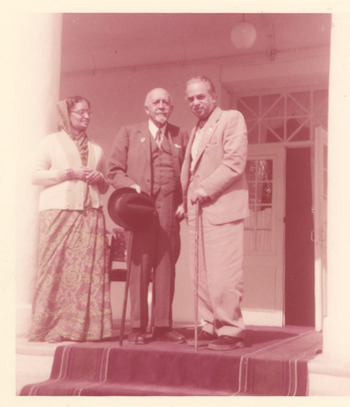
Although the PWA was damaged by the 1947 partition of India and Pakistan, Anand and Zaheer soon channeled some of their ideas and organizational talents into transnational outreach (Mir and Mir). In 1956, they organized an Asian writers’ conference in New Delhi. Zulfiya, one of the Soviet delegates, extended an invitation for a follow-up event in Tashkent. African writers joined the mix sometime during the preparations. W. E. B. Du Bois, whose passport had been reinstated only recently, served as a guest of honor in Tashkent (fig. 1). Established veterans such as Anand, Faiz, and Mao Dun (a cofounder of the League of Left-Wing Writers and the Chinese minister of culture) were joined at the event by aspiring young writers such as Sembène and Pramoedya. Subsequent major conferences in Cairo (1962), Beirut (1967), New Delhi (1970), Almaty, and Luanda (1979) would fix the AAWA on the busy mid-century conference circuit. The organization published several anthologies in its early years, which paved the way for Lotus. After a short time in Colombo, the organization's headquarters moved to Cairo in the 1960s, where the Egyptian minister of culture Youssef El-Sebai began editing the magazine in 1968.
From left to right: an unidentified woman, W. E. B. Du Bois, and Mulk Raj Anand at the Tashkent Conference, 1958. Image courtesy of Special Collections and University Archives, University of Massachusetts Amherst Libraries.

Lotus has been overlooked by North American scholars until recently. Its place in anticolonial literary history is now being clarified through the efforts of Sophia Azeb, Nesrine Chahine, Rossen Djagalov, Hala Halim, Tariq Mehmood, Monica Popescu, and others. When I first started leafing through its pages nearly a decade ago, I was prepared to find a simple combination of propaganda and socialist realism. There are instances of both these things, though I found them a lot less frequently than I expected. To my surprise, Lotus looks and feels like the modernist periodicals Eric Bulson describes in Little Magazine, World Form. The size, the graphics, the layout, the signs of editorial haste, the contents (especially the editorials and manifestos), the contributors (some recognizable names, some completely lost to literary history), and above all the tangible attempt to build a network: these are common features of little magazines the world over, from Eugene Jolas's transition (founded in Paris in 1927) to Rajat Neogy's Transition (founded in Kampala in 1961). Every time I thought the magazine was settling into a recognizable brand of quasi-socialist realism, I would be jolted out of my complacency with a contribution from Farah, Kateb, Wole Soyinka, or Adonis, the Syrian-Lebanese avant-garde poet.
There are, however, three significant differences between Lotus and most other literary periodicals of its type: its international network, its multilingualism, and its layered temporalities. First, the magazine's infrastructure, which the organization worked so hard to fabricate, did not rely on Paris, London, New York, or other literary capitals of the Global North. Its contributors and readership were confined neither to a region nor to a political bloc. El-Sebai complained that London's and Paris's booksellers, which still controlled access to many of the Global South's book markets, ignored the journal (“Editor's Note” [1971] and “Editor's Note” [1977]). Unlike most little magazines, however, Lotus could rely on state backing. Beirut, Cairo, East Berlin (where the English and French editions were printed), Luanda, New Delhi, Tashkent, and Tunis became nodal points in an international, anticolonial literary system. Surveying the AAWA's infrastructure reveals an international cultural network that bypasses metropolitan patterns of exchange. Creating such a network depended on a very specific set of extraliterary conditions, namely superpower cultural diplomacy programs during a period of widespread anticolonial activity. Reading Lotus gives us a rare glimpse of how world literature looks when it lacks approval from Euro-American gatekeepers.
Describing the AAWA's infrastructure leads me to the second quality distinguishing Lotus from other little magazines: its stubborn multilingualism. Although Lotus was neither the first nor the only multilingual literary periodical of the twentieth century—the bilingual Présence Africaine stands out as an example of a journal with similar aims—the near-simultaneous publication of the journal in three languages and its willingness to translate pieces from many other languages make it especially notable. Halim argues that the Arabic edition, by using a non-European language, adds credibility to the AAWA's anticolonial credentials (“Lotus” and “Translating”). Lydia H. Liu calls the Afro-Asian movement the “great translation movement of the twentieth century” (00:05:05), although Azeb also points out that Lotus is prone to key mistranslations as well. Distinct from but plugged into the massive Soviet translation industry, Lotus was a point of entry to international book markets for many African and Asian writers, especially those who were banned in their home countries, such as the large South African contingent (Chahine; Djagalov; Kalliney). The trilingual Lotus seems to fit the definitions of world literature proposed by David Damrosch (“literary works that circulate beyond their culture of origin, either in translation or in their original language” [4]) and by Rebecca L. Walkowitz (texts that “start as world literature” [2] are those that “appear simultaneously or nearly simultaneously in multiple languages” [1–2]). For much of its print run, Lotus simply does not exist in one original language.
In other ways, however, the AAWA network does not conform to established models of global or world literature. Trying to adapt Pascale Casanova's concept of a world republic of letters by installing Moscow in the place of the “Greenwich Meridian” does not work. Casanova argues that writers from the Global South must suppress linguistic and cultural differences to circulate internationally (4, 180), but Lotus operates on a contrary premise. Introducing contributions by citing the writer's place of origin, as in “Poem from Vietnam,” “Story from Mozambique,” or “Folklore from Palestine,” Lotus juxtaposes, through accumulation or parataxis, distinct national traditions. The effect can be jarring, generating friction by bumping cultures against one another. Such juxtapositions can block or frustrate comparisons between pieces, as if to enhance the cultural distinctiveness of the contributions. By offering seemingly haphazard itineraries, however, Lotus shows that articulating incomparable cultural particularities is as important as consolidating political alliances in the Afro-Asian project. Studying Lotus provides one possible answer to Michael Gibbs Hill's complaint that the “world-systems approach to literature leaves works from the periphery—and the people who study them—with little to say to one another” (859).
Third, the magazine emphasizes political solidarities by foregrounding the long timelines of the decolonization movement. If the juxtaposition of cultures in individual contributions tends toward incomparability, Lotus's temporal framing encourages solidarity and political comparison between regions. In his very first editorial, for instance, El-Sebai calls attention to the nonlinear experience of decolonization: “While some of our peoples are still struggling against imperialism, . . . and others have recently gained their independence . . ., the rest have advanced a long way on the road of independence and reconstruction” (“Role” 8). Literature from hot spots—such as southern Africa, Palestine, and Vietnam, where anticolonial resistance movements were active in the 1970s—furnish readers with an imaginative present tense, a tour of the front lines. Elegies and memorials for heroes slain in battle, such as Amílcar Cabral (El-Sebai, “Valiant”) and Ghassan Kanafani (“Martyred Palestinian Writer”), are complemented by exultant praise songs when circumstances allow for celebration, such as the United States’ withdrawal from Vietnam or the Portuguese from their African colonies. The magazine's present tense comes with a sense of urgency and solidarity, marking the sites of active resistance to imperialism.
Elsewhere, however, Lotus takes lengthy imaginative detours into past and future tenses, hints of which are visible in El-Sebai's comments. Lotus finds a past tense through its engagements with unique Afro-Asian traditions. Regular special features on arts and crafts, folklore, music, and literary history from specific regions give Lotus readers a sense that Afro-Asian cultures ought to be protected and revalorized in a decolonizing present. Zaheer, for instance, contributes a substantial essay on Ghalib, the nineteenth-century Urdu poet, tracing the lineage of the PWA back to Ghalib's responses to the 1857–58 uprising and the brutal British crackdown. Ghalib's poetry, quoted liberally in translation, functions both as a way of identifying the cultural particularity of Urdu literature and as a comparative example to those working in other traditions.
Alongside its reliance on the past tense, Lotus deploys an implicit future tense, especially when it transports readers to Soviet Asia, where decolonization, if not complete, is encouragingly under way. Every story about a Kazakh girl triumphantly attending a new school or a Kyrgyz soldier returning home after the antifascist war gives Lotus readers a vision of a possible future, where social justice guarantees cultural autonomy. Contributions from Soviet Asia play up the cultural distinctiveness of these regions, suggesting that the socialist revolution has protected and even enhanced cultural particularity.Footnote 4 Toggling between noteworthy pasts, revolutionary presents, and postrevolutionary futures, Lotus displays what Nicolai Volland calls “the possibility of productive anachronism” (52), or what Wai Chee Dimock recognizes more simply as literature's nonstandard temporalities. It also offers a textbook example of what Françoise Lionnet and Shu-mei Shih call “minor transnationalism.” As one Lotus contributor remarks, the AAWA formula is “deeply national in character, but highly international in spirit” (Tikhonov 11). The magazine blends comparative, internationalist form—its layered temporalities of decolonization—with culturally distinctive, accumulative content, all in service of an anticolonial agenda.
With this short history of language debates in anticolonial writing, we can see that competing claims in Decolonising the Mind and Éloge de la créolité are not strictly about the relationship between colonizer and colonized. When Ngũgĩ calls for the revalorization of autochthonous languages, or when Bernabé, Chamoiseau, and Confiant describe creoles as omnivorous languages, they are each drawing on different strains of cultural particularism outlined in the Afro-Asian project and its antecedents. Theorizing the proper place of language in anticolonial thought happened not simply through engagements with metropolitan cultural exceptionalism but equally through dialogue with a variety of Global South interlocutors. The versions of cultural essentialism they shared with one another are as significant for their work as the versions they articulate in response to cultural imperialism. The AAWA project is not designed to promote autarky but instead exhibits a striking blend of incomparable cultural particularities with a comparative view of anticolonial politics.