Emotion dysregulation is a transdiagnostic vulnerability factor that affects the emergence, continuity, and consequences of psychopathology across the life span. As a construct, it can be defined as a longstanding tendency toward emotional experiences and expressions that are overly labile, intense, rigid, or prolonged, and/or that interfere with appropriate goal-directed or interpersonal behavior (Beauchaine, Reference Beauchaine2015a; Cole, Hall, & Hazal, Reference Cole, Hall, Hajal, Beauchaine and Hinshaw2017; Crowell, Vlisides-Henry, & Kaliush, Reference Crowell, Vlisides-Henry, Kaliush, Beauchaine and Crowellin press; Gratz, & Roemer, Reference Gratz and Roemer2004). An accumulating body of research finds that emotion dysregulation often (a) predates the emergence of psychopathology, (b) is a defining feature of several severe and impairing psychiatric diagnoses, (c) is associated with health-risk behaviors, and (d) is shaped and maintained through dynamic family socialization processes beginning at birth (Beauchaine, Reference Beauchaine2015a; Cole, Martin, & Dennis, Reference Cole, Martin and Dennis2004; Crowell et al., Reference Crowell, Butner, Wiltshire, Munion, Yaptangco and Beauchaine2017; Crowell, Puzia, & Yaptangco, Reference Crowell, Puzia and Yaptangco2015; Keenan, Reference Keenan2000). Despite the centrality of emotion dysregulation to current understanding of psychopathology and its theorized role in the intergenerational transmission of psychopathology (see Beauchaine, & Crowell, Reference Beauchaine and Crowellin press), there is a dearth of research examining its role in pregnancy and the transition to motherhood (Rutherford, Wallace, Laurent, & Mayes, Reference Rutherford, Wallace, Laurent and Mayes2015). Emotion dysregulation likely affects a woman's health and well-being during pregnancy and may begin to affect her child's development even before birth. Thus, there is an urgent need for research examining intergenerational transmission of emotion dysregulation, originating in pregnancy.
Although the literature on emotion dysregulation in pregnancy is limited, there is growing recognition of the importance of maternal mental health. In 2015, the World Health Organization declared maternal mental health a major public health concern, acknowledging that it is one of the most neglected aspects of obstetric care (Glover, Reference Glover2014; O'Donnell, & Meaney, Reference O'Donnell and Meaney2017). Psychiatric disorders are estimated to affect one in four women in the United States at some point during pregnancy or the first postpartum year (Gavin et al., Reference Gavin, Gaynes, Lohr, Meltzer-Brody, Gartlehner and Swinson2005; Lindahl, Pearson, & Cope, Reference Lindahl, Pearson and Colpe2005; Vesga-Lopez et al., Reference Vesga-López, Blanco, Keyes, Olfson, Grant and Hasin2008). Despite the high prevalence of psychiatric conditions in this population, these women appear to be no more likely, and possibly even less so, to seek treatment for their mental health symptoms (Vesga-Lopez et al., Reference Vesga-López, Blanco, Keyes, Olfson, Grant and Hasin2008). Left untreated, psychological distress during pregnancy may increase risk for the onset of more serious and pervasive mental health problems, and may even be life threatening (Glover, Reference Glover2014; Verreault et al., Reference Verreault, Da Costa, Marchand, Ireland, Dritsa and Khalifé2014).
This increased risk for psychological distress in pregnancy is especially unfortunate because pregnancy represents a time of heightened contact with medical professionals and, accordingly, presents unique opportunities for assessment and referral to mental health services. Perinatal care clinics have made great strides toward addressing these issues. In response to concerns about the underidentification of women with perinatal mental health concerns, perinatal care clinics have increasingly incorporated systematic screening to identify women at risk of mental health concerns, especially depression and anxiety. This practice has contributed substantially to women's mental health during this critical period by improving identification of women with postpartum depression and facilitating initiation of treatment (Gaynes et al., Reference Gaynes, Gavin, Meltzer-Brody, Lohr, Swinson, Gartlehner and Miller2005; O'Connor et al., Reference O'Connor, Rossom, Henninger, Groom and Burda2016). At the same time, current single-diagnosis approaches to screening may overlook a critical subset of women with significant psychopathology. For example, self-injurious thoughts and behaviors (SITBs) currently represent one of the leading causes of death among pregnant women, and may account for as many as one in five postnatal deaths (Lindahl et al., Reference Lindahl, Pearson and Colpe2005). However, even though many women who endorse perinatal SITBs suffer from depression, many do not (Ortega, & Karch, Reference Ortega and Karch2010; Wisner et al., Reference Wisner, Sit, McShea, Rizzo, Zoretich, Hughes and Hanusa2013; Zhong et al., Reference Zhong, Gelaye, Miller, Fricchione, Cai, Johnson and Williams2016). For example, epidemiological studies that have drawn data from national data sets have indicated that as many as 30%–56% of pregnant women who have attempted or completed suicide do not have diagnoses of depression (Ortega, & Karch, Reference Ortega and Karch2010; Zhong et al., Reference Zhong, Gelaye, Miller, Fricchione, Cai, Johnson and Williams2016). This parallels literature in nonpregnant populations, which suggests that nonsuicidal self-injury is transdiagnostic in nature and may better reflect emotion dysregulation than any one diagnostic category alone (Bentley, Cassiello-Robbins, Vittorio, Sauer-Zavala, & Barlow, Reference Bentley, Cassiello-Robbins, Vittorio, Sauer-Zavala and Barlow2015; Klonsky, Reference Klonsky2007). Thus, consideration of emotion dysregulation during pregnancy may be imperative, not only for advancing understanding about women's mental health during the perinatal period, but also for addressing gaps in extant literature about perinatal SITBs.
In this study, we examine emotion dysregulation among pregnant women and its associations with psychological and autonomic markers of well-being. To date, no studies have used emotion dysregulation as the key defining characteristic when recruiting pregnant participants. As a result, many women with significant distress have been missed in prior research on psychopathology during the transition to motherhood. Similarly, much of the extant literature on perinatal SITBs has (a) examined SITBs only in the context of depression, (b) included only cursory or single-item assessments of suicidality, or (c) relied upon surveillance methodology or medical record abstraction to establish prevalence rates. A wealth of evidence suggests that emotion dysregulation is a defining feature of SITBs and that self-injurious behaviors often function to alleviate intense negative affect and arousal (Klonsky, Reference Klonsky2007). Therefore, another objective of this study was to provide the first careful examination of lifetime SITBs among emotionally dysregulated pregnant women. Finally, to our knowledge, no studies have examined intergenerational transmission of emotion dysregulation from pregnancy to newborn outcomes assessed soon after birth. In this manuscript, we present findings related to women's emotion dysregulation across multiple levels of analysis (Part I); complementary results on newborn neurobehavior are presented independently (Part II; Ostlund et al., Reference Ostlund, Vlisides-Henry, Crowell, Raby, Terrell, Brown and Conradt2019 [this issue]).
Emotion Dysregulation and Developmental Psychopathology
Experts now agree that developmental origins of health and disease (i.e., Barker, Reference Barker1990; Barker, & Martyn, Reference Barker and Martyn1994) can be traced to adverse environmental experiences beginning in utero. An extensive literature has linked various forms of prenatal stress and distress to offspring physical and mental health problems that persist through adulthood (e.g., Gillman, Reference Gillman2005; Schlotz & Phillips, Reference Schlotz and Phillips2009; Schlotz, Phillips, & Hertfordshire Cohort Study Group, Reference Schlotz and Phillips2012). These associations appear to reflect the results of a process often referred to as fetal programming, whereby prenatal stress exposure enacts enduring structural and functional changes to offspring neurobiological systems in a way that increases susceptibility for psychopathology (Beijers, Buitelaar, & de Weerth, Reference Beijers, Buitelaar and de Weerth2014; Huizink, Mulder, & Butelaar, Reference Huizink, Mulder and Buitelaar2004; Schlotz & Phillips, Reference Schlotz and Phillips2009). Although the mechanisms underlying these associations are unknown, several putative mechanisms have been proposed (Beijer, et al., Reference Beijers, Buitelaar and de Weerth2014; Schlotz & Phillips, Reference Schlotz and Phillips2009; Scorza et al., Reference Scorza, Duarte, Hipwell, Posner, Ortin, Canino and Monk2018). For example, women's experiences of stress and distress may result in increased concentrations of stress hormones (e.g., glucocorticoids and catecholamines), which may alter the fetal environment by crossing the fetal–placental barrier or affecting placental functioning (including uterine blood flow; Beijers et al., Reference Beijers, Buitelaar and de Weerth2014). A wealth of animal research has demonstrated that stress-induced increases in corticosterone, a glucocorticoid, is tied to the dysregulation of offspring neurobiological systems governing stress responsivity (e.g., the hypothalamic–pituitary–adrenal axis; Glover, O'Connor, & O'Donnell, Reference Glover, O'Connor and O'Donnell2010) and reward-sensitivity (e.g., the mesolimbic dopamine system function; Gatzke-Kopp, Reference Gatzke-Kopp2011), both of which have been implicated as vulnerability factors for psychopathology. Several additional mechanisms (e.g., effects on women's immune functioning, women's health behaviors, epigenetics, and the quality of the postnatal environment) have been proposed and are discussed in greater detail elsewhere (e.g., Beijers et al., Reference Beijers, Buitelaar and de Weerth2014; Gatzke-Kopp, Reference Gatzke-Kopp2011; Schlotz & Phillips, Reference Schlotz and Phillips2009; Scorza et al., Reference Scorza, Duarte, Hipwell, Posner, Ortin, Canino and Monk2018; Van den Bergh, Mulder, Mennes, & Glover, Reference Van den Bergh, Mulder, Mennes and Glover2005).
Despite the insights gleaned from extant research, this work has nonetheless been limited in part by its lack of a strong organizing framework for conceptualizing prenatal stress (Doyle & Cicchetti, Reference Doyle and Cicchetti2018). Doyle and Cicchetti (Reference Doyle and Cicchetti2018) have highlighted that prenatal stress encompasses a broad range of intraindividual factors that impinge upon the uterine environment, including behavioral, psychological, and physiological responses to internal and external threats or challenges. They also emphasize that stress is not the same as distress, which can be defined as “characteristic ways of experiencing, managing, or responding to stressful events” (p. 722). In other words, the extent to which a woman responds negatively to stress is due, in part, to her personality, physiological characteristics, acquired coping strategies, cognitive appraisals, and health behaviors.
Emotion dysregulation is marked by a characteristic pattern of responding to stressors in a manner that prolongs distress, taxes physiological response systems, disrupts relationships, and leads to problematic behaviors (e.g., SITBs and substance use). These experiences occur across multiple diagnoses from the Diagnostic and Statistical Manual for Mental Disorders (DSM-5; American Psychiatric Association, 2013) and are common to both internalizing and externalizing forms of psychopathology. Thus, studying emotion dysregulation is consistent with the Research Domain Criteria (RDoC; Kozak & Cuthbert, Reference Kozak and Cuthbert2016) initiative, which seeks to understand broad psychological constructs across multiple units of analysis and diagnoses (Cuthbert & Insel, Reference Cuthbert and Insel2013; Franklin, Jamieson, Glenn, & Nock, Reference Franklin, Jamieson, Glenn and Nock2015; Mittal & Wakschlag, Reference Mittal and Wakschlag2017). Similar to the developmental psychopathology perspective, RDoC is focused on dimensions of behavior, a multiple-levels-of-analysis approach, longitudinal transactions across units of analysis, and transdiagnostic markers of risk and resilience (Franklin et al., Reference Franklin, Jamieson, Glenn and Nock2015). Finally, both RDoC and the developmental psychopathology perspective are founded on the premise of interdisciplinarity, which is urgently needed in the field of prenatal distress. As a construct, emotion dysregulation provides a potential bridge between psychological research on prenatal stress, obstetric studies of perinatal depression, epidemiological research on pre- and postpartum SITBs, and psychiatric research on heritability and intergenerational transmission of discrete clinical diagnoses.
Measuring Emotion Dysregulation
Emotion dysregulation is a multilevel construct that is commonly assessed through self-report measures and parasympathetic (PNS) activity of the autonomic nervous system (Beauchaine, Reference Beauchaine2015b). Specifically, respiratory sinus arrhythmia (RSA; also known as high-frequency heart rate variability) is a measure of cyclic increases and decreases in heart rate across the respiratory cycle. The PNS exerts an inhibitory influence on cardiac output. Thus, at rest and during times of low stress, heart rate is typically slower and marked by greater beat-to-beat variability (i.e., higher RSA; Beauchaine, Reference Beauchaine2015b). However, when stress increases and there is a greater need to mobilize resources, inhibitory influences of the PNS are withdrawn, leading to higher heart rate and less beat-to-beat variability (i.e., lower RSA). The PNS operates in concert with the sympathetic nervous system to enable rapid responses to environmental cues, support approach/avoidance behaviors, and facilitate a return to homeostasis (Berntson, et al., Reference Berntson, Bigger, Eckberg, Grossman, Kaufmann, Malik and Van Der Molen1997; Berntson, Quigley, & Lozano, Reference Berntson, Quigley, Lozano, Cacioppo, Tassinari and Berntson2016; Porges, Reference Porges1995, Reference Porges2007).
There is an extensive literature linking PNS activity—and RSA specifically—to psychological constructs of social affiliation, attention, and emotional processes (see, e.g., Beauchaine, Reference Beauchaine2001; Porges, Reference Porges1995). Furthermore, subsequent research has established RSA as a peripheral biomarker of emotion dysregulation for two central reasons: (a) RSA is associated with prefrontal cortex functioning, which subserves emotion regulatory processes, and (b) low resting RSA and/or marked decreases in RSA in response to emotion evocation are associated with psychopathology (Beauchaine, Reference Beauchaine2001; Beauchaine, Reference Beauchaine2015b; Beauchaine & Thayer, Reference Beauchaine and Thayer2015; Vasilev, Crowell, Beauchaine, Mead, & Gatzke-Kopp, Reference Vasilev, Crowell, Beauchaine, Mead and Gatzke-Kopp2009). These findings are consistent with literature demonstrating that higher levels of emotion dysregulation are associated with lower resting RSA in nonpregnant populations (Crowell et al., Reference Crowell, Butner, Wiltshire, Munion, Yaptangco and Beauchaine2017; Williams et al., Reference Williams, Cash, Rankin, Bernardi, Koenig and Thayer2015).
There is a paucity of research on emotion dysregulation and psychophysiological responsivity, and especially of PNS activity, among pregnant women. In general, research indicates that women's cardiovascular reactivity, including heart rate and RSA, decreases from the first to third trimesters (Braeken et al., Reference Braeken, Jones, Otte, Widjaja, Van Huffel, Monsieur and Van den Bergh2015; DiPietro, Costigan, & Gurewitsch, Reference DiPietro, Costigan and Gurewitsch2005; DiPietro, Mendelson, Williams, & Costigan, Reference DiPietro, Mendelson, Williams and Costigan2012), which likely functions to protect the developing fetus (Christian, Reference Christian2012; Glynn & Sandman, Reference Glynn and Sandman2011). This work also suggests that there is great variability in the extent of psychophysiological attenuation across women, and that less psychophysiological attenuation during pregnancy confers risk for adverse birth-related outcomes, such as pregnancy complications and preterm birth (Entringer et al., Reference Entringer, Buss, Shirtcliff, Cammack, Yim, Chicz-DeMet and Wadhwa2010; Glynn, Schetter, Hobel, & Sandman, Reference Glynn, Schetter, Hobel and Sandman2008; Yang, Chao, Kuo, Yin, & Chen, Reference Yang, Chao, Kuo, Yin and Chen2000). Therefore, understanding the extent to which factors such as emotion dysregulation contribute to individual differences in psychophysiological responsivity during pregnancy may elucidate the mechanisms underlying the developmental origins of health and disease.
Current Study
The current study drew data from a sample of pregnant women recruited to reflect a range of emotion dysregulation to examine associations among emotion dysregulation and women's mental health across multiple levels of analysis. We sought to characterize the associations among emotion dysregulation and mental health, and especially with SITBs. To this end, the current study also sought to describe antenatal and lifetime SITBs. Finally, we explored whether self-reported emotion dysregulation would explain variability in RSA responsivity in response to a physiologically arousing task. All hypotheses were preregistered on the Open Science Framework (https://osf.io/gnfs7/). We expected that women's emotion dysregulation would be associated with more stress and mental health symptoms. We also anticipated that women's self-reported emotion dysregulation would explain variability in RSA during the arousal task. However, given the dearth of literature considering RSA responsivity during pregnancy, no specific hypotheses were made about whether women who were higher in emotion dysregulation would exhibit more or less RSA responsivity during the arousal task.
Method
Participants
Participants included 162 pregnant women recruited to reflect a range of emotion dysregulation. Women were on average 29 years old (range 18–40). Approximately 54% of women self-identified as non-Hispanic White, 9% as Asian, 6% multiracial, and less than 4% each of American Indian/Alaskan Native, Hawaiian Native/Pacific Islander, and Black/African American. In addition, 27% of women identified as Hispanic/Latina ethnicity. The vast majority of women were married or living with a romantic partner (91.4% cohabitating; 75.9% married). Women were well educated overall: 96.9% had completed a high school or equivalent degree; 32.1% some college, technical school, or a 2-year college; 32.1% a 4-year college; and 19.5% had graduate-level training. The median annual household income was $50,000–79,999, and ranged from less than $9,000 (4.4%) to $100,000 or more (15%). Nine women were unsure of their annual household income, and 2 declined to respond. Most pregnancies were desired (i.e., women reported that they wanted to be pregnant then/sooner; 70.4%) and conceived without the help of fertility treatments (90.7%). Most women had never been diagnosed with physical conditions related to pregnancy (89%), and most did not experience pregnancy complications (93.2%). Sixty-three women (38.9%) reported currently taking one or more prescription medications; 2 women declined to respond. Types of medications included those such as albuterol (for asthma), thyroid medications, blood pressure medications, antinausea medications, medications to treat acid reflux, and antidepressants.
Recruitment
All study procedures were approved by the University of Utah and Intermountain Medical Center Institutional Review Boards. Study enrollment began January 2016 and concluded in October 2018. Pregnant women were approached by research assistants for recruitment during prenatal care appointments at obstetrics and gynecology clinics affiliated with the University of Utah. Recruitment materials were also disseminated throughout the community, such as by posting flyers and brochures, advertisements, social media posts, and via brochures at family-oriented events. Women who were interested in participating completed a two-step screening process, which included completion of the Difficulties in Emotion Regulation Scale (DERS; Gratz & Roemer, Reference Gratz and Roemer2004) and answering questions pertaining to additional eligibility criteria (i.e., ages 18–40, no pregnancy complications such as preeclampsia or gestational diabetes, no substance use during pregnancy, anticipated delivery of a singleton, and planned delivery at a participating hospital). Because most women report moderate levels of emotion dysregulation, we oversampled for women with both low and high levels of emotion dysregulation to achieve a more uniform distribution. To increase the racial/ethnic diversity of the sample, women who self-identified as belonging to racial/ethnic minority groups (i.e., non-White) were oversampled.
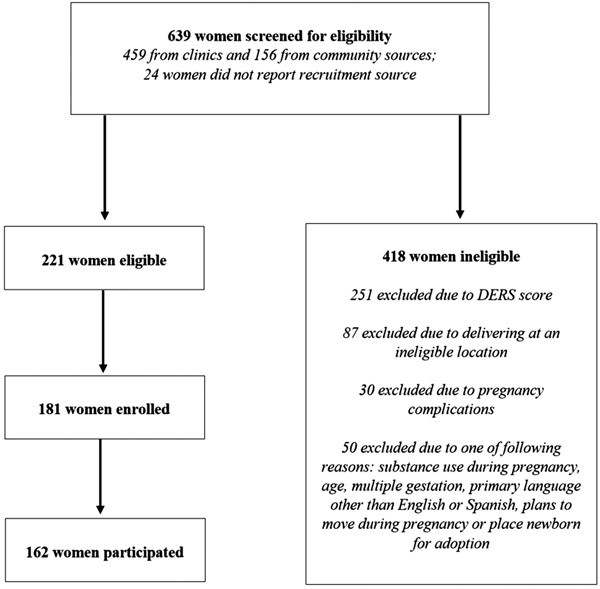
A flow chart describing recruitment is presented in Figure 1. Recruitment efforts resulted in screening 639 women for study eligibility (71.8% from clinics and 24.4% from community sources; 3.8% of women did not identify recruitment source). Women were determined to be ineligible largely due to having DERS scores that were already represented in our sample (i.e., low to moderate scores; 39.3%), while 13.6% were excluded due to planning delivery at a location other than a participating hospital, and 4.7% due to pregnancy complications. Another 7.7% of women were excluded due to one of the following reasons: substance use during pregnancy, age, multiple gestation, a primary language other than English or Spanish, and plans to move during pregnancy or place the newborn for adoption after birth. A total of 594 women completed the DERS during the screening process (M = 74.16, SD = 23.14). Women with psychiatric diagnoses were prioritized for recruitment at clinics. This sample therefore does not reflect the general population, which is consistent with our attempt to recruit 33% of our sample with high levels of emotion dysregulation. As expected, the final sample for the study was less normative than the screening sample (M = 80.19, SD = 26.79), indicating that the screening process resulted in a successful oversampling of women with low and high levels of emotion dysregulation.
Flowchart depicting number of women recruited, screened, eligible, and consented for study participation.

Of the 221 eligible women, 181 women enrolled in the study and were scheduled for a prenatal visit in their choice of English or Spanish (4.9% of women completed the visit in Spanish). Women were also e-mailed a packet of online questionnaires and were asked to complete the packet prior to the scheduled laboratory visit. This packet began with a written informed consent form, and then assessed basic demographic information, stress, mental and physical health, social support, and substance use. Of the women enrolled in the study, 19 women were dropped due to incomplete data (i.e., completed less than half of the prenatal protocol). The final sample size was 162 women. Attrition analyses indicated that women who dropped out of the study prematurely were not statistically significantly different in age, race, ethnicity, marital status, or DERS scores compared to those who completed the prenatal visit (all ps > .05).
Laboratory visit
Laboratory visits were completed between 26 and 40 weeks gestation (mean = 33.58, SD = 2.99). Upon arriving for the visit, women provided written informed consent. Thereafter, they were oriented to the structure of the visit in which they would be connected to ambulatory physiological devices by a female research assistant, asked to complete a series of laboratory tasks including the baby cry task reported here, and undergo an interview. Interviews were completed by trained project staff (i.e., a postdoctoral scholar, graduate student, or advanced postbaccalaureate scholar), and included semistructured clinical interviews assessing stress, mood, borderline symptoms, self-injury, and social supports. Women were debriefed at the conclusion of the laboratory visit and thanked for their participation. All 162 women completed the online questionnaires, and 160 women completed the prenatal interview. One woman did not complete the prenatal interview due to a personal emergency, and a second chose to end the visit after completing the Life Stress Interview.
Infant cry
Women watched a series of brief video clips comprising the infant cry tasks. All clips were 1 min in duration, and the series began with a neutral seascape baseline, which comprised a view of the ocean with waves washing in and out, followed by an infant play task, in which a girl infant was seen playing with a toy with a female adult (only the adult's arms and part of her body were visible); an infant cry task, in which the same girl infant was seen sitting and crying by herself; and with a seascape recovery depicting the same ocean scene as during the seascape baseline. Women's psychophysiological responses to hearing infant cries are particularly relevant for research on perinatal distress. Infant cries are the first acoustic signals women receive after birth, and maternal responses to those cries offer insight into maternal mental health and infants’ socioemotional development (Ablow, Marks, Feldman, & Huffman, Reference Ablow, Marks, Feldman and Huffman2013; Joosen et al., Reference Joosen, Mesman, Bakermans-Kranenburg, Pieper, Zeskind and van IJzendoorn2013; Leerkes, Su, Calkins, Supple, & O'Brien, Reference Klonsky2016).
Measures
Emotion dysregulation
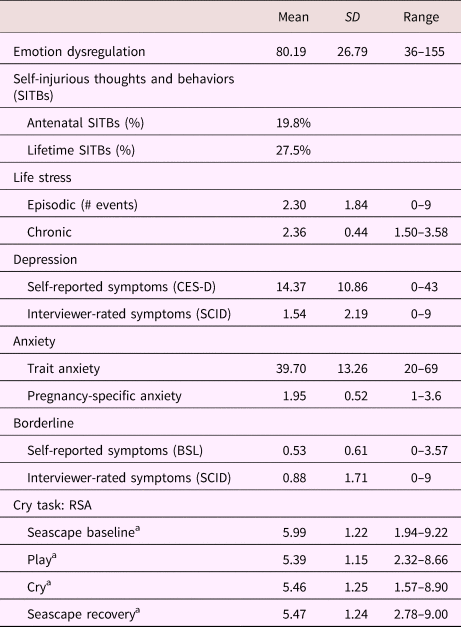
Women's self-reports of emotion dysregulation were obtained using the DERS (Gratz, & Roemer, Reference Gratz and Roemer2004; see Table 1). Women were asked to identify how often each of 36 items applied to them on a scale ranging from 1 (almost never) to 5 (almost always). Sample questions include “I experience my emotions as overwhelming and out of control,” “When I'm upset I believe that my feelings are valid and important” (reverse-scored), and “When I'm upset I lose control over my behaviors.” A total score was calculated by summing each of 36 items. Alpha scale reliability was α = 0.96.
Women's emotion dysregulation, mental health, and psychophysiological responsivity

Note: Means and standard deviations were computed using full information at half likelihood with robust standard errors. SI, self-injurious. CES-D, Center for Epidemiological Studies Depression Scale. SCID, Structured Clinical Interview for DSM-5. BSL, Borderline Symptom List. aScores reflect average respiratory sinus arrhythmia (RSA) responsivity across all 30-s epochs corresponding to each task.
Stress
Women were interviewed about chronic and episodic (i.e., acute) stressors occurring within the last 6 months using the UCLA Life Stress Interview (Hammen et al., Reference Hammen, Cheri, Gordon, Burge, Jaenicke and Hiroto1987). Interviewers assessed experiences of stress in each of the following domains: close friendships, relationship with partner, coparenting with baby's father, dating, relationship with family (mother, father, and siblings), finances, work, not working, neighborhood environment, school, and health (self and family). Interviewers rated women's levels of chronic stress in each domain on a 5-point scale tied to behaviorally specific anchor points; scores of 1 corresponded to exceptionally positive circumstances, and 5 to exceptionally poor or adverse circumstances. A chronic stress score was calculated by averaging scores across all domains. Episodic stressors corresponding to each domain were assessed by asking whether women had experienced any significant events in each domain in the last 6 months. Objective stress corresponding to each of these events was rated by teams of at least two other independent raters on a scale ranging from 1 (no or minimal impact) to 5 (severe impact). An episodic stress score was calculated by summing the total number of discrete episodic stressors with objective stress scores of 2 (mild impact) or higher. Following the scoring protocol, a subset of events (5.5%) were rated by two teams of raters to ensure interrater reliability. Interrater reliability was assessed using a two-way mixed, consistency, average-measures intraclass correlation, and indicated an intraclass correlation of .89.
SITBs
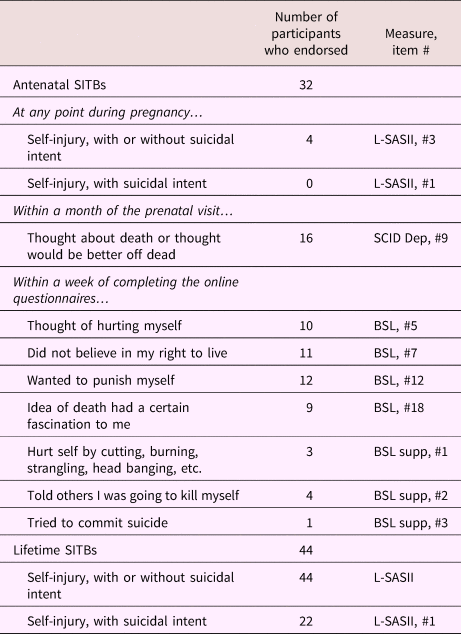
Women's recent and lifetime history of SITBs were assessed using the Lifetime Suicide Attempt Self-Injury Interview (Linehan, Comtois, Brown, Heard, & Wagner, Reference Linehan, Comtois, Brown, Heard and Wagner2006), a semistructured interview that assesses lifetime suicidal and nonsuicidal self-injury. Women were asked about the dates of their most recent suicidal or nonsuicidal self-injury, as well as the date of their first ever self-injury. Women were also asked about the frequency and discrete instances of various forms of self-injury (e.g., cutting, overdosing on drugs, or attempts to strangle or hang oneself); whether self-injury was suicidal, nonsuicidal, or ambivalent (i.e., mixed feelings about intent to die); and times they received medical attention because of self-injury. Total instances of self-injury were calculated for instances with and without intent to die (i.e., suicidal and nonsuicidal self-injury, respectively). Further, years since most recent self-injury was computed by subtracting the date that self-injury occurred from the date of the interview (calculated for both suicidal and nonsuicidal instances). For the purposes of correlational analyses, a dichotomous variable was created to reflect women who endorsed any lifetime self-injury, with or without suicidal intent. In addition, a subset of items from other scales that were related to SITBs were also examined. A complete list of these items and their sources is presented in Table 2. A dichotomous variable was created to reflect women who endorsed any of the 10 items assessing SITBs at any point during pregnancy.
Self-injurious thoughts and behaviors (SITBs)

Note: L-SASII, Lifetime Suicide Attempt Self-Injury Interview. SCID, Structured Clinical Interview for DSM-5. BSL, Borderline Symptom List Short Form. BSL and BSL supplement (“BSL supp”) were administered as part of the online questionnaire; all others were assessed during a semistructured interview. One hundred sixty women completed the L-SASII and SCID Borderline Personality Disorder (“BPD”) and 159 completed the SCID Depression (“Dep”) during the prenatal interview; 159 women responded to all of the above BSL items except for item BSL supp #1, which 1 mom skipped. The first four items are from the BSL-23. The latter three items are from the BSL supplemental items for assessing behavior.
Depression
Women's depressive symptoms were assessed via self-report using the Center for Epidemiologic Studies Depression Scale (CES-D; Radloff, Reference Radloff1977) and via interview using the clinical version of the Structured Clinical Interview for DSM-5 (SCID-5; First, Williams, Karg, & Spitzer, Reference First, Williams, Karg and Spitzer2016). For the CES-D, women were asked to rate how often each of 20 items were true for them in the last week. A total score was created by summing scores for all the items. Although a clinical cutoff was not used for the current study, a cutoff score of 16 or higher has been used to indicate risk for clinical depression (Lewinsohn, Seeley, Roberts, & Allen, Reference Lewinsohn, Seeley, Roberts and Allen1997). Alpha scale reliability was α = 0.91. For the SCID-5, interviewers assessed and rated the extent to which women met criteria for each of nine DSM-5 criteria for a major depressive episode at any point during the last month. Although a distinction was not made between women who did and did not meet criteria for depression in the current study, women have to meet criteria for at least five of nine symptoms (one of which must be depressed mood or anhedonia) to receive a diagnosis of major depression.
Anxiety
Women's trait anxiety and pregnancy-specific anxiety were assessed via self-report using the State-Trait Anxiety Inventory—Trait (STAI-T; Spielberger, Gorsuch, Lushene, Vagg, & Jacobs, Reference Spielberger, Gorsuch, Lushene, Vagg and Jacobs1983) and Pregnancy-Specific Anxiety (PSA; Rini, Dunkel-Schetter, Wadhwa, & Sandman, Reference Rini, Dunkel-Schetter, Wadhwa and Sandman1999), respectively. For the STAI-T, women were asked to self-report on how often each of 20 items described how they generally feel on a scale ranging from 1 (almost never) to 4 (almost always). Items assessed emotional (e.g., “I feel nervous and restless”) and cognitive symptoms of anxiety (e.g., “I worry too much over something that really doesn't matter”). A total score for the STAI-T was created by summing response values for all items. The STAI-T has been validated for use in perinatal populations (Meades & Ayers, Reference Meades and Ayers2011). Alpha scale reliability was α = 0.95.
The PSA assesses pregnancy-specific worries, such as those regarding their personal health and the health of their developing baby, childbirth, and providing care for their newborn. Women were asked to rate how true each of 10 items was for them on a scale ranging from 1 (not at all or never) to 4 (very much or a lot of the time). Sample questions include “I think my labor and delivery will go normally” and “I am concerned (worried) about how the baby is growing and developing inside of me.” A total score was formed by averaging scores for all items. Alpha scale reliability was α = 0.83. Data for the PSA was available for 157 women due to the inadvertent omission of the survey for the first few participants.
Borderline symptoms
Borderline symptoms were assessed via the Borderline Symptom List Short Version (BSL-23) and the Structured Clinical Interview for DSM-5 Personality Disorder (SCID-5-PD; First, Williams, Benjamin, & Spitzer, Reference First, Williams, Benjamin and Spitzer2015). For the BSL-23, women were asked how much they suffered from each of 23 items in the last week on a scale ranging from 0 (not at all) to 4 (very strong). A total score was calculated averaging scores across all items. Total scores of 0–1.49 may be thought of as reflecting nonsignificant symptoms, 1.5–1.99 subclinical symptoms, and 2–4 clinically significant symptoms (Bohus et al., Reference Bohus, Kleindienst, Limberger, Stieglitz, Domsalla, Chapman and Wolf2009). Alpha scale reliability was α = 0.95. Using the SCID-5-PD, interviewers assessed and rated the extent to which women met criteria for each of nine DSM-5 criteria for borderline personality disorder. Although a distinction was not made between women who did and did not meet criteria for borderline personality disorder in the current study, women have to meet criteria for at least five of nine symptoms to receive a diagnosis of borderline personality disorder. Three items from the BSL-Supplement (see Table 2 for a complete list of items) were also used to assess recent SITBs. Women rated how often each of three behaviors occurred in the last week on a scale of 0 (not at all) to 4 (daily or more often).
RSA
Information about women's RSA was derived from electrocardiograph recordings using BioLab acquisition software (version 3.1) and wireless MindWare mobile devices sampled at 500 Hz (MindWare Technologies Ltd., Gahanna, OH). Electrocardiograph was recorded via a three-lead spot electrode pattern with the negative lead on women's right clavicle, the positive lead on the bottom left rib, and the ground lead on the bottom right rib. RSA was scored in 30-s epochs by trained research assistants using MindWare's heart rate variability analysis software. In order to calculate RSA, heart rate variability analysis software automatically identifies R peaks within each QRS complex and checks whether resulting interbeat intervals are within the expected deviation based on surrounding data and expected ranges for an interbeat interval series (Berntson, Quigley, Jang, & Boysen, Reference Berntson, Quigley, Jang and Boysen1990). All data points flagged by the software as potentially aberrant were reviewed and, where appropriate, corrected by trained research assistants. Files with ambiguous or noisy data were referred to the senior author (S.E.C.) for review. In some cases, partial or whole tasks were unusable due to electrode nonadherence to the skin, research assistant error, or excessive movement artifacts. After the signal was cleaned, the heart period time series was detrended, and a Fast Fourier Transform was used to identify high-frequency variation between .12 and .42 Hz (Berntson et al., Reference Berntson, Quigley, Lozano, Cacioppo, Tassinari and Berntson2016). Following the first pass of cleaning and scoring, boxplots were run to check for outliers, and data for all potential outliers were reexamined for accuracy. For descriptive statistics and correlations, an average RSA score was computed by averaging RSA scores across each of the epochs corresponding to each task. Difference scores considering changes in RSA for each task (i.e., play, cry, and recovery) relative to seascape baseline were computed for correlational analyses. Difference scores were computed by subtracting average RSA during seascape baseline from average RSA for the task (i.e., RSAtask – RSAbaseline) such that positive difference scores reflect increases in RSA from seascape baseline to task, and negative difference scores reflect decreases in RSA from seascape baseline to task.
Covariates
Women's self-reported weight, race, Hispanic/Latina ethnicity, and gestational age were considered for inclusion as covariates. The criterion established pre-hoc for covariate inclusion was that variables would be included if they were statistically significantly correlated with baseline levels of RSA and/or any of the difference scores.
Analytic approach
Variables were inspected for normality prior to analyses, and all categorical variables were dummy coded to avoid nonessential multicollinearity. To characterize the associations between emotion dysregulation and mental health, descriptive statistics and correlations among key demographic variables, emotion dysregulation, and mental health were run using full information maximum at likelihood with robust standard errors in Mplus 8.0. Scale-level missing data analyses were addressed using full information maximum at likelihood, and scores were only computed when all items were present in order to minimize bias (final ns ranged from 148 to 162). To investigate whether emotion dysregulation would explain variability in RSA responsivity, women's RSA responsivity to the baby cry task was analyzed using multilevel modeling. Multilevel models are well suited for addressing the hierarchical structure of the data (i.e., multiple repeated measures of RSA nested within individuals), and account for both within- and across-person variability in RSA. Changes in RSA responsivity were assessed separately for each task, and assessed changes in RSA responsivity relative to baseline levels (i.e., baseline to play, baseline to cry, and baseline to recovery).
For each task, several multilevel models of increasing complexity (i.e., unconditional model, random intercept and fixed slope, and random intercept and random slope) were run to identify the best fitting model. The unconditional model, or random analysis of variance model, did not include any predictors, and estimated the within- and across-person variance in RSA responsivity. The random intercept and fixed slope model estimated linear changes from baseline to task, such that baseline levels of RSA (i.e., intercepts) varied across women, but linear change was the same for all women. The random intercept and random slope model estimated linear changes from baseline to task such that both baseline levels of RSA (i.e., intercepts) and changes from baseline to task varied across women. In the fixed and random slope models, task was dummy coded so that 0 = baseline and 1 = task (i.e., play, cry, or recovery), which enabled estimation of linear change in RSA from baseline to task. Covariates that were significantly correlated with baseline or difference scores for RSA were mean centered and regressed on the random intercept in the fixed and random slope models, and also on the random slope in the random slope models. Differences in model fit were assessed using the Satorra–Bentler scaled log-likelihood ratio tests (Satorra, & Bentler, Reference Satorra and Bentler2010), and compared fit between the unconditional and fixed slope models; and the fixed slope models and random slope models. Once the best fitting model was identified, emotion dysregulation (i.e., scores on the DERS) was mean centered and entered as a Level 2 predictor of baseline levels of RSA and changes in RSA from baseline to task.
 $$\eqalign{{\rm \;\ RS}{\rm A}_{{\rm ij}} & = {\rm} {\rm \gamma} _{{\rm 00}} + {\rm} {\rm \gamma} _{{\rm 01}}{\rm TAS}{\rm K}_{{\rm ij}} + {\rm} {\rm \gamma} _{{\rm 10}}{\rm DER}{\rm S}_{\rm j} \cr & \quad + {\rm} {\rm \gamma} _{{\rm 11}}\lpar {{\rm TASK{^\ast}DERS}} \rpar _{{\rm ij}} + {\rm} {\rm \mu} _{{\rm 0j}} + {\rm} {\rm \mu} _{{\rm 1j}}{\rm TAS}{\rm K}_{{\rm ij}} + {\rm} {\rm r}_{{\rm ij}{\rm.}}} $$
In this model of RSA responsivity during any given task, i represents average RSA in a 30-s epochs for individual j. TASK is a dummy coded variable, where 0 = baseline and 1 = task (i.e., anticipation, speech, math, etc.). γ00 represents mean levels of RSA during baseline. γ01 represents the linear slope in RSA from baseline to task, such that a statistically significant value indicates a significant change in RSA from baseline to task. γ10 represents the average effect of emotion dysregulation on baseline levels of RSA, such that a statistically significant value indicates that emotion dysregulation is significantly associated with pretask levels of RSA. γ11 represents the average interaction effect of emotion dysregulation and task on RSA, such that a statistically significant value indicates that emotion dysregulation is significantly associated with changes in RSA from baseline to task. Because emotion dysregulation was mean centered, all effects can be interpreted as average effects at mean levels of emotion dysregulation.
The Benjamini–Hochberg procedure (Benjamini & Hochberg, Reference Benjamini and Hochberg1995) was employed to account for the possible inflation of Type I error due to the multiple contrasts, and corrected for a false positive rate of 5%. Because some of the estimates are redundant across models (i.e., of baseline values of physiology, and of the influence of emotion dysregulation on baseline levels of physiology), the Benjamini–Hochberg procedure corrected for the eight unique estimates across models as follows: baseline RSA, DERS on baseline RSA, RSA slope during play, emotion dysregulation on RSA slope during play, RSA slope during cry, emotion dysregulation on RSA slope during cry, RSA slope during recovery, and emotion dysregulation on RSA slope during recovery. Finally, simple slope analyses were used to probe statistically significant interaction effects (i.e., of DERS on RSA slope from baseline to task) using the MODEL CONSTRAINT command in Mplus, and estimated simple intercepts and slopes at 1 SD above and below mean levels of DERS.
Results
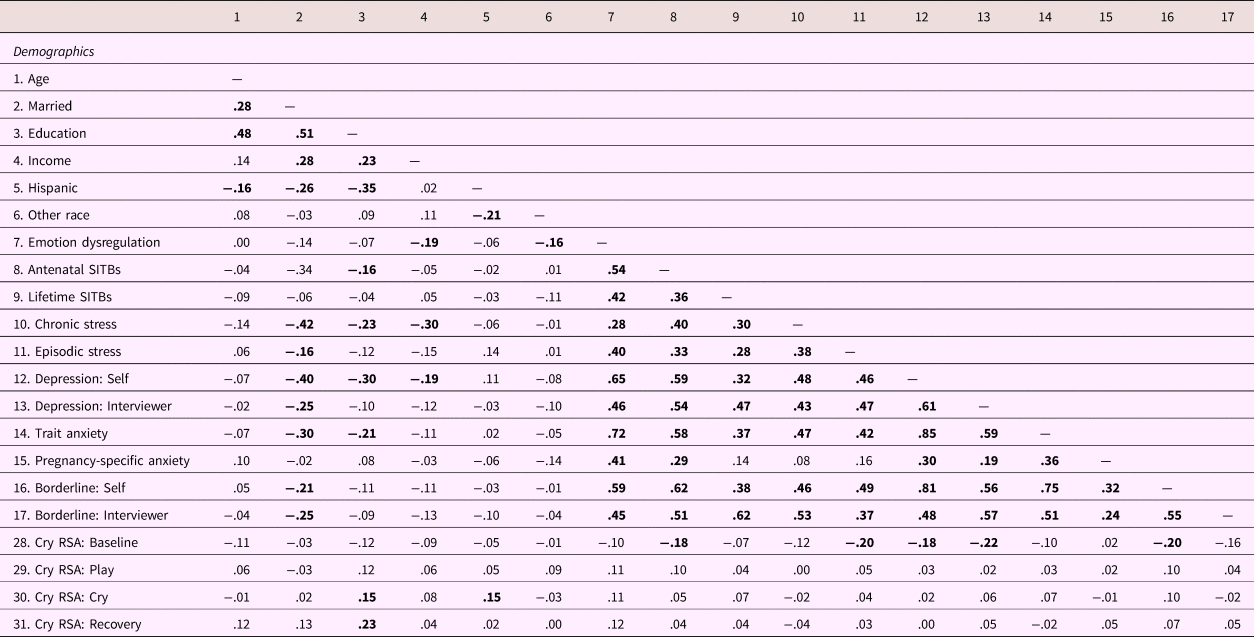
Descriptive information and correlations are presented in Tables 1 and 3, respectively. Consistent with the recruitment criteria, women reported on average slightly higher levels of emotion dysregulation and greater variability in emotion dysregulation compared to women in the original DERS validation sample (Gratz & Roemer, Reference Gratz and Roemer2004), all of whom were undergraduate psychology students (M = 80.19, SD = 26.79 in the current sample, compared to M = 77.99, SD = 20.72 in the validation sample). Women who were higher in emotion dysregulation reported lower annual household incomes and were more likely to be White. Women's self-reported emotion dysregulation was significantly positively correlated with all types of stress (rs ranged from .28 to .40) and distress (rs ranged from .41 to .72), and were moderately weak to moderately strong in nature. Women's baseline RSA was significantly correlated with some indices of stress (i.e., episodic stress; r = –.20) and distress (i.e., depression and self-reported borderline symptoms; rs ranged from –.18 to –.20), but moderately so.
Correlations among demographics, emotion dysregulation, and women's mental health

Note: Correlations were computed using full information at maximum likelihood with robust standard errors. SITB, self-injurious thoughts and behaviors. RSA, respiratory sinus arrhythmia. a1 = Married, 0 = Other; bH1=Hispanic/Latina, 0 = Not Hispanic/Latina. c0 = White race, 1 = Other race; ddifference score from baseline to task (e.g., task − baseline), so that positive scores represent increases in RSA responsivity relative to baseline, and negative scores represent decreases in RSA responsivity relative to baseline.
Emotion dysregulation and women's SITBs
Women's self-reported emotion dysregulation was moderately positively correlated with more reports of antenatal (i.e., pregnancy) and lifetime SITBs. Self-reported emotion dysregulation was more strongly correlated with antenatal SITBs than was lifetime self-injury, which was moderately correlated. Baseline RSA was negatively correlated with antenatal SITBs, but was not significantly correlated with lifetime SITBs.
Antenatal SITBs
Detailed information about women antenatal and lifetime SITBs is presented in Table 2. Approximately 20% of women (n = 32) endorsed any SITBs at some point during pregnancy. Four women reported nonsuicidal self-injury during pregnancy, and one woman reported that she had tried to commit suicide during pregnancy. All four of the women who endorsed nonsuicidal self-injury during pregnancy had engaged in self-harm in the past, and the total number of discrete instances of suicidal or nonsuicidal self-harm these women reported ranged from 11 to 2,192. Review of zero-order correlations revealed that women who reported antenatal SITBs were less likely to be married, were less educated, more likely to endorse lifetime SITBs, more likely to report that their pregnancy was unwanted, and more likely to endorse all forms of stress and distress.
Lifetime SITBs
Approximately 28% of women (n = 44) reported that they had ever intentionally injured themselves, and 8.8% of women (n = 14) had ever intentionally injured themselves with an intent to die. Among women who reported any self-injury history (i.e., with or without an intent to die), women were on average approximately 14 years old the first time they self-injured (M = 14.84, SD = 4.94, range = 4–30). The most recent self-injury was on average 9.19 years ago (SD = 7.27, range = 0–30). Most women reported that they had only ever self-injured once in their lives, and total instances of self-injury ranged from 1 to 625, excluding one woman who reported 2,070 instances of self-injury. Among women who reported suicidal self-injury, women reported that the last time they had engaged in suicidal self-injury was on average 8.88 years ago (SD = 6.66, range = 0–22). Most of these women reported that they had only self-injured with suicidal intent once in their lives, and total instances of self-injury ranged from 1 to 7, excluding the same woman as above, who reported 117 instances of suicidal self-injury. A subset of 19 women also reported instances of self-injury in which they were ambivalent about whether or not they wanted to die. Instances of ambivalent self-injury ranged from 1 to 14, excluding one mother (different from the woman above) who reported 181 such instances. The most common form of self-injury was cutting (68.2% of those who had ever engaged in self-injury), followed by intentionally overdosing on drugs/medications (43.2%). Fifteen women who had ever engaged in self-injury received some kind of medical attention at least once (mode = 1, range = 1–5); medical attention comprised anything from inpatient psychiatric hospitalization to admission to a medical intensive care unit. No demographic factors were significantly correlated with women's lifetime self-injury. Women who reported a history of self-injury were significantly more likely to endorse all types of stress and distress except for pregnancy-specific anxiety.
Psychophysiological responsivity
Preliminary analyses
Prior to running multilevel model analyses, baseline levels of RSA and difference scores from baseline to task were correlated with women's weight, race, Hispanic/Latina ethnicity, and gestational age to identify covariates for inclusion. Women's weight was significantly correlated with changes in RSA during the cry task from baseline to play (r = –.17, p = .015), baseline to cry (r = –.18, p = .005), and baseline to recovery (r = –.14, p = .040). Women's Hispanic/Latina ethnicity (0 = non-Hispanic/Latina, 1 = Hispanic/Latina) was significantly correlated with changes in RSA during the baby cry task. Women's gestational age was not significantly correlated with baseline or changes in RSA. Thus, women's weight and Hispanic/Latina ethnicity were included as covariates in subsequent multilevel models.
Multilevel models
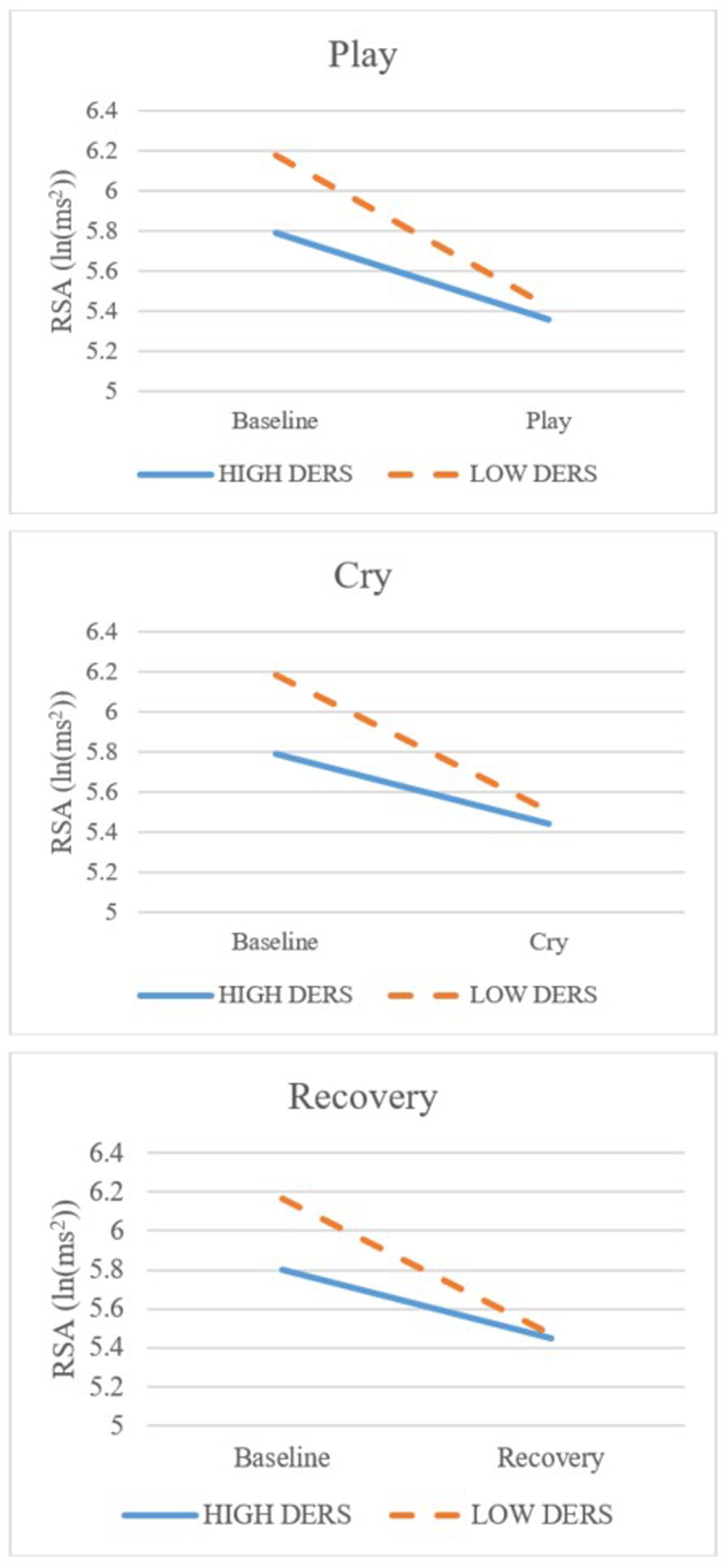
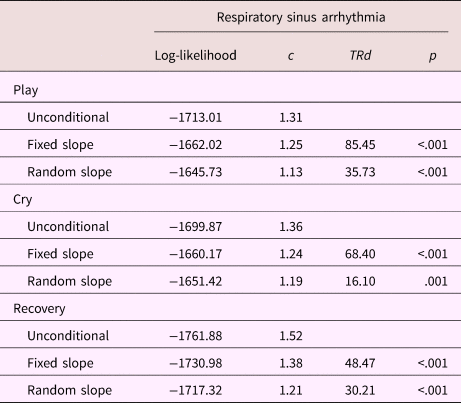
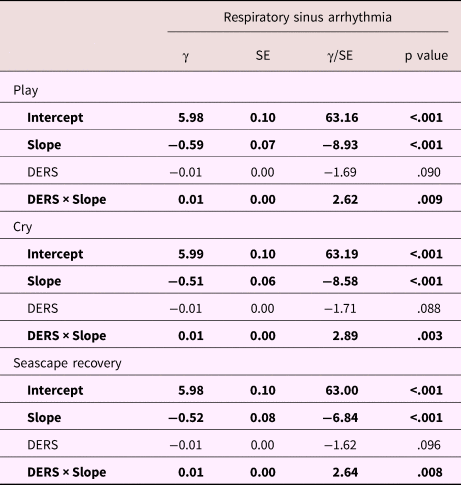
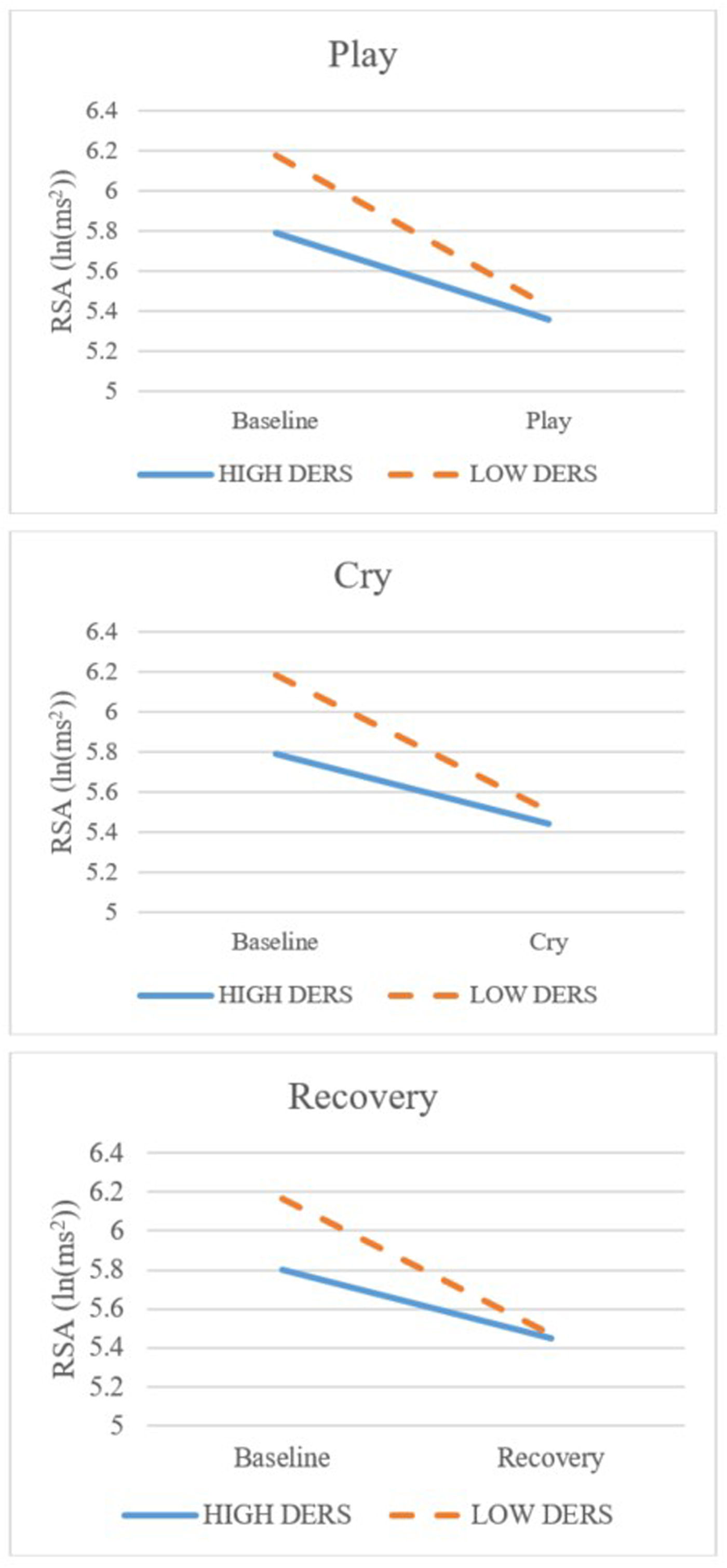
Model fit for the series of unconditional, fixed slope, and random slope models are presented in Table 4. In all cases, the random slope model appeared to fit the data best, suggesting that rates of change in psychophysiology from baseline to task tended to differ across women. Thus, a random slope model was used for all subsequent multilevel models. Results from the final set of multilevel models is presented in Table 5. After applying the Benjamini–Hochberg correction for multiple contrasts, the set of models considering RSA responsivity in response to the baby cry tasks indicated that RSA decreased significantly during each of the play, cry, and recovery tasks relative to baseline levels of RSA. Emotion dysregulation was not significantly associated with baseline levels of RSA, but did appear to moderate changes in RSA during each of the tasks. Women with lower levels of emotion dysregulation showed greater decreases in RSA in response to all cry tasks compared to women with higher levels of emotion dysregulation (see Figure 2). Simple slope analyses across tasks indicated that women with high levels of emotion dysregulation showed smaller decreases (i.e., more blunted responses) in RSA across all tasks compared to women with low levels of emotion dysregulation (high emotion dysregulation: play, B = –0.42, p < .001; cry, B = –0.36, p < .001; and recovery, B = –0.70, p < .001; low emotion dysregulation: play, B = –0.77, p < .001; cry, B = –0.67, p < .001; and recovery, B = –0.35, p < .001).
Average respiratory sinus arrhythmia (RSA) on infant cry tasks among women with high and low emotion dysregulation. SS, seascape. Mean levels of RSA presented above were computed by recentering multilevel models at 1 SD above and below mean levels of emotion dysregulation, and reflect RSA when controlling for maternal Hispanic/Latina ethnicity and weight.
Model fit for fixed and random effect models

Note: TRd, Satorra–Bentler scaled log-likelihood ration test. Degrees of freedom for all unconditional models was df = 5; fixed slope models, df = 9; and random slope models, df = 14.
Physiological responsivity during the infant cry tasks, moderated by emotion dysregulation

Note: DERS, Difficulties in Emotion Regulation. γ, unstandardized coefficient. SE, standard error. Hispanic/Latina ethnicity and weight were included as covariates. Bold represents p values that were statistically significant after applying the Benjamini-Hochberg correction.
Discussion
The current study sought to characterize emotion dysregulation among pregnant women and its associations with various mental health concerns, and with lifetime and recent SITBs. This study was among the first to examine associations between self-reported emotion dysregulation and mental health concerns during pregnancy, provide a detailed description of recent and lifetime SITBs during pregnancy, and also to examine how self-reported emotion dysregulation corresponds with RSA, a biomarker of emotion dysregulation. Results indicate that lifetime and recent rates of SITB were prominent in this sample of pregnant women recruited to reflect a range of emotion dysregulation. In addition, self-reported emotion dysregulation was associated with blunted RSA responsivity in response to short video clips of a baby playing and crying.
Emotion dysregulation and mental health during pregnancy
A key objective of the current study was to explore associations among emotion dysregulation and mental health across multiple levels of analysis. Consistent with hypotheses, both self-reported emotion dysregulation and RSA were associated with mental health symptoms in expected directions. Pregnant women with higher levels of self-reported emotion dysregulation, and lower baseline levels of RSA, reported more mental health symptoms. The finding that both self-reported emotion dysregulation and RSA were associated with indices of stress and distress in the current study was consistent with the notion that emotion dysregulation is a multilevel construct that reflects transdiagnostic risk for psychopathology. Furthermore, the fact that these associations were replicated across multiple levels of analysis within a sample of pregnant women extends prior findings and provides compelling support for the utility of taking a transdiagnostic approach to recruitment of clinical pregnant samples. Doyle and Cicchetti (Reference Doyle and Cicchetti2018) have recently highlighted the need to move away from overly broad, heterogeneous constructs like “stress” and “distress” and toward theoretically rigorous, yet cross-cutting constructs like emotion dysregulation in research on perinatal mental health. Continued work investigating mechanisms linking stress and distress among women with transdiagnostic risk may provide important insight into the mechanisms underlying the developmental origins of health and disease.
Our consideration of SITBs in this sample further exemplifies this point. As noted previously, approximately 30% of women who participated reported lifetime engagement in self-injury, and approximately 20% of women endorsed SITBs at any point during pregnancy. Of note, a subset of the items that assessed antenatal SITBs in the current study only assessed SITBs that had occurred over the course of 1 week. Therefore, it is likely that 20% represents the lower limit of women in the current study who experienced SITBs at any point during pregnancy. Although the prevalence of SITB during pregnancy is unknown, these rates are elevated compared to relatively recent estimates that 5%–14% of all women of reproductive age may experience SITBs during the perinatal period (Lindahl et al., Reference Lindahl, Pearson and Colpe2005). The revelation that rates of recent SITBs were as high as they were was startling, yet not altogether surprising given that the study purposefully oversampled for women with higher levels of emotion dysregulation, and underscores the dire need for research investigating the risk mechanisms underlying antenatal SITBs.
Demographically, women in the current sample who reported antenatal SITBs were less likely to be married, less educated, more likely to report that their pregnancy was unwanted, and more likely to have reported past self-injury. Furthermore, antenatal SITBs were moderately strongly associated with self-reported emotion dysregulation, baseline RSA, and all forms of stress and distress. The fact that antenatal SITBs were associated with both psychological and psychobiological indices of emotion dysregulation extends upon extant work in nonpregnant samples demonstrating the transdiagnostic nature of SITBs to a pregnant sample. Theoretical and empirical work considering SITBs in nonpregnant samples has demonstrated that self-injurious behaviors likely serve as maladaptive attempts to self-regulate emotional distress (e.g., the experiential avoidance model; Chapman, Gratz, & Brown, Reference Chapman, Gratz and Brown2006; Klonsky, Reference Klonsky2007). Thus, it may be especially important for future research examining risk factors for perinatal SITBs to move beyond samples of women with depression to incorporate a transdiagnostic lens. For example, one promising avenue of research could investigate whether transdiagnostic screeners may outperform traditional screeners for identifying subsets of women at risk for perinatal psychopathology. In recognizing the transdiagnostic underpinnings of nonsuicidal self-injury, Perez, Venta, Garnaat, and Sharp (Reference Perez, Venta, Garnaat and Sharp2012) have proposed that a cutoff score of 21.5 on the emotion regulation strategies subscale of the DERS (Gratz & Roemer, Reference Gratz and Roemer2004), which could potentially identify those at risk for nonsuicidal self-injury. Further research should examine this in larger transdiagnostic samples.
As noted previously, associations between RSA and mental health emerged in expected directions, and were weaker and emerged less consistently than between self-reported emotion dysregulation and mental health. Research that has considered the correspondence between women's psychological and physiological experiences of stress during pregnancy have documented a decrease in women's physiological, but not psychological, responsivity during pregnancy. For example, in a study that compared parasympathetic and psychological reactions to a social stress test in pregnant and nonpregnant women, Klinkenberg et al. (Reference Klinkenberg, Nater, Nierop, Bratsikas, Zimmermann and Ehlert2009) found that pregnant and nonpregnant women's subjective appraisals of stress in response to the task were not significantly different, but that pregnant women displayed significantly less parasympathetic activity than their nonpregnant counterparts. Thus, the finding that baseline RSA continued to demonstrate expected associations with multiple indices of mental health during pregnancy further bolsters support for the notion that RSA serves as a robust biomarker of transdiagnostic risk, even during pregnancy.
Moderation of RSA by self-reported emotion dysregulation
Another study aim was to explore whether self-reported emotion dysregulation would explain variability in RSA responsivity in response to a short video clip of an infant crying. Results indicated that self-reported emotion dysregulation was significantly associated with changes in RSA in response to videos of an infant playing, an infant crying, and during recovery, such that women who self-reported higher levels of emotion dysregulation exhibited smaller decreases in RSA during all subsequent tasks relative to baseline levels of RSA. One possible explanation for these differences may be that women who self-reported higher levels of emotion dysregulation exhibited more blunted response patterns compared to those who self-reported lower levels of emotion dysregulation. Most work that has considered women's physiological responses to video or audio recordings of infants has focused on responses to infants’ cries. This work suggests that women with higher levels of emotion dysregulation show reduced psychophysiological responsivity to infant cries. For example, Schuetze and Zeskind (Reference Schuetze and Zeskind2001) have found that whereas most mothers rated infants’ cries as arousing and aversive, mothers who were severely depressed were significantly less likely to do so. Similarly, Riem et al. (Reference Riem, Bakermans-Kranenburg, Pieper, Tops, Boksem, Vermeiren and Rombouts2011) found that women of reproductive age who endorsed more symptoms of depression showed reduced physiological arousal (i.e., HR) when listening to audio recordings of an infant crying. Physiological arousal in response to infant cries is believed to be a critical motivator for parents’ behavioral responsivity to infant cues, such that parents who experience arousal in response to infant cry sounds are more likely to respond contingently to curtail infant crying (Del Vecchio, Walter, & O'Leary, Reference Del Vecchio, Walter and O'Leary2009). Our findings are consistent with literature suggesting that women with depression are less reactive to infant cues and, as a result, may behave in ways that are less attuned.
Less research has considered women's physiological responsivity when viewing videotapes of infants playing. At least one study that has done so suggests conversely that, at least during the first postpartum year, mothers’ physiological activity changes minimally when viewing videotapes of infants playing compared to baseline levels. For example, one study by Ablow et al. (Reference Ablow, Marks, Feldman and Huffman2013) that used a similar set of film clips (seascape baseline, infant playing, and infant crying) found that mothers’ RSA was not significantly different during the baseline and play tasks. In contrast, mothers’ RSA during the cry task decreased significantly relative to baseline, but only for mothers with secure attachment styles. However, given the dearth of work considering parasympathetic responsivity to infants’ positive affective states, and parasympathetic responsivity during pregnancy in general, it is difficult to determine why our findings for the infant-play clip differ from those of Ablow et al. (Reference Ablow, Marks, Feldman and Huffman2013). Further work investigating RSA responsivity and emotion dysregulation during pregnancy may better clarify the nature and implications of observed differences in RSA responsivity.
Another possible explanation for the different patterns of RSA responsivity for women who self-reported higher emotion dysregulation could be a “floor effect” due to lower baseline RSA. Specifically, visual inspection of plots from our simple slope analyses indicate that women who self-reported more emotion dysregulation had relatively lower baseline RSA, while task-related RSA was relatively similar across levels of emotion dysregulation. Therefore, it is conceivable that the apparent differences in RSA responsivity from baseline to tasks better reflect the fact that women who started with relatively low levels of RSA (i.e., those who self-reported more emotion dysregulation) were simply unable to exhibit much lower levels of RSA than they started with. Nonetheless, even though the main effect of self-reported emotion dysregulation on baseline RSA trended in the expected negative direction, it was not statistically significant. Thus, the possibility that women who self-reported high emotion dysregulation may exhibit a floor effect during otherwise physiologically arousing tasks should be interpreted with caution, pending further research.
Strengths and limitations
The current study had several strengths, including the theoretically rigorous approach that guided study hypotheses and in the transdiagnostic recruitment strategy employed in the study design. In addition, this study was preregistered prior to study analyses, and well before data collection was completed, which we hope will support the replicability and reproducibility of this research. Nonetheless, the study was not without limitations. First, data considered in the current study were collected at a single time point, and thus are cross-sectional in nature. Therefore, the study was limited in its ability to speak to the direction of effects (e.g., whether emotion dysregulation preceded stress and distress or vice versa). Second, although the current study made a directed effort to oversample racial and ethnic minority women, sample sizes of different racial/ethnic subgroups were small overall and precluded the ability to consider differences in the associations among self-reported emotion dysregulation, RSA, and stress and distress. There is a dearth of research examining variability in psychophysiology across racial/ethnic groups in general, but this work suggests that there may be important differences across racial/ethnic groups. Nonetheless, the fact that nearly half the sample self-identified as a member of a racial/ethnic minority (i.e., non-White) group is a relative strength.
Summary and conclusions
In sum, results from the current study lend support for the notion that emotion dysregulation represents a multilevel, transdiagnostic indicator of risk for psychopathology during pregnancy. The current study is among the first to consider emotion dysregulation during pregnancy, and provides initial evidence that it may prove a promising avenue for identifying SITBs and mental health concerns more broadly during pregnancy. Our findings may have implications not only for research but also for practice. Despite increased recognition of the importance of women's mental health during the perinatal period, the status quo for identifying at-risk women has been to rely on depression screeners. While critical for identifying women most in need of mental health support in pregnancy, this approach is in contrast to theory surrounding SITBs both in the general population and in the antenatal period. Further work considering the utility of transdiagnostic screeners of emotion dysregulation may be important for identifying subsets of women with serious forms of psychopathology, including forms that may be most insidious. Finally, this work also underscores a need to better understand the extent to which transdiagnostic risk may underlie the intergenerational transmission of emotion dysregulation. A wealth of research has now established links between stress and distress during pregnancy with a host of infant birth and developmental outcomes. However, this work has likewise been hampered by extant, categorical approaches to characterizing stress and distress. Examination of the extent to which psychological and physiological emotion dysregulation observed in the current study may contribute to fetal outcomes, as discussed in Ostlund et al. (Reference Ostlund, Vlisides-Henry, Crowell, Raby, Terrell, Brown and Conradt2019 [this issue]), will be critical for advancing the next generation of research on the developmental origins of health and disease.
Data
This study is part of a study preregistered on June 19, 2018. The preregistered document and revisions are available at: https://osf.io/gnfs7/. Raw data and syntax will be uploaded to the Open Science Framework postpublication.
Acknowledgments
We would like to thank all of the families who generously donated their time to participate in our study. We would also like to thank the dedicated research assistants from the Child Adaptation and Neurodevelopment (CAN) Lab; Mike Varner and Bob Silver for their support of the BABY study and for providing their dedicated OBGYN Research Network staff to help with screening and recruitment; Connie Hammen for her assistance with training and scoring the UCLA Life Stress Interview; and the University of Utah Vice President's Clinical Translational Research Scholars program for their mentorship and grantsmanship assistance.
Financial support
This manuscript was supported by the National Institute of Mental Health under Award Number R21MH109777 (PI Crowell, Co-I Conradt, consultant Monk), a Career Development Award from the National Institute on Drug Abuse 7K08DA038959-02 (E.C.), the Women's Reproductive Health Research Career Development Program 1K12 HD085816 (M.C.S.), and grants from the University of Utah Consortium for Families and Health Research and Interdisciplinary Research Pilot Program. The content is solely the responsibility of the authors and does not necessarily represent the official views of the National Institute of Mental Health, National Institute on Drug Abuse, or the National Institutes of Health.