

Risk is clearly an important concept in psychiatry. Risk assessment and management are increasingly recognised as part of psychiatric practice, with an expectation that the assessment and management of risk will form part of everyday clinical work. Clinical practice exists within a political and legal context which is dominated by the ‘risk agenda’ (Reference HollowayHolloway, 1998: p. 540), and the consequences of risk assessment for both patient and psychiatrist are often significant.
Despite its centrality to psychiatric practice, theoretical analysis of both risk assessment and management in psychiatry is relatively under-developed. It is important to distinguish between risk and danger, words that are often used interchangeably. However, they have quite different meanings. Dangerousness refers to a binary concept, where an individual either is, or is not, considered dangerous. It has limited use within clinical practice, where binary decisions are not always required. In contrast, risk is a more complex concept, which has been referred to as ‘a characteristic of the individual's response to his or her changing situation and may include more than one outcome’ (Reference Alberg, Hatfield and HuxleyAlberg et al, 1996: p. 10).
Attempts to understand risk assessment have traditionally been dominated by a strong belief in the objective nature of risk. Risk assessment in medicine in general is, arguably, underpinned by a belief in objectivity and certainty, features of the mechanistic or Newtonian scientific paradigm. However, a general shift has occurred within science from a mechanistic towards what has been termed a probabilistic paradigm. The former bases its ideas of good scientific practice on a belief in pure objectivity and in causal relationships that are certain and universal. The latter acknowledges a degree of uncertainty in causal relationships, and believes in a continuum between the objective and subjective. It is inspired by Heisenberg's uncertainty principle, which asserts that an object cannot be observed without its position and movement being affected by the observation (Reference Bursztajn, Feinbloom and HammBursztajn et al, 1990: p. 31). More recently, post-modernism and social constructivism within the broader social sciences have also had a significant impact on the way in which risk assessment and uncertainty are approached. Whereas medicine remains largely dominated by positivism, which seeks to make universal and true predictions, the broader social sciences have moved towards an allowance of uncertainty, with an acceptance that ‘knowledge is not equivalent to truth and certainty’ (Reference Van Asseltvan Asselt, 2000: p. 81).
In terms of its implications for risk assessment practices, there is recognition in science of the unavoidable need to incorporate subjective judgements within risk management processes. It has been argued that medicine, including psychiatry, has not kept up with these shifts in thinking (Reference Bursztajn, Feinbloom and HammBursztajn et al, 1990: p. 56), continuing to strive for objectivity and certainty. Within this context, psychiatrists have traditionally paid little attention to the role of uncertainty in their risk assessments.
Traditional approaches to risk assessment in psychiatry
Actuarial approaches
The pursuit of objectivity is clearly visible in psychiatry, where the assessment of risk has been characterised by two approaches, the actuarial and the clinical (see Reference KapurKapur, 2000). The study of risk has been dominated by what has become known as an actuarial approach, a term that generally refers to any mathematical means of combining information in order to predict risk (Reference BuchananBuchanan, 1999). Research in this area has sought to identify the variables that clinicians take into account when making assessments of risk, or to identify the characteristics of a case that seem to predict future violence. Its primary contribution has been to identify a series of risk factors that predict outcomes of either violence towards others or acts of suicide. This information has informed the development of several standardised instruments to identify higher-risk patients (e.g. see Reference O'Rourke, Hammond and DaviesO'Rourke et al, 1997; Reference Monahan, Steadman and RobbinsMonahan et al, 2000; Reference SteinStein, 2002).
Clinical approaches
Actuarial approaches are the most widely used in risk research, whereas within clinical practice, psychiatrists take what is usually referred to, unsurprisingly, as a ‘clinical approach’ to risk assessment. There is an ongoing debate about whether clinicians should be using actuarial or clinical approaches to assess risk in their clinical practice (Reference Grove and MeehlGrove & Meehl, 1996). Although both approaches are recognised as being important, there seems to be a more recent acceptance among clinicians that clinical judgement, assisted by actuarial information, needs to be prioritised (Reference VinestockVinestock, 1996; Reference BuchananBuchanan, 1999). However, the nature of this ‘clinical approach’ to risk assessment has been loosely defined.
Although clinical risk assessment has often been defined simplistically in opposition to actuarial approaches, other definitions range from the broad, such as ‘what occurs when information about risk factors is collated and interpreted through personal judgment by a clinician’ (Reference DavisonDavison, 1997: p. 201), to the more specific and detailed. For example, Reference VinestockVinestock (1996: p. 4) suggests that the assessment of clinical risk ‘requires consideration of several variables: outcome or consequences, likelihood of the outcome, and the timescale of the outcome’. As in the actuarial approaches, where risk assessment is perceived as a ‘test’ that clinicians can get right or wrong (Reference DugganDuggan, 1997), risk in psychiatry usually refers to a negative outcome, which is expressed in binary terms, as either ‘high’ or ‘low’ risk (Reference KapurKapur, 2000). Various risk assessment guides are available to clinicians, providing details about what information to collect. Examples include the Royal College of Psychiatrists’ (1996) guide for assessing and managing risk of harm to other people, as well as guides written by Reference MooreMoore (1996), Reference Alberg, Hatfield and HuxleyAlberg et al(1996) and Reference Gunn, Gunn and TaylorGunn (1993). There is generally an assumption that it will be possible to clearly label patients as either high or low risk.
Acknowledging uncertainty in risk assessment
Close scrutiny of the broader risk literature reveals that the assumption that patients can be clearly and accurately described as low or high risk is false. Compare this binary classification of risk in psychiatry with the situation in disciplines such as business and technical risk analysis, where they have recognised the role of ‘uncertainty’ in risk assessment. Uncertainty has often been referred to as a defining feature of risk (Reference Yates, Stone and YatesYates & Stone, 1992). For example, in business, risk has been described as ‘a course of action or inaction, taken under conditions of uncertainty, which exposes one to possible loss in order to reach a desired outcome’ (Reference KindlerKindler, 1990: p. 12). Although the precise relationship between uncertainty and risk does not seem to have been uniformly agreed across disciplines, there are examples of systematic approaches to understanding uncertainty. These include Reference Klinke and RennKlinke & Renn's (2002) work in the area of environmental risk management and Reference Van Asseltvan Asselt's (2000) analysis of the uncertainty concept as it relates to risk perception and ‘decision support’, a diverse field concerned with information systems that support decision-making activities. Albeit situated in a different context, these ideas demonstrate that a more systematic approach to the study of uncertainty is possible and indeed may be helpful in clinical psychiatry. These works also show that risk is inextricably linked to uncertainty, a relationship that has previously been underspecified in psychiatry.
There is evidence to suggest that, within the reality of clinical practice, risk assessment may be less clear-cut and binary than is often suggested. First, attempts to develop actuarial tools for assessing the risk of violence have moved away from a binary high/low risk classification to acknowledge an intermediate risk level. They have acknowledged that there will always be cases that defy classification as either high or low risk, that cannot be adequately assessed by current prediction instruments (Reference Monahan, Steadman and RobbinsMonahan et al, 2000). Although a formal actuarial tool may be unable to assess such ‘intermediate’ risk, in practice clinicians often have little option but to make a judgement about risk. In fact, it is precisely in such cases that ethical and practical concerns are most pronounced.
Second, the importance of certainty and the level of confidence that clinicians have in their assessments has started to be emphasised within research. It has been recognised that various factors prevent the clinician from giving conclusive opinions and that when presenting assessments of dangerousness, clinicians should also note the confidence of their opinion (Reference Pollock, McBain, Webster, Howells and HollinPollock et al, 1989: p. 112). However, where uncertainty has been directly examined, it has usually been defined only numerically. For example, a study of uncertainty in psychiatrists’ decision-making for detention assessed uncertainty by measuring the average time they took to interview patients (Reference BeanBean, 1979). In another example, psychiatrists were asked to rate the confidence of their risk predictions that individuals newly admitted to a psychiatric hospital would engage in violence towards other in-patients (Reference Rabinowitz and GarelikRabinowitz & Garelik, 1999: p. 101). Over half expressed an element of doubt regarding their certainty, suggesting that psychiatrists are sometimes less confident, or certain, in their assessments than would initially appear.
Similarly, within clinical risk assessment guides, notions of uncertainty are mentioned but receive little further attention. For example, a practical guide to risk assessment for practitioners begins with the quotation: ‘If I can't always be right, at least I can be sure’ (Reference MooreMoore, 1996: p. 3). It suggests that professionals undertaking risk assessment commonly experience ‘repetitive doubt syndrome’, ‘not as a problem to be solved but a reality to be experienced’. It argues that this syndrome is largely caused by the dilemma of balancing the rights and responsibilities of several parties and lists various possible sources of ‘error’, i.e. incorrect predictions.
Studies of disagreements between professionals about the interpretation of risk evidence also shed light on issues relating to uncertainty and risk. Results suggest the existence of indeterminate cases which provoke disagreement among psychiatrists. Several ‘themes’ underlie such cases, including patients presenting with a diagnosis of personality disorder; inadequate information; physically ill yet mentally competent patients who refuse life-sustaining treatment; and patients who refuse treatment for obvious mental illness and exhibit disruptive behaviour, pose a potential (but not immediate) danger or lack resources such as accommodation (Reference Rissmiller, Hogate and AugustRissmiller et al, 1994).
In summary, although the existence of boundary cases and uncertainty seems to have been recognised as part of clinicians’ assessment experience, it has not received much theoretical consideration. Rather, research has treated risk assessment as an objective test which is defined exclusively by its accuracy. Where the notion of uncertainty has been acknowledged, it has been treated as a uniform, simplified concept (as in a rating of ‘confidence’ in the assessment); reduced to a numerical calculation (such as the time taken to make a decision); or indicated by levels of disagreement between professionals. However, there is little understanding of the concept of uncertainty as it is experienced in practice by psychiatrists making risk assessments.
The management of uncertainty in risk assessment
Another area that forms a routine part of psychiatrists’ practice is the management of uncertainty when assessing risk. This issue has been well developed in areas outside of medicine.
Several classifications of risk management in contexts of uncertainty have been proposed in areas such as the environment (Reference Klinke and RennKlinke & Renn, 2002) and business (Reference Janis and MannJanis & Mann, 1977). Perhaps most relevant is Reference MacCrimmon and WehrungMacCrimmon & Wehrung's (1986) REACT model of risk management in business. It consists of five stages: the recognition and structuring of the risk, the evaluation of the risk situation, adjustment of the risks, choosing from the risk alternatives and tracking of outcomes. The stage that is most relevant here concerns risk adjustment, which occurs before a course of action is chosen. In addition, a distinction is made between passive and active behaviour in response to risk. A passive response makes no attempt to change the risk, but merely selects from the available options. An active response, however, attempts to change either the risk confronted or the alternatives available by seeking to gain time, information and/or control. Similarly, another guide to decision-making in risky situations within business suggests that, to adjust risks, decision-makers select one of three strategies: obtaining further information; securing control of factors that may determine outcome; and reducing the impact of any negative consequences by sharing the risk (Reference KindlerKindler, 1990).
Uncertainty and its reduction have also been explored in the broader technical risk literature, using specific methodologies such as quantitative uncertainty analysis (e.g. Reference Mosleh and BierMosleh & Bier, 1996). However, these ideas are rooted in mathematical representations of uncertainty and risk assessment that are not as useful to the practising psychiatrist.
Within psychiatry, the literature on clinical risk assessment provides little guidance for clinicians having to respond to uncertainty. Most of the research is dominated by binary outcome decisions such as ‘detention’ or ‘no detention’. Responses to uncertainty include vague strategies such as the need for ‘monitoring and supervision’ in the longer term and appropriate ‘current measures’ in response to perceived risk (Reference Grounds and CrichtonGrounds, 1995: pp. 55–56). The nature of these measures is not, however, made explicit. Another potential source of information is published accounts of lessons to be learned from inquiries into serious incidents (Reference Lipsedge and VincentLipsedge, 2001). A review of the recommendations made in inquiries after homicides committed by individuals with mental illnesses found that most recommendations were concerned with the need for improved routine healthcare procedures such as record-keeping and training; multi-agency working; quality assurance systems; staff issues; the management of specific patient groups; and the use of detention under the Mental Health Act 1983 (Reference McGrath and OyebodeMcGrath & Oyebode, 2002). These provide indirect guidance for psychiatrists about issues to consider in responding to perceived risk.
There is an assumption implied in the literature that psychiatrists respond to risk in a cautious manner, particularly when faced with uncertainty. This is perhaps due to the perception that clinicians currently operate within a climate of individual and service accountability, which is characterised by an ‘atmosphere of blame’, an ‘unlimited sense of liability’ (Reference BristowBristow, 2001: p. 413) and the criminalisation of doctors who make mistakes (Reference HolbrookHolbrook, 2003). Indeed, many have suggested that it is not so much the accuracy of psychiatrists’ predictions of violence that are important, but rather the extent to which decisions can be defended (Reference Pollock, McBain, Webster, Howells and HollinPollock et al, 1989). Within this climate, there is an argument that psychiatrists respond to uncertainty by practising defensively (Reference Coid and CordessCoid & Cordess, 1992) and adopting a conservative approach, defined as preferring to err on the side of caution, overstating rather than understating risk (Reference PerhacPerhac, 1996). This has been supported by empirical evidence (Reference Passmore and LeungPassmore & Leung, 2002), both in general and forensic psychiatry (Reference Webster, Menzies and JacksonWebster et al, 1982) and in the broader risk literature, where it has been suggested that a precautionary risk management style is more likely when encountering uncertainty (Reference Klinke and RennKlinke & Renn, 2002). Furthermore, such a conservative approach has been associated with the tendency to overpredict violence, which Reference BuchananBuchanan (1999: p. 468) suggests may occur, among other reasons, because ‘clinicians would rather detain someone who will not be violent than release someone who will be’. This is also supported by broader sociological theorists who suggest that the most effective means of coping with the increase of risk is to limit responsibility by adopting the precautionary principle (Reference GiddensGiddens, 1999). It could be said that mental health services enforce this principle through its systems for risk management and other aspects of clinical governance (Reference WilliamsWilliams, 1999). Such an emphasis on ‘risk avoidance’ rather than ‘risk-taking’ has ethical and professional implications for mental health professionals and for patients (Reference Ramon and TewRamon, 2005), and it is therefore important to know how psychiatrists approach risk assessments within contexts of uncertainty.
Psychiatrists’ experience of uncertainty and risk assessment
Types of uncertainty
A recent study (Reference DixonDixon, 2006) sheds light on psychiatrists’ clinical experiences of uncertainty in their risk assessment. It identifies the types of uncertainty encountered and the strategies used to address them. This qualitative study of the manner in which psychiatrists assess risk for compulsory detention revealed that they experienced uncertainties of the following types (summarised in Box 1).
Illness-related uncertainty
-
• Diagnostic uncertainty
-
• Uncertainty about illness severity
-
• Uncertainty about the cause of the risk behaviour
-
• Prognostic uncertainty
Therapeutic uncertainty
-
• Uncertainty regarding the treatability of the patient's illness
-
• Uncertainty regarding patient cooperation
-
• Uncertainty regarding the long-term costs of containment decisions
Evidentiary uncertainty
-
• Missing information
-
• Unreliable information
Justificatory uncertainty
-
• Cross-professional challenges
-
• Carer/relative pressure to contain risk
Illness-related uncertainty: aetiology of the risk
Uncertainty about the link between the patient's illness and the risk can further be divided into uncertainty about the individual's diagnosis; uncertainty about the severity of illness; uncertainty about the extent to which the risk is caused by the individual's mental illness or by other factors; and uncertainty about the likely prognosis.
Therapeutic uncertainty: containability of the risk
The second form of uncertainty concerns both short- and longer-term therapeutic issues. These broadly refer to uncertainties about the containability of risk (usually uncertainty about treatment), which disrupt the overall assessment of risk. Several forms of therapeutic uncertainty can be identified, including uncertainty about the ‘treatability’ of the patient's illness; uncertainty about likely future cooperation with treatment; and uncertainty regarding the long-term costs of risk containment decisions.
Evidentiary uncertainty: the evidence base on which risk is assessed
A more general form of uncertainty relates to the quantity and reliability of information on which to base clinical assessment. Two forms of evidentiary uncertainty are encountered: uncertainty arising from missing information, where there is little or no background information about the patient, and uncertainty arising from unreliable information, when there are questions about the reliability of the information source.
Justificatory uncertainty: ability to justify the psychiatrist's perspective
Justificatory uncertainty arises when there is a challenge about the interpretation of events. In such cases, clinicians experience uncertainty about whether the available evidence serves as a valid warrant for a given decision among the wider professional community and within the law. Such challenges generally come from two sources: from other professionals (such as approved social workers or general practitioners) or from carers or relatives who dispute the clinical perception of risk and the risk management plan. In such cases the available evidence has different meanings for different professionals, each of whom has their own ideas and requirements regarding what constitutes ‘legitimate’ knowledge for a risk assessment.
Strategies for resolving uncertainty in risk assessments
When making risk assessments, psychiatrists adopt a variety of strategies to resolve uncertainties (Reference DixonDixon, 2006). Among these are the following (summarised in Box 2).
-
• External consultation (seeking the opinion of others or information from other sources)
-
• Assessment-induced evidence (using the assessment itself to provoke necessary evidence)
-
• Watch, wait and see (waiting while observing the situation)
-
• Negotiated compromise (negotiating with the patient risk-reduction strategies)
-
• Allow to fail (allowing a suspected behaviour to occur in order to confirm suspicions)
External consultation
This strategy serves various purposes, depending on the nature of uncertainty. External consultation allows the clinician to obtain additional and more reliable information; to negotiate a common interpretation of available knowledge; and to share responsibility for the assessment. This is the main strategy when there is a need for further information in the face of external challenges to assessment that cause justificatory uncertainty and is also used when encountering evidentiary uncertainty because important information about the patient is perceived as missing or as unreliable.
Evidence of the importance of seeking external consultation and information is found in the general risk assessment literature, where it is probably the most widely recommended means of reducing uncertainty (Reference KindlerKindler, 1990). It also shows that a key barrier to constructive risk-taking is the feeling of being pressured. One means of overcoming this pressure is to ‘muster outside support’ (Reference KindlerKindler, 1990: p. 51) or to ‘share the risk’ (Reference HollowayHolloway, 1997: p. 284). It is widely accepted that when risk management decisions are difficult, psychiatrists should consult with colleagues, peers and outside experts as is necessary (Reference LodgeLodge, 1997). The collection of objective and comprehensive information from multiple sources can provide collateral information on which more informed decisions can be based (Reference VinestockVinestock, 1996: p. 6).
Assessment-induced evidence
In some cases the evidence that is necessary to justify clinical decisions regarding the risk posed by or to a patient is not apparent during the initial risk assessment interview. There may be suspicion of a serious mental illness (with associated risks) but uncertainty about its exact nature or severity. Often this is in a situation in which the patient is managing to conceal symptoms of illness. Assessment-induced evidence is more likely to be used where the patient's circumstances offer little option for risk containment, where the risk is either unknown or possibly serious, and where there is no prior knowledge or acquaintance with the patient and additional information from external sources is unavailable. Under such conditions, evidence is needed to make a risk management decision and the only means of obtaining it is through a continuation of the assessment interview. There is limited time for gathering evidence. Sometimes a conscious decision is taken to ‘provoke’ the patient into revealing the necessary and suspected symptoms during the assessment. By provoking such evidence, psychiatrists in effect by artifice unveil clinical evidence of risk.
Watch, wait and see
Compared with the ‘assessment-induced evidence’ strategy, where the psychiatrist attempts to provoke further evidence of risk from the patient during the course of the actual assessment, the ‘watch, wait and see’ strategy involves a longer-term approach to resolving uncertainty. It therefore extends beyond the assessment interview. This strategy is used in cases where psychiatrists are uncertain about the nature and/or severity of the individual's illness and its associated risk and also where the likely course of the future risk is uncertain. Further time is needed to determine these issues and decision-making is therefore deferred in the hope that more information about the nature of the illness and risk trajectories will be revealed. Rather than avoiding the need to make a decision, the aim is to make it at a later point and equipped with improved knowledge of the risk. During the waiting period, alternative attempts at containing the risk posed by the patient are made and the risk is monitored as it develops. This can be achieved, for example, by providing additional home support for the patient, by introducing risk-reduction measures in their home, or by ensuring that they are closely monitored.
The watch, wait and see strategy can be used only if certain conditions are met: the risk should not immediate, the necessary risk containment measures should be available and the patient should agree to these interventions. It can be continued only for as long as the patient continues to cooperate and the intervention continues to contain the risk effectively. The extra time and monitoring offered by this strategy enables the risk to follow its course in a ‘safe’ manner.
Negotiated compromise
If there is uncertainty about the likely benefits of a risk containment option such as compulsory treatment, negotiated compromise may be useful. Patients suitable for this approach must be able to participate in what is essentially a verbal contract. Often there is a well-established relationship with the patient and, to avoid damaging this, a negotiated compromise is agreed. The nature of this compromise varies, but may involve patients agreeing to come into hospital voluntarily if they are not detained or agreeing to more frequent contact with services. This strategy can be used only where the nature of the risk is not life threatening, is usually not directed towards others and is not perceived as being immediate.
Allow to fail
This strategy is most commonly used when there is suspicion that the patient's risk is of such a nature that an action such as detention is required, but there is justificatory uncertainty in the face of another professional's challenge to this view. Once there is failure to convince the other professional of the need for detention the response is to step back, allowing the situation (i.e. the patient's risk) to take its course. For example, patients whose cooperation is suspected to be insincere may cease to cooperate or hidden symptoms may be revealed as the clinical condition deteriorates. The ‘allow to fail’ strategy is usually possible only where the suspected risk outcome is within acceptable limits (e.g. reversible and not directed at others). This strategy enables the transfer of responsibility for the patient's potential risk behaviour onto the other professional.
The strategy can also be used when there is therapeutic uncertainty, characterised by doubts regarding the patient's future cooperation. Where there is doubt about the sincerity of the patient's willingness to cooperate informally, a strategy to ‘allow’ the patient to ‘fail’ is followed, thus producing the evidence of non-cooperation that is needed to justify the clinical decision.
Implications for clinical practice
It is worth considering how a more systematic approach to uncertainty in risk assessment might be used to inform psychiatric practice and research.
(Un)certainty as a feature of risk assessment
On the basis of research and knowledge from other disciplines and, more recently, from psychiatry itself, it could be suggested that the notion of (un)certainty should be included as a key feature of risk assessment in psychiatry. As we have already discussed, the evidence suggests that psychiatrists experience a variety of types of uncertainty (Box 1). Furthermore, this uncertainty is not an either/or condition as implied within the research literature; rather it is a multifaceted phenomenon and needs to be understood as such if we are to gain any insight into decision-making about clinical risk.
The strategic management of uncertainty
A further argument relates to the identification of strategies that psychiatrists themselves use to address their uncertainties. These strategies highlight the fact that psychiatrists’ assessment of risk usually requires some form of outcome decision. At the end of an assessment, there is an expectation that a clinical decision will be reached, not only about the nature of the risk, but also about how to manage the risk. Risk assessment is inevitably, therefore, intertwined with a decision about action. Indeed, some have even suggested that we should not be referring to the notion of risk assessment at all, but rather concentrating on ‘making the best decision’ (Reference Dowie and CarsonDowie, 1990: p. 28). It seems that in clinical practice, we have to make a decision to employ one or more strategies to resolve uncertainties.
The active role of psychiatrists in the risk assessment process is also worth noting. We have seen how the business literature distinguishes between passive and active responses to uncertainty in risk assessment (Reference KindlerKindler, 1990). The strategies that have been described above all fall within the active category. Even though some of them, such as ‘watch, wait and see’, may at first glance appear to be passive, in fact they always involve some form of action, such as arranging extra support or monitoring for patients. What is also noticeable is that these strategies appear to have aims similar to those used within the business field. They too are concerned with gaining time, information, control and sharing risk (Box 3).
-
• Gain time
-
• Gain information
-
• Gain control
-
• Share the risk
(Reference MacCrimmon and WehrungMacCrimmon & Wehrung, 1986; Reference KindlerKindler, 1990)
Do psychiatrists respond to uncertainty in risk assessment by adopting a conservative and ‘risk-averse’ approach? At one level it would seem that they are not strictly risk averse, in that they do not necessarily detain patients, for example, when faced with uncertainty. Rather, various strategies are employed to reduce levels of uncertainty. This implies that psychiatrists are prepared to tolerate some risk while resolving their uncertainties. In adopting these strategies, it could be said that clinicians engage in a certain amount of ‘risk-taking’ (Reference Ramon and TewRamon, 2005), a phenomenon that has been described as a feature of good psychiatric practice (Reference HollowayHolloway, 1997). These strategies resemble the notion of risk-taking advocated by Reference Carson and CarsonCarson (1990, Reference Carson1997), who from a legal perspective argues that the concept of risk-taking is more appropriate than traditionally narrow conceptions of risk that focus on single decisions at particular time points. Rather, risk-taking refers to a ‘sequential process open to a degree of management’ (Reference CarsonCarson, 1997: p. 305).
Risk-taking and accountability: the significance of evidence
The issue of accountability is a critical consideration underlying strategies for dealing with uncertainties in risk assessment. Many of the uncertainties confronting psychiatrists centre on whether the nature of the evidence available is sufficient and appropriate for a ‘defensible’ decision, i.e. one that would be defensible in light of possible future inquiries or disputes. Consequently, many of the strategies employed are designed to provide the evidence necessary to make such a defensible decision. As such they serve an important function: the attribution of responsibility. Whereas the strategies outlined within the general risk literature seem to overlook this issue of accountability, in clinical practice many of the strategies are concerned with establishing and negotiating issues of accountability. It could be argued that psychiatrists in practice adopt an ‘attribution of responsibility’ approach to reducing uncertainty. It may not be officially recognised within the literature, but it exists in practice and therefore deserves to be considered in theoretical accounts of risk assessment.
Implications for research, professional training and clinical practice
In terms of research, one of the main methodological problems cited with risk prediction research in psychiatry is that the accuracy of risk predictions is often confounded by the fact that clinicians responsible for patients perceived to be at risk are likely to respond to this risk. Traditionally, psychiatrists’ response to perceived risk has been unknown to, or ignored by, risk prediction researchers. However, in order to address this problem, investigators could explicitly incorporate the strategies used by psychiatrists within their risk prediction research and investigate links to outcome.
There are also significant implications for psychiatric practice. If the evidence suggests that some forms of uncertainty arise within a context of insufficient or inadequate information, then there is a need for reliable and relevant information that is available to psychiatrists assessing risk. Much emphasis is placed on risk history, but one can see from the diverse nature of uncertainties encountered by psychiatrists that the information needs to be broader than this (Box 4). For example, psychiatrists also need to know about the patient's illness: details of their diagnosis, prognosis, the typical severity of their illness and associated risk behaviour; known links between their illness and risk behaviour; details of the patient's response to therapeutic interventions; and their past cooperation with such interventions. Such information needs to be readily available and easily accessible to the assessor, irrespective of the time of day or geographical location of the assessment. Those responsible for organising psychiatric services should be aware of this requirement and tailor accordingly patient notes and other electronic sources of information such as hospital patient information systems. Greater coordination of information across sites and services, both locally and nationally, would help to reduce the uncertainties encountered by psychiatrists when making risk assessments.
-
• Diagnostic details
-
• Likely illness prognosis
-
• Typical severity of the illness in this individual and associated risk behaviour
-
• Known links between the individual's illness and their risk behaviour
-
• The individual's past response to therapeutic interventions
-
• The individual's past cooperation with such interventions
Finally, the forms of uncertainty that psychiatrists experience while conducting risk assessments may be used to inform training programmes that will help them in dealing with ‘typical’ boundary situations. Several of the strategies for reducing uncertainties are likely to involve skills that are not addressed as part of routine risk assessment training. If it is known that such techniques are widely used as part of psychiatrists’ assessment of risk in clinical practice, then training should be tailored accordingly.
Declaration of interest
The study of psychiatrists’ risk assessment and decision-making for compulsory detention was originally funded by the NHS Executive West Midlands under its Locally Organised Research Scheme.
MCQs
-
1 Themes that underlie cases that cause disagreement between psychiatrists regarding risk include:
-
a patients presenting with personality disorder
-
b patients without mental capacity who refuse life-sustaining treatments
-
c patients presenting with psychosis
-
d dpatients from minority ethnic communities
-
e patients who are mentally ill but accepting treatment.
-
-
2 REACT, a model of risk management in business, includes all of the following, except:
-
a recognition and structuring of the risk
-
b evaluation of the risk situation
-
c adjustment of the risk
-
d selecting from the risk alternatives
-
e terminating the risk.
-
-
3 Types of uncertainty experienced by psychiatrists while assessing risk include:
-
a evidentiary uncertainty
-
b assessment uncertainty
-
c communicative uncertainty
-
d insightful uncertainty
-
e judgemental uncertainty.
-
-
4 Strategies adopted by psychiatrists in the context of uncertainty include all of the following, except:
-
a consulting others
-
b negotiated compromise
-
c watch, wait and see
-
d negotiated confrontation
-
e monitor and contain risk.
-
-
5 Justificatory uncertainty occurs when:
-
a the psychiatrist feels anxious about his clinical competence
-
b there is certainty that the clinical evidence is sufficient warrant for a decision to detain
-
c the interpretation of events is challenged
-
d the medical model is insufficient as a source of justification
-
e the clinical evidence is unreliable.
-
MCQ answers
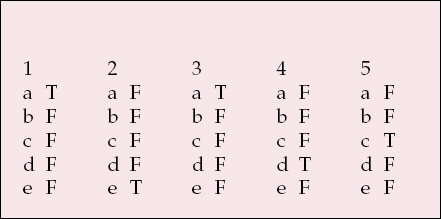
| 1 | 2 | 3 | 4 | 5 | |||||
|---|---|---|---|---|---|---|---|---|---|
| a | T | a | F | a | T | a | F | a | F |
| b | F | b | F | b | F | b | F | b | F |
| c | F | c | F | c | F | c | F | c | T |
| d | F | d | F | d | F | d | T | d | F |
| e | F | e | T | e | F | e | F | e | F |



eLetters
No eLetters have been published for this article.