Introduction
Hydrocarbons in insects form one of the most versatile groups of chemicals. While they play a pivotal role in waterproofing of the insect cuticle (Provost et al. Reference Provost, Blight, Tirard and Renucci2008), they also help in chemical communication both among and within species (Sonenshine Reference Sonenshine2004) and provide an excellent model for studying the evolution of semiochemicals (Hefetz Reference Hefetz2007).
Of the numerous hydrocarbons reported from insects, most can be grouped into n-alkanes, methyl branched components, and unsaturated hydrocarbons (Blomquist Reference Blomquist2010). Rates of water loss are correlated with the hydrocarbon structure, such as chain-length, degree and position of unsaturation, and methyl branching (Chapman Reference Chapman1998). Alkanes are likely to form impermeable layers on the insect cuticle and prevent desiccation whereas alkenes are likely to form more permeable layers and play a more important role in chemical communication (Gibbs and Pomonis Reference Gibbs and Pomonis1995; Gibbs Reference Gibbs1998, Reference Gibbs2002). While chemical profiles play a role in chemical communication, they are also known to change with age (e.g., Wakonigg et al. Reference Wakonigg, Eveleigh, Arnold and Crailshiem2000; Cuvillier-Hot et al. Reference Cuvillier-Hot, Cobb, Malosse and Peeters2001), ovarian activity (Dillwith et al. Reference Dillwith, Adams and Blomquist1983), nutritional condition (Liang and Silverman Reference Liang and Silverman2000), or habitat (e.g., due to hydrocarbon uptake from substrate; Pan et al. Reference Pan, Mo and Cheng2006).
In Coccinellidae (Coleoptera), hydrocarbons (HCs) have been found in volatiles, footprints, and cuticular lipids (Kosaki and Yamaoka Reference Kosaki and Yamaoka1996; Al Abassi et al. Reference Al Abassi, Birkett, Pettersson, Pickett and Woodcock1998; Magro et al. Reference Magro, Tene, Bastin, Dixon and Hemptinne2007, Reference Magro, Ducamp, Ramon-Portugal, Lemopte, Crouau-Roy and Dixon2010). They are known to influence oviposition deterrence (Ruzicka Reference Ruzicka1997, Reference Ruzicka2001a, Reference Ruzicka2001b, Reference Ruzicka2002, Reference Ruzicka2003, Reference Ruzicka2006; Ruzicka and Zemek Reference Ruzicka and Zemek2008; Mishra et al. Reference Mishra, Singh and Shahid2012, Reference Mishra, Singh and Shahid2013), mate recognition (Al Abassi et al. Reference Al Abassi, Birkett, Pettersson, Pickett and Woodcock1998; Hemptinne et al. Reference Hemptinne, Lognay and Dixon1998; Brown et al. Reference Brown, Riddick, Aldrich and Holmes2006), and species recognition (Hemptinne et al. Reference Hemptinne, Lognay, Gauthier and Dixon2000; Hemptinne and Dixon Reference Hemptinne and Dixon2000). Different blends of HCs are used by Harmonia axyridis (Pallas) (Coleoptera: Coccinellidae) during its aggregative periods for (1) attraction to aggregating sites, and (2) cohesion of aggregations (Durieux et al. Reference Durieux, Fischer, Brostaux, Sloggett, Denebourg and Vandereycken2012). Thus, these HCs set a perfect example of semiochemical parsimony (Blum Reference Blum1996) regulating different context-specific signals.
While the use of these chemicals in chemotaxonomy is being advocated (Braga et al. Reference Braga, Pinto, de Carvalho Queiroz, Matsumoto and Blomquist2013; Moore et al. Reference Moore, Adam and Drijfhout2014), the idea is still not being used extensively in Coccinellidae. Hydrocarbons present in oviposition deterring pheromones have been found to signal phylogenetic relations in coccinellids (Magro et al. Reference Magro, Tene, Bastin, Dixon and Hemptinne2007). However, functional similarity with other cuticular hydrocarbons has not been observed (Martin and Drijfhout Reference Martin and Drijfhout2009). Before using chemical profiles of coccinellids as a possible chemotaxonomic tool we need to investigate and list extensively the chemical profiles of a large number of their species.
Identification of coccinellid hydrocarbons and their ecological role have focussed on cuticular surfaces (Hemptinne et al. Reference Hemptinne, Lognay, Gauthier and Dixon2000; Klewer et al. Reference Klewer, Ruzicka and Schulz2007), secreted oviposition deterring pheromone (Hemptinne et al. Reference Hemptinne, Lognay and Dixon1998, Reference Hemptinne, Lognay, Doumbia and Dixon2001; Nakashima et al. Reference Nakashima, Birkett, Pye, Pickett and Powell2004, Reference Nakashima, Birkett, Pye and Powell2006; Klewer et al. Reference Klewer, Ruzicka and Schulz2007; Magro et al. Reference Magro, Tene, Bastin, Dixon and Hemptinne2007, Reference Magro, Ducamp, Ramon-Portugal, Lemopte, Crouau-Roy and Dixon2010), and hemolymph (Holloway et al. Reference Holloway, Dejong, Brakefield and De Vose1991; Blount et al. Reference Blount, Rowland, Drijfhout, Endler, Inger and Sloggett2012) with only a few studies on volatile extraction and profiling (Al Abassi et al. Reference Al Abassi, Birkett, Pettersson, Pickett and Woodcock1998; Brown et al. Reference Brown, Riddick, Aldrich and Holmes2006; Burman et al. Reference Burman, Bertolo, Capelo and Ponsonby2010). The fewer studies on volatile profiling in Coccinellidae are probably due to a reduced focus on their aggregations, sexual activity and mating behaviour, aspects in which volatiles are likely to play a major role.
In this study we attempt to attain chromatogram profiles of the volatile compounds of four co-occurring Indian Coccinellidae, Coccinella septempunctata (Linnaeus), Coccinella transversalis Fabricius, Menochilus sexmaculatus (Fabricius), and Propylea dissecta (Mulsant) (Coleoptera: Coccinellidae), and to use them to assess their suitability as a chemotaxonomic tool. These four coocinellids are together the most abundant Coccinellidae beetles in the local agroecosystem and are important as potential biocontrol agents. Also, a number of studies have been conducted on preliminary mating behaviour (Omkar and Srivastava Reference Srivastava2002; Omkar Reference James2004; Omkar and James Reference James2005; Omkar and Pervez Reference Pervez2005) and interspecific interactions (Omkar et al. Reference Gupta and Pervez2006) of these coccinellids. The results of the volatile profile of the studied coccinellids will therefore help in better interpretation of various behavioural studies in the future. This is the first time for (1) chemical profiling of C. transversalis and P. dissecta, (2) volatile profiling of all four Coccinellidae, and (3) assessment of volatile profiles as a tool for identifying phylogenetic relationships. Based on known information on cuticular hydrocarbon profiles of other Coccinellidae, we expect that the congenerics (C. transversalis and C. septempunctata) should show a similar profile and should cluster together in phylogenetic analysis.
Materials and methods
Insects
Thirty adults of both sexes of each coccinellid species were collected in one cropping-year (October–January 2012) from agricultural fields in Lucknow, India. The beetles were brought to the laboratory, paired and each pair placed in a Petri dish (9.0×2.0 cm) along with ad libitum aphid, Acyrthosiphon pisum Harris (Hemiptera: Aphididae) infested on broad bean, Vicia faba Linnaeus (Fabaceae) plants as prey (27±2°C; 65±5% relative humidity; 14 light:10 dark hours). These were allowed to mate and oviposit. Eggs laid were observed for hatching and the emerging instars were placed in muslin covered plastic beakers in groups of five from the same species and reared until adult emergence under similar biotic and abiotic conditions. Newly emerged adults were used in the experiments.
While C. septempunctata is a cosmopolitan coccinellid and the largest amongst the four, the other three are Oriental in origin and smaller in size, with M. sexmaculatus and P. dissecta being the smallest. Coccinella septempunctata has the highest reproductive output amongst all four coccinellids and develops fastest on Lipaphis erysimi Kaltenbach (Hemiptera: Aphididae) (Omkar and Srivastava Reference Srivastava2003), C. transversalis on Aphis gossypii Glover (Hemiptera: Aphididae) (Omkar and James Reference James2004), and M. sexmaculatus (Omkar and Bind Reference Bind2004) and P. dissecta (Omkar and Mishra Reference Mishra2005) on A. craccivora Koch (Hemiptera: Aphididae).
Experiments
We have used solid phase micro-extraction (SPME) technique coupled with gas chromatography-mass spectrometry (GC-MS) to identify the volatile hydrocarbon profile of the four coccinellids. Headspace solid phase micro-extraction (HS-SPME) is one of the most advanced and sophisticated techniques among various procedures for identifying volatile chemical profiles. Traditional methods have been reported to have a lower yield, large variations in chemical constituents (Villaverde et al. Reference Villaverde, Juarez and Mijilovsky2007) and loss of a large number of insects compared to HS-SPME. Solid phase micro-extraction technique is based on the sorption of analytes present in the sample or in its headspace by a thin film of an extracting phase of a fused-silica fibre. Fibres are usually coated with pure liquid polymorphic phases or with porous solid phases (Augusto and Valente Reference Augusto and Valente2002). In the monitoring of compounds produced by live insects, HS-SPME is effective and avoids damage and minimises stress to the insects. Gas chromatography-mass spectrometry is a common analytical technique used to identify volatile compounds and mass spectrometry offers sensitivity for the detection of these compounds (Arthur and Pawliszyn Reference Arthur and Pawliszyn1990; Zhang and Pawliszyn Reference Zhang and Pawliszyn1993). Direct desorption of the extracted compounds into the gas chromatography (GC) column occurs in the heated injection port of the GC system. Thus, our method of SPME technique coupled with GC-MS allows the use of live coccinellids in a more natural and less-stressed environment and reduces sampling time over traditional methods (Brown et al. Reference Brown, Riddick, Aldrich and Holmes2006).
Chemicals
nC12–nC35 (all 99% purity) were purchased from Sigma-Aldrich chemical company (Gillingham, United Kingdom) for running as standards for estimation and identification of the aliphatic hydrocarbons on GC-MS.
Sample preparation
Initially, 10–15-day-old adults of C. septempunctata (n=25, 12 males: 13 females) were carefully introduced into a 100 mL sterilised conical flask through the mouth, which was then closed with aluminum foil and parafilm for the optimisation of the number of individuals required for volatile collection. The number of individuals was optimised to have a better and detectable emission profile of aliphatic hydrocarbons. Pooling of male and female individuals together in one flask seldom changes the overall emission profile of the studied Coccinellidae (Pattanayak et al. Reference Pattanayak, Mishra, Chanotiya, Rout and Mohanty2014). After optimisation, three more flasks per species containing 25 adults were prepared for further analysis. All these four flasks were subjected to HS-SPME analysis three times to get a concurrent and coherent reading.
The beetles were allowed to acclimatise for two hours in the flask. The experiment was then performed at 24 °C and all other external abiotic environmental conditions were maintained constant for all the samples subjected to chemical analysis.
Conditioning of the fibre
Before running the samples, a fibre blank analysis was carried out for optimisation of the GC column. During conditioning of the fibre, the starting temperature was maintained at 70 °C. After 1.5–5.0 minutes, the column oven temperature was ramped. The optimised GC was conditioned at an initial temperature of 70 °C with ramp 1: 3 °C/minute to 250 °C held for two minutes, ramp 2:6 °C/minutes to 290 °C held for five minutes, ramp 3: 7.5 °C/minute to 330 °C held for one minute injection at 270 °C and 68.95 kPa constant pressure detector temperature at 280 °C in an autoSystem XL GC (Perkin Elmer, Waltham, Massachusetts, United States of America). Hydrogen was used as carrier gas at 68.95 kPa constant pressure with split ratio 1:30.
Collection of volatile organic compounds and devising the instrument for headspace solid-phase microextraction gas chromatography and mass spectroscopy analysis
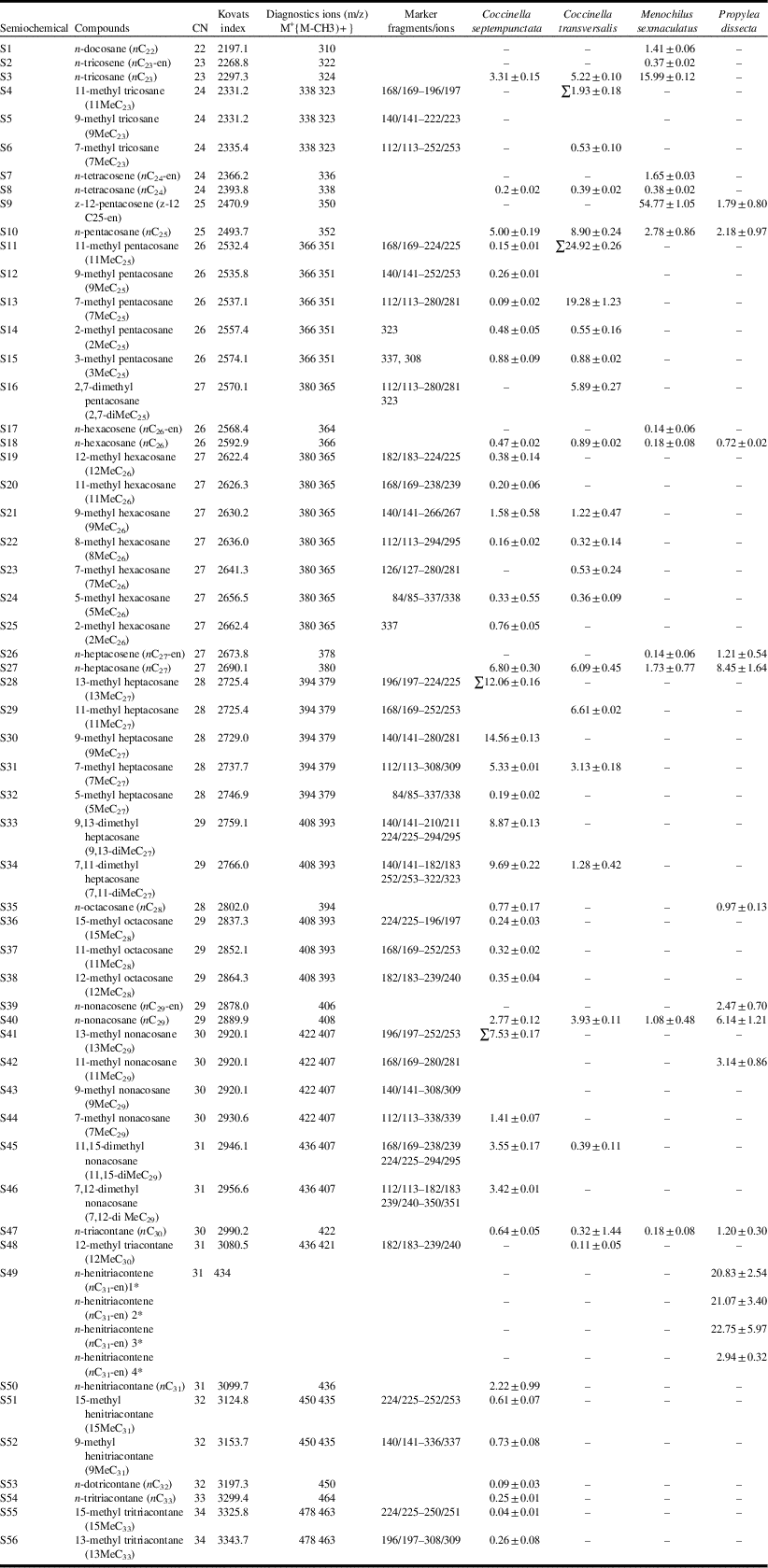
In the SPME analysis, we used a parafilm-sealed conical flask of 100 mL to achieve headspace. The commercial SPME apparatus (SupelcoTM, Belleforte, Pennsylvania, United States of America), the fused-silica fibre was mounted in an assembly. The fibre assembly was fitted to a syringe like holder, which ensured its easy handling. When the plunger was pushed down the fibre was exposed, allowing sample extraction or analyte desorption when the plunger was retracted. The fibre is protected from the environment inside the needle of the assembly. The polydimethylsiloxane (PDMS) fibre (100 µm) was assembled on the manual holder and further solvent cleaned as per the manufacturer instruction (SupelcoTM). The headspace was allowed to attain equilibrium with the volatile compounds emitted by the beetles for ~30 minutes. Then SPME manual sample-holder fitted with PDMS fibre was introduced through the septum and exposed for 15–75 minutes into HS. Headspace samples from live beetles only were considered for analyses. Porous solid-coated fibres, such as PDMS and divinylbenzene/carboxen (DVB/CAR) were used for further experimentation as they provide higher extraction yields for volatile and non-polar compounds. Because of better adsorption of the compounds, PDMS fibre was selected for further analysis. The estimation and quantisation of the compounds for obtaining a concurrent reading was repeated three times. The absolute quantities of the volatile hydrocarbons varied slightly during repetition of each experiment (Table 1).
Comparative GC-FID percentage (mean±SE) of four Indian Coccinellidae.

Notes: *positional isomers of n-henitriacontene.CN, carbon number.
Analysis of the volatile compounds
The PDMS fibre was injected into the S/SL (Split/Splitless) injector of the GC kept at 270 °C. A capillary column EQUITY-5 (60 m×0.32 mm×0.25 µm) was used for analysis. Between the two extractions, each fibre was conditioned for 10 minutes at 270 °C to prevent the carryover of residues. The percentage composition of volatile compounds emitted from the beetles were determined by gas chromatography-flame ionisation detector (GC-FID) and further identified by GC-MS. Gas chromatography and mass spectroscopy analysis was performed on a PerkinElmer GC Clarus 680 and Clarus SQ 8C mass spectrometer fitted with DB-5 fused silica capillary column (60 m×0.32 mm×0.25 µm). The injector temperature was 280 °C. The carrier gas was Helium at 1 mL/minute flow. The sample was injected with a split ratio 1:20. The SPME fibre was inserted into the injection port at the appropriate depth and the GC was started. The GC was allowed to run until the completion of the programme. For GC analysis, the extracts were thermally desorbed after introducing the fibre inside the injection port of the chromatograph. Gas chromatography and mass spectroscopy analysis was performed in a PerkinElmer AutoSystemXL GC interfaced with a Turbomass Quadrupole mass spectrometer fitted with same DB-5 (60 m×0.32 mm×0.25 µm) fused silica capillary column. The oven temperature programme was the same as that described in GC-FID. The injector, transfer line, and the source temperature was 300 °C. The sample was injected with split ratio 1:30. The carrier gas was Helium at 68.95 kPa constant pressure; ionisation energy 70 eV; mass scan range 40–450 u. The samples were injected in a polar capillary column and the chromatograph oven was programmed at 50 °C for one minute, then from 50 to 140 °C at 20 °C per one minute, from 140 to 300 °C per one minute, and finally held at 300 °C for three minutes. Finally, the mass-spectra were scanned from 60 to 500 m/z. The compounds and their structure were identified on the basis of spectral fragmentation patterns, retention time, Kovats Index, and calculation of relative retention index using a homologous series of n-alkanes (C12–C35) hydrocarbons (Polyscience Corporation, Niles, Illinois, United States of America). The identified compounds were further confirmed by mass spectra library search (National Institute of Standards and Technology/Environmental Protection Agency/National Institute of Health) version 2.1 and Wiley registry of mass spectral data, 7th edition) and by comparing with the mass spectral literature data (Adams Reference Adams1995).
A standard mixture of alkanes from nC12 to nC35 (Supelco, Sigma-Aldrich, 0.01% w/w each component) was used as a qualitative reference. The branching positions of methyl-substituted hydrocarbons were determined by the α-cleavage at the branch point (McCarthy et al. Reference McCarthy, Han and Calvin1968). In order to abbreviate the names of the identified compounds, International Union of Pure and Applied Chemistry nomenclature was used following Magro et al. (Reference Magro, Ducamp, Ramon-Portugal, Lemopte, Crouau-Roy and Dixon2010).
Statistical analysis
The data were analysed following Magro et al. (Reference Magro, Tene, Bastin, Dixon and Hemptinne2007). The presence or absence of each chemical compound was coded as binary characters (absence=0 or presence=1). All characters were treated as unordered and equally weighted. The phylogenetic analysis was performed using the PAUP software (Swofford Reference Swofford1998). Bootstrap support for maximum parsimony (MP) tree was calculated using 10 000 bootstrap replicates. A similarity matrix was built on the basis of their semiochemical profile. The closeness between each pair of species was calculated on the basis of common chemical compounds by which they are closer (a) total number of identified compounds, and (b) the total number of detected compounds. The value of their chemical closeness was expressed in percentage matrix. During the PAUP analysis, the unidentified positional isomers of higher unsaturated hydrocarbons were included in the second analysis. The chemical compound data was then entered into a principal components analysis (PCA) using SPSS version 20.0 (Chicago, Illinois, United States of America).
Results
The HS-SPME coupled with GC-FID and GC-MS analysis of C. septempunctata, C. transversalis, M. sexmaculatus, and P. dissecta, revealed that the volatile compounds emitted from all the four coccinellids consisted mainly of saturated and unsaturated aliphatic hydrocarbons. Among the saturated aliphatic hydrocarbons, most of the compounds were branched-chain, mono-methylated, or dimethylated alkanes. A total of 56 compounds were identified out of which 49 hydrocarbons were alkanes and seven were alkenes. Among the 49 identified alkanes, 32 were mono-methylated alkanes, five were dimethylated alkanes, and the remaining 12 compounds were straight chain alkanes (Table 1).
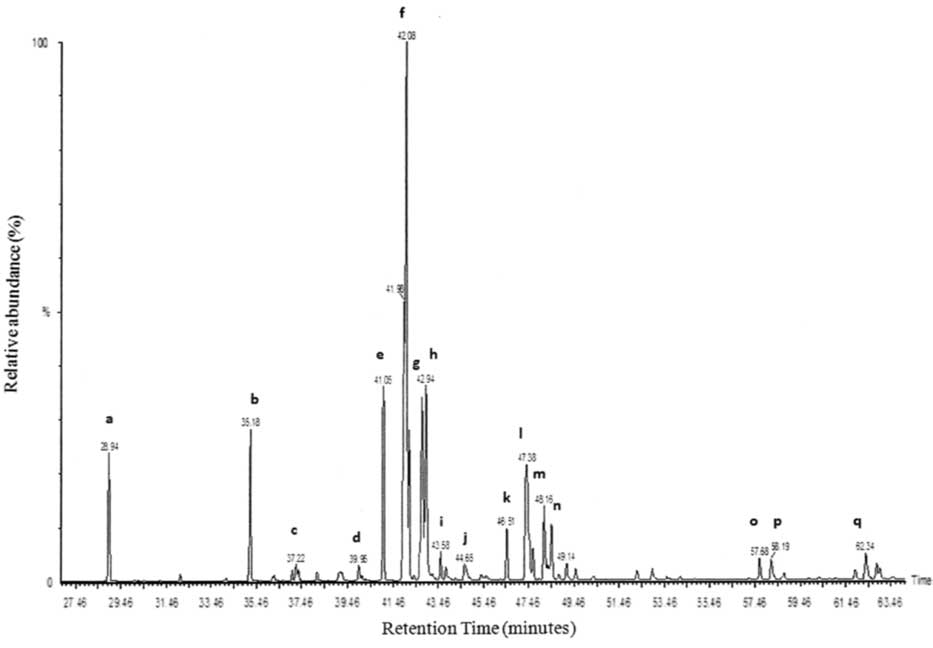
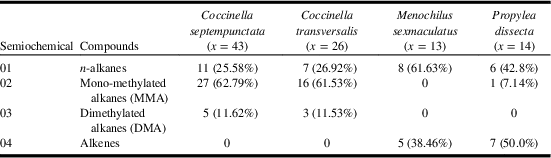
Among the 43 identified compounds, a maximum percentage of mono-methylated alkanes (62.8%) followed by straight chain alkanes (25.6%) and dimethylated alkanes (11.6%) were reported in C. septempunctata (Table 2). The major compound reported in this species was 9-methylheptacosane (9-MeC27) followed by the isomeric mixture of 13-methylheptacosane (13-MeC27) and 11-methylheptacosane (11-MeC27), which co-eluted as a single peak (Fig. 1). Apart from the mono-methylalkanes some dimethyl substituted alkanes like 9,13-dimethylheptacosane (9,13-diMeC27), 7,11-dimethylheptacosane (7,11-diMeC27), 11,15-dimethylnonacosane (11,15-diMeC29), and 7,12-dimethylnonacosane (7,12-diMeC29) were also detected in C. septempunctata.
Chromatographic profile of adult Coccinella septempunctata. a: nC23, b: nC25, c: 3MeC25, d: 9MeC26, e: nC27, f: 13MeC27+11MeC27, g: 9MeC27, h: 7MeC27, i: 9,13-diMeC27, j: 7,11-diMeC27, k: nC29, l: 13MeC29+11MeC29+9MeC29, m: 11,15-diMeC29, n: 7,12-di MeC29, o- nC31, p: 9MeC31, q: nC33.

Comparative percentage composition of straight and branched chain hydrocarbons in four Indian Coccinellidae (n=4).

Note: x=number of identified compounds.
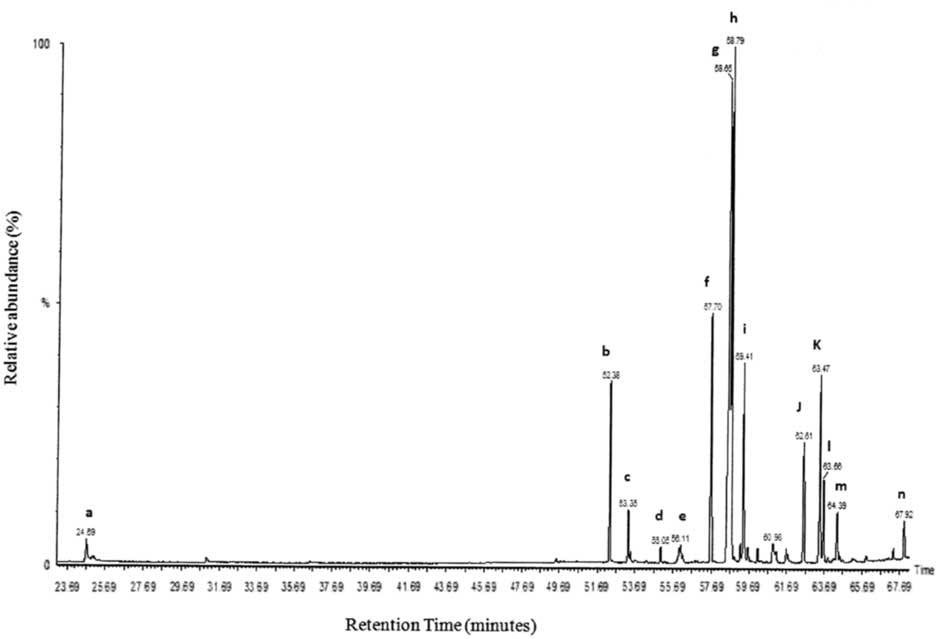
In C. transversalis, out of the 26 identified compounds, 61.5% were mono-methylated alkanes followed by 26.9% and 11.5% straight chain and dimethylalkanes, respectively. Based on the mass spectral data, the major peak in the gas chromatogram was identified to be the isomeric mixture of 11-methylpentacosane (11-MeC25) and 9-methylpentacosane (9-MeC25) (Fig. 2). Dimethyl substituted alkanes like 2,7-dimethylpentacosane(2,7-diMeC25), 7,11-dimethylheptacosane (7,11-diMeC27), and 11,15-dimethylnonacosane (11,15-diMeC29) were also detected in this species. However, no unsaturated compounds were reported in C. septempunctata and C. transversalis.
Chromatographic profile of adult Coccinella transversalis. a: nC23, b: 11MeC23+9MeC23, c: 7MeC23, d: nC24, e: 2MeC24, f: nC25, g: 11MeC25+9MeC25,h: 7MeC25,i: 2,7-diMeC25, j: nC27, k: 11MeC27, l: 7MeC27 m: 7,11-diMeC27, n: nC29.
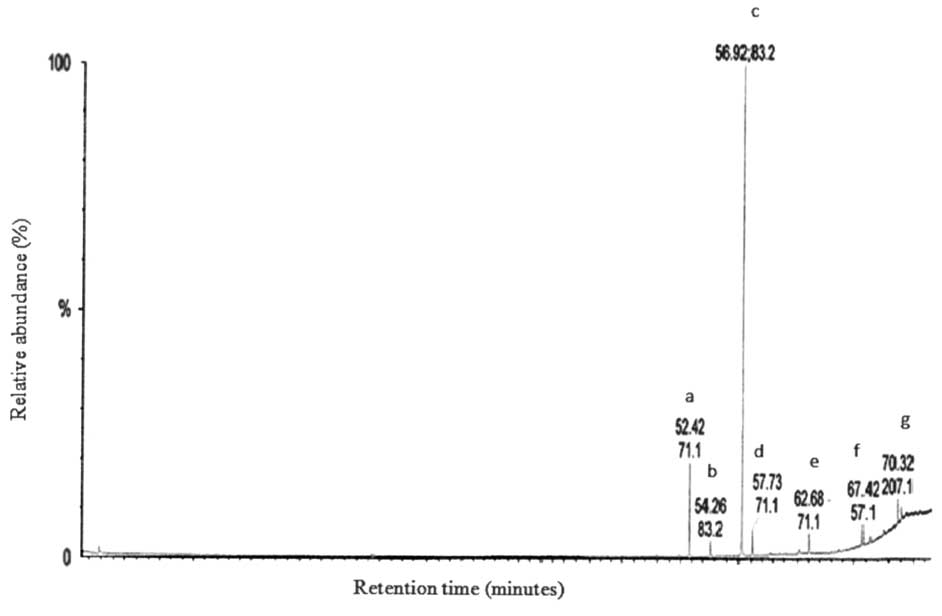
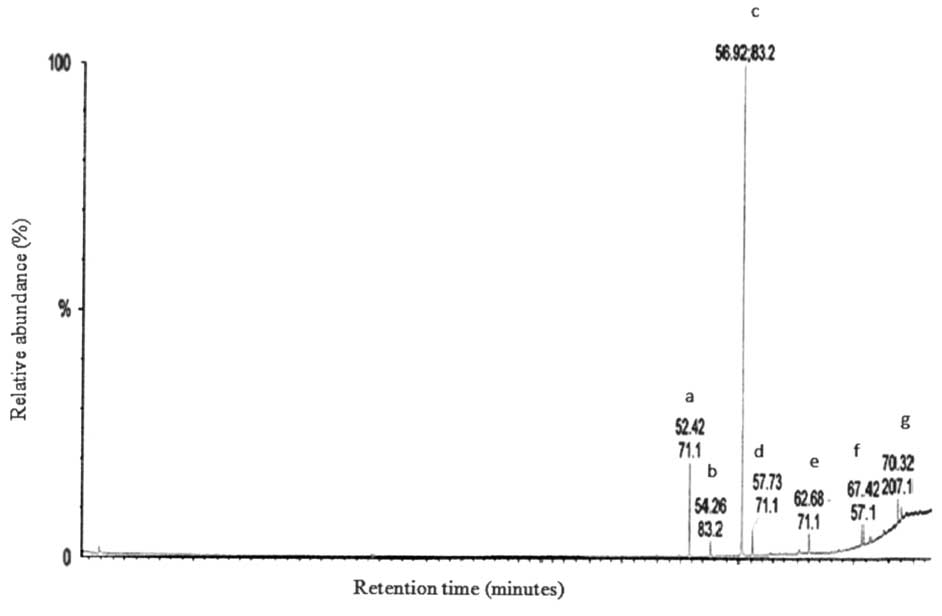
The compounds identified in M. sexmaculatus were mostly unbranched hydrocarbons ranging from nC22 to nC30. Among these compounds, 61.6% constitute straight-chain alkanes and 38.4% constitute unsaturated alkenes. The major peak in the gas chromatogram was identified to be (Z)-12-pentacosene (Fig. 3). No-branched chain alkane was detected in M. sexmaculatus.
Chromatographic profile of adult Menochilus sexmaculatus. a: nC23, b: nC24-en, c: z-12 C25-en, d: nC25, e: nC26 f: nC27 g: nC29.
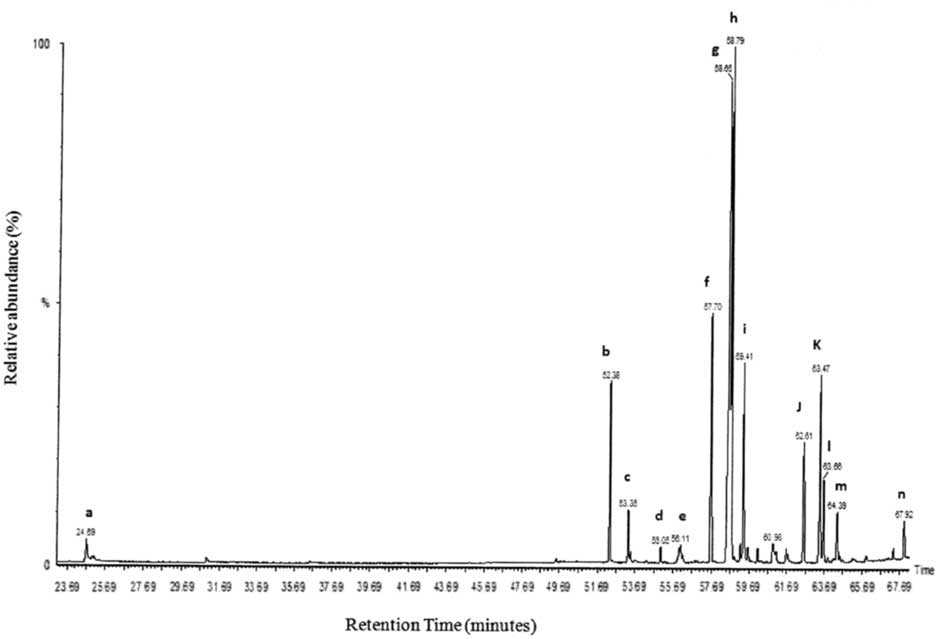
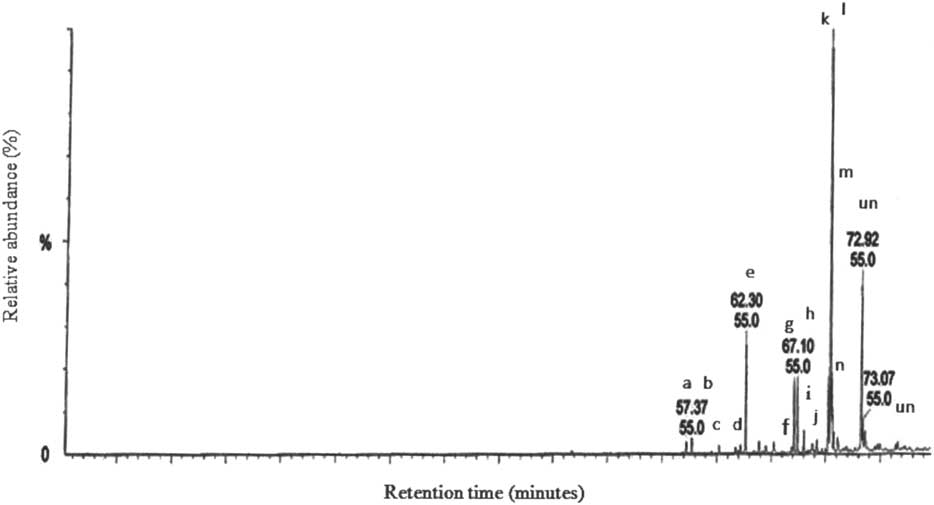
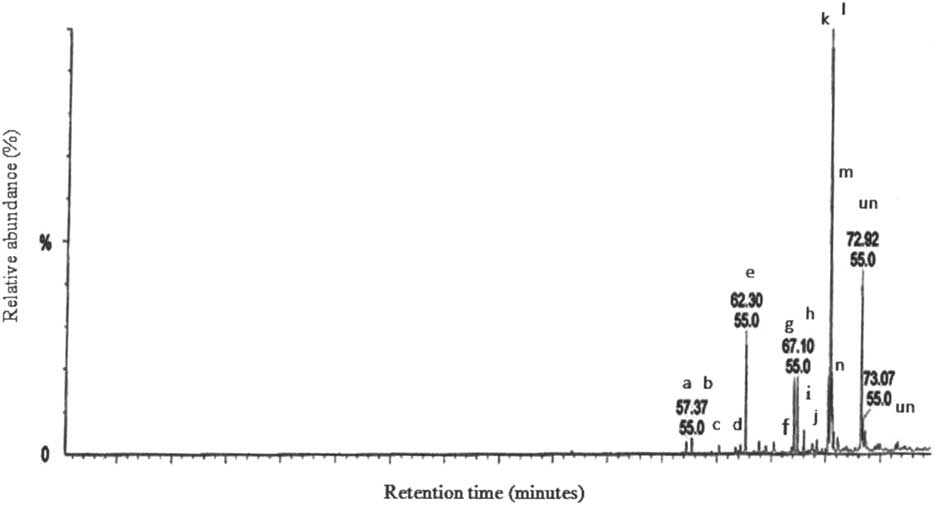
In P. dissecta, the major peak in the gas chromatogram was identified to be n-hentricontene (unsaturated nC31; Fig. 4). The four major compounds identified in this species were isomeric mixture of unsaturated nC31, where the position of the double bond could not be determined due to the complex nature of the compound. Among the identified compounds, the percentage occurrence of n-alkanes and alkenes was similar (Table 2). Only one mono-methylated alkane, 11-methyl nonacosane (11-MeC29), was identified in this species. Apart from these compounds, a complex and complicated nature of higher-chain unsaturated hydrocarbons (nC31–nC33) were detected in this species.
Chromatographic profile of adult Propylea dissecta. a: z-12 nC25, b: nC25, c: nC26, d: nC27-en, e: nC27, un: unidentified, f: nC28, g: nC29-en, h: nC29, i: 11MeC29, j: nC30, k: nC31-en1*, l: nC31-en2*, m: nC31-en 3*, n: nC31-en4*, un: unidentified, *: positional isomers of n-henitriacontene.
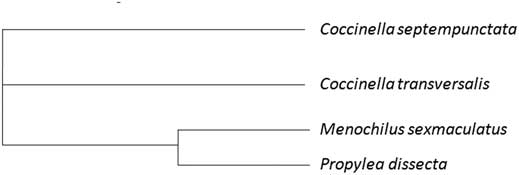
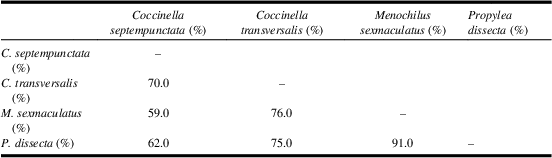
The dendrogram based on the chemical similarity matrix of identified compounds categorised C. septempunctata and C. transversalis separately and, M. sexmaculatus and P. dissecta in a single cluster (Fig. 5). The species distance matrix (Table 3) estimated on the basis of identified compounds revealed that P. dissecta and M. sexmaculatus were 91% similar. Similarly, C. septempunctata and C. transversalis are 70.0% similar on the basis of their semiochemical profile (Table 3). This closeness in the chemical profile between P. dissecta and M. sexmaculatus may be due to the presence of more unsaturated double-bond alkenes in P. dissecta and M. sexmaculatus as compared to C. septempunctata and C. transversalis, despite the two being congenerics.
Semiochemical likelihood tree constructed on the basis of identified chemical compounds.

Pair-wise species-closeness matrix on the basis of identified semiochemicals.

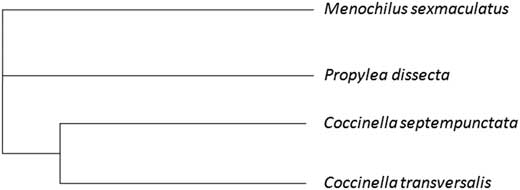
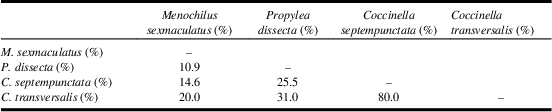
On the other hand, when total detected compounds were subjected to the chemical similarity matrix, the dendrogram revealed C. septempunctata and C. transversalis together, whereas M. sexmaculatus and P. dissecta grouped separately (Fig. 6). The species similarity matrix (Table 4) determined on the basis of the total detected compounds suggested that C. septempunctata and C. transversalis are 80.0% similar, whereas, M. sexmaculatus and P. dissecta are 10.9% similar on the basis of their semiochemical profile (Table 4).
Semiochemical likelihood tree of the four Coccinellidae species based on total detected chemical compounds.

Pair-wise species-closeness matrix on the basis of detected semiochemicals.

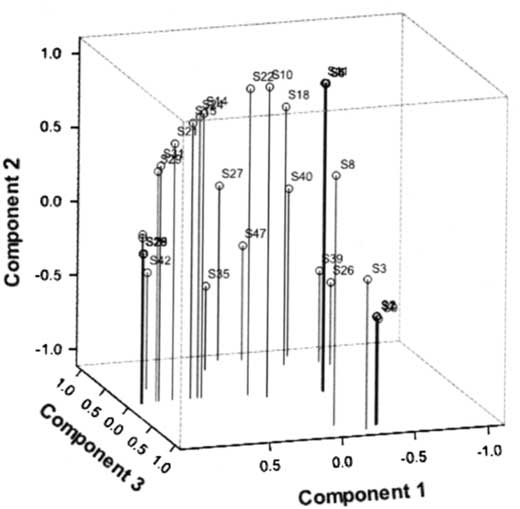
Principal component analysis of the identified hydrocarbons present in the four coccinellids revealed three major clusters in three coordinates (Fig. 7). Interestingly, the straight chain alkanes and alkenes form separate clusters when compared with the methylated-branched hydrocarbons. Compounds S8 (nC24), S26 (nC27-en), S39 (nC29-en), and S49 (nC31-en) are grouped in a single cluster, whereas compounds S27 (nC27), S10 (nC25), S17 (nC26-en) form another cluster (Fig. 7). The remaining branched-chain hydrocarbons form separate cluster in the PCA plot.
Three-dimensional principal components analysis plot of the identified aliphatic hydrocarbons.

Discussion
Our study revealed the presence of a mixture of saturated and unsaturated compounds ranging from carbon number C22 to C33 in all the four coccinellid species. The straight chain and methyl branched alkanes (nC22–nC33) are dominant in C. septempunctata and C. transversalis. In contrast, M. sexmaculatus and P. dissecta have higher percentage of unsaturated hydrocarbons as compared to the straight-chain alkanes. The increased number of unsaturated hydrocarbons in these two coccinellids could perhaps explain their higher incidence in summer in comparison to the higher incidence of C. septempunctata and C. transversalis in winters. Insect cuticles are known to get water permeable above a critical transition temperature, which is higher in cases of saturated hydrocarbons, thus preventing desiccation (Gefen et al. Reference Gefen, Talal, Brendzel, Dror and Fishman2015). Among the four Indian coccinellids, P. dissecta had a complex and complicated nature of unsaturated hydrocarbon pattern. The difference in the type of predominant compounds could be an innate species-specific variation or a signal of its nutrient intake (Liang and Silverman Reference Liang and Silverman2000) as well as habitat (e.g., due to HC uptake from substrate; Pan et al. Reference Pan, Mo and Cheng2006). However, since all coccinellids in this study had consumed the same prey, so differences in the volatile profile are unlikely to be due to differences in nutrition and habitat.
A comparative semiochemical profile of C. septempunctata and C. transversalis indicate the dominance of long-chain linear or branched hydrocarbons with even number of carbon-atoms (nC22, nC24, nC26, nC28, nC30, nC32) over odd number of carbon-atoms (nC23, nC25, nC27, nC29, nC31, nC33). Similar observations were also reported when the n-hexane extract of egg surface as well as the larval tracks of Adalia bipunctata and C. septempunctata were analysed on GC-MS (Hemptinne et al. Reference Hemptinne, Lognay, Gauthier and Dixon2000; Magro et al. Reference Magro, Tene, Bastin, Dixon and Hemptinne2007). This has however not been conducted for adult coccinellids. Nakashima et al. (Reference Nakashima, Birkett, Pye, Pickett and Powell2004) reported the presence of both straight chain as well as branched-chain alkanes from the n-hexane extract of footprint trails of C. septempunctata. Probably owing to the HS-SPME technique, an array of both straight chain (nC25, nC26, nC27, nC28, nC29, nC30, nC31, nC32, nC33) as well as branched mono-methyl and dimethyl aliphatic hydrocarbons were detected in both C. septempunctata and C. transversalis without providing them any undue stress. Many of the compounds were found to coherently occur in both the species, where internally branched methyl alkanes with odd numbers of carbon-atom were more dominant than the even carbon-number compounds. While chemical profiles are known to differ with age and caste in a number of hymenopteran species (Panek et al. Reference Panek, Gamboa and Espelie2001; Nunes et al. Reference Nunes, Turatti, Mateus, Nascimento, Lopes and Zucchi2009), the difference between stages in coccinellids has not been yet documented in literature.
The major compound in M. sexmaculatus was identified to be (Z)-12-pentacosene, which is believed to be synthesised by alkylation of 1-tridecyne with dodecyl triflate (Matsuda and Mori Reference Matsuda and Mori2002). This compound is previously known to be an active component of the cuticular hydrocarbon in the larval tracks of the same species and also acts as an oviposition deterring pheromone (Klewer et al. Reference Klewer, Ruzicka and Schulz2007).
Acquisition of qualitative and quantitative data of identified compounds and their further analysis revealed the closeness among the emitted volatile compounds of M. sexmaculatus and P. dissecta. Whereas, C. septempunctata and C. transversalis were distant from the other two coccinellids. This indicates the unsuitability of use of volatile chemicals as a chemotaxonomic tool as there seems to be no role of phylogenetic relationship in the chemical profile. Such lack of correlation between cuticular hydrocarbon similarity and phylogeny has also been reported in beetles (Geiselhardt et al. Reference Geiselhardt, Geiselhardt and Peschke2011) and ants (Martin and Drijfhout Reference Martin and Drijfhout2009). However, inclusion of all detected chemicals indicates closeness between the two congeneric coccinellid species and distance between the species belonging to other genera. This indicates the sharing of a common pathway for the biosynthesis of the similar compounds among the members of the same genus (Symonds and Elgar Reference Symonds and Elgar2008; Magro et al. Reference Magro, Ducamp, Ramon-Portugal, Lemopte, Crouau-Roy and Dixon2010). Such comparison among species has not been documented yet in the literature and it would take further rigorous experimentation to confirm such incidences. This also highlights the difference that interpretation of data makes. Further quantitative analysis of the compounds in 3D-PCA plot indicated that the majority of the branched-chain aliphatic hydrocarbons among the four coccinellids group together, whereas the linear hydrocarbons form a separate group in other coordinates.
The phylogenetic analysis based on the presence of total chemical compounds among the studied coccinellids is synonymously coherent with the parsimonious tree built on the basis of the similarity matrix. The analysis revealed that the congeneric species C. septempunctata and C. transversalis group together, whereas M. sexmaculatus and P. dissecta differ from the Coccinella species and from each other. To our knowledge, this study is the first attempt for the identification of semiochemicals of Indian Coccinellidae.
This study reveals the closeness of different species of Coccinellidae on the basis of their emitted volatile chemical compounds. No comparative volatile profiling of coccinellids has previously been conducted. An array of aliphatic hydrocarbons detected in the study might have a definitive role in the communicational, behavioural and ecological aspects of these beetles. Headspace solid-phase microextraction coupled with GC-MS were used for detection and identification of saturated and unsaturated aliphatic hydrocarbons in a cost-effective manner without providing undue stress to the beetles. This study also demonstrated that a definite degree of chemical closeness existed among the studied coccinellids. The total detected chemical profile may also be used for chemotaxonomic purposes in future.
Acknowledgements
University Grants Commission, India is acknowledged for providing financial support for carrying out the activity. The authors also thank Mr. David Fisher, University of Exeter, Penryn Campus, United Kingdom for kindly reading the earlier draft.