

Learning Objectives
What is adolescence?
What is the history of adolescence?
What are the current theories of adolescent brain development?
What is the “function” of adolescence?
A roadmap for using this book.
1.1 Introduction
Adolescence is an exciting time in life when individuals are more excitable, volatile, and exploratory than they will ever be. It is when children begin the long journey toward independence that is central to becoming well-adjusted adults. The term “adolescence” stems from the Latin adolescere, which means “to grow up” or “to grow to maturity” (Slee, Campbell, and Spears, Reference Slee, Campbell and Spears2012). Across the world and across different species, adolescence serves an important function: it is the time when individuals move from a state of dependence on caregivers to one of relative independence. This transition period lends itself to many changes that include physical growth and biological development, increasing cognitive sophistication, and changes in psychosocial skills. It is therefore no surprise that adolescents become more self-aware, capable of appreciating abstract concepts, interested in new ideas, and passionate leaders of causes they believe in.
Although adolescence has long been recognized as an important transitional period in our society, it has recently drawn more attention from policymakers and scholars. Adolescence is now a forefront topic of health reports (UN, 2011), advocacy documents (UN, 2012), and publications in academic journals. There is also worldwide attention to adolescents and their health, illustrated by several recent United Nations initiatives (Ki-moon, Reference Ki-moon2013). Together, this focus on adolescence has encouraged a lively discourse on how to treat, protect, and support youth. This book will focus on the role of brain and physical development on these important topics as they relate to adolescent well-being. We will also explore how the advent of brain imaging tools gave us the ability to peek into the adolescent brain to determine how its development contributes to characteristic adolescent behaviors.
1.2 Periods of Development
Development is the study of change across the lifespan. Patterns of developmental change begin at conception and continue through until death. These include physical, neural, physiological, and behavioral changes that all occur in distinct ways depending on the period of development. Some of these changes are biologically driven, which means they are caused by genes or physiology, and some are environmentally driven, meaning they are influenced by things in the person's environment, including parents, siblings, peers, and neighborhoods; most changes are the product of the interactions between biology and environment.
Although developmental psychologists and developmental cognitive neuroscientists who study adolescence mainly focus on individuals who are adolescents, they appreciate that understanding the developmental periods that precede and follow adolescence is equally important. In general, there are three developmental periods: childhood, adolescence, and adulthood.
1.2.1 Childhood
Childhood is comprised of the prenatal period, infancy, early childhood, and late childhood. The prenatal period is the development that occurs from the point of conception until birth. In humans, this period lasts approximately 9 months and is a time of significant growth: the organism morphs from a single cell to one complete with all the organs it will ever have in its lifetime. During this time, there is complete dependence on the mother for nutrients. Infancy encompasses the period from birth through approximately 18 months of age. Many important psychological activities and much physical learning occur during this time and there is extreme dependence on adult caregivers. Infants engage in active sensorimotor coordination, gross motor skill learning (e.g. walking), language learning, and intense social engagement, particularly between parent and child. Early childhood is the developmental period that follows the end of infancy and extends through about 5–6 years of age (approximately when a child enrolls in kindergarten). During this time, there is a focus on becoming more self-sufficient, as children begin to spend many hours playing alone and with peers. It is also during this time that they begin more complex language and reading skills. Middle and late childhood is the developmental period that extends from about kindergarten to right before adolescence (10 or 11 years of age). Significant academic learning occurs during this time, as children become more engaged in the fundamental skills of reading, writing, and arithmetic. Self-regulation of behavior increases during this time.
1.2.2 Adolescence
Given all the learning, skill emergence, and social interactions that occur prior to adolescence, childhood sets up adolescents with a rich developmental history. The combination of genetic background and childhood developmental history contributes to the course of adolescent development and associated brain development during this time. This is important to remember as we learn about the changes that occur during adolescence. Adolescent researchers face a daunting task in deciding how to define the “adolescent” group in their research studies. Most scientists have identified adolescence as “the gradual period of transition from childhood to adulthood” (Spear, Reference Spear2000). Some neuroscience studies on human adolescents define adolescence by age, grade level, or pubertal status.
The exact timing of adolescence is not as clear-cut as that of childhood because its definition encompasses multiple factors, a topic we will return to later in this chapter. The age range of adolescence also varies with cultural and historical circumstances. In the United States, adolescence begins at approximately 11 to 13 years of age and ends in the late teenage years (approximately 18–19 years of age). Early adolescence typically encompasses the period from the middle school years and includes most of the pubertal development that characterizes the early part of adolescence (reviewed in greater detail in Chapter 2). Late adolescence refers approximately to the period after the majority of the pubertal transition. Significant psychosocial and cognitive changes occur during this time, including increases in orientation toward peers, romantic interests, and identity exploration, as well as more sophisticated cognitive abilities, including abstract thought, future planning and goal setting, and career exploration.
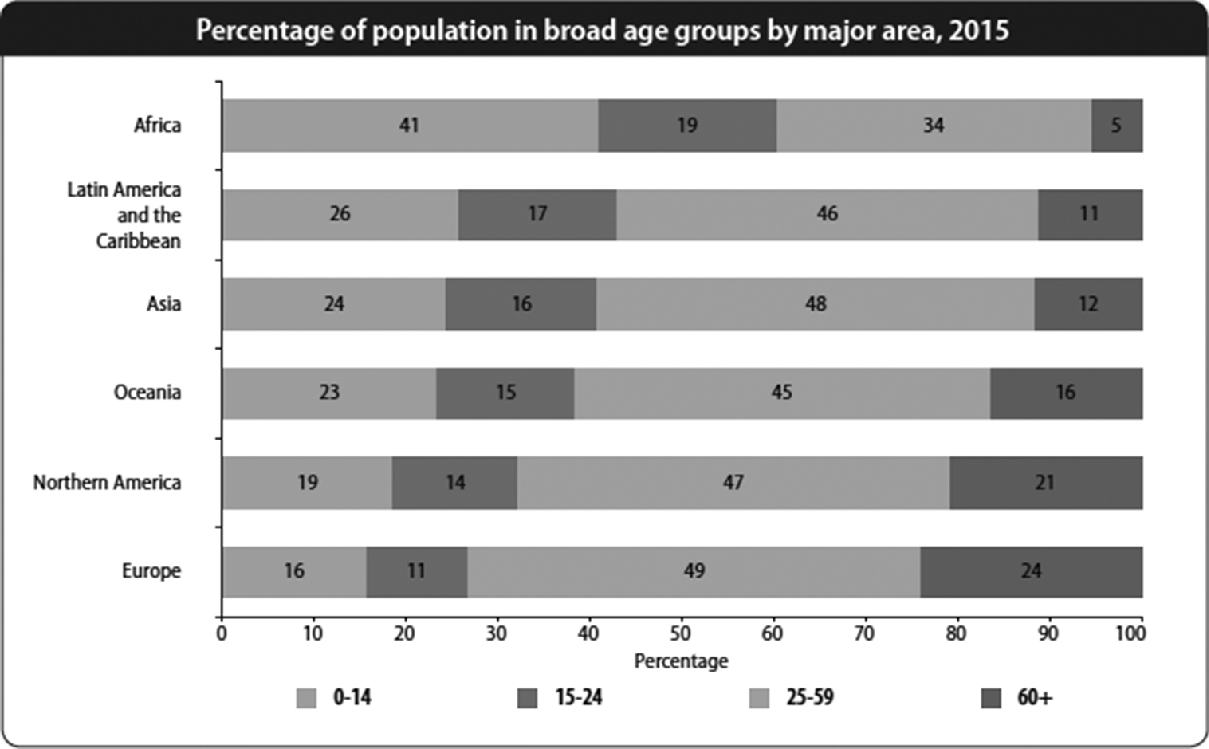
Box 1.1 Adolescent Population Worldwide
In 2015, the 3.1 billion people under the age of 25 represent about 42 percent of the world's total population.
Africa, Asia and Latin America and the Caribbean are home to 90 percent of the world's young people: 1.7 billion youth aged 0–14 years old and 1.1 billion aged 15–24 years old.
The number of young people are projected to grow to 3.4 billion by 2050.
1.2.3 Adulthood
Similar to childhood and adolescence, adulthood is a heterogenous period of development that is not characterized by any one behavior or developmental milestone. It is the period of development that spans the greatest number of years as it includes early, middle, and late adulthood. Early adulthood (sometimes referred to as emerging adulthood: Arnett, Reference Arnett and Jensen2011) refers to the late adolescent years and early 20s and lasts through the mid-30s. This period of life is very important in establishing complete financial and personal independence and is often when individuals attend college away from home as well as focus on career development. There is also a high prevalence of marriage in the late 20s. Middle adulthood begins at approximately 35 to 40 years of age and ends at some point between approximately 55 and 65 years of age. This period is when most child-rearing occurs, as individuals in this age group tend to have children undergoing childhood or adolescence. Late adulthood is the developmental period that lasts from approximately 65 years of age until death. In the United States, the average life expectancy is 77.4 and 82.2 for males and females, respectively.
1.3 Adolescence: A Historical Perspective
Behaviors that typically emerge during adolescence have been noted throughout history: Aristotle (384–322 BC) observed that “youth are heated by Nature as drunken man by wine.” Socrates characterized youth as inclined to “contradict their parents” and “tyrannize their teachers” (attributed to Socrates by Plato, and cited in Lazarus, Reference Lazarus1963). However, before 1904 adolescence was not recognized as a unique period of development. This may be hard to imagine today because teenagers, or adolescents, constitute such an important role in our society. G. Stanley Hall was a psychologist who is often credited with being the first to acknowledge adolescence as an important period of human development that he referred to as a period of “storm and stress” (Reference Hall1904). This phrase was taken from the German Sturm und Drang movement, and comprised three key aspects: conflict with parents, mood disruptions, and risky behavior. Hall noted that this is characteristic of most adolescents, biologically based, and influenced by culture (Arnett, Reference Arnett and Jensen2011). Psychoanalytic theorists, especially Anna Freud (Reference Freud1946, Reference Freud1958, Reference Freud1968), strongly endorsed Hall's proposed model of adolescence and attributed these characteristic behaviors to the hormonal changes of puberty, believing that they introduced significant distress for the adolescent. Similarly, Sigmund Freud, and later his daughter Anna Freud, believed that the surge in hormones leads to psychological conflict in ways that affect adolescent behavior. Erik Erikson's theory was centered on the idea that pubertal changes, in conjunction with pressures from society, lead to an identity crisis that forces the adolescent to examine and define who she is.
In contrast, Margaret Mead (Reference Mead1928) and Ruth Benedict (Reference Benedict1934) believed that adolescence is a culturally defined experience. They led fellow anthropologists in countering the universality of storm and stress in adolescence by drawing on multiple examples in non-Western cultures in which the characteristic adolescent behavior was not observed (Mead, Reference Mead1928). They argued that, based on their treatment of young people, societies create their own culture surrounding the period of adolescence: societies that treat adolescence as a troubling period of life that must simply be tolerated until it passes experience stressful and tumultuous adolescent periods while societies that celebrate adolescence exhibit a relaxed and unflustered adolescent experience. Although most contemporary adolescent theorists no longer attribute adolescent behavior to “storm and stress” they do acknowledge its relevance to understanding behavioral changes during adolescence.
1.4 Adolescence across the Globe and across Species
Adolescent-related behaviors are observed world-wide, across different cultures (Schlegel, Reference Schlegel, Crocket and Silbereisen2001) and species (Spear, Reference Spear2000). Rodents in the developmental period that is equivalent to human adolescence, immediately prior to and following sexual maturation, exhibit behavioral changes that are similar to those commonly observed in human adolescents. These behaviors include increased peer-directed social interactions (Douglas, Varlinskaya, and Spear, Reference Douglas, Varlinskaya and Spear2004), occasional increases in fighting with parents (Csikszentmihalyi, Larson, and Prescott, Reference Csikszentmihalyi, Larson and Prescott1977), increases in novelty-seeking, sensation-seeking, and risk-taking (Laviola, Macri, Morley-Fletcher, and Adriani, Reference Laviola, Macri, Morley-Fletcher and Adriani2003), increased consummatory behavior (Friemel, Spanagel, and Schneider, Reference Friemel, Spanagel and Schneider2010), and greater per occasion alcohol use (Doremus-Fitzwater, Varlinskaya, and Spear, Reference Doremus-Fitzwater, Varlinskaya and Spear2010). The increased proclivity toward drug use that is observed in human adolescents is also observed in adolescent rats (Brenhouse and Andersen, Reference Brenhouse and Andersen2008; Torres, Tejeda, Natividad, and O'Dell, Reference Torres, Tejeda, Natividad and O'Dell2008) and nonhuman primates (Nelson et al., Reference Nelson, Herman, Barrett, Noble, Wojteczko, Chisholm, Delaney, Ernst, Fox, Suomi, Winslow and Pine2009). These data suggest that some of the characteristic adolescent behaviors observed in humans may be embedded in an evolutionary history that has adapted in ways to facilitate behaviors that are important in the developing organism. Indeed, rapid progress is being achieved across laboratories in studies with animals and with human adolescents showing that neural changes in systems that underlie motivational, affective, and behavioral regulation influence the processing of and responding to events in the environment in ways that bias behavior.
Across different cultures and societies, adolescence is recognized as a distinct developmental period in which children begin to transition into adulthood. This typically occurs by the adoption of increasingly “adult-like” behaviors such as getting married, moving away from the family, and/or bearing children. However, anthropologists note that the extent to which adolescence is acknowledged and the way each society characterizes the transition from childhood to adulthood varies greatly by culture. In some traditional societies public ceremonies are used to commemorate the transition from child to adult social status. In contrast, modern industrialized societies rarely publicly acknowledge adolescence, in part because there are several developmental milestones (that occur at different ages) that are considered critical to the transition from child to adult, including completion of secondary schooling, age of legal status, getting a job, getting married, or becoming a parent.
1.5 Theoretical Models of Adolescent Brain Development
What is the general construction of the brain? Developmental psychologists and neuroscientists have pondered over this question for decades. Long gone are the outdated debates about “nature versus nurture,” as we can now all agree that the brain is a product of both a genetic or biological outline and the environment. However, it is still fascinating that the brain gets constructed in ways that are both similar across humans (for instance, the general anatomy of the brain is similar across individuals) and yet different at the same time (everyone's brain processes information slightly differently). The developmental psychologist Esther Thelen devoted her career to addressing this question: How do we make more from something less? How does a walking and talking toddler emerge from a helpless infant? Read about her dynamic systems theory in Box 1.2.
Box 1.2 Dynamic Systems Theory
Esther Thelen, a renowned developmental psychologist, viewed development as a change within a complex dynamic system. This framework posits that developing organisms are complex systems composed of very many individual elements embedded within, and open to, a complex environment that can exhibit coherent behavior (Smith and Thelen, Reference Smith and Thelen2003). For instance, applied to brain development specifically, this theory would suggest that the brain (the complex system) is composed of individual brain regions (individual elements) that can work together to produce an output. Furthermore, these regions (and thus the complex system overall) develop and change through a process called “self-organization” which refers to the changes that occur after repeated experience and because of organic, naturally occurring development. In this sense, brain development occurs both as an unfolding of normative development (informed by a genetic blueprint, as in the case of puberty) and because of the brain's response to the environment. Smith and Thelan go on to say that development, therefore, can be thought of as a “series of evolving and dissolving patterns of varying dynamic stability, rather than an inevitable march towards maturity.” This is an important concept because it encompasses many of the themes we will review in this book: plasticity (the ability to change), normative biological development (puberty), evolving patterns (change based on the environment), dissolving patterns (pruning of neural connections that cease being useful), and maturity (and the challenge to define it). They provide an example that nicely illustrates this point: infant crawling. They write, “Crawling is a coherent behaviour that infants use to locomote when they have sufficient strength and coordination to assume a hands-and-knees posture, but are not balanced and strong enough to walk upright. Crawling is a stable behaviour for several months. But when infants learn to walk, the crawling pattern becomes destablilized by the patterns of standing and walking. There is no ‘programme’ for crawling assembled in the genes or wired in the nervous system. It self-organizes as a solution to a problem (move across the room), later to be replaced by a more efficient solution.”
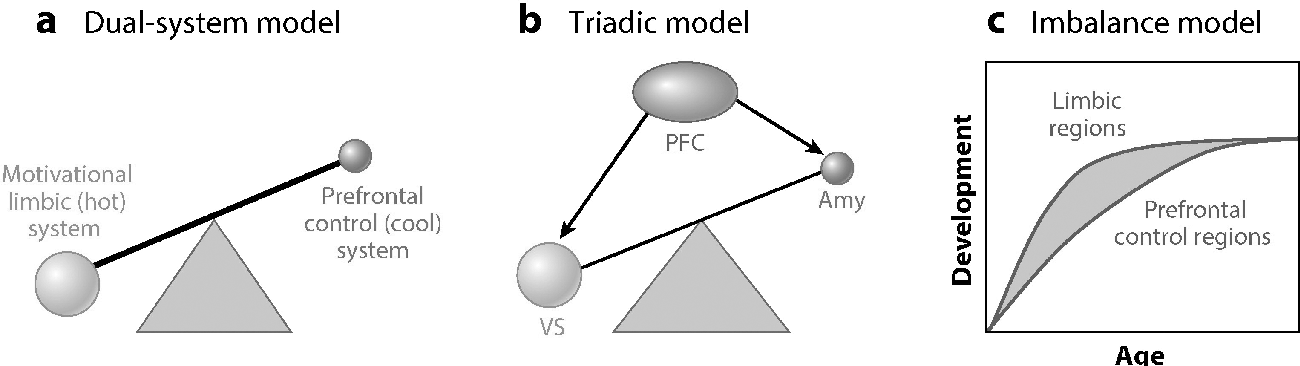
What is the general construction of the adolescent brain? This section introduces the prevailing neurobiological models of adolescence. As with every period of development, applying theoretical perspectives to empirical research helps researchers gain a better understanding about the behaviors and changes often observed during adolescence. Although they differ slightly in their focus, these models tend to highlight the differences in maturation rates of brain systems implicated in emotion, social, and reward processing from those that are important for regulation of behavior. These different systems have sometimes been referred to as “hot” and “cold” systems, respectively. The hot system generally refers to regions that are responsive to affective events in the organism's environment, including fears, desires, pleasure, and reflexes. In contrast, the cold system generally refers to regions that are implicated in cognition and goal-planning, and are less engaged during emotional reactivity. Each of these models is illustrated in Figure 1.1 (Casey, Reference Casey2015).
An illustration of the three prevailing models of adolescent behavior.

1.5.1 Dual Systems Model (Figure 1.1a)
Steinberg and colleagues (Reference Steinberg2008) describe adolescent behavior in the domains of sensation-seeking and risky decisions in terms of a dual systems model. According to this model, risky decision-making in adolescence is the product of the interaction of two neurobiological systems: the socioemotional system, comprised of limbic regions including the amygdala, ventral striatum, orbitofrontal cortex, and medial prefrontal cortex, and the cognitive control system, comprised of the lateral prefrontal and parietal cortices. Around the time of puberty, the surge in dopaminergic activity within the socioemotional system leads to increases in sensation-seeking and risky decision-making, outpacing the development (and engagement of) the cognitive control system. This temporal gap leads to heightened vulnerability to these behaviors during adolescence (Steinberg, Reference Steinberg2010).
1.5.2 Triadic Model (Figure 1.1b)
Ernst and colleagues (Ernst, Pine, and Hardin, Reference Ernst, Pine and Hardin2006) proposed the Triadic Model of motivated behavior. This model attributes the determinants of motivated behavior to three functional neural systems, the prefrontal cortex, the striatum, and the amygdala, and focuses on how the maturational timing of each region contributes to age-related differences in motivated behavior as people mature (Ernst, Reference Ernst2014). The prefrontal cortex is implicated in the regulation aspect of motivated behavior. The striatum is implicated in the motivation aspects of the model and the amygdala is implicated in the emotion components of behavior. Together, these three nodes, and the constructs they are associated with, serve to coordinate the calculation of whether to approach (engage in) or avoid a particular behavior and the regulation of that calculation. This model has been used to describe typical adolescent behaviors, including cognitive impulsivity, risk-seeking, emotional intensity, and social orientation.
1.5.3 Imbalance Model (Figure 1.1c)
The imbalance model was developed by Casey and colleagues (Casey, Getz, and Galván, Reference Casey, Getz and Galván2008). This model emerged from empirical studies that examined the developmental transition from childhood through adolescence and into adulthood and translation across species (nonhuman primate and rodent) (Casey, Reference Casey2015). According to this model, developmental changes in the neurochemical, structural, and functional composition of the brain proceed on distinct timelines, such that some brain regions exhibit the changes earlier in development than other brain regions. This leads to an imbalance of how these regions bias behavior because of differential engagement across different stages of development. For instance, it has been used to explain nonlinear changes in behavior during adolescence because regions implicated in reward (e.g. striatum) exhibit greater engagement, in terms of striatal activation and behavioral bias toward reward, relative to regions critical for behavioral regulation (e.g. prefrontal cortex). Importantly, unlike models that focus on specific brain regions, the Imbalance Model aims to attribute adolescent behavior to the coordinated integration of multiple brain circuits (Casey, Galván, and Somerville, Reference Casey2015). This model focuses on the dynamic neurochemical, connectivity, and functional interactions across development in circuits that are essential for self-control.
1.5.4 Social Information Processing Model
This model, proposed by Nelson and colleagues, is similar to the other models of adolescent development (Nelson, Lieibenluft, McClure, and Pine, Reference Nelson, Lieibenluft, McClure and Pine2005). An added twist is that it describes risk-taking behavior in terms of an overactive affective node, including normative adolescent changes in the limbic system, due to a surge of gonadal hormone levels at puberty.
1.5.5 Fuzzy Trace Theory
Reyna and colleagues (Reyna and Farley, Reference Reyna and Farley2006) have applied fuzzy trace theory (FTT) as an explanatory framework for adolescent risk behavior. FTT posits that sophisticated “judgment and decision making is based on simple mental representations of choice (‘fuzzy’ memory traces) as opposed to more detailed, quantitative representations (verbatim memory traces)” (Rivers, Reyna, and Mills, Reference Rivers, Reyna and Mills2008). According to FTT, decision-making becomes less computational and more intuitive as development proceeds. Earlier in development (in adolescence) risky decision-making involves precise calculations (e.g. does the exact amount of fun or money I will gain outweigh the exact amount of risk involved in achieving the fun or money?) whereas adults shift to a “fuzzier” calculation that simply ranks the options (e.g. ranking the potential rewards against the risk involved to get the reward). Fuzzy trace theory has been used to explain a myriad of real-world adolescent decision-making.
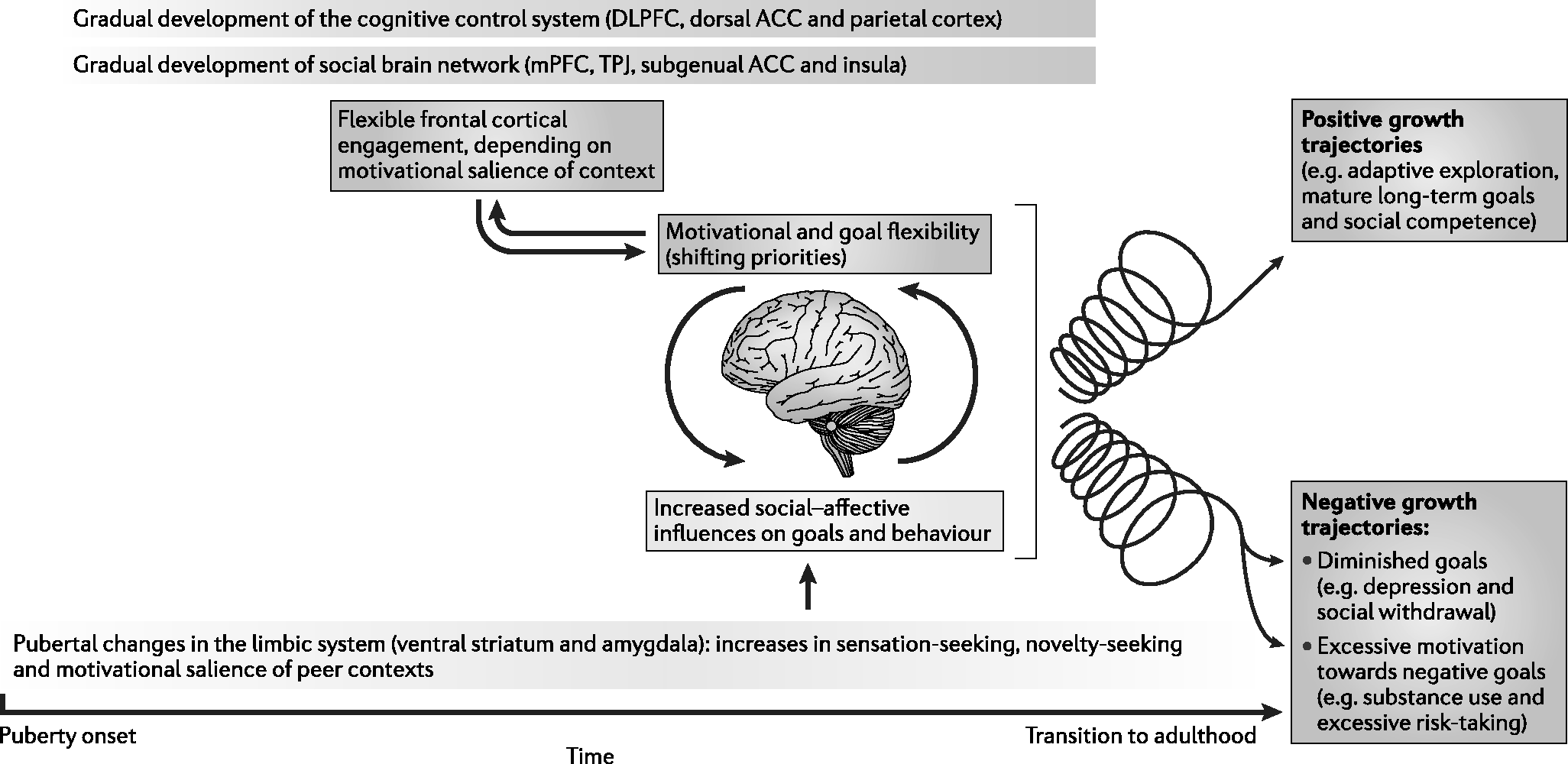
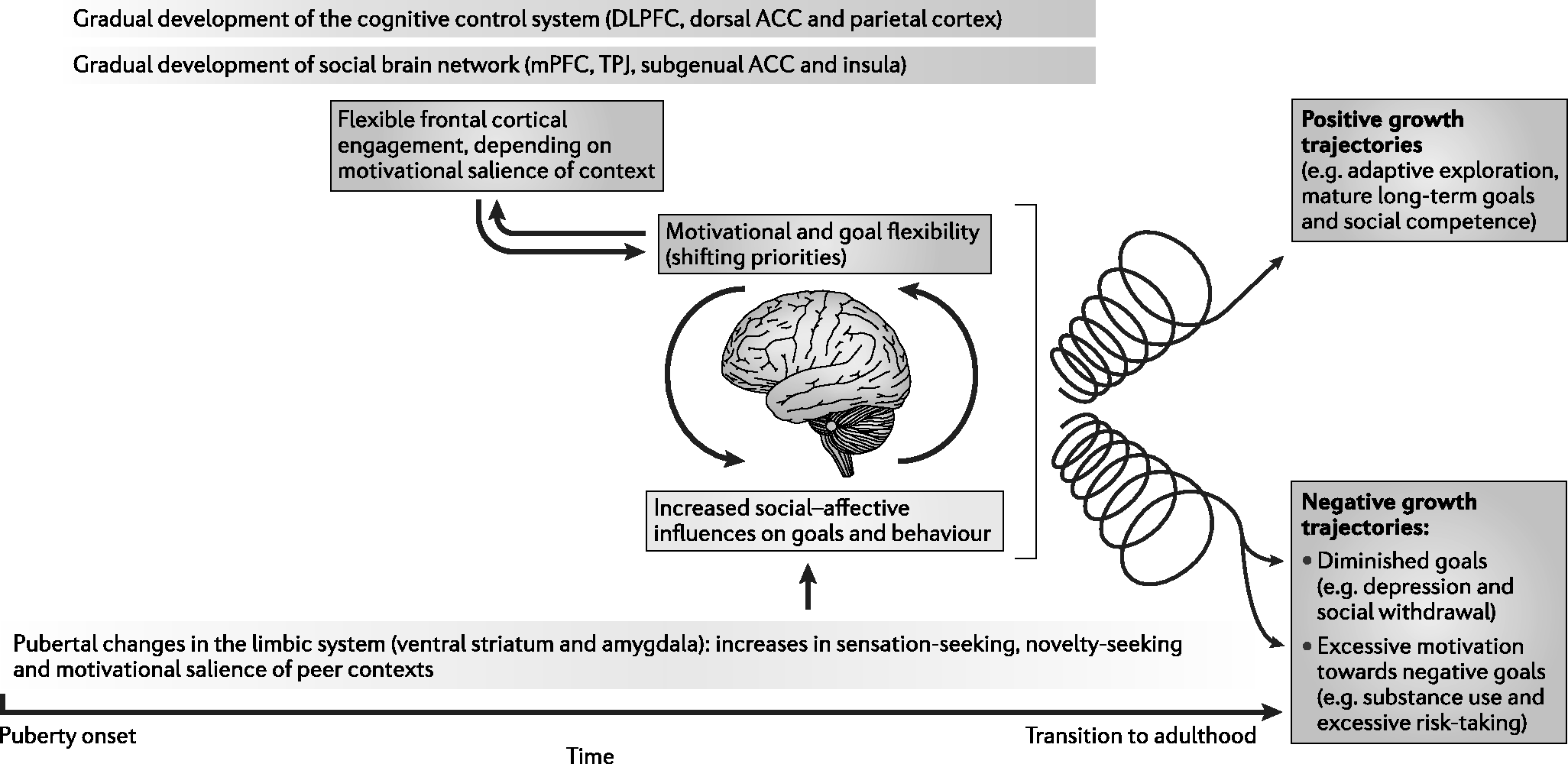
As you can see, these models are very similar in the message they send: the contribution of different brain regions to behavior is biased toward greater emotional reactivity and reward-driven behaviors during adolescence. This is clearly a simplistic account and none of the authors of these models believes the adolescent brain or adolescent behavior is that simple. However, the models were created as a response to the growing neuroscientific evidence suggesting that important brain regions evince unique activation profiles during adolescence. With increasing sophistication in neuroscience tools has come a more nuanced view of the neural computations that occur during adolescence. Now that we have the ability to measure how brain regions communicate with one another, these models are being refined to consider how interconnections within and across brain systems also contribute to characteristic adolescent behavior (Casey et al., Reference Casey2015; Galván, Reference Galván2014). Adolescent brain experts are also working to determine the important role that environmental context and developmental history play in shaping the adolescent brain (Crone and Dahl, Reference Crone and Dahl2012; Pfeifer and Allen, Reference Pfeifer and Allen2012). In a recent model, Crone and Dahl proposed that the adolescent brain is primed for flexibility because of its plasticity, a topic we will return to in Chapter 4. As illustrated in Figure 1.2, the integrative model they outline puts pubertal changes and both positive and negative outcomes front and center. In other words, in addition to incorporating the neurodevelopmental changes that occur in adolescence, they highlight the inputs to and outputs of this mixture of factors that all coalesce during this developmental window.
A proposed model of adolescent development by Crone and Dahl (Reference Crone and Dahl2012). The model illustrates the role of puberty in initiating changes in social and affective processing (yellow boxes), which in turn interact with changes in cognitive control and social cognitive development (blue boxes). These interactions contribute to flexibility in the engagement of frontal cortical systems in adolescents that depends on the motivational salience of the context. These tendencies can lead to both positive and negative outcomes. ACC, anterior cingulate cortex; DLPFC, dorsolateral prefrontal cortex; mPFC, medial PFC; TPJ, temporoparietal junction.
1.6 What is the Function of Adolescence?
At no other time in life are individuals healthier, stronger, or more passionate than during adolescence (Dahl, Reference Dahl2004). They are also, arguably, the most reckless, impulsive, and stubborn. This puzzle has led theorists to consider whether there is a particular “function” of adolescence. Most have come to the general conclusion that the main function of adolescence is to establish independence. The well-known developmental psychologist Erik Erikson noted that “adolescence is a time when young people set the pattern for their future lives” while Alice Schlegel concluded that “the function of adolescence across cultures is to prepare children for their adult reproductive careers, similar to higher primates” (Schlegel, Reference Schlegel, Crocket and Silbereisen2001).
One important aspect of preparing for adulthood is establishing independence from the family unit and caregiver. In nonhuman animals, this autonomy typically involves leaving the home troop to seek out new sexual mates, food resources, and sleeping burrows or trees. Humans, on the other hand, vary greatly in the extent to which they “leave” the family unit. Some adolescents stay close to home even after they have legally become adults whereas others move far from their families and only visit them occasionally. The very definition of “independence” varies across generations, adolescents, parents, and societies. The end of adolescence in most societies is marked by when an individual is “mature enough” to be trusted with certain responsibilities, including driving a vehicle, having legal sexual relations, serving in the armed forces or on a jury, purchasing, selling, and drinking alcohol, voting, finishing certain levels of education, marriage, and renting a car. But even the age at which these rights and privileges are granted varies within a single nation or culture. In most cases, how the standard legal age limits were determined seems rather arbitrary and inconsistent across the various activities that require an age restriction. For instance, youth can hold employment in many US states at the age of 14 but are not legally allowed to drive, vote, and buy alcohol until the ages of 16, 18, and 21 years, respectively. They can fight in wars and serve in the armed forces at age 18 but cannot rent a car until age 25. We will return to this topic in Chapter 8 when we review the role of adolescent brain research on public policy and the juvenile justice system.
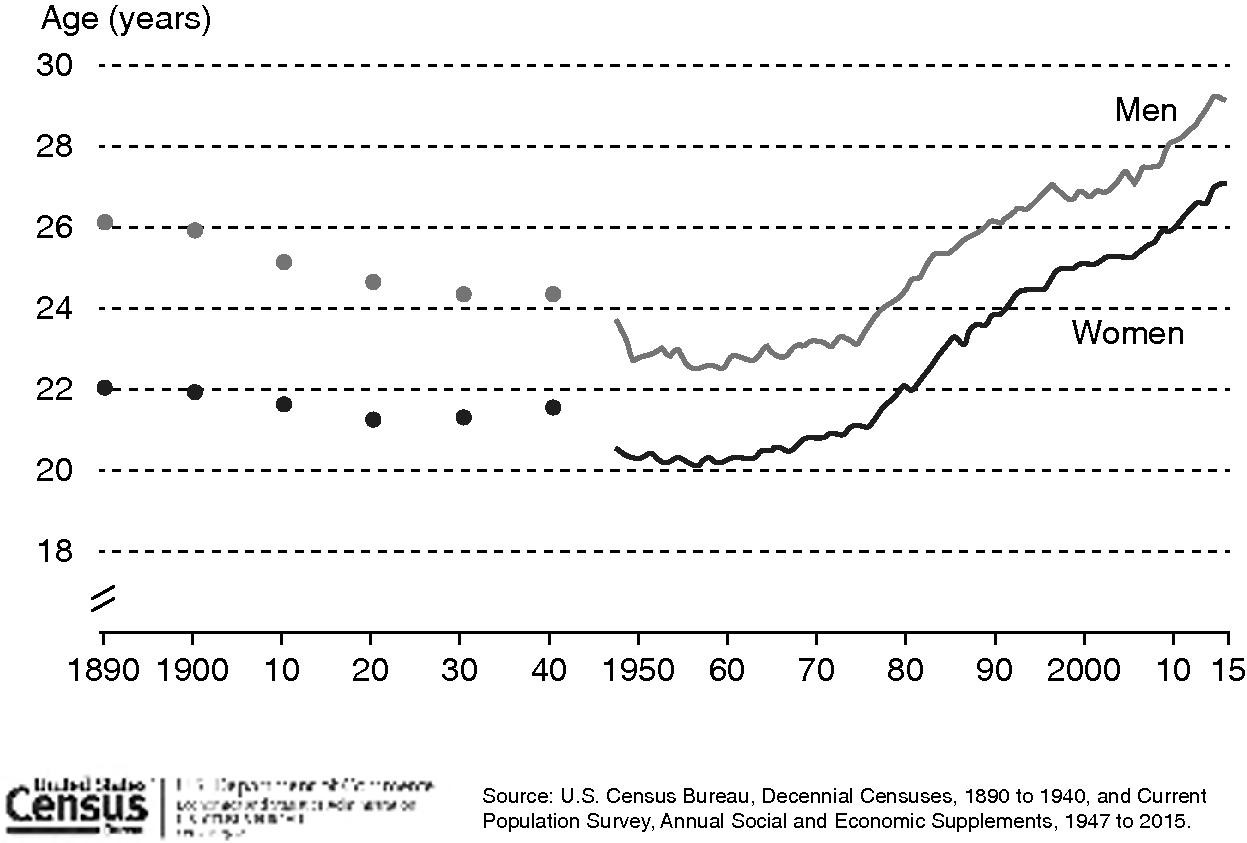
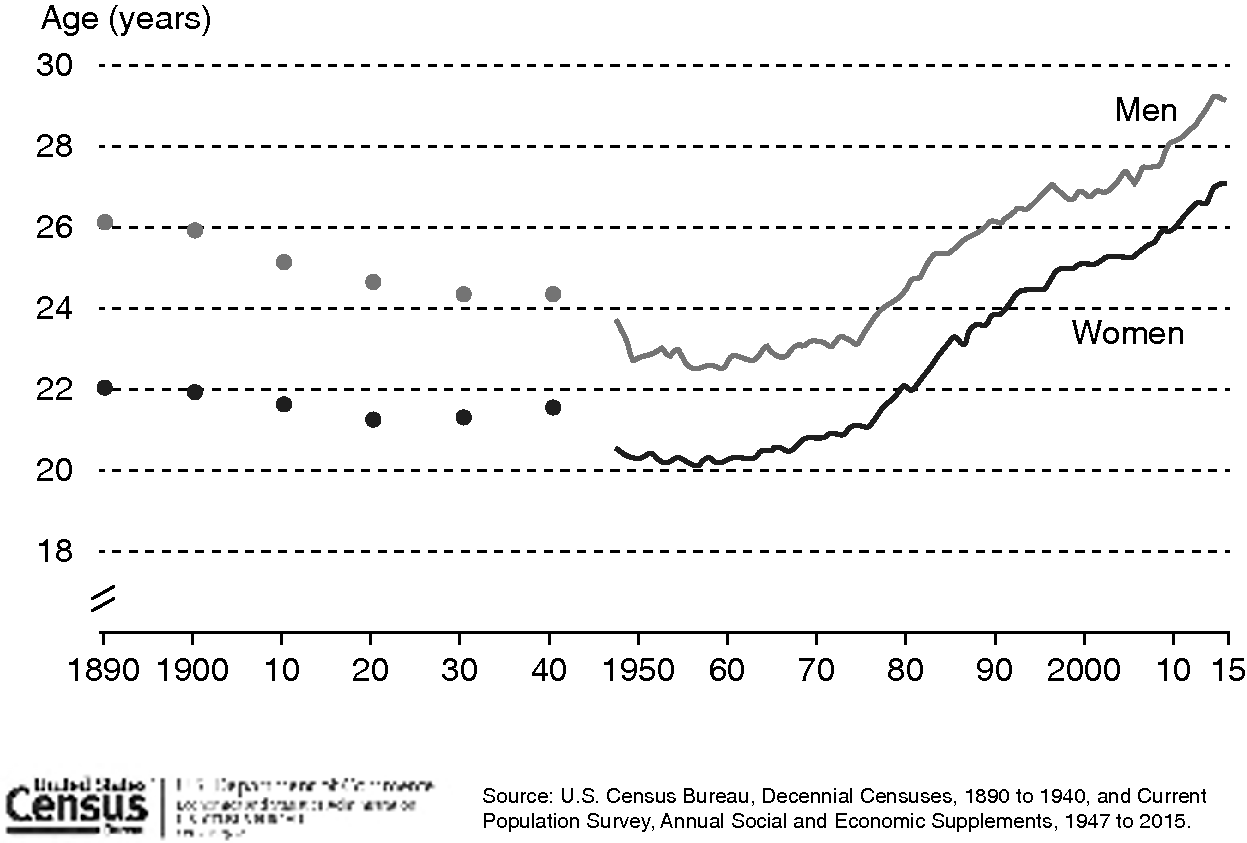
By some standards, individuals transition from adolescence into adulthood when they are either married or financially independent, or both. In previous generations, these events typically coincided with graduation from college. The median age of marriage was 20.3 for females and 22.8 for males in 1950. Figure 1.3 illustrates how this pattern has changed over time. Since the late 1980s, youth have remained more financially dependent on their parents for longer and are marrying later. In 2015, the median age of marriage jumped to 27.6 for females and 29.5 for males. One reason for this trend is that there has been an increase in the number of people (particularly women) who are attending college or university. In fall 2014, 17.3 million students enrolled in American colleges and universities, a 31% increase from 13.2 million in 2000 (nces.ed.gov, 2016). In 1970, 42.3% of the college-attending population were women; today, women make up 56.8% of the college population (nces.ed.gov, 2016). This increase makes individuals more dependent on parents or government loans for financial support, particularly as the costs of college continue to rise steadily. Adjusting for inflation and represented in current dollars, the average total cost of college in 1976–77 including tuition, fees, and room and board was $7,146 for a public university and $14,686 for private institutions; for the 2012–13 academic year the costs were $15,022 and $39,173 for public and private nonprofit institutions, respectively (US Department of Education, 2015). The economic crisis in 2008 further contributed to continued financial dependence on parents, as college graduates struggled to find jobs and moved back home. A 2011 Pew Research Center analysis of US Census data reported that 39% of adults ages 18 to 34 said they either lived with their parents or had moved back in at some point in recent years. Among 18 to 24 year olds, 53% said they lived at home or had moved in temporarily, compared with 41% among adults ages 25 to 29, and 17% among those aged 30 to 34, and 60% reported being financially linked to their parents (Pew Research Center, 2012).
US Census data indicate that median age of first marriage is steadily rising across generations in both men and women.
The delayed emotional and financial dependence undoubtedly contributes to the protracted transition from adolescence into young adulthood. As we will read about in later chapters, neuroscience research suggests that the brain continues to mature through the mid-20s. Whether and how the delayed dependence on caregivers influences brain development is a topic we will revisit in Chapter 4 when we discuss plasticity of the brain.
1.6.1 How Does the Brain Facilitate Independence?
An increased proclivity toward exploration, willingness to take risks, and seeking out potential mates and new adventures is at the very core of transitioning from a state of dependence on caregivers to one of relative independence (Galván, Reference Galván2013b). Brain development that occurs during adolescence is critically important in facilitating these behaviors. Greater engagement of reward circuitry involved in motivated behavior during adolescence plays a role in why adolescents are more likely to take risks, and enjoy doing it, than adults or children. Less engagement of the regions that might make one pause before taking a risk also leads to more choices that involve risk. In addition to the many social factors that contribute to changes in adolescent behavior, including peer influence, risk availability, and personality traits, changes in the brain regions we rely on to make decisions also contribute to the greater propensity to engage in independence-seeking behaviors. In later chapters, we will delve more deeply into the specific brain systems that underlie these adaptive behavioral changes.
1.7 Human Brain Development: An Overview
Throughout this book we will discuss the specific changes that occur in the brain during adolescence but it is worth reviewing a few basic facts about the human brain and its development. Human brain development is a prolonged process compared to nonhuman animals. The developmental periods of early childhood and adolescence in particular exhibit protracted development in the human species as compared with most other species (Thompson and Nelson, Reference Thompson and Nelson2001). One reason for this might be that the human brain undergoes a lengthier maturation process in order to generate the relatively complex cortex that humans possess. Our brains function by transmitting information through nerve cells, called neurons. The human brain has a greater number of neurons than any other animal. To give one example: whereas the average honeybee brain has 950,000 neurons (Menzel and Giurfa, Reference Menzel and Giurfa2001), humans have approximately 100 billion neurons (Shepherd, Reference Shepherd1998)! Surprisingly, humans do not have the heaviest brains; killer whales actually have the heaviest brains at 5,620 grams on average, compared to approximately 1300–1400 grams on average for the human brain. Many of the additional neurons humans have are located in the surface of the brain, the cerebral cortex. As such, a greater proportion of the human brain (77%) is made up of the cerebral cortex compared to other animals; by comparison only 31% of the rat brain is the cerebral cortex. The total surface area of the cerebral cortex is 2,500 cm2 (2.5 m2) in humans and only 6 cm2 in the rat (Nieuwenhuys, Donkelaar, and Nicholson, Reference Nieuwenhuys, Donkelaar and Nicholson1998).
One prevailing theory is that the elongation of human brain development and the significantly greater number of neurons in the cortex contribute to our higher cognitive ability and enhanced capacity for learning. Large longitudinal studies that used neuroimaging techniques to quantify the size and volume of the human brain have shown that developmental changes are observed in cortical development throughout young adulthood (e.g. Giedd et al., Reference Giedd, Raznahan, Alexander-Bloch, Schmitt, Gogtay and Rapoport2015). By the time an individual reaches adolescence, the majority of basic anatomical structural development has occurred. In fact, the size of the brain is pretty stable after approximately age 5 (Casey, Giedd, and Thomas, Reference Casey, Giedd and Thomas2000). However, brain changes that occur during adolescence and early adulthood involve subtle refinement of regions that are most responsive to the environment.
1.7.1 Interactive Specialization Framework
As we will read about throughout this book, different brain regions are “specialists” in different cognitive domains. Although all regions work together, the prefrontal cortex is generally considered the primary regulation area while the striatum is mostly responsible for processing reward and pleasure. A fundamental question in developmental neuroscience is how different brain regions develop their specificity. If they all start off relatively unspecified in function, how is it that they acquire expertise? According to Mark Johnson, a prominent developmental psychologist, the answer lies in the Interactive Specialization framework (Johnson, Reference Johnson2011). Two key ideas underlie this framework. The first is the idea that neural change in some cortical regions occurs as regions interact and compete with each other. From this perspective, some cortical regions begin with poorly defined and broad functionality, and consequently are partially activated in a wide range of different tasks. Over the course of development, these regions become more selective in what they respond to, as based on activity-dependent interactions between regions. For instance, a region that was originally activated by a wide variety of visual objects may come to respond only (or mostly) to the human face. The second notion central to Interactive Specialization is that brain development involves a process of organizing patterns of interregional interactions. In other words, how any one region develops is largely based on the ongoing development of the regions around it. The onset of new behavioral competencies during infancy will therefore be associated with changes in activity over several regions (networks), and not just with the onset of activity in one or more additional region(s) (Johnson, Reference Johnson2011).
1.8 The Importance of Understanding Adolescent Brain Development
Why are scientists interested in studying adolescent brain development? One reason is that it helps answer questions from inquiring parents about why their teenagers do and say the things they do and say. Perhaps more importantly, understanding the neurobiology of this period of life provides the opportunity to study intriguing developmental questions that cannot be answered with children and adult populations alone. By including adolescents in neurodevelopmental studies, scientists can obtain a better, more in-depth understanding of developmental change from childhood through adolescence and into adulthood. Adolescents can help “fill in the gap” between childhood and adulthood to examine how changes in the entire brain influence diverse cognitive functions. For instance, the longitudinal findings reviewed in the previous section provided an interesting picture of the brain from childhood through adulthood by showing that some brain regions do not develop in a linear fashion; in other words, the inclusion of an adolescent group showed that certain brain regions ramp up in size through late childhood but then start to decrease in size around adolescence and into early adulthood. In a separate study, Sowell and colleagues (Sowell et al., Reference Sowell, Peterson, Thompson, Welcome, Henkenius and Toga2003) found that the most significant anatomical changes in the brain during the adolescent period occur in brain regions that are critically involved in affective processing; these findings served as an important point of departure for fMRI studies that subsequently examined reward and emotion systems.
The few longitudinal fMRI studies that have been published reported interesting changes in how the brain processes information during adolescence (Braams, van Duijvenvoorde, Peper, and Crone, Reference Braams, van Duijvenvoorde, Peper and Crone2015; Koolschijn, Schel, de Rooij, Rombouts, and Crone, Reference Koolschijn, Schel, de Rooij, Rombouts and Crone2011; Pfeifer et al., Reference Pfeifer, Masten, Moore, Oswald, Mazziotta, Iacoboni and Dapretto2011). A 3-year longitudinal study that included participants aged 8–27 found that task performance in children and adolescents was more tightly linked to brain activation over time than age (Koolschijn et al., Reference Koolschijn, Schel, de Rooij, Rombouts and Crone2011). A separate longitudinal study reported that adolescence is a critical period for brain responses to affective facial stimuli (Pfeifer et al., Reference Pfeifer, Masten, Moore, Oswald, Mazziotta, Iacoboni and Dapretto2011). The study found that from late childhood (10 years) to adolescence (13 years) there was a marked shift in activation of reward regions such that increased activation was associated with decreased likelihood of self-reported peer influence (Pfeifer et al., Reference Pfeifer, Masten, Moore, Oswald, Mazziotta, Iacoboni and Dapretto2011).
Second, the only way to understand the relationship between puberty and neurodevelopment is to study adolescents. As we will read about in Chapter 2, puberty is a highly significant event in all species that coincides with the onset of adolescence. During pubertal development, the physical, psychological, and hormonal changes that ensue have consequential effects on concurrent and future behavior and well-being. There is a lot known about the effects of pubertal hormones on brain development in animals but there is still much to learn in humans.
Third, because adolescence is a period of identity exploration, increased orientation toward peers, and changing social roles, adolescents serve as a good model group in which to address sophisticated questions about the relationship between socioemotional development and brain development. Studies with adolescent participants are used to examine how the progression from dependence to autonomy is subserved by changes in how the brain processes social information.
Last, adolescence marks the period in development when the onset of psychiatric disorders is most prevalent. It is therefore important to include adolescents into brain imaging studies to address an important question: Why is there an increase in psychiatric disorders during adolescence? (Paus, Keshavan, and Giedd, Reference Paus, Keshavan and Giedd2008). Converging evidence suggests that brain changes within regions involved in processing emotional or affectively charged information and in behavioral regulation contribute to this phenomenon. A better understanding of brain development in both typically developing and clinical populations could provide opportunities for treatment or prevention.
1.9 The Importance of Animal Models
The goal of this book is to teach you about adolescent brain development. However, you will notice that some of the research that is reviewed is based on animal models of development. Human and nonhuman animals clearly differ in many respects. But many of the guiding principles and much of the knowledge about the human developing brain were informed by research in other species. In fact, numerous hypotheses and theories about brain development were initially motivated by animal models.
There are several reasons that animal models are helpful. First, animal models allow for investigations that are either ethically or practically impossible in human samples. Because animals typically have shorter lifespans, researchers can ask questions about development using longitudinal approaches that can be conducted within a few months, as opposed to the many years the same type of experiment would take in humans. Second, we share much of the same genetic makeup as nonhuman primates (monkeys, chimps, and apes) and rodents, all of which are species often used to study basic cognition. This is important because it gives scientists the opportunity to test whether particular sets of genes are implicated in cognitive processes of interest. Third, questions about the role of experience in shaping brain development that are of great interest to developmental cognitive neuroscientists can more easily be addressed with animals. In animals, it is possible to manipulate, or alter, the experience or environment of the individual in ways that are impossible in humans. We can ask such questions as: What is the role of poor (or enriched) caregiving on brain development and behavior? Whereas we must rely on naturalistic cases that limit the sample size and specificity in humans, we can control these factors in animals.
Animal models are not perfect, of course. A developing rodent, for example, is the product of a very different dynamic system from a developing human. In addition, appropriate age comparisons are challenging to discern. Does the “juvenile” period of a rat directly match up with the adolescent period in humans? One way to avoid this issue is to consider the developmental niche or needs of the organism at the particular development window of interest. In both species, sexual maturation instigates a cascade of activities that include heightened risk-taking, novelty exploration, and increased peer affiliation, all in the service of making the individual more confident and independent from caregivers. Nonetheless, animal models are highly valuable to the field of human brain development so you will learn about them throughout this book.
1.10 Chapter Summary
World leaders and health advocates have given increasing attention to the period of adolescence.
Adolescence is a period of transition between childhood and adulthood and includes individuals roughly 10 to 25 years of age.
Historically, hormones and puberty were thought to account for adolescent behavior but the advent of neuroimaging is challenging that view.
Characteristic adolescent behavior, including emotional reactivity and risk-taking, is similar across cultures and species.
Theoretical frameworks on adolescence range in their focus from biologically based to societally based perspectives.
The function of adolescence is for individuals to become independent from adult caregivers.
The brain matures as based on normative biological changes and interactions with the environment.
1.11 Review Questions
1 What are three prevailing theories of adolescent brain development?
2 How has societal perception of adolescence changed throughout history?
3 What is the role of the developing brain in facilitating adolescent independence?
4 What purpose does a larger cortex in humans relative to nonhuman animals serve?