Introduction
Seasonal cycling of dormancy has been studied extensively in physiologically dormant (PD) seeds with a fully developed embryo (Karssen, Reference Karssen and Khan1982; Bouwmeester and Karssen, Reference Bouwmeester and Karssen1993). However, many plant species typically have seeds containing an embryo that has not yet completed growth at the moment of dispersal (Martin, Reference Martin1946). The embryo has to grow to a critical length before these seeds can germinate. These seeds are classified as morphologically dormant (MD) in the classification system proposed by Nikolaeva (Reference Nikolaeva and Khan1977). In many species with MD seeds, an additional physiological mechanism inhibiting germination has to be overcome. Seeds that have a combined morphological and physiological dormancy are defined as morphophysiologically dormant (MPD). This physiological dormancy is broken either before or during initiation of embryo growth (Baskin and Baskin, Reference Baskin and Baskin1998).
Non-deep, simple MPD is one of eight types of MPD proposed by Baskin and Baskin (Reference Baskin and Baskin1990a). In seeds with this type of MPD, growth of the embryo occurs at high temperatures after physiological dormancy is broken by stratification at either high or low temperature conditions (Walck et al., Reference Walck, Baskin and Baskin1999). Cyclic changes in dormancy status have also been observed in seeds of annual species with non-deep, simple MPD. Requirements for relief and induction of physiological dormancy depend on the species' life cycle and are temperature controlled (Baskin et al., Reference Baskin, Milberg, Andersson and Baskin2002). Once physiological dormancy is broken in these species, the embryo often has an additional light requirement before growth is initiated (Baskin et al., Reference Baskin, Baskin and Chester1999). This implies that germination only occurs when seeds are exposed to appropriate light and temperature conditions at the right time of the year.
Members of the Apiaceae typically have seeds containing an embryo that has not fully developed at the moment of dispersal (Martin, Reference Martin1946). Requirements for dormancy break, embryo growth and germination have been studied in detail in the winter annual Apiaceae, Chaerophyllum tainturieri, C. procumbens and Ptilimnium nuttalli (Baskin and Baskin, Reference Baskin and Baskin1990a; Baskin et al., Reference Baskin, Baskin and Chester1999, Reference Baskin, Hawkins and Baskin2004). Seeds of these three species are long lived, whereby PD is broken by high temperature treatments. Once PD is broken, embryo growth is initiated in seeds that are placed at appropriate light and temperature conditions. The spring-germinating perennials, Angelica sylvestris and Selinum carvifolia, have non-deep, simple MPD seeds, whereby PD is broken by cold stratification. However, these species apparently do not form a long-term, persistent seed bank (Vandelook et al., Reference Vandelook, Bolle and Van Assche2007). In seeds of the summer annual weed, Aethusa cynapium, cyclic seasonal changes have been demonstrated in the temperature range over which germination can take place (Lonchamp et al., Reference Lonchamp, Bourlier, Chadoeuf and Barralis1988). Seeds of A. cynapium germinate to high percentages in response to daily fluctuating temperatures and light after dormancy is broken by cold stratification (Grime et al., Reference Grime, Mason, Curtis, Rodman, Band, Mowforth, Neal and Shaw1981; Roberts and Boddrell, Reference Roberts and Boddrell1985). However, the conditions required for embryo growth have not been studied in this species.
This study focuses on the requirements for dormancy break, embryo growth and germination in seeds of Torilis japonica (Houtt.) DC. The genus Torilis (Apiaceae) includes approximately ten species, most of them annual weeds, with a widespread distribution (Cannon, Reference Cannon, Tutin, Heywood, Burges, Moore, Valentine, Walters and Webb1968; Hegi, Reference Hegi1975; Lee and Downie, Reference Lee and Downie2000). Based on morphological traits, Lee et al. (Reference Lee, Levin and Downie2001) regarded T. japonica and T. arvensis subsp. arvensis as sister taxa. Baskin and Baskin (Reference Baskin and Baskin1975) studied dormancy and germination of T. japonica, collected in Kentucky, USA, in relation to its winter annual life cycle. However, a recent revision of seed material of this species revealed that the species in this study was actually T. arvensis (personal observation, confirmed by Baskin and Baskin). The majority of T. arvensis seeds were non-dormant at the moment of dispersal, and germinated to high percentages in response to fluctuating temperatures and light. Seeds that did not germinate in autumn were induced into dormancy by low winter temperatures.
T. japonica has a widespread distribution and is found throughout most parts of Europe, in the Caucasus and East Asia (Hultén and Fries, Reference Hultén and Fries1986). In a Japanese moist, tall grassland, T. japonica seeds were dispersed in July and August, and seedlings emerged in autumn and to a lesser extent in spring (Masuda and Washitani, Reference Masuda and Washitani1990). Dormancy in these seeds was broken by moist afterripening at high temperatures and induced by moist chilling, suggesting a winter annual life cycle (Washitani and Masuda, Reference Washitani and Masuda1990). In Europe, T. japonica is generally regarded as a summer annual or biennial species (Hegi, Reference Hegi1975). Seeds collected in England can survive in the soil for several years, and germination of these seeds peaks in spring (Roberts, Reference Roberts1979; Thompson and Baster, Reference Thompson and Baster1992). Additionally, Grime et al. (Reference Grime, Mason, Curtis, Rodman, Band, Mowforth, Neal and Shaw1981) found that seeds collected in Sheffield, UK had a chilling requirement for germination.
The present study aims to resolve the germination pattern of seeds of T. japonica collected in Belgium. Therefore, we performed a series of experiments to investigate: (1) phenology of embryo growth and seedling emergence; (2) seasonal changes in dormancy status; (3) requirements for dormancy break and embryo growth; and (4) environmental cues affecting germination. These results were interpreted in relation to the species' life cycle and ecology within a biogeographic and phylogenetic framework.
Materials and methods
Plant material
T. japonica grows in a variety of habitats, such as woodland margins, hedgerows, road verges, rock outcrops and pastures (Grime et al., Reference Grime, Hodgson and Hunt1988). Ripe seeds (mericarps) of T. japonica were collected in a moist open woodland near Diest, Belgium (50°48′N, 5°3′E). In general, these plants had a biennial life cycle, and seeds were dispersed in September and October (personal observations). Experiments were performed mainly on seeds sampled in mid-September 2005, except for seeds used in the stratification experiment, which were sampled in late September 2006. All experiments were started within 2 weeks after harvesting, and seeds were dry stored at room temperature (c. 20°C) until used.
Phenology of seedling emergence and embryo growth
Seeds were sown in a garden near Leuven, Belgium, to determine seasonality in seedling emergence and embryo growth. At the end of September 2005, we buried three replicates of 50 seeds at 1 cm depth in plastic pots filled with potting soil. The pots were buried at soil level and covered with a net to prevent disturbance by birds. A molluscicide was also applied regularly to prevent seedling damage by snails. Seedlings were counted and removed weekly for 1 year. Maximum and minimum soil temperatures at 1 cm depth were recorded daily in the vicinity of Leuven. These data were used for calculating the average weekly maximum and minimum soil temperatures.
Embryo growth in natural conditions was studied by regularly exhuming nylon bags containing seeds of T. japonica. Each of 20 nylon bags was filled with 30 seeds and 10 g of white sand to simulate soil contact. In September 2005, these bags were buried at a depth of approximately 1–2 cm in the experimental garden near Leuven. Every 2 weeks, from 5 October 2005 until 5 April 2006, a nylon bag was exhumed, and the average embryo length to seed length ratio (E:S ratio) of 20 randomly selected seeds was determined. The E:S ratio was calculated by cutting seeds in half and measuring embryo length and seed length, using a dissection microscope with an ocular micrometer. The critical E:S ratio was calculated as the average E:S ratio of 20 seeds with a split fruit coat, but no radicle protrusion. We did not measure the length of the embryo in germinated seeds; instead, we applied the critical E:S ratio.
Dormancy cycling in buried seeds
Seasonal changes in dormancy status of the seeds were studied by exhuming buried seeds at regular intervals and incubating them in controlled conditions. Each of 13 nylon bags filled with 1500 seeds and 20 g white sand was buried in September 2005 in plastic pots at a depth of 7 cm in the experimental garden. Every 2 months, from December 2005 until October 2007, one pot containing a nylon bag was exhumed, and the seeds were incubated in a set of light and temperature regimes. Seeds were transferred to a filter paper (Schleicher and Schuell No. 2282) in 10-cm diameter Petri dishes and moistened with c. 10 ml of distilled water. Transfer of the seeds to the Petri dishes was performed in a dark room under a green safe lamp. Three replicates of about 50 seeds were placed in temperature-controlled incubators at constant 10°C and 23°C and at daily fluctuating temperatures of 15/6°C and 20/10°C (12 h/12 h), simulating spring and summer temperature conditions, respectively. Seeds were incubated either in darkness in a light-tight wooden box or in a 12-h light regime (36 μmol m− 2 s− 1), with light provided by cool white fluorescent tubes (Philips TLD 80). For incubation at daily fluctuating temperatures, the photoperiod coincided with the high temperature portion of the cycle. After 2 weeks of incubation, the number of germinated and of ungerminated, but intact, seeds was determined. Seeds that had not germinated were pinched with tweezers and considered viable if the embryos were still firm. Only viable seeds were taken into account in calculating germination percentages.
Embryo growth in controlled conditions
Growth of the embryo was studied in T. japonica seeds during cold and warm stratification, or during cold stratification preceded by warm stratification. Approximately 200 seeds were incubated in darkness at 5°C and 23°C for 20 weeks, or at 23°C for 12 weeks followed by incubation at 5°C for another 12 weeks. All seeds were placed on a filter paper in a Petri dish and moistened with distilled water. Filter papers were moistened regularly under a green safe lamp. Every fortnight, 20 seeds were selected randomly and the E:S ratio was determined as described above. We also studied embryo growth in seeds transferred to spring temperature conditions following a cold stratification treatment. About 150 seeds were placed on moist filter paper in each of four Petri dishes and incubated at 5°C in darkness for 8 weeks, and then transferred to 23°C and 20/10°C in light and darkness. After the transfer from 5°C, 20 seeds were selected randomly every 2 or 3 days, and the E:S ratio was determined.
Stratification requirement for dormancy break
In a controlled experiment, three replicates of 50 seeds were incubated at 5, 10, 23, 15/6 and 20/10°C in a 12-h photoperiod for 36 weeks. Filter papers were kept moist with distilled water, and germinated seeds were counted and removed every week. The effect of cold stratification on dormancy break was tested by stratifying seeds at 5°C in darkness for 0, 4, 8, 12 and 16 weeks. During stratification, filter papers were kept moist by adding distilled water under a green safe lamp. After each cold stratification period, germination was tested by incubating three replicates of 50 seeds at 10, 23, 15/6 and 20/10°C in light and in darkness. Germination percentages in each condition were determined after 2 weeks of incubation. Since only a small fraction of the seeds proved to be non-viable at the end of the experiment, germination percentages were based on total number of seeds placed in the Petri dish.
In some species, a period at high temperatures prior to cold stratification enhances subsequent germination (Baskin et al., Reference Baskin, Meyer and Baskin1995). Therefore, we incubated imbibed seeds in darkness at 23°C for 0, 4 and 8 weeks prior to a 12-week cold stratification at 5°C. Following these pre-treatments, seeds were incubated in the same conditions as mentioned previously for the cold stratification experiment. Effects of incubation temperature and stratification treatment on germination percentages were tested with the Scheirer–Ray–Hare extension of the Kruskal–Wallis test (Sokal and Rohlf, Reference Sokal and Rohlf1997). For each germination condition, we tested the effect of duration of cold stratification and the duration of warm incubation prior to cold stratification non-parametrically, using the Kruskal–Wallis test with multiple comparisons.
Temperature range and rate of germination
The following experiment was performed to study the range of temperatures at which seeds germinated after cold stratification. This experiment also made it possible to determine germination rate and the optimal temperature for germination. Three replicates of 50 seeds, which had first been cold stratified for 8 weeks at 5°C, were placed on a moist filter paper in Petri dishes and moved to water baths. Petri dishes floated on the water surface in these baths, with temperatures ranging from 5°C to 30°C with an interval of 2.5°C. The only light reaching the seeds was provided by natural light (between 2.6 and 6.5 μmol m− 2 s− 1) transmitted through the windows in the growth chamber. The experiment lasted for 2 weeks, during which germinated seeds were counted and removed daily. At the end of the experiment, the mean number of germinated seeds was calculated for each temperature condition. The rate of germination (T 50) was calculated and expressed as the time (d) required to reach 50% germination of the total number of germinated seeds.
Effect of GA3 on dormancy break and germination
The ability of gibberellic acid (GA3) to overcome dormancy is a decisive element in some dormancy classification systems (Baskin and Baskin, Reference Baskin and Baskin1998). We applied three different GA3 concentrations to seeds incubated at four different temperature conditions to test for effects of GA3 on dormancy break in T. japonica. Three replicates of 50 seeds were placed on a filter paper in Petri dishes and moistened with 0, 10, 100 or 1000 mg l− 1 GA3. Seeds were incubated for 12 weeks at constant 10, 23, 15/6 and 20/10°C in a 12-h photoperiod. Germinated seeds were counted and removed weekly. The effects of GA3 and incubation temperature on final germination percentages were analysed non-parametrically, using a Kruskal–Wallis test and the Scheirer–Ray–Hare extension.
Results
Phenology of seedling emergence and embryo growth
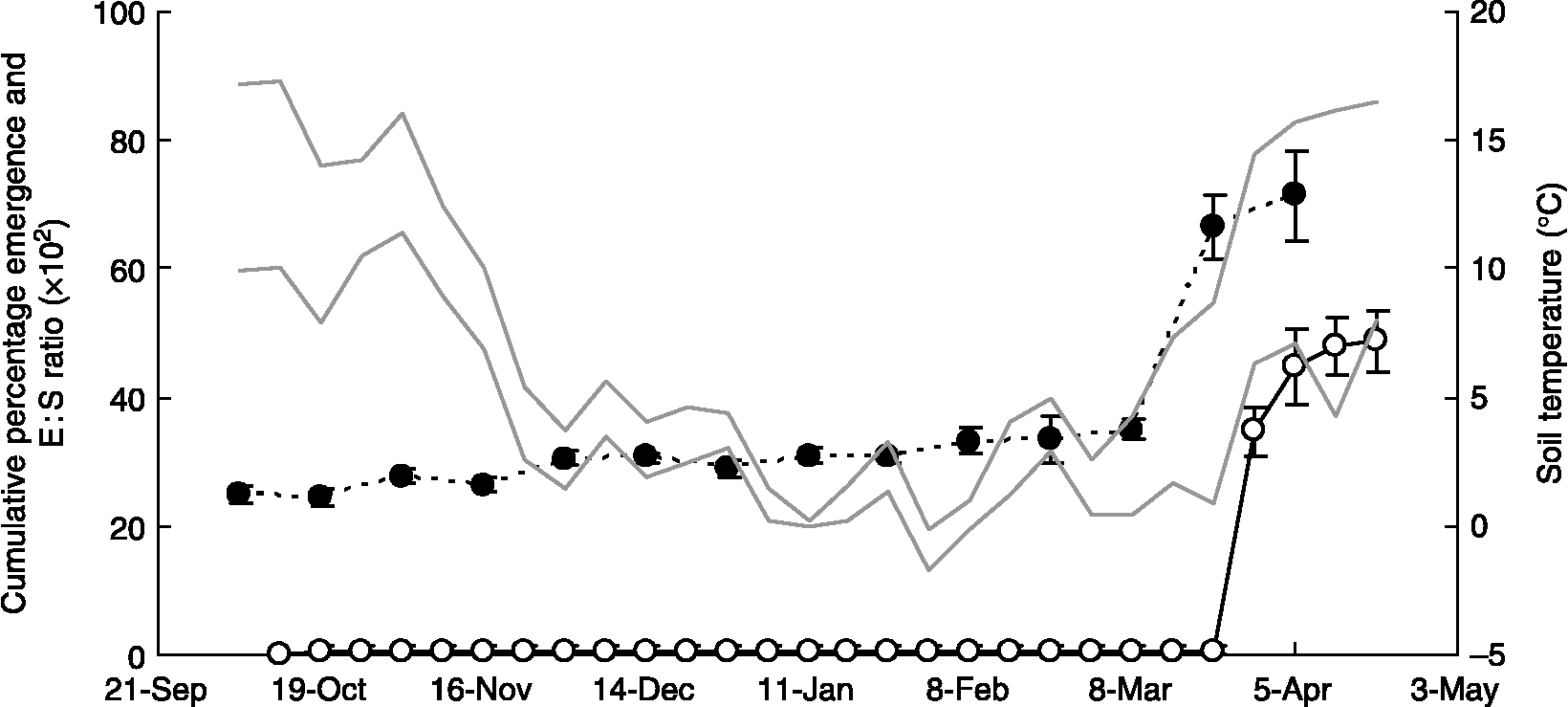
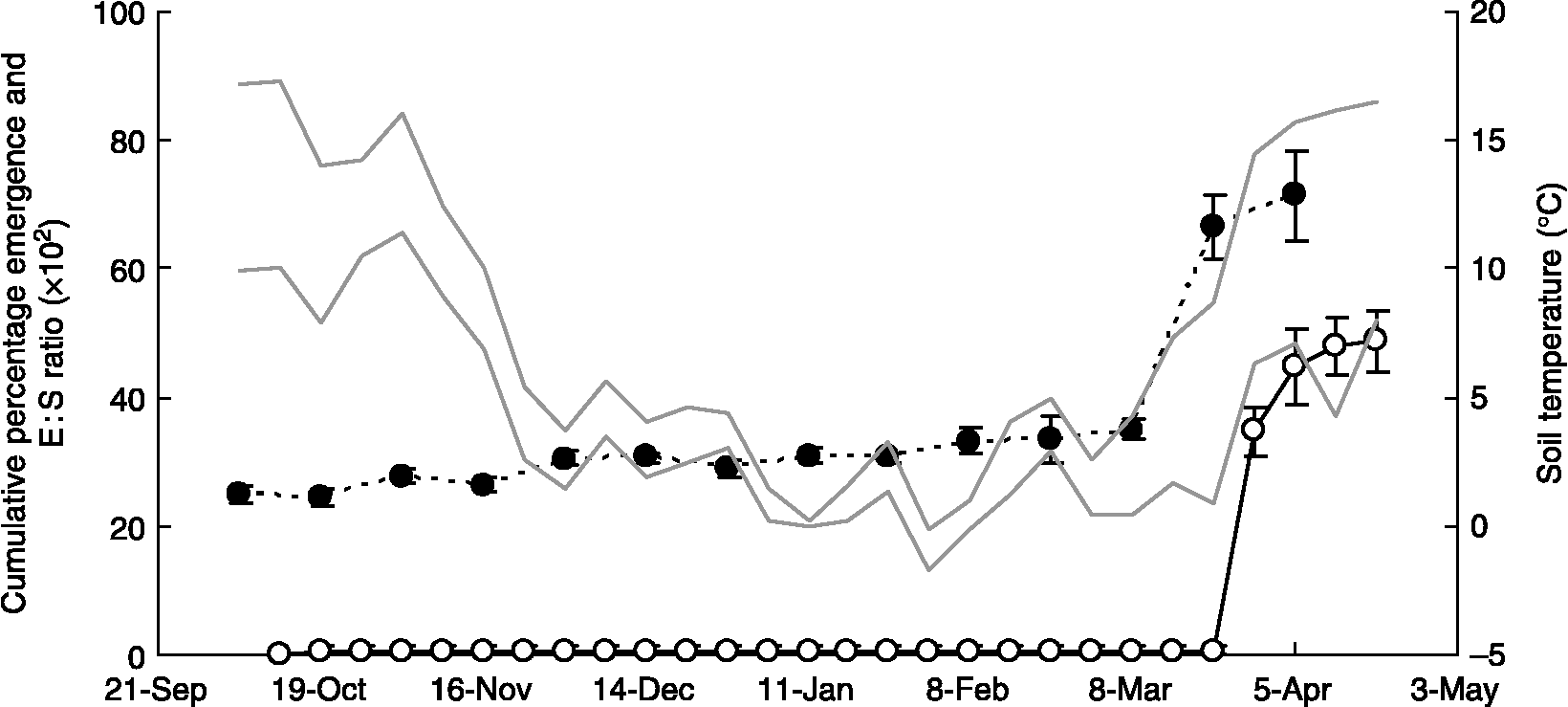
The mean E:S ratio of T. japonica seeds immediately after harvesting was 0.25 ± 0.01 (mean ± SE). In the period between burial of the seeds until 8 March 2005, a small increase of the E:S ratio (0.35 ± 0.02) was observed (Fig. 1). A sudden increase in embryo length was noticed in seeds exhumed on 22 March 2007, when mean minimum and maximum soil temperatures in the preceding week were 0.9°C and 8.5°C, respectively. Two weeks later, 60% of the seeds in the bags had reached the critical E:S ratio (0.93 ± 0.01) and had germinated. Seeds that had not germinated in this bag, however, still had a small E:S ratio (0.44 ± 0.04), causing a large standard error in the E:S ratio overall. Seedling emergence was restricted to a 4-week period in spring. Seedlings were first noticed on 29 March 2006, when mean daily minimum and maximum temperatures in the preceding week were 5.3°C and 14.6°C, respectively. In total, 48.7% of the seeds sown emerged during spring 2006, and no seedlings were recorded after 19 April 2006.
Phenology of embryo growth and seedling emergence of Torilis japonica seeds buried in September 2005 in a garden near Leuven. Grey lines, mean weekly minimum and maximum soil temperatures at 1 cm depth; closed symbols, average E:S ratio (n = 20); open symbols, cumulative seedling emergence (n = 3). Vertical bars represent SE.
Dormancy cycling in buried seeds
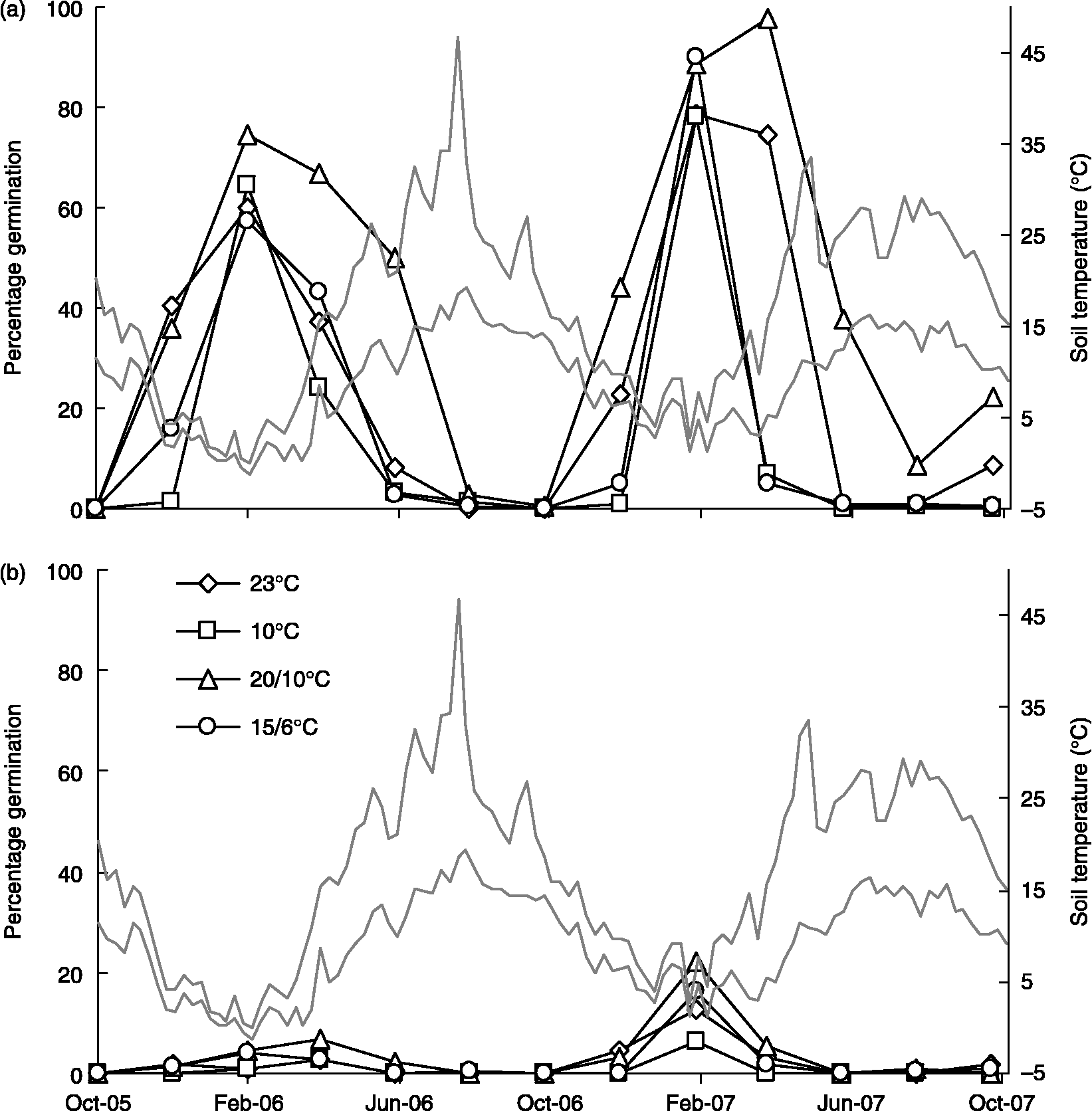
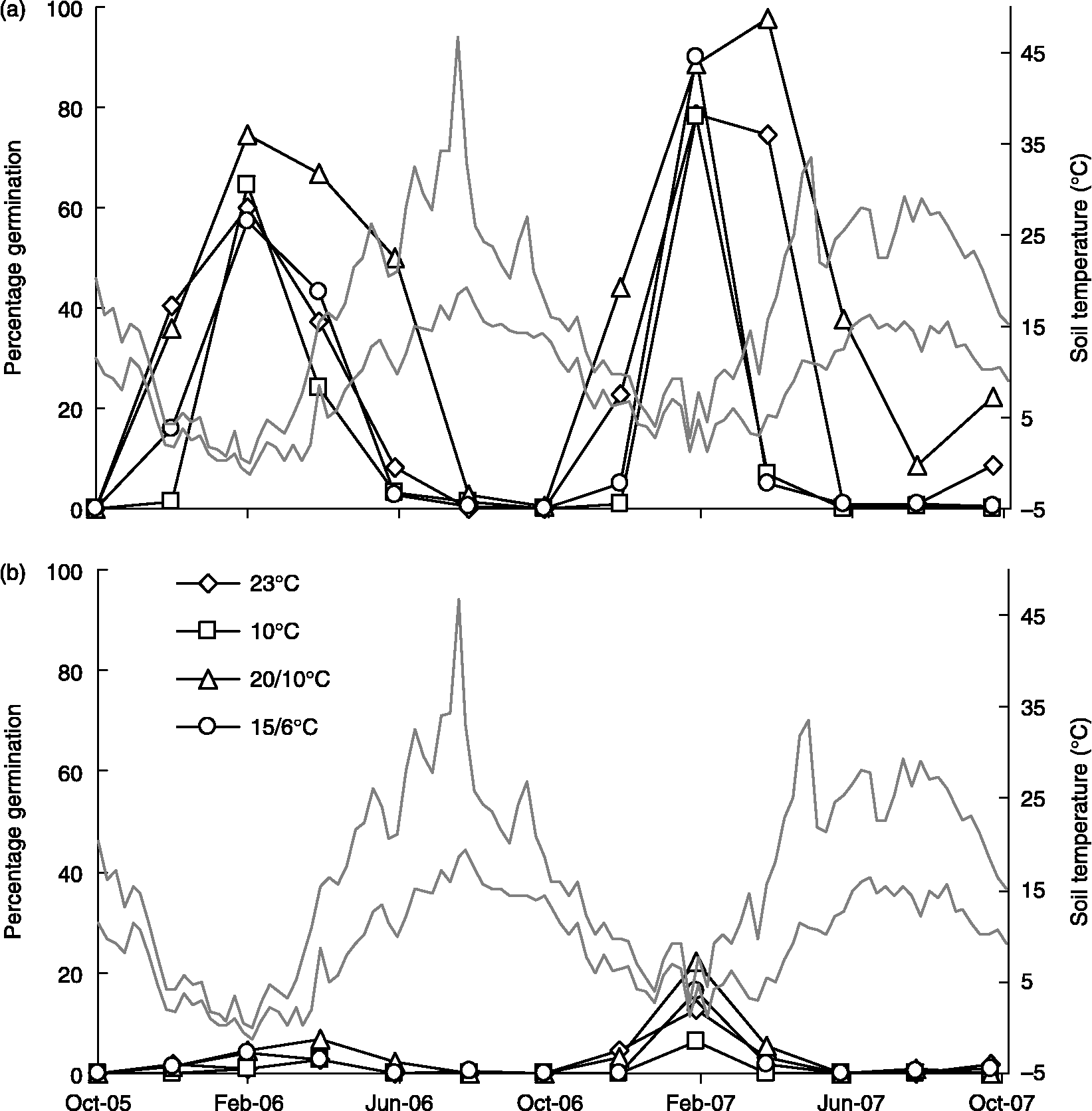
We observed a clear cyclical trend in the germination percentage of the seeds incubated in light after exhumation (Fig. 2a). The range of temperatures at which seeds could germinate widened during winter when temperatures were low. This resulted in a peak of germination when temperatures started rising in spring 2006 and 2007. During summer, this range became smaller again and resulted in almost completely dormant seeds in autumn. In general, seeds germinated best at 20/10°C. Very few seeds germinated in darkness (Fig. 2b). The highest percentage of germination (average 22.2%) in darkness was observed in seeds exhumed on 1 February 2007 and incubated at 20/10°C. The last bag of seeds was exhumed on 1 October 2007 after 2 years of burial in the soil. In this batch, 88.3% of the seeds were still intact and had not germinated.
Percentage germination of Torilis japonica seeds incubated at four temperature regimes following 0–24 months of burial at 7 cm depth. Grey lines, mean weekly minimum and maximum soil temperatures at 1 cm depth. (a) Seeds incubated in a 12-h photoperiod; (b) seeds incubated in complete darkness. n = 3.
Embryo growth in controlled conditions
Seeds incubated at 5°C for 20 weeks had an average E:S ratio of 0.29 ± 0.01, which was just a little higher than the E:S ratio of freshly harvested seeds (0.25 ± 0.01), but well below the critical E:S ratio (0.93 ± 0.01). The same was true for seeds incubated at 23°C for 20 weeks and seeds incubated at 23°C for 12 weeks followed by a 12-week incubation at 5°C. Both batches had an average E:S ratio of 0.32 ± 0.01 at the end of the experiment.
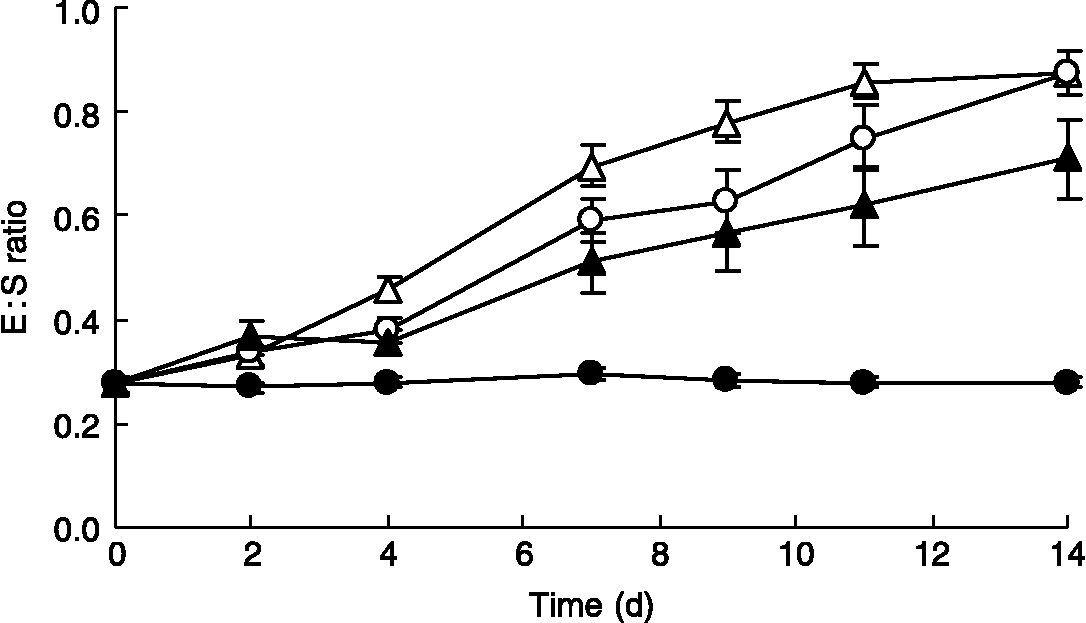
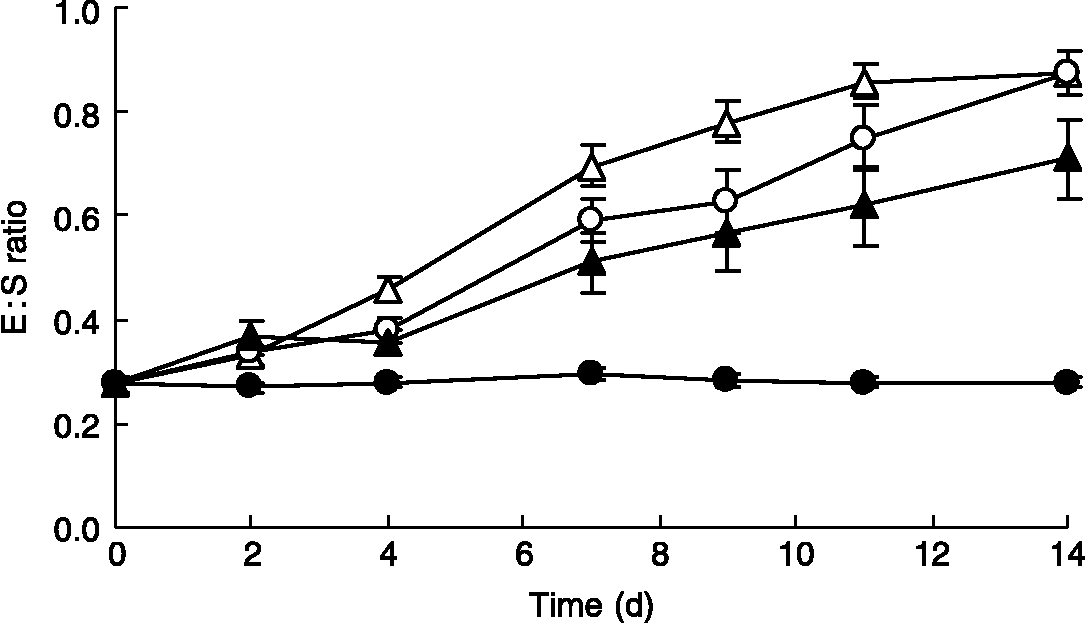
The critical E:S ratio was attained in almost all seeds that were incubated at 20/10°C and 23°C in light for 2 weeks, following an 8-week pre-treatment at 5°C (Fig. 3). Significant embryo growth was also recorded in seeds incubated at 20/10°C in darkness (0.70 ± 0.07), but not those incubated at 23°C in darkness (0.28 ± 0.01).
E:S ratio of Torilis japonica seeds incubated at different temperature and light regimes for 2 weeks, following 8 weeks of cold stratification at 5°C. Seeds were incubated either at 20/10°C (triangles) or at 23°C (circles) in the light (open symbols) or darkness (closed symbols). Vertical bars represent SE; n = 20.
Stratification requirement for dormancy break
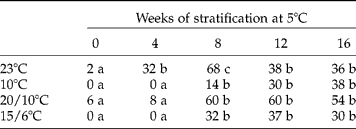
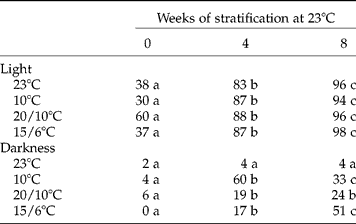
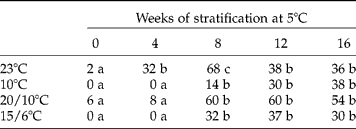
In a prolonged germination experiment, 70% (median) of the seeds had germinated after 14 weeks of incubation at 5°C in light. Very few seeds germinated during 36 weeks of incubation at 10, 23, 15/6 and 20/10°C. Also, very low germination percentages were recorded during 2 weeks of incubation in light and in darkness, after both a 24-week period of dry storage or 12 weeks of moist storage at 23°C. Subjecting seeds of T. japonica to a cold stratification treatment had a significant positive effect on subsequent germination in a 12-h photoperiod (P < 0.001). A clear positive effect was already noticeable after an 8-week cold stratification period (Table 1). Subjecting the seeds to extended periods of cold stratification in general did not lead to higher germination percentages. There was also a significant effect (P < 0.01) of incubation temperature on germination after cold stratification. Up to 68% of the seeds germinated during 2 weeks of incubation at 23°C after an 8-week cold stratification, while only 14% had germinated when incubated at 10°C. Seeds incubated in darkness after cold stratification germinated to a maximum of 6%.
Median percentage germination of Torilis japonica seeds incubated at 23, 10, 20/10 and 15/6°C in a 12-h photoperiod for 2 weeks, following cold stratification of varying duration. Medians followed by the same letter within each temperature condition are not significantly different at the P<0.05 level (Kruskal–Wallis test with multiple comparisons); n=3
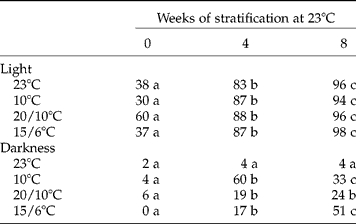
A period at high temperatures (23°C) prior to cold stratification had a highly significant effect (P < 0.001) on germination of seeds incubated in light, as well as of seeds incubated in darkness. Seeds incubated in light after an 8-week warm plus a 12-week cold stratification treatment germinated to more than 94% at all four temperatures tested (Table 2). We found no significant effect (P>0.05) of incubation temperature on germination percentages for seeds incubated in light. Seeds incubated in darkness after a warm plus cold stratification treatment germinated to the highest percentage at 10°C and 15/6°C (Table 2), resulting in a significant effect of incubation temperature.
Median germination percentages of Torilis japonica seeds incubated at different temperature and light regimes. Prior to incubation, seeds were subjected to a warm stratification of varying duration, followed by a cold stratification of 12 weeks. Medians followed by the same letter within each temperature and light condition are not significantly different at the P<0.05 level (Kruskal–Wallis test with multiple comparisons); n=3
Temperature range and rate of germination
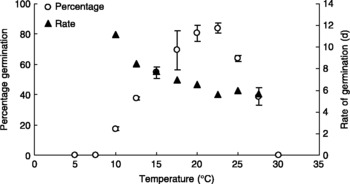
After 8 weeks of cold stratification, seeds of T. japonica did not germinate at temperatures above 27.5°C or below 10°C (Fig. 4). Optimal germination was recorded when seeds were incubated at 22.5°C. At this temperature an average of 84.0 ± 3.5% (mean ± SE) germinated during 2 weeks. The germination rate increased with rising temperatures up to 22.5°C and stabilized thereafter. Seeds incubated at 10°C required approximately 11 d to attain 50% germination of the total number of germinated seeds, while 50% germination was reached within 6 d for seeds incubated at 22.5°C or higher.
Germination percentage and time to 50% germination (T 50) of Torilis japonica after 14 d at a range of temperatures (5–30°C) following 8 weeks of cold stratification. Vertical bars denote SE for percentage germination; n = 3.

Effect of GA3 on dormancy break and germination
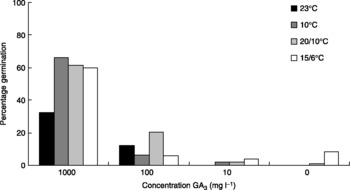
The addition of GA3 significantly (P < 0.001) enhanced germination of T. japonica seeds at all temperatures tested. We found no significant effect of temperature, nor did we find a significant interaction effect between GA3 concentration and temperature. Nevertheless, seeds moistened with a 1000 mg l− 1 GA3 solution and incubated at 10, 15/6 or 20/10°C germinated to a percentage that was almost twice as high as that of seeds incubated at 23°C (Fig. 5). The effect of a 10 mg l− 1 GA3 solution on germination of T. japonica seeds was negligible.
Median germination percentages of Torilis japonica seeds after 12 weeks of treatment with gibberellic acid (GA3) and incubation at different temperatures during a 12-h photoperiod. n = 3.

Discussion
Seeds of T. japonica are dormant at the moment of dispersal. In addition to an underdeveloped embryo, a physiological block prevents seeds from germinating immediately after dispersal. Physiological dormancy is broken by subjecting imbibed seeds to a chilling treatment (5°C). A chilling treatment resulted in high germination percentages, but even more seeds germinated when chilling was preceded by a short period at high temperatures. During cold stratification, the temperature range at which seeds can germinate widens (Table 1). Like many summer annual species, seeds of T. japonica are able to germinate at progressively lower temperatures during chilling (Vegis, Reference Vegis1964). In a prolonged germination experiment, seeds even germinated to high percentages during incubation at 5°C in the light. This is in agreement with a cold stratification experiment on seeds of T. japonica collected in the Sheffield region that resulted in >70% germination after 8 months of incubation at 5°C (Grime et al., Reference Grime, Mason, Curtis, Rodman, Band, Mowforth, Neal and Shaw1981). Once physiological dormancy was broken by chilling, seeds could germinate at temperatures ranging from 10°C to 27.5°C (Fig. 4). In a similar experiment performed on seeds of T. japonica collected in Sheffield, germination was recorded at temperatures between 5°C and 27.5°C (Mason, Reference Mason1976). The lack of germination at low temperatures in our experiment was probably caused by incubation of seeds for only 2 weeks; in comparison, Mason (Reference Mason1976) incubated seeds for 30 d.
The embryo in seeds of T. japonica grows very little during cold stratification in darkness. A rapid growth of the embryo was, however, observed when chilled seeds were transferred to higher temperatures in a 12-h photoperiod or when they were transferred to 20/10°C in darkness. This indicates that the seeds require light or daily temperature fluctuations to initiate embryo growth. A stimulating effect of light was clearly observed in seeds that were cold stratified. When seeds were placed at 5°C in the light, up to 70% of them had germinated after 14 weeks. Germinated seeds were, however, rarely observed during cold stratification pre-treatments in light-tight boxes. Seeds transferred to higher temperatures after cold stratification also germinated to higher percentages in light (Tables 1 and 2). Although fluctuating temperatures initiate embryo growth, there are no clear indications that daily fluctuating temperatures improve germination in seeds of T. japonica. A light requirement for embryo growth and germination has already been observed in other Apiaceae seeds with MD or MPD (Baskin and Baskin, Reference Baskin and Baskin1990a, Reference Baskin and Baskinb). In seeds of Apium graveolens, endosperm breakdown and subsequent embryo growth are caused by a light-dependent stimulus from the embryo (Jacobsen and Pressman, Reference Jacobsen and Pressman1979). According to Pressman et al. (Reference Pressman, Negbi, Sachs and Jacobsen1977), the response to light in seeds of A. graveolens is phytochrome mediated and could be substituted for by alternating temperatures.
Requirements for dormancy break and embryo growth in T. japonica resemble those of the North American perennials Thalictrum mirabile (Ranunculaceae) and Chamaelirium luteum (Liliaceae) (Walck et al., Reference Walck, Baskin and Baskin1999; Baskin et al., Reference Baskin, Baskin and Chester2001). Seeds of these species were classified as having non-deep, simple MPD, in which PD is broken by stratification at low temperatures. The physiological dormancy of seeds of T. japonica can be classified as non-deep PD, because these seeds require only a short period of cold stratification, and GA3 can overcome the cold stratification requirement (Nikolaeva, Reference Nikolaeva and Khan1977). Embryo growth in T. japonica occurred at high temperatures (>15°C) indicating seeds have a ‘simple’ type of MPD. However, embryo growth in T. japonica is also possible at low temperatures, since seeds germinated to high percentages at 5°C in light. Embryo growth also occurred at low temperatures ( < 5°C) in seeds of T. mirabile (Walck et al., Reference Walck, Baskin and Baskin1999). These authors suggested that since an extended period of time is required for embryo growth at low temperatures, this response would not be relevant in natural conditions. Seeds of T. japonica, however, had already germinated to 70% after 14 weeks of stratification at 5°C. This means that embryo growth and germination at low temperatures in the natural environment are relevant for T. japonica seeds.
The embryo of T. japonica seeds buried at 1 cm depth started to grow significantly in early spring, when daily maximum temperatures were still below 10°C. Seeds germinated and seedlings emerged immediately after embryo growth was completed (Fig. 1). Up to 60% of the seeds buried in nylon bags germinated in the first year after sowing. About half of the seeds sown in our experimental garden emerged as seedlings in a 3-week period in spring. Fewer seedlings emerge, however, when seeds of T. japonica are sown under the cover of vegetation (Thompson and Baster, Reference Thompson and Baster1992). In their study on seedling emergence of T. japonica under a closed grass turf in Devon, UK, an average of 17.3% of the seeds emerged. Roberts (Reference Roberts1979), who studied T. japonica seeds collected in Warwickshire, UK, also found that seedling emergence was concentrated in spring. Up to 35% of the seeds sown in his experiment emerged in the first spring after sowing, and additional seedlings emerged up to the fifth year after sowing, when the study was terminated. This could indicate that there were still viable seeds remaining in the soil at the moment our experiment was stopped.
Since seeds of T. japonica have a light requirement for embryo growth, they can remain ungerminated for extended periods of time, when buried deep enough in the soil, where no light can penetrate. During burial, seasonal changes in seed dormancy status occur (Fig. 2). These seasonal dormancy cycles resemble those of the summer annual Aethusa cynapium (Roberts and Boddrell, Reference Roberts and Boddrell1985). In T. japonica and A. cynapium, dormancy is released during winter when temperatures are low, and it is induced during summer when temperatures are high. As in seeds of the winter annual Chaerophyllum tainturieri, the embryo in T. japonica seeds cannot grow unless physiological dormancy is broken (Baskin and Baskin, Reference Baskin and Baskin1990a). Initiation of embryo growth, however, not only depends on the physiological dormancy status, but also on the environmental conditions at that moment. This implies a very clear separation between factors affecting the seed dormancy status and factors affecting embryo growth. In an attempt to clearly define ‘dormancy’, Vleeshouwers et al. (Reference Vleeshouwers, Bouwmeester and Karssen1995) suggested that ‘dormancy’ and ‘germination’ should be differentiated for seeds with non-deep physiological dormancy.
The risk of becoming extinct is reduced for short-lived species in a variable environment if a persistent seed bank can be formed (Rees, Reference Rees1994). When no seed supply is present in the soil, 1 year of low reproduction can result in extinction of annual species. Although up to 90% of the seeds were still viable after 2 years of burial in the nylon bags, most T. japonica seeds are probably short-term persistent. This might be explained, at least in part, by the fact that the seeds do not become easily buried. The seeds are relatively large and have spiny appendages that enhance epizoochorous dispersal (Grime et al., Reference Grime, Hodgson and Hunt1988). The short-term persistence of T. japonica seeds is confirmed by the fact that they are rarely retrieved from soil seed-bank studies (Thompson et al., Reference Thompson, Bakker and Bekker1997). In addition, Roberts (Reference Roberts1979) noted that less than 1% of T. japonica seeds persisted after 5 years of burial in soil that was regularly disturbed.
Except for T. japonica and T. scabra, Torilis species have a mainly Mediterranean distribution (Cannon, Reference Cannon, Tutin, Heywood, Burges, Moore, Valentine, Walters and Webb1968; Menglan et al., Reference Menglan, Fading, Zehui, Watson, Cannon, Holmes-Smith, Kljuykov, Phillippe, Pimenov and Wu2005). The Mediterranean climate is characterized by cool, wet winters and hot, dry summers, making autumn the most favourable season for seedling establishment. T. arvensis has become established in North America, but originates from the Mediterranean region in Europe and Asia (Hegi, Reference Hegi1975). In their study on the winter annual T. arvensis, Baskin and Baskin (Reference Baskin and Baskin1975) found that seeds were non-dormant at the moment of dispersal in autumn. Seeds that did not germinate during autumn were induced into dormancy by low temperatures, preventing germination in spring. Lee et al. (Reference Lee, Levin and Downie2001) regarded T. arvensis subsp. arvensis and T. japonica as sister species, based on morphological traits. T. japonica, however, is absent from large parts of the Mediterranean region and has a more northern distribution than T. arvensis (Hegi, Reference Hegi1975). In a northern temperate climate with cold, moist winters and warm, moist summers, spring is often the most favourable season for seedling establishment. In this region, frost damage during winter, which poses the greatest risk to seedlings, is avoided by spring emergence (Arthur et al., Reference Arthur, Gale and Lawrence1973). This explains the spring emergence strategy of T. japonica in our study and in the UK (Roberts, Reference Roberts1979; Thompson and Baster, Reference Thompson and Baster1992). In a moist, tall grassland in Japan, however, T. japonica seems to behave as a winter annual species, the dormancy of which is induced by chilling (Masuda and Washitani, Reference Masuda and Washitani1990; Washitani and Masuda, Reference Washitani and Masuda1990). Besides this apparent anomaly, the taxon also shows a widespread distribution and large morphological variation (B.-Y. Lee, personal communication).
Our study is the first one to reveal the mechanism of dormancy cycling and embryo growth in a spring-germinating biennial Apiaceae with seeds that have MPD. Although temperature requirements for dormancy break and dormancy induction are different, the mechanism of dormancy cycling is rather similar in spring and autumn germinating species with MPD seeds. In these seeds, only physiological dormancy can cycle between completely dormant and non-dormant, while relief of morphological dormancy is an irreversible process. Both types of dormancy cycles can, apparently, occur in closely related species, such as T. japonica and T. arvensis. Further phylogenetic studies are required to elucidate whether T. japonica in Japan and Europe are slightly different ecotypes of the same species, or should be regarded as different, closely related species. Insight into evolutionary relationships between dormancy types could result from studies revealing the origin of distribution of Torilis. Since almost all Torilis species occur in the Mediterranean area, the most likely hypothesis would implicate that area as the centre of distribution of the genus. Consequently, the biennial life cycle and the cold stratification requirement could be considered a derived character in T. japonica.
Acknowledgements
We thank Stephen Downie and Byoung-Yoon Lee for providing useful comments on the phylogenetic relationships of Torilis japonica. We also thank Carol Baskin and Jerry Baskin for collecting seed material and helping with the correct taxonomic identification of T. japonica and T. arvensis. We also thank them for providing comments on the manuscript.