Introduction
Surgery performed under combined local anaesthesia (LA) is an alternative to surgery performed under general anaesthesia (GA). Surgery performed under LA shortens the time spent in the recovery room and the hospitalisation time, and also lowers the anaesthetic risk and the operative costs.Reference Greenberg and Pollard1, Reference Lewis, Warlow, Bodenham, Colam and Rothwell2 When the LA is effective, the surgical conditions are good for the patient and the surgeon. Thus, surgery performed under LA enables the surgical treatment of patients for whom anaesthesia is risky.
In otology, many surgical procedures are performed under LA, including: myringoplasty, tympanoplasty, ossiculoplasty and stapes surgery.Reference Liang and Irwin3 The choice of anaesthesia depends on the patient, the type of surgery and the experience of the surgical team. General anaesthesia is preferred for non-cooperative patients, including children or anxious adults. General anaesthesia is also indicated for long or complex surgical procedures, and situations in which operative difficulties are predicted. In contrast, LA is typically chosen for short surgical procedures on co-operative patients.
The benefits of cochlear implants have been proven, and are independent of patient age or type of hearing loss.Reference Vermeire, Brokx, Wuyts, Cochet, Hofkens and Van de Heyning4 Cochlear implantation improves patients' auditory performance, social life and quality of life.Reference Park, Shipp, Chen, Nedzelski and Lin5–Reference Eshraghi, Rodriguez, Balkany, Telischi, Angeli and Hodges7 Some studies have reported that patients older than 65 years represent 30 per cent of the implanted adult population.Reference Mosnier, Ambert-Dahan, Smadja, Ferrary, Bouccara and Bozorg-Grayeli8 Cardiovascular risks and respiratory diseases are more likely to affect this age group, and are criteria that change the benefit-to-risk ratios of functional surgical procedures. The surgical implantation procedure is well codified in the absence of inflammatory middle-ear pathology that requires treatment. Thus, this procedure seems to be well suited to the criteria for LA otological surgery. To our knowledge, only two research teams, an Irish team (16 cases in total; first publication with four cases and second with 16 cases which included the previous four) and a Brazilian team (20 cases), have described the feasibility and medico-economic aspects of this procedure performed under combined LA.Reference Toner, John and McNaboe9–Reference Hamerschmidt, Moreira, Wiemes, Tenório and Tâmbara11
This study aimed to describe and compare tolerance for cochlear implantation performed under LA and GA by analysing the symptoms that occurred during and after this intervention.
Materials and methods
This retrospective study comprised 20 patients who consecutively underwent cochlear implantation performed under LA by 5 expert surgeons. The interventions were performed from June 2011 to February 2014 in four different implant centres. This LA group was compared to a GA group consisting of 41 patients who underwent cochlear implantation performed under GA. Local anaesthesia was proposed and accepted by the patients in the LA group. The patients of both groups had presented with severe to profound hearing loss before surgery, and indications for the operation were as per the French National Authority for Health criteria.12 All procedures contributing to this work complied with the ethical standards of the relevant national and institutional guidelines on human experimentation and with the Helsinki Declaration of 1975, as revised in 2008.
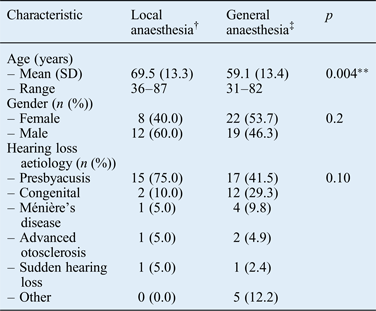
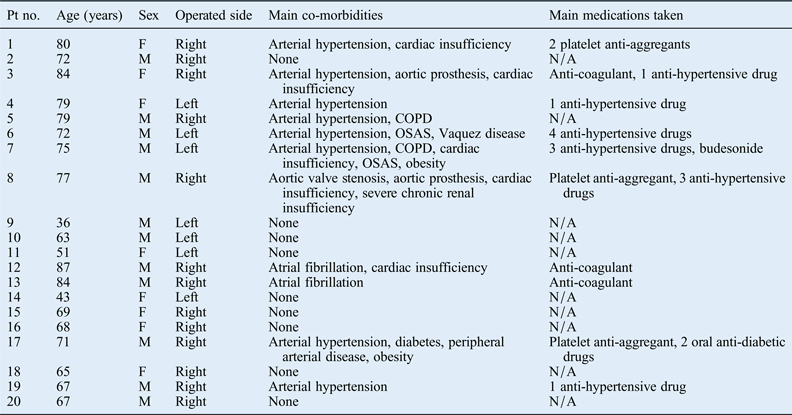
In the LA group, the patients were aged between 36 and 87 years (mean, 69.5 years) (Tables I and II). Past medical history was notable in many cases and included the following: cardiovascular pathology (n = 11), obstructive respiratory pathology (n = 3), morbid obesity (n = 2), diabetes mellitus (n = 1) and severe chronic renal insufficiency (n = 1). Some patients were taking medications that influenced the operating risk, including: anti-hypertensive drugs (n = 6), platelet anti-aggregants (n = 3), anti-coagulants (n = 3) and oral anti-diabetic drugs (n = 1). Nine patients had no notable past medical history, and 10 patients were not taking any medications (Table II).
Demographic and medical characteristics of cochlear implant patients*

*A total of 61 patients had a cochlear implant fitted under either local or general anaesthesia. †n = 20; ‡n = 41. **Significant at p < 0.05. SD = standard deviation
Co-morbidities and medications of local anaesthesia group *
*For cochlear implant patients who received local anaesthesia with conscious sedation. Pt no. = patient number; F = female; M = male; N/A = not applicable; COPD = chronic obstructive pulmonary disease; OSAS = obstructive sleep apnoea syndrome
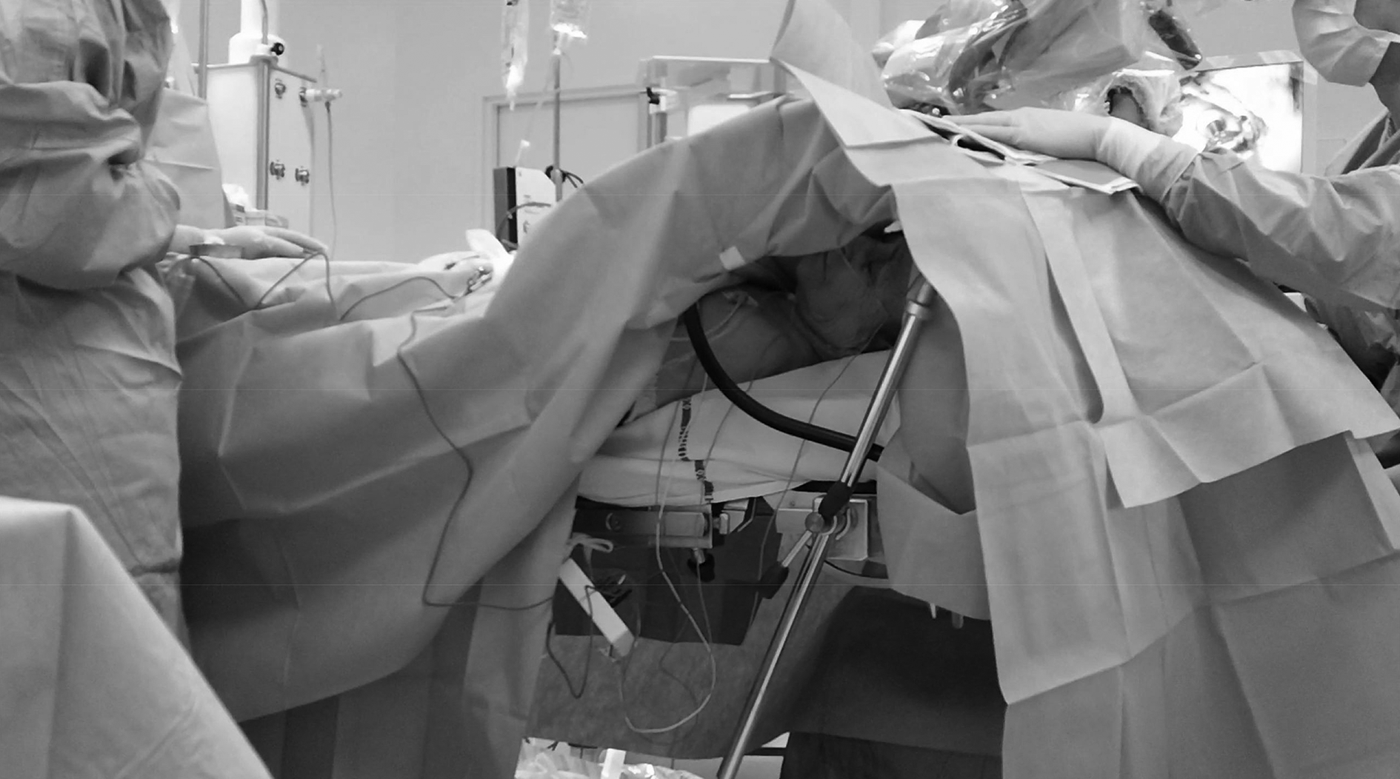
In the operating theatre, the following adaptations were made to facilitate the LA interventions: the patient was placed in the dorsal decubitus position and their head was turned on the side opposite the implantation, and fenestrated sterile drapes were used to reduce claustrophobia and allow contact between the nurse and the patient (Figure 1). For the LA surgical procedures, infiltration with 1 per cent adrenaline xylocaine was performed in the retroauricular region, the external auditory meatus and the implant zone. Intravenous conscious sedation was in most cases achieved with hypnotics and low dose analgesics, primarily 1 mg/h of midazolam and 5 µg of sufentanil, followed by sufentanil or remifentanil. The anti-emetic drugs droperidol and ondansetron were also used, along with the antalgic drugs paracetamol, nefopam, dexamethasone and ketoprofen. Nasal oxygen therapy and cardiovascular monitoring completed the patient's preparation for surgery.
Installation of the patient. The sterile drapes were placed such that contact between the nurse and the patient was maintained. Published with patient's permission.
The implants were fitted in the right ear in 13 patients and in the left ear in 7 patients; 4 cochlear implant systems were used in this series. The classic surgical technique was employed in 16 cases and included the following: retroauricular incision, antrotomy with posterior tympanotomy, and slow and careful insertion of the electrodes through the round window. There was no systematic facial monitoring during the conscious sedation. The technique was modified in light of anatomical variation in four cases, as follows: an open cavity was pre-existing in one case, a transcanal approach without mastoidectomy was used in two cases and an under-facial approach was used in one case. The electrode insertions were total in 18 cases and partial in 2 cases (including 3 extra-cochlear electrodes for each case). Telemetry was performed in six cases at the end of the intervention.
Regarding the GA group (Table I), we selected patients who underwent cochlear implantation under GA during the study period to obtain a homogeneous control group. These patients were aged within five years of those in the LA group. Patients in the GA group were aged 31–82 years (mean, 59.1 years). Thirty-three patients had no co-morbidities and were receiving no treatment. The main co-morbidities of this group were: arterial hypertension (n = 6), morbid obesity (n = 3), sleep apnoea syndrome (n = 2), diabetes mellitus (n = 2) and chronic obstructive pulmonary disease (n = 1). The causes of hearing loss were similar to those in the LA group. Anaesthesia was induced with intravenous midazolam (1 mg), propofol (5 mg/kg) and remifentanil (1 µg/kg). Anaesthesia was maintained with intravenous propofol (2 per cent). The post-operative emetic risk was systematically minimised with Droleptan™, dexamethasone and ondansetron administered at the end of the surgical procedures. The classic surgical technique was used in all cases, with facial nerve monitoring. Telemetry was performed at the end of the interventions.
The following data were collected from the patients' medical records: ‘skin to skin' surgical duration (i.e. the time from incision to final closure of the skin, not including the time for anaesthesia, cleaning of the skin and positioning of the sterile drapes), symptoms (and signs) during and after implantation (i.e. pain, vertigo, nausea and movement), and post-operative hospitalisation time.
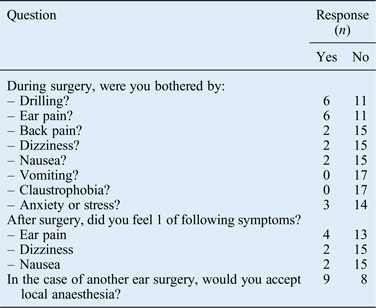
For the LA group, we recorded the patients' feelings regarding the intervention using a survey that consisted of 12 dichotomous questions, which was mailed to each patient (Table III). This questionnaire was tested on a sample of 20 patients who underwent otological surgery performed under LA. Each question was evaluated in terms of comprehensibility by direct interview. Three questions were changed to improve their clarity.
Tolerance of local anaesthesia and conscious sedation for cochlear implantation*
*Answers of 17 patients who responded to a questionnaire by mail.
Statistical analyses consisted of identifying associations between the type of anaesthesia and the tolerance criteria. Thus, qualitative data were compared using chi-square or Kruskal–Wallis tests for small samples. Quantitative data were compared using t-tests or Fisher's exact test for small samples. The results were considered statistically significant when p < 0.05. The analyses were performed using EpiInfo™ and SAS™ software.
Results
During the operation, 12 of the 20 patients in the LA group felt no pain or discomfort. The other patients reported vertigo (two cases), pain (four cases), or pain-related head movement (two cases). The latter involved small and slow movements. All of the interventions under LA were completed. There were no complications or conversions to GA. Seventeen patients in the LA group answered the 12 dichotomous questions (Table III). Nine of the 17 patients did not remember experiencing any pain or general discomfort due to the procedure. Those who described discomfort during the surgery reported feeling the drill (six cases) and otalgia (six cases). During the post-operative period, 11 patients reported no unpleasant experiences. The six other patients reported vertigo (two cases), nausea (two cases) and otalgia (four cases). In 9 of 17 cases, the patients reported that they would recommend this procedure under LA and would be ready to undergo it again; these were the patients who recalled having no specific symptoms during the operation.
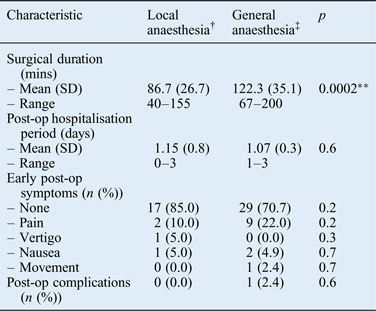
The tolerance criteria were compared between the LA group and the GA group. The surgical duration was significantly shorter in the LA group (the operations were performed by expert otologists) (87 vs 122 minutes, p < 0.001). No significant difference was observed between the LA and GA groups regarding early post-operative symptoms. The respective occurrences of symptoms were as follows: pain, 10 versus 22 per cent; vertigo, 5 versus 0 per cent; nausea, 5 versus 4.9 per cent; and movement, 0 versus 2.4 per cent (all p > 0.1; Table IV). The post-operative hospitalisation time was not significantly different between the two groups (1.15 vs 1.07 days, p = 0.6). There were four ambulatory surgical procedures performed in the LA group and none in the GA group. Regarding the other surgical procedures, 10 patients in the LA group and 39 patients in the GA group left the hospital on post-operative day 1. One haematoma occurred at the operative site in a GA group patient, but it did not require a second operation.
Association between anaesthesia type and operation tolerance*
*Total n = 61. †n = 20; ‡n = 41. **Significant at p < 0.05. Mins = minutes; SD = standard deviation; post-op = post-operative
Discussion
This retrospective study of 20 cochlear implantations performed in 4 different centres illustrates the feasibility of LA combined with conscious sedation for this intervention. Our results revealed that patient tolerance was acceptable, with a mean surgical duration of less than 90 minutes and with no operative symptoms in 60 per cent of cases. In the remaining cases, patients experienced some pain or vertigo, or exhibited slow movements during the surgery. These symptoms were easily controlled by analgesics, symptomatic treatment of vertigo and/or additional sedation. Mean surgical duration was 87 minutes in the LA group, which was significantly shorter than the mean duration in the GA group.
This paper describes patients' post-operative tolerance for cochlear implantation in an LA group and a GA group. The two groups differed in terms of mean age. The patients who underwent LA were older because the age-related co-morbidities of this group increased their suitability for an anaesthetic alternative to GA. This group might have been more fragile. However, no statistical differences were observed in terms of early post-operative symptoms such as pain, vertigo, nausea or movement.
In a study by Hamerschmidt et al., the mean duration of cochlear implantations performed under LA, for 20 patients, was 68 minutes.Reference Hamerschmidt, Moreira, Wiemes, Tenório and Tâmbara11 In our study, this time was 87 minutes, which is similar to that for Semaan and colleagues' cohort.Reference Semaan, Fredman, Shah, Fares, Murray and Megerian13 Indeed, this author reported that 424 cochlear implantations performed under GA required a mean of 83 minutes.Reference Semaan, Fredman, Shah, Fares, Murray and Megerian13 Procedures performed under GA required a mean duration of 122 minutes. Two other papers have reported longer intervention durations under GA of: 171 minutes (for unilateral cochlear implantations)Reference Majdani, Schuman, Haynes, Dietrich, Leinung and Lenarz14 and 195 minutes.Reference Prager, Neidich, Perkins, Meinzen-Derr and Greinwald15 A mean duration of less than 90 minutes seems to be acceptable for LA. Every factor that extends the surgical duration should be considered in the decision regarding the type of anaesthesia to be used, particularly when anatomical variations are noted on computed tomography scans.
Good knowledge of sensory innervation of the ear is required to perform an LA procedure. Four nerves innervate the ear, whereas the mastoid is not innervated. These nerves are: the auriculo-temporal nerve, which supplies the external acoustic meatus and the anterior part of the auricle; a branch of the superficial cervical plexus, which supplies the middle and inferior parts of the auricle and a part of the external acoustic meatus; the auricular branch of the vagus nerve and the facial nerve, which supply the concha and the posterior part of the external acoustic meatus; and the tympanic nerve, which supplies the middle-ear cavity.Reference Richard, Pascal and Martin16 Thus, cutaneous anaesthesia, at the incision site and at the external acoustic meatus, and anaesthesia of the soft and peri-bone tissues, are sufficient for the analgesia. The peri-bone space in front of the implant zone should also be injected. In line with our experience, we complete the analgesia by warming the irrigating solution for the drill to 37 °C and by bathing the tympanic cavity in xylocaine for several minutes, while opening the antrum, to ensure complete tympanic nerve anaesthesia. These measures should improve operative comfort during the drilling and opening of the round window. The absence of mastoid innervation explains the good tolerance of the mastoid drilling, which takes up a significant proportion of the procedure time. In deaf patients, the noise of drilling is not disturbing. However, the bone vibrations, which are similar to those felt during drilling for dental care, can bother some patients, as reported here.
Patients who undergo operations under simple LA might feel some stress or anxiety that could induce tachycardia and hypertension. Thus, the addition of light sedation to LA is useful.Reference Jourdy and Kacker17 Light sedation reduces stress and its cardiovascular consequences, particularly in patients at high anaesthetic risk. The use of both a hypnotic and an opioid allows for conscious sedation and strengthens the analgesia. Droperidol is a neuroleptic that is used for its anti-emetic effects, but it also has a sedative effect. The combination of several drugs minimises the doses required for efficacy. Used in small doses, drugs that have respiratory depressant effects can be used together with spontaneous ventilation.
The good tolerance of otological surgery performed under LA has been proven. Advantages of this technique include: rapid awakening and mobilisation of the patient, spontaneous ventilation, conscious patient's ability to communicate with the surgeon, and reduced cost.Reference Jourdy and Kacker17 Thus, patients often accept this alternative to GA. Local anaesthesia with sedation and intravenous analgesia injected under an anaesthetist's control is currently a standardised procedure that produces excellent results among co-operative adults.Reference Lescanne, Moriniere, Gohler, Manceau, Beutter and Robier18, Reference Bakhos, Lescanne, Charretier and Robier19 This type of anaesthesia requires good collaboration between the surgeon and the anaesthetist, and the sedation protocol should be clearly established by the anaesthetist, with the possibility of adding dose-controlled drugs.Reference Alzahrani, Martin, Bobillier, Robier and Lescanne20 In our study, all patients underwent cochlear implantation, and no specific complications were observed. No conversion to GA was required. While 60 per cent of the patients did not report any peri-operative symptoms, the patients who complained about discomfort could have received additional sedation and LA. For example, intravenous injections of the following adaptive treatments could have been used to continue the intervention: analgesics, symptomatic treatment of vertigo, anti-emetic drugs and/or additional sedation (propofol, 30–40 mg). The vertigo experienced might have resulted from the injections of some of the drugs or may have been triggered by electrode insertions through the round window.
Local anaesthesia can be presented as an option to interested adults who are able to co-operate. Surgical duration is quite predictable for patients without any middle-ear pathology. In our study, we planned LA cochlear implantations for four patients with prior anatomical disabilities (i.e. chronic otitis sequelae or complications regarding round window access). The main factor influencing progress of the intervention is the patient's co-operation. Providing the patient with clear information about the procedure and the predictable sensations during bone drilling is essential. The information given by the surgeon and the anaesthetist, the ability to communicate by gestures or writing during the intervention, and the ability to administer additional drugs for any symptoms that occur, contribute to good tolerance and reduce patients' anxiety.
Many patients feel reassured by the knowledge that their intervention can be performed under LA.Reference Caner, Olgun, Gültekin and Aydar21 Pre-operative agreement contributes to reducing procedure-related anxiety. The patients complained about the bone drilling more than they complained about pain; this is a very subjective symptom which adds to stress. Analyses of the patient questionnaire revealed that the intra-operative experience of just one of the symptoms altered the patient's preference regarding further surgery performed under LA. However, Liang and Irwin reported a high rate of satisfaction (of 89 per cent) following otological surgery performed under LA.Reference Liang and Irwin3 These satisfied patients reported that they would prefer the same anaesthesia for further operations.
• Cochlear implantation can be performed under local anaesthesia and sedation
• Tolerance of this well codified intervention is acceptable under conscious sedation
• Co-operation between the surgeon and anaesthetist is fundamental
• In this study, 60 per cent of patients reported no particular intra-operative symptoms
• Others reported some vertigo, pain or movement, which can easily be controlled by intravenous treatment
• Local anaesthesia allows cochlear implantation in aged patients with contraindications for general anaesthesia
Hospitalisation costs could be lowered with LA because of the reduced operating theatre costs associated with shorter surgical durations and less time under anaesthesia. The study by Hamerschmidt et al. found a highly significant diminution of costs as a result of the use of LA, although the post-operative hospitalisation durations were same as when GA was used (p < 0.001).Reference Hamerschmidt, Moreira, Wiemes, Tenório and Tâmbara11 The post-operative symptoms following LA and GA were the same, and no post-operative pain was reported.Reference Hamerschmidt, Moreira, Wiemes, Tenório and Tâmbara11 Similarly, in our cohort, the post-operative period, surgical duration and post-operative symptoms did not vary greatly as a result of the type of anaesthesia. The standard use of ambulatory cochlear implantation could be realised in the short term and the LA option will contribute to that realisation.
Conclusion
Cochlear implantation performed under combined LA is possible. The surgical duration is predictable in many cases because the operation is performed on a non-pathological middle ear. Operative complications are rare and patient tolerance is acceptable. As an alternative to GA, LA with conscious sedation offers a comfortable solution for fragile patients with co-morbidities, particularly senior adults with profound hearing loss. Local anaesthesia can also be suggested for other co-operating adults who volunteer their interest in this option.