Introduction
The cestode Schyzocotyle acheilognathi (syn. Bothriocephalus acheilognathi) is commonly known as the Asian fish tapeworm. It was first described by Yamaguti (Reference Yamaguti1934) from a single worm obtained from the intestine of the cyprinid Acheilognathus rhombeus from Lake Ogura, and is considered to be indigenous to East Asia (Choudhury & Cole, Reference Choudhury, Cole and Francis2012), although the area where the tapeworm originated has been discussed recently (see Brabec et al., Reference Brabec, Kuchta, Scholz and Littlewood2016). Despite the fact that this tapeworm was described for the first time in Japan, it is likely that the parasite was co-introduced to that country along with grass carp from China (Choudhury & Cole, Reference Choudhury, Cole and Francis2012). Even though this cestode has been described under more than 23 names (see Kuchta & Scholz, Reference Kuchta and Scholz2007 for a list of synonyms; Brabec et al., Reference Brabec, Kuchta, Scholz and Littlewood2016), the valid name for the species, until very recently, was Bothriocephalus acheilognathi, the agent causing bothriocephalosis. Brabec et al. (Reference Brabec, Waeschenbach, Scholz, Littlewood and Kuchta2015) conducted a molecular phylogenetic analysis of the cestode order Bothriocephalidea, using a multi-locus approach. The phylogenetic analyses, in combination with an assessment of the morphological traits, allowed authors to resurrect the genus Schyzocotyle to accommodate the Asian fish tapeworm (and S. nayarensis from West Bengal, India). As a result of this taxonomic action, the valid name of the species is currently S. acheilognathi (Yamaguti, 1934) Brabec, Waeschenbach, Scholz, Littlewood and Kuchta, Reference Brabec, Waeschenbach, Scholz, Littlewood and Kuchta2015 (syn. B. acheilognathi Yamaguti, 1934). According to these authors, the resurrected genus is characterized morphologically by having a wide, heart-shaped scolex with narrow, deep bothria. Independently of this necessary change in nomenclature that resulted from the above-mentioned phylogenetic analysis, the original denomination of the tapeworm as B. acheilognathi has been used in the literature on fish parasites and fish diseases for over eight decades; in our opinion, it is not advisable to modify the name of the disease caused by this species. As a matter of convenience, we suggest continuing to refer to the disease as bothriocephalosis.
In strict terms, S. acheilognathi should be recognized as a co-invader species of parasite, according to the definition proposed by Lymberry et al. (Reference Lymbery, Morine, Kanani, Beatty and Morgan2014). These authors first coined the term ‘co-introduced parasites’ for those species that were transported with an alien host to a new locality outside of their natural range. Then they defined ‘co-invading parasites’ as those species that have been co-introduced and subsequently spread to new, native hosts (Lymberry et al., Reference Lymbery, Morine, Kanani, Beatty and Morgan2014). Co-invader parasites represent a major threat, particularly for native species, although, as pointed out by Lymberry et al. (Reference Lymbery, Morine, Kanani, Beatty and Morgan2014), the magnitude of the threat posed to native species will depend mostly on parasite virulence. Interestingly, these authors provided evidence against the idea that co-invader parasites have a greater pathogenicity in native hosts with which they have no co-evolutionary history.
Schyzocotyle acheilognathi is recognized as the most important pathogenic cestode for cryprinid fish, mainly in cultured fry and juvenile carp, and has spread very rapidly throughout the world with the trade of fish. This parasite is a true generalist, exhibiting low host specificity, resulting in its extraordinary capacity to infect a wide range of suitable fish hosts, including native fish species that are not related phylogenetically to those in which it was introduced (Scholz et al., Reference Scholz, Kuchta, Williams, Woo and Buchmann2012). Even though translocation of the grass carp has been responsible for the co-introduction of the Asian fish tapeworm into most countries, the parasite has subsequently expanded its range of distribution by colonizing other cyprinid and non-cyprinid hosts (Choudhury & Cole, Reference Choudhury, Cole and Francis2012). In addition, other anthropogenic activities have been mentioned as factors that favoured the dispersion of the cestode, including ornamental fish industry, aquatic weed control, mosquito control and fishing bait industry (see Scholz et al., Reference Scholz, Kuchta, Williams, Woo and Buchmann2012 and references therein). For instance, in Australia the Asian fish tapeworm was detected in co-introduced cyprinids such as Carassius auratus, the gold fish, and Cyprinus carpio, the grass carp, and is now widely distributed in other freshwater fishes (Dove & Fletcher, Reference Dove and Fletcher2000). Even in geographically isolated areas, such as Hawaii, the introduction of poeciliids, such as the guppy (Poecilia reticulata), the shortfin molly (Poecilia mexicana) and green swordtail (Xiphophorus helleri), for mosquito control and through aquarium releases, resulted in the co-introduction of the Asian fish tapeworm, which became a co-invader when transferred from exotic poeciliid to native gobioid fishes (Font & Tate, Reference Font and Tate1994; Font, Reference Font1997, Reference Font1998), although prevalence and mean abundance values are very low in exotic species (see Vincent & Font, Reference Vincent and Font2003). In the Little Colorado River, USA, the movement of bait fish, such as shiners, is thought to have co-introduced the cestode (Choudhury et al., Reference Choudhury, Hoffnagle and Cole2004). Up until the present day, the Asian fish tapeworm has been recorded in more than 200 freshwater fish species across the world, belonging to 10 orders and 19 families (Scholz et al., Reference Scholz, Kuchta, Williams, Woo and Buchmann2012; Brabec et al., Reference Brabec, Kuchta, Scholz and Littlewood2016; for updated information on distribution of S. acheilognathi see also Cole & Choudhury, Reference Cole and Choudhury2016). Interestingly, Brabec et al. (Reference Brabec, Kuchta, Scholz and Littlewood2016) sequenced the complete mitochondrial genome of eight globally distributed specimens of Asian fish tapeworms from Asia, Africa, Europe and North America (China, Czech Republic, Ethiopia, Japan, Mexico, South Africa, Turkey and the USA), to assess their global genetic variation and phylogenetic relationships. Based on the analysis of c. 14,000 bp, these authors discovered that the nucleotide sequence of mtDNA is remarkably similar among global populations, and 93.7% of nucleotides are identical, with the samples from Turkey and Ethiopia being the more divergent, while samples from China and Mexico were the most similar (99.8%). The sample from Mexico was obtained from an endemic species of cyprinid, the Nazas chub Gila conspersa (see Pérez-Ponce de León et al., Reference Pérez-Ponce de León, Rosas-Valdez, Aguilar-Aguilar, Mendoza-Garfias, Mendoza-Palmero, García-Prieto, Rojas-Sánchez, Briosio-Aguilar, Pérez-Rodríguez and Domínguez-Domínguez2010), and not from a co-introduced species of carp such as the common carp C. carpio or the grass carp C. idella. The same trend was found when the protein-coding gene regions were compared, indicating that individuals of S. acheilognathi across the globe display high mtDNA nucleotide conservation (Brabec et al., Reference Brabec, Kuchta, Scholz and Littlewood2016), irrespective of their co-introduction into new areas from those of the ancestral populations.
History of introduction of S. acheilognathi in Mexican freshwaters
In the Americas, S. acheilognathi has been mainly found in the northern part of the continent, although the species has managed to invade the freshwaters across a geographic range that extends from Canada to Argentina (see Cole & Choudhury, Reference Cole and Choudhury2016). Records in South America are very scarce, and in most cases the cestode was co-introduced along with common carp, and it appears that the parasite has not co-invaded native fish species (see Waicheim et al., Reference Waicheim, Blasetti, Cordero, Rauque and Viozzi2014). In Central America, with the exception of the record of S. acheilognathi in guppies (Poeciliidae) from Puerto Rico (Bunkley-Williams & Williams, Reference Bunkley-Williams and Williams1994), records are very recent (see Choudhury et al., Reference Choudhury, García-Varela and Pérez-Ponce de León2017), with the species having been found in two species of native cichlids in Panama (Choudhury et al., Reference Choudhury, Zheng, Perez-Ponce de León, Martínez-Aquino, Brosseau and Gale2013) and in native cyprinodontiforms in Honduras (Salgado-Maldonado et al., Reference Salgado-Maldonado, Matamoros, Kreiser, Caspeta-Mandujano and Mendoza-Franco2015) and Guatemala (Pinacho-Pinacho et al., Reference Pinacho-Pinacho, García-Varela, Hernández-Orts, Mendoza-Palmero, Sereno-Uribe, Martínez-Ramírez, Andrade-Gómez, López-Jiménez, Hernéndez-Cruz and Pérez-Ponce de León2015). In this geographic area, the cestode was likely introduced with the stocking of the principal host, the grass carp; however, the parasite has co-invaded native fish. Likewise, in North America, the Asian fish tapeworm has been found at least in 17 states of the USA, and in four provinces of Canada, i.e. British Columbia, Manitoba, Ontario and, more recently, Quebec (Choudhury et al., Reference Choudhury, Charipar, Nelson, Hodgson, Bonar and Cole2006; Choudhury & Cole, Reference Choudhury, Cole and Francis2012; Marcogliese et al., Reference Marcogliese, Gendron, Forest, Li, Boyce, El-Shehabi, Drake, Mandrak, Sherry and McLaughlin2016).
The Asian fish tapeworm was recorded for the first time in Mexico in 1981 (López-Jiménez, Reference López-Jiménez1981). This author indicated that most likely the species was co-introduced to Mexico around 1965, as a result of the introduction of 6000 fry of C. idella, the grass carp, from China, which were cultured at the fish farm of Tezontepec de Aldama in Hidalgo state. However, it was not until 1981 that the first record appeared formally in the literature (López-Jiménez, Reference López-Jiménez1981). Apparently, in 1972, as a part of a plan of the Mexican government to translocate grass carp to natural water bodies across Mexico for weed control, the cestode S. acheilognathi was co-introduced to the main river basins across the country, and co-invaded native fish populations (López-Jiménez, Reference López-Jiménez1981). Since the first report of the status of the Asian fish tapeworm as a parasite of the grass carp in Mexico, several attempts have been made to record the distribution of this co-invasive species. García-Prieto & Osorio-Sarabia (Reference García-Prieto and Osorio-Sarabia1991) reported S. acheilognathi as a parasite of 15 fish species belonging to four families, in six localities of four of the states of the Mexican Republic. Salgado-Maldonado & Pineda-López (Reference Salgado-Maldonado and Pineda-López2003) pointed out that the tapeworm had dispersed to infect 49 native fish species allocated in seven families, across 50 sampling sites in 14 states. The last attempt to formally account for the distribution of this co-invasive parasite in Mexican freshwaters was made by Rojas-Sánchez & García-Prieto (Reference Rojas-Sánchez and García-Prieto2008). Up until 2008, these authors recorded the presence of the tapeworm in 72 fish species from eight families, in 102 localities of 19 states. Salgado-Maldonado & Rubio-Godoy (Reference Salgado-Maldonado, Rubio-Godoy, Mendoza and Koleff2014) mentioned the presence of the Asian fish tapeworm in 50 species included in 28 genera and seven families of freshwater fishes of Mexico. Clearly, the database of these authors was incomplete for this co-invasive species, and that number of host records is inaccurate. For this reason, that compilation is not considered in our study.
Bothriocephalus pearsei Scholz, Vargas-Vázquez & Moravec, Reference Scholz, Vargas-Vazquez and Moravec1996, and B. cuspidatus Copper, 1917 have been reported from Mexican freshwater fishes. As pointed out by Choudhury & Cole (Reference Choudhury, Cole and Francis2012), the presence of other native species of Bothriocephalus in drainages where the Asian fish tapeworm is also present makes the discrimination between species an important issue. These two species are morphologically similar to S. acheilognathi, although, according to the phylogenetic analysis of the Bothriocephalidea (Brabec et al., Reference Brabec, Waeschenbach, Scholz, Littlewood and Kuchta2015), these species are not closely related to the Asian fish tapeworm that was actually reallocated into the genus Schyzocotyle. Bothriocephalus pearsei was described by Scholz et al. (Reference Scholz, Vargas-Vazquez and Moravec1996) from specimens found in the intestine of the cichlid Mayaheros urophtalmus (syn. Cichlasoma urophthalmum) and the heptapterid catfish Rhamdia guatemalensis from cenotes (sinkholes) in the Yucatan Peninsula. This species differs morphologically from the Asian fish tapeworm by having a small strobila with a weakly muscular, clavate scolex with a distinct terminal disc, with two short and wide bothria and two elongate lateral grooves. After the record of this species in 1996, it has not been found in any survey of freshwater fish in that area of the country. Instead, B. cuspidatus, was reported by Pérez-Ponce de León et al. (Reference Pérez-Ponce de León, Mendoza-Garfias, Rosas-Valdez and Choudhury2013) parasitizing the bluegill Lepomis macrochirus from the Rio Primero, Chihuahua, in northern Mexico. This tapeworm has been reported in other freshwater fishes of Canada and the USA, including several species of centrarchids, such as L. macrochirus (see Scholz, Reference Scholz1997; Hoffman, Reference Hoffman1999; Choudhury & Cole, Reference Choudhury, Cole and Francis2012). This species is characterized by having an arrow-shaped scolex with a prominent terminal disc and posteriorly notched bothria, although it may show a considerable shape variation (Scholz, Reference Scholz1997). The record of this species in river basins of northern Mexico is not unexpected, since that area is part of the natural distribution range of many Nearctic fish species, particularly ictalurids and centrarchids.
The main objective of this review is to present an update of the distribution of the Asian fish tapeworm in Mexico. The last attempt to compile data on the distribution and host range of this important pathogenic co-invasive species was made a decade ago, and the number of parasite surveys across different areas of Mexico increased significantly in that period. Additionally, we present novel data on a short-term survey we conducted to examine the distribution of the tapeworm in native freshwater fishes across two rivers of north-central Mexico, and the genetic variation of individuals from different hosts and localities across these two rivers, in comparison with individuals of the Asian fish tapeworm sampled in a common carp introduced to a reservoir in Mexico City. We are aware of the great interest of the role of parasites in biological invasions, and the impact that parasites may have on invasive and native hosts (see review in Dunn, Reference Dunn2009). However, this review focuses on S. acheilognathi as an invasive species and no discussion on the role of the tapeworm on its hosts is presented.
Methods
Study area
The study area covered by this revision comprises Mexico, one of three countries located geographically in North America. The distribution of the Asian fish tapeworm across Canada and the USA was revised by Choudhury et al. (Reference Choudhury, Charipar, Nelson, Hodgson, Bonar and Cole2006), and later by Choudhury & Cole (Reference Choudhury, Cole and Francis2012), although additional records, and literature associated with the Asian tapeworm worldwide, are maintained at the CABI (Centre for Agriculture and Biosciences International) Invasive Species Compendium web site (http://www.cabi.org/isc/datasheet/91669, last modified: 28 July 2016) and, of course, additional reports appear constantly in the literature, e.g. McAllister et al. (Reference McAllister, Bursey, Fayton, Connior and Robison2016) and Marcogliese et al. (Reference Marcogliese, Gendron, Forest, Li, Boyce, El-Shehabi, Drake, Mandrak, Sherry and McLaughlin2016). Mexico is recognized as a mega-diverse country and fish are the vertebrates with the highest species richness, with c. 2763 species described of the 27,977 described worldwide (Martínez-Meyer et al., Reference Martínez-Meyer, Sosa-Escalante and Álvarez2014). In particular, the freshwater fish fauna of Mexico comprises c. 500 species (Miller et al., Reference Miller, Mincley and Norris2005; Espinosa-Pérez, Reference Espinosa-Pérez2014). Undoubtedly, freshwater fishes are the group of vertebrates studied most intensively for helminth parasites in Mexico (see Pérez-Ponce de León & Choudhury, Reference Pérez-Ponce de León and Choudhury2010; Pérez-Ponce de León et al., Reference Pérez-Ponce de León, García-Prieto, Mendoza-Garfias, Grillo and Venora2011), and this has contributed to the numerous records on localities and hosts where the Asian fish tapeworm has been co-introduced.
Data collection
We first compiled data from the Colección Nacional de Helmintos (CNHE), housed at the Instituto de Biología, UNAM, Mexico City, the main repository of helminth parasites in Mexico. In our review, we considered as valid some records of the parasite that represent specimens deposited at the CNHE after the identification was accomplished by the staff. Also, records from ‘grey’ literature, such as BSc theses, are also considered to be valid when specimens were deposited at the CNHE, or in other regional parasite collections, and we were able to verify their identity. To retrieve all the information on the distribution of the Asian fish tapeworm in the freshwaters of Mexico, we conducted an exhaustive search of the literature through the bibliographical service of the Universidad Nacional Autónoma de México, through two electronic sites: the main collection of the ISI Web of Knowledge™ and CABI, for the period 1965–2016 (December). This period comprises the time frame since the parasite was first introduced into Mexico. We gathered data from published records on the Asian fish tapeworm using the search terms ‘Bothriocephalus’ OR ‘B. acheilognathi’ OR ‘Schyzocotyle’ OR ‘Asian fish tapeworm’ AND ‘Mexico’ in the title, abstract or keywords of papers. All records were checked individually to retain only true reports on the occurrence of the cestode in one or more species of freshwater fish in a particular locality of Mexico. Information was then compared with actual records of the database of the CNHE to avoid redundant records. A database was then assembled on Microsoft Access 2010. The database contains information on the host identity (species, genus, family), geographical distribution (locality name, state of the Mexican Republic, and geographical coordinates), specimen's deposition in certain parasite collections, national or foreign, and, finally, the bibliographical source of each individual record.
The Durango study
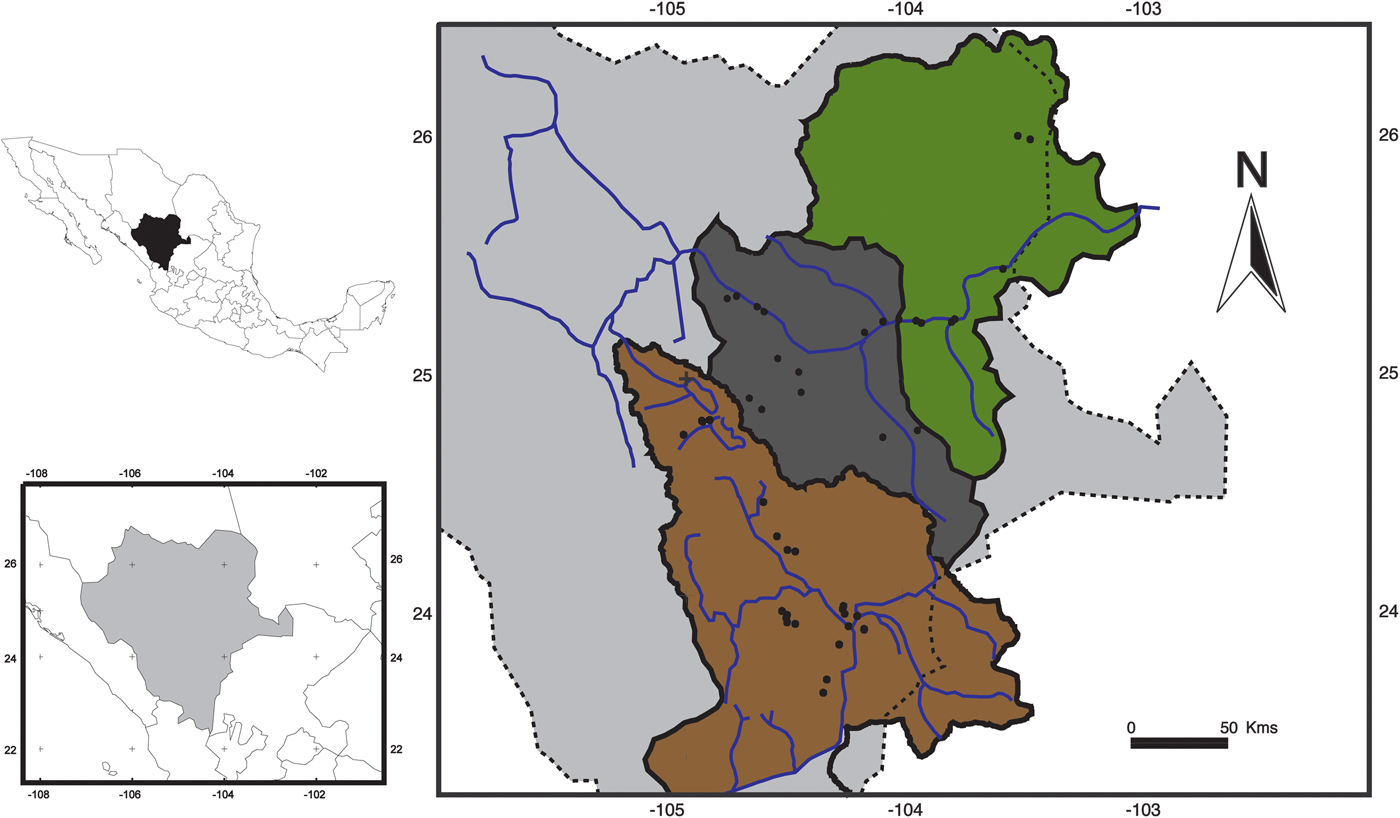
Between 2005 and 2008, 1582 fish, representing 26 species allocated to 11 families, were sampled in 46 localities across the Mezquital (n = 676) and Nazas rivers (n = 906), Durango State, in north–central Mexico (fig. 1). The Nazas River represents an endorheic watershed, while the Mezquital River runs across the Sierra Madre Occidental to become the San Pedro River before draining into the Pacific Ocean (see Pérez-Ponce de León et al., Reference Pérez-Ponce de León, Rosas-Valdez, Mendoza-Garfias, Aguilar-Aguilar, Falcón-Ordaz, Garrido-Olvera and Pérez-Rodríguez2009, Reference Pérez-Ponce de León, Rosas-Valdez, Aguilar-Aguilar, Mendoza-Garfias, Mendoza-Palmero, García-Prieto, Rojas-Sánchez, Briosio-Aguilar, Pérez-Rodríguez and Domínguez-Domínguez2010 and references therein). Based on the premise that the Asian fish tapeworm was co-introduced into the area with common carp and grass carp, and then invaded the native fauna, the objective of this short-term study was to analyse the distribution pattern of S. acheilognathi in the freshwater fish fauna of these two rivers, and to determine the potential genetic variation of individuals of this tapeworm among native fish species by using nuclear (ITS1, 5.8, ITS2) and mitochondrial cytochrome oxidase c subunit 1 (cox1) DNA sequences. Fish were sampled with seine nets and electrofishing, kept alive in containers, euthanized by pithing and examined for helminths immediately. The gastrointestinal tract was examined under the stereomicroscope. All tapeworms were rinsed in saline 0.65% and fixed either in 100% ethanol for molecular study or in hot 4% formalin for morphology. Specimens for morphology were stained with Mayer's paracarmine, and mounted on slides with Canada balsam as permanent preparations. Voucher specimens were deposited at the CNHE (see supplementary table S1).
Map with the localities of the Mezquital and Nazas rivers in Durango State, northern Mexico sampled for S. acheilognathi between 2005 and 2008.

For the molecular study, DNA was extracted from 26 specimens collected from 16 localities across both river basins. A fragment of each individual worm was digested overnight at 56°C in a solution containing 10 mm Tris–HCl (pH 7.6), 20 mm NaCl, 100 mm Na2EDTA (pH 8.0), 1% Sarkosyl and 0.1 mg/ml proteinase K, and DNA was extracted with phenol–chloroform (Hillis et al., Reference Hillis, Mable, Moritz, Hillis, Moritz and Mable1996). Internal transcribed spacers 1 and 2, and the gene 5.8S, as well as the cytochrome oxidase subunit 1 gene (cox1) were amplified using the polymerase chain reaction (PCR). Primers for ITS were: BD1 5′-GTCGTAACAAGGTTTCCG TA-3′ (forward) and BD2 5′- ATCTAGACCGGACTAGGCTGTG-3′ (reverse) (Luton et al., Reference Luton, Walker and Blair1992). Two additional primers were also used (designed by Rogelio Rosas): BOTF1: 5′-ACGCTG CATTCCCTAGACAAACGT-3′ (forward); BOTF2: 5′-TGCCCTGCCCTGTCAACGCATAGC-3′ (reverse). Primers JB3 5′-TTT TTT GGG CAT CCT GAG GTT TAT-3′ (forward), and JB4.5 5′-TAAAGAAAGAACATAATGAAA ATG-3′ (reverse) were used to amplify the cox1 gene (Bowles et al., Reference Bowles, Blair and McManus1992). PCR reactions (25 μl) consisted of 10 μm of each primer, 2.5 μl of 10× buffer, 2 mm MgCl2 (1.5 μl), 10 μm of deoxynucleoside triphosphates (dNTPs) (0.5 μl), 2 μl of the genomic DNA and 1 U of Taq DNA polymerase (0.125 μl) (Platinum Taq, Invitrogen Corporation, São Paulo, Brazil). PCR cycling parameters for amplifications included denaturation at 94°C for 3 min; followed by 35 cycles of 94°C for 1 min, annealing at 45–52°C (optimized for each amplification) for 1 min and extension at 72°C for 1 min; followed by a post-amplification incubation at 72°C for 10 min. Sequencing reactions were performed with the same set of primers using ABI Big Dye (Applied Biosystems, Boston, Massachusetts, USA) terminator sequencing chemistry, and reaction products were separated and detected using an ABI 3730 capillary DNA sequencer. Contigs were assembled and base-calling differences resolved using Codoncode Aligner version 5.0.2 (Codoncode Corporation, Dedham, Massachusetts, USA). Sequences were deposited in GenBank, accession numbers KY971563–971590 for ITS, and KY971545–971562 for cox1. The genetic pairwise difference among samples was estimated using uncorrected ‘p’ distances with the program MEGA version 6 (Tamura et al., Reference Tamura, Stecher, Peterson, Filipski and Kumar2013), in comparison with sequence data obtained from two samples of S. acheilognathi obtained from the common carp C. carpio from a pond (Cantera Oriente) in Mexico City.
Results and discussion
The complete list of records of the distribution and host associations of the Asian fish tapeworm in native fish species in Mexico is presented in supplementary table S1. In total, 305 records were retrieved from the search through the CABI and ISI Web of Knowledge™ databases; however, records were checked individually to retain only those that specifically presented the record of S. acheilognathi in certain locality(ies) and host(s) in the country. Twenty-three records were obtained, and information was entered in the database avoiding duplication of records. In total, our database contains 374 records, with information of the localities where the tapeworms have been recorded, and all the host species (mostly freshwater fish, and a few amphibians and reptiles) that are parasitized by this species.
Geographical distribution of S. acheilognathi
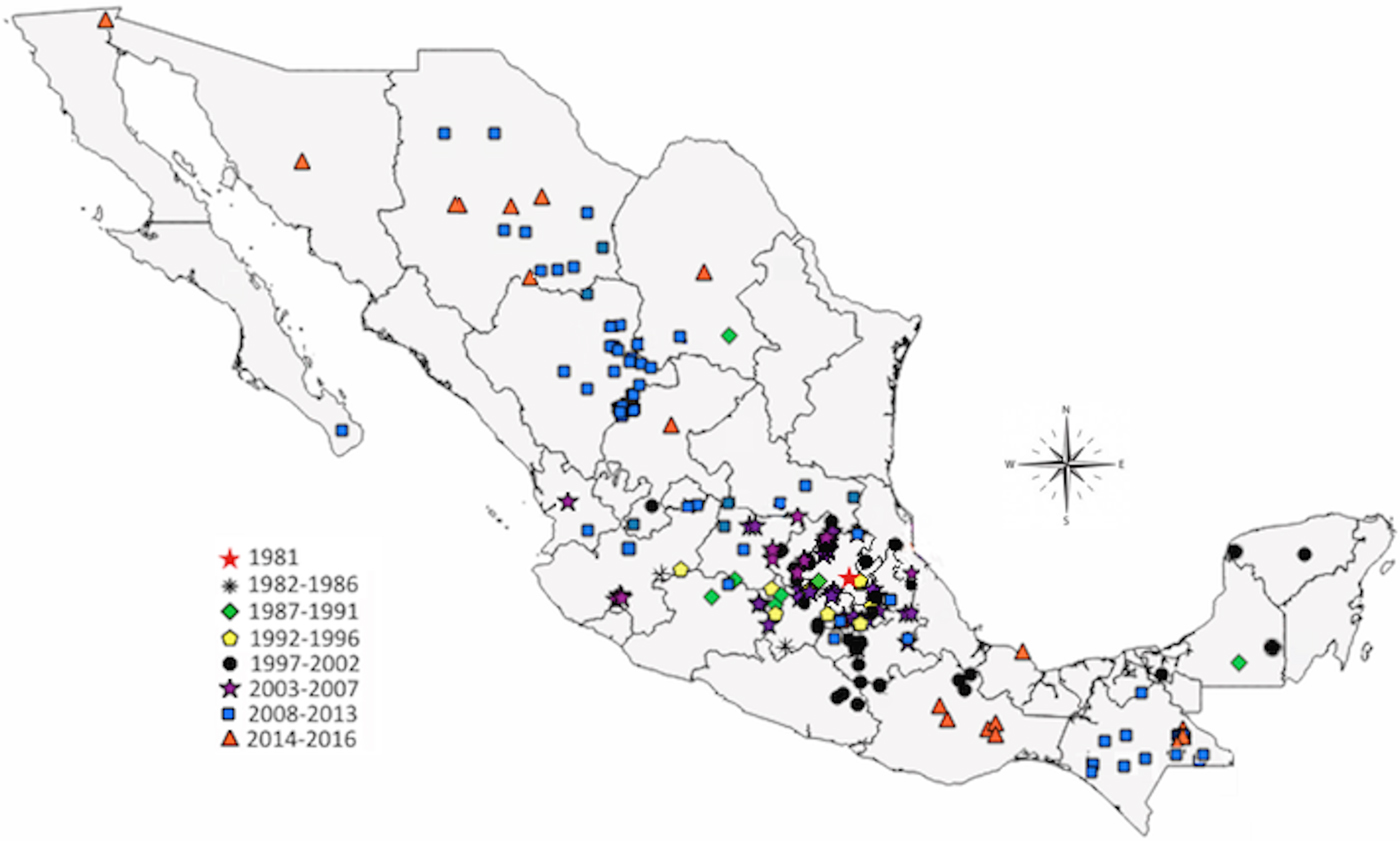
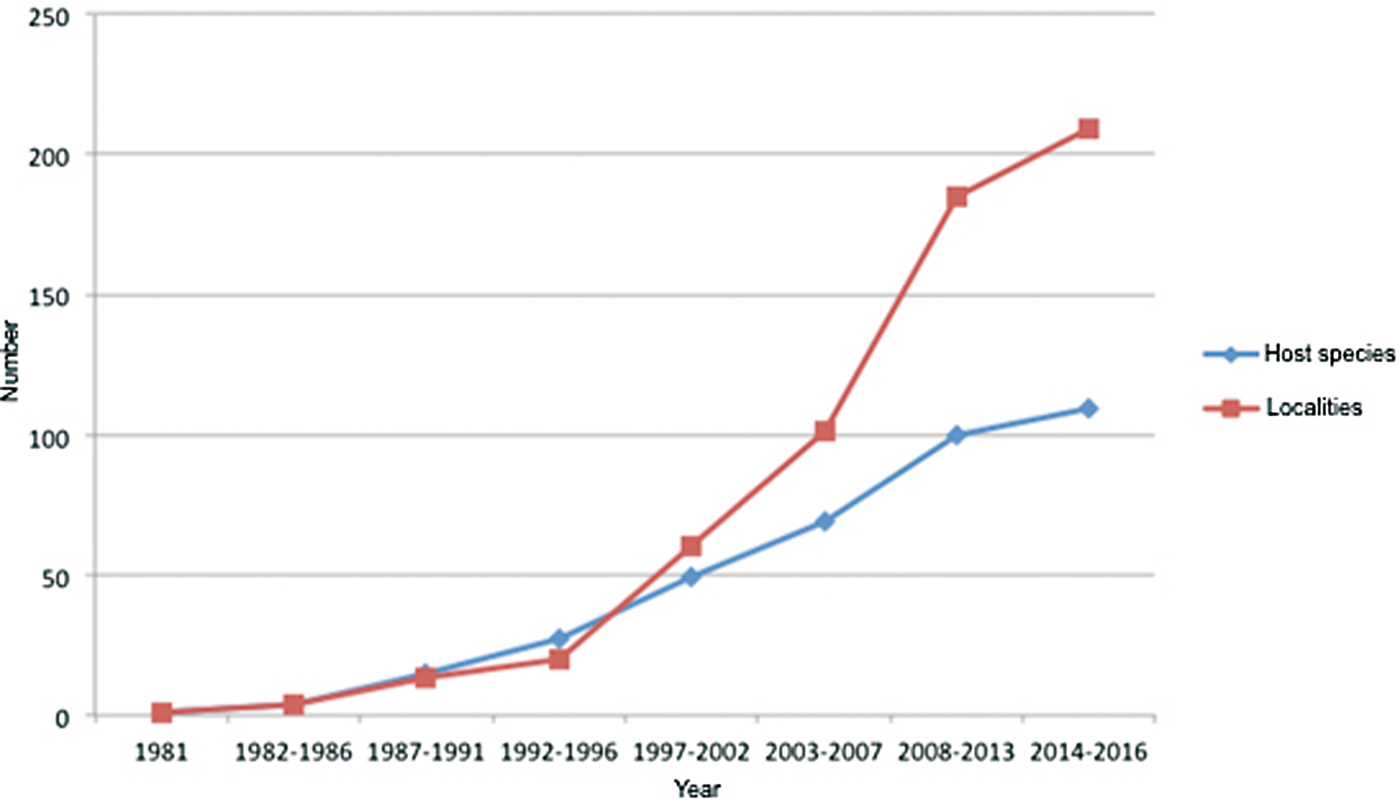
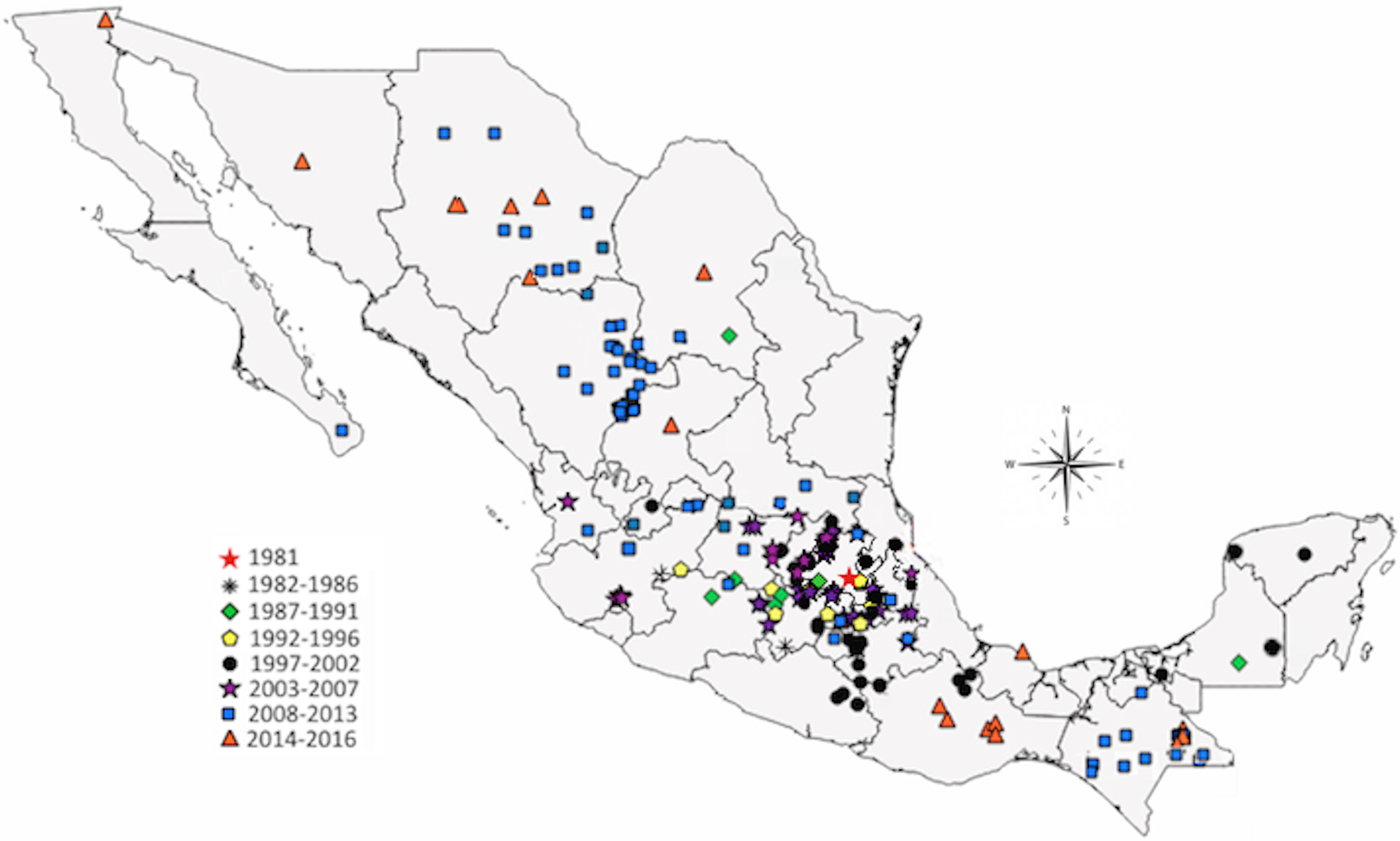
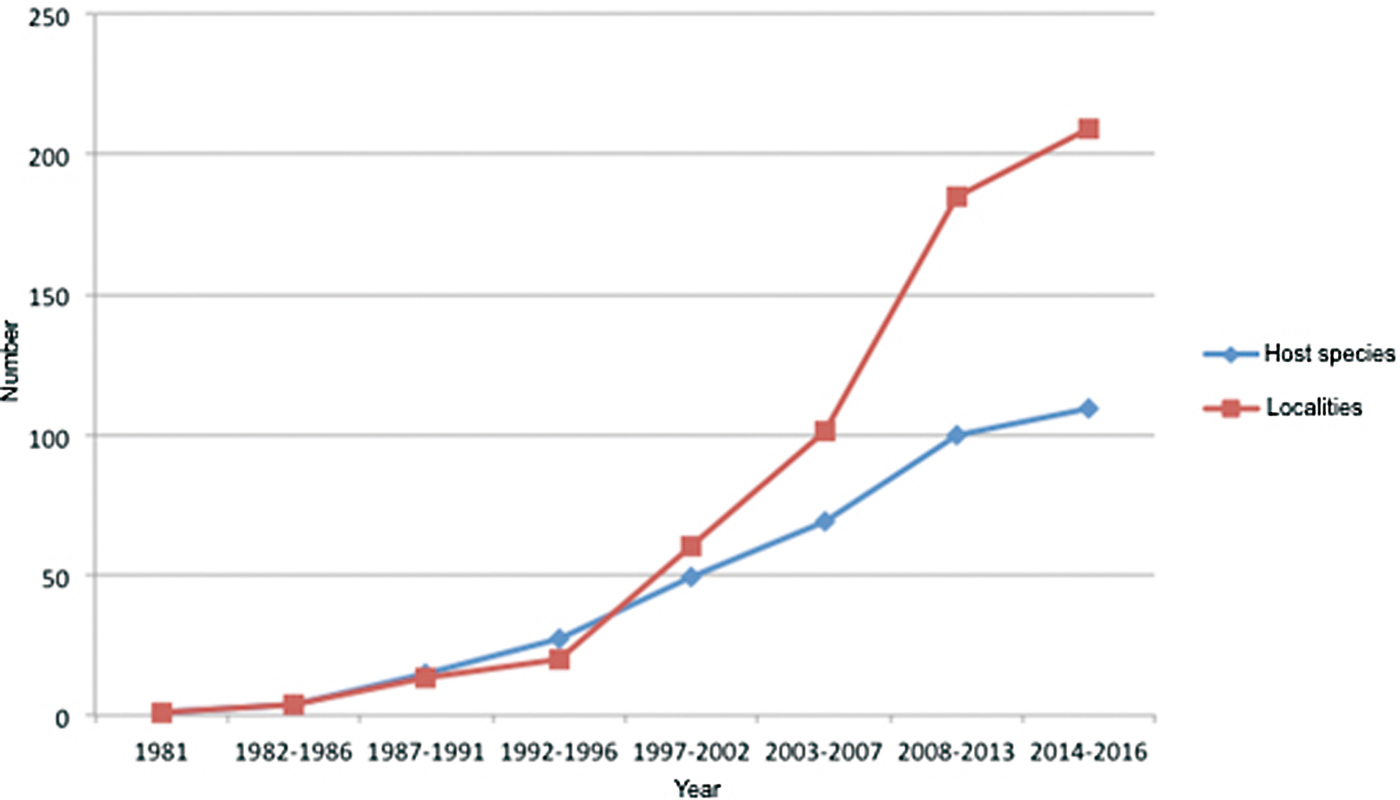
The Asian fish tapeworm has been found in localities of 28 of the 32 states of the Mexican Republic, with the exception of two states in north-eastern Mexico (Nuevo León and Tamaulipas), one in south-western Mexico (Colima) and one in south-eastern Mexico (Quintana Roo). The fish fauna of the northern states is composed of a number of native cyprinids, since this is typically a Nearctic fish group. Considering this, the presence of the tapeworm, particularly in that area, cannot be ruled out, but clearly more intensive survey work is required in river basins in that part of the country. In the other two states, cyprinids are not commonly found, although other cyprinodontiforms (e.g. poeciliids) may be parasitized by the tapeworm. The current records of the presence of S. acheilognathi in Mexico comprise 214 localities, representing virtually all the major river basins (fig. 2). Central Mexico, encompassing the states of Michoacán, Hidalgo, Guanajuato, Estado de México, Morelos, Puebla, Querétaro and Mexico City, contain the largest number of locality records, probably as a result of the fact that both common carp and grass carp have been introduced on a regular basis, either as weed control in some areas, or as a protein source for human consumption in some others (fig. 2). The major river system running across central Mexico is the Lerma-Santiago River basin, an area where S. acheilognathi seems to be very well adapted, irrespective of the fact that the area is highly polluted due to anthropogenic activity. Interestingly, there is no correlation between habitat types and the presence of the tapeworm, because it has been found in rivers, creeks, lakes, springs, sinkholes, dams and fish farms. The number of localities where this tapeworm species has been recorded in Mexico has increased constantly since the first time it was recorded in 1981 (fig. 3), and this number increased 110% in the past decade since Rojas-Sánchez & García-Prieto (Reference Rojas-Sánchez and García-Prieto2008) reported the presence of the tapeworm in 102 localities.
Distribution map of S. acheilognathi in freshwaters in Mexico. The map has been built from geographical points provided in each published report.
Increase in the number of locality (red) and host (blue) records of S. acheilognathi in freshwaters in Mexico since the first time the co-invasive species was recorded in 1981.
Distribution of S. acheilognathi in freshwater fishes
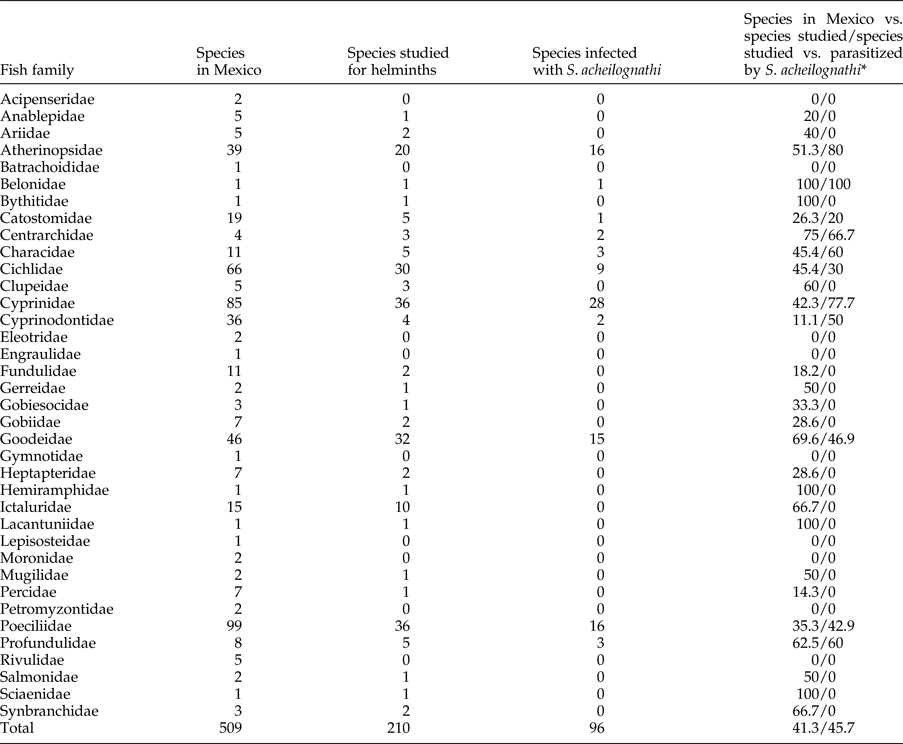
In total, 210 species of freshwater fishes have been reported in Mexico harbouring at least one species of helminth. This represents approximately 41% of the freshwater fish fauna occurring within Mexican territory. More host species have been examined; however, uninfected hosts are not usually reported in most parasite surveys. Of the 210 freshwater fish species harbouring at least one helminth species, the Asian fish tapeworm has been found in 96 native species in 42 genera, 11 families and 4 orders. The tapeworm has also been found in the intestine of two species of amphibians (the bigfoot leopard frog Lithobates megapoda, and the Lake Patzcuaro salamander Ambystoma dumerilii), and in one species of reptile (the blackbelly garter snake Thamnophis melanogaster) (see supplementary table S1). Additionally, it is also found in 14 introduced species, including nine species of cyprinids such as the grass carp (C. idella), the common carp (C. carpio), the carp (Cyprinus rubrofuscus), the freshwater bream (Abramis brama), the goldfish (Carassius auratus), the crucian carp (Carassius carassius), the black carp (Mylopharyngodon piceus), the silver carp (Hypophthalmichthys molitrix) and the Wuchang bream (Megalobrama amblycephala). Three species of tilapia (Cichlidae) have also been found to be infected with the Asian fish tapeworm (Oreochromis aureus, O. niloticus and O. mossambicus) as well as the convict cichlid (Amatitlania nigrofasciata) and the guppy Poecilia reticulata (supplementary table S1). Of the 96 species of native fish fauna infected with S. acheilognathi, 29.1% are cyprinids. Clearly, this family represents the most suitable hosts for this co-invasive species because 36 of the 85 species have been studied to a certain extent for parasites, and S. acheilognathi has been found in 28 of them (77.7%) (table 1). Additionally, the nine species of carp commonly used for production in fish farms, and now widely spread into natural habitats, are also parasitized. The freshwater fish fauna of Mexico contains species allocated into 36 families (Miller et al., Reference Miller, Mincley and Norris2005). Most of the families containing the highest species richness have been studied in great detail for helminths (see Pérez-Ponce de León & Choudhury, Reference Pérez-Ponce de León and Choudhury2010). Thorough parasite surveys of the endemic Atherinopsidae, Goodeidae and Profundulidae, as well as the Nearctic Cyprinidae and Ictaluridae, and the Neotropical Characidae, Heptapteridae, Cichlidae and Poeciliidae, are available (see Vidal-Martínez et al., Reference Vidal-Martínez, Aguirre-Macedo, Scholz, González-Solís and Mendoza-Franco2001; Lira-Guerrero et al., Reference Lira-Guerrero, García-Prieto and Pérez-Ponce de León2008; Rosas-Valdez & Pérez-Ponce de León, Reference Rosas-Valdez and Pérez-Ponce de León2008; Martínez-Aquino et al., Reference Martínez-Aquino, Mendoza-Palmero, Aguilar-Aguilar and Pérez-Ponce de León2014; Pinacho-Pinacho et al., Reference Pinacho-Pinacho, García-Varela, Hernández-Orts, Mendoza-Palmero, Sereno-Uribe, Martínez-Ramírez, Andrade-Gómez, López-Jiménez, Hernéndez-Cruz and Pérez-Ponce de León2015). The continuous survey work across the country has also resulted in an increase of the host records of S. acheilognathi (fig. 3). The Asian fish tapeworm has been found in all the aforementioned families except in those belonging to the siluriforms, i.e. Ictaluridae and Heptapteridae. Mexican siluriforms possess their own cestode fauna which is comprised of corallobothrines, i.e. Corallobothrium and Megathylacoides, and proteocephalines, i.e. Proteocephalus and Nomimoscolex, and it is possible that no empty niche is available for S. acheilognathi. Also, as in the case of catostomids (suckers) and cobitids (loaches) described by Choudhury & Cole (Reference Choudhury, Cole and Francis2012), it seems plausible that the absence of the tapeworm in Mexican siluriforms might be due to their more benthic feeding habits. Even though the Asian fish tapeworm was found in four species of native and seven species of non-native fish in the Little Colorado River in USA, their presence was rare in two species of catostomids, two of ictalurids and one salmonid (Choudhury et al., Reference Choudhury, Hoffnagle and Cole2004). In contrast, an extensive survey of siluriforms across Mexico (see Rosas-Valdez & Pérez-Ponce de León, Reference Rosas-Valdez and Pérez-Ponce de León2008) shows that heptapterids are parasitized by 52 species of helminths, while ictalurids host 51 species, none of them S. acheilognathi.
Native Mexican freshwater fish species parasitized by the Asian fish tapeworm, with respect to the total diversity and to the number of species that have been studied for helminth parasites. Valid names for fish families follow FishBase (http://www.fishbase.org/search.php).

*Expressed as percentage value.
Instead, in species belonging to families of freshwater fishes of Mexico such as Atherinopsidae, Goodeidae, Profundulidae, Cyprinidae, Cichlidae and Poeciliidae, S. acheilognathi is basically the only adult tapeworm found as part of their parasite communities. It has been proposed that cyprinodontiforms such as poeciliids, which are not closely related to cypriniforms, are more suitable hosts because they are small bodied and feed mainly on copepods (Choudhury & Cole, Reference Choudhury, Cole and Francis2012). The current distribution pattern of the Asian fish tapeworm in Mexican freshwaters supports that idea. Among cyprinodontiforms, at least 16 of the c. 99 species of poeciliids, 2 of the 8 species of profundulids, and 16 of the 46 species of goodeids are parasitized by S. acheilognathi (table 1; supplementary table S1). In addition, 2 of the 36 species of Cyprinodontidae are also parasitized, although this fish family has not been surveyed in great detail. The other fish family that seems to be highly susceptible is Atherinopsidae, comprising the genera Chirostoma, Atherinella and Poblana. These fish fit with the criteria as being small bodied and feeding primarily on copepods. Sixteen of the 20 species that have been studied for helminths, out of the 39 that occur in Mexican freshwaters, are parasitized by S. acheilognathi.
Distribution of S. acheilognathi in native freshwater fishes of Durango
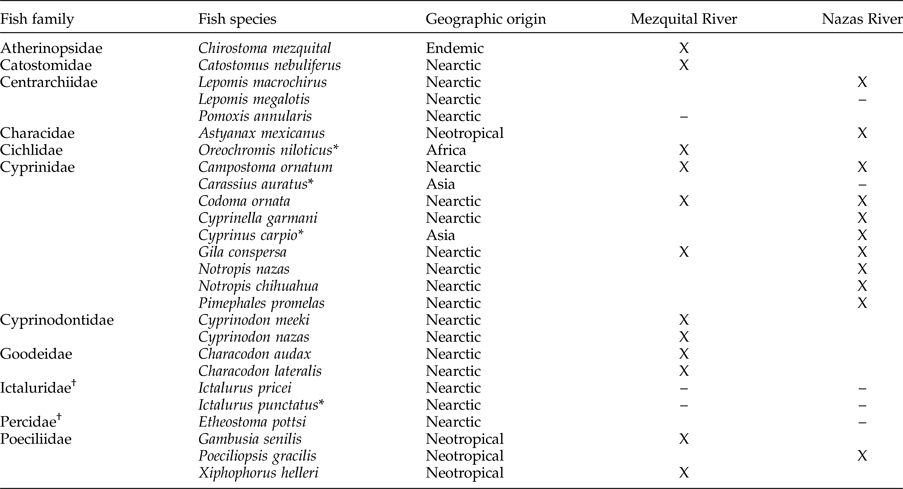
Of the 1582 individual fish analysed in the short-term survey, 188 were infected with S. acheilognathi (almost 12% of the specimens studied). The Asian fish tapeworm was found parasitizing individuals of 9 of the 11 fish families distributed in the area (table 2). Species included in Ictaluridae (the channel catfish Ictalurus punctatus, and the Yaqui catfish I. pricei), and Percidae (the Mexican darter Etheostoma pottsi) were not parasitized. In total, 20 of the 26 fish species were infected by the tapeworm. Of the 20 parasitized fish species, 8 (40%) belonged to the Cyprinidae, with prevalence of infection levels varying between 6 and 72% for the fathead minnow Pimephales promelas and the Nazas chub G. conspersa, respectively. This confirms, on a smaller scale, that cyprinids are more suitable hosts than any other freshwater fish family. In addition, the tapeworm was found in 28 of the 46 sampled localities, indicating that the tapeworm has spread across the two river basins after it was first co-introduced with grass carp and common carp. The date of the introduction is unknown.
Host records of S. acheilognathi among endemic and introduced freshwater fishes in two rivers of Durango State in north-central Mexico, during the period 2005–2008. The ‘X’ indicates the presence of the tapeworm in the host species and river basin. The ‘–’ indicates fish species not infected by the tapeworm in that river basin.

*Introduced species; †Families not infected with S. acheilognathi.
In order to determine a potential case of a parasite invasive species experiencing genetic variation following the introduction to new habitats and new hosts, irrespective of the time-span since introduction, we obtained ITS1–5.8S–ITS2 sequences of 26 individuals of S. acheilognathi obtained from native freshwater fishes, and 17 sequences of cox1. Reference sequences from two specimens collected from a common carp in a pond near Mexico City were also obtained for both molecular markers. Sequence variation among individuals was very low or null. The final alignment of the rDNA consisted of 28 sequences (1343 bp long). Sequences represent specimens from eight localities of the Nazas River and eight localities of the Mezquital River, and were obtained from 11 host species of five families (Cyprinidae, Atherinopsidae, Goodeidae, Cyprinodontidae and Poeciliidae). Overall, sequence variation was very low, ranging from 0 to 0.84% among individuals. The final alignment of the mitochondrial gene consisted of 18 sequences (329 bp long), with sequences from eight localities of the Mezquital River and seven localities of the Nazas River. Sequences were obtained from specimens collected from eight species of freshwater fishes from four families (Cyprinidae, Goodeidae, Cyprinodontidae and Poeciliidae). Sequence variation was null for cox1 among all individuals, including those from Durango and those from Cantera Oriente. Only one sequence, obtained from the cyprinid G. conspersa from a tributary of the Nazas River basin varied 1.22% from all the other specimens sequenced. Considering the short time since introduction of the Asian fish tapeworm to Mexico, the probability of experiencing some level of genetic variation is very low; however, our intention was to generate raw data to test, in the first place, that such variation had not occurred.
Invasive species show very high adaptation and have the potential for rapid evolution in a new environment. Whitney & Gabler (Reference Whitney and Gabler2008) documented the existence of 38 invasive species where the specific traits commonly associated with invasive potential (e.g. growth rate, dispersal ability, generation time) have themselves undergone evolutionary change following introduction. Interestingly, these examples included cases where such evolutionary change occurred over very short timescales (even 10 years). As discussed by Whitney & Gabler (Reference Whitney and Gabler2008) the consequences of potential evolutionary change for invasion predictions have not been sufficiently explored. Such is the case of S. acheilognathi. Even though Brabec et al. (Reference Brabec, Kuchta, Scholz and Littlewood2016) uncovered very low variation levels among individuals of the Asian fish tapeworm across the world, through the complete mitochondrial genome, it is very important to document potential sequence variation of local populations, even with sequence data from shorter regions and even after a relatively short time since they were introduced. Whether or not this could be correlated with a higher (or lower) pathogenicity of the invader needs to be determined in the future, and published empirical data for comparison will be very useful. Also, levels of genetic variation can be used to establish haplotype frequency, population size and patterns of invasive species distribution (Gillis et al., Reference Gillis, Walters, Fernandes and Hoffman2009). By sequencing mtDNA from individuals of mussels (Mytella charruana) from a wide geographical range, these authors uncovered significantly higher levels of nucleotide diversity in invasive populations than in natural populations. Very few cox1 sequences are available in GenBank for specimens of S. acheilognathi from other parts of the world, and no homologous regions can be used for comparison. In contrast, several sequences of the non-coding internal transcribed spacers are available in the GenBank database as a result of the paper by Luo et al. (Reference Luo, Nie, Zhang, Wang and Yao2002). These authors analysed the genetic variation of S. acheilognathi from 27 localities, most of them from China, but also from Australia, the Czech Republic, UK, Hawaii and Japan. We decided, however, not to compare those data with our samples, and to restrict the analysis to the genetic variation over a small geographical scale, because, as pointed out by Brabec et al. (Reference Brabec, Kuchta, Scholz and Littlewood2016), conclusions of that study should be treated with caution. Luo et al. (Reference Luo, Nie, Zhang, Wang and Yao2002) interpreted their results of the phylogenetic analyses incorrectly and, in addition, failed to find clear associations among the ITS genotypes (Brabec et al., Reference Brabec, Kuchta, Scholz and Littlewood2016).
Perspectives and future directions
The Asian fish tapeworm has spread very rapidly in the native freshwater fish fauna of Mexico. Since its initial report in 1981 as a parasite of the grass carp (López-Jiménez, Reference López-Jiménez1981), the number of records has increased at an accelerated rate. Ten years after, the compilation of García-Prieto & Osorio-Sarabia (Reference García-Prieto and Osorio-Sarabia1991) reported the presence of the tapeworm in 15 species of fish. Salgado-Maldonado & Pineda-López (Reference Salgado-Maldonado and Pineda-López2003) reported 49 fish species as hosts of S. acheilognathi, and the last attempt to compile the distribution of this parasite made by Rojas-Sánchez & García-Prieto (Reference Rojas-Sánchez and García-Prieto2008) indicated that the tapeworm had dispersed to parasitize 72 fish species. A decade after, the results of the present study show that the number of records has increased 55.08%, and currently this co-invasive and highly successful species parasitizes 96 native fish species. Overall, after 35 years since the first time the species was recorded in Mexico, it now parasitizes about 19% of the native freshwater fish fauna. The results presented in this study challenge the estimation made by several authors (see Scholz et al., Reference Scholz, Kuchta, Williams, Woo and Buchmann2012, Brabec et al., Reference Brabec, Kuchta, Scholz and Littlewood2016) of 200 freshwater fish species parasitized by this tapeworm across the globe. We contend that, if in Mexico alone this co-invasive species has already been found in 96 species of freshwater fish species plus 14 introduced species, it has to be distributed in a larger number of fish in the world. Just considering the few records of host species harbouring S. acheilognathi in South and Central America, and those recorded from North America (not including Mexico) that are scattered in the literature, we estimate that at least 200 host species are parasitized by the tapeworm in the Americas alone.
The Asian fish tapeworm possesses an extraordinary capacity to colonize different habitats and different host species, due to its lack of host specificity. This species is truly a generalist species. Many factors contribute to the dispersal ability of the species, as discussed widely in Choudhury & Cole (Reference Choudhury, Hoffnagle and Cole2012) and Scholz et al. (Reference Scholz, Kuchta, Williams, Woo and Buchmann2012). Particularly in Mexico, the uncontrolled introduction of carp imported from Asia and cultured in fish farms, into any type of freshwater habitats, either as weed control or as a protein source for human consumption, along with inadequate prophylactic and control strategies, i.e. the lack of a national program of aquatic health control, are the main causes of the current distribution pattern of the species. It is possible that other native species are infected with this parasite species, and must be determined through a continuous survey programme because, up until today, we have studied only 41% of the freshwater fish fauna. Since a number of species belonging to the Cyprinidae, Fundulidae, Cyprinodontidae and Poeciliidae have not yet been studied for parasites, the host and distribution record of S. acheilognathi across the country is likely to increase in the near future because those species fit with the requirements to become infected with the parasite. The study of bothriocephalosis in freshwater fishes occurring in Mexico requires, in addition to continued documentation of the host and geographical distribution of this invasive species, analysis of the pathogenic effect of the parasite on natural host populations and the impact they may produce on aquatic ecosystems. As shown in the case study reported here, on the distribution of the tapeworm in two rivers of Durango State, this cestode is mainly found parasitizing cyprinids; the tapeworm reaches full development in these hosts and may keep the infection levels high in ecosystems where such species are present. Likewise, other fish species, such as cyprinodontiforms and atherinopsids, where the parasite apparently reaches only lower infection levels, but where it may acquire sexual maturation and have reproducing populations, may contribute to maintenance of the presence of the parasite, even in habitats where no cyprinids are found, either native or introduced. Given the data that have been published with regard to disease and potential effects, the Asian fish tapeworm represents a threat for native fish species in Mexico (Salgado-Maldonado & Pineda-López, Reference Salgado-Maldonado and Pineda-López2003), and information about the parasite needs to be considered in any conservation strategy of aquatic ecosystems in Mexico.
Supplementary material
To view supplementary material for this article, please visit https://doi.org/10.1017/S0022149X17000438
Acknowledgements
We thank Carla Sofia Islas Hernandez for her help with figures.
Financial support
We would like to thank the funding agencies PAPIIT-UNAM (Programa de Apoyo a Proyectos de Investigación e Innovación Tecnológica- Universidad Nacional Autónoma de México) and CONABIO (Comisión Nacional para el Conocimiento y Uso de la Biodiversidad), which have contributed not only to survey work in different areas of the country and inventory of the freshwater fish parasite fauna, but, through the years, have also supported assembly of the database that is used in this study. R.A.A. thanks in particular support from the PAPIIT-UNAM IN218414 for collection of samples in Sonora and Baja California.
Conflict of interest
None.
Ethical standards
The authors assert that all procedures contributing to this work comply with the ethical standards of the relevant national and institutional guides on the care and use of laboratory animals. Collections in different areas of Mexico were made under the Cartilla Nacional de Colector Científico FAUT-057 issued by the Secretasria del Medio Ambiente, Recursos Naturales y Pesca to G.P.P.L.