Introduction
Nationally, eight percent of prehospital care involves children.Reference Brown, Hayden, Randell, Rappaport, Stevenson and Kim 1 Previous survey-based research has illustrated knowledge deficits in pediatric care among Emergency Medical Services (EMS) providers.Reference Tsai and Kallsen 2 These knowledge deficits may be attributed, in part, to shifts in the standardized EMS curricula over the years. In the 1990s, all initial courses for EMS followed a national standardized curriculum that included time requirements by topic. Three major core content updates from 2005-2009 emphasized “competency” rather than a minimum number of hours.Reference Fleischman, Yarris, Curry, Yuen, Breon and Meckler 3 - 5 In addition, maintenance of pediatric certification requirements for EMS professionals varies from state to state and can be diluted by replacing pediatric continuing education hours with other specialty training. Although outcome-based research regarding EMS and the pediatric population is sparse, 6 , Reference Baker, King, Soto, Asher, Stolfi and Rowin 7 implications of the current mode of pediatric education for EMS providers is that it may translate into suboptimal delivery of pediatric prehospital care.
Although surveys are inexpensive and may reach a large number of participants, this methodology has potential bias due to low response rates and a lack of qualitative data.Reference Losek, Szewczuga and Glaeser 8 This study aimed to use focus groups to produce a more rich body of data regarding pediatric education needs of EMS providers than can be ascertained through surveys. This methodology has identified knowledge and training gaps among the EMS community, but it has not been applied specifically to the issue of pediatric training.Reference Wyatt 9 - Reference Miles 13 The specific objectives of this study were to identify perspectives of EMS providers regarding pediatric prehospital care educational deficits as well as to propose methods of training improvements.
Methods
Qualitative methodology was used to avoid preconceived assumptions regarding EMS pediatric education and enable generation of hypotheses regarding means to improve pediatric education of EMS providers.Reference Thomas, Abo and Wang 14 The EMS system in the Commonwealth of Kentucky (USA) consists of 225 ground EMS services, 3,200 paramedics, and 9,951 emergency medical technicians (EMTs). The study was approved by the University of Louisville (Louisville, Kentucky USA) Institutional Review Board and was conducted from February 2013 through June 2013.
Recruitment
Purposive samplingReference Kitzinger 15 was used to recruit EMS providers from three agencies in the Commonwealth of Kentucky. Purposive sampling entails selecting information-rich cases to facilitate generation of data, capturing both typical and atypical thoughts regarding EMS pediatric education. Participants from agencies from three geographic regions (urban, suburban, and rural) were sampled to ensure no important themes were missed from across the Commonwealth. The rural agency was located further than 10 miles from a population center of 40,000 or more.Reference Tsai and Kallsen 2 The suburban site was a community whose emergency department (ED) was approximately 80 miles by air and 105 miles by ground to the nearest Level 1 pediatric trauma center. The urban site was the primary EMS agency in the immediate area of a Level 1 pediatric trauma center. The study team contacted EMS agency training officers, who in turn invited participation from other members of the agency, through flyers and word of mouth.
Data Collection
Administrative and non-administrative personnel participated in separate focus groups to prevent potential inhibition of comments critical of administrative policies/processes regarding training. Administrative personnel were defined as EMTs or paramedics with administrative/leadership duties within the EMS division. Non-administrative providers were defined as EMTs or paramedics with the sole responsibility of response to EMS calls.
Focus groups were limited to 10 participants to ensure opportunity for each participant to express their opinions. A professional moderator facilitated discussion using a guide (Supplemental Table; available online only) developed by the study team. The principal investigator, who received moderator training, was present during each focus group to clarify any questions that arose between participants and the non-medically trained moderator; he was otherwise a non-participating observer. Groups lasted a maximum of 90 minutes. Sessions were audio recorded, then professionally transcribed. Participant anonymity was established through aliases which were self-chosen prior to audio recording. The principal investigator reviewed each transcript and the audio recording of each group to ensure accuracy.
Data Analysis
The research team met to discuss initial findings and formed a master coding list using the first transcript. A grounded theory approach was used to analyze verbatim focus group transcripts.Reference Patton 16 The research team reviewed each transcript for underlying themes and used structured analysis to identify codes and themes. After subsequent transcripts were analyzed using the master code list, the team discussed and approved the final analysis.
The themes were translated into codes via manifest coding and latent coding. Manifest coding involves the visible, surface content in a text and involves three subcategories: open, axial, and selective coding.Reference Patton 16 Since manifest coding does not take into account the connotation of words or phrases, latent coding was employed to look for underlying, implicit meaning in the content of the text. Data corroboration was achieved by means of investigator triangulation as well as methodological triangulation.Reference Denzin and Lincoln 17 Investigator triangulation was achieved by independent analysis of transcripts by multiple investigators. Methodological triangulation was achieved by analyzing audio tapes and transcripts. Disciplinary triangulation was also used by employing experts from the backgrounds of EMS, pediatric emergency medicine, and qualitative research. A grounded theory approach allowed individuals with diverse backgrounds to evaluate the analysis and offer fresh perspectives, ensuring the conclusions were not discrepant from what is known about the field of pediatric EMS.
ATLAS.ti (Scientific Software Development GmbH; Berlin, Germany), a computer-based qualitative analysis package designed to assist researchers through a systematic approach to analyzing narrative data, also was utilized to identify codes and final themes.Reference Mathison 18
Results
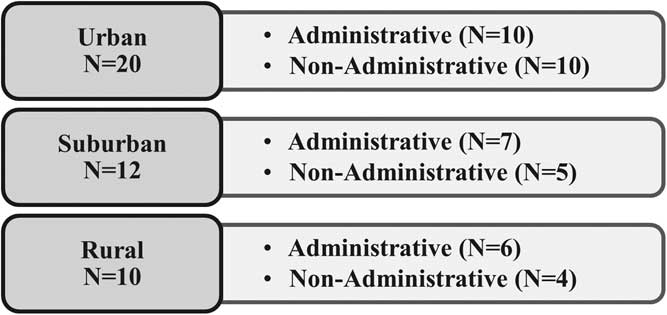
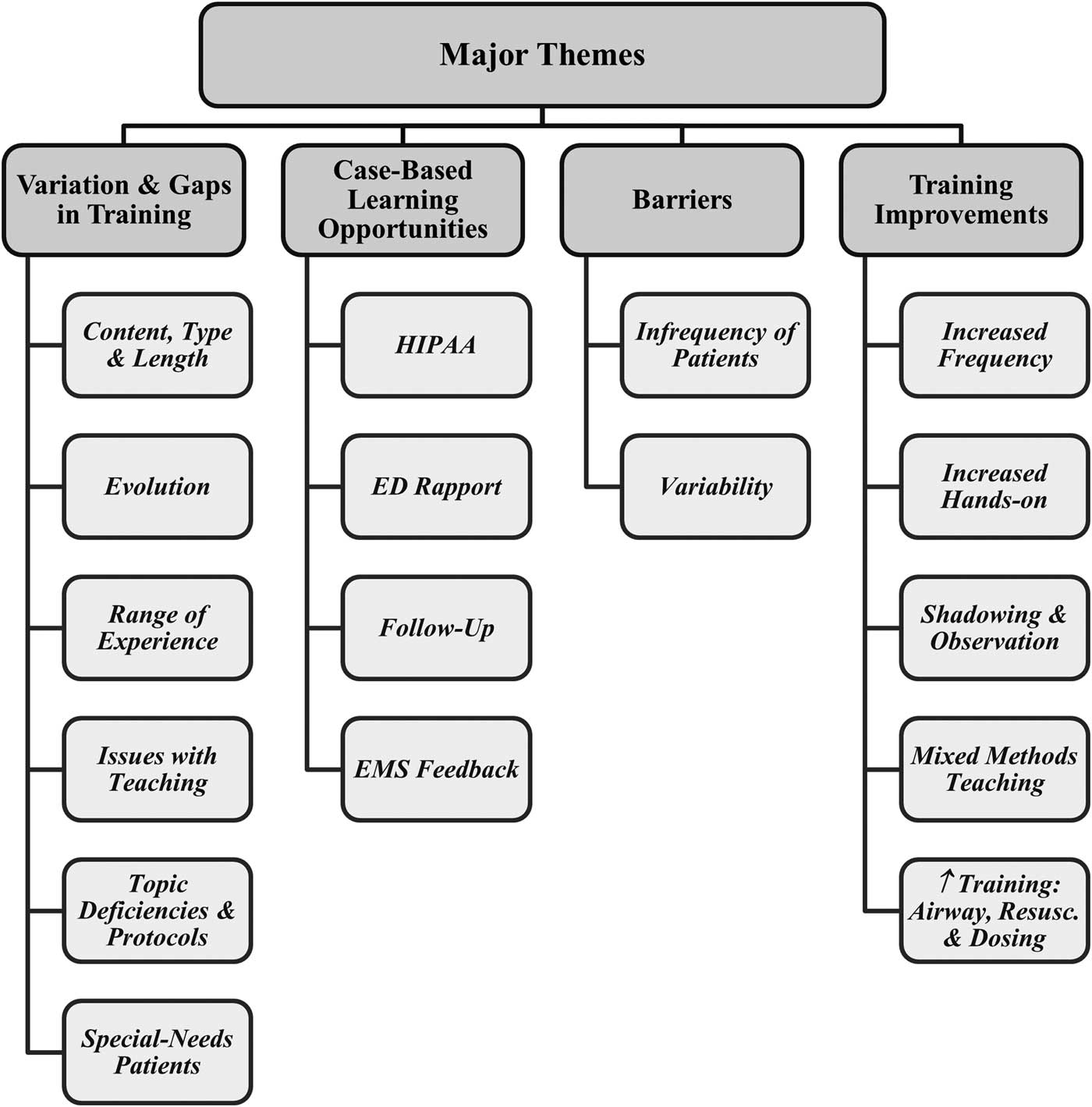
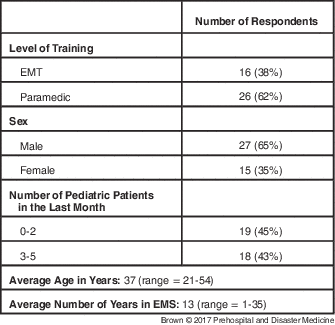
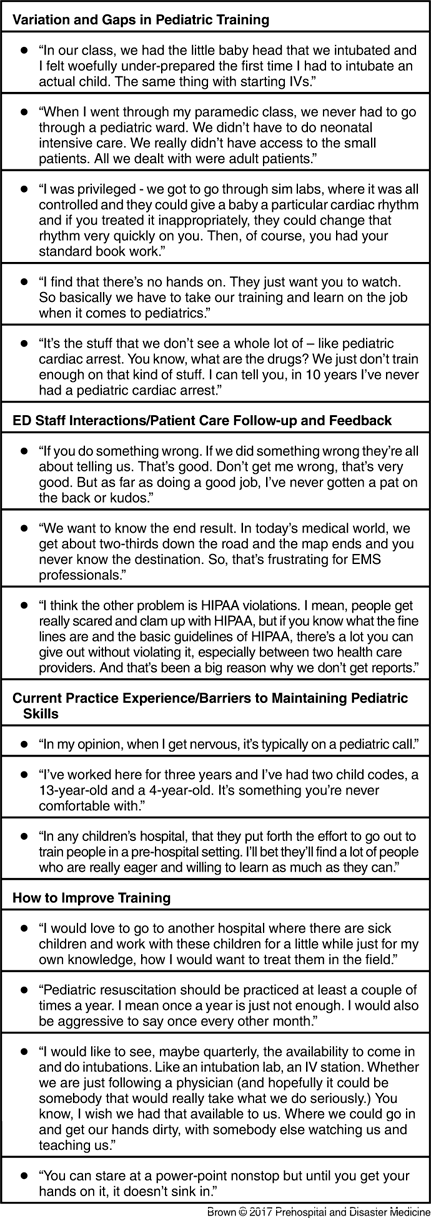
Forty-two participants provided data (Table 1; Figure 1). Participants had a significant range of duration of field experience, from less than one year to over 30 years. After reaching the data saturation point (the point at which no new ideas emerged from subsequent focus groups), four major themes emerged (Figure 2): (1) suboptimal previous pediatric training and training gaps in continuing pediatric education; (2) opportunities for improved interactions with ED staff, including case-based feedback on patient care; (3) barriers to optimal pediatric prehospital care; and (4) proposed pediatric training improvements. Table 2 shows representative quotes.
Focus Group Composition.

Major Themes and Sub-themes. Abbreviations: EMS, Emergency Medical Services; HIPAA, Health Insurance Portability and Accountability Act.

Participant Demographics

Abbreviations: EMS, Emergency Medical Services; EMT, emergency medical technician.
Representative Quotes

Abbreviations: EMS, Emergency Medical Services; HIPAA, Health Insurance Portability and Accountability Act; IV, intravenous.
Variation and Gaps in Pediatric Training
For previous training, varied content, types, and length of pediatric courses were noted. Additionally, it was noted that the evolution of EMS pediatric training courses over time has added to the variability in training. Some participants were exposed to only the lectures from their EMT or paramedic curriculum; others had more extensive training, such as shadowing opportunities in pediatric EDs or direct experience with pediatric endotracheal intubations in the operating room. Some shadowing opportunities, such as those based in general pediatric offices, were described as suboptimal since these settings often lacked a high number of critically ill children.
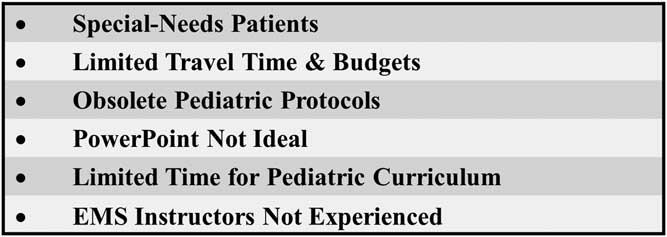
In describing training needs or gaps, respondents noted problems with current educational strategies (Figure 3). Specifically, PowerPoint (Microsoft Corporation; Redmond, Washington USA) presentations alone were not viewed as ideal teaching. Respondents also noted little allocated time in the EMS training curriculum for high-quality, student-involved, pediatric hands-on experience. Often, EMS instructors may not be trained adequately in pediatric prehospital care topics which can lead to inexperienced instructors teaching material that they are not comfortable or familiar teaching. Some focus group respondents preferred pediatric emergency medicine providers as instructors as these providers were viewed as experts in their field. In addition, lack of travel time and budgetary support for learners engaged in continuing education were noted barriers, especially in rural or suburban EMS systems. Obsolete pediatric care protocols and limited time devoted to pediatric continuing education were additional issues. Of note, complex pediatric patients with special needs created anxiety for EMS providers due to their inexperience and lack of familiarity with these patients. This anxiety ranged from how to approach and care for children with autistic spectrum to delivering care to the medically fragile, technology-dependent patient on a home ventilator.
Problems with Current Educational Strategies.
Abbreviation: EMS, Emergency Medical Services.

Case-Based Learning Opportunities
Emergency department staff interactions, as well as the ability to receive constructive patient care feedback and follow-up, also were described as an important theme at all study sites. Health Insurance Portability and Accountability Act (HIPAA) regulations were frequently cited as barriers to receiving patient care follow-up. Overall rapport between the EMS team and the accepting ED staff also was felt to affect the quality of information conveyed during patient handoff. Follow-up was even more difficult for EMS providers working in suburban or rural locations when transferring pediatric patients to tertiary pediatric referral centers by air. When the initial ground EMS team would attempt to ascertain the ultimate patient outcome, the receiving hospital would release little to no information. This barrier was noted by respondents as suboptimal, since debriefing may be a means of improvement for the next pediatric patient with critical illness or injury encountered by the team. In all respondent groups, EMS providers desired patient care feedback, both positive and negative.
Barriers to Optimal Pediatric Prehospital Care
An additional major theme was the current EMS daily practice experiences that can pose significant barriers to maintaining pediatric skills. The overall low number of pediatric patients who are transported (in comparison to more frequent adult EMS calls) translates to concerns about remaining proficient with pediatric resuscitative procedures. Also, since there are less standardized clinical care pathways for EMS providers in pediatrics, there is high variability in the care of pediatric patients versus the more algorithm-based care of adults.
Proposed Pediatric Training Improvements
Suggestions to improve training included: (1) increased frequency of pediatric training; (2) increased hands-on time with pediatric patients; (3) more shadowing and observation opportunities with pediatric emergency providers; (4) mixed methods of instruction, such as focused didactics followed by hands on practice; and (5) increasing specific content in the areas of medication dose calculation and administration, intravenous access, airway management, and pediatric resuscitation. In sub-group analysis, all administrative groups felt that there were no issues regarding the presence of pediatric equipment on ambulances as all states mandate the presence of certain pediatric equipment. Non-administrative EMS providers working in the field sometimes questioned the actual location of the infrequently used pediatric equipment. Lastly, distance traveled in order to train in pediatric hospitals was noted as a significant cost and time barrier for suburban- and rural-based agencies.
Discussion
This qualitative study identified four important themes surrounding EMS preparation to provide pediatric prehospital care. These themes may be used to shape and study future educational interventions for EMS. The study found concerns during patient care handoffs between the ED staff and EMS providers that may not have otherwise been discovered, and to date, has never been reported in the literature. In addition, this study revealed that constructive feedback for EMS personnel may be inhibited by misinterpretation of HIPAA regulations. Furthermore, EMS teams expressed a strong desire for feedback about their performance in treating pediatric patients, which could serve as an important component of quality improvement.
Previous research from the 1980s demonstrated a gap in meeting the emergency medical needs of children in the prehospital setting. 19 Improvements in EMS system design and provider education were identified as critical areas for further study.Reference Seidel, Hornbein, Yoshiyama, Kuznets, Finklestein and St Geme 20 These studies described the relative infrequency of pediatric resuscitation, which may decrease the opportunity to perform emergency procedures and increase the likelihood of error.Reference Seidel, Henderson, Ward, Wayland and Ness 21 - Reference Hoyle, Davis, Putman, Trytko and Fales 25 Additionally, when errors occur, the current EMS working environment does not actively support event reporting or mitigation of adverse events.Reference Lammers, Byrwa, Fales and Hale 26 Since EMS skills for adult patients are reinforced on a regular basis in the field, EMS providers acquire most of their pediatric knowledge and skills from continuing education.Reference Cushman, Fairbanks and O’Gara 27 Despite this body of literature, many of the concerns raised in the 1980s were still noted in a 2006 report on Pediatric Emergency Care by the Institute of Medicine (Washington, DC USA),Reference Glaeser, Linzer, Tunik, Henderson and Ball 28 and continue to be issues expressed by EMS providers in the focus groups seven years later.
This focus group approach expands the understanding of EMS preparedness for pediatric care through identification of themes which differ from previous conclusions using other methodology. Using a survey approach, a recent 2011 study described the pediatric educational needs assessment for urban and rural EMTs.Reference Tsai and Kallsen 2 Similar to these authors’ findings, a need for increased pediatric training using a variety of methods was found. In contrast, barriers to knowledge acquisition and communication issues between EMS and ED providers also were illustrated.
Similar to two previous surveys,Reference Cushman, Fairbanks and O’Gara 27 , 29 a relative infrequency of pediatric EMS calls, as well as cost, availability, and travel distance as barriers to continuing education were found. Respondents recognized the infrequency of pediatric calls (no more than three per month) and identified continuing education as the main source of EMS pediatric knowledge and skills.Reference Cushman, Fairbanks and O’Gara 27 These findings suggested that more than 70% of all providers were comfortable, to some degree, with their own ability and their EMS systems’ ability when confronted with a critical pediatric call. The level of EMT training and hours of continuing education may influence the level of comfort when confronting a pediatric emergency. 29 In contrast, this study identified important communication issues during handoffs between the ED team and EMS providers for pediatric patient care. Furthermore, many of the EMS respondents expressed discomfort when confronted with critically ill pediatric patients—regardless of level of training.
These findings are consistent with a previous survey study describing deficient pediatric education for EMS providers.Reference Stevens and Alexander 30 These authors surveyed EMS for Children (EMS-C) program managers inquiring about the certification and recertification processes of EMS providers, as well as barriers to pediatric training. They found that a requirement for pediatric education hours exists in more states and territories for recertification (63%-67%) than initial certification (41%). Additionally, they described barriers to pediatric education: funding, time, instructors, and accessibility. This study’s focus group participants desired pediatric-specific emergency medicine physicians as instructors since they had significant experience. These results combined with Ngo’s findings suggest an asynchronous, mixed method of education could help address the issues of time, travel, and accessibility currently hindering EMS provider education.Reference Stevens and Alexander 30
Recently, focus groups in EMS have helped to understand the nature and contributions to safety events in the pediatric EMS setting.Reference Ngo, Belli and Shah 31 Similar to this study, concerns regarding pediatric equipment that is present on ambulances, medication dosing issues, as well as concerns with EMS training and culture were found. In contrast, the study methods utilized a professional moderator who was not otherwise affiliated with the study, thus potentially decreasing bias. Additionally, the emphasis on educational deficits revealed the misinterpretation of HIPAA and its effect on the feedback process.
One previous study used qualitative research methods to evaluate pediatric EMS education.Reference Cottrell, O’Brien and Curry 32 , Reference Breon, Yarris, Law and Meckler 33 The findings of this study are consistent with the previous study in describing barriers of cost, distance, and time for rural EMS providers who seek pediatric-specific training. Interestingly, it appears that the findings are consistent between geographically different regions, the Northwest versus Midwest United States. The previous study divided focus groups by level of training, whereas this study divided groups based on job role, administrative versus non-administrative, as well as by practice setting (rural, suburban, and urban). The findings differed between groups in terms of the location of infrequently used pediatric equipment. While the study findings were similar in recommending increased pediatric training for critically ill and medically complex pediatric patients, as well as recommending focused lectures followed by focused simulation, the study participants preferred a different approach to increase time with children during training. Specifically, the respondents described general pediatrician offices as less than ideal training sites due to a paucity of critically ill patients and procedures in comparison to pediatric EDs. Exposing EMS personnel to critical care arenas may increase their knowledge and experience when caring for similar patients in the prehospital setting.
Finally, the findings are consistent with and complement a recent national report, the 2011 National EMS Assessment.Reference Breon, Yarris, Law and Meckler 34 This report highlighted multiple pediatric equipment and communication deficiencies, including: (1) the lack of pediatric specific equipment on ambulances; (2) insufficient attempts by EMS teams to contact medical direction when treating a pediatric patient; and (3) the lack of hospital capability of treating pediatric trauma patients (only 28% nationally). In addition to the National EMS Assessment, this work supports the need for further study of the Pediatric Emergency Care Applied Research Network (PECARN) high-priority EMS research topics for children. 35
Future Hypotheses
Based on the findings, five hypotheses were derived that may improve EMS provider preparation to deliver care to children:
-
1. Online asynchronous education targeting busy EMS providers may help fulfill their educational needs. This online education could easily fit into most EMS agency budgets while making the current barrier of distance (for suburban and rural agencies) obsolete. Additionally, online education could be accessed at any time—reaching all providers, no matter their work schedule. Online education may serve as a foundation upon which focused, on-site simulation could further increase pediatric knowledge and skill sets.
-
2. A HIPAA-compliant approach for feedback may provide educationally important de-briefing on high-acuity patients.
-
3. For ongoing EMS education, standardizing the initial and continuing pediatric training for all EMS providers, nationwide or regionally, may result in EMS teams who are better prepared for the critically ill pediatric patient.
-
4. Increasing focused instruction on four resuscitation skills (airway maintenance, intravenous access, drug calculations, and medication administration) may result in an improved EMS experience for the patient and family.
-
5. Targeted education regarding special needs and medically fragile pediatric populations may fill a current void in the EMS provider knowledge base.
Limitations
Variation in the amount of time the administration group members actually spend in the field may have affected perspective and responses. Additionally, self-selection of participants demonstrates some potential bias of respondents. Bias was reduced through inclusion of three different regions in the state and sampling administrative and non-administrative EMS professionals. This also increases understanding and further development of needs for the frontline EMS worker. Also, since participants were anonymous, it was impossible to extrapolate the experience level of each participant.
Additionally, the research was performed with active EMS systems and frequently, during times of EMS coverage. Subsequently, meetings occasionally were interrupted with simultaneous emergency calls that required response of some of the EMS providers. This issue of staffing coverage may have influenced responses in rural areas where there were no back-up teams available to cover for the on-duty participants.
Finally, the presence of the principal investigator may have influenced the responses of participants. This limitation may have been offset by the benefit that the principal investigator could clarify points when the non-medically trained moderator needed assistance during the focus group. Fortunately, this participation was rare.
Conclusions
This focus group approach identified four major themes surrounding preparation of EMS personnel for providing care to pediatric patients. These four major themes expand and complement previous conclusions from other methodology. It also offers five hypotheses based on the major themes as future possible endeavors to improve the preparation of EMS providers to provide effective care to pediatric patients. Most EMS agencies are fertile ground for future outreach and collaboration.
Supplementary Material
To view supplementary material for this article, please visit https://doi.org/10.1017/S1049023X16001230