Introduction
The menopause transition can cause psychological and somatic disturbances in a woman's life, with more than 75% of women experiencing menopause-related symptoms (Gartoulla, Bell, Worsley, & Davis, Reference Gartoulla, Bell, Worsley and Davis2015). Menopausal symptoms may continue for 4–10 years, with around 25% reporting problematic symptoms that affect the quality of life (QoL) (Avis et al., Reference Avis, Crawford, Greendale, Bromberger, Everson-Rose and Gold2015; Ayers & Hunter, Reference Ayers and Hunter2013). Menopausal symptoms affect 65–85% of women treated for breast/ovarian cancer, and often occur while women are still adjusting to the effects of cancer treatment (Gupta et al., Reference Gupta, Sturdee, Palin, Majumder, Fear, Marshall and Paterson2006). In cancer survivors, menopausal symptoms can reduce adherence to endocrine therapy if left untreated.
Hormone replacement therapy (HRT) is an effective treatment for menopausal symptoms (Maki, Girard, & Manson, Reference Maki, Girard and Manson2019). However, HRT also has side effects, and its influence on breast cancer remains unclear (Beral, Peto, Pirie, & Reeves, Reference Beral, Peto, Pirie and Reeves2019; Chlebowski et al., Reference Chlebowski, Anderson, Aragaki, Manson, Stefanick, Pan and Prentice2020). Other medications for menopausal symptoms, including gabapentin, clonidine, and selective serotonin reuptake inhibitors, show mild to moderate effects (Rada et al., Reference Rada, Capurro, Pantoja, Corbalan, Moreno, Letelier and Vera2010), but have bothersome adverse effects such as gastrointestinal problems, addiction, and relapse when medication is discontinued (Hervik & Stub, Reference Hervik and Stub2016; Nelson et al., Reference Nelson, Vesco, Haney, Fu, Nedrow, Miller and Humphrey2006). For some non-pharmacological therapies (e.g. magnetic devices or acupuncture), a Cochrane review concluded that outcomes were either inconsistent or not statistically significant (Hickey, Szabo, & Hunter, Reference Hickey, Szabo and Hunter2017).
Non-hormonal options to decrease menopausal symptoms include cognitive therapy and behavior therapy (CTBT) such as cognitive behavioral therapy (CBT), relaxation therapy (RT) and mindfulness-based therapy (MBT). CTBT is an effective psychological treatment, and the approach has been refined recent (Furukawa et al., Reference Furukawa, Suganuma, Ostinelli, Andersson, Beevers, Shumake and Cuijpers2021). Dozens of randomized controlled trials (RCTs) have shown that CTBT was effective in treating women with menopausal symptoms, but there was heterogeneity between the studies. One study reported that there was a significant improvement in overall levels of menopausal symptoms at both post-treatment and long-term follow-up (Atema et al., Reference Atema, van Leeuwen, Kieffer, Oldenburg, van Beurden, Gerritsma and Aaronson2019). However, another study recorded no significant difference between the intervention group and control group with regard to the hot flush frequency at follow-up (Mann et al., Reference Mann, Smith, Hellier, Balabanovic, Hamed, Grunfeld and Hunter2012).
One meta-analysis has evaluated the effect of CTBT on menopausal symptoms; this search was conducted in June 2017 (Van Driel, Stuursma, Schroevers, Mourits, & de Bock, Reference Van Driel, Stuursma, Schroevers, Mourits and de Bock2019). However, this meta-analysis excluded internet-based therapeutic trials, and potentially important between-study differences remained unexplored, including participants, intervention duration, and control groups. Therefore, it is necessary to conduct an updated meta-analysis to assess the evidence-based treatment for CTBT on menopausal symptoms.
The primary objective of the current study was to conduct the most accurate estimate of the efficacy of CTBT for menopausal symptoms at post-intervention and follow-up. The secondary aim was to explore the different effects between natural menopausal symptoms (NMS) and treatment-induced menopausal symptoms (TMS). The third aim was to explore the possible influence of between-study differences in participants, interventions, forms of intervention, or control groups.
Methods
The study was conducted strictly in accordance with the Preferred Reporting Items for Systematic Reviews and Meta-Analyses guidelines (PRISMA) (Arya, Kaji, & Boermeester, Reference Arya, Kaji and Boermeester2021) and was preregistered with PROSPERO (Registration No.: CRD42021252055).
Search strategy
We conducted keyword-based searches of the Cochrane Library, EMBASE, PsycINFO, PubMed, and Web of Science databases. The keywords related to menopausal symptoms, including perimenopausal, postmenopausal, or climacteric, were combined with keywords related to CTBT, such as cognitive therapy, cognitive psychotherapy, behavior therapy, or behavior psychotherapy. Search terms of each theme were combined with ‘OR’, and search themes were then combined with ‘AND’. The literature search dates encompassed from 1 January 1977 to 1 November 2021 with backward searches (snowballing) and forward searches (citation tracking) of systematic reviews and identified studies.
Selection procedure
English language articles published in peer-reviewed sources were included. We included RCTs that examined the effects of CTBT on menopausal symptoms and provided the outcome data required to calculate effect sizes (ESs). The articles were assessed for eligibility using the population, intervention, comparison, and outcome (PICO) approach (Sackett, Rosenberg, Gray, Haynes, & Richardson, Reference Sackett, Rosenberg, Gray, Haynes and Richardson1996).
Population: women who had gone through NMS, including perimenopause and postmenopause, and/or had experienced TMS. Intervention: CTBT. Comparison: eligible studies were required to use a control group. Outcome: questionnaire results of menopausal symptoms e.g. hot flush/night sweats (HF/NS), depression, QoL, and sexual pleasure.
Data extraction and analytical strategy
Six authors (M.Y., M.S., B.H., T.L., F.L., and F.H.) worked in pairs to remove duplicates and screen the records; this ensured that all records were independently evaluated by two authors. After screening titles and abstracts, full texts of the remaining articles were evaluated and the reasons for excluding articles were recorded. Any disagreements were discussed with a third author (B.H.) until a conclusion was reached. The data of the included studies were extracted by one author (M.Y.) and checked by another author (M.S.). When data were missing from the studies, the corresponding authors were contacted to obtain the intact data.
Hedge's g, a variation of Cohen's d, was used as the standardized between-group ESs, and the 95% confidence interval (CI) was calculated for each outcome. We separately calculated pooled ESs from baseline to post-intervention and follow-up results. The number of participants used in the calculation was included in the final quantitative data synthesis. We adopted the random effects model given the expected clinical and methodological heterogeneity of treatment effects among the studies. The ESs were weighted by their opposite number on some symptoms, positive g indicating that the CTBT condition had better outcomes than the control condition. The ESs was commonly interpreted as either small (0.2), moderate (0.5), or large (>0.8). Analyses were performed using Stata version 15 and Comprehensive Meta-Analysis (CMA) version 3 (http://www.meta-analysis.com).
Heterogeneity
The I 2 and Q statistic were used to explore heterogeneity in the studies. The I 2 calculated the variability in effect estimates that was due to between-study heterogeneity rather than due to chance (Higgins, Thompson, Deeks, & Altman, Reference Higgins, Thompson, Deeks and Altman2003). I 2 values of 25%, 50%, and 75% were taken to indicate low, moderate, and high heterogeneity, respectively. And p value of <0.10 was used to determine significant heterogeneity. We performed sensitivity analyses to address treatment heterogeneity in the included studies.
Subgroup analyses were conducted to explore sources of heterogeneity under a mixed-effects model, which pools studies within a subgroup using a random-effects model to test significant differences between subgroups.
Risk of bias assessment
The Cochrane Collaboration tool (Higgins et al., Reference Higgins, Altman, Gotzsche, Juni, Moher and Oxman2011) was adapted to evaluate the risk of bias within the context of CTBT intervention studies. The risk of bias included the following seven domains: ‘random sequence allocation,’ ‘allocation concealment,’ ‘blinding of participants and personnel,’ ‘blinding of outcome assessment,’ ‘incomplete outcome data,’ ‘selective reporting,’ and ‘other bias.’ Two authors (M.Y., M.S.) evaluated the risk of bias of each study independently. Disagreements were discussed with the third author (Z.L.) until an uncontested rating was reached for the study. Before the final rating, the independent rating was subjected to dependability analyses (inter-rater agreement and kappa statistic) (McHugh, Reference McHugh2012).
Positive and negative results were not equally likely to be published, and publication bias is a general problem for meta-analyses (Van Aert, Wicherts, & van Assen, Reference Van Aert, Wicherts and van Assen2019). Publication bias was evaluated by funnel plots and quantified by Egger's test. The Duval and Tweedie trim and fill procedure was used to adjust the effect size for publication bias and to provide an indication of the number of studies that might have been missing from the analysis (Duval & Tweedie, Reference Duval and Tweedie2000).
Results
Selection and inclusion of studies
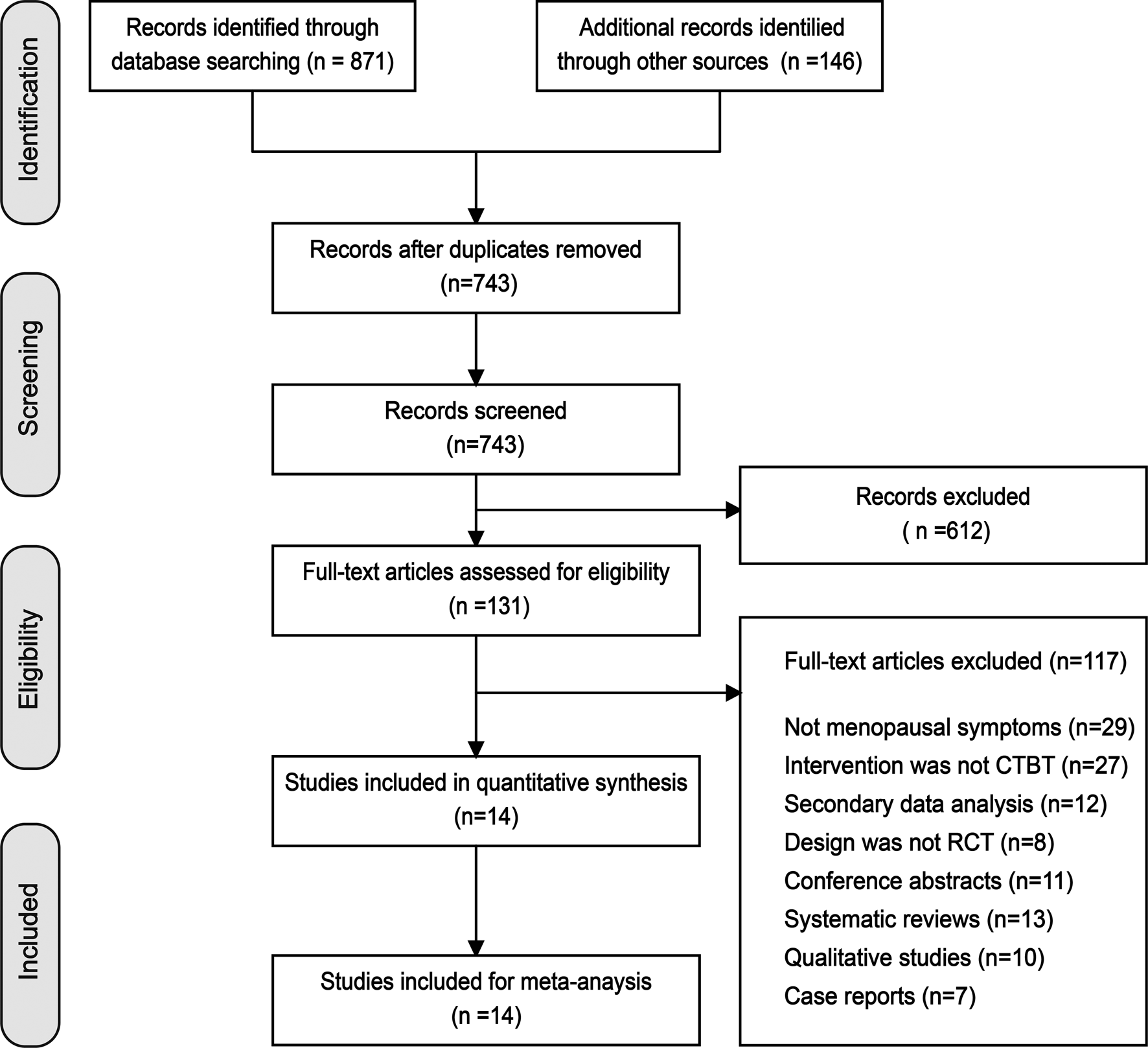
After examining 1017 references (743 after removal of duplicates), 131 full-text papers were retrieved for further consideration. Of these, we excluded 117 articles for the following reasons: no menopausal symptoms (n = 29), non-CTBT intervention (n = 27), non-RCT design (n = 8), conference abstracts (n = 11), and systematic reviews (n = 11). The remaining 14 studies were included in this meta-analysis (Atema et al., Reference Atema, van Leeuwen, Kieffer, Oldenburg, van Beurden, Gerritsma and Aaronson2019; Ayers, Smith, Hellier, Mann, & Hunter, Reference Ayers, Smith, Hellier, Mann and Hunter2012; Bower et al., Reference Bower, Crosswell, Stanton, Crespi, Winston, Arevalo and Ganz2015; Carmody et al., Reference Carmody, Crawford, Salmoirago-Blotcher, Leung, Churchill and Olendzki2011; Duijts et al., Reference Duijts, van Beurden, Oldenburg, Hunter, Kieffer, Stuiver and Aaronson2012; Fenlon et al., Reference Fenlon, Maishman, Day, Nuttall, May, Ellis and Hunter2020; Fenlon, Corner, & Haviland, Reference Fenlon, Corner and Haviland2008; Green et al., Reference Green, Donegan, Frey, Fedorkow, Key, Streiner and McCabe2019; Hardy, Griffiths, Norton, & Hunter, Reference Hardy, Griffiths, Norton and Hunter2018; Irvin, Domar, Clark, Zuttermeister, & Friedman, Reference Irvin, Domar, Clark, Zuttermeister and Friedman1996; Lindh-Astrand & Nedstrand, Reference Lindh-Astrand and Nedstrand2013; Mann et al., Reference Mann, Smith, Hellier, Balabanovic, Hamed, Grunfeld and Hunter2012; McCurry et al., Reference McCurry, Guthrie, Morin, Woods, Landis, Ensrud and LaCroix2016; Wong et al., Reference Wong, Yip, Gao, Lam, Woo, Yip and Wong2018). The current study selection procedure and reasons for exclusion are described in Fig. 1.
Selection process of literature search. CTBT, Cognitive Therapy and Behavior Therapy; RCT, Randomized Controlled Trial.

Study characteristics
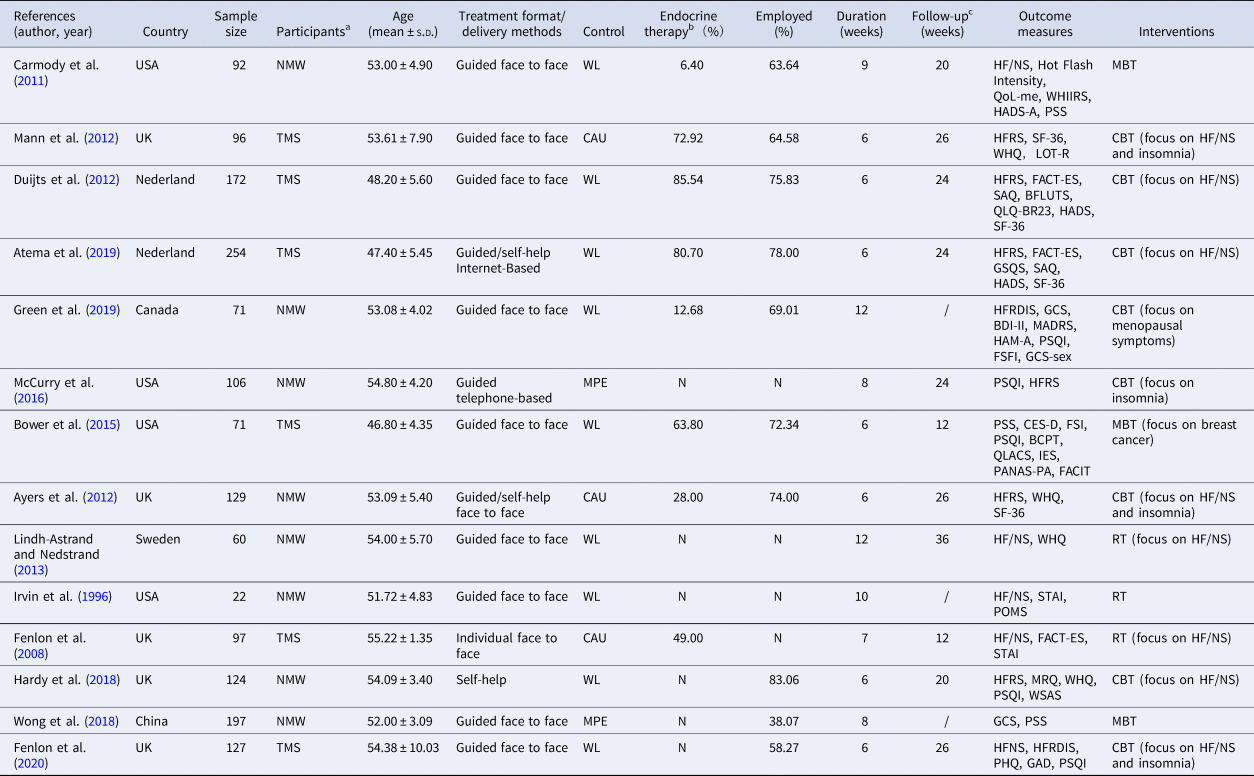
The characteristics of the included studies are listed in Table 1. We included 14 RCTs including 1618 patients, with a mean sample size of 116. Of these, 14 studies provided post-treatment data, with 11 of these providing follow-up data collected at 23 weeks on average. The missing data of two studies were provided after contacting the authors. The severity of menopausal symptoms was an inclusion criterion in three studies only. The participants of eight studies were women with NMS, and those of six studies were breast cancer survivors. The treatment format of almost all studies was guided-based (85.71%). In most studies, interventions were delivered face to face (91.67%), with the remaining studies using web-based interventions (21.43%). The treatment groups were compared to waitlist (n = 9), care-as-usual (n = 3), or menopause education (n = 2) control groups. Assessing the efficacy of CTBT on menopausal symptoms was the primary aim of all studies.
Study characteristics

BCPT, Breast Cancer Prevention Trial Symptom Checklist; CAU, Care-as-usual; CBT, Cognitive behavioral treatment; CES-D, Center for Epidemiologic Studies Depression Scale; FACIT, Functional Assessment of Chronic Illness Therapy; FACT-ES, Functional Assessment of Cancer Therapy questionnaire; FSFI, Female Sexual Function Inventory; FSI, Fatigue Symptom Inventory; GCS, Greene Climacteric Scale; GSQS, Groningen Sleep Quality Scale; HADS, Hospital Anxiety and Depression Scale; HAM-A, Hamilton Anxiety Measure; HF/NS, Hot Flashes/Night Sweats in the previous 24 h; HFRDIS, Hot Flash Rating of Daily Interference Scale; HFRS, Hot Flush Rating Scale; IES, Impact of Events Scale; LOT-R, The Revised Life Orientation Test; MADRS, Montgomery-A'sberg Depression Rating Scale; MBT, mindfulness-based therapy; MPE, Menopause education; MRQ, Menopause Representations Questionnaire; NA, Not Applicable; NMS, Natural Menopausal Symptoms; POMS, Profile of Mood States; PSQI, Pittsburgh Sleep Quality Index; PSS, Perceived Stress Scale; QLACS, Quality of Life in Adult Cancer Survivors; QoL-me, Menopause-Related Quality of Life; RCT, Randomized Controlled Trial; RT, Relaxation therapy; SAQ, Sexual Activity Questionnaire; SF-36, General Health Survey Short Form 36; STAI, Spielberger State-Trait Anxiety Inventory; TMS, Treatment-induced Menopausal Symptoms; UK, The United Kingdom; USA, the United States; WHIIRS, Women's Health Initiative Insomnia Rating Scale; WHQ, Women's Health Questionnaire; WL, Waiting list; WSAS, Work and Social Adjustment Scale.
a The number of Participants was in the final quantitative data synthesis.
b Included hormone replacement therapy and endocrine therapy for breast/ovarian cancer.
c Follow-up period was calculated from baseline.
Effects of CTBT on HF/NS
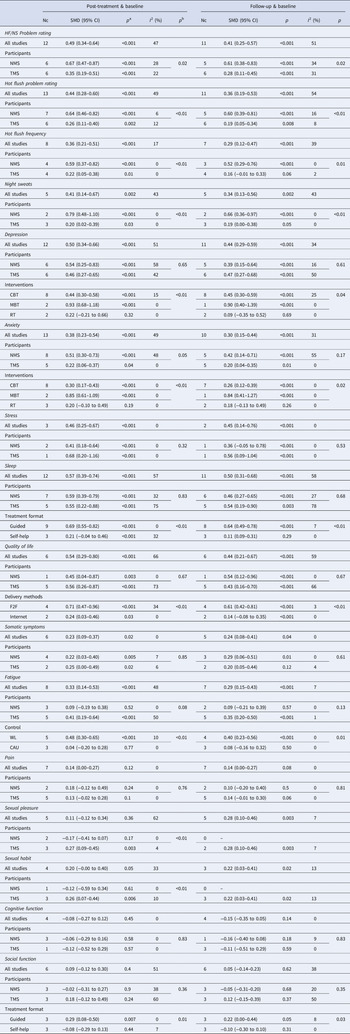
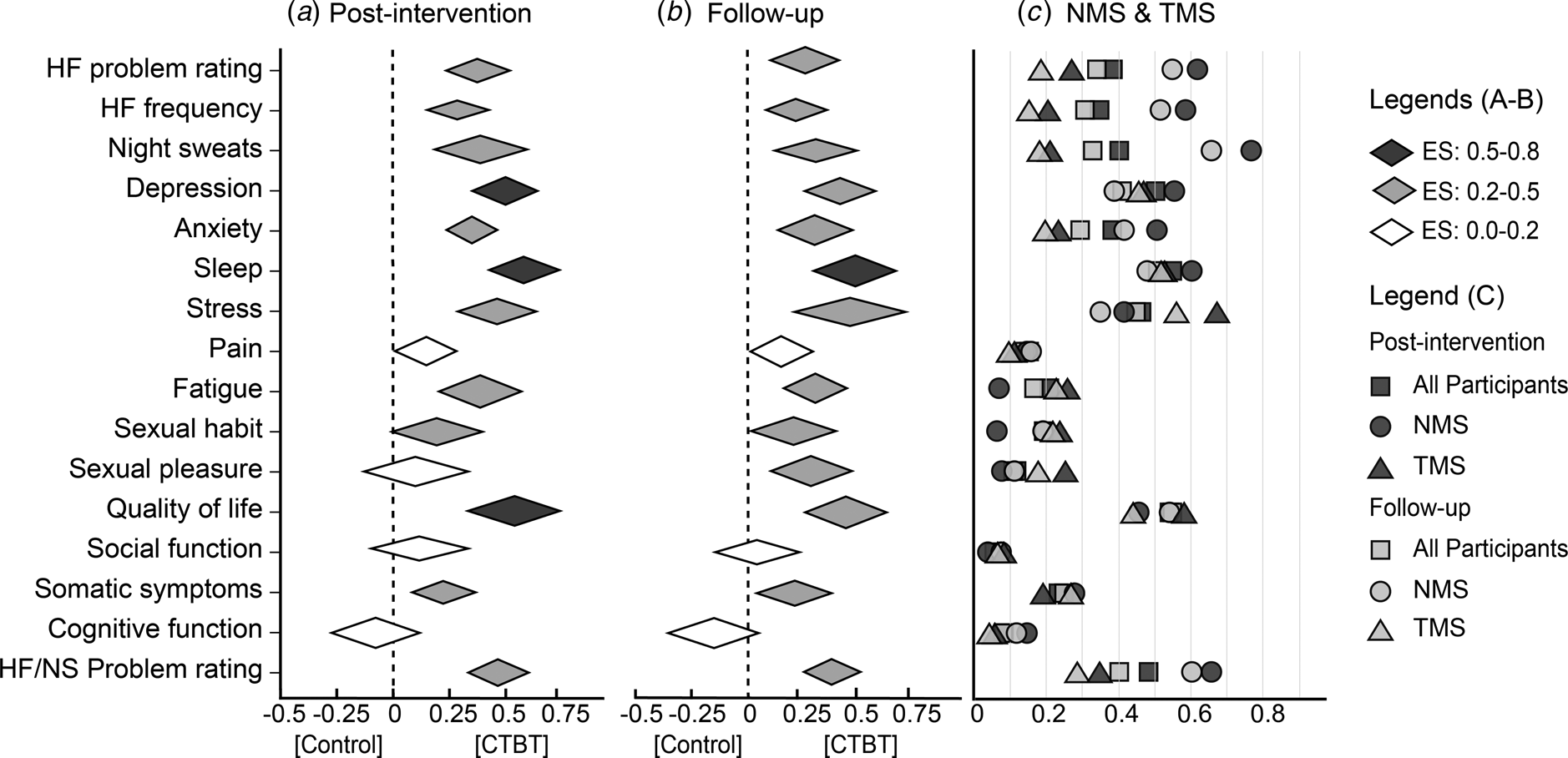
For hot flush problem rating, treated groups outperformed the control groups at post-treatment (g = 0.49, 95% CI 0.34–0.64, p < 0.001; I 2 = 47) and follow-up (g = 0.41, 95% CI 0.25–0.57, p < 0.001; I 2 = 51). The ES of hot flush frequency between CTBT and control groups was 0.36 (95% CI 0.21–0.51, p < 0.001; I 2 = 17), and the pooled effect size was decreased at follow-up (g = 0.29, 95% CI 0.12–0.47, p < 0.001; I 2 = 39). Compared to the non-treated controls, the effect of CTBT intervention on night sweats was small (g = 0.41, 95% CI 0.14–0.67, p = 0.002; I 2 = 43) and the effect was maintained at follow-up (g = 0.34, 95% CI 0.13–0.56, p = 0.002; I 2 = 43).
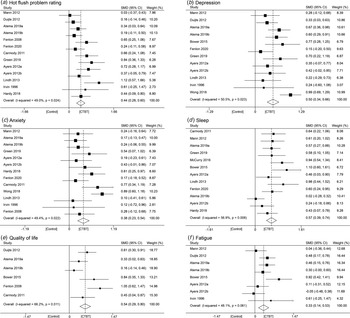
Subgroup analysis showed approximately moderate I 2 values for both post-intervention and follow-up results of HF/NS, indicating some degree of heterogeneity in ESs. The effect on hot flush for NMS was statistically significant (g = 0.61, 95% CI 0.360.86, p < 0.001; I 2 = 28) and remained relatively stable over time (g = 0.55, 95% CI 0.31–0.79, p < 0.001; I 2 = 19). However, the effect on hot flush problem rating in women with TMS was small (g = 0.26). There was a significant difference between subgroups of NMS and TMS (p < 0.01), and the effects on night sweats were similar to those on hot flushes. The results of CTBT on women with menopausal symptoms are listed in Table 2. The results of forest plots are illustrated in Fig. 2.
Forest plots of CTBT on primary menopausal symptoms. (a) Forest plots of hot flush. (b) Forest plots of depression. (c) Forest plots of anxiety. (d) Forest plots of sleep. (e) Forest plots of quality of life. (f) Forest plots of fatigue.

Pooled effects of CTBT on women with menopausal symptoms

BCV, Breast Cancer Survivors; CAU, Care-As-Usual; F2F, Face to Face; Nc, Number of Comparisons; NMS, Natural Menopausal Symptoms; SMD, Standardized Mean Difference; TMS, Treatment-induced Menopausal Symptoms; WL, Waiting List.
a p Value of baseline v. post-treatment and follow-up.
b p Value of different subgroups.
Effects of CTBT on depression and anxiety
The pooled effect size and heterogeneity of the 12 comparisons of depression between CTBT and control groups were moderate (g = 0.50, 95% CI 0.34–0.66, p < 0.001; I 2 = 51), and the effect was maintained at follow-up (g = 0.44, 95% CI 0.29–0.59, p < 0.001; I 2 = 34). Subgroup analysis showed that the effects were not significantly different (p = 0.65) between NMS (g = 0.54) and TMS (g = 0.46). However, studies with CBT (g = 0.44, 95% CI 0.30–0.58, p < 0.001; I 2 = 15) and MBT (g = 0.93, 95% CI 0.68–1.18, p < 0.001; I 2 = 0) had significantly larger ESs than those with RT (g = 0.22, 95% CI −0.21 to 0.66, p = 0.32; I 2 = 0).
The ESs of anxiety were moderate at post-treatment (g = 0.38, 95% CI 0.23–0.54, p < 0.001; I 2 = 49). CBT (g = 0.30, 95% CI 0.17–0.43, p < 0.001; I 2 = 0) and MBT (g = 0.85, 95% CI 0.61–1.09, p < 0.001; I 2 = 0) had a significantly larger effect than those of RT (g = 0.20, 95% CI −0.1 to 0.49, p = 0.19; I 2 = 0).
Effects of CTBT on sleep and QoL
The ES of the 15 comparisons of sleep between CTBT and control groups was 0.57 (95% CI 0.39–0.74, p < 0.001), with moderate heterogeneity (I 2 = 57), and the pooled effect size was slightly decreased at follow-up (g = 0.50, 95% CI 0.31–0.68, p < 0.001; I 2 = 58). Subgroup analysis showed that there was no significant difference between subgroups categorized according to participants (p = 0.83). The vast majority of studies used guided groups for including studies. The guided groups (g = 0.69) treatment format had a significantly larger effect than the self-help CTBT (g = 0.21) format. The three studies involving CTBT with self-help even indicated a non-significant effect size at follow-up (g = 0.11).
The pooled effect size and heterogeneity for the eight comparisons of QoL between interventions and control groups were moderate (g = 0.54, 95% CI 0.29–0.80, p < 0.001; I 2 = 66), and the pooled effect size was decreased at follow-up (g = 0.44). Subgroup analysis showed that the difference between NMS (g = 0.45) and TMS (g = 0.56) was not significant (p = 0.67). At post-intervention, the ES of face-to-face CTBT (g = 0.71, 95% CI 0.47–0.96, p < 0.001; I 2 = 34) was larger than that of Internet-based CTBT (g = 0.24, 95% CI 0.03–0.46, p = 0.03; I 2 = 0). The results indicate that the efficacy of face to face was stronger than that of Internet-based on QoL. Moreover, the pooled effect size of CTBT with Internet-based was not significant at follow-up.
Effects of CTBT on fatigue and other symptoms
Fatigue levels were assessed in nine trials. The ESs were small at both post-intervention (g = 0.33, 95% CI 0.14–0.53, p < 0.001; I 2 = 48). Subgroup analysis showed that there was no significant difference between subgroups that were categorized according to participants (p = 0.08). Control groups with a waiting list (g = 0.48) had a significantly larger effect than those with care as usual (g = 0.04). The main sexual concerns associated with menopausal symptoms were sexual pleasure and habit, with no significance, and ESs of 0.11 and 0.20, respectively. The results indicated that overall combined effects were not significant in terms of pain and cognitive function.
Quality assessments
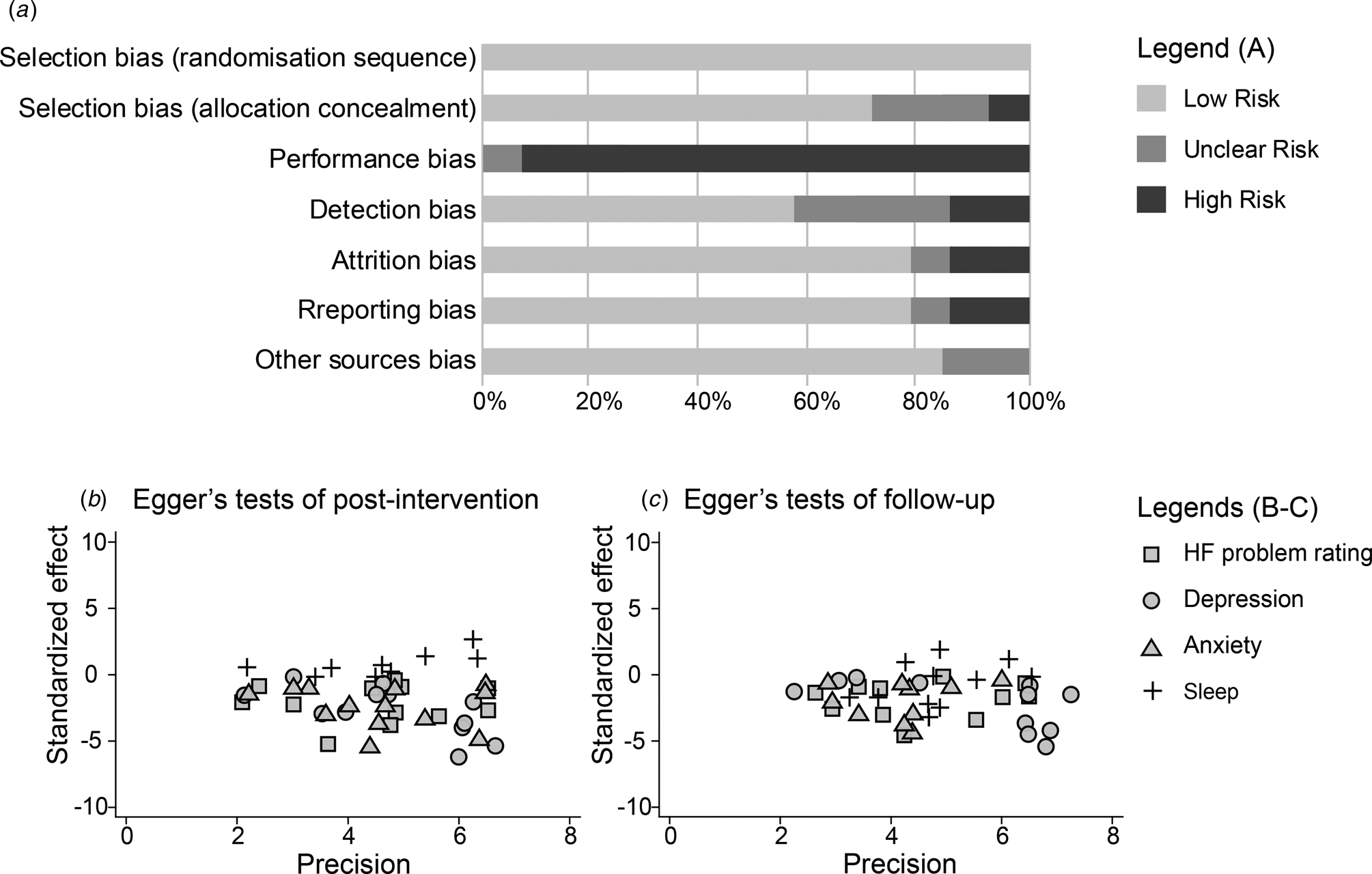
The final results of the risk of bias assessments are shown in Fig. 3. All 14 included studies generated random sequences adequately. Conducting blinding of patients or therapists is impossible in psychotherapy research; thus, 13 studies (92.86%) did not perform blinding of participants and personnel, and one study (7.14%) did not report on it. Eight studies (57.14%) reported blinding of outcome assessment, two studies (14.29%) did not conduct blinding of outcome assessment. Overall, no serious concerns were found for the risk of bias, with good agreement observed between raters (kappa = 0.89).
Effect size of CTBT on menopausal symptoms. (a) Effect size of post-intervention. (b) Effect size of follow-up. (c) Effect size of CBT on NMS and TMS. ES, Effect Size; NMS, Natural Menopausal Symptoms; TMS, Treatment-induced Menopausal Symptoms. Note: Higher positive g indicates that CTBT condition had better outcomes than the comparison condition.

Publication bias
Egger's test indicated slight asymmetry (p < 0.05) of the funnel plot on hot flush, sleep, QoL and somatic symptoms, but Duval and Tweedie's trim and fill procedure indicated no publication bias in these symptoms. Besides, Egger's tests showed that there were no indications of publication bias in the other symptoms (Fig. 4).
Overview of risk of bias results and publication bias across. (a) Overview of risk of bias. (b) Egger's tests of post-intervention. (c) Egger's tests of follow-up. Note: The ratings are illustrated in four colors: green indicates a low risk, yellow indicates an unclear risk, and red indicates a high risk.

Discussion
To our knowledge, this is the most comprehensive systematic review and meta-analysis investigating the efficacy of CTBT for menopausal symptoms.
The primary objective of the current study was to comprehensively assess the efficacy of CTBT for reducing menopausal symptoms. CTBT had statistically significant effects on core symptoms, which were mainly maintained at a mean follow-up of more than 23 weeks after treatment. CTBT significantly outperformed control groups in terms of a hot flush, night sweats, depression, anxiety, stress, sleep, fatigue, and QoL, with small to medium ESs. The current findings are encouraging given that managing menopausal symptoms was a common unmet need among women who go through NMS or TMS, when persistent and excessive, leaving the individual at risk of disrupted daily function (Cheng et al., Reference Cheng, Tseng, Wu, Tu, Wu, Li and Shiue2021; Manson, Reference Manson2021).
Our secondary aim was to explore differences in the efficacy on NMS and TMS. Adjuvant treatment of breast cancer survivors, including chemotherapy, oophorectomy, and endocrine therapy, can compromise or exacerbate the failure of ovarian function, resulting in a rapid reduction of estrogen concentrations, which leads to TMS in young patients (Madalinska et al., Reference Madalinska, van Beurden, Bleiker, Valdimarsdottir, Hollenstein, Massuger and Aaronson2006; Rosenberg & Partridge, Reference Rosenberg and Partridge2013). This study found that efficacy was stronger for NMS on HF/NS, compared with TMS. HF/NS experienced by women whose menopausal symptoms were originally treatment-induced may be more resistant to change than those who had symptoms caused by natural menopause (Chilcot, Norton, & Hunter, Reference Chilcot, Norton and Hunter2014). There was no significant difference between NMS and TMS on other symptoms.
The third aim of this study was to explore the sources of heterogeneity and the possible influence of between-study differences in participants, interventions, forms of intervention, delivery methods, and control groups. It is worth noting that the effects were stronger on fatigue when the control group was waiting list (g = 0.48). The waiting list control group was in fact a ‘nocebo’ (the opposite of a placebo – an inert treatment that appeared to cause an adverse effect) and the studies using it extremely overestimated the effect of psychological treatment (Corbu, Pelaez Zuberbuhler, & Salanova, Reference Corbu, Pelaez Zuberbuhler and Salanova2021; Furukawa et al., Reference Furukawa, Noma, Caldwell, Honyashiki, Shinohara, Imai and Churchill2014). Other control groups, such as care-as-usual and pill placebo, possibly allowed a better estimate of the authentic effect size (Paulus et al., Reference Paulus, Dahabreh, Balk, Avendano, Lau and Ip2014). Through the subgroup analysis approach, it was possible to compare the efficacy of different kinds of interventions (CBT, MBT, RT). Results showed that CBT and mindfulness had a significantly larger effect than those of relaxation on depression and anxiety, and the heterogeneity reduced. However, there was no significant difference or high heterogeneity between the three treatments on other menopausal symptoms. Future direct comparison of outcomes and cost-effectiveness between the three interventions for menopausal symptoms is warranted.
Insomnia represents one of the most reported symptoms by menopausal women, and is related to the onset and maintenance of other menopausal symptoms (Attarian, Hachul, Guttuso, & Phillips, Reference Attarian, Hachul, Guttuso and Phillips2015; Proserpio et al., Reference Proserpio, Marra, Campana, Agostoni, Palagini, Nobili and Nappi2020). A larger effect was found at post-intervention through guided intervention (g = 0.69) compared to self-help (g = 0.21) in insomnia. It is possible that the absence of direct contact with a professional made it easier to stop treatment because there was less personal relationship pressure to continue with the intervention (Sudraba, Millere, & Rancans, Reference Sudraba, Millere and Rancans2012). The ES of QoL obtained at post-treatment with intervention-delivered face to face was numerically larger (g = 0.71) than treatments that were delivered by other means (e.g. telephone or Internet-based; g = 0.24). There were no significant differences in other menopausal symptoms (e.g. depression, anxiety, and sleep). Internet-based interventions have previously been shown to be effective for anxiety and depressive disorders and have obtained equivalent effects to face-to-face interventions (Domhardt, Gesslein, von Rezori, & Baumeister, Reference Domhardt, Gesslein, von Rezori and Baumeister2019; Mira et al., Reference Mira, Diaz-Garcia, Castilla, Campos, Romero, Breton-Lopez and Botella2019).
In general, there seemed to be a steady decline in the effects of CTBT over time, indicating that the long-term effects were smaller than effects observed in the short term. We identified two possible reasons for this decline in the long-term effects. First, menopausal symptoms in the control groups were relieved over time, because participants sought effective help elsewhere (Kulkarni et al., Reference Kulkarni, Gavrilidis, Thomas, Hudaib, Worsley, Thew and Gurvich2018; Marko & Simon, Reference Marko and Simon2018). If control participants had sought treatment elsewhere, this may result in a smaller difference between the intervention groups and the controls (Appiah, Nwabuo, Ebong, Wellons, & Winters, Reference Appiah, Nwabuo, Ebong, Wellons and Winters2021; Monteleone, Mascagni, Giannini, Genazzani, & Simoncini, Reference Monteleone, Mascagni, Giannini, Genazzani and Simoncini2018). The second possible reason was an increase in symptoms of intervention participants over time. We found that average intervention participants showed a slight return of menopausal symptoms over time. Some previous meta-analyses have reported similar findings, including sustained (but somewhat declined) long-term treatment effects on depression (Van Bronswijk, Moopen, Beijers, Ruhe, & Peeters, Reference Van Bronswijk, Moopen, Beijers, Ruhe and Peeters2019), anxiety (Spence, Donovan, & Brechman-Toussaint, Reference Spence, Donovan and Brechman-Toussaint2000), insomnia (Van der Zweerde, Bisdounis, Kyle, Lancee, & van Straten, Reference Van der Zweerde, Bisdounis, Kyle, Lancee and van Straten2019), and PTSD (Kline, Cooper, Rytwinksi, & Feeny, Reference Kline, Cooper, Rytwinksi and Feeny2018). To enhance long-term effects, patients are advised to return to the treatment when the therapist discovered deteriorated tendency of menopausal symptoms (Ayers et al., Reference Ayers, Smith, Hellier, Mann and Hunter2012; Legemaat et al., Reference Legemaat, Semkovska, Brouwer, Geurtsen, Burger, Denys and Bockting2021).
We found that the primary focus of the CTBT program of some studies was on HF/NS, meanwhile, other symptoms (e.g. insomnia, depression and anxiety) were also relieved. Physical and psychological symptoms were related to menopausal symptoms, for example, HF/NS disturbed sleep, leading to low mood and reducing the ability to cope with vasomotor symptoms (Ayers, Forshaw, & Hunter, Reference Ayers, Forshaw and Hunter2010). Negative emotions are associated with increased reporting of physical symptoms in menopausal women, and psychological reactions to vasomotor and somatic symptoms may exacerbate these physical symptoms (Pearce, Hawton, & Blake, Reference Pearce, Hawton and Blake1995). CTBT improves psychological symptoms, as well as vasomotor symptoms relieving, a bidirectional association between vasomotor symptoms and psychological symptoms needing more evidence.
Our results are partly in accordance with previous qualitative and quantitative syntheses. One previous meta-analysis by Van Driel and coworkers included 10 studies published from 1996 to 2017. They found that short-term (<20 weeks) effects of psychological interventions were observed for hot flush, and medium-term (⩾20 weeks) effects were declined. This study differed from our study in that it only described the result of a hot flush, many other prevalent and indispensable symptoms were excluded. Another study (Chen, Chang, Huang, & Wang, Reference Chen, Chang, Huang and Wang2021) evaluated the effectiveness of MBT on QoL. The results indicated that the intervention groups showed significant improvements in QoL and vasomotor. Just like the samples we studied, CTBT is an effective treatment for menopausal symptoms, including HF/NS and QoL. However, they didn't estimate the efficacy at follow-up and assess publication bias. The current study also differed by exploring differences in the efficacy on NMS and TMS, and exploring the sources of heterogeneity and the possible influence of between-study differences in participants, forms of intervention and control groups. We found that the efficacy sustains long-term, although it is declining somewhat over time. The efficacy is stronger for NMS on HF/NS, compared with TMS, but no differences in other symptoms. It could be that the main mechanism of action of CTBT is to modify cognitive appraisal and reduce the stress of menopausal symptoms, thereby increasing coping skills to reduce the impact of menopausal symptoms (Atema et al., Reference Atema, van Leeuwen, Kieffer, Oldenburg, van Beurden, Gerritsma and Aaronson2019; Barghandan, Dolatkhah, Eslamian, Ghafarifar, & Hashemian, Reference Barghandan, Dolatkhah, Eslamian, Ghafarifar and Hashemian2021).
We evaluated the quality of the included studies using the Cochrane risk of a bias assessment tool and found that two trials were rated as low-quality across all studies. The majority of studies were not judged with respect to performance bias because blinding therapists and patients are often impossible in psychotherapy studies (Guidi et al., Reference Guidi, Brakemeier, Bockting, Cosci, Cuijpers, Jarrett and Fava2018). Moreover, we found no strong indications that the quality of studies was associated with the effect size in menopausal symptoms.
Limitations
This study has several limitations that should be taken into consideration when interpreting the results. First, we could not examine the effects of CTBT across different categories of baseline severity, because most of the included studies excluded patients with severe menopausal symptoms. Second, the effects on key biological and psychological processes relevant to menopausal symptoms are unclear. Only one study assessed the effects on inflammatory activity, which found significant reductions in anti-inflammatory gene expression and inflammatory signaling after an intervention. Finally, for some outcomes (e.g. stress, sexual pleasure or cognitive function) few data exist and consequently, results of these symptoms should be interpreted with caution. Altogether, more research studies are necessary to strengthen the empirical evidence based on the efficacy of CTBT treatment settings on menopausal symptoms and to formulate further clinical recommendations.
Conclusion
This is currently the most comprehensive systematic review and meta-analysis of the effect of CTBT on menopausal symptoms. CTBT is an effective psychological treatment for menopausal symptoms, with predominantly small to moderate effects. The efficacy sustains long-term, although it declining somewhat over time. The efficacy is stronger for NMS on HF/NS, compared with TMS, but no differences in other symptoms. These provide support for international guidelines recommending CTBT as the treatment option for menopausal symptoms and could be incorporated into breast cancer survivorship programs.
Supplementary material
The supplementary material for this article can be found at https://doi.org/10.1017/S0033291721005407.
Acknowledgements
This work was funded by the Public Welfare Technology Applied Research Projects in Zhejiang Province (No. 2016C33191), the Zhejiang Medical Health Science and Technology Project (No. 2019KY724, 2020KY332), and the National Training Program of Innovation and Entrepreneurship for College Students (No. 2017R10349001). We thank LetPub (www.letpub.com) for its linguistic assistance during the preparation of this manuscript.
Author contributions
M.Y. wrote the protocol, managed the literature searches, analyzed data and wrote the draft of the manuscript. Z.L. and C.L. designed the study, wrote the protocol and revised the manuscript. M.S., B.H., T.L., H.F., S.C. and F.L. managed the literature searches and analyses. Data extraction was done by M.S. and S.L.; M.Y., and M.S. undertook the statistical analysis. T.L. and B.H. also conducted the risk of bias assessment independently. M.Y., Z.L and C.Q. modified the manuscript. All authors contributed to and have approved the final manuscript.
Conflict of interest
None.