Implications
Temporary confinement systems may be a commercially viable alternative to farrowing crates that can improve sow welfare. However, piglet mortality remains a welfare and economic concern for such systems. Knowledge of how the crate opening procedure affects piglet mortality and sow behaviour will enable stockpersons to manage these systems more effectively to reduce piglet mortality. This will contribute to improving the viability of temporary confinement systems, increasing commercial uptake and potentially improving the welfare of breeding sows globally that are currently housed in farrowing crates throughout lactation.
Introduction
The prolonged confinement of sows in crates during farrowing and lactation remains common practice across commercial indoor breeding units. The confinement of sows in crates has severe implications for sow welfare, such as restricting the capacity to turn around, perform prepartum nesting behaviours and maintain attachment with the litter (Melišová et al., Reference Melišová, Illmann, Andersen, Vasdal and Haman2011; Pedersen et al., Reference Pedersen, Malmkvist and Andersen2013), resulting in increased physiological stress for the sow (Jarvis et al., Reference Jarvis, D’Eath, Robson and Lawrence2006). However, farrowing crates were primarily introduced to improve piglet welfare by protecting new-born piglets from fatal or injurious crushing. Whilst a greater respect for the biological needs of the sow during farrowing and lactation is required to improve welfare standards (Baxter et al., Reference Baxter, Lawrence and Edwards2011), the safety of piglets from injury and death must also be considered. Although more recent studies on commercial farms suggest total piglet mortality can be comparable between confined and unconfined farrowing systems (Weber et al., Reference Weber, Keil and Horat2007; KilBride et al., Reference KilBride, Mendl, Statham, Held, Harris, Cooper and Green2012), concerns remain that piglet mortality may worsen in less confined farrowing systems (Farm Animal Welfare Committee, 2015).
Considering that the majority of piglet mortality occurs during the first 48 to 72 h postpartum, and over 80% within the first 7 days (Marchant et al., Reference Marchant, Rudd, Mendl, Broom, Meredith, Corning and Simmins2000; KilBride et al., Reference KilBride, Mendl, Statham, Held, Harris, Cooper and Green2012), confining the sow beyond this period may not be of significant benefit for piglet survival. Therefore temporary confinement systems, consisting of an openable crate within individual farrowing pens, can be used to protect the neonates immediately postpartum. After this period, the crate is opened to provide additional space for the sow, providing a compromise between the needs of the farmer, the sow and her piglets. Whilst temporary confinement systems can reduce early piglet mortality in comparison to no confinement (Moustsen et al., Reference Moustsen, Hales, Lahrmann, Weber and Hansen2013; Chidgey et al., 2015; Hales et al., Reference Hales, Moustsen, Nielsen and Hansen2015), anecdotal reports from commercial farms suggest piglet mortality increases during the first 24 h immediately after crate opening. In order to improve animal welfare, along with the economic viability and commercial uptake of temporary confinement systems, it is necessary to understand if the immediate post-opening period (24 to 48 h after crate opening) creates a higher risk of piglet mortality and, if so, to identify suitable interventions to reduce the impact of crate opening.
The way in which crates are opened may cause different amounts of disturbance to the sow and litter, in turn affecting their immediate post-opening behaviour. Increased disturbance from human activity may cause increased restlessness (Chaloupková et al., Reference Chaloupková, Illmann, Pedersen, Malmkvist and Simeckova2008), and therefore increase the incidence of dangerous posture changes and the subsequent risk of accidental piglet crushing. Sows are also responsive to the vocalisations of trapped piglets, especially in less confined systems (Melišová et al., Reference Melišová, Illmann, Andersen, Vasdal and Haman2014). However, sows which respond excessively to the distress vocalisations of piglets in neighbouring litters risk causing unnecessary injuries within their own litter (Baxter et al., Reference Baxter, Lawrence and Edwards2011). Therefore, as we expected crushing incidence to increase post-opening, it was hypothesised that opening crates individually would reduce behavioural disturbance by minimising the peak contagion effect of sow responsiveness to crate opening and piglet vocalisations. It was also hypothesised that opening crates in the afternoon, immediately before stockpersons left for the day, would evoke a shorter sow response period as there would be no subsequent stockperson disturbance, and opening is performed closer to night-time when lights are dimmed and sows perform fewer posture changes (Hales et al., Reference Hales, Moustsen, Nielsen and Hansen2016).
The current study aimed to determine (a) if piglet mortality increases immediately after, compared with immediately before, crate opening; (b) if crate opening procedure affects post-opening piglet mortality; and (c) if crate opening procedure affects sow behaviour. Knowledge of these outcomes will enable the most efficient opening procedure within temporary confinement systems to be adopted, and may identify which sow behaviours are associated with increased piglet mortality.
Material and methods
Animals and dry sow management
The experiment was conducted on a commercial pig breeding unit in the north east of England. The farm consisted of 1300 Camborough (Genus PIC, Basingstoke, UK) breeding gilts and sows bred with Hampshire semen. During gestation, all animals were kept in straw pens in groups according to age, for gilts, or by size for multiparous sows. The farm utilised 250 farrowing places; 168 of which were temporary crate accommodation used for this study (360° Freedom FarrowerTM, Midland Pig Producers, Burton-on-Trent). The date of moving into the farrowing accommodation and farrowing date were recorded for inclusion in statistical models.
Farrowing sow housing and management
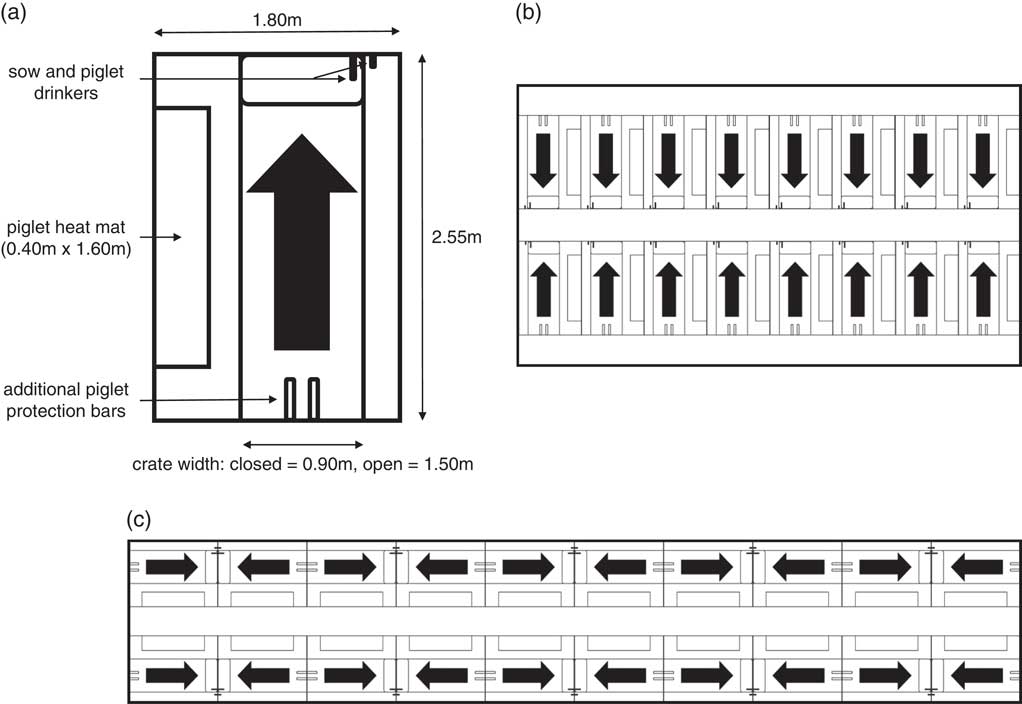
Each farrowing pen contained a stainless steel crate (closed=2.55×0.90 m, open=2.55×1.50 m) within a 2.55×1.80 m pen (Figure 1a). Each pen had plastic slatted flooring with a solid sow lying area containing drainage slots plus a 1.80×0.40 m hot water heat pad along one side of the pen as the piglet resting area. Of the 168 temporary crates, 120 were located in six ‘Portapig’ cabins containing 20 farrowing places each (cabins) and a further 48 were in a converted farrowing house of three rooms containing 16 farrowing places each (rooms), with pen arrangement, and therefore crate opening procedure, differing between cabins and rooms (Figure 1b and c, see Supplementary Material Figure S1 and S2 for images of pen arrangement). To open the crate, a lever on one side released the crate side to be manually adjusted vertically, whilst the other side was released to drop open obliquely. In the cabins, one person had to lean over each crate to operate the lever, allowing both persons to push the far side of the crate open before releasing the drop down side closest to the passageway. In the rooms, each crate was opened by two stockpersons, one in the central and one in the side passageway, without the need to lean over each crate.
Diagram of (a) temporary confinement pen, with (b) arrangement for 16 pens per converted room and (c) 20 pens per new cabin. Arrow indicates sow orientation when crate is closed.

The temporary crates were closed from entry into the farrowing house at ~2 to 5 days prepartum. No sows had artificial induction of farrowing. Farrowing houses were kept at 22±1°C, with the heat pad kept at 36°C. Farrowing house temperature gradually reduced automatically to 18±1°C by day 10 postpartum and to 16±1°C by weaning, whilst heat pad temperature reduced to 30°C by weaning. Farrowing houses were ventilated via a central extractor fan and had full artificial lighting during working hours (0530 to 1430 h), with dimmed lighting outside of these hours.
Sows were fed once daily in the morning until all sows in the farrowing house had farrowed, after which sows were fed twice a day (commencing 0530 and 1330 h; diet contained 15.98% CP, 13.69 DE MJ/kg). Cabins were hand fed via a Groba Ad-Lib feeder above the trough (Finrone Systems Ltd, Londonderry, Northern Ireland), whilst rooms contained a semi-automatic system (www.360farrower.com) feeding all sows simultaneously. Feed was gradually increased from 2 to 10 kg per sow per day during lactation. Sow drinkers were located inside the feed trough, with smaller piglet drinkers provided at the front of the pen on the opposite side to the heat pad (see Figure 1a).
Piglet management and procedures
In accordance with veterinary recommendation, piglets were tail docked, teeth clipped and injected with 1 ml of Gleptosil (Ceva Animal Health Ltd, Amersham, England) and 0.5 ml of Betamox (Norbrook Laboratories Ltd, Newry, Northern Ireland) within 24 h of birth. The placentae and deceased piglets were removed, with live litter size equalised for both piglet number and size by cross-fostering piglets of a similar age.
Super Dry Klenz powder (A-One Feed Supplements Ltd, Thirsk, England) was distributed across each pen daily. Additional dish drinkers with water were provided for smaller or weaker litters, and were removed before crate opening. A handful of creep feed (Primary Diets, AB Agri Ltd, Peterborough, England; followed by Flat Deck, A-One Feed Supplements Ltd) was provided once daily on the heat mat from ~10 days of age until weaning. The farm’s management routines included piglet fostering throughout lactation as necessary to ensure piglet and litter sizes remained similar.
Experimental design
The study compared three different crate opening treatments. The standard procedure on the farm of opening all crates within each house on the same morning when average litter age reached 7 days (ALL) remained as a control treatment. Alternatives investigated in the experiment involved crates being opened individually when each litter reached 7 days of age, either in the morning (AM) or afternoon (PM). Crate opening occurred at 0830 to 0930 h in the AM and ALL treatments, and 1330 to 1430 h for the PM treatment. All sows in a farrowing house were allocated the same crate opening treatment, which was alternated per batch, according to a balanced design to control for farrowing house effects.
Due to researcher absence, the final treatment allocations were split across two batches; cabin one, cabin two and cabin three data were collected from batch three whilst data for the remaining locations were collected in batch 4. Data from any crates which were not opened within 2 days of the expected opening date due to poor performing litters deemed at greater risk of crushing (n=19), crates being opened and subsequently closed due to sow aggression towards stock people (in the cabins only, due to the close proximity of sows to the central passageway; n=2), and from sows which farrowed later than expected and had to be relocated to a different room to better match litter ages for weaning, were removed from the study.
Piglet mortality study
Sow identity, sow parity, farrowing location, farrowing date and the number of live-born and stillborn piglets were recorded postpartum. After 4 days, the frequency and cause of piglet mortality since farrowing, as identified by the stockperson (categorised as crushed, low viability or other), and current litter size were recorded. Recording sheets were attached above each pen specifying the day and time (AM or PM) of crate opening, and for the researcher to record piglet mortality during the 5-day period around crate opening (2 days before crate opening, day of opening and 2 days following crate opening). After this period, additional piglet mortality, weaning date and litter size at weaning were recorded via stockperson records.
Sow behaviour study
Sow behaviours were investigated for a subset of five sows from each treatment across three batches housed in one of the converted rooms. CCTV cameras (Gamut Professional Sony Effio E Bullet CCTV Camera 700 TV Line, 15 m Infrared Night Vision (Gamut, Open24 seven Ltd, Bristol, UK)) were installed above six pens, with the same six crates observed for each batch. Cameras recorded continuously from 2 days before until 2 days after temporary crate opening. From the video recordings, time of crate opening was identified and continuous sampling of sow behaviour (Table 1) was performed for the subsequent 6 h. The same 6-h period was then analysed during the day before and day after crate opening.
Ethogram of sow behaviours recorded for 6 h after crate opening, and during the same time period on the previous and subsequent days

The frequencies, total durations and average durations were calculated for each posture (average duration results described in Supplementary Material S1, Figure S3 and Table S1). The incidence and cause of piglet crushing events, whereby a piglet became trapped by the sow by any means, were recorded and classified as either fatal or non-fatal.
Statistical analysis of results
The time periods of primary interest were the 2 days before (‘pre-opening’; days 5 to 7 postpartum) and the 2 days after (‘post-opening’; days 7 to 9) temporary crate opening, in order to determine and compare the risk of piglet mortality for these time periods. Analyses were also performed for piglet mortality after the post-opening period until weaning (‘late’; days 10 to 27), the early postpartum period (‘early’; days 0 to 4), from parturition until crate opening (‘before’; days 0 to 7), from crate opening until weaning (‘after’; days 7 to 27) and the entire lactation (‘total’; days 0 to 27).
Piglet mortality data were analysed using the GLIMMIX procedure in SAS 9.4. The base model included the variable total born litter size and the fixed effects of treatment, housing type (cabin or room), batch (1 to 4), sow parity (1, 2, 3, 4, 5, 6+), the number of days between housing and farrowing (0 to 1, 2 to 5, 6 to 7, 8+), litter age at opening (in days; <7, =7, >7), and whether or not a litter had been cross-fostered to consist of all the smallest piglets in that batch (‘smalls’ based on routine visual inspection and cross-fostering performed by farm staff) were included for all periods of investigation. The variable litter size on day 5 was included in all models except for the ‘early’ and ‘before’ time periods, whilst the continuous variable of litter age at weaning was only included for ‘late’, ‘after’ and ‘total’ piglet mortality models. Due to a chance uneven distribution of total born litter size across the treatments, the interaction of total born and treatment was included for all time periods to correct for this effect. All models used a Poisson distribution, with explanatory variables eliminated in a step-wise manner to create the final models including all variables with a P<0.10.
Sow behaviour data were analysed in SAS 9.4 using the PROC MIXED procedure. Sow was included as a repeated factor whilst pen number and whether a day was on the weekend or not (yes/no; to control for reduced stockperson contact during weekends) were used as random factors. Current litter size was included as a continuous variable, with day, treatment, sow parity (1, 2 to 5, 6+), treatment×day and parity×day as fixed effects. Explanatory variables were eliminated in a step-wise manner to create the final models including variables with a P<0.10, whilst day, treatment and the interaction of treatment and day were forced into all final models.
Results
Piglet mortality study
Data were included from 416 sows (ALL=145; AM=134; PM=137), with a mean sow parity of 3.48±0.11 (range 1 to 11; ALL=3.29±0.19; AM=3.71±0.18; PM=3.47±0.18). Mean total born litter size was 14.25±0.14 piglets, consisting of 13.72±0.14 live-born and 0.53±0.05 stillborn piglets. Mean litter age at crate opening was 7.36±0.06 days, whilst some crates were opened later than scheduled due to a reliance on stockperson assistance to open crates (ALL=7.52±0.16 days, range 4 to 13 days; AM=7.41±0.06 days, range 7 to 9 days; PM=7.15±0.04 days, range 7 to 9 days).
Piglet mortality risk throughout lactation
A total live-born piglet mortality of 574 piglets was recorded from 5708 live-born piglets, with a mean live-born piglet mortality of 1.38±0.08 piglets per litter. Total born piglet mortality to weaning was 13.38%, consisting of 10.06% of live-born and 3.69% of stillborn deaths.
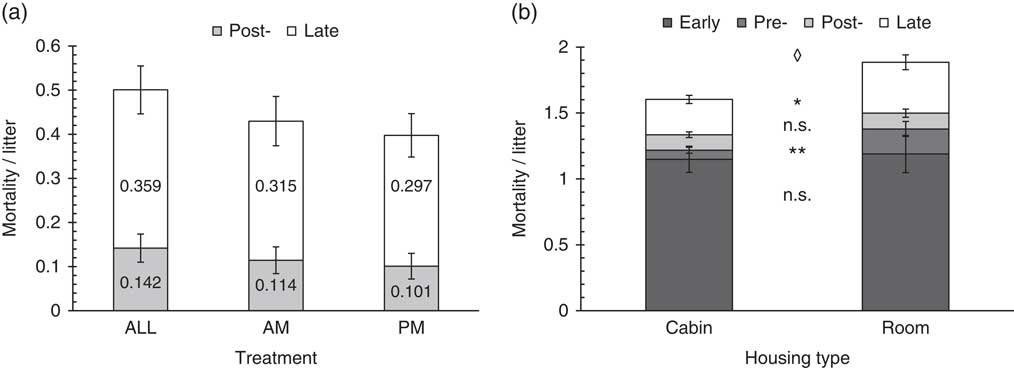
Of the live-born piglet mortality, 60.45% occurred during early lactation (days 0 to 4), 4.88% during pre-opening (days 5 to 7), 11.15% during post-opening (days 7 to 9) and 23.52% during later lactation (day 10 until weaning). In terms of piglet mortality per litter (mortality/litter): early=0.834±0.062, pre-opening=0.067±0.014, post-opening=0.154±0.022 and late=0.325±0.030. Adjusting these estimates for the number of days per time period, piglet mortality per litter per day (mortality/litter per day) were calculated as 0.167 for early lactation, 0.034 during pre-opening, 0.077 during post-opening and 0.018 during later lactation. Combining all opening treatments, mortality/litter was significantly higher during the post-opening than pre-opening period (P<0.0005; Wilcoxon signed rank test).
Effect of crate opening treatment and housing type
Treatment had a significant effect on piglet mortality during post-opening (P<0.05), and therefore the after opening period (P=0.052), being highest for treatment ALL, followed by AM then PM (Figure 2a). Piglet mortality was also affected by the housing type, being significantly higher in the rooms than the cabins during pre-opening (P<0.01), late (P<0.05) and therefore the total lactation (P<0.05; Figure 2b).
Least square means (±SE) for piglet mortality. (a) Treatment effects during the post-opening (P<0.05), late lactation (P>0.10) and therefore after opening (P=0.052) periods. (b) Housing type effects indicated between bars for each lactation period (n.s. P>0.05, *P<0.05, **P<0.01) and total lactation (◊P<0.05).

Effect of days until farrowing and litter age at opening
The number of days between housing and farrowing affected piglet mortality during late lactation (P<0.05), and therefore after opening (P<0.05). During late lactation, piglet mortality was significantly higher for sows housed 0 to 1 days prepartum (0.45±0.07) than sows housed 2 to 5 days (0.28±0.06; P<0.05) or 8+ days (0.22±0.05; P<0.01), but not 6 to 7 days prepartum (0.38±0.06); whilst late piglet mortality was also significantly lower for sows housed 8+ days than 6 to 7 days prepartum (P<0.05). Litter age at crate opening had no significant effect on piglet mortality during any stage of lactation.
Effect of litter characteristics and sow parity
Piglet mortality increased with increasing live-born litter size during the early (P<0.0001), before (P<0.01), late (P<0.01), after opening (P<0.001) and total lactation periods (P<0.0001); however piglet mortality decreased with increasing total born litter size during the post-opening period (P<0.01). A larger litter size on day 5 postpartum was associated with lower total piglet mortality (P<0.001), but tended to result in higher pre-opening (P=0.058) and post-opening piglet mortality (P=0.061). Piglet mortality was significantly higher within the cross-fostered litters of ‘small’ piglets during the early (P<0.0001), before (P<0.0001), pre-opening (P<0.05) and total lactation (P<0.0001). Sow parity affected post-opening piglet mortality (P<0.05), being significantly higher for parity six plus sows (0.26±0.06) than parity one (0.11±0.04; P<0.05), two (0.09±0.03; P<0.05) or four (0.07±0.03; P<0.01), and tending to be higher than parity three (0.13±0.04; P=0.067) and five (0.11±0.05; P=0.052).
Sow behaviour study
Incidence of piglet crushing
There were no incidents of fatal crushing within video-recorded litters, and only seven non-fatal crush incidents (one stand-to-lie, one lateral-to-ventral, two ventral-to-lateral and three standing on piglet), therefore further analyses on piglet crushing could not be performed.
Sow carefulness during stand-to-lie
Although treatment or day had no effect, frequency of sniffing or rooting piglets before lying tended to be higher for parity 2 to 5 sows (2.02±0.30) than both parity 6+ (0.95±0.41, P=0.054) and parity 1 sows (1.10±0.40, P=0.088). There were no significant effects of day, treatment or parity on the percentage of sniffing or rooting piglets.
Frequency of using support structures during stand-to-lie was significantly affected by treatment (P<0.05), being lower in PM (1.77±1.08) than both AM (3.94±1.06; P<0.01) and ALL (3.29±1.02; P<0.05). However, the percentage of stand-to-lie posture changes where support was used was unaffected by treatment or day. Moreover, the percentage of lying events using support was lower amongst parity 1 sows (33.6%±12.8) than both parity 2 to 5 (51.0%±12.0, P<0.05) and parity 6+ sows (56.5%±14.4, P=0.061).
Frequency of dangerous posture changes
The frequency of dangerous posture changes are shown in Figure 3a. Treatment tended to affect the frequency of stand-to-lie (P=0.084), and within the treatment×day interaction, frequency of stand-to-lie was significantly higher on the day before crate opening for ALL than AM and PM (both P<0.05). Treatment tended to affect the frequency of sit-to-lie posture changes (P=0.069), and within the treatment×day interaction, frequency of sit-to-lie was significantly higher for PM on the day of crate opening than both AM (P<0.05) and ALL (P<0.01), and remained higher than AM on the following day (P<0.05). Sow parity tended to affect the frequency of stand-to-lie posture changes (P=0.070), being higher amongst parity 2 to 5 sows (7.39±0.72) than parity 1 (5.44±0.84; P<0.05) and parity 6+ sows (5.30±1.00; P=0.077).
Least square means (±SE) for (a) frequency of sow dangerous posture changes and (b) total duration of sow postures. Day effects within each treatment between Before-During and Before-After are indicated on the latter day, whilst differences between During-After are indicated between days for each posture (*P<0.05, **P<0.01, ***P<0.001) and total postures (◊P<0.05). Treatment effects within each day are indicated with different letters (P<0.05).

Frequency of turning around was significantly higher on the day of crate opening (13.68±1.42) than the day after (7.88±1.42; P<0.01). Frequency of turning tended to differ across treatments (P=0.078), being significantly higher for AM (10.02±1.56) than PM (4.85±1.56; P<0.05), but not ALL (6.65±1.42). Frequency of turning also tended to be affected by sow parity (P=0.074), with parity 6+ sows (4.09±1.69) turning significantly less frequently than parity 1 sows (10.01±1.69; P<0.05), but not parity 2 to 5 sows (7.42±1.24).
Total duration of postures
Total durations of postures are displayed in Figure 3b. Standing duration was significantly affected by day (P<0.0001), being higher on the day of opening than the day before (P<0.0001) or after (P=0.01). Total standing duration differed between treatments (P<0.01), being significantly higher in AM than PM (P<0.001), whilst total standing duration in ALL tended to be both lower than AM (P=0.055) and higher than PM (P=0.068). Total sitting duration tended to differ across treatments (P=0.082), being lower in ALL than both AM (P<0.05) and PM (P=0.088).
Total duration of lateral lying tended to be affected by treatment (P=0.054), being significantly lower in AM than PM (P<0.05), whilst total duration of ventral lying was not affected by day or treatment. Total duration of lying (ventral+lateral) was affected by day (P<0.001), being lower on the day of opening than both the day before (P=0.0001) and day after (P<0.05), whilst the day before and day after crate opening also tended to differ (P=0.055). Total duration of lying was also affected by treatment (P<0.01), being lower for AM than both PM (P<0.01) and ALL (P<0.05).
Sow parity had a significant effect on the total duration of both ventral and lateral lying (both P<0.05). Parity 2 to 5 sows had both a lower total duration of lateral lying (211 min±25) and higher total duration of ventral lying (91.4 min±8.5) than parity 1 sows (lateral=258 min±27; ventral=53.5 min±10.5; both P<0.01), but not parity 6+ sows (lateral=241 min±27; ventral=70.9 min±11.4).
Riskiness of rolling behaviour
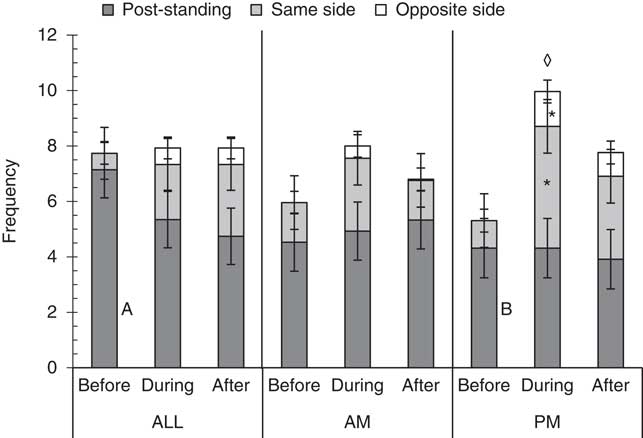
Across treatments, the frequency of same side and opposite side rolling were affected by day (both: P<0.05), whilst the treatment×day interaction showed a significant increase of same and opposite side rolling on the day of crate opening than the day before within PM only (Figure 4). The frequency of standing between rolling was significantly higher in ALL than PM on the day before crate opening (P<0.05; Figure 4).
Least square means (±SE) for frequency of sow rolling by riskiness category. Day effects within each treatment between Before-During and Before-After are indicated on the latter day, whilst differences between During-After are indicated between days for each rolling category (*P<0.05) and total rolling frequency (◊P<0.05). Treatment effects within each day are indicated with different letters (P<0.05).

Discussion
To our knowledge, this is the first study to specifically measure the immediate effect of temporary crate opening on piglet mortality. The results show that piglet mortality was significantly increased after crate opening, confirming our initial hypothesis that the post-opening period is a particularly dangerous time for piglet losses. Consequently, farms may wish to implement additional measures to reduce piglet mortality during the post-opening period, such as increased supervision (Kirkden et al., Reference Kirkden, Broom and Andersen2013). Whilst no postmortem examinations were performed in the current study, it is reasonable to assume that any significant differences in piglet mortality between the pre- and post-opening periods resulted from crushing, as crate opening was the only change to occur within this time period.
There are numerous potential causes for this increase in piglet crushing. First, based on the principle of why confining sows reduces crushing, crate opening eliminated the physical restriction of sow body movements. Subsequently, posture changes may be less controlled and therefore faster (Weary et al., Reference Weary, Pajor, Fraser, Honkanen, Chirnside, Gaughan, Clutton and Terlouw1996), increasing the risk of crushing as piglets have less time to escape. Second, sows adapt their behaviour to their environment, therefore a sudden change may be stressful and require acclimation (Chidgey et al., 2015). Sow behavioural adaption to farrowing crates and pens has been shown between successive parities (e.g. Jarvis et al., Reference Jarvis, Van der Vegt, Lawrence, McLean, Deans, Chirnside and Calvert2001; Thodberg et al., Reference Thodberg, Jensen and Herskin2002), therefore the sow’s ability to adapt and cope may be a gradual process unsuitable for sudden environmental changes occurring mid-lactation. Finally, not only does crate opening increase the proportion of the pen accessible to the sow, but it also decreases the proportion of the pen providing a safe resting area for the piglets. Therefore, piglets may also be required to adapt their behaviour in response to crate opening. Furthermore, as many temporary confinement systems, including the one used in the current study, are designed to use the same floor space as a traditional farrowing crate, there may be minimal safe space available to the piglets after crate opening, especially towards weaning age when piglets are larger.
Despite piglet mortality increasing in response to crate opening, total live-born piglet mortality in the current study was lower than the national average for UK indoor breeding herds (10.1% v. 11.9%, respectively; Agriculture and Horticulture Development Board Pork, 2017); the majority of which use conventional farrowing crates. Some farm surveys have shown that whilst piglet mortality from crushing may be higher in free farrowing systems, piglet mortality from other causes is higher in crated systems, resulting in no overall difference (Weber et al., Reference Weber, Keil and Horat2007; KilBride et al., Reference KilBride, Mendl, Statham, Held, Harris, Cooper and Green2012). In contrast, previous studies comparing free farrowing and temporary confinement within the same farm indicate significantly reduced total piglet mortality in the latter (Chidgey et al., 2015; Hales et al., Reference Hales, Moustsen, Nielsen and Hansen2015). However, unconfined farrowing systems were relatively new to both the farm staff and sows in these studies, which is likely to increase piglet mortality as stockpersons develop appropriate management routines. Furthermore, changing the farrowing environment of the sows in successive parities can also increase piglet mortality (King et al., Reference King, Baxter, Matheson and Edwards2018). In the current study, the temporary confinement system had been in use on the farm for more than one year before the study commenced. However, the farm utilised multiple farrowing systems, therefore the previous farrowing system of individual sows would have differed.
Across all crate opening treatments, sow behaviour changed in response to crate opening. However, behaviour on the following day was more analogous to the day before crate opening, suggesting that the novelty of being released from confinement may have been the predominant cause for post-opening behavioural changes. These acute behavioural changes may also explain why piglet mortality was higher in the post-opening period than later lactation. We also measured the riskiness of sow rolling behaviour, as ventral-to-lateral rolling is an important posture change for piglet crushing in free farrowing systems (Weary et al., Reference Weary, Pajor, Fraser, Honkanen, Chirnside, Gaughan, Clutton and Terlouw1996); whilst previous studies have found piglet crushing in free farrowing systems to be explicitly caused by rolling from one side to the other (Bradshaw and Broom, Reference Bradshaw and Broom1999; Marchant et al., Reference Marchant, Broom and Corning2001). During observation periods, no opposite side rolling occurred on the day before, whilst eight of the 15 sows performed opposite side rolling on the day of crate opening.
The different crate opening procedures also resulted in differences in piglet mortality and sow behaviour. Whilst the PM treatment resulted in the lowest piglet mortality, it was also the only treatment with a significant increase in post-opening dangerous posture changes. However, PM posture changes on the pre-opening day were lower than the other treatments, meaning a significant increase was more likely. As behavioural observations were only performed for 6 h after crate opening, the different behaviour of PM sows may be due to a temporal difference in observation periods, including the lower level of human disturbance, rather than a temporal difference in crate opening. Increased sitting behaviour is associated with motivational conflict (Jarvis et al., Reference Jarvis, Lawrence, McLean, Deans, Chirnside and Calvert1997), which in the current study, may indicate PM sows were conflicted between continuing to rest or to actively explore the open pen. This would also explain why the standing duration of PM sows did not significantly increase during the post-opening period, unlike both AM and ALL. The increased sitting behaviour of PM sows may also mean an increased alertness, as sows will often sit when disturbed by external events whilst resting, and increased sow alertness could reduce the risk of piglet crushing. Furthermore, the majority of piglet mortality from crushing is not from the immediate trauma, but rather suffocation, as the risk of a crushing incident being fatal increases with increasing duration of time trapped underneath the sow (Weary et al., Reference Weary, Pajor, Fraser, Honkanen, Chirnside, Gaughan, Clutton and Terlouw1996). Therefore, whilst increased posture changes may increase the frequency of crushing, fewer crushing events would have a fatal conclusion.
Piglet mortality was also lower in the AM than ALL treatment, whilst significant differences were also observed between AM and ALL sow behaviour, but only on the day before crate opening. Whilst opening the crates individually may have avoided a simultaneous peak of post-opening sow activity, sows with younger litters could have been disturbed during the pre-opening period. This could have resulted from either the action of stockpersons opening neighbouring crates of older litters, or the subsequent post-opening increased activity of these sows. However, this pre-opening disturbance of AM sows resulted in a less profound change between pre- and post-opening behaviour in comparison to ALL sows. This could explain the reduced post-opening mortality, as piglets may have become more cautious of the restless sow whilst she was still in confinement. The increased pre-opening activity in AM sows could be a sign of stress or frustration (Jarvis et al., Reference Jarvis, Van der Vegt, Lawrence, McLean, Deans, Chirnside and Calvert2001), and may have a welfare implication for future investigation. Furthermore, if additional measures to minimise piglet mortality, such as increased supervision, were implemented during the post-opening period, these would be more efficient if all crates were opened on the same day instead of across several days.
Finally, the different housing types used on the farm resulted in different piglet mortality outcomes, being higher in the converted rooms than the cabins during the pre-opening and later lactation periods. Unlike the cabins, pen arrangement in the rooms meant sows had extensive visual contact with other sows in adjacent pens, as well as the opportunity for physical interactions once the crates were opened. This increased sow-sow contact in the rooms may have caused prolonged disturbance, causing increased piglet mortality in later lactation, whilst having no significant effect during the post-opening period as all sows would have been aroused regardless of pen arrangement. Furthermore, as mentioned previously, a change of farrowing system can also increase mortality. The farm in the current study used multiple farrowing systems; however, it would have been more likely that sows in the cabins would have farrowed in the cabins previously, due to the larger number of farrowing places in this arrangement (120 in cabins v. 48 in rooms).
A repeat of the current study in a more controlled environment and with a larger sample size, especially for behavioural observations, would be beneficial for validating the results. In particular, a clearer differentiation between the effects of batch v. single opening, and time of day would be beneficial. It would be recommended for behavioural observations to be performed across the 24-h period to determine the full extent of behaviours affecting piglet mortality. Future research should determine precisely how many hours or days that piglet mortality is increased, and sow behaviour is altered, after temporary confinement crates are opened. Furthermore, crate opening treatment, including time of day, and pen arrangement should be further explored for their effects on piglet and sow welfare.
In conclusion, the period following crate opening in temporary confinement systems was a high risk time for piglet mortality, presumably due to accidental crushing by the sow. However, opening crates individually, when piglets reached 7 days of age, resulted in lower post-opening piglet mortality relative to opening all crates once piglets reached an average age of 7 days, particularly individual opening in the afternoon. Increased pre-opening disturbance in the farrowing house from opening crates individually may have increased the activity of the sows before crate opening, habituating sows and piglets to post-opening sow behaviour changes.
Acknowledgements
The authors would like to thank the stockpersons and owner of the commercial farm involved for facilitating the research and for their commitment to using higher welfare farrowing systems. We would also like to thank J Sainsbury plc for financial support under the FREESOW project.
Declaration of interest
No conflict of interest to declare.
Ethics statement
The project received ethical approval from Newcastle University.
Software and data repository resources
Data not available in an official repository.
Supplementary material
To view supplementary material for this article, please visit https://doi.org/10.1017/S1751731118000915