Since the end of World War II, enclaves of exception have emerged in parallel with the universalization of sovereign states. Carved out within national territories, many of these “spatio-juridical enclosures” have taken the form of special economic zones (SEZs), usually governed by relaxed laws regarding taxation, labor regulation, and property ownership (Palan Reference Palan2003, 1, 4). Scholars have argued that this seemingly shadowy “capitalist archipelago” is not a deviation from our world “organized by and into sovereign states” but a deliberate creation by governments to maximize capital accumulation worldwide (Ogle Reference Ogle2017, 1433). From Puerto Rico to Mauritius, from Shannon Airport, Ireland, to the port city of Kaohsiung, Taiwan, the number of zones has grown exponentially since the 1970s; the Reagan-Thatcher revolution of deregulation and privatization drove Western corporations to the developing world in search of lower labor costs and less onerous tax burdens (Chen Reference Chen1995; Neveling Reference Neveling, James and Leake2015). Export-oriented strategies led many countries, most prominently the Asian Tigers, onto a fast track to development. In production and technological zones stretching across Indonesia, Malaysia, and Singapore, governments have deployed the strategy of “graduated sovereignty,” in which different scales of regulation are implemented for different parts of the territory and for different segments of the population, to increase profitability on the international market (Ong Reference Ong2000). Over the past fifty years, zones across the world have become “a normal exceptional space,” representing a popular national development model and supporting an increasingly globalized pattern of production (Bach Reference Bach2011, 101–2).
Located immediately north of Hong Kong, Shenzhen is the most successful SEZ in the People's Republic of China (PRC) and one of the best-known zones in the world. During the Mao era (1949–76), the geographic equivalent of the Shenzhen SEZ today was known as Bao'an County, a poor and volatile frontier area. From 1951 to 1980, at least one million undocumented immigrants from the mainland entered Hong Kong via Bao'an; the majority settled permanently in Hong Kong, while some migrated further to foreign destinations (SBDA and SBDRCO n.d., 3). More than 131,000 Bao'an natives tried to immigrate to Hong Kong, and at least 80,459 obtained legal residence there. In 1980, the year the PRC State Council created the Shenzhen SEZ, fewer than 330,000 residents were left, most of them elderly, sick, women, or children (SMA 2005c, 2365). From 1979 to 2009, with the influx of migrants from the interior and of investment, technology, and managerial knowledge, mostly from Hong Kong, the city's gross domestic product grew at an average annual rate of 32.04 percent (Tao and Lu Reference Yitao and Zhiguo2010, 112). Compared with other SEZs around the world, Shenzhen is exceptional because it was the “social laboratory” for China's reform and opening (Chen Reference Chen1995, 600). The city's lack of socialist legacies, such as state-owned industries, made it an ideal “experimental field” to test market-oriented policies before they were introduced into the core of the planned economy (Coase and Wang Reference Coase and Wang2012, 59–64).
Today's Shenzhen, arguably “a world-leading and future-making megacity of the twenty-first century” (Neveling Reference Neveling, Bach and Murawski2020, 228), symbolizes the success of state-led industrialization and urbanization. Research highlights how Chinese Communist Party (CCP) leaders savvily adopted flexible sovereignty strategies to dismantle central planning, generate economic growth, and bolster the Party's legitimacy. On the eve of reform, the success of export-processing zones in the West caught the attention of policy makers who had come to see the self-reliance model of development under Mao as a dead end (Gewirtz Reference Gewirtz2017, 8, 36–37). Conservative elites who opposed the idea compared it to the foreign concessions made by China during the “century of humiliation” and warned against the dangers of exterritoriality (Zhao Reference Ziyang, Igantius, Pu and Chiang2009, 102; see also Miller Reference Miller, James and Leake2015). Deng Xiaoping coined the Chinese term tequ (special zone) to shore up the legitimacy of this exception to socialism by evoking the revolutionary history of the CCP's base in the border region in Shaan-Gan-Ning (Vogel Reference Vogel2011, 398). Deng used the relatively disarticulated zones as policy instruments to help the Chinese economy incrementally “grow out of plan” (Naughton 1995).
A territorial rescaling design that most distinctively sets Deng's China apart from Mao's, the special economic zone promises a new “analytical space” for us to reflect upon the “1978 divide” in the historiography of modern China (Reyes Reference Reyes2019, 1). The period of reform and opening, which has generally been studied by social scientists, is entering the purview of historians (Wemheuer Reference Wemheuer2019, 332). To overcome the 1978 schism, scholars have explored how urban consumerism, unsanctioned methods of household farming, and periodic rural markets persisted in the 1950s and 1960s; how American and Hong Kong businessmen facilitated the PRC's entry into the US-led global capitalist system in the early 1970s; and how basic-level cadres mobilized resources for China's market transition by using a “guerilla style of economic management” and launching “beehive campaigns” (Ang Reference Ang2016; Feng Reference Xiaocai2015; Gerth Reference Gerth2020; Hamilton Reference Hamilton2018; Perry and Heilmann Reference Perry, Heilmann, Perry and Heilmann2011; Xiao Reference Donglian2015; Yang Reference Yang1996). Building on this excellent body of work, this article explores the social sources of reform beyond the state. What undercurrents in the dilapidated border town of Bao'an enabled the rapid rise of Shenzhen as a modern metropolis? Drawing on material from the Bao'an County Archives, the Guangdong Provincial Archives, and the Hong Kong Public Records Office, this article tells stories from the bottom up about bordered spaces and the confrontations and compromises they occasioned. These stories provincialize the origins of the Shenzhen SEZ, the hallmark of Deng's economic statecraft.
Between 1949 and 1978, Bao'an was a liminal space where state endeavors to establish a socialist economy were challenged by capitalist influences from the adjacent British Crown colony. Like the Berlin Wall, the boundary between Bao'an and Hong Kong artificially divided people who were organically connected by family ties, cultural roots, and economic relations into two opposed sociopolitical systems in the Cold War. Unlike the militarily fortified demarcation lines in Europe, the border between Bao'an and Hong Kong hardened after 1949 but remained sufficiently porous for commodities, money, and people to circulate, usually illicitly. Since the beginning of the treaty port system, Bao'an people had been engaged in “regulatory arbitrage” (Szonyi Reference Szonyi2017, 215), profiting from price variations and regulatory discrepancies among the multiple sovereignties in the Pearl River delta (O'Donnell, Wong, and Bach Reference O'Donnell, Wong, Bach, O'Donnell, Wong and Bach2017, 4; Thai Reference Thai2018, 246). But starting in the mid-1950s, the economic restructuring of Bao'an under socialism disrupted traditional trade routes and patterns of cross-border agricultural and maricultural production. Under the state policy of diverting food supplies from the countryside to the cities to support industrialization, Bao'an became one among hundreds of rural “rice bowls” despite its advantageous geographic location and commercial ties with the colony. The limited trade with Hong Kong that remained was put under strict central control, thereby turning the border into a mechanism to generate foreign exchange exclusively for the state.
In Bao'an, the reach of the Chinese state was constrained not only by the town's distance from the power center but also by its proximity to what the local Communist officials called a “multinational market” (Shue Reference Shue1998; Zhan Reference Zhan2010, 16). Hong Kong supplied the border town with information and resources to leverage against what legal scholar Nicholas Parrilo (Reference Parrilo2013, 25) calls “alien imposition”—defined in the Chinese context by Philip Thai (Reference Thai2018, 12) as “directives enforced by a sovereign external to local communities to protect the interests of the former rather than those of the latter.” Although the Bao'an people could not entirely escape the incursion of modern states, like the people of Zomia, they could “vote with their feet” by fleeing to the Crown colony (Scott Reference Scott2009). Meanwhile, the local officials in Bao'an were not merely compliant agents of the Communist state, but “mediators between national policies and particularistic interests” (Brown and Johnson Reference Brown, Johnson, Brown and Johnson2015, 4). The economic disparity between two places a stone's throw away inspired the Communist cadres in Bao'an to venture beyond condoning “evasive and passive strategies” of popular resistance (Oi Reference Oi1999, 140). They made audacious attempts to rewrite the economic rules and revise border regulations.
During the Mao era, endeavors by the entrepreneurial bureaucrats of Bao'an to create a pocket of exception to the planned economy heralded the birth of the Shenzhen SEZ under Deng. Transcending the ideological dichotomy between socialism and capitalism, they envisioned a core-satellite relationship between Hong Kong and Bao'an, with the abundance of capital and high degree of global connectivity of the former complementing the low-cost raw materials, land and labor of the latter. By reconceptualizing the border as a connection rather than a division, an asset rather than a threat, Bao'an's leaders promoted individualized, duty-free cross-border trade and informal foreign investment schemes as early as 1961. When we shift our focus from the power center to the people on the margins, when we reframe reform not in isolation from but with reference to the Mao era, the border town of Bao'an presents itself not merely as a physical gateway to Hong Kong but as a site of acute social economic conflicts and unusual political negotiations between the local and the national, which culminated in the reform starting in the late 1970s. In this sense, the creation of the Shenzhen SEZ was not a top-down institutional innovation but the state's belated reconciliation with grassroots practices of leveraging liminality.
A Border with Secret Openings: 1949–57
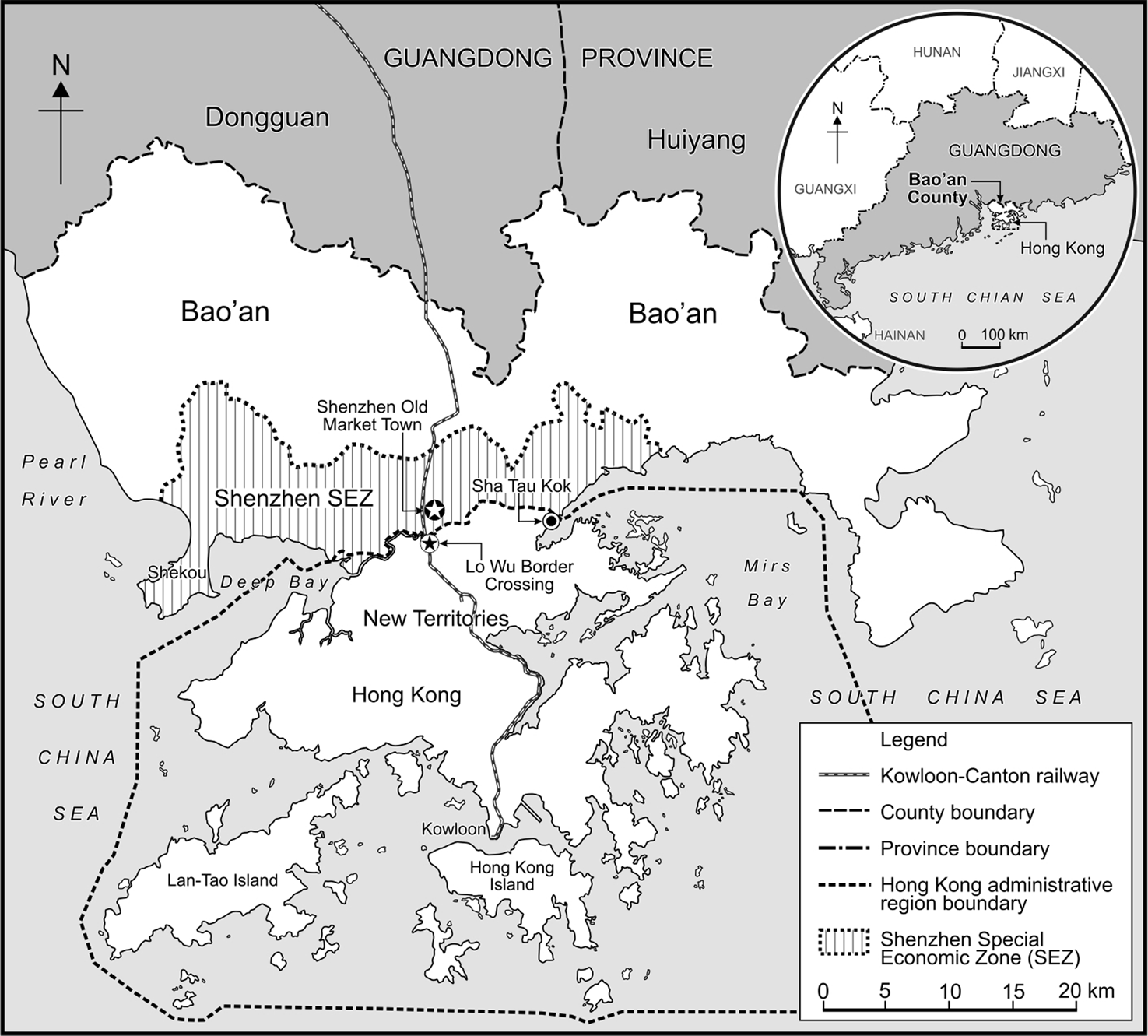
Bao'an and Hong Kong once belonged to a single administrative unit and shared a long history as a hub of maritime commerce in South China. Following the Opium Wars, the two places were separated by a 35-kilometer boundary, which extended from Deep Bay in the west, cut through the Lo Wu Rail Crossing in the middle, and ended on the east coast in Sha Tau Kok (Shatoujiao), a settlement divided in half between the Chinese and the British (HKPRO 1967, 1).
The gap between a linear demarcation on paper and an entanglement between Bao'an and Hong Kong in daily life resulted in what anthropologist Madeleine Reeves (Reference Reeves2014, 9–10) describes as a “chessboard border” (see figures 1 and 2). According to data collected by the Communist government in Bao'an in 1954, 4,065 mu of land belonging to Bao'an peasants was within the British territory, whereas 489 mu of land owned by Hong Kong peasants was within the Chinese territory (BCA 1962b; Cai Reference Delin1997, 170). Throughout the first half of the twentieth century, the division remained fluid and the movement between mainland China and Hong Kong unregulated. Bao'an residents crossed the border freely and frequently to Hong Kong for family visits, trade, and agricultural and maricultural production.
Bao'an County, 1958.

Shenzhen City, 1980. During the Mao era, “Shenzhen” (literally “deep channel”) referred to the Shenzhen Market Town, a 3-square-kilometer commercial area within Bao'an County. In 1979, the administrative status of Bao'an County was elevated to Shenzhen City. In 1980, the PRC State Council designated a territory of 327.5 square kilometers to the north of Hong Kong as the “Shenzhen Special Economic Zone” (Du Reference Du2020, 7; SMGRCO 2012, 1).

When the CCP overtook Bao'an County in late October 1949, it faced a border town “intricately linked” to Hong Kong not only through crisscrossed lands and navigable waters, but also through “tens of thousands” of economic and social ties (BCA 1959b). In the late nineteenth century, Hong Kong developed into a thriving entrepôt in the Pacific and became Bao'an's source of imported industrial goods and foreign currency. Bao'an was Hong Kong's hinterland, providing agricultural products and raw materials. The Shenzhen Market Town, the first stop on the Chinese side of the border on the Kowloon-Canton railway, was the center of cross-border economic exchange (Vogel Reference Vogel1969, 44–45). In the early twentieth century, although the Chinese Nationalist government tried to exert control over trade in the Pearl River delta, smuggling remained so prevalent in the region that Bao'an children as young as nine would start learning the craft of trafficking goods between the mainland and Hong Kong (BCA 1962b). Most of the businesses in the Shenzhen Market Town had developed complex accounting systems to evade custom control (SMGRCO 2012, 33). Ordinarily speaking, Bao'an residents living close to the Sino-British border had stronger ties with Hong Kong than those living next to the inland counties of Huiyang and Dongguan. The Hong Kong labor market, with more opportunities and higher pay, had always been a popular destination for young men from southern Bao'an (BCA 1959b). Cross-border living arrangements—with the husband working in Hong Kong and his wife and children and the elderly staying in Bao'an—were common among families seeking to maximize income and minimize living expenses. In 1949, 90 percent of Bao'an's population of 184,700 had family members in Hong Kong (Vogel Reference Vogel1969, 44–45). For these divided households, the capitalist marketplace in Hong Kong allowed the male breadwinner to earn Hong Kong dollars (HKD) and purchase consumer goods, while the socialist system allowed his dependents to benefit from low-cost grain, child care, health care, and public housing. The locals summarized this strategy as “turn to the collective for rice to eat, turn to Hong Kong for cash to spend” and “women serve as the bottom of a wok and men as the lid of a wok” (BCA 1962b).
From 1950 to 1951, decisions by London and Beijing drew a distinction between legal and illegal means of cross-border movement for the first time in history (Madokoro Reference Madokoro2016, 40). Despite its anti-imperialism rhetoric, the CCP tolerated the continuation of British rule in Hong Kong and cautiously followed the principle of “long planning and full utilization” in its policies toward the colony (Carroll Reference Carroll2007, 135–36; Mark Reference Mark2007, 1154). Correspondingly, the British, believing that Hong Kong's prosperity hinged upon cooperation from the PRC, granted Beijing diplomatic recognition in January 1950 (Carroll Reference Carroll2007, 140–42). Meanwhile, from 1946 to the mid-1950s, Hong Kong accommodated around one million mainlanders seeking refuge from the devastation of the Chinese Civil War (Carroll Reference Carroll2007, 140; Chen 2001, 24–25). In April 1950, the British Hong Kong authorities introduced a daily quota system designed to make the Chinese entering roughly equal to the number leaving. The entry of Cantonese was limited to fifty people per day; non-Cantonese, while not subject to the quota, faced more restrictions (Madokoro Reference Madokoro2016, 40).
In February of the following year, to prevent infiltration and sabotage by remnant Chinese Nationalist forces, the PRC announced the end of free passage between the mainland and Hong Kong (SMGRCO 2012, 36). Technically, Guangdong residents could no longer visit Hong Kong spontaneously but had to acquire a permit from the PRC Public Security (GLGCC 2001, 18). In Bao'an, 70 percent of the border town's population lived in a newly carved out frontier zone and were issued frontier passes for entry and exit (BCA 1955b). Those engaged in everyday agricultural and maricultural production in the British territory needed to register with the local authorities in order to receive a cross-border farming license and a sea fishing license. Even with these permits, civilians were forbidden from entering the restricted area, a strip around 150 meters from the demarcation line patrolled by 500 People's Liberation Army (PLA) soldiers and local militias (BCA 1955b).
Despite the establishment of permit and surveillance systems, many Bao'an residents still continued their traditional back-and-forth movement across the border. On the British side, the restrictions were applied in a lax manner, and the quota system was abandoned in 1952. On the Chinese side, although the CCP considered border control an important national security measure against espionage and subversion, it also regarded Hong Kong as part of the Chinese territory and repeatedly asserted the unbroken lineage between the people in Guangdong and Hong Kong (Madokoro Reference Madokoro2016, 39). Beijing's emphasis on Cantonese people's traditional rights to visit the colony allowed the new Communist government in Bao'an to adopt a gradualist approach to border administration, which helped cement its legitimacy. Immediately after the Communists took power, the majority of Bao'an residents adopted a wait-and-see attitude. Because of a manpower shortage, the CCP retained many old local bosses to assist with organizing public affairs. These “grasshoppers with broken heads”—a local idiom referring to powerful thugs—had dubious political allegiances and sought personal advantages through halfhearted collaboration with the Communist government, in the same fashion they did with the Japanese and the Nationalists (SMGRCO 2012, 10–11).
The Party's control of the coastal areas was even flimsier. The PRC's household registration system proved ineffective in tracing the highly mobile fishing communities, which often engaged in smuggling across the Chinese and British territories. The Bao'an government's authority was also challenged by the New Territories–based triads, who harassed pro-Communist “progressive elements” among the coastal villagers (GPA 1953). Yet into the mid-1950s, the CCP restored order by eliminating armed bandits and “local tyrants” who frequently extorted “gifts” from the Bao'an fishermen and oyster and salt farmers. Moreover, the land reform created a significant increase in the amount of arable land for tenants and poor peasants (GPA 1951). As in other places in China, these years also witnessed arbitrary use of violence and inflated labeling of “landlords” and “counterrevolutionaries,” which drove those targeted to leave Bao'an for Hong Kong (SMGRCO 2012, 25). But overall in Bao'an, the early 1950s was a period of public optimism. With newly distributed land and a still-permeable border, many people were not in a hurry to relocate permanently to Hong Kong, where migrants often faced impoverished and overcrowded living conditions.
Starting in 1953, Bao'an underwent socialist transformation, and its border with Hong Kong evolved into a fault line of economic divergence. The state monopolized the agricultural market through unified sale and purchase, which demanded that the peasants sell their harvests at a deliberately low procurement price. Pressured to meet state acquisition quotas, most peasants saw no alternative but to plant more grain and neglect cash crops, even if they were more profitable when sold privately to Hong Kong (Vogel Reference Vogel1969, 139). By the end of 1956, more than 98.7 percent of Bao'an households had joined the collectives, whose size ballooned to encompass hundreds of households (SMGRCO 2012, 61). Anyone who tried to return to smallholding production was labeled opportunistic and “heavily infected by rich-peasant thinking” (BCA 1955a). Some peasants who had initially welcomed the Communist government felt betrayed, as they compared the “treacherous” Party to “candied ginger”: “sweetness comes first but the burning sensation shocks you later” (BCA 1962a).
In the face of unrealistically high grain requisition quotas, Bao'an peasants calculated that they only had three options: the first was to fulfill the quota while staying hungry; the second was to ignore the quota but be exiled to labor camps; and the last was to flee to Hong Kong (BCA 1962a). The Korean War and the US-led embargo against the PRC challenged Hong Kong's traditional reliance on trade with the mainland but also stimulated the development of mass manufacturing (Carroll Reference Carroll2007, 140–41; Hamilton Reference Hamilton2018, 72). In Bao'an, widely circulated stories about “escapees” who had settled in Hong Kong promised an alluring paradise (BCA 1957a). Based on local reports, Hong Kong was “a world of three abundances” (food, clothes, and industrial products for daily use) and “four freedoms” (free choice of employment, free buying and selling, political freedom, and freedom of lifestyle choices) (BCA 1964a). The Sha Tau Kok settlement, where PRC and British Hong Kong citizens “lived on the same street, drank from the same well,” bifurcated into “two worlds” (BCCP n.d., 2400). From 1949 to 1957, not a single person on the Chinese side of Sha Tau Kok joined the Communist Party or the Youth League. The matriculation rate at PRC-run schools declined dramatically as many parents believed that a British Hong Kong education promised a better future for their children (BCA 1957c). Residents from another border village, Huanggang, openly said, “To escape is brave, to be beaten to death due to illegal migration is glorious. Even if I were to be buried in Hong Kong, the earth there is fragrant” (BCA 1957a).
In June 1957, the Party secretary of Bao'an, Wang Zhiren, made a bold policy proposal to the Guangdong provincial government, suggesting that socialist Bao'an should remain economically intertwined with the capitalist Crown colony. In 1956, to facilitate family visits, the PRC and the British Hong Kong authorities suspended the quota system for seven months. A subsequent influx of 58,000 Mainlanders pressured the Hong Kong government to reimplement the “entry-exit balance” doctrine (Carroll Reference Carroll2007, 140-41; Madokoro Reference Madokoro2016, 51). The PRC protested against Hong Kong's policy reversal and refused to impose exit controls (Nanfang ribao 1956). Invoking the central government's sovereignty claim on Hong Kong, Wang argued that despite the different political institutions of the two sides, the demarcation line (bianjie xian) was not an international boundary (guojing xian) but a domestic frontier marker (bianfang xian) (BCA 1957a). Bao'an residents should be allowed to travel to Hong Kong through “secret openings” (mimi kaikou) in the border, either to purchase daily necessities and materials for production or to seek temporary jobs in times of economic hardship (BCA 1957a). In July 1957, based on Wang's plan, the Guangdong Provincial Public Security Office authorized the PLA patrol to pause enforcement at several Hong Kong–facing coastal locations in Bao'an. At these “secret openings,” instead of intercepting the migrants, the PLA and militia would merely educate them about the hardships in Hong Kong and ask them to surrender any permit issued by the PRC. In this way, their departure would ameliorate the resource constraints in Guangdong without leaving evidence for the British Hong Kong authorities to accuse Beijing of deliberately destabilizing the colony (BCA 1957b). Information about the clandestine exits spread fast, and people from all over Guangdong and neighboring provinces such as Hunan flooded Bao'an. As the situation spiraled out of control, in October 1957, the Guangdong government shifted to heightened security measures on the frontier (Chen 2001, 92–93).
Between 1956 and 1957, more than 8,000 illegal migrants from Bao'an entered Hong Kong (BCA 1959a; GLGCC 2001, 312). Local officials tried to curb the outflow through indoctrination, enhanced surveillance, and stringent administrative procedures. Since the majority of escapees were single males in their late teens and early twenties, the Bao'an County Party Committee established more than 300 “Youth Clubs,” where political education was conducted every evening in entertaining formats such as film screenings, chorus, and skit performances. Although the participants were attracted to the warm human bonds forged through communal activities, they grew cynical toward the messages they received, such as the claim that Hong Kong, which literally means “fragrant harbor” in Chinese, was not fragrant but stinky (GPA 1963). Each production team in Bao'an organized its own public security group to monitor the movements of its members. Promotion and material rewards were offered to people who snitched on their fellow team members’ escape plans. Ironically, public security chiefs tasked with cracking down on illegal emigration sometimes became the organizers of collective escape. The Bao'an authorities announced a new requirement for all exit permit applicants to register together with two sponsors, who would be collectively punished in case of violation. However, as local cadres summarized it, “the tighter the control, the more nervous the people become.” While the previously flexible policies allowed “Bao'an people to enjoy dim sum in Hong Kong in the morning and return in the afternoon,” the new rigid rules caused popular concern over an imminent complete closure of the border. Many chose to flee, even if originally they might just have wanted to pay a short-term visit (BCA 1962b).
“Use Hong Kong to Construct Bao'an”: 1961–65
The number of migrants spiked again in the spring of 1962, when more than 100,000 peasants as well as downsized urban workers and students from twelve provinces all across China arrived in Bao'an, hoping to reach Hong Kong (Vogel Reference Vogel1969, 292). Like “an army charging southward,” desperate migrants stampeded fields, ransacked private homes, and looted food. Some threatened violence against locals who refused to serve as their guides, others attempted to seize pistols from PLA patrols. At Sha Tau Kok, migrants formed a human chain by linking their arms and forcing their way through the restricted area. In an apocalyptic environment, some migrants predicted the coming of a third world war, with either Chiang Kai-Shek or the Soviet Union launching attacks on the PRC. Many concluded that the Communist Party had collapsed in Bao'an, the Chinese troops had defected, and the border had disappeared (BCA 1962c). Despite a sympathetic Hong Kong public, the British colonial authorities refused to label the migrants as “refugees” from an oppressive Communist regime and carried out immediate repatriation (Madokoro Reference Madokoro2016; Mark Reference Mark2007). Reciprocating the Hong Kong government's neutrality, the Guangdong authorities tightened exit restrictions. Zhao Ziyang, the second provincial secretary general, led an emergency response team to Bao'an to intercept outbound migrants, accommodate those rejected by Hong Kong, and transfer all migrants to the interior (Chen 2011, 209–10). As the PRC and British Hong Kong authorities collaborated to reestablish order, the situation deescalated by the end of May.
The 1962 border emergency, as correctly pointed out by earlier scholarship, was a testament to the devastating impact of the 1958–61 famine in China (Dikötter Reference Dikötter2010, 240–41; Yang Reference Jisheng2009, 219–22). Yet at the local level, the exodus was a by-product of an innovative but fragile policy design by Bao'an leaders, who tried to create a Maoist prototype of the SEZ amid hunger and disillusionment. In 1958, as the Great Leap Forward swept across China, the Bao'an government merged its existing collectives into four People's Communes, named “South Heavenly Gate,” “Red Flag,” “Surpass America,” and “Surpass Britain.” Military discipline governed the commune members’ everyday lives (Shenzhen Museum Reference Museum1999, 11). On the ninth anniversary of the founding of the PRC, more than 10,000 Bao'an residents labored continuously for two weeks at backyard furnaces to produce 15 tons of useless pig iron as a birthday gift to the motherland (SMA 2005a, 572–73). As a result of these misguided economic policies, grain output in 1960 dropped 27 percent compared with 1957, while the number of deaths increased by 70 percent (BCLGCC 1996, 148). Conditions such as edema and uterine prolapse were widespread (Zhan Reference Zhan2010, 15). In contrast, the Hong Kong authorities improved infrastructure and social services in the New Territories, while Western humanitarian organizations provided complimentary milk and bread to cross-border farmers (Madokoro Reference Madokoro2016, chap. 3; BCA 1959b). Some young Bao'an men openly said, “When water flows to a lower place, man goes to a higher position. If we do not leave for Hong Kong now, when?” Young Bao'an women reached a similar conclusion: “The government vowed to liberate Taiwan; we vow to marry men from Hong Kong” (BCA 1959a).
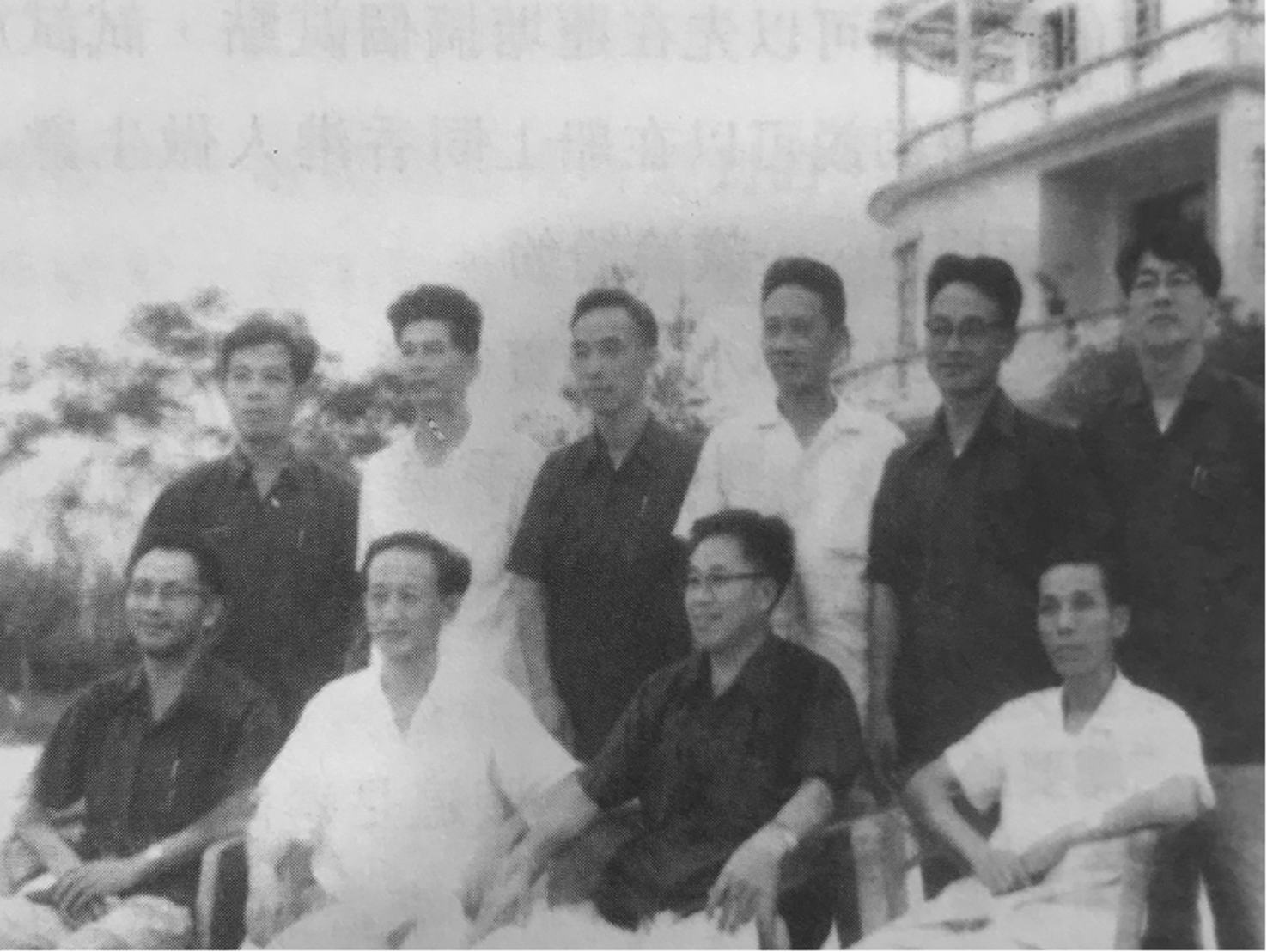
In 1959, to rescue the collapsing national economy, the CCP central leadership allowed “readjustment” measures, including the reopening of rural free markets and restoration of private plots to rural families (Lardy Reference Lardy, MacFarquhar and Fairbank1987, 375; Walder Reference Walder2015, 181). Seizing on this respite from radicalism, the new Bao'an leadership, headed by Party secretary Li Fulin and county chief Ji Fengting (see figure 3), worked to improve the local standard of living, which they deemed the only way to slow down emigration (BCA 1959a, 1959b). The first step they took was to give recognition to “objective economic laws” (keguan jingji guilv). Tao Zhu, the top leader of Guangdong Province from 1952 to 1965, publicly voiced his frustration over the Party's neglect of some universal principles governing economic development at the Lushan Conference in 1959 and in an article published in the CCP organ The People's Daily in 1960 (Tao Reference Zhu1960; Zheng and Shu Reference Xiaofeng and Ling2007, 278–79, 281). Echoing Tao, Ji Fengting highlighted the need to supplement the planned economy with market mechanisms. During the Great Leap Forward, the enthusiasts’ complete denial of the law of supply and demand led to a tremendous waste of resources. In Bao'an, “the private property of the peasants was all confiscated, the forests were all destroyed, and the poultry all killed” (BCA 1961b). In 1959, consumer austerity became “even worse than that under the Japanese occupation.” Entire families, including parents, grandparents, and children, queued day and night in the Shenzhen Market Town to stockpile vegetables, fish, flour, and matches (GPA 1959a). In this vicious circle, Ji noted, the prevalence of hoarding led to even lower efficiency in production and further exacerbated the shortages (BCA 1961b).
Li Fulin (front row, second from right) and Ji Fengting (back row, second from right). Undated. Source: Chen (2001, 187).

In addition to noting the disruptive effects of the Great Leap Forward, the Li-Ji leadership also identified the structural cause of Bao'an's underdevelopment as excessive state requisition, which Ji compared to a gigantic water buffalo. If this heavy burden were not removed from the peasants, Ji said, “the masses on the frontier would be oppressed forever” (BCA 1961c). To finance state imports and to repay foreign debts in the post-Leap period, the CCP central leadership set up a few Export Commodity Processing Bases in the coastal regions (Reardon Reference Reardon1996, 287). In 1959, the Guangdong provincial government encouraged Bao'an and three other “foreign trade focused counties” to supply Hong Kong with fresh produce and local specialties, such as fruits, vegetables, poultry, Chinese medical herbs, peanuts, and firewood (GPA 1959b). These items would be procured by state-owned import-export companies at a fixed price and sold in Hong Kong at a much higher market price. In Bao'an, the fishermen and oyster farmers had been suffering precipitous financial losses since rural collectivization in 1953, when they were required to turn in their catches for state-organized export instead of selling them privately on the Hong Kong market (BCA 1959a). Starting in 1959, peasants in selected areas of Bao'an were also tasked with export requisition quotas. The centralized import-export system not only overburdened the peasants but also exposed them to international market volatility for the protection of the state. For instance, the Nantou Production Team in west Bao'an exhausted its manpower to fulfill vegetable export quotas, only to be told at harvest time that the foreign trade bureau had postponed its requisition because of a price drop in Hong Kong. As the now-depreciated vegetables started to rot in the fields, the production team members lamented, “We take care of the state. The state should also take care of us, the peasants!” (BCA 1962b).
These deeply entrenched grievances were addressed in the “use Hong Kong to construct Bao'an” (liyong Xianggang jianshe Bao'an) policy promulgated by the Li-Ji leadership in 1961. Through a “three-five” (san ge wu) cross-border trade scheme, after fulfilling grain and export acquisition quotas, Bao'an residents—first those from fifteen communes close to the Sino-British border and then those from eight communes closer to the interior—were allowed to sell cash crops directly to Hong Kong in exchange for items that were in short supply in the socialist countryside, including chemical fertilizers, nonstaple foodstuffs such as sugar and oil, medicine, and light industrial products such as cooking utensils and clothes. The weight of produce sold to Hong Kong was capped at 5 jin (2.5 kilograms), the value of the goods bought from Hong Kong at 5 yuan, and travel frequency at 5 times per month. All imported items should be for self-use only, and all transactions were duty exempt (BCA 1961c). Technologies imported through the “three-five” policy, especially more advanced agricultural tools and chemical fertilizers, boosted Bao'an's productivity. Local official records show that Bao'an, which was less hard-hit during the “three years of natural disasters,” loaned grain reserves to neighboring Boluo, Dongguan, and Huiyang Counties (Zhan Reference Zhan2006a, 261). A British intelligence report also revealed that the ration of rice in Bao'an was three times that of Huiyang (HKPRO 1962). Besides increasing food supplies, the opening of cross-border trade ameliorated the severe shortage of daily necessities. Bao'an women were exhilarated at the arrival of 10 kilograms of sanitary napkins from Hong Kong (BCA 1962b).
Li Fulin, in addition to advocating for bottom-up liberalization of trade, also lobbied for top-down fiscal support for an infrastructure makeover that would turn Bao'an into a weekend holiday destination for Hong Kongers. When petitioning for state investment, Li understood that his most valuable bargaining chip was the fact that the 700,000 to 800,000 passengers traveling through Lo Wu every year gained their first impression of the PRC from Bao'an (BCCP n.d., 2400). By highlighting the border town's function as a window to showcase the PRC's achievements to “the Hong Kong compatriots” and international visitors, Li managed to bring a tourism infrastructure to Bao'an that was rarely seen in other parts of China, including hotels, restaurants, and the Shenzhen Theatre House (see figure 4), which was the first modern art performance center in China with air-conditioning and an advanced sound system. From 1960 to 1966, forty-two arts organizations—including the China Central Ballet, the National Peking Opera, and the Cantonese Opera Troupe of Guangdong—put on 192 performances. These shows attracted more than 162,000 spectators—including Hong Kong celebrity Patrick Tse (Xie Xian)—and generated more than 378,000 HKD in foreign exchange income through ticket sales (Zhan Reference Zhan2006a, 259).
Opening ceremony of the Shenzhen Theatre House, March 5, 1960. Photo credit: Zheng Zhongjian.

Founded on murky legal ground, the 1961 liberalization revitalized the border town's economy while further blurring the line between licit and illicit domains. As in other socialist countries, in Mao's China, underground production, consumption, and exchange was an indispensable strategy for individuals and even state-owned enterprises to cope with the constraints of the planned economy (Thai Reference Thai2018, 242). The Chinese state was less concerned about the legal distinctions than the practical implications and adopted a tolerant or even complicit attitude toward the second economy if it supported, rather than undermined, state imperatives (Vogel Reference Vogel1969, 290). For instance, in Bao'an, the Nantou Production Team received 2,000 kilograms of garlic seeds from Hong Kong through personal connections and secretly planted them. Ironically, garlic that grew from these smuggled seeds was later procured by a state-owned import-export company for sale to Hong Kong (BCA 1962b).
Similarly, it was beyond the Bao'an government's administrative capacity and against its material interests to strictly maintain a clear line between smuggling and legitimate small-scale frontier trade. The Bao'an government tacitly allowed its residents to exceed the stipulated “5 jin, 5 yuan, 5 times” limitation, creating more incentives for them to leverage resources across borders. Individual trade soon developed into large-scale exchange of rice straw from Bao'an for chemical fertilizers from Hong Kong, usually organized by production teams or communes (BCA 1961a). A more sophisticated and lucrative commercial pattern emerged later, in which Hong Kong goods were resold to inland China from Bao'an in exchange for agricultural produce to be exported back to the colony. This practice of entrepôt trade was an outright violation of the “three-five” policy but did not invite intervention from the local government (BCA 1964b).
While temporarily improving the material well-being of the frontier people, the “mini reform” of 1961 paradoxically motivated more people to leave for Hong Kong. In the late 1950s, there had been sporadic campaigns to punish and stigmatize the escapees. Under the new policy, migration to Hong Kong represented not only an exit strategy but also an expedient channel for upward mobility in the socialist border town. In order to fundraise for public projects, local officeholders tried to repair relations with former Bao'an residents who had established themselves in Hong Kong. Should they come back, they would be categorized not as “escapees” but as “overseas Chinese,” a much higher social status than peasant. The Bao'an government would return to them any previously confiscated property, refurbish their ancestral tombs, and roll out the red carpet (BCA 1962d). Meanwhile, the central government did not reduce the requisition quotas in Bao'an despite its loss of manpower due to emigration. As a result, those who remained in Bao'an became responsible for meeting extra production targets, while those who fled to Hong Kong enjoyed preferential treatment when visiting (BCA 1962b). The Bao'an government tried to correct this distorted mechanism by charging left-behind families punitively inflated food prices. But border transgression had become so prevalent that it was impossible to implement harsh disciplinary measures (GDCCP 1973).
The liberal issuing of exit permits during the mini reform sowed the seeds for the 1962 migrant crisis and created ample rent-seeking opportunities. Some frontier residents loaned their documents to migrants from other parts of China for profit (Zhan Reference Zhan2006b, 273). In exchange for permits, some production team leaders solicited bribes in the forms of cash, jewelry, watches, and bicycles. In more egregious cases, women became victims of sexual harassment and rape (BCA 1964a). Working hand-in-hand with partners in Hong Kong, Bao'an officeholders even organized cross-border migrant transportation operations similar to transnational human trafficking rings, with “offices” in the colony overseeing the collection of payment upon the migrants’ arrival and investment of profit in business enterprises. Some local leaders openly “marketed” their “services” with price tags: for 500 HKD, migrants could rest assured that their remaining family members would receive aid instead of retribution; for roughly 1,000 HKD, migrants would be “chauffeured” to Hong Kong on motor boats owned by the production teams or communes (BCA 1964a). While many CCP cadres acted in a predatory and exploitative way toward the less powerful, some also tried to deliver better public services, as they were embedded in the close-knit social world of Bao'an. Some commune or production team leaders would facilitate the departure of “potential investors” or their family members to Hong Kong in exchange for “donations” for the construction of communal amenities and the purchase of collectively owned agricultural machinery and transportation tools. So long as the migrants had legitimate reasons to visit Hong Kong, Li Fulin allowed or even encouraged these illicit arrangements, which he characterized as the mobilization of financial resources from the patriotic overseas Chinese for Bao'an's modernization (BCA 1962b).
Compared with the general population, the CCP cadres enjoyed privileged access to the comfort and convenience brought by the cross-border trade, such as household electronics, motorcycles, and residences and offices renovated with construction materials from Hong Kong and bathrooms covered with ceramic tiles (BCA 1964b). For instance, Deng Xinlai, the Party secretary of the Shatou Commune, openly sent his subordinate to smuggle radios from Hong Kong. Once he was caught eating a smuggled apple while riding a smuggled bicycle. When challenged, he replied, “Everything is imported by the Bao'an County Government!” (BCA 1964b). Li Fulin was accused of hosting luxurious banquets for visiting Hong Kong businessmen that served abalone, beer, and 555 brand cigarettes (BCA 1964b). Yet most of the materials that exposed the decay of the Bao'an leadership were produced during the Four Clean Ups and Socialist Education Campaigns, which marked a re-radicalization of rural politics (Chan, Madsen and Unger [1984] Reference Chan, Madsen and Unger2009, 41–73; Wemheuer Reference Wemheuer2019, 332). External work teams came to Bao'an to investigate allegedly corrupt local officials, mobilize peasants in struggle sessions, and compile reports mostly based on unverified verbal accusations. It is possible that some of the charges reflected a backlash against reform-minded officials by ideological vanguards.
Bao'an's exceptional policies were only supported by provincial leader Tao Zhu and were opposed and obstructed by Party conservatives as well as state agents in border and customs control. In November 1961, alarmed by the expansion of Bao'an's gray economy, the deputy governor of Guangdong, Wei Jinfei, ordered a “contraction” of cross-border trade down to eight types of low-value commodities, such as rice straw and firewood. Higher-value items, such as Chinese herbal medicine, could only be processed through state foreign trade agencies (BCA 1962e). Meanwhile, the PLA patrol and Kowloon (Jiulong) Customs rejected the legitimacy of the “use Hong Kong to construct Bao'an” scheme because of the absence of a formal endorsement from Beijing. In January 1962, more than 300 Bao'an peasants who were on their way to deliver goods to Hong Kong were stranded at the Sha Tau Kok checkpoint. The PLA soldiers refused to let them pass, even after Li Fulin made a personal phone call. The peasants were enraged: “The border guards just want to starve us to death!” (BCA 1962b). Although viewed as ethically unjust by many borderland people, Kowloon Customs classified some semilegal practices approved by the Bao'an county government as “racketeering” and heavily punished them (GPA 1962).
Frustrated with policy inconsistency, many Bao'an residents, who initially acted as go-betweens to profit from the two different value regimes, resolved to leave the socialist border town permanently for capitalist Hong Kong. In spring 1962, approximately 15,100 people from Bao'an tried to enter Hong Kong, and more than 80 percent of them managed to stay without being deported. Meanwhile, information about the relaxation of border controls in Bao'an mutated into a piece of “fake news” about amnesty for undocumented immigrants in Hong Kong in celebration of Queen Elizabeth II's birthday. The rumor proliferated in Guangdong and neighboring provinces, triggering the exodus (SMA 2005c, 2359). Starting in 1963, following Mao's warning to “never forget class struggle,” the political atmosphere became heated with radical leftism. The “use Hong Kong to construct Bao'an” strategy was condemned as an embodiment of a “subservient mentality toward foreigners,” and its architect, Li Fulin, was forced to step down (BCCP 1970, 2578). The main advocate of Li's policies, Tao Zhu, left Guangdong for Beijing in 1965 to take up the position of vice premier; he tragically died under persecution four years later.
During the Cultural Revolution, Bao'an was a propaganda outpost, a geopolitical hotspot, and a vital transit station for outbound migrants. Chairman Mao's Little Red Book and songs such as “Sailing the Seas Depends on the Helmsman” were exported via Bao'an to Hong Kong for the leftists, thereby fueling the 1967 riots (Ho Reference Ho2020). Meanwhile, Bao'an experienced intense international and internal conflicts. In July 1967, following an anti-imperialist rally organized by the villagers on the Chinese side of Sha Tau Kok, an armed border conflict broke out, the first since Hong Kong's cession to Britain in 1842 (Cheung Reference Cheung2009, 71–72). For the rebel activists of Bao'an, the escalating diplomatic tensions between Beijing and London justified their use of violence against alleged “spies and traitors” in the border town, many of whom were former proponents of the mini reform. More than 17,232 Bao'an cadres were “put under investigation,” while at least 275 people died because of the “pressure of a mass movement” or “misunderstanding of the Party's policies”—common euphemisms for physical injuries or suicides under distress (SMA 2005b, 1671). Throughout the late 1960s and early 1970s, cross-border commerce was suspended but emigration never stopped, with an increasing number of youths sent down to the countryside (Burns Reference Burns1987, 664–65). The Hong Kong government's switch to a lenient policy toward illegal immigrants after the border incidents caused a growth in emigration from China. Bao'an became the easiest route to take for mainlanders fleeing the Cultural Revolution (Mok Reference Mok2020).
A “Rich Frontier”: 1972–80
Before the formal start of reform in December 1978, Bao'an's political elites had already been trying to reconfigure the frontier as a productive economic space rather than an ideological battleground. The fall of Lin Biao in 1971 tempered left-wing radicalism and allowed for a temporary recovery of the national economy and rehabilitation of those wrongly demoted. From his exile in Inner Mongolia, Zhao Ziyang returned to Guangdong as the provincial deputy Party secretary. Under Zhao's leadership, the Guangdong government partially reinstated the “three-five” policy in 1973 by allowing a small number of registered frontier residents to conduct duty-free barter trade during their visits to Hong Kong for important festivals or significant life events (GDRC 1973, 2689). The following year, the Guangdong Provincial Economic Planning Commission restarted the Export Commodity Production Base in Bao'an and envisioned a fourfold expansion of its export earnings by 1980 (GPA 1974). Although the bulk of trade profits would be absorbed into state revenue, a portion of the foreign exchange would stay in Bao'an for production-oriented investments. However, the “Criticize Lin, Criticize Confucius” campaign soon rolled back these initiatives (SMA 2005c, 2573).
The great helmsman's death in September 1976 created a chance for the revival of Li Fulin's “use Hong Kong to construct Bao'an” scheme. In Beijing, the new chairman, Hua Guofeng, reduced the role of ideology in national politics and dispatched delegations abroad to study the experiences of capitalist economies (Vogel Reference Vogel2011, 184–85). In April 1978, representatives from the State Planning Commission and Ministry of Foreign Trade visited Hong Kong and Macau. At the end of their trip, the delegates concluded that Hong Kong's model of economic growth should be a source of emulation for the mainland, and neighboring Bao'an should be a launching pad for this learning process (SMA 2005b, 2734). As national-level policy makers arrived in Bao'an for surveys, Party secretary Fang Bao took them to the chessboard border, where the average annual income per capita was around 130 renminbi (RMB) for the Bao'an peasants but more than 13,000 HKD for their Hong Kong neighbors (Fang Reference Bao1997, 3100). Fang, who used to work under Li Fulin and had rich experience handling migrant crises, told the visiting officials that coercive border control measures proved self-defeating: instead of stopping emigration, the controls forced many people to abandon the cultivation of crops, fish, and crustaceans that involved frequent crossing to Hong Kong territories. By the late 1970s, the size of fields tended by Bao'an farmers in the New Territories dropped to one-third of that in the late 1940s while the state acquisition quotas kept increasing (Bao'an County Foreign Affairs Office 1979, 2463). What the Bao'an people demanded, as Fang reported to his superiors, was “opening up,” which in the local context referred to Li Fulin's mini reform of 1961. Fang gave it a slightly different name, “use Hong Kong to enliven Bao'an” (liyong Xianggang gaohuo Bao'an), and successfully channeled his proposal to the State Council in Beijing.
County-level leaders’ advocacy helped consolidate a consensus among core decision makers in Beijing: the best line of defense against illegal migration was to create a “rich frontier” (fuxian) (Gu Reference Mu1979, 2801). In the late 1970s, Bao'an was at the center of a migrant crisis more severe than the border emergencies in 1957 and 1962. From 1978 to 1980, the Guangdong provincial government reported almost 500,000 cases of illegal emigration, one-fifth of which were committed by Bao'an residents (SMA 2005c, 2363; GLGCC 2001, 312). In 1974, the Hong Kong government implemented a “Touch Base” policy, which aimed to curb immigration by repatriating those who failed to reach urban areas while allowing those who succeeded to register for Hong Kong identity cards (Burns Reference Burns1987, 666). In November 1977, during his visit to Guangdong, Deng Xiaoping said that the persistent population outflow was “caused by our problematic policies and cannot be managed by the troops” (Vogel Reference Vogel2011, 394). Xi Zhongxun, the first Party secretary of Guangdong Province between 1978 and 1980, initially characterized the people fleeing to Hong Kong as corroded by a bourgeois way of thinking. After being confronted by an outspoken cadre in Bao'an, Xi completely changed his mind: “The peasants are most pragmatic. If we cannot improve their lives, they will never stay . . . Our talk about the superiority of socialism was empty to them” (Vogel Reference Vogel2011, 395–96; Xi Reference Zhongxun1979, 2506). Echoing the ideas of the Li-Ji leadership in 1961, Xi designed a blueprint named “three constructs,” which aimed to transform Bao'an into “an export production base of both agricultural and industrial commodities, a tourist destination for visitors from Hong Kong, and a new type of frontier city” (GDRC 1978, 339). Beijing endorsed Xi's proposal and elevated the border town's administrative status from “Bao'an County” to “Shenzhen City” less than one month after the official launch of reform.
Under Mao, Li Fulin, who promoted rudimentary ideas of reform ahead of his time but suffered career setbacks as a result, poignantly embodied a spirit of bureaucratic entrepreneurism in the border town. Under Deng, local officials, who had intimate knowledge of “the particular problems and possible remedies” of their constituents, were officially given unprecedented decision-making power for the pursuit of profit-oriented goals (Ang Reference Ang2016, 74). In July 1979, the CCP Central Committee granted Guangdong and Fujian special policies and flexible measures, which delegated to the two provinces the responsibility of establishing market mechanisms at home and regulating international trade, while allowing them to retain domestic and foreign exchange revenue (Reardon Reference Reardon1996, 290; Vogel Reference Vogel2011, 399). Despite its earlier critiques against localism among the worldly Cantonese, Beijing now encouraged Guangdong to “take one step ahead” and its leader, Xi Zhongxun, to imagine himself as “the President of an independent nation of Guangdong” and as the agile Monkey King in The Journey to the West (Vogel Reference Vogel1990; “Zhongyang shujichu tongzhi tingqu Guangdong gongzuo huibao de tanhua jilu” 1980, 3036, 3041).
With increased autonomy, Shenzhen officials copied certain grassroots practices of cross-border arbitrage. At the height of the Cultural Revolution, the Shekou Commune across the Deep Bay from Hong Kong had already been collecting reusable waste from Hong Kong for refurbishment and resale (GDRC 1973, 2691). After 1978, this gray economy inspired the Hong Kong Merchant Steamship Group, which managed the Shekou Industrial Zone, the first enclave in the PRC that accepted foreign investments. Bao'an native Yuan Geng, who was in charge of this pilot project, started the Merchant Group's capital accumulation through the processing of metal scraps from retired Hong Kong vessels (SMA 2005c, 2739; Tu Reference Qiao2008, 43). Cross-border recycling also attracted the attention of Wu Nansheng, the Party secretary of Shenzhen from 1980 to 1981. Wu reassembled a socialist relic—the Shenzhen Supply and Sale Cooperative—into a special task force to purchase used tires, gasoline barrels, and cars in bulk from Hong Kong and recommended bribing their way through Hong Kong Customs with “red packets” or “tea money” if necessary (Wu Reference Nansheng1979, 2817).
The Communist leadership's open attitude toward the capitalist world meant that the demarcation line along the Shum Chun River, once a Cold War division of contrasting ideologies, became reconstituted into a mechanism of differentiation following the logic of global market forces. In August 1980, the PRC National People's Congress approved the “Regulations on Special Economic Zones in Guangdong Province,” formally authorizing the SEZs to offer foreign investors, particularly “overseas Chinese and compatriots from Hong Kong and Macau,” tax incentives, simplified administrative regulations, and legal protection of their assets (“Zhonghua renmin gongheguo Guangdong sheng jingji tequ tiaoli” 1980). The pull of foreign investment and the employment opportunities it created, compounded by the push from Hong Kong's 1980 decision to terminate the “Touch Base” policy and repatriate all illegal immigrants, gradually reduced the population outflow from a tsunami to a trickle.
Conclusion
Although Cold War Hong Kong has often been compared with Cold War Berlin, substantial differences exist between the East-West German and the Sino-British divisions (Roberts Reference Roberts, Roberts and Carroll2016, 28). In contrast with the high tension in the “mined, multilayered, militarized zone” between the two Germanies, the PRC and British Hong Kong authorities shared a mutual interest in maintaining frontier stability and valued cooperation over confrontation (Sheffer Reference Sheffer2011, 17). Whereas the frontier communities in Germany internalized the division and developed oppositional identities, very few from either side of the border seemed to genuinely uphold the line between Bao'an and Hong Kong in the 1950s and early 1960s. Throughout this period, lineage connections sedimented in the history of the Pearl River delta remained strong despite the ideological differences and the economic divergence between the two territories (Mark Reference Mark2007, 1181; Siu and Faure Reference Siu, Faure, Faure and Siu1995, 1–11). As Bao'an officials noted in 1959: “From the perspective of the natural environment, social and cultural customs, languages, and lifestyles, a Sino-British border does not exist. Neither is there a Sino-British border in the people's minds” (BCA 1959b).
Probably among the most entrepreneurial rural Communist cadres in Mao's China, the leaders of Bao'an acted as agents of reform more than a decade before reform and opening was institutionalized as state policy. Bao'an cadres recognized popular discontent with the socialist state's intrusion in the borderland; as one official report noted: “tight emigration control only forced people to flee, rigid trade restrictions only forced people to smuggle” (BCA 1957c). To give some breathing room to the rationed and overworked Bao'an peasants and fishermen, county-level elites created an enclave of exception to the command economy under the “use Hong Kong to construct Bao'an” scheme in 1961, which allowed the locals to trade more than 2.3 million RMB of produce directly with Hong Kong (Zhan Reference Zhan2006a, 257). This strategy framed cross-border relations between Bao'an and Hong Kong not as a competition between capitalism and socialism, but as a symbiotic interdependence between a cosmopolitan center and its suburbs. Admittedly, the regulatory ambiguity of this mini reform created loopholes for local power holders to reap oversized profits. But overall, the de-centralization of cross-border commerce not only ameliorated the impact of the famine, but also made Bao'an into a “socialist entrepôt” with supplies of colorful consumer goods and modernized public spaces and tourism facilities.
In the context of the creative transgressions of the borderland people and cadres, reform was a process of the central government's legalization and appropriation of market-oriented, grassroots practices that previously had been regarded as illicit (O'Donnell, Wong, and Bach Reference O'Donnell, Wong, Bach, O'Donnell, Wong and Bach2017, 6; Shirk Reference Shirk1993, 42). Across the 1978 divide, the local drive to leverage the border town's unique position as “a hinge for linking socialist and capitalist spaces” had been consistent, yet the legal parameters for economic activities set by the state shifted (Ong Reference Ong2004, 79). Across the 1978 divide, the same people and practices were labeled in drastically different ways—from “escapees” to “Hong Kong compatriots” and potential investors, from “smuggling” to “state sanctioned import and export,” from “corrupt officials” to “pioneers of reform.” The mini reform of 1961 was precarious as the limited leeway for local improvisation fluctuated in accordance with Mao-era political campaign waves. Although beholden to the inward-looking planned economy and stymied during the Cultural Revolution, Li Fulin's vision resurfaced in the 1970s and ultimately won unequivocal top-down support.
Geography and the clan and commercial networks of the Pearl River delta placed Bao'an at the outermost margins of socialism, but the same natural and social endowments, together with the institutional legacy of the 1961 mini reform, positioned Shenzhen to become the foremost frontier of reform. In 1980, half of Shenzhen's population had family members living in Hong Kong and thirty-six countries across the globe (BCA 1979). Preferential treatment given to overseas investors and manufacturers enabled Shenzhen to channel “Chinese archipelago capitalism”—diasporic business enterprises in Hong Kong, Taiwan, and Southeast Asia—to the mainland (Bach Reference Bach, O'Donnell, Wong and Bach2017, 32–33). The city flourished as a spatial and temporal threshold where China's relatively closed, nationally regulated economy could gradually converge and synchronize with the world economy (Bach Reference Bach, O'Donnell, Wong and Bach2017, 29, 32–33).
If, as Balzac had it, behind every great fortune there is a crime, then China's story of reform and opening under Deng Xiaoping began with transgressions under Mao Zedong. A messier, nonlinear genealogy of Shenzhen, embedded in the everyday and dating to the height of socialism, helps us understand the 1978 divide in modern Chinese historiography not as a duality between change and continuity, but as an evolving negotiation between the borderland society and the central government. The marginality of the border town's status in Mao's China as well as the “operational illegalities” of local practices formed the very foundation of its later metamorphosis into a “model city” of reform and opening (O'Donnell, Wong, and Bach Reference O'Donnell, Wong, Bach, O'Donnell, Wong and Bach2017; Wong Reference Wong2017, S104). Despite asymmetries, unevenness and inequality under one-party rule, this liminal space produced new power dynamics and nurtured new economic institutions on the basis of what had been previously regarded as circumvention and subversion. Fang Bao, the former Party secretary of Bao'an, once commented, “It was not we [Communist Party cadres] educating the masses. The people taught us a lesson” (interview, Chen 2017).
Acknowledgments
I would like to thank Sayaka Chatani, Vinayak Chaturvedi, Sherman Cochran, Denise Y. Ho, Evelyn Hu-Dehart, Andrew Mertha, Florence Mok, Josh Stenberg, Hallam Stevens, Michael Szonyi, Arne Westad, Tao Yitao, and two anonymous reviewers for the JAS for offering insightful feedback on previous versions of this article. I presented this research at the Sydney Chinese Studies Seminar Series and the Association of Asian Studies Annual Conference in 2021. I thank the organizers and participants at these two events. I thank Sri Amalinah Binte Suhairi, Josiah Ho Chit Ian, and Jiang Chengyun for research assistance and Bernadette Guthrie and Deborah Ring for editorial support. This article is part of a research project titled “Shenzhen: China on the Move,” supported by Tier 1 Grant number RG74/18, Ministry of Education, Singapore.