“High in the tower, where I sit above the loud complaining of the human sea, I know many souls that toss and whirl and pass, but none that intrigue me more than the Souls of White Folk.”
W.E.B. DuBois
1. Introduction
The JREP retrospective on “Race and the American Presidency” offers an opportunity for scholars of race to think through what the public opinion scholarship in the post-Obama era has taught us about the relationship between racial attitudes, racial identities, and white voting preferences at the national level. Although the role of white racial attitudes in shaping political and policy preferences has received extensive attention (e.g., Kinder and Sanders, Reference Kinder and Sanders1996; Gilens, Reference Gilens1999; Sears et al., Reference Sears, Sidanius and Bobo2000; Mendelberg, Reference Mendelberg2001; Hetherington, Reference Hetherington2005), these last two Administrations have introduced new questions about the role of racial attitudes and identities into the study of presidential vote choice. Explanations of white electoral behavior based on racial attitudes have been challenged and supplemented with perspectives centered on white in-group identity, gender, and xenophobia. However, these various explanations have not been tested against each other—this is our main goal in this study.
First, empowered by strong theorizing of the Obama era, and especially seminal works by Kinder and Dale-Riddle (Reference Kinder and Dale-Riddle2012) and Tesler and Sears (Reference Tesler and Sears2010), scholars of racial resentment such as Sides et al. (Reference Sides, Tesler and Varveck2019) added to our understanding of white electoral behavior by examining the role of racial prejudice in white voters' support for Trump in the Republican primary and in the general election. Valentino et al. (Reference Valentino, Wayne and Oceno2018) and Cassese and Holman (Reference Cassese and Holman2018) added explanations drawn from the literature on gender politics and sexism, while Hopkins (Reference Hopkins2018) argued for the importance of xenophobia. Moreover, Jardina (Reference Jardina2019) reinvigorated a perspective that focuses on the role of white ingroup favoritism as a predictor of white support for Trump. However, these four competing explanations have not been systematically tested against each other in the context of either the Republican primary or the 2016 general election. And so far, we have no insights on how these ingroup and outgroup processes may play out in the context of the 2020 general election.
Our goal in this article is threefold. First, we provide a retrospective account of the theoretical landscape as it relates to “Race and the Presidency” from the perspective of public opinion. We start highlighting the key theoretical advances that emerged during the Obama era and the challenges to theory introduced by developments on the ground and in the discipline. Then we move to the Trump era and the new insights into the role of both outgroup and ingroup processes in white voters' support for candidate Trump. Collectively, the Trump studies have contributed to the likely falsification of seminal paradigms such as racial priming theory (Mendelberg, Reference Mendelberg2001). These findings have important implications for our understanding of the strength of racial norms.
The third step in our exploration consists of using data from three ANES studies that span the period from the 2016 primary season to the 2018 election, to systematically test the relative importance of racial resentment, xenophobia, sexism, and white ingroup identity as predictors of white Americans' support for Donald Trump in the 2016 Republican primary and the 2016 general election. We also move the needle forward, in considering the effects of these ingroup and outgroup factors on support for Trump relative to Joe Biden and Elizabeth Warren in the 2020 general election. Although Warren did not win the nomination, studying responses to her candidacy is instructive as a comparison to Hillary Clinton. This exercise not only gives us an early peek in what may be in store in November 2020 but, more importantly, provides insights as to which of the four predictors may be more important in what type of contest.
Our analyses suggest that xenophobia was the strongest predictor of white support for Trump both in the Republican primary and the 2016 general election and that it is likely to be key in the 2020 contest with Joe Biden as the Democratic nominee. The effects of racial resentment and sexism were strong as well, especially in the general election and this will likely be the case in the 2020 contest. The influence of white identity is more modest and less consistent across contests: we find a significant effect of white identity in support for Trump in the 2016 Republican primary, but its effect in the general election against Clinton appears to be negative and, in one case, significant. The analysis of possible 2020 matchups suggests that white identity may play a significant role in pushing support for Trump against Biden. Finally, we use our results to reflect critically about new questions and avenues for research on the role of racial dynamics in white presidential voting preferences, thinking through what a “post-Trump” era may look like for political science research on race and voting behavior.
2. The Obama presidency and race politics research: setting the context
Early research on presidential election vote choice focused on economic factors and ideology (Norrander, Reference Norrander1986), political trust (Hetherington, Reference Hetherington1999), media influences (Barker, Reference Barker1999), and policy preferences (Krosnick, Reference Krosnick1988; Abramowitz, Reference Abramowitz1995). Starting in the late 1990s, race and communication documented the effect of racial attitudes on white vote choices (Mendelberg, Reference Mendelberg1997, Reference Mendelberg2001). However, it was the Obama election that led to a renewed interest in the role of racial attitudes.
The Obama election was followed by publicly stated beliefs that American society was becoming “post-racial,” that is racial inequality was no longer a serious concern for politics or public policy. Combined with the overtime decline in the prevalence of old fashioned racism (Schuman et al., Reference Schuman, Steeh, Bobo and Krysan1997), the Obama election led some to conclude that racial attitudes and identities becoming less relevant to the political preferences of white Americans (Steele, Reference Steele2008). Testing the “post-racial” hypothesis became a top concern for scholars of white racial attitudes.
Studies conducted during the Obama era reported not only that racial attitudes continued to be a factor in white political decision-making, but also the constant presence of a Black authority figure on TV screens kept such attitudes constantly activated (Tesler and Sears, Reference Tesler and Sears2010). The result was that the effect of anti-black attitudes, and especially racial resentment, a complex of beliefs that mix antipathy towards Blacks with indignation about the perceived black failure to adhere by American society's individualistic norms, had become stronger (Kinder and Dale-Riddle, Reference Kinder and Dale-Riddle2012) and had spilled-over to non-racial policy domains (Filindra and Kaplan, Reference Filindra and Kaplan2016, Reference Filindra and Kaplan2020; Tesler, Reference Tesler2016). Scholars also produced evidence that racial attitudes color white Americans' beliefs about the legitimacy of electoral institutions (Appleby and Federico, Reference Appleby and Federico2017), support for restrictive voter ID laws (Wilson and Brewer, Reference Wilson and Brewer2013), and democratic norms (Miller and Davis, Reference Miller and Davis2019). Furthermore, Tesler (Reference Tesler2016) showed that racial attitudes now undergirded partisanship and ideology, a finding that upends our understanding of causal relationships in politics.
Inspired by the immigrant mobilizations of the era as well as the emergence of the Tea Party, a parallel line of research zeroed-in on the role of xenophobia, or anti-immigrant bias, in shaping the political and policy judgments of white Americans. Parker and Barreto (Reference Parker and Barreto2013) elucidated the links between xenophobia, the rise of the Tea Party, and opposition to Obama. Others have also shown that white attitudes about immigrants and immigration in the United States are strongly associated with Latinos and thus heavily racialized (Zou and Cheryan, Reference Zou and Cheryan2017).
Two additional theoretical developments from the Obama era are noteworthy. First, scholars showed that the predictive strength of old-fashioned racism had increased since the Obama election (Tesler, Reference Tesler2013; Knuckey and Kim, Reference Knuckey and Kim2015). Second, explicitly derogatory racial messaging appeared to be effective in driving the vote preferences of white racial conservatives (Valentino et al., Reference Valentino, Neuner and Vandenbroek2017; Reny et al., Reference Reny, Valenzuela and Collingwood2020). Norms of racial equality that Mendelberg (Reference Mendelberg2001) had pronounced so strong as to necessitate implicit delivery of racial content in political campaigns appear to no longer have the same power to regulate political behavior. Our study does not address these developments but we believe them important to mention as they have important implications for the future of the field.
3. The Donald Trump presidency and the state of race politics research
Donald Trump announced his candidacy for the Republican presidential nomination on June 16, 2015. Building on the theoretical advances of the Obama era, scholars quickly began to investigate the correlates of support for Trump among the white electorate that constituted his core political base. Whereas analyses of the two Obama elections focused primarily on racial attitudes, studies of the Trump election introduced three additional theoretical directions that had not been deeply investigated in earlier studies of presidential voting: xenophobia, white identity, and sexism.
By early 2016, Sides et al. (Reference Sides, Tesler and Vavreck2016) had identified racial resentment as a key predictor of voter support for Trump. In their view, the experience of the birther movement taught Trump that overt racial prejudice can motivate a significant portion of the Republican electorate (also see Jardina and Traugott, Reference Jardina and Traugott2019). Not being a political professional and thus lacking socialization in political norms, Trump went “hunting where the ducks [were]” (Sides et al., Reference Sides, Tesler and Vavreck2018, also see Tolbert et al., Reference Tolbert, Redlawsk and Gracey2018). Not only did overt racism enable Trump to beat more than a dozen opponents in the primary, but it greatly contributed to his win against Hillary Clinton in the general election (Sides et al., Reference Sides, Tesler and Varveck2019). Building on insights about the resurfacing of old-fashioned racism, Hopkins (Reference Hopkins2018) also showed the effect of racial stereotypes, in whites' support for Trump, a relationship absent in previous election cycles.
Yet, the strong and early focus on racial prejudice tended to overshadow the important influences of xenophobia and sexism in the 2016 election. This was problematic because recent theoretical advances conceptualize racial and gender attitudes as part of an intersecting constellation of beliefs broadly defined as “white heteropatriarchy” (Strolovitch et al., Reference Strolovitch, Wong and Proctor2017, also see Smith, Reference Smith1997). First came blog posts arguing that xenophobia is what differentiated Trump supporters from other Republicans (Nteta and Schaffner, Reference Nteta and Schaffner2016). Soon after, Oliver and Rahn (Reference Oliver and Rahn2016) linked Trump's support to nativism. Hopkins (Reference Hopkins2018) along with Hooghe and Dassonneville (Reference Hooghe and Dassonneville2018) found a correlation between voting for Trump and anti-Latino and anti-immigrant prejudice, underscoring the racialization of attitudes about immigrants and immigration. More recently, Reny et al. (Reference Reny, Collingwood and Valenzuela2019) showed that anti-black and anti-immigrant attitudes were key in predicting switching from Obama to Trump among white voters.
At the same time, an important corrective came from gender scholars who identified the potent role that sexism played in the 2016 election. Gender attitudes had received less attention in the Obama elections, even though Hillary Clinton was his primary opponent in 2008 and Sarah Palin was the Republican vice-presidential nominee (cf. Dwyer et al., Reference Dwyer, Stevens, Sullivan and Allen2009). The first presidential general election contest to feature a female candidate for president made the issue of gender and gender attitudes more pressing. Would white women vote their gender and reject Trump's misogyny, or vote their race, embracing his racism? In addition to racial prejudice, was sexism a factor in white women's decision-making? According to Frasure-Yokley (Reference Frasure-Yokley2018), the effects of sexism were not limited to men; in fact, there was no gender difference in the effect of sexism on candidate choice in 2016.
Schaffner et al. (Reference Schaffner, Macwilliams and Nteta2018) showed that controlling for racial resentment, sexism was a significant predictor of support for Trump over Clinton in the 2016 election, a finding that Cassese and Holman (Reference Cassese and Holman2018) strengthened further with experimental work. In a follow-up study, Cassese and Barnes (Reference Cassese and Barnes2019) showed that the effect of sexism on support for the Republican presidential candidate increased substantially between 2012 and 2016.
Sociologist Winant (Reference Winant, Fine, Weis, Pruitt and Burns2004) argued that whiteness is a political identity with multiple antecedents and dimensions, drawing on a variety of ideological racial projects (also see Strolovitch et al., Reference Strolovitch, Wong and Proctor2017).Footnote 1 Relying on social identity theory (Tajfel and Turner, Reference Tajfel, Turner, Worchel and Austin1986) and theories of group consciousness (e.g., Masuoka, Reference Masuoka2006; Sanchez, Reference Sanchez2006), Jardina (Reference Jardina2019) argued that as a result of demographic change that has put whites on the defensive, whiteness is no longer simply a cultural identity but has taken on a political dimension. Ingroup favoritism is conceptually and analytically independent of outgroup bias: people can score high on ingroup consciousness and willingness to defend the interests of the group, but low on racial prejudice. Jardina (Reference Jardina2019) demonstrated that white identity was a significant predictor of support for Trump both in the Republican primary and in the 2016 general election against Clinton. This was the case, even after controlling for racial resentment. Using a different measure of white identity, one based on perceptions of how much discrimination whites face, Sides et al. (Reference Sides, Tesler and Varveck2019) confirmed Jardina's (Reference Jardina2019) findings.
Given the rapidity with which scholars sought to respond to the challenge of explaining the emergence and victory of Donald Trump, first in the Republican primary and then in the general election, it is no surprise that many of these explanations have developed on independent tracks, not accounting for all of the other significant group-level predictors. No study of either the 2016 Republican primary or the 2016 general election has systematically tested all four explanations. Yet, given the state of our understanding of the predictors of white voting behavior in contemporary presidential races, a test of all four theories is essential to move the discipline forward and also to generate new questions.
4. Data and methods
Our analyses are based on the 2016 ANES Pilot (data collected in January 2016), the 2016 ANES time-series study (data collected in October and November 2016), and the 2018 ANES Pilot (data collected in December 2018).Footnote 2 We employ three binary dependent variables:
(1) Vote choice in the 2016 Republican primary between Trump (1) and several other candidates who were not analyzed separately but only as “other” (0).Footnote 3 This question is included in both the 2016 ANES Pilot (vote intent) and in the 2016 ANES time-series (vote recall).
(2) Vote choice in the 2016 general election between Trump (1) and Hillary Clinton (0). This question is included in all three datasets. In the 2016 ANES Pilot, it gauges intended support for Trump, while in the other two it measures stated voting behavior.
(3) Vote choice in the 2020 general election between Trump (1) and Joe Biden (0) or Trump (1) and Elizabeth Warren (0). This is included in the 2018 ANES Pilot and it measures intent to vote for Trump.Footnote 4 Although Warren did not become the nominee, it is instructive to include this in the analysis because it allows us to compare results to another female candidate—Hillary Clinton.
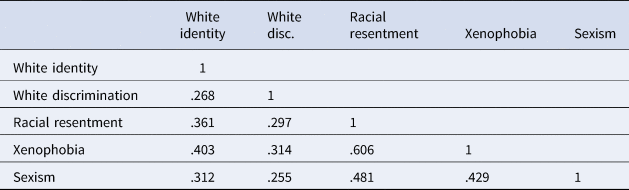
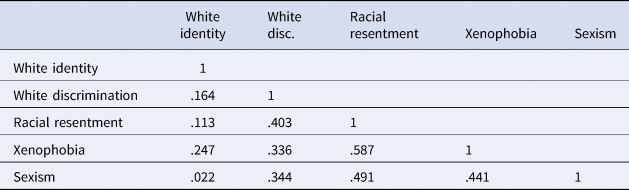
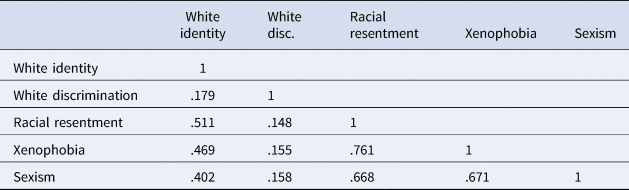
Across all models and datasets, racial resentment is operationalized using the four items from Kinder and Sanders (Reference Kinder and Sanders1996), and white identity is measured using the three items developed by Jardina (Reference Jardina2019). Models using the white discrimination measure as a proxy for white identity in the tradition of Sides et al. (Reference Sides, Tesler and Varveck2019) are included in Appendix Tables B1–B3 and are discussed in the main text only in terms of their similarities and differences in performance relative to the Jardina measure. Xenophobia and sexism are measured somewhat differently across the dataset because the three sources do not include identical measures. For the xenophobia items, we combined all the measures from each dataset that referenced immigrants and refugees (six items for ANES 2016 pilot, ten items for ANES 2016 time-series, and seven items for ANES 2018 pilot). The exact items are listed in Appendix E.Footnote 5 The indices for racial resentment, xenophobia, and sexism across datasets are reliable (α > .7). The white identity measure exhibits lower levels of reliability.Footnote 6 All indices are constructed by taking an additive average of the items and rescaling them on 0–1 continuous scales. Binary correlations between these key independent variables suggest that these relationships range between .2 and .6 and thus do not present any multicollinearity issues.
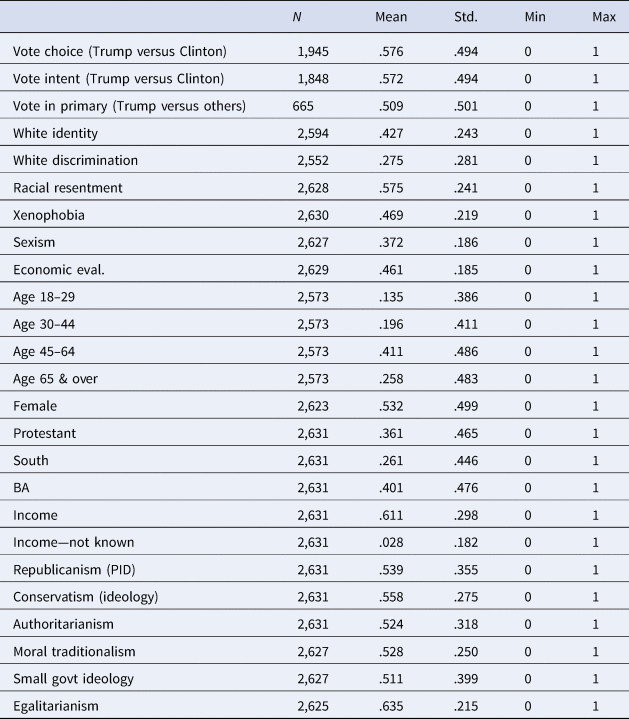
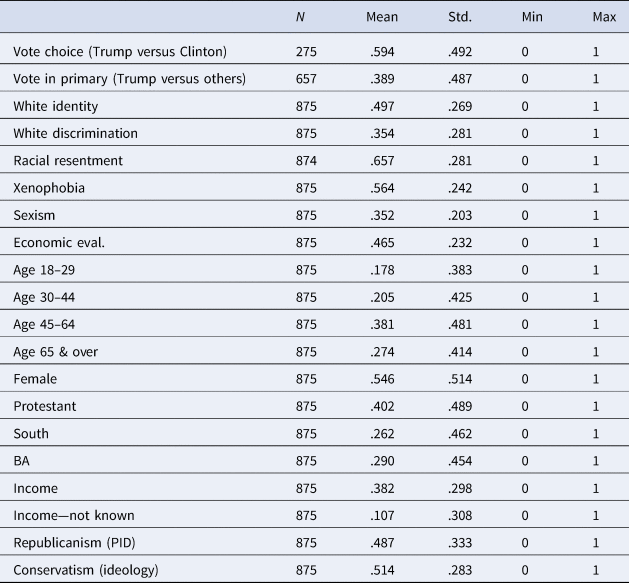
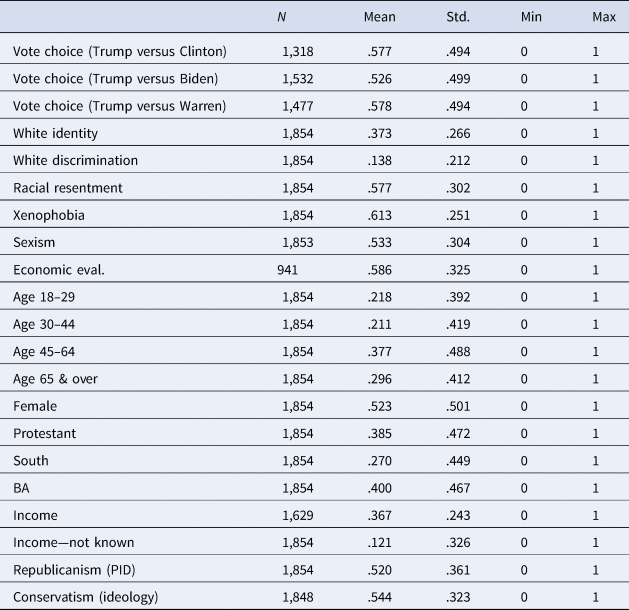
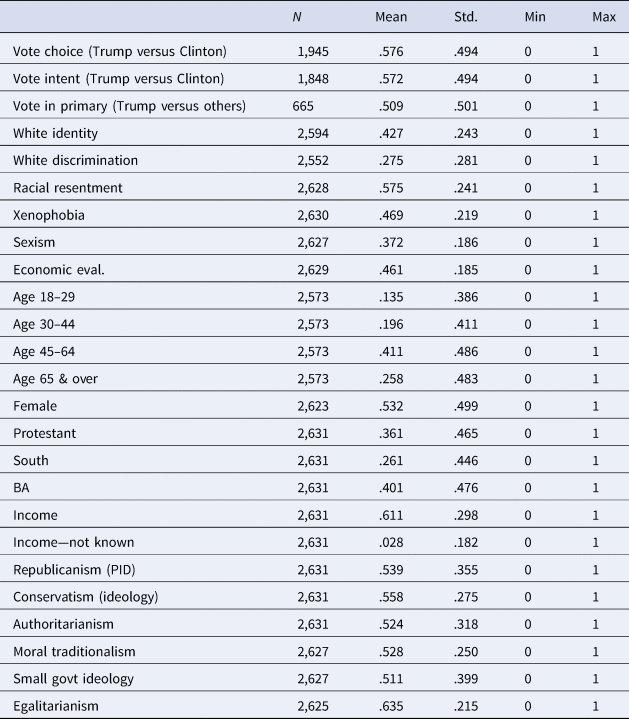
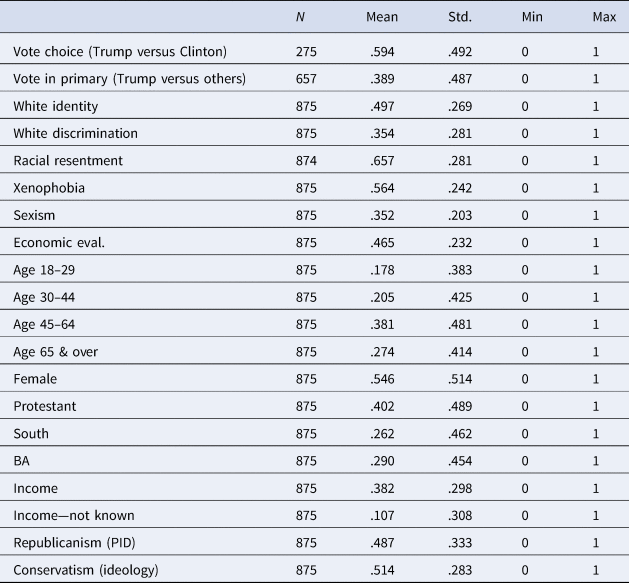
The models also include the following controls: evaluation of the economy, partisanship, ideology, gender, age, education (college degree), income, Protestant religion, and residence in the South. Unlike the Pilot studies, the 2016 ANES time-series includes four additional measures that have been shown to influence candidate choice: authoritarianism, egalitarianism, small-government ideology, and moral traditionalism. For reasons of consistency in presentation, we opted not to include these variables in the analyses exhibited in the main text. In Appendix D, we present all 2016 ANES models with these four measures included. The key findings remain unchanged. All models are based on non-Hispanic white respondents alone. We standardized all variables on a 0 to 1 scale consistent with their original nature. Using consistent scaling facilitates comparisons across models. Descriptive statistics for all three datasets are shown in Appendix Tables C1–C3.
4.1 The 2016 Republican primary
Our first set of models explore the role of white ingroup favoritism and outgroup biases in predicting support for Trump in the 2016 Republican primary. This question was asked of all ANES respondents in the 2016 pilot and of all who indicated that they voted in a party primary in the 2016 time-series study. As a result, we present two sets of analyses: one set includes all-white respondents and a second set includes only white Republican identifiers and leaners.
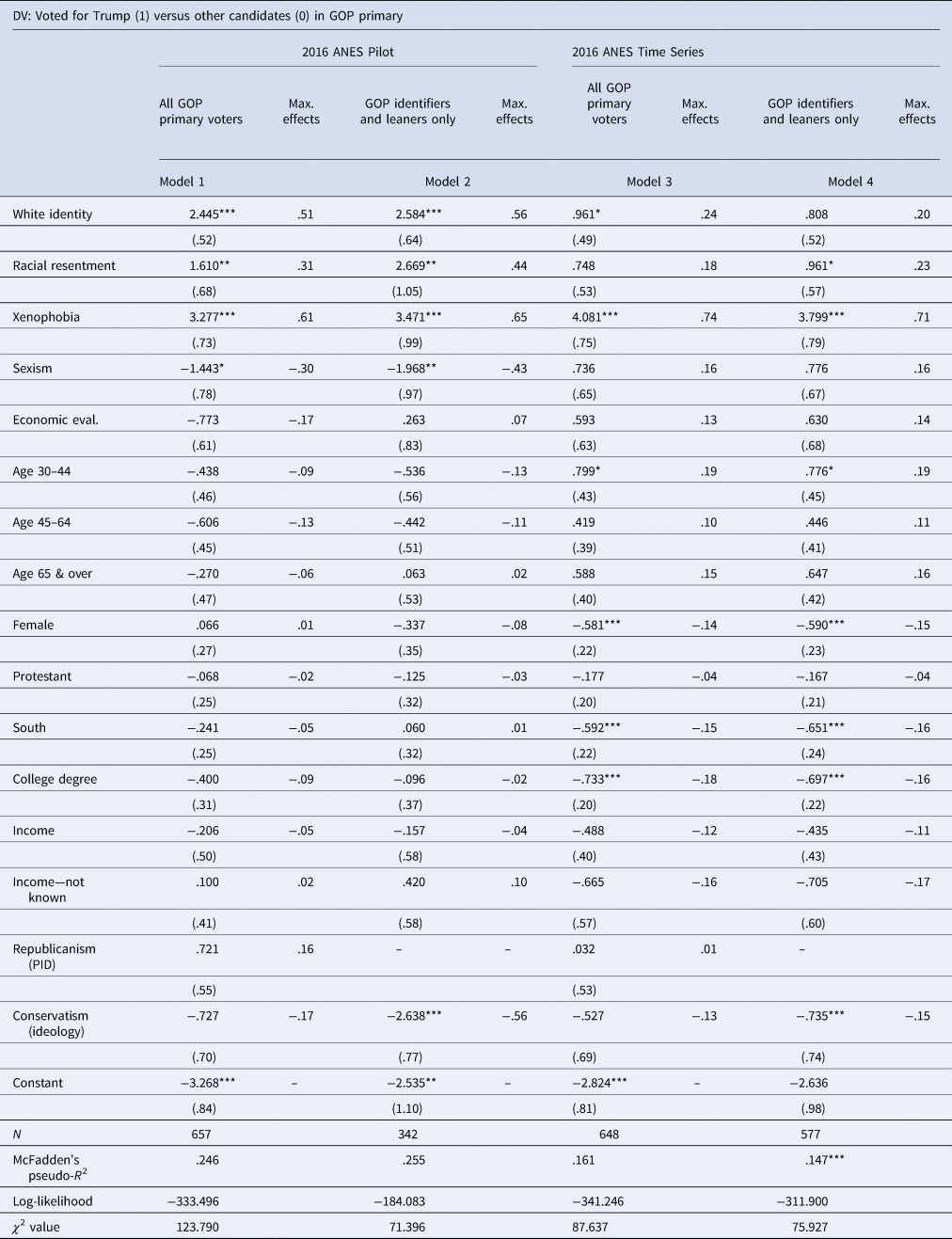
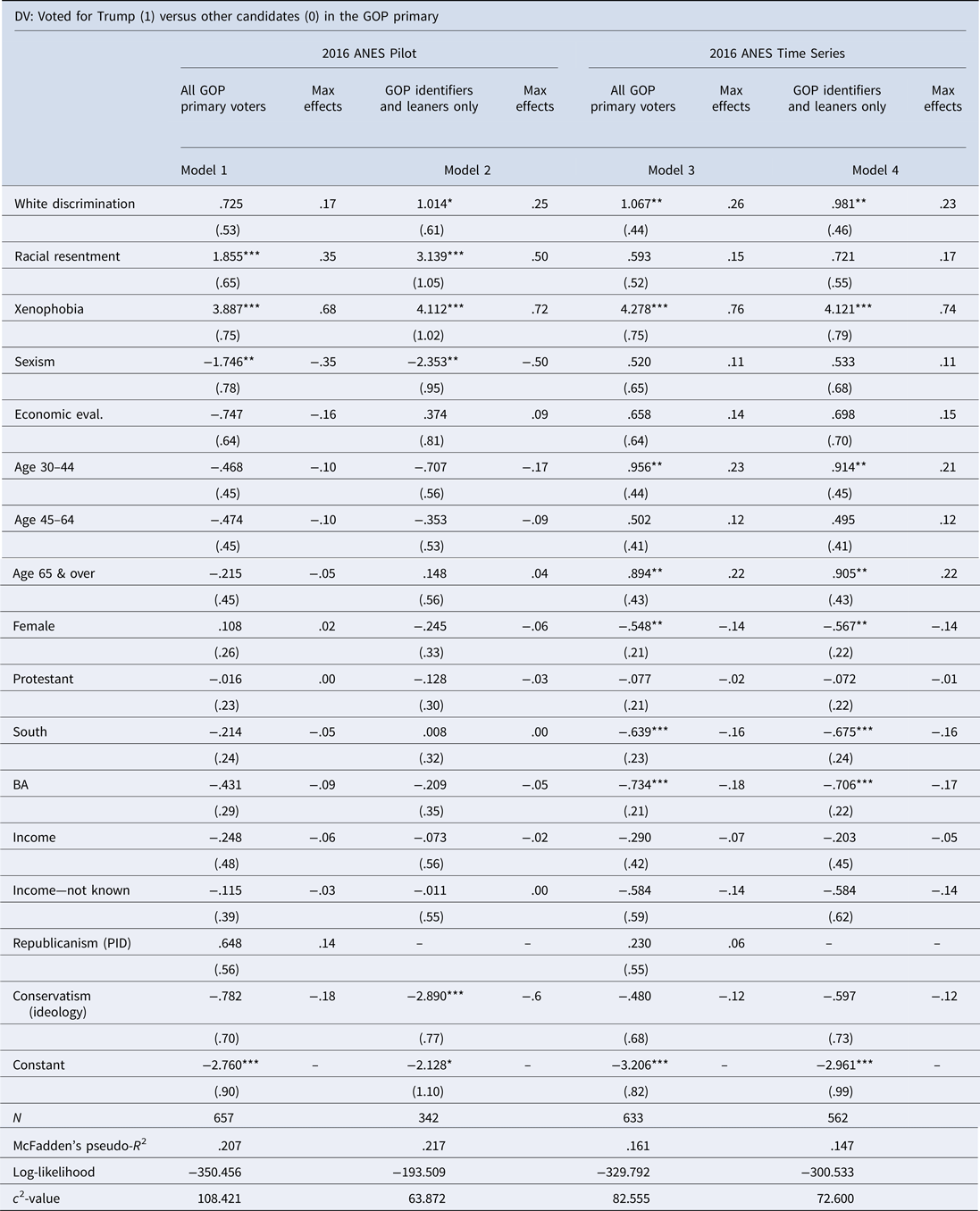
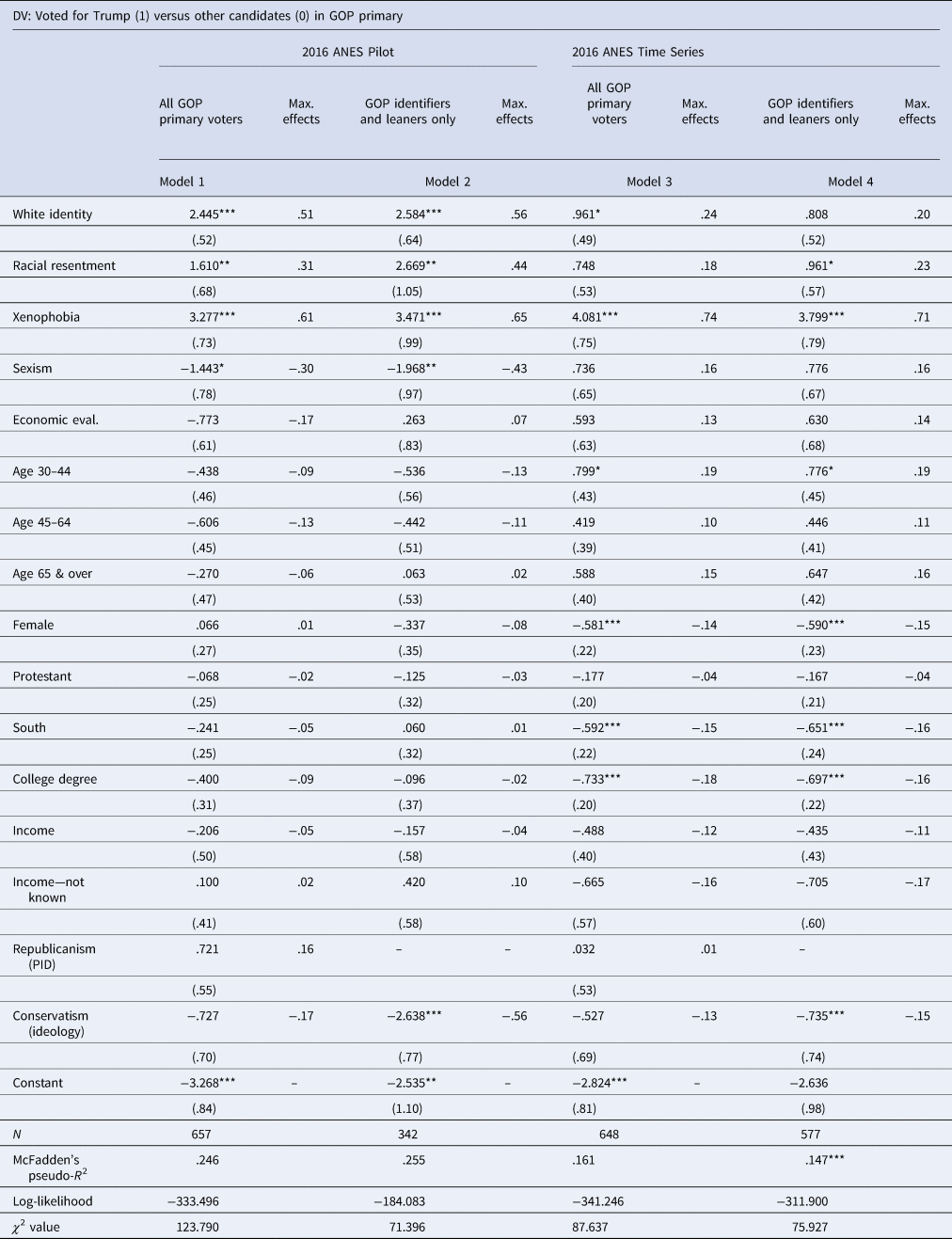
In Table 1, model 1 shows the results of support for Trump in the 2016 Republican primary among all white respondents. The second column shows the change in probability (maximum of voting for Trump when the relevant predictor goes from its lowest (zero) to its highest point (one)). Therefore, these can be thought of as “maximum effects.” White identity, racial resentment, and xenophobia are statistically significant and positive consistent with the prediction that higher scores on these measures should correlate with stronger support for Trump. However, sexism is significant (p < .1) but negative, which indicates that white voters who scored high on sexism may have intended to vote for Republican candidates other than Trump. Turning to substantive effects, white identity and xenophobia appear to have the strongest effect on voters who participated in the Republican primary. Specifically, a shift from the lowest to the highest level of white identity corresponds to a 51% increase in the likelihood of casting a vote for Trump, while holding all other independent variables constant at their means. A shift from the lowest to the highest point on the xenophobia scale corresponds to a 61% increase in the probability of voting for Trump over a different Republican. The effects of racial resentment and sexism are in the second tier of predictors. A change in racial resentment from its minimum to its maximum value corresponds with a 31% increase in the likelihood of voting for Trump, while a similar change in the sexism scale correlates with a 30% decline in support for Trump. In Table 1, model 2 shows very similar results when the regression is restricted to Republicans and Republican leaners. In Table 1, model 2, ideology is also statistically significant and negative, which suggests that Republicans who also identified as conservative were less likely to vote for Trump in the primary than were more liberal Republicans. At this stage, Trump was not viewed as a conservative candidate but rather as a moderate one.
Logistic analyses of vote choice in the 2016 GOP primary (white respondents only)
The fact that sexism had not been associated with Trump in the primary context by January 2016 is somewhat surprising especially given the extensive coverage that Trump's attitudes towards women had generated in 2015. It is possible that at this stage of the campaign, sexist Republicans preferred more hawkish hopefuls and candidates who took more explicitly conservative positions on issues such as abortion and traditional family values.
In Table 1, model 3 is based on the 2016 ANES and thus it represents respondents' recall of their vote in the 2016 Republican primary. The study asked voters if they had participated in the Republican primary and if they did, it asked which candidate they voted for. As in the case of model 1, model 3 includes all respondents, regardless of partisan affiliation, who said they voted in the Republican primary. Once again, xenophobia is statistically significant and positive. White identity is statistically significant and positive but only at p < .1. Racial resentment and sexism are positive but they are not statistically significant. The result for sexism here is inconsistent with what we report for the 2016 ANES Pilot where sexism was negative and significant in both models. In this model, gender (female), South, and education (College degree) are all statistically significant and negative suggesting that women, Southerners, and those with a college degree were less likely to report having voted for Trump in the Republican primary. Once again, xenophobia has the strongest substantive effect (74%) while white identity is in the second tier of predictors (24%), followed by being female (−14%), education (−18%), and residence in the South (−15%).
When we subset the 2016 ANES data to include only Republican identifiers and leaners (Table 1, model 4), xenophobia continues to be positive and statistically significant while racial resentment strengthens and becomes significant (p < .1). However, white identity loses statistical significance while sexism is also not significant. As was the case with model 3, gender, education and residence in the South are all negative and statistically significant. In this model, ideology is also statistically significant and negative indicating that conservative Republicans were less likely to recall voting for Trump in the primary. In terms of substantive effects, the results are consistent with model 3. Xenophobia has the strongest effect (71%) while racial resentment is in the second tier of predictors: a change in anti-black attitudes from the lowest to the highest value corresponds to a 23% increase in the likelihood that a white Republican voter would report having voted for Trump in the primary.Footnote 7
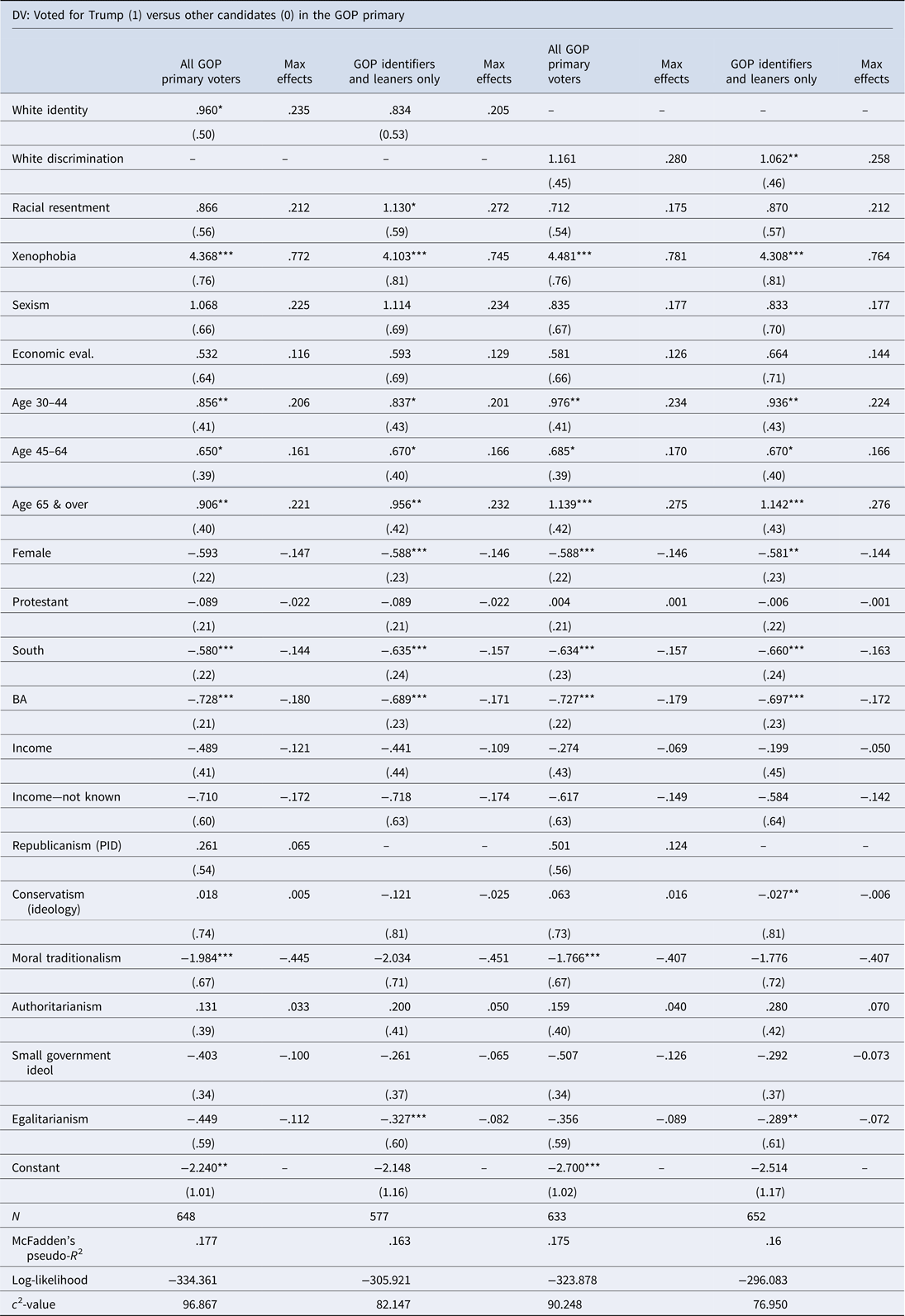
As a robustness check, we specified the same models but swapped white identity with the white discrimination measure. As Appendix Table B1 shows, white discrimination is positive and statistically significant in three of the four models, but the substantive effects are somewhat smaller than those for the white identity measure, possibly because the measure consists of a single item.
4.2 The 2016 presidential election
Our next set of models turn to the 2016 general election where Donald Trump competed as the Republican nominee against Democrat Hillary Clinton. These models include only those white respondents who indicated that they intended to vote or voted for either Trump or Clinton in the election. Here we present four parallel models. One model is from the 2016 ANES Pilot, which records the intent to vote for Trump in the general election well before Trump became the Republican nominee. A second model uses data from the 2016 ANES pre-election wave, which was fielded in October 2016 and asked the intent to vote for Trump or Clinton a few weeks before the election took place. A third model is based on the 2016 ANES post-election wave and asks respondents to recall who they voted for in the general election. And the fourth model is also a recall question from the 2018 ANES Pilot, two years after the 2016 election. It is important to note that in the last model we omitted the economic evaluation measure because the 2018 ANES Pilot does not include voters' assessment of the economy in 2016 which would be the theoretically appropriate item.
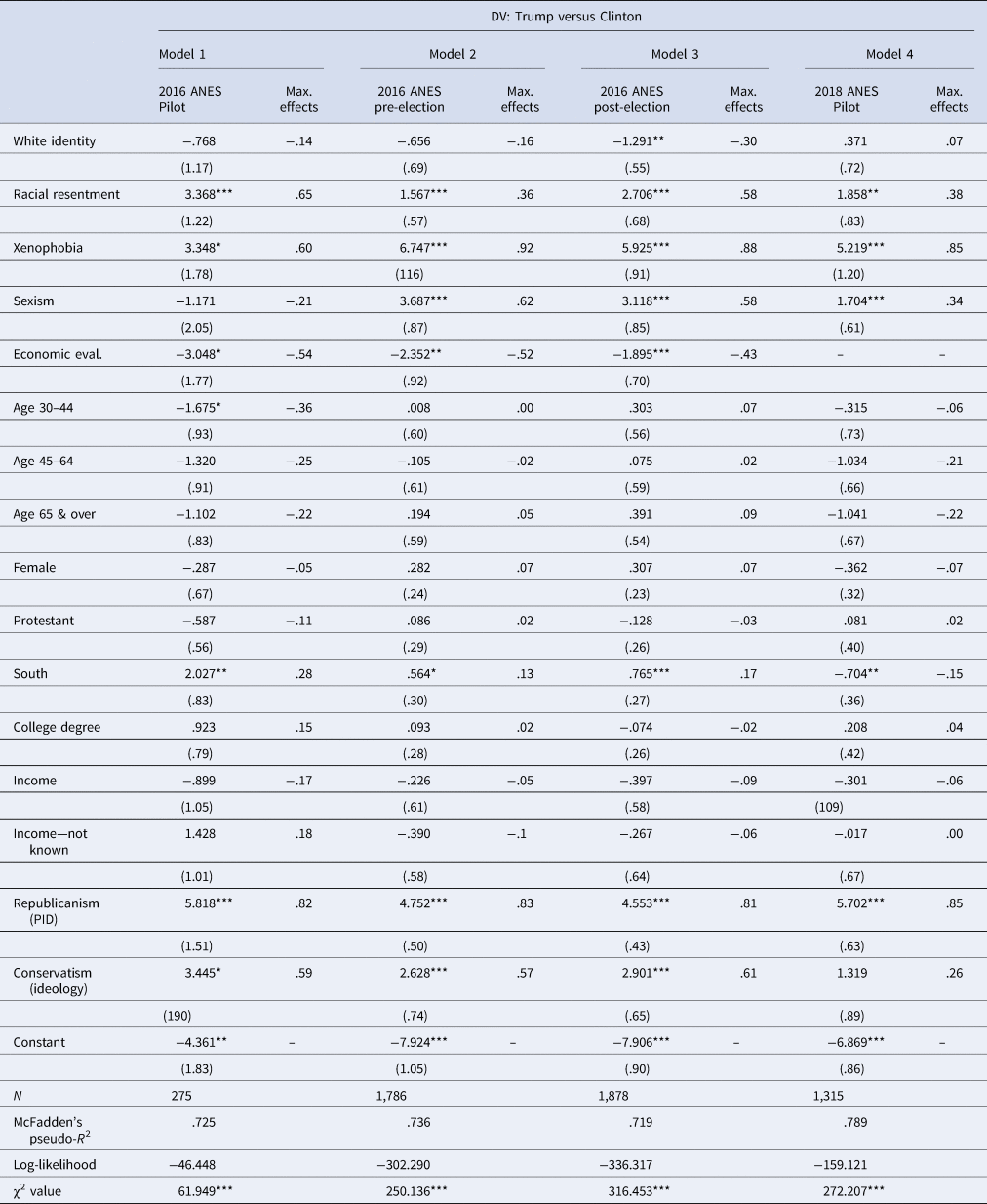
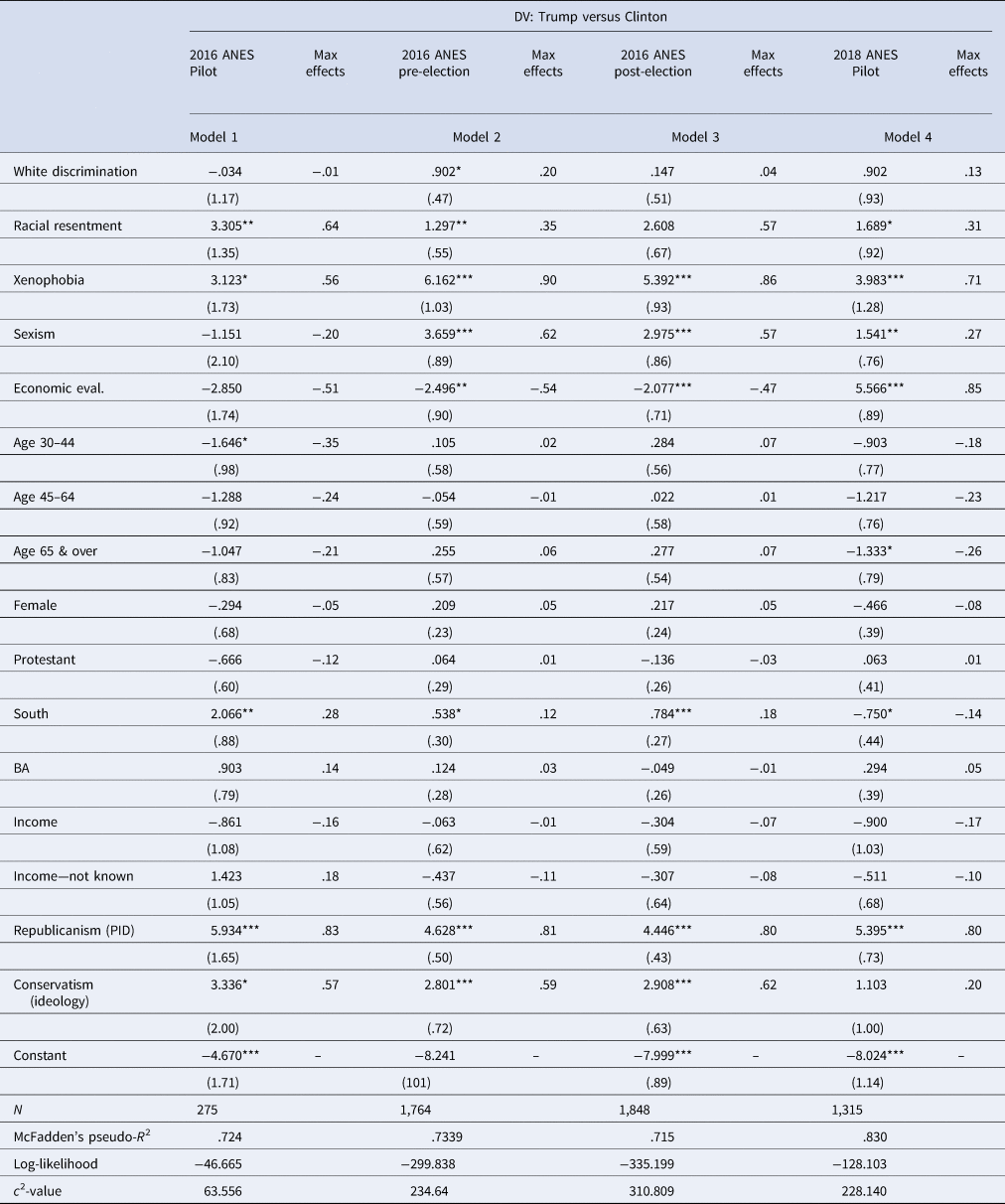
Table 2, model 1 based on the 2016 ANES Pilot, shows that xenophobia is positive and statistically significant as a predictor of vote intent for Trump in early 2016. This is consistent with the theory and with the results from the primary election contest that we presented above. Racial resentment is also positive and statistically significant. White identity and sexism are both negative but lack statistical significance. As expected, partisanship and ideology are both positive and significant, while residence in the South is also positive and significant consistent with what would be expected for the general election. Prospective economic evaluation is significant and negative, suggesting that voters who were pessimistic about the economy were more likely to vote for Trump (the non-incumbent party).
Logistic regression analyses of projected and recalled vote choice in 2016 election (white respondents only)
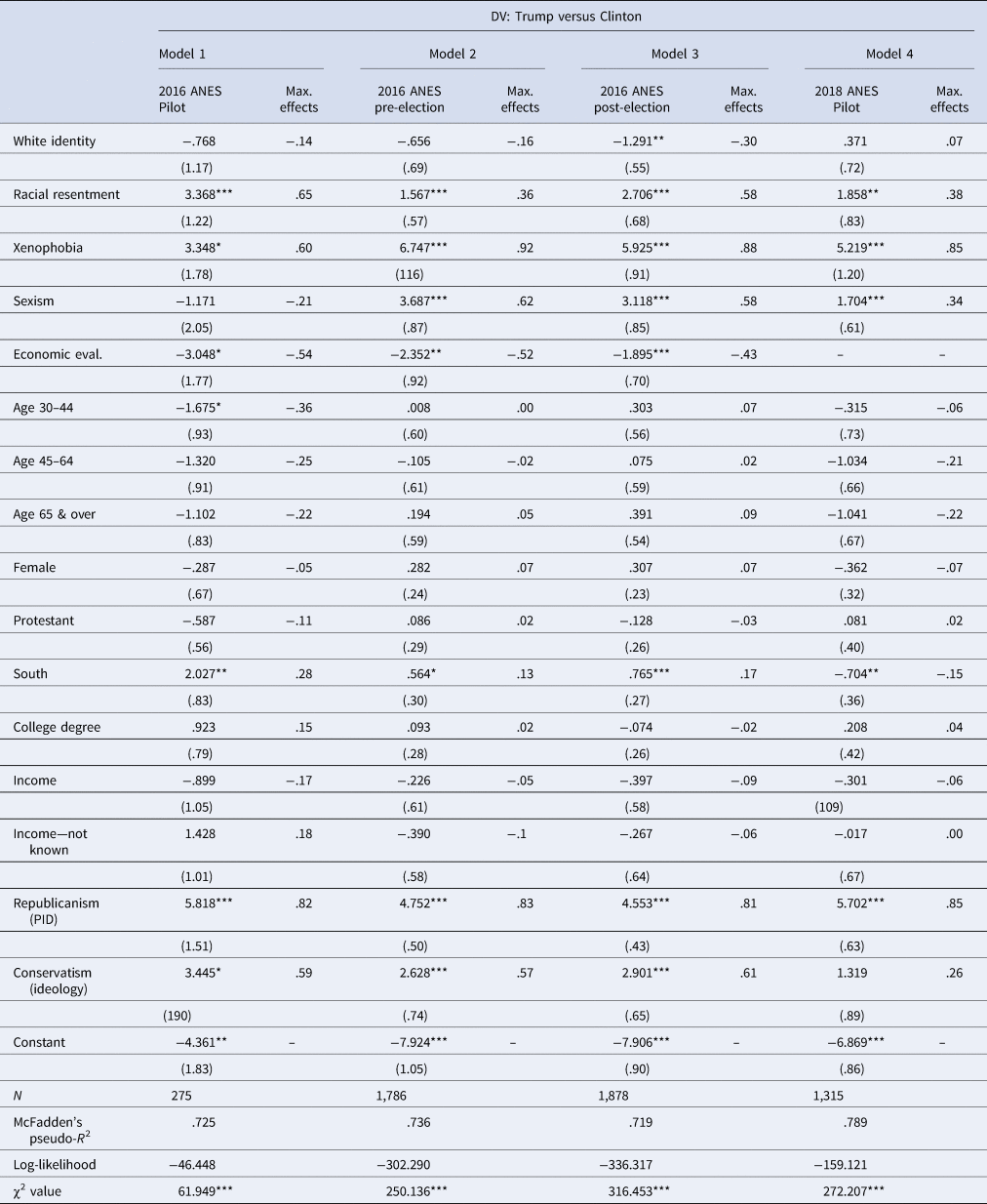
Robust standard errors in parentheses. All analyses weighted.
The models exclude respondents who did not identify either Trump or Clinton as their preferred candidate (i.e., don't know, third party candidates).
***p < .01; **p < .05; *p < .10 (two-tailed).
Turning to maximum effects, partisanship is the strongest predictor of intent to vote for Trump over Clinton. Whites who identify as strong Republicans are 82% more likely to express an intent to vote for Trump than are whites who identify as strong Democrats. Racial resentment (65%), xenophobia (60%), prospective economic evaluation (54%), and ideology (59%) fall in the second tier of predictors in terms of substantive effects. Residence in the South is in a lower tier: Southerners are 28% more likely than non-Southerners to express intent to vote for Trump over Clinton in early 2016.
In Table 2, model 2 shows the model for intent to vote for Trump based on the 2016 ANES pre-election wave, which was recorded in October 2016. Here again, we see that xenophobia and racial resentment are statistically significant and positive, indicating that those who score higher on these measures are more likely to express an intent to vote for Trump over Clinton. In this model, which captures attitudes closer to the election, sexism is also significant and positive. However, white identity is null and the sign of the coefficient is negative. Consistent with expectations, partisanship, ideology, and residence in the South are positive and statistically significant; prospective economic evaluation is also significant but negative.Footnote 8
In terms of substantive effects, xenophobia (92%) and partisanship (83%) are in the top tier of predictors. The effect of xenophobia appears increased by about 30% relative to January 2016, which likely reflects the centrality of anti-immigrant pronouncements in Donald Trump's messaging. Sexism is in the second tier of correlates, along with ideology (59%) and prospective economic evaluation (−52%). A shift from the lowest to the highest level of sexism corresponds to a 62% increase in the probability of expressing an intent to vote for Trump over Clinton in October 2016. By contrast, the maximum effect of racial resentment is 36%, half as strong as in January 2016. In the lowest tier of predictors, residence in the South has a substantive effect of 13%, which is also lower than in January 2016.
In Table 2, model 3 presents results of reported vote choice in the presidential election among white Americans as recorded in the 2016 ANES post-election wave. In this model, xenophobia, racial resentment, and sexism are all statistically significant and positive, as expected. White identity is also statistically significant but carries a negative sign which suggests that those who score higher on white ingroup favoritism were more likely to report voting for Clinton over Trump in the general election. This contradicts earlier findings by Jardina (Reference Jardina2019) and Sides et al. (Reference Sides, Tesler and Varveck2019) who showed a positive correlation between measures of white identity and support for Trump in the national election. As expected, partisanship, ideology, and residence in the South are all positive and statistically significant while prospective economic evaluation is negative and statistically significant.Footnote 9
The maximum effects column shows that similar to other models, xenophobia (88%) and partisanship (81%) are in the top tier of predictors, followed by ideology (63%), racial resentment (58%), sexism (58%), and prospective economic evaluation (−43%). White identity is in a lower tier of predictors: a shift from the highest to the lowest value of the white identity scale corresponds with a 30% decline in the probability of reporting having voted for Trump over Clinton.
In Table 2, model 4 shows the results of a model based on recall of vote choice in 2016 that was recorded in the 2018 ANES Pilot. Once again, xenophobia, racial resentment, and sexism are all statistically significant and positive, indicating that higher values predict a higher likelihood of reporting to have voted for Trump over Clinton in 2016. In this model too, white identity is not statistically significant. Partisanship and ideology are also positive and statistically significant, consistent with the previous models and with theory. This model does not include a measure of prospective economic evaluation because the survey did not ask the respondent's recall of the state of the economy in 2016. In terms of substantive effects, this model is very consistent with the previous three models. Once again, xenophobia (85%) and partisanship (85%) are in the top tier of correlates, followed by racial resentment (38%), sexism (34%), and ideology (28%).
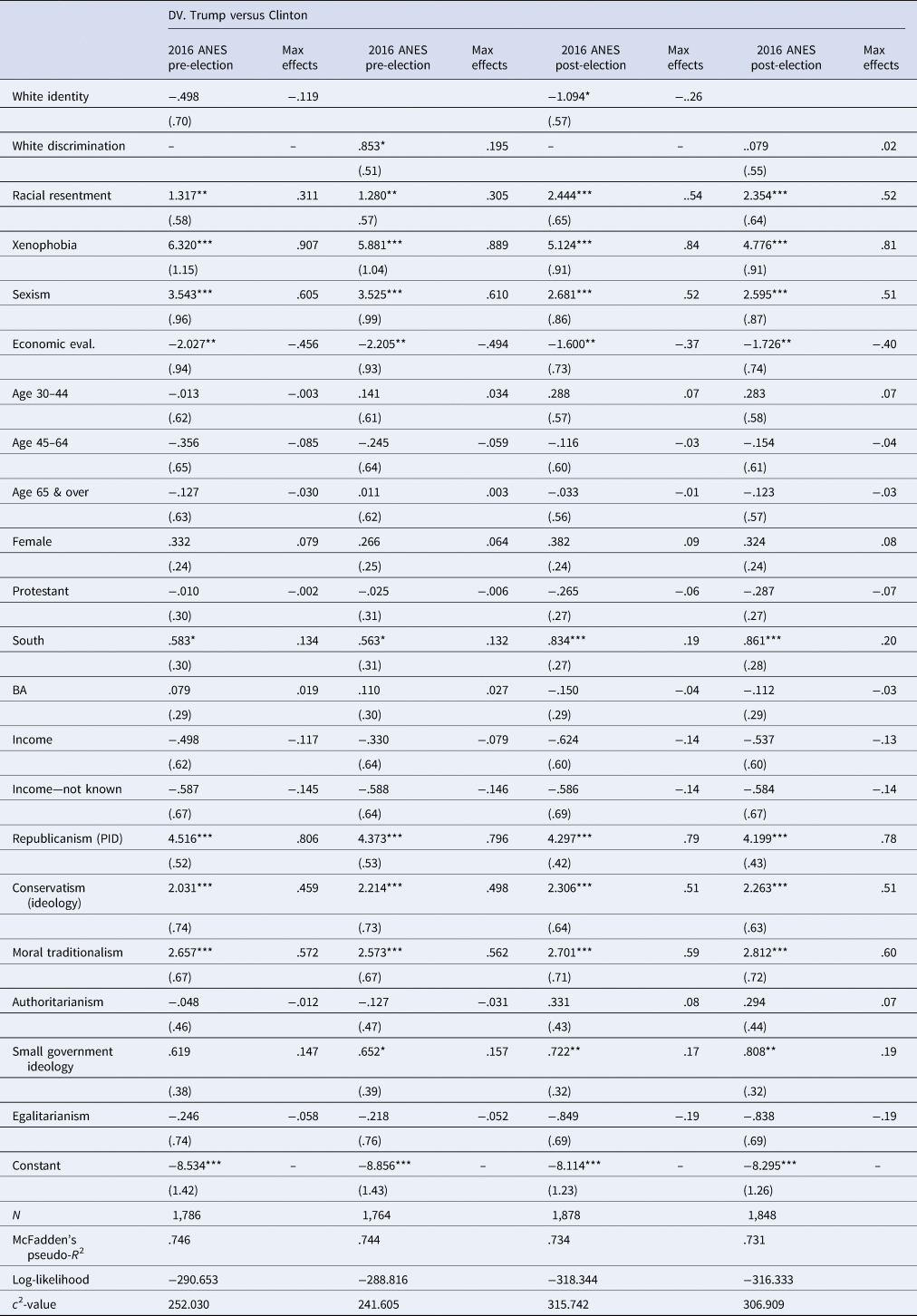
Models with white discrimination in lieu of white identity also produced null results for most of the Trump versus Clinton models. Only in the 2016 ANES pre-election model was white discrimination statistically significant, but unlike it was the case with white identity, the direction of the coefficient was positive indicating that stronger beliefs that whites are being victims of racial discrimination correspond to a higher likelihood to vote for Trump over Clinton, relative to weaker beliefs in white discrimination (see Appendix Table B2).
4.3 The 2020 election contests
The 2018 ANES Pilot includes two questions related to the 2020 national election. It asks all respondents to decide whether they would vote for Donald Trump or Joe Biden, or for Donald Trump or Elizabeth Warren. These items allow us to move past the 2016 election and investigate the likely role of outgroup biases and white ingroup identity in the upcoming 2020 election. Needless to say, there are important limitations to these analyses. First, they are based on voters' responses recorded in late 2018, before candidates had formally declared, long before Bob Mueller submitted his report to the Department of Justice, the Ukraine scandal broke, Donald Trump was impeached, and the COVID-19 pandemic occurred. The Ukraine scandal is especially important because it involves not only Trump but also Joe Biden who was implicated in a conspiracy theory involving his son's dealings in that country. Second, unlike the 2016 election, it was not yet clear by December 2019 who may be the Democratic frontrunner in 2020. It is thus likely that outgroup biases, as well as ingroup favoritism, may have shown a different level of effect in the Trump versus Biden choice if the data had been collected today when we also know that Kamala Harris, a black woman, is the vice-presidential nominee.
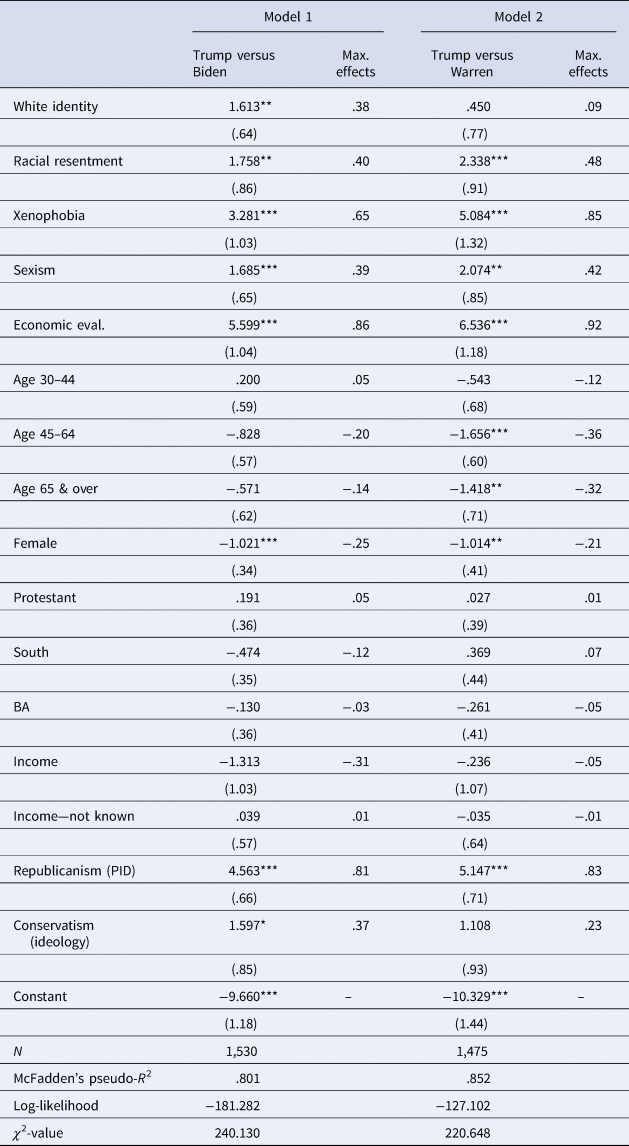
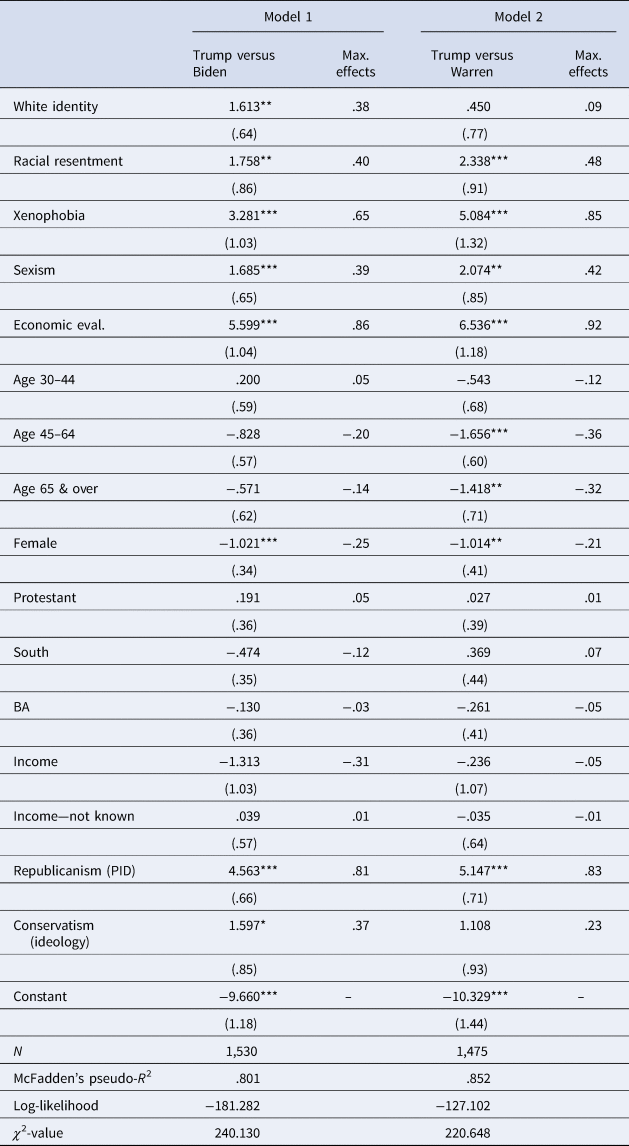
In Table 3, model 1 shows the results of a logistic regression related to the choice between Trump and Biden. Racial resentment, xenophobia, sexism, and white ingroup identity are all statistically significant at conventional levels (p < .05) and positive, denoting that individuals who score higher in each of these sets of attitudes are more likely to support Trump over Biden in a hypothetical presidential matchup. It is important to note that this is the first model of a national election contest where we find that white identity has a statistically significant effect in the expected positive direction. Partisanship and ideology are also significant and positive; as expected, Republicans and Conservatives are more likely to declare their intention to vote for Trump over Biden. Prospective economic evaluation is also positive and statistically significant, consistent with extant theory arguing that all else being equal, voters who have a positive view of the economy are more likely to vote for the incumbent President/party. White women are less likely to vote for Trump in a matchup against Biden and this is also statistically significant. None of the other demographic variables are statistically significant.
Logistic regression analyses of projected vote choice in 2020 election (white respondents only)
Robust standard errors in parentheses. All analyses weighted.
***p < .01; **p < .05; *p < .10 (two-tailed).
Turning to the size of the substantive effects, prospective economic evaluation has a stronger effect on voter choices: a change in beliefs about the economy from the most pessimistic to the most optimistic is associated with an 86% increase in the likelihood of voting for Trump. Similarly, a shift from the strong Democrat to the strong Republican end of the partisanship scale is associated with an 81% increase in the probability of voting for Trump. Among the group-level measures, xenophobia exhibits the strongest substantive effect: a shift from the lowest to the highest level of xenophobia is associated with a 65% increase in the likelihood of voting for Trump. The substantive effects of ideology (37%), racial resentment (40%), sexism (39%), and white identity (38%) are practically identical and fall in the second tier of predictors. The effect of white identity here appears to be smaller than what we saw for the models of the Republican primary.
In Table 3, model 2 shows the results of the Trump versus Warren vote choice. Here, racial resentment, xenophobia, and sexism are the three group-level indicators that are statistically significant. All are positive which is the expected direction. White identity is not statistically significant in the model with Elizabeth Warren, much like it was not statistically significant in two of the three models involving Clinton. As a reminder, the 2016 ANES analyses showed a statistically significant but negative correlation between white identity and support for Trump against Clinton. The other two models related to the 2016 election showed a null effect of white identity. Among key controls, partisanship and prospective economic evaluation are positive and statistically significant while age and being female are significant but negative.
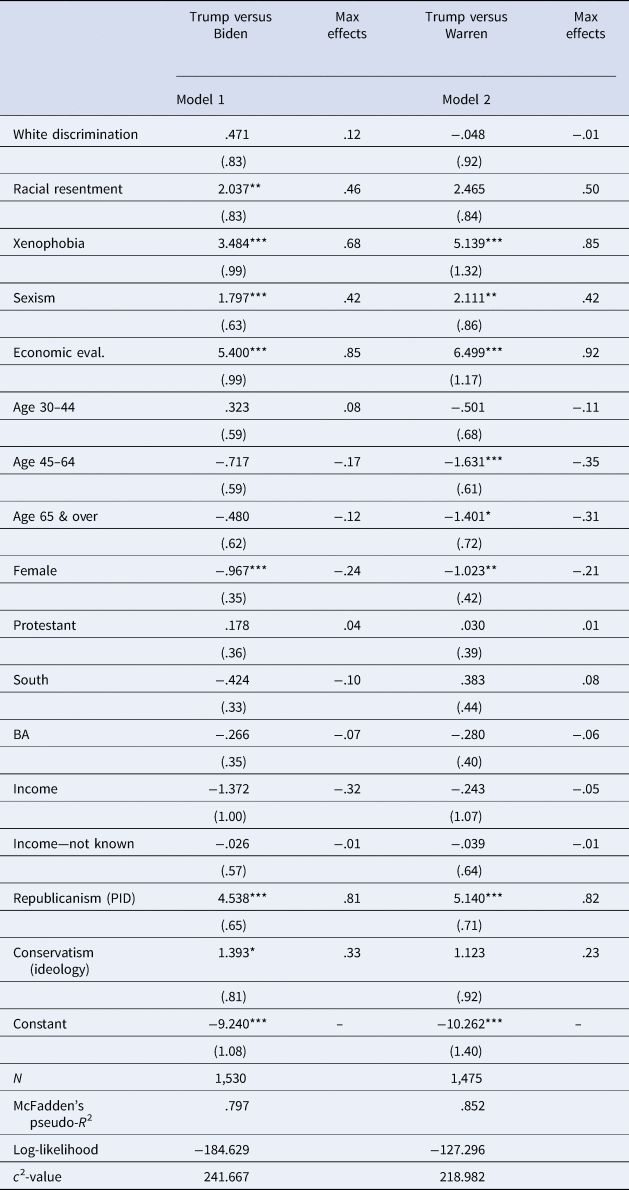
Looking at substantive effects, here again, prospective economic evaluation (92%), partisanship (83%), and xenophobia (85%) are in the top tier of predictors. Racial resentment (48%) and sexism (42%) are in the second tier of predictors. It is important to note that the models using the white discrimination measure showed null effects for this ingroup favoritism item for both the Biden model and the Warren model (Appendix Table B3).
5. Discussion
Our analyses based on three ANES studies confirm that xenophobia was a key component of Trump's electoral appeal since the primaries, a link that only grew stronger in the general election. The 2018 ANES Pilot results also suggest that xenophobia will continue to be a potent motivator of support for Trump in a 2020 contest against Biden. Had Elizabeth Warren been the nominee, xenophobia would have likely been a strong predictor of opposition to her as well. This is not surprising given the central role that the border wall and the “muslim ban” have had in the Trump campaign and the willingness of the candidate to portray undocumented immigrants as criminals and refugees as a social and security threat. Thus we can expect to see further pushes from the Trump Administration on immigration as we approach the general election. Given the changing political environment surrounding the election, it is likely that the focus will be on “illegal” voters, as well as immigrants as vectors of disease and especially COVID-19. Racial resentment was also a key predictor of support for Trump since the primaries and it will likely continue to play an important role in the upcoming 2020 election. Although across the board, racial resentment took a second seat relative to xenophobia, it is likely that the elevation of Kamala Harris to the position of vice-presidential nominee will produce increased activation of racial resentment among whites as it did in the case of Obama.
Although Trump has taken awkward steps to appeal to African–Americans by bragging on Twitter that under his watch unemployment among blacks “is at its lowest number in history” (The Fix, 2020), his rhetoric in the summer of 2020 focused on overt racism, branding the Black Lives Movement as violent, socialist, and un-American, and warning his white base that protests against police brutality will compromise public safety and law and order. Certainly, the absence of a black candidate from the Democratic ticket may have rendered racial attitudes less central to voting decisions in the 2016 election relative to the Obama era. Yet, looking to the future, we need to understand better whether, how, and to what degree Biden's association with Obama as well as the candidacy of Kamala Harris may influence whites' vote intentions in the 2020 general election. On one hand, retrospective job approval for Obama which stood at 63% in 2018 according to Gallup, may boost Biden's chances. On the other hand, Biden's role as Obama's vice president may have “racialized” him, that is, associated him with negative racial attitudes in white minds. Furthermore, Kamala Harris' identity as a black-Asian woman and a child of immigrants may complicate how white audiences respond to her.
Certainly, more research is needed on this to determine whether the heightened racial effects associated with policy and political personnel attitudes during the Obama era (Tesler, Reference Tesler2016) may have subsided or given rise to stronger associations between political cognitions and xenophobia. Given that our results suggest that racial resentment is affecting support for white candidates, some associated with Obama (e.g., Clinton and Biden), but others less so (Warren), we may want to think more about the possibility that racial stereotypes have developed for the parties themselves, a possibility consistent with the conclusion of the racial realignment and the studies showing that racial attitudes (and xenophobia) predict partisanship.
Our results introduce challenges for the new measure and theory of white identity. First, across three ANES studies, the measure displays relatively low levels of statistical reliability, which is a problem in itself. This may be because even though the measure purports to tap ingroup favorability, at least one of the items also taps competition with outgroups (“whites may be losing jobs to minorities”). Second, and given the measure's low alpha score, it is not surprising that the item is statistically significant only in a subset of models. Our results provide relatively consistent evidence that white identity may have influenced support for Trump in the Republican primary. However, it is not clear whether this is because his strongest opponents were Latinos (Cruz and Rubio), which would be consistent with the Petrow et al. (Reference Petrow, Transue and Vercellotti2018) thesis that white identity comes to play only in interracial contests, or if political judgments in primary settings are qualitatively different than in general elections. In essence, a primary election may require white voters to determine who best represents two key identities: party and race. Thus the importance of the positive white ingroup dimension may be accentuated in such a setting. Obviously, additional theorizing and testing are necessary to understand how the meanings associated with partisan and racial identities within each party may differ and in what ways.
When it comes to general election contests, unlike Jardina (Reference Jardina2019) and Sides et al. (Reference Sides, Tesler and Varveck2019), we find that white identity had no effect on support for Trump relative to Clinton when controlling for xenophobia and sexism in addition to racial resentment. In fact, in one model, we find that white identity is negative and significant which suggests that it contributed to increased rather than decreased support for Clinton. Equally puzzling is that in the 2018 data, white identity is a significant predictor of support for Trump against Biden, but not against Warren. If these results are not an artifact of the measure, additional research is needed to understand the relationship between a candidate's race/gender and the activation of white identity in interparty contests. Our exploration shows no evidence of a statistically significant interaction between partisanship and white identity in any of the models, so more thinking needs to go into these issues.
Recent studies have also shown that over the past two years, the average level of white anti-black attitudes has subsided significantly. Panel and cross-sectional data including various measures of racial attitudes appear to show similar trends (Fording and Schram, Reference Fording and Schram2020; Hopkins and Washington, Reference Hopkins and Washington2020). More studies are needed to determine whether this is a product of increased social desirability pressures or a genuine shift in white attitudes, and what effect, if any, this trend may have on whites' electoral choices in 2020 and beyond.
6. Conclusion
Apocryphal attributions suggest that the phrase “may you live in interesting times” is a Chinese curse. As citizens, over the past decade, we have been exposed to rising racial prejudice and anti-immigrant bias in public life, increasing social inequality, and more recently a direct assault on governmental institutions and what those norms that Levitsky and Ziblatt (Reference Levitsky and Ziblatt2017) have termed “the soft guardrails of democracy.” As researchers, both the white reactionary mobilization that led to the election of Donald Trump and the subsequent erosion of national democratic norms and the resistance to it coming from various quarters represent fertile ground for study. These changes in the political environment have tested our assumptions about the prevalence of various forms of outgroup bias within white American society, the centrality and power of norms of racial equality as well as the mechanisms through which they may work or even become muted. New ideas have emerged that focus on intersections of race, gender, and outgroup attitudes, and fresh perspectives advocate for a closer look at ingroup identities, at the role of leaders and followers within political and racial groups, and the impact that this new environment has on minorities, their identities, their politics, and their attitudes. It is unfortunate that progress in our field and our discipline's emergent vibrancy and increased recognition within political science comes at such immense social and political cost, which may take decades to fully identify and measure.
Acknowledgments
We would like to thank Alvin Tillery, Rodney Hero, James Druckman and the Druckman lab at Northwestern University, and anonymous reviewers for helpful comments. An earlier version of this paper was presented at the 2019 American Political Science Association Annual Meeting, August 29 - September 1, Washington DC.
Appendix A: Correlation matrices
Correlations between ingroup measures and outgroup measures 2016 ANES Pilot
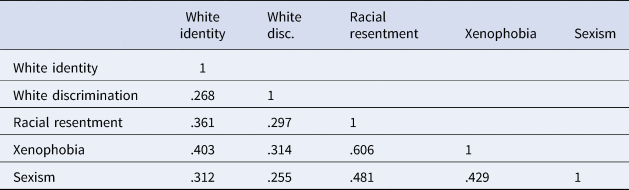
Correlations between ingroup measures and outgroup measures 2016 ANES Pilot
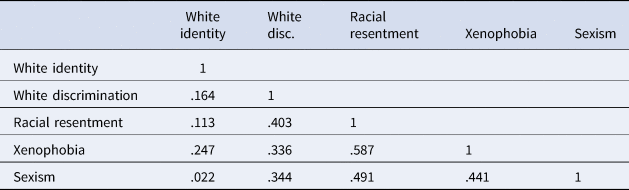
Correlations between ingroup measures and outgroup measures 2018 ANES Pilot

Appendix B: Analyses of the vote for Trump with white discrimination instead of white identity
Logit analyses of vote choice in the GOP primary
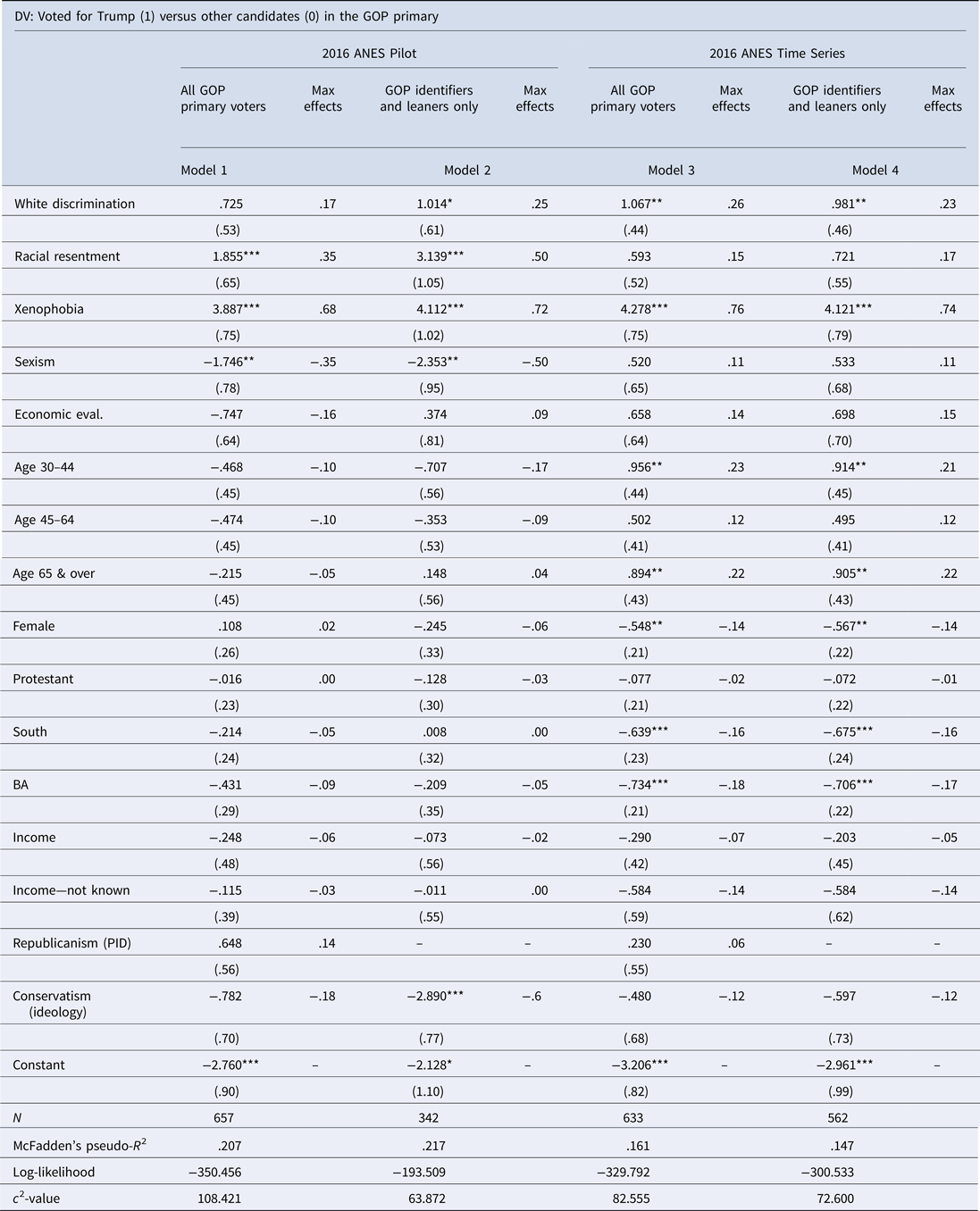
Logistic regression analyses of projected and recalled vote choice in the 2016 election (white respondents only)
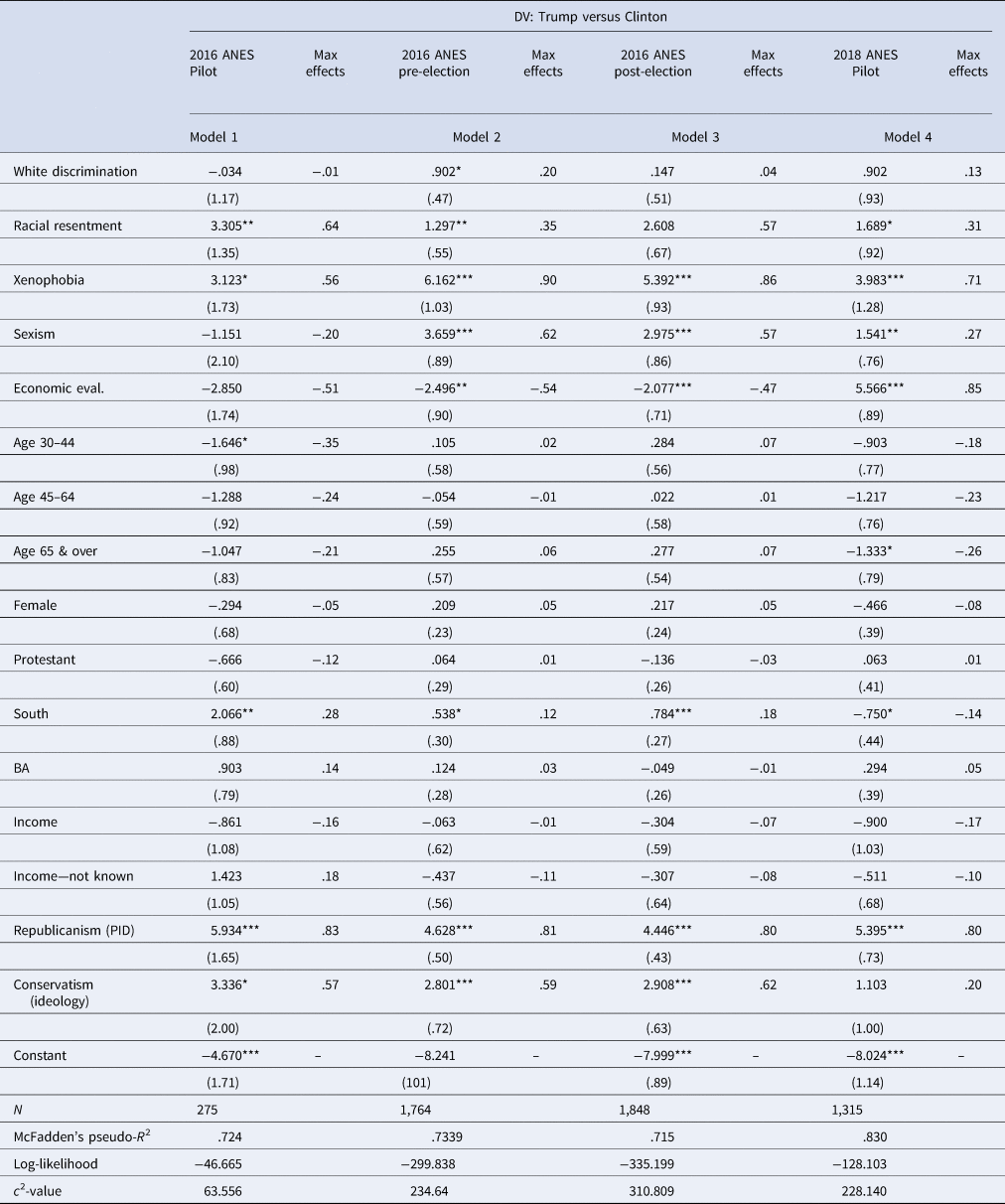
Logistic analyses of projected vote choice in 2020 election (white respondents only)

Appendix C: Descriptive statistics
Descriptive statistics—2016 ANES
Descriptive statistics—2016 ANES Pilot
Descriptive statistics—2018 ANES Pilot

Appendix D: 2016 ANES models with additional predictors
2016 ANES models with additional predictors—GOP primary

2016 ANES models with additional predictors