

Introduction
An analysis of international experience in the study of illicit enrichment is of great importance for understanding the effectiveness of forensic techniques in the fight against economic crime. Investigations of illicit enrichment usually involve the use of complex analytical procedures to identify the sources of illegally obtained assets and to record evidence that can be used in court proceedings.
The need for this study arose due to the insufficient use of international experience in combatting illicit enrichment within national legal systems. The study of international forensic approaches and forensic practices allows for the identification of the most effective methods of combatting economic crimes, including the identification of hidden assets and the assessment of legality. Such knowledge can significantly improve the level of law and order and reduce corruption risks in countries that are actively fighting illegal financial transactions.
The problem of research in this area is to study the complex methods used in different countries to detect and investigate illicit enrichment, as well as to determine the effectiveness of these practices in forensic activities. Despite the significant development of theoretical and practical aspects in this area, the issue of integrating the latest technologies to improve the effectiveness of investigations and trials remains unresolved.
In the study by Bilokin (Reference Bilokin2024), the author focused on the analysis of combatting illicit enrichment, in particular its criminalization at the international and national levels, as well as the study of investigation, evidence collection and court proceedings, which emphasized the importance of consistency of international approaches and the effectiveness of the implementation in the national legal system. Bezginsky (Reference Bezginsky2021) examined the methods of establishing criminal liability for illicit enrichment, emphasizing the importance of using different approaches in an integrated manner to improve legislation. Dragan (Reference Dragan2020) examined illicit enrichment as an economic threat, emphasizing the importance of criminal liability and international experience, as well as the need to improve national legislation to effectively combat corruption, in particular in Ukraine, where the adaptation of anti-corruption policy to international standards is ongoing. In the study by Magherescu (Reference Magherescu2020), the author found that the effectiveness of criminal investigation of corruption offences depends on the integration of interdisciplinary approaches, including the use of forensic methods to collect evidence, as well as on the coordinated work of the judiciary in ensuring the detection, prevention and punishment of corruption offences. Ng et al. (Reference Ng, Ayub and Rahman2022) investigated the problems in Malaysia’s illicit enrichment legislation by comparing it with the good practices of criminalizing this offence in Singapore and Hong Kong, finding that Malaysia could improve its legislation by considering the experience of these countries. However, the gaps identified that require further research include improving the legal mechanisms for combatting corruption and adapting the legislation to international standards.
In turn, Ermaida and Lukman (Reference Ermaida, Lukman, Nordin, Raharjo, Palil, Tegnan, Marwan, Astirin, Sutarno, Pranoto, Lubiantara, Manumayoso, Abror and Rahim2021) found that in Indonesia, the process of confiscation of assets related to economic crimes is complicated due to the need to provide conclusive evidence and difficulties in tracing criminal assets, which requires improvement of criminal law policy to combat property crimes more effectively. Rampadio, Fauzia, and Hamdani (Reference Rampadio, Fauzia and Hamdani2022) analysed the growth of corruption schemes and transnational crimes, pointing out the need to improve the regulation of illicit enrichment in Indonesia, where legislation needs reforms to effectively combat corruption, as evidenced by specific cases that highlight the importance of strengthening accountability and preventing conflicts of interest among public officials. Bikelis (Reference Bikelis2022) studied the effectiveness of criminalization of illicit enrichment in Lithuania, where the author noted that the practical results of this measure do not confirm its success, as it does not cope with the main task and may interfere with the use of other legal mechanisms for asset recovery, as well as negatively affect the balance of the anti-corruption system, which, in turn, requires a revision of approaches to the legal strategy. Herlambang, Fernando, and Rahmasari (Reference Herlambang, Fernando and Rahmasari2022) emphasized the importance of criminalizing illicit enrichment in Indonesia for the effective fight against corruption among public officials, as it allows for greater control over illicit proceeds and improved transparency, which meets international requirements for the legal system to reduce corruption risks. Makūnaitė (Reference Makūnaitė2015) analysed illicit enrichment in Lithuania, emphasizing that this crime is not always related to corruption, and examines its impact on the financial security of society, while stressing the importance of respecting the presumption of innocence and protecting the rights of citizens.
The analysis of international experience in combatting illicit enrichment has revealed shortcomings in the application of modern forensic methods. Most existing studies focus on the general principles of detecting financial crimes, without considering the specific aspects of using the latest technologies and innovative analytical approaches. This leads to difficulties in creating effective mechanisms for identifying illegally acquired assets and complicates the development of practices that ensure a high level of transparency and validity in court decisions.
The research is focused on the study of forensic approaches to combatting illicit enrichment, with a focus on identifying effective methods for detecting hidden financial flows, assessing the legitimacy and applying modern tools.
To achieve the purpose of this study, it is necessary to solve the following tasks: to analyse the international experience of studying illicit enrichment, in particular, detection of financial crimes; to study the existing methods of detecting illegally obtained assets and assess the effectiveness in investigating financial crimes; to consider the role of the latest technologies in forensic and forensic methods for analysing financial flows and the impact on the fight against illicit enrichment; to compare international practices of cooperation in the fight against illicit enrichment.
Materials and Methods
To study international experience in combatting illicit enrichment and financial crime, an analysis of existing approaches to identifying illegally acquired assets was conducted. The main stage of the study was the collection of data from international reports and legal acts regulating the fight against financial crime in countries such as Ukraine, the United States (US), the United Kingdom (UK) and Poland. The study of these documents made it possible to assess the mechanisms used to detect financial crimes, in particular through the analysis of financial flows.
Particular attention was paid to the study of the use of the latest technologies in forensic methods. This included analysing the potential of tools such as artificial intelligence (AI), machine learning (ML) and blockchain to automate financial crime detection processes.
To analyse comparative practices of combatting illicit enrichment between different countries, a detailed study of international models of cooperation in the investigation of financial crimes was conducted. First, a review of the existing mechanisms for information exchange and joint investigations used in countries with developed systems for combatting corruption and financial crime was carried out. For this purpose, reports of international organizations and legal acts of countries such as the US, the UK, Ukraine and Poland were analysed.
Based on the analysis, several recommendations were developed to improve legal and analytical tools in the fight against illicit enrichment, focusing on the integration of the latest technologies. First, the existing methods of detecting financial crimes were studied, including the use of blockchain, AI and mobile applications to improve the transparency of financial transactions and monitor financial flows.
In the course of the study of international scientific experience in the study of illicit enrichment in the context of forensic and forensic methods, the statistical data provided by the Global Financial Crime Report (Nasdaq Verafin Reference Verafin2024) and the Global Organized Crime Index (2023) were analysed. In addition, in the process of reviewing the legal acts of such countries such as Ukraine, Poland, the US and the UK, the following documents were analysed (see the ’Legislation Cited’ list): Criminal Code of Ukraine; Law of Ukraine No. 368-2 On Illegal Enrichment (2019); Law of Ukraine No. 1700-VII On Prevention of Corruption (2014); Law of Ukraine No. 2110-IX On Amendments to Some Legislative Acts of Ukraine Regarding the Strengthening of Criminal Liability for the Production and Distribution of Prohibited Information Products (2022); Foreign Corrupt Practices Act (Foreign Corrupt Practices Act Unit 1977); Honest Leadership and Open Government Act (2007); The Anti-Money Laundering Act (2020); Bribery Act (2010); Proceeds of Crime Act (2002); Prevention of Corruption Act (1991); Act on the Central Anticorruption Bureau (2006); Decree on Forfeiture of Property (1947); and Public Procurement Act (1995). To assess the compliance of legal acts on combatting illicit enrichment and corruption in Ukraine, the US, the UK and Poland with the current requirements of international standards, in particular the United Nations Convention against Corruption (United Nations Office on Drugs and Crime 2004), the money-laundering recommendations of The Financial Action Task Force (2012) and European Standards (CENELEC 2025), information from the official websites of international standards was used, which allowed for a deeper understanding of the effectiveness of existing legal mechanisms and identification of ways to improve these mechanisms to combat financial crimes at the international level.
Results
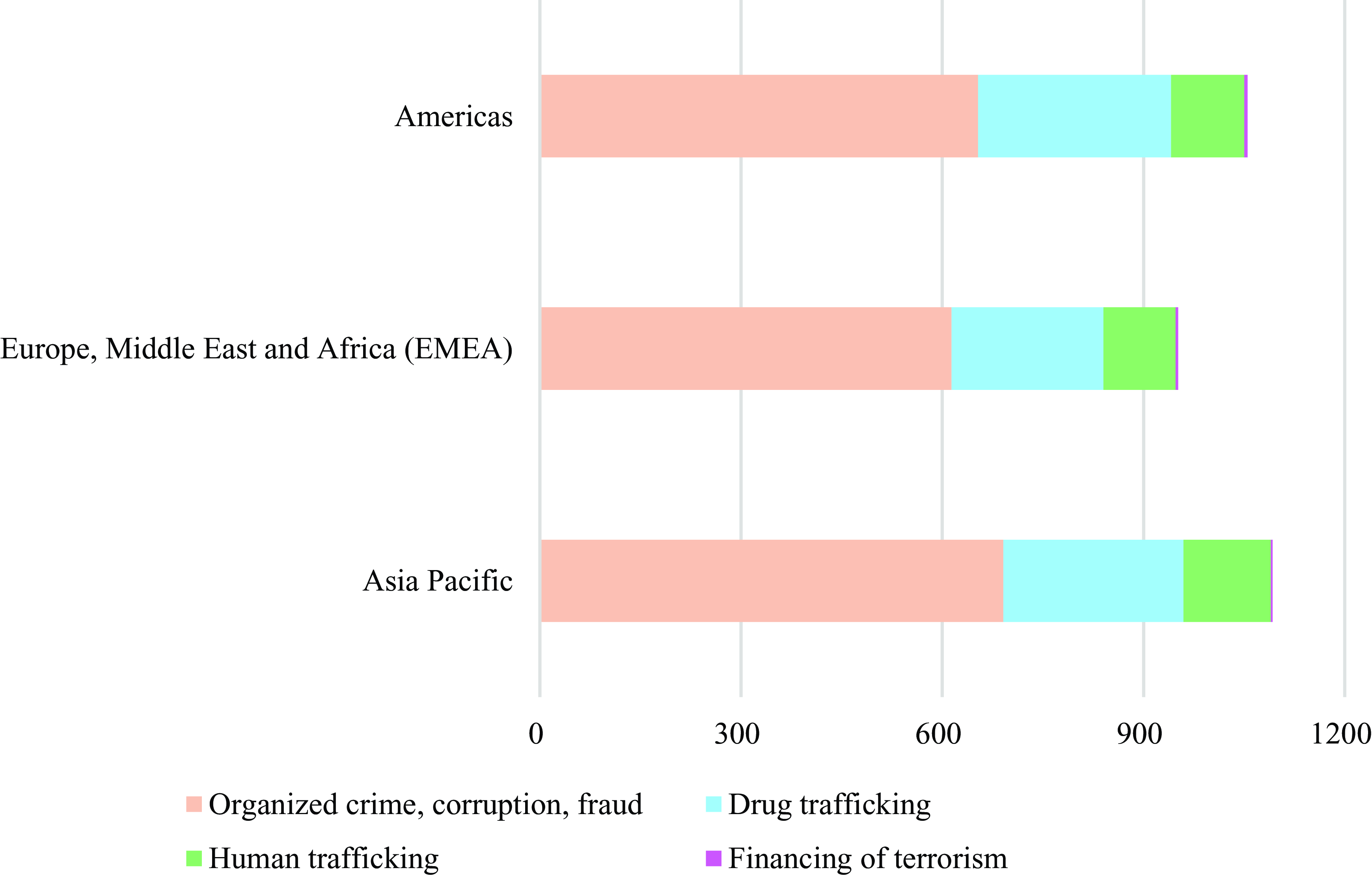
For a deeper understanding of the effectiveness of different approaches to detecting financial crimes, attention was drawn to international experience in combatting illicit enrichment, in particular, the use of forensic methods, which play an important role in identifying and documenting such offences. This helps to combat corruption and illegal financial practices effectively. The estimates of terrorist financing, money laundering and proceeds of major crimes for 2023 are shown in Figure 1.
Global estimate of terrorist financing, money laundering and proceeds of major crimes for 2023, US$ billion.
Source: compiled by the author based on the Global Financial Crime Report (Nasdaq Verafin Reference Verafin2024).

According to the data, the largest financial flows related to organized crime, corruption and fraud are observed in the Asia-Pacific region, which is a significant challenge for law enforcement agencies in this part of the world. This reflects the high level of difficulty in detecting illicit proceeds, as these flows are often complex and use a variety of money-laundering methods.
The Americas, Europe, the Middle East and Africa also show significant volumes of illicit finance, which once again confirms the global nature of the problem. In such circumstances, it is important to use forensic approaches to identify sources of illicit income, track financial flows and prevent money laundering.
The use of forensic detection methods, such as financial analysis, transaction analysis and technology to track cryptocurrency transactions, is a key tool for detecting illicit enrichment. In order to effectively combat this problem, it is necessary to integrate cross-sectoral approaches and international cooperation, which will allow for the detection and stopping of financial crimes on a global level.
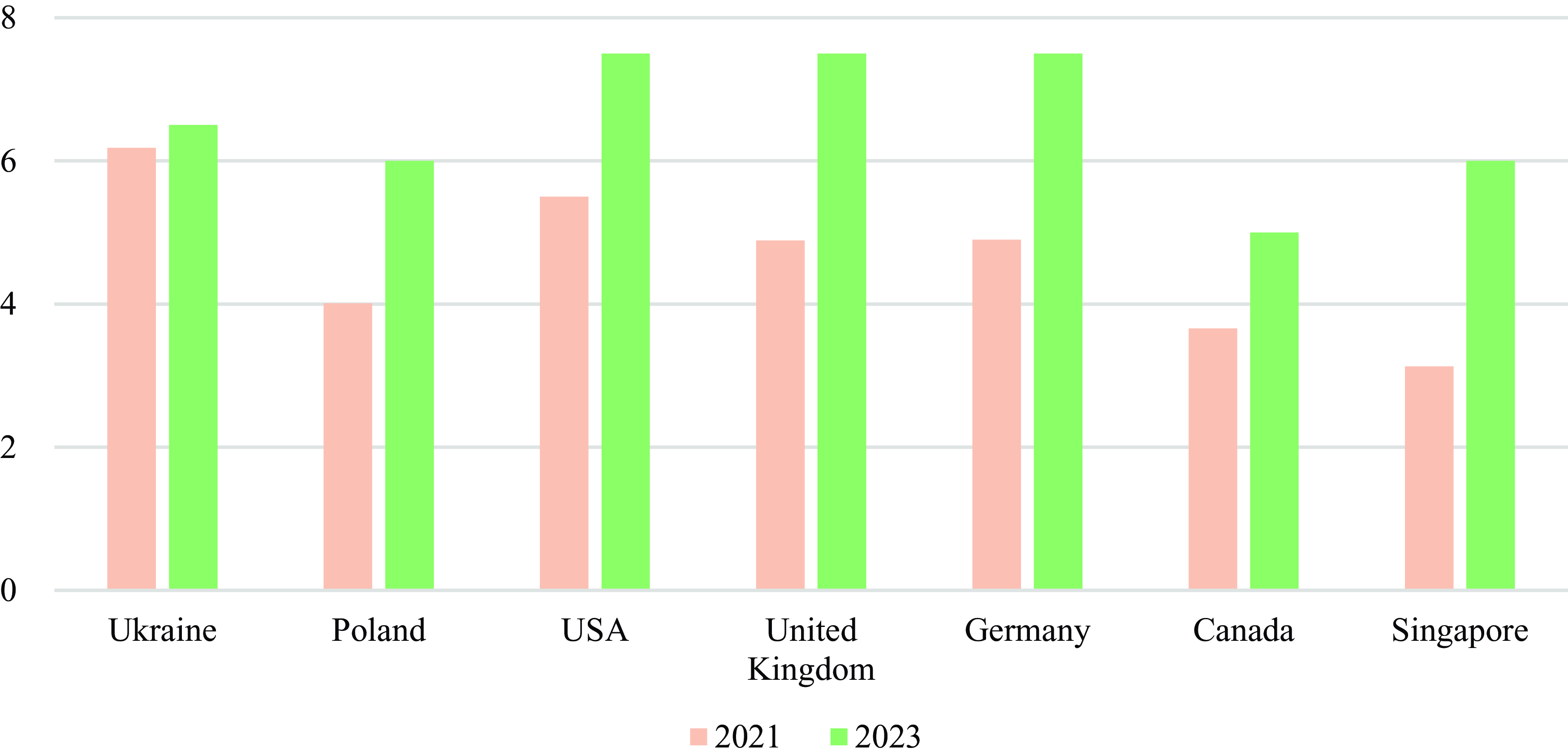
For a more detailed analysis and comparison of changes in the level of financial crime, it is worth considering the indices in several countries with different approaches to combatting such offences. Figure 2 shows a comparison of financial crime indices in countries such as Ukraine, Poland, the US, the UK, Germany, Canada and Singapore for 2021 and 2023.
Comparison of the financial crime index for 2021 and 2023 in Ukraine, Poland, the United States (USA), the United Kingdom, Germany, Canada and Singapore.
Source: compiled by the author based on the Global Organized Crime Index (2023).

An analysis of the financial crime index in several countries shows a general upward trend in the level of financial crime over the last two years. In particular, in Ukraine and Poland, the index level is growing, which may be the result of increased attention to such crimes and improved control systems. In Ukraine, although the growth of the index is not significant, it remains at a high level, which indicates serious challenges in the fight against financial crime. In Poland, there has been a noticeable increase in the index over the last two years, indicating an effort to identify new money-laundering and corruption schemes.
The US, UK and Germany have seen a more significant increase in the index. These countries are actively stepping up efforts to combat financial crimes, including money laundering and terrorist financing, which is leading to an increase in the detection of such offences. The growth of the index in these countries indicates increased transparency and effectiveness of law enforcement, which allows for the detection of complex financial crimes.
Canada and Singapore have also seen increases in the scores, although these increases are moderate compared to other countries. However, these countries are known for their high effectiveness in combatting financial crime, which may mean that even with a low level of the index, governments continue to improve the mechanisms for combatting such offences.
In general, the growth of the financial crime index in most of the countries analysed indicates increased activity in detecting and combatting financial crime. At the same time, it also indicates the existence of new or improved money-laundering and terrorist-financing schemes, which create additional challenges for law enforcement agencies. To combat such crimes more effectively, it is necessary to strengthen forensic approaches and actively cooperate at the international level.
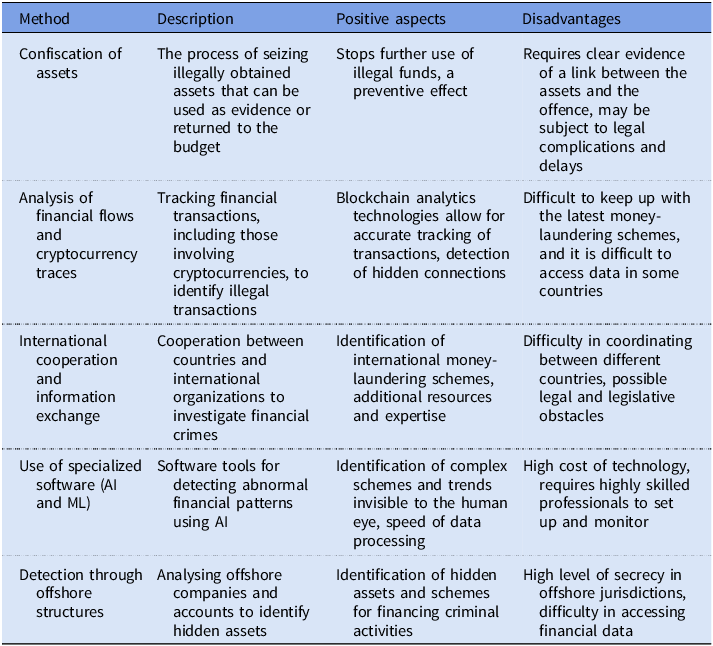
Research into the methods of illegally acquired assets and the effectiveness in the investigation of financial crimes is an important component of the modern fight against financial crimes, including money laundering, corruption, tax evasion, fraud, etc. The assessment of the effectiveness of such techniques depends on many factors, including the legal context, access to technology, cooperation between different authorities and countries, and available resources. It is worth considering the main methods and their effectiveness in Table 1.
Methods of illegally obtained assets and assessment of the effectiveness in investigating financial crimes

Note: AI, artificial intelligence; ML, machine learning.
Source: compiled by the author based on International Centre for Asset Recovery (2015).
In general, methods of detecting and investigating illicitly obtained assets have different effectiveness depending on the conditions of application and access to resources. From asset confiscation to the use of modern financial flow analysis technologies, each method has its advantages and disadvantages. Technologies such as cryptocurrency transaction analysis and AI demonstrate significant potential for detecting complex financial schemes, although these technologies require significant investment and expertise.
The effectiveness of investigations depends to a large extent on the integration of different approaches, including international cooperation, legal mechanisms and technical means. The use of integrated methodologies can significantly improve the process of identifying and liquidating illegally obtained assets, which in turn helps to fight financial crime more effectively.
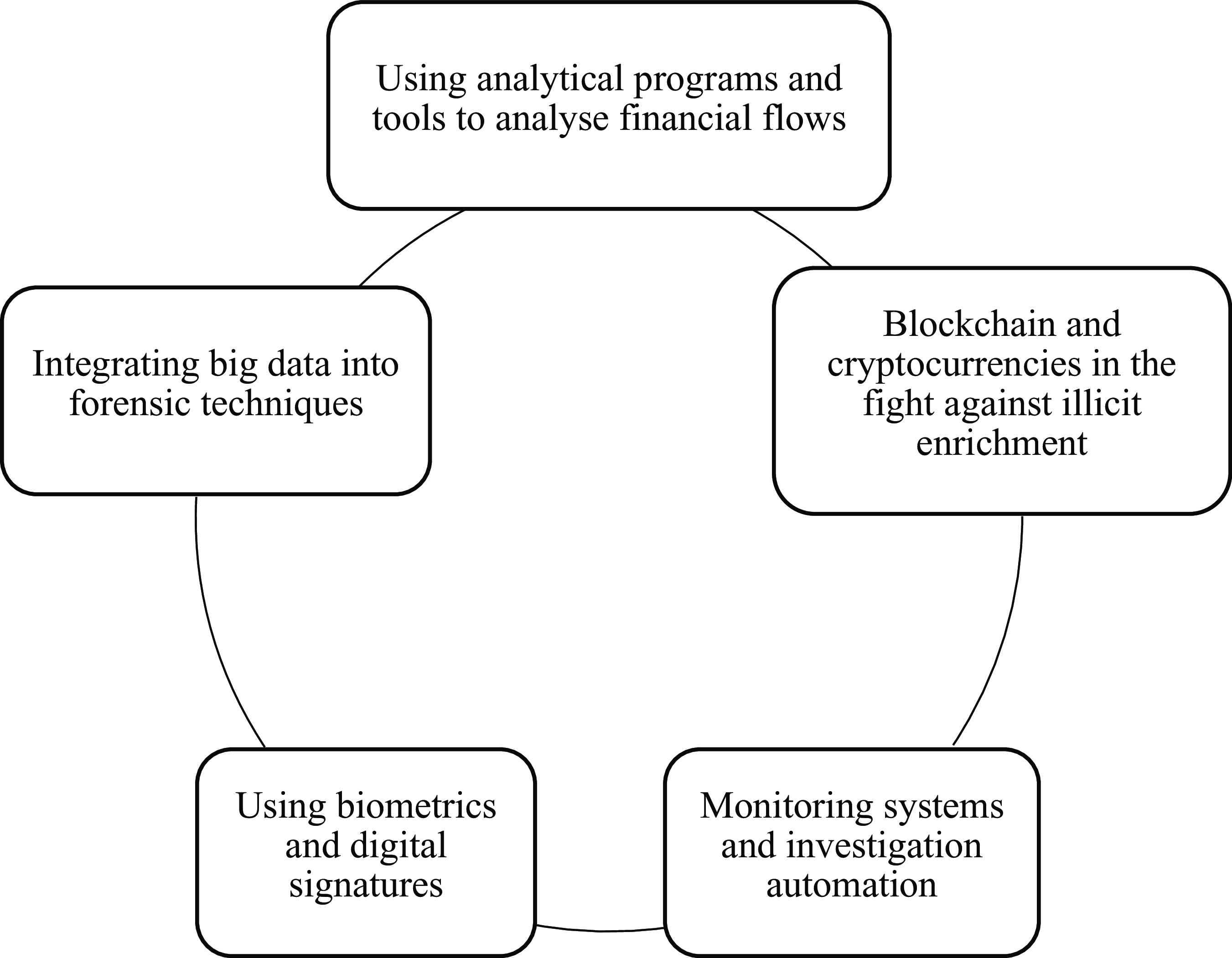
The role of the latest technologies in forensic techniques for analysing financial flows is extremely important in the current environment, as it allows for more effective detection of illicit enrichment, money laundering and other financial crimes. The latest technologies are changing approaches to investigations and creating new opportunities for detailed and rapid analysis of financial data, which significantly enhances the effectiveness of combatting economic crime (Figure 3).
The latest technologies in forensic techniques for analysing financial flows and combatting illicit enrichment.
Source: compiled by the author based on Muzila et al. (Reference Muzila, Morales, Mathias and Berger2012).

Modern analytical tools allow for the automatic collection, processing and analysis of large amounts of financial data. This includes software for analysing transactions, identifying abnormal financial patterns and assessing risks. Technologies such as data mining can reveal hidden connections between companies, accounts and individuals, which can be important for detecting illicit enrichment schemes. AI- and ML-based algorithms help automate the detection of suspicious financial transactions such as money laundering, fraud and other crimes, which reduces the likelihood of errors in the investigation process.
One of the biggest innovations in financial analysis is the use of blockchain technologies and cryptocurrencies. The blockchain allows all transactions to be recorded in a distributed ledger, which ensures high transparency and the ability to verify financial flows. For investigations of financial crimes such as money laundering or illicit enrichment, this technology is an important tool as it allows tracking how funds move between different accounts, even if transactions are made through anonymous cryptocurrencies such as Bitcoin or Ethereum.
In addition, the latest methods of analysing cryptocurrency transactions allow for the detection and blocking of schemes that use the anonymity of cryptocurrencies for illicit enrichment. Specialized software tools can perform in-depth analysis of blockchain data, determine the direction of financial flows and identify possible links between suspected actors.
The latest technologies are also used to automate investigations with the help of specialized financial transaction-monitoring systems. Such systems are capable of monitoring and analysing thousands of transactions in real time, which allows for the prompt detection of suspicious transactions. AI-powered systems can not only perform automatic monitoring but also predict possible fraud or money-laundering schemes based on historical data and detected anomalies in flows.
Biometric technologies and digital signatures are increasingly being used to verify the identity and authenticity of financial transactions. This allows not only confirmation of the identity of the person conducting the financial transaction, but also the provision of a greater level of security when transferring large amounts of money or performing transactions that may be suspicious to law enforcement agencies. Biometric data, such as fingerprints, face recognition or iris scanning, can significantly reduce the risk of fraud or forgery in financial transactions. This is particularly important in the digitalized financial services environment, where traditional methods of identification, such as passwords or personal identification numbers (PINs), can be easily compromised.
Digital signatures, on the other hand, ensure that a document or transaction has not been altered after it has been signed, ensuring the legal validity of electronic transactions. The use of such technologies also helps in the fight against cybercrime, as it is difficult to forge biometric data or a digital signature without access to the original data. This greatly complicates attempts to manipulate financial transactions and creates additional barriers for those trying to make illicit enrichment through forgery or fraud. Thus, the introduction of biometric technologies and digital signatures enhances the security of financial transactions and reduces the risks of financial crime.
The integration of big data technologies is another powerful tool for analysing financial flows in investigations. The use of large amounts of information from various sources allows not only the tracking of specific transactions but also the identification of global financial trends that may indicate abuse or illicit enrichment. Data from banking systems, financial institutions, payment systems and open data from company registers can be collected and processed to identify anomalies or opaque financial structures.
The use of big data-processing algorithms helps to identify complex money laundering, tax evasion or other financial crimes that are difficult to detect using traditional methods. These technologies allow not only the investigation of individual transactions but also the identification of a broader picture of financial relationships, which significantly increases the likelihood of detecting illicit enrichment at an early stage.
The introduction of the latest technologies in forensic science and forensic techniques has a huge impact on the fight against illicit enrichment. The ability to process large volumes of data, apply complex algorithms and track anonymous financial flows opens up new horizons for law enforcement and judicial authorities. At the same time, these technologies pose new challenges in terms of privacy and human rights protection, and it is important to integrate such tools into the legal system in a balanced and ethical manner. Technological innovations allow for faster and more accurate responses to illicit enrichment attempts, making investigations more efficient and less vulnerable to human error or delays.
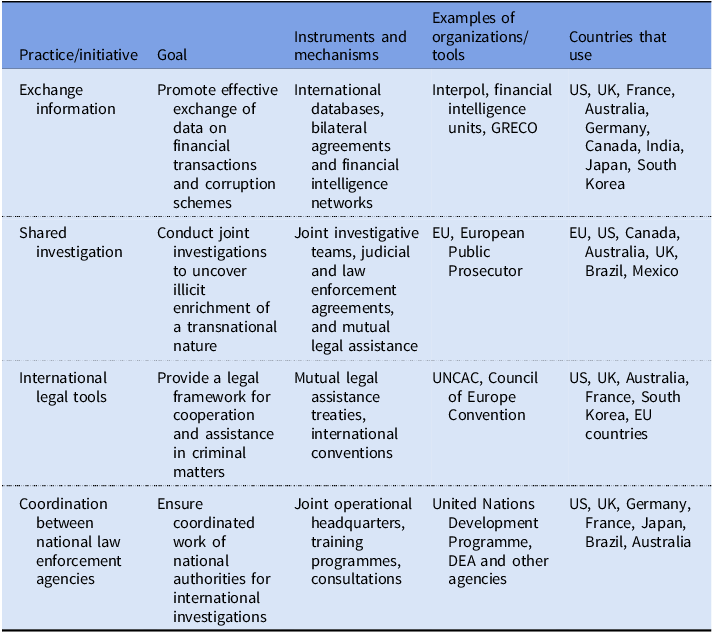
International cooperation in the fight against illicit enrichment is crucial for global transparency and justice. As corrupt practices are often transnational, detecting and stopping such practices at the national level becomes much more difficult. Therefore, countries must join forces through various cooperation mechanisms, including information exchange, joint investigations and the use of international legal instruments. This allows for the effective detection of criminal financial flows and the strengthening of the fight against corruption at the global level. Table 2 sets out the main aspects of international cooperation in the fight against illicit enrichment, in particular in the context of information exchange and joint investigations.
International cooperation in combatting illicit enrichment: information exchange and joint investigations

Note: GRECO, Group of States against Corruption; US, United States; UK, United Kingdom; EU, European Union; UNCAC, UN Convention against Corruption; DEA, US Drug Enforcement Administration.
Source: compiled by the author based on Committee of Experts on the Evaluation of Anti-Money Laundering Measures and the Financing of Terrorism (2025), Group of States against Corruption (2025), United States Drug Enforcement Administration (2025).
Each country chooses its tools based on its specific needs and the peculiarities of its economic and legal system. For example, developed countries, such as the US, the UK, France and Germany, actively use information exchange initiatives through international financial intelligence networks. These countries have complex financial systems and large volumes of international money flows, which makes it critical for states to have access to international databases and the ability to identify corruption schemes quickly. Therefore, such countries are actively integrating financial instruments that help to detect illicit enrichment on a global level.
Regarding joint investigations, countries with developed legal systems, such as the European Union (EU), the US, the UK, Canada and Australia, use this tool to solve cases of a transnational nature. International cooperation between national law enforcement agencies allows for an effective fight against financial crimes that go beyond the borders of one country. To this end, mutual legal assistance mechanisms, such as mutual legal assistance treaties, are actively used, enabling effective investigations at the international level.
International legal instruments, such as the United Nations Convention against Corruption (United Nations Office on Drugs and Crime 2004) or the Criminal Law Convention on Corruption (2024), also play an important role. The signatories to these agreements, including the US, the UK and the EU countries, use these instruments to provide a legal framework for fighting corruption. These instruments allow states to effectively prosecute corruption offences even if the offenders are located abroad.
In terms of coordination between national law enforcement agencies, countries with developed legal and law enforcement institutions, such as the US, UK, Germany, France, Japan and Australia, use joint operational headquarters and training programmes to improve cooperation at the international level. This allows not only for the effective fighting of corruption within countries but also for cooperating with other states in the fight against international financial crime.
Thus, countries choose certain initiatives depending on the legal system, the level of development of financial and law enforcement institutions, as well as the political will to fight corruption. All these factors influence the effectiveness of the chosen instruments in a particular context.
An assessment of the current state of legislative initiatives and regulations to combat illicit enrichment is an important step in understanding the effectiveness of existing mechanisms to combat corruption and financial crime. Taking into account international standards, such as the United Nations Convention against Corruption (United Nations Office on Drugs and Crime 2004), the Financial Action Task Force (2012) Recommendations on Money Laundering, and European Standards (CENELEC 2025), it is possible to determine the extent to which the legal acts meet modern requirements.
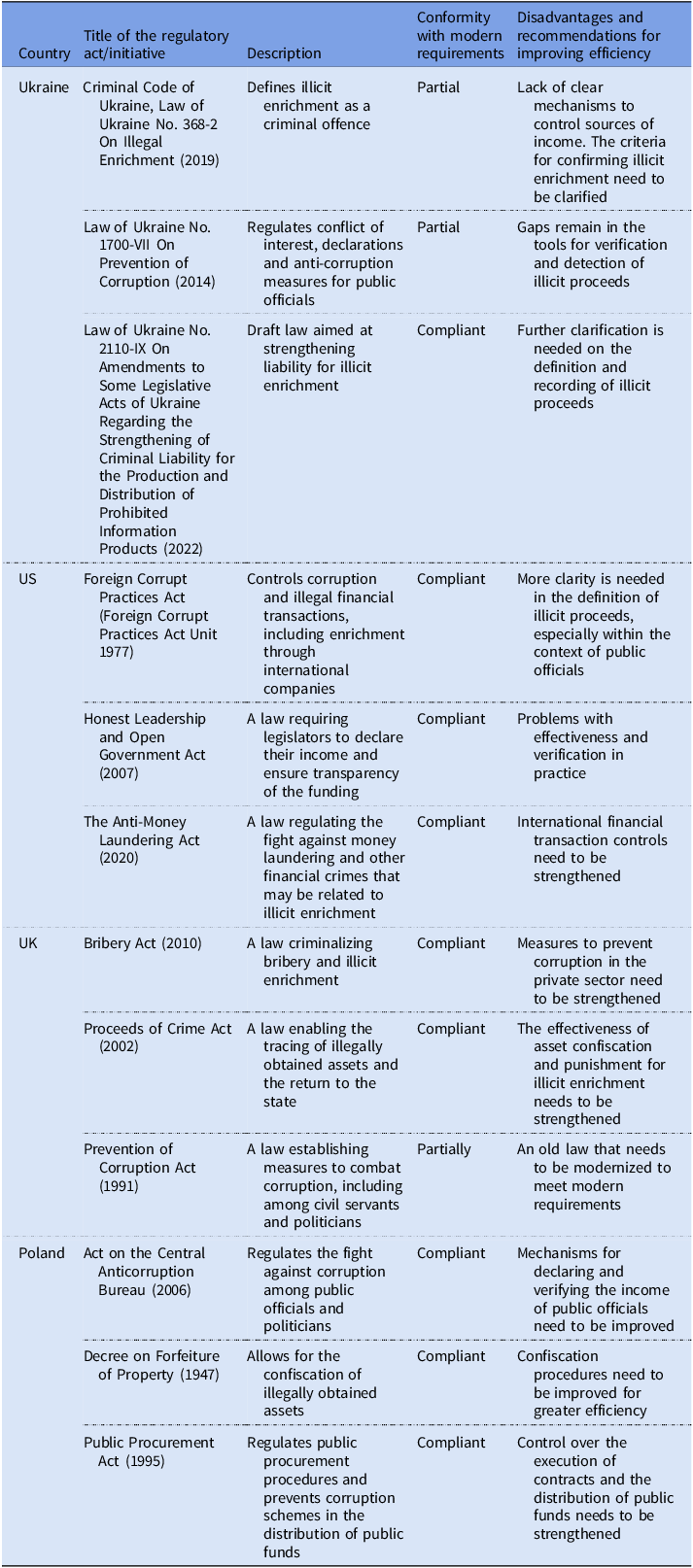
Therefore, Table 3 provides an analysis of the legal acts regulating the fight against illicit enrichment in Ukraine, the US, the UK and Poland, as these countries have developed legal systems and actively apply different approaches to combatting corruption, which allows for a comparison of the initiatives at the international level.
Assessment of compliance with modern requirements of regulatory legal acts on combatting illicit enrichment and corruption in Ukraine, the United States (US), the United Kingdom (UK) and Poland

Source: compiled by the author.
Ukraine’s regulatory framework partially meets modern requirements in the fight against illicit enrichment. In particular, the Criminal Code of Ukraine, Law of Ukraine No. 368-2 On Illegal Enrichment (2019) defines illicit enrichment as a criminal offence, which is an important step in the fight against corruption. However, this act needs to be improved in terms of control over the sources of income and a clear definition of criteria for confirming illicit enrichment, which currently limits the effectiveness of law enforcement. The Law of Ukraine No. 1700-VII On Prevention of Corruption (2014) provides basic mechanisms for combatting corruption, but has gaps in effective verification of income and financial flows of public officials, which reduces its effectiveness in the real world. The Law of Ukraine No. 2110-IX On Amendments to Some Legislative Acts of Ukraine Regarding the Strengthening of Criminal Liability for the Production and Distribution of Prohibited Information Products (2022) generally meets modern requirements as it introduces tough sanctions, but needs to clarify the methods of recording illegal proceeds to ensure more accurate and effective application of this legislation.
US legislation largely meets modern requirements in the fight against corruption and illicit enrichment, especially at the international level. The Foreign Corrupt Practices Act (Foreign Corrupt Practices Act Unit 1977) is an effective mechanism for controlling international corruption schemes, but it lacks a clear definition of illicit proceeds specifically for public officials, which limits its application in the context of domestic public affairs. The Honest Leadership and Open Government Act (2007) promotes transparency in political finance, but its effectiveness is limited by difficulties in verifying the finances of politicians and legislators, which reduces the possibility of detecting illicit financial flows. The Anti-Money Laundering Act (2020) meets modern requirements with powerful tools to combat money laundering and illicit financial transactions, but the international aspect of financial crime requires even more control to ensure effectiveness in a global context.
While the UK’s legislation largely meets modern requirements in the fight against illicit enrichment, some aspects need to be improved. The Bribery Act (2010) is one of the most modern initiatives in the fight against bribery and illicit enrichment, as it covers both public and private persons. However, for more effective control, stronger measures are needed to address corruption in the private sector, where sufficient checks and balances may not be in place. The Proceeds of Crime Act (2002) allows for effective tracing of ill-gotten assets, but the asset confiscation procedure needs to be improved to maximize its effectiveness in combatting illicit enrichment, particularly by speeding up and simplifying the process. The Prevention of Corruption Act (1991) is outdated and no longer meets modern requirements, as it does not take into account new corruption schemes, particularly those related to digital technologies and international financial flows, which makes it ineffective in the current environment.
Polish legislation generally meets the modern requirements for combatting illicit enrichment, although there is room for improvement. The Act on the Central Anticorruption Bureau (2006) is an important tool in the fight against corruption among public officials, but it requires improvement of the mechanisms for declaring and verifying the income of officials. This will reduce the risk of illicit enrichment among politicians and officials, as the checks are not always effective enough to detect unrelated income. The Decree on Forfeiture of Property (1947) is an important tool for combatting illicit assets, but confiscation procedures need to be improved, particularly to expedite the process and increase transparency. The Public Procurement Act (1995) ensures transparency in public finances and prevents corruption in the procurement process, but controls over contract execution and the allocation of public funds should be strengthened to reduce the possibility of corruption in this area, in particular by improving procedures for monitoring and verifying contract performance.
The regulatory frameworks of each of the above countries largely meet the modern requirements in the fight against illicit enrichment and corruption. However, each country has certain problems related to the clarity of definitions, the effectiveness of income control and the procedure for confiscation of illicitly obtained assets. To achieve full effectiveness, verification mechanisms need to be improved, transparency of procedures increased and the institutional capacity of anti-corruption agencies strengthened.
The development and implementation of advanced analytical tools to improve the efficiency of forensic and investigative procedures are important steps in the fight against organized crime and other serious offences. Therefore, recommendations have been developed to help optimize anti-money-laundering practices and make more efficient use of analytical tools to detect financial crimes.
The introduction of the latest analytical tools to improve the efficiency of forensic procedures is a necessary step to ensure the accuracy and efficiency of investigations. One of the key recommendations is the use of AI and ML to analyse large amounts of data. These technologies enable the automation of processes such as pattern recognition in financial transactions, analysis of video and audio evidence and identification of individuals based on biometric features. To implement such tools, it is necessary to integrate AI into existing forensic platforms and provide access to training programmes for law enforcement officers.
The use of facial recognition and biometric technologies for face identification is also an important step in improving the efficiency of forensic procedures. The introduction of such systems will allow for more accurate identification of suspects or witnesses, which can significantly reduce the likelihood of errors. For the effective implementation of such technologies, it is necessary to install appropriate software in forensic laboratories and law enforcement agencies, as well as to adapt national laws to use biometrics as evidence in court.
Integrating blockchain technologies to ensure the integrity and verification of evidence is another important recommendation. The use of blockchain to record all stages of evidence collection and processing helps ensure the security and authenticity of the evidence. To do this, it is necessary to develop specialized platforms that use blockchain to record evidence, as well as to conduct training for law enforcement and forensic experts on the use of such systems.
Automating the analysis of textual data and documents is essential for uncovering important details in criminal cases. The introduction of software for automated search for key points in documents will help speed up the investigation process. This can be achieved through the integration of specialized text analysis tools into the electronic document management system of law enforcement agencies and judicial institutions.
The use of digital technologies for forensic analysis of data from mobile devices, computers and other digital sources is also a necessary step in improving analytical processes. This requires the creation of specialized software for analysing digital evidence and providing law enforcement with tools to recover and analyse destroyed or encrypted data.
To ensure the effective use of the latest analytical tools, it is important to conduct ongoing training and certification of specialists. This will improve the skills of criminalists and forensic experts in the latest technologies. To this end, regular refresher courses and training sessions should be organized, focusing on the development of new tools and methods that help in criminal investigations.
It is also important to establish cooperation with the private sector and international organizations to implement the latest tools. Working together with technology companies and international anti-corruption organizations will allow for the exchange of best practices and access to innovative solutions to improve forensic procedures. The implementation of such partnerships will increase the efficiency and accuracy of investigations and judicial procedures in a global context.
In general, the successful implementation of new analytical tools requires the creation of an integrated infrastructure that includes both technology and qualified specialists, as well as appropriate legislative and organizational mechanisms for the effective use of new technologies in criminalistics and forensic procedures.
Discussion
The study of international experience in combatting illicit enrichment using modern forensic approaches contributes not only to assessing the effectiveness of existing legal instruments but also to identifying effective solutions to improve the methods of investigating such crimes. This demonstrates the growing attention of scholars to the analysis of criminal law and forensic aspects of the fight against illicit enrichment in order to ensure transparency and fairness in the legal system.
The results of the studies by Dornbierer (Reference Dornbierer2021), Vîrlan (Reference Vîrlan2022) and King and Schlösser (Reference King and Schlösser2024) focus on the analysis of illicit enrichment laws and their application to the investigation, prosecution and recovery of proceeds of crime, which forms a practical basis for improving forensic approaches. Attention is also drawn to the difficulties of criminalizing illicit enrichment, taking into account the peculiarities of committing this crime by public officials, which expands the understanding of the problems that arise during investigative actions. Attention is focused on the harmonization of legal norms within the framework of European legislation, especially regarding mutual recognition of judgments and confiscation of assets, which contributes to the improvement of forensic approaches. These results are consistent with the findings on the importance of international legal cooperation, as well as the integration of forensic and law enforcement mechanisms for effective counteraction to illicit enrichment. At the same time, national peculiarities of legislation and practice require further research and adaptation to specific conditions.
In their research, scientists Muzaki (Reference Muzaki2020), Toporetska (Reference Toporetska2019) and Ungurean (Reference Ungurean2024) focused on the issue of illicit enrichment in the context of harmonizing national legislation with international standards, in particular the United Nations Convention against Corruption (United Nations Office on Drugs and Crime 2004), and on the role of courts in establishing the legality of sources of income of public officials and controlling property status. The lack of proper legal regulation makes it difficult to combat this phenomenon, which requires the introduction of effective mechanisms. The importance of forensic models of investigation, which focus on the initial stages, documentation and proof of illicit enrichment, is also emphasized, which contributes to the formation of a proper evidence base. These conclusions coincide with the results of this study, which focuses on improving forensic methods of detecting and combatting illicit enrichment by adapting national mechanisms to international standards.
However, there is a discrepancy in the results of the studies by Körtl and Chbib (Reference Körtl and Chbib2024), Bikelis (Reference Bikelis2025) and Estradé (Reference Estradé2024), as the approaches to analysing the effectiveness of asset-recovery mechanisms and criminalization of illicit enrichment differ depending on national contexts and applicable legal norms. In particular, Germany and Lithuania have found different results in assessing the effectiveness of reformed mechanisms for combatting illicit assets due to different confiscation strategies and legal approaches, which highlights the importance of adapting methods to specific conditions. The study of the Spanish experience also shows that the introduction of new crimes related to illicit enrichment, while contributing to the fight against corruption, may raise human rights issues, such as the presumption of innocence, which requires caution in the application of these mechanisms at the international level.
The studies of Riani and Jumadi (Reference Riani and Jumadi2023), Boles (Reference Boles2014) and Al Agha (Reference Al Agha2021) analysed different approaches to reforming budget systems and studied the impact of budgetary practices on economic development. Particular attention is paid to mechanisms for improving the efficiency of public financial management in the face of global challenges. It is determined that the strategy of reforming budget systems is aimed at improving the flexibility of the operating environment, providing adequate resources for budgetary institutions and creating incentives to improve efficiency. The analysis of Romania’s revenues for the period 2019–2021 has revealed changes in expenditures and the main reasons for the distribution by functional categories, as well as the impact of various factors on changes in budget revenues and the efficiency of public institutions. The research findings are consistent with approaches to reforming the budget system, improving public financial management, and identifying strategies to increase the flexibility of the operating environment and resource provision.
However, the analysis of the criminalization of illicit enrichment under international conventions, as well as the consideration of different approaches to combatting corruption, are key aspects that emphasize the importance of developing effective legal mechanisms to combat corruption and illicit enrichment, and were therefore considered in more detail in the studies of Mollakarimi and Amiri (Reference Mollakarimi and Amiri2021) and Barafi et al. (Reference Barafi, Alkrisheh, Al-Obeidi, Alsaadi and Mahameed2022). Mollakarimi and Amiri (Reference Mollakarimi and Amiri2021) examined Iran’s experience in criminalizing illicit enrichment and explored the possibilities of introducing legal presumptions to resolve the contradictions of the presumption of innocence. The results confirm that a proper balance between legal principles and the fight against illicit enrichment is important for the effective application of legislation. A comparative analysis of the approaches to combatting corruption in Jordan and Iraq was also conducted (Barafi et al. Reference Barafi, Alkrisheh, Al-Obeidi, Alsaadi and Mahameed2022), highlighting the lack of effectiveness due to the absence of specific anti-corruption laws. This highlights the need to improve national legislation to combat illicit enrichment and corruption more effectively. This study has proposed new recommendations for improving legislative initiatives and mechanisms to combat corruption at the national level.
The results of the present study do not coincide with those of the studies of Ungurean (Reference Ungurean2022), Norrman et al. (Reference Norrman, Söderqvist, Volchko, Back, Bohgard, Ringshagen, Svensson, Englöv and Rosén2020) and Nandini and Ajay (Reference Nandini and Ajay2021), which focus on financial management and the economic consequences of illicit enrichment, rather than on forensic or environmental aspects. The analysis of the forensic aspect of illicit enrichment focuses on the development of legal mechanisms for investigating corruption crimes, which is not fully consistent with the study, which focuses on budgetary efficiency and economic growth rather than criminal procedures. In addition, the study considers social and economic aspects of sustainable development relevant to the environmental recovery of disaster-affected areas, which is different from the topic focused on fighting corruption through economic mechanisms. At the same time, the study of forensic audit focuses on corporate governance and the prevention of financial fraud, which does not correspond to the topic that analyses illicit enrichment through forensic methods, in particular in the context of economic consequences for the state.
While the results of the studies by Anggriyani, Yusuf, and Harefa (Reference Yusuf, Harefa, Norman, Puta, Sagala and Sibarani2022), Florea and Florea (Reference Florea and Florea2023) and Chesoli and Wafula (Reference Chesoli and Wafula2020) emphasized the importance of using forensic accounting expertise to investigate financial crimes, including illicit enrichment, using investigative audit methods, the analysis showed that in the case of bank fraud, the use of these approaches allows for the identification of the scale of financial offences. In addition, the importance of adapting investigative techniques and using advanced technologies in the fight against corruption and economic crime is emphasized. These studies coincide with the conclusions of the present study, which also considers the role of forensic accounting as a tool for detecting illicit enrichment, emphasizing the importance of using modern methods to ensure the reliability of investigations.
An analysis of research in the field of illicit enrichment with a forensic dimension shows that the integration of modern forensic methods, improvement of investigation procedures and application of effective approaches to detecting financial crimes are the main elements to ensure justice in the fight against illicit enrichment. The author identifies the importance of applying comprehensive methodologies, including both audit and technological tools, to ensure the accuracy and efficiency of investigations. However, in contrast to traditional approaches that consider these aspects separately, the study proposes the integration of all these factors into a single strategy, which allows for a deeper assessment of the role of forensic accounting in the detection and analysis of illicit enrichment, increasing the level of accuracy and fairness in the legal process.
Conclusions
A comprehensive analysis of international experience in combatting illicit enrichment and financial crime has revealed the importance of integrating forensic and investigative methods to detect and document offences effectively. In particular, the analysis of the situation in countries such as Ukraine, the US and the UK, as well as in other countries where the level of financial crime is growing, points to new money-laundering schemes, which complicates law enforcement. In this context, it is important to strengthen international cooperation and improve cross-sectoral approaches. It has also been established that to combat financial crimes effectively, it is necessary to adapt the latest technologies, such as AI and blockchain, which will increase the efficiency of detecting and monitoring illegal transactions.
The analysis of methods for detecting illicit assets, such as the analysis of financial flows and cryptocurrency transactions, shows the significant potential of these tools in the fight against financial crime. However, these methods have certain drawbacks, including the difficulty of tracking new schemes and existing legal obstacles. To increase the effectiveness of the fight, it is necessary to expand international cooperation and improve legal and analytical approaches at the international level, which will allow for more effective monitoring and control of financial flows.
The latest technologies identified in the study, such as AI and ML, significantly improve the analytical capabilities for detecting financial crime. Such technologies enable the automation of detecting suspicious transactions and complex financial schemes. The use of such tools ensures high efficiency of investigations, but requires a careful approach to protecting privacy and compliance with ethical standards. In addition, blockchain and cryptocurrency technologies provide a high level of transparency in financial flows, which greatly facilitates financial crime investigations.
The assessment of legislative initiatives to combat illicit enrichment found that while the legal frameworks of countries such as Ukraine, the US, the UK and Poland are in line with international standards, there is room for improvement in the areas of financial transaction monitoring and asset confiscation. Therefore, it is important to improve legal mechanisms, including new approaches to automating the control of financial flows and improving cooperation between public and private institutions, to achieve more effective results in the fight against financial crime.
Based on the study, recommendations were developed, including the introduction of innovative technologies such as blockchain, AI and mobile applications to improve the effectiveness of the fight against financial crime. The adaptation of these technologies requires careful training and certification of specialists, as well as active cooperation with the private sector and international organizations, which will allow for an effective monitoring and control system.
The key areas for further research in the field of illicit enrichment are the improvement of forensic methods, in particular, the use of the latest technologies such as AI, ML and big data analysis.
The limitations of this study may include the lack of availability of relevant data for a comprehensive analysis of forensic approaches to detecting illicit enrichment.
Competing interests
The author declares there are no competing interests.
Ruslan Bilokin, DSc, is a Professor at the Department of Law, Poltava University of Economics and Trade. His research interests focus on financial crime prevention, criminalistics, and the application of innovative technologies such as AI and blockchain in forensic investigations.