Khöt döm, têh mo khlay.
They just died, as if of no importance.
Rlayang Bubong, 2020My colleague Neth Prak and I first heard about the existence of Bunong soldiers within the Khmer Republic's armed forces in 2009, as we listened to Mé Nok and Pö Nok, a Bunong couple, swidden farmers in their late fifties, talk about the ‘B-52 period’ while the evening rice was cooking on the fire.Footnote 1 In this border zone of the Cambodian highlands, the infamous American strategic bombers’ name was used to refer to the time when they filled the sky. While the area was already secretly shelled in the late 1960s, attacks aimed at communist targets increased after Cambodia's Prince Sihanouk was ousted in March 1970, by a coup that brought his former prime minister and army chief-of-staff, the right-wing, pro-American Lon Nol, into power.Footnote 2 Like many inhabitants of this region through which the Ho Chi Minh Trail wound, the newly wed Mé and Pö Nok escaped danger by fleeing to a refugee camp, across the border in Vietnam. From there on, their journey took a turn I had never heard nor read of; by means of trucks, helicopter and boat they travelled to Phnom Penh, where Pö Nok joined the national army in its fight against the Cambodian and Vietnamese communist guerrillas.
As it turned out, Mé and Pö Nok were far from the only Cambodian Bunong refugees who travelled to the country's capital at that time. They were among hundreds if not thousands of highland recruits who embarked on this overlooked mission. However, when we asked the couple who else could tell us about this staggering experience, they only mentioned two other persons: Mé Nok's niece and Pö Mon, a man from a neighbouring village. They and other Bunong inhabitants of the region cited a handful of additional names as possibly having survived the years of war and hardship, but there were many more who had left and never came back. This article draws upon the extraordinary stories of Mé and Pö Nok, as well as of Pö Mon, to bring the involvement of Cambodian highland soldiers into the historical record, and to shed new light on the short-lived Khmer Republic's military arrangements.
Although there are a fair number of historical accounts of the Vietnamese and Laotian highland minorities during the American war that spilled over the entire region, relatively little has been said about the ways in which their Cambodian counterparts were affected by this conflict's multifaceted incursions into their homelands.Footnote 3 Similarly, within the profuse historical literature on the Khmer Rouge, who took over the country in 1975, their victory partly fuelled by the strong resentment provoked by US bombings, one does not learn much about those whom Pol Pot referred to as ‘ethnic minority brothers and sisters’. The latter's appearance is often limited to mentions of their valorisation—in theory—as being ‘uncorrupted by capitalism’, and in roles such as bodyguards of Khmer Rouge dignitaries.Footnote 4
A few ethnohistorical and anthropological works have come to render this picture more complex, providing insights into the messy multiplicity of positionings and experiences that existed among Cambodian highlanders in the midst of these conflicts. The violence to which the highlanders were exposed despite their stated exemplarity has been revealed by Sara Colm and Sorya Sim, whose research in Mondulkiri province calls into question the image of an undifferentiated group of stalwart highland allies.Footnote 5 Four recent monographs shed light on the ways in which Brao and Jarai inhabitants of Ratanakiri province experienced and dealt with the events of these turbulent years, substantially complicating what has been known about Cambodian highlanders’ wartime engagements.Footnote 6 This article's goal is to rely on the rare and isolated stories of surviving Bunong soldiers from Cambodia and their families in order to further question the tenacious representation of ‘indigenous ethnic minorities’ as a uniform mass of passive historical actors.Footnote 7
Subaltern both in the military sense—as low-ranking officers at best—and in the Spivakian sense—muted and kept off the record—these former highland soldiers told us stories, which are not looked at as reflecting a simple documentation of the past, an ‘immutable essence’, but as drawing on an evolving memory.Footnote 8 Rather than transcending ideology, their narratives are interpretative reconstructions that ‘constitute the ingredients for producing a countersentence’.Footnote 9 It would go beyond this article's scope to explore the ways in which memory and identity were related for our Bunong interlocutors, but it is important to clarify how these wartime memories unfolded in the course of our discussions.
Mé and Pö Nok came to mention their engagement in the Khmer Republic's army incidentally, while they were providing the context in which they converted to Christianity. Rather than relating their wartime journey in a coherent, or even heroic narrative, it appeared by way of multiple fragments. No quest for recognition seemed to resonate within it. When in 2019–20 I went back to enquire about this military episode that intrigued me so much, I shared with my local interlocutors my frustration about not having found any written mention of the Bunongs’ mobilisation. For some of them, this absence, along with the fact that their own or their family members’ engagement was not known to outsiders, explained my interest in their stories. For others, however, it became part of their own motivation to help me document this historical episode and render it legible. Rlayang Bubong, for instance, not only concluded that the Bunong soldiers and their families died ‘as if of no importance’, but also shared this concern with his neighbours and encouraged them to contribute to filling this gap.
Although written history per se had not been a concern for our Bunong interlocutors, who were used to transmitting their past orally, it was turning into a way to preserve their stories for their descendants and to show outsiders that they are not some lesser people and deserve respect as much as anyone else. This quest was becoming increasingly commonplace among Cambodia's highland inhabitants. Faced with economic land concessions impinging on their farms and forests, more and more of them were relying on nongovernmental actors to frame their claims in the language of ‘indigenous rights’, which was providing terms and concepts to ‘speak back’ to those in power.Footnote 10 Within the Bunongs’ emergent identity statements, however, wartime narrations have remained largely absent, possibly because in the dominant Cambodian discourse, the figure of the highland indigene has long been relegated to an ahistorical past.
Our interlocutors’ narratives provide precious information about an episode of war that remains disturbingly absent from written history, even if shared within their common cultural vehicles, and possibly omitting some elements and exaggerating others. Although hours of further discussion and archival work would be necessary to connect certain dots and investigate remaining areas of obscurity, in this study I rely on the stories heard and read so far to shed some light on the Bunongs’ overlooked military involvement under the Khmer Republic. This attempt to complement mainstream history might appear difficult to reconcile with, or even contradict, the aim of analysing people's ways of making sense of a violent past. I see it, however, as a necessary (if frustrating) first step to set the basis for more in-depth studies in both directions.
Throughout this research, anthropological and historical enquiries informed each other. The encounters with Bunong survivors and family members of those who did not return from the mission took place mostly in Bu Sra and, to a lesser degree, in Dak Dam, the two communes where those who had fled to Vietnam were resettled after the wars, in the 1980s. At the beginning, during my year-long fieldwork in Mondulkiri in 2009–10, people's wartime itineraries unfolded within discussions about their conversion to Christianity. During shorter visits, over the years, I heard numerous occasional mentions of this episode, and of family members who never came back. However, it was only in 2019–20 that I got the chance to revisit these stories more thoroughly.Footnote 11 All conversations were in Bunong and even though over time I became able to engage in them myself, they were nurtured by the valuable input of my Bunong colleagues: Neth Prak, Vannara Riem, and Sochea Kim. In addition to these highland discussions, I met with Cambodians and Westerners who had been in touch with the Bunong refugees in the 1970s, read war accounts written by American veterans, and consulted documents in diverse archives, such as the Texas Tech University's Virtual Vietnam Archives.
I first retrace the highland refugees’ trajectories, from their homelands in Mondulkiri to camps in the South Vietnamese highlands, and from there on to the capital city of Cambodia. The last section focuses on how the three Bunong survivors with whom we spoke experienced their time in Phnom Penh.
Caught in the crossfire: Traversing the highlands
Life along Mondulkiri's southeastern border with Vietnam in the late 1960s involved an impressive multiplicity of external political actors. Since Sihanouk's Sangkum administration had created the province in 1962, it was, along with neighbouring Ratanakiri, under military government by the Forces Armées Royales Khmères (FARK). One goal was to assimilate the highland inhabitants to the young nation's Khmer majority by asking them to leave their spread-out villages and their swidden fields in order to settle down along the road and work in irrigated rice plots. Yet most villages of this border region, including Mé and Pö Nok's Lumpek, had managed to remain in their homelands.Footnote 12 While General Lon Nol's soldiers were based in administrative and military posts, the surrounding forests had become the shelter for those who opposed the ruling powers. From the early 1960s onwards, the Khmer Rouge had started to take refuge in the northeast, discreetly establishing contact with Bunong villagers and periodically attacking government camps.Footnote 13 In 1965 the North Vietnamese National Liberation Front (NLF) got Sihanouk's green light to establish bases within Cambodia, notably along Mondulkiri's southeastern border. These sanctuaries and the famous Ho Chi Minh Trail network connecting them became targets of the American B-52 bombers, which are still so vividly remembered in the highlands.
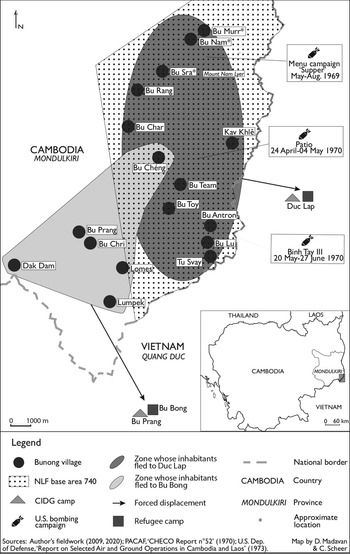
In 1969, newly-elected US president Richard Nixon authorised secret incursions into Cambodia; American and South Vietnamese military attacks further intensified after pro-Western Lon Nol's seizure of power in 1970.Footnote 14 Nam Lyer Mountain, out of whose volcanic stone the Bunong emerged according to local mythology, had been identified as ‘Viet Cong base 740’.Footnote 15 In the covert Menu campaign's ‘Supper’ bombing, 6,780 tons of ammunition were dropped around Nam Lyer in the course of 247 sorties.Footnote 16 Contrary to Henry Kissinger's claim that the bombed areas were not inhabited by any Cambodians, Bunong witnesses reported the killing of numerous inhabitants of Bu Nam and Bu Murr villages, situated at the foot of the mountain.Footnote 17 In nearby Bu Antron, air strikes killed three persons and one elephant, according to several witnesses. A villager from Bu Lu, who was a teenager at that time, remembers that when a bomb was dropped at night 50 metres from his house, ‘it killed 37 people all at once’, among them his older sister and his nephew. He left early the next morning with those who survived the attack: ‘We were running by [neighbouring] Kav Khlê, whose inhabitants joined us. When we had crossed Dak Dam Mé river [that marks the border], trucks and elephants were waiting on the other side to take us to Duc Lap.’ Most of the inhabitants of the more southeasterly part of Mondulkiri managed to escape to the South Vietnamese refugee camp of Bu Bong before the bombings, having been told in advance to evacuate their villages (see fig. 1).
Cambodian Bunong flights to refugee camps in South Vietnam, 1970

Bu Bong and Duc Lap were situated less than 10 km away from the border, in Quang Duc province. Both settlements had been simple Bunong villages well known to the refugees from Mondulkiri, but in 1970 they grew quickly as refugees arrived, 2,000 to Bu Bong and 4,000 to Duc Lap by April 1971, according to New York Times correspondent Henry Kamm.Footnote 18 American and South Vietnamese soldiers from the nearby Civilian Irregular Defense Group (CIDG) camps of Bu Prang and Duc Lap were running both refugee sites.Footnote 19 Launched in 1961 by the United States Central Intelligence Agency (CIA) and since 1963 under the authority of Military Assistance Command Vietnam (MACV), the CIDG programme was run by the US Special Forces.Footnote 20 The camps were bases of operation, initially used to recruit and train surrounding villagers to fight the ‘communists’, either as volunteer village militia or within paid full-time paramilitary strike-forces.Footnote 21 Later, reconnaissance missions and incursions into neighbouring Cambodia were initiated from these camps and when, in 1969–70, US attacks on the Cambodian border areas intensified, ‘handling refugees became a major task in II Corps camps’.Footnote 22
When former Bunong refugees talked about their flights to Vietnam, somewhat intriguingly, most of them did so in a way that implicitly positioned them on the side of the American and South Vietnamese forces. An elderly man from Lumpek recounted that American soldiers had asked him and fellow villagers to leave with them after intense battles against the North Vietnamese in the surrounding forests. Ché Byon from Kav Khlê described the flight of his fellow villagers and the inhabitants of Bu Lu and Bu Antron to Duc Lap in the following way: ‘We were a lot of people. From up, a helicopter protected us, shooting left and right of our way. On the ground, “Thieu-Ky” [South Vietnamese soldiers] walked on our sides, to protect us from the “Viet Minh” [NLF fighters] hiding in the forest.’ Such explanations might come as a surprise, especially from people whose village had been destroyed by US bombers and whom I had not heard complain much about the North Vietnamese combatants’ presence. Ché Byon, one of the few who reported adverse encounters with ‘Viet Minh’, saying that they had extracted food and drinks from the villagers, also explained that right after Kav Khlê people had fled their homes, the American planes came back and ‘fire ate the houses until nothing remained’. In the narratives of others, such as a man from Bu Team, Vietnamese communists were said to have only occasionally come to their village to buy a chicken or a pig.
Depictions of the North Vietnamese as a threat and Americans as protectors may have been influenced by the US Special Forces’ ‘hearts and minds’ strategy. Together with their South Vietnamese allies, the Special Forces not only spread anti-communist propaganda, but also made efforts to gain the highlanders’ confidence.Footnote 23 A Bunong man from Vietnam who worked with the American Special Forces in 1970 and lives in the United States today described having been up in a helicopter, using a megaphone to warn villagers in their mother tongue: ‘We were two-three people [in there], with “Van Thieu” [South Vietnamese soldiers, named after the president]. We repeated [the message] two-three times, then came the bombing.’ Some Bunong survivors indeed mentioned that they had been alerted about upcoming attacks, explaining that American and South Vietnamese forces tried their best not to hurt people: ‘The Americans made maps including our Bunong villages so as not to bomb them. They told us to clear the land in order for our villages to be visible from the sky. It was for the better.’ These former Bunong refugees’ attribution of benevolence to American operations probably relies on not only sporadic Special Forces efforts to spare some people, but also on mendacious US declarations about their operations.Footnote 24 Unfortunately, I have not heard much more about the Cambodian Bunongs’ contact with the CIDG soldiers, nor found any specific written information about the policies and projects implemented out of Bu Prang and Duc Lap. However, a closer look at the former refugees’ largely dispassionate descriptions of life in the camps reveal some interesting cues about how they possibly experienced this period, and what may have contributed to draw them to a pro-American depiction of the conflict.
An aspect that several interlocutors underlined was the lack of order they had to endure in the camp. In Duc Lap, most of the refugees first had to stay in large tents, where—as a man from Bu Lu had it—‘nobody knew anymore who was whose husband or wife’. This mess appeared to have been a much bigger problem than the heat and overcrowding. If one considers that among Bunong people the interdiction on touching an older in-law tends to be taken seriously, one can imagine how distressing the continual risk of inappropriate contact in the crowded tents must have been. Furthermore, in Duc Lap the refugees were grouped together irrespective of their origin villages, and found themselves ‘far from those who had been close, and close to those who had been far’, according to an elderly woman from Kav Khlê. Their insistence on the disruptions that marked camp life convey a sense of the strength of household and village ties in their usual daily collective lives. The separations not only divided families that used to live together, they also undermined key sociopolitical dynamics in the Bunong world.
Other critical elements of the Bunong refugees’ existence were profoundly unsettled in the camps. They were accustomed to relying on their swidden fields where rice, vegetables and fruit trees were cultivated, as well as on the leaves, rattan and wild animals of the forest. However, restricted in movement as well as largely devoid of their domesticated animals, they had become overdependent on the camp managers. Several former refugees who spent time in Bu Bong said it was difficult to find food in the camp and remembered having been hungry more than once.Footnote 25 Those who stayed in Duc Lap reported that each family received one bag of rice, together with some dried fish and canned food weekly. Although this support had become sadly necessary, several persons stressed their unease about having been reliant on strangers as opposed to being able to live off their land. It was often heard that ‘the French-Americans (Westerners) watched over us’ (Bng. Barang-Mii matt), this latter verb being, for instance, used to refer to adults taking care of children, or humans raising animals.
For people who so highly valued the exchange of meat and rice wine to mark the establishment and perpetuation of alliances with fellow humans, as well as with spirits and ancestors, being reduced to receiving food from foreigners must have been profoundly disturbing, if not humiliating.Footnote 26 Further, the highland refugees’ inability to entertain relations with their spirits put them in a position of spiritual vulnerability that was to be effectively exploited by Christian missionaries. While we will get back to this critical encounter and to its far-reaching effects, it should be noted here that the interruption of the Bunong camp inhabitants’ constitutive alliances is likely to have enforced a feeling of inferiority with respect to those who had put themselves ‘in charge’ of the highlanders. Separated from their lands and unable to entertain constitutive human and more-than-human relations, the Bunong refugees were reliant on those who offered them support, even if they were the very same ones who had caused this rupture. The asymmetry that resulted from this dependence is likely to have contributed to the description of the Americans as protectors. It may also have influenced the Cambodian Bunongs’ decision to embark on a journey to Phnom Penh.
Repatriated to defend the ‘country’
After having learnt about Mé and Pö Nok's return from Bu Bong to Cambodia, I realised that almost all of Bu Sra's inhabitants had close relatives who left to fight on the side of the Khmer Republic's armed forces. It is very difficult to estimate how many Bunong refugees were recruited in the camps of Bu Bong and Duc Lap in the early 1970s, as the few available figures are strongly divergent. While in 1971 the South Vietnamese governor of Quang Duc province gave the number of 140 Bunong already recruited in Bu Bong and anticipated a total of two to three hundred, Mé and Pö Nok estimated that they were among about five hundred people living in the camp in Phnom Penh, and according to Pö Mon the number of Bunong soldiers was up to four or five thousand.Footnote 27 While systematic research across Mondulkiri's border region might make it possible to narrow this gap, based on estimates of the total number of Bunong refugees as well as on information about Cambodian army units within which the Bunong were possibly active, my assumption is that there were at most some two thousand soldiers, to which one has to add their families.Footnote 28
The lack of clarity regarding the number of highland inhabitants drawn into this enterprise, however, does not prevent us from delving into the itineraries of the three survivors and reflecting on how their ‘mission’ might have made sense for them. In this section, I will draw on the scant written evidence about the implications of Cambodian highlanders in the national army as it provides still little-known information.
Mé and Pö Nok, as well as Pö Mon, who made it back from what turned out to be a highly lethal endeavour, all started off from Bu Bong. Pö Mon was an unmarried high school student in his late teens when he left Mondulkiri and his parents, who stayed behind in Bu Bong. Only about one month after arriving in Bu Bong, he joined one of the first groups to embark on the journey to Cambodia's capital: ‘There were many trucks transporting us to Buon Me Thuot [capital of neighbouring Darlac province]. Americans and Vietnamese drove us. … Then we went by plane to Phnom Penh.’
Buon Me Thuot was also Mé and Pö Nok's first stop, but their group, which included several other family members, left a few months after Pö Mon's and was airlifted. Mé Nok, who often took the lead in the conversation, retraced their complex itinerary from there on: Cambodian soldiers first flew them to Saigon by ‘transport’ helicopter, and then brought them to Can Tho, where they stayed about a week for basic military training by US Marines. For the last part of the journey, they embarked on a boat, which shipped them up the Bassac River to Phnom Penh.
While we found no one who left from Duc Lap and came back to Mondulkiri, the journeys to Phnom Penh of those who started there seem to have taken on a similar shape. A woman from Bu Team remembers how, in 1970, she and her husband were taken to Buon Me Thuot in one of the many trucks full of camp inhabitants.Footnote 29 While she decided at the last minute to return to Duc Lap to take care of her elders, all of her companions boarded a plane to Phnom Penh.
Elements of written evidence
One month after Lon Nol's takeover, the Cambodian army—renamed Forces Armées Nationales Khmères (FANK)—had already lost three of the country's northeastern provinces as well as large parts of other regions and it was evident that substantial support was required for it to face the North Vietnamese soldiers in the country, as well as the Khmer Rouge now supported by ousted Sihanouk's Front Uni National Khmer.Footnote 30 What has been more difficult to establish are the networks through which the Bunong refugees were incorporated in this military effort. An April 1971 New York Times article reports that FANK's Major Kpa Doh’, ‘named by Phnom Penh to look after the interests of the [Cambodian highland] refugees’ in South Vietnam, was dissatisfied with their living conditions in the camps and took action. He is said to have brought several groups of people sheltered in Quang Duc province to Buon Me Thuot, after having advocated, several months earlier, ‘that the men be sent to Cambodia to be armed and trained and then return to protect their communities’.Footnote 31
In this depiction, the highland refugees’ embarkation to Phnom Penh appears related, in the first place, to the deplorable living standards in the South Vietnamese camps. But a closer look at the South Vietnamese highland major and his place within the Cambodian armed forces casts a different light on his action. According to Mé and Pö Nok, Kpa Doh’ (whom they called ‘Y Doh’), was one of the ‘big Jarai and Rhadé bosses’ of the camp in Phnom Penh, where they were dropped off upon arrival. Along with Ksor Dhuot (‘Y Dhuot’), and Y Bun Sur (‘Look Kaet’, Kh. provincial governor), he would have been in charge of the highland fighters and their families.Footnote 32 All these leaders were also key figures of the Front Uni de Lutte des Races Opprimées (FULRO). This ethno-nationalist group's origins go back partly to the Front de Libération des Montagnards (FLM), formed in South Vietnam in 1955 to oppose President Ngo Dinh Diem's (1955–63) violent assimilation policies towards highlanders. The FLM, in 1958 renamed BaJaRaKa—a composite of four ethno-linguistic groups: Bahnar, Jarai, R(h)adé, and Kaho—notably opposed the massive land expropriation under way and reclaimed the special rights that they had been granted under French colonial rule and lost with the 1954 Geneva Accords.Footnote 33 In the context of war, some of them joined the North Vietnamese struggle, while others trained with the US Special Forces and became part of the CIDG camps, engaging in uneasy cooperation with the South Vietnamese government.Footnote 34
The connection between these South Vietnamese highland militants and Cambodian political actors goes back to 1964, when some BaJaRaKa leaders agreed to join FULRO, which consisted of politicised Cham and Khmer Krom who also saw Vietnam as an invading power.Footnote 35 FULRO was supported by Sihanouk, who had suspended Cambodia's relations with South Vietnam one year earlier. It also received strong backing from Lon Nol, still commander-in-chief of FARK at the time, as well as from his close allies, the Cham leader Les Kosem, and the head of the Khmer Krom, Um Savuth, both FARK colonels.Footnote 36 Having launched armed revolts against South Vietnamese soldiers in several CIDG camps, in September 1964 an estimated five hundred to two thousand men—including Kpa Doh’ and Ksor Duot—crossed the border and settled in FULRO's recently established headquarters in Mondulkiri's Le Rolland, close to today's Dak Dam.Footnote 37
The FULRO highlanders who found themselves in charge in Phnom Penh at the beginning of the 1970s, however, only represented a small segment of the group that had initially set up base in Cambodia. They were the ones who had followed the Cham leader, Les Kosem, who rejected any rapprochement with Saigon. The majority of the highland fighters had gone back to Vietnam in 1968, when their Rhadé leader Y Bham Enuol was extracted from Mondulkiri and put under house arrest in Phnom Penh for having negotiated with the South Vietnamese regime.Footnote 38 When Lon Nol's rise to power turned Cambodia's eastern neighbour into an ally, FULRO members were not only asked to refrain from attacking Saigon's armed forces, but even to cooperate with their sworn enemy.
In June 1970, Colonel Les Kosem responded to a call by the Cambodian head of state for general mobilisation by signing an agreement with the government that envisioned the creation of the 5ème Brigade d'Infanterie Spéciale (5Bis), regrouping FULRO militants who were in Cambodia under his command.Footnote 39 According to the agreement, the 5Bis would be composed of four battalions, three under the command of Cham officers of the Cambodian army, and one co-led by four highland commanders, including Kpa Doh' and Ksor Duot. Its members could keep their weapons without inscribing them in the official register and they would be allowed to return to their struggle once the war was over.Footnote 40 One might well ask whether the 5Bis battalion corresponds to the projected highland armed force that Colonel Les Kosem presented in July-August 1970 to FULRO according to an internal note written by the American anthropologist Gerald C. Hickey for the Rand Corporation.Footnote 41 This highland force was intended to operate as a guerrilla group in the mountainous border regions, in between Cambodia, Laos and Vietnam. The 5Bis highland battalion would have been made up mostly of Rhadé and Jarai officers, with only a few Bunong troops, and did not exist beyond the end of 1970, when the 5Bis became entirely Cham according to William Chickering.Footnote 42 As to the guerrilla force, if it existed in any form, it is very unlikely that it was able to access the uplands. However, even if the plan never came to fruition, there are indications that it contributed to the Bunong recruits’ motivation to join up.
Whether it was for the 5Bis or another unit, in the second half of 1970 Kpa Doh' and some fellow FULRO members repeatedly travelled to Vietnam ‘to recruit highlanders to go to Cambodia’ according to Hickey.Footnote 43 This mission was supported by some of their American ‘friends’, however, it apparently met with little success.Footnote 44 In addition to a possible lack of motivation among South Vietnamese highlanders to fight alongside this FULRO faction in Cambodia, it seems as if Saigon was reluctant about the recruitment of highland activists, who might later turn their guns against them. Mé Nok explained, for instance, that their group of refugee recruits had been stuck in Buon Me Thuot for around three months before heading to Saigon, ‘because the Vietnamese worried that we were FULRO’.
If enrolling politicised highlanders from Vietnam was an issue, the recruitment of Bunong from Cambodia who were gathered in South Vietnamese refugee camps was a solution, whose implementation involved not only FULRO members. In an article published in April 1971 in Le Monde, journalist and Southeast Asia specialist Jean-Claude Pomonti reported that officers from Phnom Penh had been travelling across South Vietnam for several months to recruit partisans among the Khmer minority and the ‘highland populations’, notably Bunong refugees from Mondulkiri assembled in Bu Bong.Footnote 45 The Cambodian military representatives group was headed by Lon Nol's brother, Colonel Lon Non, and was closely collaborating with American and South Vietnamese authorities. Pomonti further underlines the fact that several of the Cambodian army officers were highlanders from Vietnam who had been involved with FULRO, rendering explicit a connection that remained unaddressed in his American peer's article. Last but not least, Pomonti's piece mentions the project to form highland units to infiltrate into enemy territory, such as Cambodia's northeast.
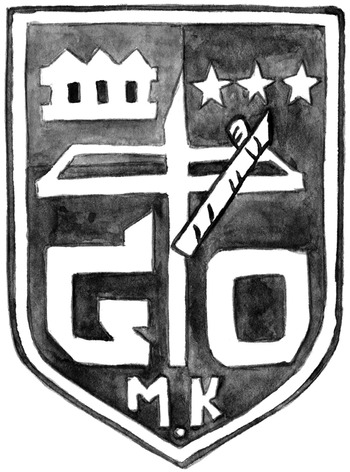
Information about Cambodian highlanders’ subsequent presence within the Lon Nol regime's army appears almost as scarce as that concerning the Bunong refugees’ recruitment, making it difficult to know what exactly happened to these plans. Kenneth Conboy, who served with the US army in Vietnam between 1964 and 1966, mentions in his inventory of the different components that constituted FANK that, in early 1972, there was the plan ‘to create a 40 Brigade composed of tribesmen recruited from Mondulkiri province and brought to Phnom Penh for training’ and that ‘[i]n April 1972, one battalion of 40 Brigade was assigned to Phnom Penh Special Military Region’.Footnote 46 A badge with a crossbow and the initials M.K. (for Mondulkiri), superimposed onto the insignia of the Khmer Republic's flag, had even been designed (fig. 2).Footnote 47 This battalion's creation is attributed to Lieutenant Colonel Ronnie A. Mendoza, who was assigned to the US Military Equipment Delivery Team Cambodia (MEDT-C) in June 1971.Footnote 48 Mendoza's plans for 40 Brigade were unexpectedly disrupted in June 1972, when he died in an Air America crash in the South Vietnamese highlands. The brigade remained in existence, but it was largely made up of lowland Cambodians.Footnote 49
Badge of the 40 ‘Mondulkiri’ Brigade. Drawing by Lucie Labbé, based on Ken Conboy, FANK: A history of the Cambodian Armed Forces 1970–1975 (Sheffield: Equinox, 2011), p. 145.

Conboy's account of 40 Brigade nevertheless parallels the way Pö Mon talked about the unit that he was initially part of in Phnom Penh. According to this Bunong veteran his group was under the command of a Rhadé leader and everyone, Americans and Cambodians alike, called it ‘Mondulkiri Battalion’ and referred to its mostly Cambodian Bunong fighters as ‘Mondulkiri soldiers’. It remains unclear whether this battalion was related to the 40 Brigade or even to the 5Bis—as a component, a forerunner, or a leftover. What seems to be sure is that there was at least one organised military unit, which explicitly collected soldiers from Mondulkiri, that is, Bunong.
Finally, another written mention of Cambodian highlanders’ involvement in the Khmer Republic's military situates them within the Khmer Special Forces, which were created in 1971 by the same Lt. Col. Mendoza and led by Lt. Col. Thach Reng. It is known that the Cambodian Special Forces were largely composed of former Khmer Krom Mobile Strike Force Command (MIKE) fighters from South Vietnam.Footnote 50 According to Conboy, however, the third and last group that was trained in 1972 also ‘included one A Detachment of Khmer Loeu highlanders from north-eastern Cambodia’.Footnote 51 This information coincides with Pö Mon's statement, which so surprised me in 2009, that he was part of the third group of Cambodian ‘Forces Spéciales’. However, Pö Mon also mentioned a couple of fellow Bunong who were in the first group of trainees, thereby adding to Conboy's mention of highland fighters in the last trained A-team. A lot of unknowns remain concerning the Bunongs’ place within the Special Forces in particular, and in FANK more generally, but these are questions to be further explored by (military) historians. I will turn, instead, to our Bunong interlocutors’ ways of explaining how they came to join this effort, and reflect on how it possibly made sense for them.
Voluntary enrolment
When we asked Bunong witnesses about why they went to Phnom Penh, the most often heard explanation was that they ‘joined Lon Nol's army’ in order ‘to defend their country against the Khmer Rouge and the Viet Minh’ (or ‘Viet Cong’ in Pö Mon's words). Interestingly, I heard no mention of fighting against Sihanouk, which can lead one to wonder whether this omission goes back to the recruiters’ explanations, or if it can be attributed to Sihanouk's return as King of Cambodia in the 1990s. According to almost all of our interlocutors, they were told that they were embarking on a three-month assignment (six months according to some), which is far short of the more than four years it finally took. As I had used—by error—a verb (Bng. nyup) that implied that people were taken away against their will, Pö Mon insisted that he and his peers had chosen to leave voluntarily. Those willing to enlist were given Cambodian uniforms and promised a military rank. An elderly man from Bu Toy explained that the motivation to engage in this fight was high in his village, and that almost all of his fellow villagers left for Phnom Penh.
The highland inhabitants’ willingness and readiness to fight within the national army might surprise if one considers that the Sangkum regime's attempts to create a sense of belonging to the Khmer nation among the inhabitants of the highland margins had encountered little success.Footnote 52 It must be taken into account that, by the time our Bunong interlocutors formulated these explanations decades later, there was no more doubt about the Khmer Rouge's reign of terror, while recent ‘development’ politics had heightened these so-called minorities’ sense of being part of the Cambodian nation. However, their detailed descriptions of the recruitment encounter also reveal elements that seem likely to have contributed to motivating their voluntary military enrolment in 1970.
Although American and South Vietnamese soldiers were in charge of bringing the highland refugees to Buon Me Thuot, the persons who directly recruited them and who accompanied them on their journey to Phnom Penh were almost all fellow Bunong from Mondulkiri. The name most often evoked was Pö Koan-Mbaay, who held a high position—four (or even five) stripes—in the Cambodian army in Mondulkiri during the Sangkum regime.Footnote 53 The two other persons instrumental in the repatriation were Pö Breem-Njaap, a nurse who worked in Le Rolland (Dak Dam), and Pö Gliu-Ngrä’, a teacher at the schools of Le Rolland and O Reang town. Finally, in one of the later interviews with Mé and Pö Nok, a Cambodian local dignitary appeared as another driving force of the project:
The Americans only transported us, but it was a Khmer who recruited us …. Om Khemthech, the district head of O Reang. He took us to go to Phnom Penh together with the Americans. He had been the district head since a long time.Footnote 54
Filling some of the main government positions available at a local level, these four men were fairly well-known figures among the Bunong refugees and had without doubt a different impact on them than highland leaders from Vietnam, or Phnom Penh-based Khmer officers.
The three Bunong dignitaries were holders of a new kind of knowledge that made it possible to connect with Khmer and foreign external powers, and probably invested them with the influence of mediators. In their functions as teacher and medical worker, respectively, Pö Gliu-Ngrä’ and Pö Breem-Njaap must have been familiar figures in this area, from O Reang to Dak Dam. Pö Mon's decision to enrol in the army, for instance, was prompted by Pö Gliu, who was his teacher. Pö Koan-Mbaay's exceptionally high rank within the army, made him an even more prominent person. Pö Koan's military credentials might help explain the presence among the Bunong recruits of several who reportedly had been soldiers and paramilitary agents under the Sangkum. For instance, in Mé Nok's family, her brother and her sister's husband had been FARK soldiers, while her husband, Pö Nok, was part of a group of young men in charge of assuring the security of government officials when they visited Mondulkiri province.
In addition to the influence that Pö Koan-Mbaay probably drew from his military rank, family ties might have constituted another driving factor. Many of those recruits said to have been soldiers came from Lumpek, the village of Pö Koan-Mbaay's wife and, following Bunong matrilocality, his own home-base.Footnote 55 Similarly, one of the men in the first Khmer Special Forces group, according to Pö Mon, was the son of Pö Gliu-Ngrä’. Finally, let us note that the village of Bu Toy, almost all of whose inhabitants embarked on the journey to Phnom Penh, was the native village of Pö Ok-Ngroong, one of the highest-ranking Bunong under the Sangkum government. The eldest son of a key collaborator of the French during their 1930s ‘pacification’ of the highlands, Ngroong went to school in Le Rolland, where he came to be appointed secretary of the station, before rising to an influential position within the provincial administration of post-independence Cambodia.Footnote 56 He was one of the Khmer Rouge's earliest victims and his murder is very vividly remembered in the region. This raises the question of whether the remarkable motivation of the people of Bu Toy to join the fight against Pol Pot's men and more generally the involvement of former Bunong soldiers and their family members was spurred by the fear of becoming the next victims of the Khmer Rouge's early purges, which, from 1968 onwards, targeted people who were working for the ruling power and their relatives.Footnote 57 Enlisting might also have arisen from a desire for revenge. At least, this was the reasoning applied by Ngroong's sister-in-law to explain why none of the Bu Toy villagers who left for Phnom Penh ever came back: ‘The “Pol Pot” [the Khmer Rouge] killed them all because they were afraid that if they left even one alive, his family would come to kill them in return.’
When considering the motivations of the Bunong who enlisted in the Khmer Republic's army one must try to assess FULRO's possible influence as well. It seems likely that the three Bunong recruiters would have been in touch with highland militants from Vietnam. Pö Koan-Mbaay might have encountered FULRO representatives, as they apparently supported FARK's attempt to fight North Vietnamese soldiers in the region on several occasions in 1969.Footnote 58 Even though Pö Gliu-Ngrä’ and Pö Breem-Njaap were not military personnel, they worked in Le Rolland, where one of the main FULRO camps was situated. One can imagine that, from their Bunong point of view, the Vietnamese highlanders’ agenda was more appealing than the goals of the Khmer Republic. Unlike these three dignitaries, it does not seem as if the simple Bunong recruits had heard much about FULRO. While the people I talked to knew of the movement and mentioned its presence in Mondulkiri in the 1960s, none of them reported having been in touch with any of its members.
For the Bunong who agreed to join this enterprise, the idea of defending and going back to their ‘country’, that is their homelands in Mondulkiri, rather than the Khmer Republic, the Cambodian nation or even an autonomous highland zone, appeared to have been a key motivator. Mé Nok explained that when she and her husband left Bu Bong, they thought it was an indirect way back to their brii, that is Mondulkiri. Although this Bunong word is used to refer to Cambodia as a ‘country’, its first meaning is ‘forest’ and ‘land related to a village’. A straightforward woman, Mé Nok interjected a slightly upset m'roh (Bng. ‘what a lie’) as she spoke of their journey stopping in Phnom Penh, but then reconsidered, mentioning that those who took them may not have known that it had become impossible to return to Cambodia's northeast. In light of the plans that seem to have existed in the early 1970s, to create guerrilla-style highland units and infiltrate them in ‘enemy-held’ borderlands, Mé and Pö Nok's belief that they were to go back to their homelands was probably not just based on a misinterpretation of the word brii, but on the way the mission was promoted. A Bunong recruit who talked to Pomonti in 1971 is quoted as saying that ‘the [Bu]nong from Mondulkiri can fight to re-establish their authority in Mondulkiri, but certainly not for Phnom Penh’.Footnote 59
Being back in charge of their province meant for sure much more than administrative control for the Bunong refugees. One has to recall here the malaise people talked about experiencing in the camp, which disrupted human and spirit interactions. Returning to their homelands meant taking care of their own subsistence, being able to settle down, to recreate their socio-spatial organisation and to re-establish relations with its more-than-human dwellers, the spirits and ancestors.Footnote 60 The French journalist describes several highland refugees telling him that the Bunong ‘just wanted to live in peace on the land that is theirs’.Footnote 61 Some Bunong refugees, rather than enlisting with the Cambodian army, made the risky choice to return to Mondulkiri the way they had come, probably fuelled by the same fundamental wish to regain their familiar way of life that is inextricably linked to their land. The difficult experiences of those who returned directly also merit attention, but we will remain focused on those Bunong refugees who left for Phnom Penh, through the three persons who survived this mission.Footnote 62
Fighting, living and dying in Phnom Penh
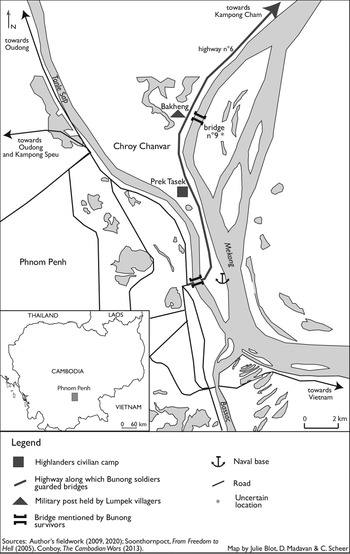
For the Bunong refugees, Phnom Penh meant the peninsula of Chroy Changvar, separated from the city by the Tonle Sap River and from Kandal province by the Mekong (see fig. 3). When Pö Mon arrived with one of the first groups from the Vietnamese highlands, they did not yet have their own place to stay. Living in ‘borrowed houses’, he and his companions built a long dam with a defensive function in Prek Leap, a northeastern part of the peninsula. By the time Mé and Pö Nok landed a few months later, a camp—often referred to as Prek Tasek—had been established in this area.Footnote 63 The three Bunong leaders from Mondulkiri held managing positions in Prek Tasek, where they were also living, unlike the higher-ranking Rhadé and Jarai chiefs, who were settled in the city itself. According to Chickering, the camp was financed through the budget of Mondulkiri and was headed by this lost province's newly appointed governor ‘in exile’ Y Bun Sur, a Mnong Rlam FULRO member from Vietnam.Footnote 64 In Mé and Pö Nok's words, the provincial head of Mondulkiri—as they referred to him—‘had a position but no place to stay’, at least not until they had won their homelands back.Footnote 65
Bunong presence on Chroy Changvar peninsula (1970–75) according to the experience of two survivors.

While Prek Tasek would remain the base for the soldiers’ families, those Bunong who joined the army were soon dispatched to military posts across the peninsula. The narrations of Mé and Pö Nok, as well as of Pö Mon, will give us a glimpse of three different ways of living in FANK's orbit and of remembering this period fraught with violence.
Military and civilian careers
Pö Mon-Ngre’, Special Forces parachutist
When talking about his time in Phnom Penh, Pö Mon explained with a note of pride that he had not only been part of what he called the ‘Bataillon Mondulkiri’, but as well of the Third Special Forces Group, led by Captain Thach Saren. He had successfully passed an examination that only those able to read and write could take and in late 1972, he left with his Special Forces group for six-months training in Lopburi, Thailand. Pö Mon mentioned that they had American and Thai trainers, and Cambodians translated their instructions into Khmer.Footnote 66 According to Conboy this programme was called ‘Freedom Runner’ and led by the US Army 46th Special Forces Company.Footnote 67
The young Bunong man learnt combat techniques, low-crawling, communicating by Morse code (referred to as ‘talking through numbers across the world’) as well as parachuting. He described how he and his fellows were first taught to jump without equipment from a height of 1.5 metres and more, and then from the helicopter with parachutes. Squatting in the back of what Pö Mon called, in his Bunong mother tongue, a ‘winged machine’ (ndeh par), they waited until a bell rang to get up and jump out. When I asked him if he was not afraid, he replied that they practised until they became used to it. He later sketched out the three badges with a parachute motif that he received at the end of the training—one Cambodian, one Thai and one American—a combination that Conboy describes as distinctive of Freedom Runner-graduates.Footnote 68 He also reported having been selected to participate in a parachute competition in Indonesia along with eleven other people, including two fellow-Bunong trained by the Special Forces.Footnote 69
Back in Phnom Penh, Pö Mon's twelve-man team, or A Detachment, was led by a three-striped Rhadé man; Pö Mon was the only Bunong alongside Rhadé, Jarai, and Khmer soldiers. Their first mission led them to a place in Kompong Speu province, as well as to the two historic capitals of Lovek and Oudong, north of Phnom Penh.Footnote 70 Parachuting at night, they brought guns, ammunition, rice and other supplies the troops needed. Sometimes they had to lower themselves in and out of the helicopter on ropes, because mines and the Khmer Rouge made jumping too dangerous. Besides taking note of material requests, they checked the state of the troops, dispatched soldiers on specific missions and, if someone was wounded, brought him back to Phnom Penh. Further, they tried to (re-)mobilise people, especially after military defeats that had resulted in numerous desertions, by telling people that it was important to join together to fight for their country. Asked whether they did any fighting, Pö Mon replied negatively: ‘We just worked as leaders, walking up in the sky.’
It felt a bit surreal to listen to this unassuming man, sitting in his wooden house in Bu Sra, surrounded by his youngest children, talking about Morse coding and parachute missions in a matter-of-fact way, casually mixing foreign and Bunong terminology to refer to these highly specialised techniques and technologies. When Pö Mon started his military training, it was probably exciting for this teen, used to roaming Mondulkiri's forests, to learn all these new skills and to be able to take up a bird's eye view. Clearly, his time within the Forces Spéciales left lasting marks, but these memories seem to have been lonely ones, as those with whom they were made were not there anymore to share them.
Pö Nok-Mbreujn, bridge guard
Shortly after arriving in Prek Tasek, Pö Nok left the camp and his wife behind, to go for training in Long Hai, Vietnam, along with an estimated five to six hundred others; there were Bunong, but also Rhadé, Jarai and Khmer Krom. Long Hai was a large US coastal base, with American trainers and Khmer Krom translators. According to an American Vietnam War veteran, the US Fifth Special Forces Group, under the command of MACV-SOG, had started, in May 1970, to instruct groups of Cambodians who were to be part of FANK, following the model of Mobile Strike Force battalion training.Footnote 71 Pö Nok recalls having learnt how to ‘carry gunpowder’ and how to ‘work as a soldier’, probably referring to individual weapons training, as well as collective exercises at various levels, up to battalion size. In writings on the United States’ intervention in Vietnam, the programme is described as having contained ‘field operations’ on ‘hostile territory’, which more than once entailed casualties.Footnote 72 In Mé Nok's memory, her husband was away for over a year, but Pö Nok's initial estimate of three months of training comes closer to the approximately eleven weeks that the instruction cycle lasted at the beginning of 1971, according to American sources.Footnote 73
After their return to Phnom Penh, Pö Nok came to co-lead a group of 36 soldiers. All of his men were Bunong from Mondulkiri, partly from his own village—Lumpek—and nearby Lomes, as well as from Bu Lu, Tu Svay and Bu Team. In the beginning, they would have gone out on trucks to attack Khmer Rouge strongholds, with helicopters accompanying them in the sky as they were fighting on the ground. Pö Nok lost one man during their first sortie, which was as well one of their last ones: ‘We went to fight the enemy once or twice, before the enemy came to fight us [all the way].’ The main task of Pö Nok's team as well as of fellow Bunong soldiers, sometimes organised in smaller groups of only 10 to 20 persons, was guarding one of the numerous bridges connecting Chroy Changvar to the mainland. Pö Nok and his men stayed next to Bridge no. 9, in a place called Sambor Meas.Footnote 74
I have not found any written evidence of the Bunongs’ assignment as bridge guards, but according to Chickering, the highland soldiers were chosen for this task because they were thought to be respectful of the surrounding villagers.Footnote 75 Considering that the peninsula was the last bulwark before Phnom Penh, one might, however, also wonder whether the highlanders were being used to protect the city from the Khmer Rouge because they were considered more dispensable. What is certain is that as the insurgents approached Phnom Penh, their chances of survival became very slim.
When the Khmer Rouge attacked Pö Nok's group one night, having detected the smoke of incense burning, several soldiers were shot, among them two of Mé Nok's brothers. Pö Nok as well remembers the tragic destiny of the team exclusively made up of soldiers from Bu Toy who were guarding Bridge no. 7; all of them were killed in the course of an assault. The situation in Chroy Changvar grew particularly tense by 1973 according to Pö Nok, whose group was obliged to fight almost without a break for two weeks. Then Bridge no. 9 got bombed, radio contact was lost, and Mé Nok and the others in Prek Tasek camp already mourned their close ones. However, Pö Nok and his men managed to escape by swimming, with Khmer Rouge shooting at them from the shore. They would have left at 7 in the evening, to arrive in Prek Tasek at 6 in the morning.
This episode resulted in Pö Nok's decision to quit the army. He told us that he did not want to die, and that he had to take care of his wife. Mé Nok added that she had asked him to turn in his arms and ammunition as she worried that otherwise nobody would be left to look after the family. Her brothers, her uncle and her sister's husband had already been lost to the war. The couple described this move as an uncommon one, that no one they knew of had taken. While it might not have been easy to leave the army, as this possibly questioned male courage and loyalty, Pö Nok's shift can be read as giving priority to a Bunong man's responsibilities towards his family, whose neglect was exceeding what a strong woman like Mé Nok was willing to take. If the highland soldiers’ families had been taken along to Phnom Penh in order to increase the chances of the men accepting this mission, in Pö Nok's case it was the presence of his wife that contributed to his eventual retreat from the military.
Mé Nok-Reeb, factory worker and mother
While Pö Nok was away for training and bridge-guarding, Mé Nok lived in the camp, together with her aunt, her older sister and one sister-in-law, as well as with their children. Based on her recollections, Prek Tasek camp had become the living space for hundreds of highlanders, mostly women and children, but some elderly people as well.Footnote 76 The majority were Bunong, but there were too many of them, from too many different villages, to have known everyone by name. Some were living in a large building, previously a school, others in small surrounding houses and tents. This hybrid housing arrangement was subdivided into numbered ‘villages’ and contrary to announcements that some recruiters had made in the Vietnamese camps, the Bunong were not provided food, but had to take care of their own subsistence.
To complement her husband's salary, Mé Nok collected mussels to sell at the market, along with bananas and sugarcane. With the money she got, she bought fish directly from the boats and rice at the market. When people came to recruit camp inhabitants to work in a rubber factory, Mé Nok, together with many other Bunong women, signed up for a job which paid 6 riels a month, which she described as quite a lot of money at the time. The factory, situated in Phnom Penh, was equipped with 16 machines, which they operated to turn latex into rubber used for tyre fabrication. Mé Nok, who continued to work there when she was expecting their first child, said the tasks were heavy and the white liquid smelly. Production stopped after two years, when it had become impossible to transport the latex down from Kompong Cham province, home to most of the country's rubber plantations. After the factory's closure (probably in 1973), Mé Nok and the other Bunong workers spent most of the time in Prek Tasek camp, hiding in trenches when the ‘bombs were falling like rain’. When some calm had been restored and Pö Nok left the army, the family started to make a field in a forested area, north of Chroy Changvar bridge, where Pö Nok recalled, a smile on his face, having fished with a net. He also started to work in a brick factory, until the Khmer Rouge seized Phnom Penh.
Mé Nok's trajectory, which she shared in part with her husband, reveals an extraordinarily multifaceted four years in and around Prek Tasek. The dreadfulness of hiding from intensive bombing stands in sharp contrast with the pleasure that these highland peasants must have felt while working on their fields as a family. Their factory work, although mentioned rather incidentally, was probably quite an unsettling experience for people used to living off the fruits of their labour, connected to fellow farmers, rice souls, and forest spirits. One can wonder whether the feeling of ‘moral disorder’ that Aihwa Ong observed among young Malaysian peasant women working in multinational factories, alienated ‘from their bodies, the products of their work, and their own culture’ was familiar to Mé Nok and her fellow female Bunong workers.Footnote 77 While questions related to Mé and Pö Nok's factory work remain, another important shift that they experienced in Prek Tasek, namely their conversion to Christianity, is something we discussed in more detail.
Connected conversions
The story that unfolded when we asked Mé and Pö Nok how they became Christians was astonishing, to say the least. They explained that their relatives, who had stayed in the highlands, requested on a cassette tape recording that the couple follow their decision to ‘enter Christianity’. The recordings had been brought from South Vietnam by Pö Koan-Mbaay, the Bunong leader and Cambodian serviceman who had recruited them and went back and forth between the two countries’ camps. On these voice recordings, their kin told them that they were unable to ritually purify the burning of their villages, a destruction that rendered them vulnerable to the spirits, who were hurt in the process and therefore expecting sacrificial reparations.Footnote 78 Afraid about their offended spirits’ reprisals, they explained that they decided to turn to a god who had sacrificed his own son to purify human sins and was stronger than all others. This conversion to a new, allegedly higher power, also meant that they could no longer shield Mé and Pö Nok from the spirits’ wrath, unless they joined their relatives’ submission to the Christian god.
These family voice recordings were possibly sent around 1973, after the Khmer Rouge had taken over Mondulkiri province and tightened their grip, assaulting many Bunong families who had returned to their homelands, including Mé Nok's parents and younger siblings. The latter had been among the escapees who had left Bu Bong as the situation appeared calm enough to return to the Cambodian side of the highlands. Together with several other families, they recovered much of their prewar life until the Khmer Rouge attacked and set their village on fire, forcing everybody to leave with them and killing those who were recalcitrant on the spot. Mé Nok's younger brother was shot and killed, but her parents and sister managed to escape back to Bu Bong. There, the parents’ inability to perform the animal sacrifices necessary to purify their son's violent death and to appease the spirits, hurt by the war-induced violence, surely contributed to their decision to turn to a spiritual power presented as stronger than all of these agents. Apparently, most of those who received such audio recordings—Mé and Pö Nok's fellow villagers from Lumpek, and people from Lomes, Bu Lu, Bu Antron, and Tu Svay—followed their parents’ appeal to change their spiritual alliance.
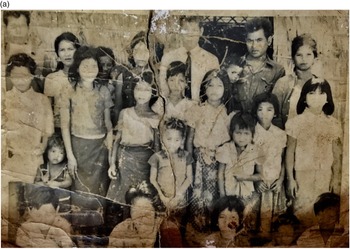
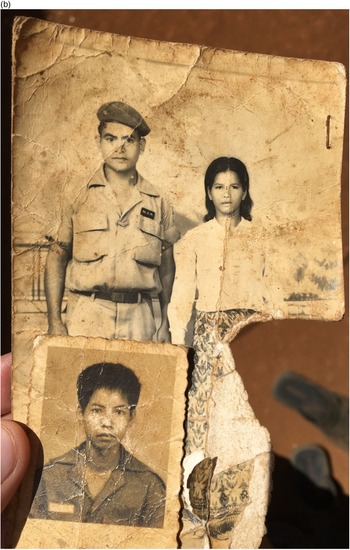
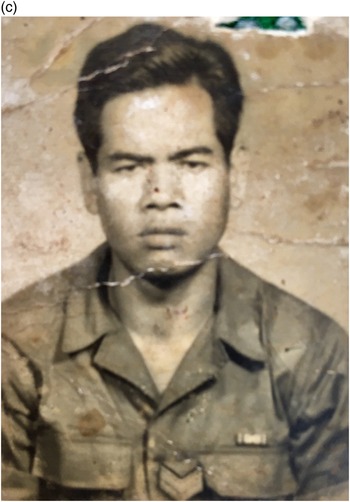
Those who praised the influence of this new god to the Bunong refugees in Bu Bong and Duc Lap were mostly fellow highlanders who had already turned Protestant, but also an American missionary—Reverend Philipps, a member of the US-based Summer Institute of Linguistics/Wycliffe Bible Translators (SIL/WBT). According to Ché Ka, who was among the first Cambodian Bunong to have converted to Christianity in Bu Bong, Rev. Philipps (called ‘Tanh Filip’) had sent these recordings to Cambodia. This does not seem unlikely given the well-established links between US Protestant organisations and the US Special Forces in Vietnam.Footnote 79 Further, several of the Rhadé and Jarai FULRO leaders in Phnom Penh had been in touch with American missionaries from the SIL/WBT and the Christian and Missionary Alliance (C&MA) when they were still in South Vietnam.Footnote 80 This range of connections contributes to explaining how the Bunong refugees’ vocal messages travelled from South Vietnam to Cambodia in the hands of the non-Christian Pö Koan-Mbaay (and how Bunong in Chroy Changvar sent back family photographs; see fig. 4).
Photographs that Bunong based in Chroy Changvar sent, through Pö Koan-Mbaay, to family members who had stayed in South Vietnam and who brought them back with them to Cambodia after the wars. a. Group picture possibly taken after church, with a young couple from Lumpek and their child on the upper right (published with the owner's permission).

Portraits of two Bunong FANK soldiers, one of them accompanied by his wife who is the other's older sister (published with the owner's permission).

Portrait of a Bunong FANK soldier who had entered the Cambodian army under the previous regime (published with the owner's permission).

After the fall
When on 17 April 1975, the Khmer Rouge made their way into Phnom Penh, marking the start of ‘Year Zero’ of Democratic Kampuchea (1975–79), most of the FULRO highland leaders led by Y Bun Sur took refuge in the French embassy with their families.Footnote 81 François Ponchaud and François Bizot, who were both at the embassy, describe the tragic moment when the group of about 150 highland militants marched out of the diplomatic safe zone and into the hands of the Khmer Rouge, who were unlikely to have spared any of them.Footnote 82 It remains difficult though to know exactly what happened in Prek Tasek as Pol Pot's men took over. Mé and Pö Nok were not in the camp when the Khmer Rouge entered the city. They had been brought to a hospital on Monivong Boulevard in Phnom Penh, since Pö Nok had been hit by a bomb splinter in the course of an attack on Chroy Changvar. As for Pö Mon, he was at his military post and tried, like many others, to escape the peninsula whose bridges had all been demolished. Boats were attacked or just sank because they were overloaded. Pö Mon mentioned having seen corpses floating down the river. Mé Nok cited a similarly sinister image as she explained how she knew that many of their fellows had been killed. She had to step over countless bodies as she was crossing Chroy Changvar peninsula along with the crowds of people who were being forced out of the city and into the rice fields by black-clad Khmer Rouge soldiers.
There are stories about some other Bunong who survived this initial attack, but disappeared because they were not able to hide their involvement with the Lon Nol regime when the Khmer Rouge interrogated them. The two Bunong leaders, Pö Gliu-Ngrä’ and Pö Breem-Njaap were apparently killed after having indicated their military rank, believing they would be given a promotion. Mé and Pö Nok survived because they identified themselves as workers in a rubber factory and brick factory, respectively. The Khmer Rouge made them walk to Chomkar Loeu camp, in Kompong Cham province, around 90 km north of Phnom Penh. In the course of this journey, the couple lost their young daughter, who fell sick and could not be cured under these rough circumstances. Arriving in Chomkar Loeu, they were separated over long periods of time and forced to work in rice fields. At the country's liberation in 1979, they moved around, living in several places before settling down in Snuol, at the foot of the highlands. It was only at the beginning of the 1990s that they returned to Mondulkiri, fulfilling a dream Mé Nok had when she was still in Phnom Penh: an old woman told her to return to her ancestral land, by following the way shown by the big river. She and her husband had gone far enough up the Mekong to move east and make it back home with their by then four children, more than twenty years after they had escaped as newly-weds. They settled in the part of Bu Sra commune that assembled the former Lumpek villagers, started to cultivate a field and joined the local Protestants.
Pö Mon survived Khmer Rouge interrogations by hiding his position within the Special Forces and saying that he had just been a schoolboy. He walked over 200 km north under Khmer Rouge control, to a camp in Kratie province. While he started the journey with two female cousins, as well as their husbands and children, only one of the others in the family survived the trek and the years of forced labour that followed. Pö Mon escaped the Khmer Rouge camp in 1978 to join the pro-Vietnamese forces, who took him to train in Vietnam before coming back to Kratie to fight the Pol Pot regime. Once Cambodia was liberated, Pö Mon was selected for a telecommunications course in Phnom Penh. By 1981 he was sent back to Mondulkiri province and put in charge of the provincial telegram service in Sen Monorom. He married a woman from Bu Sra commune and, after more than a decade in the provincial centre, settled down in his wife's village, where he became commune secretary, a job that he had just retired from when we first met in 2009.
These three individuals’ journeys are far too intense to be adequately addressed in a few short paragraphs, and we can only get a glimpse of the toughness of their experiences. They may not have been the only ones of their group who survived the Khmer Rouge takeover of Phnom Penh and the brutal regime that followed. What appears clear though is that most of the Bunong who joined this mission did not make it through these accumulated adversities.
Conclusion
Though difficult to count, the missing Bunong lives were not forgotten, since those who survived the years of war on either side of the Cambodian–Vietnamese border still recalled the ones they had lost along the way. Memories about the years spent alongside Lon Nol's forces were, however, lonely ones, only shared by a handful of people. Their recounting was not invested with claims for recognition, which is not surprising if one considers the symbolic violence that the highland ‘minorities’ have been exposed to over the past century. In the course of our most recent encounters with Bunong survivors, I shared my regret that this military involvement and the losses incurred remained largely absent from written historical records. Aware that this avowal possibly altered my interlocutors’ relation to their past, I hope that the way in which they made their stories legible to me and to my young Bunong colleagues has been meaningful for them, maybe calling into question hegemonic representations of their history.
As to the formal terms of the Bunongs’ military involvement, and to the reasons behind their relative absence from historical records, much remains to be clarified. There is no doubt that in order to bring the Bunong refugees from the highland camps to Cambodia's capital in support of the fragile FANK, collaborations between parts of the American army—notably the Special Forces and possibly the CIA—and FULRO, the Lon Nol regime and the South Vietnamese government were required. The fact that it was American bombings that led most of the Cambodian Bunong to the precarious refugee camps might make their decision to enlist on the side of these very same forces appear paradoxical. The survivors’ stories, however, allow us to consider how this move might have made sense for them, even if it remains impossible to retrace all the diversity and complexity in the reasons that informed the Bunong refugees’ choice to leave the camps and join this mission.
These Cambodian highlanders’ military engagement was probably less motivated strictly speaking by politics—ethnonationalist or other—than by the intense relationship they entertained with their homeland and the spirits who inhabit it. The difficulties that the Bunong encountered in the South Vietnamese and Cambodian camps in their efforts to mend these very relations, which had been disrupted and troubled by war, conversely contributed to the success of a god who Christian missionaries presented as much stronger than the offended and upset spirits. The complex ways in which the highland survivors have been dealing with the scars and holes left by the unprecedented violence and the countless ruptures that they experienced over the years of conflict still remain to be explored. The Bunongs’ stories’ resistance to simplification cannot be mistaken, however, neither can their astonishing power to carry on.