Introduction
Similar to cruise ships, cargo vessels favor the rapid spread of infectious diseases due to a high population density, direct contact between crew, and common food and water preparation and delivery.Reference McCarter1,2 Most infectious diseases causing outbreaks on ships affect the respiratory and the gastro-intestinal systems,Reference Kak3 and a variety of pathogens have been implicated.Reference McCarter1,Reference Zhang, Miao, Huang and Chan4–Reference Lanini, Capobianchi and Puro25
Western Australia (WA) records more than 10,000 yearly cargo vessel movements and is home to the world’s largest bulk export port.26 Infection diseases on board vessels can have significant healthReference McCarter1,Reference Kak3,Reference Schlaich, Oldenburg, Maike and Lamshöft27,Reference Miller, Tam and Maloney28 and economic effects.Reference Jerome, Howard, Uzel and Androulidakis29 Thus, all vessels need to comply with international sanitation legislation30–38 which informs minimum standards to “prevent, protect against, control, and provide a public health response to the international spread of disease in ways which are commensurate with and restricted to public health risks, and which avoid unnecessary interference with international traffic and trade.”34
Many outbreaks have been identified on board merchant vesselsReference Mallapati39–Reference Moriarty, Plucinski and Marston41 following the World Health Organization (WHO; Geneva, Switzerland) Coronavirus Disease 2019 (COVID-19) pandemic declaration.42 While quarantine (Q) – “the restriction of activities of or the separation of persons who are not ill but who may have been exposed to an infectious agent or disease”43 – has been a cornerstone for controlling infectious disease outbreaks for centuries,Reference McLeod, Baker, Wilson, Kelly, Kiedrzynski and Kool44 additional measures such as isolation and sanitation on board vessels are mandated under the International Health Regulations.Reference Chimonas, Vaughan and Andre8,Reference Adam, Varan, Kao, McDonald and Waterman17,Reference Ward, Armstrong, McAnulty, Iwasenko and Dwyer20,34,Reference Mizumoto and Chowell40,Reference Rocklöv, Sjödin and Wilder-Smith45–Reference Hirotsu, Maejima, Nakajima, Mochizuki and Omata52 Quarantining decreased the transmission of Severe Acute Respiratory Syndrome Coronavirus-2 (SARS-CoV-2) during vessels’ outbreaks,Reference Mizumoto and Chowell40,Reference Rocklöv, Sjödin and Wilder-Smith45 but it did not completely control the event, with further cases occurring after release from Q.Reference Mizumoto and Chowell40,46,Reference Kakimoto, Kamiya, Yamagishi, Matsui, Suzuki and Wakita53–55
The containment measures, travel restrictions, and border closures2 continue to make it increasingly difficult for ship operators world-wide to be granted pratique – “permission for a ship to enter a port, embark or disembark, discharge or load cargo or stores,”34,56 – conduct trade, and change crew.57,58
An effective outbreak management strategy is essential to achieve the outcome triad of healthy crew, clean vessel, and set departure date while maintaining the safety of the on-shore workers and larger community, and minimizing disruption to trade.
This report describes the principles of COVID-19 outbreak responses on four cargo ships: two bulk- (Patricia Oldendorff and Key Integrity) and two livestock transport vessels (Al Kuwait, Al Messilah), including the successful use of one of the vessels as a Q facility.
Methods
Command and Coordination
The Western Australian Government has legislated responsibility for human biosecurity for international maritime arrivals and took the lead role in a multi-agency response to the outbreaks, tasking the Australian Medical Assistance Team – Western Australia (AUSMAT-WA)59 to coordinate the operational aspects of managing the outbreaks. The AUSMAT-WA team worked closely with state agencies involved in biosecurity and border control, the state health department, law enforcement agency, and the port authorities.
Operational Response Foundation Principles
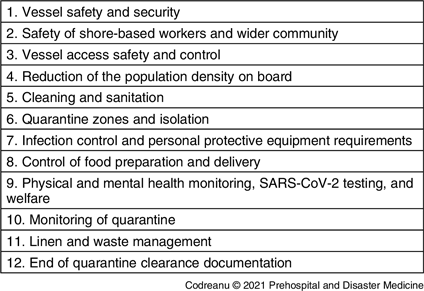
The response was based on 12 principles (Table 1) involving adopting and validating risks, hazards, and control measures; regular analysis and reporting; effective and timely remedial actions; verification procedures; and continual on-board monitoring of the Q process.
-
1. Vessel Safety and Security—The safety and security of the vessel and crew during the Q process is paramount and the response plan was adapted to the vessel location, type, and layout; local geographical and nautical circumstances; and other independent operational limitations (vicinity to other vessels and port operations).
-
2. Safety of Shore-Based Workers and Wider Community—Only AUSMAT-WA staff and supervised external contractors could board the vessel or enter established Q zones, using strict infection protection and control (IPC) measures.
-
3. Vessel Access and Control—A strict access protocol was determined by the position of the vessel (alongside or at anchor) and in compliance with border security requirements.
-
4. Reduction of the Population Density On Board—The vital functions of the vessel need to be maintained at all times and the Minimum Safe Manning (MSM) certificate60,61 provides the legal requirements for each vessel while underway. Based on the MSM, vessel Command, in consultation with the Operator, Flag State, Port Authority, and the Australian Maritime Safety Authority (Braddon, Australian Capital Territory), split the crew into two groups: (1) essential crew (EC), whose role is to maintain the safety (fire-fighting capacity, mooring lines) and vital functions (power supply and remote or direct systems monitoring) of the ship during the Q period; and (2) non-essential crew (n-EC). Before the start of Q, all known SARS-CoV-2 positive cases were disembarked to a secure hotel; however, it is recognized that, if in doing so the EC is depleted beyond safety levels, this might not be achieved.
-
5. Cleaning and Sanitation—Although SARS-CoV-2 virus is highly contagious,Reference Lee-Archer and von Ungern-Sternberg62,Reference van Doremalen, Bushmaker and Morris63 it was not necessary, nor possible, to clean the entire vessel before or during Q. A hospital-grade64,65 environmental disinfection of the accommodation structure was begun as soon as possible, all within 24 hours, and was conducted by quality assured professionals. The aim was to reduce the viral loadReference van Doremalen, Bushmaker and Morris63 on board and to create decontaminated access areas that were used by AUSMAT-WA and the cleaners (rest area). Contamination of the communal areas (deck corridors, bridge, engine room office) was controlled during Q by performing a daily clean of frequently touched surfaces and floors. The cleaning equipment used was disinfected at the end of each day and, when possible, left on board in a cleaned area. All equipment was cleaned prior to return to shore at the end of the Q process.
-
6. Quarantine Zones and Isolation—The accommodation space has a “tower with central stairwell” design on bulk and livestock carriers. During Q, some of the communal areas (central stairwell, mess room, galley, pantry, food stores, laundry) were restricted unless in emergencies; others form the work (bridge, engine room) and access areas (external staircases, corridors to cabins) which needed to remain always accessible. The work areas of the EC were cleaned to environmental standards, but were considered contaminated owing to on-going work traffic from potentially infected EC. Cabins vacated by the n-EC were locked and not disinfected during the Q.
-
7. Infection Control and Personal Protective Equipment Requirements—The EC were accommodated in their own, individual cabins, allowed to attend their designated workplaces, and to respond to any vessel emergency. All vacated cabin doors were marked to facilitate identification of crew and for emergency evacuation.
Foundation Principles for the COVID-19 Outbreak Response On Board Commercial Vessels

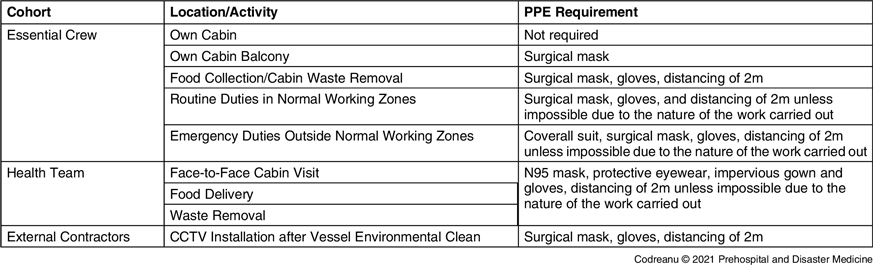
Donning and doffing stations were set up on board (access point to accommodation structure) and/or on shore (gangway). Disinfection stations were set up on board at strategic locations. Each crew was provided with a cabin cleaning kit with enough supplies to last the duration of the Q and instructed to clean their own cabins at least twice daily. Within the contaminated areas, different levels of personal protective equipment (PPE) requirements were mandated (Table 2).
Personal Protective Equipment Requirements in the Control Zones

Abbreviations: PPE, personal protective equipment; CCTV, closed-circuit television.
All external contractors were trained in PPE donning and doffing procedures, and compliance was monitored by AUSMAT-WA at the entry and exit points.
-
8. Control of Food Preparation and Delivery—Where available in the cabin, refrigerators were stocked with several days’ supply of bottled water, long-life food and beverage items prior to Q commencement. The on-board kitchen and catering facilities were not used to limit potential fomite spread. External caterers were engaged to prepare and deliver dockside culturally appropriate meals not dissimilar to those normally available on board. The AUSMAT-WA teams delivered the meals on board either directly (no-touch process) or using the vessel’s crane. Logistical delivery burden was managed by a once-a-day only food drop (one hot and two cold meals).
-
9. Physical and Mental Health Monitoring, SARS-CoV-2 Testing, and Welfare—Typically, commercial vessels do not have on-board medical facilities.2 After commencement of Q, a health questionnaire based on the same guidelines66 was used for the daily screening of EC using the vessel fixed phone lines, smart mobile phones (video capability), or face-to-face interviews. Any screening failure prompted escalation to a face-to-face interview and temperature measurement. For vessels at anchor, all EC were provided with, and trained to use, a smart mobile phone, a thermometer, and a finger pulse-oximeter.
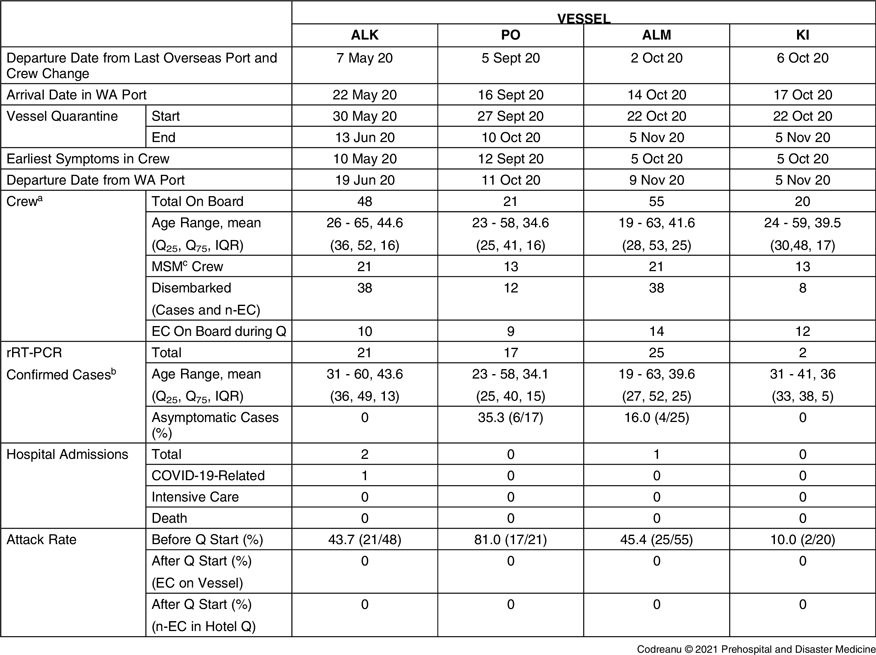
Any negative crew member with symptoms, either self-reported or elicited during health screening, had oro-pharyngeal and bilateral deep nasal swab samples collected for SARS-CoV-2 testing (combined in-house real-time reverse transcription polymerase chain reaction [rRT-PCR] assay directed at envelope and spike protein gene targets). Additional rRT-PCR testing was done on asymptomatic EC at various intervals to ensure the rapid detection of possible new cases which would threaten the agreed EC structure. The swabs were placed in viral transport medium and stored at 4°C-8°C prior to testing at an accredited67 laboratory. Additional serological testing was carried out for targeted crew if EC numbers were under threat to be further depleted and the detection of historical cases. Case definitions (Table 3) reflected the Australian public health guidelines for COVID-19.66
Summary of Vessel Movements, Quarantine Periods, and SARS-CoV-2 Infections

Abbreviations: ALK, MV Al Kuwait; PO, MV Patricia Oldendorff; ALM, MV Al Messilah; KI, MV Key Integrity; WA, Western Australia; n-EC, non-essential crew; MSM, Minimum Safe Manning; EC, essential crew; Q, quarantine; Q25, 25th quartile; Q75, 75th quartile; IQR, interquartile range.
a Crew includes all officers and ratings.
b Confirmed case is defined as a positive reverse transcription polymerase chain reaction test on an oro-pharyngeal and bilateral deep nasal specimen.
c MSM = the level of manning that will ensure that a specific ship is sufficiently, effectively, and efficiently manned to provide: safety and security of the ship, safe navigation and operations at sea, safe operations in port, prevention of human injury or loss of life, the avoidance of damage to the marine environment and property, and the welfare and health of seafarers through the avoidance of fatigue.57
The official language on-board vessels is English.68,69 During the response to the outbreak on the cruise ship MV Artania,Reference Codreanu, Ngeh, Trewin and Armstrong70 it was found that the crew had a reasonably good command of the language. However, this was not observed during the response on cargo vessels, and this has become manifest during the initial contact tracing interviews. The health questionnaire was translated in the preferred language of the individual, and interpreter services were readily available. The AUSMAT-WA teams also received, attended, and assessed health-related calls from crew. The initial response was by telephone and escalated to a cabin visit or engaging the on-shore WA health emergency resources, following pre-established contingency plans.
Good communication was the main process to mitigate possible psychological stress and feelings of isolation and to improve compliance with the Q requirements. This included individual two-way and mass-SMS messaging, which kept the crew accurately informed; using the daily health checks as opportunities for high-quality contact time; acknowledging special events (half-way through Q period, birthdays, and religious days); daily “brain teaser” exercises; and local community and culturally-linked associations’ engagement and support.
-
10. Monitoring of Quarantine—A comprehensive brief detailing the Q process, obligations, and restrictions was communicated to the EC. To allow the review and inform the remedial action of any potential breach, compliance was continuously monitored in communal areas by a temporary camera internal closed-circuit television (CCTV) system installed on three vessels. Disembarkation of all positive cases from the fourth vessel was not possible, thus the EC on board was a mix of cases and close contacts; therefore, CCTV monitoring was deemed not providing significant additional value.
-
11. Linen and Waste Management—To minimize traffic, waste bags and two sets of bed linen were placed in each occupied cabin; however, contingencies for special circumstances were available. At the end of the Q, all laundry and linen were collected in plastic bags and hot-cleaned using the commercial washing facilities on board.71 At the initial vessel clean, waste was removed from vacated cabins together with all perishable food from the messroom and galley. Judicious packaging of the food provided during Q produced minimal waste.
-
12. End of Quarantine Clearance Documentation and Documents—The Q clearance process followed evolving national guidelines.66 Each crew received a Letter of Clearance of Quarantine detailing personal circumstances. The Master and Shipping Agent were provided with a document certifying that the vessel has been cleaned to the required specifications and was free of SARS-CoV-2.
Ethical Considerations
The data collection, analysis, storage, and reporting were conducted in line with the WHO Ethical Standards for Research During Public Health Emergencies (COVID-19), the WHO Guidance for Managing Ethical Issues in Infectious Diseases Outbreaks, and the WHO Guidelines on Ethical Issues in Public Health Surveillance. Ethics approval was not required for this investigation, conducted as part of the public health response to outbreaks of COVID-19, a notifiable infectious disease under the Western Australia Public Health Act 2016. The release of data not already in the public domain has been granted by the WA Department of Health (Perth, Western Australia) Public Health Emergency Operations Centre Data Custodian.
Data Management and Analysis
The data were entered into a Microsoft Excel 2019 Ver. 2102 (Microsoft Corporation; Redmond, Washington USA) spreadsheet. Statistical analysis was limited to descriptive statistics.
Results
To maximize the number of non-infected crew available to sail the vessel at the end of Q, and to reduce the Q duration, each disembarked crew (n-EC and cases) was isolated in hotels (single room, with non-shared facilities). However, this was not possible on one vessel without severely compromising its MSM, thus essential duties were carried out by an EC consisting of cases and close contacts, not in strict isolation.
One outbreak involved 17 out of 21 crew (81%) and the disembarkation of all cases would have reduced the vessel manning to unsafe levels. In the absence of suitable replacement ratings, the nine EC left on board included seven infected crew, all under strict infection control directions. The two close contacts were disembarked prior to the vessel’s departure and remained SARS-CoV-2 negative at the end of their 14-day quarantine in WA.
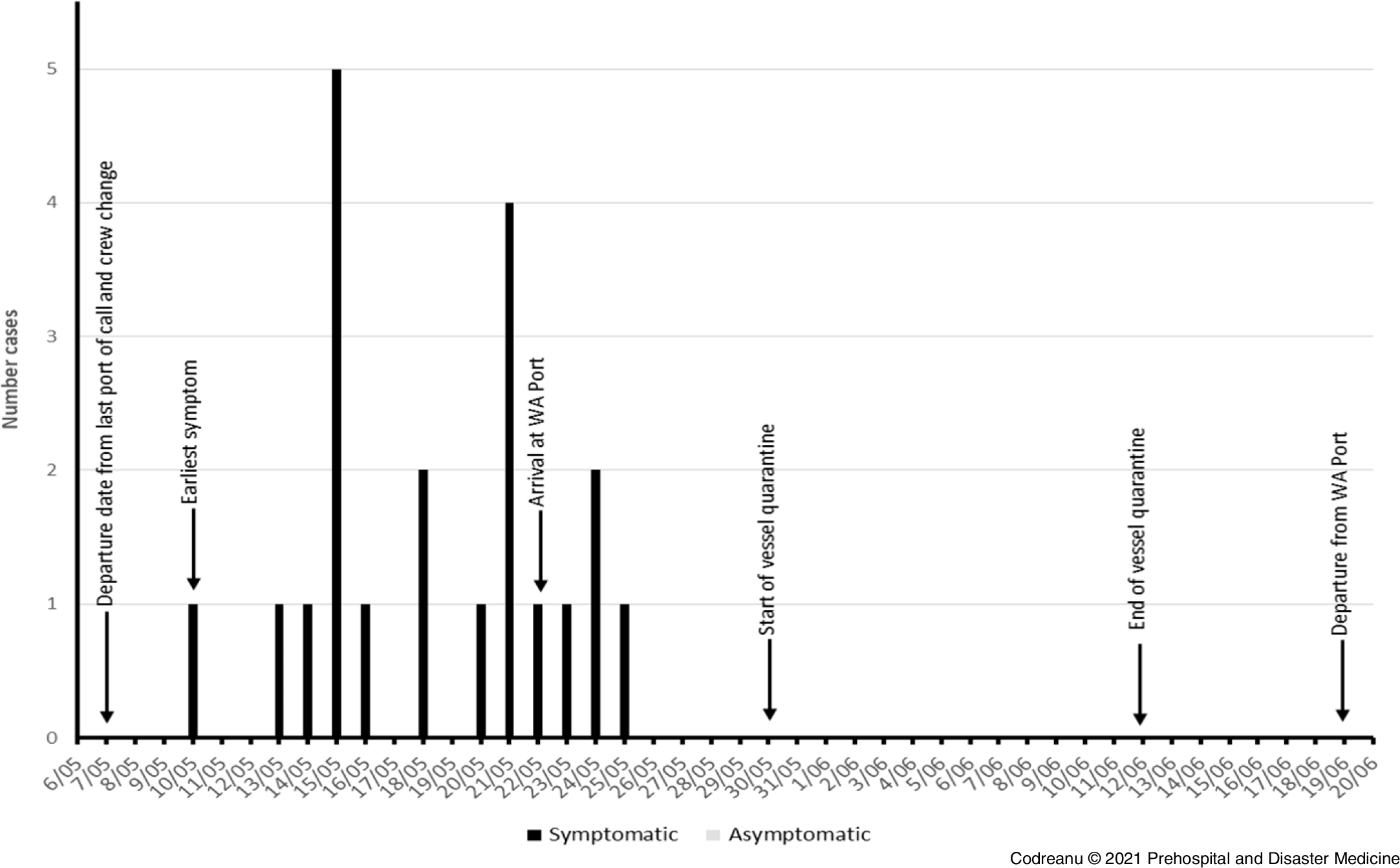
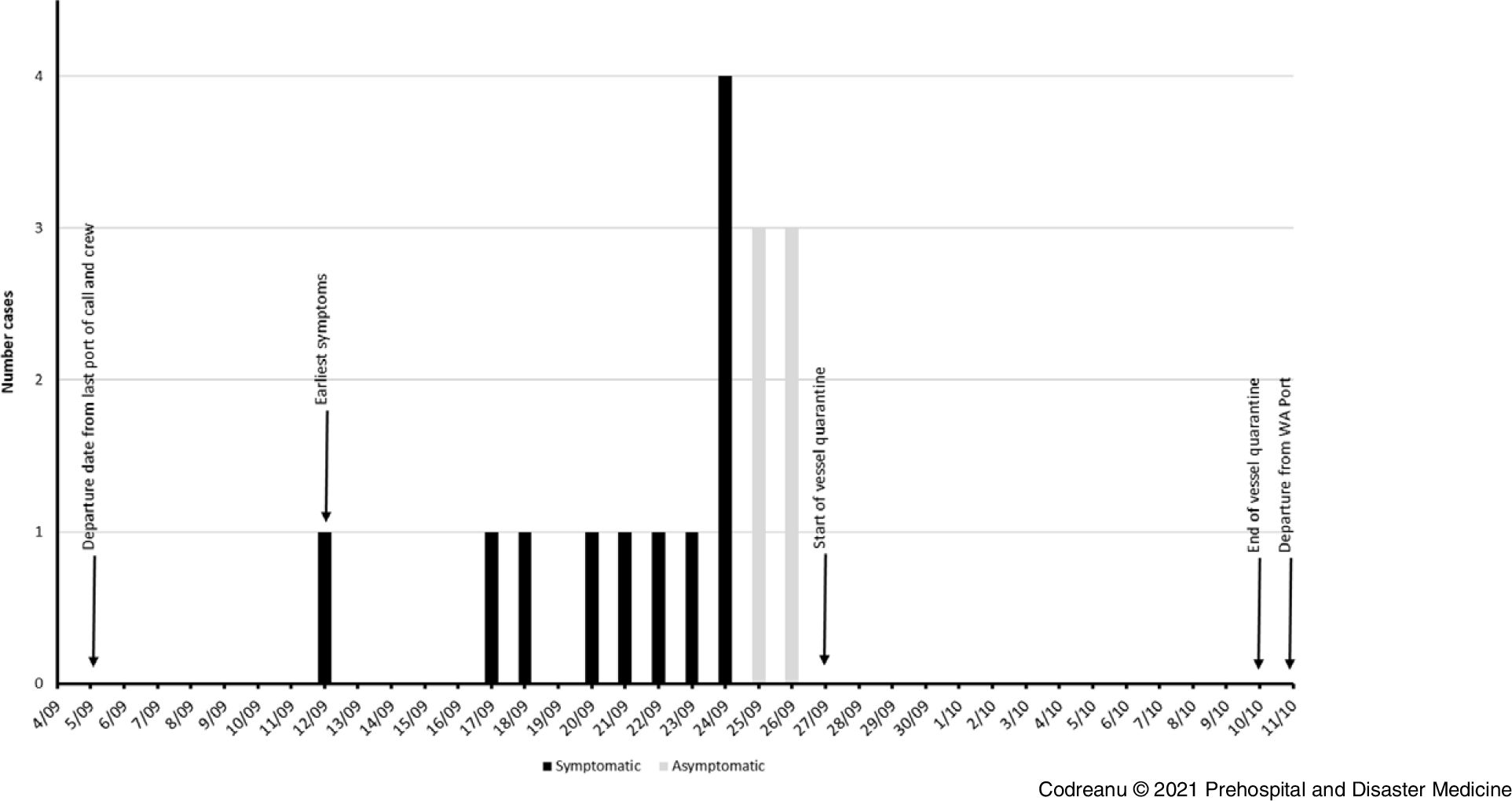
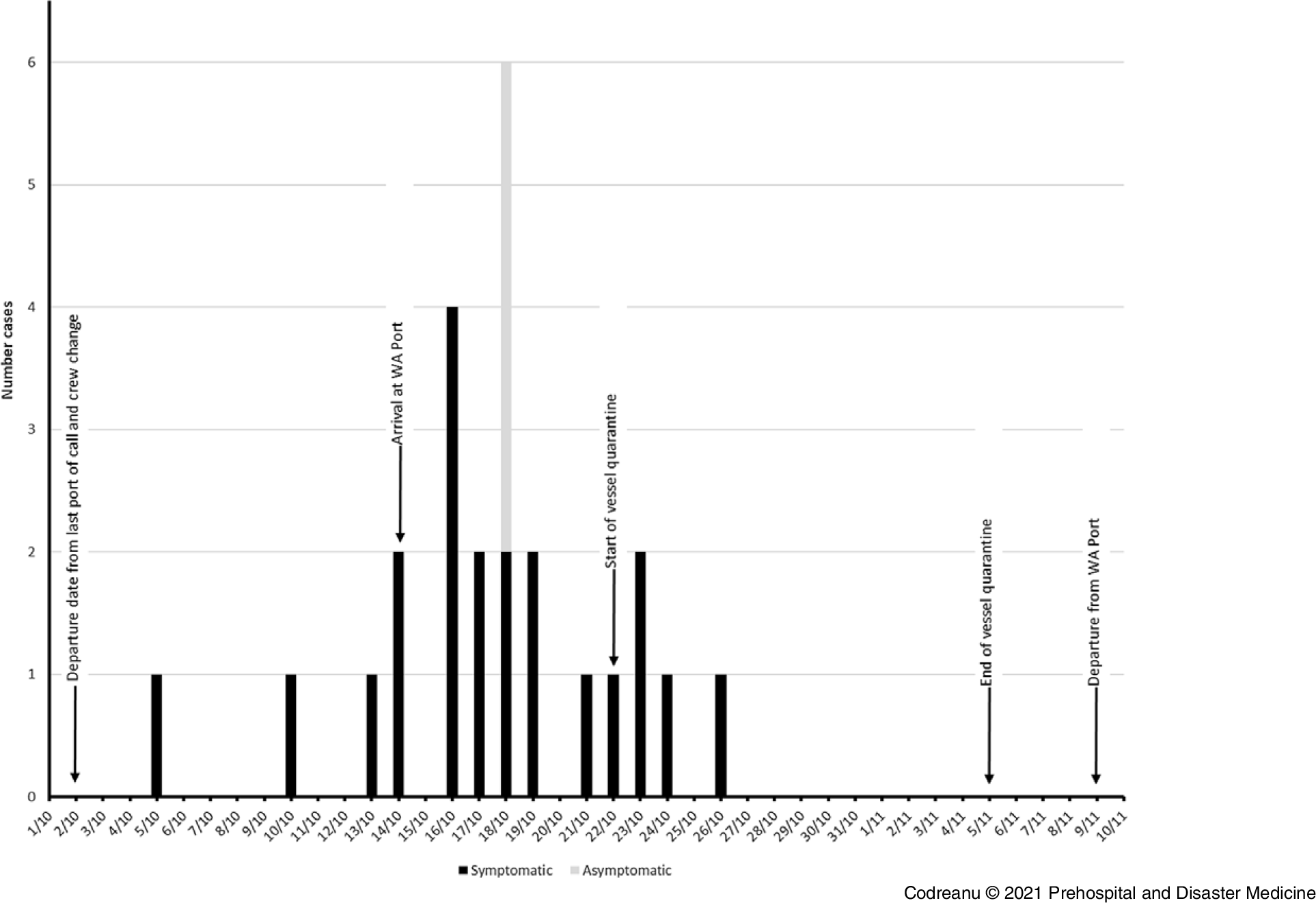
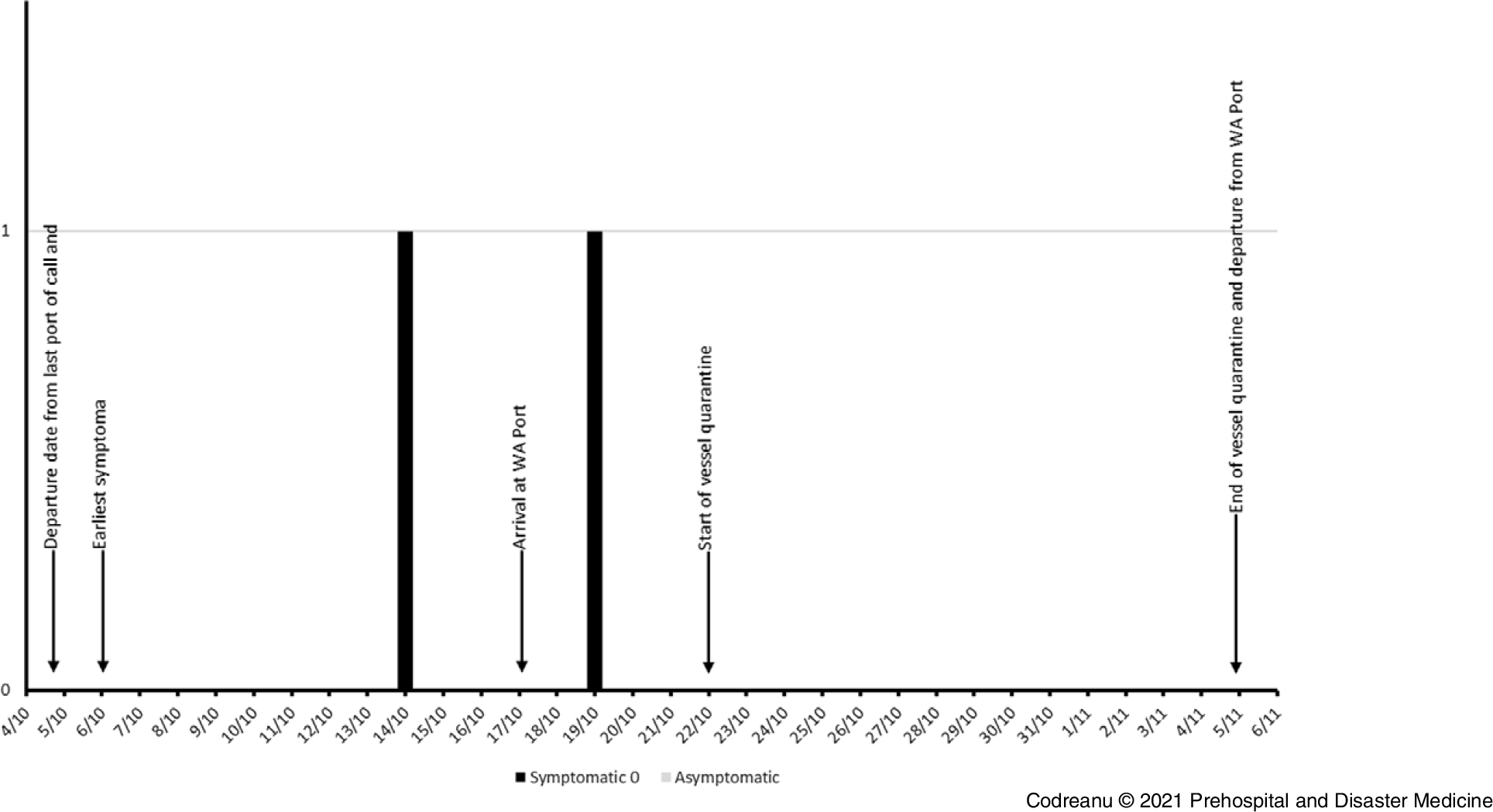
Overall, 65 crew (age range 19-63) were diagnosed with SARS-CoV-2 infection (15 asymptomatic). Three crew were hospitalized, only one for moderate COVID-19-related symptoms not requiring intensive care support, and no deaths were recorded. As described in other cruise vessel outbreaks,Reference Rocklöv, Sjödin and Wilder-Smith45,Reference Kakimoto, Kamiya, Yamagishi, Matsui, Suzuki and Wakita53 catering crew were among the cases found on three of the four vessels (Table 3). The epidemic curves of the outbreaks are presented in Figure 1, Figure 2, Figure 3, and Figure 4.
Epidemic Curve of MV Al Kuwait Cases by Onset Date.
Abbreviation: WA, Western Australia.

Epidemic Curve of MV Patricia Oldendorff Cases by Optimal Date of Onset.
Note: ODOO = onset date for symptomatic and the specimen date for asymptomatic cases.
Abbreviation: WA, Western Australia.

Epidemic Curve of MV Al Messilah Cases by Optimal Date of Onset.
Note: ODOO = onset date for symptomatic and the specimen date for asymptomatic cases.
The cases illustrated between October 23-26, 2020 represent the onset of symptoms of four non-essential crew already in hotel quarantine, who tested positive on October 18, 2020 while asymptomatic. The asymptomatic cases illustrated on October 18 remained asymptomatic until their clearance from quarantine.
Abbreviation: WA, Western Australia.

Epidemic Curve of MV Key Integrity Cases by Onset Date.
Abbreviation: WA, Western Australia.

Before Q started, the attack rate varied between 10%-81% with no further infections recorded thereafter in close contacts. Public Health interviews determined that with one exception, all index cases diagnosed on arrival at WA Ports were not the first case on board.
Only three crew from the same vessel did not clear Q at 14 days and remained in WA after the vessel’s departure. No serious mental or physical health issues were reported, with the main complaints conveyed by crew in hotel Q being the lack of access to exercising and specific food requirements.
The period between overseas departure and first symptoms described amongst crew ranged from three to seven days; however, one case developed symptoms before overseas embarkation, yet tested negative (RT-PCR) on departure day and was allowed to board.
The MSM specifies the minimum crew required for a vessel underway, and this can be further reduced after discussions with the relevant parties if the vessel is alongside or at anchor.
Two IPC breaches were demonstrated by real-time CCTV monitoring (cabin door opened without wearing mask; crew entering a vacated cabin at the same time as the cleaners), allowing review and reinforcing educational messages for compliance.
The Q strategy employed allowed the shortest possible time to prepare and conduct the quarantine (average 15.5 days; range 15-17 days) from the decision to Q until release.
Post-Quarantine Period
All vessels were granted pratique at the end of their Q period, which allowed for loading and return to trade. Masters were supplied with IPC recommendations for their forward voyage.
Discussion
Merchant vessels (passenger and cargo) have processes in place to manage various types of infectious diseases outbreaks on board, underpinned by international regulations. While the WHO Interim Guidance2 provides a high-level strategic direction for COVID-19 outbreaks, this should not detract from the need to design the complex processes to detect and respond to outbreaks while protecting the health of shore-based maritime workers and the larger community. The additional political scrutiny, community concerns, and trade implicationsReference Hedley72–Reference Law76 compound the climate in which a swift outbreak management process is planned and conducted.
The knowledge and experience obtained from responding to outbreaks on cruise vessels informed the similarities and contrasts of the operational details of the outbreak management on the four cargo vessels.
Contrary to passengers on cruise ships,Reference Miller, Tam and Maloney28,Reference Mallapati39,Reference Tardivel, White and Duong77 the prevalence of significant background health risk factors to amplify the severity of a SARS-CoV-2 infection (hypertension, obesity, diabetesReference Hu, Sun and Dai78) in a cargo vessel crew are low. Although the mortality and morbidity in COVID-19 is lower than those recorded in outbreaks of SARS and Middle East respiratory syndrome (MERS),Reference Hu, Sun and Dai78,Reference Regli and von Ungern-Sternberg79 quantifying the health threat for crew on vessels is in its infancy.
In many respects, commercial vessels present an apt environment to conduct a stringent Q process based on established IPC principles and consideration of the physical and psychological welfare of the crew,Reference Dancer14,Reference Rocklöv, Sjödin and Wilder-Smith45,Reference van Doremalen, Bushmaker and Morris63,Reference Boyce80–Reference Triandis82 but subordinate to multi-agency agreements on minimum manning requirements for the vessel’s vital functions, safety, and security obligations.
The ships were separated into areas reflecting their level of contamination and infection risk, and strict adherence to IPC was fundamental to the outbreak response process. Thorough daily cleaning maintained the status of these zones, and PPE requirements for each zone was rigidly enforced. Strict control of the food preparation (external caterer), and the no-contact food-drop system, essentially eliminated the direct contact between AUSMAT-WA staff and crew.
Modern cargo vessels generally offer single-occupancy cabins with individual facilities and good communication options. Though EC were not permitted to share food and were always requested to observe IPC measures, CCTV could not monitor their entire working areas. The work routine was minimized to back-to-back watch duties, response to emergencies, and withholding non-essential maintenance work, thus reducing unnecessary traffic. Good communication and re-enforcing messages regarding strict adherence to the instituted IPC measures resulted in no further infection transmission among them. Where installed, CCTV cameras proved to be a strong deterrent to non-adherence to IPC measures and it ensured that any breaches were recognized, analyzed, and the infection risk managed.
The low level of SARS-CoV-2 activity in the Western Australian community at the time of the operations, coupled with symptom screening of all responders and the use of appropriate PPE, provided a high level of confidence that the responders were not a risk vector for infection themselves. In locations where SARS-CoV-2 activity would be higher, introduction of the virus on board by infected responders would need to be mitigated by regular symptom and temperature checks and/or SARS-CoV-2 testing.
Quarantine is challengingReference Triandis82,Reference Karadeli83 and potentially detrimental on physical and mental health, and this approach may have contributed to a lack of reported serious mental or physical issues. The length of Q can be minimized by strict adherence to its principles using various communication strategies and technologies: building rapport and support and reinforcing and encouraging compliance with the Q requirements during the daily health checks, acknowledgement of group or individual special events, and conveying accurate, consistent, and timely information.
All vessels being able to return to trading as planned and the absence of SARS-CoV-2 infections in any EC after the start of the vessel Q validated the processes’ principles and execution.
Limitations
This paper has several limitations. Owing to evolving screening and testing National Guidelines, all asymptomatic n-EC were not tested as a condition of release, thus there is no certainty that during and at the end of Q, all re-embarked asymptomatic n-EC were not infected and infectious. Personal communications from the vessel Masters conveyed that none of the crew became symptomatic after departure, and that those who disembarked at the destination harbors did not have to Q or be tested upon arrival. However, this information could not be formally confirmed. The combined theoretical risk of an undetected eventReference Higgins and Deeks84 is 3.9% (CI 95%). In addition, on-going IPC measures after departure mitigated this small risk even further. The screening and testing protocols reflected Australian best practice at that time, and future vessel outbreaks would be managed accordingly.
Conclusion
Although the COVID-19 pandemic halted the international cruise ship industry, maritime trade continued. The risk of outbreaks on cargo vessels is likely to increase with the world-wide rising incidence of COVID-19, appearance of highly contagious novel strains, and the obligatory crew changes. The associated potential consequences to human life and to trade necessitate a balanced approach aimed at obtaining a departure date for a clean vessel manned by a healthy crew while maintaining the safety of the responders and broader community.
There are health, financial, operational, and safety advantages in using the outbreak management principles described, and the feasibility has been successfully demonstrated on four vessels.
Acknowledgements
To the crew and Masters of the vessels – the authors’ heartfelt and sincere recognition for your compliance during the challenges of quarantine.
The authors would like to acknowledge the contribution of the representatives of the State agencies who have made possible the implementation of the response plan for the COVID-19 outbreaks on board the MV Al Kuwait, MV Al Messilah, MV Patricia Oldendorff, and MV Key Integrity: Western Australia Department of Health, Western Australia Medical Assistance Team, Australian Border Force, Western Australia Police Force, Fremantle Port, Pilbara Port, Western Australia Country Health Services, PathWest, Royal Flying Doctor Service, Australian Defence Force, Australian Maritime Safety Authority, Department of Agriculture, Water, and the Environment, and Department of Foreign Affairs and Trade. Special acknowledgments are due to the in-country representatives of the affected vessels (shipping agents).
Conflicts of interest/funding
none