


Over the past decade, scholars have produced an extensive body of research on the rise of right-wing populist (RWP) forces, exploring their domestic and international drivers as well as their broader consequences. Yet, as studies attempting to summarize the existing evidence on this topic show, the findings of this literature remain scattered, and there are many puzzles and inconsistencies in the results (Wajner, Destradi, and Zürn Reference Wajner, Destradi and Zürn2024; Walter Reference Walter2021). This is partly due to the prevailing tendency among scholars to conduct case or comparative case studies that, while identifying common elements of ideology, style, and rhetoric, also reveal significant variation in the policies pursued, including in the realm of foreign affairs (Lacatus, Meibauer, and Löfflmann Reference Lacatus, Meibauer and Löfflmann2023).
One promising avenue for further research is the examination of RWP authorities’ contestation of the liberal international order (LIO)—a stance that many authors regard as the most salient commonality among these otherwise highly diverse movements (Abrahamsen et al. Reference Abrahamsen, Drolet, Williams, Vucetic, Narita and Gheciu2024). The extensive literature on the subject widely regards RWPs as a major threat to the LIO (Adler and Drieschova Reference Adler and Drieschova2021; De Vries, Hobolt, and Walter Reference De Vries, Hobolt and Walter2021; Fukuyama Reference Fukuyama2018; Ikenberry Reference Ikenberry2018; Kornprobst and Paul Reference Kornprobst and Paul2021; Lake, Martin, and Risse Reference Lake, Martin and Risse2021; Miller Reference Miller2021). At the same time, this scholarship has not yet systematized the patterns of such contestation, which would provide a starting point for further theory development. In this context, Tanja Börzel and Michael Zürn (Reference Börzel and Zürn2021) introduce the notion of “liberal intrusiveness” as a key driver of contestation of particular international organizations. This concept integrates an organization’s level of authority and its core issue areas, with trade, human rights, and the rule of law considered “liberal” domains. Börzel and Zürn argue that the post-1990 increase in the authority of organizations dealing with these domains has prompted RWPs to challenge specific international organizations that are part of the LIO. They support this claim with longitudinal data documenting the dynamics of liberal intrusiveness throughout the post–World War II period. However, the causal relationship between liberal intrusiveness and RWP contestation has so far been examined in only two selected case studies, with no broader empirical test conducted. The main obstacle to such testing has been the absence of a measure of RWP contestation. As a result, Börzel and Zürn’s analysis could not determine whether contestation is driven primarily by human rights and/or trade agenda, nor could it isolate the independent effect of international organization authority itself.
In this article, we aim to fill this gap. Building on the literature on populist and right-wing foreign policy, as well as on the characteristics of the LIO, the next section derives expectations regarding the logic of RWP contestation of the LIO. We then test these expectations empirically. As we outline in the third section, our original data come from an expert survey conducted across 13 countries that systematically assessed RWP governments’ attitudes toward individual international organizations. Using this dataset, we estimate several models (outlined in the fourth section) testing the impact of an international organization’s authority and agenda on approval or contestation by RWP governments. Our empirical results, presented and discussed in the fifth section, largely support but also extend the concepts developed by Börzel and Zürn (Reference Börzel and Zürn2021). The sixth section focuses on robustness checks and the final section concludes the article.
Theoretical Considerations: Right-Wing Populism and the LIO
Amid the recent global rise of radical and insurgent political movements, scholarly interest in the influence of these forces on the shaping of international affairs has intensified. Within the field of international relations, however, these political actors have predominantly been examined through the overarching category of populism. In this literature, populism denotes a thin-centered ideology organized around a morally charged division of society into two ostensibly homogeneous camps: a virtuous people and a corrupt elite pursuing its own interests (Bernhard and O’Neill Reference Bernhard and O’Neill2022; Mudde Reference Mudde2004; Stanley Reference Stanley2008). This conceptualization naturally implies only limited differentiation between right- and left-wing variants of populism (Cadier, Chryssogelos, and Destradi Reference Cadier, Chryssogelos and Destradi2025; Chryssogelos Reference Chryssogelos and Hannah2017; Destradi, Plagemann, and Taş Reference Destradi, Plagemann and Taş2022; Löfflmann Reference Löfflmann2022; Wajner, Destradi, and Zürn Reference Wajner, Destradi and Zürn2024). Lacking the comprehensive worldview of its own, thus-defined populism is highly adaptable: it can attach itself to left-wing, right-wing, or even centrist ideological traditions by incorporating any of their values, narratives, and policy preferences.
As Cas Mudde and Cristóbal Rovira Kaltwasser (Reference Mudde and Kaltwasser2013) note, populist movements are highly heterogeneous, raising questions about the extent to which different variants can meaningfully be analyzed under a single analytical framework. This article focuses specifically on RWPs. Unlike left-wing populism, the populist Right has, over the past decade and a half, achieved remarkable electoral successes across a wide range of national contexts.Footnote 1 This has taken two forms: the dynamic rise of previously marginal hard-line movements at the expense of weakening mainstream factions, and the radicalization and absorption of populist agendas by established, formerly moderate right-wing parties (Bale and Kaltwasser Reference Bale, Kaltwasser, Bale and Kaltwasser2021). Several scholars have thus rightly urged closer attention to the intersection of populism and right-wing “thick” ideologies in shaping actors’ international behavior (Eklundh, Stengel, and Wojczewski Reference Eklundh, Stengel and Wojczewski2024; Jenne Reference Jenne2021; Ostermann and Stahl Reference Ostermann and Stahl2022; Wojczewski Reference Wojczewski2024). In practice, however, it is still the populist dimension that tends to be seen as the exclusive driver of right-wing populist movements’ actions in the international arena. For example, numerous studies implicitly treat the nationalist dimensions of RWPs as synonymous with their defense of “the people” (Lake, Martin, and Risse Reference Lake, Martin and Risse2021, 230–31). We argue here that this conflation is not necessarily adequate. No inherent trait of populism requires equating “the people” with the nation. A Marxist populist variant, for instance, might instead define “the people” globally—as the exploited masses set against the transnational capitalist elite. Exalting national pride and interests seems thus not to be inherently populist but rather a function of the right-wing ideological commitments that often accompany contemporary populism. While left-wing populist movements and governments have emerged in several contexts—particularly in Latin America, but also in parts of Europe following the 2008 financial crisis—the contemporary wave of sustained contestation directed at the LIO has been driven primarily by the populist Right. Notably, contemporary left-wing populist projects tend to retain a predominantly statist orientation and often shy away from broader internationalist ambitions characteristic of earlier globalist variants of the Left.
In the following, we seek to address the aforementioned conflation problem by taking seriously the thick ideological attributes of RWPs. To do so, we first need to conceptualize the distinction between Right and Left. Following Norberto Bobbio (Reference Bobbio and Cameron1996, 37–38), we treat the key dividing line as each side’s attitude to inequality. The Right views inequality—what Bobbio calls a “vertical or inegalitarian perception of society”—as natural, unavoidable, or even desirable (58). The Left, by contrast, understands inequalities as socially constructed and believes they should be actively reduced. Right-wing defenses of inequality thus appeal to the “deep structures of society,” in which historically embedded arrangements are recast as naturalized foundations whose disruption is presumed to endanger the social order (Hirschman Reference Hirschman1991, 43; Wojciuk and Pawłuszko Reference Wojciuk and Pawłuszko2026). Within this framework, universalist, progressive policies aimed at countering various forms of inequality are often depicted as futile, potentially destructive, or likely to generate unintended negative consequences (Gottfried Reference Gottfried2007; Hazony Reference Hazony2022; Legutko Reference Legutko2018). Although right-wing perspectives converge in treating liberal and left-wing projects as a threat to the basic principle of natural social order, they differ in how such economic or cultural hierarchies are conceptualized, justified, and politically mobilized (Norris and Inglehart Reference Norris and Inglehart2019).
The societal divisions emphasized by the Right concern both the distribution of material resources and questions of status and social recognition, often expressed in the form of a defense of economic inequalities and resistance to expanded rights or equal standing for groups such as women, racial and ethnic minorities, migrants, or LGBTQ+ communities. Taken together, these positions reflect a broad anti-egalitarian orientation centered on the legitimization of hierarchy across multiple realms of social and political life. Throughout this article, we argue that none of the particular hierarchies should be considered as suited to being an umbrella under which all the others can be effectively subsumed. For example, in contemporary right-wing populism, nationalism—particularly in its nativist and sovereigntist variants—often serves as a prominent axis through which such hierarchies are articulated, defining the political community in exclusionary terms and positioning national particularism against liberal universalism (Blokker Reference Blokker2005; Bonikowski et al. Reference Bonikowski, Halikiopoulou, Kaufmann and Rooduijn2019; Brubaker Reference Brubaker2020; De Cleen and Stavrakakis Reference De Cleen and Stavrakakis2017). Yet nationalism alone cannot account for the ideological breadth of RWPs. Hierarchical ordering is also articulated through religious, civilizational, gendered, familial, and punitive law-and-order claims, which structure distinctions of authority, belonging, entitlement, and recognition (Field Reference Field2025; Rogenhofer and Panievsky Reference Rogenhofer and Panievsky2020). Different RWP actors may therefore emphasize different hierarchical registers without ceasing to share a broader normative orientation toward anti-egalitarianism.
Following in Bobbio’s footsteps, we treat this as the core marker of the Right,Footnote 2 while recognizing that the Right mobilizes heterogeneous constituencies and spans a broad spectrum, from mainstream currents fully operating within the institutional framework of liberal democracy, through more radical expressions that partially challenge liberal democratic norms, to explicitly antidemocratic forces at the extreme (Gidron and Ziblatt Reference Gidron and Ziblatt2019, 20–24; Golder Reference Golder2016; Mudde Reference Mudde2019; Pirro Reference Pirro2023; Ziblatt Reference Ziblatt2017). We do not claim that all RWPs articulate identical ideological configurations or policy agendas. Rather, our argument operates at a higher level of abstraction and seeks to identify a shared hierarchical normative orientation that recurs across diverse manifestations of right-wing populism. This follows a common strategy in comparative research on other ideologies, such as nationalism, liberalism and neoliberalism, or socialism, which identifies common ideological denominators while simultaneously recognizing substantial internal variation.
How do those characteristics and priorities of RWPs relate to the foundational commitments of the LIO? Empirical literature points to a number of paradoxes that emerge on closer examination. RWPs operate in diverse national contexts across the Global North and South, and their positions on international issues often diverge (Art Reference Art2024). For instance, Ziya Öniş and Mustafa Kutlay (Reference Öniş and Kutlay2020, 117) observe that, while European RWPs are in principle strongly hostile to migration, Turkey’s RWP government has accepted four million refugees from Syria. Meanwhile, RWPs in India and Brazil display indifference on the issue (Heller Reference Heller2020). Ray Kiely (Reference Kiely2020) highlights further contradictions—most notably with regard to the European Union (EU). In pre-Brexit Britain, RWPs criticized the EU for excessive protectionism, arguing that it hindered globalization—an opinion shared by the Alternative for Germany and the Austrian Freedom Party. By contrast, continental European RWPs, such as the French National Rally, portray the EU as a key driver of neoliberal globalization, which they vehemently oppose. Numerous studies have also noted variation in both RWP parties’ international trade policy positions and their electorates’ attitudes toward this issue (Bearce and Jolliff Scott Reference Bearce and Scott2019; Colantone and Stanig Reference Colantone and Stanig2018; Dippel, Gold, and Heblich Reference Dippel, Gold and Heblich2015; Meislová and Chryssogelos Reference Meislová and Chryssogelos2024; Milner Reference Milner2021; Naoi Reference Naoi2020; Rodrik Reference Rodrik2021). Quinn Slobodian (Reference Slobodian2018, 280–86) identifies analogous inconsistencies in RWP stances toward other international organizations, including the International Labour Organization.
In addition to defining “populist” and “the Right,” an empirical examination of the overarching trends that transcend these oftentimes valuable (even if scattered) observations and conjectures should carefully conceptualize the object of the contestation: the LIO itself. Here, we rely on John Ikenberry’s (Reference Ikenberry2018, 11–12) formulation, which distills the order into five core principles. First, the order is rules based:Footnote 3 states organize their relations through regional and global institutions that facilitate bargaining, coordination, and cooperation while reinforcing equality and nondiscrimination. Second, it assumes that international society is corrigible: power politics can be moderated and stable relations constructed around mutual benefit. Third, the order carries an expectation of progress: liberal democratic institutions, relationships, and rights foster domestic advancement and form a community of mutual aid and protection. Fourth is openness, particularly in the economic sphere: trade and exchange are seen as essential to peace, growth, and political development through positive-sum interdependence. And finally, fifth, the LIO rests on security cooperation, not necessarily through formal alliances but through looser arrangements to enhance safety and predictability.
To analyze how RWPs relate to the LIO, we consider how each pillar interacts with both the populist and the rightist elements of their ideology. As far as the rules-based framework is concerned, the literature suggests that RWPs do not reject institutionalized international cooperation in its entirety. Rather, their support for engagement is typically selective, contingent, and ad hoc, favoring small-scale, bilateral, or “minilateral” arrangements over enduring multilateral formats (Farias, Casarões, and Wajner Reference Farias, Casarões and Wajner2024, 2009; Öniş and Kutlay Reference Öniş and Kutlay2020, 118). This orientation is reinforced by a pronounced bias toward immediate action, privileging swift, tangible measures over deliberation or procedural compliance, while binding commitments and external oversight are often perceived as illegitimate interferences.
The literature has rightly interpreted this posture in international relations as a manifestation of RWPs’ populist dimension. Bilateral and “minilateral” can be presented as more directly responsive to the will of “the people” as embodied by the populist leader, while mechanisms of external accountability—legal, bureaucratic, or technical—are viewed as obstacles to effective governance. Consequently, populist regimes often circumvent, reinterpret, or openly contest such constraints (Cooley and Nexon Reference Cooley and Nexon2020, 139, 148; Dornbusch and Edwards [Reference Dornbusch and Edwards1991] 2007). Where LIO treats rules as binding frameworks legitimized through institutional authority and expertise (Krasner Reference Krasner1999), populist actors prioritize compliance only insofar as it aligns with the perceived interests or will of the “true people.”
Yet RWPs’ contestation of the rules-based international order is irreducible to populism alone. It is even more firmly rooted in their right-wing ideological orientation. The emphasis on Westphalian sovereignty viewed as the ruler’s unconstrained power itself leans toward a rightist—rather than purely populist—conception of “the people” (Lake, Martin, and Risse Reference Lake, Martin and Risse2021, 230–31). More broadly, the opposition to multilateralism flows logically from a hierarchical worldview that treats inequality between states and actors as “natural.” This perspective frames the rules and norms of the LIO as incompatible with the presumed order of stronger and weaker actors, reinforcing selective engagement and resistance to constraints. The regional articulation of this critique varies. RWPs in the Global North often frame their argument in explicitly anti-egalitarian terms, arguing that international organizations within the LIO overemphasize egalitarian values and disproportionately privilege actors from the South. By contrast, RWPs in the Global South frequently criticize international elites for being Northern-centric, hypocritical, and pursuing Northern interests under the guise of egalitarian norms (Adler-Nissen and Zarakol Reference Adler-Nissen and Zarakol2021). In the latter case, demands for reform usually aim at elevating the status of a specific state rather than equalizing opportunities across the Global South as a whole.
Turning to corrigibility and progress, we can, once again, notice how both the populist and the rightist dimensions of RWPs generate friction with liberal internationalism, though in distinct ways. On the populist side, the notion that mutual benefit and progress should be defined by technocrats within international organizations sits uneasily with populist understandings of political legitimacy (Zürn Reference Zürn2022). Populists argue that it is “the people,” not global elites, who are best positioned to determine their own interests and the direction of reform. Under this framing, mutuality is not inherently contradictory to populism, but it is acceptable only if it emerges “from below,” directly reflecting the will of the people rather than being mediated by international institutions. This perspective casts common liberal values and universal human rights as ideological ruses—instruments designed to constrain the people’s will and legitimize foreign interference.
At the same time, an important source of tension arises from the rightist, rather than purely populist, dimension of RWPs. Right-wing ideology has long displayed skepticism toward the liberal idea of “progress,” understood in Ikenberry’s sense as a historical trajectory moving toward the expansion of liberal democracy. This skepticism is closely connected to the Right’s preference for hierarchy and inherited order. While some contemporary right-wing currents embrace technological or economic innovation, this does not necessarily imply a commitment to progress in Ikenberry’s political sense. Rather, innovation is embraced instrumentally when it serves a broader project of preserving or restoring traditional hierarchies (Müller Reference Müller2006). At its extreme, this orientation becomes explicitly reactionary.
RWPs vary with respect to the ways in which they pursue these causes. Some, such as the British Conservative Party under Boris Johnson, largely remain within a mainstream framework, cautiously invoking historical hierarchies and identity-based themes without abandoning core liberal democratic commitments. Others, such as Narendra Modi, exhibit stronger tendencies toward exclusionary policies and resistance to individual rights. At the far end of the spectrum, the extreme Right explicitly rejects universal human rights in favor of privileging particular collective identities. Even setting aside these most extreme cases, the general rightist nostalgia for an imagined historical order logically entails a form of “reactionary internationalism”—a rejection of the liberal belief in human universality and a reassertion of the nation, defined in nativist, “birth culture” terms as the primary actor in international relations (Michelsen, Orellana, and Costa Buranelli Reference Michelsen, de Orellana and Buranelli2025; Orellana and Michelsen Reference Orellana and Michelsen2019).
Extending this logic, right-wing forces also tend to rank nations, civilizations, and cultures according to perceived vitality, authenticity, and strength (Carter Reference Carter2018; Mudde Reference Mudde2007; Rydgren Reference Rydgren and Rydgren2018). The LIO’s emphasis on multiculturalism, cosmopolitanism, and global interdependence is described by them as an attempt to flatten differences among peoples and nations. Right-wing movements respond by valorizing the nation—and, in some cases, a dominant civilizational or religious identity, whether Christian, Islamic, or Hindu—while advocating restrictive immigration and asylum policies, cultural protectionism, or ethnopluralist arrangements designed to preserve hierarchical distinctions in the global arena (Minkenberg Reference Minkenberg2000, 175).
This hierarchical orientation is also visible domestically. RWPs frequently implement unequal treatment of marginalized groups, while shielding such practices from international criticism by framing global norms and oversight as illegitimate impositions on national sovereignty. Gender hierarchies provide a striking example. After all, populism alone would, presumably, stress the unity and homogeneity of “the people,” but RWPs routinely specify the internal ordering of this collective, privileging patriarchal authority, traditional family roles, and masculinized forms of leadership (Spierings et al. Reference Spierings, Zaslove, Mügge and de Lange2015). On the international stage, this translates into attacks on institutions defending women as well as nonheteronormative individuals and other minorities. The international protection standards for these disadvantaged groups are often portrayed as externally imposed with the aim of undermining the social norm of the traditional family.
Taken together, these dynamics reveal how right-wing ideology magnifies the international implications of populist foreign policy. Whereas populism emphasizes sovereignty and the primacy of the popular will, the Right adds a substantive vision of hierarchy: externally, between nations, civilizations, and religions; and internally, between groups, roles, and identities. RWPs would therefore be expected to engage selectively with international organizations: institutions that do not challenge the hierarchies that RWPs seek to maintain or restore may be tolerated, whereas those perceived as undermining these structures—by promoting equality, solidarity, universal human rights, or redistribution—are more likely to be contested as threats to the “natural” order.
Next, we turn to the fourth principle of the LIO identified by Ikenberry: economic openness. Here, a long-standing critique has come from the Left, including its populist variants. The primary target has been the neoliberal version of the LIO (Katzenstein and Kirshner Reference Katzenstein and Kirshner2022; Ruggie Reference Ruggie1982), which has dominated over the past four decades. Leftist analyses argue that neoliberal globalization generates economic inequalities and diminishes the state’s redistributive role, leaving behind those disadvantaged by structural economic change. Particularly in the Global North, where the social costs of globalization are especially visible, such critiques converge with those of the Right—sometimes not only in their diagnoses but also in their proposed remedies.
This overlap highlights the ways in which populism per se may clash with economic openness. Openness, in practice, requires a dense network of rules to guarantee fair competition—rules that can be framed as illegitimate impositions on the will of the people. Moreover, globalization empowers international capital, which may be cast as hostile to “the people”—a critique resonating beyond the classic leftist capital–labor conflict. Viewed from this vantage, however, there is strong evidence that RWPs’ stance toward the global economic order is rooted chiefly in their rightist, rather than populist, orientation. This is because, empirically, RWPs have exhibited a long-lasting duality of highly divergent approaches to the issue (Varga and Buzogány Reference Varga and Buzogány2022). One strand embraces neoliberal policies, legitimizing inequality as the natural outcome of competition, merit, and productivity, and selectively supporting international economic institutions that reinforce market freedoms (Betz Reference Betz1994, 141). Within this logic, efficient markets allow the strongest individuals to emerge victorious and wealthy, while any violation of market principles—particularly excessive state intervention—is seen as undermining natural economic hierarchies.
By contrast, the other strand is interventionist and protectionist, advocating welfare chauvinism, nationalization of strategic sectors, and the exclusion of “outsiders” from economic entitlements. This statist approach conceptualizes competition among large social groups, such as nations, rather than solely among individuals. From this perspective, the global economy is understood as a zero-sum arena, in contrast to the LIO’s assumption that cooperation can expand the proverbial “pie” and produce mutually beneficial positive-sum outcomes.
What is important is that both strands reflect a paradigmatically right-wing worldview, grounded in the social Darwinism and the rejection of egalitarianism that overlay populist anti-elite sentiment with hierarchical distinctions among economic actors and communities. The difference between the strands lies primarily in the identification of the competing units—individuals in the neoliberal version, collective social groups in the interventionist variant (e.g., Wojciuk, Górecki, and Kowalski Reference Wojciuk, Górecki and Kowalski2025). Internationally, each variant translates into either selective engagement with globalized markets or a turn toward economic nationalism, mercantilism, and strategic autarky—always accompanied by a rejection of regulatory constraints imposed by multilateral economic regimes.
Finally, within Ikenberry’s concept of the LIO, the fifth area—security—represents a crucial domain that, compared with others, has been less institutionalized at the supranational level and has consistently remained centered on the state. During the Cold War, alliances and cooperative arrangements were inherently interstate, so even the institutional mechanisms designed to enhance collective security did not meaningfully constrain the sovereignty of participating states.
However, from a populist perspective, international professional security networks are often viewed with suspicion. Populist narratives portray these structures—including the security apparatus or “military-industrial complex”—as mechanisms that undermine the “will of the people” and reinforce power asymmetries within alliances. Reflecting this worldview, populist governments are expected to centralize and politicize foreign and security policy, delegating tasks to close allies while bypassing professional institutions (Cadier Reference Cadier2021; Giurlando and Wajner Reference Giurlando and Wajner2023; Krebs Reference Krebs, Balzacq and Krebs2021; Plagemann and Destradi Reference Plagemann and Destradi2019; Söderbaum, Spandler, and Pacciardi Reference Söderbaum, Spandler and Pacciardi2021; Wajner and Wojciuk Reference Wajner and Wojciuk2026). Their antipluralistic and antiexpertise tendencies weaken frameworks that support international cooperation, and during crises, rhetorical attacks on “globalist” technocracies further delegitimize cooperative structures, undermining security governance (Pevehouse Reference Pevehouse2020; Van der Veer and Meibauer Reference van der Veer and Meibauer2024). Populist approaches thus stand in stark contrast to the LIO, which relies on professionalized, collaborative security institutions.
Given the above, we argue that any indifference toward, or even support for, security cooperation exhibited by RWPs must therefore be understood primarily in terms of their right-wing ideological orientation. In democratic contexts, the Right has historically been more militaristic than the Left, viewing both the substance and the form of military power—discipline, hierarchy, and order—as a model for the broader social order. From this perspective, interstate cooperation that enhances military capability may be welcomed, provided that it serves to reinforce national power and prestige. Within a social Darwinian framework, alliances can be interpreted as pragmatic aggregations of resources among unequal actors, oriented toward the pursuit of self-interest and the management of external threats.
It is worth noting that, although the Cold War Western security order carried notable liberal democratic ambitions, these normative foundations have significantly weakened in recent decades as the order expanded and globalized (Ikenberry Reference Ikenberry2018, 20). In practice, modern security frameworks no longer strongly embody liberal-universalist commitments. They are thus fully compatible even with an offensive realist worldview, exemplifying a perspective ultimately liberated from “naive” progressive normative “delusions” (Mearsheimer Reference Mearsheimer2018). In doing so, they harmonize with broader elements of the rightist ideological agenda while conferring tangible benefits on RWPs in terms of security and prestige, both domestically and on the international stage.
This mapping has shown that, although the details of how populist and right-wing ideologies relate to each of the five pillars of the LIO differ, a common pattern emerges. From the populist vantage point, the main problem with the LIO is the supranational authority understood as foreign to, and imposed upon, the local popular will. International organizations, by definition, constrain the room for maneuver of populists. This perspective aligns closely with the literature that defines populism as a rejection of constraints (Dornbusch and Edwards [Reference Dornbusch and Edwards1991] 2007). Yet the story has more texture. The populist rejection of liberal international authority carries a strongly anti-elitist flavor. At its core lies the claim that the elites running LIO institutions are unelected and therefore lack majoritarian legitimacy, which populists regard as indispensable. More broadly, this reflects the view that unaccountable bureaucrats impose universalist norms and policies not endorsed by national populations (Sommerer et al. Reference Sommerer, Agné, Zelli and Bes2022, 7). Their authority rests on meritocratic and technocratic criteria—precisely the aspects populists claim to challenge.
By contrast, the mechanics through which the LIO conflicts with right-wing ideology are unlikely to focus on international authority alone. After all, the notion of an elite is fully compatible with the Right’s vertical, hierarchical view of society. Indeed, in multiple national contexts, including Hungary, Poland, and the United States, RWPs openly and intensively discuss the project of building a new elite (Deneen Reference Deneen2023; Drożdż Reference Drożdż2026). This effort takes place at the national level, but there is also a growing literature on international cooperation between RWP movements, involving the extensive sharing of knowledge and best practices as well as the conceptualizing of common political visions and values (Abrahamsen and Williams Reference Abrahamsen and Williams2023; Cole Reference Cole2024).
If the anti-LIO stance of RWPs is driven predominantly by their right-wing ideological commitments rather than populism, the problem would not be the mere existence of international elites, but rather the particular values upheld by those who shape the LIO. Cosmopolitanism, universalism, and the impartiality principle are precisely the normative orientations that we would expect to generate right-wing resistance. Put differently, RWPs, under the populist guise, would be expected to resist almost any form of international authority lacking popular legitimacy; but if right-wing ideology is their driving force, their resistance can be expected to be targeted at the liberal agendas advanced and defended by international organizations.
The fortuitous feature of this theoretical observation is that it is empirically testable. A hugely important first step in this respect was made by Börzel and Zürn (Reference Börzel and Zürn2021), who both conceptualized and empirically operationalized the nexus of international authority and the liberal agenda, especially in the domains of human rights and trade, under the label of “liberal intrusiveness.” They argue that RWPs’ contestation of the goals and values pursued by particular international organizations is largely driven by the expansion of liberal intrusiveness. Börzel and Zürn offer two in-depth case studies as evidence for their thesis, but do not extend their analysis to an empirical test involving a broader set of observations.
Building on the preceding theoretical analysis, we can thus set the stage for our empirical examination by formulating five expectations regarding the patterns of RWP contestation of the LIO across different types of organizations and various issue areas.
Expectation 1: the higher the authority of the international organization, the greater the likelihood of its contestation by RWP actors.
Expectation 2: international organizations with human rights and the rule of law as their core issue area are likely to elicit particularly strong contestation, given their engagement with issues that are normatively sensitive for all RWPs.
Expectation 3: the contestation of trade-focused international organizations by RWPs is conjectured to vary across countries and thus the “overall” effect of an international organization’s trade focus is expected to tend toward zero—or at least be far less pronounced than the corresponding effect for human rights and the rule of law.
Expectation 4: international organizations with security as their core issue area are generally expected to elicit support from RWPs, given their compatibility with right-wing preferences for militarism and for the hierarchy, discipline, order, and national prestige such institutions embody.
Expectation 5: the higher an organization’s liberal intrusiveness (Börzel and Zürn Reference Börzel and Zürn2021) score, the stronger the expected contestation by RWPs.
Data: Expert Survey Estimates of RWPs’ Positions vis-à-vis International Organizations
In this study, we offer a first broad quantitative empirical test of the hypotheses about the impact of international organizations’ authority and agenda on the degree of their contestation by RWPs. To this end, we have collected original data on RWPs’ interactions with international organizations in which their countries are members.Footnote 4 The selection of international organizations is the same as in the sample covered by the International Authority Database (Zürn, Tokhi, and Binder Reference Zürn, Tokhi and Binder2021a; Reference Zürn, Tokhi and Binder2021b), but for the three most complex organizations—the Council of Europe, the EU, and the United Nations—we separately ask about their principal organs, effectively treating each of those as an “international organization” in its own right. For the Council of Europe, we analyze the Committee of Ministers, the European Court of Human Rights, and the Parliamentary Assembly. For the EU the survey includes the European Commission, the European Council, the European Parliament, and the Court of Justice of the EU. And in the case of the UN, we study the General Assembly, the Security Council, the Human Rights Council, the Economic and Social Council, and the International Court of Justice. We consider this level of disaggregation particularly important given that the literature highlights international courts as being among the most contested institutions, and each of these complex organizations includes a major international court (Madsen, Cebulak, and Wiebusch Reference Madsen, Cebulak and Wiebusch2018; Voeten Reference Voeten2020).
Our data come from an expert surveyFootnote 5 conducted between May and October 2024 across 13 countries where RWPs have held power between 2010 and 2023. We excluded Argentina under Javier Milei, considering that his tenure of less than six months in office prior to the start of our survey was too short to assess his position in relation to international organizations. The selection of countries and office holders was deliberately broad to capture the phenomenon comprehensively. We took into account that in some cases RWPs governed alone, while in others they formed coalitions with ideologically similar partners. When RWPs participated in governing coalitions with nonpopulist parties, we included them in our analysis only if a leader from the RWP camp headed the executive. We also considered that, at times, even mainstream parties may experience populist episodes linked to major political processes or prominent leaders. Contemporary right-wing populism is a heterogeneous phenomenon, and in many cases it also selectively incorporates elements traditionally associated with the Left—an aspect we highlight in the case descriptions below.
The selection of cases followed a two-step procedure, combining measures of populism with an analytically bounded understanding of right-wing ideology. Importantly, both populism and right-wing ideology are treated as graded and multidimensional constructs rather than binary categories. First, governing parties—typically those from which the ostensibly self-reliant populist leaders originate—were required to qualify as at least “moderately populist” according to the Global Party Survey (Norris Reference Norris2020). (In reality, 10 out of the 13 parties eventually selected were coded by the survey as “strongly populist.”) Second, for the EU member-states, we relied on the PopuList dataset (Rooduijn et al. Reference Rooduijn, Andrea, Halikiopoulou, Froio, Van Kessel, de Lange, Mudde and Taggart2024), which provides nominal classification of the parties of interest on the left–right dimension. We included parties classified as belonging to the populist Radical Right or Far Right, namely the following:
-
• Hungary (Prime Minister Victor Orbàn and his Fidesz party, in office between 2010 and 2026);Footnote 6
-
• Poland (the Law and Justice party, in office between 2015 and 2023);Footnote 7
-
• Slovenia (Prime Minister Janez Janša, in office between 2020 and 2022);
-
• Italy (Prime Minister Giorgia Meloni, in office since 2022).Footnote 8
For cases beyond the EU, where no equivalent global dataset exists, we support our choices by relying on relevant scholarly literature. This led us to include the following cases that were unambiguously right wing:
-
• India (Prime Minister Narendra Modi and his Bharatiya Janata Party, in office since 2014) (Chacko Reference Chacko2018; McDonnell and Cabrera Reference McDonnell and Cabrera2019);
-
• Turkey (President Recep Tayyip Erdoğan, in office since 2014) (Öniş and Kutlay Reference Öniş and Kutlay2020; Özdamar and Yanik Reference Özdamar and Yanik2024);
-
• the United States (President Donald Trump, in office between 2017 and 2021) (Lieberman et al. Reference Lieberman, Mettler, Pepinsky, Roberts and Valelly2019; Wodak and Krzyżanowski Reference Wodak and Krzyżanowski2017);
-
• Brazil (President Jair Bolsonaro, in office between 2019 and 2022) (Farias and Casarões Reference Farias and Casarões2025; Noguera Montoya, Reference Noguera Montoya2026; Sá Guimarães and Oliveira e Silva Reference Sá Guimarães and de Oliveira e Silva2021);
-
• the United Kingdom (Prime Minister Boris Johnson, in office between 2019 and 2022) (Atkins Reference Atkins2022; Lacatus and Meibauer Reference Lacatus and Meibauer2022);
-
• El Salvador (President Nayib Bukele, in office since 2019) (Perelló and Navia Reference Perelló and Navia2022; Weyland Reference Weyland2024);
-
• Israel (Prime Minister Binjamin Netanjahu, in office since 2022) (Ben Porat and Filc Reference Ben Porat and Filc2022; Gidron Reference Gidron2023).
To capture the heterogeneity of contemporary RWPs, we also included the following cases where right- and left-leaning “thick” ideologies were mixed and the declaratively socialist or social democratic character of the political forces was strongly combined with typically right-wing components, such as nationalism, sovereigntism, right-wing criminal justice policies, and conservative values:
-
• the Philippines (President Rodrigo Duterte, between 2016 and 2022) (Docena and Hetland Reference Docena and Hetland2016; Dulay, Hicken, and Holmes Reference Dulay, Hicken and Holmes2022; Magcamit and Arugay Reference Magcamit and Arugay2024);
-
• Slovakia (Prime Minister Robert Fico, in office since 2023) (Enyedi Reference Enyedi2020; Kazharski Reference Kazharski2018).Footnote 9
As can be seen above, in the cases where a given populist leader (or party) was in office more than once in this period (e.g., Israel, Slovakia) we ask about their most recent term in office.
In each of the aforementioned countries, experts specializing in the respective state’s foreign policy were identified. They represented both academia and reputable foreign policy think tanks. Selection was based on their publication record in the field of the country’s foreign policy, including articles in high-quality academic journals, books published by recognized presses, and analyses produced by respected policy institutes. Only a small subset of these experts focused specifically on populist foreign policy. They were asked to rank the stance of respective RWP rulers on various international organizations on an 11-point scale ranging from negative five to positive five, the score of negative five meaning an extremely negative approach and the score of positive five an extremely positive one. What we come up with can thus be termed as an international organization approval score. The experts were asked one question with reference to every international organization in which the respective countries participate.Footnote 10 The exact wording of the question was tailored in such a way as to fit the context of the RWP rule as best as possible. For countries where RWP rule was centered around a president, we asked about the president’s administration. For example, the following question was asked in the US:
Please think about Donald Trump’s administration and his period in power in the years 2017–2021. Please rate on a scale from −5 to +5 what, in your view, was his administration’s stance vis-á-vis the following international organizations. A score of −5 means an outright rejection of the fundamental values and goals pursued by a given organization and actively seeking to prevent the accomplishment of its objectives and/or to radically redefine them, a score of 0 means an indifferent approach, and a score of +5 means an unqualified affirmation of the organization’s fundamental values and goals and active promotion of the development of those.
Turkey represented the only departure from this approach. In this case, we aimed to distinguish between Recep Tayyip Erdoğan’s presidency and his earlier years in office as prime minister. Therefore, we asked about his “presidency” rather than about his “administration.”
When RWP rule was centered around a government originating from parliamentary elections we asked about the respective prime minister’s stance vis-á-vis relevant international organizations. If the prime minister led a coalition government, we did not mention their party. For example, for Slovakia we asked the experts to “think about Robert Fico’s period in power in the years 2023–2024.” In cases of one-party RWP governments, such as Narendra Modi’s cabinet in India, we mentioned both the prime minister and the party: “Please think about Narendra Modi and BJP’s period in power in the years 2014–2024.”
Finally, a distinct approach was taken in the case of Poland. During the period of RWP rule between 2015 and 2023, the leader of the governing Law and Justice party, Jarosław Kaczyński, did not assume the office of prime minister at any point. Consequently, in the question we pose, we did not include his name, restricting it instead to the party in the following way: “Please think about Law and Justice party’s period in power in the years 2015–2023. Please rate on a scale from −5 to +5 […].”
Importantly, the expert-based international organization approval score is intended to capture a broad range of modes through which RWP governments may support or contest international organizations, including discursive positions, overt institutional actions (such as withdrawal or formal obstruction), and more indirect or low-visibility practices such as selective compliance or procedural delay. Compared with document-based coding, an expert survey is particularly well suited to identifying and integrating these diverse and often subtle forms of engagement, which are then aggregated across multiple experts into a measure of a government’s overall stance toward a given international organization.Footnote 11
For some countries, experts were less responsive than for others. Consequently, we continued identifying and contacting experts until an acceptable number of responses had been obtained. The minimum number of experts contacted per country was 13 (for Brazil, Israel, and Poland), while the maximum was 28 (for El Salvador). A histogram with country-level expert response rates—that is, country-level ratios of the number of experts filling out the questionnaire to the number of those contacted for a respective country—is presented in panel A of figure 1. The mean expert response rate is equal to approximately 58.6% while the median equals 60%. The lowest response rates, around 35%, were obtained for El Salvador and the US, and the highest one, 84.6%, for Brazil. Overall, these are undoubtedly acceptable expert response rates. In addition, even those experts who accepted our invitation and filled out our questionnaire occasionally skipped questions regarding particular international organizations—most likely due to a self-perceived lack of sufficient knowledge. We thus also present a histogram with item response rates—that is, ratios of the number of responses collected for a particular item to the number of experts who filled out a questionnaire for a particular country (see figure 1, panel B). Item response rates range between 50% and 100%, the latter value being observed for over 47% of observations. The corresponding mean response rate is equal to 89.1%, and the median is at the level of 91.7%. We thus conclude that item nonresponse is not a major issue here.
Expert Survey Response Rates: Histograms

Figure 1 Long description
A two-panel figure with histograms.
Panel A is titled Expert Response Rate. The y-axis is labeled percent and ranges from 0 to 50 in increments of 10. The x-axis is labeled Expert response rate country level, percent and ranges from 20 to 100. The data shows a multimodal distribution. There is a small peak at 35 to 40 percent. The main concentration is between 50 and 75 percent, with the highest peak reaching approximately 23 percent at the 60 to 65 percent bin. A final small bar is located at 80 to 85 percent.
Panel B is titled Item Response Rate. The y-axis is identical to Panel A. The x-axis is labeled Item response rate percent and ranges from 20 to 100. The data is heavily right-skewed. Very low frequencies are seen between 50 and 85 percent. A significant increase occurs at 90 percent, and the highest peak is at the 95 to 100 percent bin, reaching nearly 48 percent.
An issue related to the aforementioned response rates concerns the precision of our estimates of each country’s position on a given international organization. Precision is routinely assessed using the standard error, calculated as the standard deviation divided by the square root of the number of observations (expert responses in our case). In our survey, the mean standard error is approximately 0.65, with a median of around 0.64. The vast majority of estimates are reasonably precise, given the 11-point scale employed and the experience of comparable research endeavors. In particular, standard errors exceed a value of one in fewer than 7% of cases. A closer inspection of the data also reveals a small number of severely outlying expert judgments, which we believe likely resulted from errors in responding—perhaps due to a misinterpretation of the scale direction rather than real-world uncertainty. In any case, these outliers contribute to some of the higher standard errors. Figure 2 presents a histogram illustrating the exact distribution of standard errors for our estimates.
Expert Survey Standard Error of Estimates: Histogram

Figure 2 Long description
The horizontal X-axis is labeled Standard error with numerical markers at 0, 0.5, 1, and 1.5. The vertical Y-axis is labeled with a percent symbol % and has numerical markers at 0, 5, 10, 15, 20, and 25. The histogram consists of 10 vertical gray bars.
* The first bar starts at 0 with a height of approximately 1.5%.
* The bars gradually increase in height as they move right.
* The peak of the distribution occurs in the sixth bar, located between 0.6 and 0.7 on the X-axis, reaching nearly 25%.
* After the peak, the bars decrease in height.
* The seventh and eighth bars are roughly equal at approximately 12%.
* The final bar ends just before the 1.25 mark on the X-axis with a height of approximately 2%.
* The overall shape is a unimodal distribution with a slight positive skew toward higher standard error values.
A further important factor we would like to emphasize is the distribution of responses to our expert survey. This feature of the data is important particularly from the viewpoint of the assessment of intercoder (interexpert) reliability. In figure 3, we present the distribution of mean and median values of expert scores. It is evident that the distribution of those tends toward neutrality; 46.4% of mean scores are within the range between negative one and positive one, while 34.2% of median values are equal to zero. Taken jointly with the aforementioned decent precision of the estimates, this means that we deal with a distribution skewed toward the center of the scale. It should come as no surprise because a large proportion of the international organizations included in the sample are ones largely staying out of the spotlight.
Expert Survey Mean and Median Estimates: Histograms

Figure 3 Long description
A two-panel histogram set. Both panels share a y-axis labeled percent % ranging from 0 to 40 in increments of 10, and an x-axis ranging from minus 5 to 5.
Panel A, titled A dot Mean, shows a distribution of mean estimates. The data is concentrated between minus 2 and 2. The frequency increases steadily from minus 5, peaking between 0 and 1 at approximately 22 percent and between 1 and 2 at approximately 26 percent. The distribution then drops sharply toward 5.
Panel B, titled B dot Median, shows a distribution of median estimates. This panel exhibits a much higher peak at the 0 to 0.5 interval, reaching approximately 34 percent. The surrounding bars are significantly lower, mostly under 10 percent, with a secondary smaller peak around 2 reaching approximately 14 percent. The distribution is more sparse and spiked compared to the smoother curve in Panel A.
To further examine the quality of our expert survey estimates, we calculate country-level reliability measures. In table 1, we present indicators of both “raw” expert agreement and chance-adjusted reliability. In doing so, we use quadratic weights, penalizing large discrepancies in expert judgment (which is arguably an optimal approach for an 11-point scale such as ours). As we see in table 1, “raw” expert agreement exceeds 80% in all cases (90% in over half of them). Given the expected substantial amount of real-world uncertainty accompanying expert judgments of states’ and governments’ stances, this is reassuring.
Reliability Indicators

Table 1 Long description
The table consists of three columns: Country, Raw agreement (%), and Gwet’s A C 2.
* Brazil: 87.4 percent agreement, 0.470 (p < 0.01).
* Hungary: 93.2 percent agreement, 0.773 (p < 0.01).
* India: 93.2 percent agreement, 0.731 (p < 0.01).
* Israel: 84.1 percent agreement, 0.313 (p < 0.05).
* Italy: 95.6 percent agreement, 0.850 (p < 0.01).
* Philippines: 87.2 percent agreement, 0.495 (p < 0.01).
* Poland: 88.6 percent agreement, 0.567 (p < 0.01).
* El Salvador: 90.7 percent agreement, 0.572 (p < 0.01).
* Slovakia: 96.2 percent agreement, 0.862 (p < 0.01).
* Slovenia: 93.8 percent agreement, 0.786 (p < 0.01).
* Turkey: 90.8 percent agreement, 0.592 (p < 0.01).
* U K: 82.0 percent agreement, 0.180.
* U S: 92.3 percent agreement, 0.717 (p < 0.01).
Note: Single asterisk indicates p < 0.05 and double asterisk indicates p < 0.01.
Note: * p < 0.05; ** p < 0.01.
Of course, “raw” agreement is not the ultimate measure of reliability, even if it provides a useful indication of whether experts tend to evaluate the rated objects in a similar way. To assess whether agreement exceeds what could be expected by chance, we rely on Gwet’s (Reference Gwet2008; Reference Gwet[2010] 2014, 101–10) AC2 coefficient.Footnote 12 For 11 out of the 13 countries analyzed here, reliability appears moderate to very high, with Gwet’s AC2 values ranging from 0.470 (Brazil) to 0.862 (Slovakia). All 11 values are statistically significant at the 0.01 level. Given the inherent ambiguity of the phenomena under study, these levels of reliability should be considered fully satisfactory.
For Israel, Gwet’s AC2 drops to a less satisfactory level of 0.313, although it still reaches conventional statistical significance (p < 0.05). For the UK, the value is lower still (0.180) and not significantly different from zero. It thus appears that, particularly in the British case, the issues examined here remain substantially more contested and difficult to evaluate consistently than in the remaining countries. Given the high level of expertise among respondents, we interpret these lower reliability scores primarily as reflecting genuine real-world ambiguity rather than deficiencies in expert competence. At the same time, the aggregation of multiple expert judgments remains valuable precisely because it allows the measure to capture broader patterns that no single respondent could reliably identify in isolation.
Overall, we argue that the quality of the data we present here is fairly high and certainly sufficient for the purpose of our analyses. We acknowledge that some of the items are plagued by high discrepancies in expert scores and that for two of the countries studied—Israel and the UK—our estimates cannot be considered reliable. At the same time, the vast majority of our outcome scores are in fact precise and reliable. Moreover, even for the contentious cases of Israel and the UK, our data should not be disqualified on the basis of low reliability alone. For in what follows, we rely on summaries of expert judgments in the form of medians. Under this sort of “wisdom of crowds” framework, even unreliable expert scores can yield a valid measure after summarizing. In their classic work on party policy positions, Kenneth Benoit and Michael Laver (Reference Benoit and Laver2006, 73) explain it in the following way: “Even though experts will vary in their judgments, we can combine and summarize these judgments as a substantive indication of a party’s likely set of policy locations. In short, our best estimate of party positions on policy resides in the consensus of experts, available through systematically collected and summarized expert judgments.” Notwithstanding this, we do not lose sight of the potentially problematic aspects of our data in further parts of our study, offering appropriate robustness checks.
Empirical Strategy
Building on the survey data, we estimate five statistical models linking international organizations’ approval by RWP rulers to international organizations’ authority and the issue areas in which they operate. In all models, experts’ assessment of RWP approval toward an international organization constitutes a dependent variable. Following Lindstädt, Proksch, and Slapin’s (Reference Lindstädt, Proksch and Slapin2020) recommendation, the median rather than the mean approval score has been taken for each organization-country pair (the core unit of analysis). This approach mitigates the influence of outliers and ensures robustness when the number of expert responses per observation varies.
The first model attempts to explain expert estimates of international organizations’ approval by RWPs with a single variable: an international organization’s normalized authority index, taken from the International Authority Database (Zürn, Tokhi, and Binder Reference Zürn, Tokhi and Binder2021a; Reference Zürn, Tokhi and Binder2021b).Footnote 13 The second model focuses on international organizations’ areas of activity (issue areas), with particular attention paid to human rights and the rule of law, trade, and security—that is, to the areas theorized above. For each of the issue areas, a dummy variable is included, indicating whether a particular area is an international organization’s “core” one. The classification of international organizations according to core issue areas is based on the Measuring International Authority database (Hooghe et al. Reference Hooghe, Marks, Lenz, Bezuijen, Ceka and Derderyan2017; Hooghe, Lenz, and Marks Reference Hooghe, Lenz and Marks2019). For the three complex organizations treated as multibody systems—the Council of Europe, EU, and UN—we complemented the Measuring International Authority coding with our own classification of their principal organs, drawing on the relevant legal instruments, mandates, and secondary literature.Footnote 14 This allows for finer-grained differentiation of the human rights, economic, and security functions that, in the aggregate databases, are otherwise subsumed under a single organizational label. The classification of international organizations according to the three issue areas is presented in table 2.
International Organizations’ Core Issue Areas: Trade, Human Rights and the Rule of Law, and Security

Table 2 Long description
The table consists of four columns: Organization, Trade, Human rights and rule of law, and Security.
* Association of South-East Asian Nations: Trade and Security.
* Andean Community: Trade.
* Bank for International Settlements: No core areas marked.
* Commonwealth Secretariat: Human rights and rule of law.
* Council of Europe (Committee of Ministers): Human rights and rule of law.
* Council of Europe (European Court of Human Rights): Human rights and rule of law.
* Council of Europe (Parliamentary Assembly): Human rights and rule of law.
* E U (Court of Justice of the E U): Trade and Human rights and rule of law.
* E U (European Commission): Trade and Human rights and rule of law.
* E U (European Council): Trade and Human rights and rule of law.
* E U (European Parliament): Trade and Human rights and rule of law.
* Food and Agriculture Organization: No core areas marked.
* International Coffee Organization: Trade.
* International Criminal Court: Human rights and rule of law.
* International Labor Organization: Human rights and rule of law.
* International Monetary Fund: No core areas marked.
* International Whaling Commission: No core areas marked.
* North American Free Trade Agreement: Trade.
* NATO: Security.
* Northwest Atlantic Fisheries Organization: No core areas marked.
* Organisation for Economic Co-operation and Development: Trade.
* Organization for Security and Co-operation in Europe: Human rights and rule of law and Security.
* Organization of American States: Human rights and rule of law and Security.
* Organization of the Islamic Conference: No core areas marked.
* Shanghai Cooperation Organisation: Security.
* U N Economic and Social Council: Trade.
* U N General Assembly: Human rights and rule of law and Security.
* U N Human Rights Council: Human rights and rule of law.
* U N International Court of Justice: Human rights and rule of law and Security.
* U N Security Council: Human rights and rule of law and Security.
* UNESCO: No core areas marked.
* World Bank: No core areas marked.
* W H O: No core areas marked.
* World Trade Organization: Trade.
The third model estimates the effects of international organizations’ authority and issue areas simultaneously—that is, taking into account all the explanatory variables in models 1 and 2. The fourth model estimates the effect of liberal intrusiveness on RWP approval. For this purpose, we follow exactly in Börzel and Zürn’s (Reference Börzel and Zürn2021) footsteps, calculating a liberal intrusiveness index for each international organization in the dataset. The index takes the value of zero if an international organization deals with neither trade nor human rights and the rule of law as its core issue area. It takes the value identical to the international organization’s normalized authority score if an international organization deals with one of the aforementioned issue areas but not with the other. Finally, if an international organization has both trade and human rights and the rule of law as its core areas, the liberal intrusiveness index is equal to twice the normalized authority score.
In the fifth model, we estimate the effects of authority (Zürn, Tokhi, and Binder Reference Zürn, Tokhi and Binder2021a; Reference Zürn, Tokhi and Binder2021b) in all of the three aforementioned issue areas (human rights and the rule of law, trade, and security). For this, our approach is analogous to the calculation of Börzel and Zürn’s (Reference Börzel and Zürn2021) liberal intrusiveness index. Authority in each of these three issue areas is equal to zero if an international organization does not have the area as a “core” one, while otherwise it is equal to the international organization’s normalized authority score. In addition, we include in our model a fourth variable related to the authority of the international organizations dealing with none of the three aforementioned issue areas. We acknowledge that our approach here is simplified (as is Börzel and Zürn’s) in comparison to one taking into account all the possible interaction effects (Brambor, Clark, and Golder Reference Brambor, Clark and Golder2006). However, estimating a model including multiway interaction terms, in addition to all its constitutive terms, is not an option due to the relatively small number of observations (278) and the necessity of having to rely on a fairly conservative model specification (see below).
In all our models, it is important to recognize the complex data structure that we deal with here. Our basic unit of analysis is an organization-country pair. Therefore, observations are nested nonhierarchically in both countries and international organizations. To take into account this cross-clustering, we resort to the modeling technique proposed by Sergio Correia (Reference Correia2016). Working within his regression framework, we rely on fixed effects for countries and cluster-robust standard errors for international organizations.
Results
The results of our analyses are presented in table 3. Overall, these results plausibly point to the primacy of RWPs’ right-wing agenda, rather than international organizations’ mere authority, as a major determinant of RWPs’ approval (or contestation) of the particular components of the LIO. On the one hand, model 1 indicates that the effect of an international organization’s authority on its approval by RWPs is predictably negative, even if marginally statistically insignificant at the most conventional level (p = 0.054). The effect appears to be of respectable size (see figure 4, panel A), an increase in normalized authority from its fifth to 95th percentile value being accompanied by a decline in the estimated approval score by about 1.22 points. At the same time, the second model, focusing on international organizations’ “core” issue areas, reveals substantive heterogeneity in international organizations’ approval, conditioned by their activity domains. Other things held constant at their medians, the lowest estimated approval score characterizes international organizations dealing with human rights and the rule of law, which is consistent with our second expectation (see above). The highest estimated score, greater by nearly three points than the one for human rights and the rule of law, is the score for security, indicating that this area is particularly cherished by RWPs at the international level as well. Our fourth expectation thus also seems to be largely corroborated and the discrepancy between human rights and the rule of law, on the one hand, and security, on the other, points to the crucial role played by the thematic agenda of international organizations. Finally, the estimated effect for trade is essentially nil (virtually no difference relative to the reference category “other”), locating this area somewhere between the agendas RWPs tend to support and those they tend to contest. Given that the separate models for authority and agenda point to the potential relevance of both, we turn to estimate a model with both of those included as explanatory variables. Model 3 suggests that the effects of issue areas change only minimally when normalized authority is added to the regression equation—hence, the graphic presentation of those effects, in figure 5, is based on model 3 rather than model 2. Consequently, as figure 5 demonstrates, human rights and the rule of law stands out as the only issue area with an average approval score below zero. Other categories—security, trade, and “other”—are characterized by scores above zero. In a stark contrast to the effects of the agenda of international organizations, the effect of authority is subject to shrinking by nearly half when issue areas are controlled for (figure 4, panel B), a change in normalized authority from its fifth to 95th percentile value resulting in a decrease in an international organization’s estimated approval score by approximately 0.68 points. This finding can perhaps be interpreted as a clear sign of RWPs paying greater attention to issue areas, their actions vis-à-vis international organizations being largely an outcome of their own right-wing agenda rather than populist motivations.
Effects of International Organizations’ Authority and Core Issue Areas on Approval by RWPs: Linear Regression Estimates

Table 3 Long description
The table presents linear regression estimates for Approval score median across five models, labeled 1 through 5.
Variables and their estimates (standard errors in parentheses):
* Normalized authority: Model 1 is -2.700 (1.352); Model 3 is -1.503 (0.860).
* Human rights and the rule of law: Model 2 is -1.628** (0.306); Model 3 is -1.494** (0.315).
* Trade: Model 2 is -0.0125 (0.301); Model 3 is 0.101 (0.264).
* Security: Model 2 is 1.243** (0.368); Model 3 is 1.182** (0.382).
* Liberal intrusiveness: Model 4 is -1.873** (0.408).
* Authority (human rights and the rule of law): Model 5 is -5.214** (0.934).
* Authority (trade): Model 5 is -0.157 (1.002).
* Authority (security): Model 5 is 2.926* (1.207).
* Authority (other): Model 5 is 1.575 (1.087).
* Constant: Model 1 is 0.885 (0.525); Model 2 is 0.455** (0.125); Model 3 is 0.900* (0.343); Model 4 is 0.476* (0.175); Model 5 is 0.336* (0.138).
Model Statistics:
* F-statistic: Ranges from 3.99 in Model 1 to 21.13** in Model 4.
* R-squared: Ranges from 0.321 in Model 1 to 0.431 in Model 5.
* Number of observations: 278 for all models.
* Number of international organizations: 34 for all models.
* Number of countries: 13 for all models.
Note: * p < 0.05; ** p < 0.01. Robust standard errors are in parentheses.
Note: Robust standard errors in parentheses; fixed effects at country level; errors clustered at the international organization level. * p < 0.05; ** p < 0.01.
Effects of International Organizations’ Authority on Their Approval by RWPs
Note: IO = international organization. Gray shaded areas represent 95% confidence intervals.

Figure 4 Long description
The figure consists of two panels, A and B. Both panels share the same axes. The x-axis is labeled I O's authority score, ranging from 0 to 0.8. The y-axis is labeled I O's approval score, ranging from -2 to 2.
Panel A, titled Uncontrolled Effect (Model 1), shows a solid black line starting at an approval score of approximately 0.9 when the authority score is 0. The line follows a downward linear trend, ending at an approval score of approximately -0.9 when the authority score is 0.65. A gray shaded area representing the 95 percent confidence interval surrounds the line, widening significantly at both ends of the authority score range.
Panel B, titled Controlled Effect (Model 3), shows a similar downward trend but with a shallower slope. The solid black line starts at an approval score of approximately 0.9 at an authority score of 0 and ends near 0 at an authority score of 0.65. The gray shaded confidence interval is narrower than in Panel A, particularly at the lower end of the authority score scale.
Core Issue Areas and International Organizations’ Approval by RWPs
Note: IO = international organization. Vertical bars represent 95% confidence intervals; estimated effects based on model 3.

Figure 5 Long description
The Y-axis is labeled I O's approval score, ranging from negative 2 to positive 2, with a dashed horizontal baseline at 0. The X-axis is labeled Issue area and contains four categories. From left to right, the data points are:
* Human rights and rule of law: The point is located at approximately negative 1.2, with vertical error bars extending from negative 1.8 to negative 0.6.
* Trade: The point is located just above 0.4, with error bars extending from 0 to approximately 0.9.
* Security: The point is the highest, located at 1.5, with error bars extending from 0.8 to 2.3.
* Other: The point is located at approximately 0.3, with error bars extending from 0.1 to 0.6.
Security shows the highest positive approval score, while Human rights and rule of law is the only category with a negative approval score.
Model 4, as far as we know, constitutes the first statistical test of Börzel and Zürn’s (Reference Börzel and Zürn2021) liberal intrusiveness hypothesis. Indeed, the effect of liberal intrusiveness on international organizations’ approval scores is strong and highly statistically significant (p < 0.01); an increase in liberal intrusiveness from its fifth to 95th percentile value results in an international organization’s approval score dwindling by about two points (see figure 6, panel A). Finally, model 5 splits normalized authority scores between the three issue areas focused upon here (with an addition of the authority score for the category “other”). This analysis again points to substantial heterogeneity, conditioned by the exact issue area an international organization has as one of its “core” activities (see figure 6, panels B–E). The effect of normalized authority for the human rights and rule-of-law area is strongly negative and statistically significant (p < 0.01). If an international organization acts in the area of human rights and the rule of law, the authority score jumping from the value at the fifth percentile to the value at the 95th percentile results in the decline of an international organization’s estimated approval score by about 2.66 points. By contrast, the corresponding effect for trade is negative but of negligible size, while the one for security is positive. It thus seems that international organizations’ authority matters for contestation by RWPs but the contestation effect has to be triggered by a substantive issue area that the international organization works on. Taken together, the five models provide fairly strong evidence that, in shaping RWPs’ positions vis-à-vis international organizations, the right-wing agenda tends to take precedence over the populist commitment to defending the “will of the people” against unelected international elites.
Effects of Liberal Intrusiveness and Issue-Area-Conditioned Authority on International Organizations’ Approval by RWPs
Note: IO = international organization. Gray shaded areas represent 95% confidence intervals; estimated effects based on model 4 (panel A) and model 5 (panels B–D).

Figure 6 Long description
A multi-panel figure with five line graphs, labeled A through E. All panels share a Y-axis titled I O's approval score, ranging from negative 4 to 4.
Panel A, Liberal Intrusiveness (Börzel and Zürn 2021). The X-axis is Liberal intrusiveness from 0 to 1.5. A solid black line shows a linear decrease from an approval score of approximately 0.5 at X equals 0 to negative 2 at X equals 1.3. A gray shaded confidence interval widens as X increases.
Panel B, Authority (Human Rights and Rule of Law). The X-axis is Authority (human rights and rule of law) from 0 to 1.5. The line shows a steep linear decrease from 0.8 at X equals 0 to negative 3 at X equals 0.7.
Panel C, Authority (Trade). The X-axis is Authority (trade) from 0 to 1.5. The line remains nearly horizontal, staying close to an approval score of 0.5 from X equals 0 to 0.7.
Panel D, Authority (Security). The X-axis is Authority (security) from 0 to 1.5. The line shows a linear increase from 0.5 at X equals 0 to 2 at X equals 0.5.
Panel E, Authority (Other). The X-axis is Authority (other) from 0 to 1.5. The line shows a slight linear increase from 0.4 at X equals 0 to 1.5 at X equals 0.7.
Robustness Checks
To increase the confidence in the conclusions drawn in this study, we offer two types of robustness tests. First, the low reliability of our expert survey estimates for two countries—Israel and the UK—warrant an analysis that examines the robustness of our results to the exclusion of those countries. Such an analysis (see table A1 in the online appendix) yields results telling roughly the same story as the main analyses presented above.
Second, one may also ask whether our expert scores should be treated as having the properties of an interval variable or just an ordinal one. For the purpose of the main analyses, we treated them as an interval variable, following the common practice in other political science subfields, especially studies of party ideologies (e.g., Benoit and Laver Reference Benoit and Laver2006). We now examine the robustness of our findings to an ordinal specification. Estimating an ordinal regression model with 11 categories is obviously too much to ask because this would mean dealing with 10 “thresholds” and the parallel slopes assumption (equal effects at every threshold) would be implausible. We thus collapse the 11 categories into three broader ones in accordance with two different approaches. The first, which can be deemed a directional approach, treats negative medians, those at the level of zero, and the positive ones as three separate categories, capitalizing on the fact that each of them contains roughly one-third of all observations. The second approach, emphasizing intensity rather than the mere direction, distinguishes categories with medians between negative five and negative three, negative two and positive two, and positive three and positive five, respectively. Again, the results yielded by those models are largely in line with what was found in the course of the main analysis, those under the second specification being somewhat less statistically significant due to the relatively small numbers of observations for the categories at the extreme.
Conclusion
In the burgeoning literature on RWPs, the internal balance and logic between their populist and right-wing components has received limited explicit attention. As discussed earlier, most studies have implicitly prioritized the populist dimension as the primary determinant of political behavior. In this study, we approach the compound nature of right-wing populism as a theoretical and empirical question in its own right. Our findings, going in a similar direction to David Art’s (Reference Art2022), suggest that, at least with respect to attitudes toward international organizations, it is the right-wing tradition—rather than the populist one—that exerts the stronger explanatory power. Empirically, we demonstrate that RWP contestation of specific components of the LIO is driven less by opposition to international authority per se and more by resistance to the liberal content of that authority. Within the contested pillars of the LIO, RWPs primarily react to values that conflict with their worldview: cosmopolitanism, universalism, and impartiality. If populist anti-elitism were the defining logic, we would instead expect a generalized rejection of all forms of international authority, since any elite-driven, top-down constraint on “the will of the people” should, by definition, elicit opposition.
While our results are necessarily preliminary and subject to certain limitations, they align with the arguments advanced by Börzel and Zürn (Reference Börzel and Zürn2021) and other emerging research that call for a more serious engagement with the right-wing, rather than the populist, dimension of right-wing populism. Moreover, reporting from cases such as Poland, Hungary, and the US highlights explicit projects of elite replacement rather than anti-elitism, suggesting that populist rhetoric often serves an instrumental rather than intrinsic function (Bill Reference Bill2022; Mangset et al. Reference Mangset, Engelstad, Teigen, Gulbrandsen, Engelstad, Gulbrandsen, Mangset and Teigen2019). This pattern may also help to explain the recurrent cooperation between RWP leaders and right-wing authoritarian regimes not typically classified as populist—whether in the ideological affinity between Hungary’s Viktor Orbán and Russia’s Vladimir Putin, or in the sympathetic overtures of Slovakia’s Robert Fico or the Philippines’ Rodrigo Duterte toward Xi Jinping’s China, a state that is declaratively communist but increasingly driven by nationalist, authoritarian politics in practice.
These findings open several new avenues for inquiry. Most importantly, why do RWPs adopt a populist posture in the first place? As our results suggest, in this context populism functions less as an ideological framework guiding policy preferences and more as a political strategy (Wajner and Giurlando Reference Wajner and Giurlando2023; Weyland Reference Weyland, Kaltwasser, Taggart, Espejo and Ostiguy2017), mobilized during moments of revolutionary contestation against a liberal status quo. Once such a revolution succeeds, however, anti-elitism often gives way to elite reconstruction—a dynamic evident in both Poland under the Law and Justice party (Drożdż Reference Drożdż2026) and Orbán’s Hungary, where the displacement of previous elites was followed by the consolidation of a loyal patronal network, frequently described as a “mafia state” (Magyar Reference Magyar2016). This trajectory echoes earlier analyses of communist regimes in which revolutionary anti-elitism similarly evolved into a new, tightly controlled hierarchy (Djilas Reference Djilas1957).
At the same time, our results raise important theoretical questions. Right-wing parties have governed in many liberal democracies since World War II and, rather than contesting the LIO, they often contributed to its construction. If the right-wing ideological lineage itself drives contemporary RWP opposition, why did earlier nonpopulist conservatives not behave similarly? While we argue that this puzzle does not undermine our central argument—contemporary RWPs combine right-wing ideological commitments with a distinctly confrontational posture toward liberal institutions that remained largely peripheral to the postwar conservative mainstream—the puzzle suggests potentially fruitful avenues for further research. Addressing this question will require both historical and comparative analysis. Empirically, a promising next step would be to apply our framework to nonpopulist right-wing governments, a project for which sufficient contemporary cases exist, to examine whether similar ideological mechanisms operate beyond the populist variant. Needless to say, there is still much to learn about RWPs themselves. Future research could adopt mixed-method designs to provide a more granular understanding of RWP foreign policy positions in areas where our analysis did not reveal a strong statistical direction, particularly trade. Research can also extend our approach to additional issue domains—beyond trade, human rights and the rule of law, and security—or employ our data as explanatory rather than response variables in models of foreign policy behavior.
How do our findings inform the debate over the current trajectory of the LIO? The answer depends in part on how one assesses the future political fate of the RWP project. Three broad scenarios can be outlined. The first, the “wave scenario,” assumes that RWP sympathies among electorates gradually dissipate, perhaps in response to unpopular policy outcomes that may emerge from the internal contradictions of a hierarchical political vision (Kisilowski and Wojciuk Reference Kisilowski and Wojciuk2025). The second, the “Cold War 2.0 scenario,” would involve a return to a world resembling the pre-1989 international system, in which liberal democracy coexists and competes with an alternative organizing ideology—this time not Marxism, as in the twentieth century, but the hierarchical worldview associated with RWPs. The third, the “illiberal hegemony scenario,” would involve the global triumph of that hierarchical worldview, gradually displacing norms centered on equality, human rights, and the rule of law.
Our findings are particularly helpful for understanding the normative stakes of the second and third scenarios. Specifically, if RWPs oppose international organizations not because they exercise authority as such but because of the specific egalitarian agenda they pursue, this suggests that elements of the institutional architecture of the LIO could survive even under conditions of widespread RWP politics. The contrast between human rights and security institutions in our data illustrates this logic. RWPs are strongly negative toward international organizations exercising authority in the human rights domain, where international institutions constrain domestic political authority in the name of universal and impartial norms. By contrast, they are somewhat more supportive of security-oriented organizations. This pattern suggests that RWP foreign policy is not fundamentally anti-internationalist. Rather, it favors forms of international cooperation that strengthen sovereignty and state capacity and enable the strategic use of national power, while resisting institutions that impose liberal constraints on domestic authority. A practical compromise in such a world might involve the gradual de-emphasis of particularly contentious domains of international governance—most notably human rights and rule-of-law monitoring—while preserving cooperation in other areas such as security or economic coordination. This would entail a contraction of the egalitarian ambitions of international institutions while potentially allowing parts of the cooperative infrastructure of the LIO to persist.Footnote 15
At the same time, our findings also help to clarify the political dynamics that could lead toward the third scenario outlined above. If right-wing populism represents not merely a thin populist reaction but a thicker ideological project rooted in a coherent right-wing worldview, then it may be considerably less likely to dissipate in the foreseeable future. The metaphor of a “wave,” which we used to describe the first scenario, originates in the literature on populism in the widely invoked notion of a “populist wave.” Yet if the populist component of RWPs is not the defining driver of their political behavior, the repeated electoral success of these movements across diverse contexts becomes harder to interpret as a temporary protest against elites that will naturally subside over time. By taking the ideological content of RWPs seriously, our findings align with a growing body of scholarship suggesting that the contemporary challenge to the LIO may stem not from transient populist mobilization, but from the enduring appeal of a distinctly right-wing vision of state, society, and international order in the twenty-first century.
Supplementary material
To view supplementary material for this article, please visit http://doi.org/10.1017/S1537592726106355.
Data Replication
Data replication sets are available in Harvard Dataverse at: https://doi.org/10.7910/DVN/IU8LKD.
Acknowledgments
This research was supported by the National Science Centre, Poland (grant no. UMO-2021/42/E/HS5/00029). The authors thank Ken Benoit for methodological advice on the expert survey. We are also grateful to Michael Zürn, Alexandros Tokhi, and Michael Binder for providing authority scores for the constituent bodies of three complex international organizations—the EU, the UN, and the Council of Europe—that were not included in the publicly available dataset. Anna Wojciuk and Maciej A. Górecki thank the European University Institute for the opportunity to advance this research during their Fernand Braudel Fellowships. Anna Wojciuk gratefully acknowledges research assistance from Jakub Drożdż and Susana Noguera Montoya, as well as Mariola Chudzik’s support throughout the project. Earlier versions of this article were presented at the European International Studies Association’s 2022 Pan-European Conference on International Relations, the British International Studies Association’s 2023 Annual Conference, the 2024 Global International Studies Conference of the World International Studies Committee, the 2025 Annual Convention of the International Studies Association, the Eighth Workshop on Quantitative Political Research at the University of Warsaw, and the European Consortium for Political Research’s 2026 General Conference. We thank the participants for their valuable feedback. The authors declare no competing interests.
From August 2025 to August 2026, the authors used OpenAI’s ChatGPT artificial intelligence software (https://chatgpt.com), employing the successive model versions made available through the ChatGPT web interface; the exact model versions were not recorded. The tool was used to improve the language, style, and clarity of text written by the authors and to assist in preparing the replication package. For the latter purpose, it was used to draft and edit the README file, organize the package structure and file names, review existing Stata code, prepare descriptions of the data, and check the package’s compliance with the journal’s requirements. It was not used to write or modify the Stata code; create or alter data; develop the article’s arguments; analyze data; generate findings, tables, or figures; or compile the bibliography. The authors reviewed all outputs and take full responsibility for the accuracy, originality, and content of the article and its replication materials.
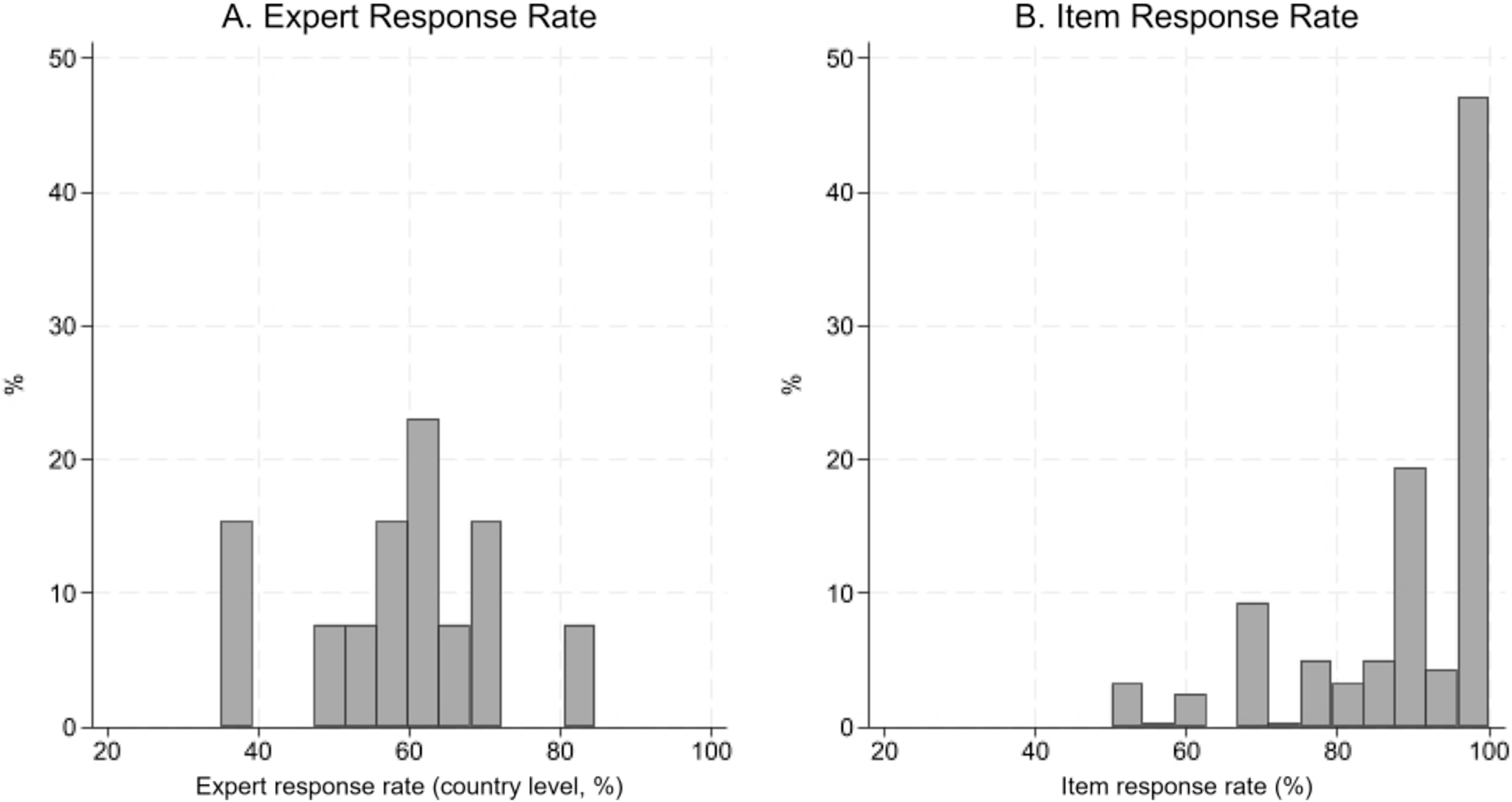
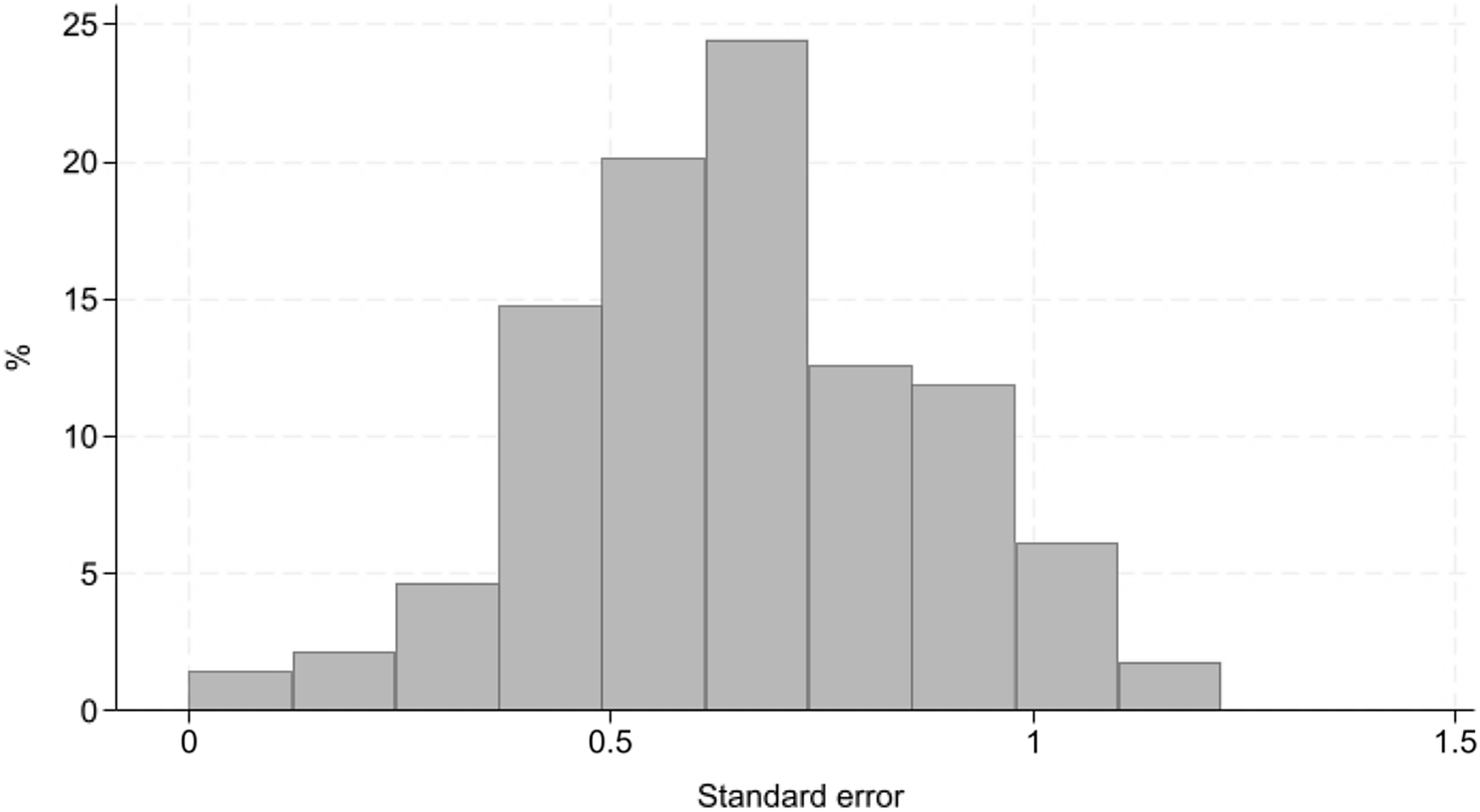
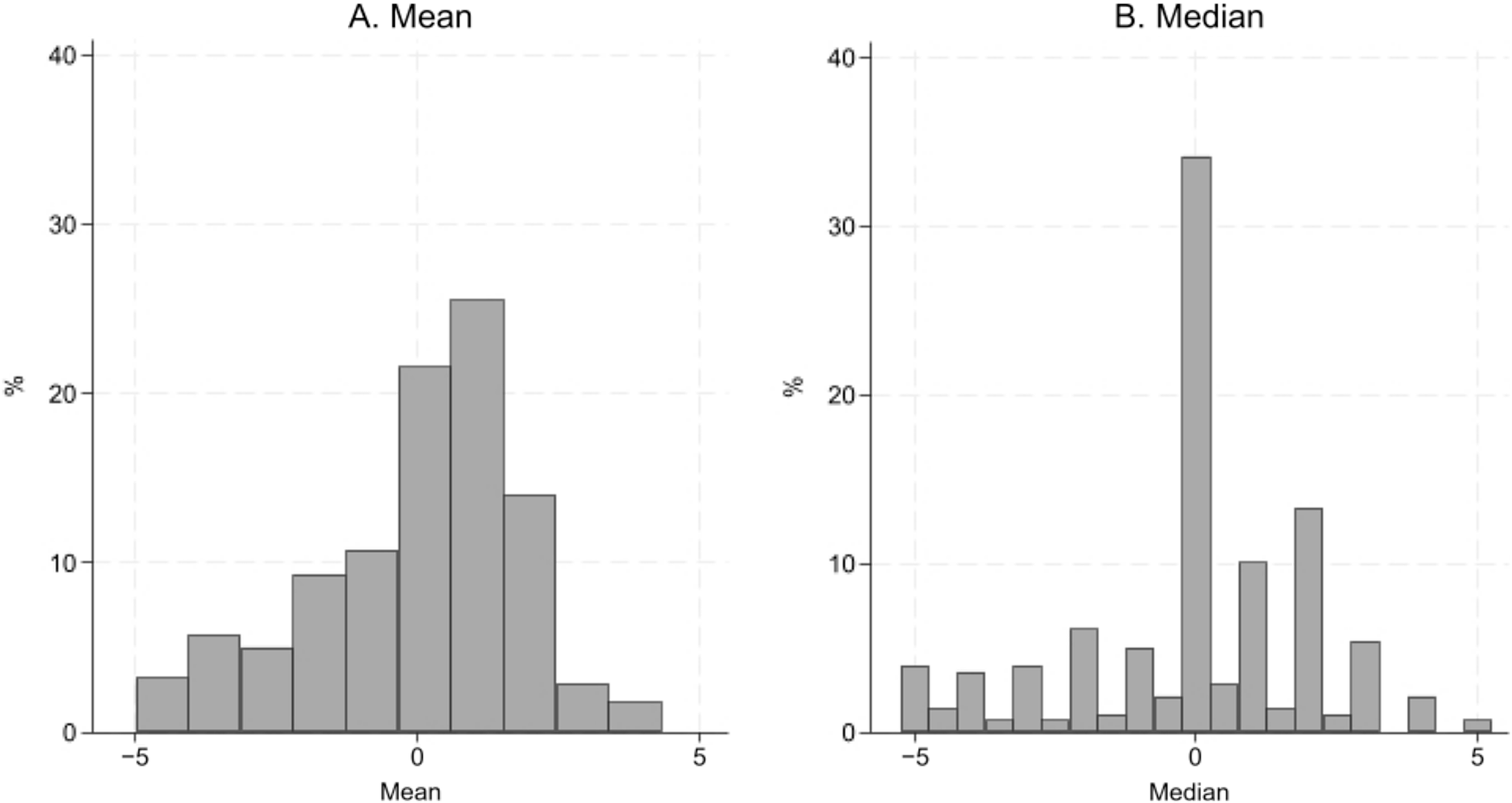
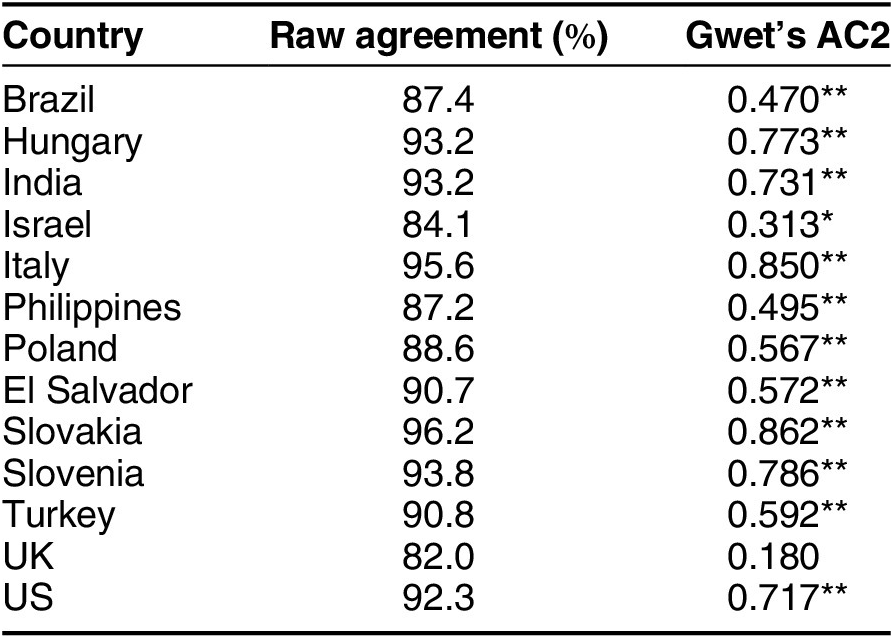


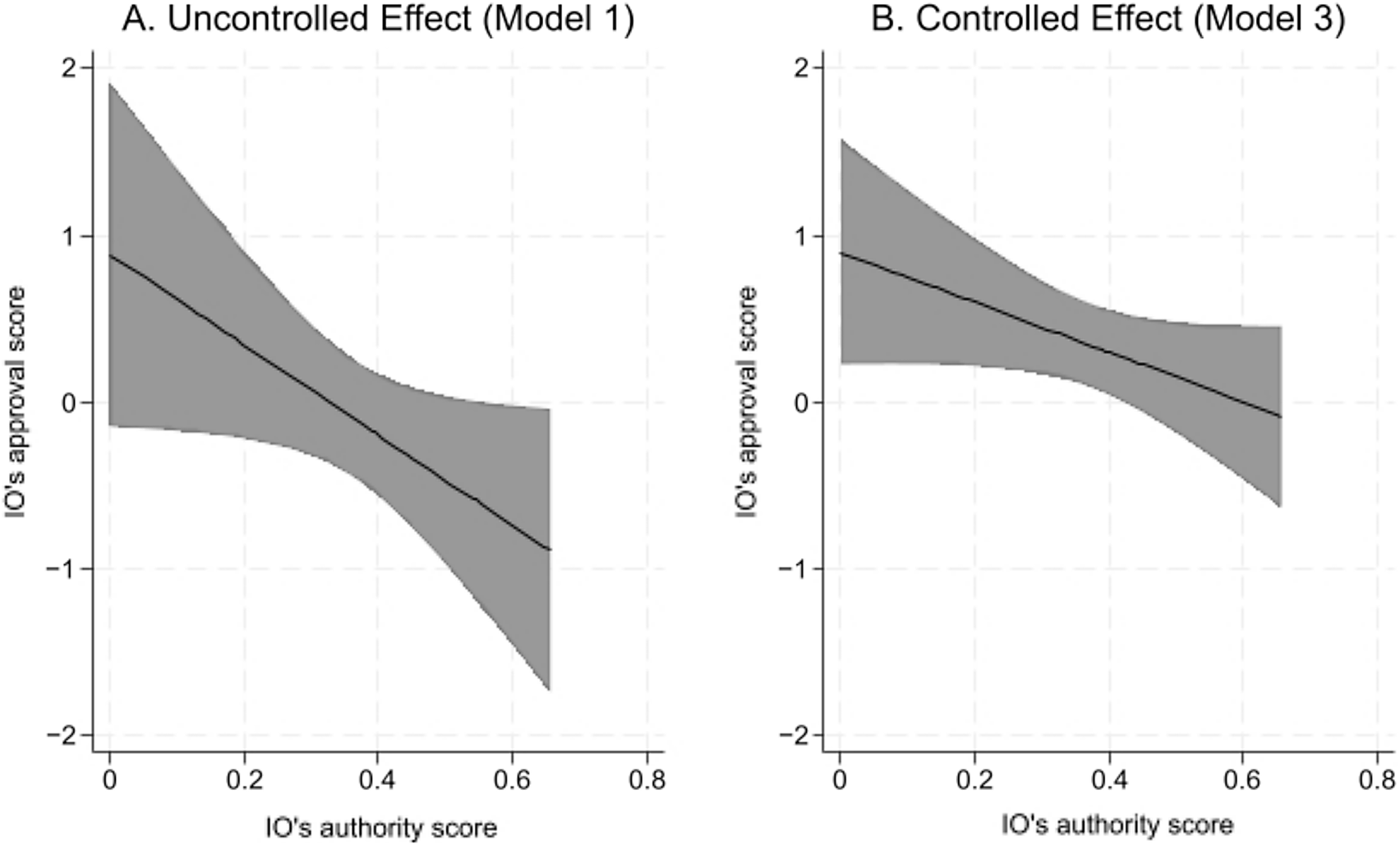
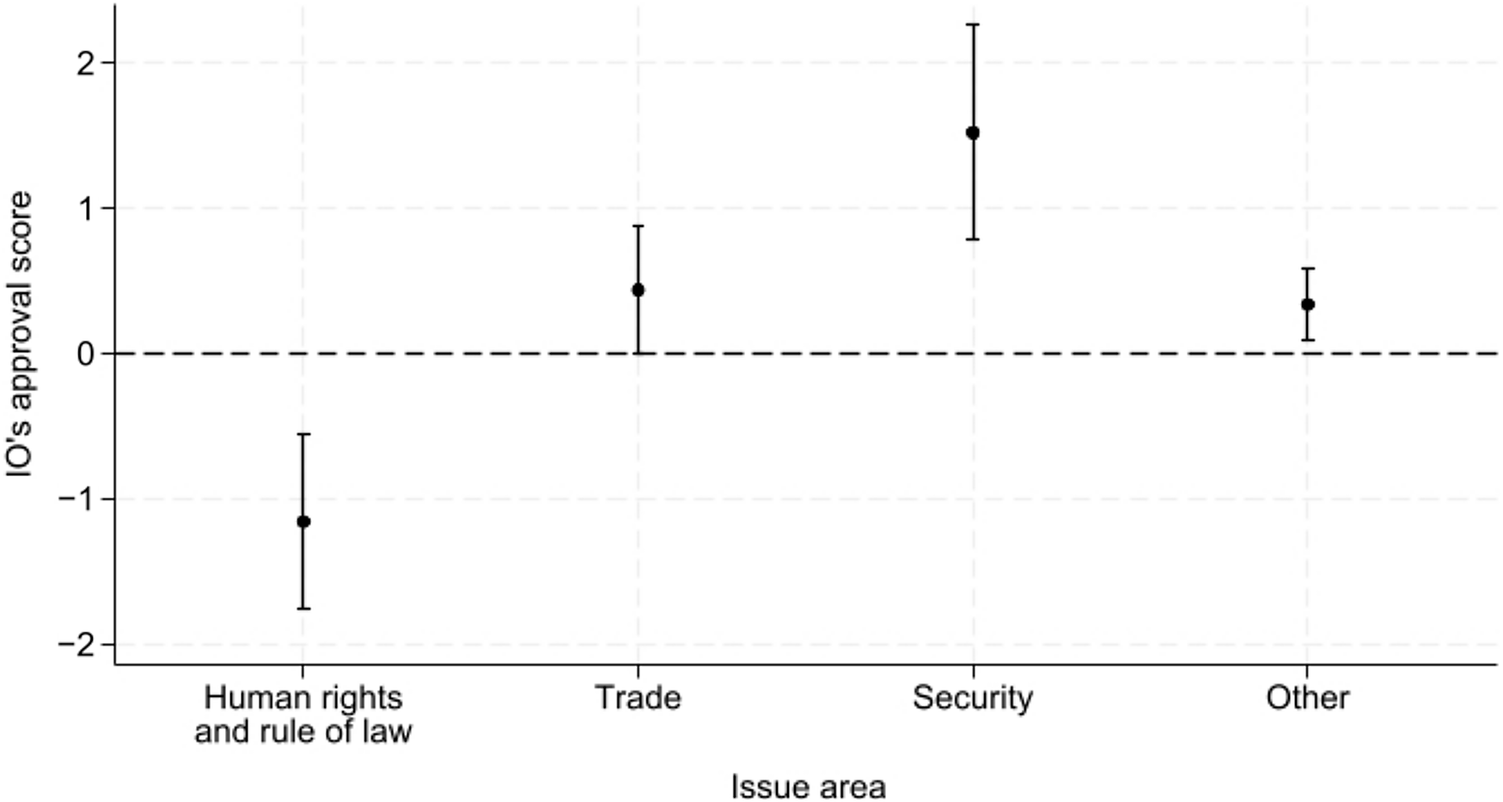


 Open access

