Introduction
Over the decades, increasingly, disasters have been recognized as public health problems.Reference Noji and Toole1,Reference Noji2 Not only has research demonstrated that disaster assessment and management is amenable to epidemiological approaches, research also has shown that utilizing public health principles in addressing disasters can help reduce morbidity and mortality by increasing the appropriateness and effectiveness of responses to disasters.3
While the severity and location of disasters caused by natural hazards are relatively unpredictable, geography, political situation, society, and culture can influence a country's or a region's vulnerability to disaster. Recognizing and acknowledging that these unique influences can help leaders identify those regions may be more susceptible to the devastating effects of events and also maximize the benefit of their efforts. This is especially important in regions where infrastructure and resources already are limited and may become even more limited or non-existent if confronted with a disaster.Reference Noji2
In October 2005, Hurricane Stan impacted Central America, causing torrential rains, flooding, and mudslides in El Salvador, Nicaragua, Guatemala, southeastern Mexico, Honduras, and Costa Rica.4,5 Guatemala was the hardest hit of these countries,5 with an estimated 1,513 casualties6 and approximately US$988.3 million in damage.Reference Picard7 An estimated 475,314 persons required immediate assistance, including evacuation and/or displacement.6 The torrential rains, winds, and flooding caused by the hurricane destroyed much of the infrastructure of the country, most notably roads, bridges, and water and sanitation systems.3 Rural farmers faced extreme difficulty in the months following the hurricane due to damage to crops and animals. Guatemala's Ministry of Agriculture estimated that the country sustained US$46 million in agricultural damage.Reference Hinshaw8
In 2000, only 8.3% of rural Guatemala had access to health care.Reference Gragnolati and Marini9 If health care is available in the rural areas, it usually is provided by a local health post or rural clinic, which may or may not be staffed throughout the year. The distance to regional hospitals often are too far away for people to obtain regular care or urgent medical issues. Damages from disasters, such as those caused by a hurricane, can isolate a rural area from receiving or seeking needed assistance, including medical assistance.Reference Noji10 Since a rural clinic is the first line of medical care available to people living in rural areas in Guatemala, it would be beneficial for the rural clinic to have preparedness plans in place to provide first responder and prehospital care in the event of a disaster.
In this study, an existing, rural Guatemalan clinic's capability to respond to the disaster was assessed, and ways by which the clinic can become better prepared for future disasters were proposed.
Setting
Located along the Sierra Madre mountain range, Guatemala is vulnerable to many natural hazards, including volcanic eruptions, earthquakes, hurricanes, and torrential rains. Hurricane Stan, the 11th out of the 15 hurricanes that affected the United States and Latin America in 2005,11 rapidly dissipated once it made landfall; however, it resulted in torrential rains that ultimately led to many deaths and substantial devastation.
Hurricane Stan primarily affected the western, rural highlands and costal plains of Guatemala.12 Mudslides destroyed entire villages. Many regions were cut off from larger cities and much needed aid because the floods and mudslides destroyed roads and bridges. In some areas, communication between the affected regions and the outside world was made difficult, if not impossible in certain areas, due to downed communication towers and disrupted electricity service. In many small communities, water and sanitation became unavailable. Damage to people's livelihood, farmland, crops, and animals also occurred. More than 35,000 homes were damaged or destroyed, 1,100 communities were affected, and 140,000 Guatemalans were forced to seek refuge in temporary shelters.12
The Catarina Clinic is located in San Marcos, Guatemala. According to the Government of Guatemala (GoG) National Council for Disaster Reduction (CONRED), the San Marcos region sustained the most damage of all the other regions in Guatemala.12 Six hundred sixty-nine people were confirmed dead and another 844 people were reported missing. An additional 386 people were injured. Altogether, 475,000 people of 900,000 people in the region, 87% of whom live in rural areas, were directly affected by Hurricane Stan.12
Methods
The study was conducted in March 2007 in Guatemala, after appropriate IRB approval from University of Illinois at Chicago was obtained. The study clinic is located in Catarina, a municipality located in San Marcos, in western Guatemala. The clinic is staffed by two physicians and five health promoters who see 400–500 patients every week. At the time of the study, the principal author had a five-year working relationship with the clinic. This clinic was chosen as the main site for the study because of the availability of bilingual physicians and the long-term interaction between the clinic's physicians and the study's authors.
Data Collection
There were two components to data collection: (1) a focus group conducted with the healthcare workers in the clinic; and (2) a survey of patients seen in the clinic and surrounding communities. The focus group elicited information about the immediate and long-term effects of Hurricane Stan and included discussion about the workers' reactions and observations from the perspective as a victim of a disaster and as a healthcare worker in the clinic. The discussion also incorporated thoughts about disaster preparedness of the clinic and its ability to function during a disaster.
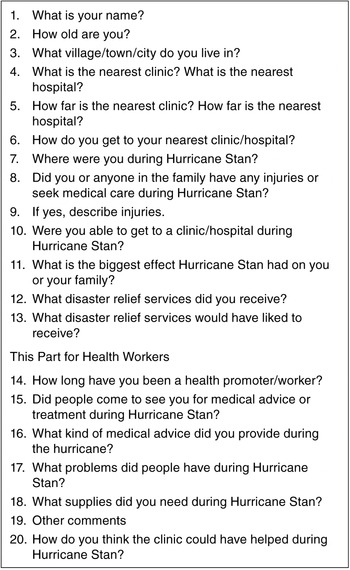
Prior to the study period, a survey was created which consisted of questions related to demographics and observations related to Hurricane Stan. The survey (Figure 1) was created in English and translated into Spanish. The survey was administered at the Catarina Clinic as well as in five surrounding villages during the two-week study period. The villages were selected due to the ready availability of volunteer health promoters from those villages who could assist with survey distribution and participation. All survey interviews were conducted in Spanish by the authors and one additional interviewer, who was briefed on the content of the survey. Additionally, survey participants were informed of the risks and benefits, and provided verbal consent. After data were collected, responses were translated into English by the principal investigator with the help of the two Catarina Clinic physicians, who are fluent in both English and Spanish. Data Analysis All quantitative data were entered into a Microsoft Excel [Microsoft, Inc., Redmond, WA] spreadsheet. Quantitative data were processed utilizing the Excel programs. Qualitative data were hand tabulated and reviewed in the Excel data matrix.
Guatemala disaster assessment survey questions

Results
According to the focus group discussions, medical centers and clinics were difficult to access after Hurricane Stan. The principal medical problems following the hurricane included fungal infections, upper respiratory infections, diarrhea, and emotional issues. The resources most needed included food, electricity, home repair, potable water, communication, and clothing.
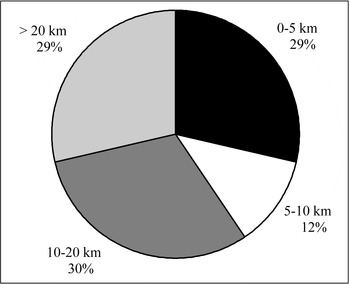
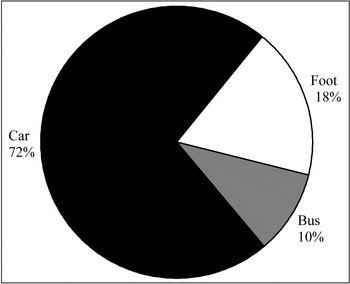
Forty-three village subjects, out of a catchment population of approximately 500 subjects, responded to the survey; three were physicians, four health promoters, and 36 patients. Survey results quantified the distances of residents to the nearest clinic. Twenty-nine percent were 0–5 km from the nearest clinic. Twelve percent were 5–10 km from a clinic; 31%, was 10–20 km, while 26% were greater than 20 km from the nearest clinic (Figure 2). Additionally, respondents described their usual modes of transportation to the clinics. Seventy-two percent traveled by car, 18% traveled on foot, and 10% traveled by bus (Figure 3).
Distance from nearest clinic

Usual mode of transportation to the clinic

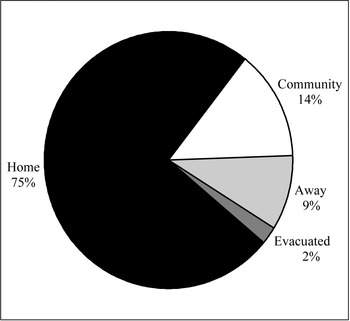
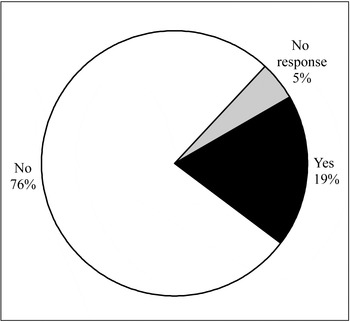
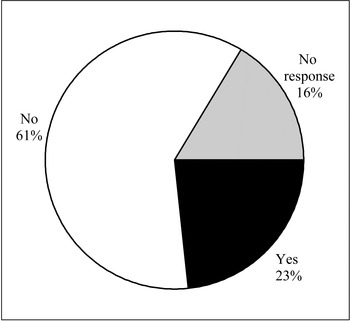
The participants told of their location during Hurricane Stan. Seventy-five percent stayed at home, 14% were in their community, 9% were “away”, and 2% had been evacuated (Figure 4). Seventy-two percent of responders said that neither they nor their family members sustained traumatic injuries, 19% sustained injuries, and 5% did not respond (Figure 5). Six people reported “that there were fatalities”. It was not specified if the fatalities occurred in their family or if they were witnessed. After the hurricane, the majority of people (61%) could not reach a hospital; 23% responded they could reach a hospital; and 16% did not respond (Figure 6).
Location during Hurricane Stan

Injuries as a result of Hurricane Stan

Able to get to a hospital?

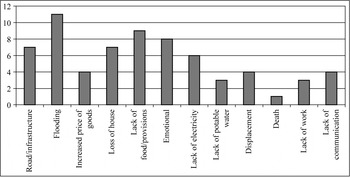
According to the number of people reporting, the greatest effects of Hurricane Stan were flooding (11; 17%), lack of food (9; 14%), emotional problems (8; 13%), infrastructure problems (7; 11%), loss of housing (7; 11%), lack of electricity (6; 9%), displacement (4; 6%), lack of electricity (4; 6%), increased price of goods (4; 6%), no work (3; 5%), and death (1; 2%) (Figure 7).
Greatest effects of Hurricane Stan

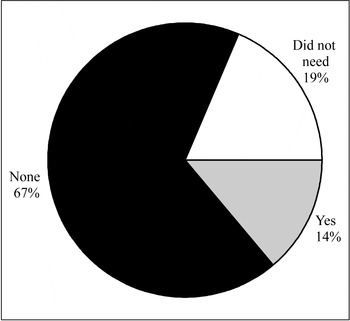
Although 19% of respondents did not need disaster relief, only 14% received relief; therefore, 67% of participants needed disaster relief but received none (Figure 8).
Disaster relief received?

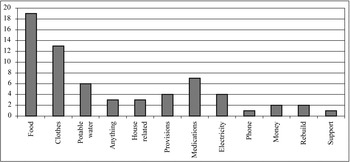
The 81% of participants that needed aid identified their most desirable forms of relief. Some participants provided more than one response. By number of patients, the forms of disaster relief desired were: food (19; 29%); clothes (13; 20%); medications (7; 11%); potable water (6; 9%); provisions (4; 6%); electricity (4; 6%); anything (3; 5%); home related items (3; 5%); money (2; 3%); rebuilding infrastructure or homes (2; 3%); a phone (1; 2%); and support (1; 2%) (Figure 9).
Disaster relief desired

A final observation is that individual perceptions also may influence a person's reaction to a disaster and affect what disaster relief efforts are needed or how to address the effects of disasters. There were a variety of responses to one specific survey question. The participants were asked to describe the injuries that they or their families sustained as a result of Hurricane Stan. The responses varied from bodily injuries to livelihood injuries to more abstract feelings. For example, three participants reported emotional injuries, such as “much sadness” and an “attack of the nerves”. One person reported “damage of land and crops”. Six people reported “death”.
Discussion
Flooding in the north and mudslides in the south destroyed roads and bridges, resulting in inconsistent communications. Although the participants did not live restrictive distances from a clinic or nearest hospital, transportation via car or bus was deemed nearly impossible due to the destroyed infrastructure. This resulted in a reliance on post-disaster aid within community members' villages. Because the Catarina clinic is located in an area where villagers potentially can access on foot, the clinic is positioned such that it could provide care to those who might otherwise not be able to reach a hospital. Many patients said they desired some sort of repair to the clinic, but because infrastructure is under government control, the clinic could do little to assist the villagers in that respect.
The survey results indicate that basic needs were most desired in the San Marcos region. Fortunately, many people did not report needing acute medical treatment; for those who did, disrupted infrastructure and lack of communication made access to medical care difficult. It is assumed that the medical issues were self-limited, self-treated, and/or the people did not seek immediate care for illnesses. Immediate (high priority) needs included water, food, and shelter. Intermediate priority needs included functional communication systems and health care visits for minor illnesses. Long-term needs included repair or rebuilding of housing, job/economic improvements, and infrastructure repair or construction.
The Catarina Clinic, while situated within the village, did not provide services during the hurricane. One of the reasons postulated by a health promoter was that, for the most part, immediate medical care was not needed. During the initial torrential rains phase, no one could get to the clinic, including the workers. However, all of the workers agreed that the clinic could have helped to mitigate some of the after-effects of the hurricane had they been better prepared to offer other services or supplies or alter the typical role of the clinic (i.e., not as an acute care clinic, but as a resource center, a distribution center, or even as a shelter). While not considered by the clinic, setting up mobile clinics where health promoters lived may have been an alternative to providing care for some of the medical problems identified. The Catarina Clinic does have space to store extra supplies, and it could be reconfigured to provide temporary covered shelter for some displaced persons or serve as a distribution center because it is located within the center of the town. In addition, the clinic periodically receives donations from international organizations that provide various miscellaneous supplies, such as surplus clothing, hygiene products, and over-the-counter medications. While not all of the products may be useful, the potentially needed or useful products could be stockpiled as part of a preparedness plan. Communication with these donor organizations relative to needed or desired supplies would be ideal. The survey results seem to support the idea that a clinic such as Catarina could provide a role in disaster relief due to its location within the community, its ability to provide medical care, and if it is able to reconfigure or implement plans to address basic needs.
Mental health often is given secondary importance during and after a disaster, but it is important to recognize these needs and it is an important step to recovery from a disaster. The Catarina clinic does not have mental health workers. Therefore, it is difficult to provide for emotional needs when such workers are not available. In this case, the community would have to serve a large role in providing support.
Conclusions
Hurricane Stan had devastating effects on the San Marcos region of Guatemala. These effects primarily included infrastructure damage and secondarily included medical and emotional needs for the community. Ideally, immediate disaster relief interventions should be provided by the local community and the surrounding villages because of the possible damage to infrastructure, rendering the ability to travel limited.
The Catarina Clinic could have provided local shelter and medicine, and could have served as a staging area or distribution center in response to a disaster. Alternatively, workers in the clinic might also have been able to form, within their immediate residential areas, mobile response “clinics” to provide care for basic medical needs and/or health advice for self-care during the disaster. One of the normal roles for health promoters is to educate their community on safe health practices; disaster health advice is a natural extension of their roles. However, a preparedness plan was not in place.
As a result of this assessment, the next steps include determining what is feasible and desired by the clinic in generating a preparedness to help the clinic to be able to function, as a clinic and/or resource center for the surrounding community to meet both the immediate and intermediate needs during a disaster. Planning and organization of the clinic's role is to be done with the overseeing organization's board, which is made up of health promoters and the two physicians. Another step is to incorporate a more uniform way of assessing needs, preparedness, and responses for the clinic to record progress.
In non-disaster periods, the Catarina Clinic is well recognized as a resource for medical care in an area that has limited healthcare services. Medical care still is needed during disasters; however, the focus of provision of care changes. The clinic recognizes the importance of the different needs required during a disaster. The clinic also recognizes the need for local disaster preparedness because activation of a national disaster response plan may be delayed or not be possible if communication and infrastructure is destroyed.
The need for local responses is apparent, especially in rural areas where normal services are limited. The assessment of disaster preparedness of the Catarina Clinic serves as a reminder and a potential model of how a rural clinic can provide disaster relief.
Abbreviations:
None.