Introduction
Global poultry production has tripled in the past 20 years and world has over 23 billion poultry which are estimated to produce 73 million tons eggs and approximately 100 million tonnes of meat each year (FAOSTAT, 2016). In Turkey, chickens are the most important among the poultry species in terms of number. The Turkish poultry industry is a significant segment of the Turkish economy and is continuously growing. Commercial poultry farming in Turkey started in around 1930 with the establishment of the Central Poultry Research Institute in Ankara (Akbay et al., Reference AKBAY, ULKER and ELİBOL1995). The Turkish poultry sector has made a considerable progress in recent years toward a well-organised industry with the help of Turkish Poultry Meat Producer and Breeders Association (BESD-BIR), Turkish Egg Producers Association (YUM-BIR) and Turkish Feed Manufacturers Association (TURKIYEM-BIR). It has become a fully-fledged industry due to increasing demands by consumers for eggs and meat. There are currently 80 hatcheries, 322 breeding enterprises, 9444 commercial broiler enterprises and 994 commercial laying hen enterprises (Anonymous, 2014). According to estimates, Turkish produces 19643 million eggs and 2156 million tonnes of meat every year (TUIK, 2018). This sector provides jobs and livelihoods to millions of small farmers and poor people in the country, playing a significant role in poverty alleviation. The Turkish poultry industry is not only producing foods for local consumers, but is important in trade and export of poultry products to neighbouring countries, thus contributing significantly to gross domestic product (GDP) of Turkey.
Turkey has a unique production system due to its regional, climatic and cultural variations. Backyard chickens have become extremely popular in villages all over Turkey. The incidences and severity of viral diseases in backyard chicken flocks have recently increased, and Turkey is on the flyway of the main migratory routes for wild birds which brings an increased risk of viral diseases, such as avian influenza and Newcastle disease (Boynukara et al., Reference BOYNUKARA, GULHAN, COVEN, KİZİROĞLU and DURMUŞ2013)
The poultry in Turkey is challenged with numerous pathogens, resulting in huge economic losses every year as a consequence of these diseases (Coven et al., Reference COVEN, RUTH MANVELL, ORHAN, COVEN and GENC2004; Akan et al., Reference AKAN, İZGÜR and SAREYYÜPOĞLU2007; Kahya et al., Reference KAHYA, COVEN, TEMELLI, EYIGOR and CARLI2013; Yilmaz et al., Reference YILMAZ, ALTAN, CIZMECIGIL, GUREL, OZTURK, BAMAC, AYDIN, BRITTON, MONNE, CETINKAYA, MORGAN, FABURAY, RICHT and TURAN2016). Veterinary-treatment costs, vaccination expenses and mortality due to disease increases the overall cost of production. Stunted growth due to viral infections affects the profitability of poultry negatively, leading to reduced meat and/or egg production. Due to poor record keeping on Turkish poultry farms, the rate of mortality is not known regarding viral diseases, making it hard to calculate economic losses. In addition, poultry viral pathogens could pose a threat to public health, due to their zoonotic potential (Ciblak et al., Reference CIBLAK, HASOKSUZ, ESCURET, VALETTE, GUL, YILMAZ, TURAN, BOZKAYA and BADUR2009). Different viruses may initiate disease in poultry either alone or in combination with other pathogens, including respiratory pathogens, namely infectious bronchitis (IBV), avian influenza (AIV), Newcastle disease (NDV), infectious laryngotracheitis (ILTV), avian metapneumovirus (aMPV), and immunosuppressive pathogens such as infectious bursal diseases (IBDV), Marek's disease (MDV), Avian leukosis (ALV) and chicken anaemia virus (CAV) (Yilmaz et al., Reference YILMAZ, ALTAN, CIZMECIGIL, GUREL, OZTURK, BAMAC, AYDIN, BRITTON, MONNE, CETINKAYA, MORGAN, FABURAY, RICHT and TURAN2016; Bayraktar et al., Reference BAYRAKTAR, UMAR, YILMAZ, FRANZO, TUCCIARONE, CECCHINATO, CAKAN, IQBAL and YILMAZ2018; Yilmaz et al., Reference YILMAZ, TURAN, BAYRAKTAR, GUREL, CIZMECIGIL, AYDIN, BAMAC, CECCHINATO, FRANZO, TALİ, CAKAN, SAVIC, RICHT and YILMAZ2019a; Reference YILMAZ, TURAN, BAYRAKTAR, AYDIN, TALI, CAKAN, UMAR and YILMAZ2019b).
It should be kept in mind that outbreaks of certain diseases in a specific region of a country only represent the local bird populations and cannot be considered epidemiological situation the whole country. As disease reporting practices vary between different parts of the country throughout the year, a review of published data cannot provide accurate comparison of the epidemiological situation across pathogens or countries. To gather information and data regarding to poultry viral diseases in Turkish chicken flocks, scholarly literature publication databases (PubMed, Sciencedirect and Google Scholar) had to be extensively searched for short reports, review articles as well as research papers. Specific search terms, such as country name, combined with the identity of viruses, as well as specific key words e.g. avian, poultry, layer, broiler, breeder, Turkish poultry, genotyping of poultry diseases and prevalence were used in databases to gather information for a specific viral disease or pathogens. Furthermore, help from the World Organisation for Animal Health (OIE) platform WAHIS (World Animal Health Information System) was used to obtain viral disease related information and data. In addition to above mentioned databases, NCBI-Genbank® database was searched for the submission of genome sequences from Turkey. Sometimes veterinary officers from different regions of Turkey were requested to provide information about outbreaks of certain diseases in chicken flocks in their area. Such data was thoroughly cross checked for its credibility and originality and included in the following review. Best efforts have been made to confirm the authenticity of data, enlisting the help of the various Veterinary Institutes of Turkey. Only data available before March 2019 were included in this review article. Notifiable poultry diseases are routinely reported to the Turkish Ministry of Food Agriculture and Livestock, but diseases which are not notifiable are not recorded. Consequently, the distribution pattern of such viral diseases is still ambiguous in Turkey. Since viral poultry diseases impose severe economic and production losses, it is important to remain updated about prevailing health issues of poultry in the areas of concern for maintaining production and implementation of disease preventive measures.
The main goal of this review was to gather and summarise data which was available on important viral diseases of chicken in Turkey. Moreover, current vaccination practices and vaccines related issues were highlighted.
Major viral diseases in Turkish poultry flocks
respiratory diseases
Infectious bronchitis
Infectious bronchitis (IB) is an acute and highly contagious disease in chicken caused by a virus (IBV). IBV is a single-stranded RNA virus and a member of Coronaviridae family (Cavanagh, Reference CAVANAGH2007). Genetic differences affecting antigenicity and immunogenicity are mainly restricted to the spike gene (S). This is composed of two subunits spike-1 (S1) and spike-2 (S2), of which S1 is more variable and prone to mutation and recombination. Genetic variation, caused by mutations in the IBV-S1 sequence, is responsible for the worldwide diversity of IBV isolates (Toffan et al., Reference TOFFAN, TERREGINO, MAZZACAN, CASTALDELLO, CAPUA and BONCI2011; Yilmaz et al., Reference YILMAZ, ALTAN, CIZMECIGIL, GUREL, OZTURK, BAMAC, AYDIN, BRITTON, MONNE, CETINKAYA, MORGAN, FABURAY, RICHT and TURAN2016).
IBV transmission mainly occurs by direct and indirect route either aerosol or ingestion of the agent. Hence, contaminated feed, water and faeces play an important role in the spread of IBV. It is prevalent all over the world, and mainly linked with intensified poultry production. Massachusetts (Mass) and Connecticut (Conn) serotypes were first described in the 20th Century (Jackwood, Reference JACKWOOD2012) and, afterwards, several unique variants were reported from chickens showing different clinical signs from many countries (Han et al., Reference HAN, SUN, YAN, ZHANG, WANG, LI, ZHANG, MA, SHAO, LIU, KONG and LIU2011; Jackwood, Reference JACKWOOD2012). The emergence of variant strains may be related to extensive nucleotide and deduced amino acid sequence variability in the IBV genome, which is often responsible for IB outbreaks in vaccinated chicken flocks. The 793/B, Massachusetts, QX, and IT-02, serotypes have been frequently reported in Europe. In Turkey, vaccine strains, including Ma5, H120 and their variants, have been detected (Kahya et al., Reference KAHYA, COVEN, TEMELLI, EYIGOR and CARLI2013; Yilmaz et al., Reference YILMAZ, ALTAN, CIZMECIGIL, GUREL, OZTURK, BAMAC, AYDIN, BRITTON, MONNE, CETINKAYA, MORGAN, FABURAY, RICHT and TURAN2016). Kahya et al. (Reference KAHYA, COVEN, TEMELLI, EYIGOR and CARLI2013) detected IBV strains related to the IS/1494/06 genotype from breeder (6/8) and broiler flocks (2/2) in Turkey. Recently, IBV was detected in vaccinated broiler (83.6%) and layer (64.2%) flocks (Yilmaz et al., Reference YILMAZ, ALTAN, CIZMECIGIL, GUREL, OZTURK, BAMAC, AYDIN, BRITTON, MONNE, CETINKAYA, MORGAN, FABURAY, RICHT and TURAN2016). A phylogenetic analysis revealed that the viruses detected were closely related to the IBV vaccine (Ma5 and H120) viruses and the Israel variant-2 (GI-23) (24/49, 48.9%) and 793B strains. The Israeli variant-2 detected in this study (EU780077, JX027070, and JX173488) clustered phylogenetically with the Turkish IBV strain (chicken/Turkey/10RS-3161/2010) but was aligned in a different subcluster. This indicated that several strains of IBV were circulating in Turkey and apparently undergoing molecular evolution (Yilmaz et al., Reference YILMAZ, ALTAN, CIZMECIGIL, GUREL, OZTURK, BAMAC, AYDIN, BRITTON, MONNE, CETINKAYA, MORGAN, FABURAY, RICHT and TURAN2016).
Usually IBV variants differ serologically from IBV vaccine strains (except 793B), thus outbreaks can re-emerge despite regular vaccine practices (Yilmaz et al., Reference YILMAZ, ALTAN, CIZMECIGIL, GUREL, OZTURK, BAMAC, AYDIN, BRITTON, MONNE, CETINKAYA, MORGAN, FABURAY, RICHT and TURAN2016). IBV vaccines containing Ma5, 4/91, 1/96, H120, Israel variant-2, and a combination of H120-D274 strains were used in broilers, and H120, Ma5, 1/96, Israel variant-2 and 4/91 in layers, to control virulent IB strains in Turkey. In the last decade, protection against IBV variants have become crucial. Before, only the ‘Mass’ type vaccines were used. Broilers receive only one or two live IBV vaccines depending on the strategy to develop broad spectrum of protection with different strains or as a booster. Layers and breeders receive several live vaccines of different subtypes and a killed IBV vaccine before the onset of lay.
Avian influenza
Avian influenza is caused by the avian influenza virus (AIV) and, depending on its pathotypes, may be highly pathogenic, causing significant economic losses due to decrease in production and deaths. AIV belongs to the family Orthomyxoviridae and contain eight segmented, negative sense single-stranded genomic RNA (Samji, Reference SAMJI2009). Based on the antigenic diversity, AI virus can be classified into 16 HA subtypes (H1-H16) and nine NA subtypes (N1-N9), resulting in various subtype combinations. Wild aquatic birds are considered natural host for AIV, which often spread this virus to other domestic birds and mammals via migratory flightpaths or contact in market places, leading to zoonotic infections (Ciblak et al., Reference CIBLAK, HASOKSUZ, ESCURET, VALETTE, GUL, YILMAZ, TURAN, BOZKAYA and BADUR2009; Swayne et al., Reference SWAYNE, PAVADE, HAMILTON, VALLAT and MIYAGISHIMA2011; Ashraf et al., Reference ASHRAF, MAHMOOD, RAFIQUE, ABBAS, IQBAL, YOUNAS, SADIQ, USMAN, ASGHAR and ISHAQ2017).
Highly (HPAIV) and low pathogenic avian influenza virus (LPAIV) are the two main pathotypes in chicken. HPAIV only restricts to partial proportions of H5 or H7 subtype, whereas LPAIV covers all the remaining viruses. In particular, H9N2 is currently the most widely circulating and damaging LPAIV subtype in the world which has shown a zoonotic potential for mammalians species, including humans (Ashraf et al., Reference ASHRAF, MAHMOOD, RAFIQUE, ABBAS, IQBAL, YOUNAS, SADIQ, USMAN, ASGHAR and ISHAQ2017; Pusch and Suarez, Reference PUSCH and SUAREZ2018). Genetic variations are vital for the survival of AIV, which occur during the replication phase via mutations (antigenic drift) and reassortment (antigenic shift), which can play a key role in the emergence of pandemic strains.
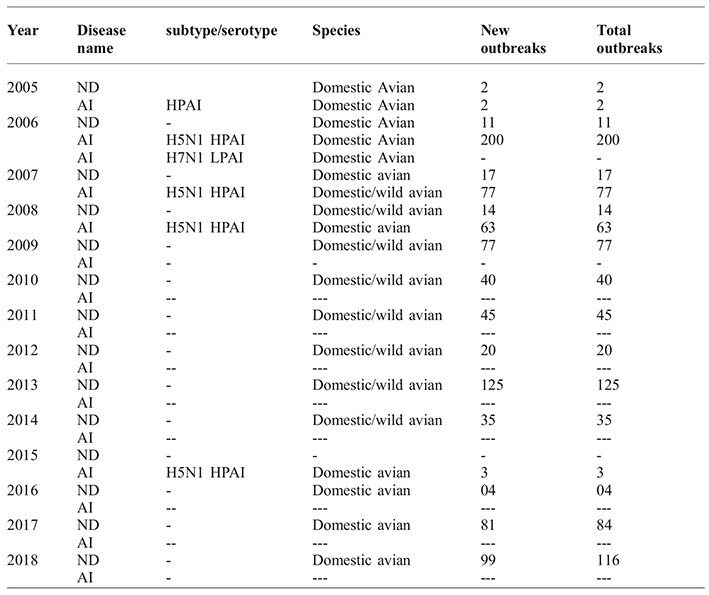
AIV can be spread from infected to healthy birds by direct or indirect contact through the inhalation or ingestion. Infected birds excrete the virus in their nasal, oral and cloacal secretions, resulting in direct contact transmission with infected birds and indirect transmission through contaminated feed and water. Outbreaks of HPAI H5N1 have been reported from wildlife and poultry in Turkey and its neighbouring countries since 2005. Most of the outbreaks were reported during the years 2006 (200), 2007 (77) and 2008 (63). Later cases were detected in April 2015 and reported to OIE (Table 1). After this, Turkey declared to OIE that was free of AI. No outbreaks of HPAIV have been reported from Turkey since 2015 (Table 1). A phylogenetic analysis of the haemagglutinin gene showed that the HPAI H5N1 isolates from Turkey were of avian origin and contained genes of Asian origin. Until now, there have been no published reports available on AIV in Turkish poultry from scientific journals. Hikmet (Reference HIKMET2008) genetically analysed HPAIV (H5N1) isolated from backyard chicken and wild birds in Turkey between 2005 and 2008. A total of 229 cases were confirmed as H5N1 HPAIV in domestic and wild birds (Hikmet, Reference HIKMET2008). Information related to HPAIV (H5N1) outbreaks from Turkey has been submitted to World Organisation for Animal Health (OIE) platform WAHIS (Table 1). During the influenza outbreak in 2005-2006 in Turkey, the economic losses were evaluated. The nationwide effects of the outbreaks on broilers farms were estimated to be US$100.8 million (US$7,967/broiler house) (Aral et al., Reference ARAL, YALCIN, CEVGER and SARIOZKAN2010).
Data from OIE about NDV and AIV outbreaks (2005-2018).

Traditional control strategies for AIV include biosecurity, culling and vaccination. Multiple factors are considered before taking any decision about which programme to use. Conventional inactivated vaccines against H5, H7 and H9 subtypes have been licensed for use in several countries and are now commercially available (Naeem and Siddique, Reference NAEEM and SIDDIQUE2006; Swayne et al., Reference SWAYNE, PAVADE, HAMILTON, VALLAT and MIYAGISHIMA2011). These vaccines have been used in poultry farms in Mexico and Pakistan and protection was considered to be promising (Naeem and Siddique, Reference NAEEM and SIDDIQUE2006; Swayne et al., Reference SWAYNE, PAVADE, HAMILTON, VALLAT and MIYAGISHIMA2011). At present, vaccination against AIV is not being used in Turkey, according to national regulations. To prevent and control avian influenza, national and international guidelines are followed. These include the notification of the disease, isolation and quarantine (3 to 10 km diameter), surveillance and biosecurity. For AIV surveillance and monitoring, in Spring and Autumn, cloacal and tracheal swabs are taken from waterfowl, commercial (broilers, layers and breeders) and backyard poultry located in 300 epidemiologically selected areas in Turkey. The samples are tested for the presence of AIV and the results are reported to the OIE every year.
Newcastle disease
Newcastle disease (ND) is a devastating and highly contagious disease in both wild and captive birds, causing significant economic losses worldwide and impacting international trade policies. This disease is notifiable to World Organisation of Animal Health (OIE). The causative agent, NDV, belongs to the genus Avulavirus of the family Paramyxoviridae and has been reported in several types of birds. (Alexander, Reference ALEXANDER2003). It is variously known as avian paramyxovirus type 1 (APMV-1) and possesses a negative sense, single stranded RNA genome. There are four major pathotypes of NDV strains based on clinical signs in chickens, including avirulent, lentogenic, mesogenic, and velogenic pathotypes (Alexander and Senne Reference ALEXANDER and SENNE2008; OIE, 2012).
Despite single serotypes (serotype-1) of NDV, there are great variations among isolates (Miller et al., Reference MILLER, DECANINI and AFONSO2010; Afonso et al., 2013). Keeping in mind such genetic variability, isolates have been reclassified into two classes (I and II). The NDV class I consisted of only one genotype (class I, genotype I) whereas class II has been grouped into 18 genotypes (class II, genotypes I- XVIII) (Courtney et al., 2013; Snoeck et al., Reference SNOECK, OWOADE, COUACY-HYMANN, ALKALI, OKWEN, ADEYANJU, KOMOYO, NAKOUNÉ, LE FAOU and MULLER2013). Class II consists of both virulent and avirulent NDV strains, whereas class I contains only avirulent NDV strains (Miller et al., Reference MILLER, DECANINI and AFONSO2010; Afonso et al., 2013). The most common routes for the transmission of NDV are inhalation (aerosol) and ingestion (contaminated food and faeces) of the agent. Migratory birds play a key role in dissemination of NDV worldwide. At present the disease is prevalent on six continents and several countries in Asia, the Middle East, Africa, Central America and South America are considered endemic.
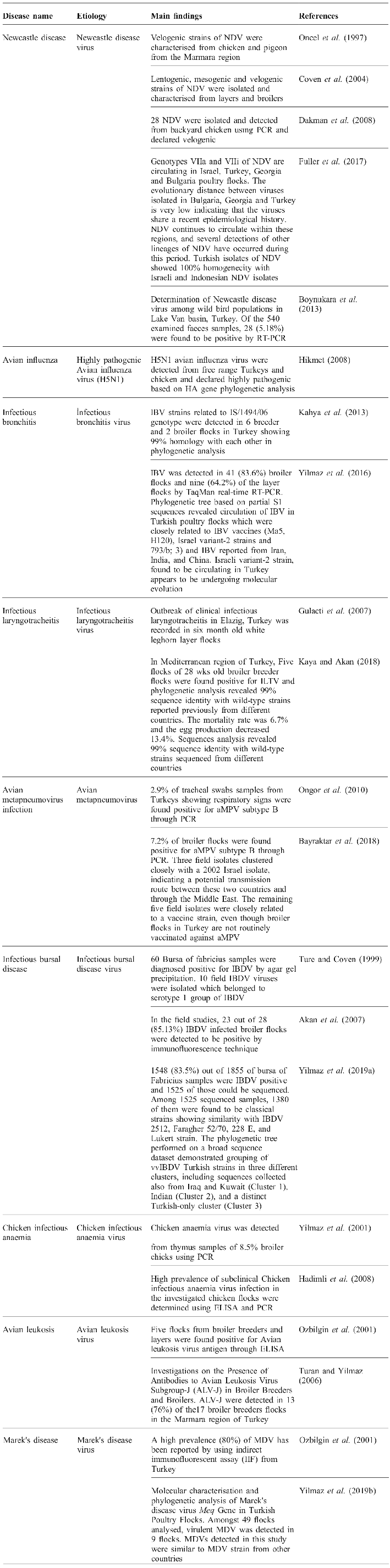
The first case of ND in Turkey was reported in 1946 (Ozdemir, Reference OZDEMIR1992) and, since then, this disease has become endemic (Oncel et al., Reference ONCEL, ALEXANDER, MANVELL and TURE1997; Coven et al., Reference COVEN, RUTH MANVELL, ORHAN, COVEN and GENC2004; Dakman et al., Reference DAKMAN, GULEC, GUNAYDIN and COŞAR2008; Reference DAKMAN, MUŞTAK, KARDOĞAN, DİVANOĞLU, BİLGEN and AKAN2014). ND cases have been reported in both backyard chickens and wild birds (Boynukara et al., Reference BOYNUKARA, GULHAN, COVEN, KİZİROĞLU and DURMUŞ2013; Dakman et al., Reference DAKMAN, MUŞTAK, KARDOĞAN, DİVANOĞLU, BİLGEN and AKAN2014, Fuller et al., Reference FULLER, LÖNDT, DIMITROV, LEWIS, VAN BOHEEMEN, FOUCHIER, COVEN, GOUJGOULOVA, HADDAS and BROWN2017; Table 2). Boynukara et al. (Reference BOYNUKARA, GULHAN, COVEN, KİZİROĞLU and DURMUŞ2013) reported NDV among wild bird populations in the Lake Van basin, Turkey. Of the 540 faecal samples examined, 28 (5.18%) were found to be positive by RT-PCR. The genotypes VIIa and VIIi of NDV are circulating in Israel, Turkey, Georgia and Bulgaria. The evolutionary distance between viruses isolated in these three countries is low, indicating that the viruses share a recent epidemiological history. NDV continues to circulate within these regions, and detection of other lineages have occurred during this period. Turkish isolates of NDV showed 100% homogeneity with Israeli and Indonesian NDV isolates (Fuller et al., Reference FULLER, LÖNDT, DIMITROV, LEWIS, VAN BOHEEMEN, FOUCHIER, COVEN, GOUJGOULOVA, HADDAS and BROWN2017).
NDV in backyard chickens and wild birds have been reported occasionally to the OIE from Turkey. A total of 254 ND cases were reported during 2012 to 2014. In 2014, a significant decrease in ND cases were observed in Turkey, as only 38 cases were reported (Dakman et al., Reference DAKMAN, MUŞTAK, KARDOĞAN, DİVANOĞLU, BİLGEN and AKAN2014). The latest report to OIE indicated that 99 ND cases occurred in Turkey in 2018 (Table 1).
Both live and inactivated vaccines of NDV have been used since 1950 in poultry flocks worldwide. Recently, recombinant vaccines have shown satisfactory results and have been implemented in some countries. Despite advanced knowledge on NDV genomics and avian immunology, great efforts from the scientific community are still required to formulate an efficient vaccine against NDV. Countries with a large poultry industry, like Turkey, generally vaccinate their chickens intensively. The vaccination programme is quite complicated compared to IBDV and IBV. Both live vaccines and a combination of live and killed or vector NDV vaccines used to control the disease in broilers, breeders and layers. Almost all birds receive a live NDV vaccine in the hatchery via aerosol spray. Several strains of NDV, such as HB1, LaSota or its clones, PHY.LMV.42 and VG/GA, are used for this purpose. Approximately 80-90% of the broilers receive a killed or vector NDV vaccine in the hatchery with the live vaccine. Broilers receive one for two live vaccines in the field via spray or drinking water depending on the NDV risk. The layers and breeders NDV vaccination programme is quite intensive due to the birds longer life span. They receive two killed and between five and 12 live vaccines in their life time, depending on the risk of NDV. Currently, increased demand of vector-based NDV vaccines has been noted, as compared to killed vaccines used in Turkey. NDV vectored-vaccine, based on MDV, is considered to provide life-long immunity.
In order to prevent and control ND, national and international guidelines are followed. These include the notification of the disease, isolation and quarantine (3 to 10 km diameter), surveillance and biosecurity. For NDV surveillance and monitoring, in Spring and Autumn, tracheal swabs are taken from waterfowl, commercial (broilers, layers and breeders) and backyard poultry located in 300 epidemiologically selected areas in Turkey. The samples are tested for the presence of NDV, and the results are reported to OIE every six months.
Summary of published article related to poultry viral diseases from Turkey.

Avian metapneumovirus infection
Avian metapneumovirus (aMPV), previously known as turkey rhinotracheitis virus (TRTV), is a member of the genus Metapneumovirus in the subfamily Pneumovirinae of the family Paramyxoviridae. The aMPV isolates that exist worldwide are currently classified into four subtypes, A, B, C, and D, based on their nucleotide sequence diversity and biological properties (Cook et al., Reference COOK, HUGGİNS, ORBELL and SENNE1999). The aMPV genome is a non-segmented, negative-stranded RNA which encodes nine proteins. The fusion (F) and attachment (G) proteins are both present on the virus surface and have been assumed to be responsible for virus fusion and attachment, respectively. The highly variable attachment G gene, encoding a surface glycoprotein considered one of the major antigens of the metapneumoviruses, is a good candidate for type differentiation and for molecular epidemiological studies (Cecchinato et al., Reference CECCHINATO, CATELLI, LUPINI, RICCHIZZI, CLUBBE, BATTILANI and NAYLOR2010).
The spread of aMPV appears to depend on poultry population density, standard of hygiene, and biosecurity. The aMPV is spread through respiratory secretions and transmission occurs via the respiratory route (Naylor et al., Reference NAYLOR, WORTHINGTON and JONES1997). It has been suggested that the vertical route may be short-lived and plays only a minor role in viral transmission. aMPV infections have been reported worldwide, including Turkey, in commercial poultry farms (Cecchinato et al., Reference CECCHINATO, CATELLI, LUPINI, RICCHIZZI, CLUBBE, BATTILANI and NAYLOR2010; Franzo et al., Reference FRANZO, TUCCIARONE, ENACHE, BEJAN, RAMON, KOUTOULIS and CECCHINATO2017; Bayraktar et al., Reference BAYRAKTAR, UMAR, YILMAZ, FRANZO, TUCCIARONE, CECCHINATO, CAKAN, IQBAL and YILMAZ2018; Lee et al., Reference LEE, SONG, SHIN, LEE, KIM, LEE, KIM and CHOI2007; Wei et al., Reference WEI, ZHU, YAN, WANG, ZHANG, LIU, SHE, HU, QUAN and LIU2013; Bayon-Auboyer et al., Reference BAYON-AUBOYER, ARNAULD, TOQUIN and ETERRADOSSI2000). Until now, the presence and genome characterisation of the aMPV subtype B have been reported in Turkish poultry flocks by Ongor et al. (Reference ONGOR, KARAHAN, KALİN, BULUT and CETİNKAYA2010) and Bayraktar et al. (2018; Table 2).
Ongor et al. (Reference ONGOR, KARAHAN, KALİN, BULUT and CETİNKAYA2010) found that 2.9% of tracheal swabs were positive for aMPV type B through PCR from Turkeys showing respiratory signs. Recently, 110 broiler flocks showing respiratory symptoms were investigated in different geographical regions in Turkey and eight (7.2%) broiler farms were found positive for aMPV type B. Three field isolates clustered closely with a 2002 Israeli isolate, indicating a potential transmission route between these two countries and throughout the Middle East (Bayraktar et al., Reference BAYRAKTAR, UMAR, YILMAZ, FRANZO, TUCCIARONE, CECCHINATO, CAKAN, IQBAL and YILMAZ2018).
Both live and inactivated vaccines for aMPV are available for immunisation in chickens and turkeys and are widely used in countries where the disease is endemic. Maternal antibodies do not provide sufficient protection against aMPV infections and do not interfere significantly with vaccination. Thus, a vaccination programme should be in place for first immunisation as soon as possible, ideally after hatching. Live vaccines, which may be applied by spray or drinking water in the field, stimulate both local respiratory and systemic immunity, and cross-protection between subtypes may occur. However, live vaccines may induce protection only for short durations because of the fast decline of local immunity. There is, a risk of reversion of the live vaccine stains to more virulent variants (Cecchinato et al., Reference CECCHINATO, CATELLI, LUPINI, RICCHIZZI, PROSPERI and NAYLOR2014). Inactivated aMPV vaccines are often used as boosters in layer and breeder flocks, after priming with live vaccines. While inactivated vaccines alone induce only partial protection against aMPV infection, the most efficient and long-lasting protection is achieved by a combined prime-boost vaccination programme.
Vaccination against aMPV is not popular in broilers and layers but it is done in almost all breeders in Turkey. Less than 10% of the broilers receive an aMPV live vaccine in the field via spray or drinking water. Usage of aMPV vaccines is very rare in layers and breeders. When vaccinated, they receive two live and one killed vaccine during the rearing period. Only aMPV vaccines containing subtype B strains used in Turkey (Bayraktar et al., Reference BAYRAKTAR, UMAR, YILMAZ, FRANZO, TUCCIARONE, CECCHINATO, CAKAN, IQBAL and YILMAZ2018).
Infectious laryngotracheitis
Infectious laryngotracheitis (ILT) is an economically important and highly contagious disease of poultry respiratory system. It is caused by the infectious laryngotracheitis virus (ILTV), a member of Herpeseviridae (Ou and Giambrone., 2012; Parra et al., Reference PARRA, NUÑEZ and FERREİRA2016). This disease is notifiable to World Organization of Animal Health (OIE). Moreover, ILTV has been associated in co-infections with other respiratory pathogens, involving aMPV, NDV, IBV and AIV (Guy and Garcia, Reference GUY and GARCIA2008).
Horizontal transmission is the main route for infection, and ILTV enters through respiratory and ocular routes. Nasal and ocular secretions, along with contaminated dust, litter and fomites play a key role in ILTV transmission. In addition to this, darkling beetles, dogs and cats could facilitate the spread of the virus (Parra et al., Reference PARRA, NUÑEZ and FERREİRA2016; Chacón and Ferreira, Reference CHACÓN and FERREIRA2009).
ILT has been reported in layers flocks (Gulacti et al., 2007) and broiler breeder flocks (Kaya and Akan, Reference KAYA and AKAN2018) in Turkey (Table 2). In the Mediterranean region of Turkey, five flocks of 28-week-old broiler breeder flocks were found positive for ILTV and phylogenetic analysis revealed 99% sequence identity with wild-type strains, reported previously from various countries (Kaya and Akan, Reference KAYA and AKAN2018). ILT is an endemic disease in poultry flocks in Turkey and outbreaks have been reported from the field (Yilmaz et al., unpublished data; Kaya and Akan, Reference KAYA and AKAN2018).
Vaccination against ILTV has recently become common in several countries, including Turkey. The use of live ILTV vaccines in Turkey has been discouraged because it could bring the risk of introducing the virus into the region. Therefore, vaccination with live vaccines for ILTV is not routinely carried out in Turkish flocks. Only vector ILTV vaccines based on HVT or fowl pox virus (FPV) vaccine strains are allowed in Turkey. Only 1-2% off broiler flocks are currently vaccinated in Turkey, and approximately 80-90% of layer and breeder flocks receive a vector ILTV vaccine either in the hatchery (HVT based) or in the field (FPV based).
immunosuppressive diseases
Infectious bursal disease
Immunosuppression has a great economic importance in the poultry industry, because affected flocks are susceptible to secondary infections, respond poorly to vaccinations, and do not perform as well as non-affected birds. Infectious bursal disease (IBD), also called Gumboro disease, is one of the most important immunosuppressive diseases in chickens and continues to be a serious threat to the poultry industry worldwide (Lukert and Saif, 2003). The causative agent, infectious bursal disease virus (IBDV), damages immune organs, thus making chickens more prone to secondary infections and have poor responses to vaccinations (Jackwood and Sommer-Wagner, Reference JACKWOOD and SOMMER-WAGNER2007; Umar et al., Reference UMAR, MUNIR, AHSAN, RAZA, CHOWDHURY, AHMED and SHAH2017; Yilmaz et al., Reference YILMAZ, TURAN, BAYRAKTAR, GUREL, CIZMECIGIL, AYDIN, BAMAC, CECCHINATO, FRANZO, TALİ, CAKAN, SAVIC, RICHT and YILMAZ2019a).
IBDV is a non-enveloped, icosahedral, bi-segmented (segment A and Segment B), double-stranded RNA (dsRNA) virus belonging to the genus Avibirnavirus within the family Birnaviridae (Lukert and Saif, 2003; Alkie and Rautenschlein, Reference ALKIE and RAUTENSCHLEIN2016; OIE, 2016a). There are two serotypes of IBDV designated as serotype I (pathogenic) and serotype II (non-pathogenic) (Lukert and Saif, 2003; Jackwood and Sommer-Wagner, Reference JACKWOOD and SOMMER-WAGNER2007). According to their pathogenicity, serotype I viruses are classified as avirulent, classical virulent strains (cIBDV), antigenic variant strains (vaIBDV), or very virulent strains (vvIBDV) (Lukert and Saif, 2003; Jackwood and Sommer-Wagner, Reference JACKWOOD and SOMMER-WAGNER2007; OIE, 2016).
Virus transmission occurs horizontally (via the oral route) through direct and indirect contact with contaminated faeces, feed and water. The virus is endemic in many parts of the world, including Turkey, and continues to be a serious threat to the poultry industry. First reports of IBDV from Turkish poultry were published by Ture and Coven (1999; Table 2). In another field study from Turkey, 85.1% (23/28) of broiler flocks were IBDV infected, as detected by immunofluorescence technique (Akan et al., Reference AKAN, İZGÜR and SAREYYÜPOĞLU2007). Recently, a total of 1548 (83.5%) out of 1855 bursa of Fabricius samples taken from broilers were found IBDV positive from three geographic regions (Egean, Marmara and Western Black Sea) in Turkey, indicating circulation of the vvIBDV strains within the country. Among 1525 sequenced samples, 1380 were found to be classical strains showing similarity with IBDV 2512, Faragher 52/70, 228 E, and Lukert strains. The phylogenetic tree performed on a broad sequence dataset demonstrated grouping of vvIBDV Turkish strains in three clusters, including sequences collected from Iraq and Kuwait (Cluster 1), Indian (Cluster 2), and a distinct Turkish-only cluster (Cluster 3). These Turkish IBDV strains showed a closed association with previously reported IBDV in several countries of the Middle East (Yilmaz et al., Reference YILMAZ, TURAN, BAYRAKTAR, GUREL, CIZMECIGIL, AYDIN, BAMAC, CECCHINATO, FRANZO, TALİ, CAKAN, SAVIC, RICHT and YILMAZ2019a).
Despite vigorous vaccination strategies, it has been difficult to control IBD. Since its first isolation in 1957, the IBDV has been continuously mutating, and the vvIBDV strains have been isolated from many countries in Europe, Asia, and Middle East (Jackwood and Sommer-Wagner, Reference JACKWOOD and SOMMER-WAGNER2007; Alfonso-Morales et al., Reference ALFONSO-MORALES, MARTÍNEZ-PÉREZ, DOLZ, VALLE, PERERA, BERTRAN, FRÍAS, MAJÓ, GANGES and PÉREZ2013; Hernández et al., Reference HERNÁNDEZ, TOMÁS, HERNÁNDEZ, VİLLEGAS, BANDA, MAYA, PANZERA and PÉREZ2011; Michel and Jackwood, Reference MICHEL and JACKWOOD2017).
Live and killed IBDV vaccines are commonly used worldwide. Live IBDV vaccines (mild, intermediate or intermediate plus) are suitable for mass vaccination and are usually administered in drinking water. They may induce robust immunity, however, their immunosuppressive effects and potential for reversion to virulence are main drawbacks. Killed vaccines are usually applied to breeder flocks to facilitate transfer of maternal antibodies to day old chicks (Müller et al., Reference MÜLLER, MUNDT, ETERRADOSSI and ISLAM2012; Alkie and Rautenschlein, Reference ALKIE and RAUTENSCHLEIN2016). Live IBDV vaccines are mainly used in Turkey, and most of the commercial live IBDV vaccines available consist of intermediate plus strains (80%). Killed IBDV vaccination at around one week of age is popular in layers and breeders to strengthen the vaccination programme, using two or three live vaccines. Breeders receive one killed vaccine prior to onset of lay to provide immunity for the progeny. Immunocomplex IBDV vaccines became popular, and have about 30% market share. The usage of vector IBDV vaccines based on HVT are limited in broilers (1%) and layers (3-5%) in Turkey.
Chicken infectious anaemia
Chicken infectious anaemia (CIA), caused by chicken infectious anaemia virus (CAV), is an economically important immunosuppressive disease in young chickens. The CAV (a circovirus) mainly targets immune and haemopoietic systems, leading to severe immunosuppression and vaccination failure against other pathogens (Schat, Reference SCHAT2009; Hristova and Simeonov, Reference HRISTOVA and SIMEONOV2018). Clinical outcomes of CIA can be exacerbated by other co-infecting agents, such as MDV and IBDV. The disease has been demonstrated by serology, virus isolation, and PCR methods in various countries, including Turkey (Yilmaz et al., Reference YILMAZ, TURAN, OZGUR, HELPS and AKAY2001; Hadimli et al., 2008; Schat, Reference SCHAT2009).
Virus transmission occurs both horizontally (oral or respiratory route) as well as vertically in chickens. CAV is found worldwide. The presence of CAV in Turkish poultry flocks has been reported by Yilmaz et al. (Reference YILMAZ, TURAN, OZGUR, HELPS and AKAY2001) and Hadimli et al. (2008) from chicks showing clinical signs including diarrhoea, anorexia, depression, and growth retardation, using ELISA and PCR assays. In these studies, CAV prevalence ranged between 5.8% to 55.8% in thymus samples, as measured by PCR (Yilmaz et al., Reference YILMAZ, TURAN, OZGUR, HELPS and AKAY2001; Hadimli et al., 2008) (Table 2).
Breeder flocks are frequently vaccinated to enhance maternally-derived antibodies and to prevent the disease in young chicks. However, lack of maternal antibodies can easily lead to subclinical or clinical infections in young chicks, which can be further complicated by the involvement of other pathogens. Consequently, there may be a need to vaccinate broiler flocks with CIAV vaccines. Currently, such vaccines are not being applied in ovo or at one day of age. However, CIAV vaccines are frequently used in pullets and one-week-old broilers worldwide. Research continues to develop a successful CIAV vaccine for broilers with minimal subclinical immunosuppression. Although attenuation of CIAV by serial passage has been reported, the stability of the attenuation has been questioned, using molecular clones obtained from highly passaged virus. Site-directed mutagenesis of the viral protein (VP2) gene has been successfully used to attenuate CIAV. However, some of these mutations were not stable in cell culture passage and none of the attenuated viruses have been analysed for subclinical immunosuppression (Schat, Reference SCHAT2009). In Turkey, live CIAV vaccines are used in breeders via injection and give homogeneous titres in breeders.
Marek's disease
Marek's disease (MD) is one of the most important viral diseases of poultry, and is associated with immunosuppression, lymphoid tumours and paralysis. It is caused by a cell-associated DNA virus from the family Herpesviridae, known as Marek's disease virus (MDV; Biggs and Nair, Reference BIGGS and NAIR2012; Umar et al., Reference UMAR, MUNIR, AHSAN, RAZA, CHOWDHURY, AHMED and SHAH2017). MDV outbreaks are continuously occurring all over the world, and new variants of increasing virulence, are emerging, leading to severe economic losses every year. (Biggs and Nair, Reference BIGGS and NAIR2012; Nair, Reference NAIR2018). The OIE has recently classified MDV into gallid herpesvirus II (MDV-1), gallid herpesvirus III (MDV-2) and meleagrid herpes virus 1 (HVT) (OIE, 2016b). More than 200 genes are encoded by MDV, including the Meq gene. Oncogenecity in chickens is purely attributed to Meq gene. Based on lesions, mortality rate and protection offered by vaccination, GaHV-2 strains have been classified into four pathotypes: mild (m) or classical form, virulent (v), very virulent (vv) and very virulent plus (vv+) (OIE, 2016). Primary infections in naive birds occurs via inhalation of virus particles from contaminated dust and dander shed from an infected host and produced in terminally differentiated feather follicle epithelia, into the respiratory track (Biggs and Nair, Reference BIGGS and NAIR2012, Boodhoo et al., Reference BOODHOO, GURUNG, SHARIF and BEHBOUDI2016).
Unfortunately, data regarding MD in Turkey are limited. A high prevalence (80%) of MDV has been reported by Ozbilgin et al. (2001) using indirect immunofluorescent assay (IIF) from Turkish samples. In reality, MD outbreaks have been unofficially reported by farmers and veterinarians in Turkish broiler flocks. Recently, Yilmaz et al. (Reference YILMAZ, TURAN, BAYRAKTAR, AYDIN, TALI, CAKAN, UMAR and YILMAZ2019b) reported the molecular characterisation of MDV currently circulating in Turkish poultry. Amongst 49 flocks, virulent MDV was detected in nine flocks. Splenomegaly, hepatomegaly and tumours in the oviduct were observed in chickens from affected flocks. Virulent MDV was detected in 120 of 602 spleen samples analysed. Sequencing and phylogenetic analyses have shown that the MDVs detected were similar to MDV strains from other countries, including Italy, Poland, Saudi Arabia, Iraq, India and China.
Despite widespread use of vaccination, MDV is continuously evolving and emerging within the host population. MDV vaccines (strain CVI988/Rispens, SB-1, HVT) are commercially available worldwide and usually provide life-long protective immunity against MD. Specifically, they generate an anti-tumour immune response following infection with field strains, which reduces mortality rates, but does not protect against infection, replication, and/or virus dissemination (Nair, Reference NAIR2018). New outbreaks of MDV may be due to vaccine failure, which could be due to several factors, including generation of more virulent or variant strains of MDV during the last decade. In addition to this, the simultaneous presence of co-infecting immunosuppressive agents and mishandling of live vaccines may lead to vaccination failure under field conditions (Boodhoo et al., Reference BOODHOO, GURUNG, SHARIF and BEHBOUDI2016).
MD is mainly a concern in layers and breeders in Turkey. All of them are vaccinated against MD in the hatchery by using bivalent vaccines consisting of the chicken-originating Rispens strain and turkey origin HVT strain. In recent years, vector MDV vaccines against NDV, ILTV and IBDV have become popular both in layers and breeders. MDV-based (only the HVT strain) NDV vaccines are used widely in broilers.
Avian leukosis
Avian leukosis (AL) is an immunosuppressive disease of chickens causing major economic losses in the poultry industry worldwide. It is caused by avian leukosis virus (ALV), an oncogenic retrovirus. The term ‘leukosis’ represents several different lymphoproliferative diseases of ALV (Payne and Nair, Reference PAYNE and NAIR2012). Three common forms of leukosis caused by ALV include lymphoid, erythroid and myeloid leukosis. Although ALV infects several bird species, chickens are its natural host. It is an RNA virus of the Retroviridae family and is notorious in causing lymphoproliferative diseases. On the basis of envelope glycoproteins, ALV is classified into six subgroups, A, B, C, D, E, and J. A characteristic feature of the ALV genome is the presence of reverse transcriptase, which is required for provirus formation and replication (Payne and Nair, Reference PAYNE and NAIR2012; Feng and Zhang, Reference FENG and ZHANG2016).
Vertical and horizontal transmission are the two main mode of its dissemination. Infected hens shed the virus or viral components into eggs, leading to vertical or congenital transmission of ALV. Newly-hatched chicks may have chronic viremia and shed the virus throughout their lives. Horizontal transmission occurs via direct contact with infected birds or indirect contact with fomites. The faecal oral route is considered the major factor in horizontal transmission. Although some breeding companies have followed and adopted complete eradication policies on ALV outbreaks, it remains that ALV are ubiquitous across chicken farms worldwide. Initial detection of ALV from Turkish poultry farms through serological assays (ELISA) has been reported by Ozbilgin et al. (2001) where prevalence rates ranged from 10% to 42% in breeder flocks (Ozbilgin et al., 2001). Investigations into the presence of antibodies to avian leukosisvirus subgroup-J (ALV-J) in broiler breeders and broilers showed detection in 13 in 17 (76%) broiler breeders flocks in the Marmara region of Turkey (Turan and Yilmaz, Reference TURAN and YILMAZ2006). Subgroup A viruses have been found more frequently than subgroup B viruses. Subgroup J viruses have been reported globally in meat-type chickens, especially from China as well as in Turkey (Turan and Yilmaz, Reference TURAN and YILMAZ2006).
ALV are susceptible to mutations in the envelope glycoproteins owing to its unstable genome. Therefore, it has been a challenge to develop an effective vaccine for ALV prevention. Despite all these concerns, numerous scientists have attempted to prepare vaccines against ALV, however, none showed good efficacy and had a poor clinical application in chicken farms. Nonetheless, vaccines are the only hope to mitigate ALV in poultry flocks (Feng and Zhang, Reference FENG and ZHANG2016). There are no commercial vaccines currently available in the market against ALV.
Future challenges and prospects regarding the control of major viral diseases in chickens in Turkey
Good health status of chicken at farms is a prerequisite for profitable production. IB, ND, IBD, ART, ILT and MDV are considered major viral poultry diseases in Turkey (Dakman et al., Reference DAKMAN, GULEC, GUNAYDIN and COŞAR2008; Yilmaz et al., Reference YILMAZ, ALTAN, CIZMECIGIL, GUREL, OZTURK, BAMAC, AYDIN, BRITTON, MONNE, CETINKAYA, MORGAN, FABURAY, RICHT and TURAN2016; Reference YILMAZ, TURAN, BAYRAKTAR, GUREL, CIZMECIGIL, AYDIN, BAMAC, CECCHINATO, FRANZO, TALİ, CAKAN, SAVIC, RICHT and YILMAZ2019a; Reference YILMAZ, TURAN, BAYRAKTAR, AYDIN, TALI, CAKAN, UMAR and YILMAZ2019b; Fuller et al., Reference FULLER, LÖNDT, DIMITROV, LEWIS, VAN BOHEEMEN, FOUCHIER, COVEN, GOUJGOULOVA, HADDAS and BROWN2017; Bayraktar et al., Reference BAYRAKTAR, UMAR, YILMAZ, FRANZO, TUCCIARONE, CECCHINATO, CAKAN, IQBAL and YILMAZ2018; Kaya and Akan, Reference KAYA and AKAN2018) and continuously cause economic losses in the poultry industry. Incidences of viral diseases have increased in Turkish poultry in the last decade, mainly due to intensification and insufficient biosecurity measures. In addition to this, most vaccination programmes do not consider backyard chickens in vaccination plans, which can lead to incomplete and inefficient application of disease prevention strategies. Biosecurity, vaccination strategies and correct application can play a key role in the control of many economically important viral poultry diseases. Size of poultry flocks, quality of vaccine application procedure, health status and management influence the vaccination practices in Turkey.
The Turkish poultry industry is currently refining its strategies and policies to mitigate viral infections in poultry flocks through research and field observations. Correct diagnosis of viral diseases and epidemiological studies can help decide which control strategies are most appropriate. Poultry production companies can significantly reduce additional infection and losses through timely and precise diagnosis, thus leading to enhanced productivity and human safety measures. Vaccines are still the best choice to produce specific immune responses; however, they are not available against all viral infections. Most of the producers do not follow integrated programmes for the prevention of predisposing pathogens, leading to failure of vaccines. For instance, sometime IBV vaccines do not work well under field conditions due to a lack of integrated approach for the control of IBD or CIAV, which cause immunosuppression in chickens. In addition, immunisation failure can be observed in chickens due to problems in the application of vaccines.
Early diagnosis is important in the efficient preventive measures in poultry diseases especially for rapidly spreading viruses. Better harmonisation is needed between private and official laboratories. In Turkey, poultry farmers usually get help from private veterinary practitioners for preliminary disease diagnosis and time is needed send samples after necropsy to private and official diagnostic laboratories. Private laboratories communicate results to farmers, but rarely publish data about such investigations, due to lack of interest or lack of proper communication. Therefore, such investigations cannot be summarised in this review. Scientific research studies and extension services relating to the economic aspects of viral diseases in the poultry industry are still not readily available. Research and investigations should be focussed on certain, rather neglected, viral diseases such as egg drop and hydropericardium syndromes, inclusion body hepatitis and runting-stunting syndrome in Turkish poultry flocks. These shortcomings are hindering implementation of efficient vaccination programmes. Furthermore, continuous emergence of variants due to virus genetic variations are also creating hurdles for poultry production. For this, circulating field strains needs to be monitored as well as vaccine strains.
Field and research reports from various regions of the country indicate that IB, IBD and ILT may be a threat to the Turkish poultry industry due to the emergence of new variants and virulent strains. The losses due to IB and ILT have escalated in recent years. Some reports indicated that these diseases are present in many parts of the country, and is disseminating at a faster rate in recent years (Yilmaz et al., Reference YILMAZ, ALTAN, CIZMECIGIL, GUREL, OZTURK, BAMAC, AYDIN, BRITTON, MONNE, CETINKAYA, MORGAN, FABURAY, RICHT and TURAN2016; Kaya and Akan, Reference KAYA and AKAN2018; Yilmaz et al., Reference YILMAZ, TURAN, BAYRAKTAR, GUREL, CIZMECIGIL, AYDIN, BAMAC, CECCHINATO, FRANZO, TALİ, CAKAN, SAVIC, RICHT and YILMAZ2019a). Despite the fact that IB and ILT incidences are increasing at an alarming rate in commercial poultry, there is a lack of sincere efforts for the implementation of cost-effective control strategies. Within control strategies, biosecurity and IB and ILT vaccinations are strongly recommended to combat the losses in poultry production. Furthermore, chickens are at particular risk for NDV and AIV. Presence of NDV and AIVs in wild birds and backyard chickens threatens commercial poultry flocks (Dakman et al., Reference DAKMAN, GULEC, GUNAYDIN and COŞAR2008; Hikmet, Reference HIKMET2008; Fuller et al., Reference FULLER, LÖNDT, DIMITROV, LEWIS, VAN BOHEEMEN, FOUCHIER, COVEN, GOUJGOULOVA, HADDAS and BROWN2017). Therefore, backyard chickens and wild birds need to be monitored for NDV and AIVs on a regular basis for circulating genotypes as they pose high risk of contaminating commercial poultry units.
Conclusions
This review summarises published data for different aspects of poultry diseases and highlights knowledge gaps and vaccination scenarios on Turkish commercial poultry farms. Further studies are necessary for the continuous monitoring of circulating strains of pathogens throughout Turkey to design better immunisation protocols against viral diseases. Furthermore, veterinarians and farmers should be informed of presence of such pathogens in their locality and advised on the use of vaccines. Regular updating of vaccines on the basis of field strains is highly recommended. All in all, the information and data presented in this review can be used to update producers, farmers, students, veterinarians, researchers and other related professions regarding the current scenario of important viral poultry diseases in Turkey.
Acknowledgement
The authors declare no conflicts of interest and would like to thank to the University of Istanbul-Cerrahpasa for providing funds for some of the studies cited in this review at the Department of Virology, Istanbul University-Cerrhapasa.