Introduction
Mesoscale science, where atomic granularity, quantization of energy, and simplicity of structure and function give way to continuous matter and energy, complex structures, and composite functionalities, is a broad and rich horizon for innovative materials and chemistry.1 The last half-century, and especially the last decade, has witnessed a remarkable reductionist drive to observations at ever smaller length and time scales that reveal the atomic, molecular, and nanoscale origins of macroscopic behavior.2, Reference Roco, Mirkin and Hersam3 We have now begun to reverse this journey, using our still-developing knowledge of nanoscale phenomena and toolsReference Ice, Budai and Pang4 to devise new mesoscale architectures (see “Mesoscale architectures”) that promote the emergence of new behavior leading to new functionality and ultimately new technology.Reference Laughlin and Pines5, Reference Rolison, Long, Lytle, Fischer, Rhodes, McEvoy, Bourg and Lubers6 This constructionist path up from atomic, molecular, and nano to the greater complexity and higher functionality of mesoscopic length scales presents a qualitatively new feature: entirely new mesoscale configurations of nanoscale building blocks that lead to previously undiscovered macroscopic behavior, phenomena, and functionality.Reference Whitesides and Grzybowski7 Reductionist science reveals a single pathway down from a given macroscopic behavior to its atomic, molecular, and nanoscale roots; in contrast, constructionist science embraces many diverse pathways up from atomic, molecular, and nanoscale phenomena to meso- and macroscale behavior, many of which lead to new macroscopic outcomes that remain to be discovered and explored. This rich opportunity for discovering and controlling new macroscopic behavior by manipulating mesoscale architectures and emergent phenomena is the essence of mesoscale science.
Mesoscale architectures
Atoms, the fundamental building blocks of matter, assemble into mesoscale structures using two basic architectural platforms: the chemical bond and the periodic lattice (see figure). The periodic lattice appears from whole cloth, sharing the outer atomic electrons among many or all of its atoms and is capable of filling all space with its repeating structure. The chemical bond, in contrast, restricts the outer atomic electrons to the bonding atoms, and grows structures by adding new chemical bonds with no restriction to follow a repeating pattern.
The lattice immediately gives rise to elastic and plastic deformation (illustrated by the periodic distortion in the figure), mechanical properties that depend entirely on the crystallographic structure and chemical composition of the lattice and have no analog in the behavior of isolated atoms. The electronic properties of the lattice are equally dramatic and diverse: electronic energy bands classify solids as metals, semiconductors, or insulators with electrical conductivities spanning 20 orders of magnitude. If the atoms have magnetic moments, the lattice displays polarization domains on a scale much larger than atoms but much smaller than bulk; these mesoscale domains are described by continuous formulations of electric and magnetic polarization using classical electrodynamics. If the lattice contains atoms of two or more elements, it may separate into distinct phases, each of mesoscale extent, that impart specific, tunable, and useful features to the bulk, as carbon and other minor constituents do for steel.1 Beyond these naturally occurring mesostructures, artificial mesostructures can be imposed on the lattice through multilayering or through self-assembly of nanocrystal arrays. The mesoscale structures imposed in this way open broad new areas of constructionist science capable of targeting specific bulk responses of materials and leading to entirely new mesoscale technologies.2
Chemical bonds display equally rich meso- and macroscale phenomena. Small molecule moieties bond sequentially to form polymer chains with emergent properties unlike any shown by their constituents. Methane and carbon tetrafluoride are examples, each forming similar tetragonal small molecules (see figure). Methane polymerizes to hydrocarbon chains that become oil and wax at longer lengths,Reference Roco, Mirkin and Hersam3 carbon tetrafluoride polymerizes to fluorocarbon chains that become Teflon.Reference Ice, Budai and Pang4 The two polymers have remarkably similar structures, with hydrogen in petroleum replaced by fluorine in Teflon, but entirely different meso- and macroscopic properties. Simple polymer chains like hydrocarbons and fluorocarbons are themselves platforms for much more elaborate mesoscale architectures. Side chains bring a host of new properties that produce, for example, plastics from hydrocarbons and ionic conducting membranes from fluorinated polymers.Reference Laughlin and Pines5, Reference Rolison, Long, Lytle, Fischer, Rhodes, McEvoy, Bourg and Lubers6 Combining the non-covalent bonds of supramolecular chemistry with the covalent bonds of small molecules and polymers dramatically widens the horizon of new mesoscopic structures, dynamics, and phenomena.Reference Whitesides and Grzybowski7
1. O. Bouaziz, S. Allain, C.P. Scott, P. Cugy, D. Barbier, Curr. Opin. Solid State Mater. Sci. 15, 141 (2011).
2. N.A. Fleck, V.S. Deshpande, M.F. Ashby, Proc. R. Soc. A, 466, 2495 (2010).
3. O.O. James, B. Chowdhury, M.A. Mesubi, S. Maity, RSC Advances 2, 7347 (2012).
4. J.A. Gladysz, M. Jurisch, Top Curr. Chem. 308, 1 (2012).
5. H. Yue, Y. Zhao, X. Ma, J. Gong, Chem. Soc. Rev. 41, 4218 (2012).
6. K. Miyatake, B. Bae, M. Watanabe, Polym. Chem. 2, 1919 (2011).
7. S. Seiffert, J. Sprakel, Chem. Soc. Rev. 41, 909 (2012).
Atoms organize into mesoscale architectures via two primary platforms: chemical bonds and periodic lattices. Each platform introduces mesoscale structures and features that occur naturally and artificially.

The identification of mesoscale science as a rich opportunity for discovering and controlling new materials is a natural outcome of the robust and disciplined strategic planning process documenting the need and the opportunity for fundamental materials and chemistry research led by the US Department of Energy’s Office of Basic Energy Sciences. The capstones of this process are three reports: Science for Energy Technology, New Science for a Secure and Sustainable Energy Future, and Directing Matter and Energy: Five Challenges for Science and the Imagination.8 The first articulates the critical need for innovation and the essential role of basic science in that pursuit. The second emphasizes the new era of science that is upon us, fueled by advances in tools and fundamental knowledge, especially at the nanoscale, which define the opportunity. The third articulates the promising grand challenges facing researchers that, if overcome, would open broad new horizons to shape and control natural phenomena for human benefit.
A central theme of these reports is the importance of atomic and molecular scale understanding of how nature works and the application of this knowledge to urgent societal challenges such as energy, the economy, and the environment.9, 10 There is a growing realization that the mesoscale organization of atomic and molecular phenomena is critical to the emergence of new macroscopic behavior and a ripe opportunity to innovate new materials, functionalities, and systems that can create new technology and solve societal challenges.Reference Bader11 This article builds on the report From Quanta to the Continuum: Opportunities for Mesoscale Science,1 which explores the opportunity and defines the research agenda for mesoscale science, the regime where classical, quantum, and nanoscale science meet. In what follows, we highlight the conceptual basis of mesoscale science and give a few examples; the full report provides a more detailed perspective and many more examples.
The atomic, molecular, and nanoscale world obeys the digital rules of quantum mechanics where energy is quantized, and charge, mass, and magnetic moment come in indivisible fundamental units. In sharp contrast, the macroscopic world obeys the analog rules of classical mechanics and electrodynamics where energy, charge, mass, and magnetic moment are continuous and seemingly infinitely divisible. The mesoscale bridges these two very different and apparently contradictory versions of the world. The enormous difference in length scales—a factor of 100,000 or more between atoms and the familiar macroscopic materials we handle every day—allows ample opportunity for many alternate configurations of atoms, each leading to a different macroscopic outcome.Reference Antonietti and Ozin12 The endless variety of complex and subtle phenomena in macroscopic materials is in dramatic contrast to the small number and simple behavior of their atomic building blocks, the approximately 100 distinct atoms of the periodic table. It is the mesoscale organization of atomic, molecular, and nanoscale components that enables and controls the emergence of macroscopic behavior.
What is meso?
The particle in a one-dimensional box concept (See “The particle in a box”) embodies many of the key qualitative concepts of mesoscale science. The central element is the conversion of length scales into spacing between quantized energy levels, expressed by the simple formula ΔE = 3h 2/8ma 2, where ΔE is the spacing between the two lowest quantized energy levels, m is the mass of the electron, a is the size of the box confining the electron, and ħ is Planck’s constant. For an electron, this energy level spacing shrinks from about 106 K when confined to a box of 0.1 nm size, the nominal size of an atom, to about 1 K when confined to a box of 100 nm size (the energy spacing is given in temperature units, ΔE = kT, where k is the Boltzmann constant, to indicate its size relative to familiar phenomena). When confined to atomic dimensions, high excitation energies prevent the electron from interacting with many phenomena in its environment: ordinary thermal energies, moderate magnetic and electric fields, and lattice vibrations are too low in energy to excite the electron. As the confinement is relaxed, however, the spacing between adjacent energy levels shrinks, allowing the electron to interact more extensively with the environment. This increased interaction is a hallmark of mesoscale behavior; it allows the electron to respond to thermal fluctuations, magnetic and electric fields, low energy photons, and lattice vibrations.
The particle in a box
Every beginning student of physics, chemistry, and materials science learns the “particle in a box” (Harvey F. Blanck, J. Chem. Educ. 69, 98 [1992]), one of the few elementary and exactly solvable problems of quantum mechanics and a simple, engaging illustration of the transition from nano to meso. Quantum mechanics tells us that the energy of an electron confined to a box of width a (of nano- or mesoscale dimensions) is quantized—it can assume only discrete values given by the simple formula indicated in the figure (see figure caption for details). In practice, only the lowest energy levels are occupied.
The central point is that as the size of the box increases from nano to meso, the spacing between allowed energy levels shrinks, and the energy levels become dramatically denser, giving the electron access to many more energy levels and flexibility in its behavior. The freedom of a larger box with dense energy levels produces the greater range and complexity of mesoscale over nanoscale behavior. As the box grows to macroscopic size, the spacing between allowed energy levels shrinks to insignificant values, and energy becomes effectively continuous, smoothly joining the classical mechanics and electrodynamics that govern the familiar macroscopic world.
Quantized energy levels of an electron of mass m confined in a nanoscale or mesoscale box of width a. The electron can assume only discrete, quantized energy levels given by the formula, where n is an integer (n = 1, 2, 3 . . . ), and h is Planck’s constant. For an atomic box, a ∼0.1 nm, the electron has only a few widely spaced energy levels available to it, restricting its interactions with its surroundings. For a mesoscale box, a ∼100 nm, the allowed energy levels are 1,000,000 times denser, dramatically increasing the interactions with neighboring particles and with temperature, light, and electric and magnetic fields in the environment.

At some degree of confinement, perhaps 100–1000 nm or more depending on the system, the spacing between quantized levels shrinks to insignificant levels, and the continuous limit of classical mechanics and electrodynamics is reached. In this example, it is the length scale, through its control of the spacing between quantized energy levels, that mediates the mesoscale transition. Beyond energy overlap, the degree of interaction is also affected by other factors such as the excited state dynamics and the symmetry difference between the electronic and environmental states. These features also serve as controls of the mesoscale transition.
Six mesoscale hallmarks
The emergence of mesoscale behavior from nanoscale origins is marked by distinctive features in six attributes: the atomic granularity of matter; the quantization of energy;Reference Griffiths13 the collective behavior of many identical units;Reference Dagotto14 the interaction of disparate degrees of freedom;Reference Dagotto14 the appearance of defects, fluctuations, and statistical variation;Reference Skowronski and Ha15 and heterogeneity in structure and dynamics.Reference Wei, Wang, Chen and Cobden16 These hallmarks of mesoscale behavior mark its presence and distinguish it from the adjacent realms of quantized nanoscale behavior at smaller scales and continuous macroscopic behavior at larger scales.
Atomic granularity of matter
At nanoscale dimensions, the size of atoms (∼0.1 nm) and the typical spacings between them (∼0.5 nm) are dominant features. The atomic granularity of matter and the exact positions of individual atoms are key determinants of nanoscale structure and dynamics. At mesoscale dimensions of tens to hundreds of times the typical atomic spacing, the presence of individual atoms is less obvious, and their impact less significant. Mesoscale behavior is captured by the average density of atoms or of mass, usually representing a volume containing ten to a thousand atoms, and the fluctuations of these quantities about their averages. In mesoscale ensembles, the exact positions of individual atoms are often not important and may not be known. Dependence of behavior on the average density of a collection of atoms instead of the exact positions of individual atoms is a hallmark of mesoscale behavior.
Degree of energy quantization
Quantization of energy rules the behavior of nanoscale systems, where energies fall into discrete, quantized levels separated by large forbidden gaps not accessible to the system. The forbidden gaps between quantized energy levels prevent a nanoscale system from responding to stimuli whose energies fall in the gaps, such as temperature, light, or electric and magnetic fields. At larger mesoscale dimensions, the spacing between energy levels falls, following the “particle in a box” analogy, until it becomes smaller than the thermal, electric field, lattice vibration, or other energies in the system. Access to many densely spaced energy levels at the mesoscale opens a wide new horizon of potential responses of the system, significantly enriching the diversity of interactions with the environment and with neighboring components.
Collective behavior of identical units
Collections of a large number of members such as electrons, atoms, or magnetic moments behave in ways that individual or small numbers of members cannot. Flocks of birds, schools of fish, and packs of wolves are examples from the animal world, displaying collective behavior that is qualitatively different, more effective and more functional than that of individual members. Similar kinds of collective behavior apply to nanoscale components. The electric fields of point charges, for example, are screened by rearrangement of nearby itinerant charges in metals, semiconductors, and ionic solutions. To achieve full screening, the size of the system must be comparable to the screening length, which depends primarily on the density of itinerant charges. For semiconductors and ions in solution, the screening length can be one to hundreds of nm, mesoscale dimensions that control the effective interaction among charges. Collective behavior appears in every kind of variable, including electronic,Reference Dagotto14 ionic,Reference Tayi, Shveyd, Sue, Szarko, Rolczynski, Cao, Jackson Kennedy, Sarjeant, Stern, Paxton, Wu, Dey, Fahrenbach, Guest, Mohseni, Chen, Wang, Fraser Stoddart and Stupp17 mechanical,Reference Schreck, Mailman, Chakraborty and O’Hern18 electromagnetic,Reference Rockstuhl, Menzel, Muhlig, Petschulat, Helgert, Etrich, Pertsch and Lederer19 and chemical,Reference Yoshida20 each described by its own mesoscale response and characteristic collective length. Collective behavior also crosses degrees of freedom. The charge screening and the magnetic moment screening of a local impurity are interdependent, for example, because both screening effects depend on the spatial distribution of the same cloud of surrounding itinerant electrons. The ideal distribution of itinerant electrons for collective charge screening may not be ideal for collective magnetic moment screening, imposing a correlation between the two collective screening responses.Reference Ernst, Kirchner, Krellner, Geibel, Zwicknagl, Steglich and Wirth21
Interaction of disparate degrees of freedom
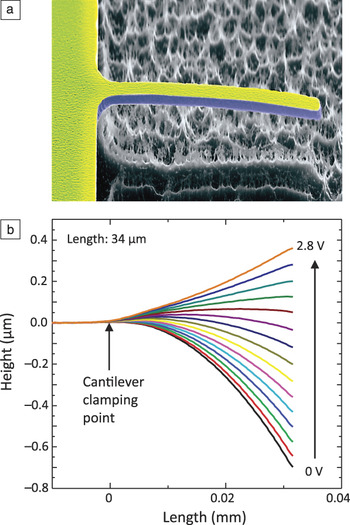
Mesoscale systems typically have many modes of response to stimuli in the environment, including physical deformation, chemical change, transport of electrons, ions or heat, magnetic or electric polarization, and emission or absorption of light. Each of these modes corresponds to an independent degree of freedom. At the mesoscale, these response modes interact, as the energy levels associated with a given degree of freedom become densely packed and overlap with the levels belonging to other degrees of freedom. The interaction of disparate degrees of freedom often produces profound outcomes. In metals, for example, phonons representing lattice vibrations normally scatter electrons and increase the resistivity. At low enough temperature, however, the electron-phonon interaction produces just the opposite effect—superconductivity—where the resistivity collapses to zero, a dramatic mesoscale phenomenon. Other examples of interacting degrees of freedom are electrochemistry for storage and release of electrons in chemical bonds,Reference Etacheri, Marom, Elazari, Salitra and Aurbach22 photochemistry for the conversion of light energy to chemical bond energy,Reference Tilley, Cornuz, Sivula and Graetzel23 photovoltaics for the conversion of light energy to electronic degrees of freedom,Reference Ruhle, Shalom and Zaban24 spintronics for control of charge by magnetic fields,Reference Bader and Parkin25 and piezoelectricity for conversion of applied voltage to mechanical displacementReference Baek, Park, Kim, Aksyuk, Das, Bu, Felker, Lettieri, Vaithyanathan, Bharadwaja, Bassiri-Gharb, Chen, Sun, Folkman, Jang, Kreft, Streiffer, Ramesh, Pan, Trolier-McKinstry, Schlom, Rzchowski, Blick and Eom26 (see Figure 1). These interacting degrees of freedom can be homogeneous, as in superconductivity, where electrons, phonons, and superconductivity coexist in the same physical space, or heterogeneous, as in solar cells, where a semiconductor absorbs the photon, creates an excited electron, and passes it to metallic wires for transmission in an external circuit.
Interacting mesoscale degrees of freedom illustrating giant piezoelectricity, resulting in conversion of voltage to mechanical displacement. (a) Compound cantilever of Pt(60 nm)/Pb(Mg1/3 Nb2/3)O3-PbTiO3 (270 nm)/SrRuO3 (100 nm)/SrTiO3(13 nm). (b) Displacement of the cantilever tip versus applied voltage.Reference Baek, Park, Kim, Aksyuk, Das, Bu, Felker, Lettieri, Vaithyanathan, Bharadwaja, Bassiri-Gharb, Chen, Sun, Folkman, Jang, Kreft, Streiffer, Ramesh, Pan, Trolier-McKinstry, Schlom, Rzchowski, Blick and Eom26

Appearance of defects and statistical variation
Imperfections and statistical variation are mesoscale features, in sharp contrast to the relative perfection of nanoscale objects. Nanoscale systems are typically more perfect because they have fewer atoms, there are fewer ways for them to deviate from the perfect structure, and the energy cost of these deviations is relatively high. Mesoscale systems, in contrast, have many more atoms (a few thousand to a few hundreds of thousands or more), more closely spaced energy levels, and the energy cost of alternate configurations is relatively lower. As a result, defects are more common in mesoscale systems, and statistical variation about a mean is a universal feature of mesoscale behavior. The randomness of mesoscale systems has profound effects. While all electrons and all atoms of a given element are identical, copies of mesoscale systems vary in small details,Reference Hamelin, Diak and Pilkey27 the basis for biological mutation and evolution by natural selection. The defects in mesoscale materials have a profound impact, disrupting the behavior of the otherwise perfect systems by scattering electrons, preventing atoms from moving plastically in response to external stresses, and interrupting the transport of heat. Mesoscale and larger lattices never show the mechanical, electrical, and thermal properties of a perfect lattice; instead, their macroscopic properties are determined by random structural defects and imperfections separated by mesoscale distances.
The appearance of defects in mesoscale systems opens new opportunities to tailor their macroscopic properties by intentionally introducing specific kinds and densities of defects. This upside opportunity to improve behavior with defects is balanced by a downside risk of degradation and failure. The continuous accumulation of defects at the mesoscale often impairs the performance of materials, leading to crack formation and propagation and, ultimately, to macroscopic fracture and failure. Materials degradation can be rapid, as in the collision of two objects, or slow, as in the gradual decay of infrastructure such as bridges and buildings and the declining performance of energy technologies such as internal combustion engines, solar cells, and wind turbines.Reference French, Rodrıguez-Parada, Yang, Derryberry and Pfeiffenberger28 Degradation science—observing, predicting, and mitigating degradation due to defect accumulation—is a ripe opportunity for mesoscale science with high societal impact.
Heterogeneity in structure and dynamics
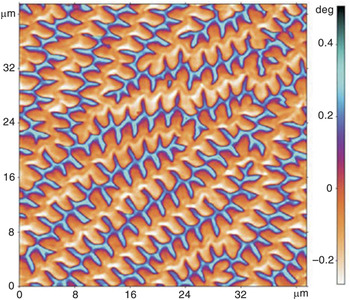
The final mesoscale hallmark considered here is heterogeneity. Nanoscale systems are typically homogeneous, because the energy cost of introducing a boundary and creating two or more distinct phases is high. Nanoscale crystals tend to be single grained instead of multigrained, and nanoscale magnets likewise contain a single magnetic domain. Mesoscale systems, in contrast, are large enough to be heterogeneous, spontaneously breaking into coexisting phases (for example, at a first order phase transition) or retaining an artificially constructed composite structure of two or more distinct components created by bottom-up self-assembly or top-down fabrication. An intricate magnetic domain pattern, a signature of mesoscale heterogeneity, is shown in Figure 2.
Magnetic domains on the surface of a yttrium iron garnet film. Image courtesy of Del Mar Photonics.

Mesoscale research directions
The six hallmarks of mesoscale behavior outlined previously provide wide opportunity to shape macroscopic behavior through mesoscale control. The reward for breakthroughs in mesoscale science is the emergence of new behavior and the development of previously unrealized functionality. From Quanta to the Continuum: Opportunities for Mesoscale Science 1 organizes these opportunities into six priority research directions. Here we discuss a few specific examples drawn from these priority research directions to illustrate the range and potential of mesoscale science.
Mastering functional defects
Defects in materials and structures comprise a wide range of mesoscale features, including interfaces, dislocations, vacancies, and interstitials. Defects are always present and distributed nonuniformly, producing mesoscale heterogeneity which is part and parcel of materials properties and behavior. Thus, a key element of mesoscale science is understanding and controlling the formation and annihilation of individual defects on the atomic or nanoscale level, their migration and evolution to larger mesoscale clusters or patterns, and their collective influence on the macroscale properties and performance of materials.Reference Hefferan, Lind, Li, Lienert, Rollett and Suter29 We seek to control materials functionality at the mesoscale not only by minimization of deleterious defect types but also by controlled introduction of beneficial defects that enhance desirable properties or performance.
Ordered or randomly distributed pores at the nano-, meso-, and microscale disrupt the underlying lattice and may be thought of as defects. However, they enable a host of new macroscopic phenomena that can be controlled at the mesoscale by the size, geometry, density, and chemistry of the pores. Porous materials include aerogels, foams, engineered lattices, shales, sedimentary rocks, and artificial membranes. Closed cell porous materials, where the pores do not interconnect and do not transport fluid, provide high-strength, low-weight materials for light-weighting transportation, such as ultralight metallic microlattices that achieve densities a factor of one hundred lower than typical metals while maintaining strength and full recovery from 50% compression.Reference Schaedler, Jacobsen, Torrents, Sorensen, Lian, Greer, Valdevit and Carter30, Reference Lefebvre, Banhart and Dunand31 Open cell porous materials, where the pores connect, such as metal organic frameworks, provide flow access to high internal surface area that can be functionalized for catalysis, separation, storage,Reference Jiang and Xu32, Reference Chen and Cheng33 or battery electrodes.Reference Sun, Rajasekhara, Goodenough and Zhou34
Fluid flow in mesoporous media is essential to geological processes, including groundwater extraction, replenishment and cleanup,Reference Larned35 carbon sequestration, the formation and extraction of conventional oil and gas, and the safe development of hydraulic fracturing or “fracking” that releases unconventional oil and gas from shale.Reference Taron and Elsworth36 A predictive understanding of microstructure-based heterogeneity evolution and its consequences for material enhancement or degradation is presently lacking.
New experimental capabilities must be developed to observe the evolution of 3D physical events in situ with micron-scale resolution while the material is often exposed to extreme environmental conditions. New theory and simulation capability must be fostered at the length scale of these nucleation and growth events in order to best extract insights from experiments and tangibly test our hypotheses. X-ray or neutron scattering techniques are appropriate for these kinds of measurements. Small-angle scattering reveals the pore configuration and dynamics; diffraction measures interatomic spacing and strain; and radiography determines macroscopic dimensions.37 Simultaneous application of these techniques is a particular mesoscale challenge for future instrumentation.
It is important to focus on system performance as the figure(s)-of-merit for evaluating the positive or negative effect of defects. System performance integrates over numerous intermediate characteristics and parameters and usually declines with time as defect populations grow and agglomerate.Reference French, Rodrıguez-Parada, Yang, Derryberry and Pfeiffenberger28 Thus, predicting the spatial and temporal evolution of defect populations from their initial value is a key mesoscale challenge. These predictions, however, must be motivated and validated by experimental observation of defect evolution, which in real time can take decades. Therefore, accelerated testing modalities are needed to project long-term behavior and impact the science of degradation.
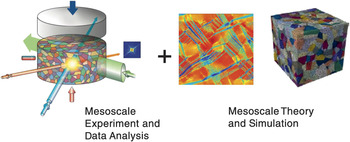
The science of defects that enrich or degrade materials performance requires (a) identifying defects and tracking their dynamic evolution—a major challenge—and (b) understanding the mechanisms by which defects alter system performance through their long-range/long-time behavior. If we could establish the science, the path from fundamental understanding at the nanoscale to higher performing, longer lasting products will be shorter and more direct. Engineers can adopt such new knowledge and use it for enhanced technological solutions in, for example, advanced manufacturing. New combinations of experiments, data analysis, and theory and simulation are required to understand and exploit the connection between nanoscale defects and mesoscale phenomena (Figure 3).
New combinations of experiments, data analysis, and theory and simulation with enhanced spatial and temporal resolution, represented schematically here, are required to understand and exploit the connection between nanoscale mechanisms and mesoscale phenomena. Image courtesy of C.A. Bronkhorst (Los Alamos National Laboratory).

Confined many-electron systems
Mesoscale architectures that confine electrons in semiconducting quantum dots, nanocrystals of metals, magnets and ferroelectrics, and novel materials such as carbon nanotubes and lithographically patterned graphene offer new horizons for discovery science and innovative technology. Confined electronic behavior described by quantized energy levels differs qualitatively and often dramatically from bulk macroscopic behavior governed by continuous energy distributions. The promise of mesoscale science is the opportunity to tune the degree of confinement to any arbitrary level and to connect multiple confined electronic boxes expressing different charge, spin, and mechanical degrees of freedom to produce new behavior and ultimately new technology that performs faster, cheaper, and with greater efficiency and durability.1
Confinement of strongly correlated electrons arising from the Coulomb repulsion of like charges or the magnetic interaction of electronic moments is rich in consequences and largely unexplored. Strong electronic correlation is at the very forefront of materials challenges, including the spin compensation of a local moment by a surrounding cloud of conduction electrons (the Kondo effect),Reference Türeci, Hanl, Claassen, Weichselbaum, Hecht, Braunecker, Govorov, Glazman, Imamoglu and von Delft38 heavy electron behavior,Reference Vojta39 and correlation-induced Mott-Hubbard localizationReference Yu and Si40 leading to metal-insulator and superconducting-insulator transitions. Strongly correlated electronic materials, such as the high temperature copper oxide superconductors and the magnetically rich manganese perovskites, have phase diagrams with many complementary and competing metallic, insulating, and magnetic phases, including novel pseudogap, charge-ordered, and nematic electron states. These competing phases give rise to intrinsic inhomogeneity and local structure on the mesoscale.Reference Vojta39, Reference Berg, Fradkin, Kivelson and Tranquada41 The interaction of these intrinsic mesoscale structures with externally imposed mesoscale architectures is largely unexplored and ripe for exploitation. Electronic confinement on strong correlation length scales will dramatically impact the strong correlation behavior.Reference Mizukami, Shishido, Shibauchi, Shimozawa, Yasumoto, Watanabe, Yamashita, Ikeda, Terashima, Kontani and Matsuda42
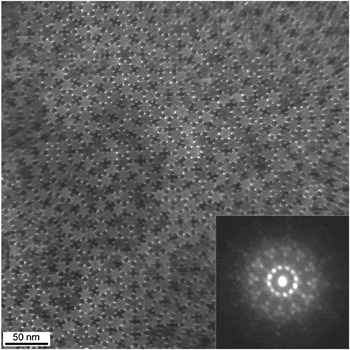
Arrays of nanocrystals connected by colloidal ligands offer a broad new horizon of mesoscale phenomena with many knobs for tuning behavior. Such nanocrystal arrays can be produced by evaporating the solvent from a colloidal solution of nanocrystals, typically of 5–20 nm size.Reference Talapin, Shevchenko, Bodnarchuk, Ye, Chen and Murray43 The nanoparticles self-assemble in a regular pattern on the substrate as the solvent evaporates. Many types of ordered arrays have been produced, including close-packed, non-close-packed, binary (with nanocrystals of two different sizes), and quasicrystalline as shown in Figure 4. The size of the constituent nanocrystals in the array is a key knob, controlling confined behavior arising from increased spacing between quantized energy levels. The physical separation of neighboring nanocrystals provides a second knob, tunable by the length of the ligands connecting them. The composition of the nanocrystals is also in play, spanning metals with a host of narrow or wide bands, semiconductors with low carrier density, magnets, ferroelectrics, and multiferroics. The shape of the nanocrystals introduces anisotropy, and the arrays can contain two or more distinct sizes or kinds of nanocrystals (such as magnets and metals) in ordered or disordered configurations in one, two, or three dimensions. In principle, every phenomenon of ordinary atomic condensed matter physics and chemistry can be recast in nanocrystal array terms, subtly or dramatically altered by overlaying the template of mesoscale structure.
Binary nanoscrystal array of 9-nm PbS and 3-nm Pd nanocrystals illustrating one example of the wide diversity of architectures accessible by directed self-assembly. This array displays dodecagonal quasicrystalline order. Inset: fast Fourier transform pattern of the quasicrystalline superlattice.Reference Talapin, Shevchenko, Bodnarchuk, Ye, Chen and Murray43

Directing assembly from the top down and bottom up
The assembly of mesoscale building blocks into higher level architectures and phenomena is a continuous process extending well beyond the dimensions that are natural for humans to manipulate. Biology has built up living architectures as large as the Great Barrier Reef, composed of coral polyps, which extends over 2000 km in length and dominates its regional environment by playing host to an enormous diversity of other living species. Geology has stratified the Earth’s structure by density into a viscous mantle supporting floating tectonic plates that execute an intricate dance creating mountains and earthquakes as they shift and collide.
Biology and geology provide inspiring examples and a proof of concept that complex, hierarchically self-assembled materials are capable of emergent phenomena and targeted functionality far beyond the level we have achieved with reductionist observation and top-down fabrication. The mesoscale takes emergent phenomena and targeted functionality to the next level through two innovations. The simpler of the two is mesocale integration that connects, at the mesoscale, existing nanoscale functional units to form complex systems that capture and transform energy more effectively, such as semiconductor based photoelectrochemical cells with appropriate bandgaps and catalysts to promote the photochemical recycling of water and carbon dioxide into chemical fuel. The second and more expansive approach is invention or discovery of qualitatively new mesoscale phenomena and organizing principles arising from the six mesoscale hallmarks, such as the coupling between electronic and chemical degrees of freedom that will enable storing electricity efficiently and reversibly in high energy density chemical bonds.
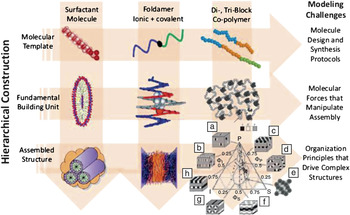
The grand challenge for both mesoscale integration and mesoscale discovery is creation of multiscale functional structures that encode information; adaptively respond to their environment; and capture, transport, and transform energy. The ability to design and realize such complex and composite materials requires significant advances in how we synthesize materials, how we process and assemble them, and how we control their composition and architecture.Reference Bates, Hillmyer, Lodge, Bates, Delaney and Fredrickson44 The parameter space available is simply enormous, thereby necessitating a concerted experimental and theoretical approach, embracing both equilibrium and nonequilibrium states of matter.Reference Phillips, Anderson, Huber and Glotzer45 The emphasis in mesoscale synthesis and assembly is on integration of disparate materials classes by “top-down” and “bottom-up” approaches. Bridging the gap and allowing these two powerful approaches to influence, complement, and reinforce each other are major challenges and opportunities of mesoscale science. Figure 5 shows representative molecular based building blocks for self-assembly and the associated modeling challenges that arise in their utilization. The overarching goal of directed assembly is to establish the scientific basis and assembly pathways required to enable the formation of materials and architectures “by design.”Reference Frenkel and Wales46 Of specific interest is the establishment of fundamental knowledge required for assembly and disassembly of information-encoded building blocks with spatial and temporal control. This effort hinges on the ability to model, synthesize, and assemble building blocks whose exotic motifs embed information from the nanometer to the micron scale via anisotropies in their chemical makeup, shape, and/or softness.Reference Ruiz, Kang, Detcheverry, Dobisz, Kercher, Albrecht, de Pablo and Nealey47, Reference Ghariehali, Gotrik, Hannon, Alexander-Katz, Ross and Berggren48 Importantly, achievement of this goal requires a deep integration of expertise in assembly, characterization, and computational/theoretical modeling of building blocks, clusters, and their configurations. With this knowledge, one can create novel forms of matter in a rational manner via directed assembly and disassembly—whose spatial organization and connectivity are dynamically tunable over multiple length scales ranging from intermolecular and/or interparticle forces to the longer scales associated with building blocks, clusters, and supracluster assemblies.1
Representative molecular-based building blocks for self-assembly are depicted schematically along with associated modeling challenges across relevant length scales. In the lower right image, the diversity of self-assembled structures (a–h) that can result when just three small polymer building blocks (I, P, S) are combined in varying concentrations (ΦI, ΦP, ΦS) reflects the breadth of mesoscale structures that can be created through self-assembly. Image courtesy of Greg Exarhos (Pacific Northwest National Laboratory).

Realizing the meso opportunity
Realizing opportunities in mesoscale science requires advances not only in our knowledge but also in our ability to observe, characterize, simulate, and ultimately control matter. Some of the areas of knowledge that are poised for breakthroughs have been discussed previously. In this section, gaps in our capabilities to make, measure, and model materials on the mesoscale are highlighted. Of at least equal importance as the research infrastructure is the human capital required to explore the frontiers of mesoscale science.
First and foremost among the capability gaps for realizing the meso opportunity are advances in our ability to integrate theory, modeling, and simulation seamlessly with synthesis and characterization. The inherent complexity of mesoscale phenomena, often including several nanoscale structural or functional units, requires theory and simulation spanning multiple space and time scales. The advent of petascale computation and the promise of exascale computation will provide the hardware resources to enable these advanced simulations. New organizing principles that describe emergent mesoscale phenomena arising from many coupled and competing degrees of freedom wait to be discovered and exploited at the mesoscale. An integrated and coupled approach in which measurement directly influences theory-guided synthesis will accelerate the discovery of new mesoscale phenomena and architectures.
Measurements that are dynamic, in situ, and multimodal must replace static characterization. The mesoscale is an inherently dynamic regime, where energy and information captured at the nanoscale are processed and transformed at the mesoscale to create new outcomes. Given the complexity and dynamism of mesoscale phenomena, multiple measurements of transient phenomena are key. Spatially diverse measurements in three dimensions capturing coupled transformations in different parts of the mesoscale assembly are critical, such as following the energy absorbed by electronic excitation in one part of the system as it drives chemical reactions and creates new compounds in another part of the system. Complex mesoscale ensembles are not identical and inevitably display a range of behaviors; effective measurements must capture the range of possible outcomes and not just characterize a single “representative” sample.
Finally, the ability to design and realize the complex and composite materials we imagine will require qualitative advances in how we synthesize materials, both in moving from serendipitous to directed discovery and in advancing our ability to assemble and control materials systems and architectures from smaller structural and functional units. The integration of top-down and bottom-up approaches, now quite distinct and representing different operating principles and spatial scales, is key to mesoscale synthesis.
The frontier of mesoscale science is intrinsically interdisciplinary and multiscale. This requires mesoscale scientists who can move facilely across boundaries between disciplines. Similarly, integrated expertise spanning synthesis, characterization, theory, and simulation is essential. These needs motivate new research modalities in which training of students and collaboration among teams of domain-specific experts is increasingly important.
Aggressive recruitment and development of the next generation of mesoscale scientists is an essential new objective. Exciting opportunities exist for students and post-doctoral researchers to acquire skills in both experiment and theory, as well as to gain hands-on synthesis experience through novel mentoring arrangements. The need is particularly acute for instrument scientists to exploit newly available characterization sources to impact mesoscale science through multi-modal measurements in collaboration with users. Importantly, these researchers will not only define the future of mesoscale science but also represent an opportunity for developing a diverse technology and manufacturing workforce well suited to the industries and products arising from mesoscale development of nanoscale science and technology.
Perspective
The mesoscale opens a new frontier of scientific opportunity. Mesoscale science builds on the remarkable nanoscience insights that the research community has produced in the last decade and continues to produce. The reductionist drive to understand bulk materials and phenomena from the top down has revealed the central role of atomic, molecular, and nanoscale structure in shaping bulk behavior. We are now ready to explore the opposite direction, a bottom-up journey from atomic, molecular, and nanostructures and phenomena to the broader horizons and more complex behavior of the mesoscale. The mesoscale brings profound changes, replacing the atomic granularity of matter and the quantization of energy with continuous matter and energy, and enabling the onset of collective behavior of ensembles of particles, the interaction of coupled and competing degrees of freedom, the appearance of defects and fluctuations that profoundly alter the behavior of perfect structures, and the formation of heterogeneous composite systems whose parts work cooperatively to transform energy, charge, and chemical composition. Building on knowledge from the nanoscale, these emergent mesoscale features can be manifested in innovative architectures to create targeted new phenomena, functionalities, and, ultimately, disruptive technologies with the potential to outperform existing technologies and dominate the competitive marketplace. Seizing the opportunity to develop mesoscale science and to dominate the innovation opportunities it spawns brings an enduring competitive advantage for future economic growth.
The promise of mesoscale science is rich. Manipulating mesoscale architectures assembled from nanoscale building blocks enables virtually endless possibilities to discover, design, and enhance complex phenomena and functionalities. Directed assembly offers unprecedented opportunity to create complex structures and functionalities, inspired in part by biology. Light can be manipulated in photonic crystals, metamaterials, and surface plasmon polaritons to promote chemical reactions, harvest energy from sunlight, and enhance the performance of light-emitting diodes. New generations of electrodes for batteries and fuel cells can be designed to promote the coordinated motion of electrons, ions, and gases and to maximize efficiency and energy density. Mesoporous membranes with functionalized charge and chemical profiles lining the pores can be designed to separate carbon dioxide, purify water, and catalyze chemical reactions.
There are new organizing principles for mesoscale science to discover. We understand quantum mechanics for atomic, molecular, and nanoscale phenomena, and classical mechanics and electrodynamics for macroscale behavior, but we do not know the organizing principles governing the mesoscale. What principles govern self-assembly, for example, or the appearance of new behavior from the interaction of competing degrees of freedom? New phenomena will emerge as mesoscale architectures are tuned to promote collective behavior or the interaction of targeted degrees of freedom. As mesoscale systems grow in size, defects, interfaces, and fluctuations appear and can be manipulated to program the thermal, electronic, and mechanical response of the bulk. Mesoscale science represents a discovery laboratory for finding new science, a self-assembly foundry for creating new functional systems, and a design engine for new technologies.
Acknowledgments
We thank our colleagues on the Mesoscale Science Subcommittee of the US DOE Basic Energy Sciences Advisory Committee and acknowledge the many individuals who provided input at www.meso2012.com. This work was supported in part by the Division of Materials Science and Engineering, Office of Basic Energy Sciences.

George W. Crabtree is a senior scientist at Argonne National Laboratory and professor of physics, electrical, and mechanical engineering at the University of Illinois at Chicago. He received his BS degree from Northwestern University, Evanston, IL, in science engineering; his MS degree from the University of Washington, Seattle, in physics; and his PhD degree from the University of Illinois at Chicago in solid-state physics. Crabtree has worked on the electronic behavior of transition metal, organic, heavy fermion, and high-temperature superconducting compounds, and on materials for energy conversion. Crabtree can be reached at the Materials Science Division, Argonne National Laboratory, Argonne, IL 60439; tel. 630-252-5509; and email crabtree@anl.gov.

John L. Sarrao is the program director for Los Alamos’s Office of Science Programs and for MaRIE (Matter-Radiation Interactions in Extremes), LANL’s signature facility concept, which will provide transformational solutions for materials in extreme environments. He received his PhD degree in physics from the University of California, Los Angeles in 1993 based on thesis work performed at LANL. His primary research interest is in the synthesis and characterization of correlated electron systems, especially actinide materials. He was the 2004 winner of the LANL Fellows Prize for Research, in part for his discovery of the first plutonium superconductor, and is a Fellow of the American Association for the Advancement of Science (AAAS), the American Physical Society (APS), and Los Alamos National Laboratory. Sarrao can be reached at Los Alamos National Laboratory, NM 87545; and email at sarrao@lanl.gov.