Richard Wagner's suggestion of tempo as the key to musical understanding is a concept which has underscored several recent areas of performance research.Footnote 3 In relation to nineteenth-century performance practice, however, writers have, understandably, tended to concentrate upon Wagner's significant contribution to the development of tempo modification as outlined in his prose work of 1869, Über das Dirigieren – namely, his assertion that appropriate tempi should be adopted for each individual section of a particular movement, and that the adagio element of a lyrical melody should be emphasised.Footnote 4 What is less clear in early Wagnerian performances is what the actual speeds were in practice: in particular, how the realisation of Wagner's generic tempo indications might be applied to individual motifs (thus relating to notions of characterisation or representation) and to the pacing of a musical paragraph or scene, and whether any longer-term tempo connections might affect perceptions of musical structure. Although timings for the Bayreuth productions were documented, these were only calculated for the music dramas as a whole,Footnote 5 and are thus only partially illuminating. The identification of a new source detailing basic tempi at the first dress rehearsal of Das Rheingold at Bayreuth in July 1876 therefore represents a significant addition to the debate over questions of pacing in Wagner's music dramas, and of tempo as a representational and connective device.
The source in question is an 1873 edition of Das Rheingold housed in the Royal College of Music,Footnote 6 one of a number of Wagner scores belonging to Edward Dannreuther (1840–1900), which are either stamped with Dannreuther's embossed mark, or which contain his autograph.Footnote 7 Dannreuther was a significant promoter of Wagner and his music in late nineteenth-century Britain, whether in terms of publications (Richard Wagner: His Tendencies and Theories, and translations of Über das Dirigieren and The Music of the Future),Footnote 8 his membership – along with other enthusiasts of the music of the New German school – of the self-styled ‘Working Men's Society’,Footnote 9 or his founding the Wagner Society in England in 1872. It was at Dannreuther's London address of 12 Orme Square that Wagner gave his first public reading of the Parsifal poem.Footnote 10 Given these proclivities, it is no surprise that Dannreuther was one of many visitors to Bayreuth for the performances of the Ring cycle in 1876. More important, at the first dress rehearsal of Das Rheingold on 29 July, he documented some of the metronome speeds and attached these to the flyleaf of his score.Footnote 11 All of the tempi that Dannreuther recorded on the flyleaf are reproduced in the Appendix to this article, with reference to the 1988–89 Urtext edition of Das Rheingold to help identification; their significance will be discussed shortly. Apart from confirming Dannreuther's general interest in Wagner, the annotations would have served a practical purpose. Dannreuther conducted rehearsals for the London Wagner Festival in May 1877, the first concert of which included the opening and closing scenes of Das Rheingold; he would therefore have been able to implement likely tempi in preparation for Richter's direction of the final rehearsals and performances.Footnote 12
The metronome timings
In exploring Dannreuther's metronome timings, there is the thorny question of their potential accuracy – particularly where his method is concerned. The fact that Dannreuther occasionally deleted an initial metronome marking, replacing it with an apparently more accurate reading of only marginal difference, suggests that the speeds were measured at the dress rehearsal with the metronome itself, rather than being estimated. Without the modern luxury of pausing and replaying selected passages, this would obviously mean that Dannreuther had to respond to musical tempi quickly, and reset his metronome appropriately – a demanding task, even if his recalibrations suggest an attention to detail and a commitment to the documenting process.Footnote 13 The nature of Dannreuther's annotations also merit further scrutiny. The majority of the metronome timings would seem to refer to an initial basic tempo in a particular passage,Footnote 14 highlighted by Dannreuther as significant because it represented a change of metre (without an overt suggestion from Wagner as to how beats might be converted) or represented a new speed (highlighted by a new tempo indication in the score). However, as Clive Brown suggests in relation to Wagner's later works (where metronome marks were abandoned after Tannhäuser), although ‘frequent changes and modifications of tempo are specified in the score … there is no reason to think that these are the only places where flexibility is permissible or desirable’.Footnote 15 There are only a few suggestions in Dannreuther's timings as to how Richter might have modified any tempo within the parameters of Wagner's indications. As the Appendix material shows, these include the opening Prelude and Alberich's clambering to seize the gold in scene 1; in scene 2, the opening ‘Valhalla’ music, and Fasolt's reaction to Wotan's volte-face in terms of offering Freia as payment for their labours; in scene 3, Mime's initial cries of pain, and Alberich's approach after Mime's complaints to Loge and Wotan; in the fourth scene, Fasolt and Fafner's initial haggling, and the ‘rainbow bridge’ music. These examples all apparently represented a gradual accelerando or ritardando, indicated in Dannreuther's annotations by a horizontal line. In practical terms, Dannreuther would obviously have been aware of a general increase or decrease in overall pace, and could have responded accordingly; an example such as the ‘Valhalla’ music, where he noted a decrease in crotchet speed from 72 to 69 beats per minute, suggests a heightened awareness of these factors.
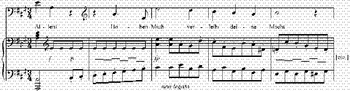
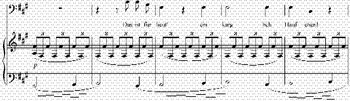
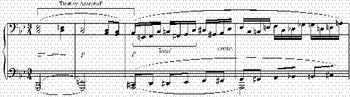
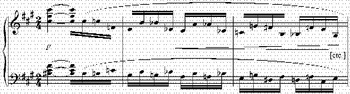
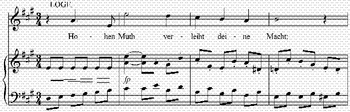
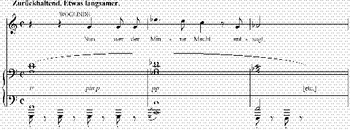
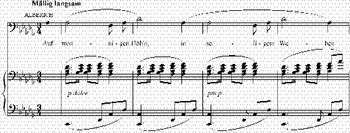
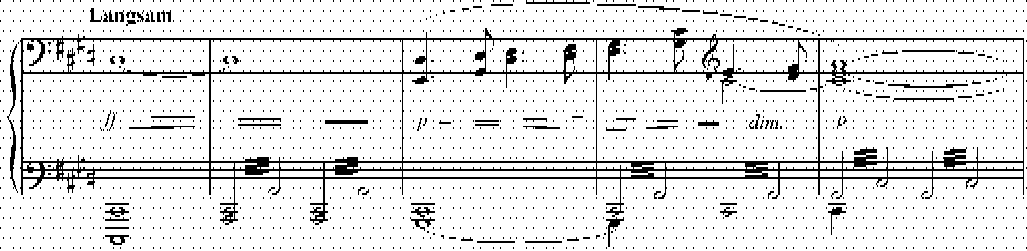
Elsewhere, however, Dannreuther highlights some tempo modification within a section without using a horizontal line, more likely to be suggestive of contrasting tempi. Although any attempts to relate Richter's apparent practice to Wagner's theories expounded in Über das Dirigieren are somewhat limited, one example from this perspective might be offered. Wagner suggested that the ‘proper pace of a piece of music’ should be ‘determined by the particular character of the rendering it requires’ – specifically, whether a passage inclined towards ‘the sustained tone, the vocal element, the cantilena’ or ‘the rhythmical movement (Figuration)’.Footnote 16 In scene 3 of Das Rheingold, Dannreuther notes two dotted minim speeds of 76 (correcting an initial measurement of 80) and 66 beats per minute in relation to the sehr lebhaft in bar 2354. Given that tempo is apparently being modified within the sehr lebhaft parameter, one might point to distinctions between primarily rhythmic and melodic material in this section, as suggested by the nature of the accompaniment (Ex. 1),Footnote 17 as an explanation for this modification – thus linking theory and practice. Dannreuther's potential reliability as a witness to Richter's practice might also be suggested by evidence elsewhere of his awareness of these Wagnerian principles of tempo modification – even if applied to the music of other composers. Discussing how Beethoven's music should be performed, for example, Dannreuther invoked the concept of tempo being ‘subject to the laws of mutual relationship’:Footnote 18
The only possible solution to this riddle lies in the consideration that each of Beethoven's works is an instrumental poem. The different movements have as close a connection with one another as the scenes of a tragedy; and, accordingly, the tempo of one should modify the tempo of the other … supposing the main tempo of a piece to be fixed, we must suppose it to be capable of many modifications in the course of the movement. For we have seen how Beethoven builds up his work out of melodious fragments, how wide his range of tonalities is, how infinite the variety of versions he offers of each sentiment embodied in a theme or part of a theme; so that if all these rich details are to receive their due the tempo must be very elastic.Footnote 19
It is surprising that there are not more examples of local fluctuations in Dannreuther's recorded timings. This might suggest that either Richter maintained a relatively strict tempo within discrete sections,Footnote 20 or that flexibility was simply viewed as the norm, and Dannreuther felt any additional annotations unnecessary (or impractical owing to the limitations of his reactive method); the second explanation seems more likely for reasons that will be discussed shortly.
Das Rheingold, scene 3, tempo modification possibilities
‘Rhythmic’ accompaniment, bars 2354–8

‘Melodic’ accompaniment, bars 2370–4

The main phenomenon which emerges from the tempi apparently taken by Richter, however, is their sheer pace. The vast majority suggest a rapid succession of speeds, including some almost inconceivably quick tempi in the context of modern sensibilities. On the surface, this seems to contradict Richter's practice as suggested by overall timings for his 1876 performances of Das Rheingold. These have been recorded as 2′31″ and 2′29″ – something of a middle ground at Bayreuth within the extremes of Heinz Tietjens (2′08″) in 1939 and Hans Knappertsbusch (2′42″) in 1951.Footnote 21 Although these timings may have incorporated gaps (for whatever reason) in the performance, creating less of a contradiction, subsequent timings of 2′28″, 2′25″, and 2′25.5″ for Richter's Bayreuth performances of Das Rheingold in 1896, 1897 and 1904 do suggest a certain consistency in overall pacing, although the 1908 performances were slightly quicker, timed at 2′15″ and 2′18″;Footnote 22 Herbert Thompson, reviewing these latter performances in the Yorkshire Post described Richter as ‘the conductor who best realises the bigness and energy of the music … [it] surges along like a resistless torrent, carrying all before it’.Footnote 23 Voss also notes an additional timing for Richter, however: ‘Undatierte Angaben: Hans Richter (2/12)’.Footnote 24 This particularly quick timing, surpassed at Bayreuth only by Tietjens, might be more characteristic of the quick speeds documented by Dannreuther. However, if Dannreuther's documented tempi referred only to initial tempi at the beginning of a section (with the potential to slow within a flexible tempo frame), as suggested above, the apparent discrepancy between overall pacing and local detail may be less problematic.
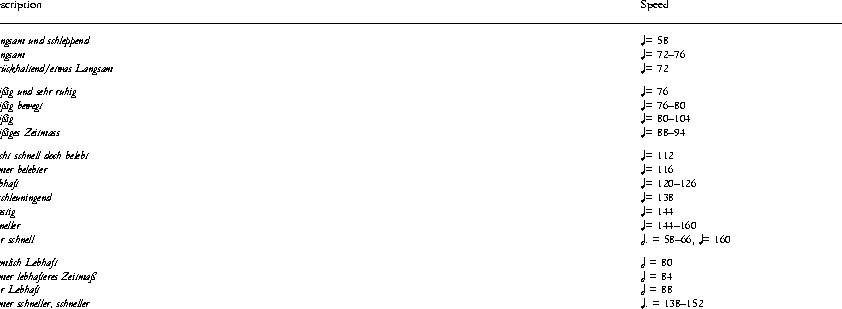
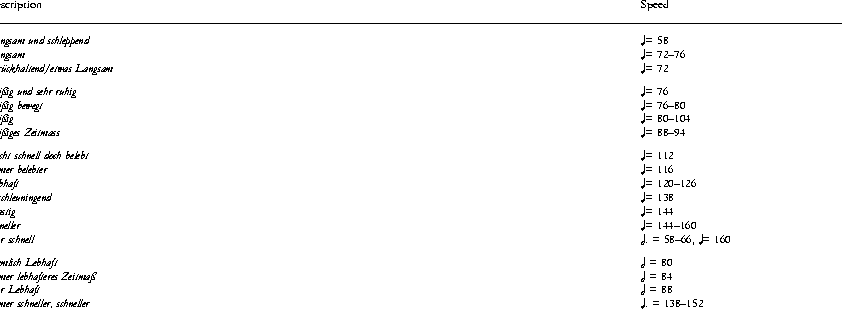
What is clear is that Richter seems to have adopted a systematic interpretative approach to Wagner's general tempo instructions. Table 1 illustrates a hierarchy of crotchet speeds in the slow (58–76), medium (76–104) and fast (112–176) categories, noting Richter's apparent (initial) speeds in relation to tempo marking and metre.Footnote 25 Comparison with metronome markings in Tannhäuser (the last of Wagner's operas to contain such directions) might at least suggest whether Dannreuther's categories are wildly inaccurate. Crotchet speeds for Andante tempi in Tannhäuser range from 50 to 100, Mäßig has crotchet speeds of 84–88 (somewhere in the middle of Dannreuther's documented range) and minim speeds of 46–60, and Allegro sections are marked from minim speeds of 56 (meno Allegro) to the Allegro molto crotchet speed of 132.
In relation to the specific issue of Richter's quick tempi, however, there remains the question of how these might relate to Wagner's wishes – were these primarily Wagner's tempi, Richter's tempi, or an amalgam of both? Richter was not Wagner's first-choice conductor at Bayreuth in 1876,Footnote 26 and Wagner and Cosima levelled several criticisms at his tempi in the early Ring performances. Entries in Cosima's diaries noted that there had been ‘incorrect tempi in the orchestra’ at the third rehearsal of Die Walküre, and two days later apparently Richter still knew ‘little about the tempi – “traces too many crotchets”, says R.’.Footnote 27 Similarly, in a letter to Richter after the dress rehearsal of Die Walküre, Wagner noted his concern over the tempi in Act II, suggesting that they were not reflecting dramatic considerations:
My friend, it is essential that you attend the piano rehearsals, else you will not get to know my tempos. It would be very trying to have to make up for this in the orchestral rehearsals, where I do not like to discuss matters of tempo with you for the first time. Yesterday we hardly ever refrained from dragging, especially [Franz] Betz, whom I have allowed fiery tempos at the piano rehearsals, and also with [Amalie] Materna. Even the Valkyrie were held back in some of the heated moments in the ensembles with Wotan. I really believe that throughout you are bound too much to beating crotchets, which always hinders a tempo, particularly as the long notes dominate when Wotan is angry. In my view one should beat quavers where one needs to be precise, but you cannot maintain the mood of a lively allegro by beating crotchets.Footnote 28
Hierarchical tempi in Richter's performance of Das Rheingold
Post-Festival discussions also highlighted Richter's general approach to tempo as problematic; Richter was ‘not sure of a single tempo – dismal experiences indeed!’Footnote 29 – impressions that were reinforced two years later:
At lunch and during the afternoon, reminiscences of the festival performances, how fantastic it all appeared from the outside, the moments that turned out well, the frustrations (Richter's tempi) … He [Wagner] also tells K[lindworth] about his ‘Never again’ when, in the concluding scene, after Siegfried's body had been removed, he saw that yet again Richter had not understood him.Footnote 30
Cosima's subsequent decision to engage Richter as conductor for the 1896 Ring cycle (and the next six festivals) simply illustrates the complexity of their relationship.Footnote 31 However, there was no specific reference to problems of tempo at the first dress rehearsal of Das Rheingold:
In the evening the first Rheingold rehearsal in costume, R. very sad afterward, because Herr Brandt himself is in error. The singers very good, particularly Herr Vogl as Loge. After the rehearsal R. and I at home by ourselves, R. deeply worried – The King inquires whether R. is satisfied with the scenery!Footnote 32
More important, the strikingly quick nature of the tempi documented by Dannreuther reflects the composer's frequent admonishments to Richter to refrain from dragging, and, as Egon Voss has shown, mirrors the nature of several alterations and additions to the 1873 published score of Das Rheingold that Wagner made in 1876:
it becomes apparent that markings calling for a fast or faster tempo are in a clear majority. This tallies with Wagner's observation at rehearsals in 1876 (perhaps not to be taken too seriously): If you weren't all such dull fellows, ‘Rheingold’ would be over in two hours.Footnote 33
Certainly Charles Villiers Stanford, in attacking Felix Mottl's tendency to adopt slow tempi, suggested that Richter's quicker speeds reflected Wagner's own preferences:
In one respect opera at Baireuth [sic] in the lifetime of the composer had a virtue which has gradually tended to disappear since his [Wagner's] death. The composer did not permit his conductor to exaggerate slowness of pace. This was especially noticeable when Levi directed ‘Parsifal’ in 1883 – Dannreuther, who stayed at ‘Wahnfried’ for the rehearsals in 1882, told me that Wagner frequently called out from the stalls, ‘Schneller! Schneller! Die Leute werden sich langweilen’ (Quicker, quicker, the people will be bored). With the advent of Mottl, every movement became slower and slower. His playing of the Prelude was, by my watch, five minutes slower than Levi's. The Ring suffered in the same way, unless Richter was at the helm. The disease of exaggerated Adagios spread to an alarming extent, and Mottl's fad became a cult.Footnote 34
Robert Philip's identification of generally brisk maximum tempi in early recordings might suggest similar practices in the late nineteenth century.Footnote 35 Given that Wagner frequently asked Richter to increase his tempi, therefore, the speeds recorded by Dannreuther do reflect the composer's desire for a greater momentum, thus linking directly with Wagner's performance goals. Although Wagner's adoption of a variety of tempi depending on his mood (as described by Joseph Sulzer and Richard Fricke in rehearsals for Lohengrin and Die Walküre)Footnote 36 makes any view of Richter's speeds as ‘definitive’ somewhat problematic, suggesting that Richter's approach should be viewed more as an ‘informed’ interpretation within a range of musical possibilities, at the very least, our concept of what is an acceptable tempo range in modern-day performances of Wagner's music might be reassessed.
Richter's interpretative tempi in context
Given that tempo has the ability to affect perceptions of Wagner's music and its meanings, the remainder of this article places Richter's tempi in context by comparing Dannreuther's documented metronome markings with six additional readings from the recorded canon: Artur Bodanzky's 1937 recording at the Boston Opera House, Wilhelm Furtwängler's concert performance in Rome in 1953, Hans Knappertsbusch's Bayreuth performance of 1956, Georg Solti's celebrated recording with the Vienna Philharmonic two years later, Herbert von Karajan's recording with the Berlin Philharmonic in 1968, and Pierre Boulez's Bayreuth recording of 1981.Footnote 37 These examples represent both a chronological range, and a variety of approach to tempi – from the generally slow speeds of Furtwängler to the quick pacing of Bodanzky. In charting some of the variants, however, we need to bear in mind that certain readings may relate to the particular nature of stage performance, as opposed to the recording studio – a potential divide that Solti was keen to bridge:
To give a recorded performance the same sense of continuity and growth one aims for in a stage performance requires your total imagination, especially your total tempo imagination. You must know exactly what you are aiming for. If I did anything right in the Ring recording, it was because of the feeling I have for tempo.Footnote 38
According to Heinrich Porges, who was charged with providing a detailed account of the first Bayreuth Festival, the difficulty in performing Das Rheingold lay in its need to be ‘governed by a vital and wilful determination, which is, nevertheless, discreetly controlled’;Footnote 39 in this comparison of performances, tempo represents one of the main criteria in suggesting both the nature of any sense of determination, and the measure of the control. In selecting some of the most striking examples in Dannreuther's documented timings, general observations can be made concerning the relationship of tempo to musical representation at the local level, to the sense of pacing in the wider context of a complete scene, and as part of connections at the level of the music drama as a whole. Certainly, Wagner was aware of the ability of tempo to affect questions of characterisation and narrative in an operatic context, as this example referring to Tannhäuser's account of his pilgrimage in Act III (incorporating a change of metre from 4/4 to 6/4) suggests:
Thus it came to pass that the tempo was taken at exactly double the proper pace … Now this may have been very interesting, musically, but it compelled the poor singer of Tannhäuser to relate his painful recollections of Rome to a gay and lively waltz-rhythm (which, again, reminds me of Lohengrin's narrative about the Holy Grail, at Wiesbaden, where I heard it recited scherzando, as though it were about Queen Mab). But as I was, in this case, dealing with so excellent a representative of Tannhauser as Ludwig Schnorr, I was bound to establish the right tempo, and, for once, respectfully to interfere. This, I am sorry to say, caused some scandal and annoyance.Footnote 40
Tempo and orchestral transformation
In the orchestral transformation music in Das Rheingold, tempo has a vital role in representing the changes in landscape. The E-flat Prelude has inevitably been the subject of much discussion, whether in terms of an expanding acoustical structure, or as a representative entity – suggesting the creation myth, the sense of rebirth, or even the birth of absolute music.Footnote 41 As the first musical sounds that we hear, its pacing is crucial to its perceived significance. Porges suggests that despite the sense of dynamic growth, there should be no apparent self-consciousness in performance:
Wagner insisted that its huge crescendo should throughout create the impression of a phenomenon of nature developing quite of its own accord – so to say, an impersonal impression. Nothing must be forced; there must be no sense of a conscious purpose imposing itself. Thus the goal will be achieved. It will be as though we were experiencing the magical effects of an ideal presence; as though, no longer conscious of the music, we had become immersed in the primal feelings of all living things and were peering directly into the inner workings of natural forces.Footnote 42
The same concerns were later echoed by Boulez:
This prelude must not seem either assertive or threatening. If it is grandiose it becomes banal, inflated and rhetorical; if it is too fast, as I have sometimes tended to take it, it takes on an agitated, anguished character which is not justified. Wagner's marking is Ruhig heitere Bewegung – a movement both calm and cheerful, heralding the carefree, chattering Rhinemaidens, not anticipating the waters fatefully breaking in to engulf all in the ‘Twilight of the Gods’.Footnote 43
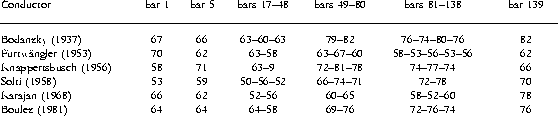
The two elements of significance here are the basic speed, and the range of any tempo fluctuation. Bars 1–16 are effectively perceived as being without tempo, simply representing the initial Eb tone (bars 1–4) and the addition of the fifth (bars 5–16). It is from bar 17 where a sense of pulse is more clearly perceptible with the entry of the horn, with subsequent fluctuations to cope with the move to constant quavers (bar 49) and semiquavers (bar 81), leading to the vocal entry of Woglinde in bar 137. Table 2 compares the dotted crotchet speeds in the six recorded examples at these structural points, highlighting the variety of ways in which the textural gear changes are negotiated. Although the documented speeds here and in subsequent tables only represent a general guide, and cannot hope to suggest the subtleties within these general parameters, several elements are striking. First, the range of tempo varies considerably; Solti's embryonic opening speed, for example, accelerates to one of the brisker interpretations at the end of the semiquaver section, whereas Furtwängler keeps within a relatively narrow tempo band from bar 5 onwards. All the conductors recalibrate their tempi at the quaver and semiquaver transformations, with an injection of pace at the constant quavers in bar 49 (Bodanzky in particular), and, in the majority of cases, a slowing of momentum to negotiate the semiquavers at bar 81. Perhaps most telling is Solti's reduction of pace at bar 17 to a tempo even slower than his steady opening, allowing him to then adopt progressively quicker tempi at the quavers and semiquavers.Footnote 44 This is by far the most linear approach in these examples, with tempo driving a perceived sense of growth. In contrast, Furtwängler's modest shifts of momentum (with much fluctuation within each section) create the impression that texture and dynamic, rather than tempo, are the main contributors to the expanding soundworld, with perhaps less of a conscious purpose behind the structure, and more of a ‘phenomenon of nature developing quite of its own accord’.
Das Rheingold, E-flat Prelude, comparative dotted crotchet speeds
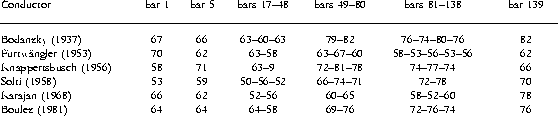
The quickest speeds at any point in the recorded performances of the Prelude are adopted by Bodanzky and Knappertsbusch; their c. 81–2 beats per minute help us to imagine how Richter's interpretation, documented as dotted crotchet speeds of 84-88–92, might have sounded. Dannreuther's double underlining of ‘88’ suggests that this represented the main speed in this section, as part of a gradual acceleration within a narrow tempo band. Although such an approach might be in danger of projecting an agitated character, highlighting Boulez's concerns above, the absence of an obvious tempo increase might also suggest the ‘lack of conscious purpose’ promoted by Porges. At this rapid pace, such an effect would surely have been at the expense of clarity in the semiquaver figuration in the violins; however, this might support Sol Babitz's theory of Wagnerian notation in relation to its practical possibilities:
Certain violin passages in Wagner's music … are extremely difficult to play correctly and together – so difficult, in fact, that many musicians believe that Wagner did not expect that all the notes would be played accurately but rather intended to create an approximate effect with all the players trying to play the notes. To judge from audience reaction this may have been his intention because some very approximate but spirited performances have evoked some of the wildest enthusiasm in audiences.Footnote 45
Wagner's use of ‘Tempo I’ indications in this first scene, a constant reference to the general pacing of the Prelude, is one example of a repeated tempo in Das Rheingold acting as a structural feature. The fact that Dannreuther marks only one further 6/8 speed suggests that this overall consistency was present; this subsequent 6/8 marking, however, an increase to a dotted crotchet speed of 120–132 at ‘Spottet nur zu’, suggests the agility and eagerness of Alberich's climb to the top of the rock, in favour of any structural adherence to the letter of Wagner's ‘Tempo I’ marking.
Scene 3 is prefaced by the vivid orchestral journey deep into the earth. For Porges, this represented one of the most striking passages in Das Rheingold, where pacing of dynamic and tempo, and the clarity of musical material, were paramount:
The powerful orchestral piece, depicting the descent from the mountain heights to gloomy, cavernous Nibelheim, was played with a tremendous weight and energy. The Valhalla theme creates an atmosphere of grandiose calm appropriate to the spirit of law and order, but now a daemonic force erupts revelling in its power to destroy the realm of freedom and love. The performance not only should but must be carried to the extreme of loudness for here symphonic art is sovereign since this alone has the power to represent the life-and-death struggle of supra-personal forces. From which it does not follow that it is enough to sketch the themes in broad strokes; the many and varied expression-marks, every accent, all the phrasing must be scrupulously observed, since only in this way can these conceptions, the product of a monumental art, be made to imprint upon us the features of their individual physiognomy. Wagner was particularly concerned that each entry should be made with the utmost precision and clarity … The accelerando whipping up the entry of the new motive … [in 9/8] was played with tremendous vigour and the motive phrased with cutting precision and taken as fast as possible.Footnote 46
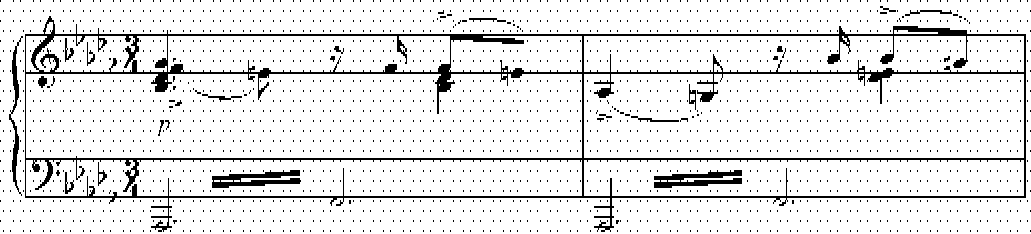
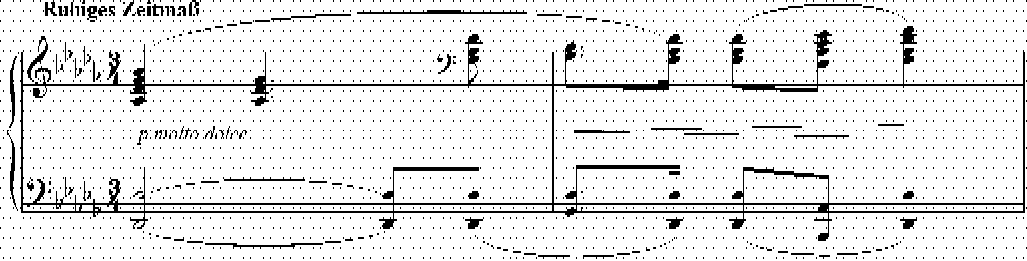
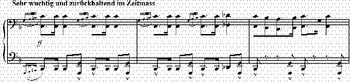
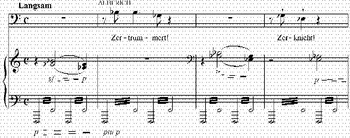
The journey from the skies down to the centre of the earth is communicated via several musical devices – textual growth, dynamic range, and a particularly effective sense of physical space, as the Nibelungs' anvil hammerings are approached, then confronted (without orchestral accompaniment), before receding into the distance. Tempo also has its part to play, however, and Dannreuther notes three speeds in documenting the gesture of descent: the chorale-like, scalic descending motif of a sixth (labelled by Robert Donington as ‘Destiny accepted’)Footnote 47 which alternates with Loge's motif, the change of key fourteen bars later, Beschleunigend (incorporating Donington's ‘woe’ motif),Footnote 48 and the subsequent change to 9/8 metre, sehr schnell, where part of Freia's motif transforms into the ‘forging’ motif; these musical materials are illustrated in Example 2.
Das Rheingold, end of scene 2, orchestral transformation, areas of contrasting tempi
Bars 1817–21

Bars 1831–2
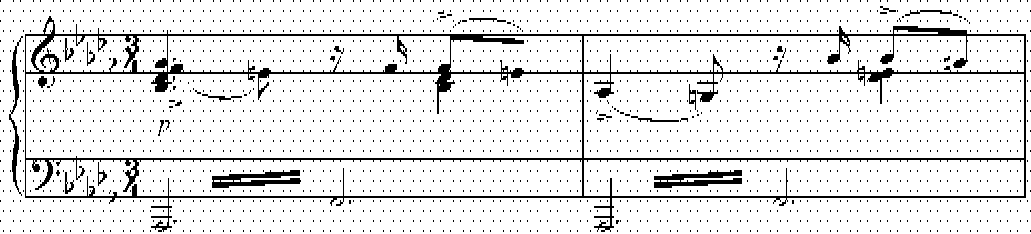
Bars 1835–6

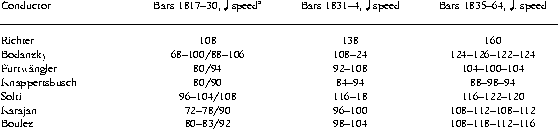
Table 3 compares Richter's tempi with the various approaches to this section in the recorded examples. In all the recordings, ‘Destiny accepted’ and the Loge material in Ex. 2(a) are contrasted in terms of basic tempo – the latter being significantly quicker. The clear separation of the two speeds by Knappertsbusch, Furtwängler, Karajan and Boulez serves to associate Loge with the descent (after all, this is a necessary part of Loge's plan), and to place the ‘Destiny accepted’ motif as if in inverted commas, drawing attention to the sense of fateful purpose as a musical ‘aside’. Bodanzky's approach creates a different result: by accelerating both motifs simultaneously (even though the Loge motif is still slightly quicker), everything is seen in terms of the physical journey. If Dannreuther's recorded tempi are taken at face value, Richter seems not to have distinguished between the two motifs, but to have presented this first section at a speed equal to the climactic pacing of Solti's ‘Loge’ semiquavers.
Metronome speeds, first orchestral transformation, end of scene 2
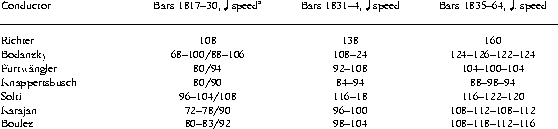
a The measurements here distinguish between speeds for the figuration introduced in bar 1817 and bar 1819
In the journey as a whole, all the readings suggest increased momentum through progressively quicker speeds at the beginning of each section. Knappertsbusch's narrow tempo range, however, whilst achieving a clarity in relation to the musical material, is at the expense of any real momentum in the descent, and Furtwängler's acceleration is only slightly steeper. By far the most radical acceleration throughout the transformation is Bodanzky's, and again, it is his tempi which come closest to suggesting how Richter's interpretation might have sounded. However, Bodanzky is still some way off Richter's pace, which culminates in a breathtaking dotted crotchet speed of 160 beats per minute at the 9/8 section.Footnote 49 Whilst this would certainly support Porges's suggestion of ‘tremendous vigour … as fast as possible’, any ‘cutting precision’ would be difficult at this tempo. What Richter's approach might convey, however, is a greater awareness of the physicality of the journey itself, given that a quicker speed is suggestive of a greater distance being covered – which itself contributes to our perceptions of how the ‘celestial hill-top’Footnote 50 relates to the bowels of the earth.
Tempo, motif and theme
The capacity of a motif to represent particular characters and events in Das Rheingold is obviously dependent upon the musical material, including gesture, contour, harmonic nuance and rhythm; however, in the practical realisation of a motif in performance, tempo and pacing have a major role in communicating the nature of any representation or allusion. Although Alberich first appears on stage in the middle of the Rhinemaidens' music, for example, his physicality is first established at the change to the 2/4 metre at bar 231 (marked Etwas zurückhaltend im Zeitmaß) when he attempts to clamber up the rock. Whilst the contours of the musical material here are effective in suggesting the slippery nature of the rock and the difficulty of Alberich's climb, the choice of tempo affects our perception of the dwarf's dexterity and effort. Richter's apparent quaver speed of 120 here matches Bodanzky, and represents something of a middle ground between the 104–106 of Knappertsbusch (suggesting a lack of agility) and the 132–134 of Solti – the latter reflecting a sense of Wagner's koboldartiger Behändigkeit.Footnote 51 Nevertheless, the vast majority of Richter's tempi in relation to specific motifs are strikingly quick. Woglinde's reference in scene 1 to the renunciation of Love, for example, is a significant moment in the drama – it provides Alberich with the means to steal the gold, and allows the Rhinemaidens to muse upon their (misguided) sense of security. As Porges suggests:
The vitally important melody she [Woglinde] is singing must have the chiselled quality of a piece of sculpture. The tempo should be restrained in order to create a sense not of repose, but rather of suspended animation. Alberich has been watching with astonishment and he has been listening to the Rhinemaidens' exchanges. He is experiencing a profound change of heart.Footnote 52
Again, there are a variety of tempi in the recordings. Karajan, Furtwängler, Solti and Boulez adopt a similar approach with initial crotchet speeds of c. 52–56 – a relatively slow pace which serves to highlight the significance of Woglinde's explanation in terms of Wagner's narrative; these are less extreme than Knappertsbusch, however, whose crotchet speed of c. 42 leaves no room for doubt as to the importance of this passage. Bodanzky is typically less restrained, and again it is his quicker-paced 62 beats per minute which comes closest to Richter's energetic 72.
Quick tempi are also a feature of scene 2. A suggested pacing for the ‘Valhalla’ theme was outlined by Porges:
The rendering of the Valhalla theme should convey a feeling of sublime calm. The tempo throughout should be a broad adagio – which does not mean that the span of the phrasing should be wide: on the contrary, accents should demarcate the two-bar sections of the longer periods.Footnote 53
This theme is somewhat complex, however. It is variously perceived as ‘the very embodiment of the power and glory of Wotan and all that Wotan represents’, or an ‘impressive innocence … dignity and power’ through ‘simplicity’;Footnote 54 in its physical narrative context, however, it is also associated with the final destination of the upward journey to the height of the mountains, the dawn of a new day, and the gradual bringing into focus (as the theme develops) of the fortress in the background. If we take the twenty-bar structure where the theme is presented, all the recordings create a tempo arc, beginning slowly, accelerating as the theme progresses, then returning to something akin to their opening tempi before the ritardando in bar 786. Bodanzky, Furtwängler, Solti and Karajan all begin at relatively steady crotchet pulses of 42–46, rising to 48–52 and then returning, suggesting the broad Adagio tempo that Porges identifies. Knappertsbusch and Boulez, however, reflect the more moderate nature of Wagner's Mässig marking, with slightly quicker speeds of 56–60–54/56. Richter's apparent crotchet speed of 72–69 (which has the effect of highlighting the sense of a prolonged tonic chord of Db in the first two bars, relegating the status of chords IV and V in the process) would have been less likely to achieve the ‘sublime calm’ that was apparently required, and would have repercussions for subsequent allusions.
Similarly, Richter's apparent tempo at the entry of the giants, also a crotchet speed of 72, is striking in the context of Porges's description:
The orchestra's depiction of the arrival of the giants made a tremendous impression, its vast structure instinctively bringing to mind the Cyclopean constructions of the remote past. The expression-mark runs ‘very weighty and at a restrained tempo’ (Sehr wuchtig und zurückhaltend im Zeitmass); to keep it moving and prevent it from sounding unwieldy the theme played by the strings and the trombones and tubas must be heavily accented. The restraining of the tempo must be perceptible on the second and third beats of the bar since it gives the brass motive time to assert itself. The passage should have the character described by Wagner in his article on the overture to Iphigenia in Aulis, a character stamped by ‘a motive of peremptory, commanding power’. Despite the obvious differences, the two motives have an affinity: in both it is important that a perceptible caesura should delay the progression from G to C. At Fasolt's ‘Zieh nun ein, uns zahl' den Lohn’ the temptation to drag created by the accompanying triads must be resisted.Footnote 55
The majority of the recorded examples fluctuate between crotchet speeds of 52 and 60; it is Boulez, however, with a crotchet speed of 65, who comes closest to Richter's pacing. Although these quicker speeds might still manage to convey the giants' ‘crude bulk, their vast strides and their heavy footsteps’,Footnote 56 they might be less likely to support perceptions of their being somewhat slow-witted, which a steadier tempo (such as Furtwängler's more sedate crotchet speed of c. 50) might suggest.Footnote 57 Subsequent appearances of the ‘giants’ motif highlight the issue of varying the tempi of representative material according to its dramatic context. Porges suggested that there should be a different approach where a motif later functioned as a reminiscence:
There is a particular remark of Wagner's I must not pass over: when the motif is depicting an actual event it should be delivered in a grand style, slowly and broadly, but when serving as a reminiscence – as for example in Sieglinde's narration – it should be slightly faster and with accents less pointed – as it were, in the throwaway style of an experienced actor delivering an interpolated sentence.Footnote 58
Whilst Dannreuther's annotations do not contain specific examples which make this particular type of distinction, there is evidence that the tempo of a motif could fluctuate according to its dramatic context. The initial crotchet speed of 72 for the ‘giants’ motif, for example, is increased to 84 later in the scene (still marked Mäßig) when Fasolt and Fafner have decided to take the gold (instead of Freia) as their payment for Valhalla. Similarly, in scene 3, Dannreuther notes varying speeds for Alberich's reference to ‘Tarnhelm’ and his subsequent use of it.Footnote 59 Despite this flexibility, however, the return of the initial speed of 72 for the ‘giants’ motif in scene 4 also illustrates how tempo could function as a connecting device, as discussed below.
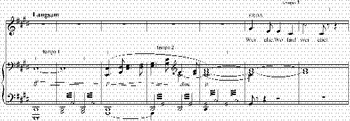
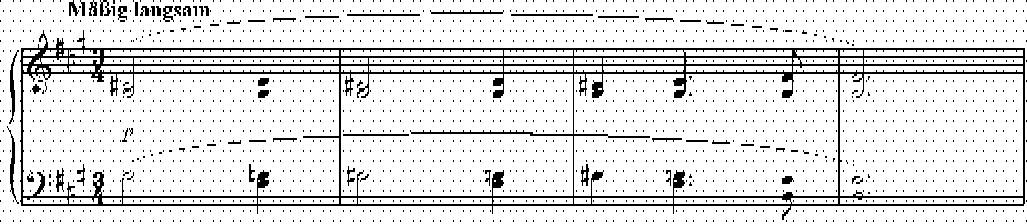
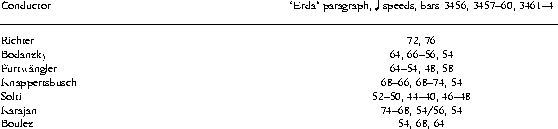
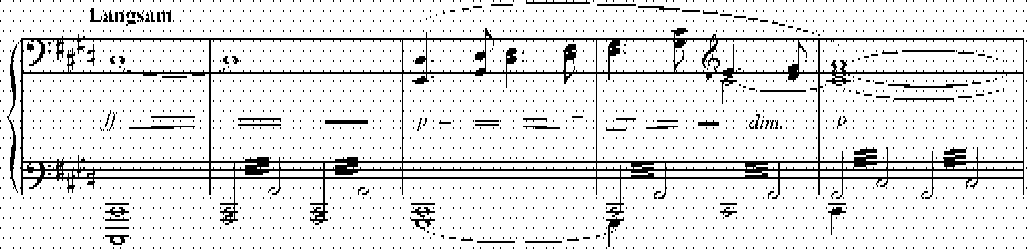
Three other motifs are striking in terms of Richter's comparatively quick tempi. Furtwängler, Solti, Karajan and Boulez all choose to portray the restless chromaticism of the mercurial Loge's motif within a narrow range of crotchet = 96–100. Two interesting alternatives are Knappertsbusch – a speed of c. 88 which gains in clarity, but lacks energy and ‘carefree gaiety’Footnote 60 – and Bodanzky, who provides a modern-day equivalent to Richter's pacing, mirroring his rapid crotchet speed of 120 (even if Bodanzky subsequently slows to c. 110 at the vocal entry ‘Endlich Loge’ at bar 1188). When the oracular Erda appears in scene 4, her motif (described by Donington as ‘majestic, yet quiet and without pomp’),Footnote 61 like ‘Valhalla’, has a physical element to its representation, as she rises to half her height (‘bis zu halber Liebeshöhe’). Dannreuther suggests two crotchet speeds for Richter's interpretation here, a brisk 72 and 76 (more Mäßig than Langsam), which can again be placed in perspective in comparison with the recorded examples. Nevertheless, there are three potential tempi here, as Example 3 suggests – the C-sharp minor and A major pitches in bars 3456–7, the motif itself, and Erda's vocal entry, ‘Weiche, Wotan!’, where Wotan is warned about the dangers of the ring.
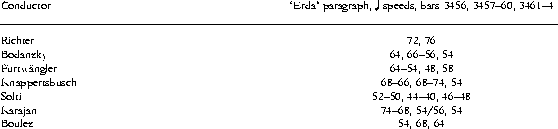
As in the approach to the ‘Valhalla’ theme, the recorded examples usually adopt a tempo arc here, as illustrated in Table 4, variously highlighting the sudden appearance of the ‘blueish light in the rocky cleft’ (and the tonal surprise of C-sharp minor), Erda's rise from the depths, and the potential significance of her pronouncements. The direction of the tempo arc varies, however. Bodanzky, Knappertsbusch and Boulez all increase their tempi for Erda's rising motif, then revert to a slower speed to focus upon her pronouncements, whereas Furtwängler and Solti reduce the pace for the motif itself, thereby highlighting the visual spectacle of her appearance. The closest the recorded tempi come to Richter's more lively approach is Knappertsbusch's climactic 74 beats per minute, a stark contrast to Solti's rather lugubrious fluctuations for this passage as a whole. One final example of a tempo at the theme level is Richter's quick pace at the Mäßig bewegt ‘rainbow bridge’ music in scene 4, with crotchet speeds of ‘80–76. 72. 80’. Dannreuther obviously felt it necessary to document a slight slowing, followed by minor, yet significant, tempo changes – suggestive of measurements taken over several bars. These speeds probably include the passage from the appearance of the ‘rainbow bridge’ motif in bar 3713 through to 3746, where the gods are left speechless by the sight of Valhalla glistening in the distance – particularly as the third of Richter's tempi (72) matches his pacing of the ‘Valhalla’ motif in scene 2. Again it is Bodanzky who gives some indication of how Richter's reading might have sounded; his initial crotchet speed of c. 74 is significantly quicker than the majority of the remaining recordings, particularly Furtwängler, whose 58–62 subsequently slows to c. 54–50 for the return of the ‘Valhalla’ motif.Footnote 62 All these examples suggest that at the local level, Richter's tempi offer the opportunity to reconsider exactly how we might view characters such as Alberich, the giants, Loge and Erda, how tempo might contribute to perceptions of representation and narrative journey in the complex mix that is the ‘Valhalla’ theme, and how the speed of a motif might fluctuate in relation to its dramatic context.
Das Rheingold, scene 4, tempi fluctuations at the entrance of Erda

Recorded tempi for the appearance of Erda, scene 4
Dramatic and musical pacing within a scene
tempo relations … as we experience them in performance, are linear. The linear connections are, in fact, critical aspects of the musical experience.Footnote 63
As David Epstein observes, whilst individual tempi can be striking in their own terms, contextual relationships are also important. Erda's music, for example, as Sandra Corse has suggested, is contrasted with its surroundings through tempo (in addition to tonality, melody and orchestration), helping to ‘emphasize her difference from the other gods’,Footnote 64 and to focus attention upon this significant moment in the drama. Even at Richter's relatively quick crotchet pace of 72–76, as discussed above, the contextual frame (a surrounding minim tempo of 84 and crotchet tempo of 126) provides just such a sense of contrast. Given Wagner's frequent instructions for tempo changes in scene 3 of Das Rheingold, it is perhaps no surprise that this is also where Dannreuther documents the greatest number of speeds. Focus on this scene therefore highlights the linear relationship between tempi, a feature that Solti identified as a particular challenge for the conductor:
This whole third scene, as I say, is exhausting. There is really no point where the conductor can relax here, or in the following scene, up to Alberich's curse. He must continue to call on new reserves of strength to get from his orchestra all the wild rage and despair contained in the interlude leading from Scene 3 to Scene 4. This piece takes a great amount of energy, concentration, and sheer push. If you weaken here, you've lost the battle.Footnote 65
The third scene of Das Rheingold can be divided into three tableaux: two shorter paragraphs – Alberich's bullying of Mime, and Mime's tale of woe (as narrated to Loge and Wotan) – and the final extended section where Loge and Wotan steal the gold from Alberich. In the first of the shorter tableaux, Wagner apparently ‘wanted above all … a continuous tense energy; nothing must break the flow – no hesitation, no lingering – which was not motivated by the situation’.Footnote 66 At the beginning of the scene, Alberich enters, dragging Mime across the stage. Tempo is therefore potentially identified with the physicality of the action at this point, which the recorded examples suggest in varying degrees, ranging from initial crotchet speeds of 94 (Knappertsbusch) to 126 (Solti).Footnote 67 Whilst the slower speeds might gain in clarity of articulation, a quicker tempo is more effective in communicating the essence of the drama. Richter's tempo, an extremely lively 144, would certainly create a real sense of energy, if at the expense of musical detail. This breathless pace was apparently continued at the change to the 6/8 meter in bar 1984 where Alberich revels in his powerful status, with only a slight reduction to a dotted crotchet speed of 138; again, the recorded examples highlight the sheer excess of Richter's speeds, with even Bodanzky (the quickest of the group) trailing significantly at this point at a paltry 114.Footnote 68 The two metronome markings documented by Dannreuther in this first section therefore clearly suggest the ‘continuous energy’ promoted by Porges, and place the apparently ‘quick’ pacing of Bodanzky and Solti in perspective.
Given Richter's association with quick tempi so far, certainly by modern standards, it is striking to find a slow tempo in the second of the shorter tableaux – at bar 2038 (Mäßigeres Zeitmaß, 3/4) where Mime bemoans his lot. Richter's crotchet speed of 80–96 is initially significantly slower than all of the recorded examples at this point.Footnote 69 A slower tempo here gives Mime's cries of woe a greater sense of expression, potentially making him a more sympathetic character; in terms of scene 3 as a whole, it also suggests a moment of repose which throws the energy of the Alberich-centred drama into relief. This is all the more striking as at the subsequent immer schneller, marking Alberich's return, Richter characteristically adopts the quickest dotted crotchet tempo by some margin – 138–152 – to reflect the terrified Mime's disorientation. The momentum continues when Alberich brandishes the ring at the etwas langsamer. Here Richter's crotchet speed of 104 is twice the speed of the some of the recorded examples; however, these slower speeds surely highlight the ring's power more effectively (‘Zitt're und zage, gezähmtes Heer! Rasch gehorcht des Ringes Herrn!’). Similarly, at the wieder schnell eight bars later, where the Nibelungs howl and run off in terror, Richter apparently adopts the breathtaking crotchet pace of 152 to mark the tension; only Bodanzky achieves anything like the sense of momentum here at 114.Footnote 70
As Boulez suggests, the remainder of the scene is somewhat problematic in terms of tempo:
The scene in which Loge cunningly arouses Alberich's vanity assumes the nature of a brilliant scherzo, on which it is wise to keep a tight rein. If one is too merrily carried away, Loge's motif, which comes back several times in the first violins and piccolo, is in danger of evaporating into the realms of the unplayable!Footnote 71
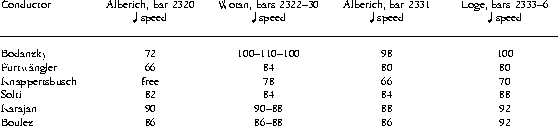
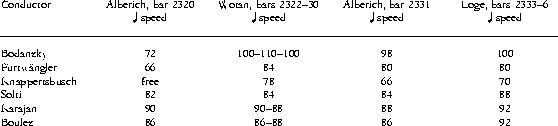
The first problem is the establishing of a suitable tempo for the Mäßiges Zeitmaß in bar 2038 where the suspicious Alberich addresses Loge and Wotan, ‘Was wollt ihr hier?’. Dannreuther provides three tempi for Richter: ‘94.92.88.’ In measuring these three speeds, Dannreuther would have needed time to reset and check his metronome, but obviously felt it important to make such minor tempo distinctions. The timings might relate to several passages: Alberich's initial question, Wotan's ‘Von Nibelheim's mächt'gen Land’ (with Porges's suggestion that in relation to the self-control of Wotan, ‘One must guard here against the temptation to drag, created by the double basses’ and cellos' bare triads'),Footnote 72 Wotan's ‘mächt'ge Wunder’, Alberich's ‘Nach Nibelheim führt euch der Neid’ or even Loge's ‘Kennst du mit gut’. One possibility is that these temporal nuances deliberately reflected the changes in the mood of the text (Alberich's query, Wotan's explanation of their visit and the flattering of Alberich, Alberich's suspicion and Loge's impatience), and helped to define the tentative nature of these introductory exchanges among the characters. Table 5 outlines approximate tempi in the recorded examples in this section, for purposes of comparison. In terms of basic speeds, this passage is one of the few in the music drama where Richter is not the quickest – Bodanzky creates significantly greater momentum here. It is Karajan who is closest to Richter, with a similar range in terms of any apparent character delineation. As the Table suggests, Bodanzky and Knappertsbusch are much more overt in manipulating tempi here to reflect the contrasting concerns of the characters.
Basic speed as characterisation in the recorded examples, bars 2320–36, Das Rheingold, scene 3
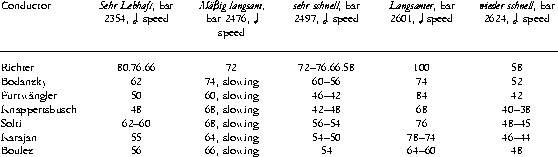
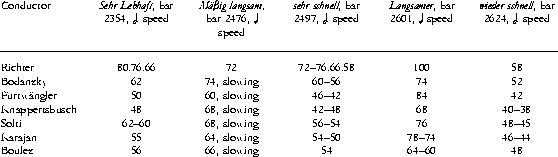
In the extended musical paragraph that follows, Wagner alternates lebhaft/schnell and langsam tempi to characterise the flattering of Alberich and to allow the dwarf to indulge in a description of his recent rise to power. Table 6 compares Richter's apparent momentum with approximate initial speeds at each tempo change in the recordings. Given Boulez's concerns, above, regarding the scherzo nature of the recurring schnell material, it is striking that Richter returns to his characteristically quick tempi here, surpassed only by Bodanzky's initially greater momentum when Alberich taunts the gods (‘Auf wonigen Höh'n, in seligem Weben wiegt ihr euch’) at bar 2476, suitably accompanied by the ‘Valhalla’ motif.
initial speeds, Das Rheingold, scene 3, the flattering of Alberich
In the final part of the scene, Dannreuther documents speeds for the four immediate tempo changes (Mäßig langsam, Langsam und schleppend, Etwas lebhafter, Wieder schnell) over a mere twenty-three bars that Wagner employs to characterise the swift chain of events: Alberich's use of Tarnhelm, his metamorphosis into the writhing serpent, the reactions of Loge and Wotan, and Alberich's return to his original form. For Alberich's first demonstration of Tarnhelm to the gods, Richter reduces the pacing to a crotchet speed of 72, slightly slower than the initial tempo of Bodanzky, but matching that of Knappertsbusch and Karajan; subsequent slowing of pace in all the recorded examples allot this moment greater significance, however.Footnote 73 At the marking of Langsam und schleppend which characterises Alberich's transformation into a writhing serpent, again Richter's crotchet speed of 58 is one of the quicker examples; the extremes are represented by Bodanzky's acceleration to c. 62 and Solti's exaggeratedly slow c. 28–29 crotchet beats per minuteFootnote 74 – choice of tempo for this particular motif obviously affecting perceptions regarding the bulk, movement, and menace of the monster. At the gods' reaction (Loge's feigned terror, Wotan's amusement), marked etwas lebhafter, Richter's crotchet speed of 80 is overtaken a second time by Bodanzky's 84–85,Footnote 75 and Bodanzky almost matches Richter's momentum when Alberich returns to his own form, ‘Hehe! ihr Klugen!’Footnote 76
Richter's approach to tempi in scene 3, therefore, apparently served to highlight Alberich's physical energy, clearly associating this character with drive and momentum throughout the scene. The contrasting and relatively slow tempo used to characterise Mime's plight, creating a momentary lull in the dramatic proceedings, would only enhance Alberich's status from this perspective.
Tempo and larger-scale connections
Every act in the Ring operas is long, but Rheingold is one continuous act and the longest stretch of music in all of Wagner – two and a half hours non-stop. So the conductor has constantly to keep reminding himself: Watch your energy, watch your distribution of energy! Don't forget that the really heavy dramatic music doesn't begin until the third scene. If you expend too much motion and emotion on the first two scenes – and they are far from undemanding – there will be nothing for you to give when the giving is most needed. Up to the third scene everything is in varying degrees of slow tempo. In the third scene the sheer physical weight of the music is further complicated by a switch to fast tempos. So you must have a clearly formulated conception of the entire span of the work when you start, when your orchestra plays that first E-flat.Footnote 77
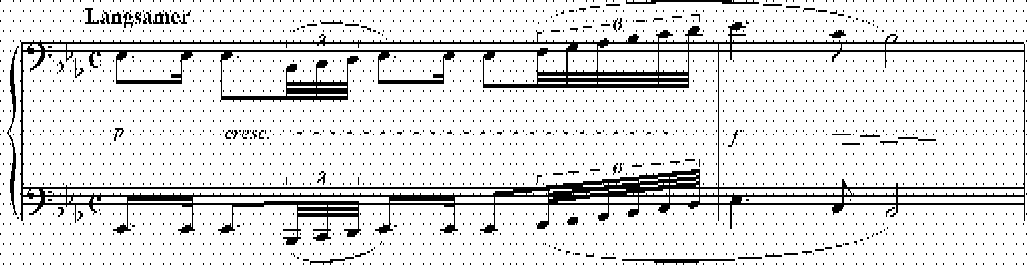
Solti's advocacy of a ‘clearly formulated conception of the span of the work’ leads to considerations of larger-scale tempo relationships. Although Wagner abandoned the use of metronome markings after Tannhäuser, other evidence in subsequent scores suggests how such relationships might work. In the final scene of Act I of Siegfried, for example, the frequent use of the Erstes Zeitmaß direction, the notation of specific beat equivalents, and the Zweitaktig/Dreitaktig/Viertaktig suggestions of pulse at the end of the scene all illustrate clear tempo ratios. As Eric Leinsdorf has observed, particularly in relation to the ‘Fire Music’ in Die Walküre, Wagner's presentation of particular motifs in double or half note values within changes of tempo can also provide a useful guide to their actual speed;Footnote 78 he suggests, ‘Wherever one looks into the music dramas, whether Tristan and Isolde, Die Meistersinger, or the Ring tetralogy, this type of interrelation [related tempi] is the base of the entire structure’.Footnote 79 One striking example in Richter's reading concerns the ‘Loge’ motif. Here the speed of the chromatic semiquavers at Loge's first appearance in scene 2 (crotchet speed of 120, Lebhaft) is matched exactly in its later reincarnation as quavers in scene 3, Sehr lebhaft, now in 3/4; in essence, as Example 4 shows, the quaver speed of 240 has been translated into a crotchet speed of 240.
Das Rheingold scene 2, Loge motif, Lebhaft, bars 1195–7 [Richter tempo 𝅘𝅥 = 120]

Das Rheingold scene 3, Loge motif, Sehr lebhaft, bars 2355–7 [Richter tempo 𝅗𝅥. = 80]

The concept of proportional tempi has been explored in a number of recent studies, particularly those focusing upon the music of Brahms.Footnote 80 Taking into account an element of approximation on Dannreuther's part in suggesting any proportional ratios,Footnote 81 several examples in Richter's reading of Das Rheingold may be significant from this perspective. In scene 2, for example, Richter's crotchet speed of 80 at Fricke's ‘Um des Gatten Treue besorgt’ becomes the minim pulse some forty-nine bars later at the Lebhaft, where Fricke appeals to Wotan to save Freia, ‘So schirme sie jetzt’; the same crotchet speed returns later in the scene when Loge extols the virtues of womanhood (‘So weit Leben und Weben’), is subsequently increased slightly to 84 at Fafner's ‘Hor, Wotan, der Harrenden Wort!’, and is doubled at the Lebhafter twenty-five bars later where Fasolt seizes Freia (‘Hieher Maid!’). Similarly, the Lebhafter where Froh clasps Freia in his arms to shield her from the giants (‘Zur mir, Freia! Meide sie, Frecher!’) is taken at a crotchet speed of 144 – exactly twice the speed of the preceding giants' music. In scene 3, Richter's Mäßig langsam crotchet pulse at Alberich's ‘Auf wonnigen Höh'n’ becomes the initial dotted minim pulse at the Sehr schnell some twenty-one bars later; in scene 4 there is even a 2:3 relationship where the dotted crotchet speeds at Alberich's ‘Bin ich nun frei?’ (84/88) are transmuted into related minim speeds (126, 132) at the subsequent Sehr schnell, when Alberich disappears after having delivered his curse.
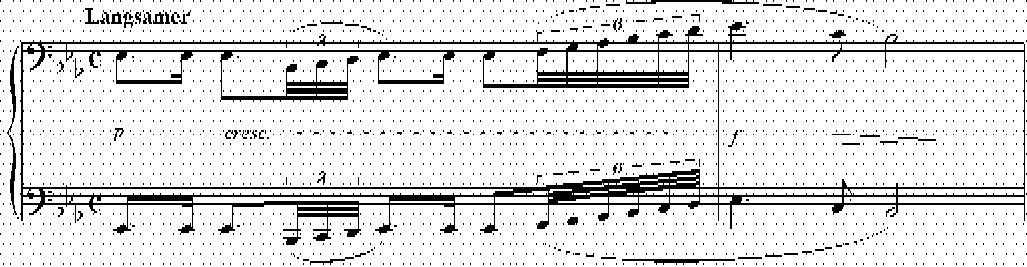
There are also examples where a speed returns after a brief hiatus. Richter's eventual dotted crotchet speed of 152 at the Immer schneller in scene 2 which heralds Alberich's return (Mime's ‘Nehmt auch in Acht’) is interrupted by a crotchet speed of 104 (Etwas langsamer) before returning at the Wieder schnell. Even more extended is the passage towards the end of scene 3 where Loge tricks Alberich into demonstrating the powers of Tarnhelm. Here three separate pulses of 58 (dotted minim, crotchet and dotted minim speeds respectively) are punctuated by crotchet speeds of 72 (Tarnhelm) and 80 (Loge's feigned terror after Alberich's transformation into a serpent), providing connections within the scene through choice of tempo. This concept of adopting one particular tempo or pulse which returns on several occasions can be identified not only at the level of a musical scene, but in relation to the music drama as a whole. Richter's approach to much of the slow music in Das Rheingold, for example, involves a basic crotchet speed of c. 72, as illustrated in Example 5. This music includes Woglinde's reference to the renunciation of love in scene 1, the initial speed of the ‘Valhalla’ motif and the ‘giants’ motif in scene 2, Alberich's ‘Auf wonnigen Höhn’ and the ‘Tarnhelm’ motif in scene 3, and Alberich's relinquishing of the ring, the return of the ‘giants’ motif and the initial tempo at the appearance of Erda in scene 4.Footnote 82 Taking all these elements into consideration, therefore, rather than a series of speeds which react to the moment of the dramatic situation, Richter's tempi seem to impose a real sense of structural organisation.
Das Rheingold, musical material connected by Richter's tempo of 𝅘𝅥 = 72
the ‘renunciation of love’ motif, scene 1, bb.617–19

‘Valhalla’, scene 2, bb.769–70
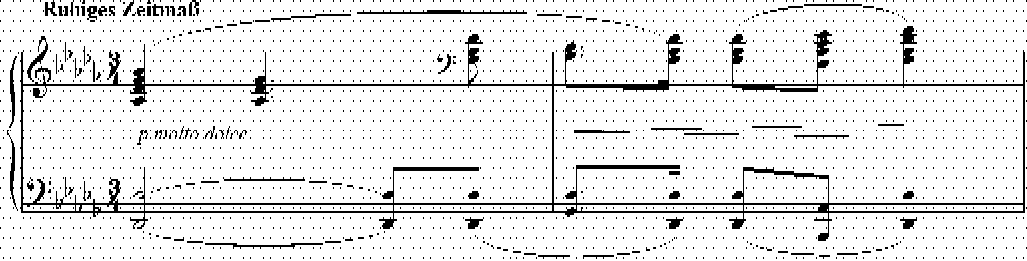
‘giants’ motif, scene 2, bb.984–6

Scene 3, bb.2476–9

‘Tarnhelm’, scene 3, bb.2656–9
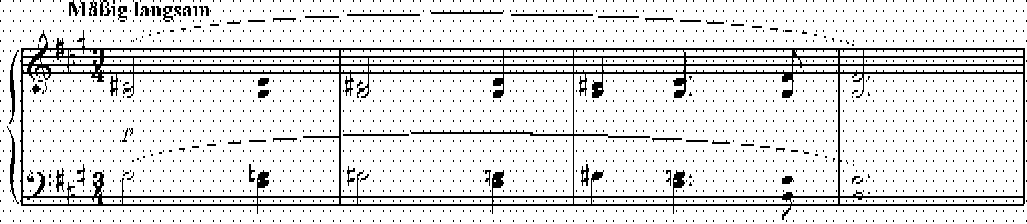
Scene 4, bb.3093–6

return of ‘giants’ motif, scene 4, bb.3264–5
‘Erda’ motif, scene 4, bb.3456–60
One might take this further to suggest that Richter's speeds may also have broader implications in terms of analytical approaches to the music dramas. As several writers have noted,Footnote 83 Wagner described the form of his music dramas in terms of a web of associations:
Nevertheless, to be an artwork again quâ music, the new form of dramatic music must have the unity of the symphonic movement; and this it attains by spreading itself over the whole drama, in the most intimate cohesion therewith, not merely over single smaller, arbitrarily selected parts. So that this Unity consists in a tissue of root-themes pervading all the drama, themes which contrast, complete, re-shape, divorce and intertwine with one another as in the symphonic movement; only that here the needs of the dramatic action dictate the laws of parting and combining, which were there originally borrowed from the motives of the dance.Footnote 84
Scholars have explored a variety of analytical approaches to make sense of these associations – whether focusing upon the motifs themselves, considering motifs as part of themes or phrases, or suggesting that in addition to such connections at a detailed level, organisational frameworks on a larger scale (rhythm, tonality, melodic patterning, formal schemata) should represent the primary analytical focus.Footnote 85 The proportional relationships and return of specific speeds, highlighted above, suggest that tempo could represent a further parameter through which to explore the idea of connections between material,Footnote 86 both in relation to the musical scene, and to the structure of the music drama as a whole.
Dannreuther's documenting of Richter's tempi in the first dress rehearsal of Das Rheingold, originally made with a practical goal in mind, therefore sheds new light upon Wagnerian performance practice. By far the most striking element of Richter's approach was the adoption of very quick tempi, both in relation to particular motifs, and to a consistent sense of momentum within a musical scene. Although Dannreuther's method demanded a high level of skill in terms of its potential accuracy, his attention to detail suggests a careful documentation of Richter's practice, and the quick tempi that he identified do reflect Wagner's desire for a rapid musical flow. Comparison with examples from the recorded canon reveals how extreme some of these tempi are in relation to modern sensibilities, although Bodanzky's 1937 performance provides a practical example of how some of Richter's choices might have sounded;Footnote 87 the fact that Bodanzky's recording comes nearest to Richter's apparent practice is in many ways unsurprising, given Robert Philip's highlighting of general tendencies to adopt slower maximum tempi as the twentieth century progressed.Footnote 88 The question remains, how might these timings have repercussions for our modern-day approach to Wagner? Just as studies of the lively tempi of Beethoven's metronome markings in his symphonies have led to their adoption in some striking recent performances,Footnote 89 Dannreuther's timings might encourage performers to experiment with quicker speeds in productions of Wagner's music dramas; not only could this provide a wider range of practical possibilities in the realisation of Wagner's scores, it has the capacity to alter our perceptions of Wagner's music and its meanings in the process.
Appendix
Dannreuther's annotated metronome timings for Das Rheingold, Bayreuth dress rehearsal, 29 July 1876
[Page references are to Richard Wagner, Sämtliche Werke Band 10, I-II, Das Rheingold WWV 86A … herausgeben von Egon Voss (Mainz: B. Schott's Söhne, 1988–9). [1876] denotes Wagner's 1876 alterations to the 1873 score]