Vascular endothelium plays a major role in cardiovascular processes through its main components involving anticoagulants and anti-inflammatory mechanisms, modulating vascular growth, and regulation of vascular remodelling. In addition, vasodilatation can be mediated by the biological activities of nitric oxide in the endothelial layer of the vessel walls.Reference Herbst, Toborek, Kaiser, Mattson and Hennig 1 , Reference Gimbrone 2 Thus, a critical balance between these factors maintains vascular homeostasis. It has been clearly demonstrated that the variety of traditional risk factors for cardiovascular diseases, such as coronary atherosclerosis, can predispose endothelium to functional impairment, potentially leading to poor cardiovascular outcomes.Reference Schachinger, Britten and Zeiher 3 In this regard, endothelial dysfunction is a broad term that implies an imbalance in the contribution of endothelium-derived relaxation and contraction. This imbalance strongly links cardiovascular risk factors to atherosclerotic burden, leading to unstable acute coronary syndrome.Reference Ridker, Stampfer and Rifai 4 – Reference Farouque and Meredith 6 Moreover, it has been suggested that chronic hypoxaemia can lead to increased erythrocytosis, blood viscosity, and changes in nitric oxide metabolism leading to endothelial dysfunction, and this commonly occurs following cyanotic congenital heart disease.Reference Cordina and Celermajer 7 , Reference Fichtlscherer, Breuer and Zeiher 8 This assumes greater importance when we consider that endothelial dysfunction is well known to underlie various types of cardiovascular disorders and is even accompanied by a future risk of adverse cardiovascular events.Reference Schachinger, Britten and Zeiher 9 Thus, it is hypothesised that repairing cyanotic congenital heart disease may be associated with preserving endothelial function and an earlier repair may afford a better outcome for endothelial function. For assessment of this hypothesis, the present study aimed to evaluate vascular endothelial function in those with repaired cyanotic congenital heart disease.
Methods
In a case–control study conducted at the Emam Hossein hospital in Isfahan, Iran in 2012, 42 consecutive patients aged <35 years were selected. They suffered from different types of cyanotic congenital heart diseases including tetralogy of Fallot, complex cyanotic congenital heart disease, transposition of the great arteries, or total anomalous pulmonary venous connection, and they underwent a complete repair of their congenital heart defect. None of the patients had a history of other cardiovascular disease or experienced any other concomitant cardiovascular intervention. Another sex- and age-matched healthy group without any evidence of heart disorder (n=42) was considered as the control group. The patients in both case and control groups were mostly exclusively breast fed.
At baseline, all patients were assessed by two-dimensional echocardiography in order to assess systolic cardiac function using measurements of the left ventricular ejection fraction, shortening fraction, myocardial performance index, and the tricuspid annular plane systolic excursion index. The value of the tricuspid annular plane systolic excursion index characterises the difference between the end-systolic and end-diastolic distance from the tricuspid annulus to the apex, and is a valuable indicator for a progressive decrease in right ventricular function.Reference Zeineh and Champion 10 Endothelial function was assessed using flow-mediated dilatation that was calculated by dividing the change in arterial diameter with basal arterial diameter (%) at the hyperemic phase. Flow-mediated dilatation measurement enables clinical physiologists to sensitively assess acute changes in endothelial function based on the deregulation of blood flow in response to physiological changes in tissue and organ perfusion requirements.Reference Kelm 11
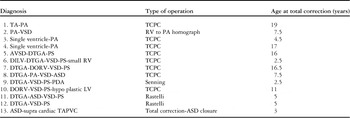
The participants in the two groups were also assessed in terms of carotid intima-media thickness. For assessment of the study endpoint, patients in the case group were classified into one of three subgroups including (1) patients with tetralogy of Fallot with a complete repair before the age of 2 years (1A) or after the age of 4 years (1B), (2) patients with total anomalous pulmonary venous connection or transposition of the great arteries repaired before 6 months of age, and (3) those with complex cyanotic congenital heart disease repaired after 2.5 years of age (Table 1). Finally, endothelial function was compared across each subgroup with the control group. The Ethics Committee of Isfahan University of Medical Sciences approved the study.
The underlying congenital heart disease and type of operation and age at total correction of group 3.

ASD=atrial septal defect; AVSD=atrioventricular septal defect; DILV=double inlet left ventricle; DORV=double outlet right ventricle; DTGA=dextro-transposition of the great arteries; LV=left ventricle; PA=pulmonary atresia; PS=pulmonary stenosis; RV=right ventricle; TA=tricuspid atresia; TCPC=total cavopulmonary connection; VSD=ventricular septal defect
Results were reported as mean±standard deviation for the quantitative variables and percentages for the categorical variables. The groups were compared using a Student’s t-test for the continuous variables and a chi-square test – or Fisher’s exact test if required – for the categorical variables. One-way ANOVA tests were used to assess treatment effects and a Duncan test was used as a post-hoc test. p-Values of 0.05 or less were considered statistically significant. All statistical analyses were performed using SPSS version 16.0 (SPSS Inc., Chicago, Illinois, United States of America).
Results
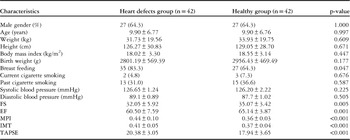
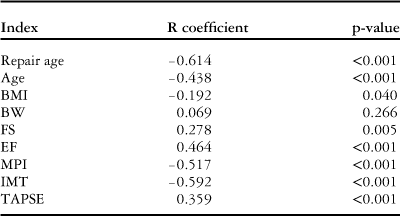
Baseline characteristics and clinical data of the study subjects are presented in Table 2. The two study groups were comparable in terms of baseline variables including demographic and anthropometric parameters. Furthermore, no significant difference was observed between the intervention and control groups in baseline systolic blood pressure and diastolic blood pressure. An independent t-test showed that there was no significant difference in baseline measures such as weight, height, body mass index, and weight at birth, in both groups (p>0.05). With regard to cardiac functional indices (Table 2), flow-mediated dilatation, ejection fraction, fraction shortening, and tricuspid annular plane systolic excursion were significantly lower in patients with heart defects compared with the healthy controls. In addition, intima-media thickness and myocardial performance index were considerably higher in the former group (p<0.001). With respect to the difference in endothelial function indices across the study groups, the average±standard deviation of flow-mediated dilatation parameters in those with repaired congenital abnormalities was 6.14±2.78, and in the healthy subjects it was 8.16±1.49, with a significant discrepancy (p<0.001). Associations between the flow-mediated dilatation index as an indicator of endothelial function and other baseline parameters are shown in Table 3. Significant adverse correlations were found between the flow-mediated dilatation, repair age, age, and body mass index. Moreover, the flow-mediated dilatation was directly associated with fraction shortening, ejection fraction, and tricuspid annular plane systolic excursion values, as well as inversely associated with intima-media thickness and myocardial performance indices. No significant correlation was found between flow-mediated dilatation and birth weight.
Baseline characteristics and clinical data of study groups.

EF=ejection fraction; FS=fraction shortening; IMT=carotid intima-media thickness; MPI=myocardial performance index; TAPSE=tricuspid annular plane systolic excursion
Correlation coefficient between FMD and clinical and echocardiography indices.

EF=ejection fraction; FMD=flow-mediated dilatation; FS=fraction shortening; IMT=carotid intima-media thickness; MPI=myocardial performance index; TAPSE=tricuspid annular plane systolic excursion
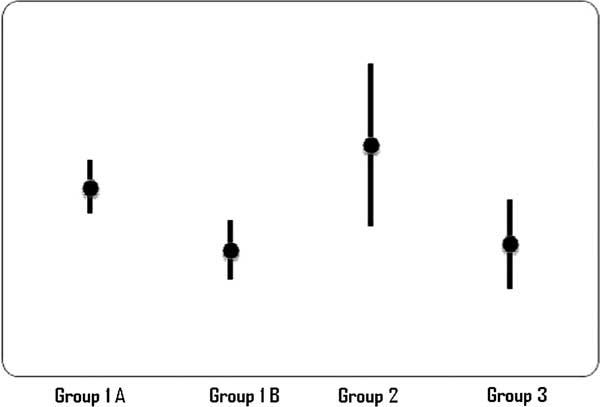
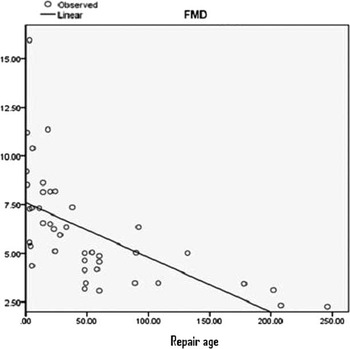
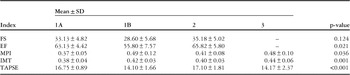
When considering the three groups of repaired congenital heart defects, those with tetralogy of Fallot repaired before the age of 2 years, the mean left ventricular ejection fraction was significantly higher and mean parameters of intima-media thickness and myocardial performance index were both significantly lower than those with tetralogy of Fallot, which was repaired later after 4 years of age (Table 4). Patients with total anomalous pulmonary venous connection and transposition of the great arteries who underwent repair before 6 months had the highest ejection fraction compared with the other two subgroups. A one-way ANOVA test showed that the mean of the flow-mediated dilatation was not similar in the study groups (p<0.001). With regard to the endothelial function state, mean indices of flow-mediated dilatation were significantly higher in the group with tetralogy of Fallot with complete repair before the age of 2 years (A1), and also in those with a total anomalous pulmonary venous connection or transposition of the great arteries repair before 6 months (2), compared with patients with tetralogy of Fallot repaired after 4 years of age (A2) (Fig 1) and complex cyanotic congenital heart disease (3). However, the difference in endothelial function indices between groups A1 and A2 was not significant. With regard to the correlation between flow-mediated dilatation and baseline indices, this parameter of the endothelial function state was negatively correlated with repair age, and the linear correlation was calculated with the following formula: flow-mediated dilatation=7.6–0.028 repair age (by month) (Fig 2) .
Endothelial function parameters (flow-mediated dilatation) in different subgroups of repaired heart defects.

Correlation between endothelial function parameters (flow-mediated dilatation) and repair age based on month; according to this correlation coefficient, flow-mediated dilatation was equal to 7.6−0.028 repair age based on month.

Echocardiography parameters in different subgroups of repaired heart defects.

EF=ejection fraction; FS=fraction shortening; IMT=carotid intima-media thickness; MPI=myocardial performance index; TAPSE=tricuspid annular plane systolic excursion
Discussion
Different cardiovascular risk factors have been associated with impaired endothelial functions, including hyperlipidaemia, metabolic syndrome, cardiopulmonary bypass, congestive heart failure, left ventricular hypertrophy, variant angina, and a family history of coronary artery disease.Reference Anderson, Meredith and Yeung 12 , Reference Anderson 13 However, the status of endothelial function and its severity in those with congenital heart defects following repair of these abnormalities has not been previously understood. The present study aimed to assess flow-mediated dilatation status following repair surgery in patients with congenital heart defects and to identify its main determinants. Our observations demonstrated significant adverse correlations between flow-mediated dilatation, age, and body mass index in patients who undergo repair surgery. Moreover, flow-mediated dilatation had a positive association with the shortening fraction, ejection fraction, and the tricuspid annular plane systolic excursion value, as well as being inversely associated with carotid intima-media thickness and the myocardial performance index. Similarly, Groot et al demonstrated that children with tetralogy of Fallot showed a significantly lower brachial artery flow-mediated dilation compared with their healthy peers’ endothelial function, and an increased intima-media thickness of the femoral artery. In addition, children with tetralogy of Fallot have decreased flow-mediated dilatation at a younger age.Reference de Groot, Thijssen, Binkhorst, Green, Schokking and Hopman 14 The present study evaluated the state of endothelial function in repaired congenital heart defects and compared it with different subgroups of abnormalities. We showed that preserving endothelial functional status after repair of cyanotic congenital heart defects depends on the timing of its repair. In our observation, the mean indices indicating the level of endothelial function were higher in patients with tetralogy of Fallot repaired before the age of 2 years and also in those with total anomalous pulmonary venous connection or transposition of the great arteries repaired before 6 months of age, in comparison with other subgroups of cyanotic abnormalities that were repaired at a later stage. In addition, in the tetralogy of Fallot subgroups, earlier complete repair of the defect resulted in greater saving of endothelial function in the affected patients. According to the significant association between endothelial function parameter and indices of systolic and diastolic cardiac function, an assessment of endothelial function in those who experienced repair of congenital heart defects can help identify high-risk patients, as well as predicting their ventricular function outcome after the repair operation.Reference Reriani, Lerman and Lerman 15 As previously noted, endothelial dysfunction occurs early in response to cardiovascular risk factors. The occurrence of endothelial dysfunction is primarily the result of reduced nitric oxide (NO) bioavailability. It may be caused by decreased expression of the endothelial cell NO synthase (eNOS) or the endothelium-derived relaxing factor.Reference Walther, Gielen and Hambrecht 16 – Reference Pou, Pou, Bredt, Snyder and Rosen 18 According to the different features of endothelial function and its reservation in various types of congenital heart abnormalities, it seems that the mechanisms involving in the bioavailability of nitric oxide (NO) or other factors affecting vascular relaxation may be different in various types of cyanotic congenital heart defects.Reference Shimokawa, Flavahan and Vanhoutte 19 and this should be investigated in future clinical and experimental studies.
Another probable factor triggering impaired flow-mediated dilatation in our survey was obesity, which is a major risk factor in cardiovascular disorders. This risk state is not only accompanied by lipid metabolism abnormalities, but it also interacts with some inflammatory processes that induce vascular endothelial dysfunction and decrease vascular flow rates.Reference Wei, Liu, Yang, Zheng, Jiang and Bao 20 In a study by Brili et al,Reference Brili, Tousoulis and Antonopoulos 21 prescription of anti-lipid drugs such as atorvastatin may enhance effective endothelial function and suppress the secretion of some inflammatory biomarkers by decreasing circulating levels of inflammatory inducers such as IL-1b and sVCAM-1. This evidence can explain why reducing body mass index, controlling body weight, as well as decreasing serum lipids, can be valuable in preserving flow-mediated dilatation in patients with repaired cyanotic congenital heart disease.
The main limitation of the present study was the small sample size of patients and thus the relatively low study power to fully demonstrate the hypothesis; however, our findings open new prospects for further studies on this subject. Another important point is that similar studies such as Pedersen et alReference Pedersen, Schmidt and Mortensen 22 were not able to demonstrate a discrepancy in flow-mediated dilatation between those with and without cyanotic congenital heart disease. This may also have been the result of the small sample size used in their survey. Furthermore, their study population contained four patients with Eisenmenger syndrome who were probably not cyanotic in early life, and also a few patients with Ebstein’s anomaly who are also not usually cyanotic in early life, as well as patients with palliated univentricular physiology, and the article did not mention the age at which they were palliated. In addition, the mean O2 saturation in their patients was 82.4±4.9, which is different from the cyanotic congenital heart disease as tetralogy of Fallot, or transposition of the great arteries, in our study.
In conclusion, the level of endothelial function preservation depends directly on the timing of the cyanotic defect repair. The time of complete repair and therefore the duration of hypoxia play central roles on endothelial functional state and reactivity of flow-mediated dilatation after repair. In addition, there is no significant association between the type of congenital heart disease and vascular endothelial reactivity. Thus, early repair of cyanotic defects potentially results in protection of vascular endothelial function and prevention of the occurrence of vascular accidents at an older age.
Acknowledgements
The Isfahan University of Medical Sciences supported this study. The authors thank the University authorities who offered critical administrative support and managerial services in carrying out the study, and also all of the researchers for their help and support.
Conflicts of Interest
None.