The US Food and Drug Administration’s (FDA’s) Sentinel System is a national medical product monitoring system that uses routinely collected electronic healthcare data, primarily commercial claims data, to conduct postmarket surveillance. Reference Behrman, Benner, Brown, McClellan, Woodcock and Platt1–Reference Platt, Brown and Robb4 Sentinel presents an enormous opportunity for the collection and the use of real-world data to support regulatory action and decision making during public health emergencies. Our objective was to assess the Sentinel System’s capacity to identify key aspects of data relevant to the prevention and treatment of respiratory viruses using seasonal influenza as an exemplar.
We describe the baseline characteristics of individuals with outpatient influenza diagnoses across 3 influenza seasons by treatment status and timing, and we report patterns in influenza testing and unadjusted rates of complications. This information is relevant to understanding seasonal and pandemic influenza, as well as other respiratory viruses. The complications studied are among the end points that may be of use for future assessments of medication effectiveness or to describe the natural history of infections, including coronavirus disease 2019 (COVID-19).
Methods
The Sentinel System has been described previously and details are available online (www.sentinelinitiative.org). Reference Ball, Robb, Anderson and Dal Pan3,Reference Platt, Brown and Robb4 In brief, it is a curated, distributed data network that utilizes administrative claims and electronic health record data from health plans and other partners across the United States to conduct postmarket surveillance of medical products. One of its defining aspects is the development and application of flexible, reusable analytic programs that enable the efficient conduct of analyses. For this analysis, we used the Cohort Identification and Descriptive Analysis module, version 6.0.0, with additional programming. In total, 13 data partners provided data for this the analysis, including the Centers for Medicare and Medicaid Services (100% Medicare Fee-For-Service data), integrated delivery systems, and commercial health plans.
We identified individuals aged ≥6 months who had an ambulatory, outpatient, or emergency department encounter with an incident diagnosis code for influenza from the International Classification of Diseases, Ninth or Tenth Revision, Clinical Modification (ICD-9-CM or ICD-10-CM) using a 30-day washout (i.e., we included those who did not have a diagnosis code of interest in the previous 30 days; see Appendix online for code lists). Individuals had to have ≥183 days of medical and pharmacy coverage prior to their incident influenza diagnosis, with an allowable 45-day gap in enrollment. We identified cohorts of individuals diagnosed with influenza in 3 study periods separately: July 1, 2014–June 30, 2015; July 1, 2015–June 30, 2016; July 1, 2016–June 30, 2017. Individuals could contribute >1 influenza diagnosis within a season or across seasons if all eligibility criteria were met.
Baseline characteristics, including comorbidities and influenza vaccination, were identified in the 183 days preceding influenza diagnosis (see the Appendix online for codes and generic and brand names of drugs included). The occurrence of influenza testing (nucleic acid amplification test or antigen test) was assessed using procedure codes in the ±7 days relative to diagnosis. Test results were not readily available for this study. Pneumococcal vaccination was assessed using all available claims history.
We assessed incident outpatient antiviral treatment, with a 10-day washout, by timing of a recorded dispensing with respect to influenza diagnosis. Outpatient dispensings does not include medications dispensed in the emergency department. Dispensings of oseltamivir, peramivir, and zanamivir was identified via National Drug Codes; injections were identified using procedure codes. Individuals were categorized as follows: those treated on the same day as influenza diagnosis (day 0), those treated on days 1–5 after diagnosis, and those who were not treated within 5 days of diagnosis.
We assessed individual complications of interest up to 30 days following diagnosis. For those treated, follow-up time began on the day after treatment and continued until the first occurrence of any of the following: health plan disenrollment, end of the data available from the Data Partner, end of the specific study period, or occurrence of the complication of interest. For those not treated, follow-up time began on the day after diagnosis and continued until one of the aforementioned criteria. We assessed the following complications: admission to the hospital; supplemental oxygen; bilevel positive airway pressure (BiPAP); mechanical ventilation; critical care; extracorporeal membrane oxygenation (ECMO); and death (see Appendix online for code lists). The complications were assessed independently of one another and, except for hospitalization admissions, were assessed in any care setting (ie, outpatient, ambulatory, emergency department, inpatient, or institutional stay) to increase capture of diagnosis and procedure codes of interest. We did not require that these complications be incident. The Sentinel Common Data Model does not capture intensive care unit stays, and claims data vary in the capture of such information. Therefore, we derived a list of codes to serve as a proxy, an end point we have called “critical care,” defined by a mixture of diagnosis and revenue codes indicating critical care or severe illness during hospitalization. Death was identified using information in the death table of the Sentinel Common Data Model and using hospitalizations with a discharge status of “expired.” We separately quantified the number of the following specific groups: those with an outcome prior to treatment on days 0–5; those with treatment and an end point on day 0; and those with treatment and an end point on the same day or days 1–5. We conducted descriptive analyses, and we report rates of these end points without adjustment. Data were stratified by sex and age.
This Sentinel project is a public health surveillance activity conducted under the authority of the Food and Drug Administration (FDA); thus, this study was not subject to institutional review board oversight. Reference Rosati, Jorgensen and Plc5,6
Results
Baseline characteristics by outpatient treatment status and timing
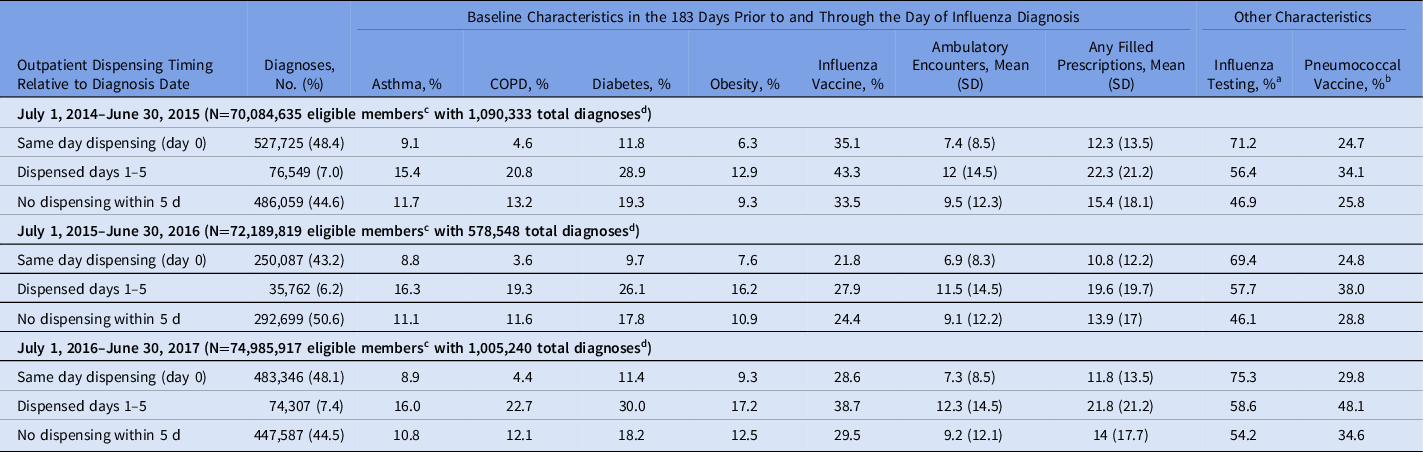
Table 1 summarizes the number and characteristics of individuals with an influenza diagnosis with respect to comorbidities, testing, vaccination, and healthcare utilization, by treatment dispensing timing. In the 2014–2015 and 2016–2017 seasons, there were 1,090,333 and 1,005,240 influenza diagnoses, respectively, and 55% were dispensed an influenza antiviral within 5 days of influenza diagnosis in both periods. In the 2015–2016 period, there were 578,548 influenza diagnoses and 49% of individuals were dispensed treatment within 5 days of diagnosis. In all 3 seasons, >80% of those who were dispensed an influenza antiviral received it on the same day as their influenza diagnosis.
Numbers and Characteristics of Those With an Influenza Diagnosis by Outpatient Influenza Antiviral Treatment Dispensing Timing

Note. COPD, chronic obstructive pulmonary disease; SD, standard deviation.
a Influenza testing assessed in days −7 through +7 relative to influenza diagnosis date.
b Pneumococcal vaccination assessed in all available claims data history per individual.
c Eligible members are those individuals who met all cohort entry criteria on at least 1 day during the query period.
d Individuals can contribute more than one diagnosis. The totals do not include people who were censored within 5 days of diagnosis and did not have an end point in that window.
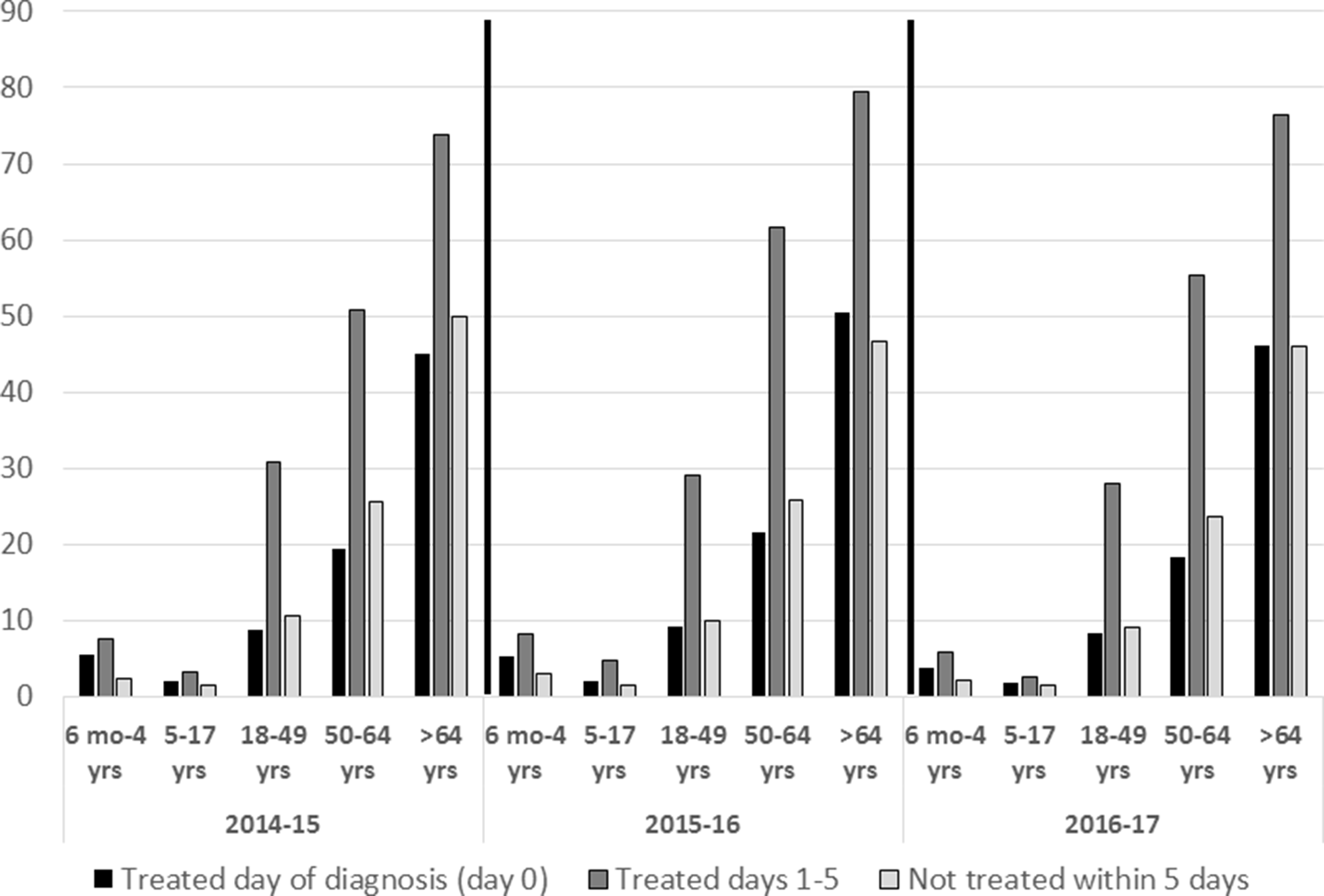
In all seasons, most of those with an influenza diagnosis and who were dispensed an influenza antiviral on the day of or after diagnosis had evidence of recent influenza testing (56%–75%), with higher testing among those dispensed treatment the same day as diagnosis. Younger individuals were dispensed treatment earlier than those aged ≥65 years; those aged <65 years were more likely to be treated within 5 days compared to those aged ≥65 years (Fig. 1). For example, in 2014–2015, those aged 5–17 years had the highest proportion of same-day influenza antiviral dispensing at 57% and those aged ≥65 years had the lowest proportion at 38%. Those aged ≥65 years had the highest proportion with a dispensing in days 1–5 after diagnosis at 12%, compared to 7% for those aged 50–64 years and 4% for those aged <50 years.
Outpatient influenza antiviral treatment dispensing timing among influenza diagnoses by age and period. Note. Treatment, dispensing of influenza antiviral; timing is with respect to influenza diagnosis.

Of the small proportion of people dispensed treatment in the 1–5 days after influenza diagnosis, these individuals had a higher prevalence of comorbidities including asthma, chronic obstructive pulmonary disease (COPD), diabetes, and obesity (Table 1). Patients who were dispensed antivirals on days 1–5 after influenza diagnosis were also more likely to have documentation of influenza vaccination within 183 days before diagnosis and pneumococcal vaccination ever, compared to those treated on the day of diagnosis and those not treated.
Influenza complications by outpatient treatment status and timing
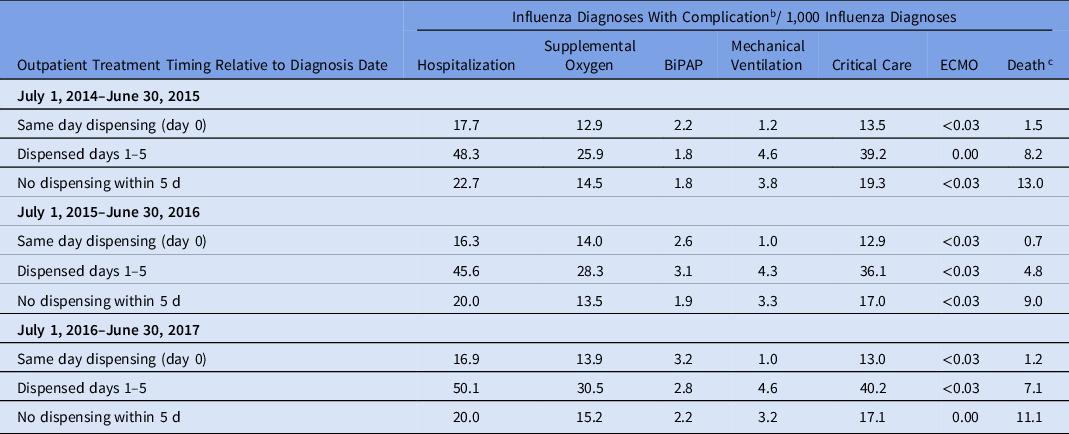
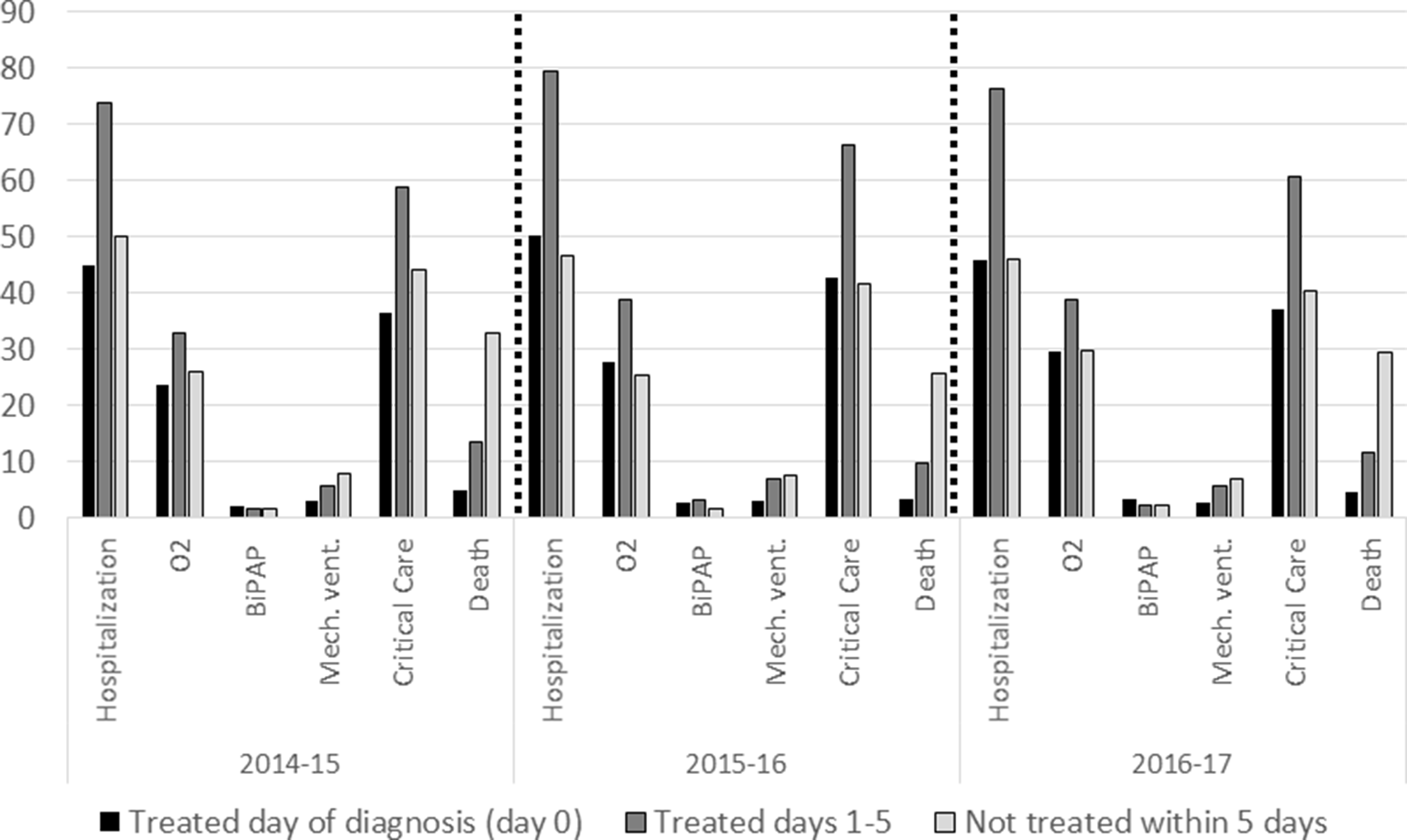
The unadjusted rates of the complications of interest, by treatment status and timing of dispensing, are reported in Table 2. Those dispensed treatment on the day of their diagnosis had the lowest rates of most of the end points. Those who were dispensed treatment later had higher rates of most complications compared to those treated on day 0 as well as those not treated at all. As shown in Fig. 2, the rate of hospitalization was highest among those who were dispensed treatment later, on days 1–5, across age groups. For those aged ≥65 years, the rates of hospitalization, supplemental oxygen, and critical care were highest for those dispensed treated on days 1–5, while mechanical ventilation and death were highest among those not treated (Fig. 3).
Rates of Complications Among Those With an Influenza Diagnoses by Season and Timing of Outpatient Influenza Antiviral Treatment Dispensing Timing a

Note. BiPAP, bilevel positive airway pressure; ECMO, extracorporeal membrane oxygenation.
a We assessed complications of interest up to 30 days following diagnosis. For those treated, follow up time began on the day after treatment, and continued until the first occurrence of any of the following: health plan disenrollment; end of the data available from the Data Partner; end of the specific study period; or occurrence of an end point. For those not treated, follow up time began on the day after diagnosis and continued until one of the stated.
b Individuals can contribute >1 diagnosis.
c Death data are incomplete, especially for more recent years, and should be interpreted with caution.
Hospitalization per 1,000 influenza diagnoses by outpatient influenza antiviral treatment dispensing timing, by age and period. Note. Treatment, dispensing of influenza antiviral; timing is with respect to influenza diagnosis.

Complications per 1,000 influenza diagnoses by outpatient influenza antiviral treatment dispensing timing among those aged ≥65 years by period. Note. Treatment, dispensing of influenza antiviral; timing is with respect to influenza diagnosis; O2, supplemental oxygen; BiPAP, bilevel positive airway pressure; mech. vent., mechanical ventilation. “Critical care” is a proxy, defined by a mixture of diagnosis and revenue codes indicating critical care or severe illness during hospitalization.

Mortality, which was underestimated due to incomplete capture of out-of-hospital death, was highest among those not treated within 5 days of diagnosis.
We separately examined the number and characteristics of those who had an end point within 5 days of diagnosis without evidence of treatment, as well as those who had an end point on the same day as their influenza antiviral dispensing. Among those with an end point within 5 days without evidence of treatment, the most common end point was hospitalization followed by critical care. In 2014–2015, 72,563 people were hospitalized without evidence of an antecedent outpatient antiviral dispensing and they had a very high prevalence of diabetes (>40%), COPD (>40%), and obesity (>18%). These trends were consistent across the 3 periods. Few individuals had diagnosis, treatment, and an end point on the same day, which is not surprising since most end points would have occurred in an inpatient setting while we assessed outpatient dispensings. For 2014–2015 for example, 769 individuals had same-day diagnosis, treatment, and hospitalization.
Discussion
In this analysis of the Sentinel System’s capture of influenza-related data, we were able to identify a large number of individuals diagnosed with influenza and observed testing, treatment, and complications of relevance to studies of respiratory virus prophylaxis and treatment. We found that depending on the period of study, ∼50% of those diagnosed with influenza were dispensed an outpatient influenza antiviral within 5 days of diagnosis. Of those dispensed treatment, most were dispensed an antiviral on the same day as their diagnosis. Influenza testing was more frequently documented among those treated compared to those not treated.
Our analyses were exploratory in nature. The rates we report are unadjusted and are meant to inform future work within and outside the Sentinel System. Assessing medications during an emergency is challenging, and the FDA has recognized the need for infrastructure to enable monitoring the use, safety, and effectiveness of medical countermeasures. Reference Measer, Maher and Hu-Primmer7 This assessment using influenza provides insight into the feasibility of using Sentinel to track testing, outpatient medication dispensings, hospitalizations, and other markers of severe illness that are applicable to tracking emerging infections and pandemic pathogens. Indeed, the study described here laid the groundwork for new studies underway within Sentinel in response to the COVID-19 pandemic. 8
The small proportion of individuals who are dispensed their influenza treatment in days 1–5 after diagnosis had different characteristics than those treated on the same day, as well as compared to those not treated. Specifically, a higher proportion of those dispensed an antiviral in days 1–5 had comorbid conditions including asthma, COPD, diabetes, and obesity and had received influenza vaccination. Furthermore, they had the highest rates of most complications. The exception was death, which occurred most frequently for those untreated in the outpatient setting. Rates of complications were lowest among those treated on the same day as their diagnosis. We cannot extrapolate causality, however, due to the differences in patients’ characteristics across dispensing periods.
In addition to providing information on the occurrence of clinically relevant influenza complications in Sentinel, our study provides descriptive information on healthcare-seeking behaviors and patterns of care for individuals with influenza. This basic, descriptive information about influenza has not previously been described using data from a large and diverse population. Using data from the 2011 Behavioral Risk Factor Surveillance System, a self-report survey, one group found that most adults who reported influenza-like illness (ILI) did not seek care within 2 days of symptom onset (the approved window for treatment); among those who reported diagnosis of influenza by a physician, 34% received an antiviral medication. Reference Biggerstaff, Jhung, Reed, Fry, Balluz and Finelli9 A recent study of outpatient clinic data in 2009–2016 examined the use of antivirals in relation to rapid diagnostic testing among those with ILI. Reference Fowlkes, Steffens, Reed, Temte and Campbell10 Fowlkes et al Reference Fowlkes, Steffens, Reed, Temte and Campbell10 found relatively low use of antivirals overall (20%), even among high-risk patients. ILI is a clinical concept whereas we included individuals in the analysis if they had an influenza-specific diagnosis code, which we expect to be more specific. Fowlkes et al also found that prescription receipt was strongly associated with a positive rapid test and symptom onset ≤2 days before the ILI visit. Others have also seen antiviral treatment associated with earlier presentation. Reference Stewart, Flannery and Chung11
Our study is notable for its large size and range of data sources. We identified between 500,000 and 1 million outpatient influenza diagnoses per 12-month period of study. Furthermore, the data sources in this study were commercial health plans, the Centers for Medicare and Medicaid Services’ 100% Medicare Fee-For-Service data, and integrated delivery systems. Although all of these data are from individuals with some form of insurance, they cover a geographically and demographically diverse population. We have previously shown that the seasonal trends in antiviral dispensing in Sentinel are comparable to those reported in routine influenza surveillance data sources. Reference Cocoros, Panucci, Haug, Maher, Reichman and Toh12 We examined 3 influenza seasons that varied with respect to severity: the 2014–2015 season was the most severe, with influenza A (H3N2) predominant and influenza B later in the season Reference Appiah, Blanton and D’Mello13 ; the 2015–2016 season was the most mild, with influenza A (H1N1)pdm09 predominant and some influenza B and A (H3N2) circulating Reference Davlin, Blanton and Kniss14 ; and the 2016–2017 season was influenza A (H3N2) predominant, with some influenza A (H1N1)pdm09 and influenza B circulating. Reference Blanton, Mustaquim and Alabi15 The severity, or perceived severity of the season, can influence prescribing practices.
Several details must be considered when interpreting the study results, as well as some limitations. We identified individuals with influenza diagnoses in the outpatient setting, including emergency department encounters. We did not limit the study to laboratory-confirmed influenza cases. We utilized influenza-specific codes from the Centers for Disease Control and Prevention’s ESSENCE definition Reference Eick-Cost and Hunt16 and we mapped these ICD-9-CM codes to their ICD-10-CM equivalents, including only those that were influenza specific. This approach has been used by others, including in an assessment of oseltamivir safety and effectiveness Reference Enger, Nordstrom, Thakrar, Sacks and Rothman17 and by the National Center for Health Statistics for emergency-department–based influenza surveillance. 18 Miller et al Reference Miller, Peters, Suerken, Snively and Poehling19 examined the predictors of influenza “clinical diagnosis” (defined as influenza diagnosis code, prescription for an antiviral, or rapid test positive) among patients with laboratory-confirmed influenza in the inpatient and emergency department settings. They reported that 29% of laboratory-confirmed cases received a clinical diagnosis, with 56% among those with high-risk conditions. Chow et al Reference Chow, Rolfes and O’Halloran20 found that 82% of hospitalized, laboratory-confirmed influenza cases had an influenza diagnosis. By relying on diagnosis codes, we may capture some people without true influenza infection, and we may have missed some who did have true infection. Notably for future work, laboratory test results can be missing wholly or in part in administrative claims data in general, particularly in the inpatient setting. Influenza test results are obtainable from some Sentinel data partners, but they were not readily available for this analysis. We assessed outpatient medication dispensings. A dispensing may occur on the day a prescription was given, or it may occur later due to patient or other delay.
Due to the nature of claims data, we likely underestimated influenza vaccination, pneumococcal vaccination, and obesity. Influenza vaccination can occur in settings where a claim is not generated (eg, work-based vaccine clinic), and pneumococcal vaccination may have occurred while insured by a different plan than the one where we identified cohort entry. We identified obesity via diagnosis codes, not via actual height and weight or body mass index measurements (this approach has been shown to have high specificity by others Reference Lloyd and Blackwell21 ). We identified the comorbidities of interest with a sensitive approach, requiring only 1 relevant diagnosis code, and we may have overestimated their prevalence. We identified treatment dispensings in the outpatient setting only because readily available inpatient treatment data are currently limited in Sentinel, which is a challenge inherent to claims data. Patient preference, provider preference, and cost likely impact whether and when someone is treated for influenza, and we did not examine these factors.
For the complications, the rates are unadjusted and are not informed by symptom onset. Influenza antivirals for treatment are recommended to be used within 2 days of symptom onset, but claims data do not contain symptom onset information. We did not adjust for patient age and underlying conditions. We observed a low rate of BiPAP in the study, likely because it is bundled with other care for billing purposes and is therefore not expected to be individually identifiable via diagnosis or procedure codes. In general, mechanical ventilation and supplemental oxygen may also be under captured in claims data. Although not specific to our study, we may have underestimated hospitalizations as changes in national policy have led to an increase in observational stays over inpatient admissions. Reference Overman, Freburger, Assimon, Li and Brookhart22 Finally, due to the nature of US claims data, death data are incomplete and must be interpreted with caution. Reference Haynes23
In conclusion, we observed that approximately half of people diagnosed with influenza in the outpatient setting were dispensed an outpatient antiviral medication. Delays in dispensed treatment were associated with higher prevalence of comorbidities and higher rates of complications. In addition, we have demonstrated the ability of the Sentinel System, and similar data sources, to serve as a source of information related to the assessment of medications used for the prevention and treatment of influenza and other respiratory viruses.
Acknowledgments
The authors thank the Sentinel Data Partners who provided data used in the analysis: Aetna, a CVS Health company, Blue Bell, PA; Duke University School of Medicine, Department of Population Health Sciences, Durham, NC, through the Centers for Medicare and Medicaid Services which provided data; Harvard Pilgrim Health Care, Boston, MA; HealthCore, Inc., Translational Research for Affordability and Quality, Alexandria, VA; HealthPartners Institute, Minneapolis, MN; Humana Healthcare Research, Inc, Louisville, KY; Kaiser Permanente Center for Integrated Health Care Research Hawai’i, Honolulu, HI; Kaiser Permanente Northern California, Division of Research, Oakland, CA; Kaiser Permanente Northwest Center for Health Research, Portland, OR; Kaiser Permanente Washington Health Research Institute, Seattle, WA; Marshfield Clinic Research Institute, Marshfield, WI; OptumInsight Life Sciences, Inc, Boston, MA; Vanderbilt University Medical Center, Department of Health Policy, Nashville, TN, through the TennCare Division of the Tennessee Department of Finance & Administration. We also thank Adee Kennedy and Andrew Petrone at the Harvard Pilgrim Health Care Institute for their contributions.
Financial support
This work was supported by the FDA through the Department of Health and Human Services (contract no. HHSF223201400030I). This manuscript reflects the views of the authors and should not be construed to represent the views or policies of the FDA.
Conflicts of interest
All authors report no conflicts of interest relevant to this article.
Supplementary material
To view supplementary material for this article, please visit https://doi.org/10.1017/ice.2021.311