Introduction
One of the crucial aspects of successful ageing is active engagement in later life (Rowe and Kahn, Reference Rowe and Kahn1997). Not surprisingly, an established body of research has shown the positive association between leisure engagement and health outcomes among older adults (Adams et al., Reference Adams, Leibbrandt and Moon2011). Indeed, later-life engagement in leisure activities was found to be related to higher levels of self-rated health (Morrow-Howell et al., Reference Morrow-Howell, Putnam, Lee, Greenfield, Inoue and Chen2014) and quality of life (Silverstein and Parker, Reference Silverstein and Parker2002) and lower levels of functional limitations (Janke et al., Reference Janke, Payne and Van Puymbroeck2008b), depressive symptoms (Glass et al., Reference Glass, Mendes de Leon, Bassuk and Berkman2006; Hong et al., Reference Hong, Hasche and Bowland2009; Morrow-Howell et al., Reference Morrow-Howell, Putnam, Lee, Greenfield, Inoue and Chen2014), mortality (Agahi et al., Reference Agahi, Silverstein and Parker2011) and cognitive impairment (Wang et al., Reference Wang, Zhou, Li, Zhang, Deng, Tang, Gao, Lian and Chen2006).
Retirement and widowhood are two significant life transitions in later life that may largely influence activity engagement patterns among older adults. Retirement challenges retirees to decide how to use or allocate a great amount of time and energy previously dedicated to work (Nimrod, Reference Nimrod2007). Widowhood, considered the most distressing event in later life (Fry, Reference Fry2001), challenges surviving partners to replace their spousal roles through lifestyle changes (Pienta and Franks, Reference Pienta, Franks, Carr, Nesse and Wortman2006) and multifaceted post-bereavement adaptations (Carr and Utz, Reference Carr and Utz2001). Although retirement may not be considered as stressful as widowhood, it certainly entails detachment from available resources, social networks and identities linked to a major career and job (Kim and Moen, Reference Kim and Moen2002). Such interruption in the sense of self can cause significant behavioural changes (Bridges, Reference Bridges2004) among retired individuals. In this respect, retirement and widowhood may serve as important factors that influence activity engagement after such life transitions.
From a theoretical perspective, three classic social gerontology theories have often been used to explain leisure activity engagement and wellbeing in later life. Activity theory posits that successful ageing may be achieved when older adults maintain active lifestyles even after the loss of social roles and age-related declines in health and functioning (Friedman and Havighurst, Reference Friedman and Havighurst1954; Havighurst, Reference Havighurst1963). Continuity theory (Atchley, Reference Atchley1989) suggests that older adults tend to maintain similar types and levels of activity after a major life event such as retirement or spousal loss. Disengagement theory (Cumming and Henry, Reference Cumming and Henry1961) assumes that older persons tend to withdraw from society or their environment. Although these theories may explain an individual's activity participation associated with wellbeing, they may not be sufficient when it comes to examining activity participation as a major outcome directly influenced by life transitions (e.g. retirement or widowhood). Indeed, Utz et al. (Reference Utz, Carr, Nesse and Wortman2002: 531) argued that ‘despite activity, continuity, and disengagement theories’ inimitable presence in social gerontology, their explanatory power has fallen short in trying to explain how or why older adults alter their social participation in the face of widowhood’ and further suggested adopting the lifespan perspective (Baltes et al., Reference Baltes, Reese and Lipsitt1980) to capture the progressive nature of the human lifecourse.
The lifespan development perspective (Baltes, Reference Baltes1987: 611) emphasises the interplay between gain and loss in individual development, thereby focusing on both ‘constancy and change in behavior throughout the life course’. This perspective introduces normative age-graded events that tend to occur in similar ways for all individuals with regard to chronological age (e.g. family cycle, occupation) and non-normative significant life events that may not be predictable in time and occurrence (e.g. relocation, accidents, death of significant others) as two of the three major systems that influence individuals’ behaviour in lifespan development (Baltes et al., Reference Baltes, Reese and Lipsitt1980). In this respect, retirement and widowhood may serve as either or both normative and non-normative events that influence an individual's leisure participation. Hence, the lifespan perspective becomes especially important to examining changes in older adults’ leisure participation over time in relation to life transitions (Janke et al., Reference Janke, Davey and Kleiber2006).
Hitherto, limited empirical findings exist regarding the impact of life transitions on leisure activity participation among older adults from a longitudinal perspective. Previous studies have often used cross-sectional data and focused on retired or widowed individuals only (Patterson, Reference Patterson1996; Rosenkoetter et al., Reference Rosenkoetter, Garris and Engdahl2001; Şener et al., Reference Şener, Terzioğlu and Karabulut2007), making it difficult to understand whether results regarding leisure activities were largely influenced by life transitions or just reflected the characteristics of retired or widowed individuals. In addition, some studies relied on a retrospective measure to define changes in leisure activities (Rosenkoetter et al., Reference Rosenkoetter, Garris and Engdahl2001; Nimrod, Reference Nimrod2007) instead of using a repeated measure of leisure activity participation, which may have generated potential recall bias. Moreover, leisure engagement was largely treated as a predictor variable in testing its impact on older individuals’ wellbeing (e.g. life satisfaction, depression; Adams et al., Reference Adams, Leibbrandt and Moon2011) rather than as an outcome, leaving predictors of leisure participation among older individuals largely unexplored. Even the limited longitudinal studies that assessed leisure engagement as an outcome measured these activities using a general summary variable (Iwasaki and Smale, Reference Iwasaki and Smale1998; Janke et al., Reference Janke, Nimrod and Kleiber2008a) or focused on one domain of leisure activities (e.g. physical or social only) at a time (Evenson et al., Reference Evenson, Rosamond, Cai, Diez-Roux and Brancati2002; Utz et al., Reference Utz, Carr, Nesse and Wortman2002; Wilcox et al., Reference Wilcox, Evenson, Aragaki, Wassertheil-Smoller, Mouton and Loevinger2003; Berger et al., Reference Berger, Der, Mutrie and Hannah2005; Lahti et al., Reference Lahti, Laaksonen, Lahelma and Rahkonen2011). This made it difficult to understand how specific domains of leisure activities are influenced by retirement or widowhood to a distinguishable degree. Moreover, previous studies rarely measured duration of engagement in leisure activities, instead mostly focusing on frequency or number of activities (Janke et al., Reference Janke, Davey and Kleiber2006, Reference Janke, Nimrod and Kleiber2008a; Şener et al., Reference Şener, Terzioğlu and Karabulut2007); therefore, little is known about time spent by older adults in various domains of leisure activities and how this is influenced by life transitions. This may be due to the scarcity of longitudinal surveys assessing time spent engaged in various activities among older individuals. Assessment of duration, in addition to frequency of activities, is particularly useful for distinguishing among older individuals who engage in leisure activities at a similar frequency (e.g. reading books once a week), but invest different amounts of time (e.g. reading books for ten hours per week versus one hour per week).
Findings from previous studies on activity change following retirement and widowhood have been equivocal. For example, Janke et al. (Reference Janke, Davey and Kleiber2006) found that physical and informal social (e.g. talking on the phone or getting together with friends, neighbours or relatives) activity increases as individuals transition from work to retirement. Rosenkoetter et al. (Reference Rosenkoetter, Garris and Engdahl2001) found no change in physical or social activities after retirement. Koeneman et al. (Reference Koeneman, Chinapaw, Verheijden, van Tilburg, Visser, Deeg and Hopman-Rock2012) found that retired individuals increased their time spent engaged in physical activities compared to their working counterparts. On the other hand, Berger et al. (Reference Berger, Der, Mutrie and Hannah2005) found that a majority of their sample reported a slight increase in time spent engaged in leisure physical activities after retirement, but this was not sufficient to compensate for lost work-related physical activity. Regarding widowhood, Utz et al. (Reference Utz, Carr, Nesse and Wortman2002) found that widowed individuals participated more in informal social activities (e.g. phone contact with friends, relatives) than their married counterparts, whereas Wilcox et al. (Reference Wilcox, Evenson, Aragaki, Wassertheil-Smoller, Mouton and Loevinger2003) noted increased physical activity participation among widowed individuals (versus those who remained married). Such equivocal results leave unanswered the question of how various domains of leisure activity change over time in the same sample, specifically as influenced by retirement or widowhood.
Thus, this study examined changes in different domains of leisure activity engagement during an eight-year period as influenced by retirement or widowhood using five waves of panel data from a sub-study of the nationally representative Health and Retirement Study (HRS) that assessed frequency and duration of involvement in activities among older adults. This study was motivated by the following research questions:
• Research question 1: How do different domains of leisure activities change during an eight-year period?
• Research question 2: How does retirement influence individuals’ leisure activity engagement during an eight-year period?
• Research question 3: How does widowhood influence individuals’ leisure activity engagement during an eight-year period?
Prior studies have shown gender-specific patterns of activity engagement (Nomaguchi and Bianchi, Reference Nomaguchi and Bianchi2004; Lee, Reference Lee2005; Azevedo et al., Reference Azevedo, Araújo, Reichert, Siqueira, da Silva and Hallal2007). Therefore, gender differences were also examined to determine whether the influence of retirement or loss of a spouse on leisure activity engagement differs among older men and women.
Methods
Data
The HRS and its supplementary data, the Consumption and Activities Mail Survey (CAMS), were used for the present study. The HRS is a nationally representative panel survey of adults aged 51 or older in the United States of America (USA). Beginning in 1992, the HRS involved biennial interviews with respondents, gathering information on family structure, employment and health. The HRS used a stratified, multi-stage area probability sample design with over-sampling of African Americans, Hispanics and Floridians. Detailed information about the study is available elsewhere (Juster and Suzman, Reference Juster and Suzman1995).
During the years between HRS interviews, a random sub-sample of the HRS was interviewed to collect CAMS data, including information about time spent on various activities, household consumption and prescription drug use (Hurd and Rohwedder, Reference Hurd and Rohwedder2009). In 2001, the initial wave of CAMS was conducted with a random sub-sample of 5,000 households that participated in the HRS 2000 survey. If a household had two eligible respondents, only one respondent was chosen to participate in 2001 and 2003 (Hurd et al., Reference Hurd, Rohwedder, Belli, Stafford and Alwin2007). Since 2005, the CAMS sample has been configured differently than prior waves. If a household had two eligible participants, both individuals were included in the sample, unlike the prior waves, thus yielding a larger number of participants. Due to this different approach to sampling, the present study used data from 2005 and thereafter. In 2005, the CAMS was mailed to 8,124 individuals and 5,815 responses (3,880 respondents and 1,935 spouses or partners) were obtained. The same approach was adopted for CAMS 2007 (5,209 responses to 7,741 surveys), CAMS 2009 (4,954 responses to 7,231 surveys), CAMS 2011 (6,531 responses to 9,078 surveys) and CAMS 2013 (6,000 responses to 8,596 surveys) waves.
Study sample
The present study used RAND HRS data file version O, a cleaned version of HRS data with key variables across waves including imputations for income, assets and cognitive functioning. Five waves of RAND HRS and CAMS data were merged using respondents’ identification number. Each interview year of HRS (n) and CAMS (n + 1) was matched to ensure that respondents had information for both HRS and CAMS (hereafter Wave 1: CAMS 2005 and HRS 2004; Wave 2: CAMS 2007 and HRS 2006; Wave 3: CAMS 2009 and HRS 2008; Wave 4: CAMS 2011 and HRS 2010; and Wave 5: CAMS 2013 and HRS 2012).
This study included individuals who had participated in the first wave, and they did not need to be present at all five waves. The CAMS was selected as the master data-set instead of the HRS because the outcome variables of this study are leisure activities, which come from the CAMS. Of 5,815 respondents from CAMS 2005, 5,217 individuals were matched with HRS 2004.
A different exclusion criterion was applied for retirement and widowhood samples. For the retirement study sample, those who never worked (171 cases), returned to work after previously retiring (471 cases) or had cognitive impairment (707 cases) were excluded. Based on the previous literature, individuals who scored below 12 on the cognitive measure were considered to have cognitive impairment (Crimmins et al., Reference Crimmins, Kim, Langa and Weir2011). We excluded these individuals to minimise the potential for reporting error by those with cognitive impairment and because their activity patterns may be driven more by their cognitive status than role transitions. After excluding individuals with missing data for major variables (266 cases), the final analytic sample was 3,602. For the widowhood sample, those who were divorced, separated or never married (897 cases), were married after being previously widowed (52 cases) or had cognitive impairment (664 cases) were excluded. After excluding individuals with missing data for major variables (274 cases), the final analytic sample was 3,330.
Dependent variables
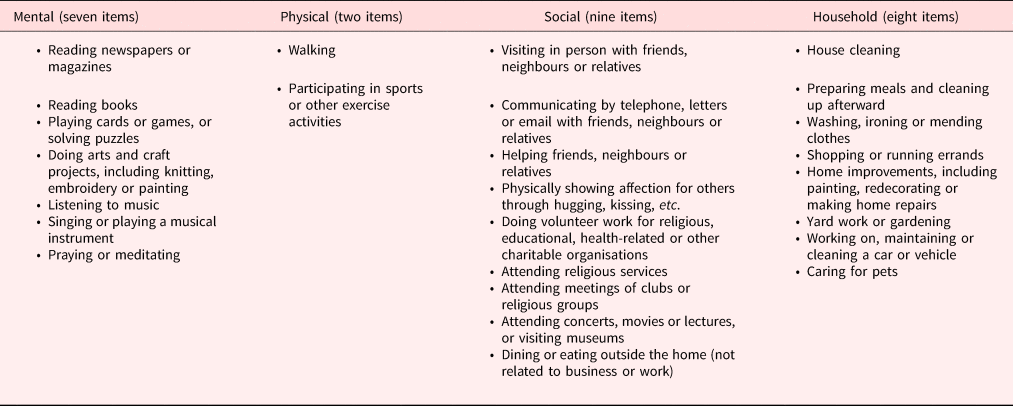
In the CAMS, respondents were asked to describe how much time they spent on each activity item using a paper-and-pencil module (Hurd et al., Reference Hurd, Rohwedder, Belli, Stafford and Alwin2007). This kind of self-administered survey allows flexibility and sufficient time for respondents to recall information, whereas in the presence of an interviewer (e.g. phone or face-to-face interviews), respondents may have limited time to reflect on their answers (Hurd et al., Reference Hurd, Rohwedder, Belli, Stafford and Alwin2007; Hurd and Rohwedder, Reference Hurd and Rohwedder2009). The reference period was either the previous week or previous month. For example, regarding activities assumed to be relatively frequent (e.g. walking), the number of hours spent during the previous week was sought. Regarding activities assumed to be less frequent (e.g. volunteering, attending religious services), the number of hours spent during the previous month was sought. For the present study, 26 of 33 CAMS items were further categorised into four domains of leisure activities: mental, physical, social and household activities (see Table 1). This classification was largely based on the face validity and categorisation of previous leisure studies (Wang et al., Reference Wang, Karp, Winblad and Fratiglioni2002; Verghese et al., Reference Verghese, Lipton, Katz, Hall, Derby, Kuslansky, Ambrose, Sliwinski and Buschke2003; Paillard-Borg et al., Reference Paillard-Borg, Wang, Winblad and Fratiglioni2009; Lachman et al., Reference Lachman, Agrigoroaei, Murphy and Tun2010; Adams et al., Reference Adams, Leibbrandt and Moon2011). Although considering some household activities as leisure may be somewhat controversial, items such as gardening or caring for pets can be viewed as pleasurable for older adults. Indeed, several previous studies included household activities as leisure (Chang et al., Reference Chang, Wray and Lin2014; Paillard-Borg et al., Reference Paillard-Borg, Wang, Winblad and Fratiglioni2009). Seven items were excluded because they did not match any of the leisure domains (e.g. sleeping and napping, grooming and hygiene, self-managing medical conditions, taking care of finances or investments) or were mostly engaged in by working individuals (e.g. using a computer, working for pay) and thus were likely to bias the result. The television-watching item was also excluded in this study as it can be the most prevalent form of passive activity that may not potentially benefit physical and mental health outcomes of older adults in the context of successful ageing. For the analyses, monthly-based items were divided by four to be comparable to responses regarding weekly-based items. Doing one activity for more than 12 hours a day for seven days a week (84 hours per week) may not be common, and thus these responses were considered as possible outliers and recoded as 84 hours per week. This limit of 12 hours per day (e.g. setting an upper bound to reduce the influence of outliers) has been adopted by previous studies using the same CAMS data (Fultz et al., Reference Fultz, Fisher and Jenkins2004). Each item was summed to indicate weekly hours spent engaged in leisure activities.
Sub-domains of leisure activities from the Consumption and Activities Mail Survey

Note: Seven items (i.e. ‘watching television’, ‘sleeping and napping’, ‘grooming and hygiene’, ‘using computer’, ‘working for pay’, ‘taking care of finances or investments, such as banking, paying bills, balancing the cheque-book, doing taxes’ and ‘self-treating or self-managing an existing medical condition’) were excluded from this study.
Independent variables
Retirement status
Although retirement can be defined in various ways (Gustman and Steinmeier, Reference Gustman and Steinmeier2000), this study measured retirement status as withdrawal from the labour force (Lazear, Reference Lazear, Ashenfelter and Layard1986). Individuals who reported working for pay were considered not retired (coded as 0) and those who reported not working for pay were considered retired (coded as 1). Previous retirement studies using the same HRS data used current working status to define participants (Rohwedder and Willis, Reference Rohwedder and Willis2010; Bonsang et al., Reference Bonsang, Adam and Perelman2012). Retirement status was included as a time-varying variable because working individuals could retire during the study period. As previously mentioned, individuals who never worked or who returned to work after retirement were excluded in this study.
Widowhood status (widowhood study only)
Widowhood status was measured by respondents’ self-report regarding current marital status. Respondents who were married or living with a partner were classified as married (coded as 0), as opposed to widowed (coded as 1). Widowhood status was included as a time-varying variable because married individuals could become widowed during the study period. As previously mentioned, individuals who reported being separated, divorced or never married, or who became married after being widowed were excluded in this study.
Time-varying covariates
Depressive symptoms
Depressive symptoms were measured with a modified eight-item short version of the 20-item Center for Epidemiologic Studies – Depression Scale (Radloff, Reference Radloff1977). The measure asked whether respondents felt (a) depressed, (b) that everything was an effort, (c) their sleep was restless, (d) they could not get going, (e) lonely, (f) they enjoyed life (reverse coded), (g) sad and (h) happy (reverse coded) much of the time during the previous week. The range was 0–8, and higher scores indicated more depressive symptoms.
Cognitive function
Cognitive function was measured in three domains; memory (range = 0–20) based on immediate and delayed word recall, working memory (range = 0–5) based on a serial sevens test and processing speed (range = 0–2) based on a backward counting test. These domains were combined to compute a total score (0–27), and higher scores indicated better cognitive functioning. As previously mentioned, individuals who scored below 12 at baseline were considered cognitively impaired and excluded in this study.
Self-rated health
Self-perception of health is often a crucial indicator of morbidity and mortality among older adults (Idler et al., Reference Idler, Kasl and Lemke1990). Thus, this study included self-rated health as a valid proxy for respondents’ overall health condition. It was measured using one item with a five-point scale: ‘Would you say your health is excellent, very good, good, fair or poor?’ After reverse coding, higher scores indicated better self-rated health.
Functional limitations
Whether respondents had difficulty with five instrumental activities of daily living (i.e. shopping for groceries, preparing hot meal, using a phone, managing money and taking medication) was measured to indicate functional limitations. These items (1 = yes, 0 = no) were summed for a total count, but because most responses were zero, this variable was dichotomised to indicate whether respondents had difficulty with any of the five items (coded as 1) or no difficulty (coded as 0).
Household wealth
Annual household wealth was included as a continuous variable to indicate respondents’ economic status. Because the distribution was highly skewed, log-transformation was applied {±log [absolute (household wealth + 1)]}.
Marital status (retirement study only)
Self-report of current marital status was included. Individuals who reported being married or living with a partner were considered married (coded as 1), whereas those with other responses (e.g. separated, divorced, widowed or never married) were considered unmarried (coded as 0).
Time-invariant covariates
Age (years), age-squared, gender (1 = male, 0 = female), race and ethnicity (0 = non-Hispanic White, 1 = non-Hispanic Black, 2 = Hispanic, 3 = other; dummy coded) and education (years) at baseline were included as time-invariant variables in the present study.
Analytic approach
First, descriptive statistics of the study variables were analysed by each wave. Second, multi-level modelling was conducted to estimate the impact of retirement and widowhood on leisure activity engagement from a longitudinal perspective (Singer and Willet, Reference Singer and Willett2003). An advantage of multi-level modelling is that it does not require individuals to participate in all waves (Raudenbush and Bryk, Reference Raudenbush and Bryk2002). Thus, not every participant was present at all five waves, but they were all present at the first wave. The multi-level model was composed of two parts: Level 1 described how individuals’ time spent on leisure activities changed over time (within-individual differences), whereas Level 2 described how these changes varied across individuals (between-individual differences). Equations for each level in the retirement study were as follows (this was applied in the widowhood study using a similar approach).
 $$Y_{ij\;} \; = \pi _{0i} + \pi _{1i}wave_{ij} + \pi _{2i}retirement_{ij} + \; \pi _{3i}wealth_{ij} + \pi _{4i}married_{ij} + \pi _{5i}depression_{ij} + \pi _{6i}health_{ij} + \pi _{7i}functional\; limitation_{ij} + \pi _{8i}cognition_{ij} + \varepsilon _{ij}.$$
This equation shows the construct of the Level 1 model (within-individual change) with time-varying variables. Specifically, Y ij denotes leisure activity participation for individual i at time j; π 0i represents individual i’s initial status of leisure time when wave ij equals 0 (baseline); and π 1i represents individual i’s rate of change by wave in leisure time. Linear change (wave) was modelled because when the quadratic term(wave 2) was also included in the model, either the model fit did not improve or the quadratic term was not statistically significant. To reduce the possible misspecification of linear modelling, baseline age and age-squared variables were included in the model to clarify the possible curvilinear effect of age. Finally, π 2i denotes the function of retirement on leisure time, and π 3i – π 8i can be interpreted likewise; εij indicates Level 1 residuals, which describes the deviation of individual i at time j from the overall intercept and slope (Singer and Willett, Reference Singer and Willett2003).
 $$\; \pi _{0i} = \gamma _{00} + \gamma _{01}age_i + \gamma _{02}age^2_{i} + \gamma _{03}male_i + \gamma _{04}black_i\; + \; \gamma _{05}hispanics_i + \gamma _{06}other_i + \gamma _{07}education_i + \zeta _{0i}$$
This equation shows how π 0i(initial level of leisure time) can vary among individuals as influenced by baseline age (γ 01), age-squared (γ 02), gender (γ 03), race and ethnicity (γ 04, γ 05, γ 06) and years of education (γ 07). Specifically, γ 00 represents the average initial level (π 0i)for individuals with all other predictors equal to zero; ζ 0i denotes residual variance, or person i’s deviation from the overall sample's intercept. The following equations show the constructs of the Level 2 model (between-individual differences in change).
 $$\pi _{1i} = \gamma _{10}\; + \zeta _{1i}$$
 $$\pi _{2i} = \gamma _{20}$$
 $$\pi _{3i} = \gamma _{30}$$
 $$\pi _{4i} = \gamma _{40}$$
 $$\pi _{5i} = \gamma _{50}$$
 $$\pi _{6i} = \gamma _{60}$$
 $$\pi _{7i} = \gamma _{70}$$
 $$\pi _{8i} = \gamma _{80}$$
In the first equation, γ 10 is a parameter for the slope of the wave (π 1i) with residual variance of ζ 1i. Likewise, γ 20 to γ 80 in the subsequent equations are the parameters for retirement, household wealth, marital status, depressive symptom, self-rated health, functional limitation and cognitive function, respectively. Residual variance for these parameters was not assigned because estimating random slopes for all Level 1 coefficients may not be parsimonious (Raudenbush and Bryk, Reference Raudenbush and Bryk2002; McCoach and Kaniskan, Reference McCoach and Kaniskan2010).
All analyses were conducted separately for retirement and widowhood using the XTMIXED command in Stata (version 12.0). We were unable to examine joint transitions because so few people experienced both retirement and widowhood in the same period. Missing observations for outcome variables were handled with maximum likelihood estimation.
Results
Characteristics of retirement study sample
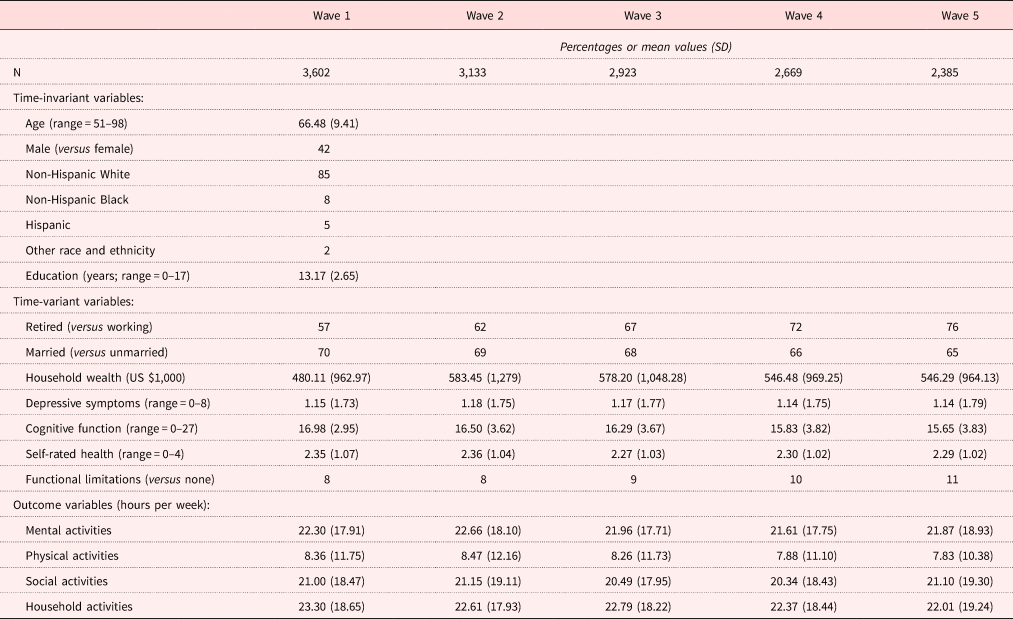
Table 2 shows the means and standard deviations (SD) of the major study variables in the retirement sample by wave. The sample size for Wave 1 (N = 3,602) is the same as the final analytic sample because all individuals were present at the first wave. Thus, the first column of Table 2 shows the baseline characteristics for all study variables and the remaining four columns show the characteristics of time-varying variables by wave. At baseline, the mean age of the sample was 66.48 (SD = 9.41); 42 per cent of participants were male; and participants had 13.17 years of education on average (SD = 2.65). A majority of the sample was non-Hispanic White (85%), retired (57%) and married (70%). Average household wealth was US $480,110 (SD = 962.97). In terms of health factors, mean scores were 1.15 (SD = 1.73) for depressive symptoms, 16.98 (SD = 2.95) for cognitive function and 2.35 (SD = 1.07) for self-rated health. About 8 per cent of the sample reported having some degree of functional limitation. Regarding leisure variables, the average time spent on mental activities was 22.30 hours per week (SD = 17.91), compared to 8.36 hours (SD = 11.75) for physical activities, 21.00 hours (SD = 18.47) for social activities and 23.30 hours (SD = 18.65) for household activities. Over time, the proportion of individuals who had retired increased from 57 per cent (Wave 1) to 76 per cent (Wave 5).
Characteristics of the retirement study sample by wave

Note: SD: standard deviation.
Characteristics of widowhood sample
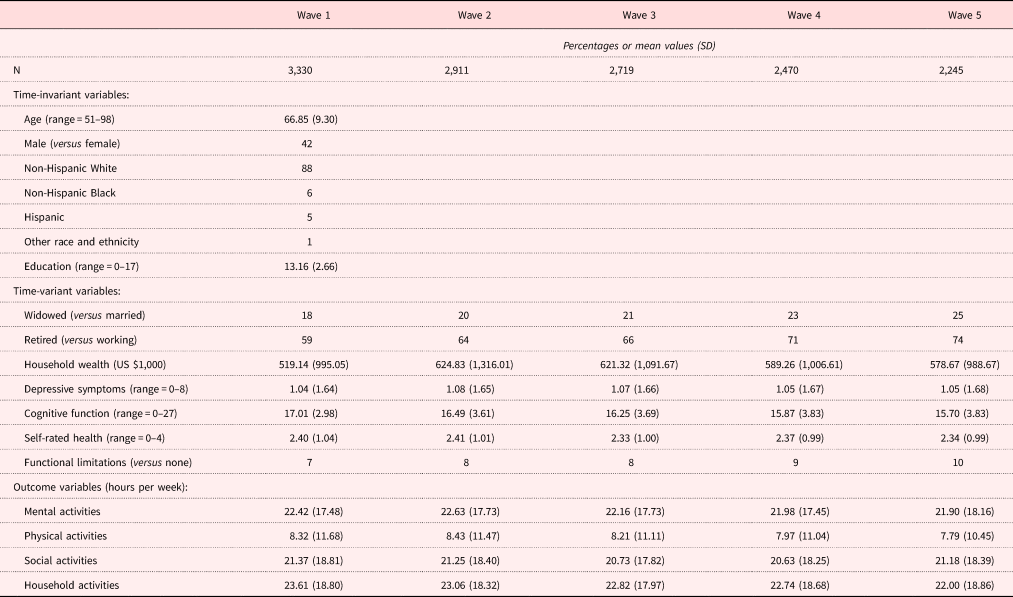
Table 3 presents the means and SD of the major study variables in the widowhood sample by wave. At baseline, 3,330 respondents were present. The mean age of the sample was 66.85 (SD = 9.30); participants had an average of 13.16 (SD = 2.66) years of education. A majority of the sample was female (58%), non-Hispanic White (88%), retired (59%) and married (82%). Average household wealth was US $519,140 (SD = 995.05). Regarding health, mean scores were 1.04 (SD = 1.64) for depressive symptoms, 17.01 (SD = 2.98) for cognitive function and 2.40 (SD = 1.04) for self-rated health. Only about 7 per cent of the sample reported having any difficulty with instrumental activities of daily living. Regarding leisure variables, the average weekly time spent was 22.42 hours (SD = 17.48) for mental, 8.32 hours (SD = 11.68) for physical, 21.37 hours (SD = 18.81) for social and 23.61 (SD = 18.80) for household activities. The proportion of widowed individuals increased from 18 per cent (Wave 1) to 25 per cent (Wave 5) over time.
Characteristics of the widowhood study sample by wave

Note: SD: standard deviation.
Multi-level analysis: retirement and leisure activity engagement
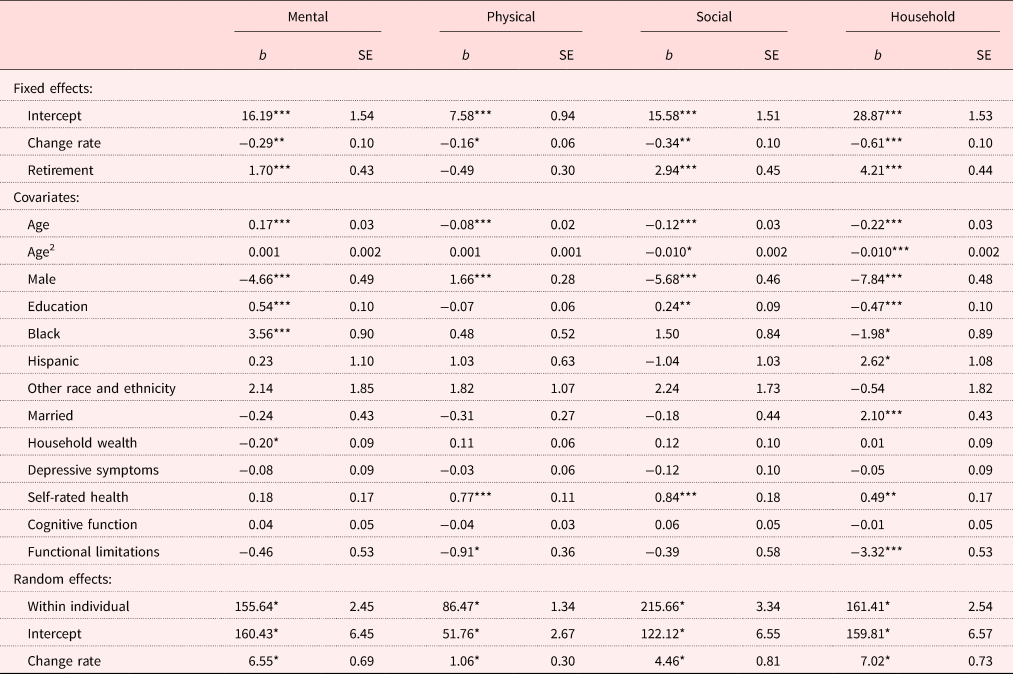
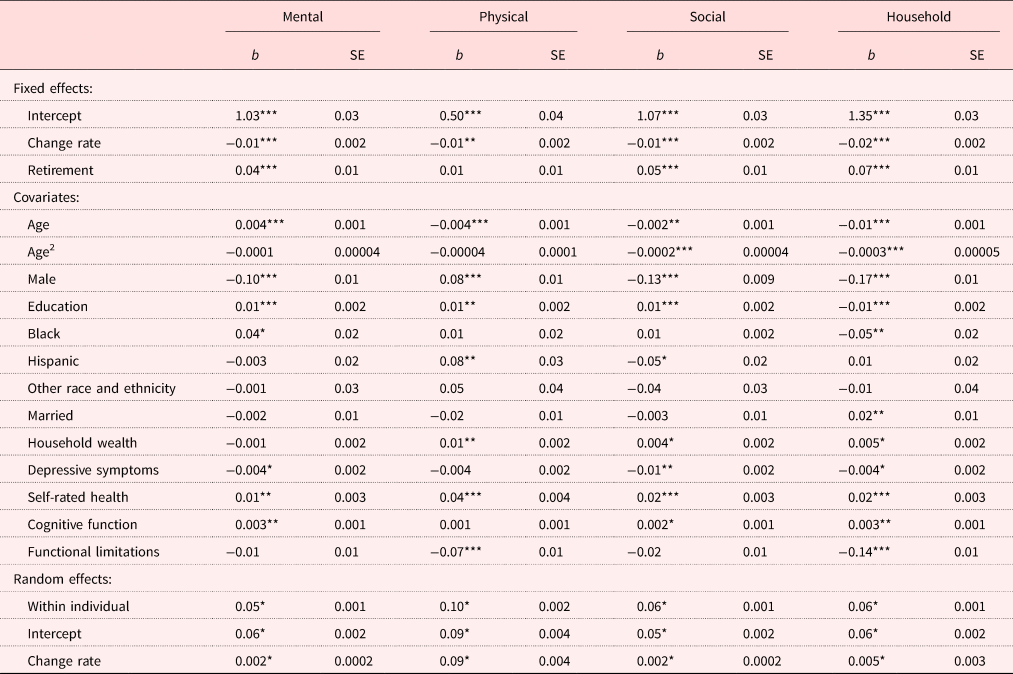
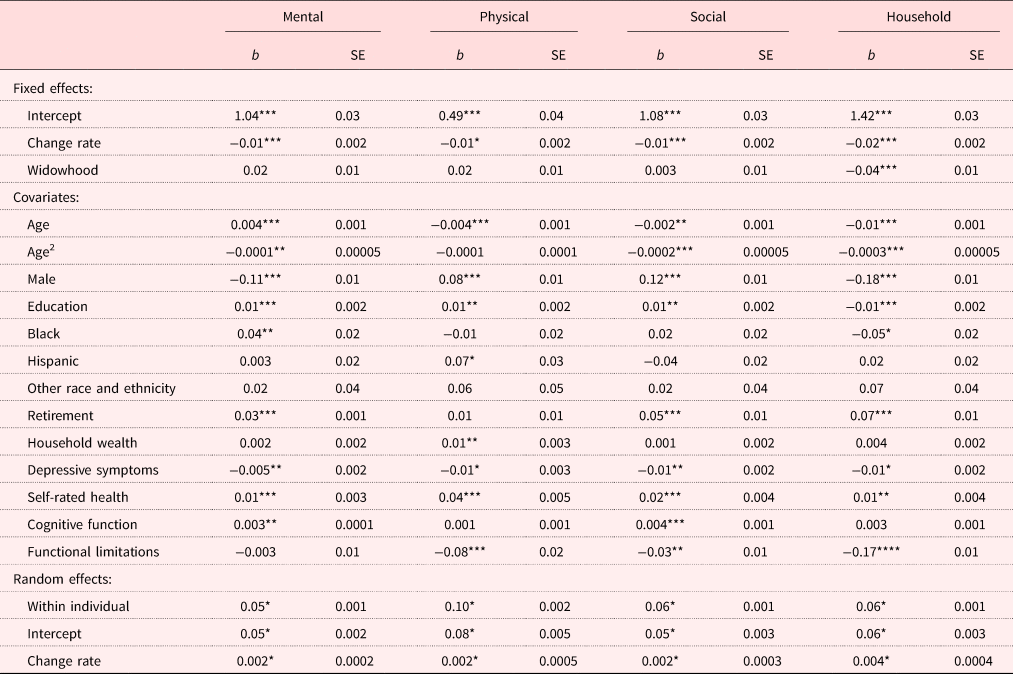
The results of mixed-effects modelling of retirement and leisure activity engagement while controlling for age, age-squared, gender, education, race and ethnicity, marital status, household wealth, depressive symptoms, self-rated health, cognitive function and functional limitations are presented in Table 4. In the fixed-effects section, both time-invariant and time-varying covariates are presented with unstandardised coefficients and standard errors (SE). In the random-effects section, unpredicted residuals within individuals (Level 1) and unexplained variance of individuals in both initial status and rate of change (Level 2) are indicated. The significance of random effects indicates that significant within- and between-individual variances remain unexplained, even after controlling for all variables in this model. The interpretation only focuses on the fixed effects. Because time spent engaged in leisure activities was skewed, a model with log-transformation of leisure activities was also conducted, and results are presented in Table 5. The significance and sign of the parameters for retirement, intercept and rate of change for both models (before transformation: Table 4; after transformation: Table 5) were almost identical, so interpretation is based on the pre-transformation model for more meaningful interpretation with the original unit of time.
Multi-level model of retirement and leisure activity engagement

Note: SE: standard error.
Significance levels: * p < 0.05, ** p < 0.01, *** p < 0.001.
Log-transformed multi-level model of retirement and leisure activity engagement

Note: SE: standard error.
Significance levels: * p < 0.05, ** p < 0.01, *** p < 0.001.
As presented in Table 4, intercepts indicate the average amount of time spent per week in the sample in each domain of leisure activity at baseline. The average hours per week engaged in mental activities was 16.19, followed by 7.58 for physical, 15.58 for social and 28.87 for household activities. The rate of change over time showed negative trends for all four domains of activities (mental: b = −0.29, SE = 0.10, p < 0.01; physical: b = −0.16, SE = 0.06, p < 0.05; social: b = −0.34, SE = 0.10, p < 0.01; household: b = −0.61, SE = 0.10, p < 0.001), which indicates that time spent engaged in leisure activities decreased during this eight-year period. For example, between each wave, engagement in mental activities decreased an average of 0.29 hours per week.
The statistically significant coefficients of the retirement variable in terms of mental (b = 1.70, SE = 0.43, p < 0.001), social (b = 2.94, SE = 0.45, p < 0.001) and household (b = 4.21, SE = 0.44, p < 0.001) activities indicate that individual changes in leisure engagement during the eight-year period were positively influenced by retirement status. For example, transitioning from working to retirement status was associated with increased engagement in mental activities by an average of 1.70 hours per week. Similarly, the transition to retirement from working status was related to increased engagement in social activities by an average of 2.94 hours per week and household activities by 4.21 hours per week.
No significant relationship emerged between retirement and physical activity engagement. However, analysis of gender differences showed a significant interaction term for retirement and gender (results not shown but available upon request) on physical activity engagement (b = −1.00, p < 0.05). When we ran separate analyses for each gender, we found physical activity engagement decreased after retirement among men (b = −0.09, p < 0.05) but not women (b = −0.08, p = 0.83).
Multi-level analysis: widowhood and leisure activity engagement
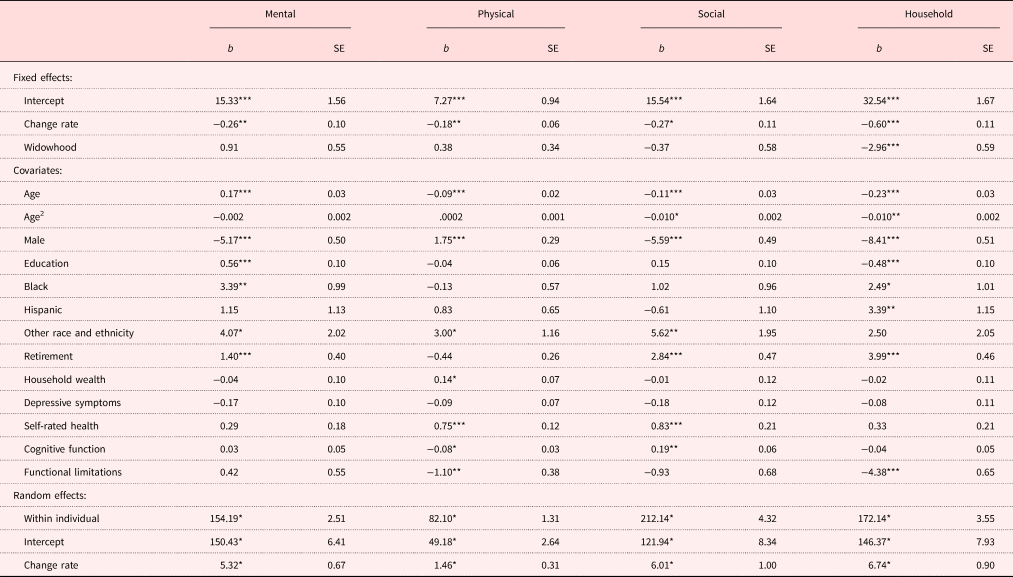
Table 6 presents the result of multi-level modelling estimating the impact of widowhood on leisure activity engagement after controlling for age, age-squared, gender, education, race and ethnicity, retirement status, household wealth, depressive symptoms, self-rated health, cognitive function and functional limitations. Like the retirement study, a model with log-transformation of leisure activities was also conducted, and results are presented in Table 7. The significance and sign of the parameters for widowhood, intercept, and rate of change for before transformation (Table 6) and after transformation (Table 7) were almost identical, so interpretation is based on the pre-transformation model for more meaningful interpretation with the original unit of time.
Multi-level model of widowhood and leisure activity engagement

Note: SE: standard error.
Significance levels: * p < 0.05, ** p < 0.01, *** p < 0.001.
Log-transformed multi-level model of widowhood and leisure activity engagement

Note: SE: standard error.
Significance levels: * p < 0.05, ** p < 0.01, *** p < 0.001.
Table 6 shows the initial level of average hours per week spent on mental (b = 15.33, SE = 1.56), physical (b = 7.27, SE = 0.94), social (b = 15.54, SE = 1.64) and household (b = 32.54, SE = 1.67) activities. The negative coefficients for change rates indicate that these individuals decreased their engagement in leisure activities during the eight-year period in all four domains (mental: b = −0.26, SE = 0.10, p < 0.01; physical: b = −0.18, SE = 0.06, p < 0.01; social: b = −0.27, SE = 0.11, p < 0.05; household: b = −0.60, SE = 0.11, p < 0.01). Last, only household activities (b = −2.96, SE = 0.59, p < 0.001) were significantly influenced by widowhood status. In other words, transitioning from married to widowed was associated with decreased engagement in household activities by an average of 2.96 hours per week. However, additional analysis of gender differences showed a significant interaction term (results not shown but available upon request) for widowhood and gender on household activity engagement (b = 5.68, p < 0.001). When exploring gender-stratified models, we found household activity engagement declined among women (b = −4.05, p < 0.001) but not men (b = 1.07, p = 0.31). Other leisure domains (mental, physical and social activities) were not significantly influenced by widowhood.
Discussion
This study examined how leisure participation changed and was influenced by retirement or widowhood during an eight-year period among adults aged 51 or older in the USA. Engagement in mental, physical, social and household activities was analysed with multi-level modelling using five waves of national panel data from the HRS (2004–2012) and its supplementary CAMS (2005–2013). Because so few people experienced both life events during this period, retirement and widowhood studies had to be conducted separately. A sample of 3,602 older adults was included in the retirement study, whereas 3,330 older adults were included in the widowhood study.
The study findings indicate that time spent on mental, physical, social and household leisure activities significantly decreased during the eight-year period (addressing Research Question 1) after controlling for all other covariates, including age. Age (at baseline) was also negatively related with time spent on physical, social and household leisure activities, which is consistent with previous longitudinal studies showing that individuals are less likely to engage in activities as they age (Armstrong and Morgan, Reference Armstrong and Morgan1998; Strain et al., Reference Strain, Grabusic, Searle and Dunn2002). On the other hand, older age was positively related with more time spent engaging in mental activities. The mental activities domain includes items such as reading books and newspapers, which are largely home-based and physically non-demanding; older individuals may tend to engage more in these activities as they become older (Iso-Ahola et al., Reference Iso-Ahola, Jackson and Dunn1994).
Impact of retirement on leisure activity engagement
Regarding the second research question (i.e. how retirement influences individuals’ leisure activity engagement), findings show that transitioning from working to retired status was associated with an increase in time spent on mental, social and household activities. This positive association is noteworthy because the overall trend of these activities significantly decreased over time. Indeed, retired individuals may have replaced their time previously dedicated to work with compensatory activities, thus increasing their leisure pursuits. It is also consistent with previous studies that found involvement in reading (Rosenkoetter et al., Reference Rosenkoetter, Garris and Engdahl2001), informal social activities (e.g. getting together with friends; Janke et al., Reference Janke, Davey and Kleiber2006) and household activities (Szinovacz, Reference Szinovacz2000) increased with retirement. Again, this may be due largely to having more time available in the absence of work demands.
Time spent on physical activities did not show any significant change following retirement in our sample, but further exploration of gender differences showed a decline among men, which is inconsistent with previous studies showing that physical activity increased after retirement (Evenson et al., Reference Evenson, Rosamond, Cai, Diez-Roux and Brancati2002; Janke et al., Reference Janke, Davey and Kleiber2006). Moreover, a majority of gender-specific studies on physical activities have shown mixed results; some showed that men were more likely to increase physical activity after retirement compared to women (Barnett et al., Reference Barnett, van Sluijs and Ogilvie2012), whereas others found that both men and women increased leisure physical activity after retirement (Touvier et al., Reference Touvier, Bertrais, Charreire, Vergnaud, Hercberg and Oppert2010). Such differences may be due to different categorisation when measuring physical activities. Different items have been used to measure physical activities or classify physical activities into sub-types (Evenson et al., Reference Evenson, Rosamond, Cai, Diez-Roux and Brancati2002; Berger et al., Reference Berger, Der, Mutrie and Hannah2005; Slingerland et al., Reference Slingerland, van Lenthe, Jukema, Kamphuis, Looman, Giskes, Huisman, Venkat Narayan, Mackenbach and Brug2007). For example, Evenson et al. (Reference Evenson, Rosamond, Cai, Diez-Roux and Brancati2002) included work activities (e.g. frequency of walking while at work) as one part of physical activities. Berger et al. (Reference Berger, Der, Mutrie and Hannah2005) classified physical activities as activities done at work, at home or during leisure time, and found that physical activity at work (e.g. physically demanding activities, number of stairs climbed daily) dramatically decreased after retirement, whereas activities at home or during leisure remained more or less constant. In a systematic review of retirement and physical activity (e.g. leisure, exercise, occupational, transport, household physical activities), the authors stated: ‘exercise and leisure-time physical activity increased after the transition to retirement, whereas the findings regarding changes in total physical activity were inconclusive’ (Barnett et al., Reference Barnett, van Sluijs and Ogilvie2012: 333). In this respect, potentially increased engagement in physical activities after retirement may have been offset by decreased engagement in physical activities at work in this study. Because physical activity items in the CAMS questionnaire did not further inquire about the purpose of the activity (e.g. walking for work or leisure), it is difficult to delineate how time spent engaged in physical activities at work or for leisure changed or were influenced by retirement. Thus, future studies specifically exploring the context of leisure activity participation would provide a better understanding of retirement's impact on physical activity participation for both genders.
Impact of widowhood on leisure activity engagement
The third research question asked how widowhood influences individuals’ leisure activity engagement. The transition from married to widowhood status was associated with significantly decreased time involved in household activities (e.g. cleaning, home improvements, yard working, maintaining vehicles, caring for pets); however, further analysis revealed this was only the case for women. Prior studies have found that widowhood was significantly associated with ceasing outdoor yard work (Strain et al., Reference Strain, Grabusic, Searle and Dunn2002) and that widowhood was associated with increased household activities for men and similar levels of engagement for women (Utz et al., Reference Utz, Carr, Nesse and Wortman2002). We suspect differences between our findings and findings from previous studies may be driven by differences in the measurement of activity engagement (e.g. frequency versus duration). Our study findings indicate that the amount of household work may have decreased following the death of a spouse. The lack of a partner at home may have led to both decreased needs (e.g. one less person to cook for and clean after, less washing and ironing, etc.) and decreased motivation to engage in household activities among widowed women. However, this may be also affected by co-habiting individuals in the household post-widowhood (e.g. living alone versus with other family members). For example, South and Spitze (Reference South and Spitze1994) found that co-habiting with an adult son increased household work among women, whereas co-habiting with an adult daughter reduced household work for both women and men. Moreover, increased intergenerational support following widowhood as a filial norm (e.g. adult children helping with daily household chores; Silverstein et al., Reference Silverstein, Gans and Yang2006) may have decreased the participation of widowed individuals in household activities. Thus, future studies should examine living arrangements and intergenerational support among widowed individuals as predictors of engagement in household activities for both men and women.
Our findings show that mental, physical and social activities were not significantly influenced by widowhood. This is inconsistent with previous studies. For example, Wilcox et al. (Reference Wilcox, Evenson, Aragaki, Wassertheil-Smoller, Mouton and Loevinger2003) found, in a three-year prospective study, that long-term widowed individuals increased their engagement in physical activities when compared to those who remained married. Likewise, the study by Utz et al. (Reference Utz, Carr, Nesse and Wortman2002) showed that informal social activities (e.g. getting together or talking on the phone with friends, neighbours or relatives) increased, whereas formal social activities (e.g. volunteering, attending meetings, religious services) remained consistent following widowhood. This discrepancy may be due to previous studies using a women-only sample (Wilcox et al., Reference Wilcox, Evenson, Aragaki, Wassertheil-Smoller, Mouton and Loevinger2003) or measuring activities based on frequency (Utz et al., Reference Utz, Carr, Nesse and Wortman2002) instead of duration. We also further explored any gender-specific widowhood effects, but found no significant interaction effect of gender and widowhood on any of these activities.
Limitations
Several limitations of the present study should be acknowledged. First, certain items in this study were defined as leisure activities, although individuals might not have engaged in these activities by choice. For example, participation in some of the items in the household activities (e.g. house cleaning, washing clothes) or social activities (e.g. helping friends, neighbours or relatives who do not live with respondents and did not pay for the help) domains may be out of necessity rather than enjoyment. In a qualitative leisure study, Gibson et al. (Reference Gibson, Ashton-Shaeffer, Green and Autry2003: 221) contended that the ‘central feature [of leisure] was the ability to choose what they wanted to do’. In this respect, future studies that include additional information on individual freedom of choice to engage in certain activities would enrich the interpretation of findings. Second, although it is evident that television watching is one of the most frequent activities among older adults, the item was excluded in this study. The rationale comes from the fact that it has been less clear in the previous studies whether television watching may benefit older adults’ health outcomes in the context of successful ageing (e.g. depression, cognitive impairment, loneliness). Indeed, previous longitudinal studies have shown that watching television is related with increased risk of depression (Lucas et al., Reference Lucas, Mekary, Pan, Mirzaei, O'Reilly, Willett, Koenen, Okereke and Ascherio2011), cognitive impairment (Rundek and Bennett, Reference Rundek and Bennett2006; Wang et al., Reference Wang, Zhou, Li, Zhang, Deng, Tang, Gao, Lian and Chen2006) and loneliness (Rubenstein and Shaver, Reference Rubenstein, Shaver, Peplau and Perlman1982). This can be related to disengagement theory (Cumming and Henry, Reference Cumming and Henry1961) in a way that watching television may isolate older adults from society and limit the maintenance of social relationships, which may in turn lead to increased loneliness (Pinquart and Sorensen, Reference Pinquart and Sorensen2001). Moreover, television watching may be considered to be the most prevalent form of passive behaviour in older adults that may risk their physical and mental health even when compared to other sedentary activities (e.g. sewing, playing games, internet use, reading, writing) (Hu et al., Reference Hu, Li, Colditz, Willett and Manson2003; Jakes et al., Reference Jakes, Day, Khaw, Luben, Oakes, Welch, Bingham and Wareham2003; Dunstan et al., Reference Dunstan, Salmon, Healy, Shaw, Jolley, Zimmet and Owen2007; Hamer and Stamatakis, Reference Hamer and Stamatakis2014). In addition, including television watching would create an artificially high level of engagement in mental activity in this study. In this respect, it would be worthwhile to look at television watching as a separate item in future studies rather than combining with other mental leisure activities within the same domain. Third, although the classification of four domains of activities was largely derived from previous relevant studies, these domains can have shared characteristics. For example, the shopping item was classified as a household activity, but can also serve as a mental, physical or social activity in certain contexts. To date, there is a lack of consensus regarding a valid scale to measure or classify leisure activities, which makes it hard to compare results from one study to another. Thus, more valid measurement of leisure activity domains needs to be established in this field of study. Last, the focus of this study was on the transition itself, but future studies should delineate what happens during the years before and after retirement or widowhood to provide a better understanding of leisure engagement trajectories.
Conclusion
This study provided an understanding of how leisure activity engagement changes after major life transitions in older adulthood. Findings show that older adults’ engagement in mental, physical, social and household activities significantly decreased over time. Moreover, the transition from working to retired status was associated with increased engagement in mental, social and household activities, but decreased engagement in physical activities among men. The transition from married to widowhood status was associated with decreased engagement in household activities among women. Encouraging leisure pursuits among individuals who experience life transitions might help them maintain better health in later life; thus, future studies examining the mechanisms among life transitions, leisure activities and health outcomes are encouraged in this field of research.
Financial support
This research received no specific grant from any funding agency, commercial or not-for-profit sectors.
Conflict of interest
The authors declare no conflicts of interest.