

Rapid population growth constitutes one of the most critical problems confronting many Middle Eastern and North African countries, placing incremental pressure on their finite water and other natural resources and challenging their abilities to grow sufficient food, accommodate school and university graduates with jobs, build adequate urban and rural infrastructures, contain rapid urbanization, and alleviate poverty, illiteracy, malnutrition, and disease. More than one-third of the population is under the age of fifteen in a majority of countries and, thus, has yet to marry and reach reproductive age. As a result, in most places the number of women of childbearing age (fifteen to forty-nine) will more than double in the next thirty years. Because there are so many young people, by one estimate the region's economies would have to generate half as many additional jobs by 2010 as existed in 1996 to avoid an increase in already high unemployment rates, particularly among young adults.Footnote 1 The growing bulge of unemployed young people has serious political ramifications for many Middle Eastern regimes, from Algeria to Saudi Arabia.Footnote 2 These problems will likely get worse in the short term because of demographic momentum—the parents of the future have already been born.
However, the countries of the region fall at various points along the fertility continuum and differ strikingly in their population dynamics and natalist policies because of extreme differences in wealth, economic structure, level of modernization, and historical development. These differences are consistent with the demographic transition model, which attributes population growth to the lag between falling death rates, particularly among infants, as public health improves and falling birth rates as societies urbanize, modernize, and industrialize and as the social and economic value of children changes. The wider the gap between fertility and mortality, the greater the natural increase will be. This transition coincides with an epidemiological one from an age in which people died mostly from pestilence, famine, and infectious diseases to an age in which degenerative or human-made diseases are the main cause of morbidity and mortality. In the first stage of the demographic transition model, corresponding with most of human history, birth and death rates are high and therefore little or no growth occurs. During the second stage, corresponding with the Industrial Revolution in Europe, death rates plummet. As birth and death rates diverge, natural increase accelerates. Eventually, in the third stage, death rates level off and birth rates fall so the rate of population increase declines. In the final stage, characteristic of all industrial countries, birth and death rates are both low, producing low or even negative growth. According to the model, societies should proceed sequentially through these stages.
Most Middle East states fall within the third stage of this transition, with low and stable death rates and declining fertility. Nevertheless, even within this stage there are notable differences among countries depending on how far fertility has dropped. As a whole, the oil-producing countries of the Arabian peninsula have lagged behind other subregions and stand apart demographically, with extremely high fertility rates (4.8 children per woman compared with a regional average of 3.0) and low contraceptive prevalence rates (only 22% of women use modern contraceptives, less than half the regional average). High fertility has combined with massive in-migration from outside the region since the early 1970s to produce particularly explosive population growth and generate distorted age and sex profiles, with working-age males constituting a disproportionate share of the population. Between 1950 and 2007, the Arabian peninsula's population increased sevenfold, from 8 million to 58 million, while the Mashriq, Turkey, and Iran experienced a fourfold increase and North Africa somewhat less than that. By 2050, the Arabian peninsula is projected to have 124 million people, by which time its share of the Middle East and North African population will have expanded to 18 percent, up from 8 percent in 1950.Footnote 3
Even among the oil-producing countries of the peninsula, there are sharp demographic contrasts, particularly with respect to their population policies, which range from implicitly pronatalist to antinatalist. This paper examines the recent demographic experience of the Sultanate of Oman, which as recently as the early 1990s was believed to have the second-highest fertility rate in the world, after Niger—a reflection of its extreme poverty and isolation until oil production began in the early 1970s, long after other countries in the Gulf region had begun to modernize. Although the sultanate has a small population (2.6 million), its rapid growth has been a cause for official concern and prompted the government to introduce an ambitious birth spacing program in 1994. Oman has reported a sharp drop in fertility since then, and the contribution of its family-planning efforts to that decline constitutes the focus of this paper.
OMAN'S 1993 CENSUS: RAISING DEMOGRAPHIC AWARENESS
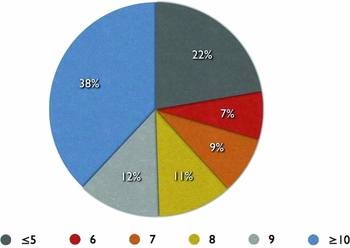
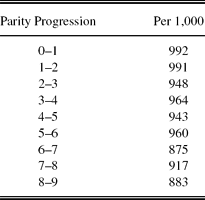
Oman's first comprehensive census, conducted in 1993, revealed a population that had quadrupled from its estimated size in 1960. With negligible contraceptive use, a fertility rate of 6.9 children per woman, a crude birth rate exceeding 40 per 1,000 persons, and an infant mortality that fell from 100 per 1,000 live births to 30 per 1,000 live births between 1975 and 1990, Oman's population was believed to be growing more quickly than that of any other country in the region, with a projected doubling time of only eighteen years. According to the census, women between the ages of forty and forty-four had an average of 8.13 children, with roughly 50 percent having given birth to 9 or more children and 38 percent claiming to have had 10 or more live births (Figure 1).Footnote 4 Because early and extended childbearing was the norm, mothers were often still fecund when their eldest daughters began procreating. One stark indicator of prevailing reproductive norms was the parity progression ratio.Footnote 5 In the United States, this ratio drops precipitously after two births, because few women have more children than that. In Oman, the proportion of women who advanced to the next parity was exceptionally high at all levels of parity (Table 1).
The number of children born alive among Omani women ages forty to forty-four in 1993. Source: Based on data in Oman, Ministry of Development, General Census of Population, Housing, and Establishments, 1993 (Muscat, 1993), p. 201. [A color version of this figure can be viewed online at journals.cambridge.org/mes]

Parity progression ratios for ever-married Omani women, 2000
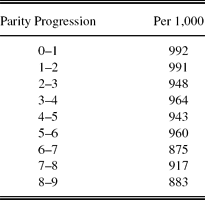
Source: Oman, Ministry of Health, Directorate of Planning, Directorate of Research, National Health Survey, 2000, Vol. 2, Reproductive Health Study (Muscat, n.d.), 39.
Cohort fertility levels and reproductive processes are a function of a number of proximate determinants, which can be grouped into factors affecting exposure to intercourse (such as age of entry into sexual unions, proportion of women who remain celibate, coital frequency, and length of postpartum abstinence), factors affecting exposure to conception (such as voluntary or involuntary fecundity or infecundity, use or nonuse of contraceptives, and duration of breastfeeding), and factors affecting gestation and successful parturition (such as involuntary fetal and neonatal mortality or voluntary termination of pregnancy through abortion). Many of these variables are in turn inseparable from cultural practices and preferences. In Oman, a deeply conservative and patriarchal society, high fertility is fundamentally related to the status of women, who “are perceived first and foremost as wives and mothers . . . To earn status, women must marry and reproduce.”Footnote 6 It is common for women to believe that continuing to give birth at regular intervals protects them from divorce or polygamy and moreover enhances the status of their extended families. In Oman, early marriage and entry into sexual union were the norm, effectively increasing the number of years in which a woman could become pregnant. As Eickelman notes, the birth of a first child does more than fulfill an emotional need: it signifies a woman's social passage into adulthood, earning her status and prestige and opening up visiting networks beyond the kinship group.Footnote 7 The notion that a woman might choose not to have children at all is completely foreign because one of her primary roles is to reproduce. Moreover, a child is considered to be a gift from God and therefore procreation is not traditionally a matter of individual choice. In the past, nonuse of contraceptives reflected both ignorance or unavailability and a deeply engrained cultural preference for large families, particularly in rural areas where children are a form of investment, performing free agricultural work and ensuring that parents will have someone to care for them in old age. Because of a strong (if sometimes overstated) cultural preference for sons, ultimate family size is partly shaped by how many male children are desired, ensuring high fertility. In other words, Oman has been a society in which families are built more by fate than by designFootnote 8—one in which women's reproductive autonomy is severely constrained.
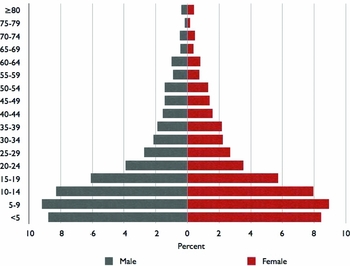
Because Oman's fertility rate was so high, the 1993 census indicated that over one third of the population was under the age of ten and slightly over half was under fifteen (Figure 2). If the huge cohort of young females that had not yet reached reproductive age at the time of the 1993 census were to replicate the childbearing patterns of their mothers or grandmothers, Oman's future demographic situation would be dire indeed. The high dependence ratio between those who were under fifteen (and to a very small degree over sixty-five) and those who were of working age also had obvious economic ramifications, notably the burden of educating so many children, even in an oil-producing state, and finding jobs for young people entering the labor force.
The Omani population by age and sex in 1993. Source: Based on data in Oman, Ministry of Development, General Census of Population, Housing, and Establishments, 1993 (Muscat, 1994), p. 146. [A color version of this figure can be viewed online at journals.cambridge.org/mes]

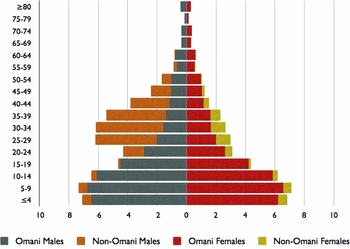
However, the 1993 census also revealed the extent to which the contours of the sultanate's demography were complicated by the presence of significant numbers of foreign workers, drawn by a booming oil economy. A large percentage of these workers were young men, primarily from the Indian subcontinent, with the result that sex ratios in certain age cohorts were highly unbalanced: among those between the ages of twenty-five and twenty-nine, for example, there were more than twice as many males as females (Figure 3). Though this largely male expatriate population remains a key component of the country's demography, it has little impact on fertility, which is a sex-specific measure. However, the huge cohort of mostly foreign working-age men does depress the overall crude birth rate, which is neither age- nor sex-specific.
The Omani and non-Omani population by age and sex in 1993. Source: Based on data in Oman, Ministry of Development, General Census of Population, Housing, and Establishments, 1993 (Muscat, 1994), p. 146. [A color version of this figure can be viewed online at journals.cambridge.org/mes]

Because of these bleak demographic realities, a growing consensus emerged within at least some sectors of the Omani government that sharply different ideas about ideal family size had to take root at all levels of society. Following the publication of the 1993 census, and a number of studies by the Ministry of Health and Sultan Qaboos University that confirmed the need to space births more widely, Oman's ruler, Sultan Qaboos, openly voiced his concern about the large size of the average Omani family. In January 1994, he questioned the notion that Islam endorsed uncontrolled fertility, saying “the Creator has endowed us with an intellect and urged us to use it . . . A big family is a burden on us all, and it is up to us to lessen it.”Footnote 9 He called on Omanis to “consider the planning of the family unit, which averages seven members as opposed to five around the world. So long as the means are available and are not prohibited by religion, it is important to use them to preserve the Omani family.”Footnote 10 On a local level, this was interpreted to mean that four or five children per family were appropriate. The Omani press subsequently published commentaries extolling the idea of family planning, although the phrasing was guarded because of the sensitivity of the issue. The Times of Oman, reporting on the sultan's speech about family size, noted that an average family size of seven children “creates burdens for all . . . parents, society and government bodies.” It added that Sultan Qaboos's concern “is for the coming generation, which should have the right to get proper education, necessary health care, appropriate housing facilities and other essential services . . . It is better to have one million people bestowed with all kinds of blessings of life than to have two million who then struggle hard to have the essential facilities of life.”Footnote 11
BIRTH SPACING PROGRAM INTRODUCED
Faced with these demographic challenges, the Ministry of Health, with the sultan's full support and preliminary technical assistance from the United States Agency for International Development and PRIME,Footnote 12 introduced policies to bring down Oman's high fertility rate, although in deference to cultural sensitivities it has generally avoided using the term “family planning” in public. In October 1994, the ministry's Department of Family and Community Health inaugurated the Birth Spacing Program.Footnote 13 The active and formal promotion of birth spacing signified a major shift in government policy, even though the Ministry of Health had acknowledged the benefits of birth spacing since at least the late 1980s.Footnote 14 The Birth Spacing Program had two primary announced goals: first, to improve the health of Omani women and children by reducing high-risk pregnancies among women who were very young or who were over the age of thirty-five, and, second, to provide women with the means to regulate their fertility safely and effectively with modern contraceptives, conceiving when they desired.Footnote 15 Since 1994, like a growing number of Middle Eastern and other countries facing rapid population growth, Oman has officially and explicitly promoted the idea that couples should allow an interval of at least three years between births.
HEALTH BENEFITS OF BIRTH SPACING
Delaying a woman's first pregnancy, increasing the interval between subsequent deliveries, and reducing the overall number of births have incontrovertible health benefits. Both maternal and infant deaths are significantly higher when births are numerous and closely spaced or when the mother is under eighteen or over thirty-five. In Oman, the most striking differences in infant mortality are associated with birth interval: the death rate among infants born within two years of an older sibling is double that among infants born after an interval of more than two years (27 per 1,000 live births versus 13 per 1,000 live births).Footnote 16
In the mid-1990s, the median birth interval in Oman was only twenty-five months.Footnote 17 Roughly one of every seven deliveries took place within eighteen months of the previous birth and over 40 percent of nonfirst births occurred within two years, indicating that a high percentage of women became pregnant while they had infants under the age of one. The Minister of Health noted in 1997 that 80 percent of mothers became pregnant before their previous child had reached the age of three.Footnote 18 In other words, encouraging couples to wait for three years between pregnancies would require that the great majority be delayed, if only slightly. Lengthening birth intervals and shortening the effective reproductive age span substantially reduce the dangers of pregnancy and childbirth. Moreover, they can significantly improve the health of children because short birth intervals are strongly correlated with early malnutrition and stunting. When a woman becomes pregnant she will generally stop nursing an existing infant; if this weaning is sudden or premature, the child may be exposed to intestinal diseases and less able to resist malnutrition. In Oman, new pregnancy is the reason for weaning approximately half of the time.Footnote 19
DEMOGRAPHIC AGENDA
The ultimate goal of birth spacing is to reduce fertility in a way that is culturally acceptable by promoting healthier families (as opposed to smaller ones).Footnote 20 Although the Birth Spacing Program is ostensibly designed to encourage reproductive and child health, it clearly has a broader demographic agenda. One Ministry of Health report outlines in alarming terms how persistent high fertility rates would depress rates of economic growth; require a massive increase in the number of jobs, schools, teachers, physicians, and hospitals; necessitate larger food imports; and add pressure on limited water and other resources. Its message is unambiguous—Oman cannot afford rapid population growth:
Oman stands now at a crossroads . . . All the indicators show that a continuation in the present rate of population increase will deplete the national resource base and thus the opportunity for economic growth . . . We must act . . . to face the challenges and confront the problems associated with rapid population growth, for our future depends on what we do now in this matter.Footnote 21
Oman's birth spacing policy is in harmony with the global shift in demographic strategies that occurred as result of the landmark 1994 Cairo International Conference on Population and Development, at which 180 countries adopted a comprehensive Programme of Action that identified improved access to health care and education for women as more effective means to curb population growth and reduce fertility than traditional birth-control campaigns. This change of focus was based on the presupposition that women who have access to reproductive health and a degree of autonomy to make their own decisions generally choose to have fewer children.
DELIVERY OF SERVICES
Improvements in the delivery of birth spacing and family-planning services since the program's inauguration have been notable. By 1997, Population Action International identified Oman as one of ten countries in the world that had “dramatically increased” their scores on its “contraceptive choice index” and had made the most progress in making contraceptives available.Footnote 22
Before 1994, access to contraceptives in Oman was limited, although private sector doctors were allowed to prescribe them on a discretionary basis and they were available at commercial pharmacies. The majority of Omanis obtained their health care in the public sector, however, where physicians were only permitted to distribute contraceptives for health reasons.Footnote 23 Following the introduction of the Birth Spacing Program, a wide variety of contraceptives was made freely available throughout the sultanate at government hospitals, clinics, and health centers. Indeed, contraceptives are available, if not widely accepted, at the most remote government clinics—even in mountain settlements served on an occasional basis by physicians and nurses flown in by helicopter.Footnote 24 Since the program began, condoms have also been openly sold in pharmacies and even some grocery stores.Footnote 25 By 2000, birth spacing services were offered at some 150 different locations throughout Oman, with over forty of these equipped with a separate room for birth spacing counseling. In 2006, birth spacing clinics booked 15,703 new clients and recorded over 84,000 revisits.Footnote 26
The commitment to birth spacing is also evident in staff development. All newly hired physicians and nurses receive special training in birth spacing methods and counseling and are required to take regular refresher courses. All nurses are expected to be familiar with the Ministry of Health's Birth Spacing Standard Operating Procedures. Footnote 27 Mother and child-care manuals for health providers incorporate detailed information about birth spacing procedures and practices.Footnote 28
It was acknowledged from the outset that the success of the program would hinge on engineering profound changes in reproductive attitudes and behavior among Omani women and men—no small task in a society in which big families are highly esteemed and large numbers of children provide parents with security, status, and free labor. The Birth Spacing Program has been shaped by the premise that “individuals’ knowledge, attitudes, and behaviors can best be influenced by exposure to consistent, reinforcing, and culturally appropriate messages delivered by familiar, credible, and multiple channels of communication.”Footnote 29 As initially conceived, the information, education, and communication (IEC) strategy, developed with the assistance of The Johns Hopkins University's Center for Communication Programs, relied on four specific channels: one-to-one communication between health providers and individual women, facilitated group discussion and education in a health facility, community outreach and participation, and mass-media communication. Although the original IEC strategy was not implemented in its entirety, many of its elements continue to shape thinking about how to reach the target audience for birth spacing services. For several years, there was a birth spacing campaign week in October, during which special events were held throughout the country to promote the program.
One of the most important features of Oman's Birth Spacing Program is that it is closely integrated with Maternal and Child Health (MCH) services, which are delivered throughout the country in Ministry of Health hospitals and health centers. Because most Omanis rely heavily on the public sector for their health care, and most births now take place in government hospitals or health centers, a high percentage of Omani women and men of reproductive age are now acquainted with birth spacing principles and methods. Almost all Omani women of childbearing age recognize the distinctive logo of the Birth Spacing Program, which is strategically displayed in MCH clinics.Footnote 30 Since the program was inaugurated, five specific modern contraceptive methods have been available free of charge: combined pills (COC), progesterone-only pills (POP), injectable hormones, the intrauterine device (IUD), and condoms. In addition, breastfeeding is strongly promoted both for its health benefits and contraceptive effects (the so-called lactational amenorrhea method). Throughout the sultanate, health clinics prominently display a sura from the Qurʾan: “The mothers shall give suck to their offspring for two complete years.” New mothers are advised to use a modern family-planning method starting at six weeks of postpartum. Essentially, every Omani woman who becomes pregnant and visits a health center for gynecological, antenatal, postnatal, and child care will receive individual counseling in birth spacing methods, sometimes in a separate clinic or special room within a health facility. The program is designed so that it is difficult for a woman visiting an MCH clinic to avoid exposure to birth spacing information, whether she wants it or not. Birth spacing information is also displayed, although not so prominently, where men are likely to see it.
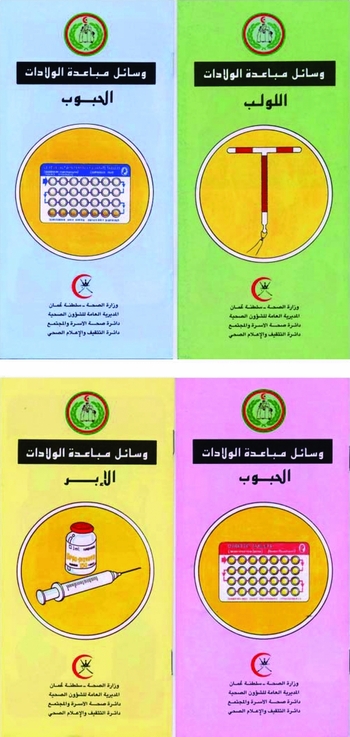
In addition to one-to-one counseling by nurses and physicians, explicitly illustrated brochures describing the various methods of contraception and their side effects are freely available (Figure 4). Informational posters, including crude, hand-drawn ones, are prominently displayed in examination and waiting rooms. One poster shows two fields of carrots growing: in the first field, the carrots are stunted, densely packed, and unhappy; in the other field, they are plump, healthy, jovial—and of course widely spaced. The text reads: “Every farmer knows that carrots planted too closely together do not grow well.” In one birth spacing clinic a diorama displays three panels. On the left is an erect, healthy-looking flower (the mother) with two small flowers beneath her (the caption reads: “Two Years after Marriage”); in the center is the same beautiful flower with four smaller flowers (“Five Years after Marriage”); and on the right is a drooping, shriveled flower with nine small flowers at her feet (“After Ten Years”). Educational videos and simple instructional flip charts are also widely used because the illiteracy rate among older women in some remote rural areas remains high. The standard birth spacing flip chart not only describes in detail the health benefits of leaving a longer interval between pregnancies but also makes the point that smaller families have more money, more food, more opportunities to relax, and more time to devote to the care and education of individual children than larger families. The implication is unambiguous: smaller families are happier than larger ones.
Contraceptive brochures. [A color version of this figure can be viewed online at journals.cambridge.org/mes]

Whether these messages resonate or offend in a society where it is not uncommon for people to have six or more children, where children are considered to be gifts from God, and where it is believed that God will always provide remains an open question. Particular care is given to reassuring men and women that birth spacing is consistent with Islamic principles, because the notion that it might be ḥarām is still fairly widespread. At the program's outset, clerics were enlisted to sanction birth spacing, and approving religious views were given great prominence on TV and radio. IEC materials frequently reproduce a sura from the Qurʾan indicating that the proper time span between the birth of one child and the next is thirty months.Footnote 31 Whatever the demographic objectives of the program, birth spacing is consistently framed as a health issue, which serves to undermine potential resistance, in particular from men and from religious authorities. How can one oppose better health for women and children?
The strategic commitment to birth spacing is evident at all levels, with vigorous efforts to reach Omanis at a young age. For example, all secondary-school students in Oman receive a book, developed by the Ministries of Health and Education and UNICEF, the first chapter of which is devoted to birth spacing and begins with this sentence: “birth spacing is one of the most important and effective ways to improve the health of mothers and children.” After describing in some detail the health risks of early, late, frequent, and closely spaced pregnancies, it notes:
There are many safe and acceptable ways to delay pregnancy. Birth spacing services can supply married couples with information and methods that can limit the number of children they wish to produce . . . Hospitals and health centers can offer advice about the many safe, acceptable, and effective means to space births . . . Birth spacing is the responsibility of the man and the woman equally.Footnote 32
Birth spacing information is also noted on the various medical-record cards that mothers and children using government health services receive, reinforcing the notion that it is important and signifying the close integration between family planning and MCH care. For example, all new mothers receive a maternal health card, which among other things records their birth spacing method history and lists birth spacing as one of the educational topics to be addressed by health care providers. Birth spacing information is also incorporated into the child health cards that all mothers receive. Women who seek birth spacing services are booked into a special registry and given birth spacing registration cards, which record their obstetric and gynecological histories as well as information about the contraceptive method they have selected.
When the Birth Spacing Program was introduced, there was some concern that its efficacy might be lessened by Oman's heavy reliance on expatriate, largely male, health care professionals. However, since 1994 Omani physicians have been graduating from Sultan Qaboos University's medical school, and a large number of Omani female nurses and health educators are now being trained. Female Omani nurses are crucial to the effectiveness of the clinic-counseling component of the program, if only because many women still harbor fears and misunderstandings about particular methods of contraception, mainly the IUD, the use of which remains relatively low in Oman. By 2006 the sultanate had 886 Omani doctors—more than double the number in 2000—of whom almost half were female. Although only 27 percent of all doctors were Omani, this was a steep increase from 1991, when only 7 percent were nationals. The Omanization of nursing has proceeded even more aggressively, with over 5,000 Omani nurses comprising 63 percent of the total by 2006. In addition, many of the expatriates working in the health sector are from other Arab countries. Thus almost all women who receive birth spacing advice report in exit interviews that counselors use a language they can understand.Footnote 33 The assumption that communication between an Omani doctor and patient might be better is not always warranted, however. One recent study indicated that women were far more likely than men to be embarrassed by seeing an Omani physician, suggesting that social and cultural distance might have positive consequences, at least in the context of birth spacing counseling.Footnote 34
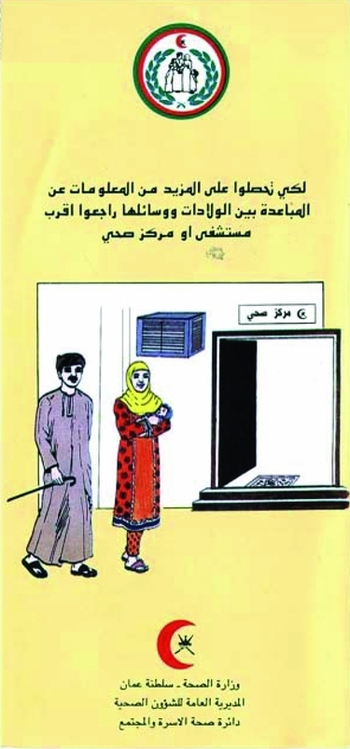
From the beginning, efforts have been made to involve men in the family-planning process, simply because the Birth Spacing Program will not succeed unless it is supported by males, whose ideas about ideal family size generally take precedence. In fact, many Omani women do not need to be persuaded of the benefits of birth spacing and suggest that education needs to be targeted primarily at men. For that reason, between 1993 and 1995 an intensive community-based pilot male-motivation campaign was conducted in Al-Seeb to raise men's awareness of the benefits of modern spacing methods and to reduce negative attitudes through television advertising and other community activities.Footnote 35 On a national level, the most widely distributed brochure on the health, social, and economic benefits of birth spacing has a special section for fathers. It simply makes the point that birth spacing is not incompatible with religion. Its main appeal, however, is to self-interest: birth spacing allows a father to provide each child with his full attention as well as a good education, it reduces physical and mental stress and permits a more peaceful and stable life, and it raises the family's standard of living and leaves everyone in the family with more resources. The cover depicts a husband and wife entering a health clinic together with a new baby, suggesting shared responsibilityFootnote 36 (Figure 5). However, the impact of the IEC campaign on men has been mixed. In reality, clinics are completely segregated and women receiving birth spacing services are unaccompanied by their husbands. Studies of reproductive preferences indicate that nearly two thirds of ever-married women have discussed family size with their husbands, with an even higher share of urban, educated, and young women reporting such conversations. However, only 43 percent of Omani women—but a higher percentage of younger women—felt they could ask their husbands to use contraception.Footnote 37
A birth spacing brochure. [A color version of this figure can be viewed online at journals.cambridge.org/mes]

Because the entire program's success rests on public acceptance, the endorsement and support of community and especially religious leaders is also indispensable, particularly in dispelling the idea that birth spacing is against the teachings of Islam. Especially at the outset, local clerics were enlisted whenever possible to provide the program with legitimacy. In a country where TV viewing and radio listening are almost universal, mass media provide the most efficient and effective means to disseminate information and shape opinions about birth spacing and change attitudes about ideal family size, especially among men. Television programs that combine entertainment with education—so-called “edutainment”—can also address some of the underlying causes of high fertility in Oman, such as female-status concerns and a strong preference for sons.Footnote 38 Shortly after the Birth Spacing Program was introduced, the Ministries of Health and Information launched a nineteen-part drama series on TV, “Family Health through Birth Spacing,” offered another program about birth spacing on the radio, and sponsored two songs about the issue.Footnote 39 This media campaign has been instrumental in promoting a new discourse within the family. In one survey of women at a birth spacing clinic, most said that television programs about birth spacing had motivated them to come to the facility, and 86 percent indicated that these programs had encouraged them to discuss birth spacing with their husbands.Footnote 40
Ancillary organizations, such as the Community Support Group, are also deployed to promote birth spacing. The Community Support Group network was inaugurated in 1992, initially to promote breastfeeding as part of the Baby Friendly Hospital Initiative.Footnote 41 By 1996 some 2,262 Omani women volunteers were involved in counseling women about breastfeeding and complementary feeding. These agents of social mobilization were subsequently charged with promoting antenatal registration and postnatal care, publicizing immunization campaigns, instructing women in good nutrition and hygiene, and demonstrating how to monitor child growth. It was inevitable that they would also become important voices in the Birth Spacing Program, particularly in countering language, gender, and other cultural barriers between health workers and women. However, due to its sensitive nature, they have sometimes encountered opposition—many older women do not welcome advice from younger women volunteers about childbirth, child care, and breastfeeding, particularly if the volunteer is unmarried or childless. Volunteers recount this resistance, particularly to birth spacing:
Some say to us unmarried women: “Shame on you for coming to speak with us about such things. This is ḥarām.”
When we started talking about birth spacing, the woman turned on us and said, “We have children who are older than you are. Why do you come to talk to me about this?”
When I try to speak of birth spacing, they ask, “What business is it of yours? Am I asking you to feed my children for me?”
Some women say we are just envious of them because they have so many children.
One woman said, “I've brought up ten children. I've never been to a hospital, and I am healthy. But look at you—you've just gotten married and are always tired and already you are talking about birth spacing.”
One volunteer [faced] the husband's threats to call the wālī. In another case, volunteers attempting to speak to women on birth spacing were driven out of the house.Footnote 42
For the Birth Spacing Program to succeed, it is obvious it must reach couples who have not already given birth to many children and still have many years of potential childbearing ahead of them. However, it is not realistic to expect young, newly married couples in Oman to seek family-planning assistance given the almost universal expectation that there should only be a short interval between marriage and first pregnancy.Footnote 43 According to one study, less than 1 percent of Omani women used contraception before the onset of parity because they were expected to have a child within the first year of marriage.Footnote 44 As a consequence, the women who take advantage of birth spacing services have typically already started families. Among women seeking such services for the first time in 2007, one-third had more than five children—far in excess of replacement-level fertility. Another way of measuring the effectiveness of the program is to look at the percentage of ever-married women in particular age cohorts who became new clients. In 2007, 5.4 percent of ever-married women who were younger than twenty registered for birth spacing services. Among ever-married women in the twenty to twenty-four and twenty-five to twenty-nine cohorts, the figures were only slightly higher, 7.0 and 6.7 percent. Nevertheless, women under thirty accounted for approximately two thirds of all new clients. As expected, there is a strong correlation between educational level and contraceptive use, which bodes well in a country where educational opportunities for females have improved dramatically in recent years. Among ever-married women, only 4 percent of those with a primary education became birth spacing clients in 2007, compared with 16 percent of those with a secondary education.Footnote 45
One distinctive feature of Oman's Birth Spacing Program is the particular mix of contraceptives used, with a remarkably high 39 percent of clients selecting short-term injectables. Some 40 percent use oral POP and COC contraceptives, which generally have high discontinuance rates, and only 7 percent rely on IUDs, which are favored by many providers because they are long lasting and highly effective.Footnote 46 Although injectables often have serious side effects, notably, bleeding, they appeal to many Omani women because they do not require a daily pill-taking regimen or the insertion of a contraceptive device by a (usually male) physician and, of most importance, are short lasting (three months). In other words, they are suited to an environment in which birth spacing, not birth limitation, is the primary goal and where a woman might prefer not to disclose to her husband that she is using a contraceptive. Birth-spacing by stealth seems to be common and underlines both the growing reproductive autonomy among women and male resistance or indifference to family planning.
DEMOGRAPHIC EFFECTS
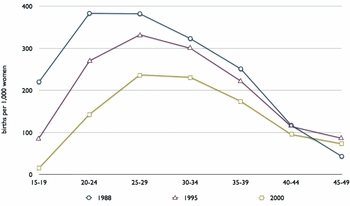
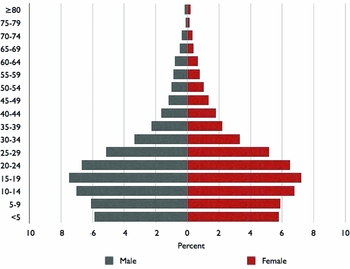
Oman's rate of natural increase has declined sharply from its peak during the early 1990s, and the sultanate is experiencing a demographic transition.Footnote 47 Official Omani statistics report a remarkable drop in the fertility rate, from 6.9 in the 1993 census to only 3.19 in 2006. The overall crude birth rate has fallen sharply.Footnote 48 The share of the population that is under fifteen fell from 51 percent to 37 percent.Footnote 49 Age-specific fertility rates plummeted from 383 births per 1,000 women between the ages of twenty and twenty-four in 1988 to only 143 births per 1,000 women in that age cohort in 2000 (Figure 6). Oman's 2006 age–sex pyramid also displayed a pronounced narrowing base as the very youngest cohorts shrank in size (Figure 7). Of significance, the percentage of births that occurred within an interval of two years fell from 31 percent in 1996 to 18 percent in 2006, indicating that couples were spacing births more widely.Footnote 50 Knowledge, Attitudes, and Practices surveys conducted in 1992 and 1997 suggest that changes in reproductive attitudes and behavior attributable to the Birth Spacing Program may account for some of the decline in fertility.Footnote 51 One measure of the effectiveness of the various IEC campaigns is that virtually all Omani women and men are now familiar with the goals and methods of birth spacing, and acceptance and approval of the program have grown markedly. The overall contraceptive-prevalence rate has climbed sharply (to about 32 percent), although it still trails levels found in such countries as Egypt, Jordan, or Iran by a considerable margin.Footnote 52
Age-specific fertility rates of Omani women. Source: Based on data in Eltigani E. Eltigany, Levels and Trends of Fertility in Oman and Yemen (New York: Population Division, Department of Economic and Social Affairs, United Nations Secretariat, 2001), 8–13. [A color version of this figure can be viewed online at journals.cambridge.org/mes]

The Omani population by age and sex in 2006. Source: Based on data in Oman, Ministry of National Economy, Statistical Yearbook, 2007 (Muscat, 2007), table 3-2. [A color version of this figure can be viewed online at journals.cambridge.org/mes]

BROADER CONTEXT
Although the Birth Spacing Program appears to have had some effect, it would be simplistic to credit the decline in fertility to it alone. Birth spacing is part of an aggressive effort to improve maternal and child health and advance the status of women, and its specific contribution can therefore be hard to isolate. It is clear that Oman has achieved some extraordinary gains in social well-being and health, the secondary effect of which would be to reduce fertility. In the quarter century following the accession of Sultan Qaboos, Oman was transformed from an isolated, quasifeudal state to one with an ambitious, modernizing agenda and an elaborate social-welfare system.Footnote 53 Of particular note was the role played by women in this transformation: “Women were mobilized and took part in many aspects of Oman's development. Women were actively engaged in the armed forces, in the police force, in the civil service, in education, and in radio and television.”Footnote 54 Growing participation in the wage-labor force has been a critical precursor of declining fertility rates on a universal basis.
Hill and Chen argue that “very few countries anywhere can match the speed of the Omani health transition over the last quarter of a century.”Footnote 55 In 1970, the sultanate had only 13 doctors working in two hospitals with 12 beds. By 2006 it had 3,251 doctors and over 5,300 beds in fifty-nine hospitals.Footnote 56 Large investments in health infrastructure have contributed to a dramatic drop in mortality. For example, Oman reduced infant mortality from an estimated 230 per 1,000 live births in 1950 to only 10.2 per 1,000 live births in 2006 (compared with 6.5 per 1,000 in the United States). The under-five mortality rate fell from 317 per 1,000 in 1960 to 11.2 per 1,000 in 2006. Such sharp declines invariably precede declining fertility rates. Currently, skilled health personnel attend some 95 percent of births.Footnote 57 By twelve months, virtually 100 percent of Omani children have been vaccinated for BCG, DTP3, measles, and polio—one of the highest inoculation rates in the world. Access to potable water exceeds 90 percent in urban areas and had reached 73 percent in rural areas by 2000.Footnote 58 Access to adequate sanitation has also improved significantly. These and other health-care achievements have attracted global attention: in 2001 the World Health Organisation, in a survey of national health systems of 191 countries, ranked Oman first in health efficiency and in 2000, using five performance indicators, ranked Oman's health system eighth overall in the world.Footnote 59
Improvements in health have been matched by an accelerated expansion of education at all levels. In 1970 Oman had only three primary schools and 900 students, all of whom were boys. By 2006 it boasted over 1,000 schools and over half a million students, roughly half of them girls, even if the quality of their education still lags that of boys. Females have been brought into the educational system at all levels, outnumbering males at secondary schools and accounting for 49 percent of students at Sultan Qaboos University. UNICEF's 1994 annual report, The Progress of Nations, ranked Oman second in the region for female education, with 93 percent of girls enrolled in school reported to have completed fourth grade. The report noted: “Female education is one of the most important investments that a nation can make in its future. In the long term, every aspect of progress from nutrition to birth spacing, from child health to women's development is affected by whether or not a nation educates its girls.”Footnote 60 Perhaps more than any other single factor, the rapid expansion of female education suggests that the fertility rate is destined to decline. On a universal level, the more educated a woman, the fewer children she is likely to have.Footnote 61 In Oman, as elsewhere, there is also a strong correlation between education and the timing of matrimony: the more years spent at school, the later the entry into the marriage market and, hence, the onset of childbearing. Among illiterate women between the ages of 15 and 19, 27 percent were married in 2000, compared with 11 percent of those with a primary education and 6 percent of those with a secondary education. For 20- to 24-year-old females, the difference becomes even more pronounced, falling from 66 percent of illiterate women to only 29 percent of women with a secondary education. Moreover, the mean age at marriage has increased significantly because of the rising and exorbitant cost of weddings.Footnote 62 This is especially important, because in Oman marriage and childbearing are sequential phases in a woman's life cycle and interconnected processes, socially and demographically. In 2000 the mean age of marriage was 23.5 for females (and 26.4 for males)—sharply higher than even the previous decade.
There has been an extremely sharp drop in very early marriage: among women aged thirty-five to thirty-nine in 2000, 65 percent were married at or before the age of fifteen, whereas only 3 percent of women aged fifteen to nineteen and 13 percent of twenty- to twenty-four-year-olds had married by that age.Footnote 63 The percentage of women between the ages of fifteen and nineteen who had not married rose from 63 percent in 1988 to 90 percent in 2000. The percentage of women in the twenty to twenty-four age cohort who remained unmarried rose from 13 percent to 52 percent in the same period.Footnote 64 The dramatic shift to later marriage obviously decreases the span of years during which Omani women can give birth and portends a continued drop in the fertility rate. Generational differences in age at first birth are striking: in 2000, 70 percent of women between the ages of forty and forty-four had given birth to their first child by age nineteen, while only 48 percent of the twenty to twenty-four cohort had done so.Footnote 65
CONCLUSION
In the mid-1990s, Oman was confronted with one of the most rapidly growing and youthful populations anywhere in the world. The evidence suggests that Oman's ambitious Birth Spacing Program, with its explicit focus on health rather than demographic objectives, at least on the surface, has combined with broader social changes, such as delayed marriage and a massive increase in the number of educated women, to bring down the fertility rate. Oman appears to be in the midst of a major demographic transition whose end result will be a reduced rate of natural increase. However, the ideal family size in Oman remains large, and it is hard to imagine the fertility rate approaching replacement level for many years to come despite generational differences in reproductive attitudes and behavior.Footnote 66 It is most problematic that gender differences in such attitudes persist. In 2006, a very large study of adolescent attitudes toward reproductive health indicated that the average number of children desired was 4.9, high by international standards. However, girls wanted a mean 4.3 and boys 5.5 children, and twice as many boys (43 percent) as girls (21 percent) expressed an interest in having six or more children. On the positive side, the boys believed that the ideal age to get married was 22.9 for males and 19.9 for females while girls favored 23.6 for males and 21.4 for females—a strikingly large shift in generational preferences. Moreover, a large majority of adolescents agreed that they would use modern contraceptives in the future, and 73 percent of boys and 78 percent of girls considered a birth spacing interval of more than two years to be appropriate.Footnote 67
If the experience of other Arab countries like Egypt and Jordan is any guide, the contraceptive-prevalence rate may level off after sharply increasing in the 1990s. In a sense, the Ministry of Health has completed its task, making a wide range of contraceptives freely available in all parts of the country to all women who desire to use them and greatly increasing knowledge of modern contraceptive methods throughout the population. The problem is no longer one of supply but of demand: further increases in the contraceptive-prevalence rate might require more aggressive state intervention, which could just as likely be counterproductive in this still conservative society unless the Grand Mufti issues a fatwa and the sultan revisits the issue and gives his imprimatur to a new campaign that more fully involves men in the process and shifts the emphasis from birth spacing to birth limitation, with two or three children per family as the ultimate goal.