A mass casualty event can result in an overwhelming number of critically injured pediatric victims that exceeds the available capacity of pediatric critical care (PCC) units, both locally and regionally.Reference Markovitz 1 , Reference Kanter and Cooper 2 The purpose of this article was to demonstrate the need for planning for disasters involving children and to provide a stepwise, replicable model for establishing a pediatric disaster coalition (PDC), with one of its primary goals focused specifically on facilitating PCC surge planning. New York City (NYC) has a population of approximately 2 million children 3 and 25 PCC units with 233 PCC beds (116 per million). Literature suggests that close to 30% of children injured in explosive mass casualty events require at least 1 day of PCC.Reference Waisman, Goldman and Poznanski 4 A 2007 national task force on adult mass critical care identified a need for a 300% increase from usual intensive care unit capacity and maintenance of this level for 10 days to respond to emergency mass critical care.Reference Rubinson, Hick and Hanfling 5 , Reference Rubinson, Hick and Curtis 6 Echoing those recommendations, a task force on pediatric disaster preparedness sponsored by the Centers for Disease Control and Prevention recommended that PCC units plan to at least double their capacity and triple their capability.Reference Niranjan 7 A subsequent 2014 American College of Chest Physicians (CHEST) task force using a modified Delphi process recommended system-level surge capacity and capability up to 200% above routine maximal capacity based on the nature and severity of the disaster.Reference Dichter, Kanter and Dries 8 The NYC Department of Health and Mental Hygiene (DOHMH), recognizing that there may be an insufficient number of staffed and equipped PCC beds for pediatric critically ill or injured patients during a pediatric mass casualty event, utilized funding from the Department of Health and Human Services to create a PDC. The PDC comprises experts in emergency preparedness, PCC, surgery, and emergency medicine, as well as representatives from DOHMH, NYC Emergency Management, the Fire Department of New York (FDNY), and hospitals with PCC capabilities. Currently, representatives from 21 NYC hospitals participate in the coalition. The PDC’s primary goals are to develop guidelines for pediatric pre-hospital triage, initial hospital and inter-hospital transport of patients, and hospital-based PCC surge plans that will increase NYC PCC bed surge capacity. Once PCC surge plans are developed, the PDC concluded that in order to operationalize the plans it was necessary to test them through operational exercises.
METHODS
Data Collection and Consensus
Members of the PDC serving on the PCC surge committee convened bimonthly over the course of 2008 through 2009. The committee initially reviewed relevant literature and various existing surge plans. They then established goals and objectives to create guidelines for increasing PCC surge capacity in NYC. Recommendations for scalable activation of communication protocols and response plans were generated through an iterative process. These recommendations were reviewed and updated during PDC meetings and subsequently presented to NYC pediatric health care professionals, emergency preparedness planners, city agency representatives, and other related disciplines during an emergency preparedness–focused conference on September 20, 2009. Following the presentation, an open discussion was held and responses to an anonymous questionnaire about the guidelines’ validity and applicability were recorded by use of an electronic audience response technology. Input was also obtained from a meeting of the members of the New York Society of Pediatric Critical Care Medicine. These responses were analyzed and used to improve the recommendations. Additionally, a survey was conducted in February 2011 to ascertain specific understanding of the baseline PCC bed census and related staffing and equipment needs in NYC. We thereby determined the threshold for the number of critically injured children beyond which there would be a city-wide shortage of PCC beds. The survey included 13 hospitals in NYC, with a total of 163 PCC beds, which accounted for close to 70% of all PCC beds in NYC at the time of the survey. The bed census was collected 3 times a day in equal intervals over the course of 2 weeks.
PCC Surge Plans
In 2010, 5 participating hospitals developed specific PCC surge plans based on the recommendations of the PDC. The PDC initiated PCC surge planning at the largest PCC units to rapidly develop the greatest number of surge beds. Between 2011 and 2015, PDC staff conducted scheduled site visits to 10 additional hospitals and actively assisted in drafting PCC surge plans. A surge plan template, developed by using suggested plan components and flow charts, was utilized in the planning process. The flow charts followed components of the hospital response in a chronologic order and allowed for tailoring a plan to respond to each component. After an initial site survey, the template was used to create a draft plan tailored to each hospital’s individual needs. Individual hospital planning committees, with the assistance of PDC staff, subsequently developed complete plans from the drafts. Finalized plans were added as annexes to hospital disaster plans.
Testing Completed Plans
Once PCC surge plans were completed, PDC representatives assisted hospitals in testing and operationalizing their plans by conducting discussion-based tabletop exercises followed by a full-scale exercise with actors in moulage. Planning for and execution of the exercises was conducted between 2011 and 2015. Utilizing Homeland Security Exercise and Evaluation Program (HSEEP) materials, PDC staff met with hospital committees to assist in the planning process. Each hospital held at least 5 planning meetings, including “Concept and Objectives,” “Initial,” “Middle,” “Master Scenario Event List (MSEL),” and “Final” planning conferences. The PDC assisted each hospital in creating its own documentation of an “exercise plan,” “MSEL,” “Controller and Evaluator Handbook,” “Exercise Evaluation Guide,” and “Player Handout,” all based on HSEEP templates. Once planning was completed, a tabletop exercise was conducted. Lessons learned from the tabletop exercise were then implemented in the pediatric intensive care unit surge plan. A full-scale exercise was then conducted. Scenarios were scaled and adapted to provide a test for each institution’s plan and resources. Scenarios were based on blast events occurring at Times Square or a nearby school resulting in a large number of pediatric patients requiring critical care.
RESULTS
PDC Established
The PDC was established and included experts in emergency preparedness, critical care, surgery, and emergency medicine from 18 of 25 NYC PCC-capable hospitals, as well as representatives from the NYC DOHMH, NYC Emergency Management, and the FDNY. Since its establishment in 2009, the PDC has been a leader in planning for disasters involving children in NYC. The PDC has developed neonatal intensive care unit disaster and evacuation planning, obstetric/newborn services evacuation and surge capacity planning, labor and delivery surge and evacuation planning, pre-hospital pediatric triage protocols, and primary and interfacility secondary transport plans in conjunction with FDNY, and has been instrumental in providing pediatric-specific expertise to NYC DOHMH in response to the H1N1 and Ebola outbreaks and during extreme weather including Superstorm Sandy.
Recommendation Documents Were Formulated and Staff Were Trained
Recommendations for making additional PCC beds available emphasized space, staff, stuff (equipment), and systems. During a surge event, space can initially be found in PCC units by transferring patients to the floor or (in rare cases) discharging them. The inpatient unit may also need to discharge patients to create space for transferred patients from the PCC unit. Additional methods to add PCC space may include altering hospital routine by having general medical and surgical floors receive sicker patients than usual, increasing the number of PCC beds per room or per floor space, and converting hospitals’ clinical and nonclinical spaces into PCC environments. Space utilized for PCC surge must have infrastructure such as generator backed-up power sockets and oxygen access (central or portable tank). To help meet the need of additional staff, the PDC conducted 4 Society of Critical Care Medicine Pediatric Fundamental Critical Care Support (PFCCS) courses 9 and 1 Train the Trainer course to train instructors who would then hold the course at their institutions. PFCCS courses teach the basics of PCC to medical professionals without special expertise in this area, bringing them to a level of proficiency that allows them to assist PCC specialists in managing patients. To date, over 122 physicians and nurses have been trained in PDC courses. Equipment needs, which included stretchers, ventilators, monitors, and crash carts, were identified in each hospital individually. Most of the needed equipment was available at hospitals. When deficits were identified, some additional equipment was purchased; however, some shortages may remain.
PCC Bed Census Survey Results
The PDC conducted a survey of 13 PCC units in NYC in February 2011 on their bed census. The survey was well received by PCC units and had a 97% response rate. We found that 22% of total beds (95% CI: 16%, 28%) were available at a given time. On the basis of this survey, the projected total available unoccupied staffed PCC beds in NYC at a given time is between 48% and 53%. Of the available beds, 11% reportedly would be understaffed by nursing when at full capacity.
Planning at 15 Hospitals
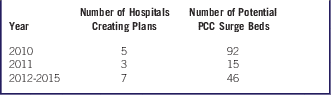
There are 25 hospitals with PCC services in NYC, providing a total of 233 PCC beds during normal operation. Between 2010 and 2011, a total of 8 hospitals with a total of 120 PCC beds used PDC guidelines to create PCC surge plans, thereby adding 107 surge beds (46% bed increase) to the city’s overall capacity. Initially, 5 major hospitals created surge plans, adding 92 PCC beds to surge capacity. One year later, 3 additional hospitals created plans, adding an additional 15 surge beds. Between 2012 and 2015, 7 additional hospitals created plans, which will add an additional 46 surge beds once operationalized (Table 1). Thus far, the NYC PDC has completed planning for an additional 153 PCC surge beds. While pre-hospital triage, patient transportation from the field to hospitals, secondary transport in between hospitals, and emotional care are beyond the scope of this article, we recognize the importance of these elements and have established committees and initiated planning for these elements. Recruiting hospitals to participate (and providing site visits and template plans) was a major challenge owing to the necessary time and effort required.
Pediatric Critical Care (PCC) Bed Surge Planning By Year

PDC staff participated in meetings at all of the planning hospitals. PDC planning support ranged from facilitating meetings to physically surveying geographical spaces in hospitals for alternate PCC sites and suggesting individualized language and schematics. To streamline the planning process, the PDC developed and utilized a PCC Surge Plan Template based on the PDC recommendation document and plan segments from the completed plans of the first 5 hospitals (see the online data supplement). The template provides general language and structure for the plans. Participating hospitals were then able to tailor the outline to their needs, selecting pertinent sections to incorporate into their plans.
PCC Surge Exercises
To date, 7 hospitals with completed surge plans participated in the exercise program, thereby operationalizing their plans as part of the PDC program. The PDC participated in between 6 and 13 meetings at each hospital. All hospitals used actors to simulate the incoming victims. Three of the hospitals enlisted children from nearby schools as actors. The actors were given a card describing their injuries, applied with moulage, and briefed on how they should present to the triage point. The exercises included emergency department (ED) triage, patient evaluation including imaging, consultations as necessary, and eventual admission to hospital wards and intensive care. After-action conferences were completed at each site to determine lessons learned. An analysis of the after-action reports by the PDC revealed many common, unifying lessons learned. The process of planning for pediatric-specific disasters and conducting full-scale exercise helped participating hospitals identify their needs and improve in the following areas: ED activation and notification, local incident command, patient tracking, need for patient “babysitters,” identification of additional ED surge capacity space, clearing ED upon notification, staffing and staffing notification, supervised overflow areas from ED for nonadmitted children, family mental health center, one-way patient flow, ED and PCC ongoing communication with the emergency operations center, supplies, pharmacy, employee needs, and 1-page protocols for unusual events. The outcomes of the exercises were utilized to operationalize the PCC surge plans.
DISCUSSION
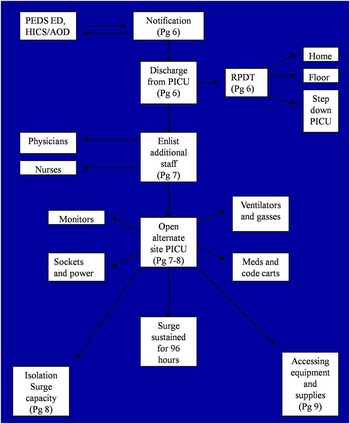
The NYC PDC was established with a broad base of stakeholders. Early identification of leaders and experts in the fields of PCC, pediatric surgery, EMS, disaster preparedness and management, nursing, and hospital administration was crucial in establishing an effective coalition. We learned that once a coalition is established it is important to gather data on city-wide resources and set realistic goals for planning. General guidelines are the initial step to the planning process. However, we found that forming hospital-specific pediatric disaster and surge plans based on guidelines alone posed a challenge to hospitals, especially those without robust emergency preparedness professionals and resources. Therefore, we created a template plan based on the guidelines. The template plan utilized flow charts that covered the hospital response to a disaster in a step-by-step chronographic approach (Figure 1).
Example of Template Plan Flow Chart. Abbreviations: AOD, administrator on duty; HICS, Hospital Incident Command System; PICU, pediatric intensive care unit; RPDT, Rapid Patient Discharge Tool.

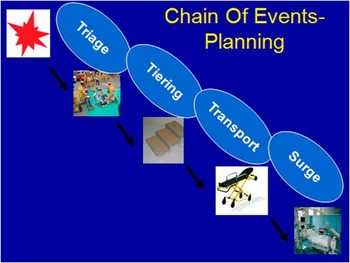
Utilizing a template plan that encompasses the guidelines was found to be valuable to hospitals in creating their individualized plans. The PDC’s method of guideline development and on-site assistance in creating surge plans followed by testing them through exercises has proved to be an effective and well-received method for pediatric disaster planning (Figure 2).
Pediatric Disaster Coalition Layers of Planning.

A CDC task force has recommended that PCC units plan to at least double their capacity and triple their capability. However, this recommendation is not based on a statistical analysis of individual cities or regions. Moreover, based on our experience in planning for surge capacity at 18 hospitals of various sizes in NYC, we found that doubling PCC bed capacity can prove a significant challenge even to large, established institutions.
Additional space for PCC surge capacity varied among hospitals. Some hospitals utilized additional clinical and nonclinical areas for PCC surge such as post-anesthesia care units, ambulatory surgery areas, burn unit areas, and even cafeteria and hospital atrium locations that can be converted to clinical areas. Pediatric inpatient beds can also be set up for PCC level of care. Utilization of adult critical care areas was initially designated based on patient appearance (if a patient appears the size of an adult, the patient can be treated in the adult area) and not age or body mass index. However, this determination is subjective and depends on adult critical care physician and nursing level of comfort in treating older or larger children, availability of PFCCS trained staff, and bed availability. Age over 12 years or evidence of puberty have been suggested; however, this would not be appropriate for all patients, because early-onset puberty is common in younger patients and age alone may not reflect important developmental and anatomical differences. When utilizing alternate sites for PCC care, the more stable patients can be cared for in nontraditional care locations. This requires trained PCC specialists and teams to care for the patients in these alternate sites. Cross-training of nursing and ancillary staff such as respiratory therapists in adult and PCC can also be useful. These issues also apply to subspecialty staff such as neurosurgery and orthopedics. Planning should include addressing available subspecialty expertise based on the training and comfort level of these physicians in dealing with the pediatric age group. Staff force multiplication can also be accomplished by utilizing physicians with pediatric expertise from the Medical Reserve Core and untapped resources such as ED physicians and pediatric emergency medicine staff who are available from other sites including urgent care centers that are not involved in the event response.
Crucially, PDC surge plans were crafted to increase surge capacity while maintaining standards of care. Altering “conventional capacity” to “contingency capacity” or “crisis capacity” may allow for increasing capability threefold. Ethical and legal dilemmas such as patient prioritization and care withdrawal have not yet been determined in New York State. The PDC has been successful in adding a significant number of PCC surge beds to NYC. This was accomplished by forming a coalition including all essential stakeholders in city disaster preparedness, developing guidelines through an iterative process, conducting on-site assistance in the development of hospital-specific PCC plans, and operationalizing those plans through discussion-based exercise and full-scale exercises. The method developed proved to be a successful, reproducible model for planning for hospitals and PCC units of varied sizes. PDC PCC surge plans could prove lifesaving in a pediatric mass casualty event; however, a catastrophic pediatric mass critical care event could overwhelm the current PDC-developed surge capacity. The PDC’s method of on-site assistance in creating surge plans and then testing them by exercises has proved to be an efficient and well-received method for promoting pediatric disaster planning. Plans for further expansion of PCC bed surge capacity can utilize the PDC model methodology and consider necessary alterations to the routine standards of care to match available resources to the needs determined by the enormity of the event.
Although experts agree that a need exists for PCC surge capacity, specific information is lacking addressing how to determine the number of surge beds needed for an individual city or region. The PDC bed census survey was conducted for 2 weeks during winter months to determine PCC bed occupancy in NYC. The survey was well received with a 97% return rate. A previous New York State DOH PCC bed census survey produced similar findings. The number of PCC beds fluctuated since the PDC was established in 2009, with some hospitals closing and others adding additional PCC beds. The net changes did not impact PDC planning. Understanding PCC bed capacity is the starting point in determining PCC surge needs. Unfortunately, the PDC survey did not include all hospitals and was conducted during the winter months. It could be argued that during this time of the winter there are more PCC admissions owing to outbreaks of influenza and other viral pathogens. However, during the time of our survey, there was an unusually low incidence of seasonal viral illness. If anything, our results may have falsely increased the number of available PCC beds. Further comprehensive year-round studies would be needed to determine continuously accurate thresholds for PCC surge needs. Until year-round true census data are available, predetermined regional thresholds to PCC surge capacity needs can be estimated on the basis of the present data (ie, the PDC and NYC DOHMH census survey).
NYC has a population of approximately 2 million children (116 beds per million). 3 Close to 30% of children injured in explosive mass casualty events need at least 1 day of PCC. The results of our census survey suggest that there are approximately 50 unoccupied PCC beds in NYC at any given time. Should an event produce more than 170 injured children, with more than 50 critically injured (30%), there would likely be a shortage of available staffed and equipped PCC beds and a need for PCC surge. Given these assumptions as well as multiple worldwide events with episodes involving children, there is clearly a need to increase PCC bed capacity in NYC. Although there is a lack of definitive situational awareness of PCC bed census in NYC in general, there is consensus that PCC surge planning is essential for preparing for a large mass casualty event involving pediatric patients.
CONCLUSIONS
The NYC PDC is focused on increasing PCC bed capacity in NYC, a large urban metropolitan area. However, the process we described for developing a PDC, from identification of leaders and stakeholders, planning for disasters utilizing a template plan, and exercising completed plans, can be replicated in communities of any size, location, and setting. We offer our model as an example for other cities.
Acknowledgments
The New York City Pediatric Disaster Coalition was supported by grant number U3REP090251 from the Department of Health and Human Services (HHS). These contents are solely the responsibility of the authors and do not necessarily represent the official views of the HHS. The authors have no conflicts of interest to disclose.
Supplementary Material
To view supplementary material for this article, please visit https:/doi.org/10.1017/dmp.2016.152.